

Getting to Samarkand & Our Accommodation
From the Tajik border town of Panjakent, it was time to wander into the next Stan, for our final 29 days in Central Asia. This would also be our most challenging border crossing of the region, so we were pleased to have had the overnight in Panjakent and not tried to do it all in one day from Dushanbe.


Getting to Uzbekistan’s tourist haven of Samarkand from Panjakent, in theory, should take about one hour and 25 minutes. In reality, it took nearly four. The first step was finding a shared taxi from Panjakent near the local bazar to travel 20 minutes to the Tajik border. We knew the cost should be 40 Somoni for the whole car, but the driver insisted it was 20/person instead, even though we shared with two other people.
After trying to negotiate, and getting nowhere because there was no competition, we paid the $4.20. Upon getting delivered to the border, we exchanged the rest of our Tajik money for Uzbek with a money changer, which was 75,000 ($6.19). We were warned not to cross with any Tajik money because the Uzbeks will not take it.
Then, the real fun then began upon arriving to the passport control office to receive our exit stamps. The scene reminded me of the swarm of lower class people trying to bust onto the upper deck in “Titanic” when the ship is sinking, complete with a controller blocking the door barking at people in Tajik. No one was getting through that protected portal…at least not quicker than the pace of one person every five minutes.
We joined the back of the line and stood for awhile before beginning to notice others glomming onto the sides of the line rather than following a proper queue. (Any Brit would be outraged by now.)
Also, it didn’t take long for us to observe that the queue was actually segregated by body parts with the hoo-has on the left and the ding-a-lings on the right. We didn’t separate until we were told to do so by a Tajik who lives in Germany, (so he must know something about law and order.)
We chatted with a couple locals who spoke some English, and verified the border was always like this, and after a long while, eventually some crowd chatter began that seemed directed at us, as well as the two Russians that stood nearby us.
“You can go!!” a kind lady said to me enthusiastically, motioning for Greg and I to go around the customs office. Seriously!?
Allah bless the hospitable Islamic spirit!
So we went! And then, confusedly entered the office via the EXIT door as the mob of Tajiks tried to enter from the other side. The controller must have gone on a smoke break because he was nowhere to be found.
Several people looked quite irritated that we were “cutting the queue,” while others tried to shove us to the front of the windows, our front and back backpack sandwiches making us bob along like awkward and obnoxious buoys.
Eventually one tall local, who happened to be standing near the window, asked us for our passports and handed them directly to the officer inside. But there was so much shoving, we couldn’t make our way to the window to actually see the officer for several minutes. Once I finally made it, the officer verified my identity with a bit of a knowing smile before blessedly stamping me out of Tajikistan.


And for the record, stamping INTO Uzbekistan was the polar opposite experience…organized, easy and pleasant. We merely showed our $25 visas, confirmed we didn’t have a drone, (not drugs, which is what our French-speaking friends heard), and answered a few simple questions.
Getting a shared taxi on the Uzbek side, however, was not quite so pleasant. In fact, we were completely hedged in by foaming-at-the-mouth drivers as soon as we were released from the customs office.
Initially, the wanted to charge a rate starting at 100k Uzbek Som/person ($8.26). The real price for the one hour journey is more like 25k per person, but we resisted until happily snatching the lowest offer we could get at 35k ($2.89)…which is about all the money we had!!


This, by the way, is the shared taxi we would be riding in. And yes, apparently you can “fit” eight adults (mostly with luggage), and ALL of whom we had to wait patiently to join us. But alas…we could have paid $17 and been on our merry way.
Apparently, we cheap asses instead wanted to resurface distressing memories of being jammed like an olive inside India’s version of a clown car, especially considering it was HOT and the people in front of us didn’t seem to enjoy windows.
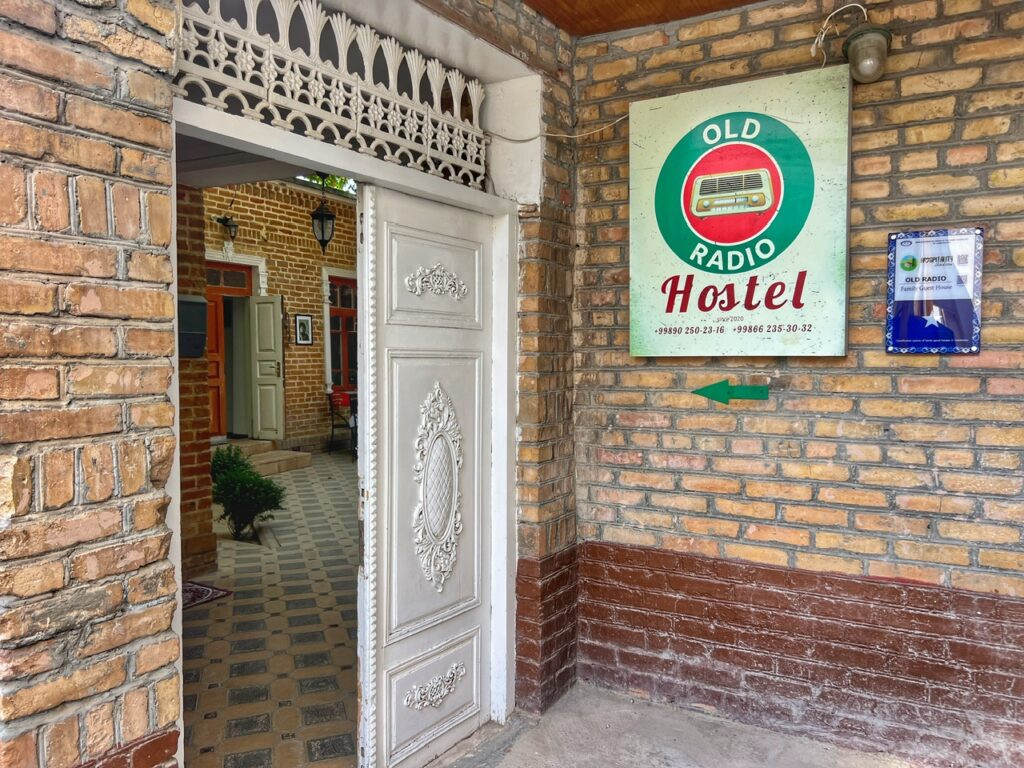
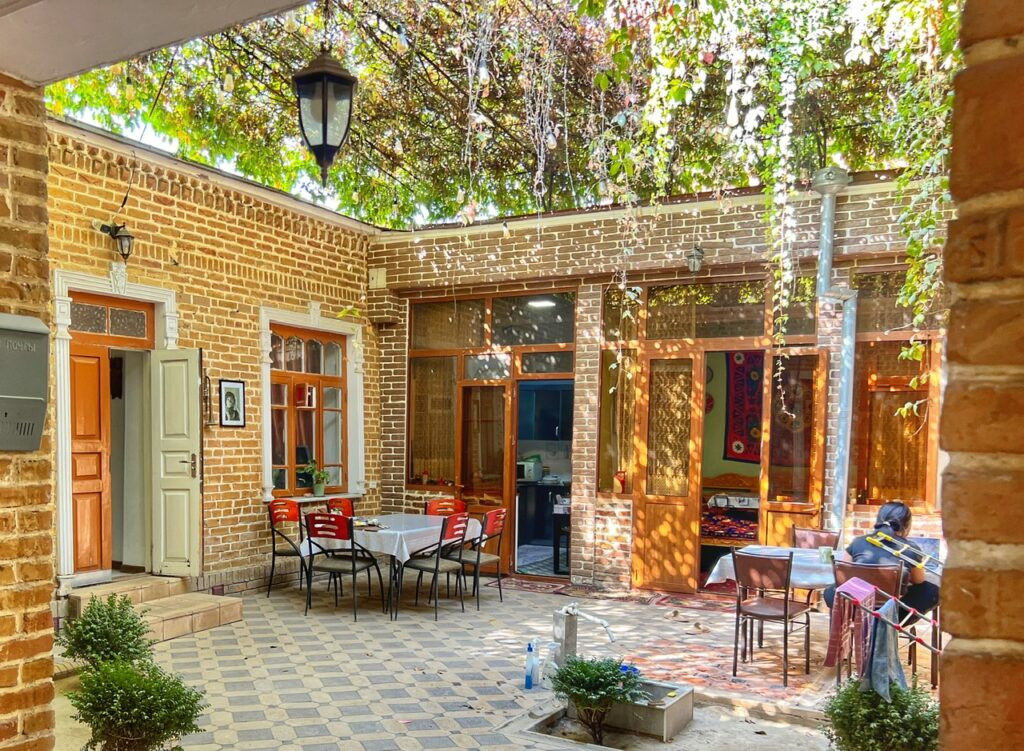
Needless to say, we really enjoyed the glorious eye candy of being dumped out at Samarkand’s Registan, and the 15-minute stretching walk to our hostel, Old Radio, where we’d be lodging the next week.
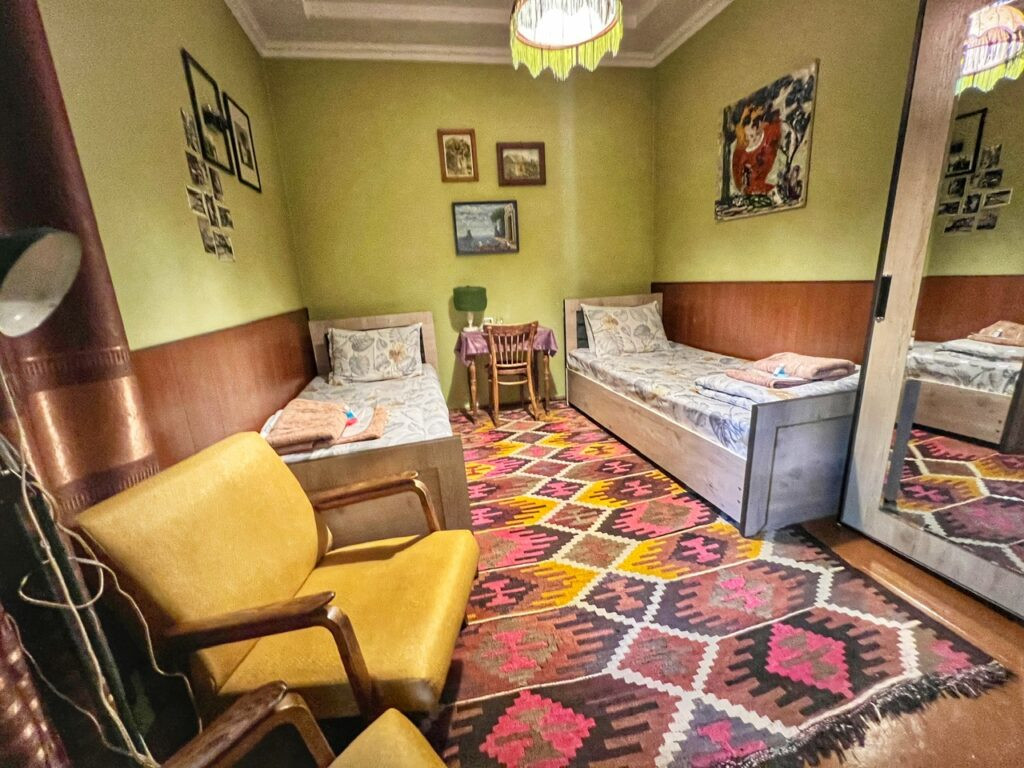

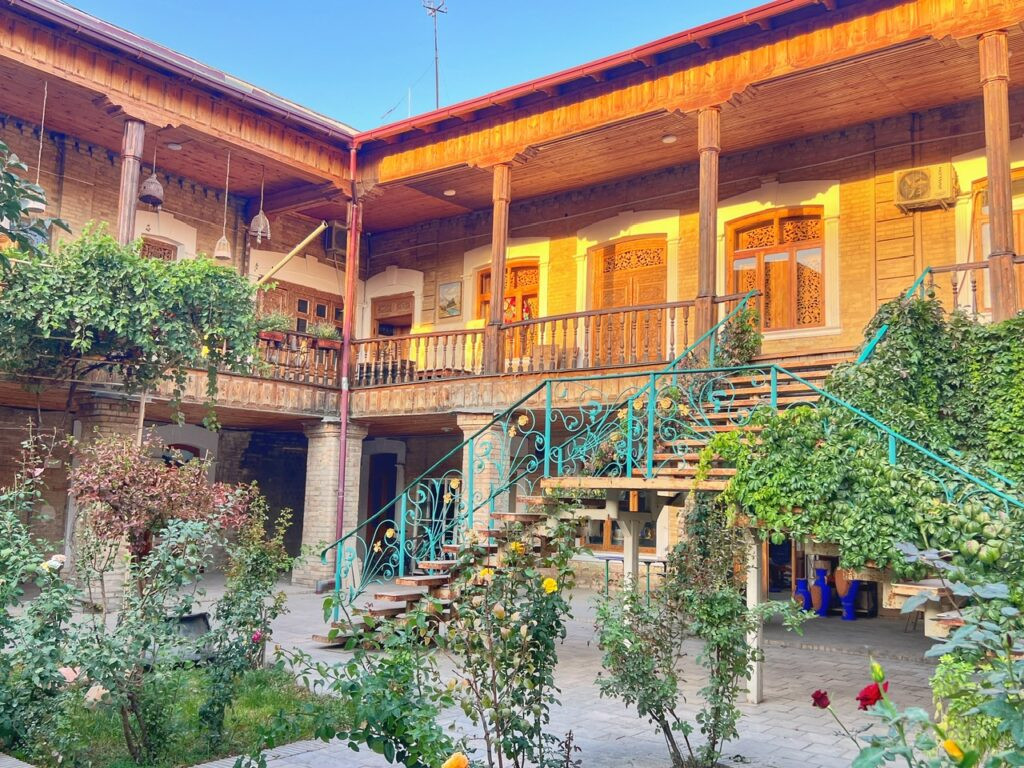
Our private room, with lots of vintage charm and accessories, undoubtedly wins the award for best decorated hostel we’ve ever stayed in. Can I puh-lease chuck that rug in my backpack?! The room cost $28/night, which then got increased to $31 thanks to a $1.40/night/person tourist tax we’ll apparently encounter everywhere in this country. Some of the touches in the room included vintage suitcases and globes…

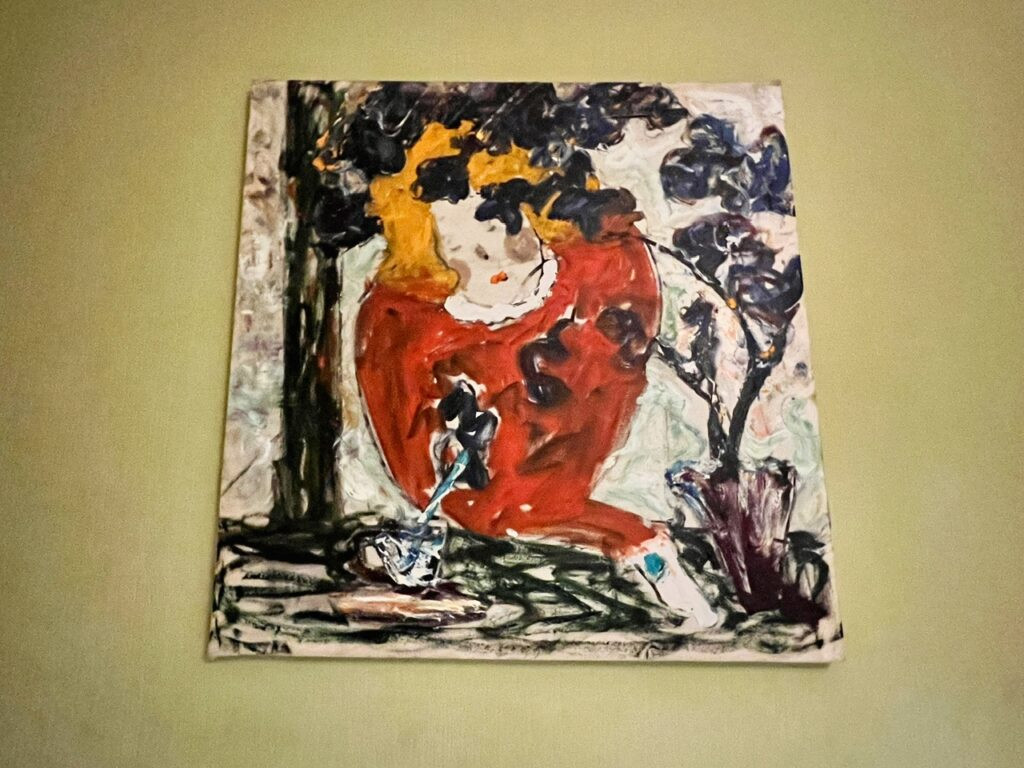
…unique photography displays, and what appears to be a quite bulbous “Little Orphan Annie” character getting sucked into a tin can like a genie.

The lovely thing about Uzbekistan is breakfasts are a traditionally included part of hospitality, kinda like Turkiye….and wow did this family deliver. Our spread every morning included ALL of this!!
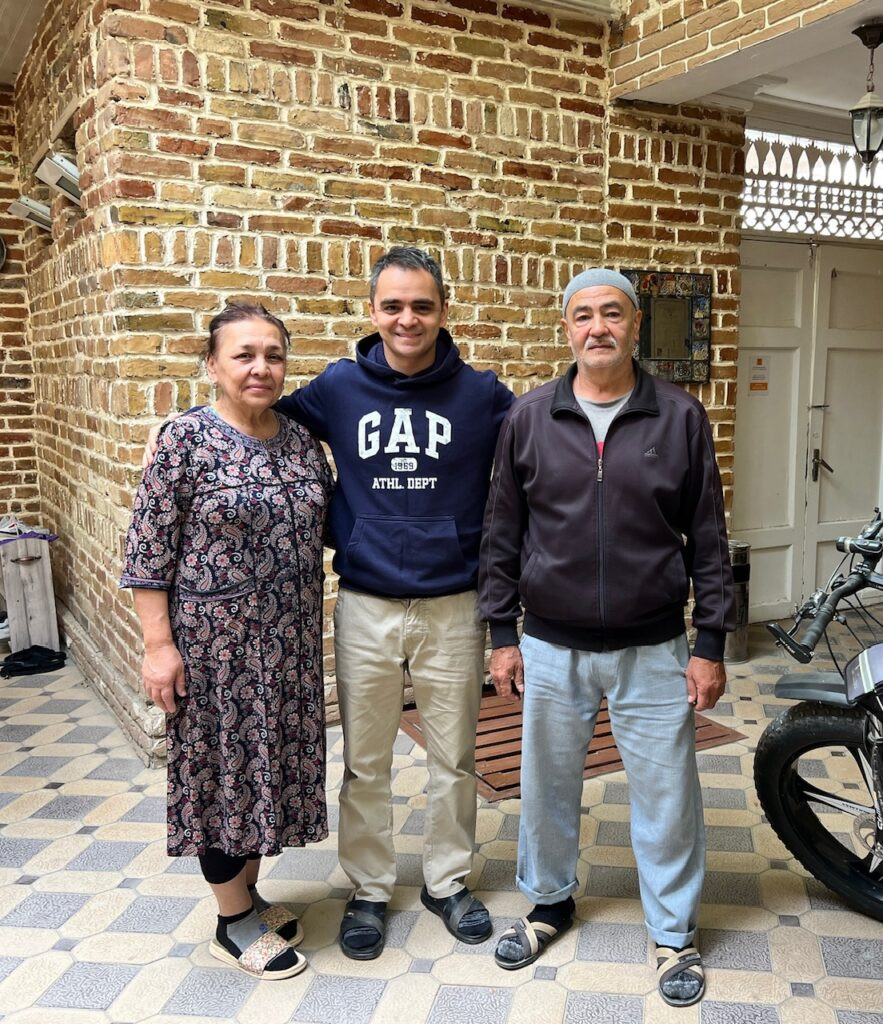
The helpful English-speaking Sherzod, and his parents, who run the impeccably clean and wonderful facility.
Our Favorite Site: Shah-I-Zinda Necropolis
With the abundant cerulean splashes of ravishing Islamic architecture it can be easy to get overwhelmed by the allure and options in ancient Samarkand. Thus many tourists flock straight to the Registan, which is the obvious grand-daddy of all the sites, or the nearby Bibi-Khanym Mosque. Although both are iconic and beautiful, we learned some of the sites in the city didn’t seem to equal the admission price in value.
However, our favorite, of the ones we paid to enter, and also a cheaper one, was undoubtedly Shah-I-Zinda Necropolis, which means “The Living King.” This series of successive kaleidoscopic mausoleums are by far the most exquisitely intricate we’ve ever seen and feel like walking into an ethereal dream.
Arrive early. The site opens at 7 for the Asian fashionistas and iPhone-on-tripod-types, but crowds picked up significantly by 8:30.
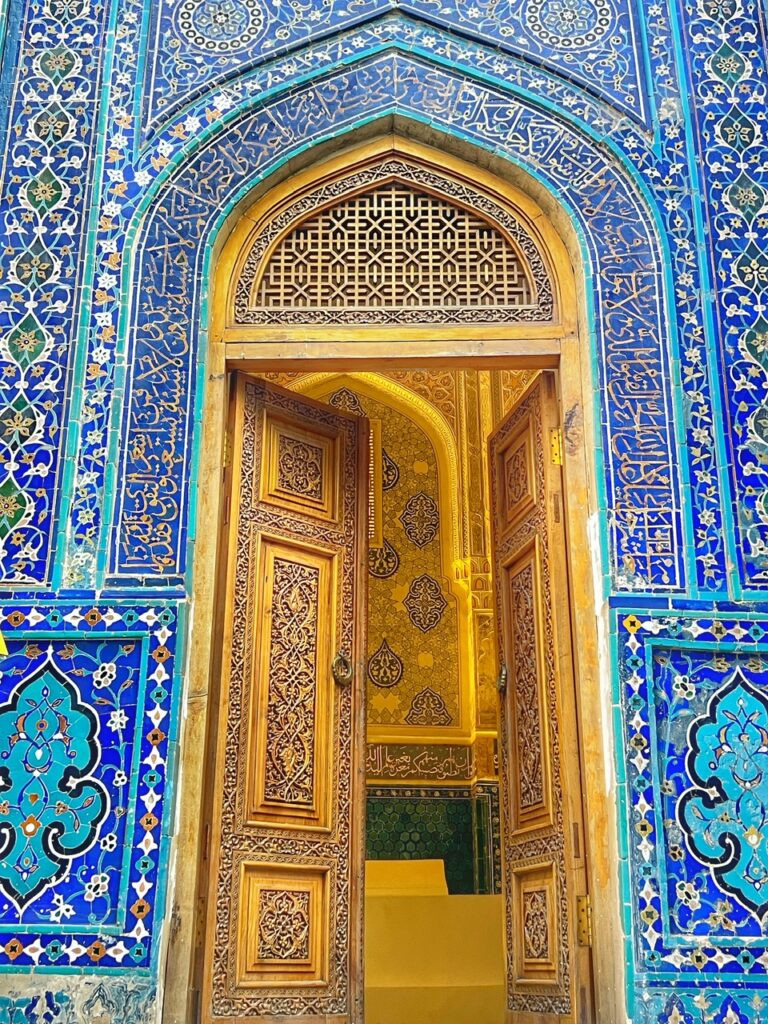
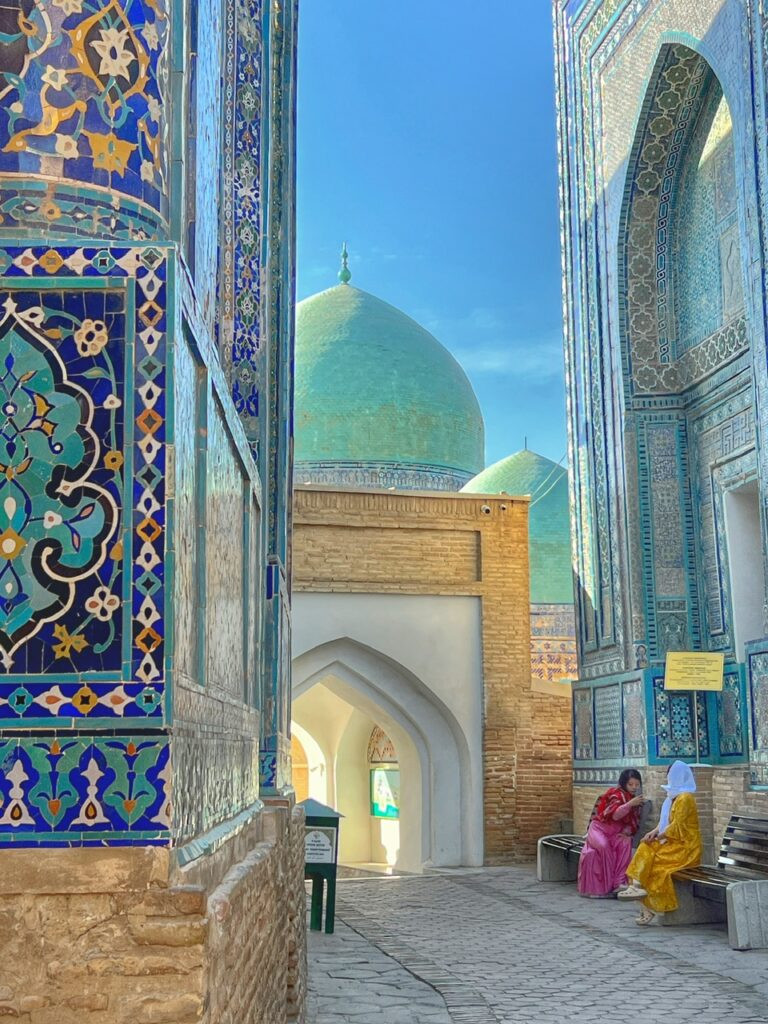
The name of the necropolis comes from a legend which states that Kusam ibn Abbas), a cousin of the Prophet Muhammad, is said to have come to Samarkand in the 7th century to preach Islam. According to tradition, he was beheaded, yet he is said to be “living” underground in a subterranean chamber awaiting resurrection. (History Hit.)
More than 20 structures, such as mausoleums, small mosques and connecting passageways, dot the necropolis, which were built from the 11th-15th centuries.
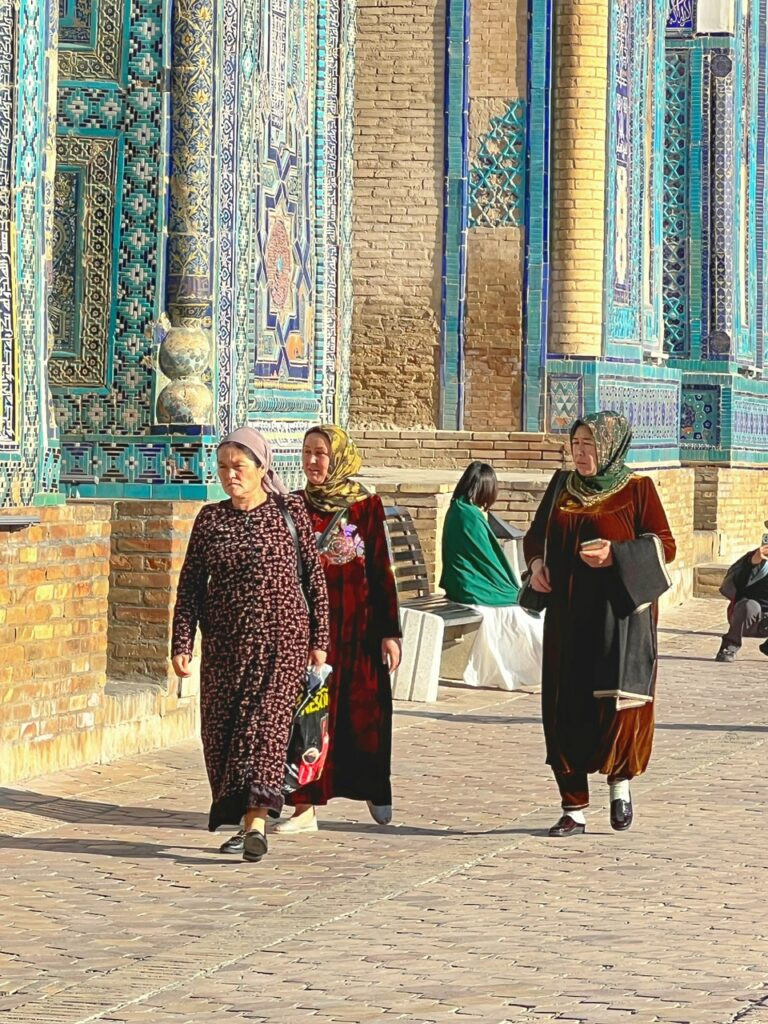

They also serve as an important pilgrimage site for Muslims from all over the world. This included a young one patiently waiting for papa to finish reading the sign. So cute.
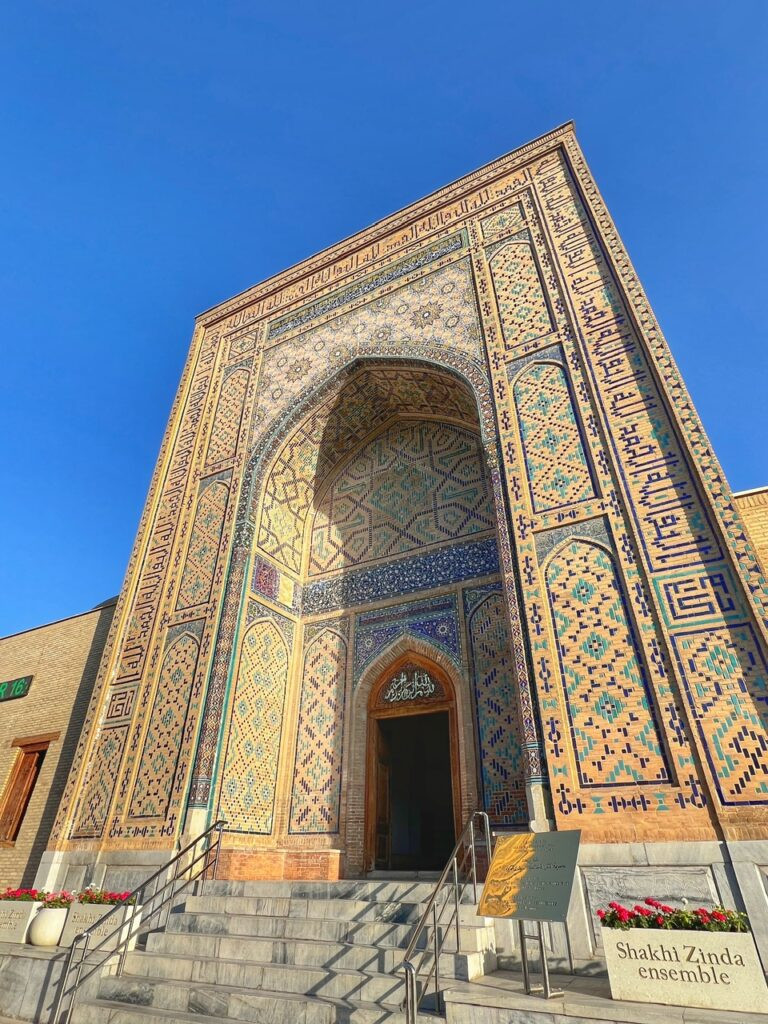
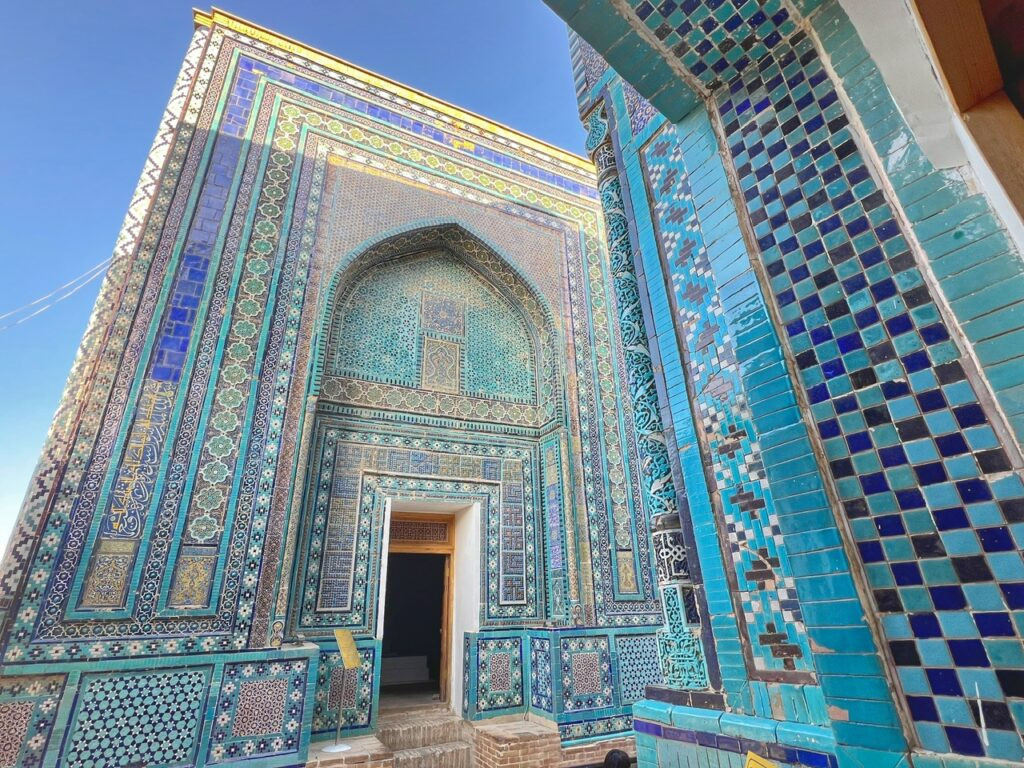
The entrance to the ensemble is not particularly a show-stopper when compared with other sites in the city, but its “hidden” treasures make the 50k Somoni or $4.12/person non-negotiable. Shah-i Zinda is celebrated not just for its spiritual significance, but also as a masterpiece of Central Asian Islamic architecture and ceramic art.
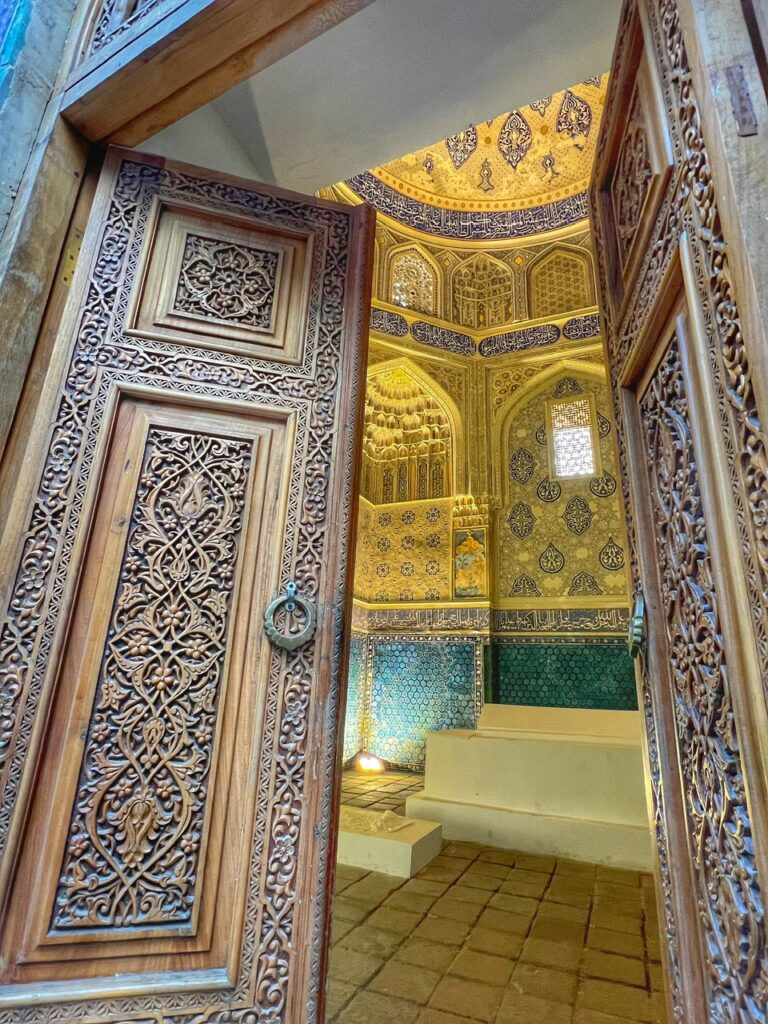
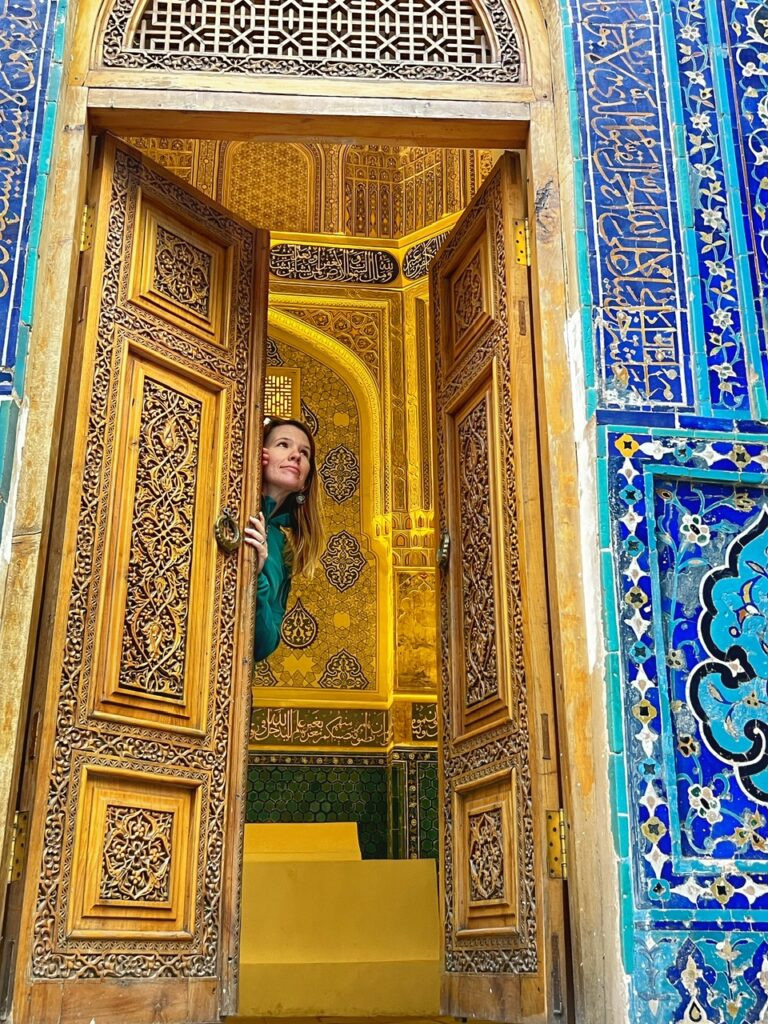
If you take time to soak in every little detail, rather than just taking 300 pictures of yourself at different angles, you will be bewildered by the detail. Of course, we had to grab least a couple. 😂 But…shoot…I did forget my Tung Dynasty attire! (One Chinese girl told us this is what she was wearing!)
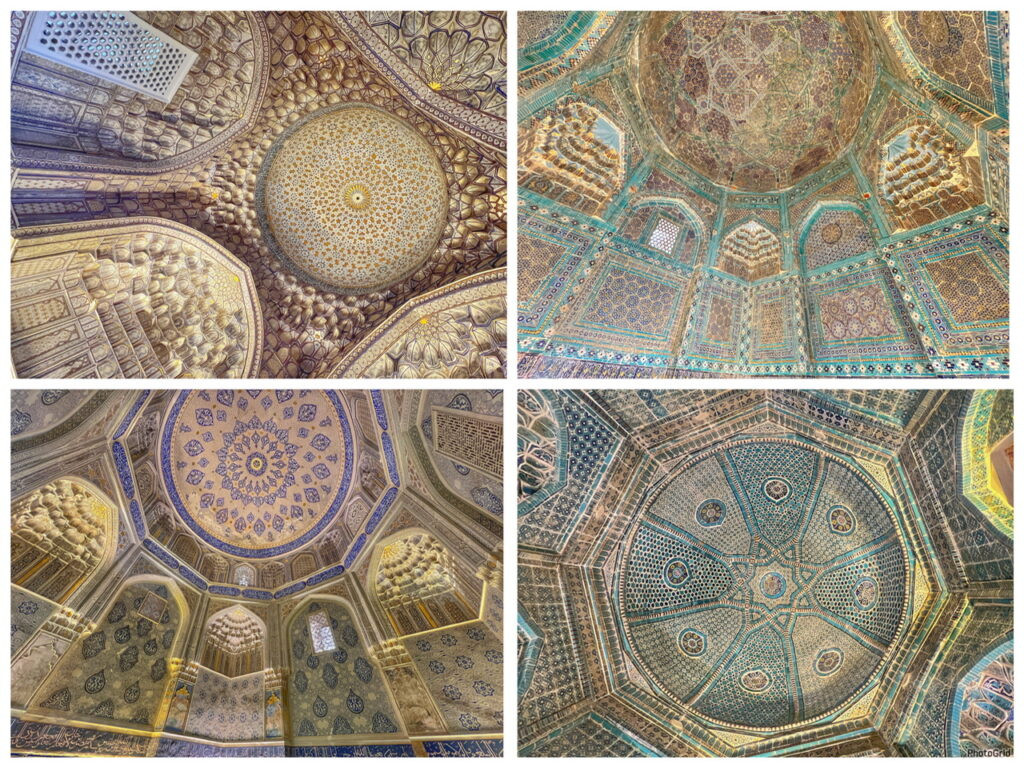
The many dazzling domes ceilings throughout the complex.
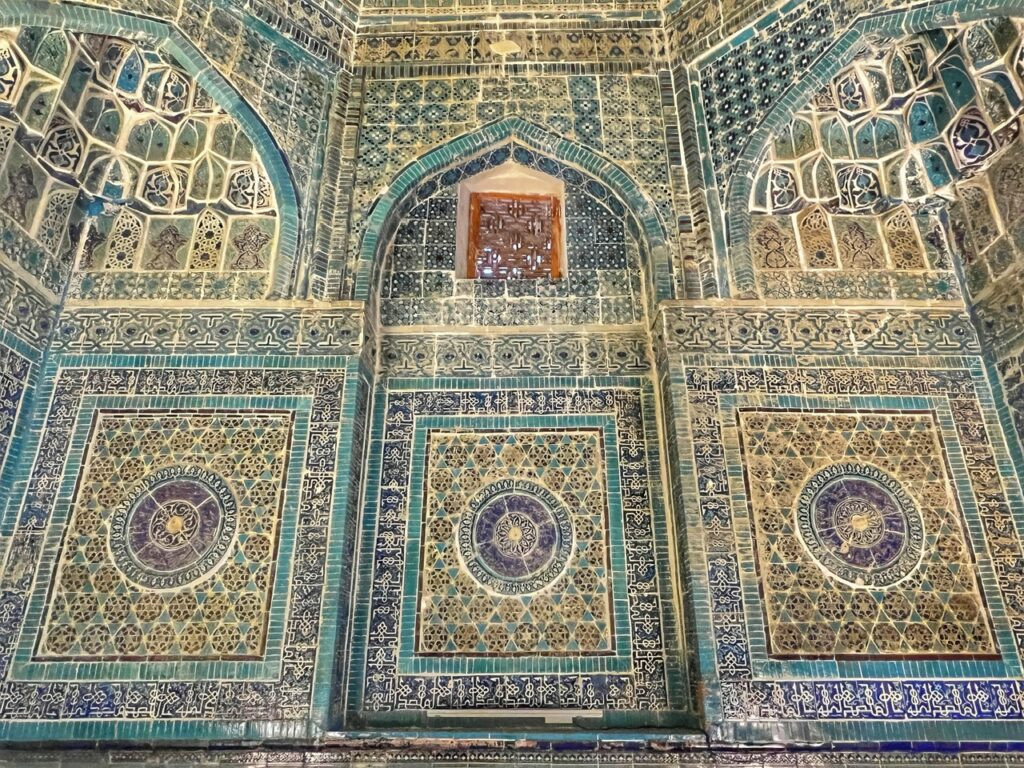
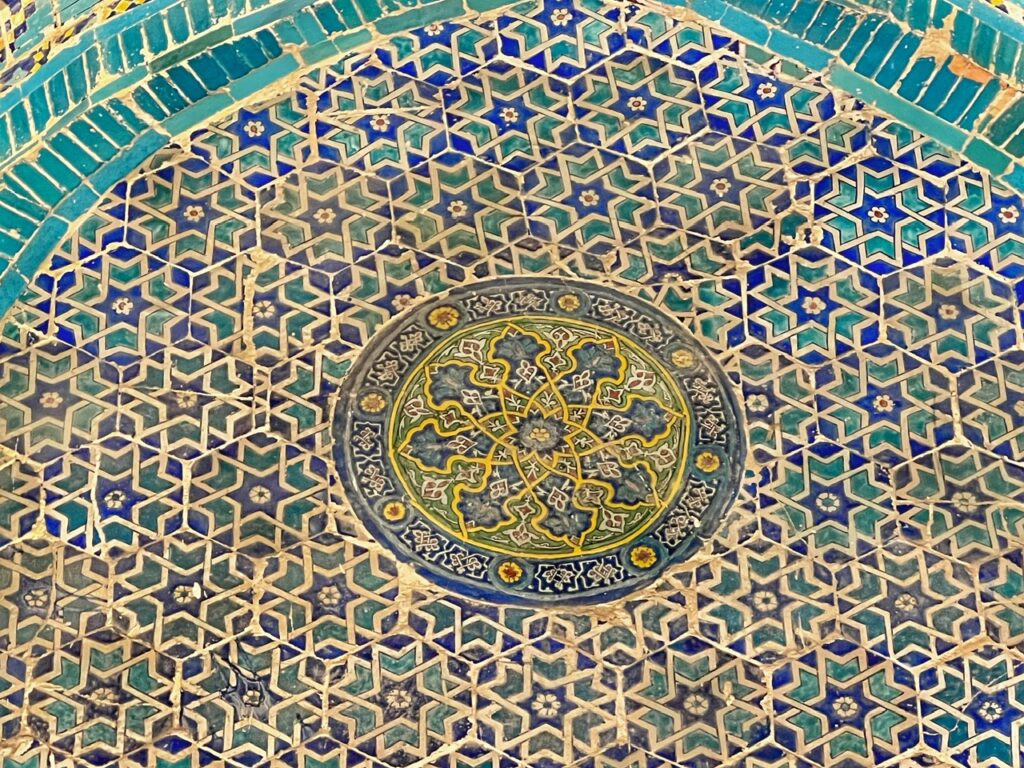
It’s really difficult to display just how stunning this place is…
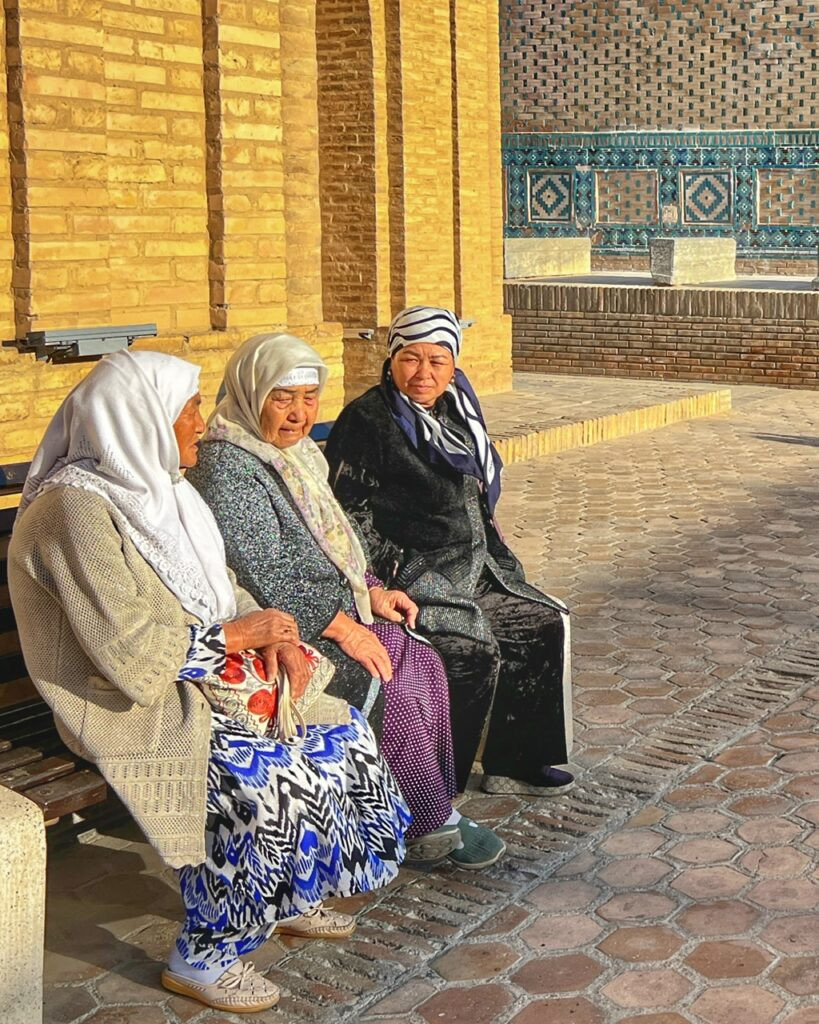
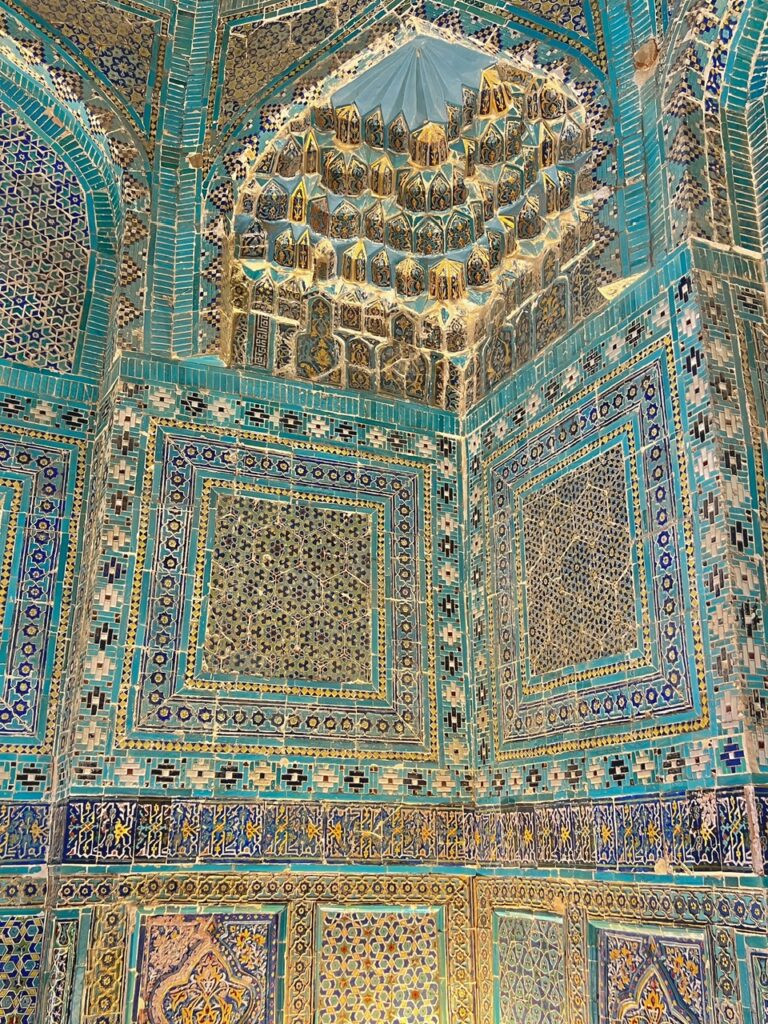
…or capture the true feelings of faith that it must hold for so many.
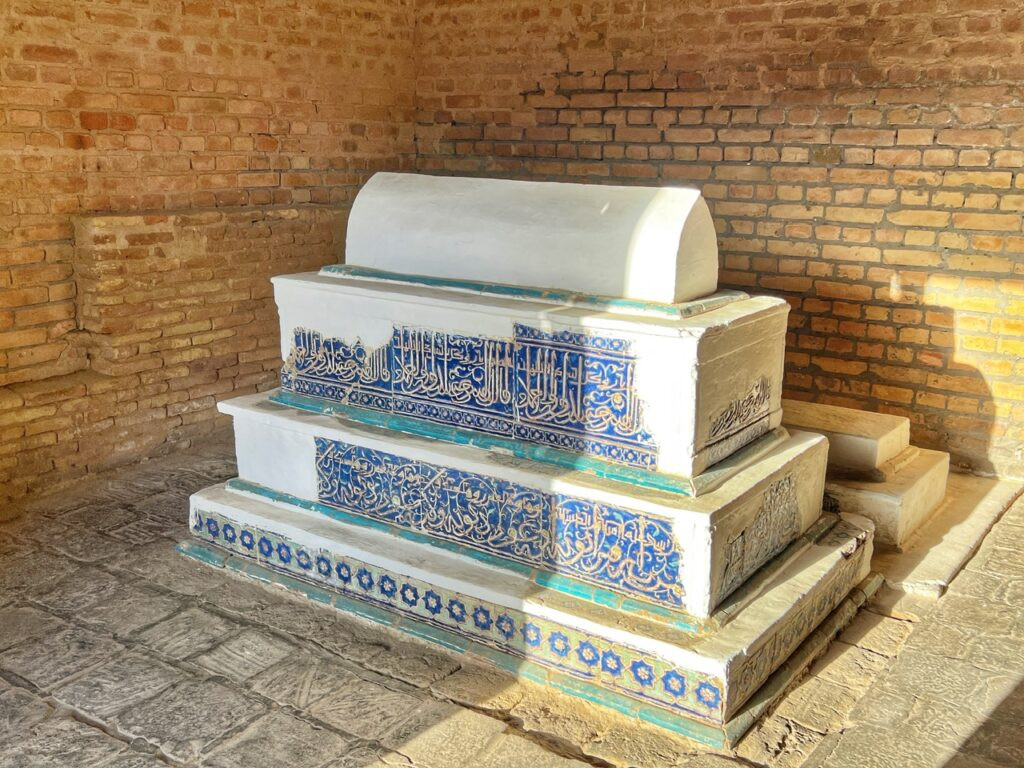
Built in the second half of the XIV century, the buried person is unknown, which was what many of them said. Not too shabby to be a nobody!
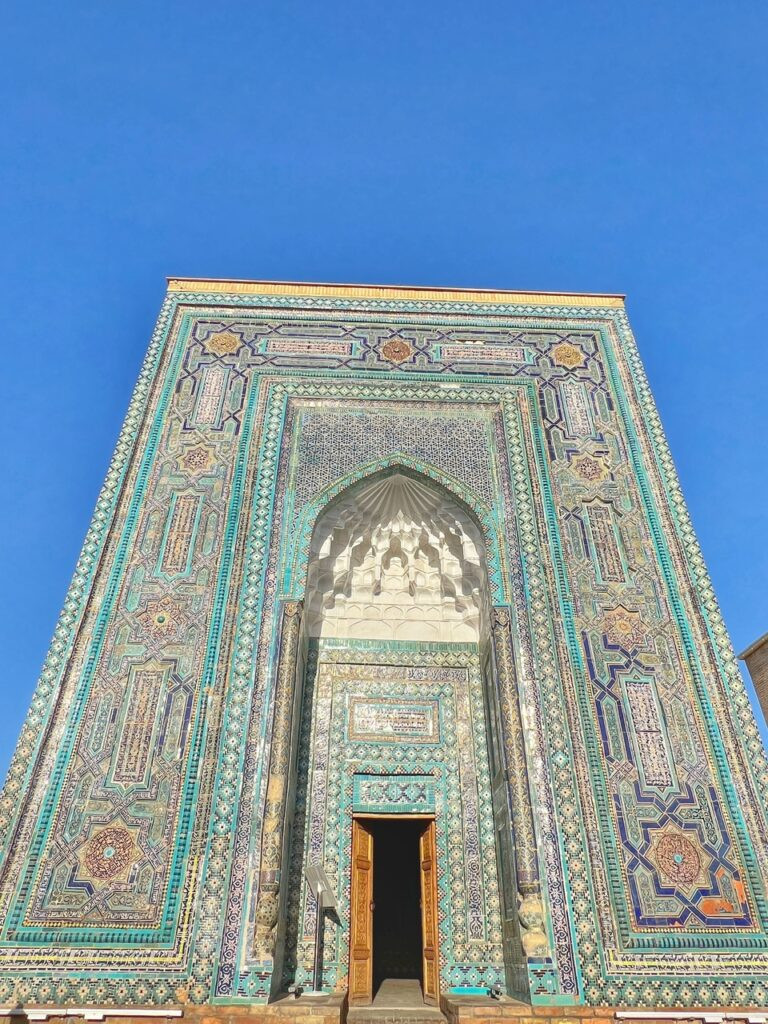
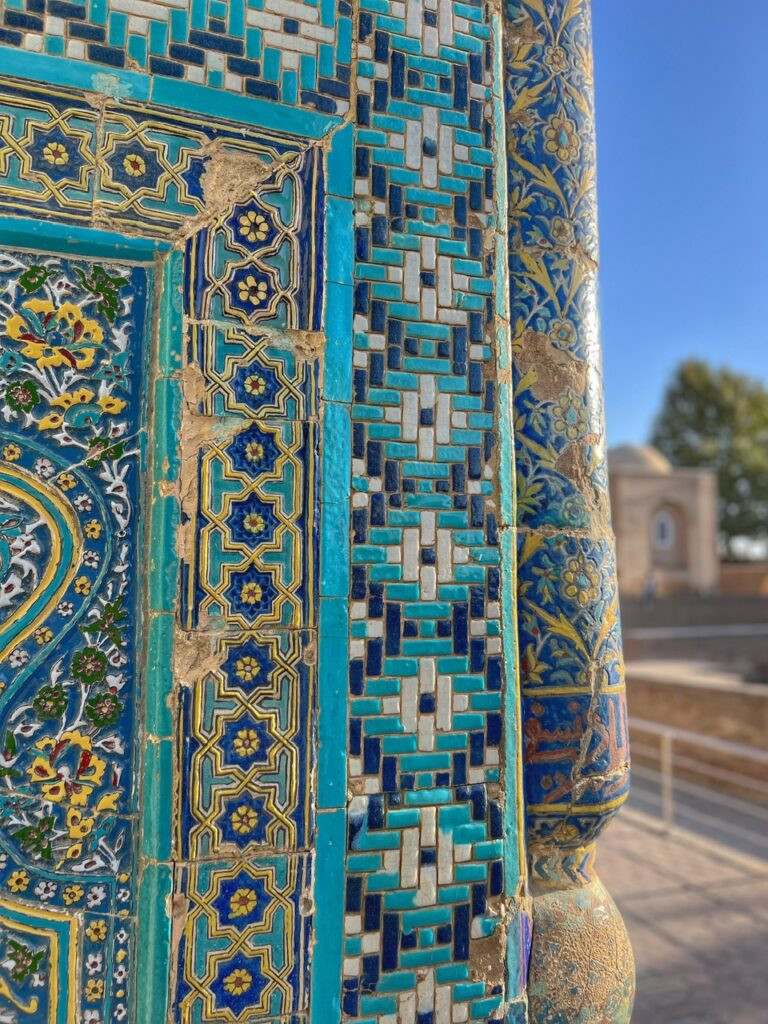
But throughout most of the complex, the majority of the surfaces have been entirely restored to their magnificent elegance….

…and the details and layers of these masterpieces are simply astounding.
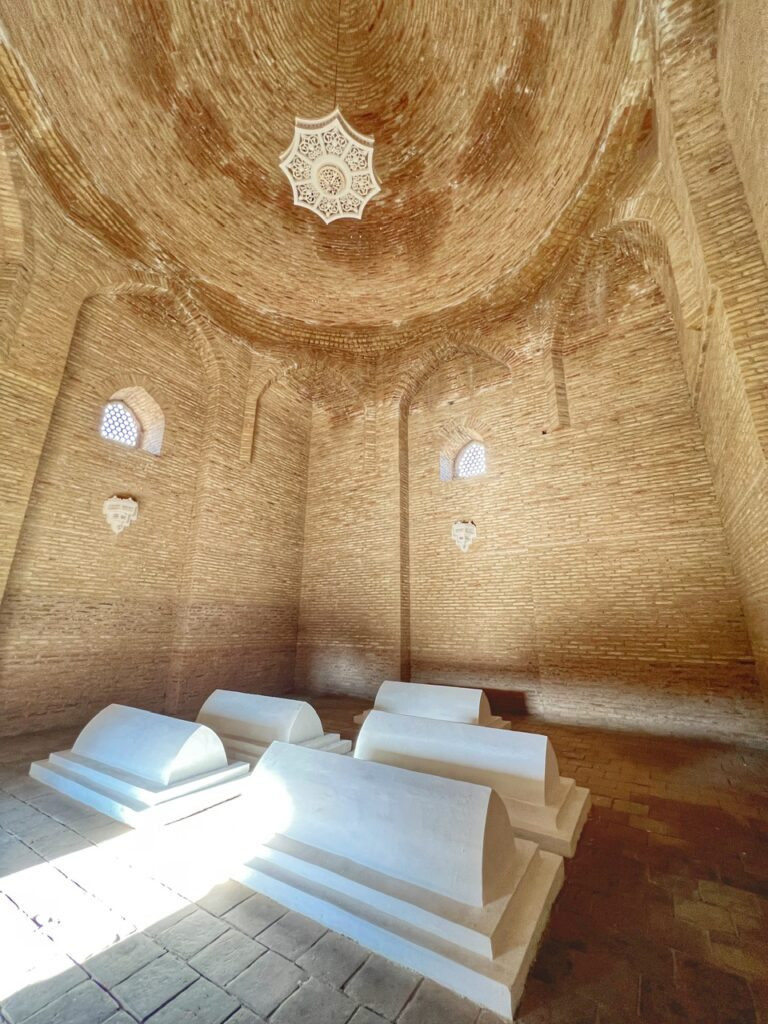
Many are restored without the Crayola canvas which is a much simpler statement. Whenever we wandered in these chambers, we had them all to ourselves.
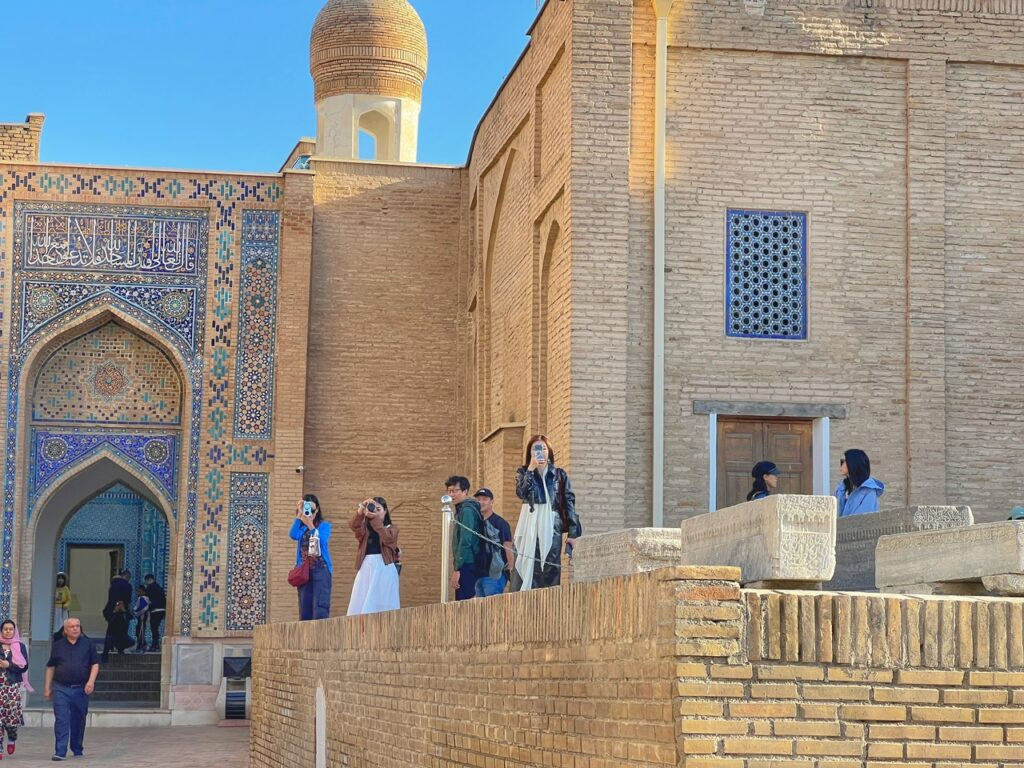
The more realistic version of the situation….all cameras pointing at the “pretty.” (Usually including a girl between the ages of 18 and 50.)
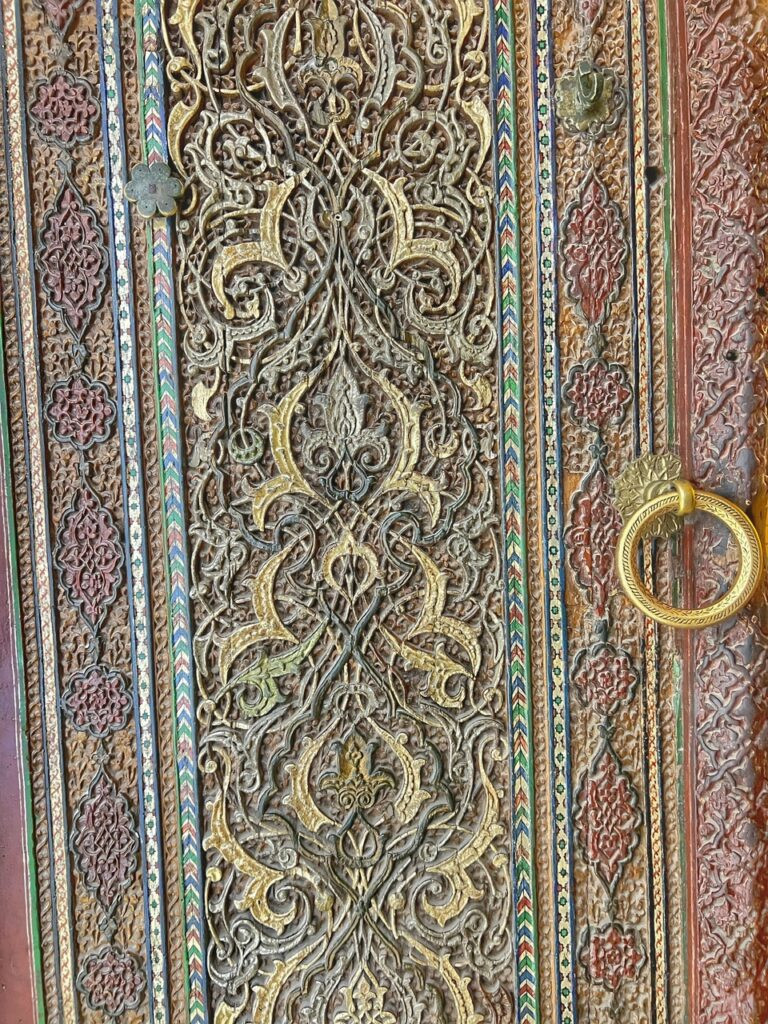
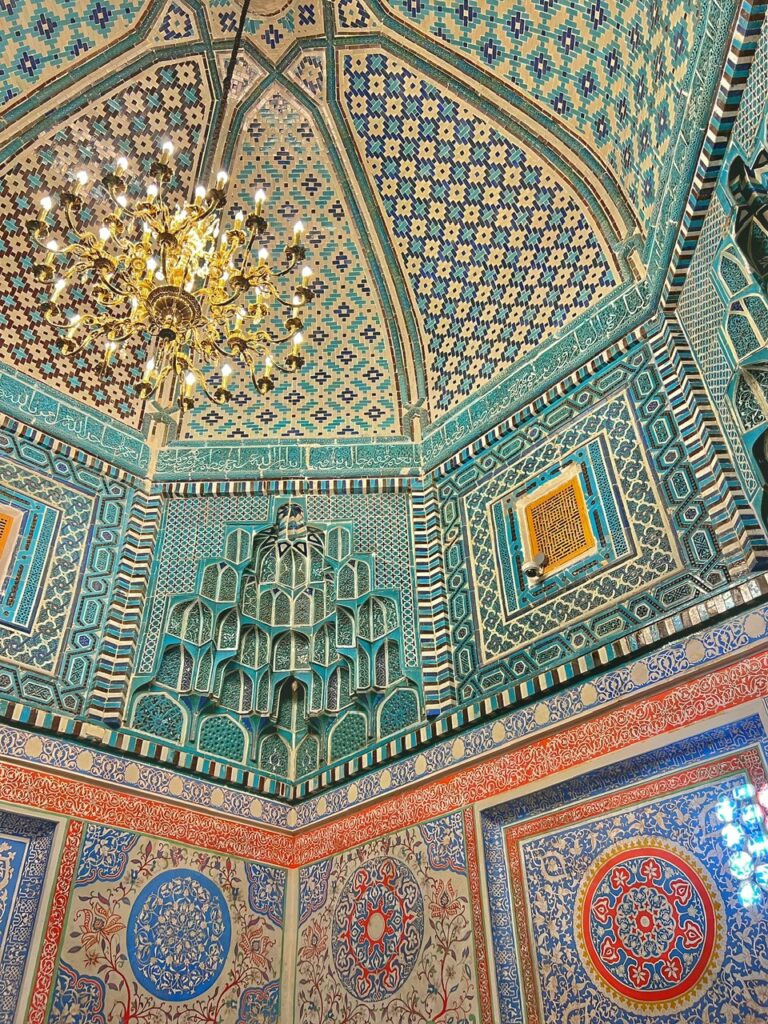

The ironic and amusing part of all these cameras is that beyond this delicately ornate door, and down a stark and unadorned corridor, you could discover the most immaculate and photogenic chamber, built in the XI-XII centuries, of them all. And other than the adorable little boy and his father, we had it all to ourselves for nearly ten minutes where we could truly soak it in.
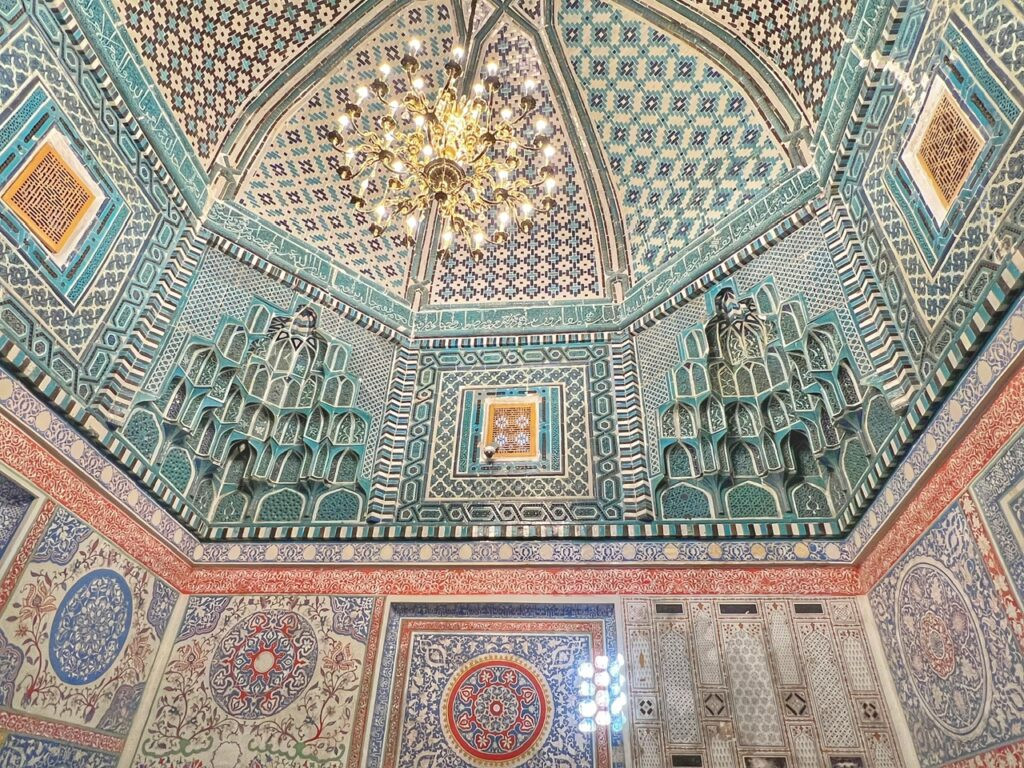
In fact, this is most notable area of the complex because it belongs to Kusam Ibn Abbas, aka Muhammad’s first cousin and one of the first missionaries of Islam to Central Asia.
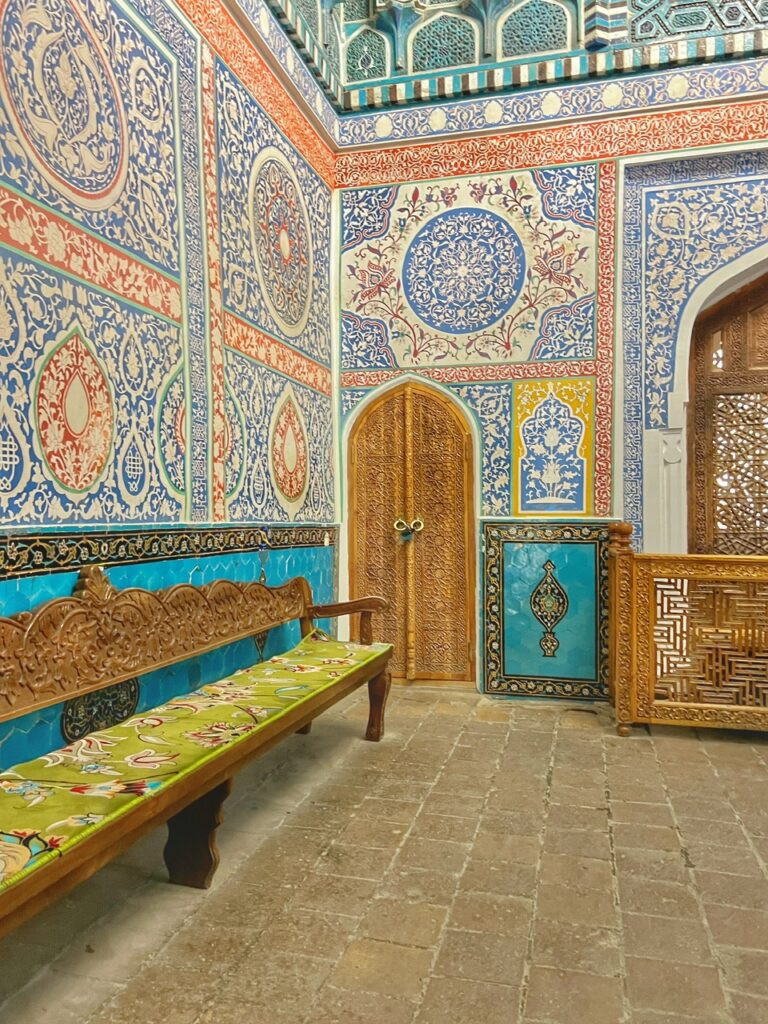
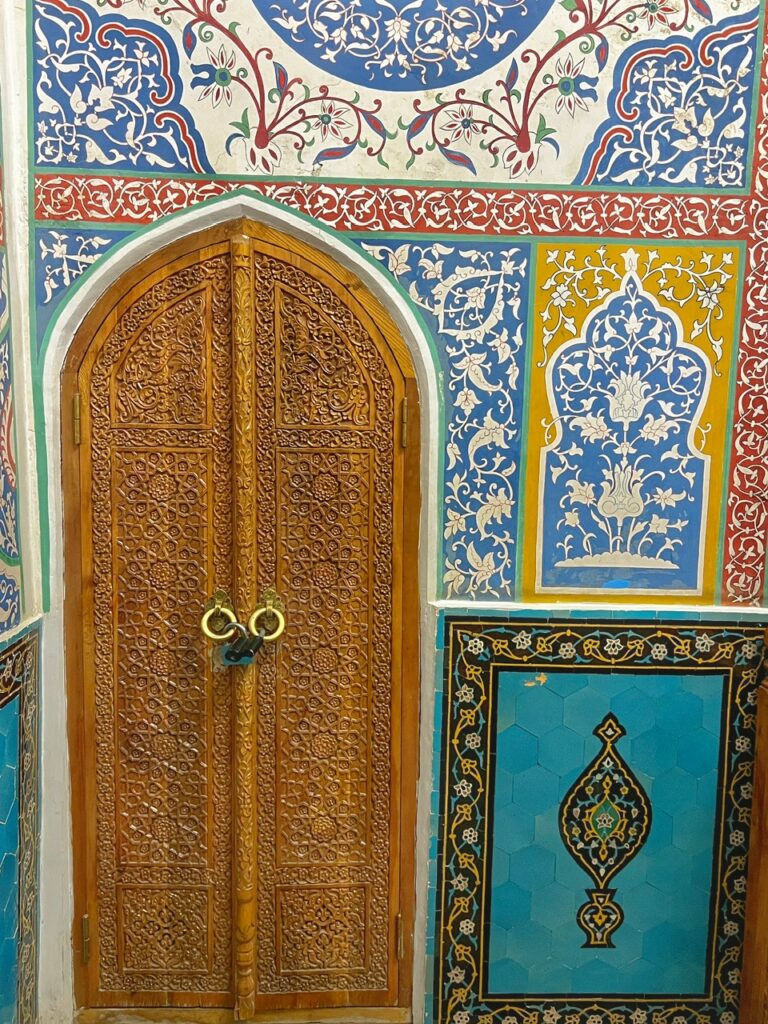
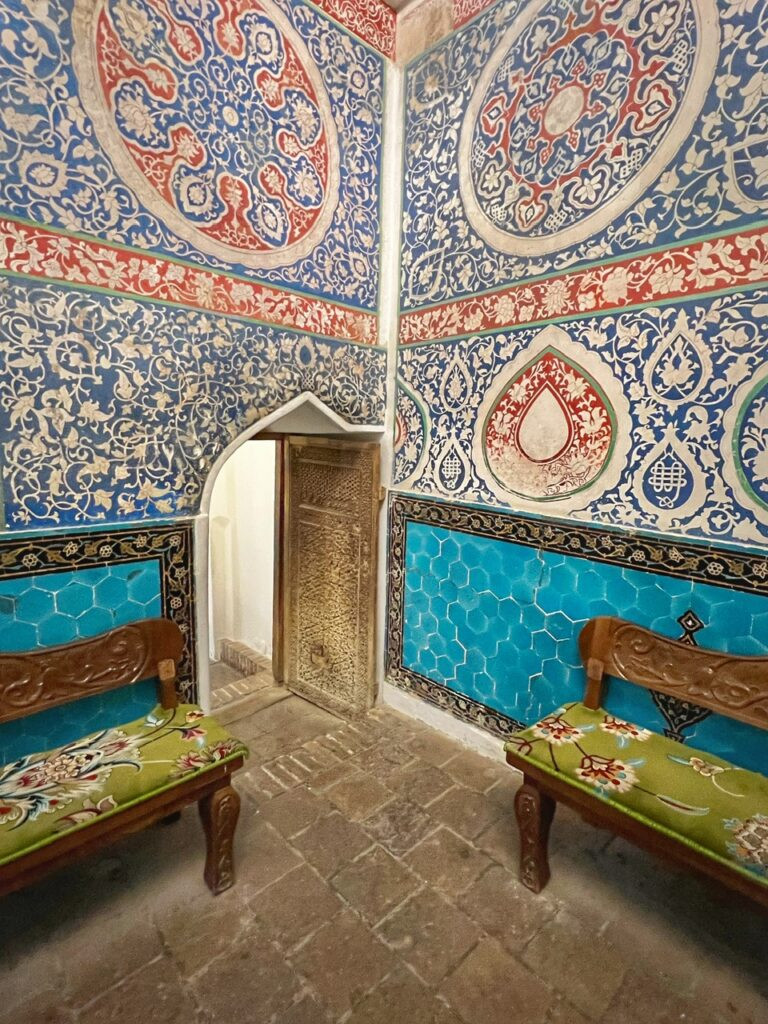
According to Chat GPT, visiting his tomb was considered a high pilgrimage, even equated by some medieval scholars as being as meritorious as Hajj to Mecca. Like in Christianity, when gazing at a ceiling of angels and heaven, the ceiling of this chamber is seen as symbolic architecture which equates to paradise. This includes the honeycomb-like Muqarna niches which are symbolic of the transition from earth to heaven.
Every little surface is covered with something beautiful. The floral and geometric tiles represent gardens of paradise described in the Qur’an, but not sure what the tiny doors are for?
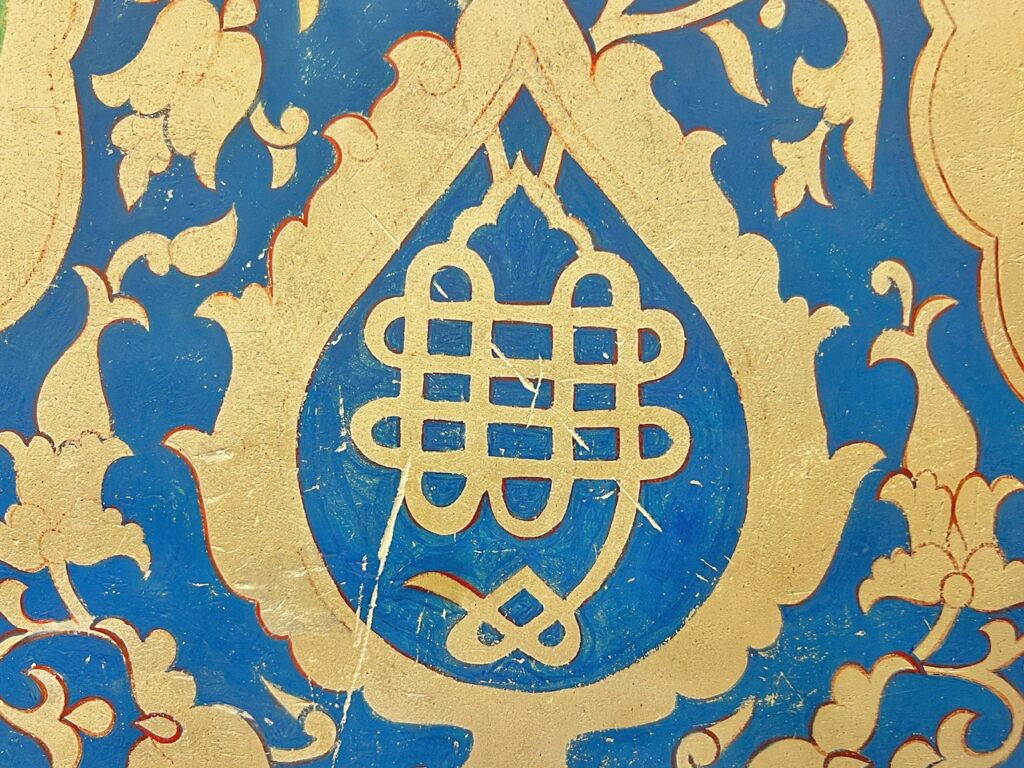
We’re guessing this represents eternity in some way?
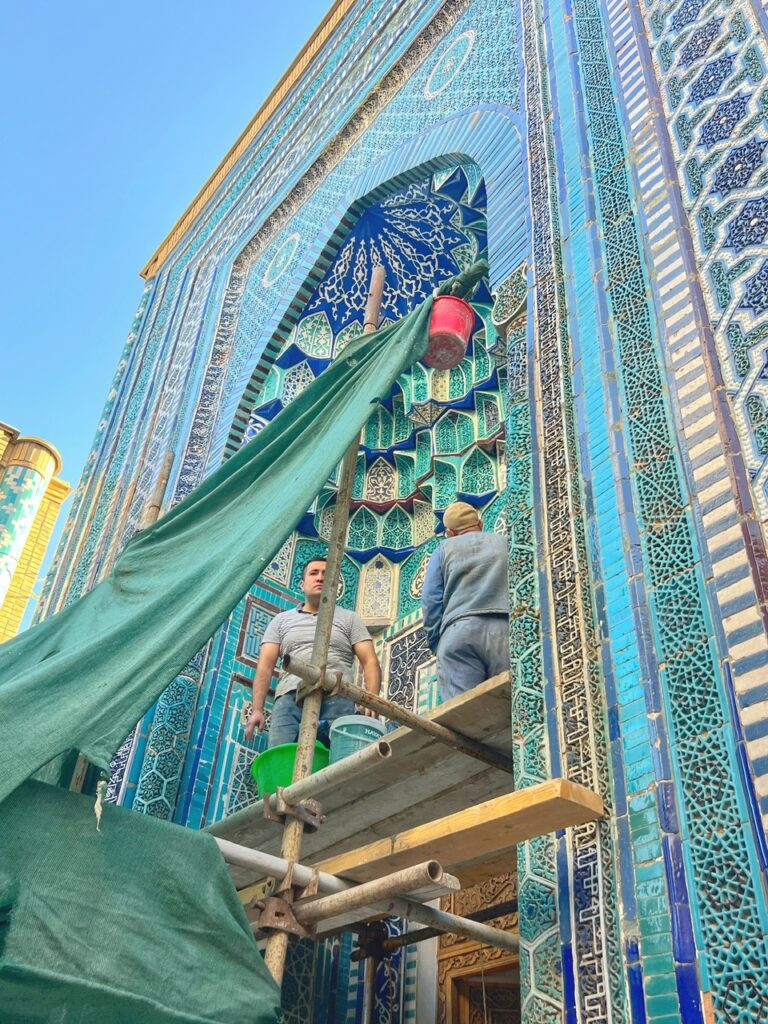
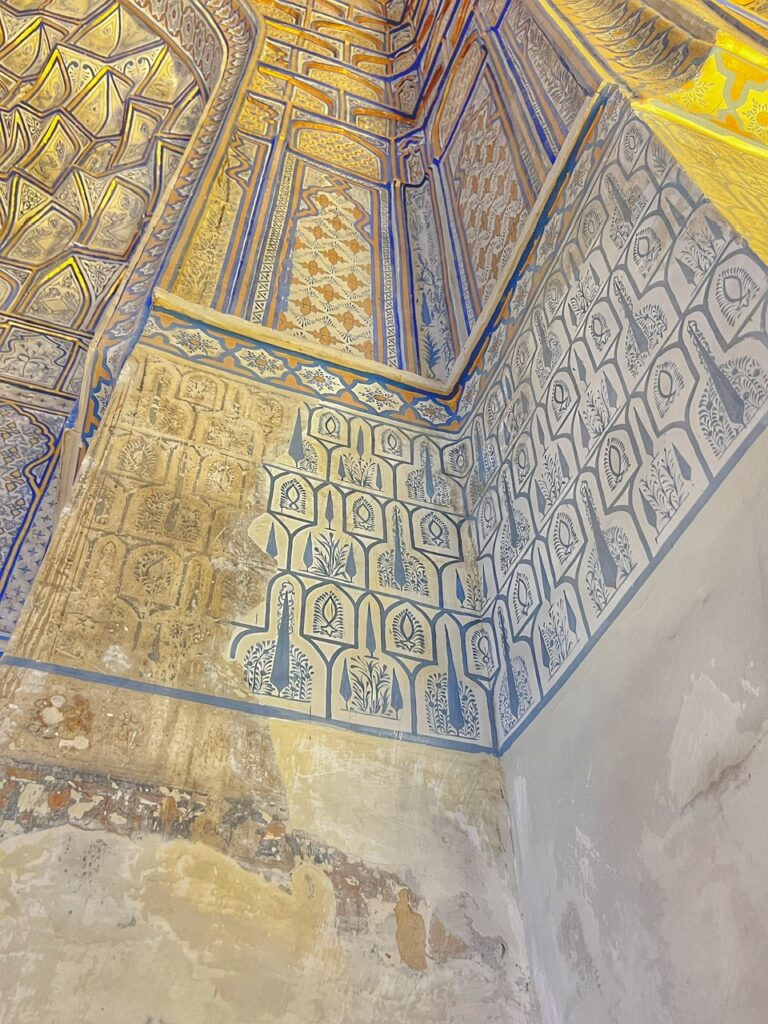
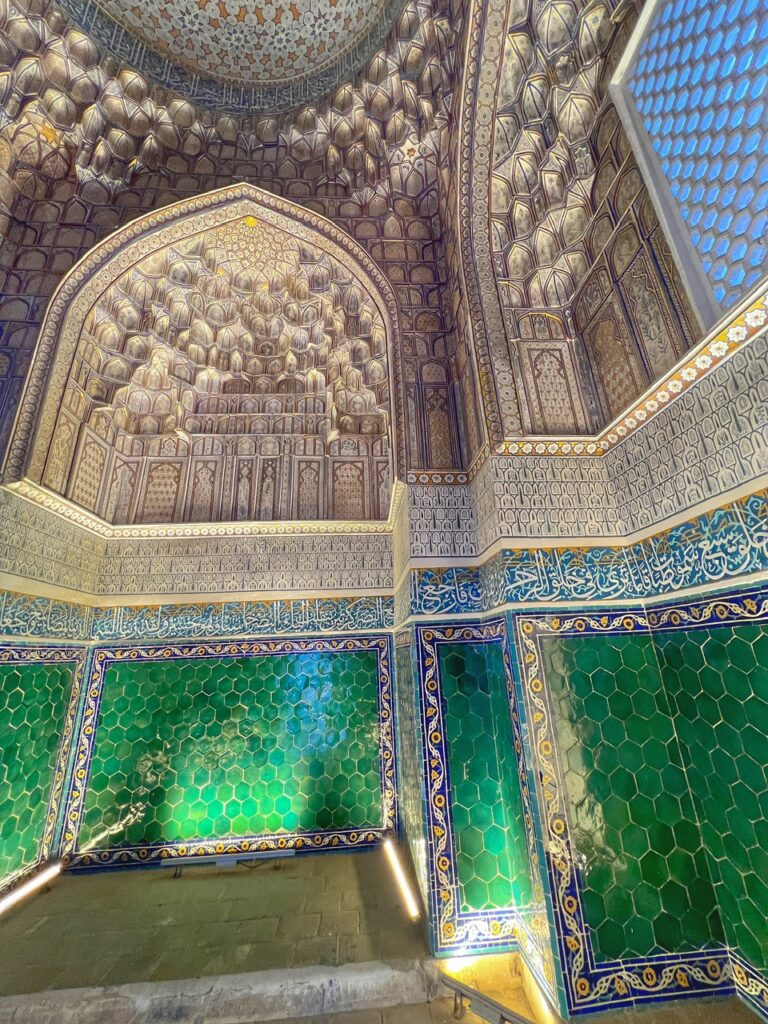
As soon as we exited the barren corridor, we were surrounded by people again, including the craftsmen, who surely must have some sophisticated experience to handle this kind of restoration. The layers of restoration through the years are showcased on this wall. Sparkling emerald tiles offer even more life.
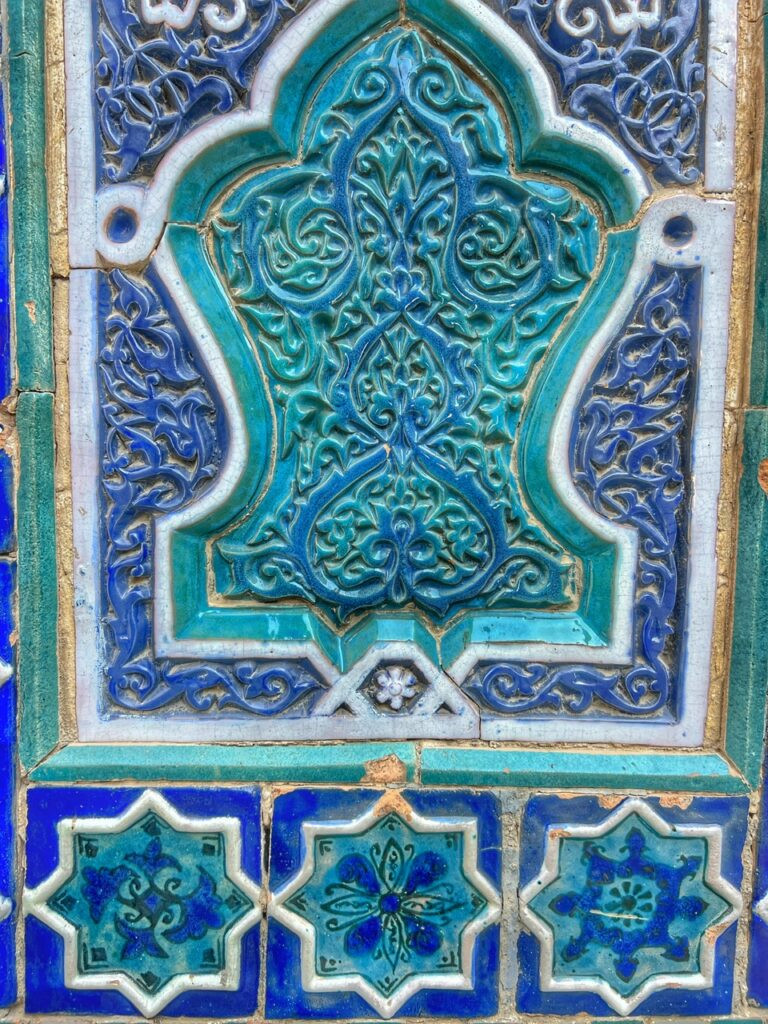
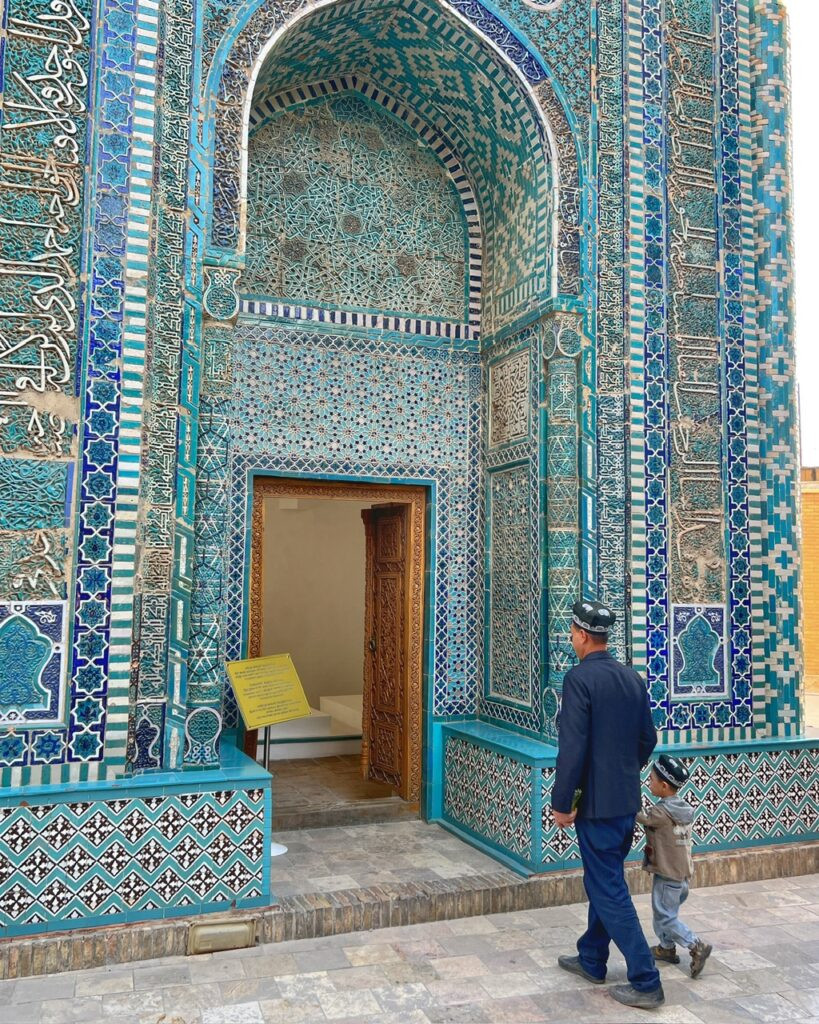
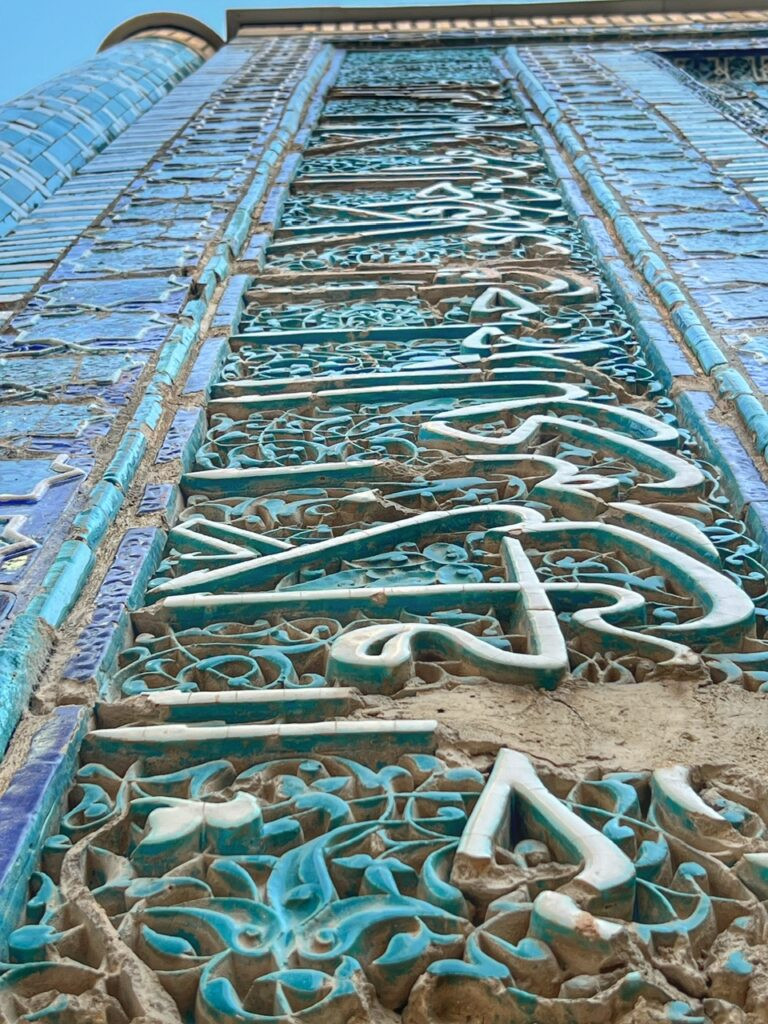
This little boy was impeccably well behaved. The Arabic script draped around are said to be Quranic script.
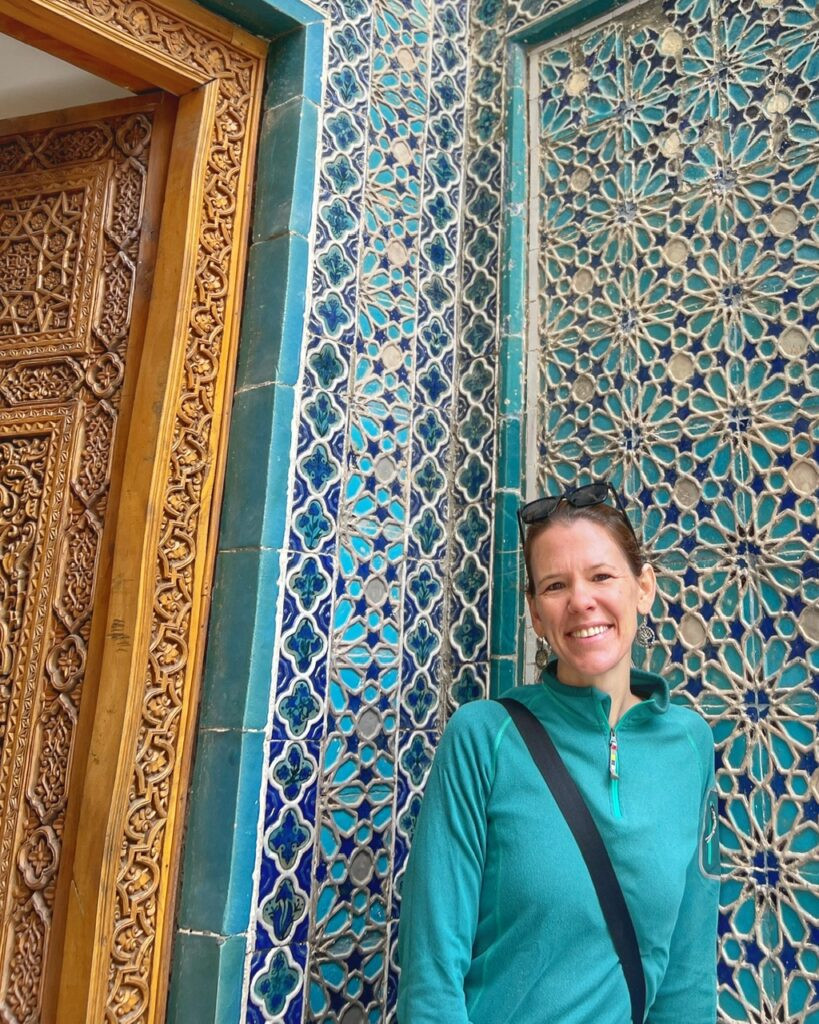
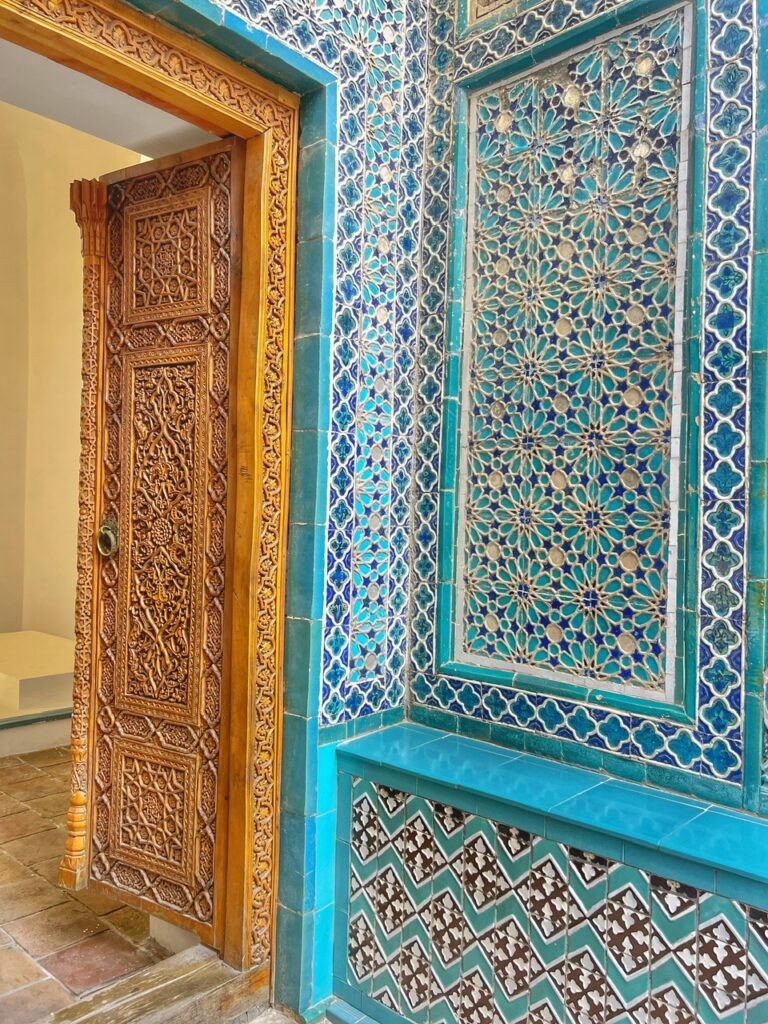

Feels like senior picture day. Of course, we then had the depressing realization that we’re closer to senior, discount and Medicare age, than senior high school. Ha.
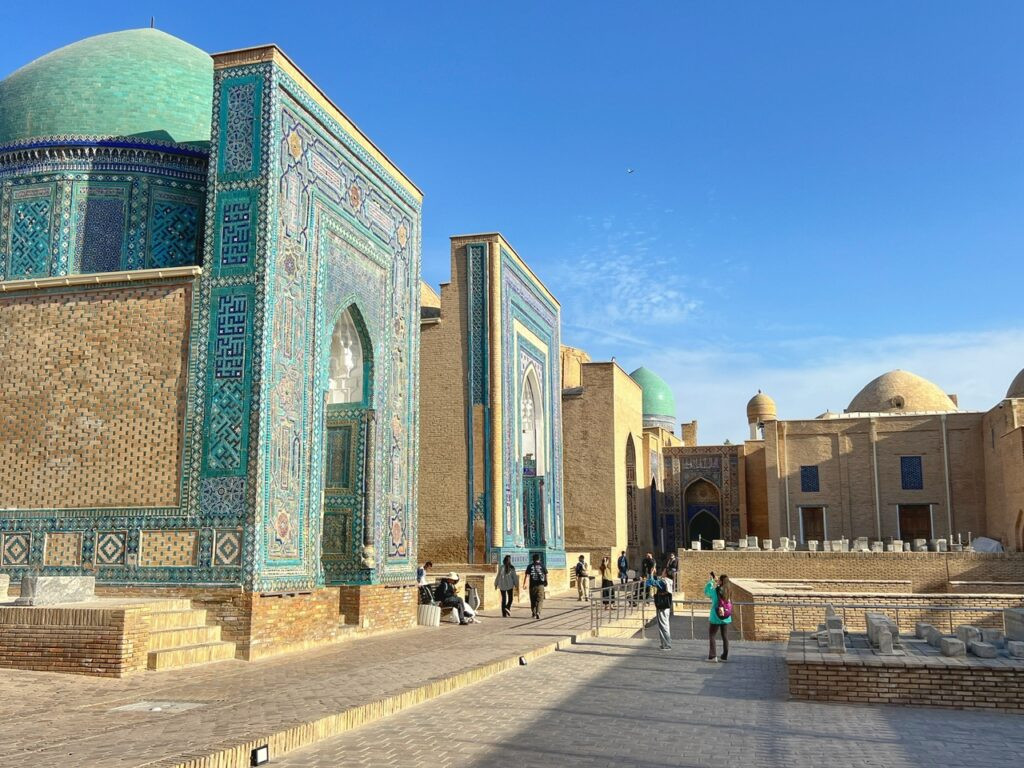
Another reason to get here in the morning…the morning rays shine directly on the entrances to the mausoleums.
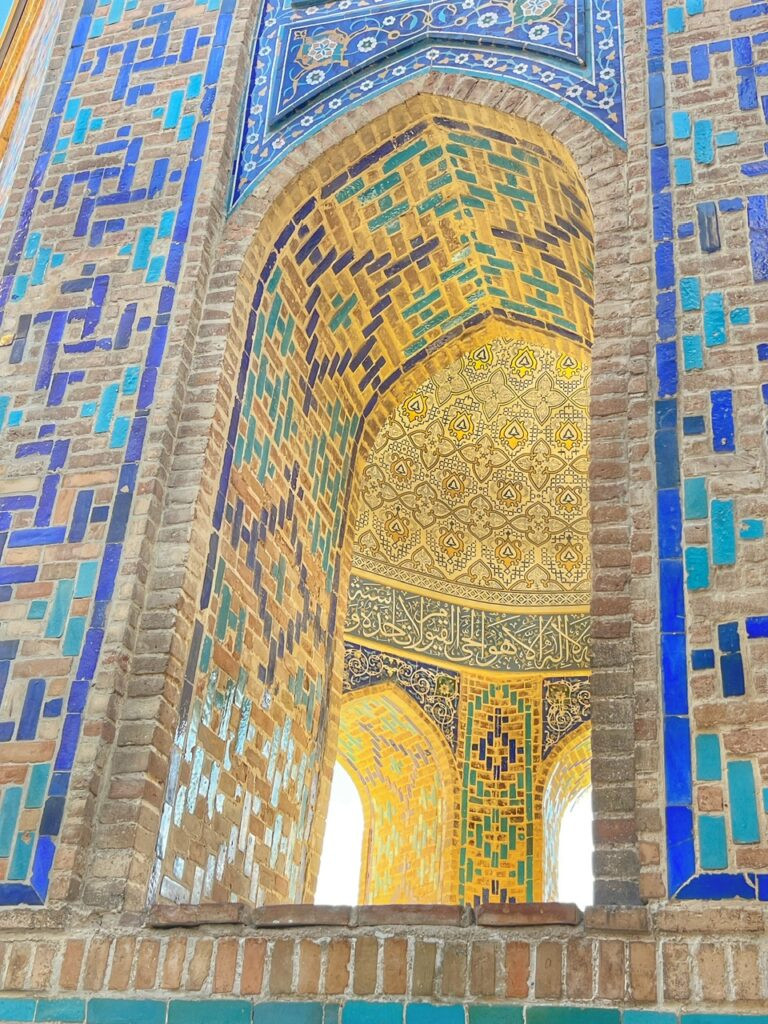
This unique Octagonal Mausoleum was built in the 14th century. The sides are open and underneath is a hilhona (burial chamber) is the shape of a circle.
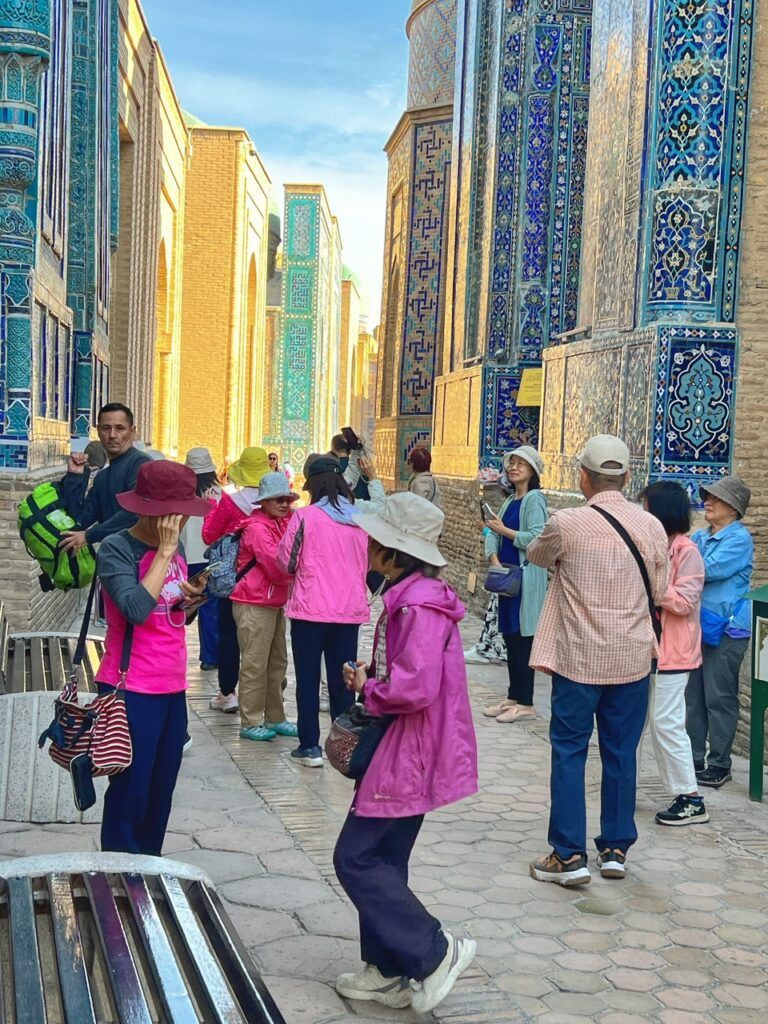


More reality shots, as we were getting ready to leave at 8:40….the Asian tourists….and the local tourists. Get us outta here!
And before heading back to our hotel for breakfast, we took a quick look at the ancient hammom across the street from the necropolis. It is from the 15th Century.
Site: Amir Temur Mausoleum
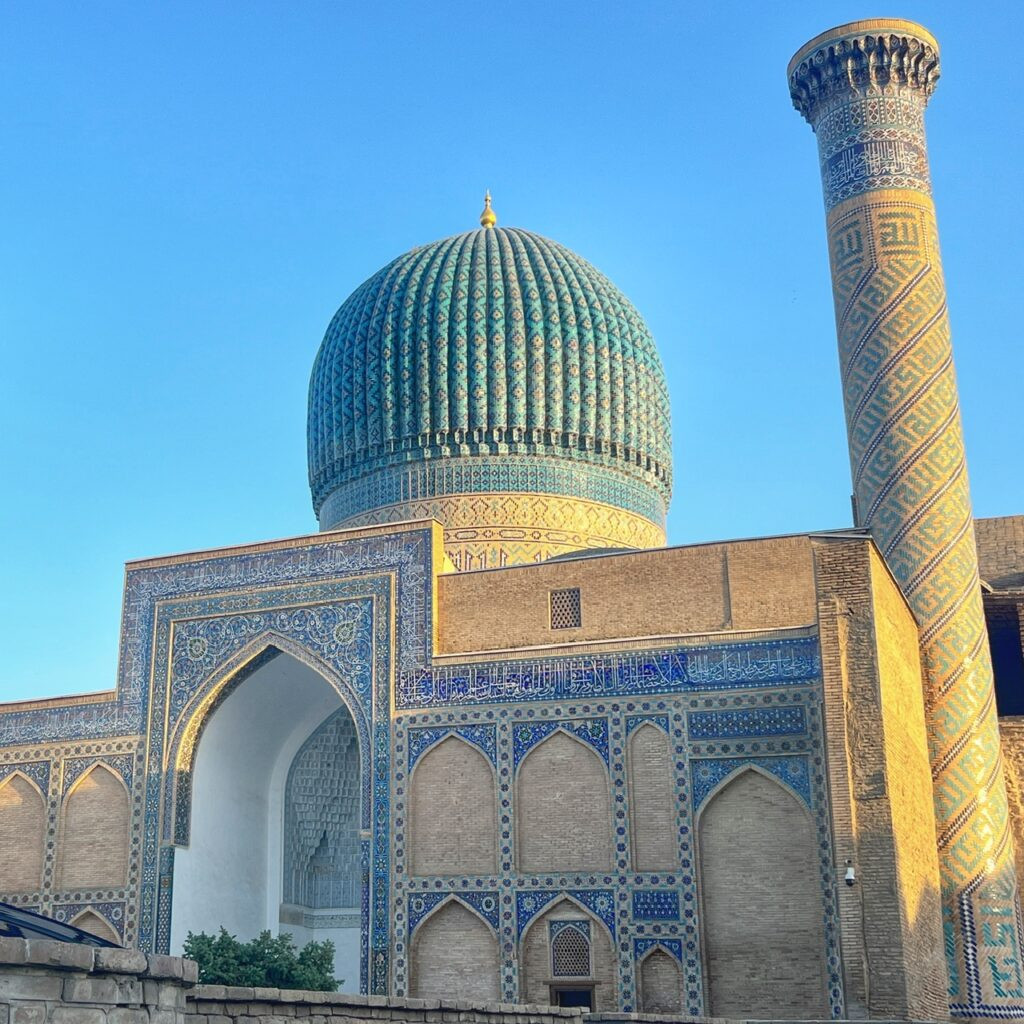
Apparently we couldn’t get enough dead people after the exquisitely gorgeous Shah-I-Zinda Necropolis, so it was time to tomb-hop over to the Amir Temur Mausoleum. In actuality, this was the second place Chat GPT recommended was worthy of an entrance fee, and again it was spot on. ($6/person.)
In its depths lies the founder of Samarkand…Amir Timur, or Timur Gurkani — aka, the son-in-law…and one can assume, great admirer, of Genghis Khan. This guy founded the Timurid Empire in the 14th Century and was revered by many as a nation-builder in Central Asia, and a brutal butthead elsewhere. He accumulated several regions for his empire playbook included India, Anatolia to Persia, Mesopotamia, the Caucasus, and parts of Russia.
He also waged wars with extreme violence, wiped out entire cities, and created towers of skulls as intimidation tactics. Cheery! (Aside: can women puh-lease have a shot at ruling the world?!)
All this said, it’s not too surprising there is a curse legend associated with the opening of Timur’s tomb by the Soviets on June 19, 1941. Supposedly, according to legend, the tomb had inscriptions warning that disturbing it would bring a worse enemy than Timur himself. Two days later, Nazi Germany invaded the Soviet Union — which helped fuel the legend of the “curse of Timur” (i.e., that disturbing his grave would unleash a terrible war).
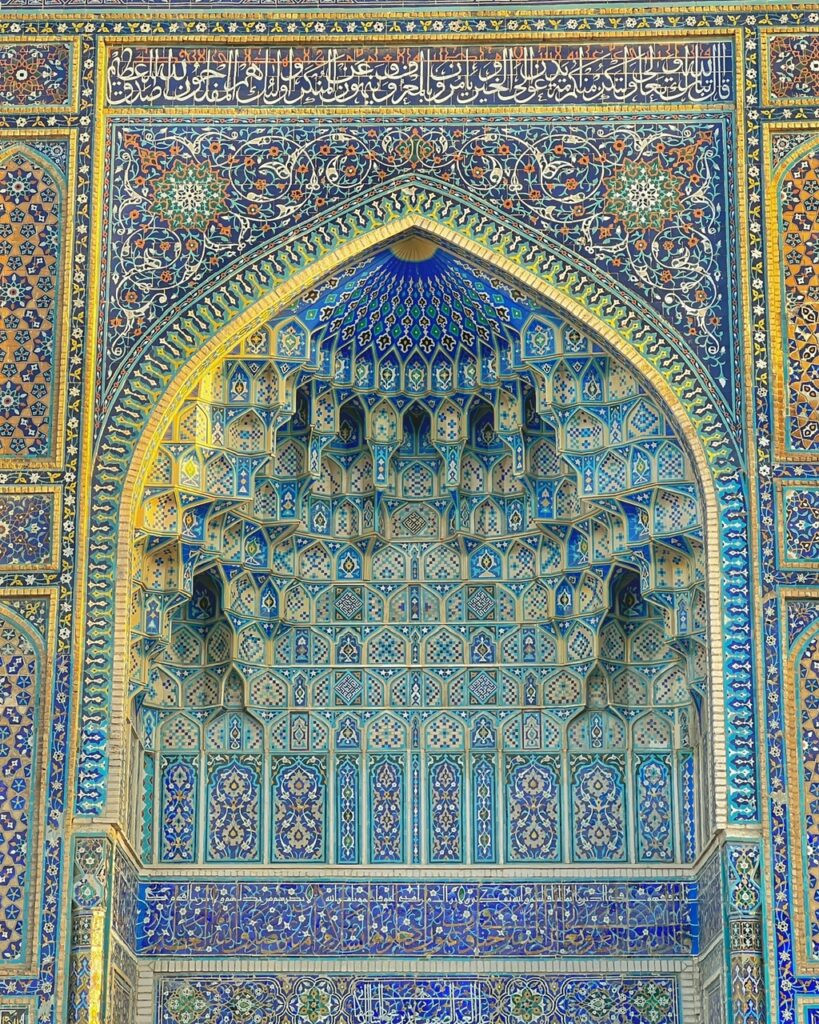
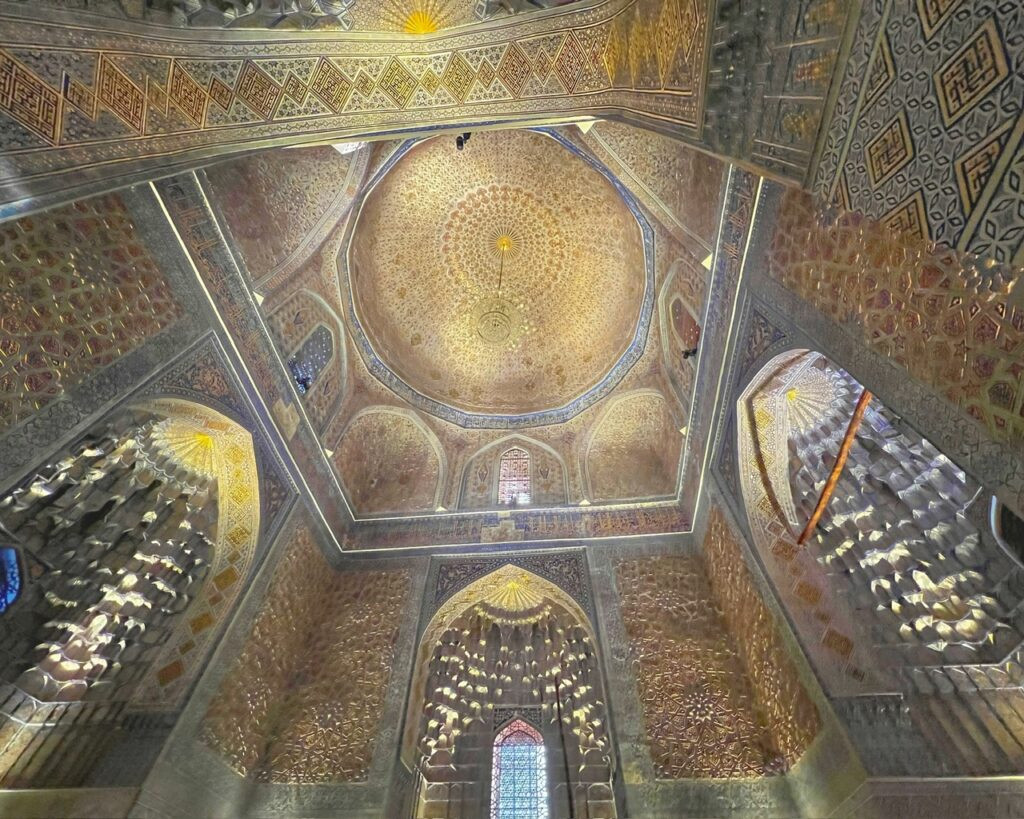
But…until that fateful 1941 date, he sure had a beautiful place to permanently retire eh? These stunning honeycomb-like pockets are called Muqarna niches, which are symbolic of the transition from earth to heaven. Perhaps his got accidentally installed upside down?
Despite his brutality, his capital of Samarkand burst into one of the most spectacular cities of the medieval world recruiting some very smart cookies… scholars, poets, scientists, writers, and craftsmen from across Asia.
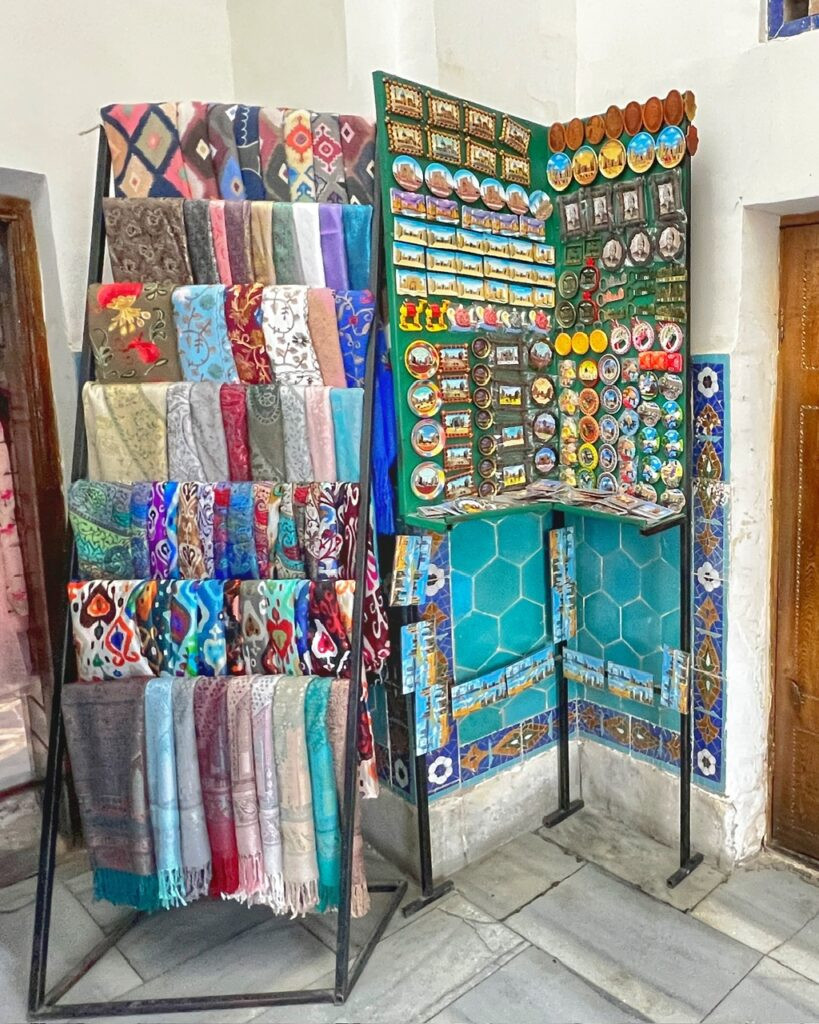
And it was a commercial trading hub as well. Not much seems to have changed today…
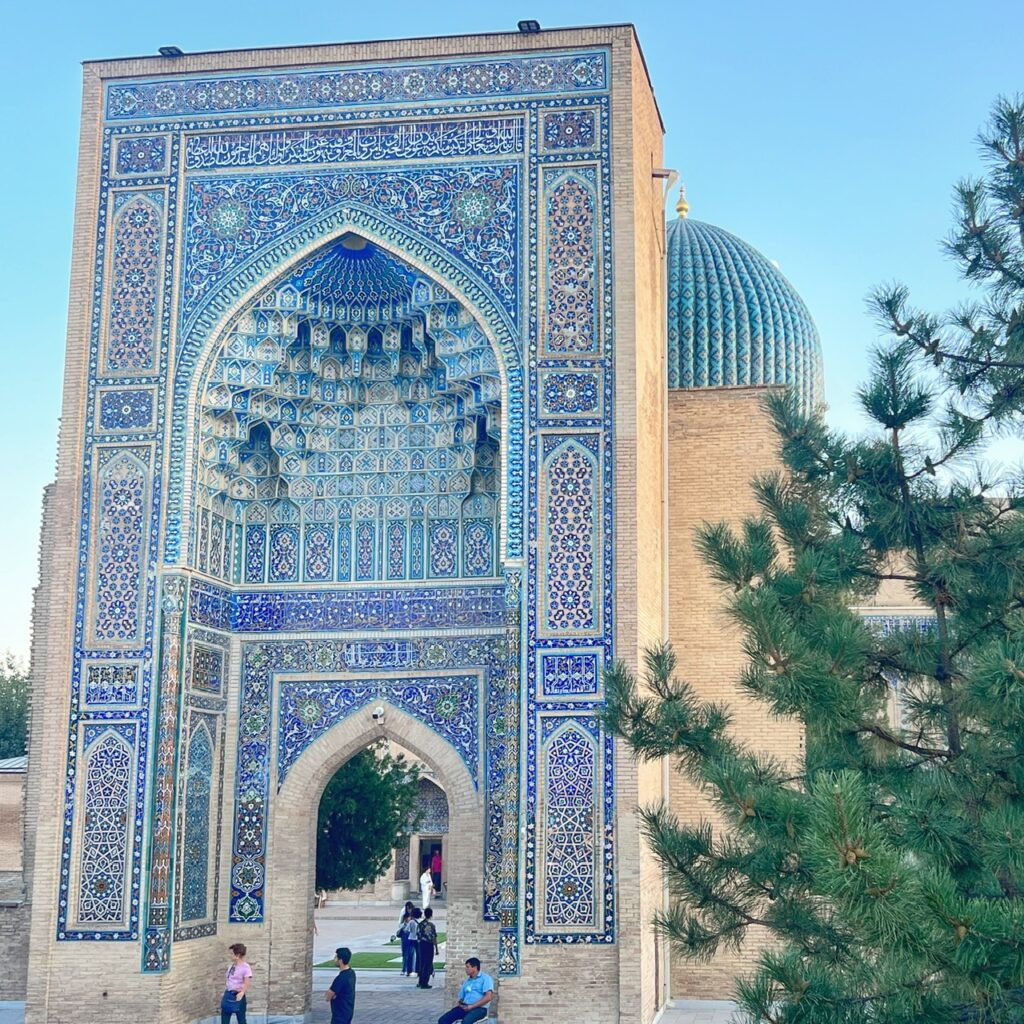
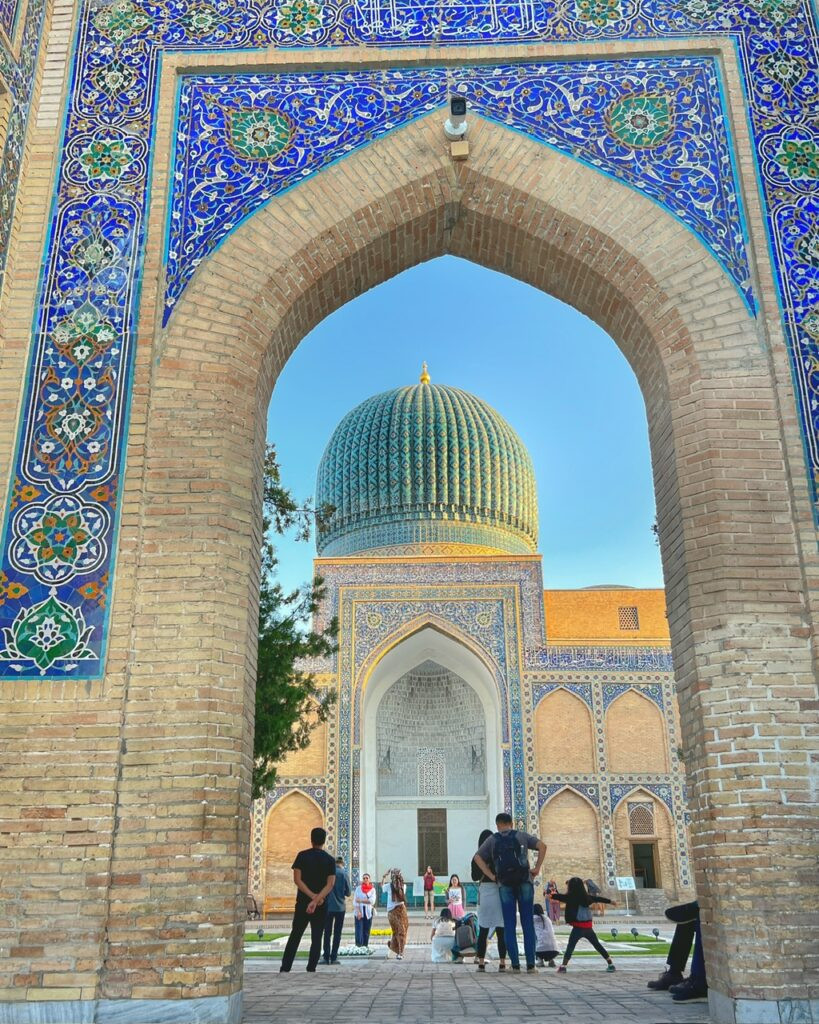
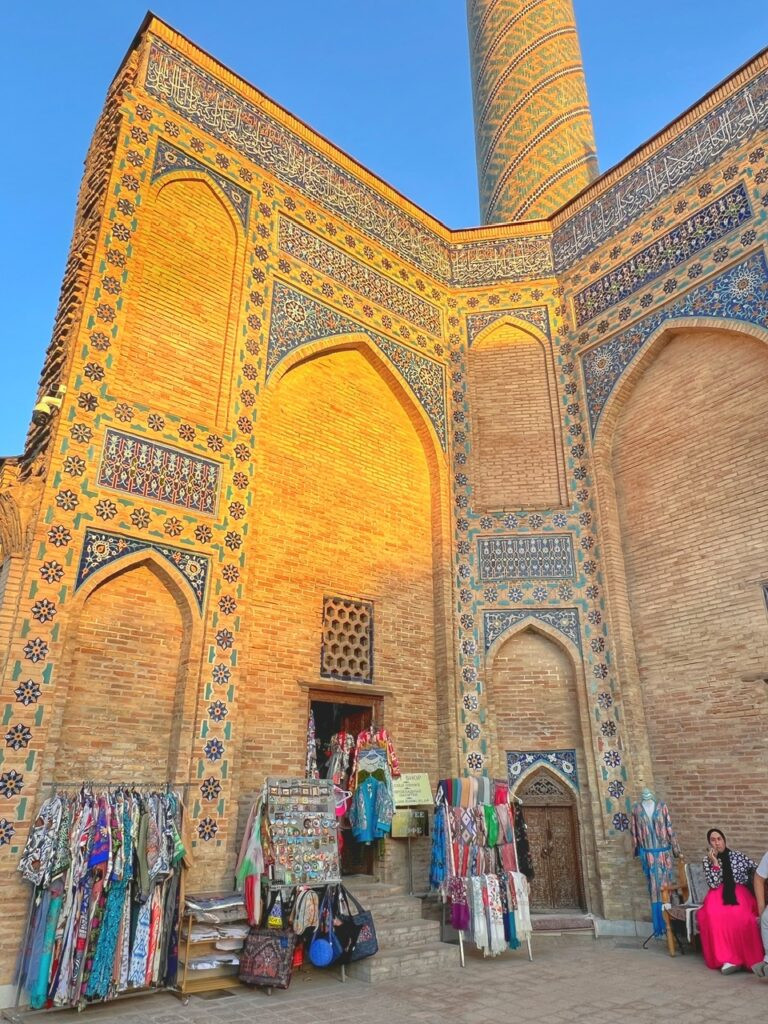
When you arrive to the site, you will enter through a resplendent cobalt canopy, which forms an arch perfectly accentuating the center azure dome…(minus the cluster of people, of course.) But since we visited during golden hour, we also were rewarded with a fire-like glaze.
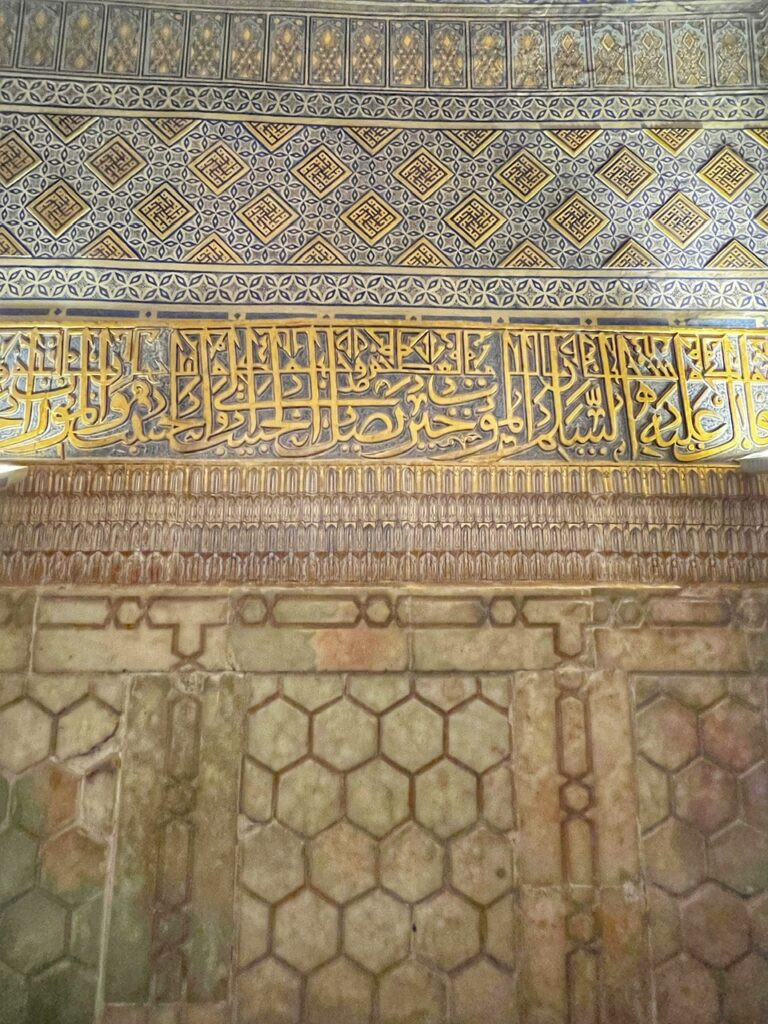
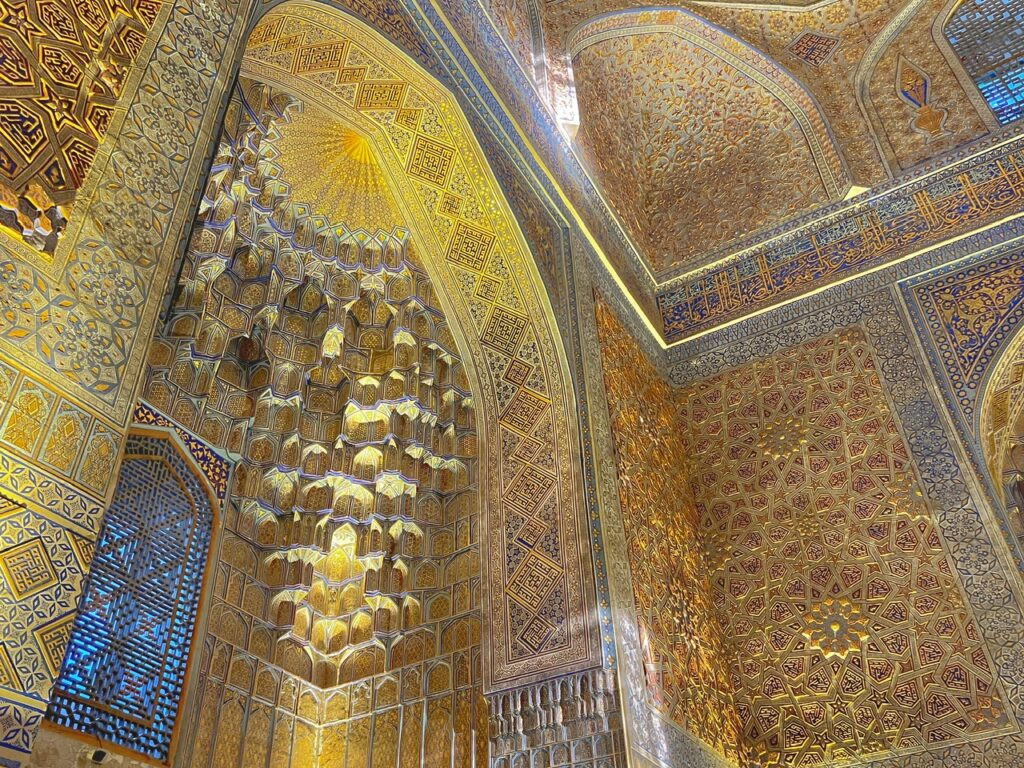
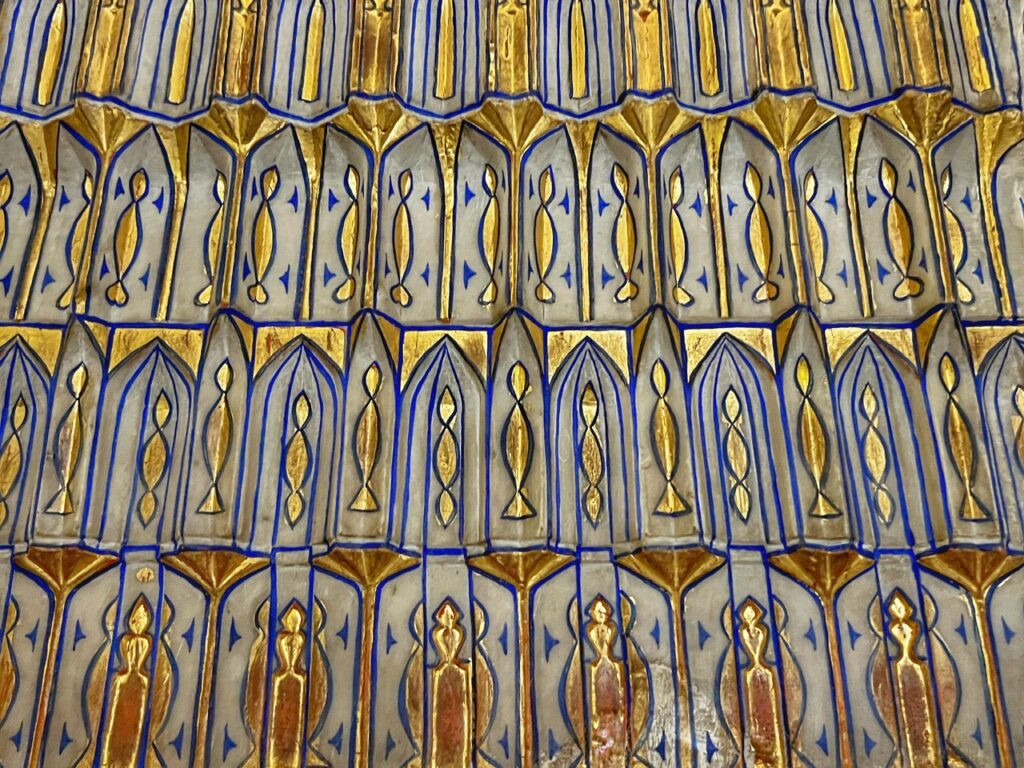
The soaring center dome of the main mausoleum is naturally accentuated in glorious gold flakes as any great leader requires, and like the tombs we saw at Shah-i-Zinda, are stunningly intricate.
Site: Bibi Khanyam Mosque
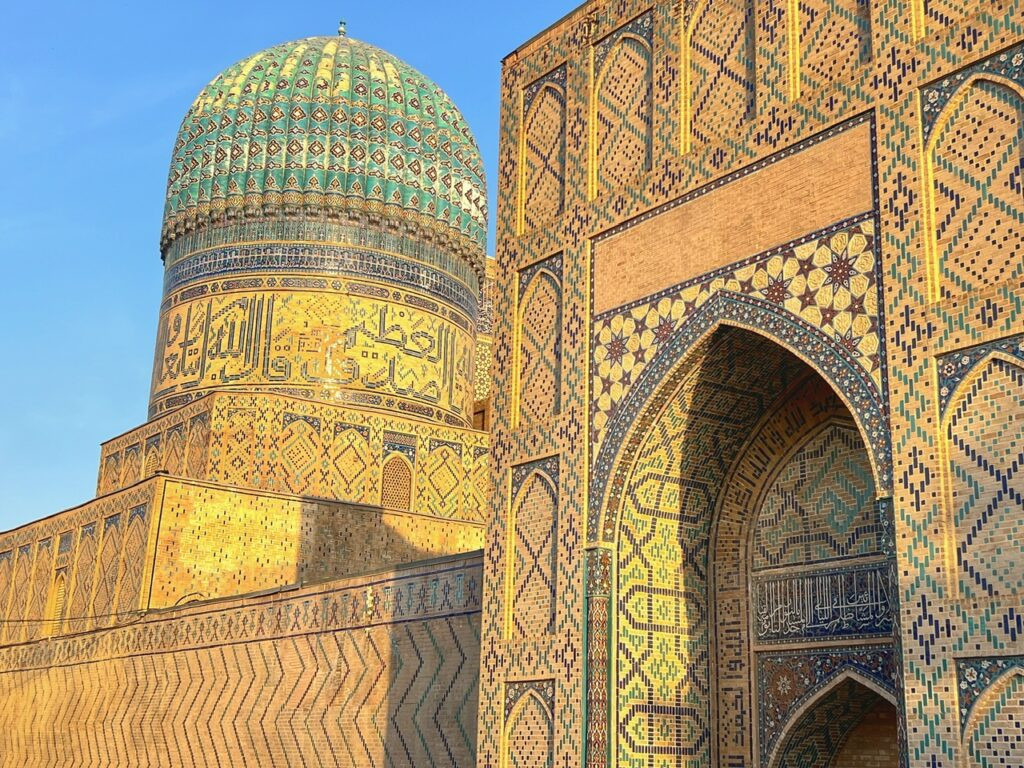
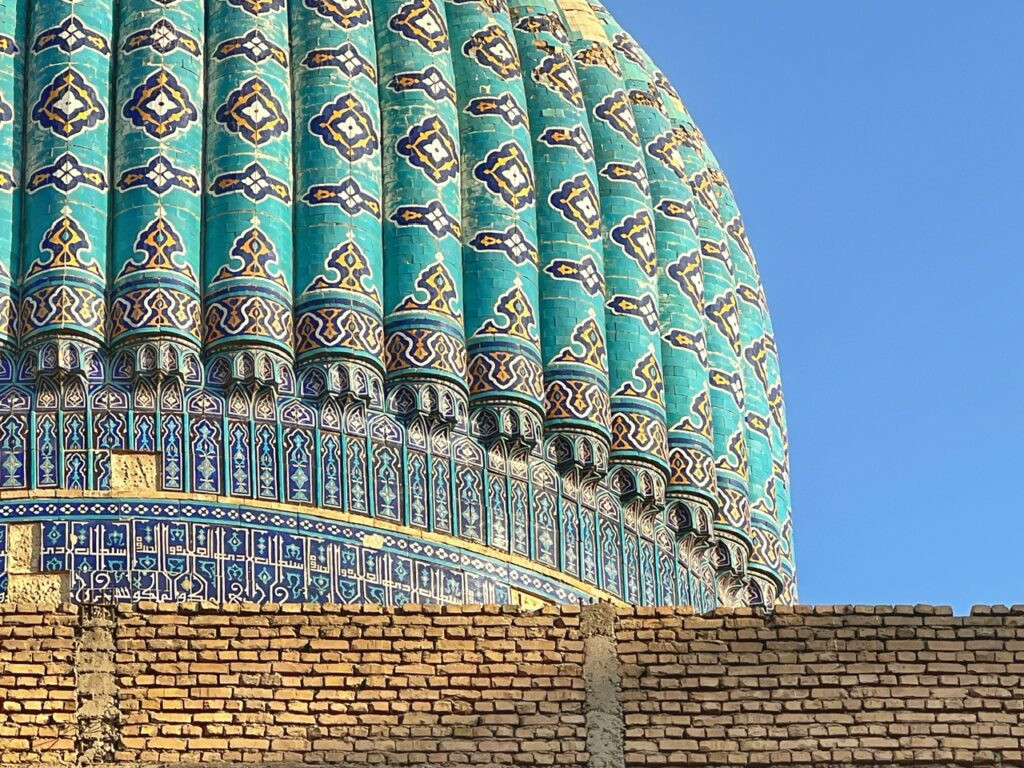
During our week in Samarkand, Greg and I would regularly jog by some of the most iconic Islamic architecture in the world at the Registan and Bibi Khanyam Mosque, which was within five minutes of our place. It was utterly magical to be there at an early hour before people arrived when the sunlight was just beginning to kiss its sapphire-studded walls.
On one of these mornings at 7, we also decided to visit the inside, which we had all to ourselves, offering a deep sense of solitude we hadn’t gotten anywhere in this bustling and touristed city. And, this part was meaningful.
But to be frank, it was quite underwhelming compared with the mausoleums in the previous posts and you can appreciate it just as much by wandering its exterior.
This mosque was constructed by Amir Timur in 1399, after he returned from his campaign in India and was named after his “principal” wife, (of 6, 7 or 8?), Saray Mulk Bibi-Khanym. I asked Greg if I could be his principal wife after we learned this and he said he’d think about it!
It was a complete representation of Timur’s vision in which Samarkand was not only a capital of political power, but of culture and architecture as well.
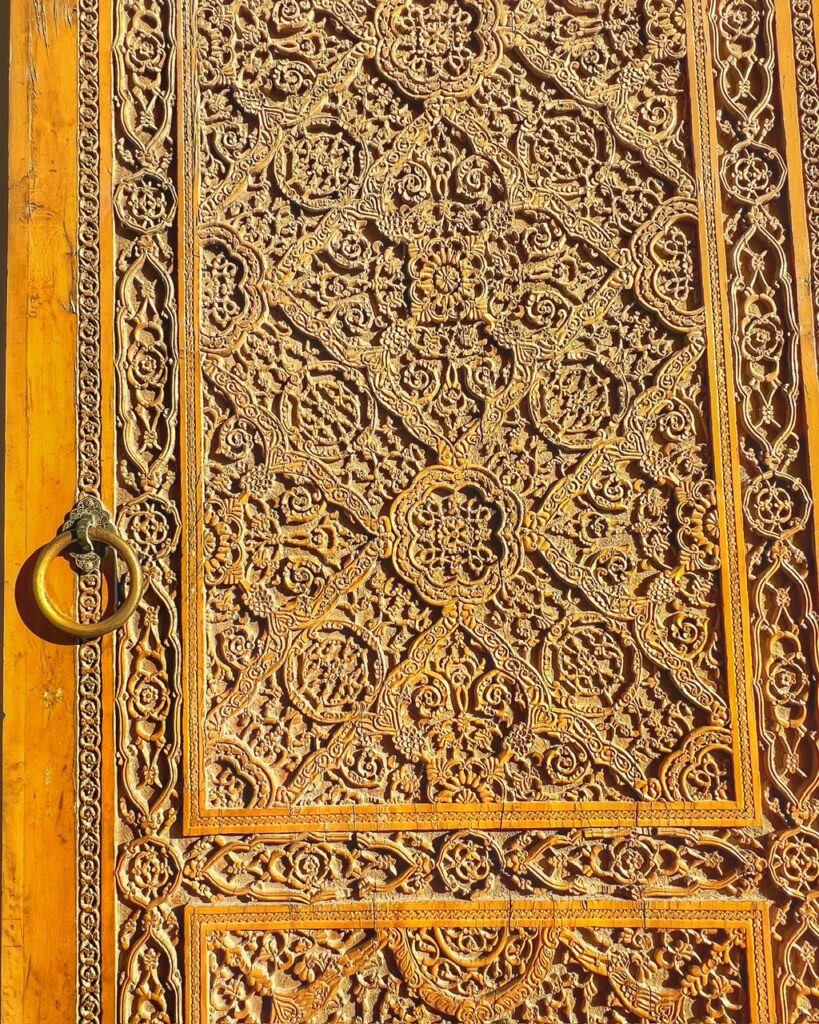
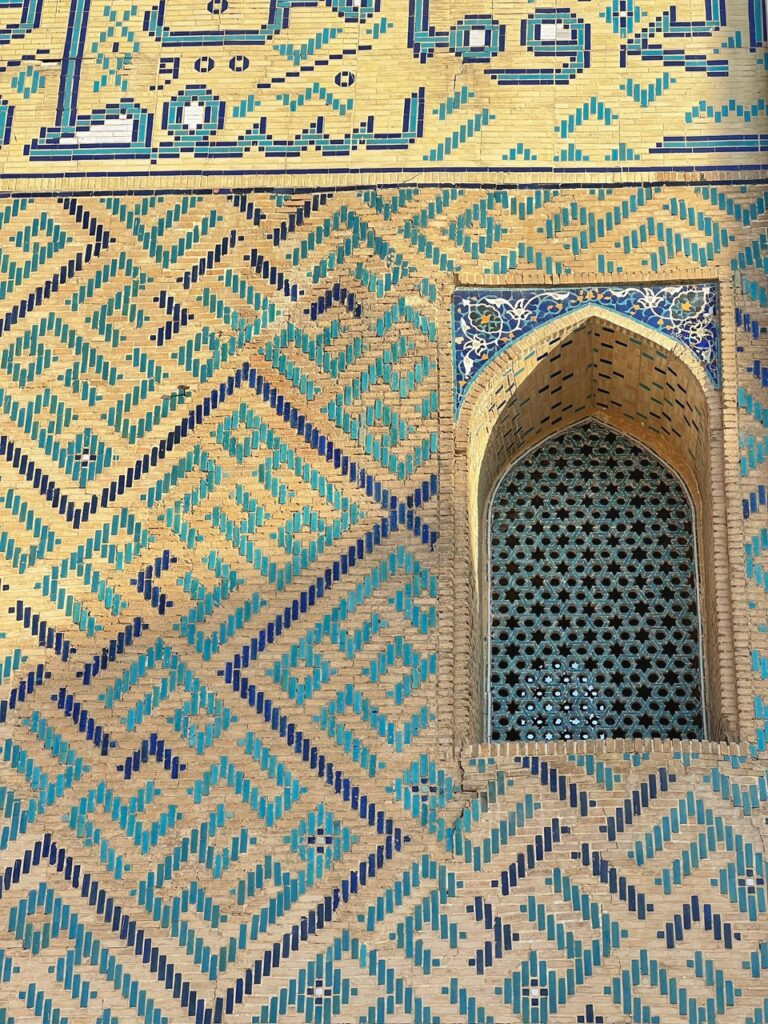
And the details are unquestionably ornate including wooden doors chiseled like lacy doilies, and sprays of Samarkand’s signature shades of blue dusted throughout.
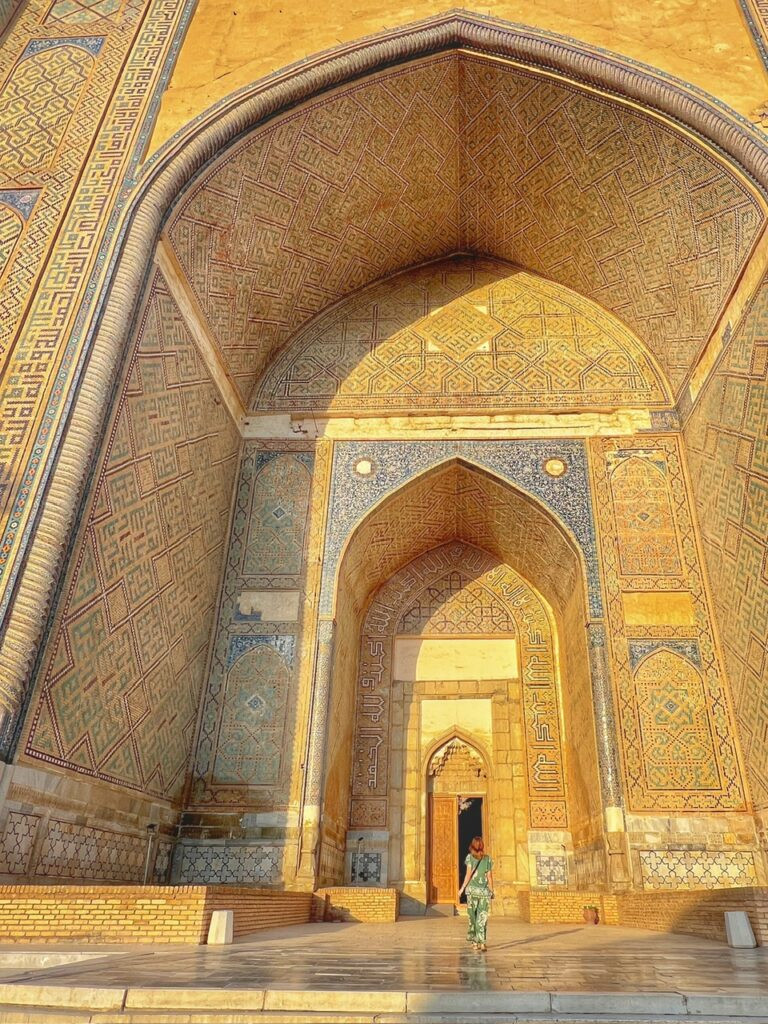
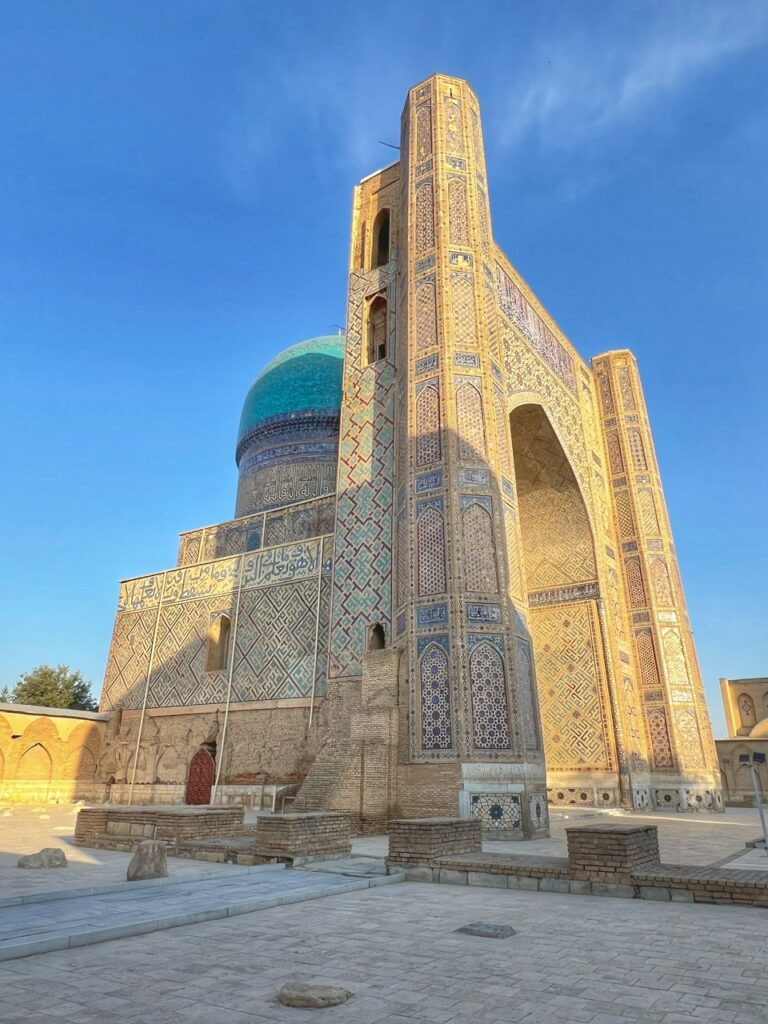
Mandy entering the grand marbled entrance; its vaulted arches dropped within each other like graceful stacking dolls. ($6/person). Naturally, in 1399 Timur had grand ambitions and he wanted the mosque to be among the grandest structures in the world.

But there were major problems because the architectural techniques and materials were pushed toward their limits. After it was built, some parts started to fail and collapse including the entrance portal and the massive dome. Over time, damage continued to happen from earthquakes, wear and neglect. Many restorations have taken place, especially in the 20th century.
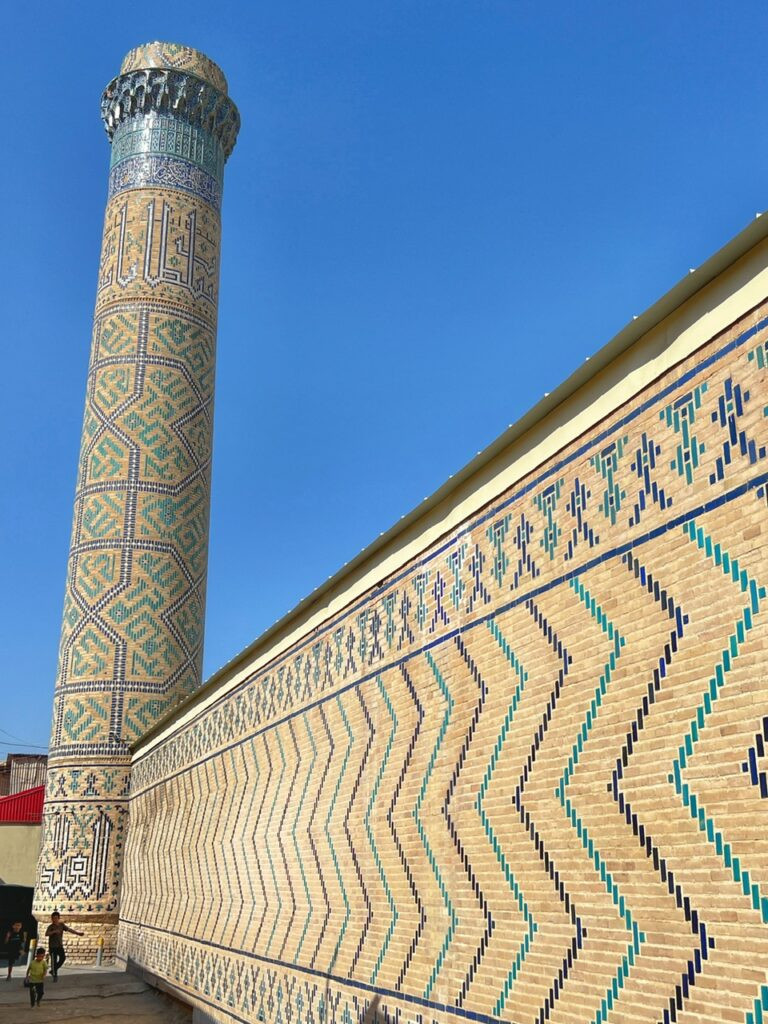
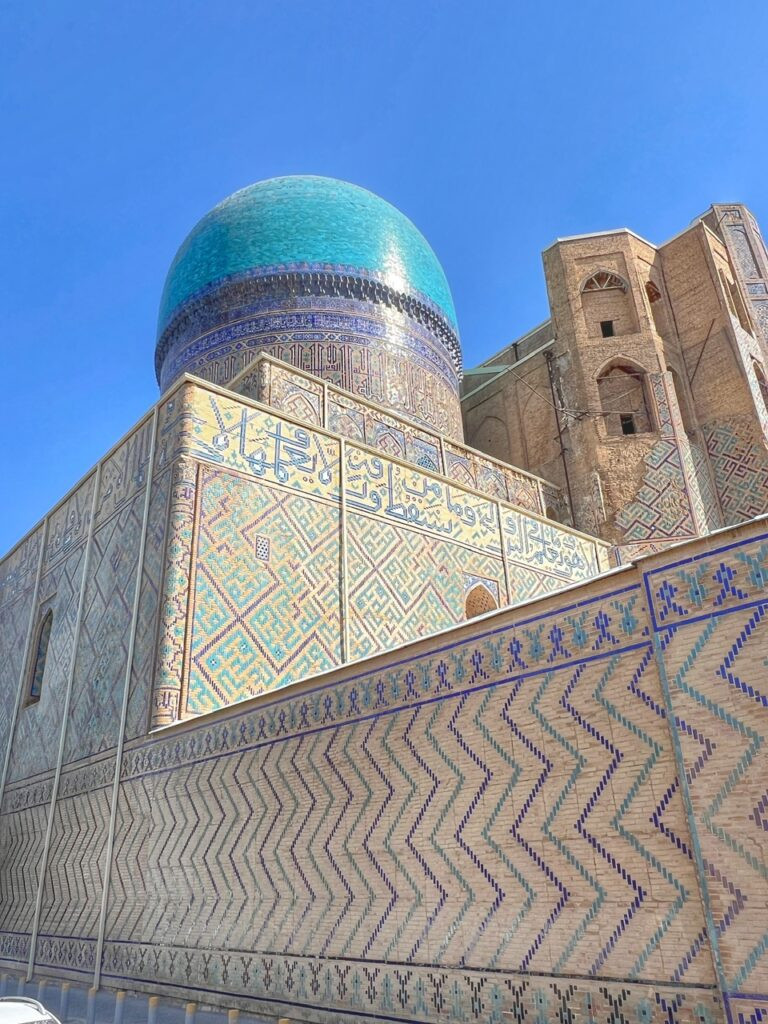
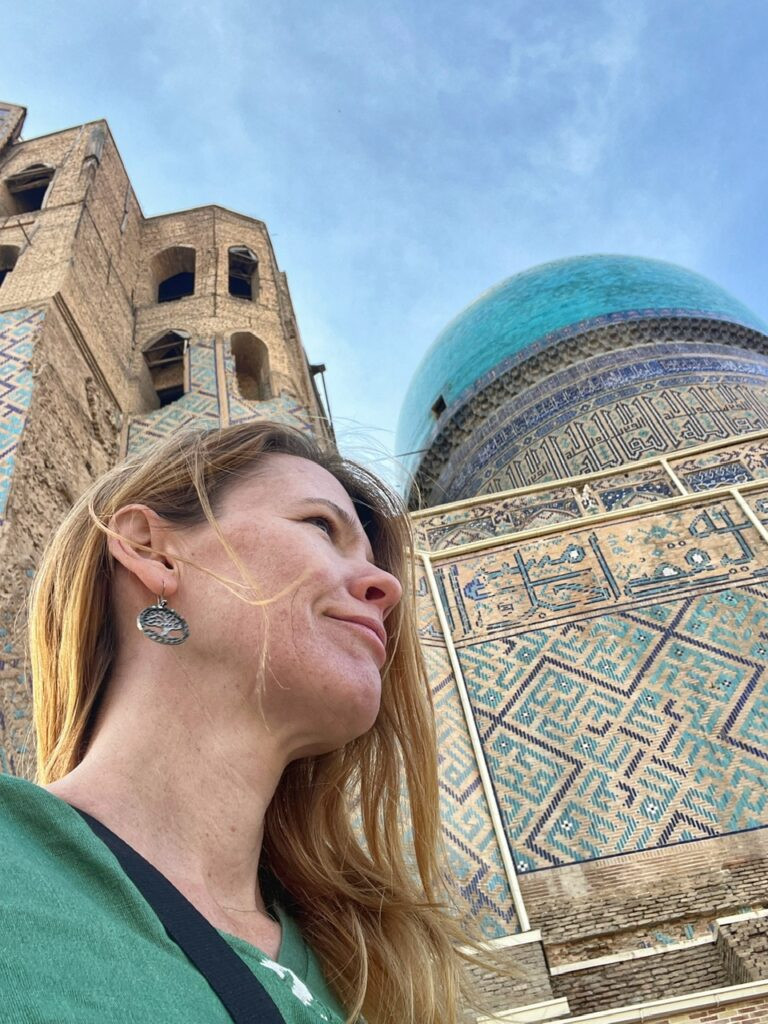
The complex is flanked by four striking 35-meter minarets. What is interesting, however, is that no calls to prayer emits from them….or from ANY minarets in Uzbekistan. Why is this? Despite 90% of its people being Muslims, Uzbekistan is officially a secular state, and after gaining independence from the Soviet Union, the government kept heavy control over public religious expression to prevent what they consider “religious extremism.” (Aka some of their neighbors). One of these measures was to prohibit calls to prayers from loudspeakers. We can’t say that we totally mind this, as we are certainly getting better sleep than in Turkiye or other Islamic countries we’ve visited.

In the middle of the courtyard stands a giant marble Qu’ran stand, which is part fertility aid.
According to the brilliant word choice of Atlas Obscura, it is believed that if a woman crawls under it, she will become pregnant. However, this tradition was abruptly halted in 2023 when this glass case was “erected around the structure for protection.”
Guess Samarkand’s baby boom is bound to drop like the rest of the world’s now…
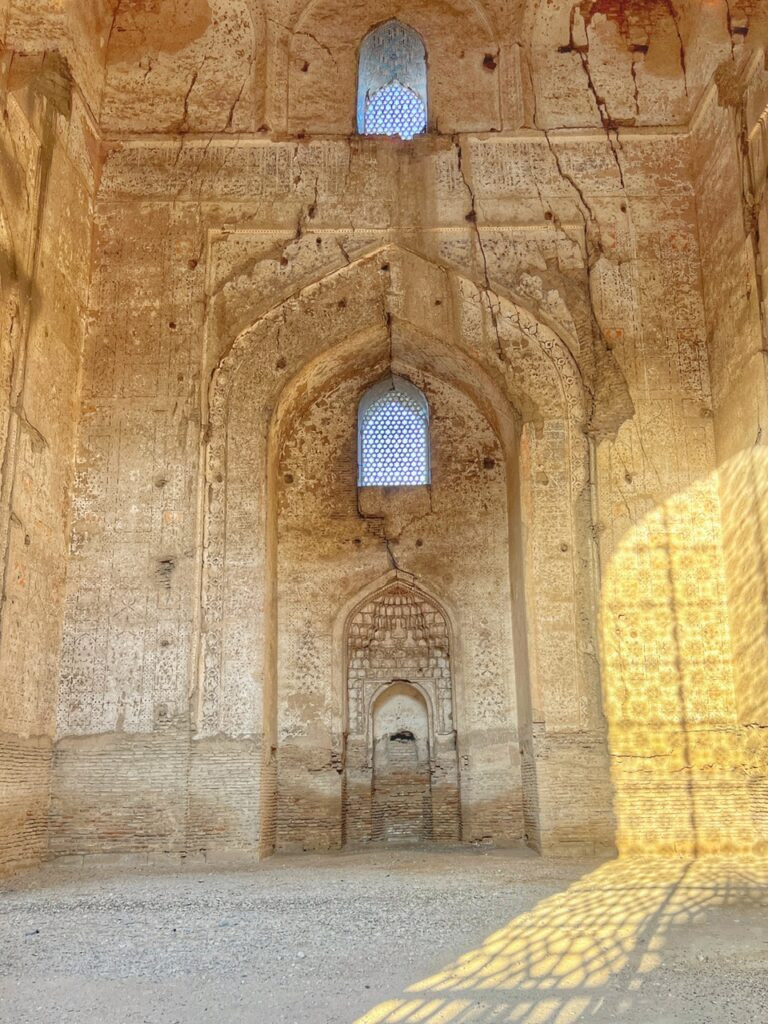
Peeking inside the gated off main dome, which has not undergone its makeover just yet.


(Unlike us supermodels.) Speaking of…Mandy in her new Uzbek ensemble, which is basically like jammies acceptable to wear in public. Yes please.
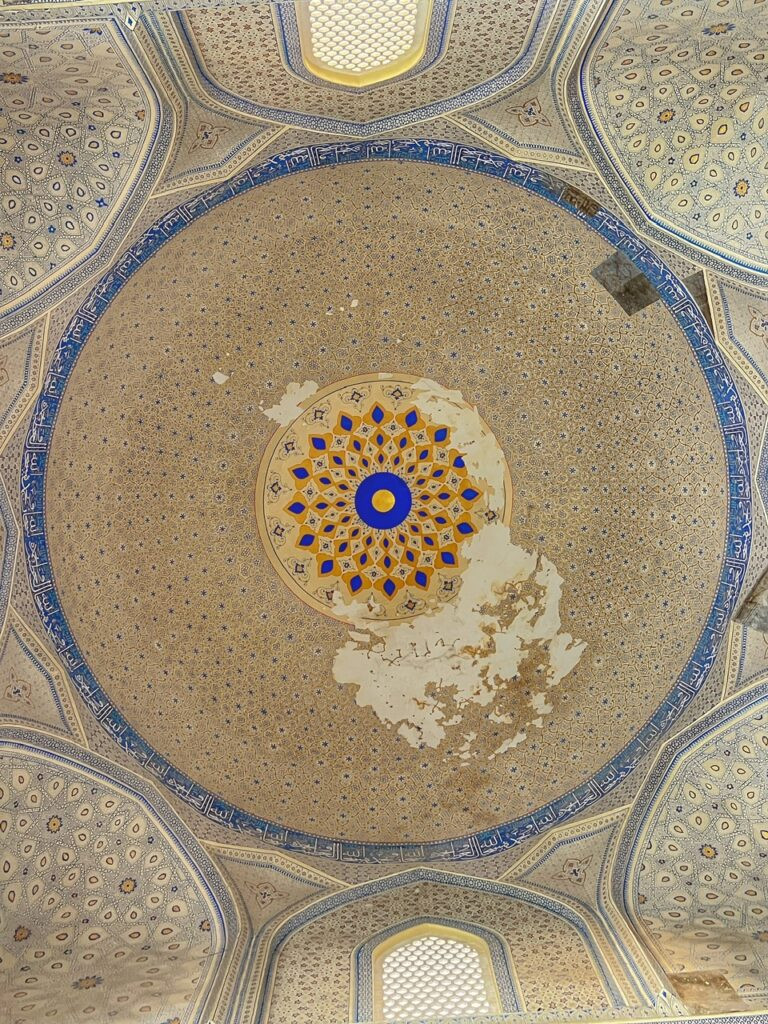
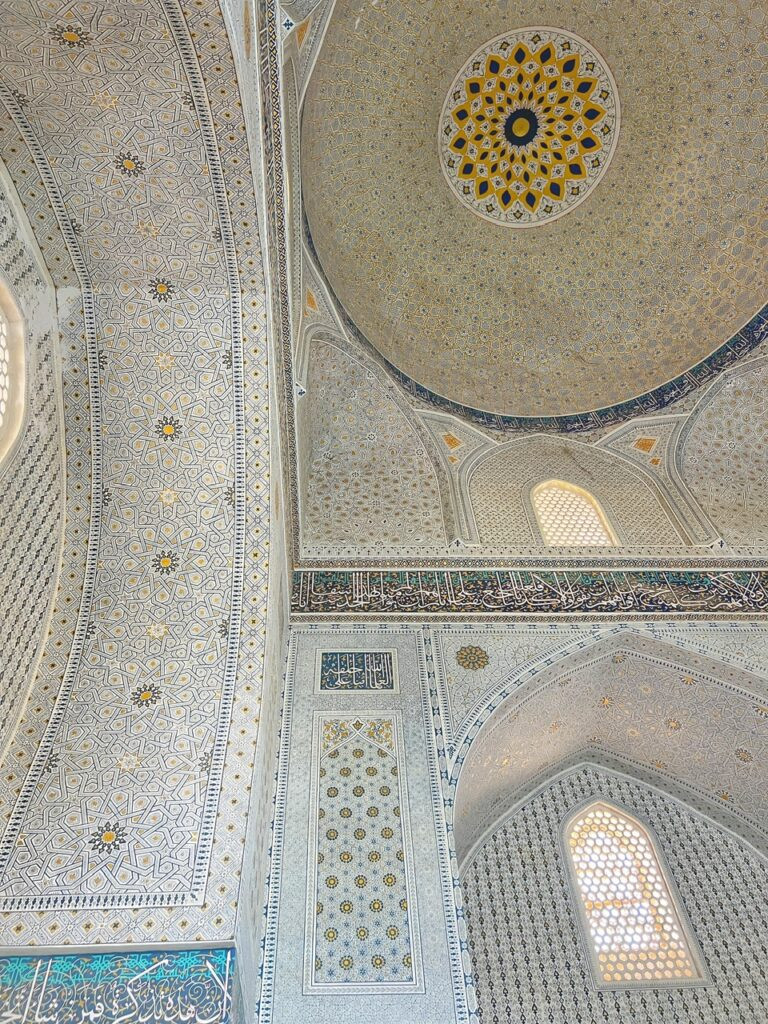
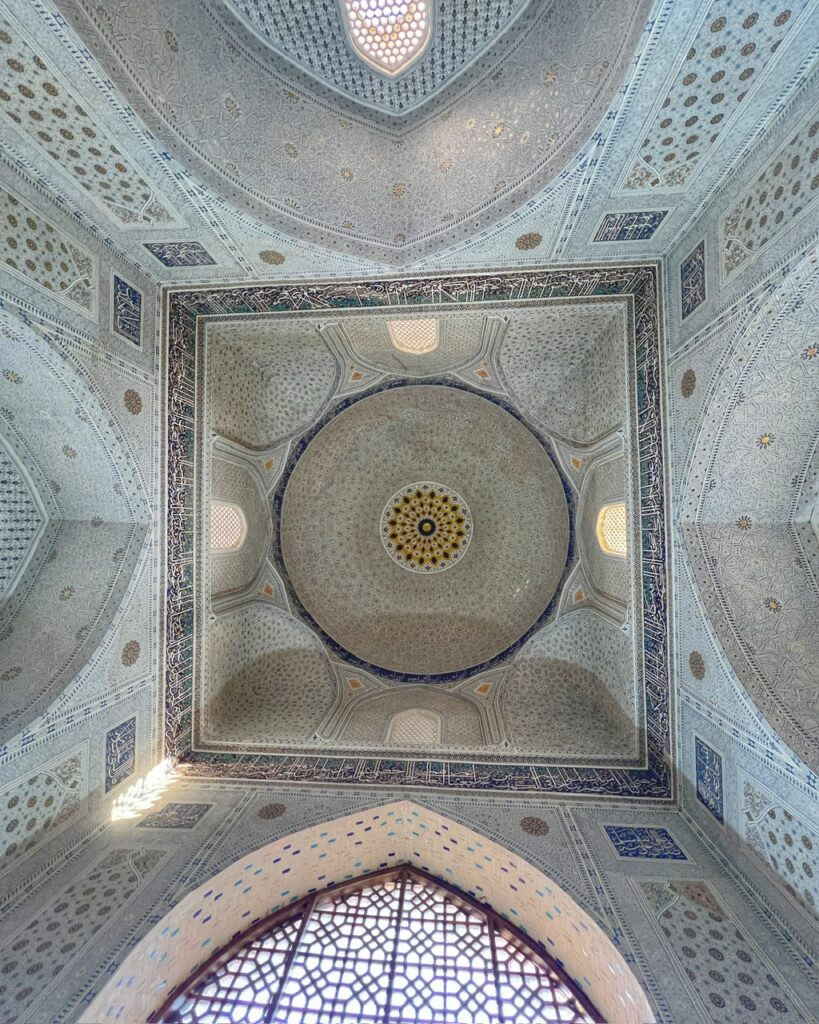
The complex is flanked by two mini domes, one of which clearly hasn’t been touched in awhile, and another which is the most magnificent joint in the complex. To be honest, it was pretty anti-climactic after the first two sites, but we still tried to get our $12 bucks worth.
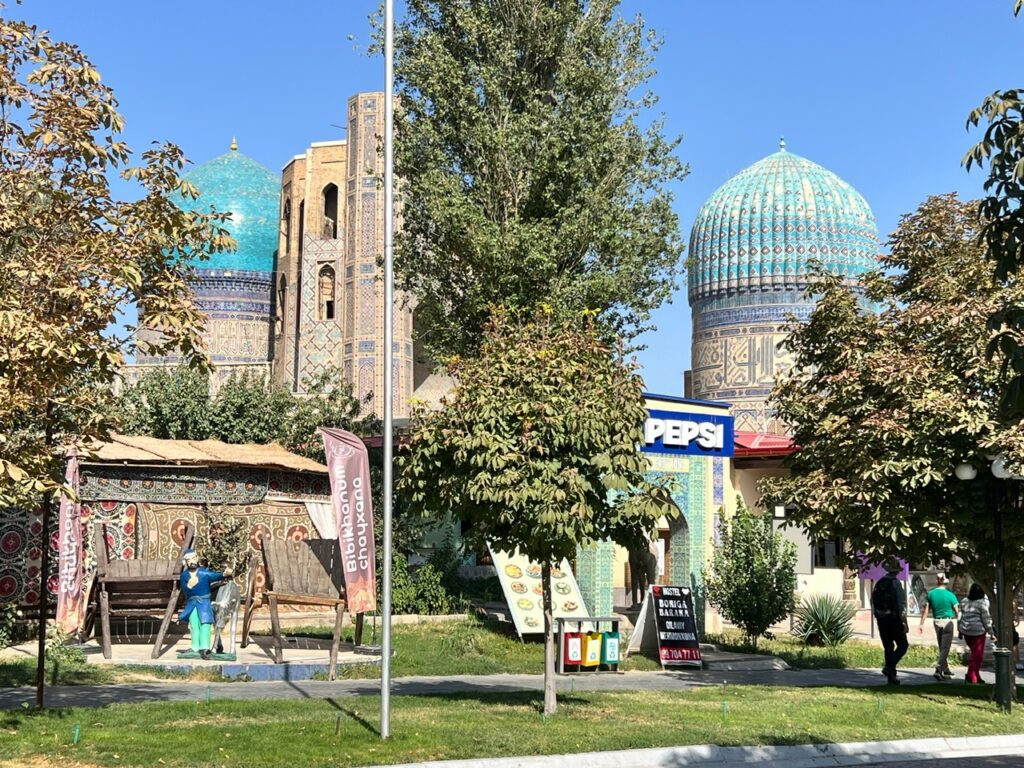
A view of the mosque as seen from the neighborhood. We were a bit surprised to see it wasn’t surrounded by barren desert like we’d always pictured it. 🤣
Site: The Registan
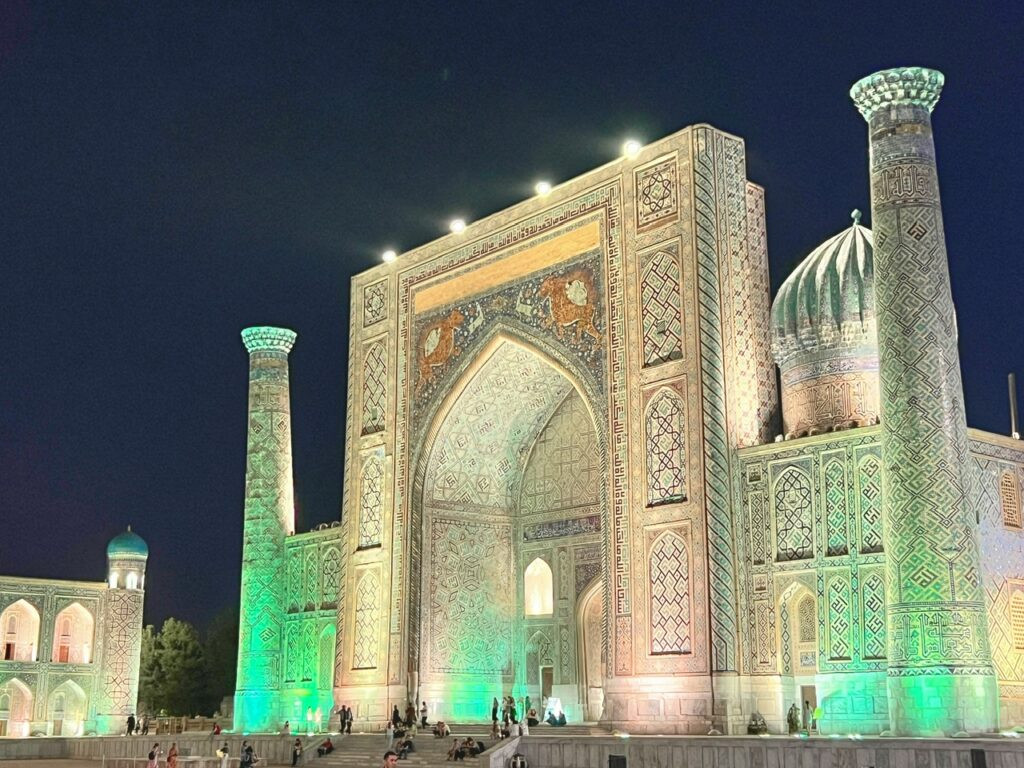
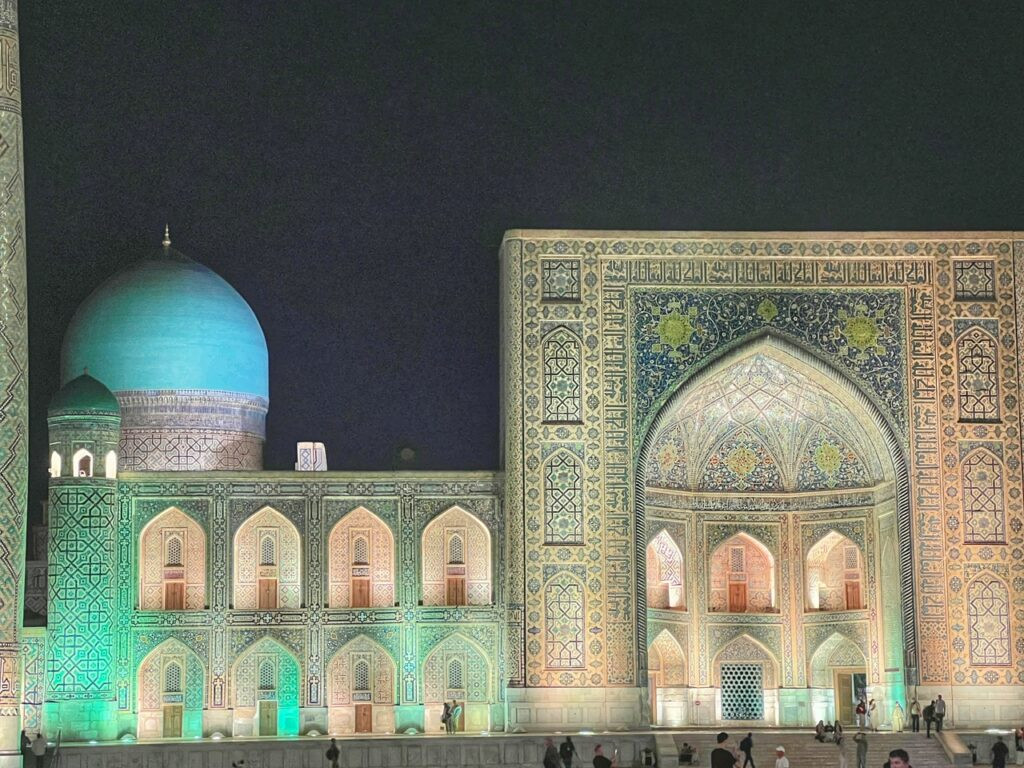
With its towering minarets, lustrous cyan domes, swooping arches, superb symmetry, and intricate details, Samarkand’s Registan simply embodies the essence of Islamic architecture. Its name means “Sandy Place,” and before the grand madrasas were built, it once served as the heart of the Silk Road and the lively center of ancient Samarkand. Merchants, scholars, scientists, and travelers from China, India, Persia and Arabia all passed through this ancient square.
Today it is still filled with travelers, mostly with selfie sticks and camelbacks rather than walking staffs and camels, and is also undeniably still the most bustling part of Samarkand. For this reason, we simply chose to soak it in from the exterior during different times of the day, and bypass the entrance. To be honest, Samarkand, and especially the area around Registan, was merely way too touristy for our taste.
Every evening, the complex, which is made up of three madrasas, is bathed in emerald green before a light show begins at 9:30 and the crowd can commence their “ooo’s and ahhs.” We, on the other hand, like to be in pajamas by this time, “ahhing” only to the sound of our impending yawns.
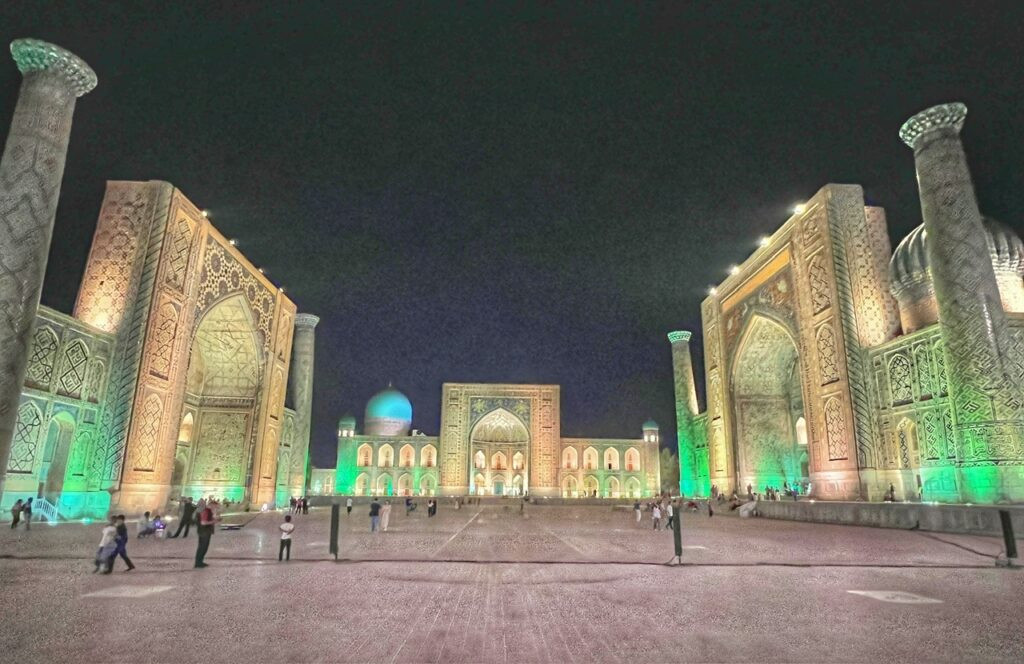

The madrasas (Islamic schools) were built over a period of 250 years starting in 1410. Ulugh Beg, one of the world’s great medieval astronomers, used the madrasa as a teaching center and even built a massive observatory nearby, where he charted stars more accurately than anyone until the Renaissance.
It also served as influence for India’s Taj Mahal, but for us, far exceeded its expectations. In fact, we really don’t understand how the Tajthat got on the New World Wonders list over this one. It’s like transcending into a dream…especially in the evening.
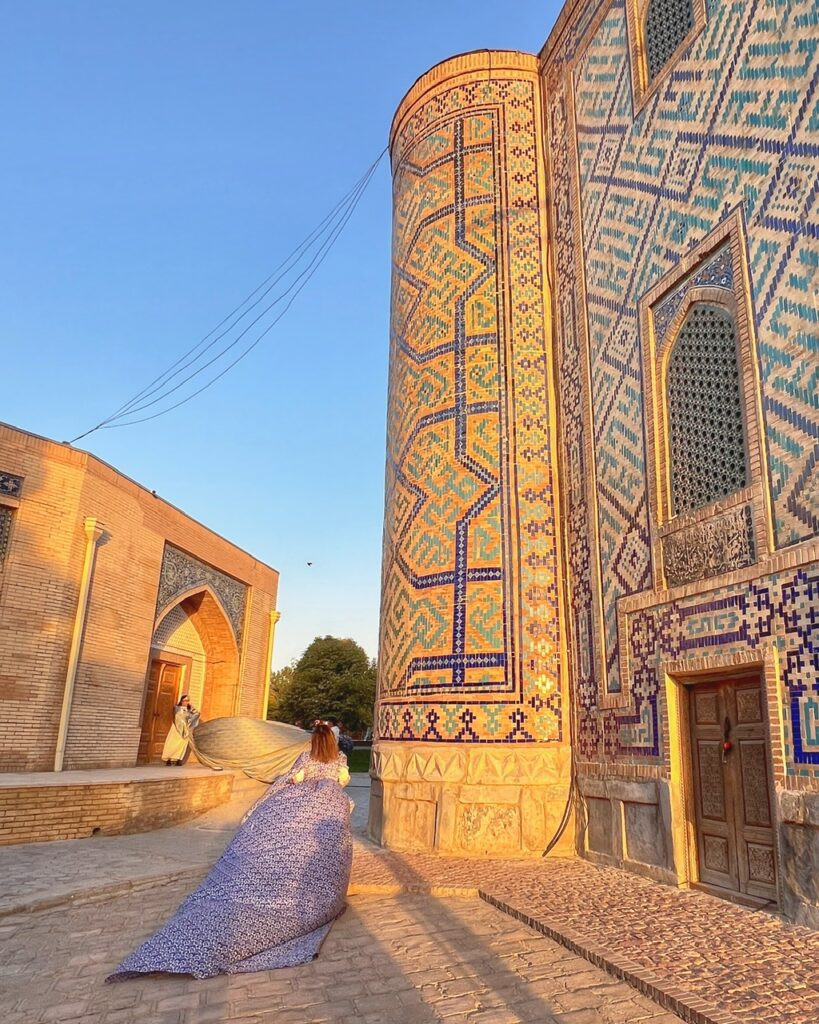
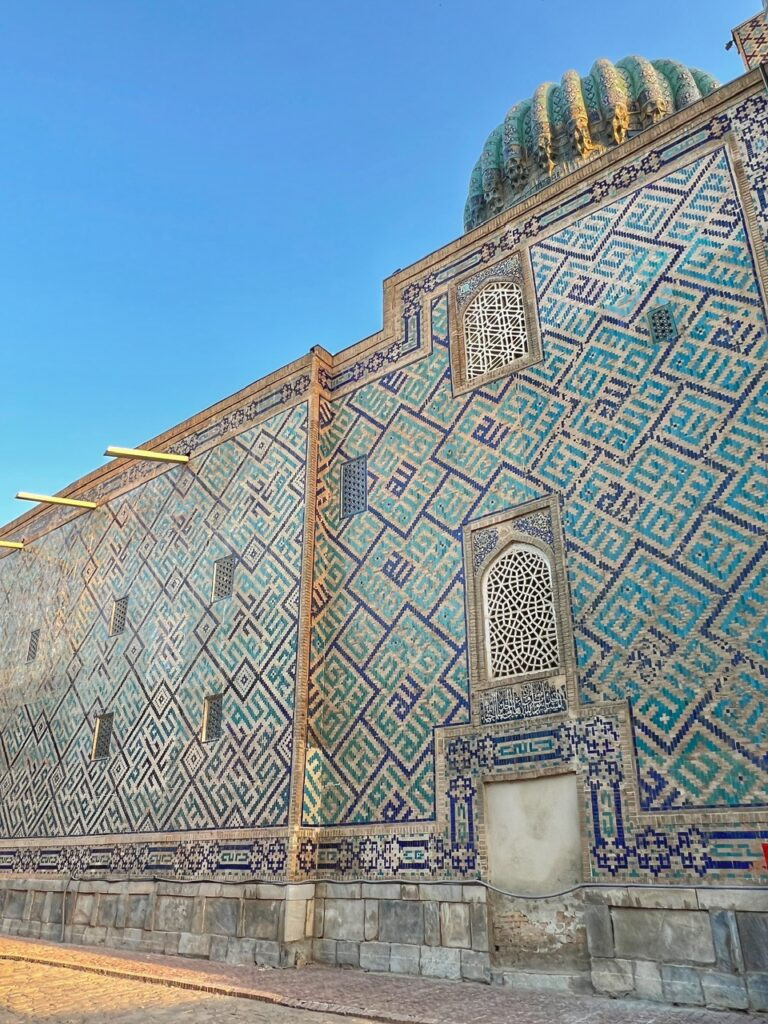
Also transcending into a dream? Gals who pay a lot of money to be professionally photographed in dresses with long silk trains.
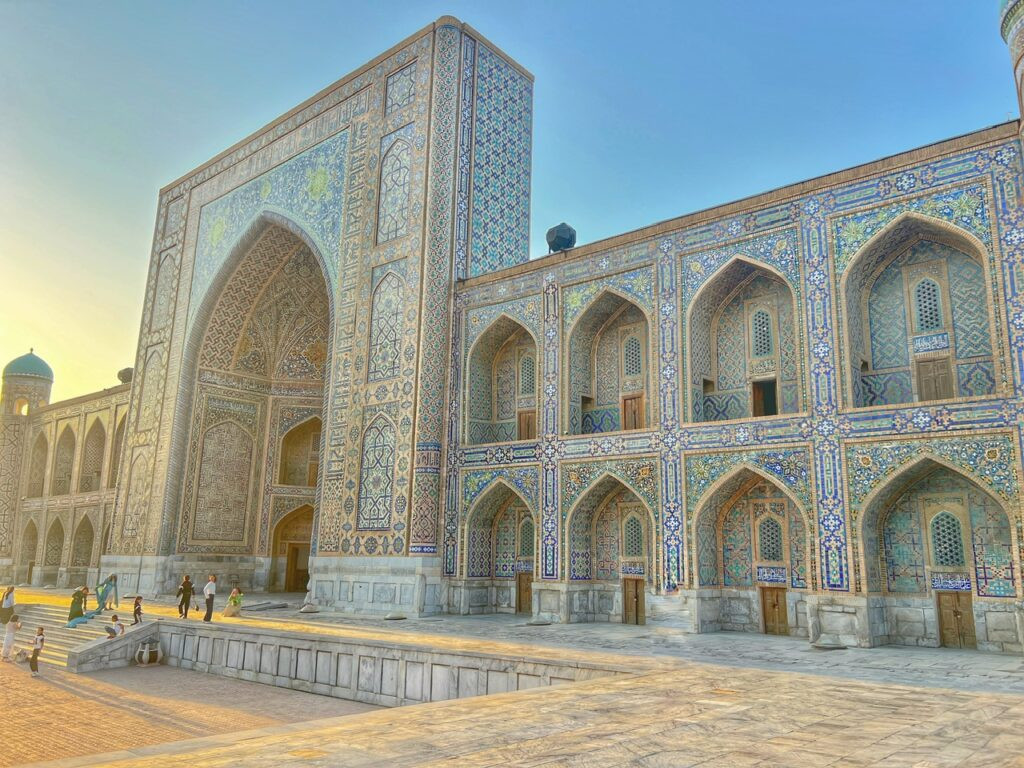
One afternoon, we sat on a bench near the Registan and watched more than 30 people sneak into this exit. The majority got caught by a guard inside, but several slipped in unnoticed. Guess we weren’t the only one who didn’t want pay $16 to enter. But seriously? Sneaking in?


Details on the Registan walls
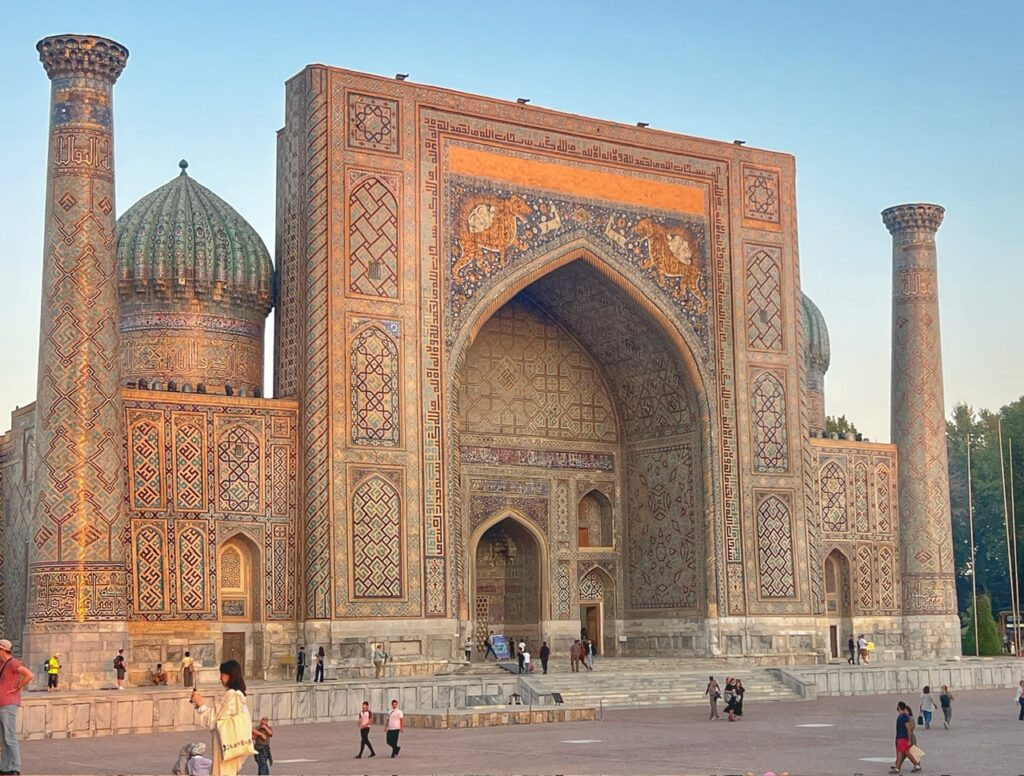
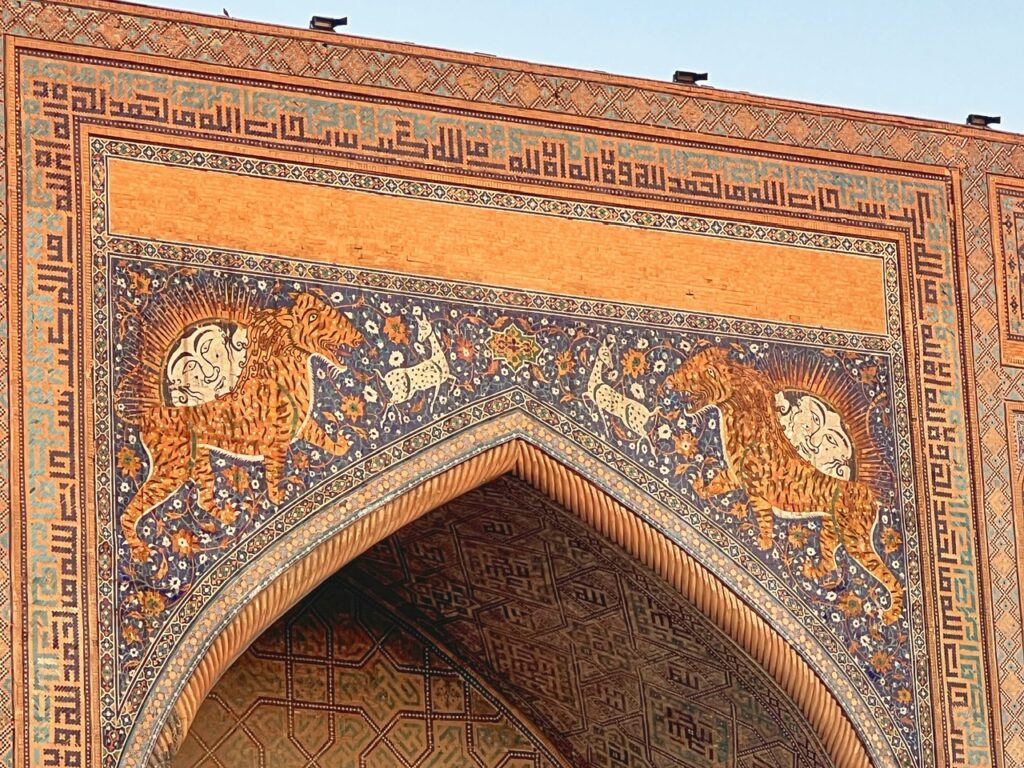
If you start looking closely at these details, you’ll notice two tigers, which are actually snow leopards, atop the west facing madrasa called Sher-Dor Madrasa. Islamic art traditionally forbids depictions of living beings and they were built in defiance of tradition.
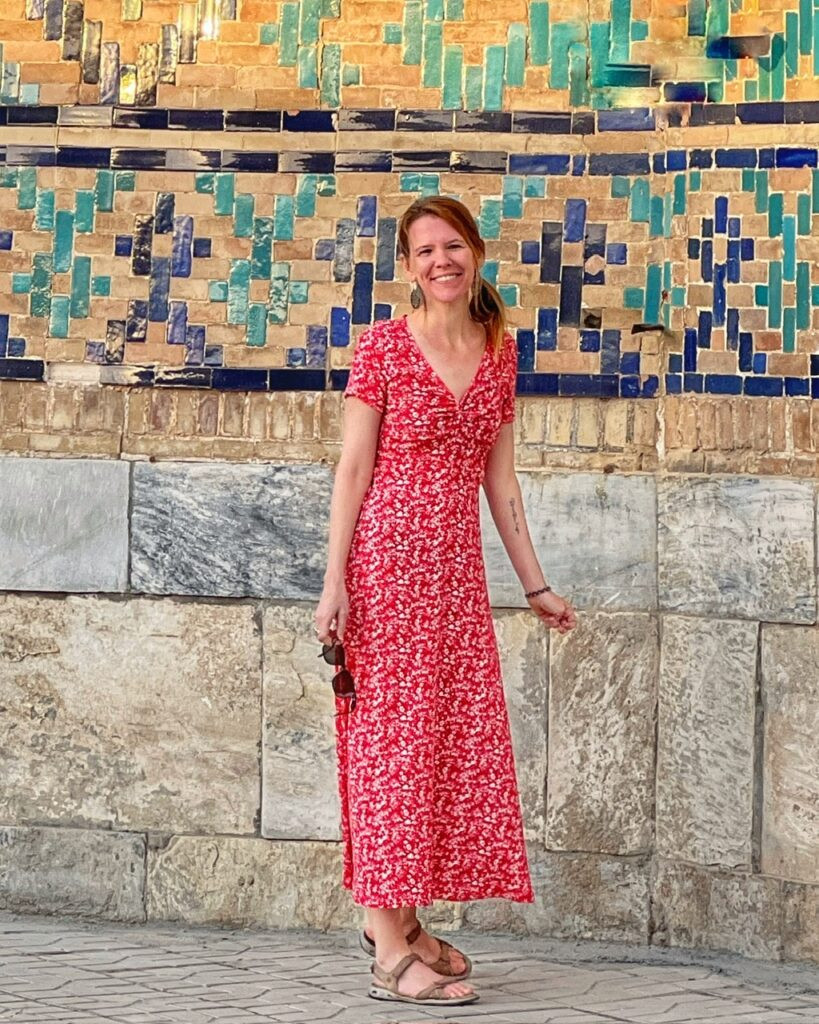


But, because it was a madrasa and not a mosque, the depiction could be justified as symbolic rather than devotional…aka an artistic grey area. Also a grey area?! Us posing like Instagrammers.
Site: Hazrat Khizr Mosque

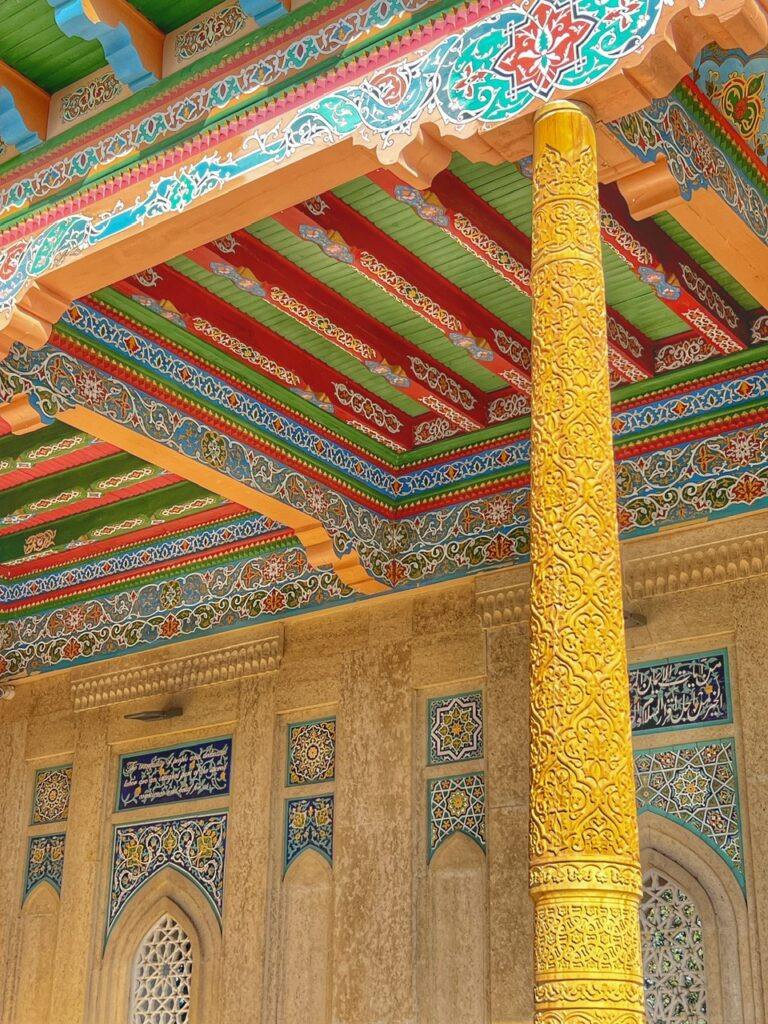
Perched on a hill overlooking other notable sites, Samarkand’s Hazrat Khizr mosque is quite distinct from other sites…its boldly more colorful, tossing in fiery reds and oranges, it’s desolate and tranquil, and it’s FREE! Legend says the first mosque on this site was built in the 8th century, soon after the Arabs, but it’s likely it was placed atop a 5th-6th Century Zoroastrian temple. That era saw active fire worship, and temples were often built on elevated ground like this hill — symbolically closer to the heavens and away from impurity.
Regardless of the accuracy of this hypothesis, this is definitely one of the oldest places where Islam was practiced in Samarkand.
At sunset, it feels like you should fly into this site on a magic carpet ride, but by morning’s light, it’s equally as captivating.

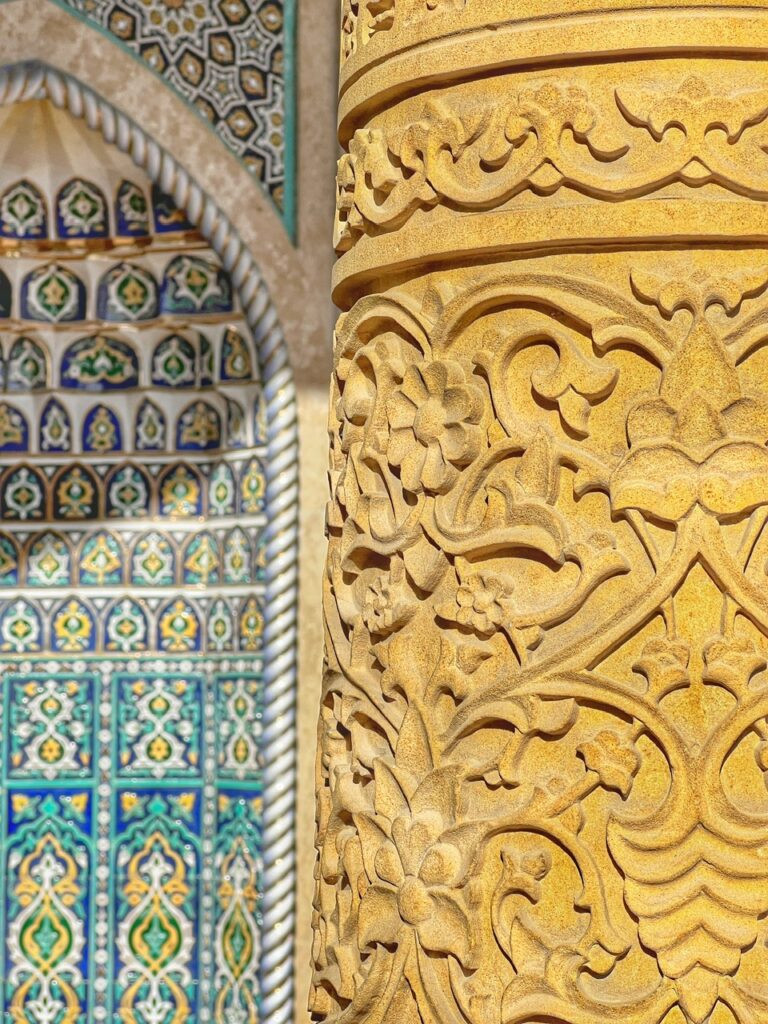
And somehow the contrast between bold, bright hues and muted pastels just works. One of the features we loved the most was the carved sandstone pillars.
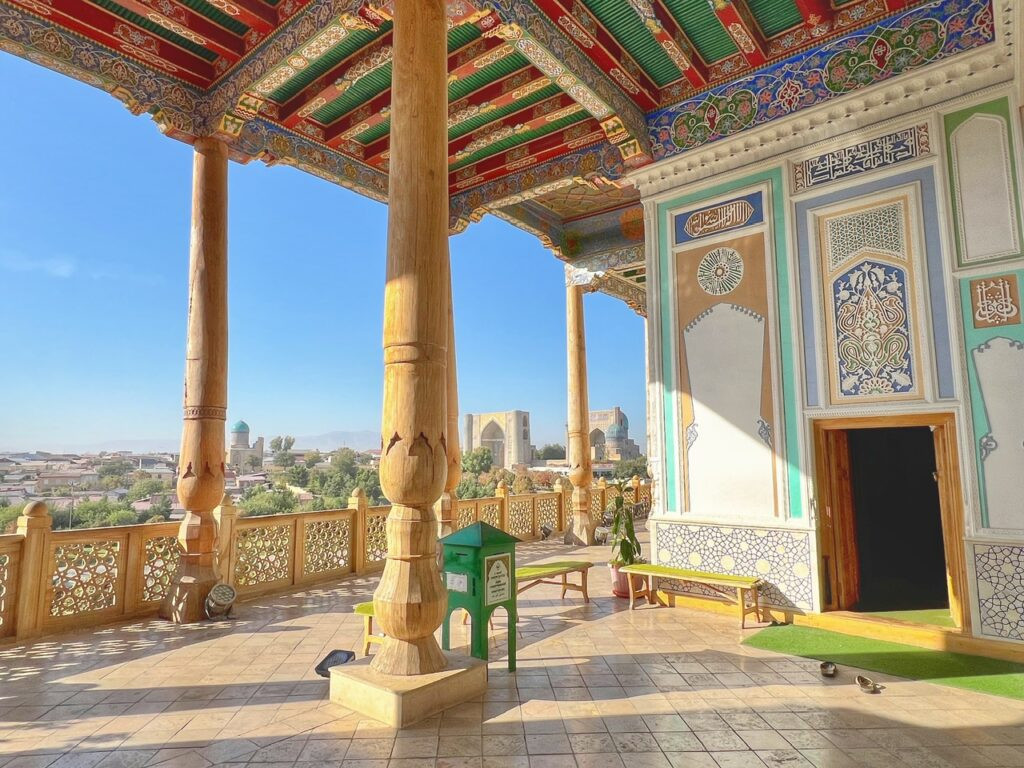
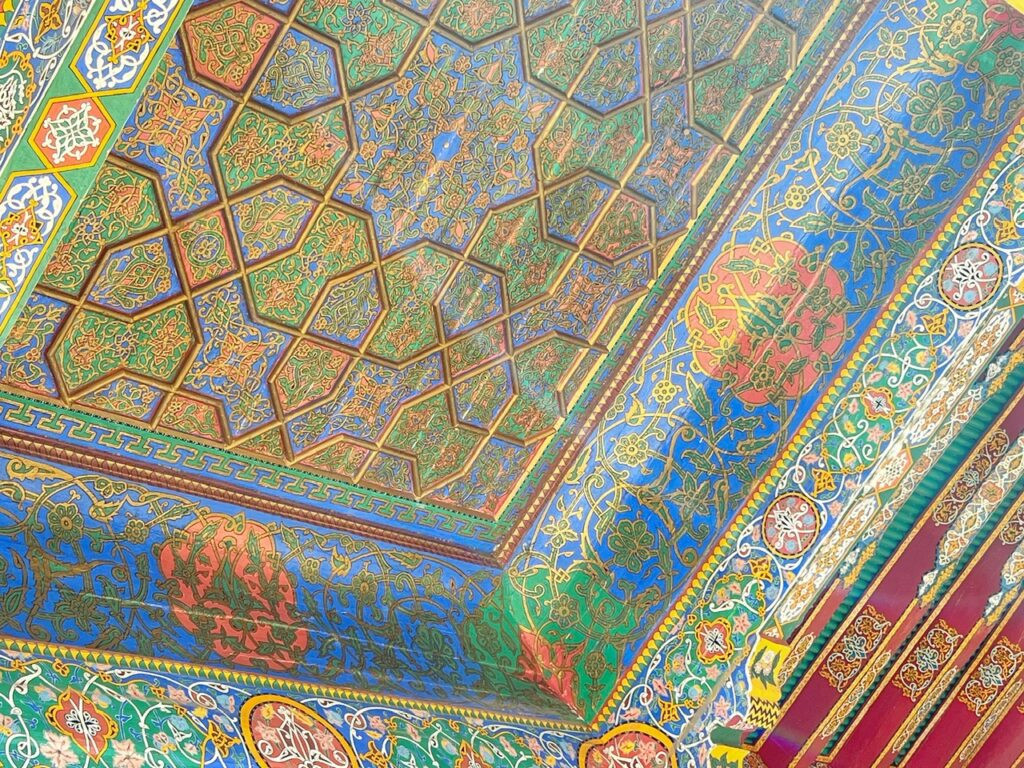
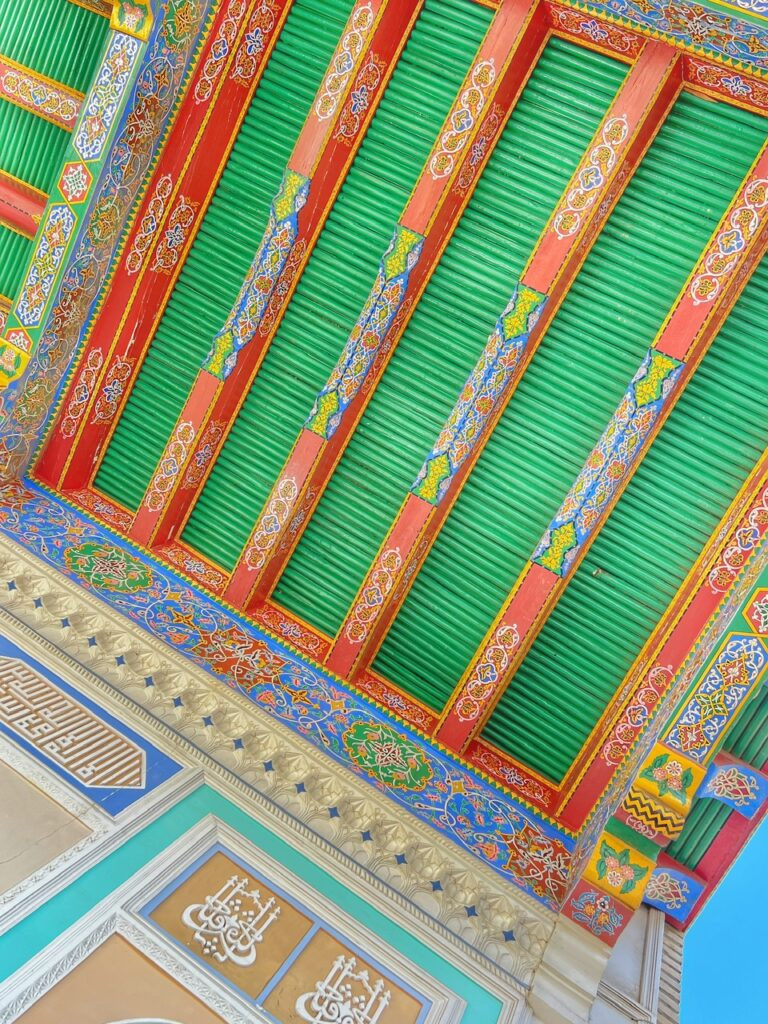
The only sounds around us came from an imam deep inside one of the rooms chanting in Arabic.
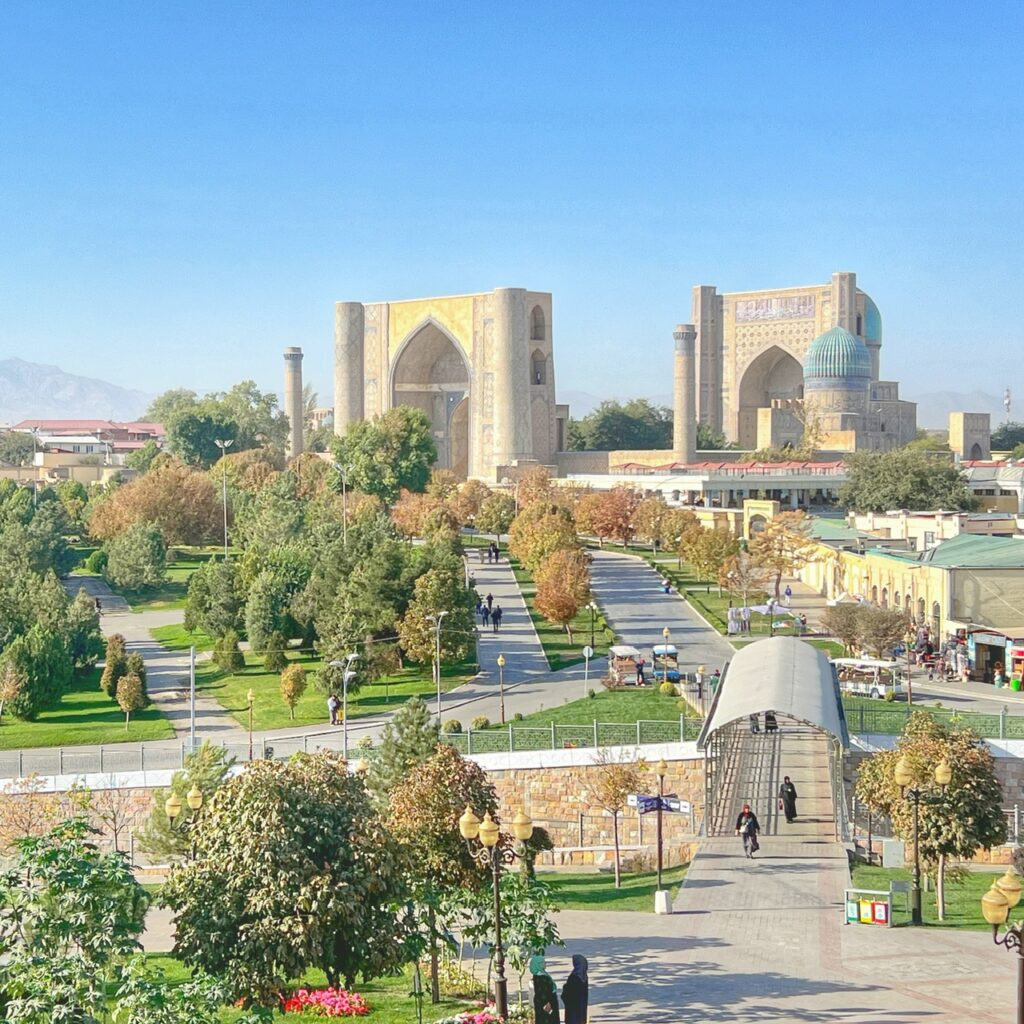

It also offers a ravishing view across the pedestrian bridge to Bibi Khanyam Mosque
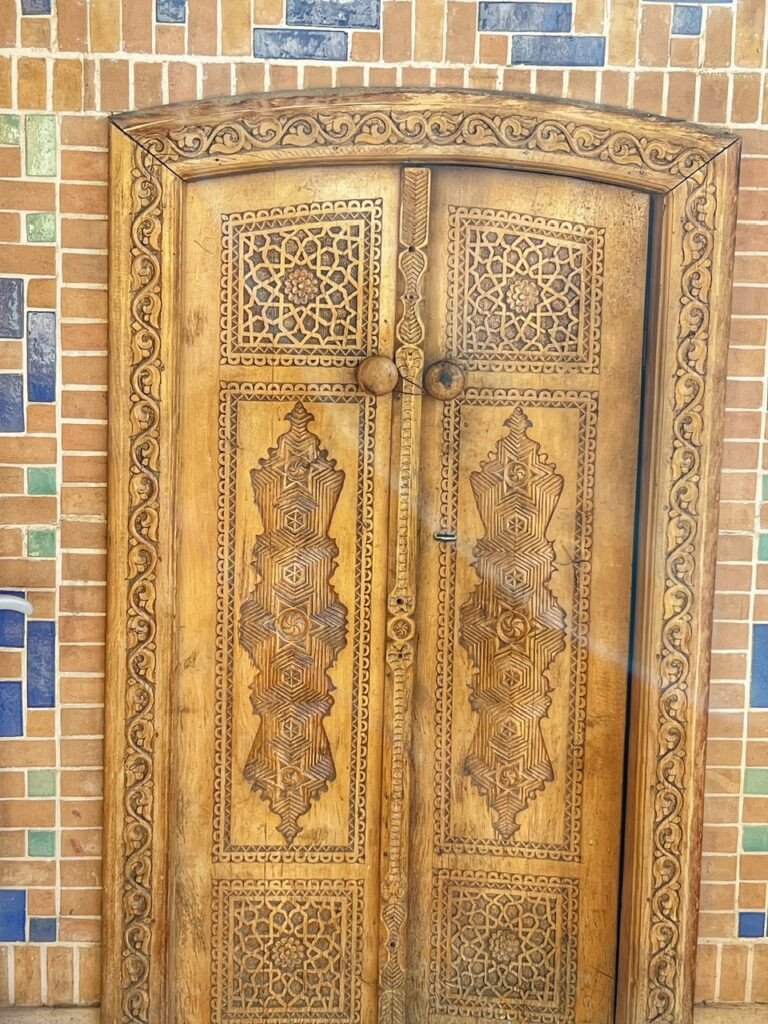

….and even offers accessibility in this modern, and appropriately adorned lift.
Daily Life in Samarkand: The Food
Other than visiting iconic and dreamy sites draped with Islamic architecture, during our week stay in Samarkand, we spent our time trying to get back into some semblance of a routine, which had been blown to pieces in the last few weeks. For us, this involved morning exercise, daily work sessions, travel planning, food shopping, and eating at regularly scheduled times. It’s never easy when living in a guesthouse with shared areas, but it was a step back toward the life we’re craving more of.
For our meals, our substantial breakfasts always came from the hostel, we explored Uzbek cuisine for lunch, and dinners were made in the hostel’s small shared kitchen, usually yogurt bowls. Unfortunately, due to our quite central for tourism location, this meant finding a supermarket involved walking more than 30 minutes each way for groceries, other than the produce we could pick up at the conveniently located daily market.


‘Tis the season for pomegranates! We loved seeing the little red pearls glistening like a split heart on a stake in the Siab Bazaar. Unfortunately, due to all the tourists, they also substantially overcharged at about $1.60 for one versus the probably correct price of $.50-1 we paid elsewhere.
But, they were certainly an added bonus for our daily yogurt bowls also accessorized with bulgar, walnuts, honey, cinnamon and chia seeds. YUM!
It was notable to eat pomegranates in Central Asia because they are deeply woven into the history of Uzbekistan and the region as a whole. In fact, it was first wildly grown wild in this region (and south to Iran/India) and is one of the oldest cultivated fruits in human history — domesticated around 4,000–5,000 years ago.

Our favorite meal we had in Samarkand was the pumpkin manti at Manti na Zakaz, which we’ve been seeking since Kazakhstan. It cost $3.30 for a plate of five which included a healthy dollop of yogurt as well.

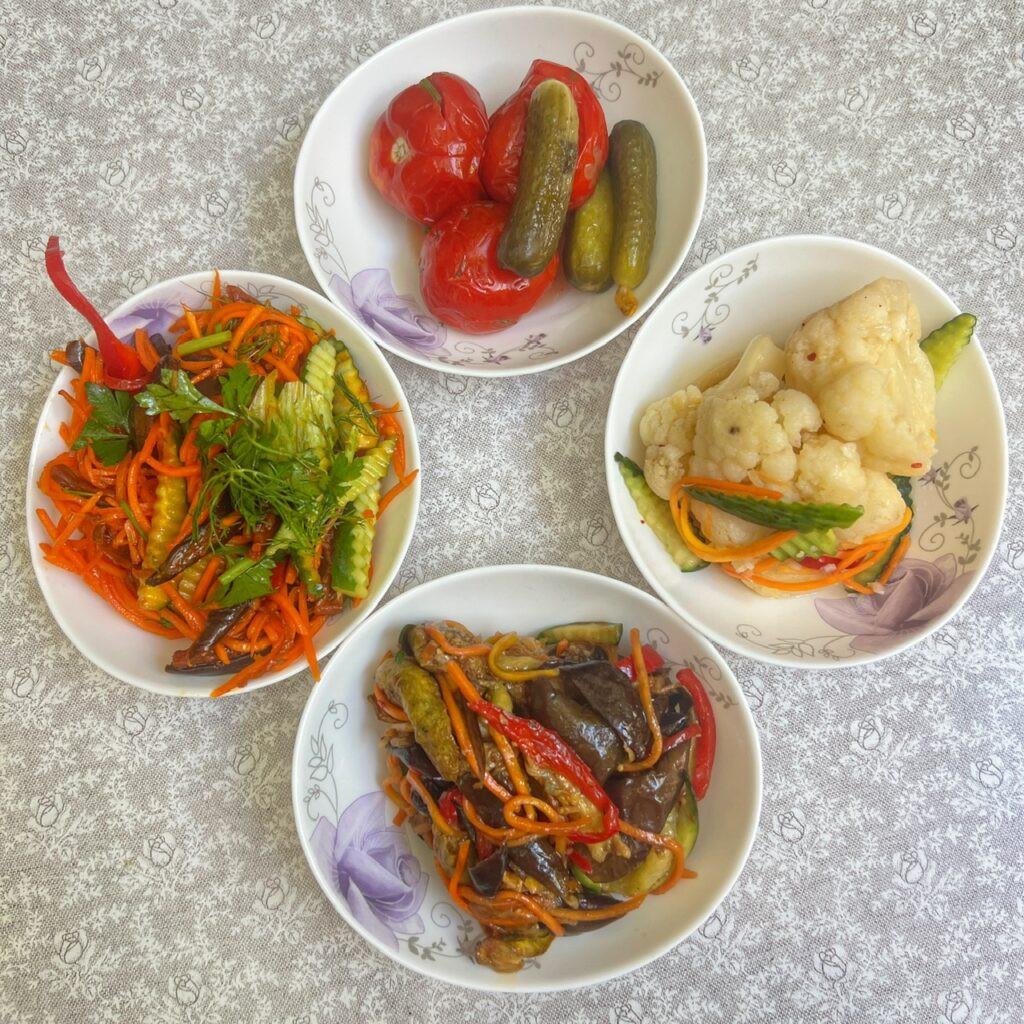
The Siab Bazaar, a five minute stroll from our place at Old Radio, has been a major trading place in Samarkand dating back to the Silk Road Era. We enjoyed visiting these pre-made salad ladies, and bringing back a load of them for lunch one day. They were all heavily vinegar-based and absolutely divine though the eggplant, and stuffed tomatoes were the best. (About $5 for all.)

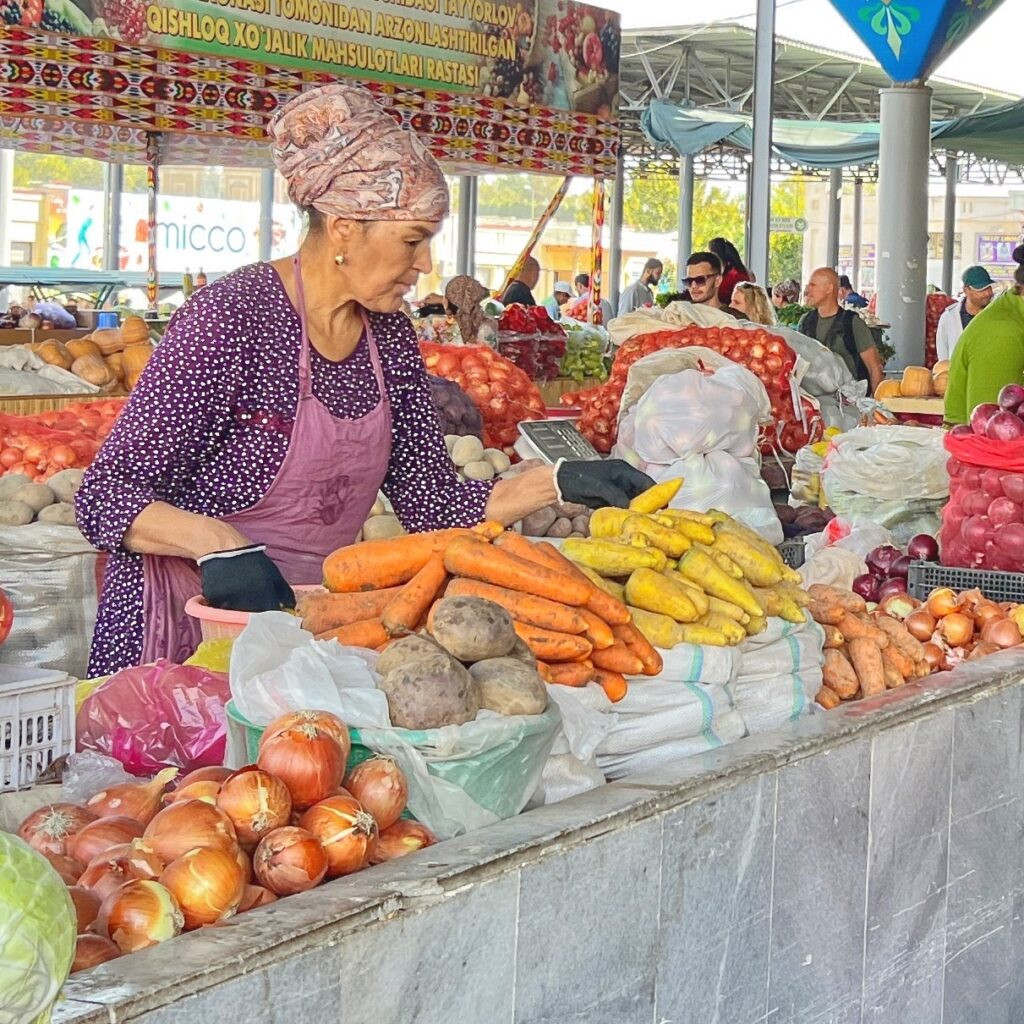
We believe this is the vinegar base they used for most of them. But, check out their corks! Also, another lady offering assorted vegetables.

Pomegranate juice was $1-2 for a small bottle. So…why not just get the whole pomegranate?

Polished local lemons and apples. And bananas. From Ecuador. Like everywhere else in the world. So crazy.
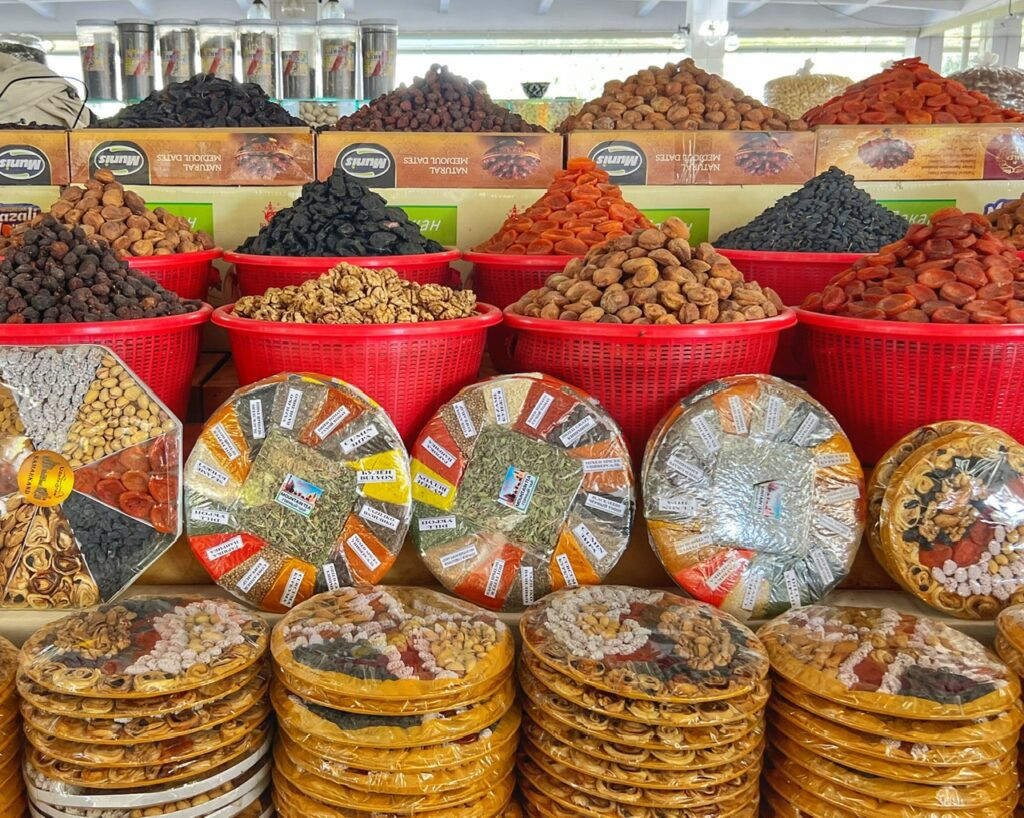

Although offering beautiful presentation, we usually avoid spice and dried fruit sellers like the plague. In our experience, they’re the taxi driver of the market world. (Dubious prices and feistier.)
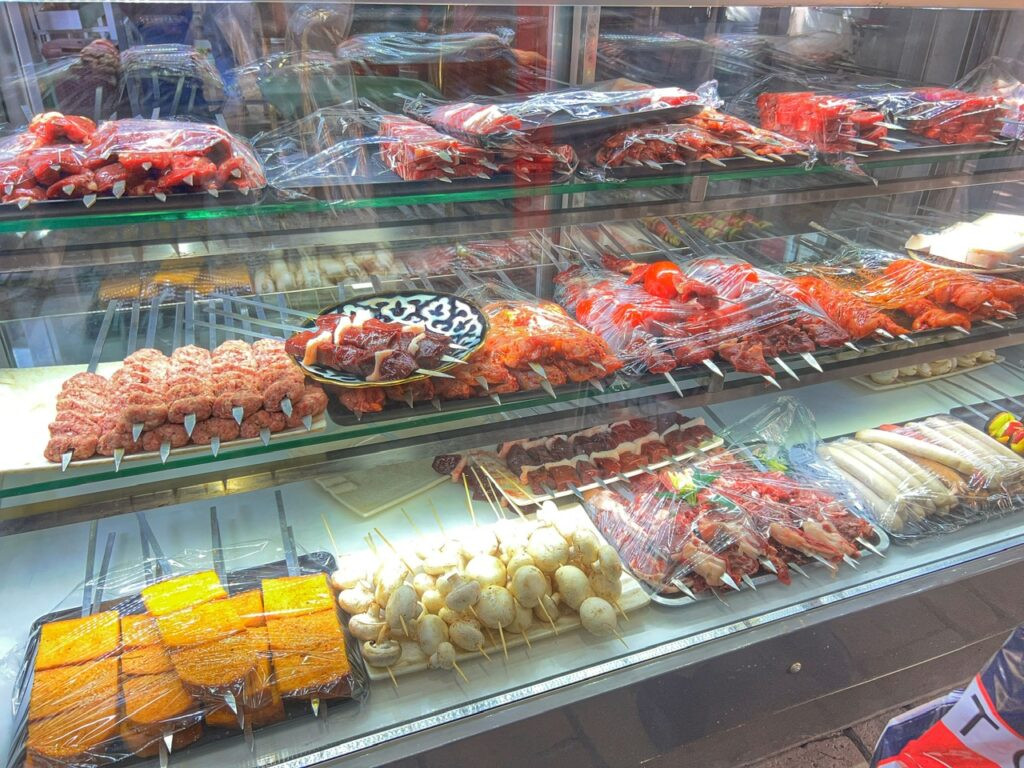
There’s two things you will find an endless supply of in Uzbekistan…plov, which we’re still so sick of from the Pamir, and shashlik, as (shish) kebabs are called here….


However, in a tourist mecca like Samarkand, this means VEGGIE options!! Greg also tried two beef manti, washed down with Turkish-style (thanks to the copper chalice) ayran. This meal with two veggie kebabs, two mantis and two ayrans came to $7.


We were also shocked to learn that Samarkand had a craft brewery so of course, we allowed ourselves a malty treat at Sam Craft Pub. Yes, artisan beer, not Uzbekistan’s Sarbast, started at $2.50/pint and was delightfully quaffable! If you’re looking for western-style fare or an escape from Kebab and Manti, they also offer a decent looking pub menu with things like burgers starting at $3.75.

Our most experimental food in Samarkand was at a small family-run restaurant which had high reviews and served Halisa, a rich slow-cooked “porridge” made of meat…and wheat.
The restaurant was fittingly called “Halisa, Samsa, Shurpa,” which is the three dishes they serve with no pricing listed. Although I (Mandy) don’t normally eat red meat, this odd, yet unintimidating dish which in theory, looked like a pile of (delicious) refried beans or hummus, seemed like an interesting time to toss in a cultural exception.
And it definitely was. The consistency was utterly bizarre…stretching a bit like lubricated meat taffy, but soft like mashed potatoes, with the taste of mom’s roast beef which has been curiously tossed in a blender (alongside said potatoes and way too much butter.)
The first few bites were…ok. But after that, we were both more than done. The excessive oil, nor the lamb (?) sat well in our stomachs. That’ll teach me! 🤣
Following this, we developed extra regret because they charged us $12 for two plates of this, a soup, some bread and tea which seemed quite overpriced for this hole-in-the-wall joint.

The next day we did a much more successful experiment at Turan Tantuni by trying the “Tantuni Kefirli,” which takes a traditional Turkish street food staple (a chicken lavash), dumps a “spicy”* kefiry yogurty sauce on top and, as if through metamorphosis, turned it into the closest thing we’ve had to Mexican food in months…aka, the Turkish burrito. ($3/each.) OMG. So good.
*very slightly spiced
Daily Life in Samarkand: Everything Else
With its rich Silk Road history and renowned UNESCO World Heritage status, Samarkand is a place we’ve fantasized of journeying to for many years. And deservedly so. In fact, it’s a destination that should be on any traveler’s list because it feels distinctly different than anywhere most people have been before, and is also quite easy to travel to.
The only place we know of that might show dramatic parallels could be Iran, and unfortunately that’s a much desired place we won’t be able to venture to anytime in the near future.
As you continue to scroll down in this post, we’ll next discuss the iconic architectural marvels of the city while this post is more about the lesser known areas, and our daily life during our week there.

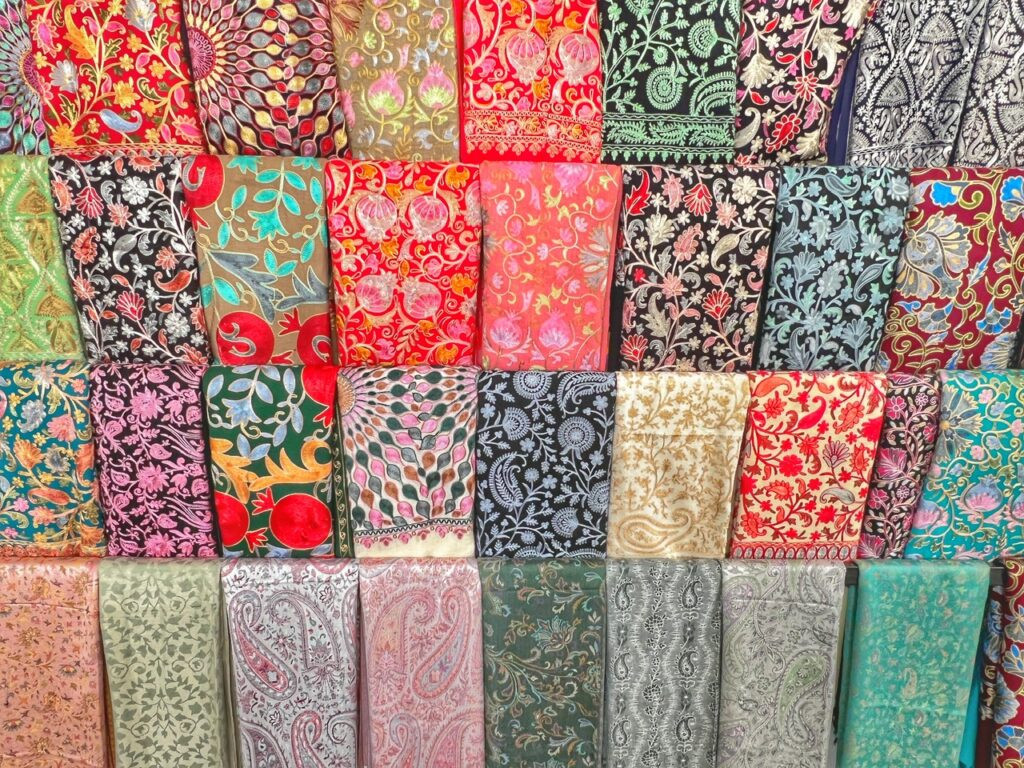
The iconic Samarkand sign, which is spelled “Samarqand” in Uzbek. The “Q” is much sharper than a “K” and is pronounced more in the back of the throat. It became harder and harder to resist all the gorgeous Uzbek textiles draped in the markets.
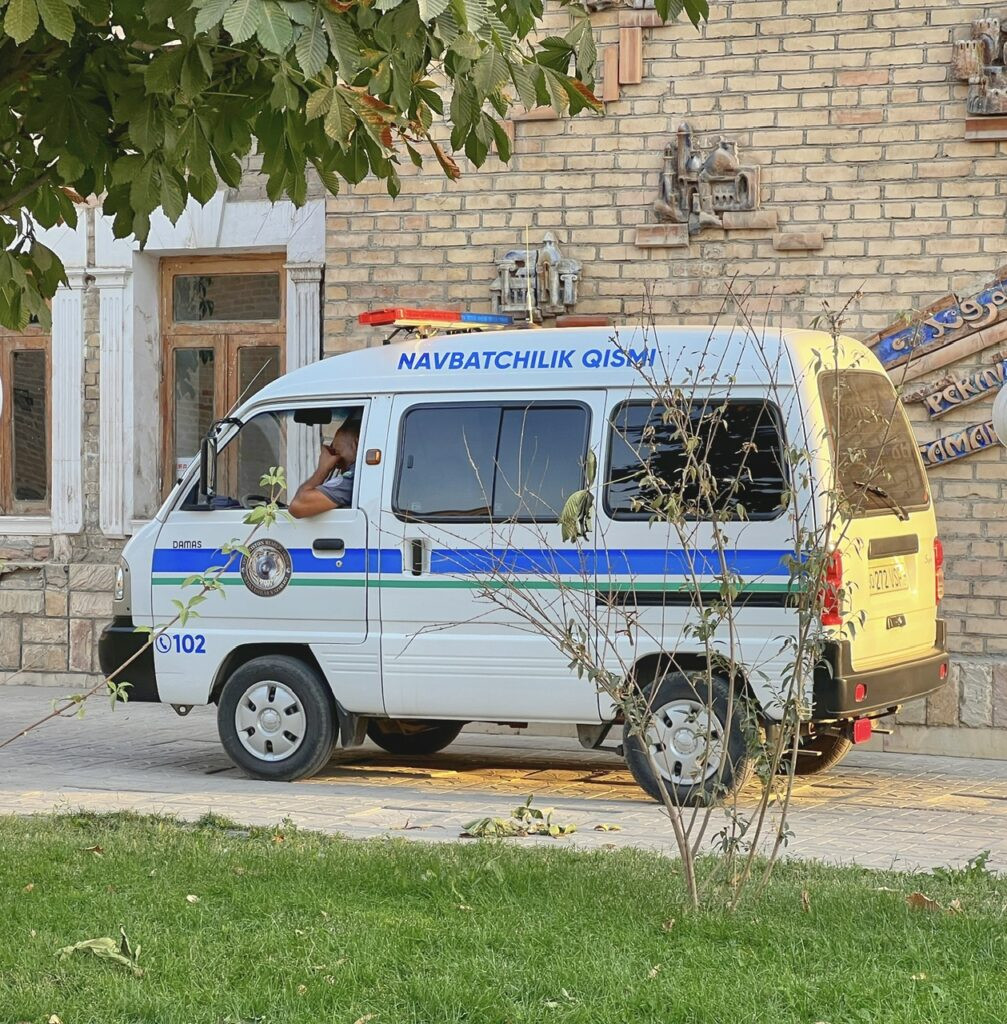
An Uzbek police van which looks like it’s made for Lego people.
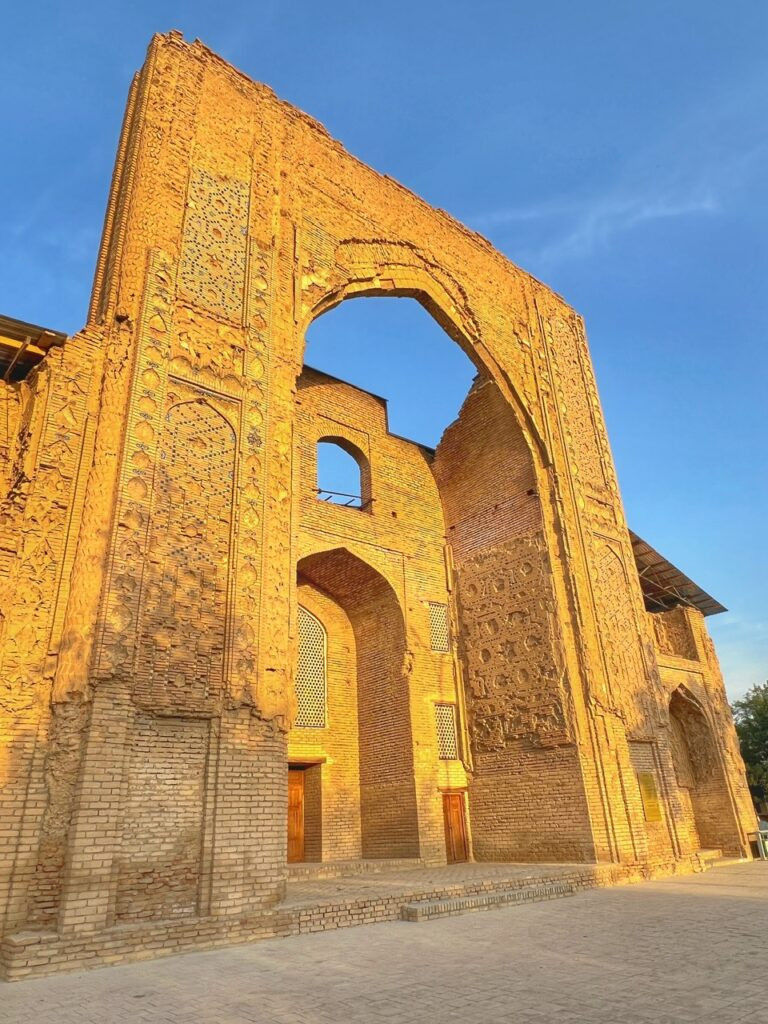
Although the restored sites in the historic center were grand and lovely, we really appreciated wandering toward the ruined sites without a single person around. A great example of this was this hidden gem called the Ishratxona Mausoleum dated from the mid-15th Century. This is remarkably how all the main sites in Samarkand looked at the beginning of the 20th Century.
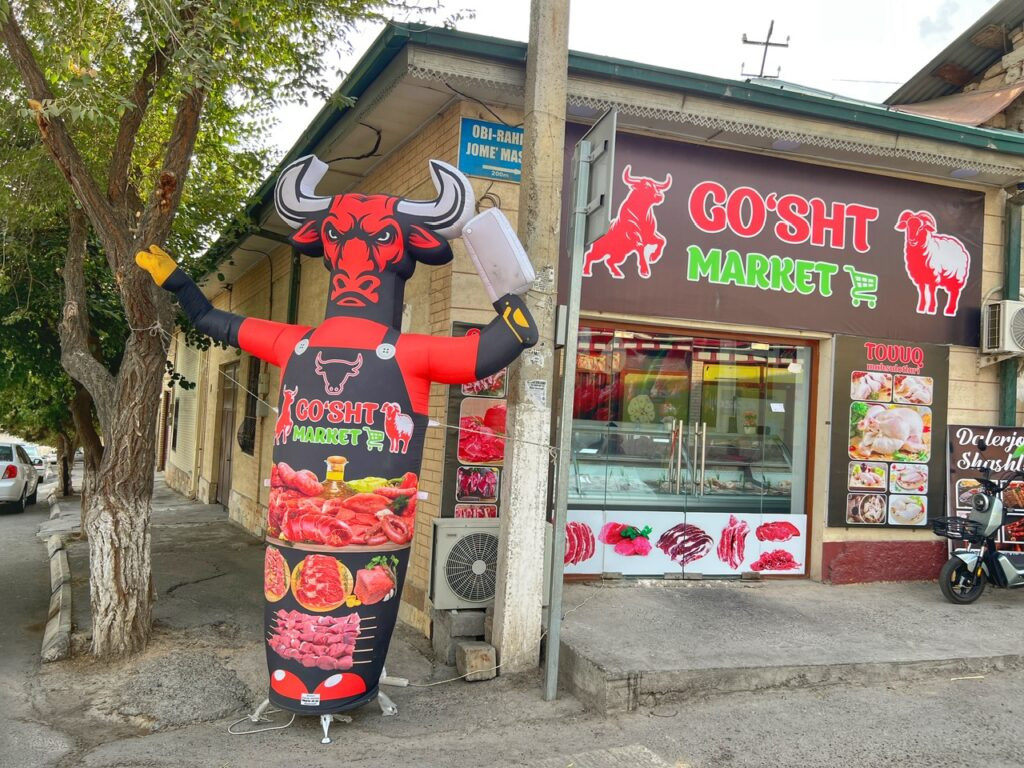
Meat stores in Uzbek are appropriately named.

Sneaking peeks in luxury hotels, which still offer quite affordable prices. This one, called Bibikhanum for $65/night has a view of the Bibi Mosque dome and an especially alluring entrance.

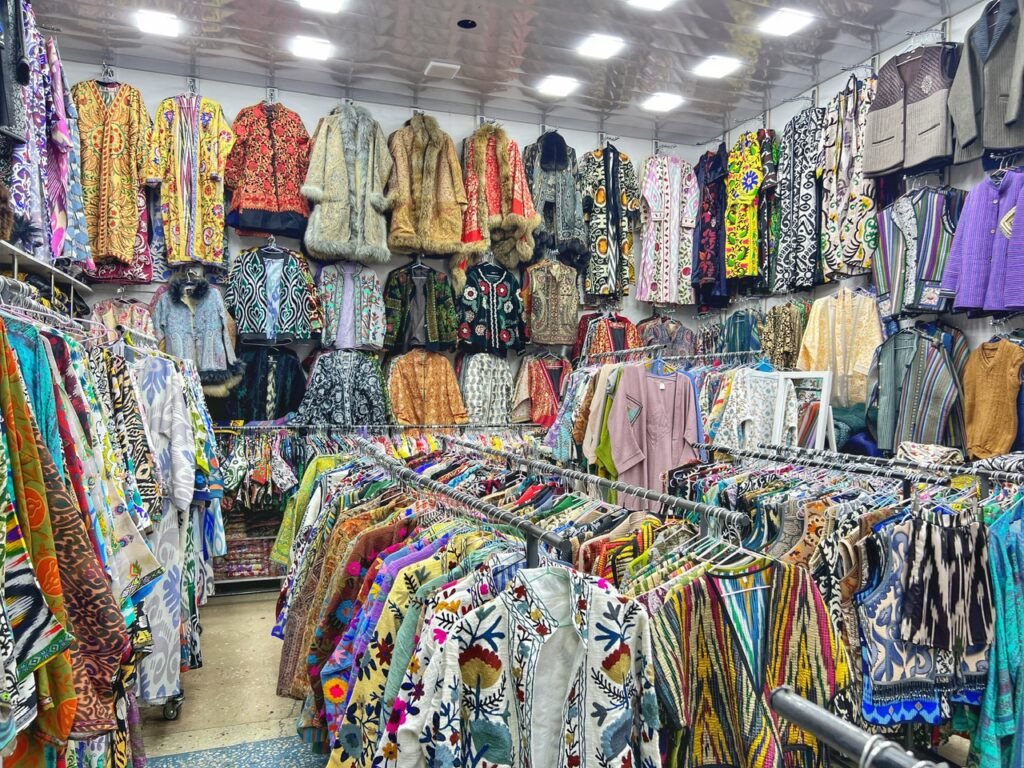
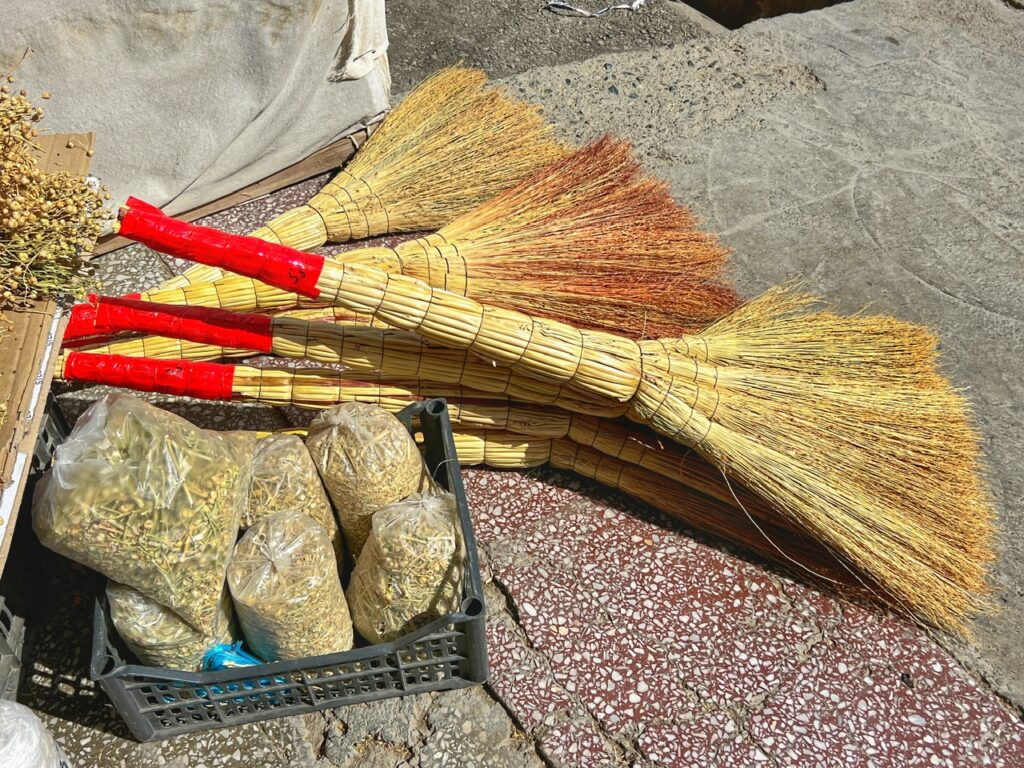
The main market, called Siyob was a five minute walk from our place. It has been a major trading post for centuries. In it, you can find plentiful options of local clothing, practical things like bend-over-brooms which pretty much guarantees its not just a tourist market. (Seriously why do people in so many lesser developed countries not reward themselves with longer handles?!?)
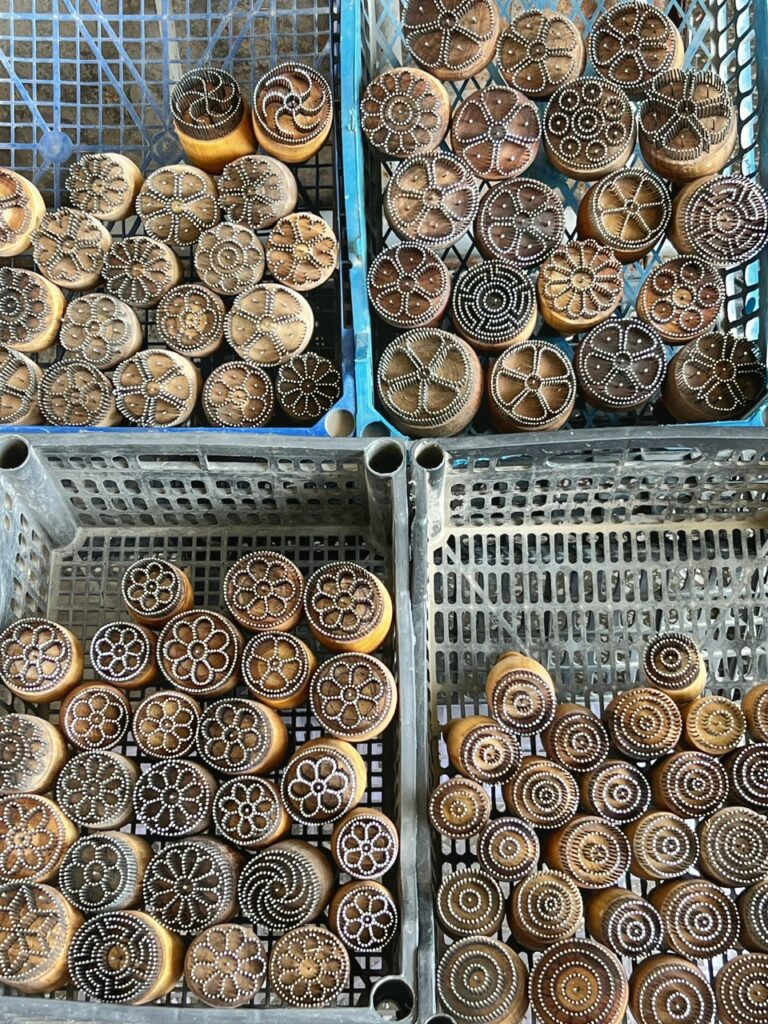

…and beautifully carved stamps used to decorate bread called “chekich.” These signs of home and hospitality are dropped on bread throughout the country. In our opinion, the bread in Uzbekistan is the best of the four Central Asian countries we’ve visited…crispy, and usually glossy, on the outside and pleasantly fluffy on the inside.
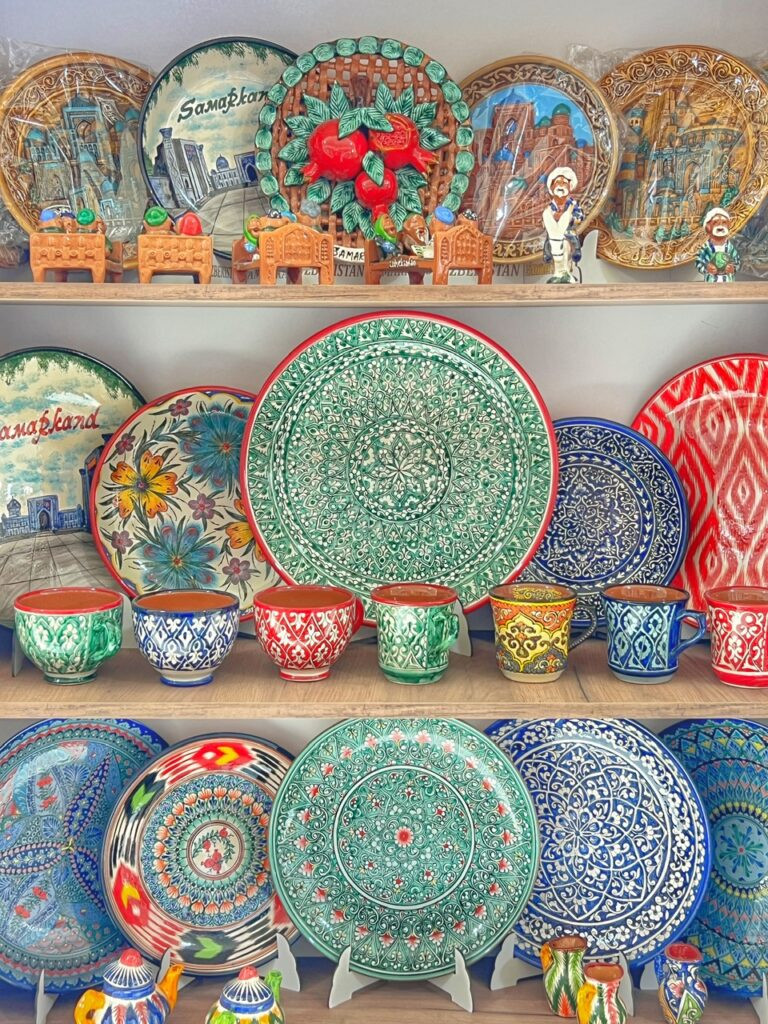
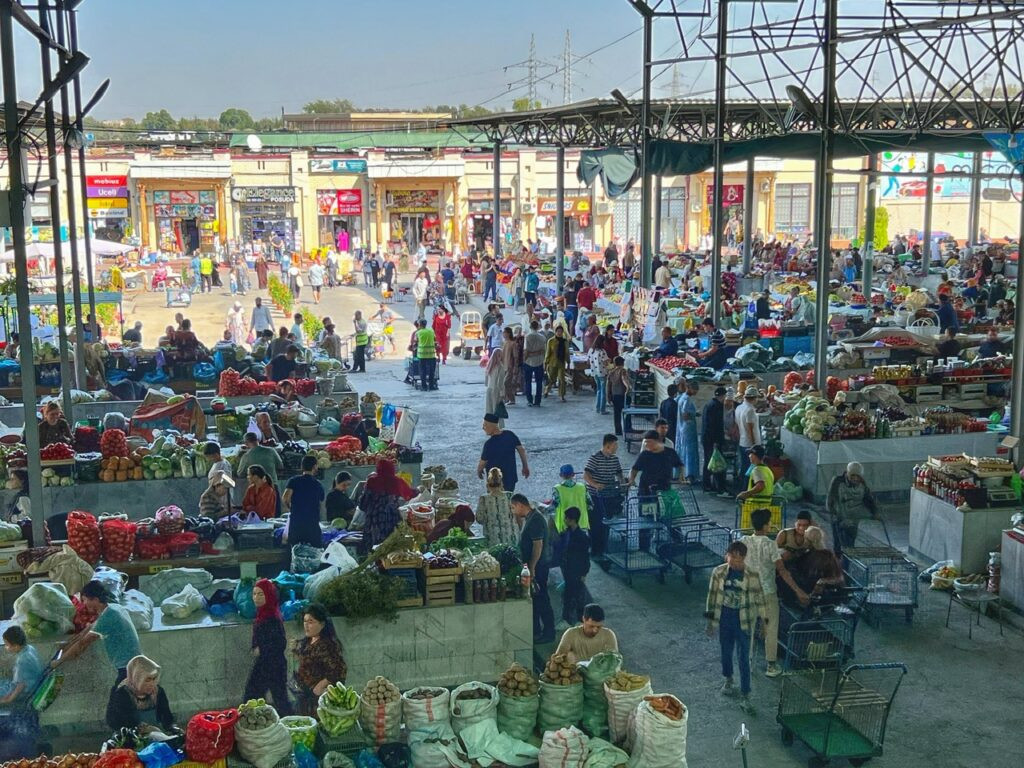
Another selling point in the markets is the lavishly decorated plates and dinnerware. It’s some of the most beautiful we’ve seen in the world, alongside Turkiye and Mexico.
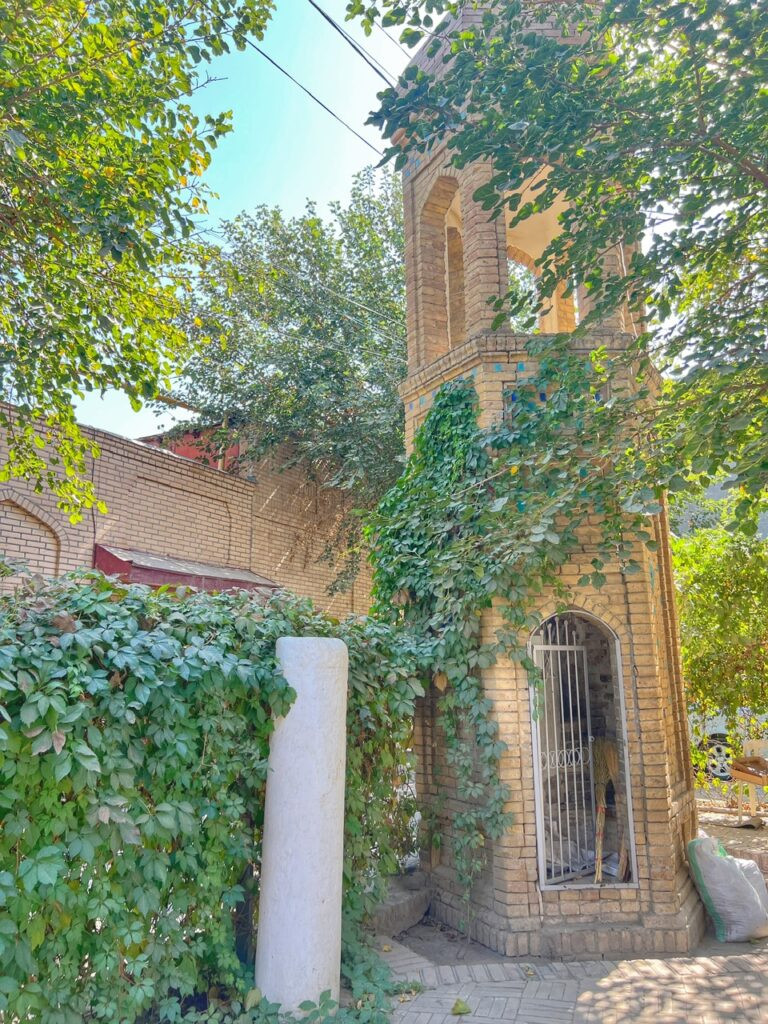
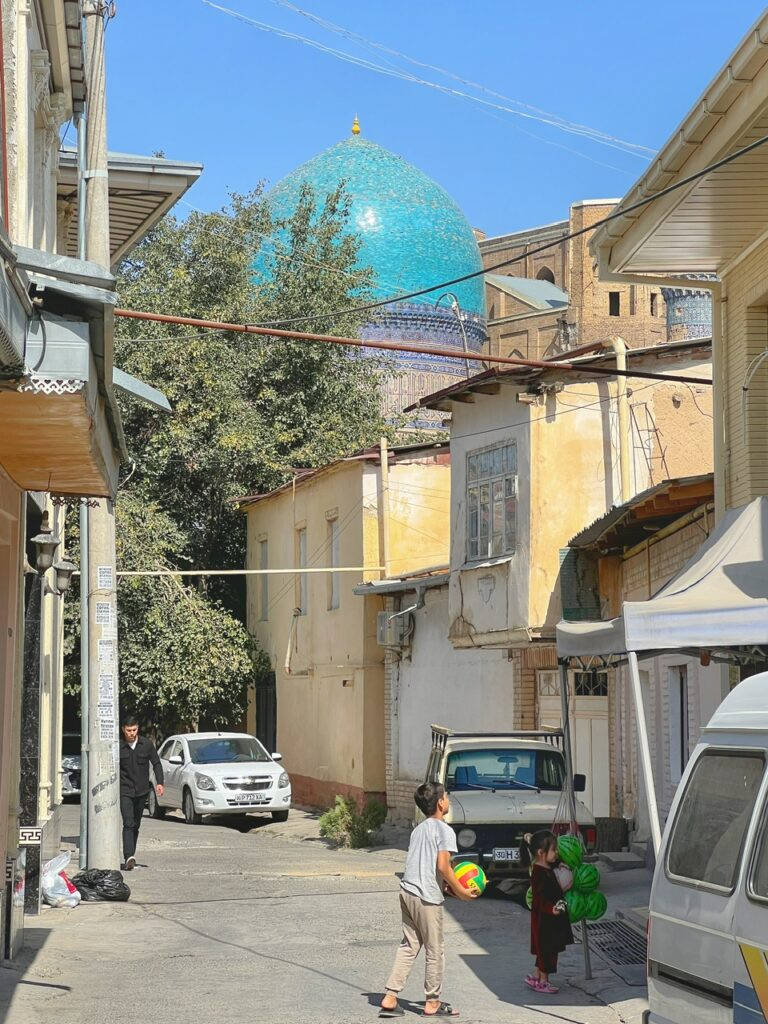
A minaret from an abandoned 19th Century mosque. We would find things like when we took our long evening walks, the side streets of Samarkand usually littered with pops of glazed aqua domes, and kids playing.
However, unlike other places we’ve visited in Tajikistan and Kyrgyzstan, they were not the least bit interested in us. This is generally one reason we’re not nearly as captivated by places like this with massive tourism….they lack the local connection and curiosity. We miss Tajikistan and Kyrgyzstan already for this reason.
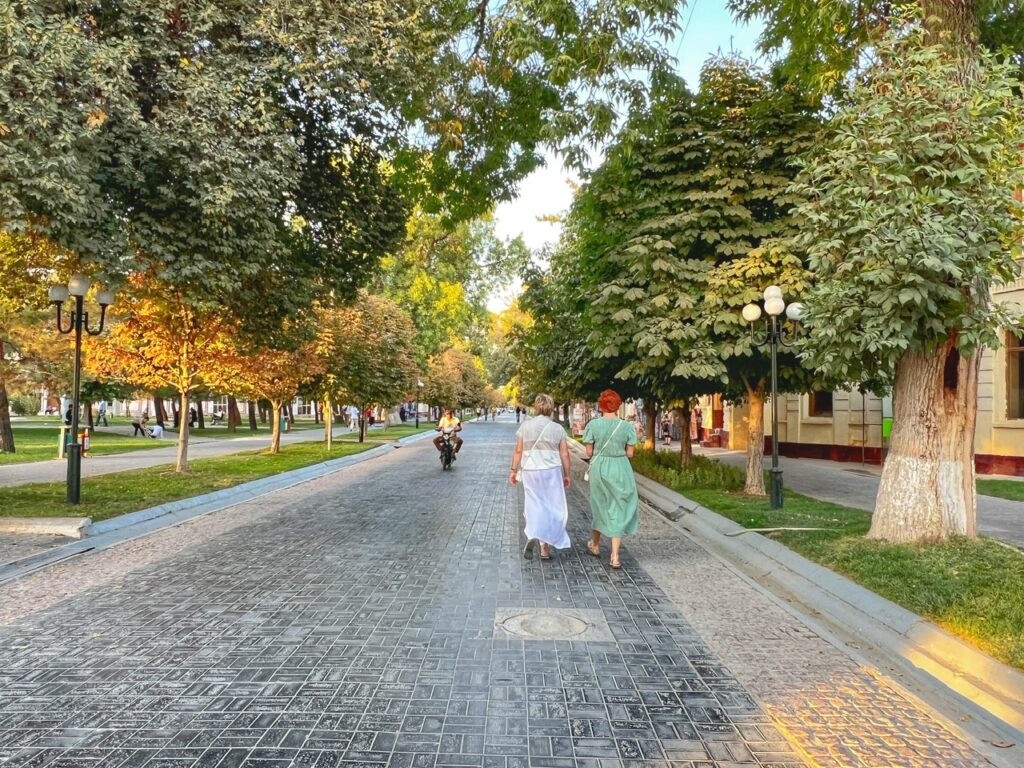
The wide pedestrian street, however, was wonderful for walking and running.
Peeking in an art gallery called “Happy Bird.”
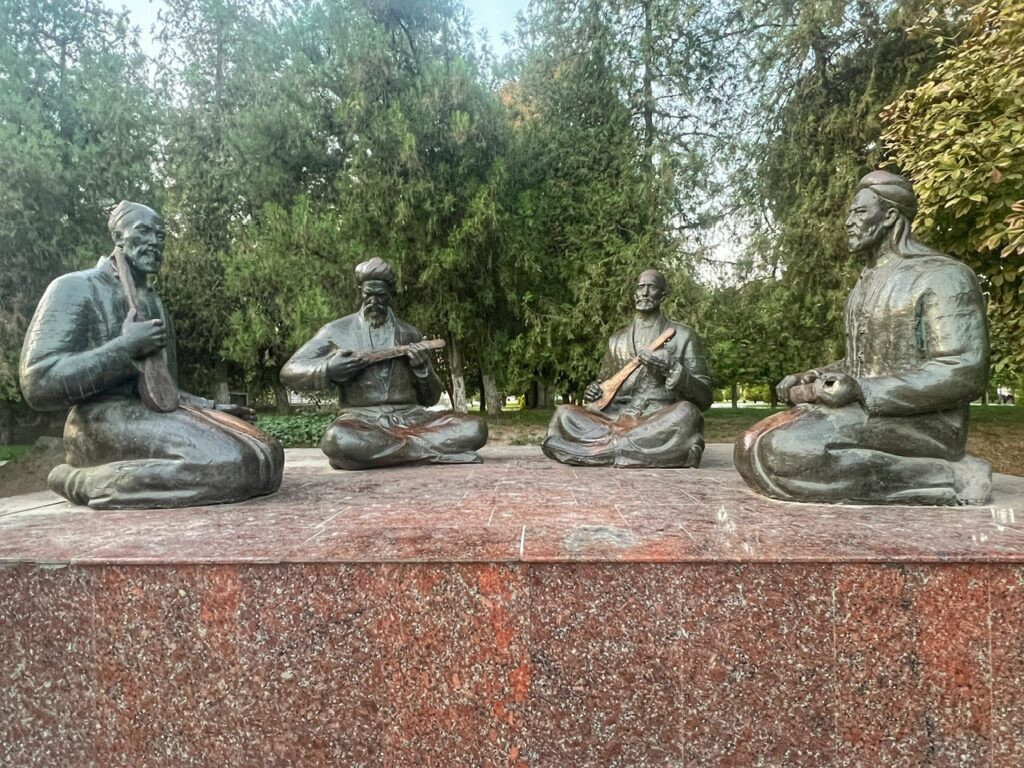
The Halq Baxshi-Shoirlari statue is a monument honoring Uzbekistan’s traditional oral folk poets and storytellers, known as baxshi.
Baxshi, appropriately sounds similar to “baksheesh” in Arabic countries which means “tip.” You can bet these hardworking artists were hoping for the same!


Due to a strong desire to move away from Soviet times, once we arrived to Uzbekistan, we finally dropped using our Russian word for thank you and switched to Uzbek, which is “Rahmat.” Weirdly, this trash bin also speaks Italian.
The Khodzha Abdu-Darun Mausoleum and mosque
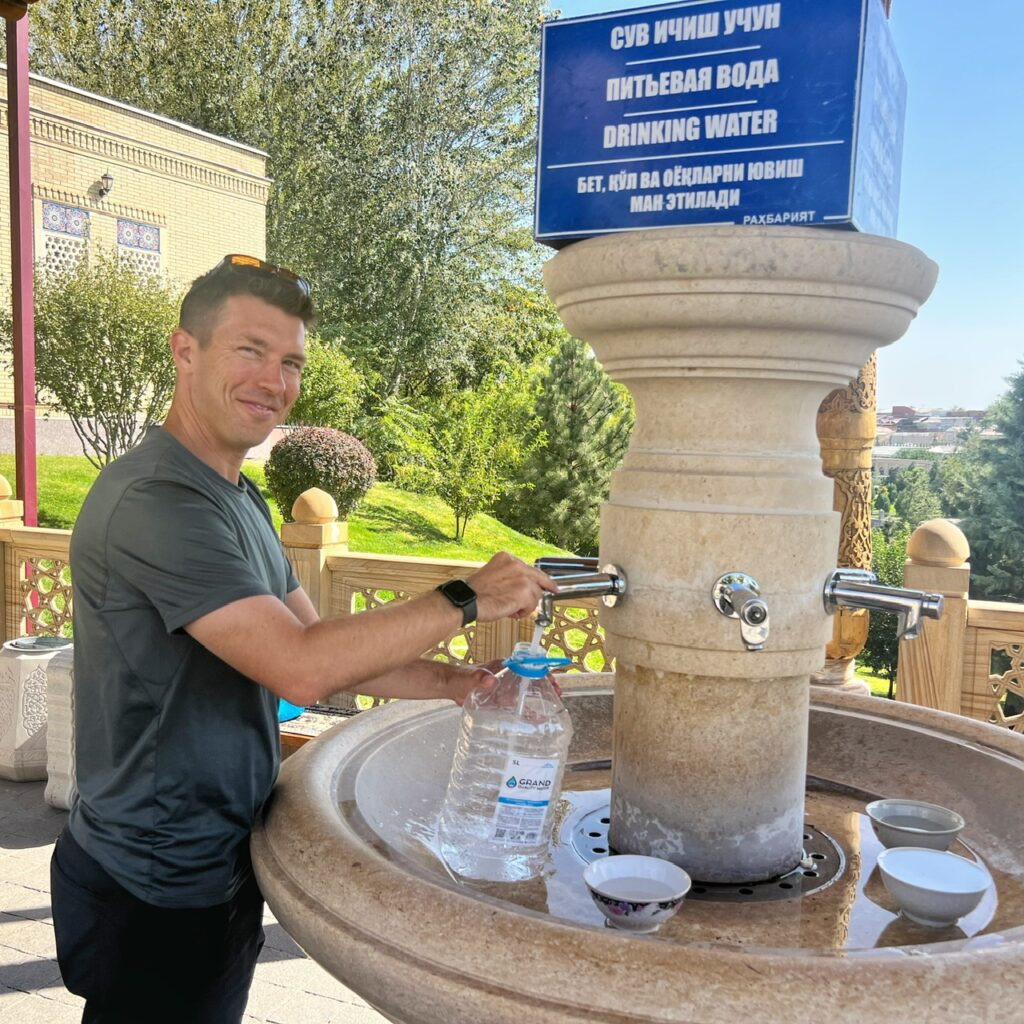
Greg filling our water bottle at the official “drinking water” station in Samarkand, which was across the street from Hazrat Khizr Mosque.
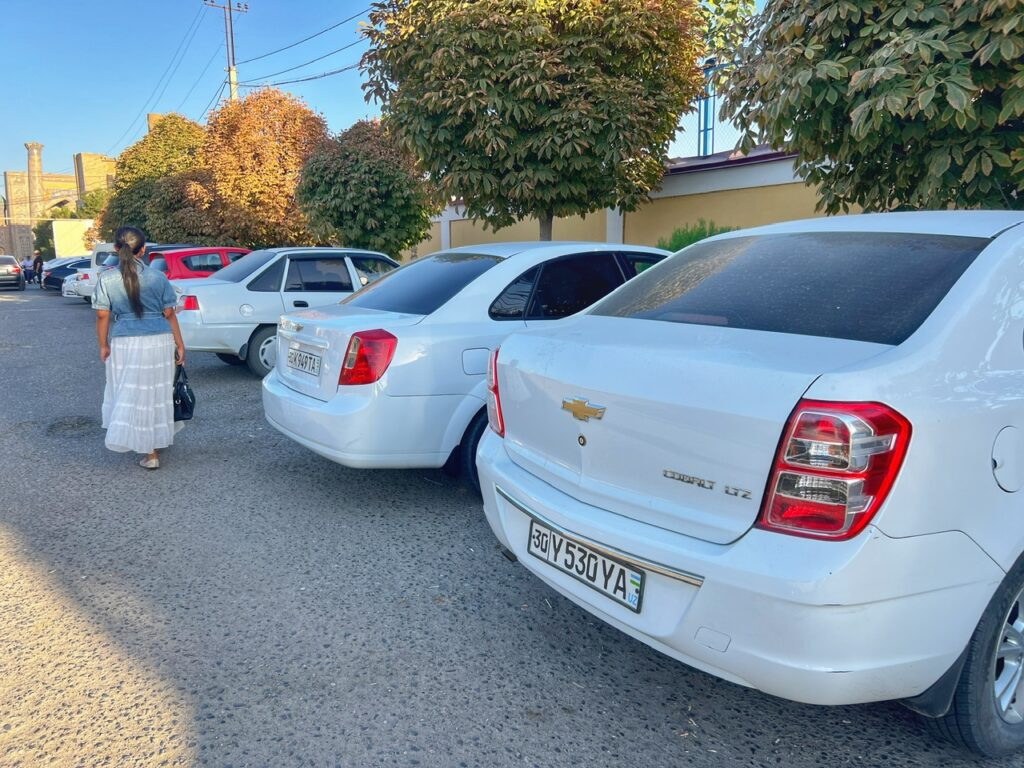
If you want to know how the upper class economy is going in Uzbekistan, ask a Chevy dealer, particularly a WHITE (nothing to do with skin color) Chevy dealer. According to the exorbitant number of them on the road, these sales guys must be loaded.
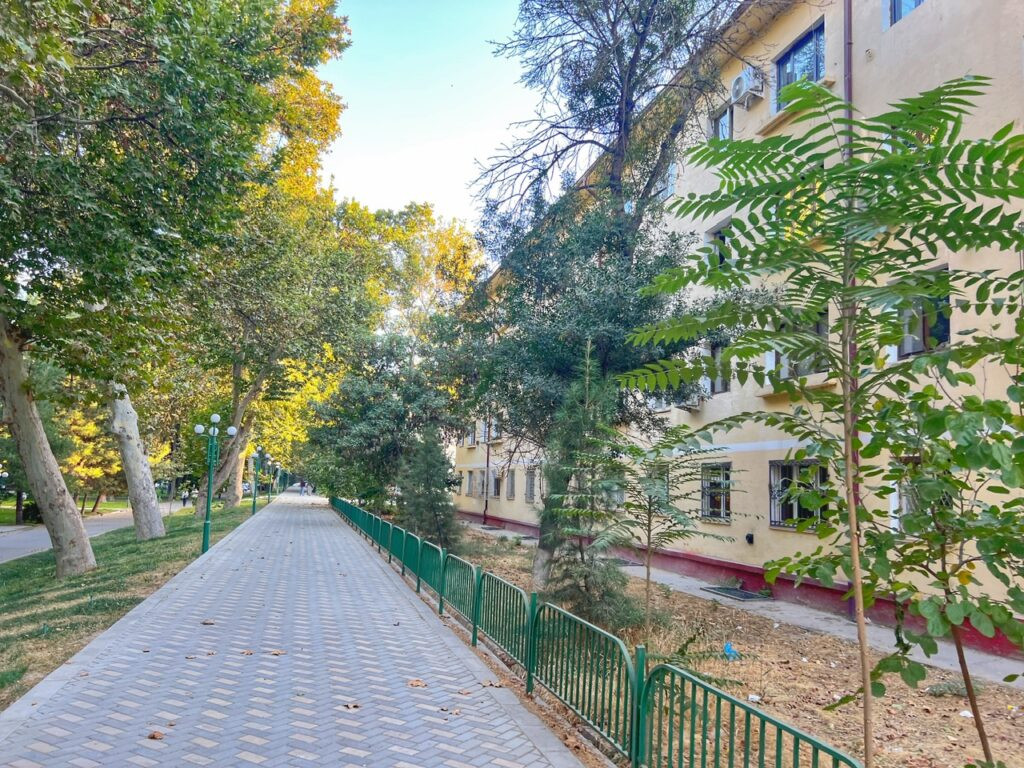
Leafy green neighborhoods and residential blocs of the city
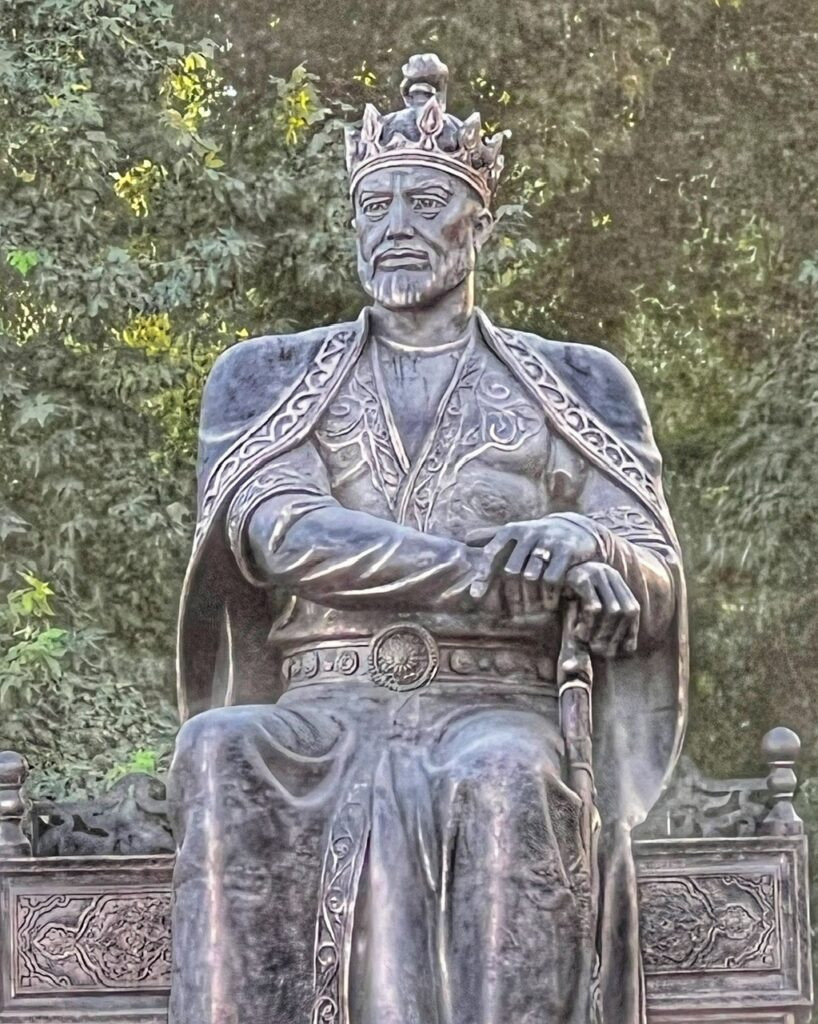
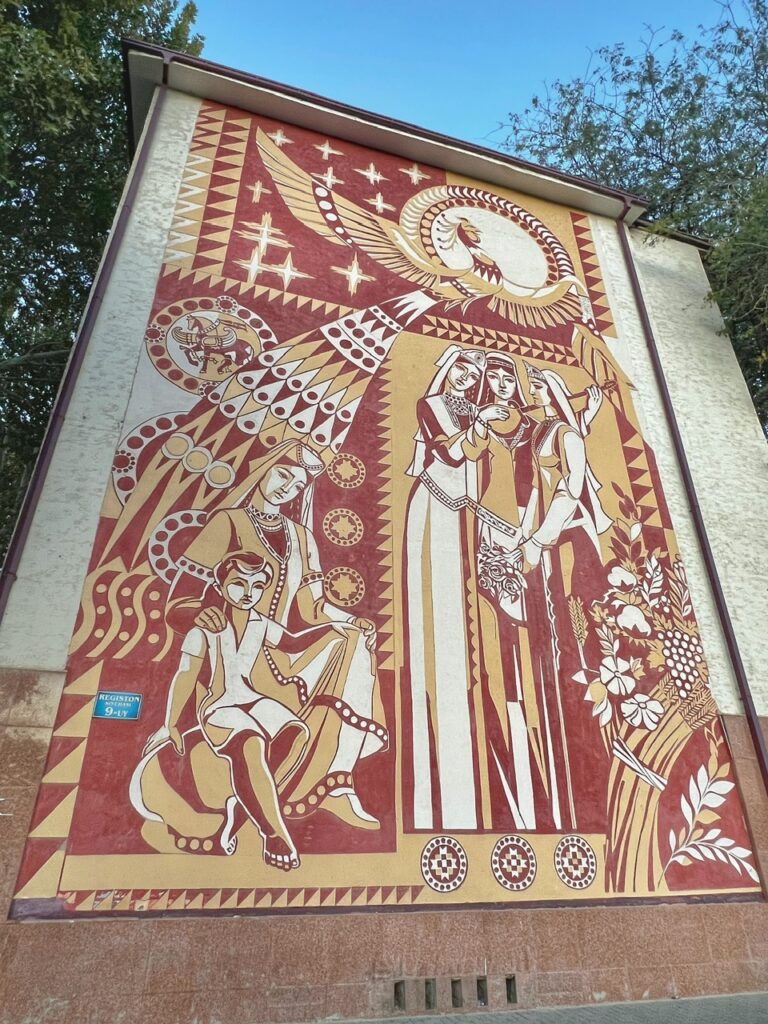
The Amir Timur statue, who we spoke of extensively in his famous dead guy mausoleum post. Also, a unique piece of street art seemed to focus on women, storytelling and symbolism.

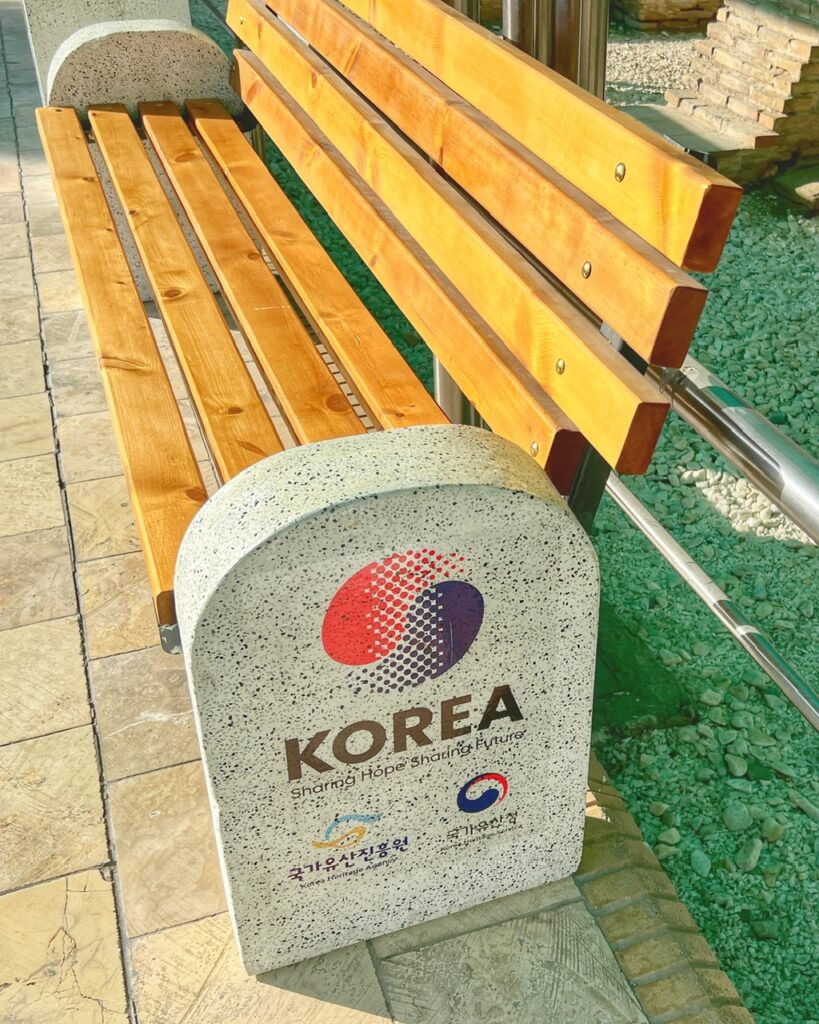
Samarkand: the Cultural Capital of the Islamic World! Sponsored by…KOREA!!! Wait…what?!

As and we usually do, we found ourselves wandering into a local cemetery which offered full-size Soviet-style portraits on many tombstones. It gives the phrase “dancing with dead people” a whole new perspective.
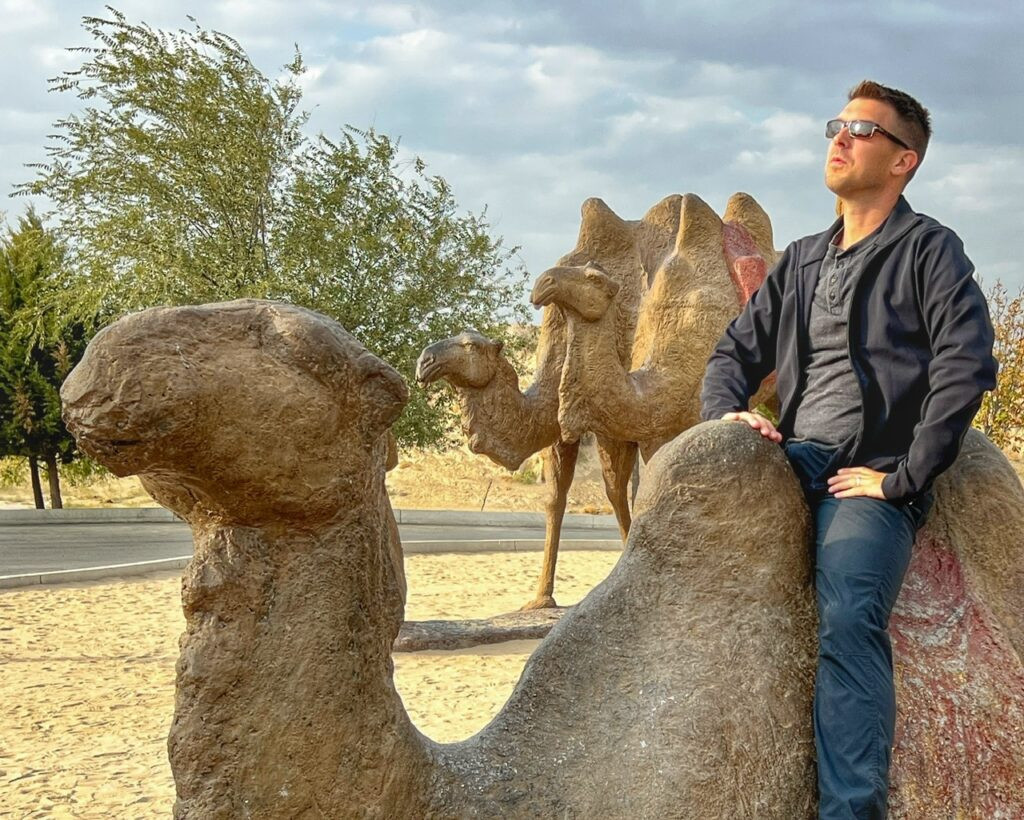
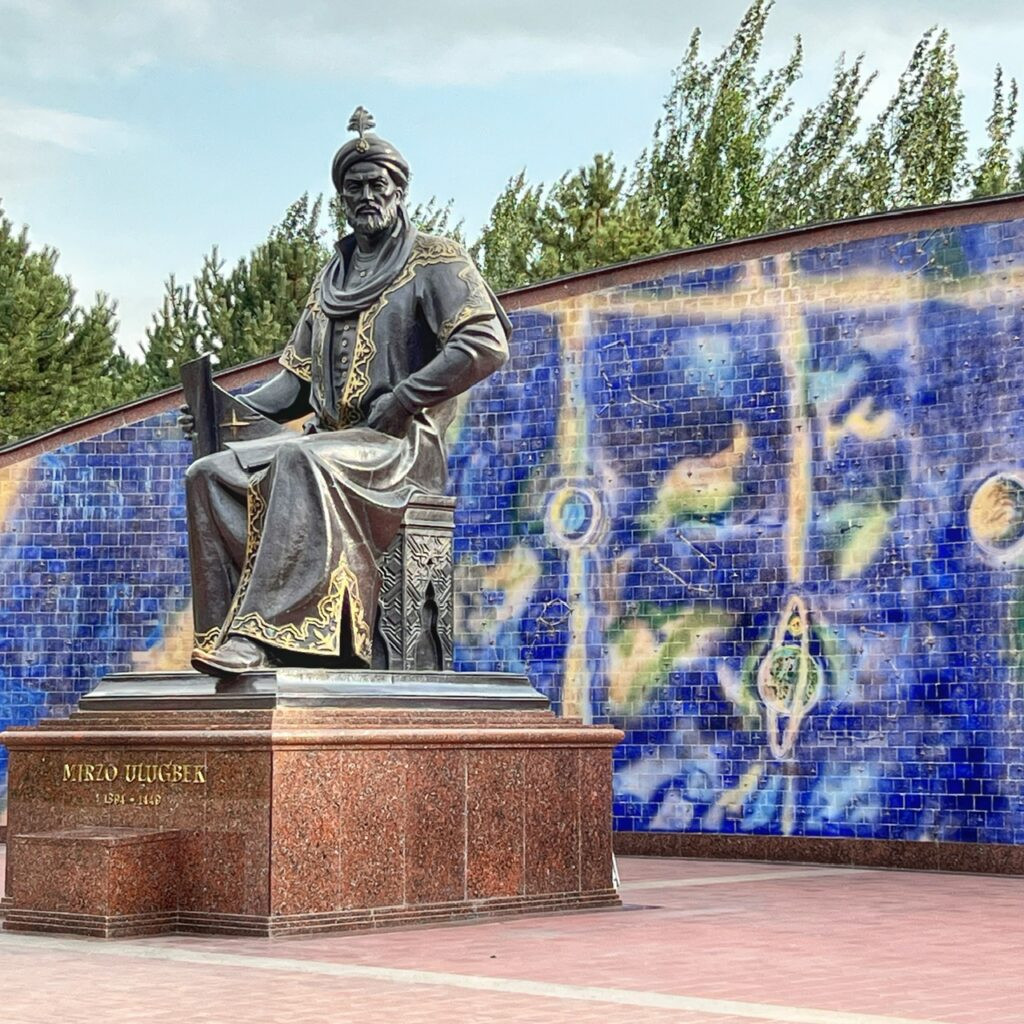
Greg said he wants this picture on his. He looks a lot like this guy….Ulugh Beg, for whom, on another night, we walked the mostly pleasant one hour out to the Ulugh Beg Observatory, which is “one of the most impressive scientific sites of the medieval Islamic world” according to Chat GPT.
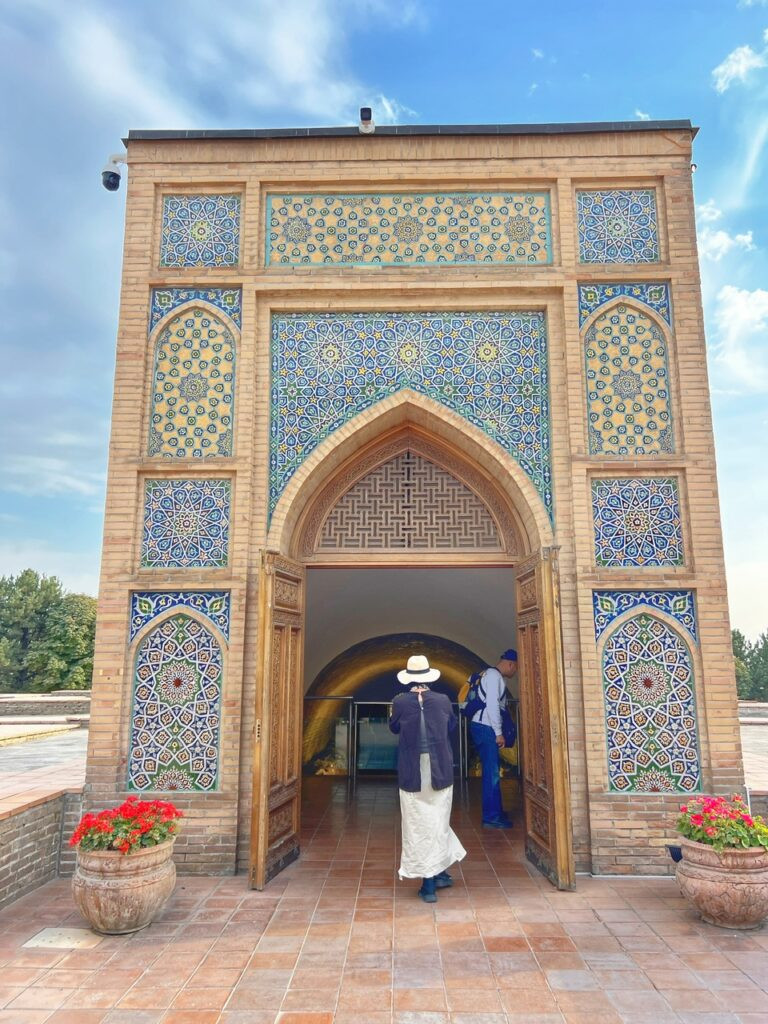
Built in the 1420s by the grandson of Timur, Ulugh Beg was a ruler, but also a passionate astronomer. Can only imagine his “Star Trooper”-themed militia. In our opinion, it was also very overpriced at $6/ticket for what and where it is in the city.


The major instrument was a large meridian arc with a radius of ~40 meters, which was carved in marble and embedded into a trench, allowing precise measurements of star altitudes and transit times.
In this observatory, more than 100 stars were catalogued, and the tropical year length (how long it takes the Earth to orbit the sun) was calculated with an error of only about 25 seconds.
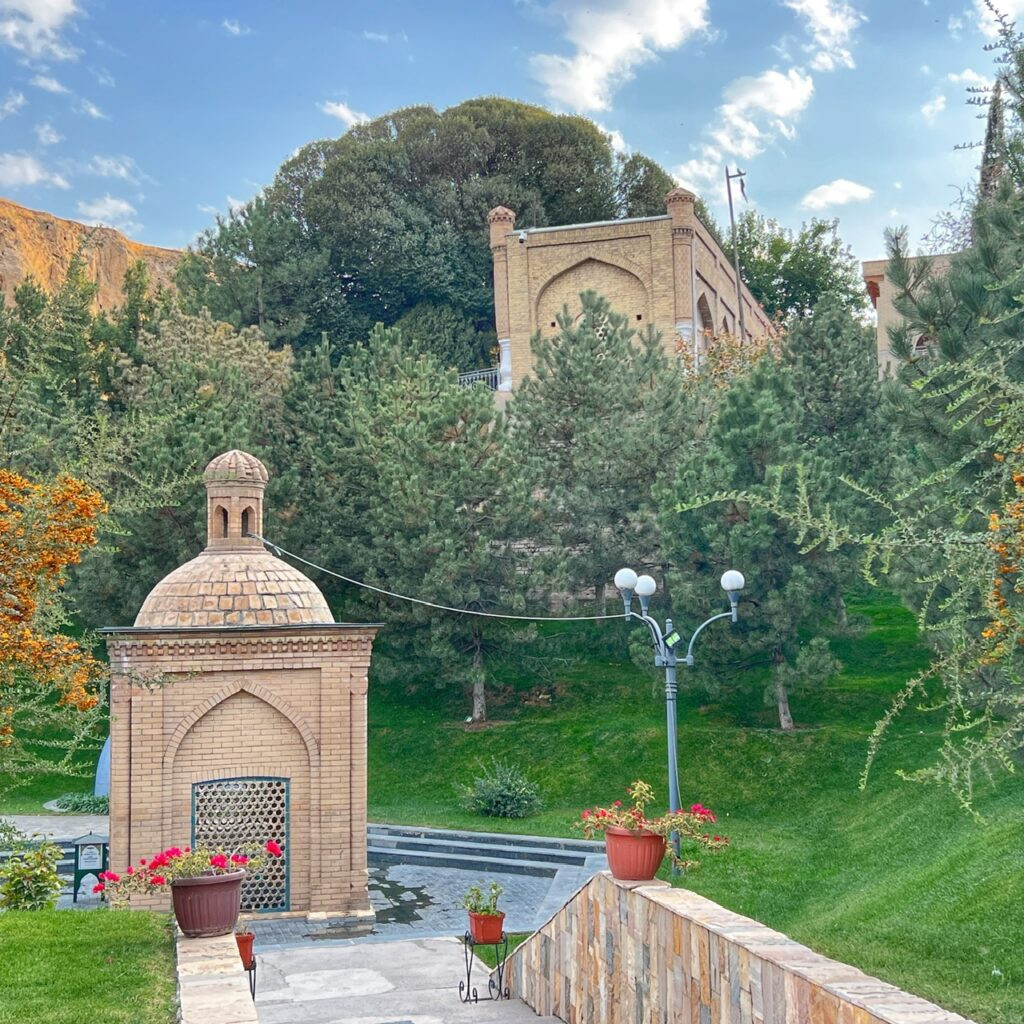
Also nearby here is the tomb of Daniel, known from Judaism and Christianity as “Daniel of Babylon” and from Islam as “Daniel the Prophet.” Like with many such tombs, some scholars doubt it is literally Daniel’s body because multiple other cities also claim his tomb.
One thing for sure is…the tomb is unusually long…60 feet! Some say Daniel’s body “miraculously” grows, so the tomb grows with it. Other (smarter?) individuals say it was intentionally long so no one could steal the relics by not knowing the exact spot. Regardless, unlike the tourist heavy monuments in Samarkand, the Tomb of Daniel felt quiet, sacred and timeless and less like a Selfie Station.
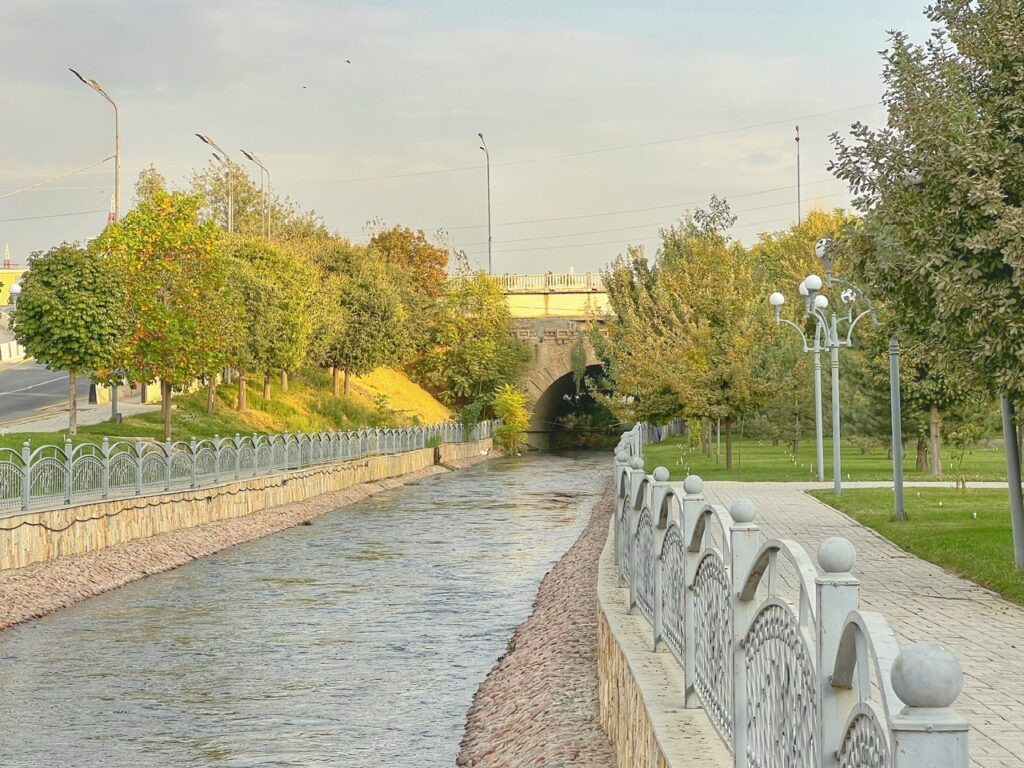
Nearby his tomb is the river that flows through Samarkand, which is hidden from the sight of most tourists because it’s a bit out of the historic center.


