Arriving to Baku
After a troubled ten days in Tashkent thanks to hotel registration issues, we were 100% elated to get out of Uzbekistan and onto our next destination of Baku, where we would be for coming 2.5 weeks. 2.5 weeks?! You might say….? True…it’s not long enough according to our new one-month plan, but we’ve got a VIC (very important cat) to attend to beginning in mid-November and our first visit to Azerbaijan was the ideal stopover in between Central Asia and Europe. That said, we’ll be transitioning into full months starting in December.
So…wait….where is Azerbaijan? You might ask….
It’s located just east of Georgia on the Caspian Sea and a three-hour flight from Tashkent on….what else? Azerbaijan Airlines, which was $235 for two tickets that we paid for using Capital One Venture X points. And naturally, the only options were scheduled for the zippy hour of 3:30 a.m, which meant….yay! Another red eye and zero shut eye!

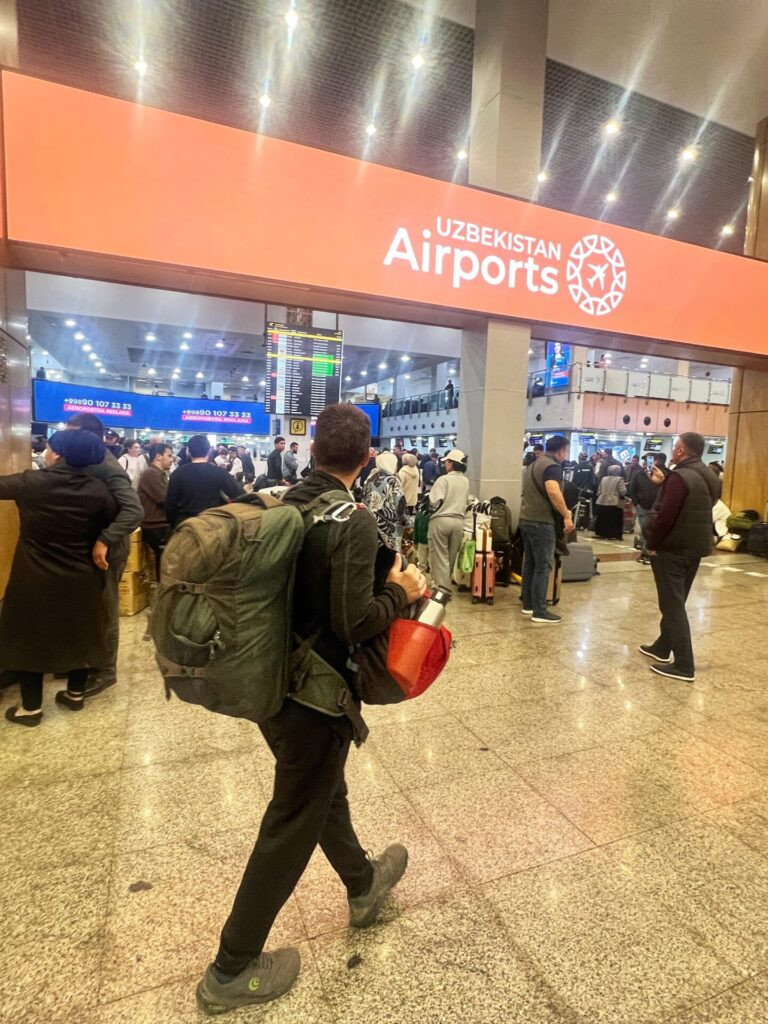
The flight itself was smooth and soared us over the barren land of desert we’d already commuted by train to get back to Tashkent from Khiva. Of course we looked at just flying from Khiva, but that was prohibitively expensive. We arrived to the airport nearly 5.5 hours early, at our normal 10 p.m. bedtime, convinced by Chat GPT, the migration office, and other travel bloggers we were going to get stopped by the border officials, and wanting to still have time to go to the lounge afterward.
It’s been awhile since we’ve seen an airport entrance so insanely jam-packed at this hour, and quickly learned we weren’t going anywhere until check-in opened for our flight at 12:30.
Fortunately, we were able to find a padded seat and camp out with our books for the next 2.5 hours. The majority of the people around us seemed like older locals scooting off to allah-knows-where at this hour.

Other observations included kurt balls in the vending machines next to the Oreos. Only the Central Asians would classify dried fermented milk curds as a tasty jaw-breaking treat. They are certainly a hell of a lot healthier than the processed Ameri-junk, however.


In other observations, the always intriguing flight board with dream destinations like Kabul and Minsk slapped on. At long last, we arrived to the “Anjir Business Lounge” which radiated like a glorious Persian portal after the draining lead-up to, and passing through the Uzbek exit.


It was 1:30 in the morning…and we were more than ready for a glass of wine. It was just terrible, but we didn’t mind because had something to celebrate!! Buh-bye Uzbekistan! And why not throw in some goodies as well?!
By the way…a “Pro Tip”: Always use translate when buying hand sanitizer, or you might end up smelling like old-man MUSK. I mean, seriously…we should have known! Haha.


The next morning (ummm…technically, it was ALREADY the next morning?) at 5:45, we arrived to Baku and were stamped into Azerbaijan in a veritable zombie state. But, the lounge gods smiled again and we were able to take advantage of another land-side lounge in the baggage claim area, where we were rewarded with a friendly staff, foamy lattes, and little treats…


…to give us enough fuel to wander through the fancy airport, take out some Azerbaijani Manat at the ATM, buy a BakuKart at one of the machines…and work our way to the quite nice “H1 Airport Express” bus, which would shuttle us 30 minutes to the center of Baku for the bargain price of $.77/each when a Bolt taxi was going at about $12.

We got some glimpses of the cosmopolitan downtown area of Baku and then quickly hopped aboard a city bus, powered by Google Maps, to get us the rest of the way to our apartment. Easy-peasy!


And yes…once again, we were SO grateful to arrive to our $27/night centrally-located apartment. This time, we had smartly booked it for the night before so we could check in immediately upon arrival. And finally, it felt like a home with a fully equipped kitchen, living area with soft, not gag-me fluorescent lighting…
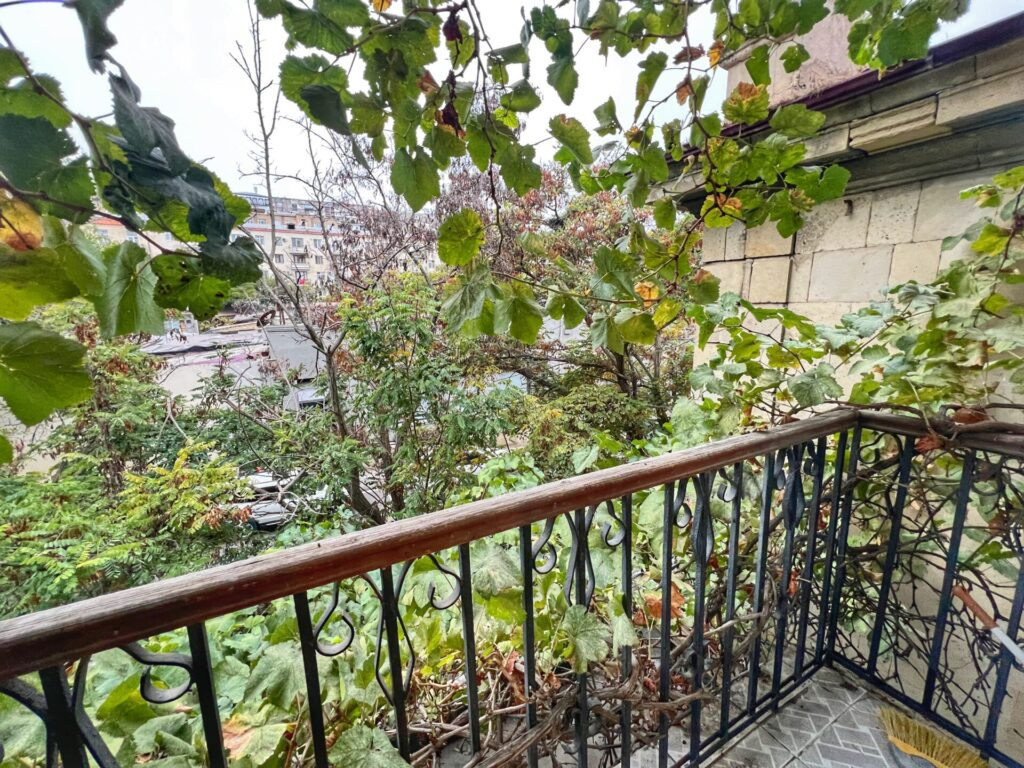


…a grape-vine-draped balcony, and a quite peachy keen uni-bath. I guess now that we’ve left Central Asia, we’re back to the option of toileting and showering at the same time! Hooray! Our tiny bedroom made us a bit nauseous, but it had all we cared about at that 7:30 hour with no slumber…a COMFORTABLE mattress and plushy fluffy pillows. We were very happy to be pumping the brakes. Welcome to Baku!
Exploring Icherisheher, or Inner City
It didn’t take us long to become beguiled by Azerbaijan’s glittering capital perched on the fringe of the Caspian Sea, but especially by its ancient Icherisheher, or Inner City, which well deservedly achieved its UNESCO status in 2000. Within its fortressed walls and labyrinth of alleys, it is layered with captivating architecture from the Persian and Ottoman Empires and with clear traces of Russian and Islamic influences as well. For us, it was reminiscent of places we’ve visited in the Balkans, as well as Turkiye, Spain, and Malta. With few tourists, idyllically sunny skies, and a mystical sense of wonder, it is a fascinating place to get lost in.


Icherisheher is the oldest part of Baku, and dates back to at least to the 12th century, though some archaeologists believe human settlement there began as early as the 7th century BC. The beautifully restored 12th century fortress walls surround the inner city in about 2.2 kilometers and show evidence of an outer moat with drawbridges as well.

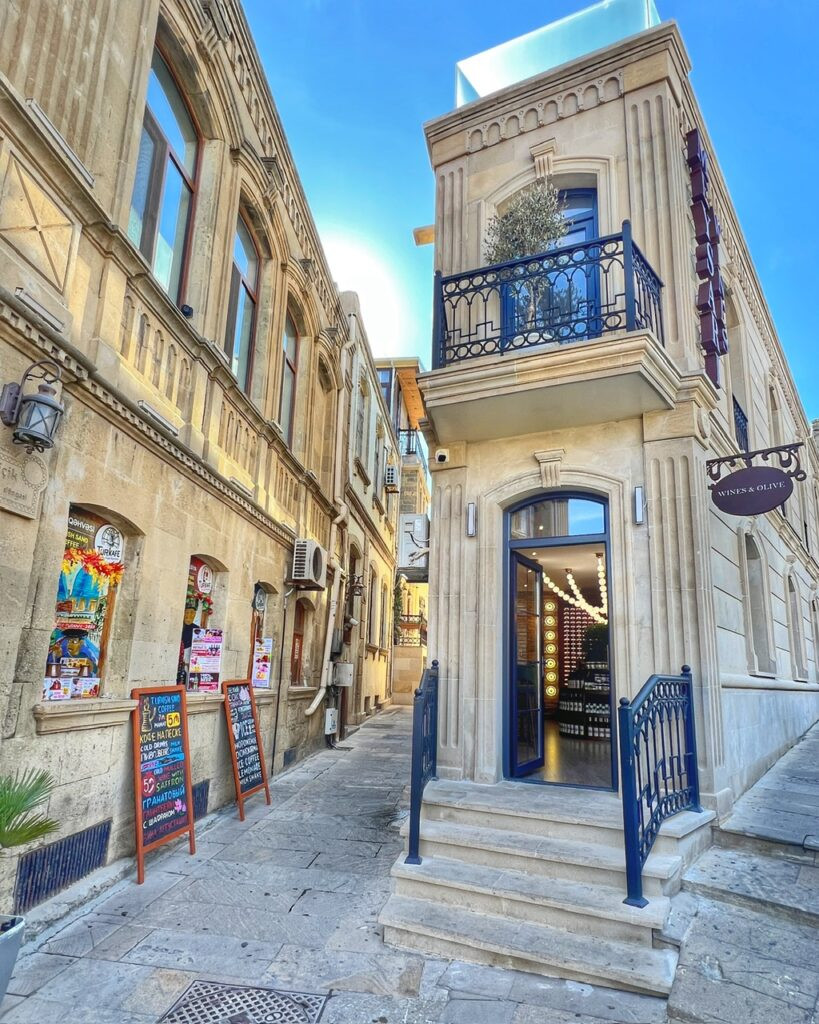
Within its maze of passages, Icherisheher hosts a multitude of wine bars, coffee shops, and picturesque restaurants. Unsurprisingly, it caters to tourists in the center and is much more expensive, so we chose to have our lunch on the cheapskate side of the wall. Most of the streets also only allow pedestrians or bikes to scoot under their striking shebeke balconies.
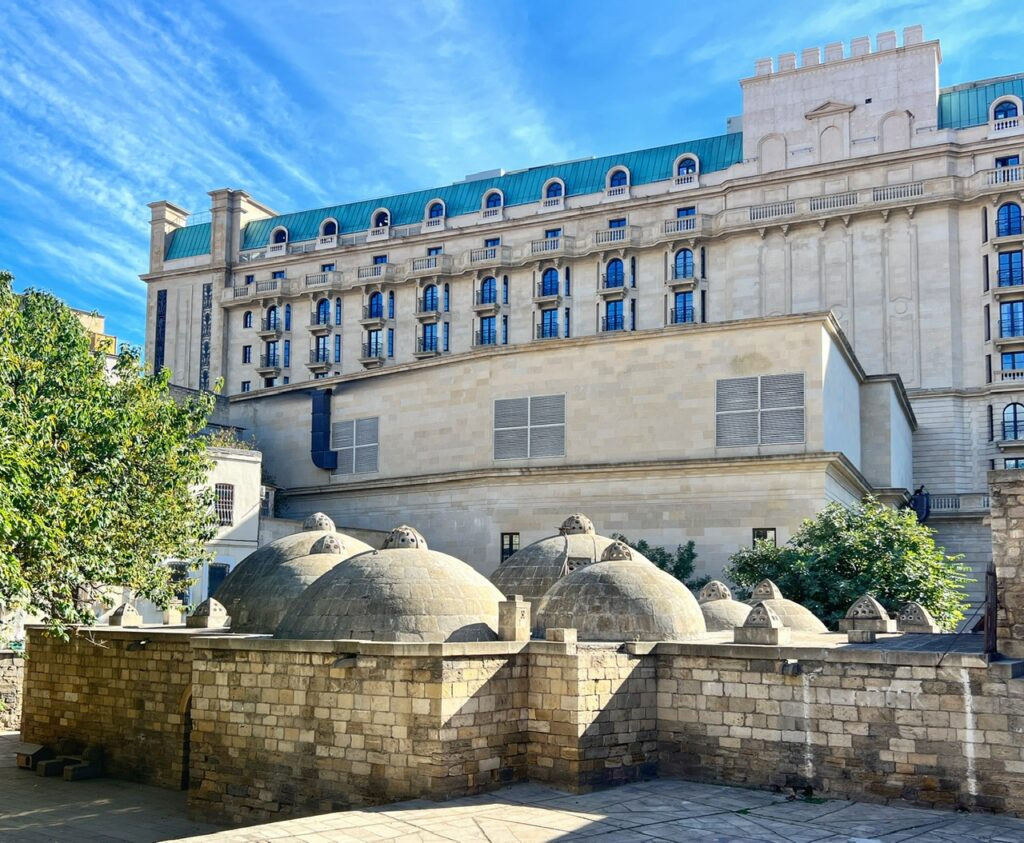
The old bathhouse, Kasum-Bek, which now sits behind the most hoity toity hotel of them all (Four Seasons) is crowned with a roof that looks like…well, you decide. According to a Google review, it used to be called “The Sweet Bathhouse,” because they served sweets and tea alongside your soak. It did not specify what kind of “sweets” it meant.

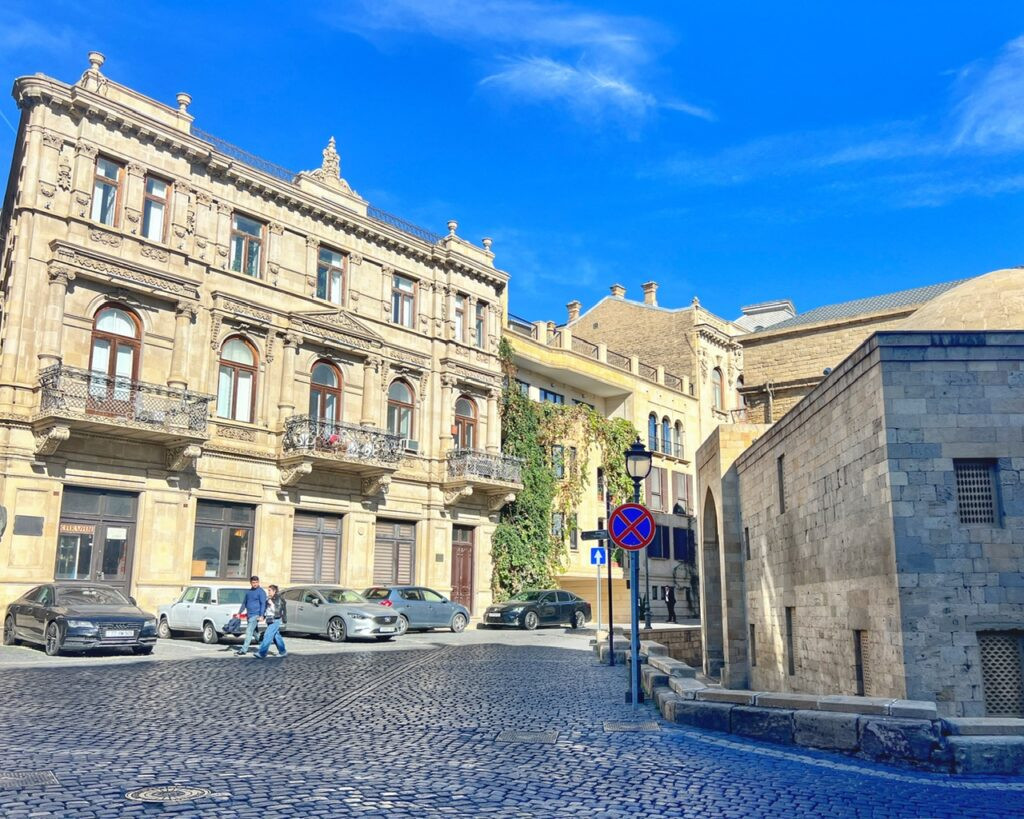

Amongst the streets of the walled city. Sometimes it had a little Parisian vibe, especially this cafe…which has to be the best named joint in the city.


We remember seeing many wall statues like this in Ukraine. Seems notably Russian?
Another thing you’ll encounter regularly while traipsing the walled city is shimmering glimpses of the Caspian Sea. This time crowned by the 1437 original minaret from Juma Mosque.
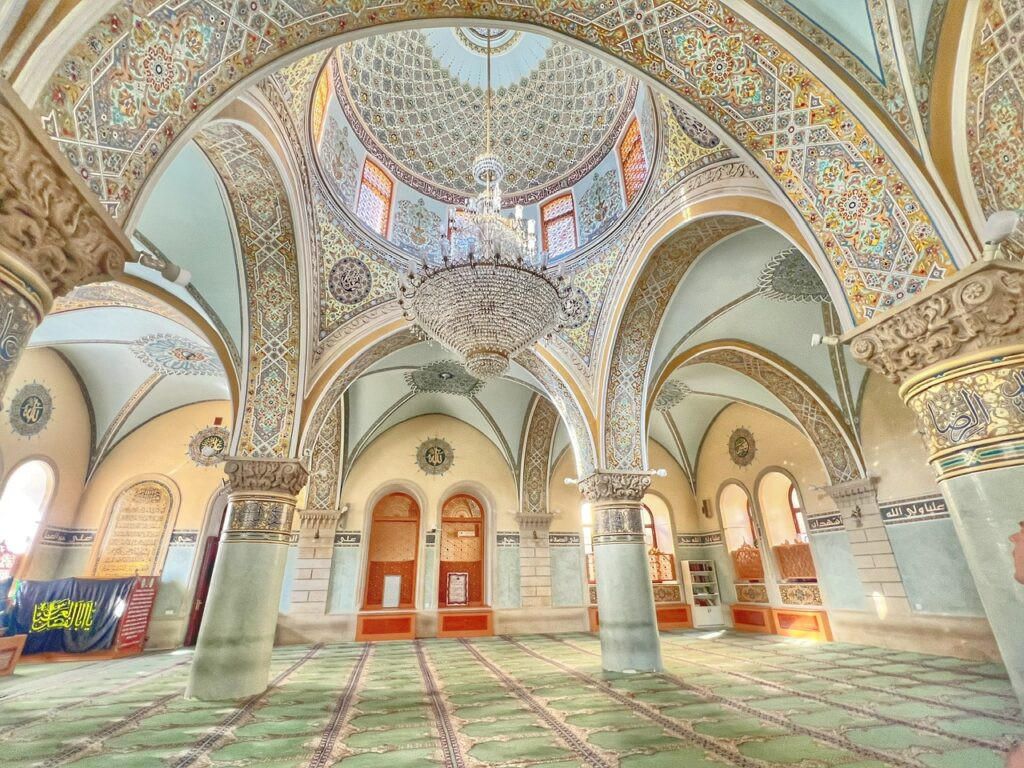
Speaking of which, this is the inside of Juma, or Friday, Mosque, which was built around the 12th Century. Before this, the remains of a pre-Islamic Zoroastrian fire temple sat beneath it — probably from the 7th or 8th century. When Islam spread through the region in the 9th century, the fire altar was replaced by a small mosque, marking Baku’s shift from Zoroastrian to Islamic devotion.
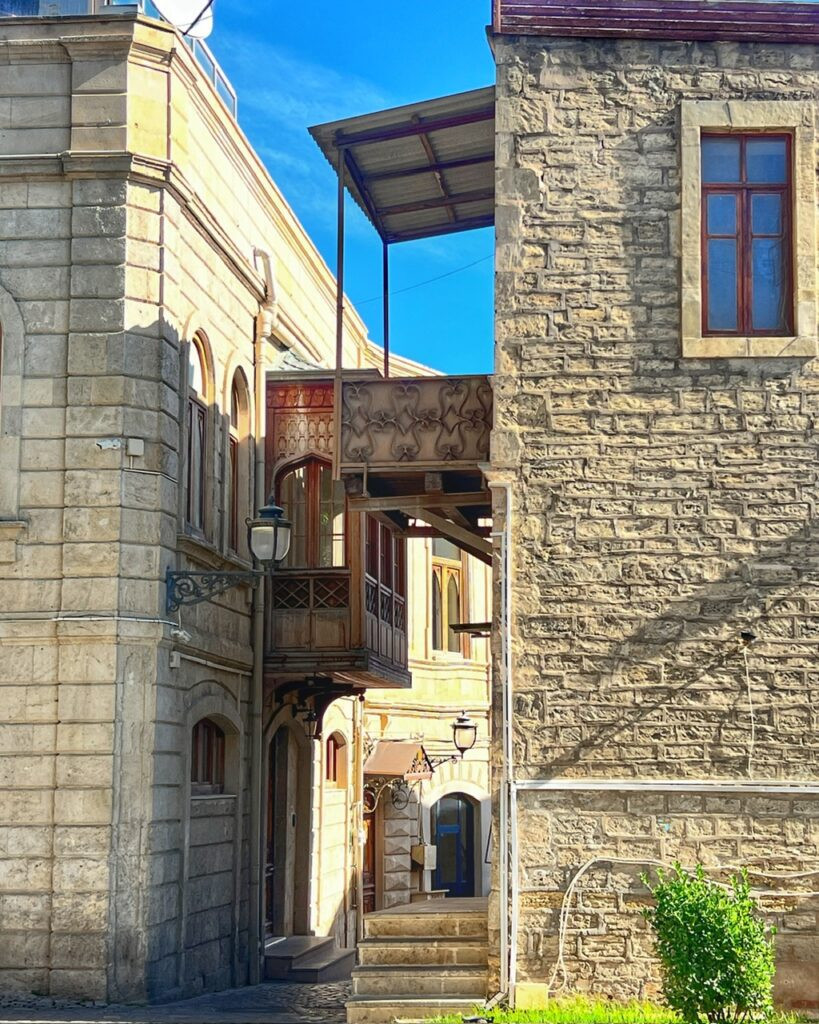
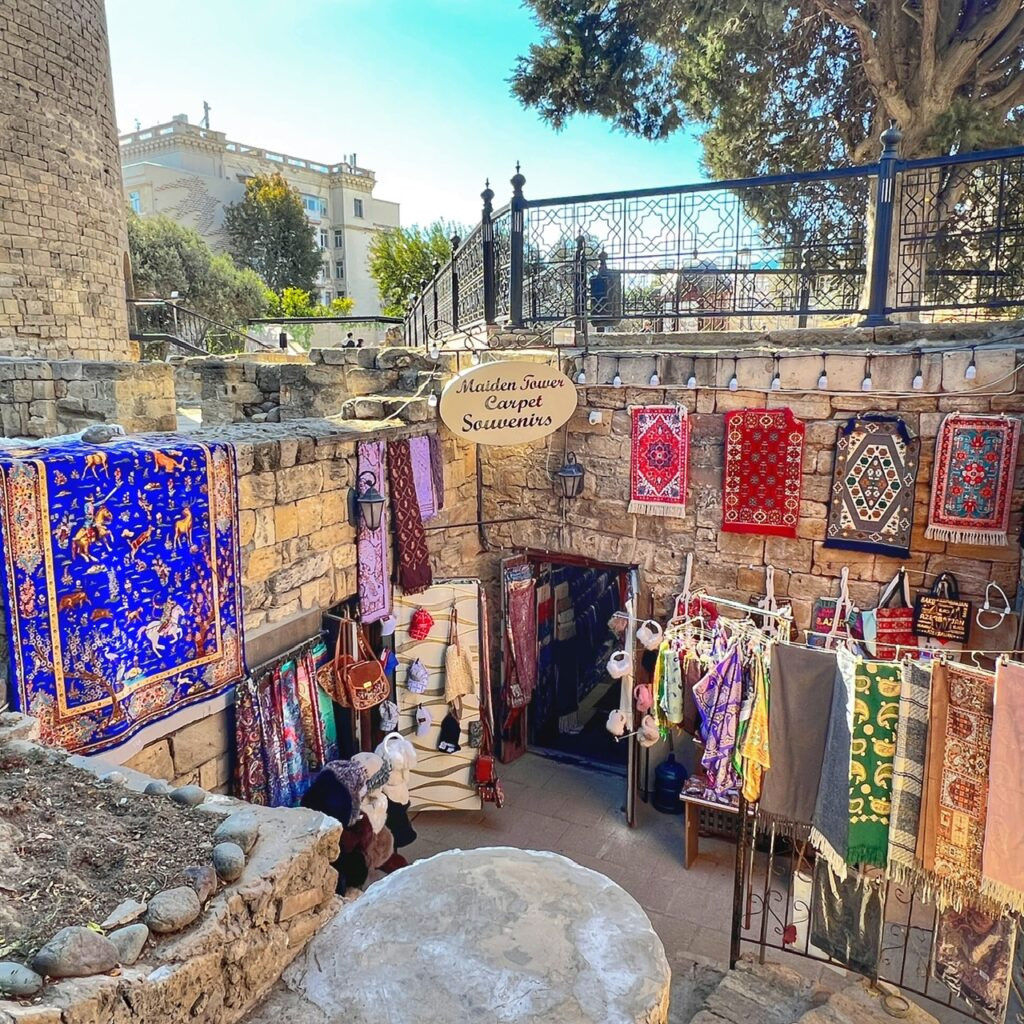
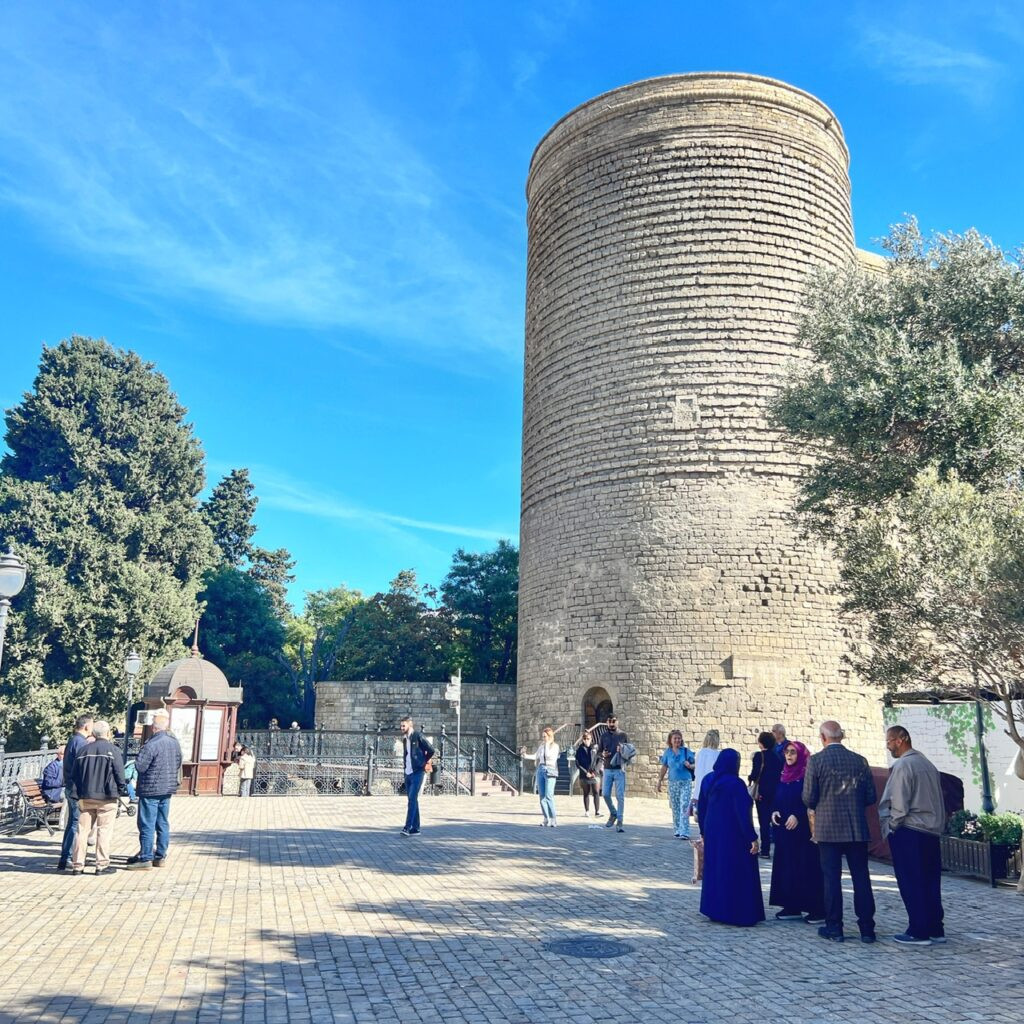
The back alleys of the walled city were just magical. Less so was near the Maiden Tower, which is where the majority of the souvenir shops and tourists congregated. That said, there weren’t many proving that Baku, at least this time of year, is still a mostly undiscovered gem.
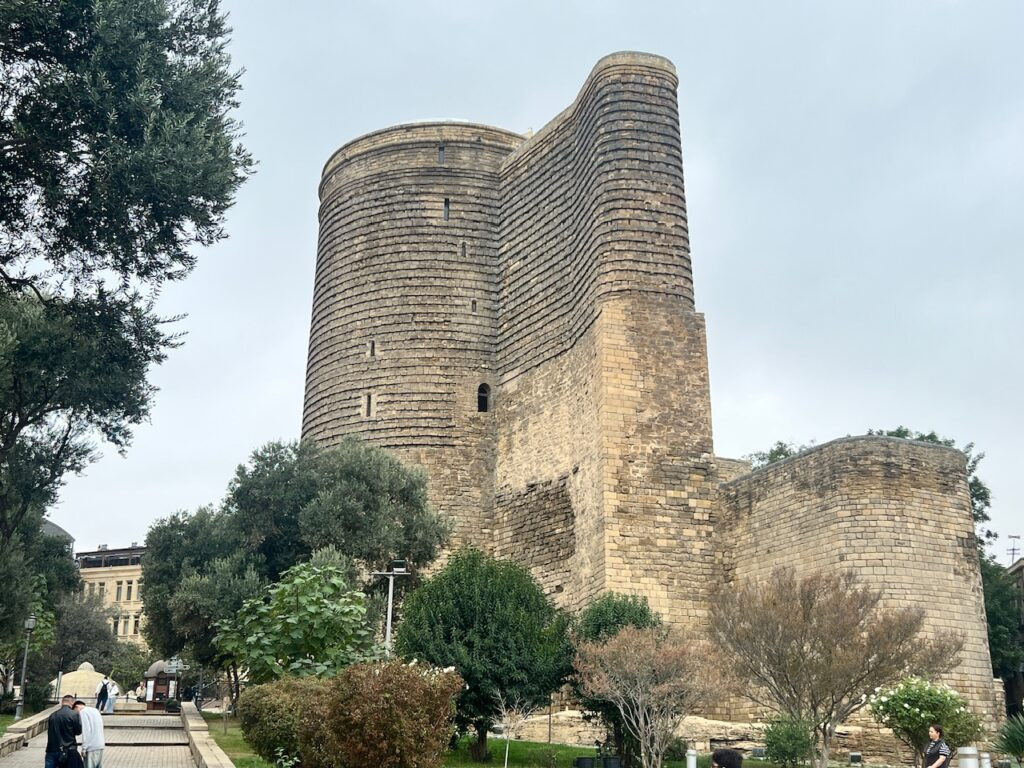
The Maiden Tower is the most iconic landmark in the area and is shrouded in legend and mystery. No one is quite sure what it was for—some say a Zoroastrian fire temple, others a defensive tower, and one famous tale says a princess leapt from it to avoid an unwanted marriage.
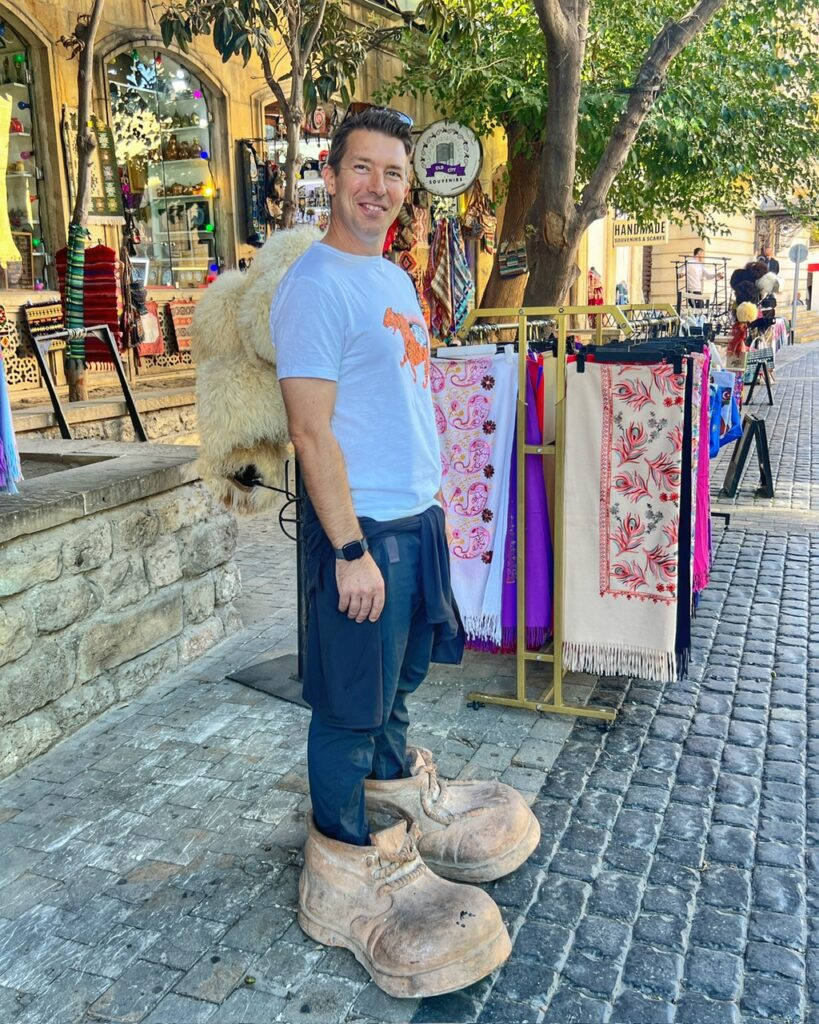
Not me. Look at my catch. 😍
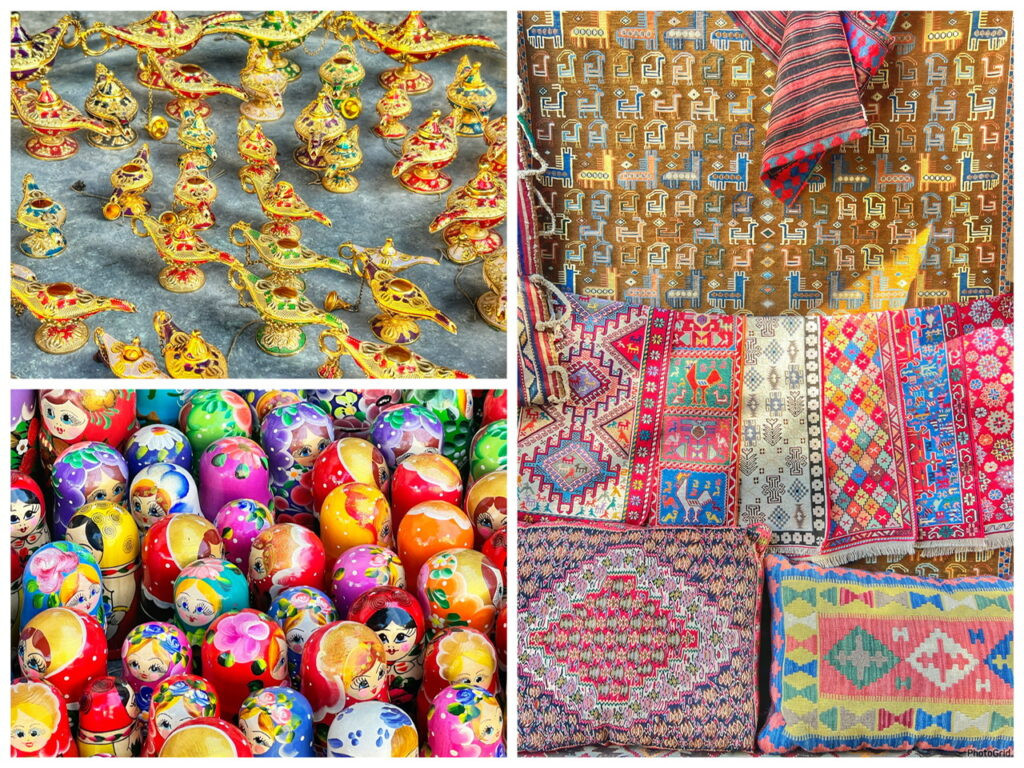
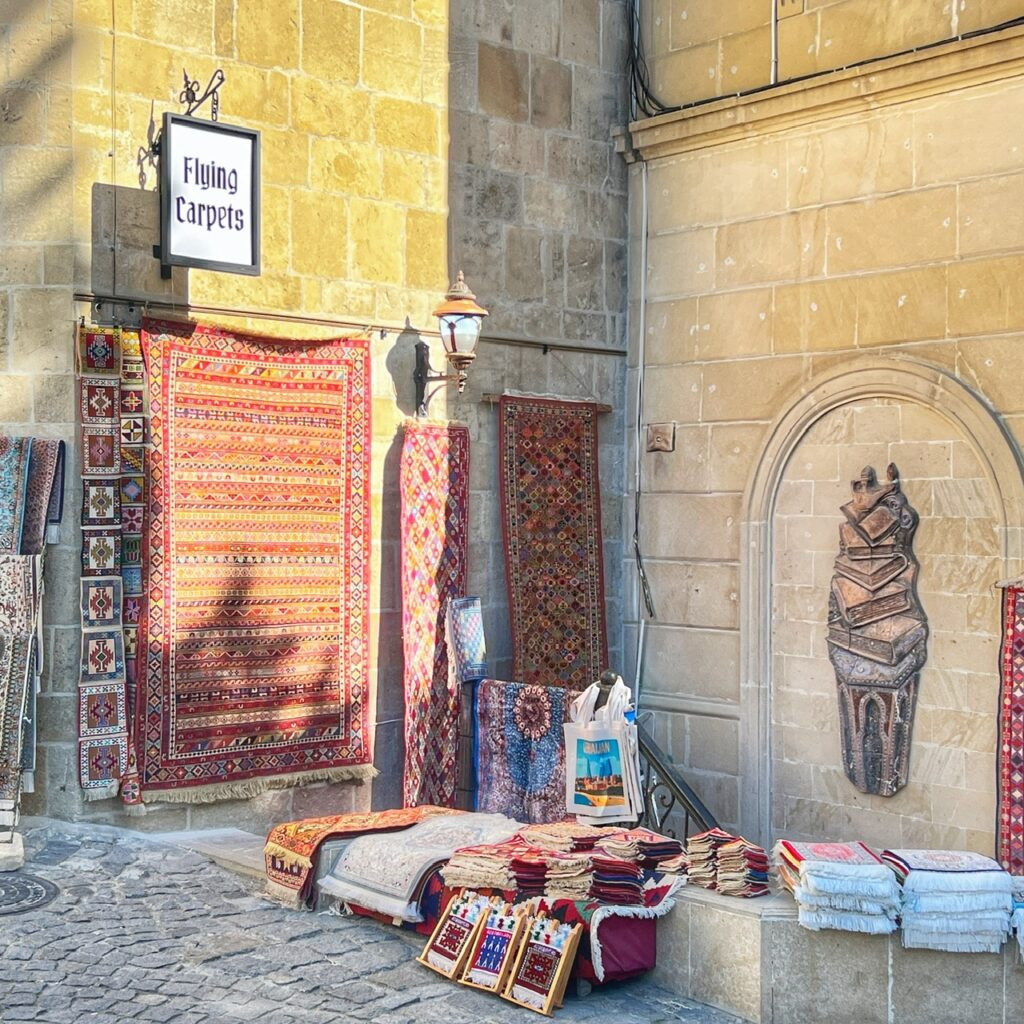
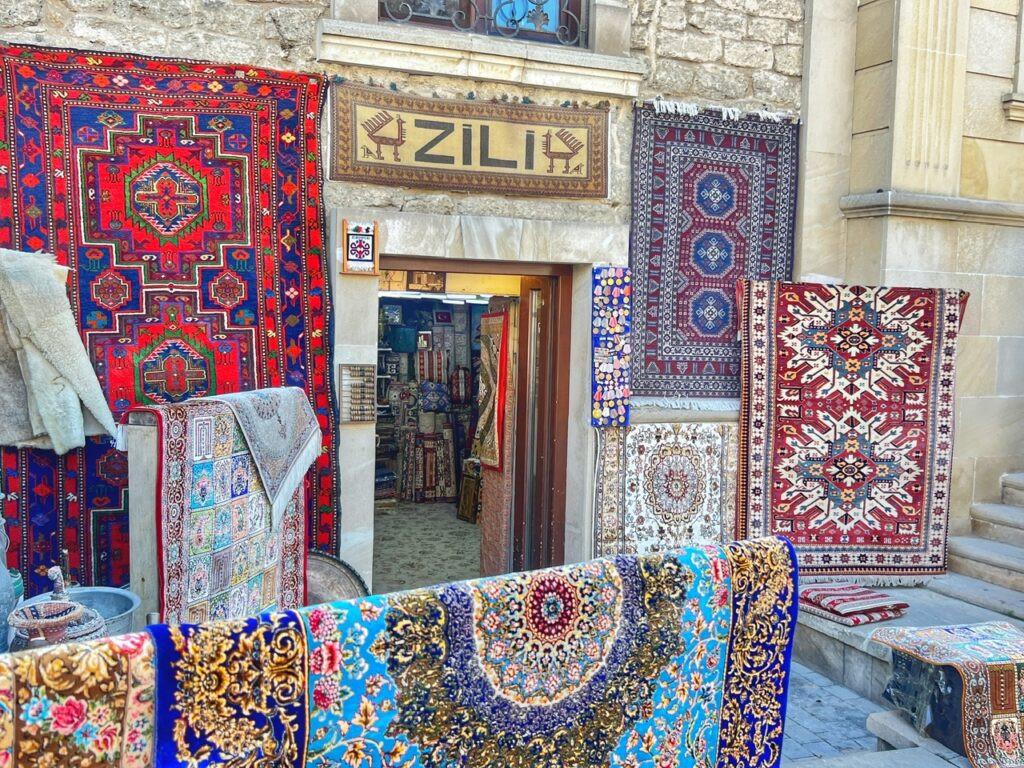
The melting pot of this region can be captured in its souvenirs impeccably. It’s the first place we’ve seen Persian rugs….next to Arabian Aladdin-style lamps… next to colorful Russian nesting dolls. Speaking of Aladdin…get your flying carpets here!!
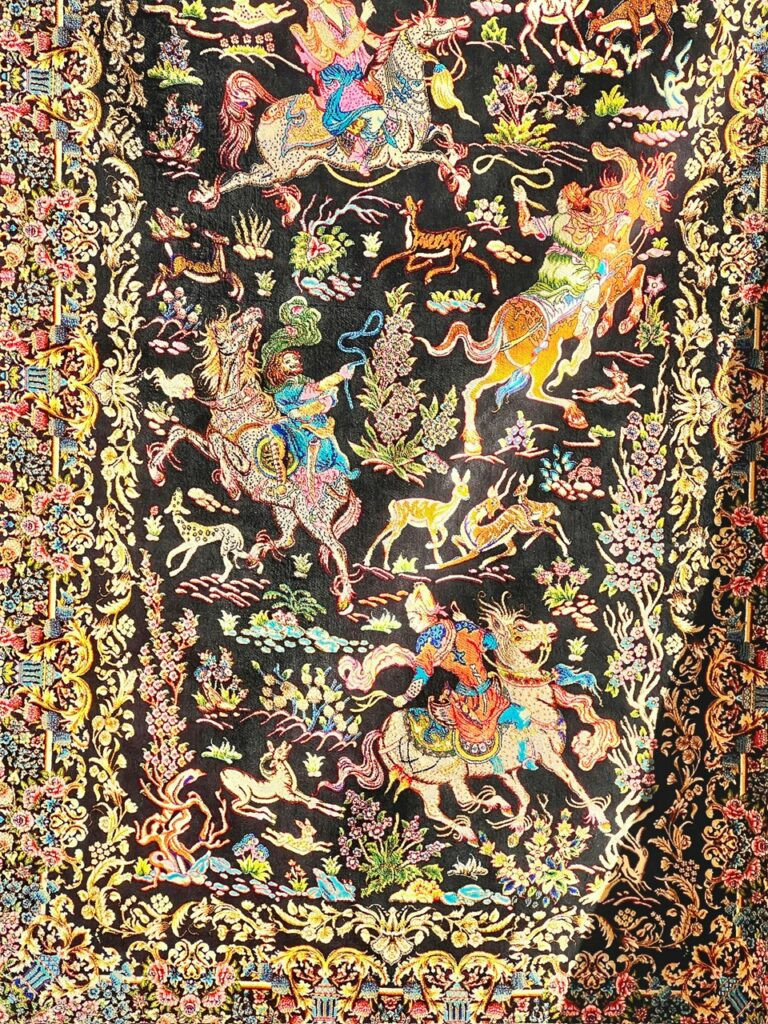
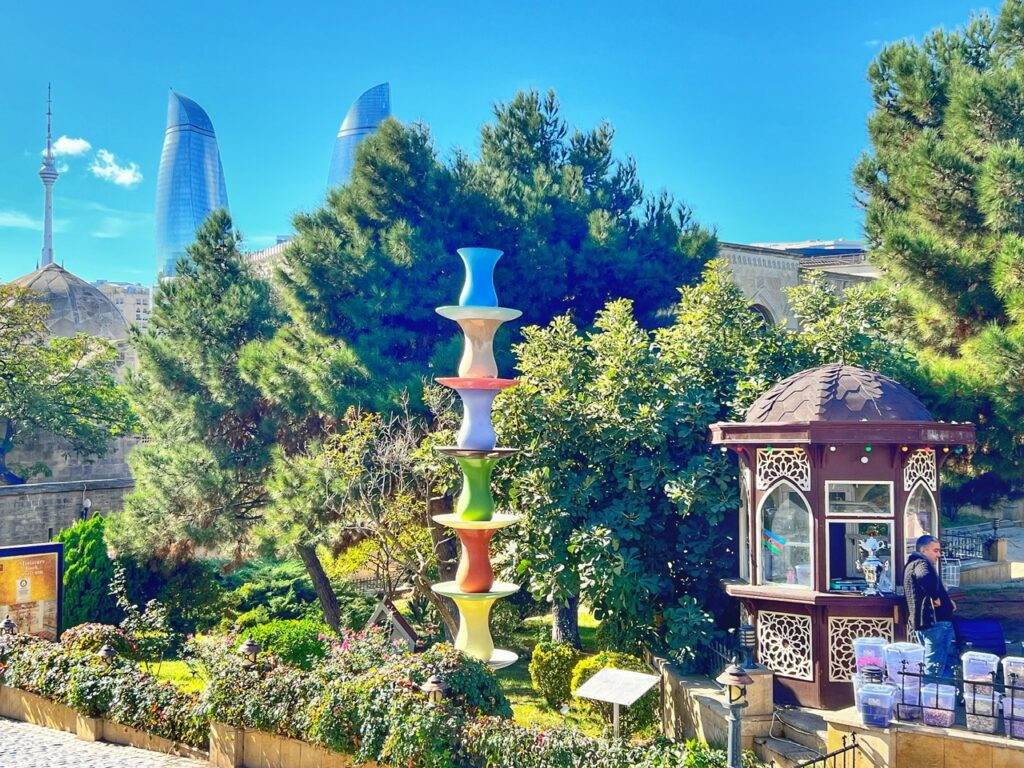
Some of which are radically different than the ones we’ve seen in Uzbekistan or Turkiye! Speaking of Turkiye, they use the same tulip-style tea flutes to sip their tea, called armudus, which are depicted in this piece of art.
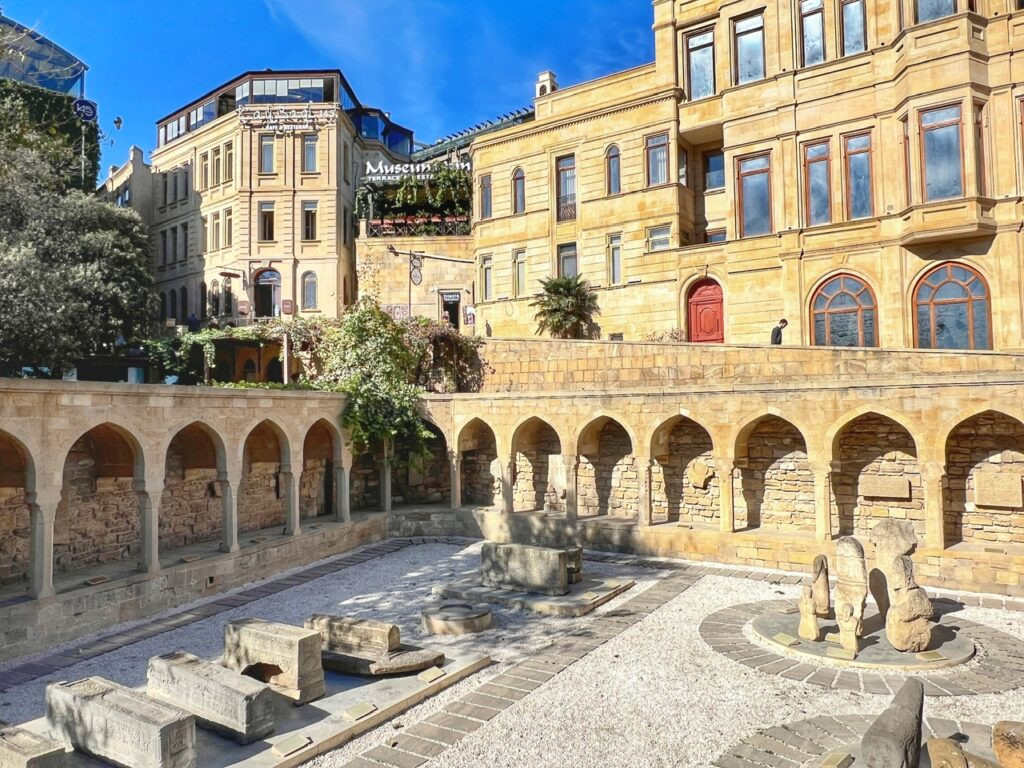
A collection of ancient ruins and tombstones, many featuring Arabic script.

That was nice, but one of our favorite stops was actually at the FREE Miniature Book Museum, which houses the largest collection of miniature books in the WORLD. This means it’s the second Guinness Book achievement we saw in Baku. In it, we found communist pocket propaganda, REALLY Little Golden Books, and itty bitty bites of Shakespeare.
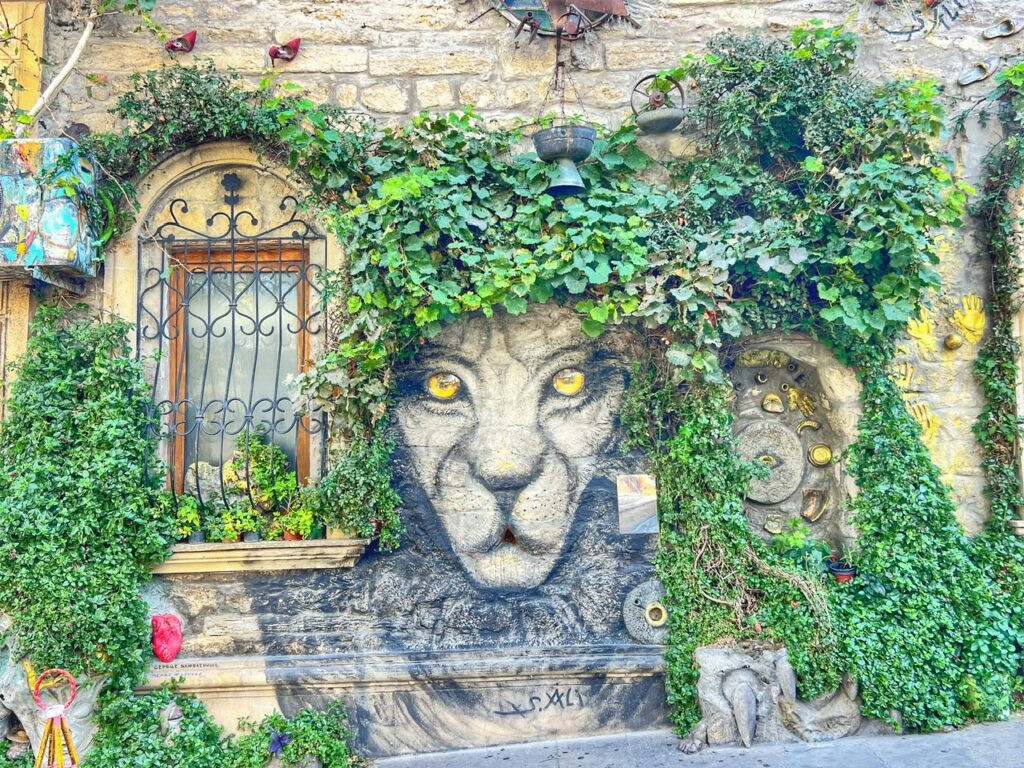

We also visited the workshop of artist Ali Shamsi, which had an exterior mounted by this lion, a symbol of the walled city. A plaque explained if you look at it from above, it looks like a wolf, on the side – tigress, and in front – the lioness…all representing the oldest symbols of wisdom, nobility and courage. The inside of the gallery was well worth checking out as well. Mr. Shamsi is an extremely talented artist.
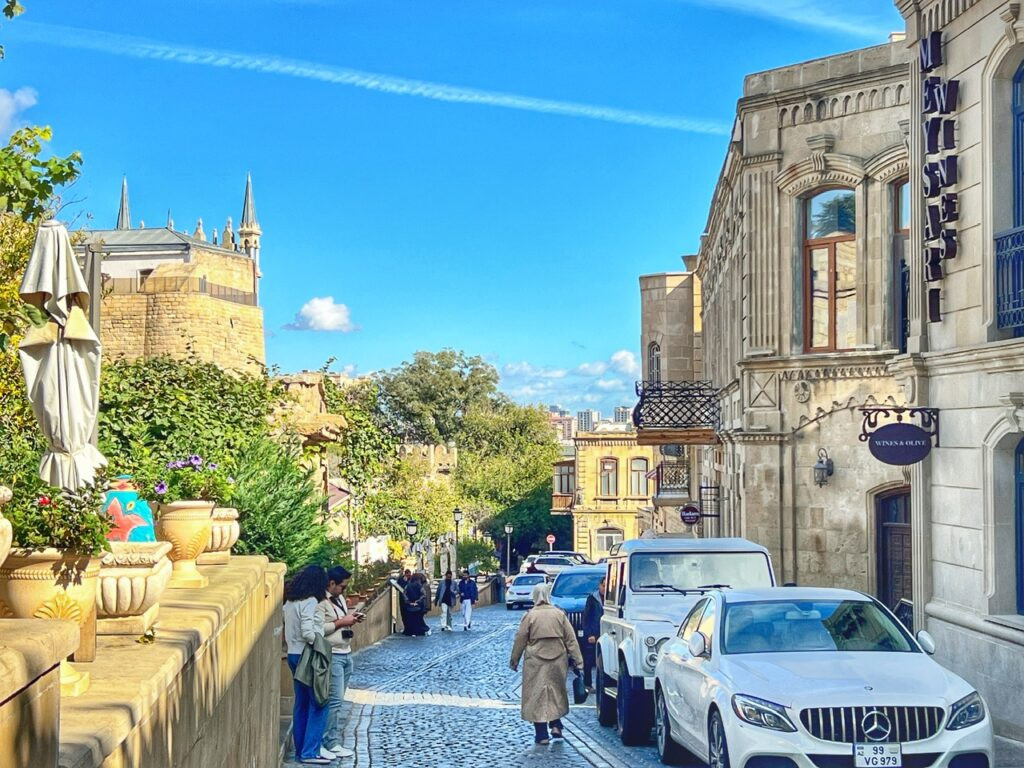
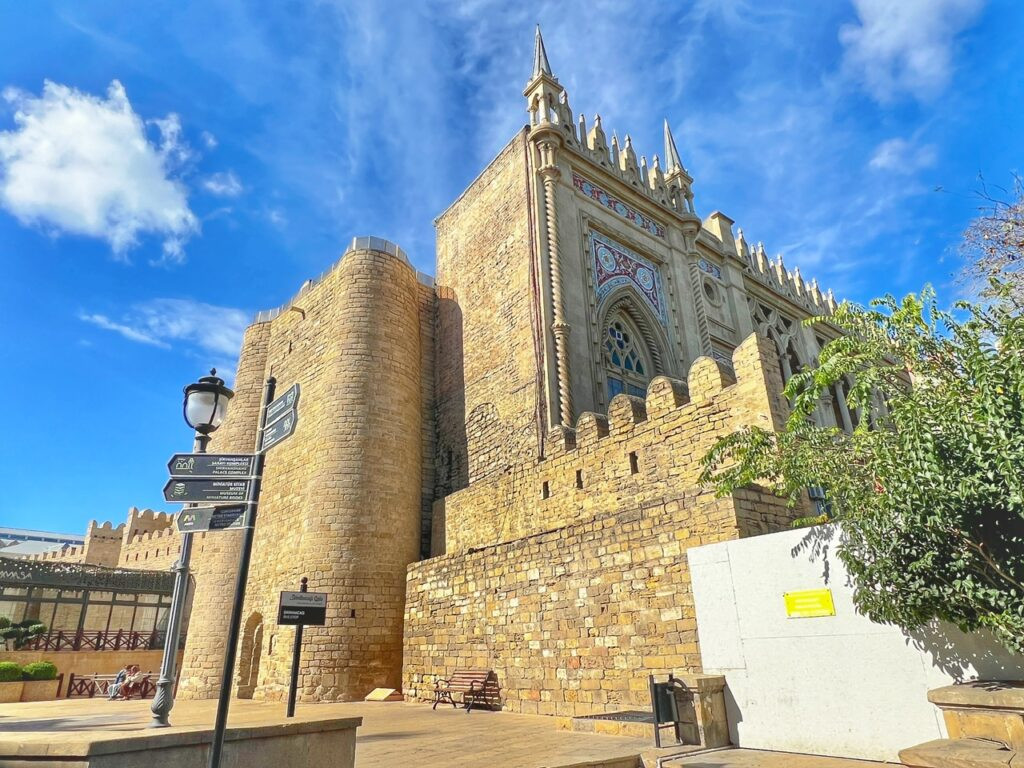
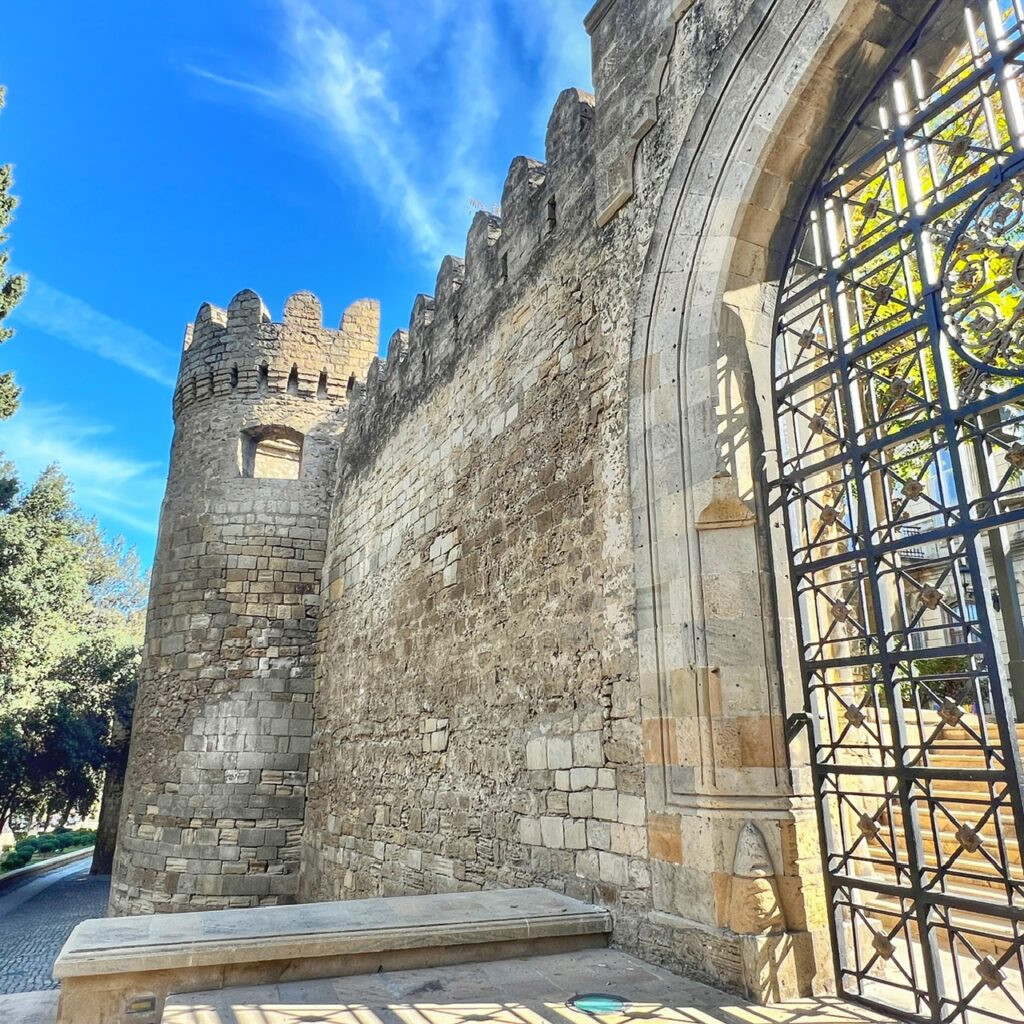
Photos near the northern wall…

Last but not least, we serendipitously stumbled into the weekend’s Olive Festival, which featured a techno DJ, accompanied by a spherical dancing character which could just as easily be a jolly pea, and of course lots of free samples of olives and olive oil. There were also wine tastings which cost about $1.20 for a shot of some quite tasty temptations.
The Architectural Mash-up of Baku
From its 12th Century medieval walled city which we showed you two days ago, to its modern marvels that seems like they tumbled out of a sci-film, Baku is a delightful architectural mash-up. Of course, this is due in large part to its natural resources….specifically the slick, ebony variety, which has literally seeped out of the ground on this peninsula since ancient times. In fact, by 1900, Baku produced half of the world’s oil, which helped fuel Russia’s Industrial Revolution and is also where the Nobel brothers made their fortune before funding the famous peace prize.
From its “Land of Fire” towering glass flames, to its horse-shoe shaped spectacle, to its to token ferris wheel, which seems to be the modern-day sign that a city has “made it,” perched on the edge of the Caspian Sea, Baku is also the lowest-lying capital on earth, at about 28 meters below sea level.


The Baku Eye sits on the edge of the sea with Deniz Shopping Mall behind it. While a lotus shaped anything is commonly found in SE or Central Asia, it seemed a bit out-of-place to see one here.
The whimsical flame towers aren’t just a lively design to appeal to spirited Leos like me. They are actually an ode to the country’s fiery origins. The region literally sits atop natural gas vents that have been burning for thousands of years, inspiring Zoroastrian fire temples long before oil rigs ever appeared. The name “Azerbaijan” even comes from the word “azer,” meaning fire.


In other whimsical creations, I loved these vivacious dancing lady light poles which lined the waterfront. Greg said they looked like pogo balls. (For the non-Gen X’ers, this was fabulous toy from the mid-1980s which would probably come with a crash suit and helmet today).
So, after looking at Chat GPT, we learned the horseshoe is actually a crescent, which makes a lot more sense considering we’re in a predominantly Islamic country and not Kentucky. The residential and hotel development is plopped on an artificial island about 170 meters from the shore.

From Highland Park, you can soak in the whole scene over the Caspian Sea, which by the way, may be a sea, or may be a lake depending on who you ask. Geographically it’s a lake, because its brackish waters are totally landlocked by Azerbaijan, Iran, Kazakhstan, Russia, and Turkmenistan and has no outlet to the ocean. It is actually the largest inland body of water in the world. Politically, it is classified as a sea to protect jurisdictional boundaries and satisfy whiny lawmakers.

The Nizami Museum of Azerbaijani Literature, which features more than 120,000 items. Since we don’t read Azerbaijani, nor do we want to try, we opted to just check out the façade of the museum, which has striking blue majolica tiles, and statues of six major Azerbaijani literary figures.

There are many parts of the city which have an unmistakably European, and more specifically, French, vibe…with its wide boulevards and grand edifices. It’s easy to see why Baku has been coined “The Paris of the Caucuses,” although this is probably just a crafty marketing ploy to get people to visit.

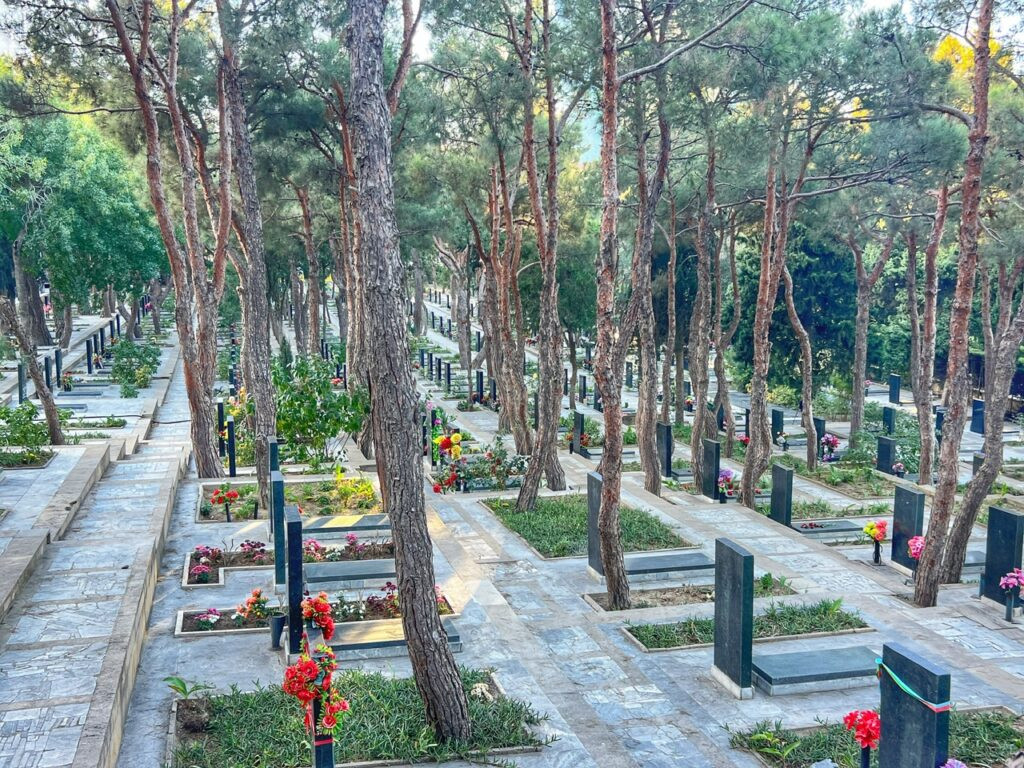
From the terraces of the lofty Highland Park, which you can access by walking or funicular, one can find the Shahidlar, or Martyr’s, Monument. This eternal flame dancing in the wind honors those killed during Black January in January 1990, when Soviet troops entered Baku and killed 150 unarmed civilians protesting for independence. The tombstones of those that died. The event is remembered as a tragic turning point in Azerbaijan’s struggle for independence.


A view of the flame towers from Highland Park, as well as the nearby Alley of Martyrs Mosque…


…which wildly contrasts the flame towers. Another contrast was the astounding reflection of the sea on the side of it.

There is a funicular that costs about $.50 which invites lazy people to slide up and down the hill. Unsurprisingly, we chose the right direction to be lazy, because the line going up was significantly longer.
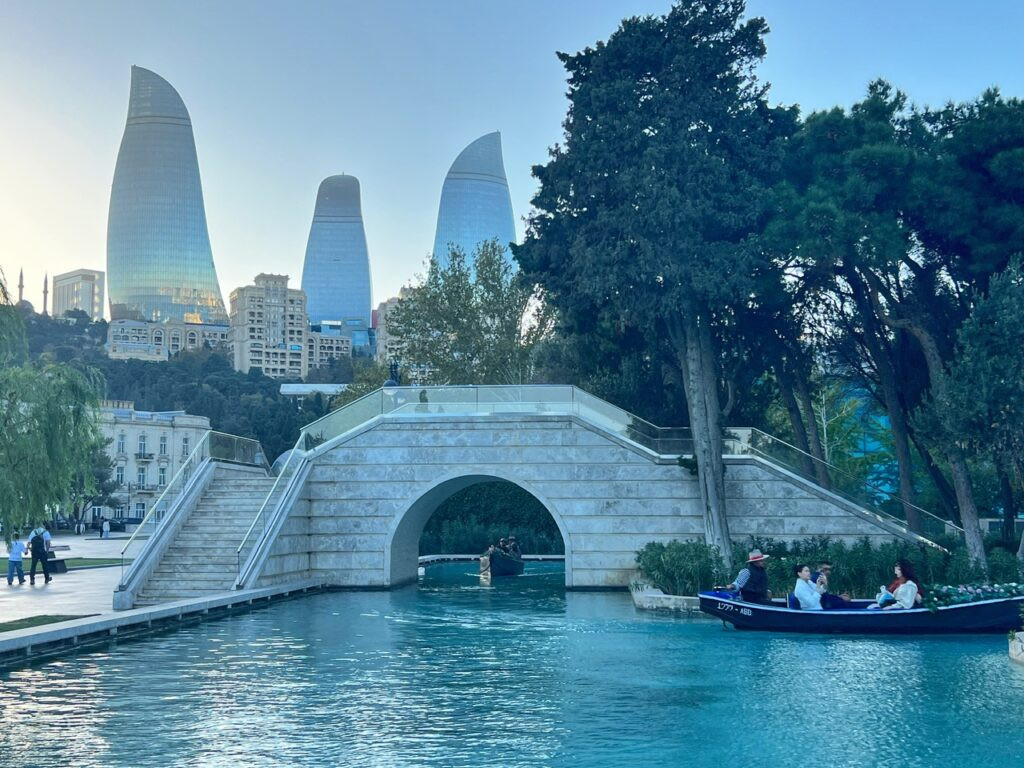
Baku joins the ranks of world destinations trying to be Italian, as exhibited in its cheesy “Mini Venice” gondola ride, where you can drop $12 for an Azerbaijani gondolier, most of whom seemed to be slumped over and playing on their phones during the five minute ride. Ooo…yes. Just like Venice! Haha.

Excuse me? I’m looking for the Baku Carpet Museum. Could you tell me where it might be?!

The fiery flames by night


Visiting the free Yarat Contemporary Art Centre, which held some interesting pieces including a unique demolition project in the shape of the country, a Freddy Krueger-esque clay man, and an ear made of all natural materials like rock, dirt and shells.


Signs of Baku’s oil rich past. Speaking of rich, this is an underpass, aka a crosswalk, to jump across the street.

A street scene in Baku’s center

When we were out one day, we ate at Burrito Turco, which called themselves “Mexican/Turkish fusion.” Um…yes please. No, it still didn’t fulfill our craving for “Mexican,” but our $5.50 falafel burritos and fries were quite scrumptious nonetheless.

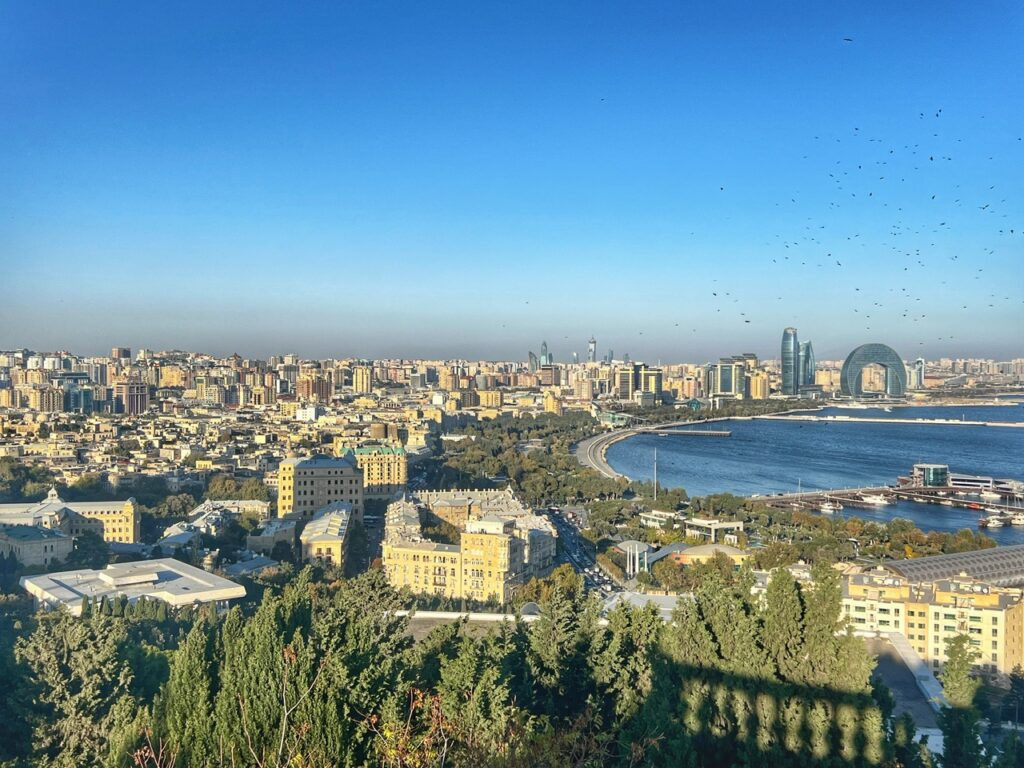
Other days, we just wanted to avoid the city, and head up the hill near “Bayil Yolkaliq” for some peace and quiet. On this trail, we were rewarded with the best views of the city and the flag of epic proportions that we’d seen yet!


The imposing Baku Government House is a major administrative seat for the Azerbaijani government. The building style, from 1936, blends Stalinist monumental architecture with neoclassical and baroque accents.
The nearby Hilton on which four daring men were pasting a colossal nationalistic-looking advertisement. The date we saw this was November 2…for an event (?) that seemingly happens November 8. That is a lot of work for 6 days!
The Paris of Western Asia: The Sabail District
When the first oil boom brought sudden riches to Baku in the 19th Century, all the well-to-dos built European-style mansions right outside the medieval walls, which created a striking contrast between the ancient fortress and art nouveau dotted boulevards that define modern and trendy Baku.
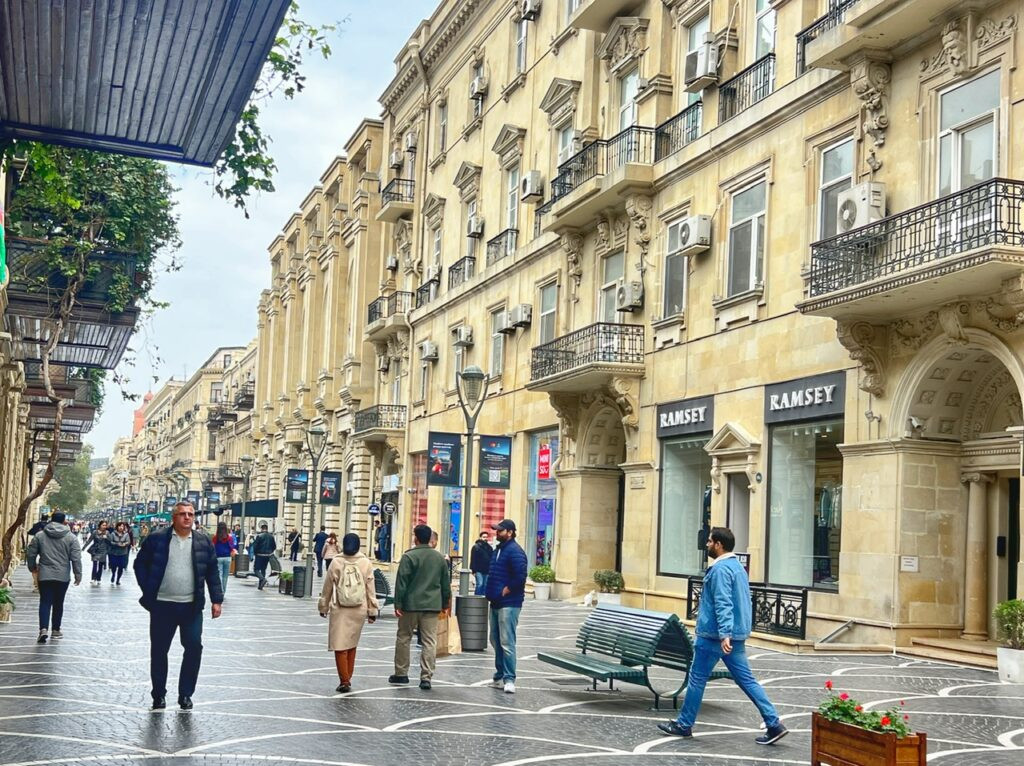
With its endless pedestrian-only thoroughfares, enticing al fresco cafes, striking street art, magnificent arcades, and lush tree-draped parks, the Sabail District, aka city center, undeniably boasts the seductive vibes of Europe, but with half the costs and people. Seriously…what is not to love?!
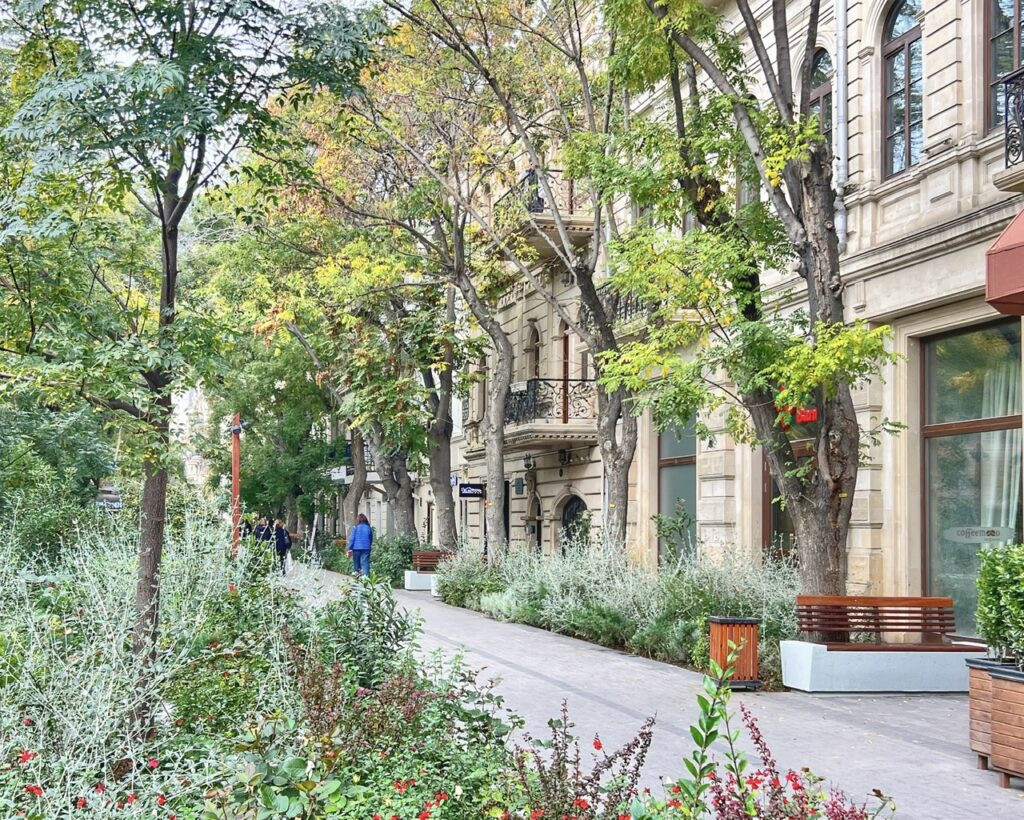
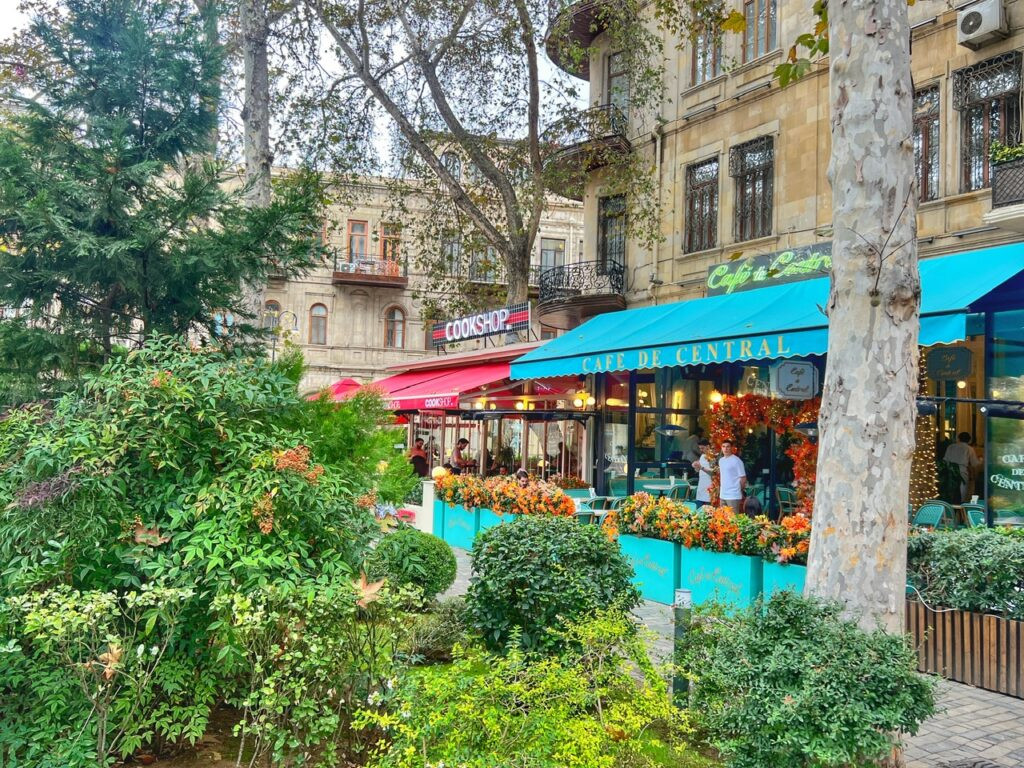
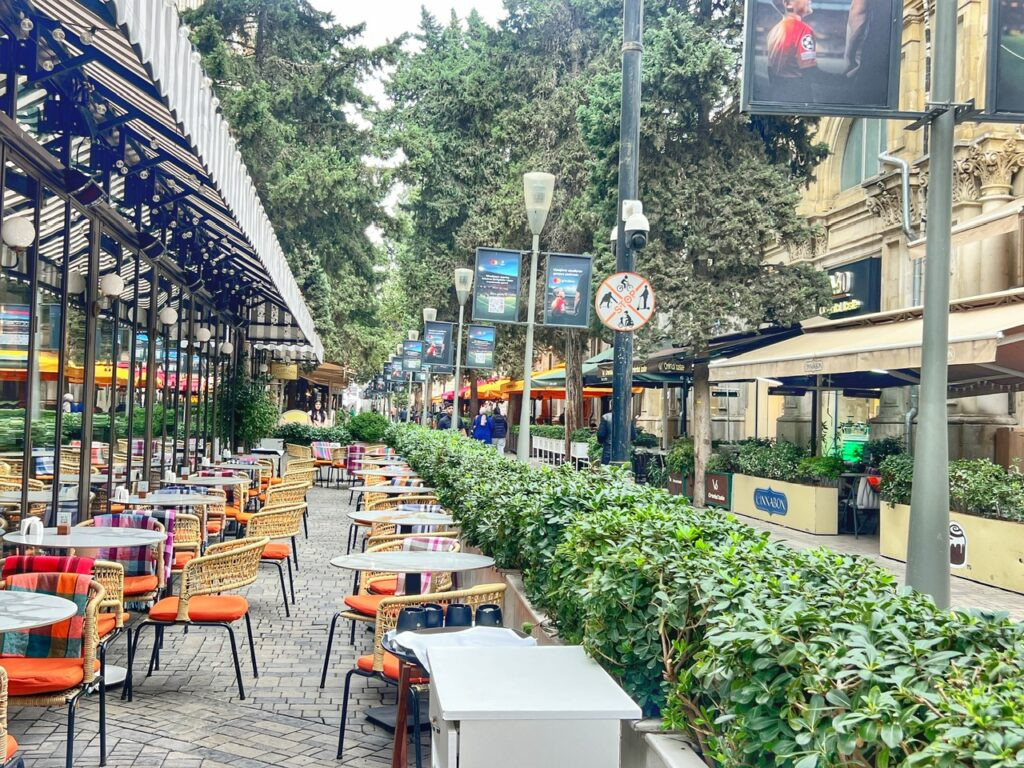
This leafy and compact heart of this area is Khagani Garden, which floods oxygen into the city with tranquility and elegance. On the fringes of the park, you’ll likely feel you’ve been transported to Paris or Vienna, including a multitude of Al fresco-style seating options lining the sidewalks, most offering blankets or heat lamps.
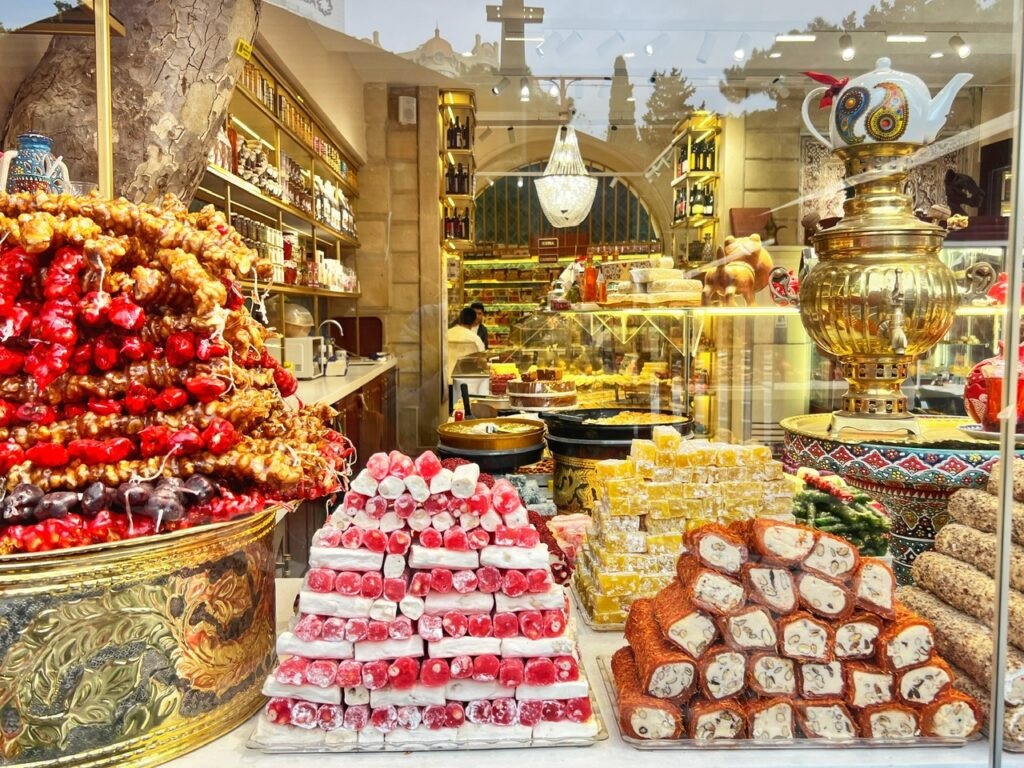
But, you’ll also get plenty of reminders of your actual geographic location, including sweet shops flaunting decadent bricked piles of Turkish delight, and strands of Churchkella.
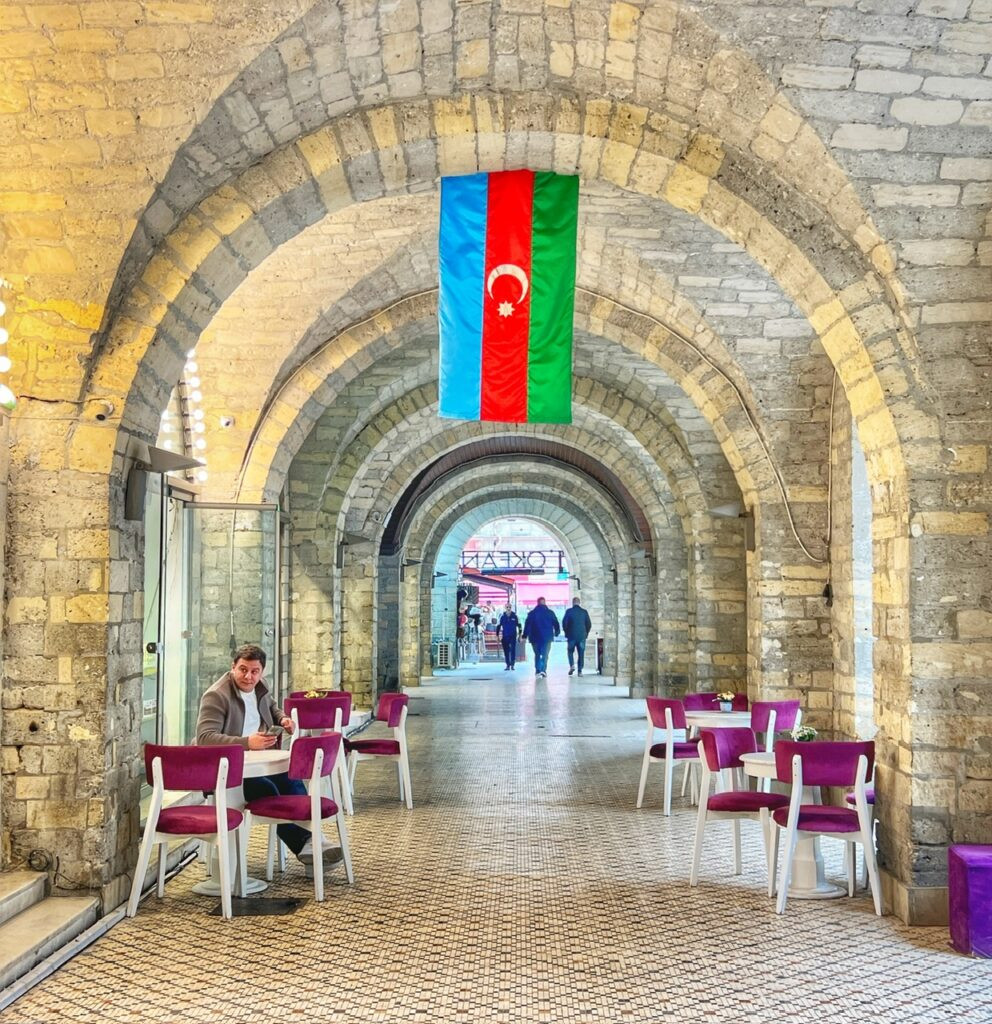
One of many arcades lined with shops and cafes, which weave their way into welcoming pedestrian paths

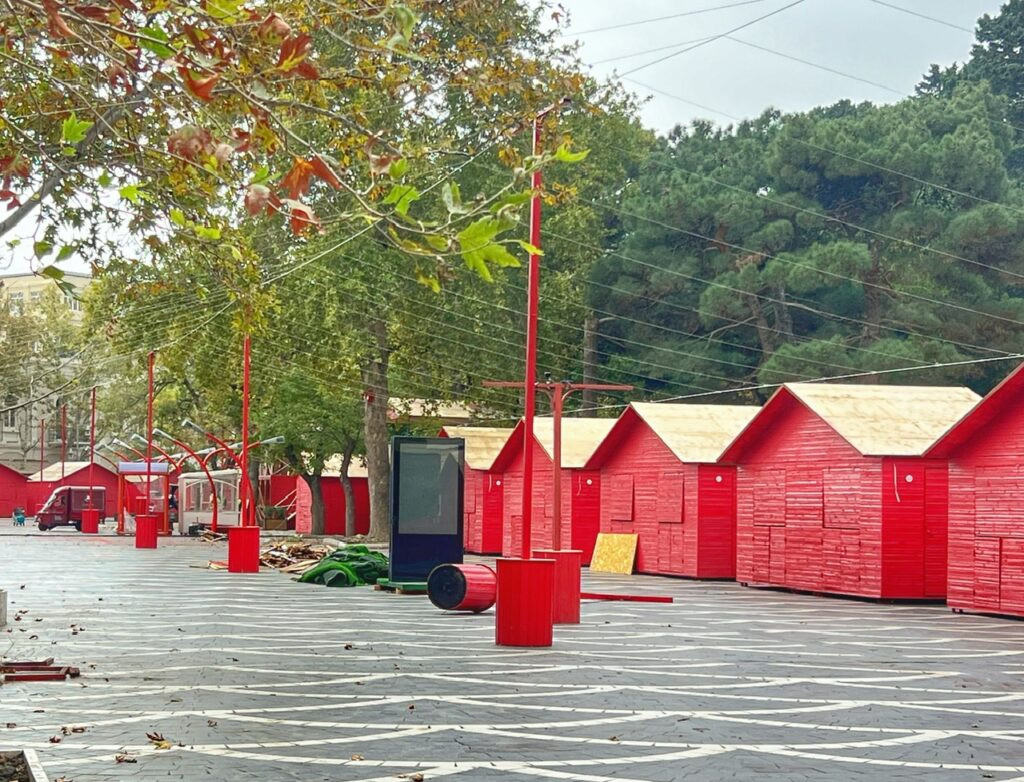
Of course, not everything is beautiful…like this eye sore shoe store! But this was a bigger surprise to us…it appeared they were setting up for a European-style Christmas market in a 95-98% Muslim-majority country! Our search on Perplexity afterwards confirmed it’s a seasonal market called “Cold Hands, Warm Hearts,” where proceeds go to children and social causes.
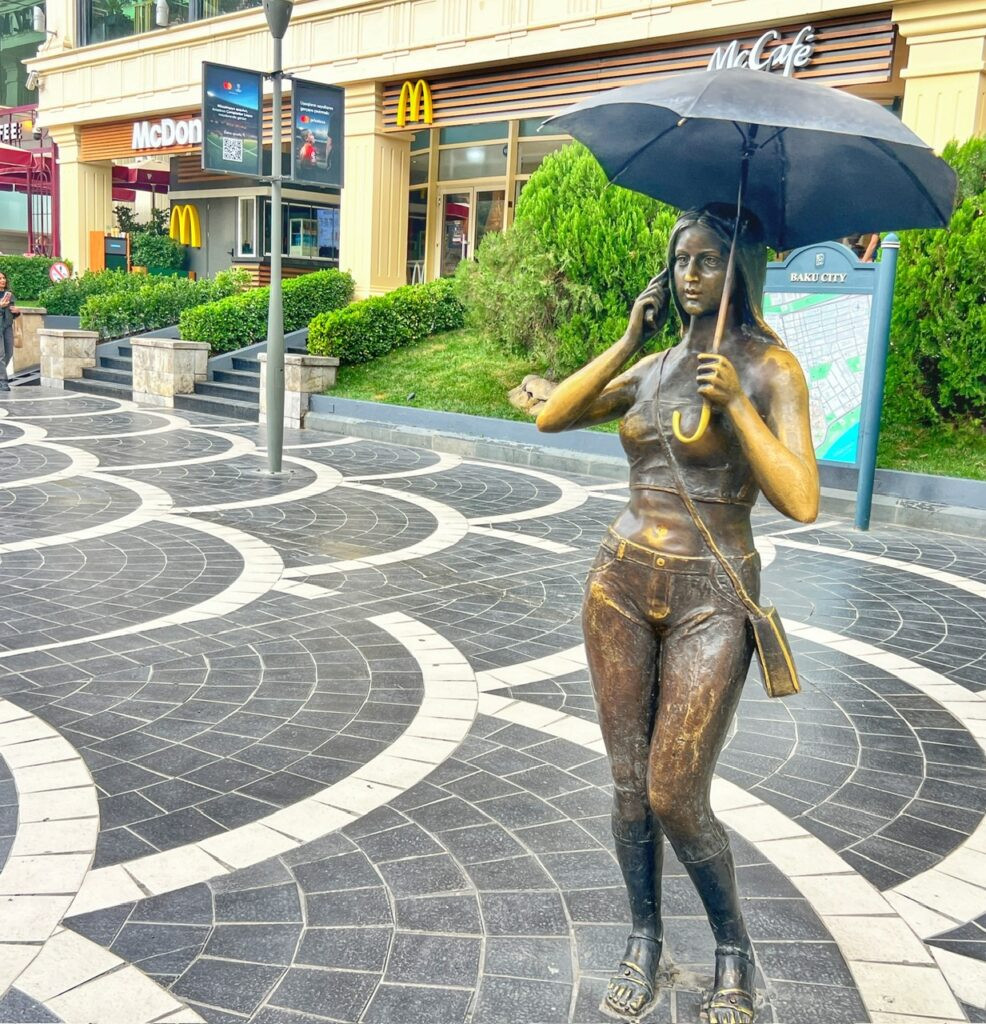
Another thing we didn’t expect to see was tantalizing young flesh popping in “Girl with an Umbrella.” This statue, possibly poignantly placed outside of McDonald’s in 2010, showcases a midriff-rocking girl on her cell phone.
It’s meant to reflect modern Bakuvians, which yes, seem remarkably moderate, verging on liberal, to what we’ve seen in other Muslim-majority countries. There are few hajibs, no Calls to Prayer, and based on the alcohol availability, they drink…a lot.
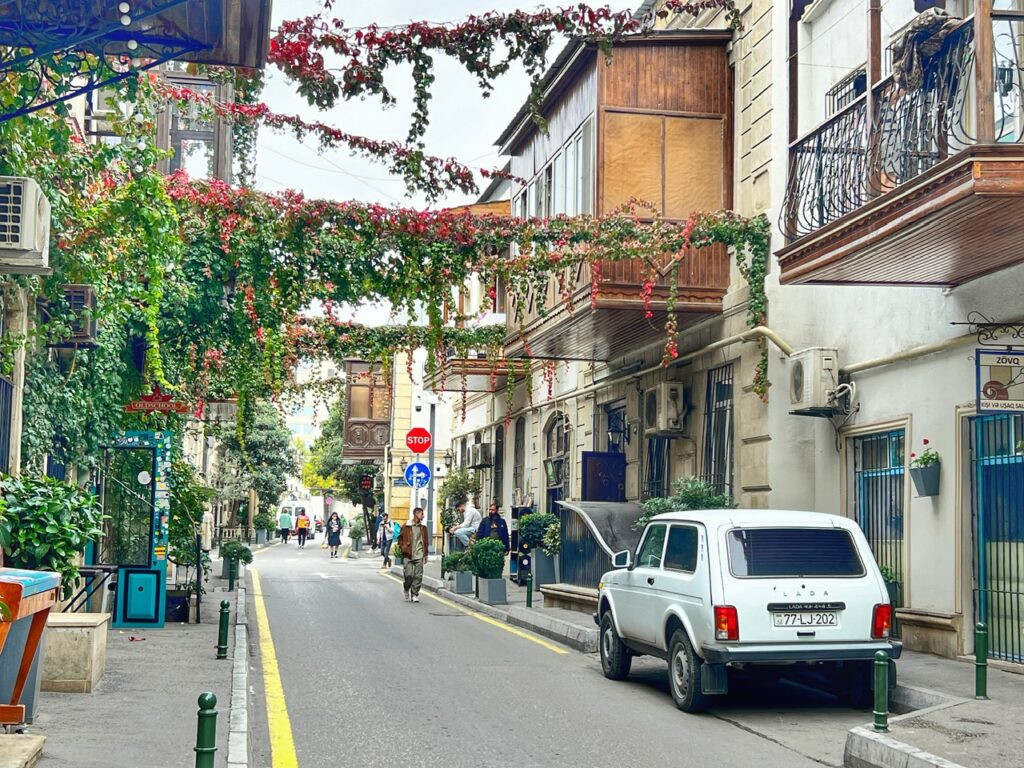
More alluring street scenes everywhere we turn.
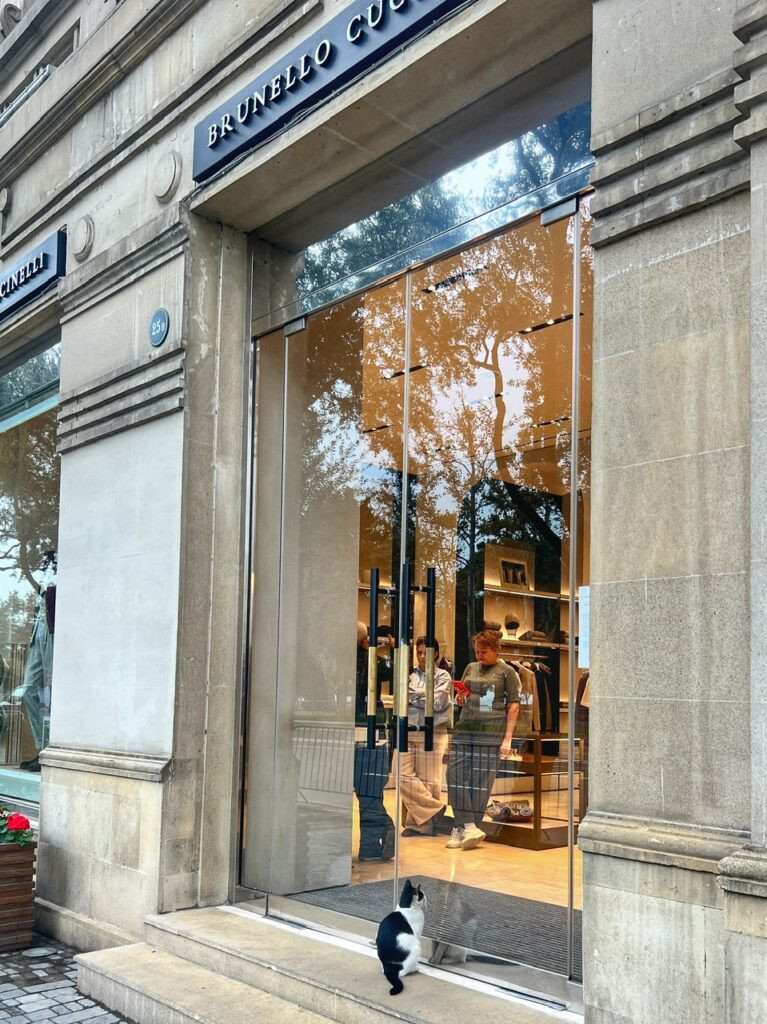

Prissy felines waiting for clearance outside of high end stores, which included merchandisers such as Gucci and Dolce & Gabana….KIDS. In fact, it’s difficult to walk anywhere in this Kitty City without literally stepping on one. (A cat, not a pretentious designer child.)
Fortunately, like in Istanbul, the cats seem to be taken care of here as well with tons of water/food bowls and shelters.
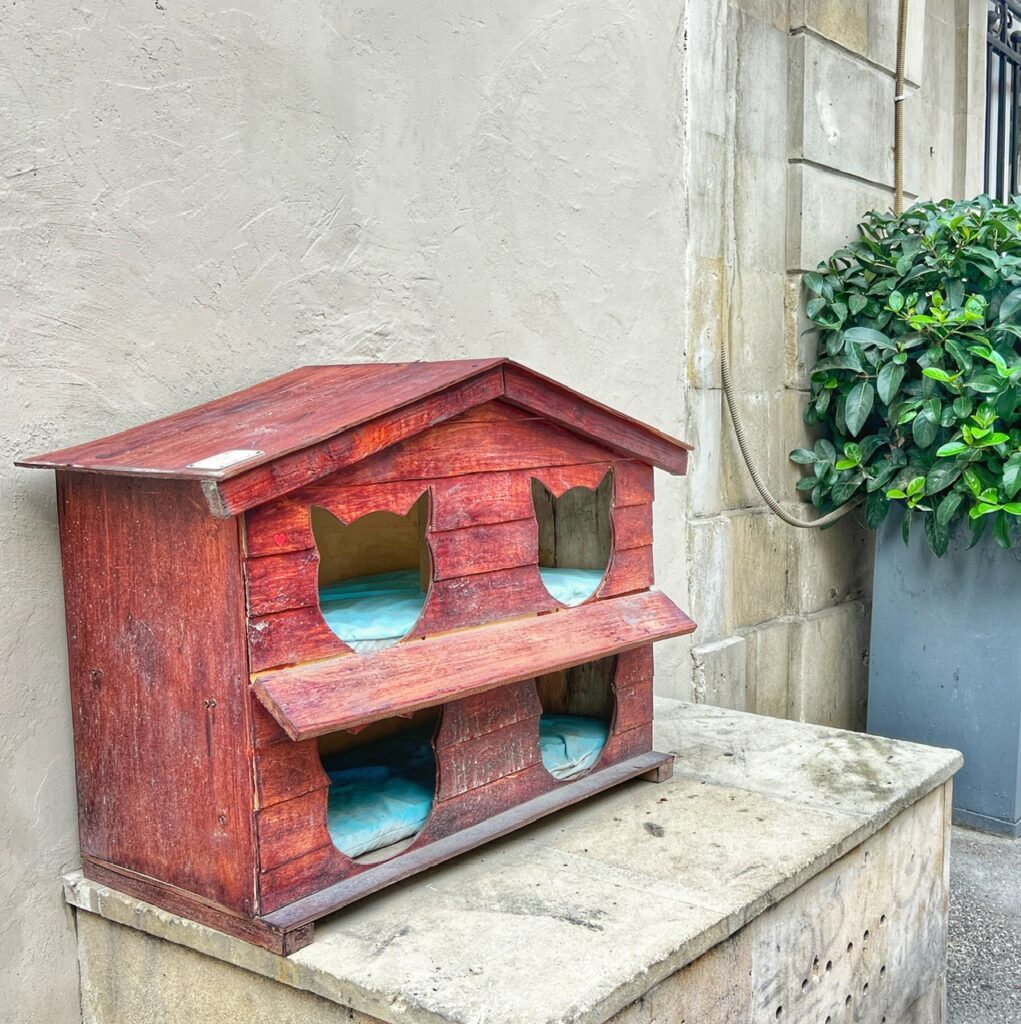
In fact, according to “Cat Living” magazine, Baku is number two on the Top Ten List for “Desirable Cities to be a Kitty.” In fact, they even have four-plexes available. And these cats don’t even have to pay rent!!!
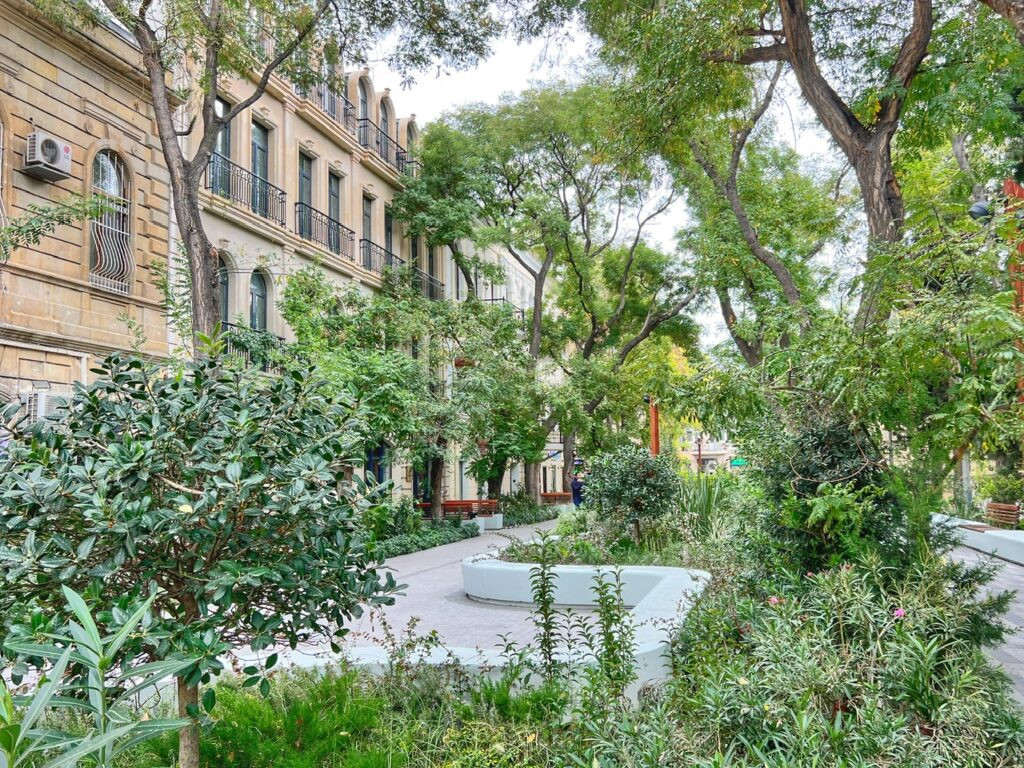
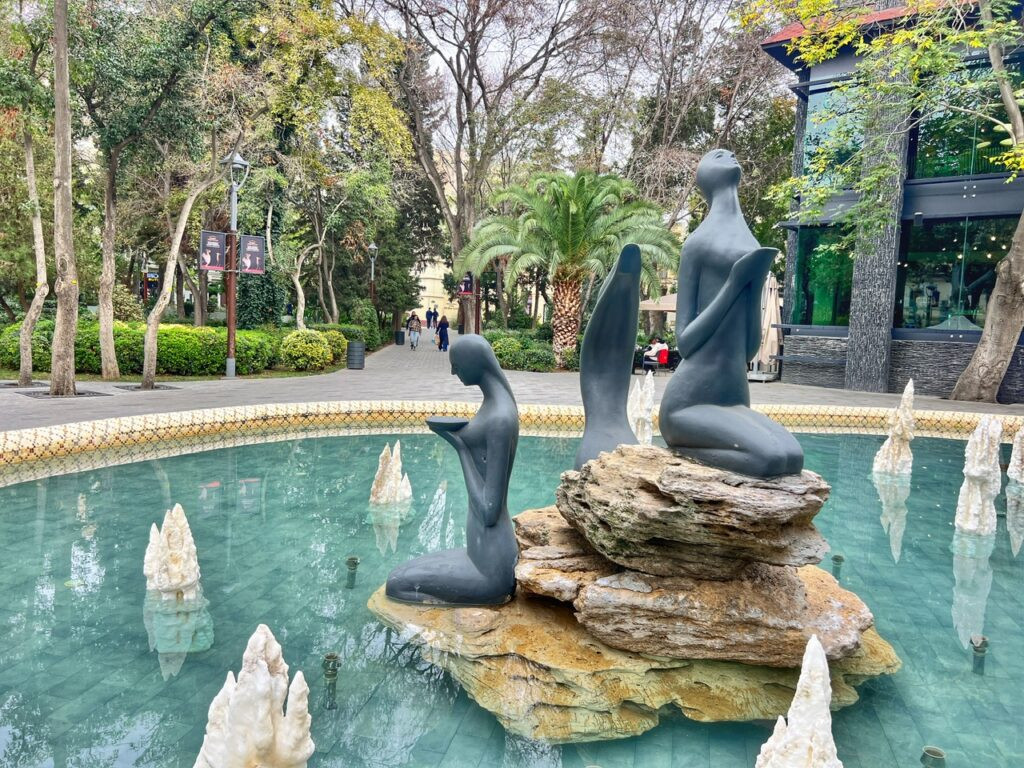
Another shot of Khagani Garden, also called Molokan Garden, which is the older Russian name still used locally. The Molokan community settled nearby after being exiled from Russia for religious reasons. They were peaceful, vegetarian, and teetotalers, so the neighborhood became known for its calm atmosphere, which was quite a contrast to nearby industrial districts.
In the middle of the garden sits the “Three Beauties” fountain which represents purity and contemplation, which is a common theme in Baku’s widespread parks. The contrast between smooth figures and rough stalactite-esque stones mirrors Baku’s identity…modern sleekness emerging from a rough natural landscape (Caspian shore, oil fields and endless winds.)


For lunch, we paused at Imereti Georgian Restaurant, so we could have a few more noshes of this delectable world cuisine, and a hit of Alzheimer’s prevention, before we leave the Caucus countries. We say prevention because we had loads of walnuts, which was blended into this red bean salad in paste form, as well as rolled into these grilled eggplant bites and flaked with pomegranate seeds. OMG. If you have not treated yourself to elusive Georgian food…GO FIND IT…even if it means physically going to Georgia!!
And to even out the health benefits, we also added a gooey disc of cheesy desire, which was a Mingrelian Khachapuri, or round flat bread filled with a mixture and topped with Imereti cheese.
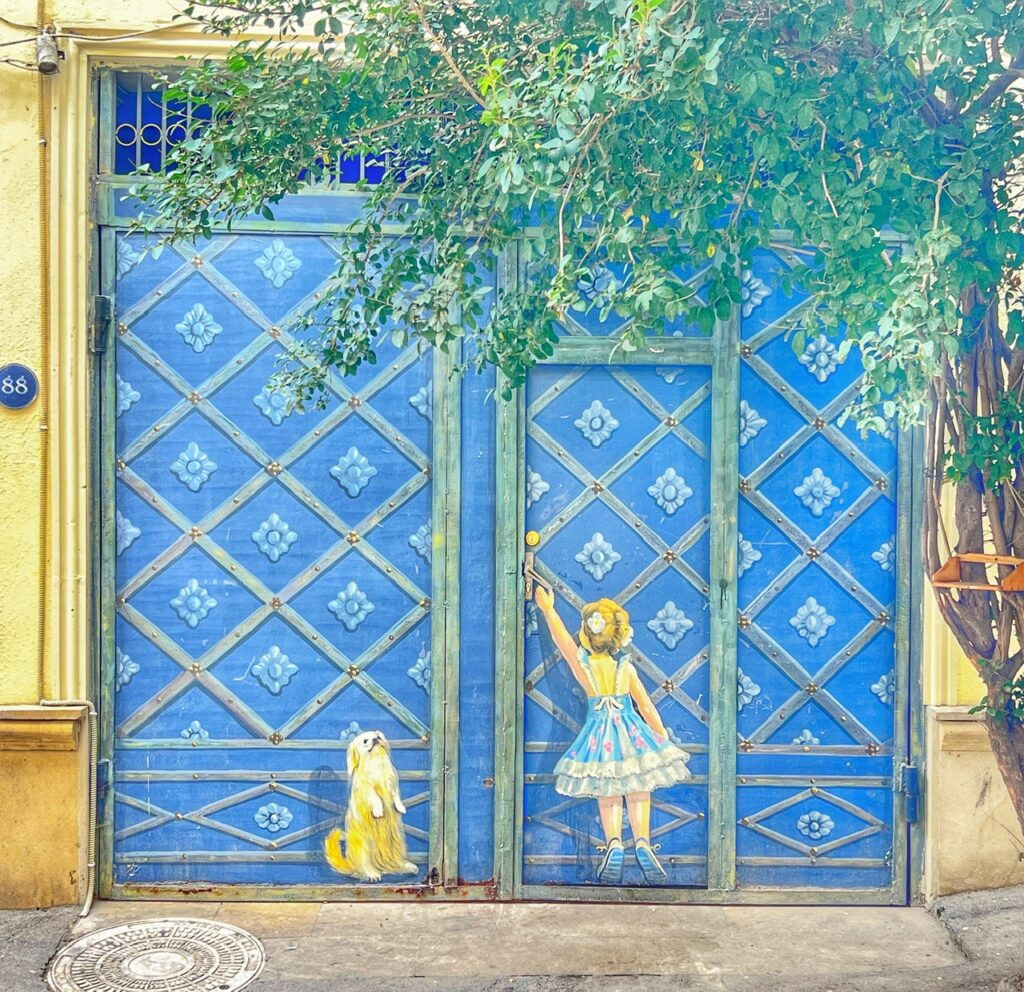

Walking off our lunch, we wandered outside of the main center into the residential neighborhoods, where it was normal to see unique street art spicing up what would normally be a boring garage door, and exquisite Ottoman-style balconies draped over the sidewalks.
The Real Reason to Come to Baku: The Flag (Joking)
According to the 2024 Guinness Book of World Records, we apparently lived a five minute walk from the largest flag ever flown at 36 meters wide and 72 meters long and also, on one of the tallest poles. Evidently, this is a big deal in this part of the world. For comparison, imagine walking the length of a 737 Boeing passenger jet. This flag is about twice as long and its width is equal to the airplane’s wingspan.
And….all 500 kilograms, aka 1100 pounds, are fluttering in the breeze over the Caspian Sea.
While it’s hard to capture the breadth of its size, here’s a few photos to try…


Fortunately it is quite gusty in Azerbaijan’s capital of Baku, which means getting this jumbo jet to billow is a regular possibility. The colors of the flag represent its Turkic roots (blue), its desire for modernity and democracy (red), and its Islamic cultural heritage (green).
The white crescent is a symbol commonly associated with Islam, although the country is quite moderate, while the eight-pointed star may represent the eight Turkic peoples (or branches) historically recognized in the region.

Inside is a small free museum that tells the history of the flag


It’s quite girthy similar to the flag-LESS pole we recently saw in Dushanbe, Tajikistan. As Greg tries it on for size, we notice its also far more interesting, thanks its sufficiently elevated base, which showcases a golden map of the country…
An Architectural Marvel: the Heydar Aliyev Center
Baku is packed to the brim with modern architecture and one of these wonders can be found in the undulating and fluid exterior of the Heydar Aliyev Center. Designed by Zaha Hadid, it was completed in 2012, and seems to flood contiguously from the ground into walls and roof without a single straight line or angle. SHE designed it to contrast with Baku’s rigid Soviet-era architecture — making it a symbol of post-Soviet transformation and modern national identity. This culture center serves as a museum, which was closed the day we went, exhibition halls, and an auditorium.

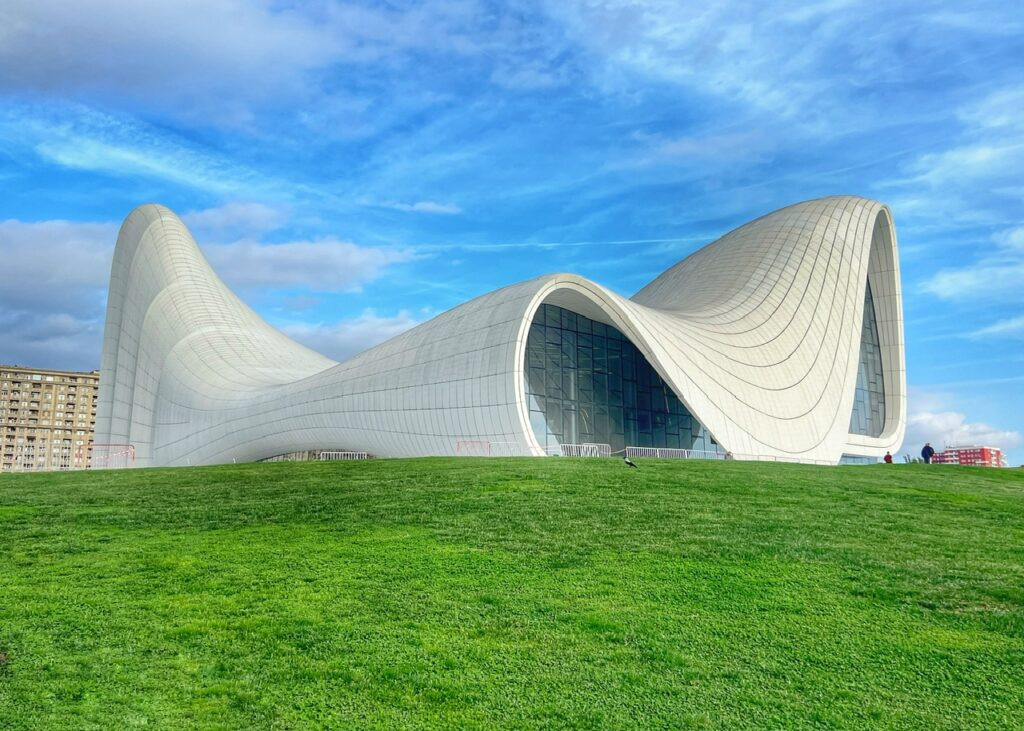
Against a sky which was dancing with movement in the continuous Baku breeze, its futuristic mold seems to dance along with it. Its white exterior is made of reinforced concrete and glass fiber panels which gives it an almost organic feel — like a swath of fabric caught paused in motion.

In addition to the building itself, the area in front of the building is dotted with unique artwork including Alake: The Tech Babe made of scrap metal, welding, and paint. We loved her piles of hair made of old tires.

The reflection of the building inside a knotted weave

Also, we found a cheerfully unexpected massive lemon, which is apparently the work Philip Haas, an American sculptor known for his monumental fruit and vegetable heads. It’s not meant to be political, but a playful contrast to the stark modernism of the building. The bright yellow, organic shape pops vividly against the smooth white curves of the Center, creating a whimsical, almost surreal effect.
A Trip to….the Mall?!


With the expansion of online shopping and our general disinterest in the activity, it’s not often we spend an evening at the shopping mall these days…particularly one in the shape of a lotus. But this mall is far from just a monotonous line of unenticing retailers. It’s an adventure featuring a trampoline wonderland, a giant Kids Park accessorized by the front of a real Azerbaijan Airlines jet, and the one thing we could take advantage of as adults…the four-story super slide!

Yes, that’s right! For a little over $2, after signing a waiver, passport copy and giving your first born (which we don’t have), you can skip the real life escalator ladders and chute all the way from the 4th floor top to the bottom!! Wheeeee!!!!

In other western “news”, we went into the Starbucks in the mall out of curiosity where they had pumpkin spice lattes for about $6. Also, a bag of ground coffee from there was $29, which is not totally surprising considering it costs over $12 in for a bag of crappy ground coffee in the supermarket. The majority is freeze dried…and therefore, sucks. Cost of living is quite affordable in Baku, but coffee is definitely not part of that equation.
The Zoroastrian Fire Temple
Although we’ve seen plenty of mosques, plenty of shrines, plenty of churches and plenty of synagogues, we had never before seen the type of religious site we saw in Baku…that belonging to the “fire worshipping” Zoroastrians, which is the most ancient religion of the Southwest Asia, developed sometime in the latter part of the second millennium BCE.
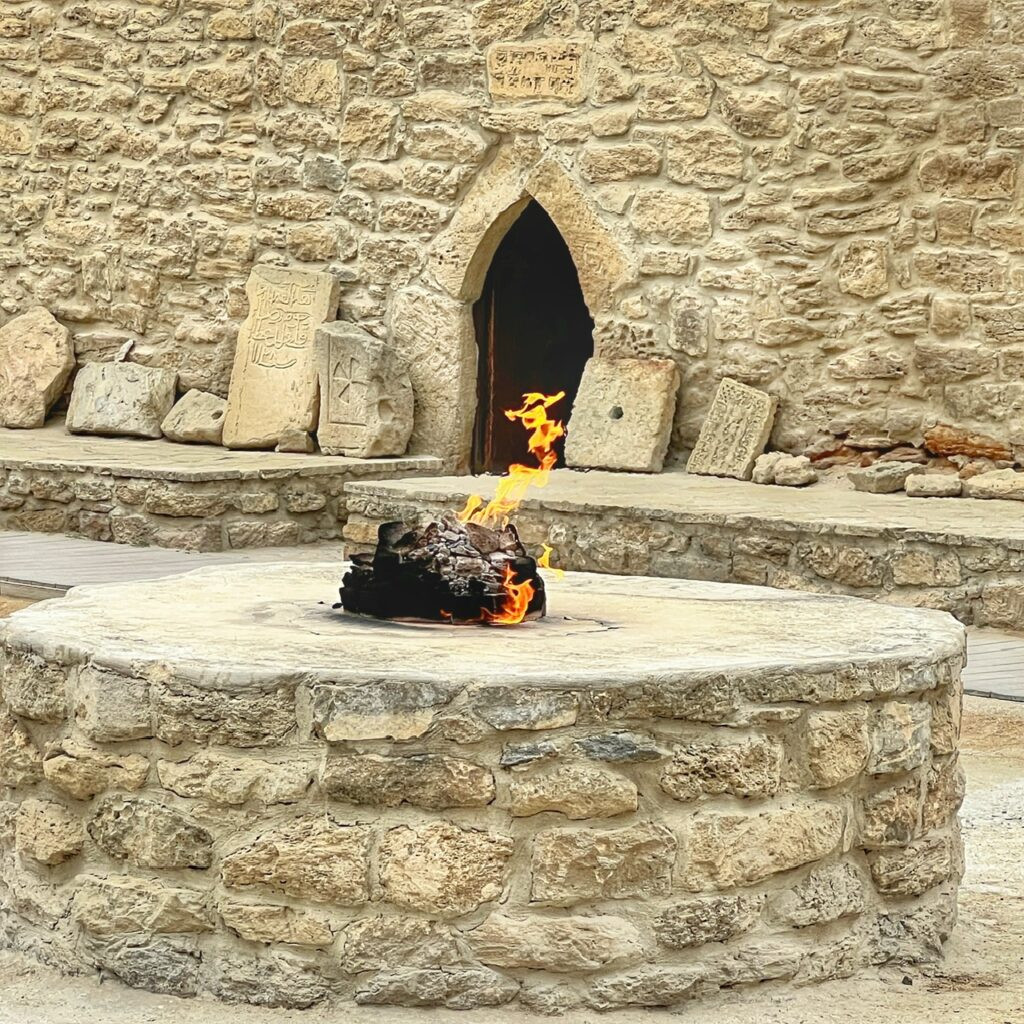
Most people, including us before this visit, don’t realize that Zoroastrians do not actually worship fire, but consider it as a medium between people and the supernatural world. And this temple, called Atashgah, was the perfect gateway to do just this because it hovers over a land venerated for many centuries because of its naturally occurring “eternal fires.”
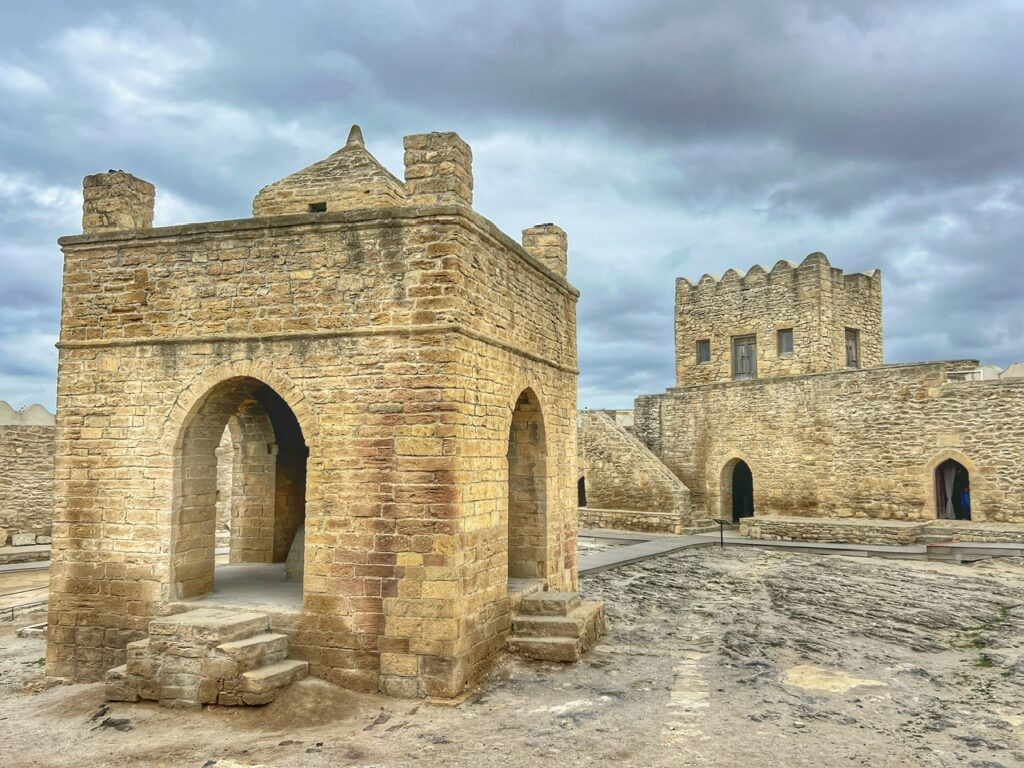
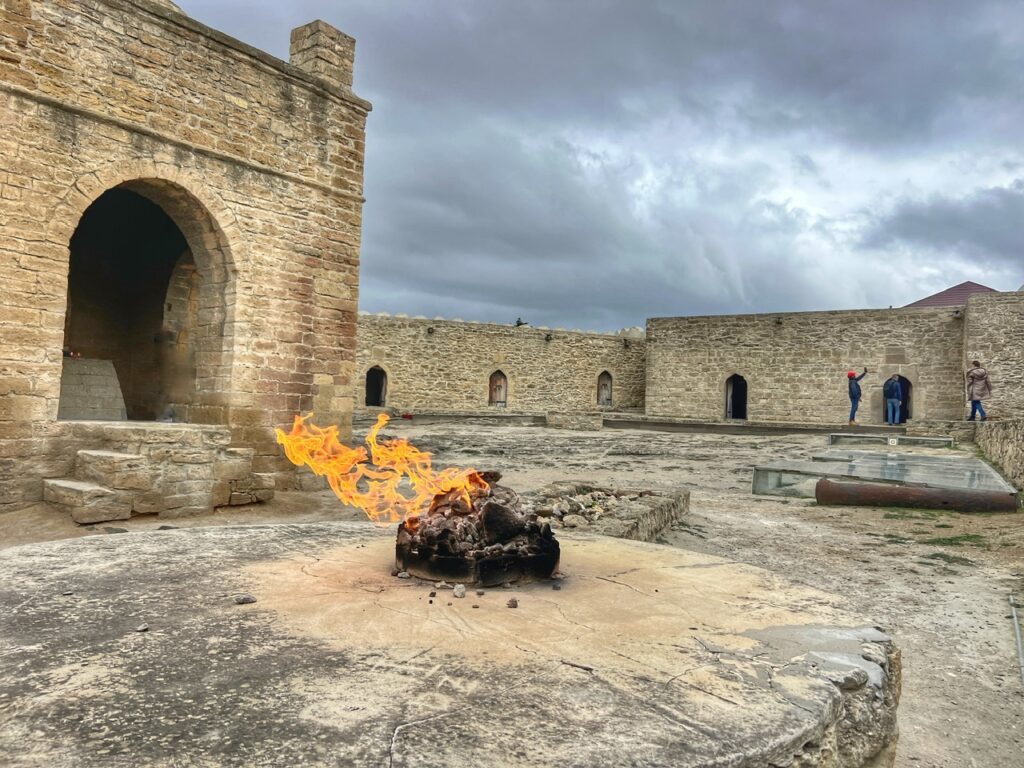
Zoroastrianism as a religion spread in Azerbaijan in the first millennium BCE. According to historians, the Atashgah was considered a holy place by Zoroastrians long before the 17th century, when fire-worshippers built the temple.
The word “Atashgah” means “house of fire” in Azerbaijani. Until the 19th century, natural gas leaked through the rock around the temple. This caused the so-called “burning earth” phenomenon.
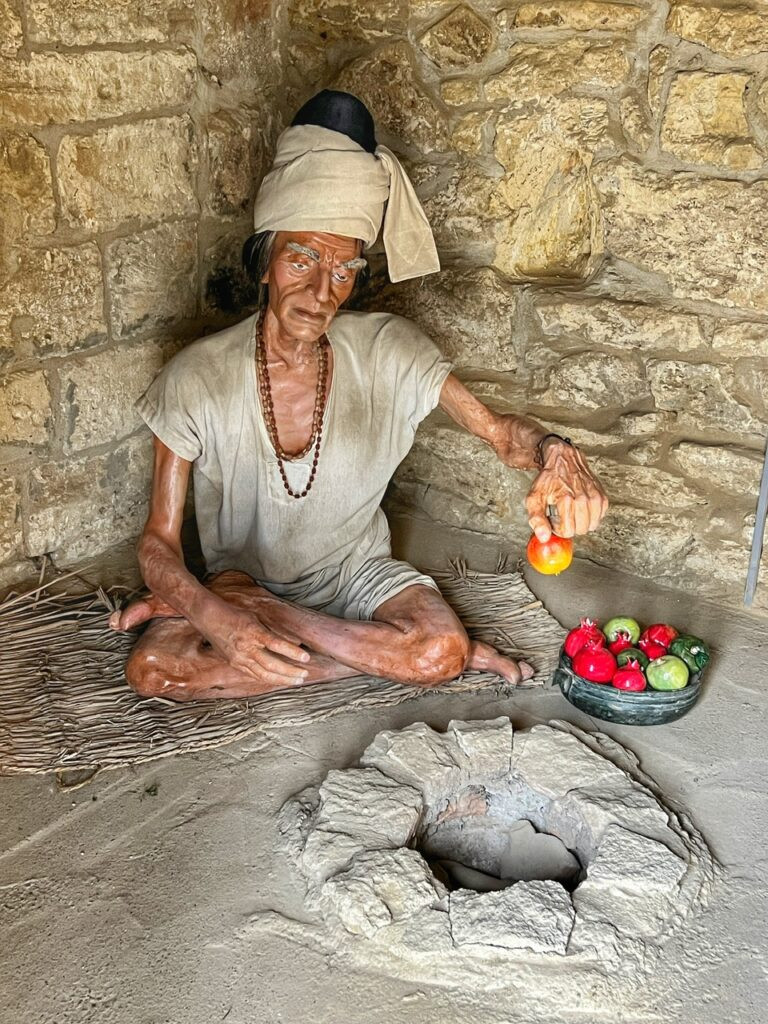
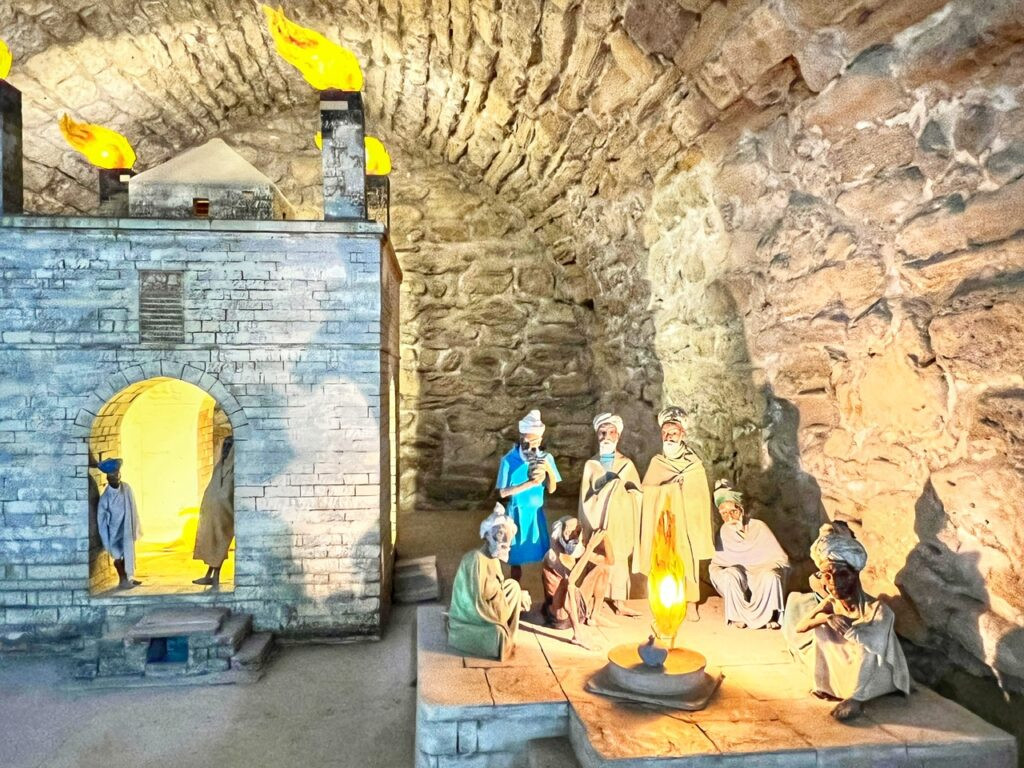
“Yagya” is a thanksgiving ritual that is one of the most common and important rituals in Zoroastrianism. During this time, priests sit on the floor around a cloth upon which fruits, flowers, milk and bread are placed. Prayers are chanted in front of a fire that burns in an “afargan”, or fire urn.
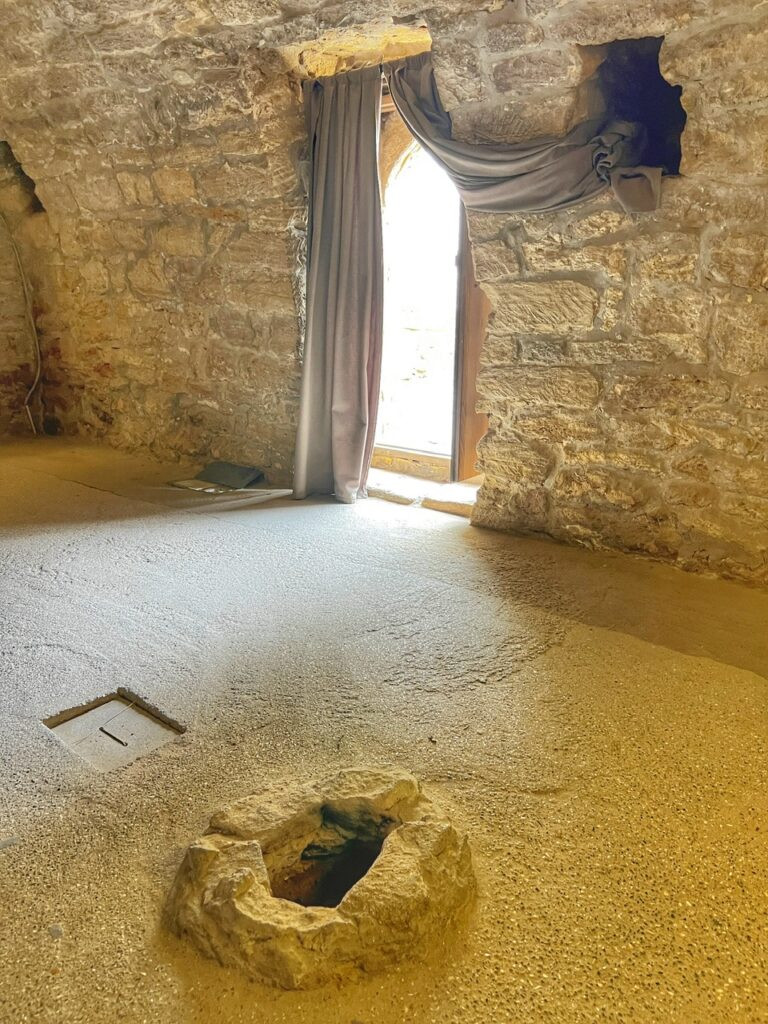
The inner rooms had quite the set-ups of these activities and all signage was displayed in Azerbaijani and English. Although they look more like toilets to us, these were fire vents from the earth.
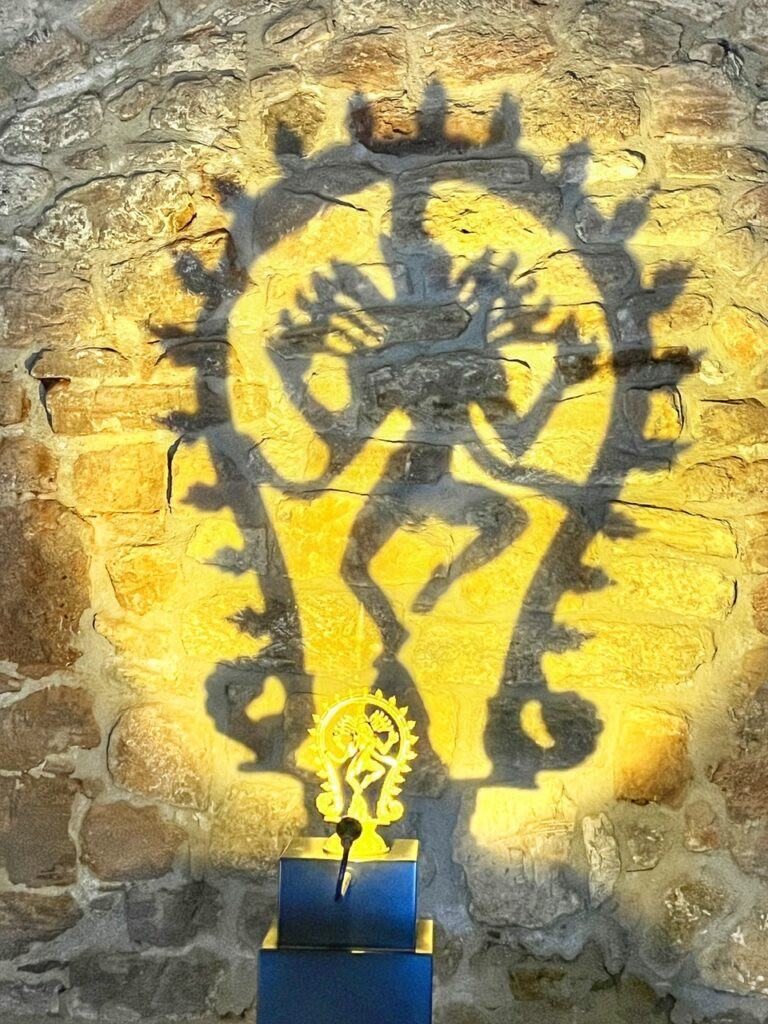
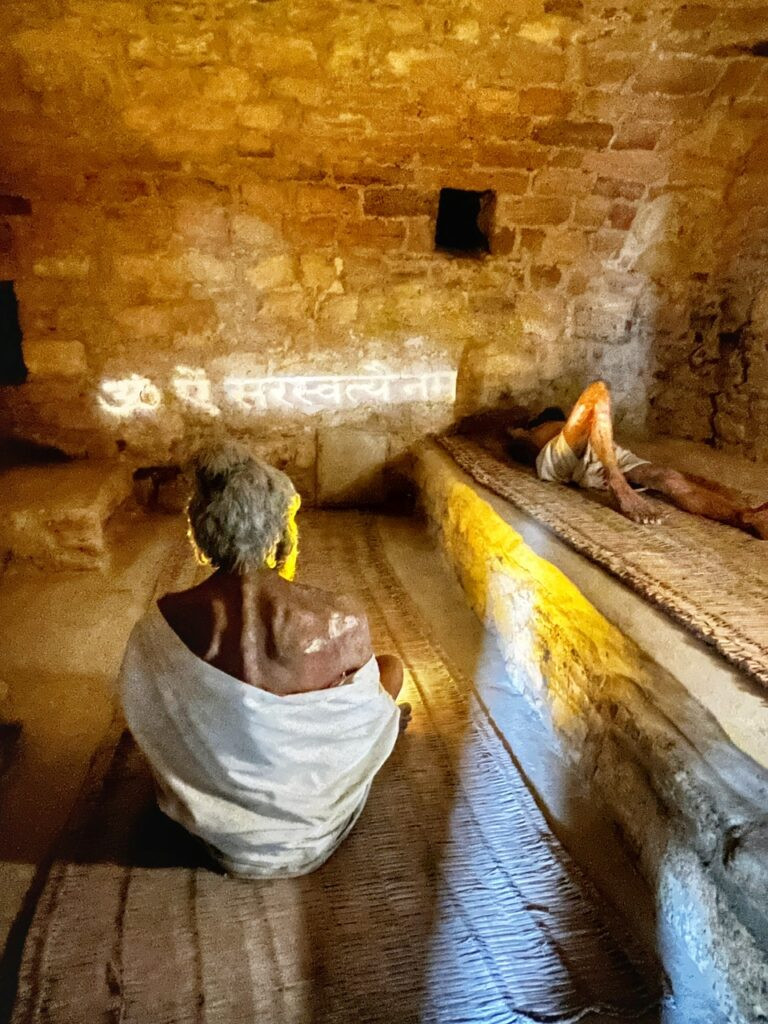
Ateshgah temple was of particular importance for Indians worshipping Shiva and Ganesha, although travellers mention other deities as well.
Not much is known about the arrival of Hindu worshippers to the Atashgah or their religious beliefs. Hinduism has many forms and varieties, and Hindus venerate a huge number of supernatural beings, deities and their embodiments.
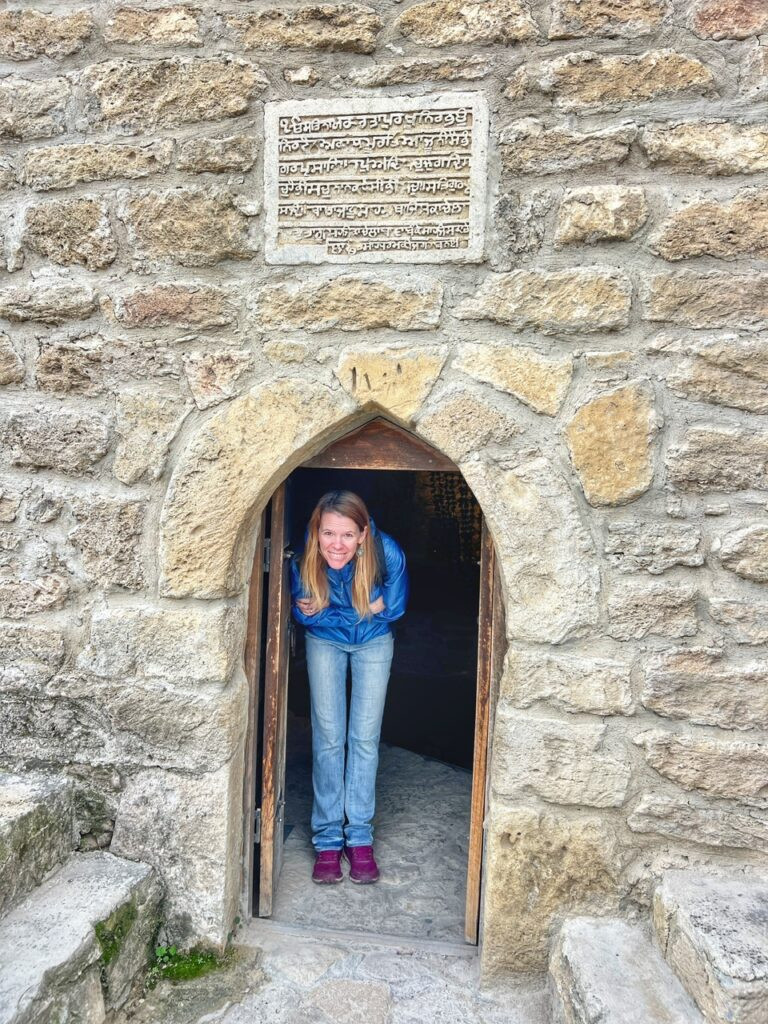
For centuries Azerbaijan was part of the Silk Road, the network of trading routes connecting Asia and Europe. It was likely the merchants who learned about the eternal fires of this area first. And clearly these people were little.
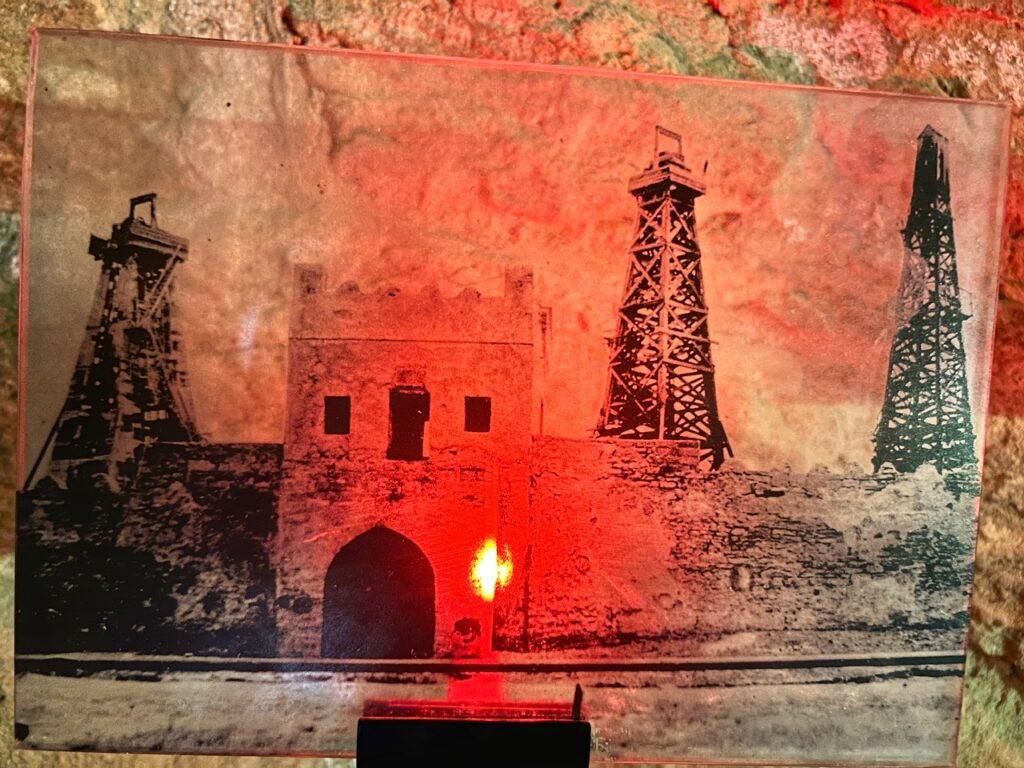
The temple of the Atashgah was rebuilt by fire-worshippers from different countries, including India, at the end of the 16th and beginning of the 17th centuries, and it continued to grow and function until the 19th century. Unfortunately by the end of the 19th Century, the area looked a lot more like this thanks to early oil production.


Afterwards, we grabbed some Azerbaijani fare at the cafe on site. Here we tried Azerbaijani dolmas ($5.80) which are bite-sized drop formations rather than the typically tuby treat you find in other parts of this region, and are also served hot.
They were stuffed with minced beef, rice, onions, turmeric and other herbs all wrapped in tender grape leaves and topped with a garlic infused yogurt. Quite tasty.
We also had a buttery gutab ($1.75) which is a a stuffed, thin flatbread — a sort of cross between a crepe and a turnover — traditionally cooked on a domed griddle called a saj. Inside was cheese, curry and pumpkin. Mmmmmm. But also glad we’re not eating this food regularly. 😂


To get there, we hopped on public transportation from the city. This involved taking this retro plum carriage on the green or red metro line to the Koroghlu transfer station, and then the 184 bus. All in all, it took about 1 hour and 25 minutes each way, but considering we only spent about $.40/rode it was well worth it. The entrance fee for the site was $5.29/each.
Daily Life in Baku
Our 2.5 weeks in Baku winded down, and for the first time in quite awhile, we simply were not ready to leave. Our life there was exactly what we had been yearning for….a comfortable apartment, fresh sea air, slow days grounded back in our exercise, cooking and work routines, and long late afternoon walks accentuated by sunshine and nearly perfect fall weather. It’s definitely confirming we are on the right track with our upcoming slow travel plans. Here are some photos of our daily life while here…

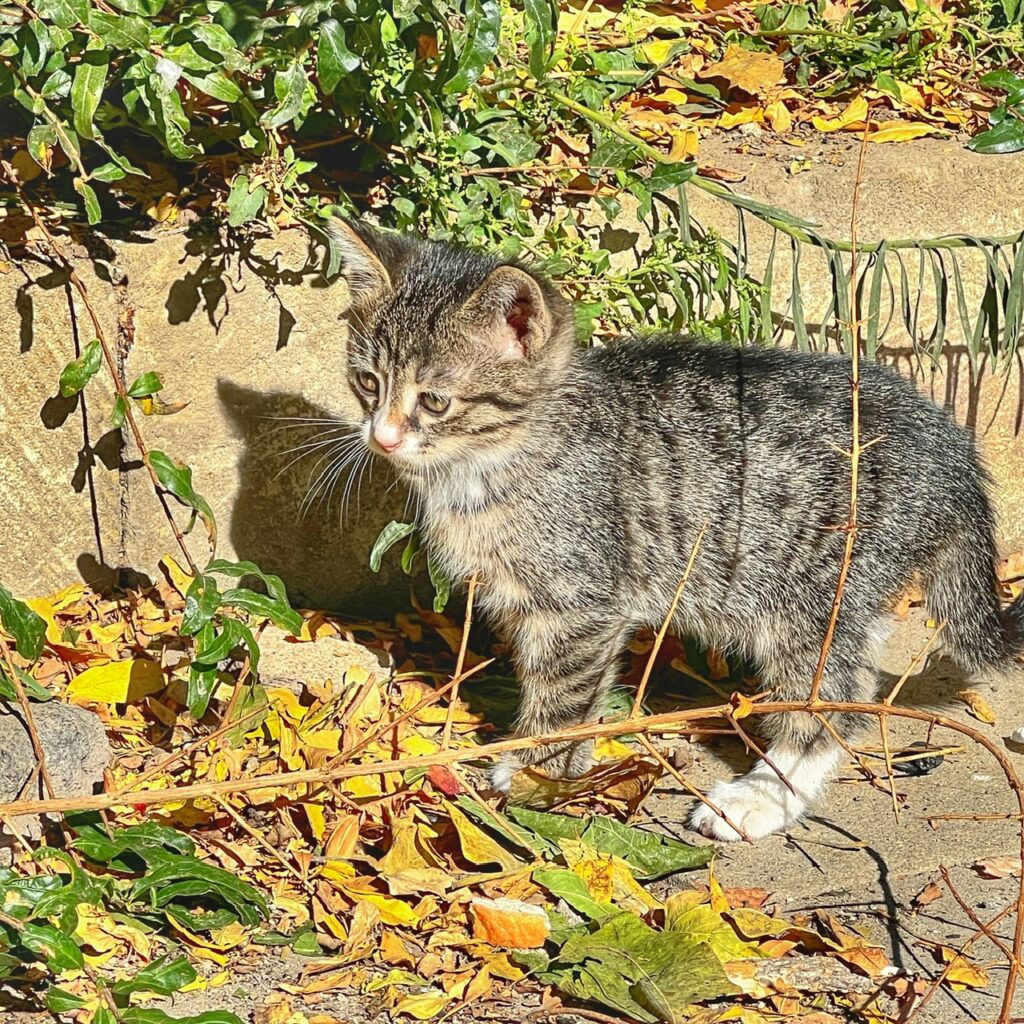
Yes, cats were a big part of our daily life in the city. On our walks, we were constantly, and quite effortlessly, making friends with a bagful of kibble. Imagine that. These three were lined up flawlessly, until I went to take a photo. There’s always one child who doesn’t cooperate, eh?
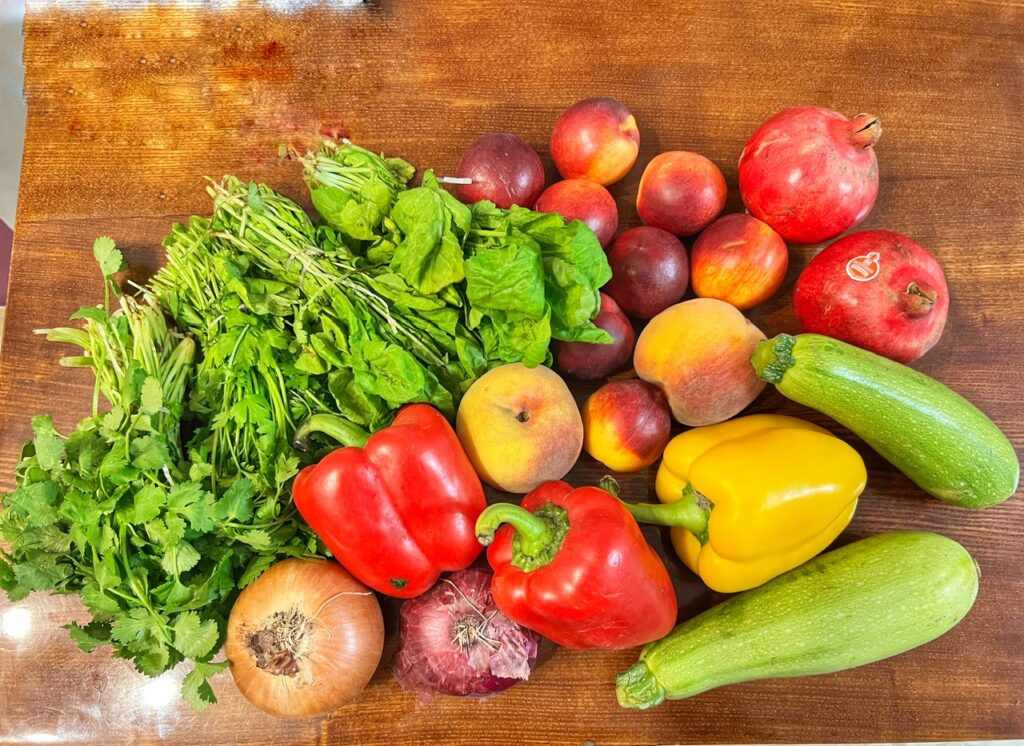
We had ample selection of supermarkets and affordable local produce markets within a 3-5 minute walk of our apartment, making it a breeze to go to the store, and plan meals daily. This entire bundle was 10 Azerbaijani Manat, or $5.28.


We also had the joy of meeting up with our Pamir Highway pals, Canadians Annabelle and Yi, one last time because we had a crossover day. They invited us to their extraordinarily Soviet grandma-style apartment for dinner and pomegranate wine, which practically flows from the fountains in Azerbaijan. It was too sweet for us, so we only had this one bottle, but it was still fun to try. We also enjoyed watching Yi whipping up our dinner, donning his matronly apron.
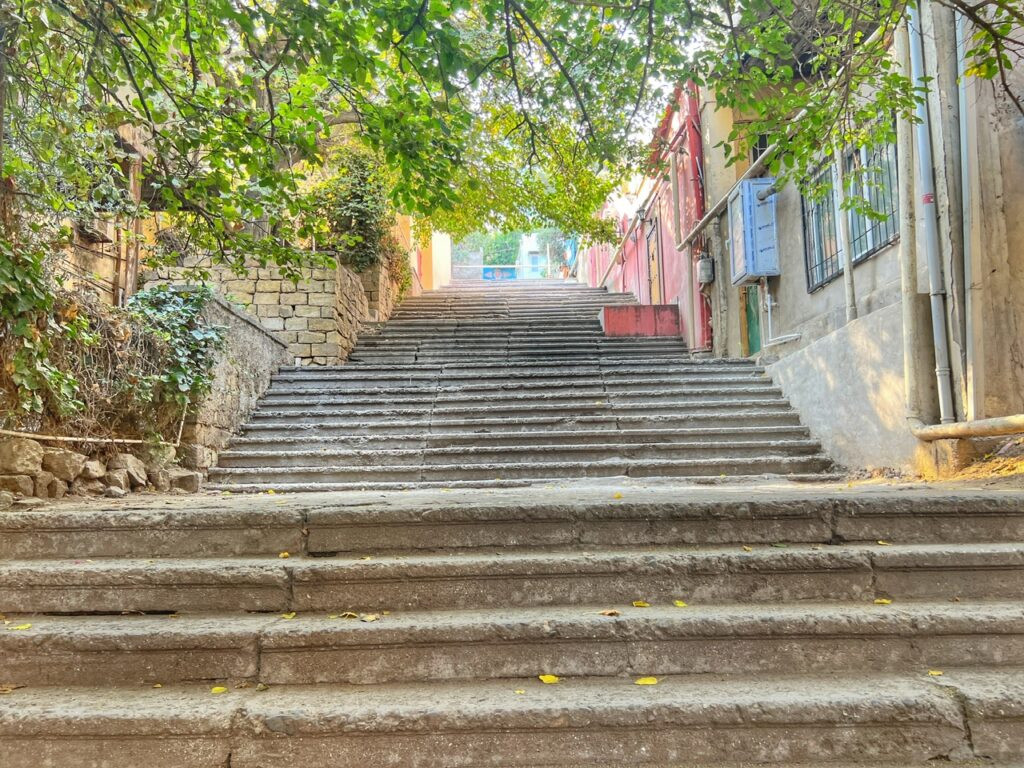
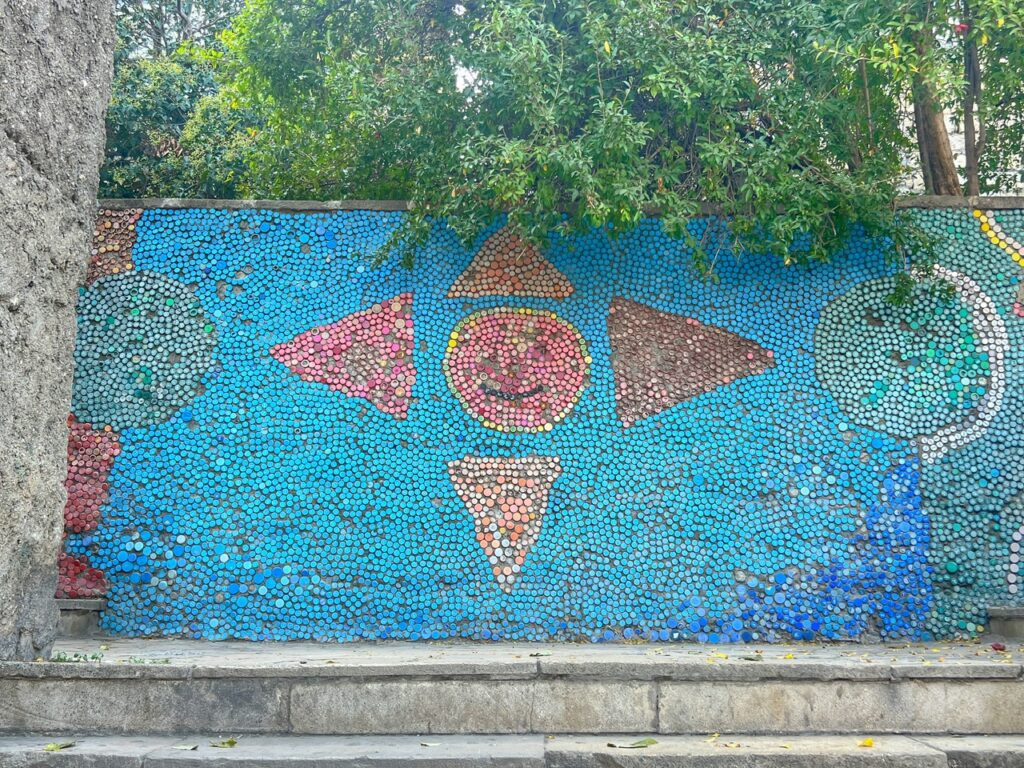
If you get outside the center, you’ll find stairs are a regular part of exploring this city. We love it! A street mural, made of plastic bottle caps


A restaurant named, “Come in Club” was near our place so we decided to do just that for our first lunch. It had a tremendous view over the sea making it exceptionally inviting. Through the menu, it was here we first learned that Azerbaijani looks, and sounds, a lot like Turkish. Both of them are Turkic languages from the Oghuz branch so their grammar, core vocabulary and pronunciation are closely related, somewhat like Spanish and Portuguese.
Many Azerbaijanis grow up watching Turkish TV, and not the other way around, so it’s often easier for an Azerbaijani to understand a Turk, than the opposite. When I asked my Turkish friend about this, she said, “ah yes, they speak very funny Turkish.”
I chose this restaurant specifically because after our time in Central Asia, we have been longing for some fish, and they had a salmon salad on their online menu. Unfortunately, the only option was tuna, which was quite small, and Greg tried a local dish called Tabaka Chicken. They were both good, but it was a bit of sticker shock after our time in Central Asia as well. These two dishes were $19. Needless to say, we chose not to eat out too often while here.

At the supermarket, walls of compote, which is a sweet beverage made by boiling fruit in water with sugar, then cooling it. We had it homemade many times in Central Asia, but never saw such variety in the supermarkets.
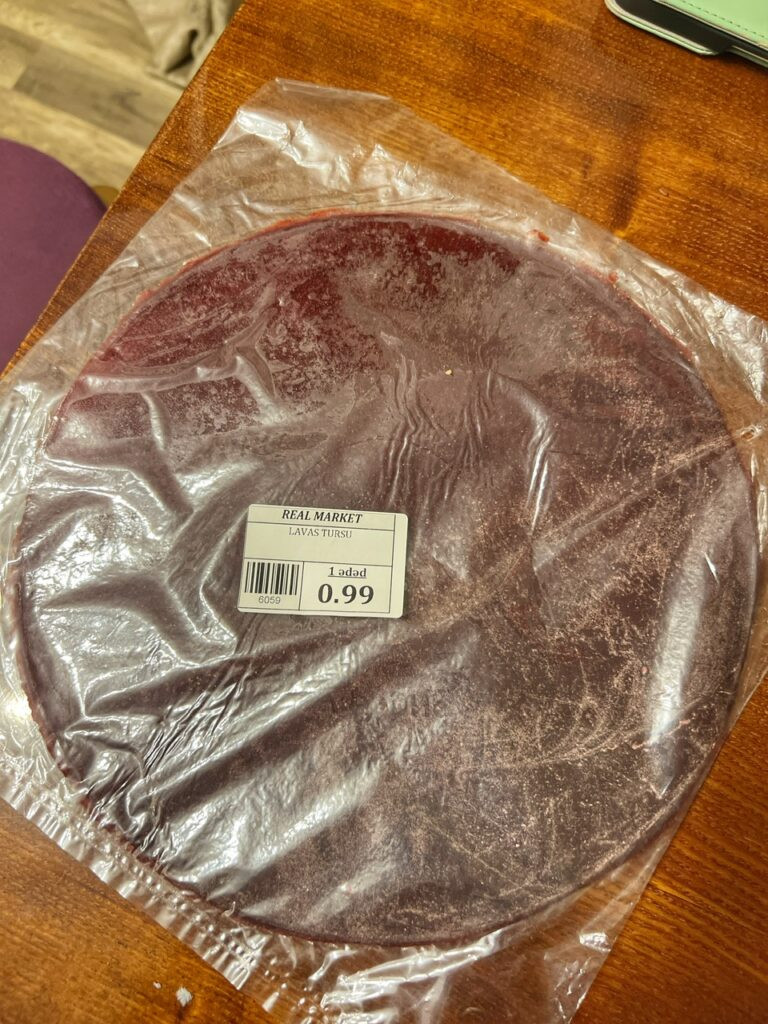
Another new item we found was large floppy discs (not that kind, Gen X’ers🤣) near the fruit section, which we assumed were some sort of fruit leather. The label said “Tursu” which means sour, so we expected a product somewhat similar to our disgusting childhood friend…Fruit Roll-Ups. We were shocked to taste nothing but salt when we chucked a bite into our food holes. Okay, enough of that…🤮

More cats. Some showing some leg, while others pose for Senior Pictures on the top of cars.

More cat real estate, with options for all budget levels…and mother tongues. (Note: Zimmer means “room” in German).

Retro cars outfitted as coffee shops. It seemed that anything trendy was always displayed in English.


A couple meals I made at home…lentil taboulleh and a walnut/olive/pomegranate salad. We were so happy to have Mediterranean ingredients readily available for affordable prices. We would soon really miss freshly baked tandoor bread slapped onto the sides of clay ovens for $.40.


Not to mention the wide selection of amazing Azerbaijani wine bottles, which we frequently purchased for $3-6. And my fav Caucasus friend…Borjomi water from Georgia, which I fell in love with in 2018. Naturally carbonated from volcanic gases, this water is one of the most chocked full of minerals in the world and tastes distinctly different than other mineral waters. I’m so addicted and you can readily get it here.


The seafront where we exercised and walked regularly stretches for a whopping 8k (5 miles), which is one of the longest seafront promenades in the world. It was about 4k to the lotus mall and back making it the ideal running route. Along the way, we also had the option to take advantage of their enormous seaside outdoor gym. This pictures really don’t do the size justice.

Grabbing a coffee at one of the seaside cafes, which cost $8.45…worth the rare splurge!
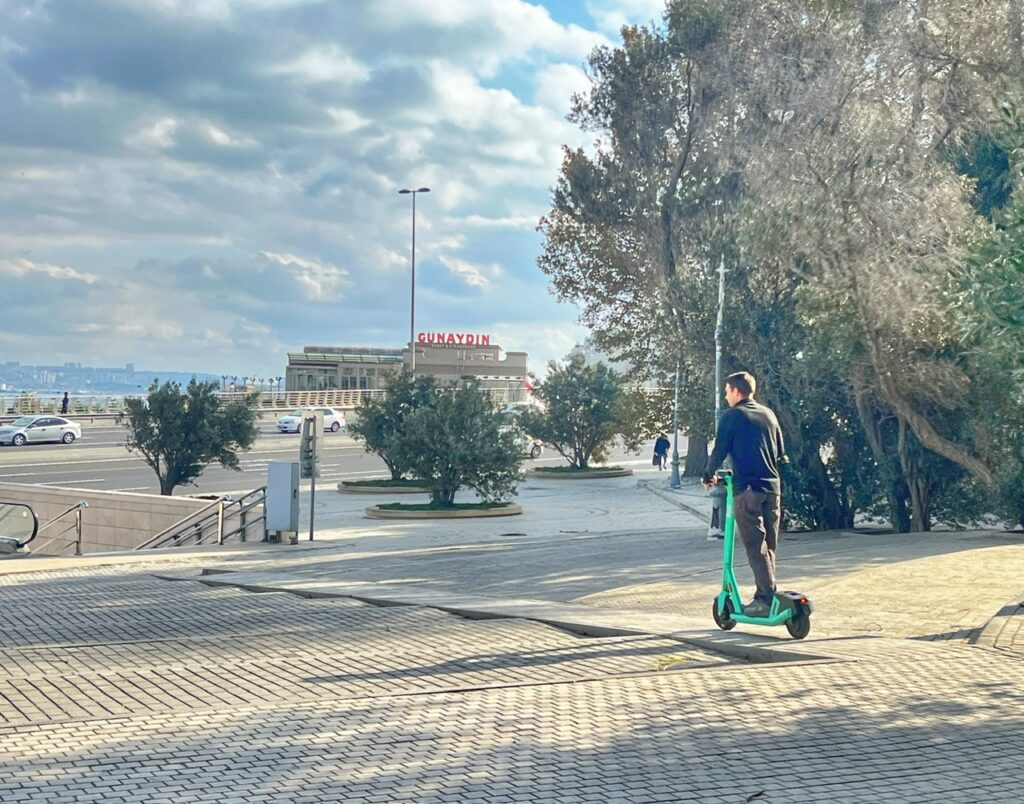
We also rented public scooters for the first time ever through our Bolt app thinking the seaside path would be an ideal place to try them out. We spent our first 10 minutes trying to negotiate two available scooters and learning the “driving” ropes, and the last 20 mostly in exasperation because it kept stopping and wouldn’t allow us to scoot pretty much everywhere we wanted to go…including on the waterfront path.
It reminded us of being on a group tour….
“Go here! Don’t go Here! That’s unsafe! Meet back at this time! That’s too fast! Hurry, your time is almost up! Don’t park here!” Etc. etc.
Needless to say, scooters are officially a one-and-done situation for us. But the five minutes we actually got moving were a blast! How about you? Have you ever rented a public scooter?
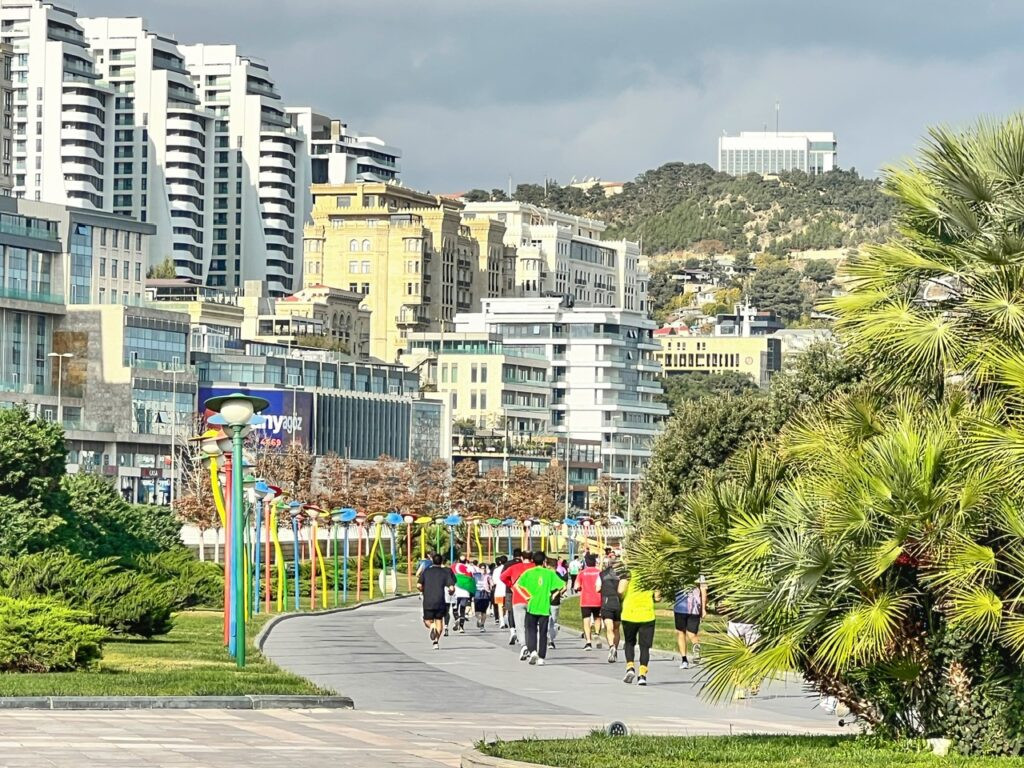
We loved how young and active the city seemed. While we were here, they had a 10k “Victory Run” along the waterfront, so it was entertaining check out the runners, many wearing sports bras and short shorts.
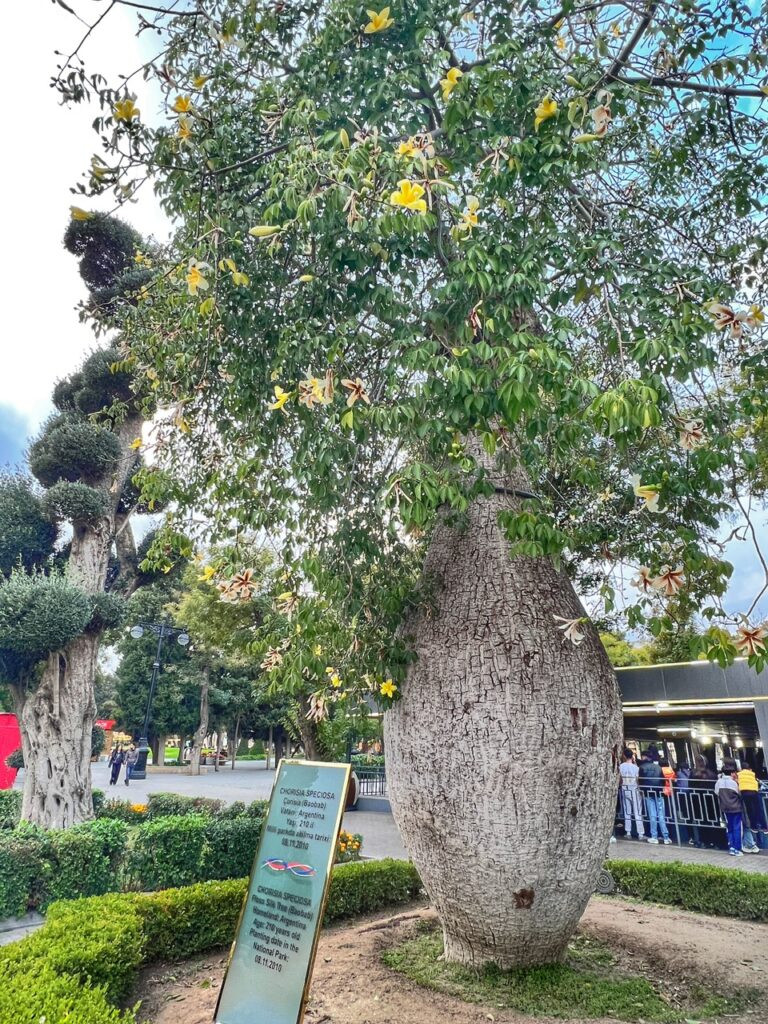
An unusual Baobab Floss Silk Tree in Baku’s fountain park is 210 years old. We were surprised to see its homeland was Argentina…not Africa.
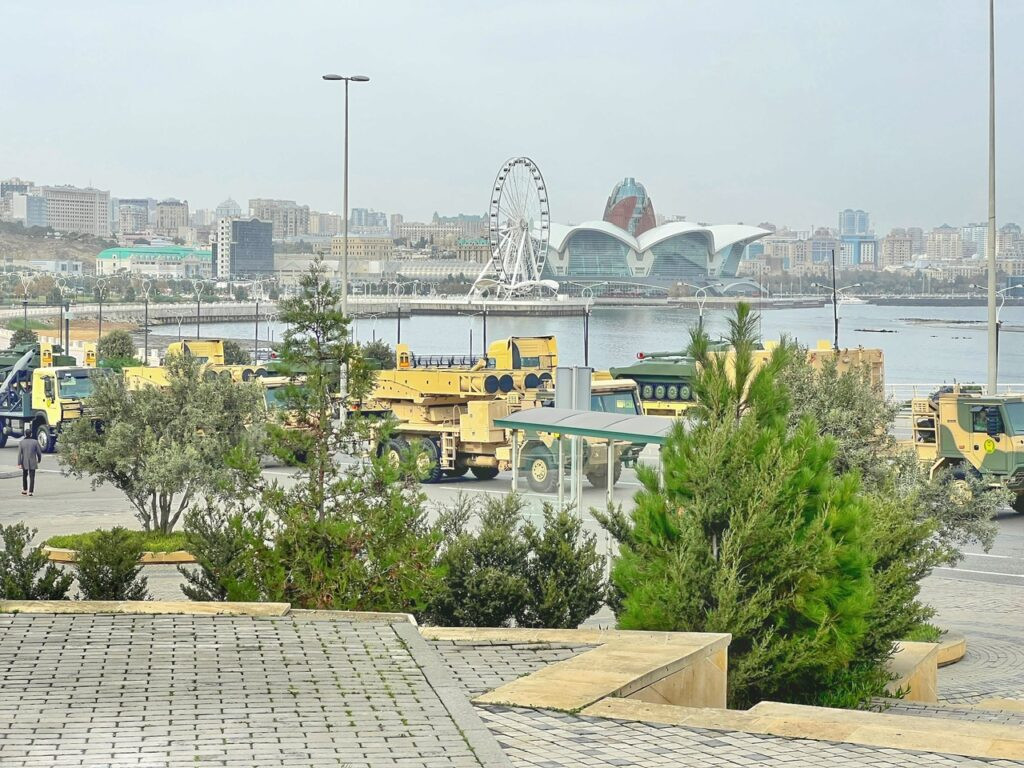
We also were in Baku during the Victory Day celebrations, commemorating the 5th anniversary of Azerbaijan’s victory in the Patriotic War. This meant the entire freeway was closed off at various times to parade massive military tanks in an endless brigade and we observed a plethora of flags, and a few children dressed up in army fatigues.
This 44-day conflict fought in autumn 2020 between Azerbaijan and Armenia dramatically reshaped the balance of control in the South Caucasus countries. In Azerbaijan, it is seen as liberation of occupied lands after nearly 30 years. The human impact and loss is viewed very differently on both sides, however.
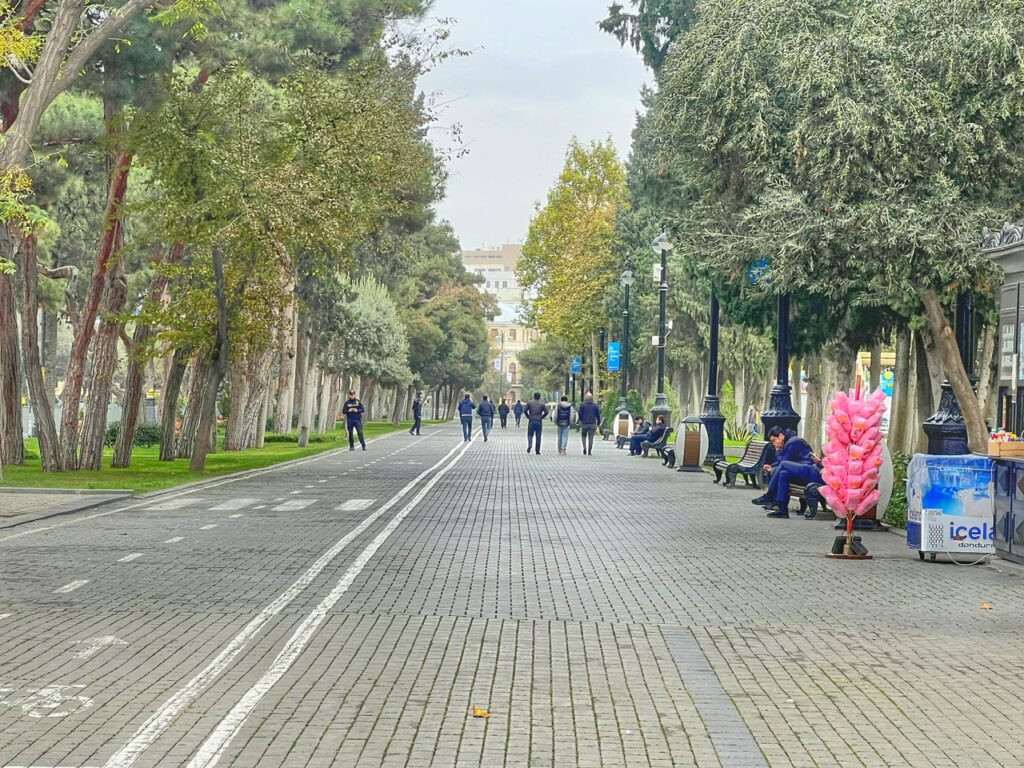
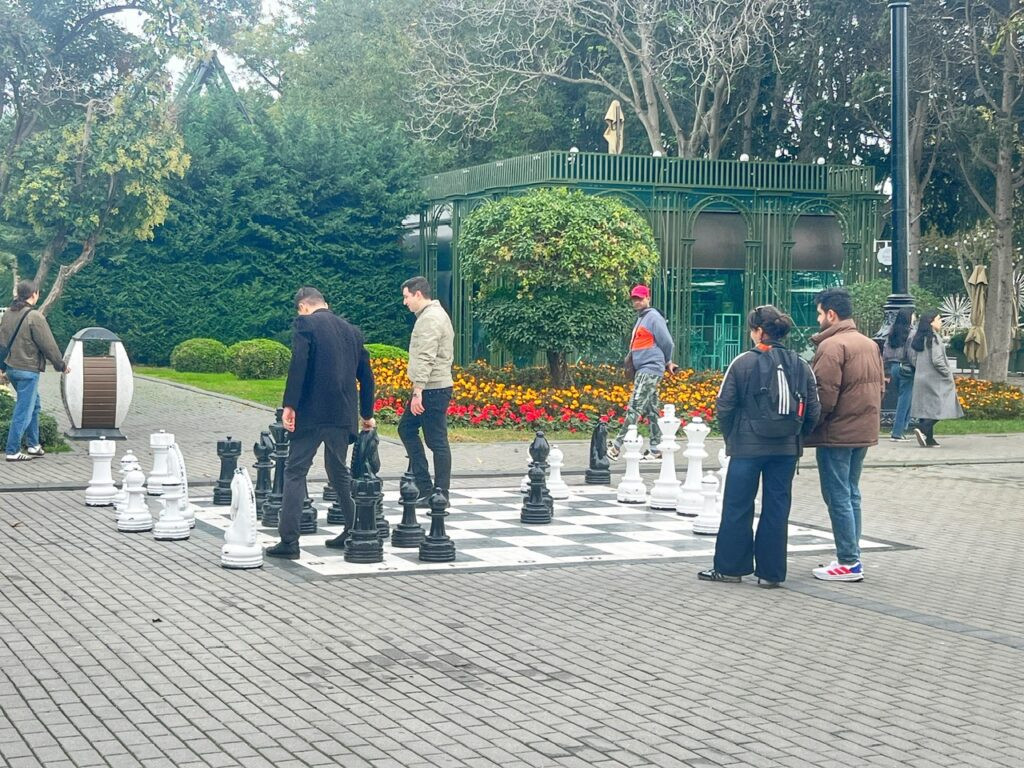
One of the many sections of the seemingly endless waterfront parks, which of course, includes a emblematic chessboard, which seem practically required in this part of the world.
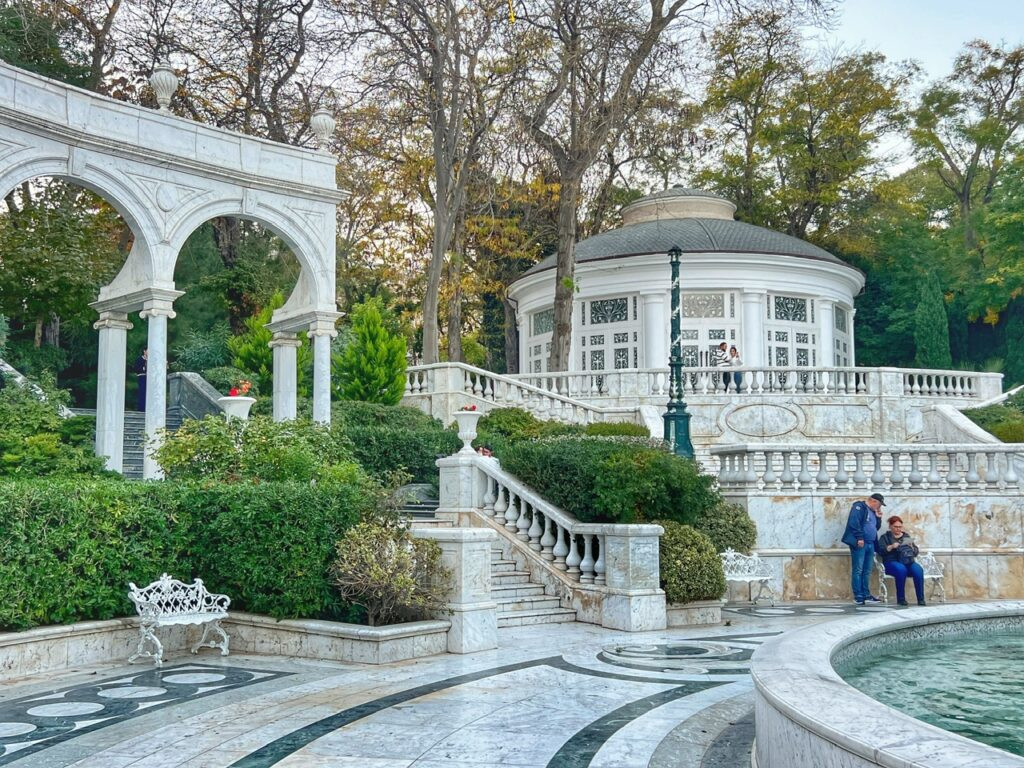
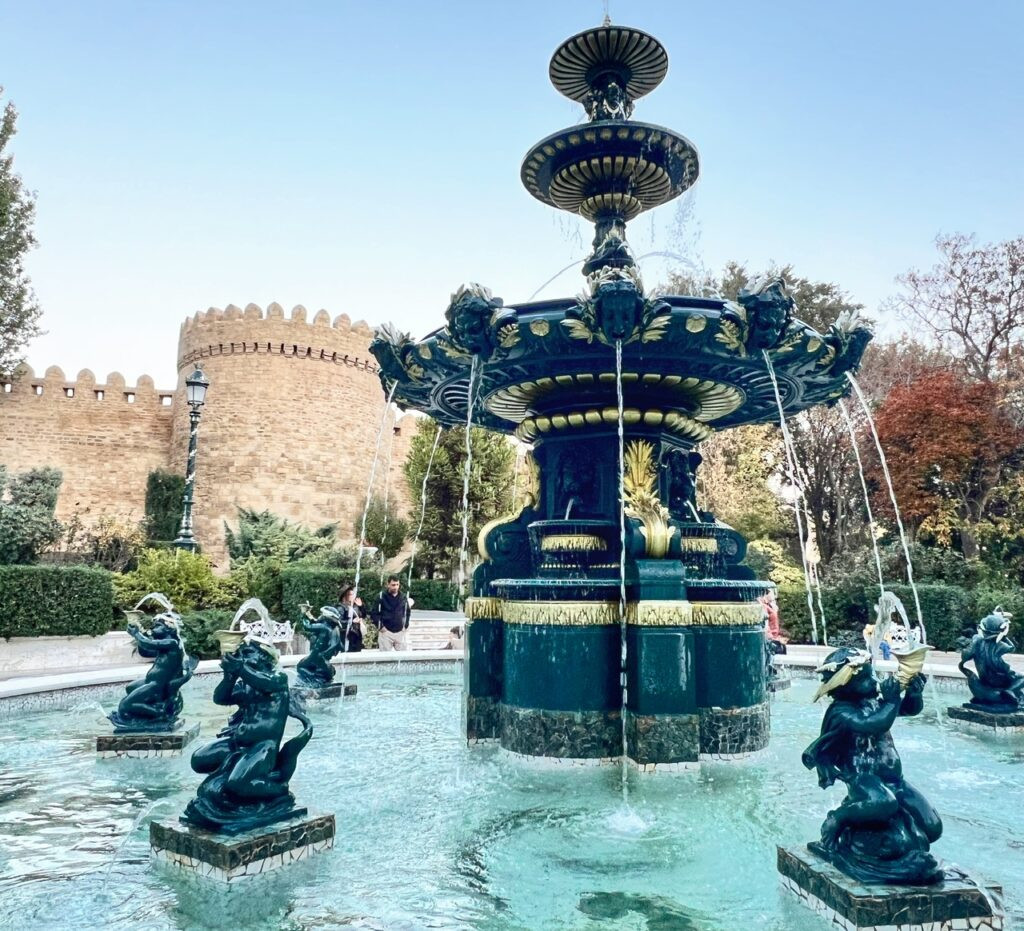
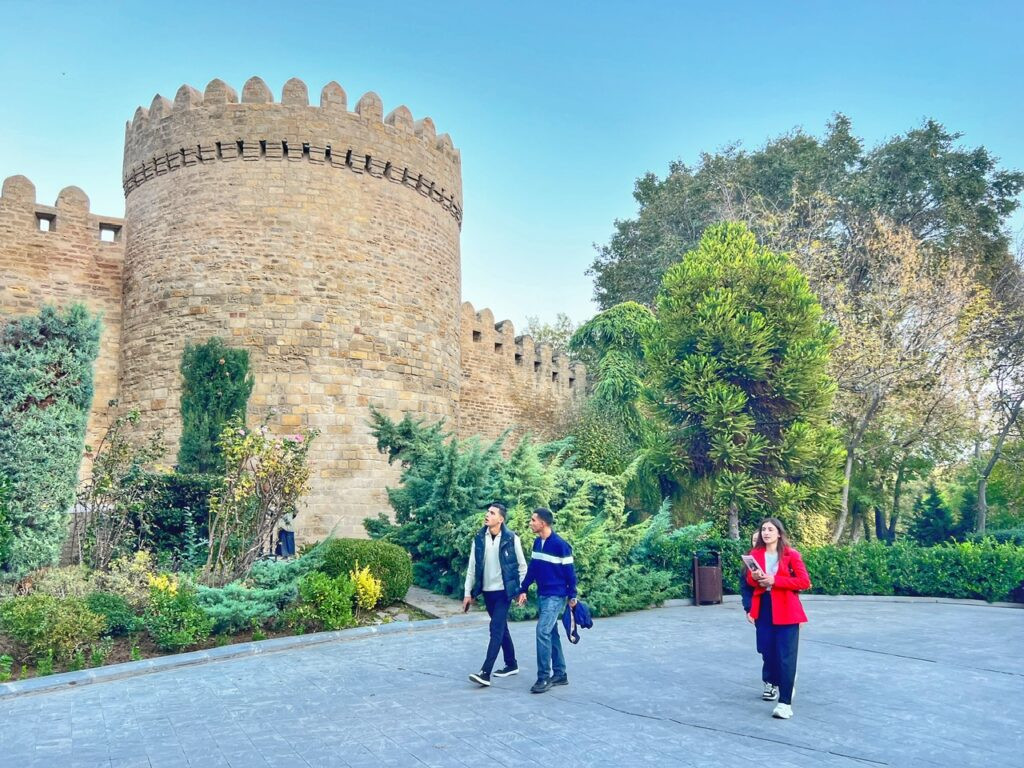
But simply stated, our favorite activity was merely walking in this beautiful city. Because it really is a stunning and special place, in which we’ll undoubtedly return to.