
From Rota, where we spent the month housesitting, we took a day trip to the ancient city of Cádiz, which is a lesser known Spanish superstar known for being the “oldest continuously inhabited city” in Western Europe. Although it preludes Rome by centuries, it’s hardly a date in the bucket when compared with a city like Plovdiv, Bulgaria founded 6000 years ago.
In fact, Cadiz was “only” founded by the Phoenicians around 1100 BC as “Gadir” and has fascinating peninsular geography, barely attached by a thread of land. Because it is almost completely surrounded by the sea, it provided a natural harbor to develop into a maritime power port, and for much of Spanish history, it was the gateway through which the treasures of the New World flooded into Europe.
Ambling through its former wealth and history, punctuated by healthy sea breezes and Christmas decorations, was a wonderful way to spend this sun-soaked December day.
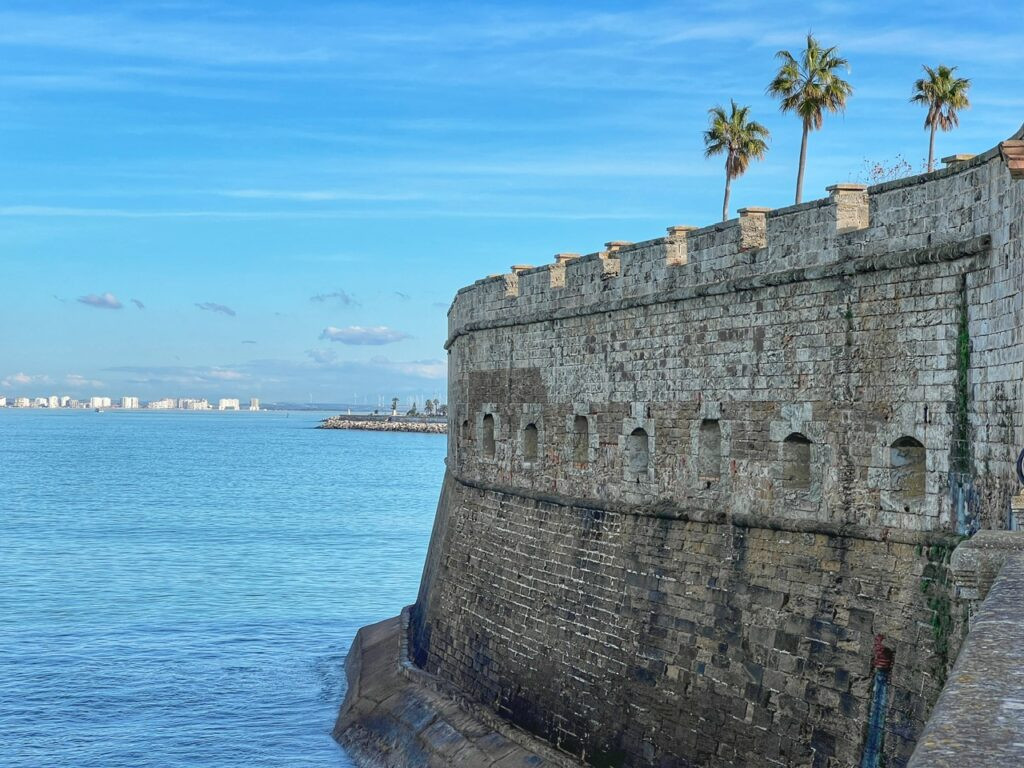
Naturally, with all this stolen silver flowing in, lots of walls and fortresses had to be thrust up to keep out the hoodlums. One of these fortresses, the Baluarte de la Candelaria, was built in 1672 and is now a venue for concerts and exhibitions.
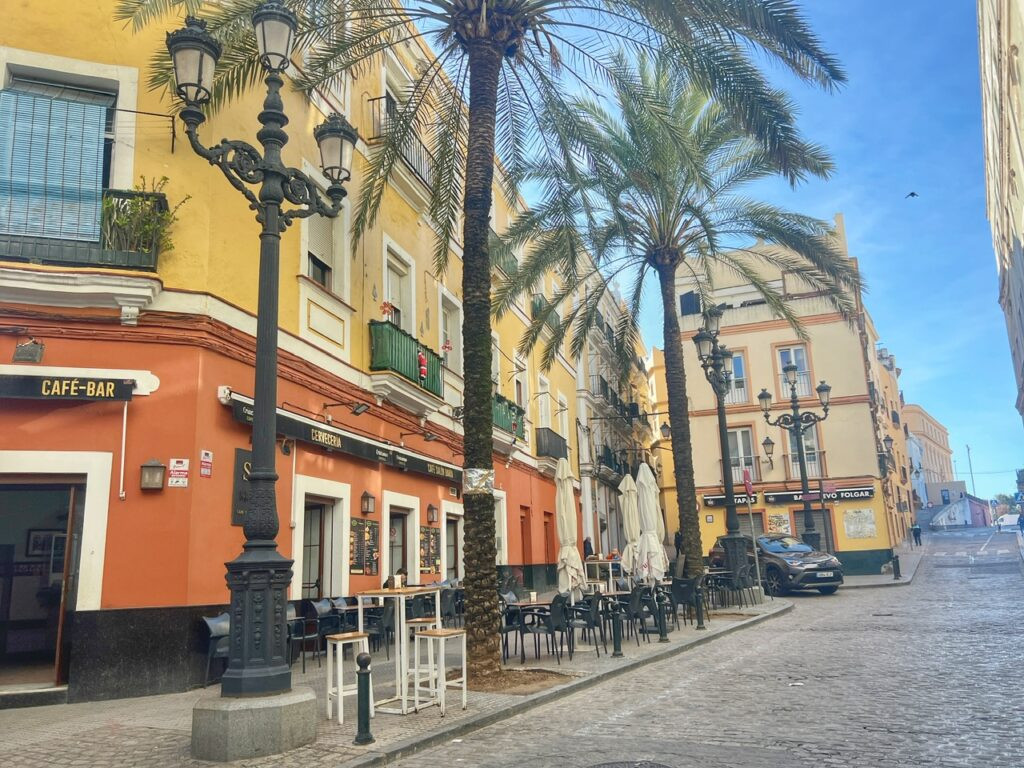
A quiet street in the Pópulo neighborhood of Cadiz, where layers of history are built into the streets as the oldest neighborhood within the city, and therefore the oldest in Western Europe.
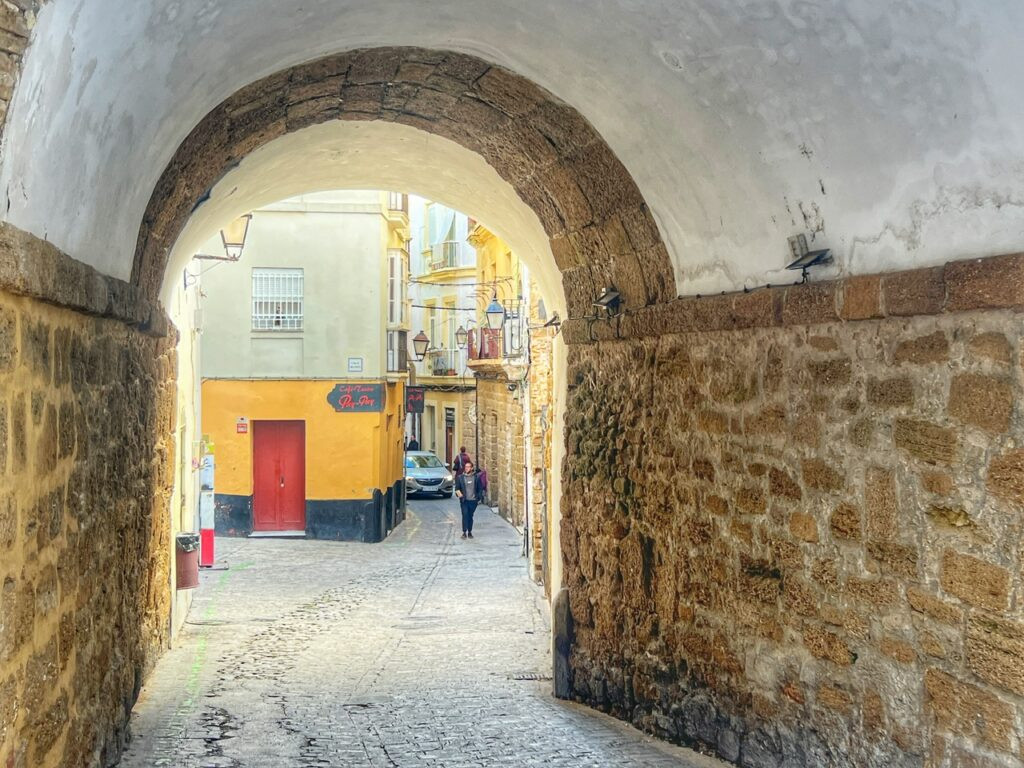
Also, one of the entry points to Pópulo is Arco de los Blancos. Aka the Gateway to Charm Land and the four wheeled monsters that shouldn’t be inside.
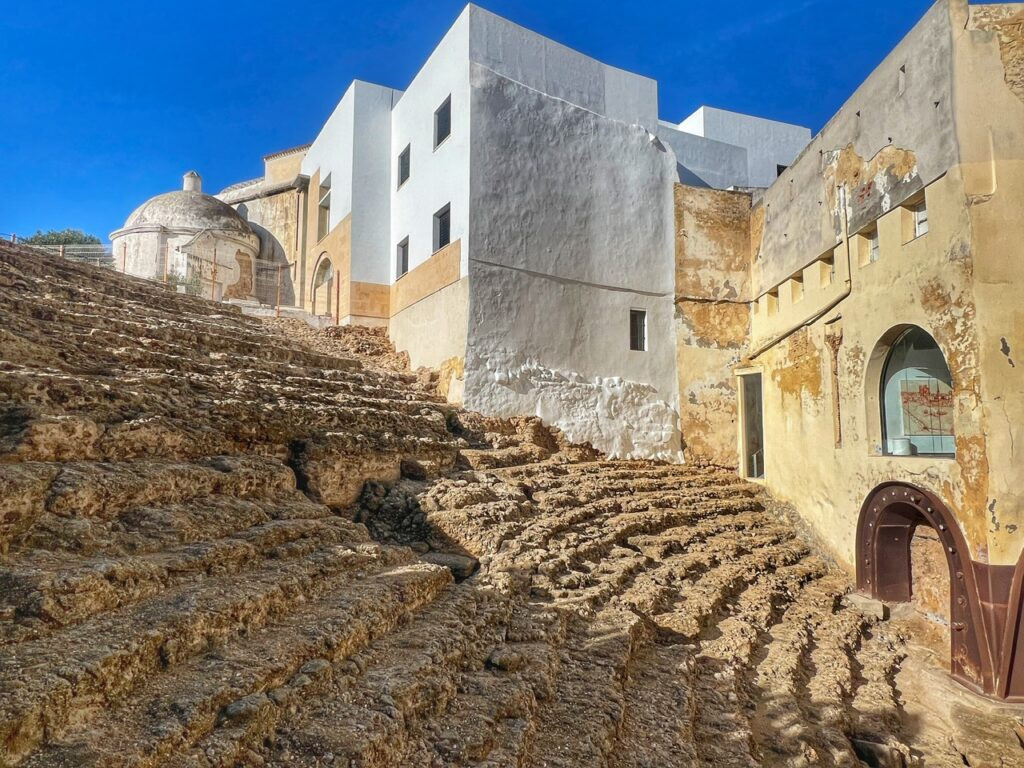
Within it, it didn’t take long to wander into a FREE(!) distinct remnant of this era… a Roman Theatre, which is one of the largest Roman theaters in ancient Hispania dating from the late 1st Century BC and said to have held more than 10,000 spectators. I feel like they all say this and I don’t really see it but people were a wee smaller back then…🤣 Besides a cluster of schoolchildren, it was mostly void of tourists like the rest of the city, or at least they blended in nicely with the locals.
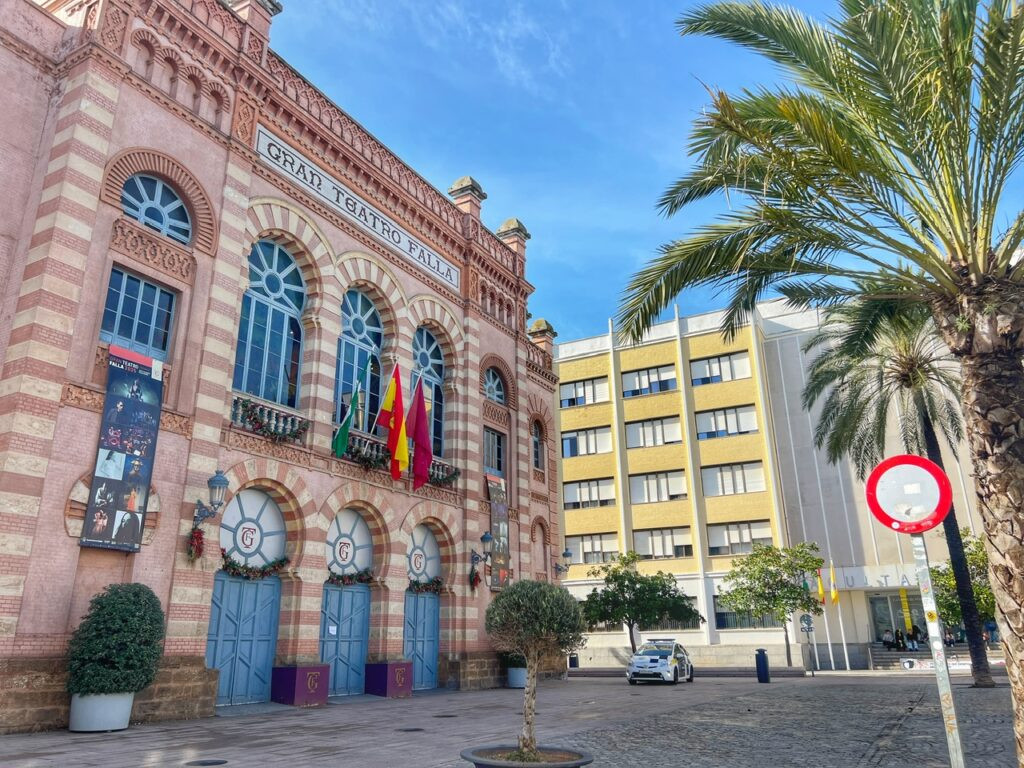
A more modern theatre, the Gran Teatro Falla, is a bit of a show-off compared to the dilapidated ruins of the Roman one. The style is “Neo-Mudéjar,” aka a rip-off of Islamic aesthetics. You can see this in its red and white striped bricks, Moorish arches, and geometric splashes. The one in the background must be a rip-off of 1970s Florida.
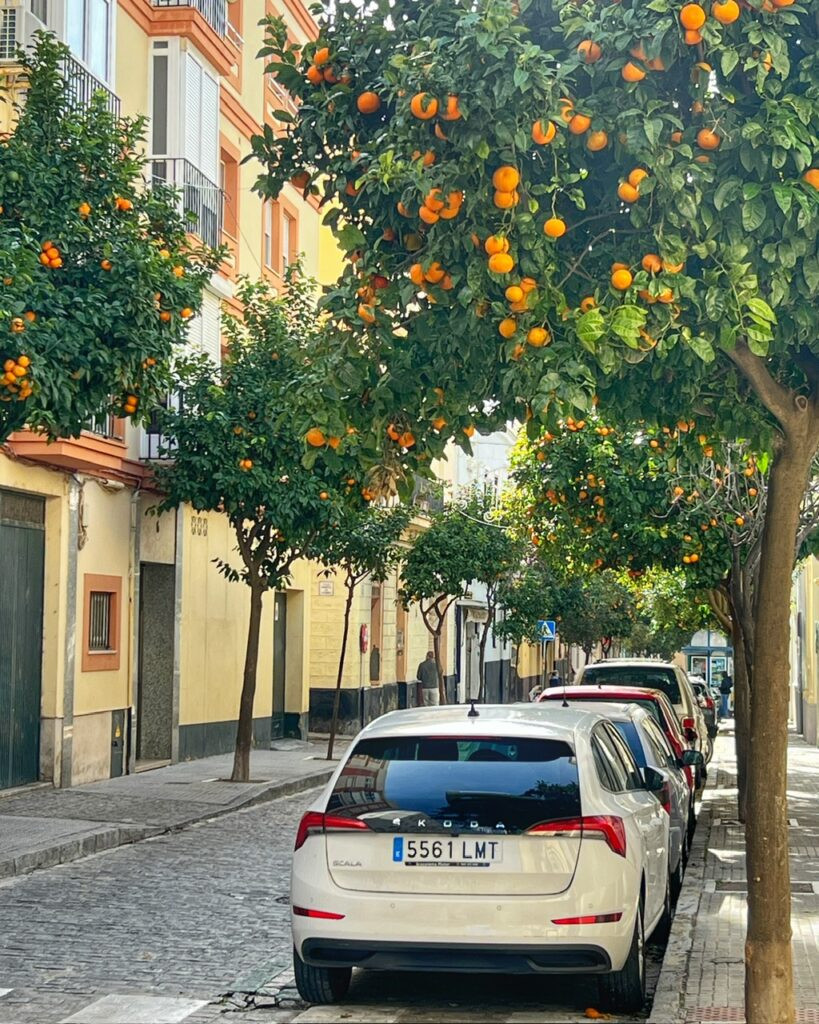
Like in Sevilla, orange trees were literally chock-a-block as they dotted the streets, most ready to pluck for a succulent Vitamin C treat. This is something we’re having daily during our time here…and they are undoubtedly the best oranges we’ve ever had!


An eye-catching knife/scissor workshop, seemingly frozen in time, is plopped neatly in Pópulo. Meanwhile, we peer in the window next door, which embraces the vibes of a mobster movie.

Speaking of movies, meet a romantic scene that looks like it fell out of Hollywood….Another seaside fortress, this one called Castillo de Santa Catalina, was built in the late 16th century after Cádiz suffered a rude wake-up call by some Anglo-Dutchies who wanted some of their Ameri-loot.
Spain responded the way empires usually do when poked at…by playing the victim card and building thicker and higher walls, with sharp, and in this case, star-shaped, angles. 🙄
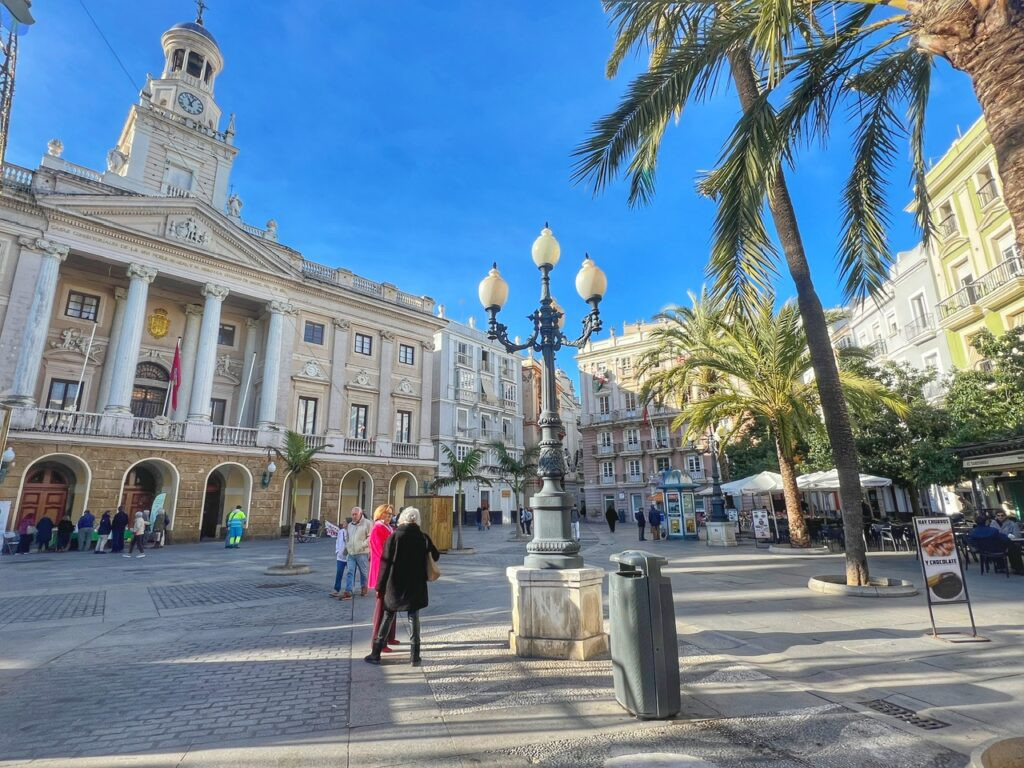
The Plaza de San Juan de Dios is basically the living room of Cadiz, sin comfy sofas, in which sailors, merchants and invaders historically got the first glimpse of the mega-wealthy city.
Today it is crowned by city hall and a new invader…the ones who get dumped off from cruise ships. Fortunately, one was not present the day we visited, although we’ve heard the occasional foghorn in the harbor from Rota.


We then stumbled upon Iglesia de Santa Cruz, which is commonly just known as the “Old Cathedral.” Chat says, “it’s deliberately modest. The exterior doesn’t try to dominate the skyline. Inside there’s a sense of compressed gravity: thick walls, warm stone, and a layout that feels defensive as much as devotional. This wasn’t a showpiece church; it was a working cathedral in a port city that expected trouble.”
Today’s “trouble” for consumers, at least, is the Cadiz Christmas market, and perfectly baubled Christmas tree, which were both gravely disappointing considering there were no aromas of mulled wine looming nearby.

What wasn’t disappointing, however, was the 1838 Mercado Central de Abastos, or Central Supply Market. As one of Spain’s great seafood cities, its vibe is authentic and fishy rather than touristy and shady. It’s a place to soak in the rhythm of the vendors as they expertly filet slabs of pescado, tune into fast-talking Spaniards, and try to discern the many varieties of exotic sea fare, some still gently flopping, as they escape their lives upon pellets of ice.

Of course, some vendors clearly still want to showboat their bragging rights displaying colossal swordfish heads…
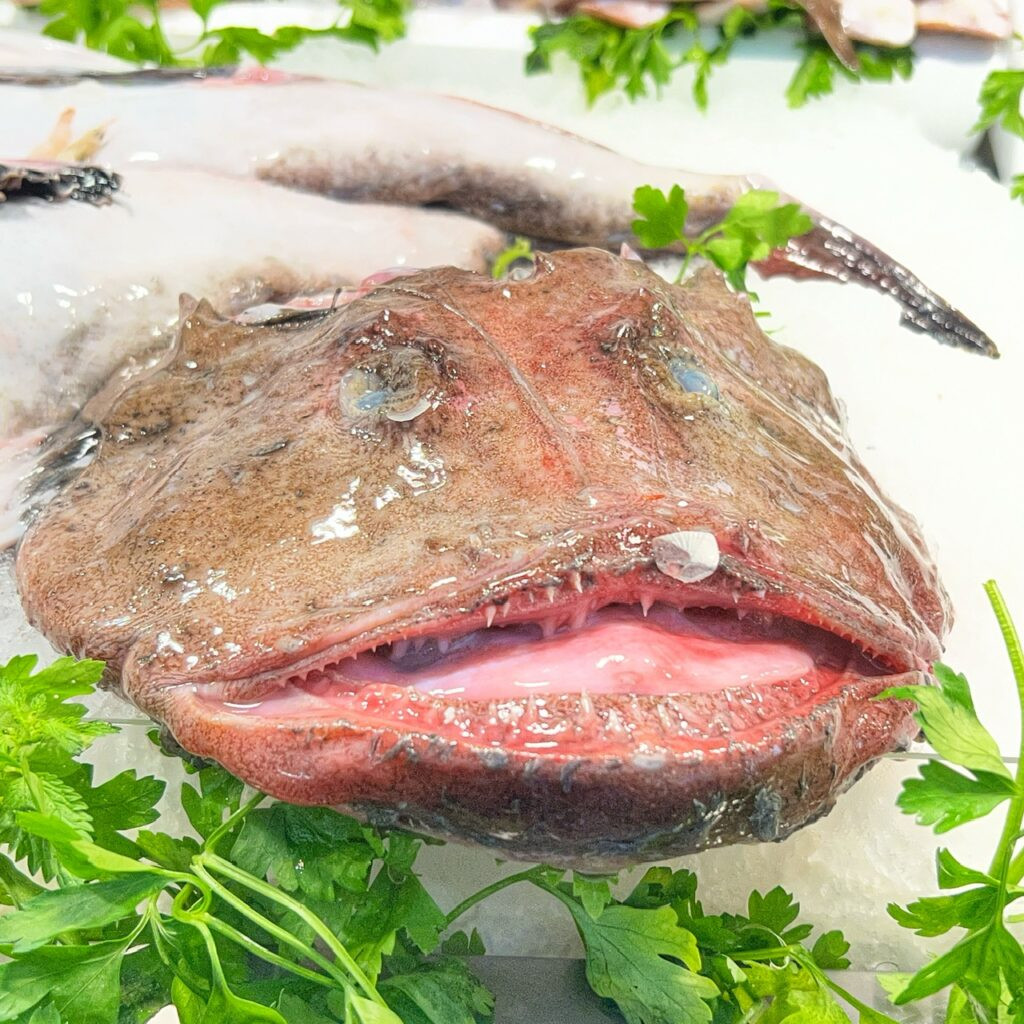

…mutant monkfish…and crimson prawns with perfectly coiffed ringlets.

Of course, the market does not just bear seafood. It also hosts some divine looking produce like tomatoes and strawberries all grown locally. We got a 1/2 kilo for 4 euros.


Locals waiting in line to buy at Mari Jose. And naturally, since this is Spain, lots of man meat is to be found as well. The neoclassical building forms a rectangle with an open-air central courtyard, encompassed by columns, which is essential in a warm Atlantic port city selling seafood.

Moving on from the market, we encountered multiple dazzling symmetrical portals into residences or businesses, which Greg noted were decidedly Moroccan in their aesthetics, a place Mandy is trying to convince him to return to.
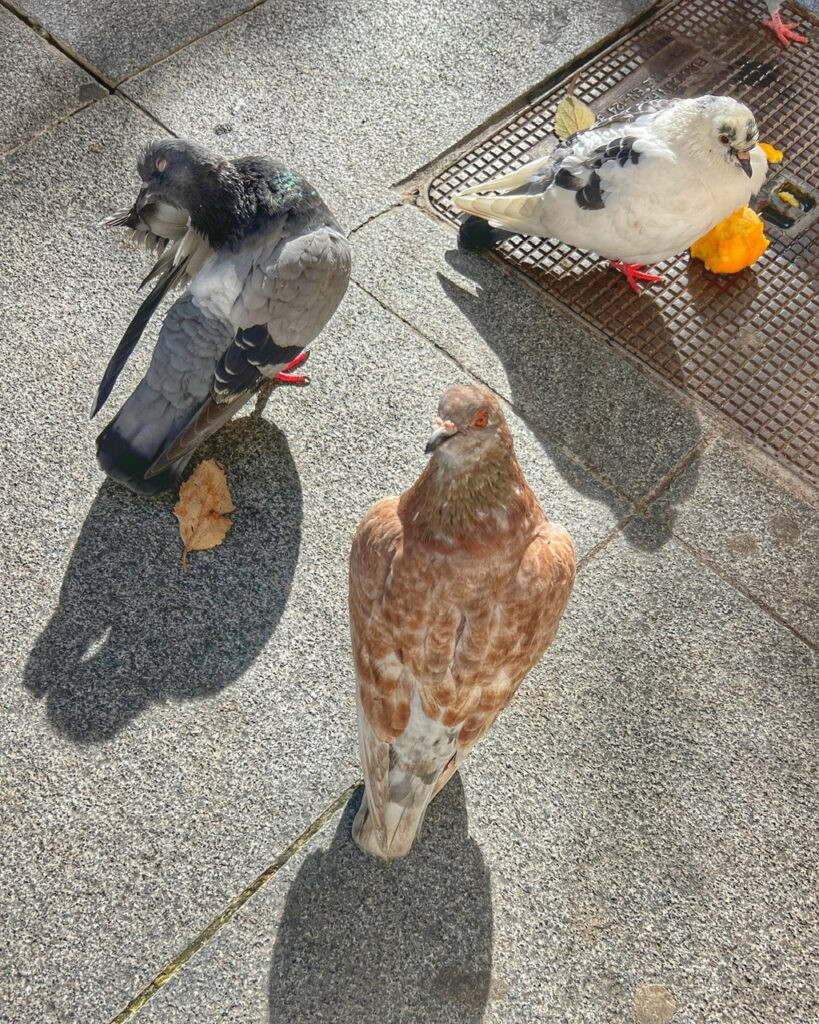
After the market, we made a pit stop into Decathlon, because Greg can always find something that needs replacing, before heading to the park where we shoved in our tuna sandwiches much quicker than we preferred thanks to the harassment from these head-swiveling and persistent air rats.


Christmas in Cadiz…amongst centuries of history.

The Igelisa del Oratorio de San Felipe Neri is not your typical church. In fact, it’s an early state meets church collaboration at its most interesting. It was here the Cortes of Cádiz convened and drafted the Spanish Constitution of 1812. Despite the church/state thing, it was one of the most liberal constitutions in Europe at the time which featured ideas like national sovereignty, separation of powers, limits on the monarchy, and freedom of the press. I guess this was apparently some radical shit in the time of cannonballs and kings? Feels like it’s radical shit in 2026 too.
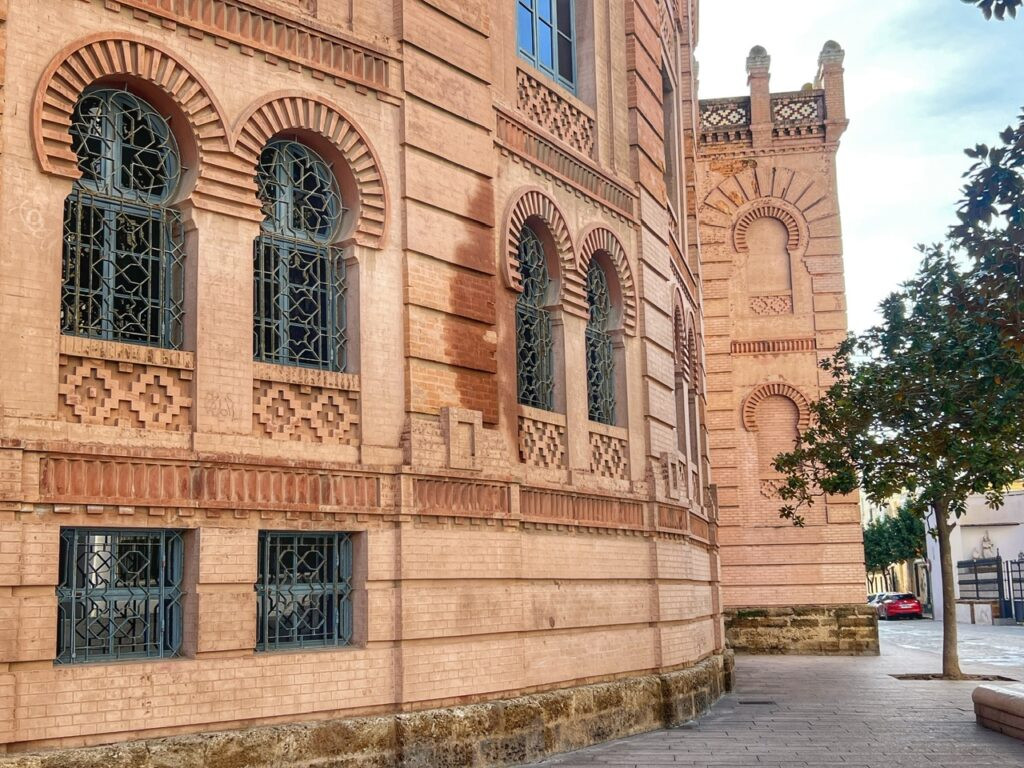
The elegant windows of the Gran Teatro Falla

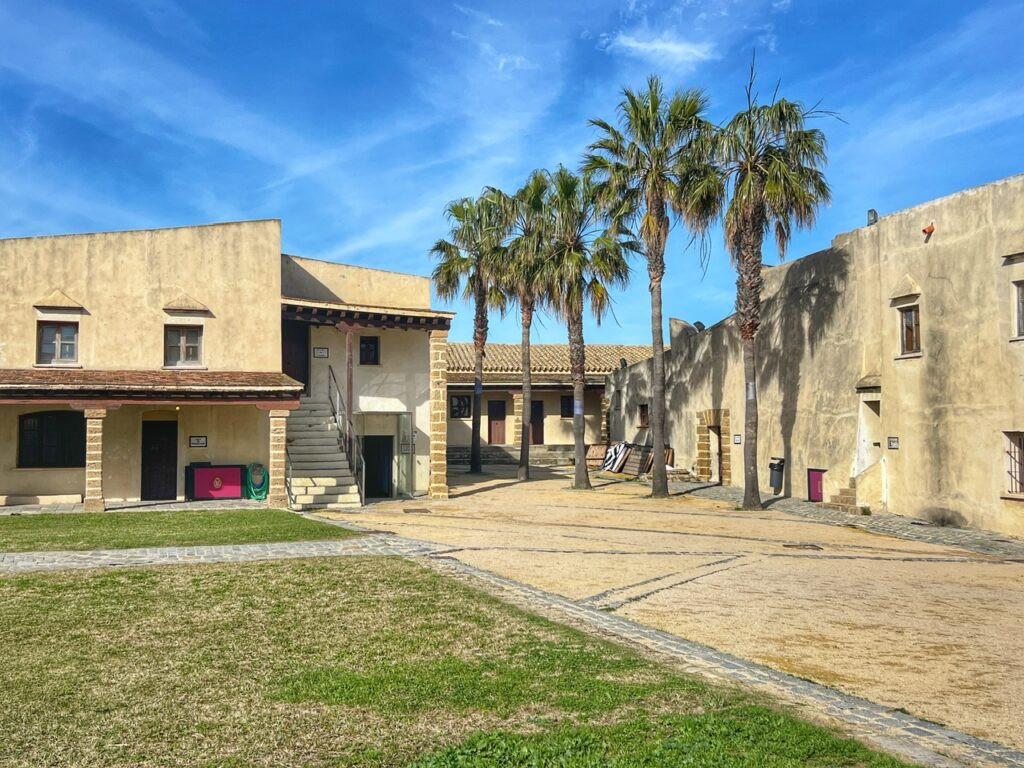
The Playa de La Caleta has a classic postcard vibe. It was from here we entered the FREE(!) nearby star-shaped fortress, which felt a lot like Santa Fe, New Mexico to us.
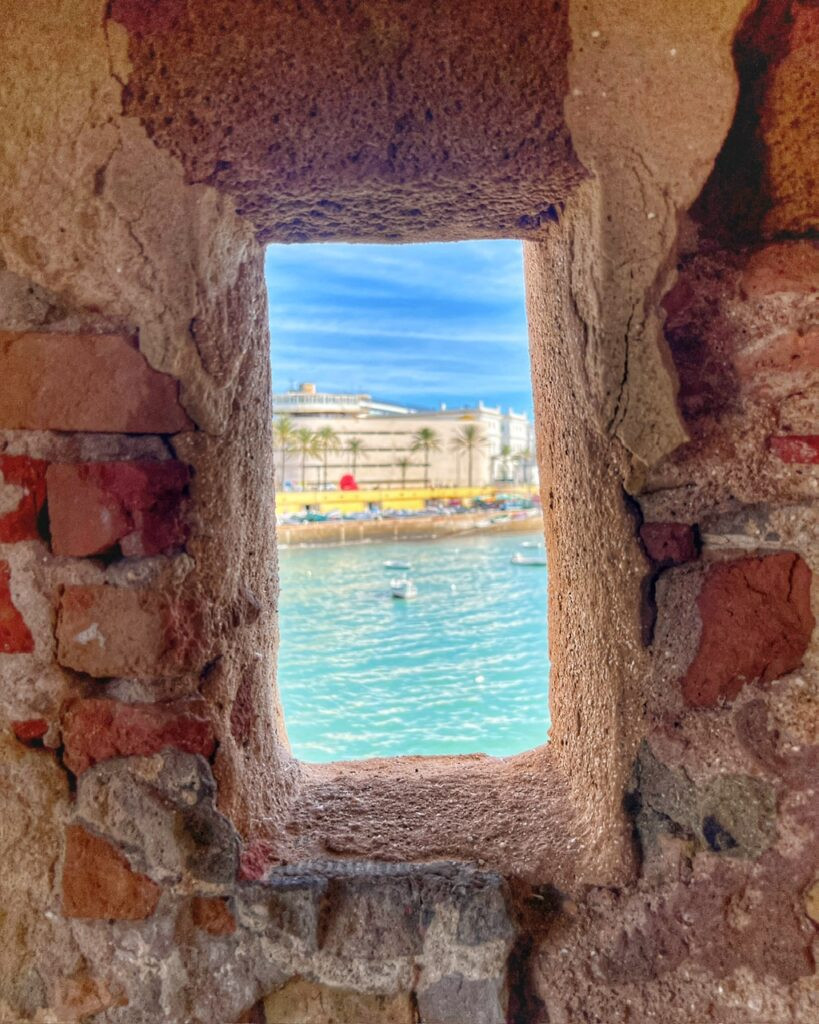
I don’t believe Santa Fe had these little pockets of eye candy, however.
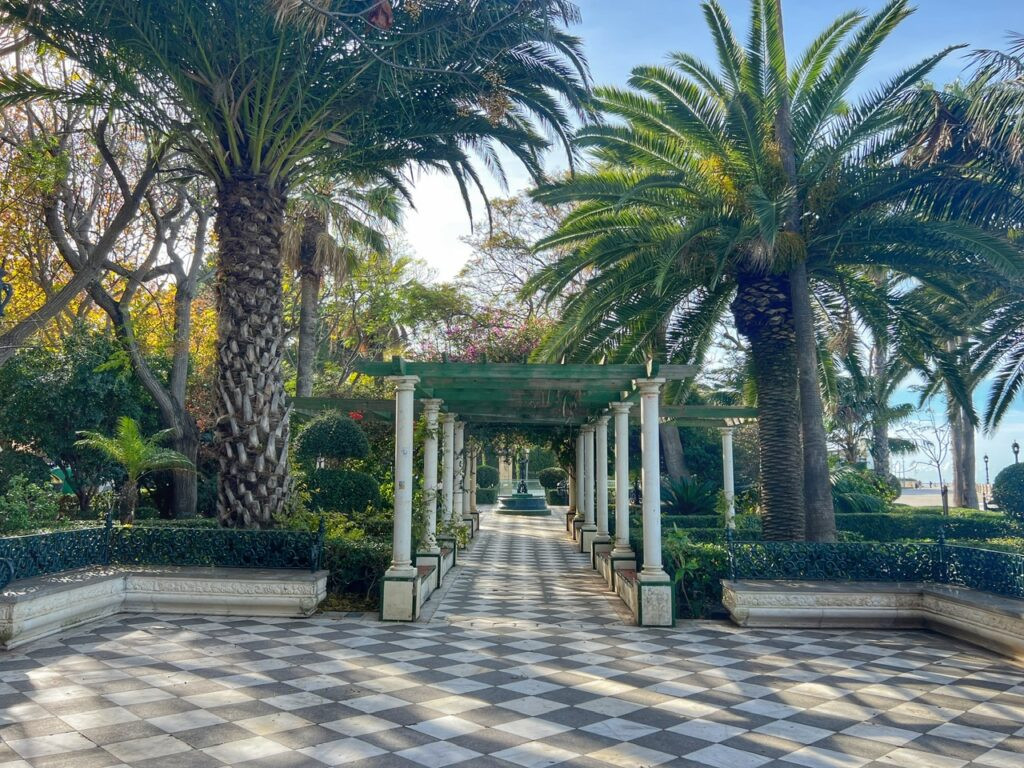
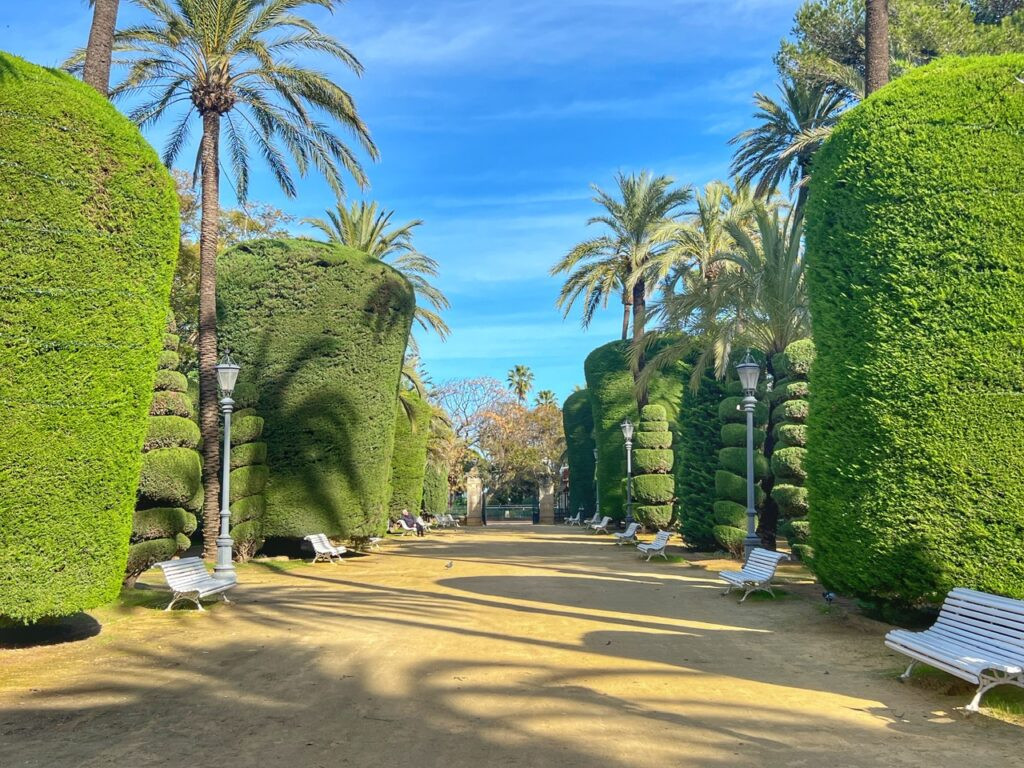
After visiting the fortress, we wandered through several of the waterfront parks, some areas more beautiful than others. For example, this particular section reminded us of a selection of trees planted by Lego people.
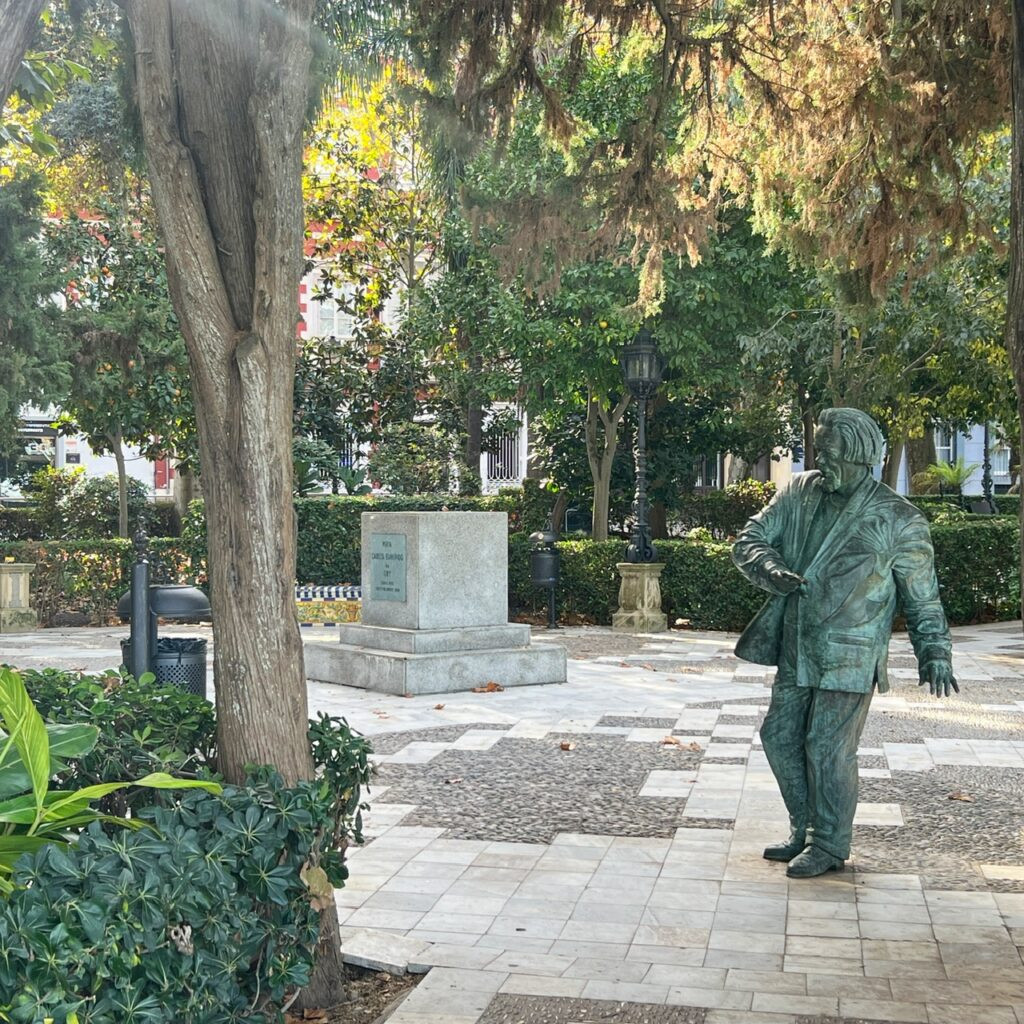
A statue of 20th Century poet, Carlos Edmundo de Ory, is delightfully unconventional. He was a guy who challenged tradition so instead of him standing stone-faced and monotonous on a lackluster pedestal, he has hopped off and appears to be dancing away from it. Seems like our kind of guy!

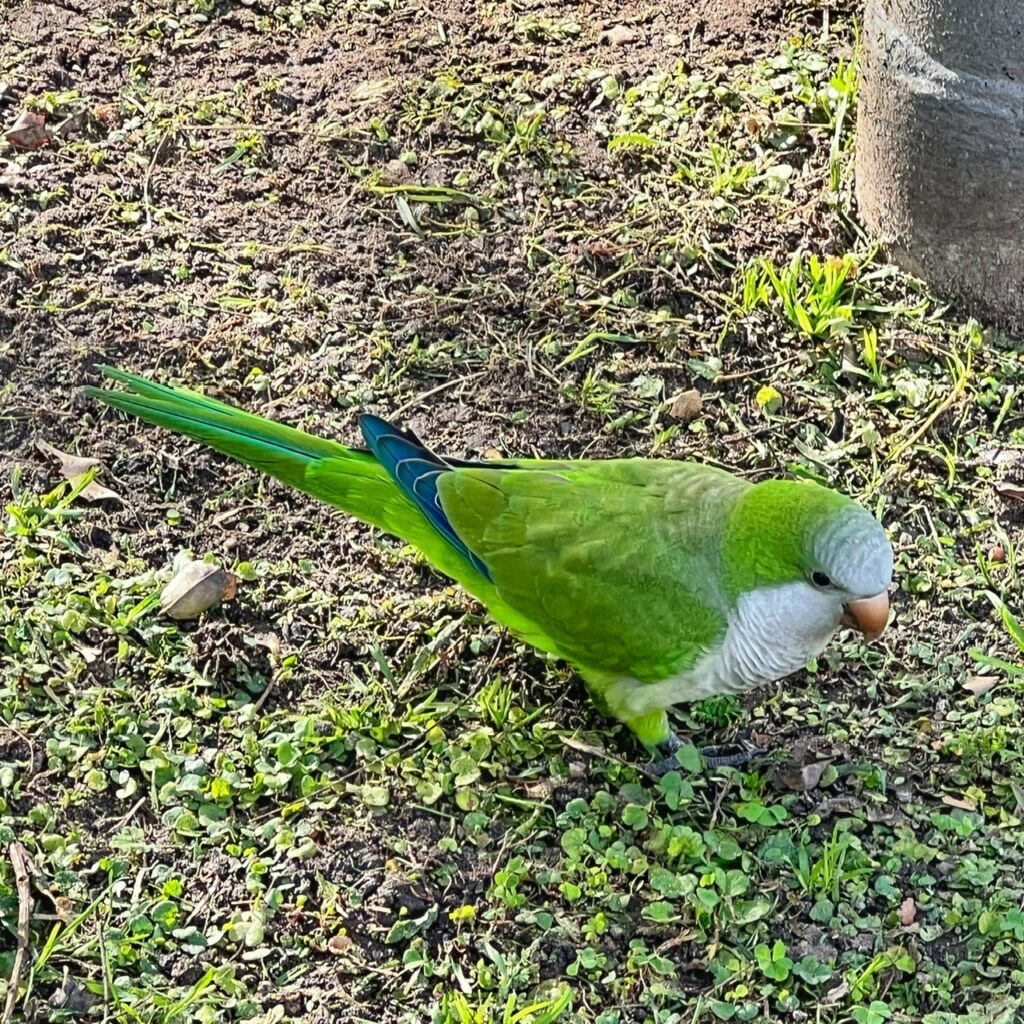
Not to worry….Cadiz has plenty of “boring” monuments too like the 1812 Constitution Monument. Not so boring, however, were the lime-dusted parakeets flitting about nearby.

Also not, this fabulous seaside mural which you can’t miss when taking the ferry in and out of the Cadiz port. It was finished in 2024 and called “Fisherman of Memories” and one of many examples of the developing art scene in the city.


Speaking of taking the ferry, that’s exactly how we arrived from Rota. The 30-minute journey cost just over 5 euros per ticket each way, about $25 for the day trip with the waning USD. The marina of Rota where we stayed for the month. More on that in another post…


