We certainly didn’t get to explore as many small towns or natural attractions as we had originally anticipated during our six-week stay in Bosnia & Herzegovina. Thus, for our last and coincidentally my birthday week, it became the top priority to seek out its wonder as we headed to the charming town of Jajce from Banja Luka. This was after a failed attempt to rent a car on Monday, from which we reluctantly opted for the lofty bus fare and surrendered some of the other destinations that were planned for the road trip. The result? Worth every BAM! (Bosnian Mark)
Jajce is ridiculously picturesque. As if plucked from the pages of a storybook, this spellbinding medieval town features a fortress perched atop a hill. Its imposing fortress wall, walkable and burly, gracefully tumbles to the river below. Within its underground sit haunting catacombs, while pleasant tree-lined paths drift through the landscape. You will also find towering mountains of brightly colored gelato, and a fanciful teal-shaded ribbon flowing through, which ultimately cascades over a 20-meter waterfall in the heart of town, plunging into the Vrbas River below.
But what truly sets this area apart is its unique feature…traditional medieval watermills….undoubtedly the icing on the cake. The final selling point? Not too crowded. Even in August. Yet. But this area is undeniably on its way to becoming a future Mostar. Our only regret is not staying a couple nights as we traveled between Sarajevo and Banja Luka.
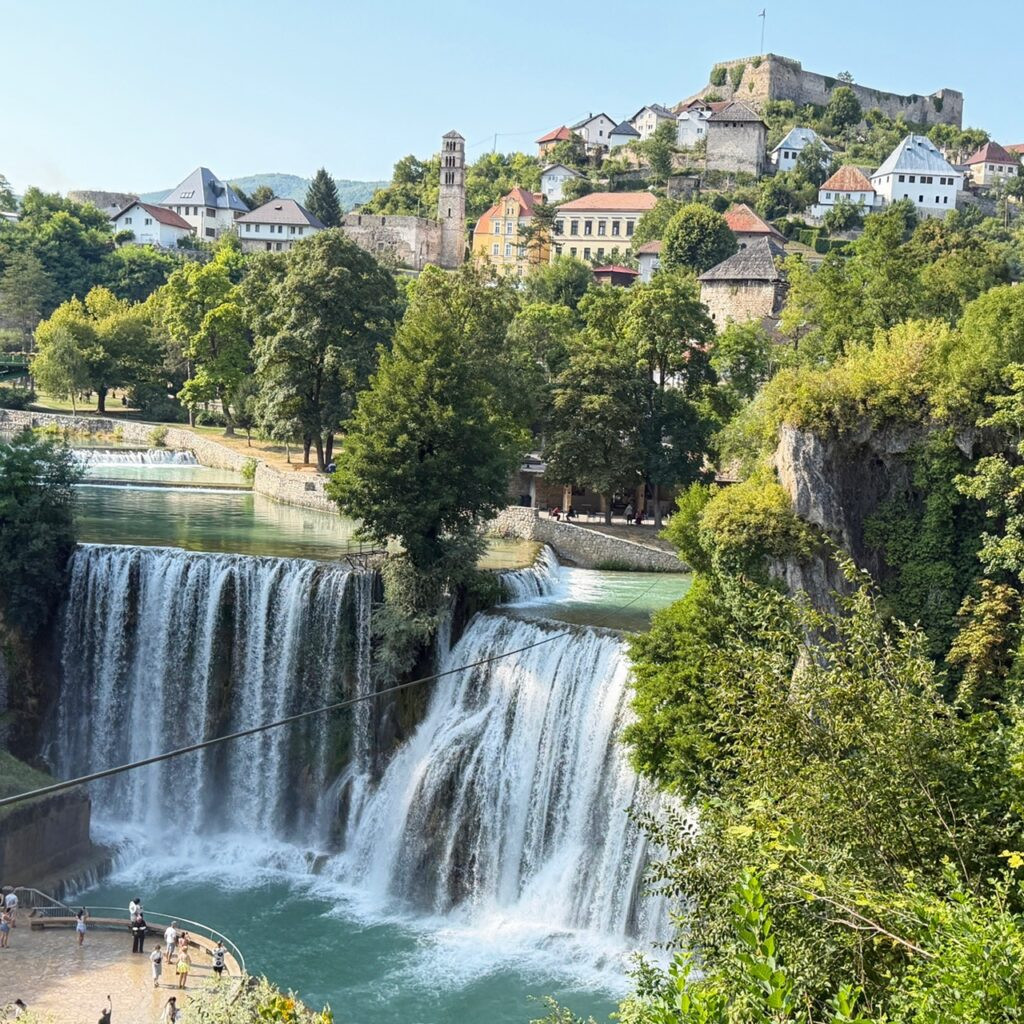
Not sure its possible to have a more captivating setting. Jajce was the capital of the medieval Bosnian Kingdom from 1421 to 1463 and was the last major royal stronghold before the Ottoman conquest.
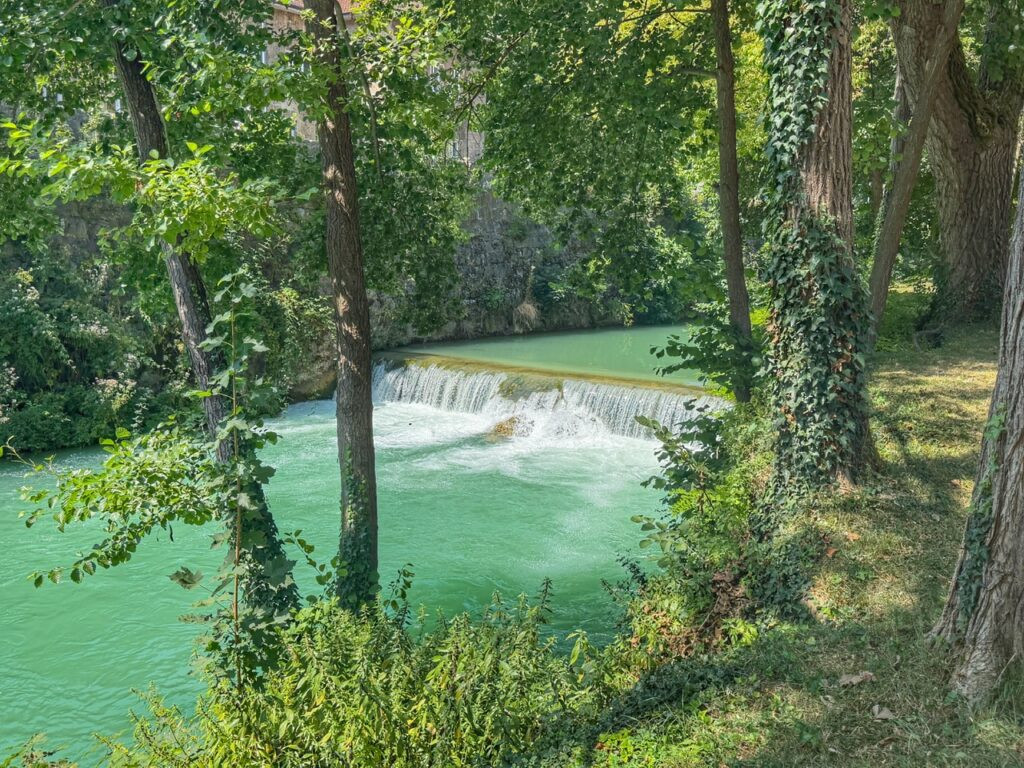
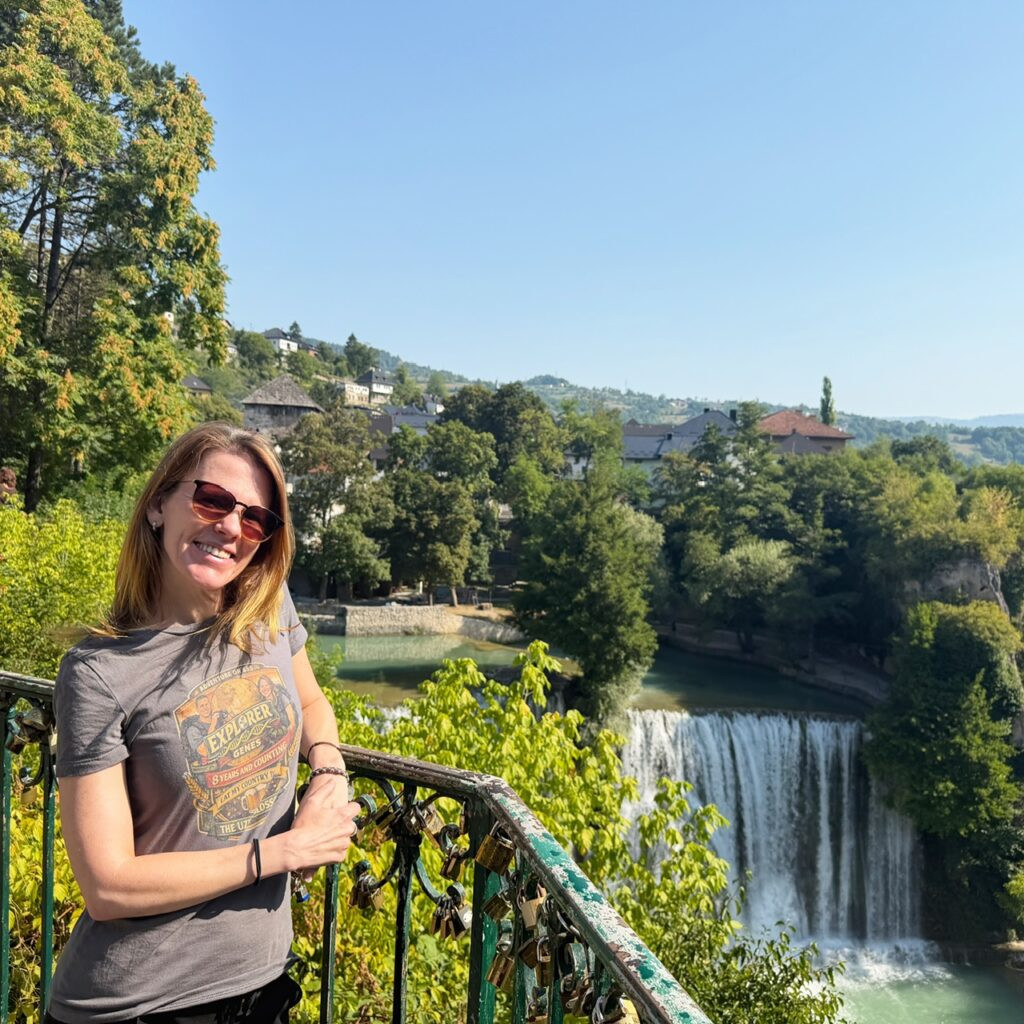
They obviously put Icy Frost Gatorade in that river…..Happy 46th to me, complete with my dork costuming! Now this feels more like it!!
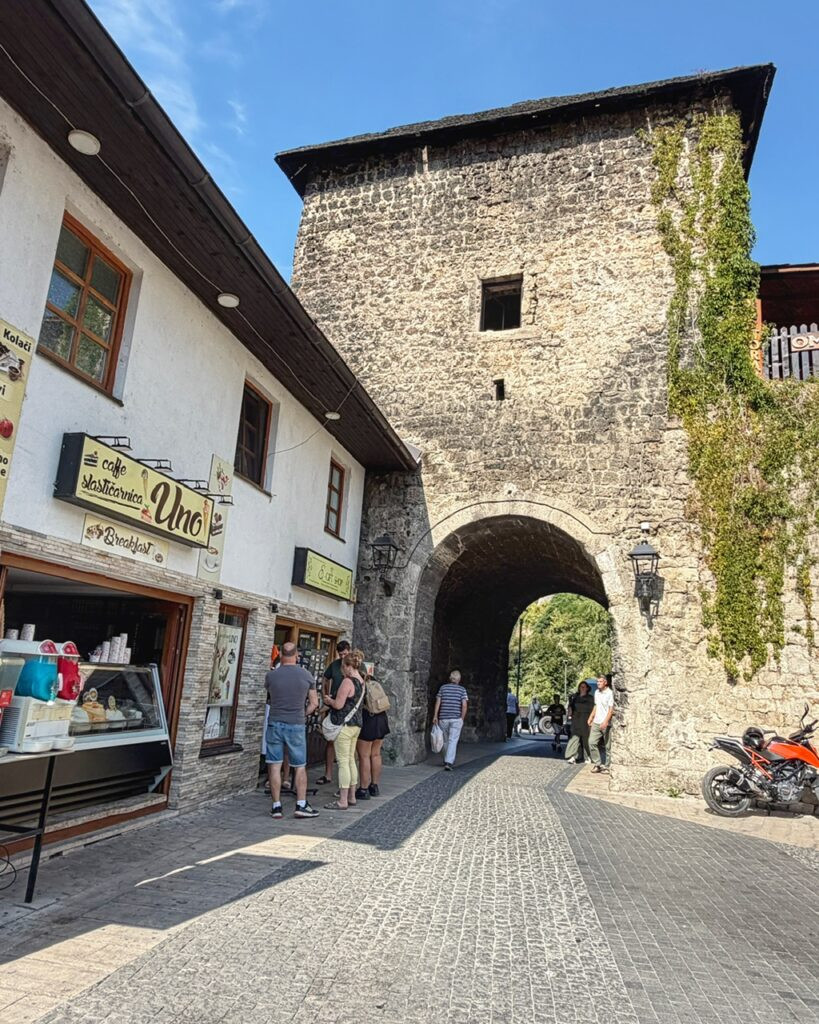
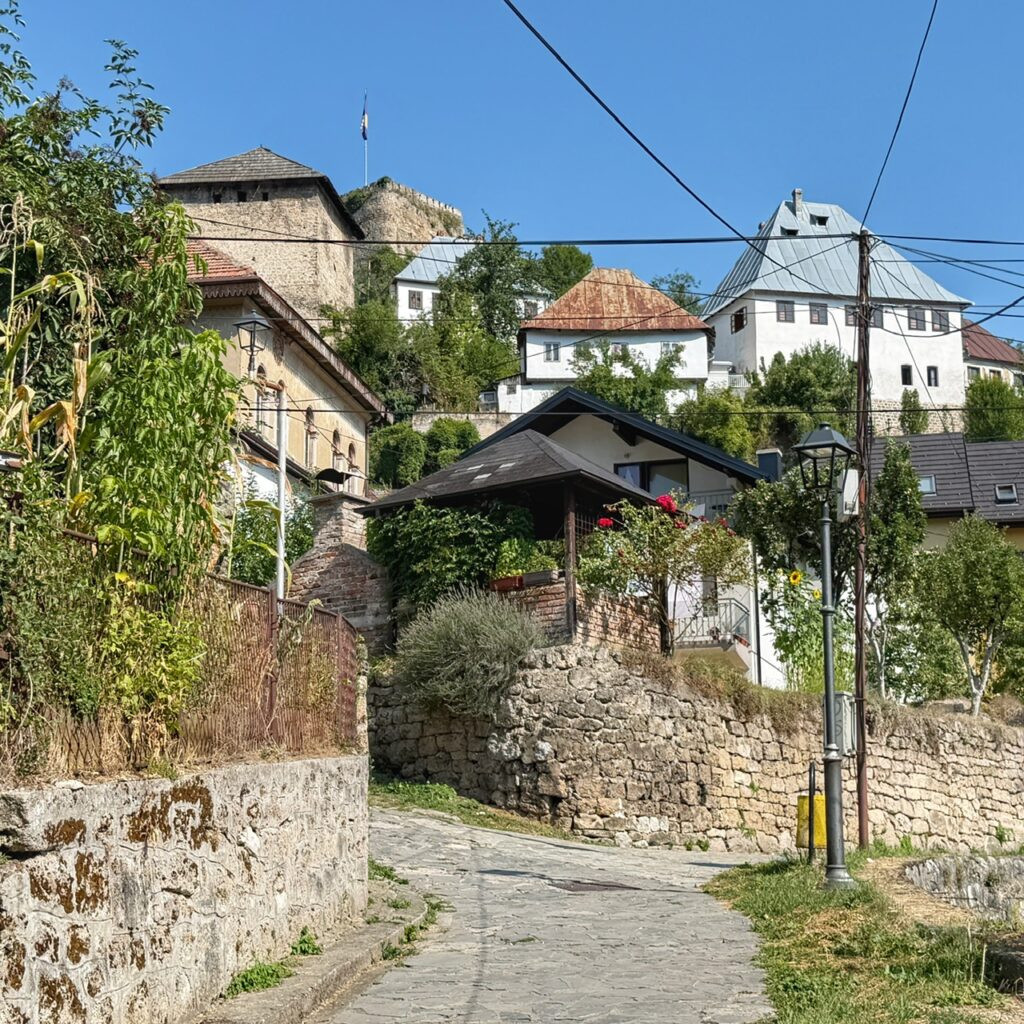
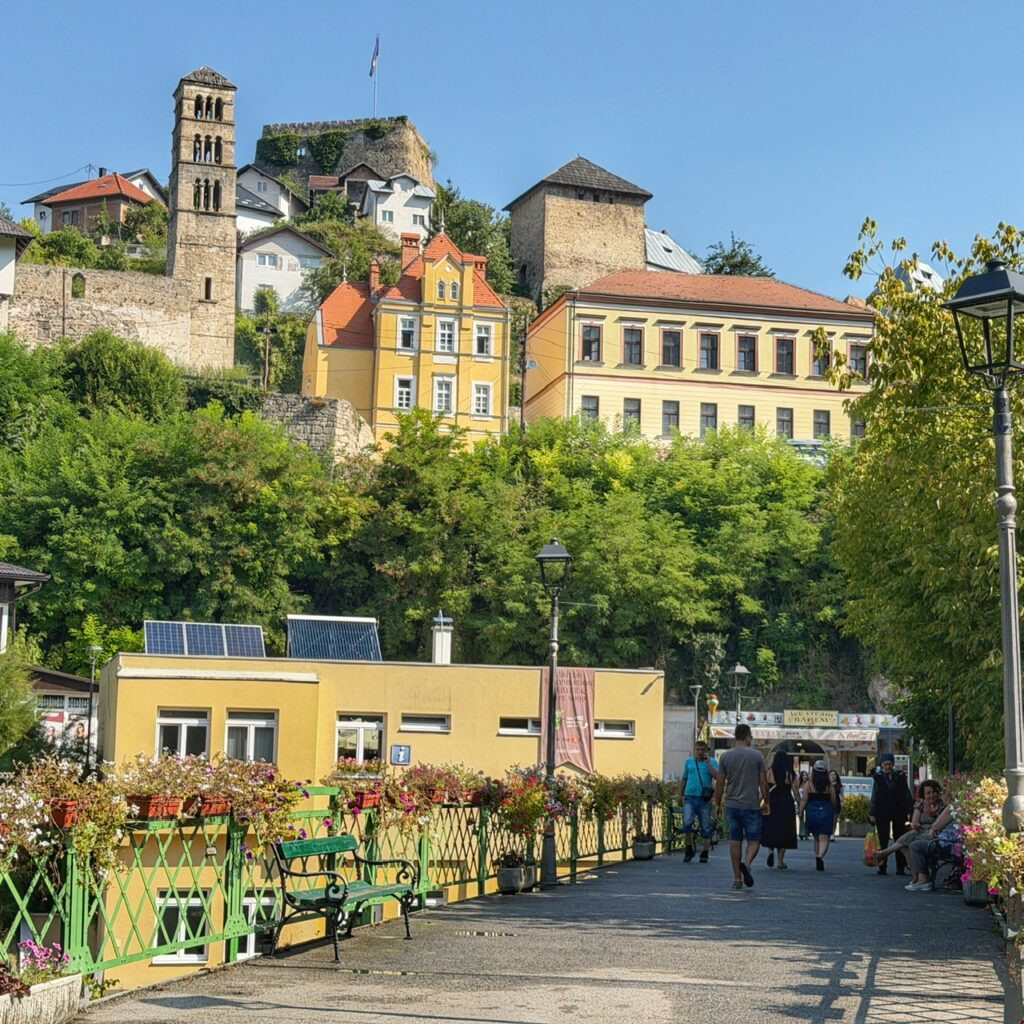
Feels like a scene out of France…with a fraction of the crowds. Naturally, these crowds fanned out even more as we wandered up the hill to the fortress, surrounded by layers of history.
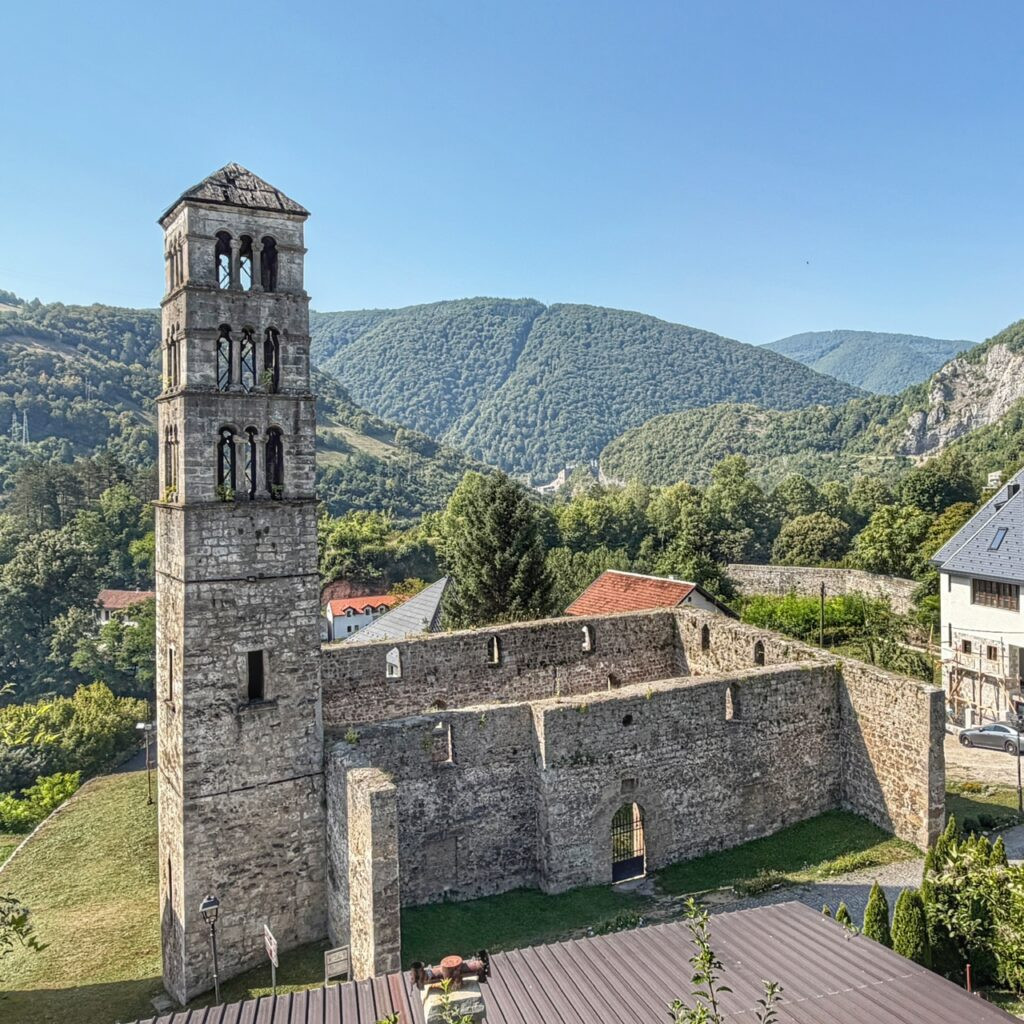
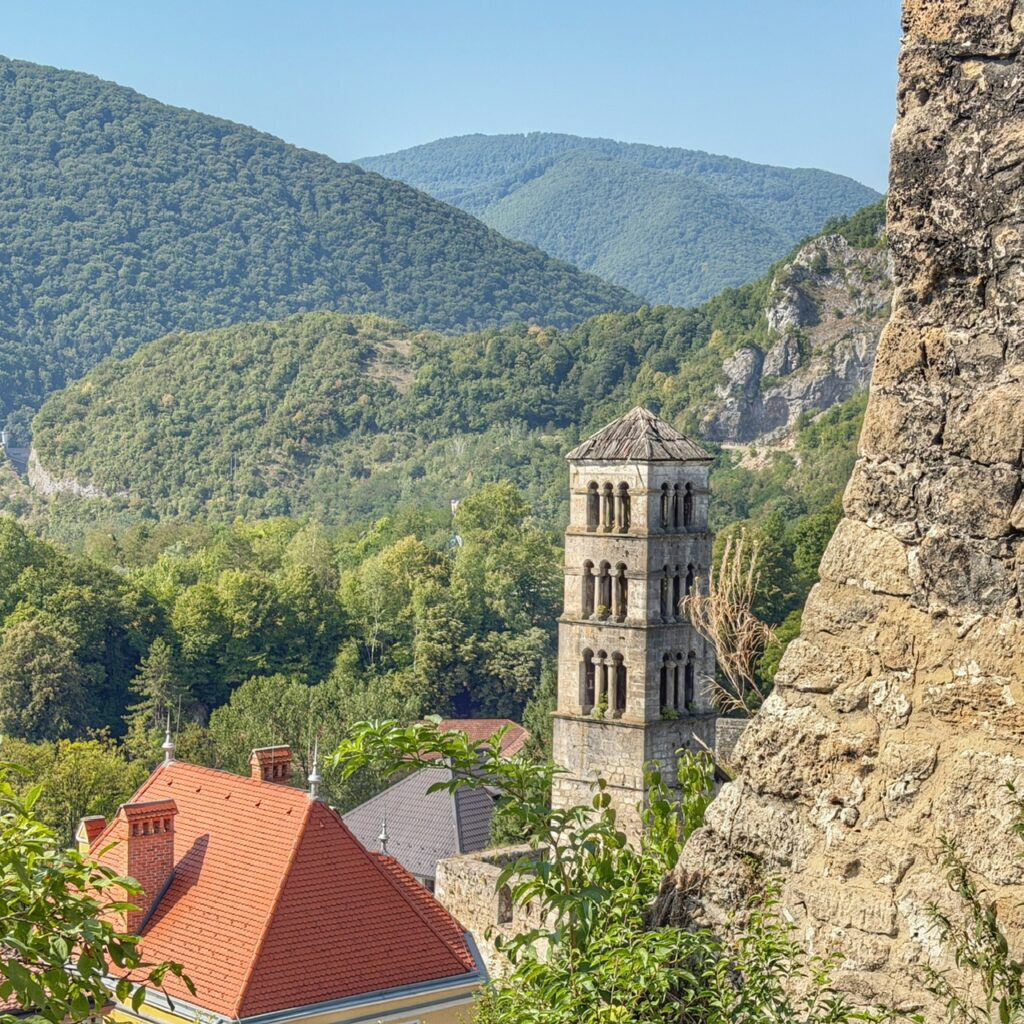
The historic “clock tower,” now sans clock was originally a medieval gate/defensive tower belonging to Jajce’s fortress, rather than a purpose-driven time-keeper. This may have also been St Luke’s Bell Tower, but the information I found was a bit mixed.
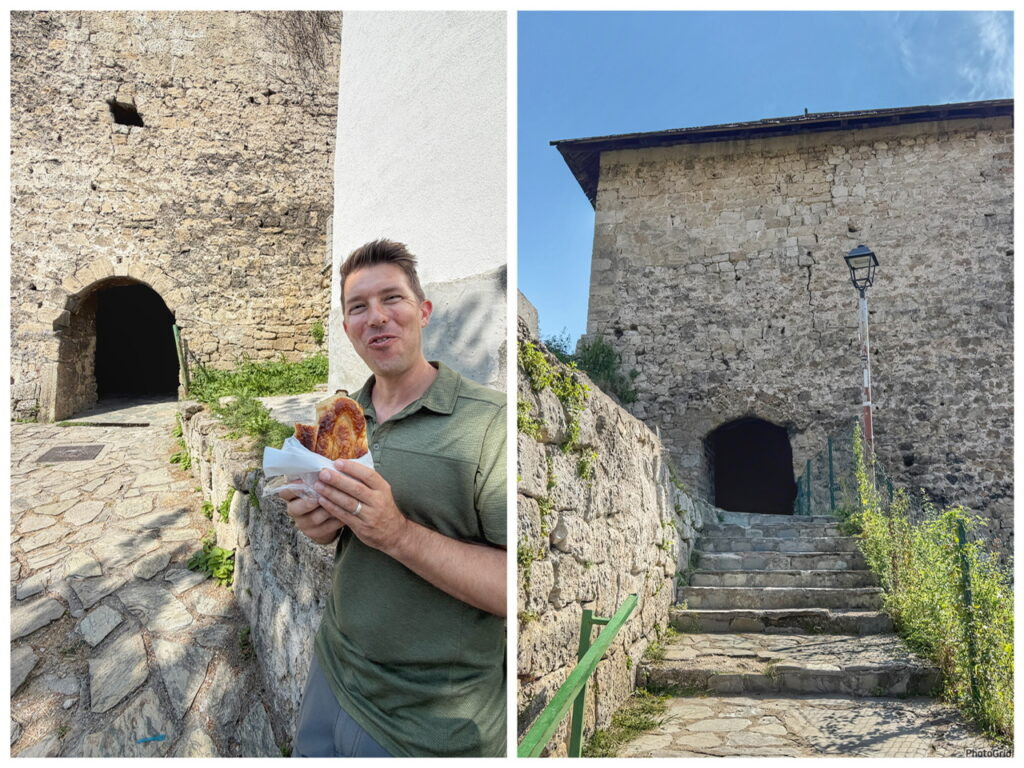
From here we headed through one of the fortress walls and found a perch to eat our breakfast after an early more bus ride. This consisted of fruit and boiled eggs, which we brought from home, and a flaky phyllo banista, as we know them in Bulgaria, or “cheese” pide as it was labeled here in Bosnia. Yum. And with full bellies, the views got even more divine.
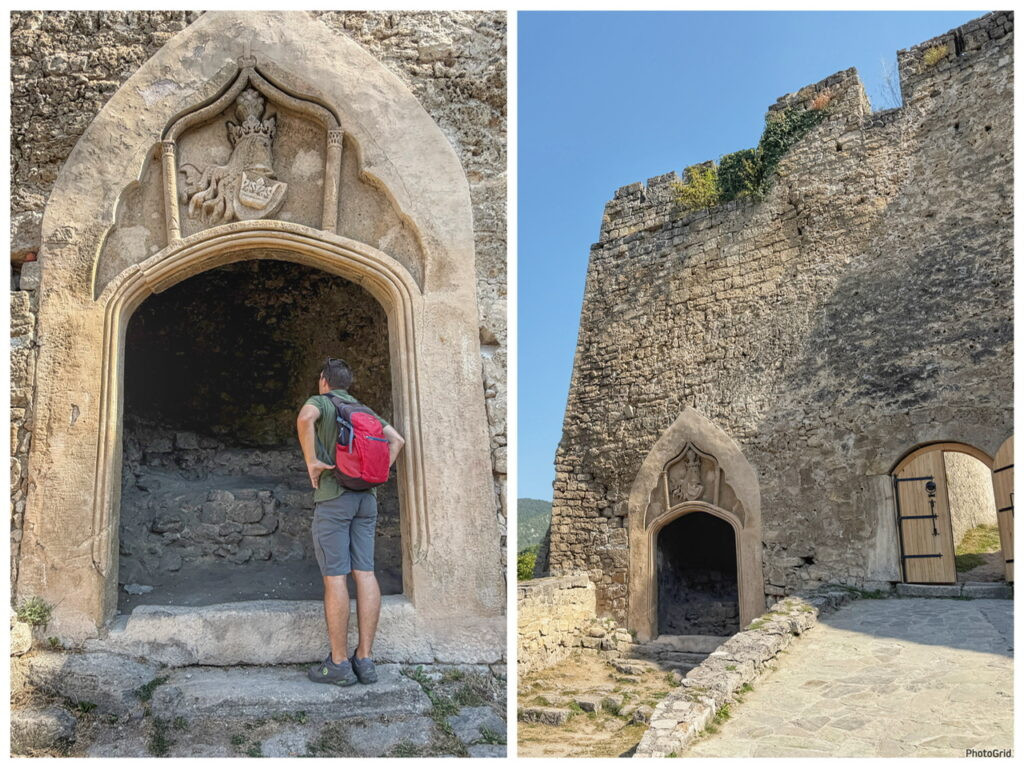
Heading further upward, we made it to Jajce’s fortress which was once the heart of the Bosnian Royal Court, and not just another chock-a-block military fortification. ($3/each)
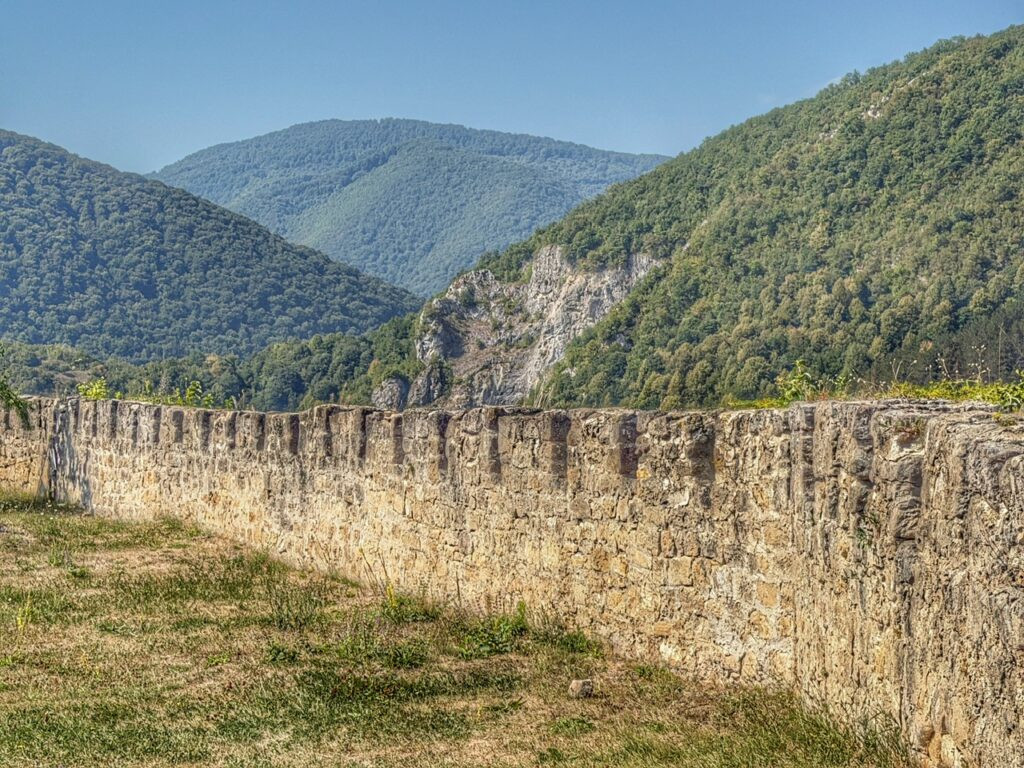
Yes, the walled town had a perimeter of about 1.3 kilometers and its upper zone is described by UNESCO as the feudal and royal court, with both residential and public functions.

It even had a poetic and slightly dreamy apple tree dropped right in the middle.
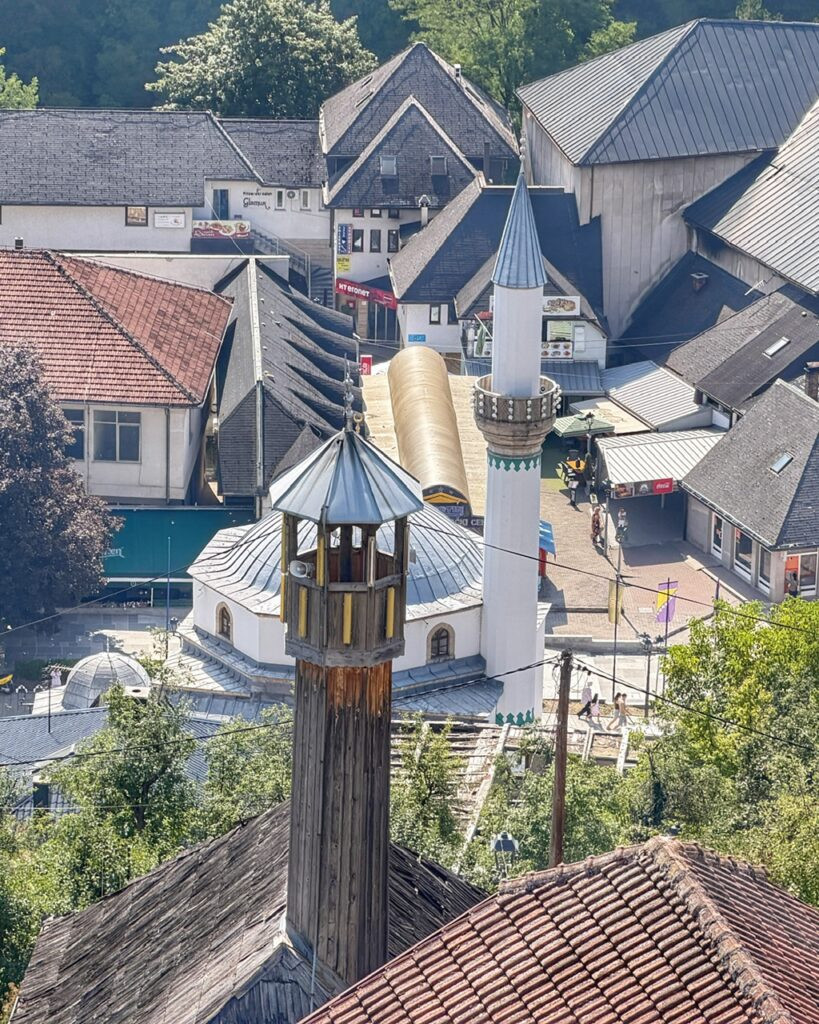
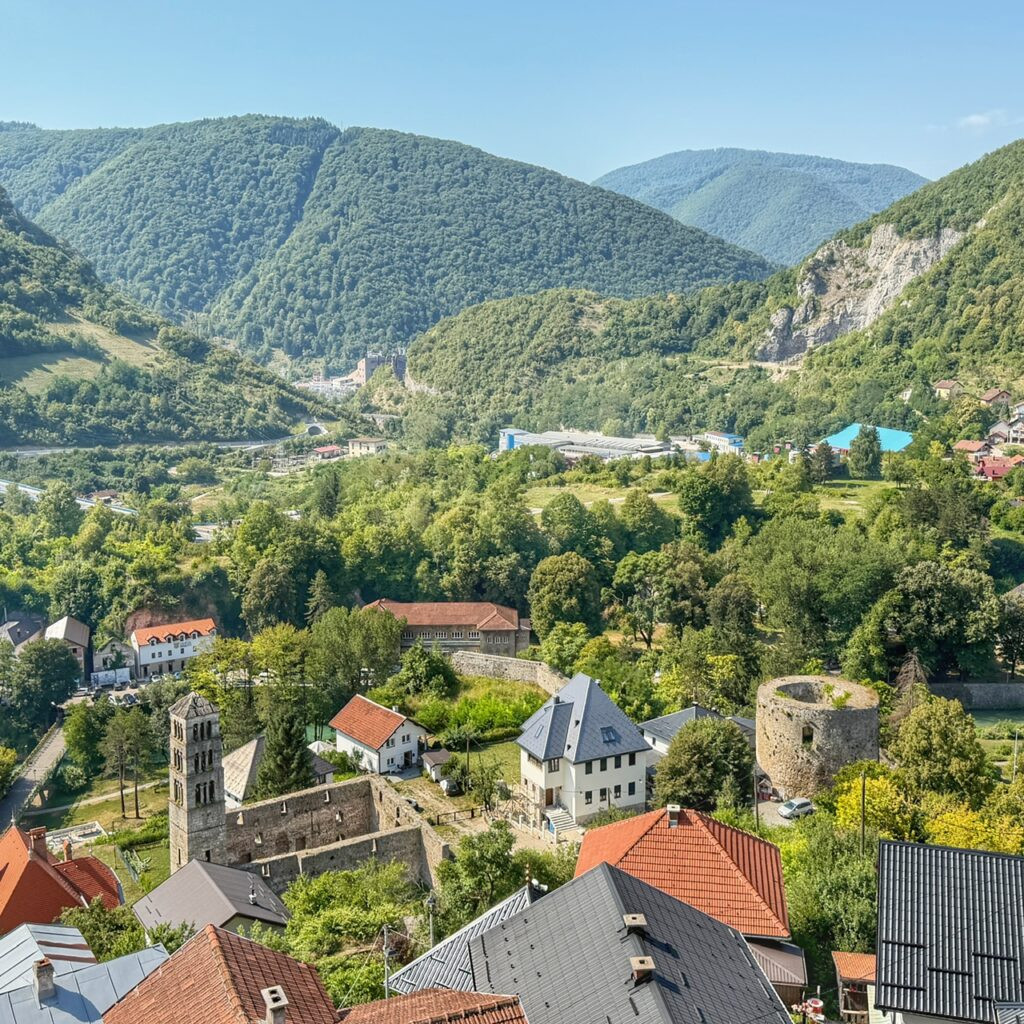
The town below presents a captivating tapestry of history, particularly its minarets. With photo opps like these, this town also offers some reminders of Počitelj, another Bosnian favorite we visited on our 2019 adventure.
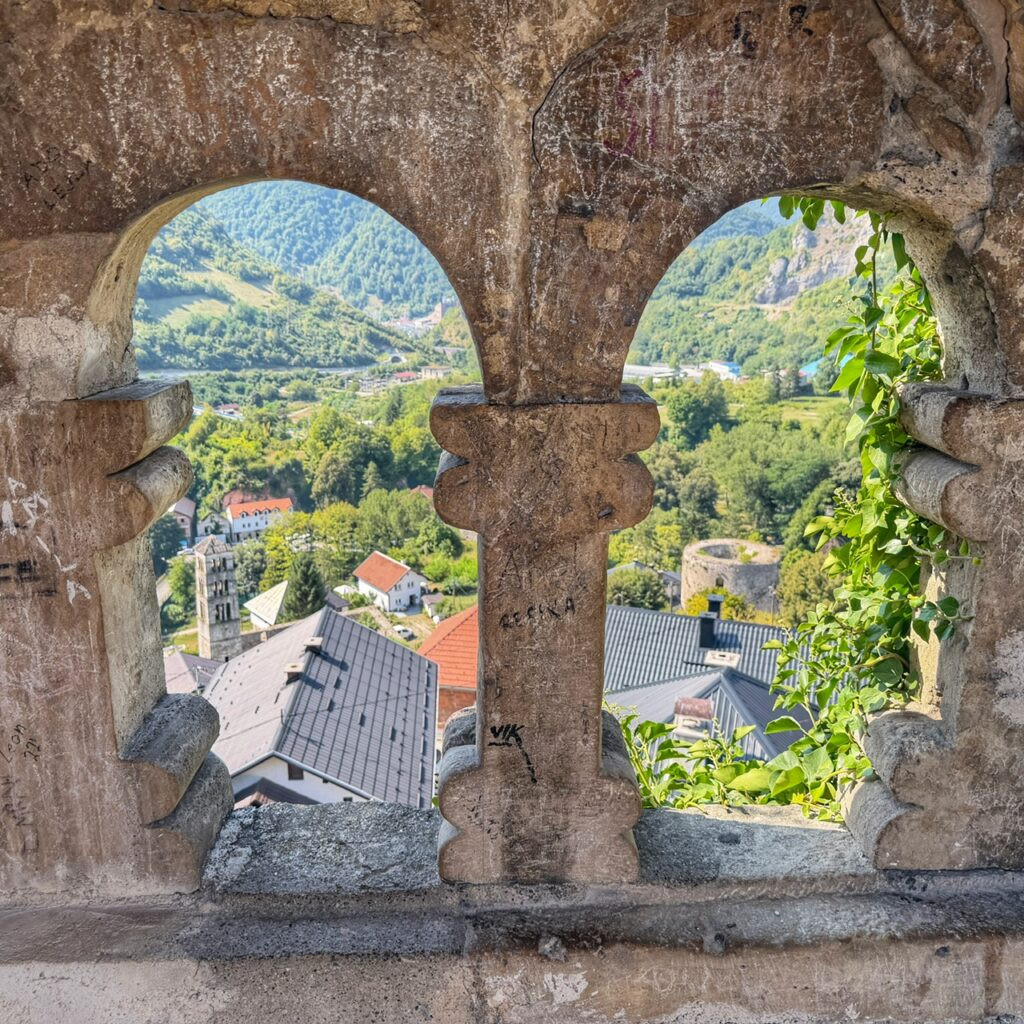
Among the town’s other landmarks is the Bear Tower, a rounded and robust structure primarily serving military purposes. However, it harbors a dark legend that speaks of live bears being confined within its walls, who apparently indulged in the entertainment and cuisine of condemned prisoners. (Google Local Guide)
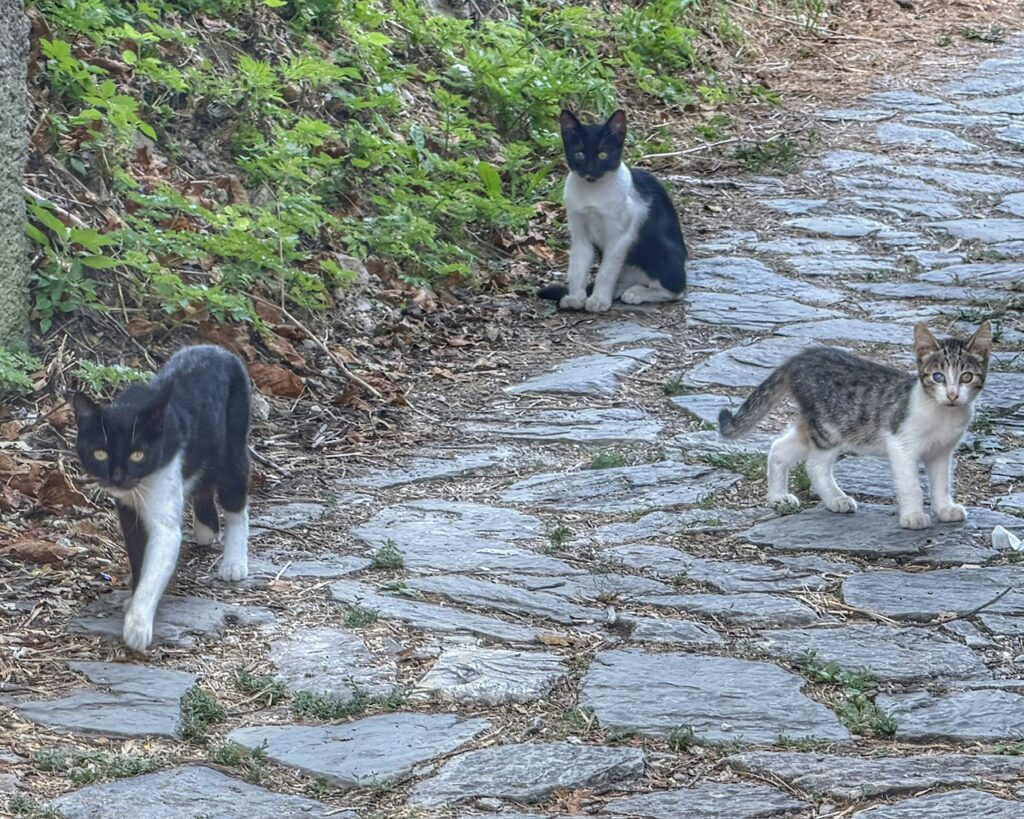
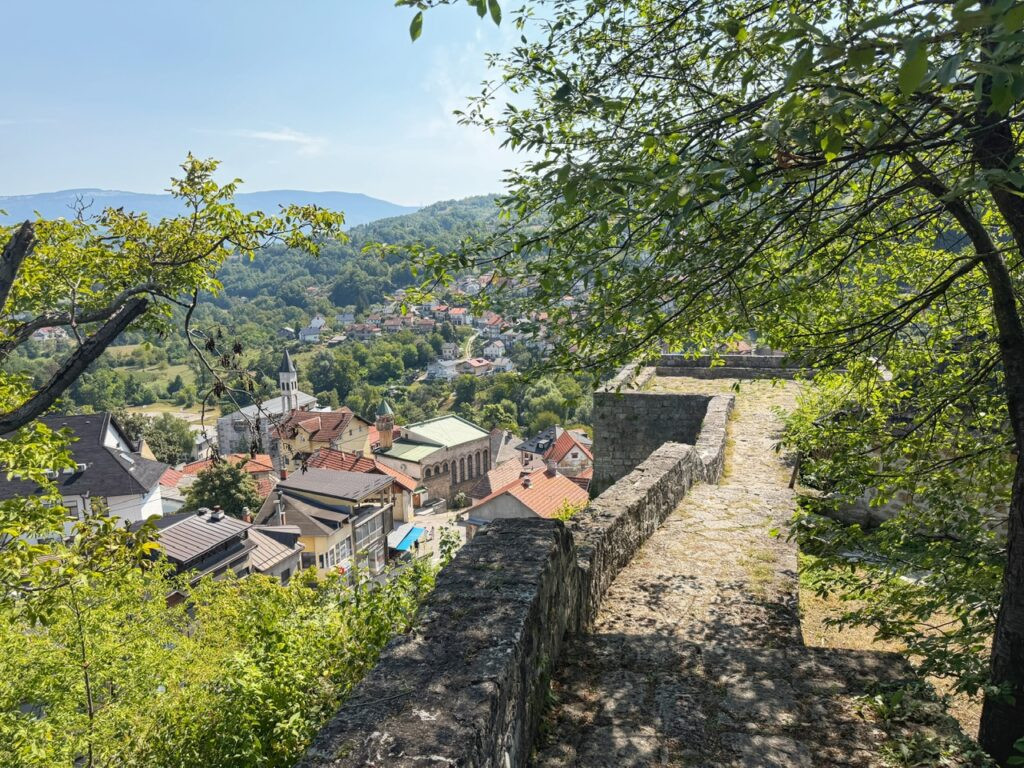
Heading back through the old town, we met a whole gang of carnivores before we reconnected with an entire walkable section of the wall snaking downward. This made us chuckle at all the suckers paying 35 euros to walk the city wall in places like Dubrovnik right now.
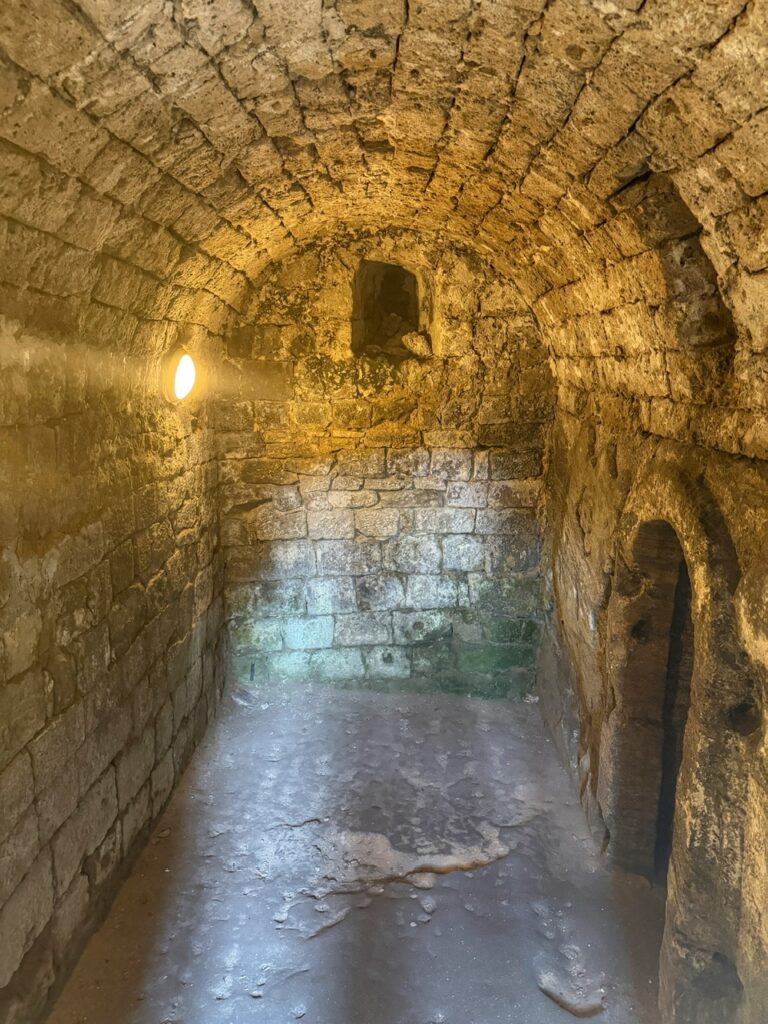
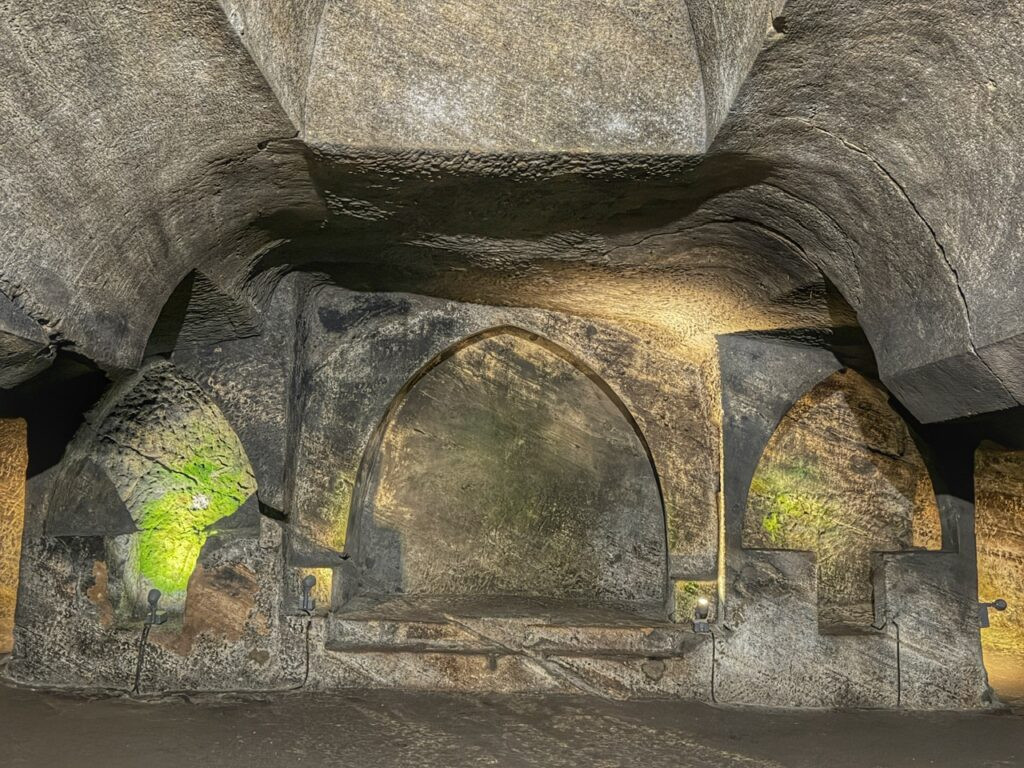
Moving on, we made our way to the refreshingly cool Catacombs, also $3/person. Unlike the maze of underground burial tunnels in other European cities, this was actually a small underground church and crypt carved directly into the living rock, dating to around the turn of the 15th Century.
It was built by Hrvoje Vukčic Hrvatnić, a powerful Bosnian duke so he would and his family would have a posh place to lay his prestigious bones in the afterlife. But the fascinating twist is that, nobody was ultimately buried here. The actual church has a Romanesque architectural concept, a Gothic-style vaulted ceiling, burial niches along the sides, baptismal features and most intriguely…

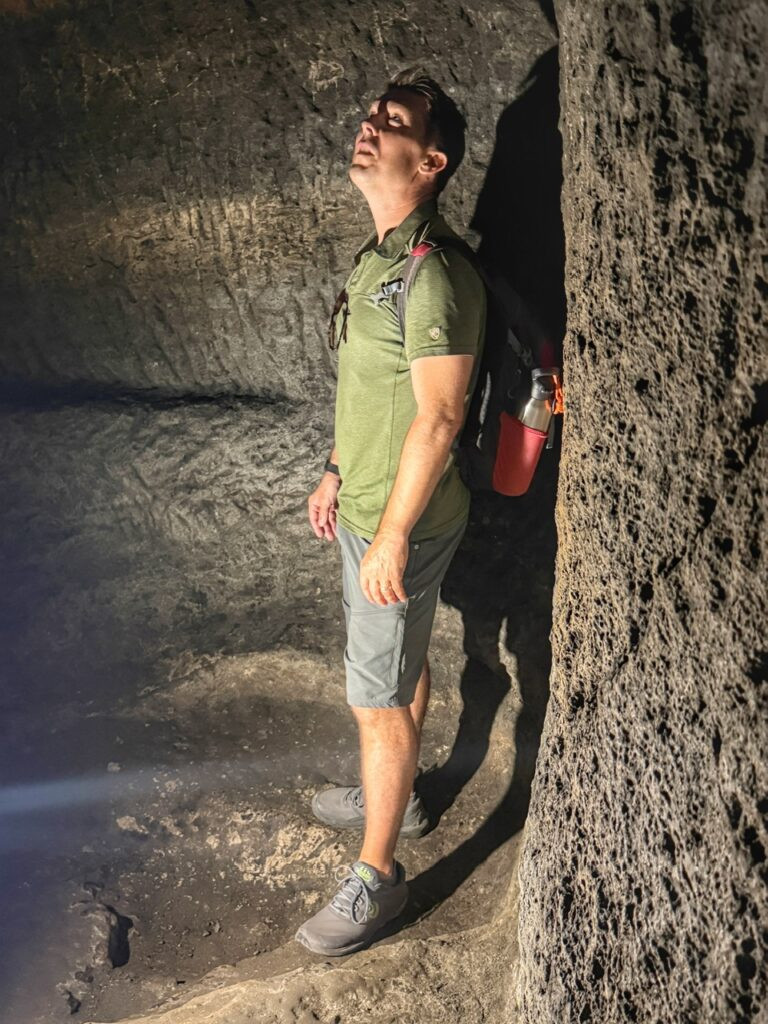
….a lower crypt. The whole things was chilseled into rock rather than from individual blocks…which being a crafter, Greg always finds particularly intriguing.

What do I find particularly intriguing? Watermelon gelato. It’s something that had been tempting me repeatedly throughout the Balkans and I usually turn it down in lieu of something more chocolatey. My first instincts were unsurprisingly correct. Watermelon ice cream tastes like a lip-puckering and synthetically injected jolly rancher. Ick. (Note: this is two separate cones back to back though it looks like three enormous scoops.)
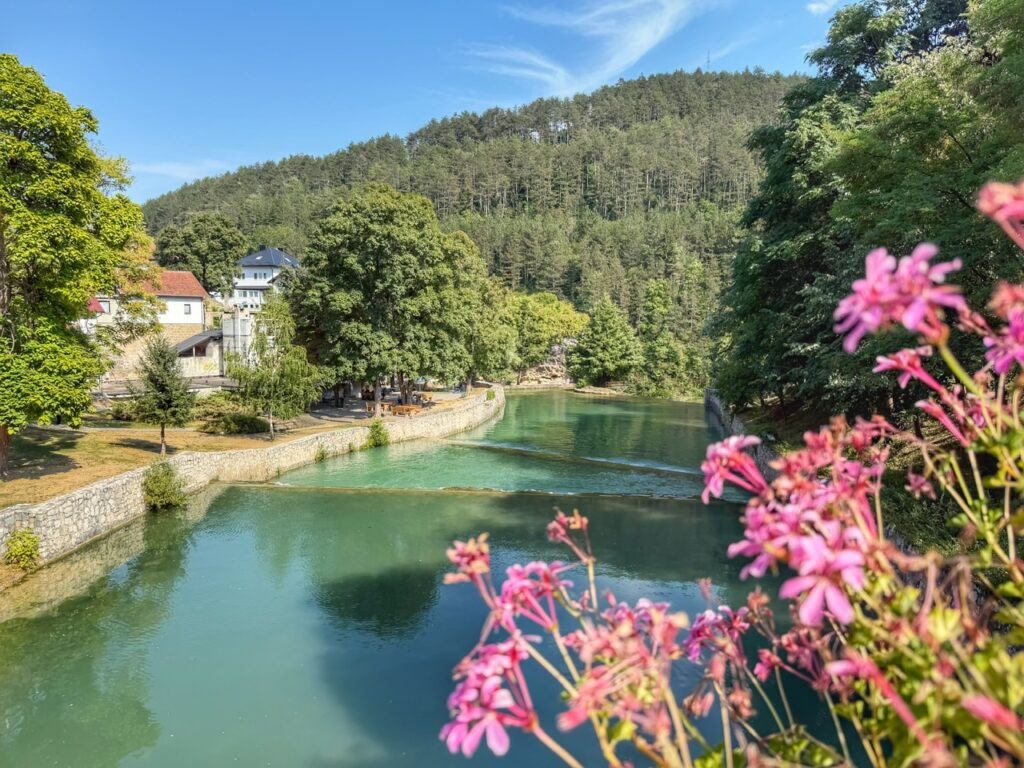
After that order of critical business, we had one more to attend to…following the dazzling waterway down to official postcard viewpoint of the town, where they laughably wanted to charge $6/person.
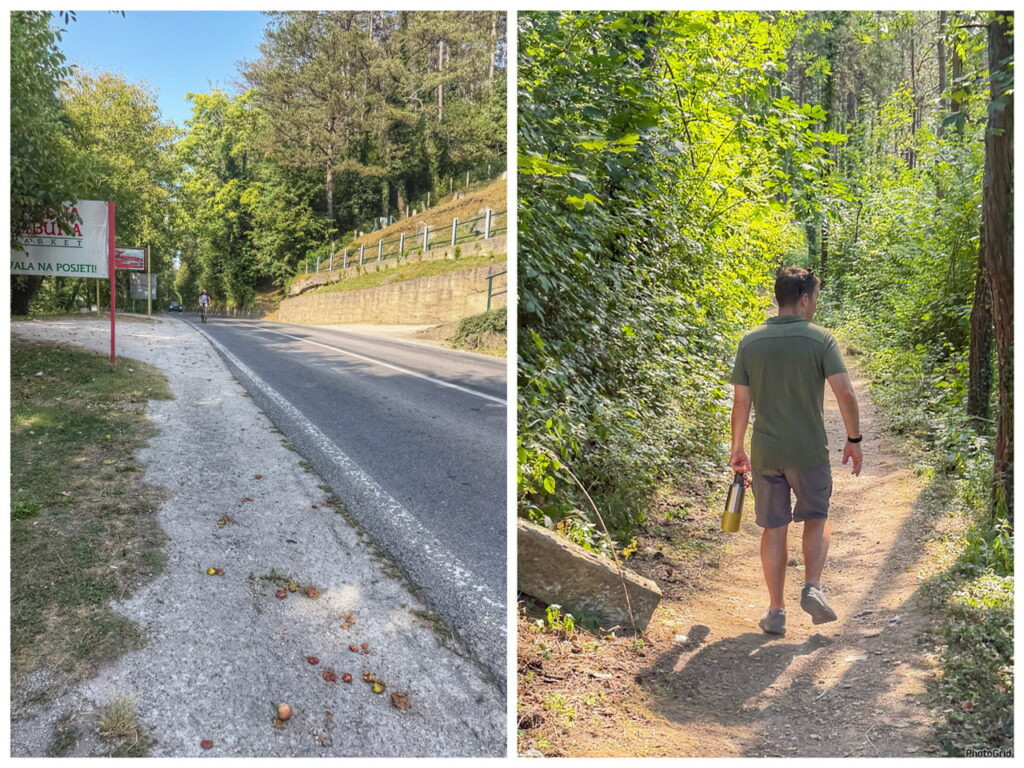
Ummm…no. We instead sauntered about 20 minutes left past the bus station, over the bridge, up the hill alongside the road with no shoulder, and down a forested path….
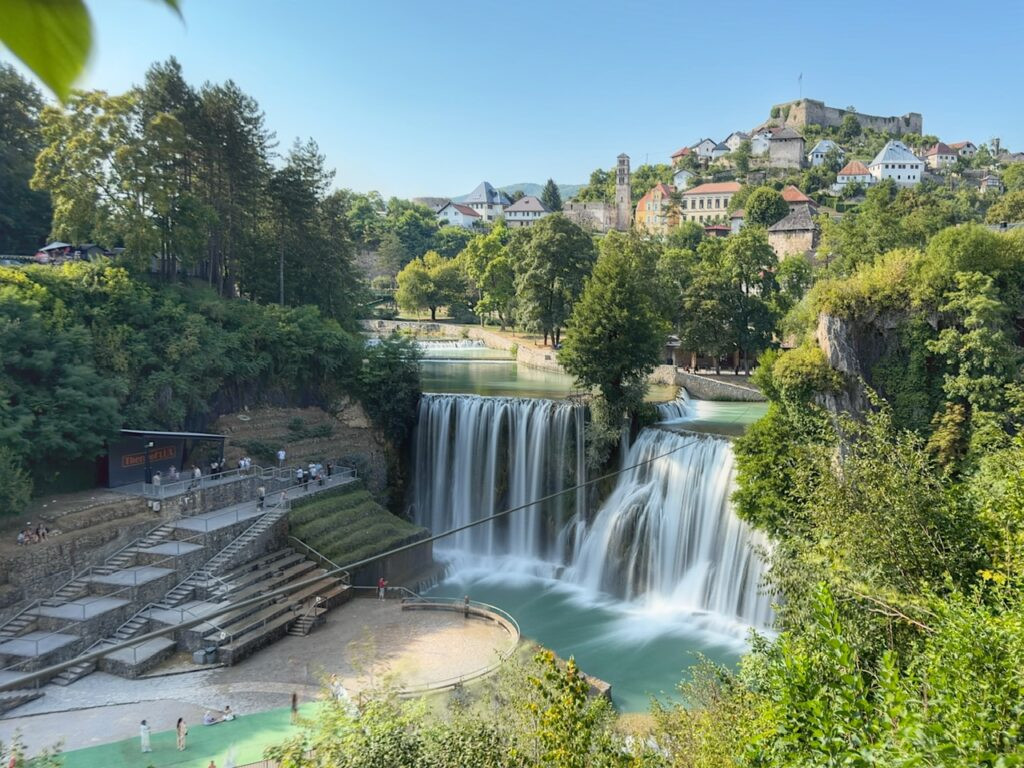
…where we got an even better view of what the tourist center brochure called “the 12th Most Beautiful Waterfall in the World” than those who accessed the paid concrete platform below, for free. Because that’s what we do. Haha.

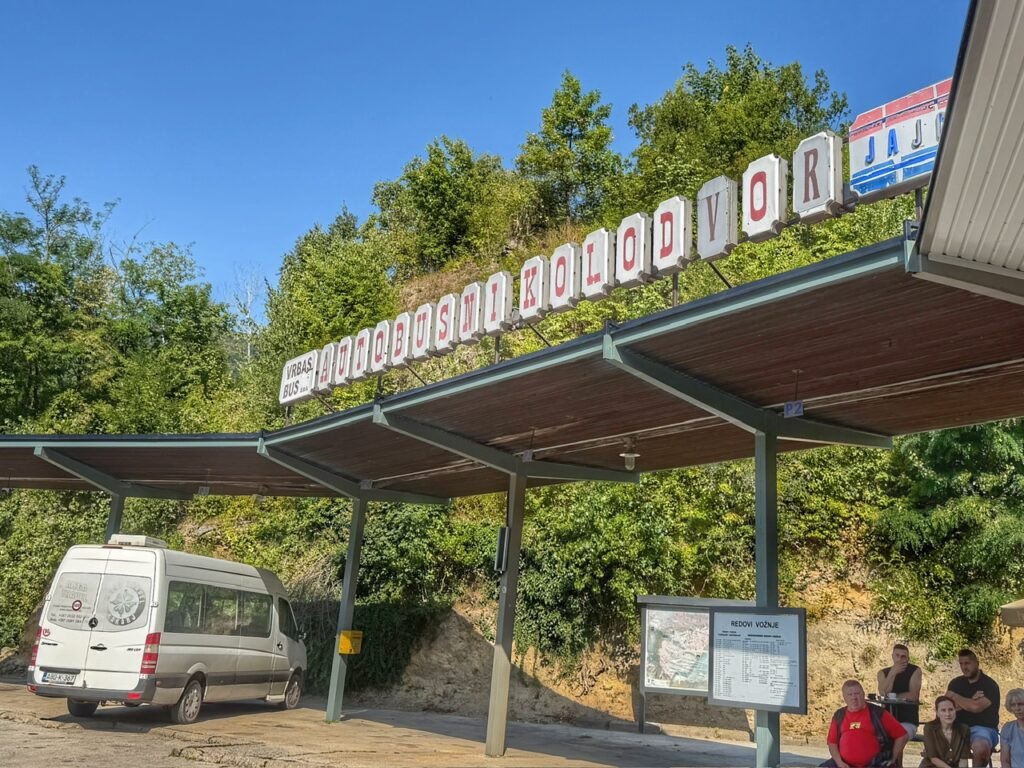
After all, we had to compensate for the steep $21 round-trip tickets to make the 1.5-hour journey to Jajce in the first place.
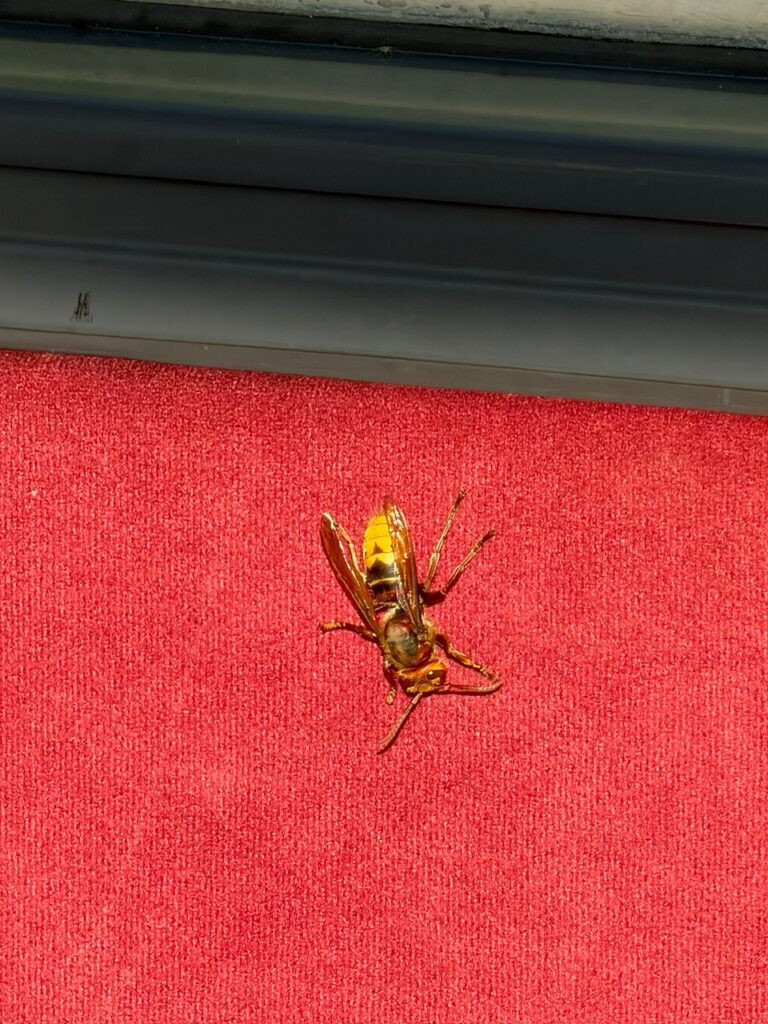
However, we were also rather inconvenienced by a potentially Greg-killing jumbo yellow jacket that was cruising up and down the aisles and walls nearby. Fortunately, we weren’t entirely disappointed when someone accidentally squashed him with their hiking boot.
The Medieval Mlinčići Water Mills
Just when you think Jajce can’t get any more enchanting, about 5k upriver the medieval millers boosted it up a notch by plopping down a type of site we had never seen before….The Mlinčići Water Mills, which remarkably date back to 1562. Their sole purpose was surprisingly not for social media hits, but to house a millstone and water-powered mechanism for grinding grain. Water rushing beneath the mill turned a wheel, which turned the grinding stone above. Pretty ingenious for something requiring essentially no fuel or electricity.
The water mills are further accentuated by an area featuring 50 shades of blue (and green), inviting plunge pools, a plethora of tumbling waterfalls and a special birthday lunch next to some of them…
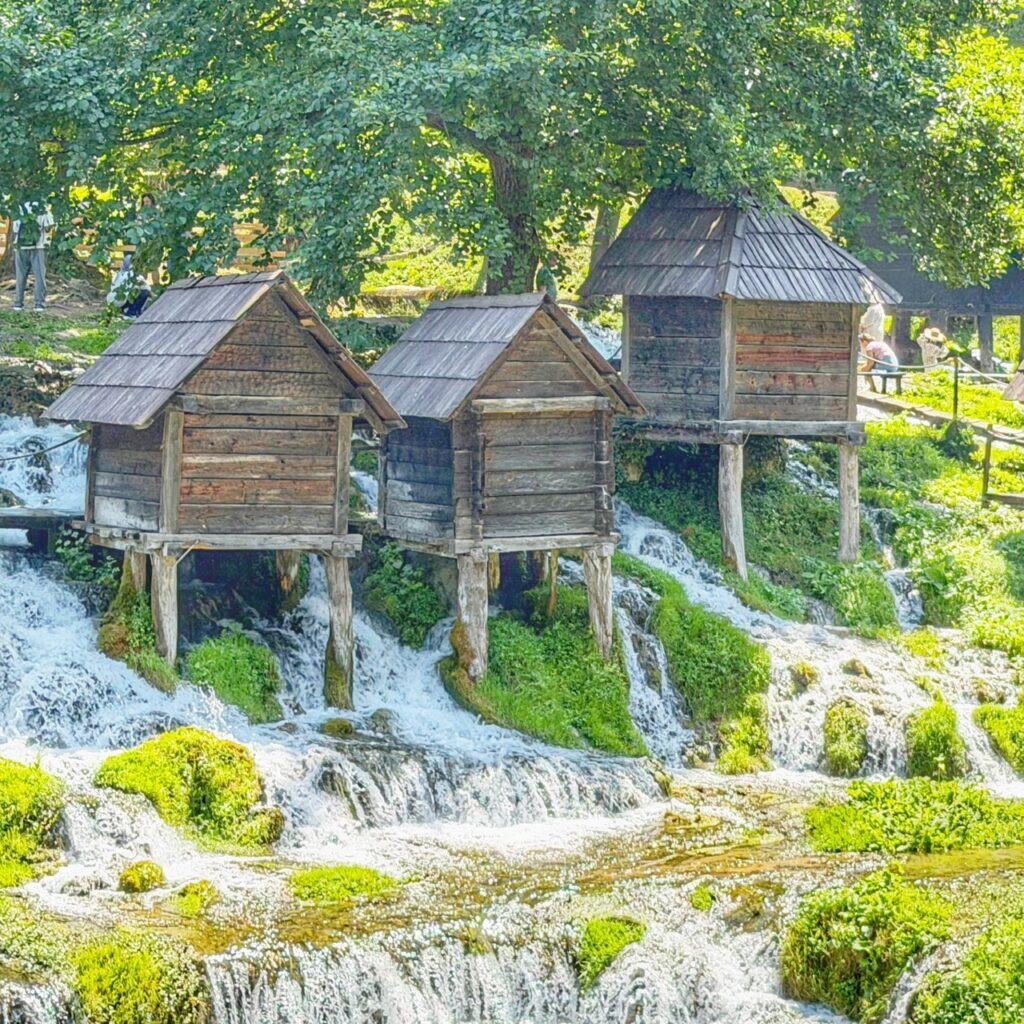
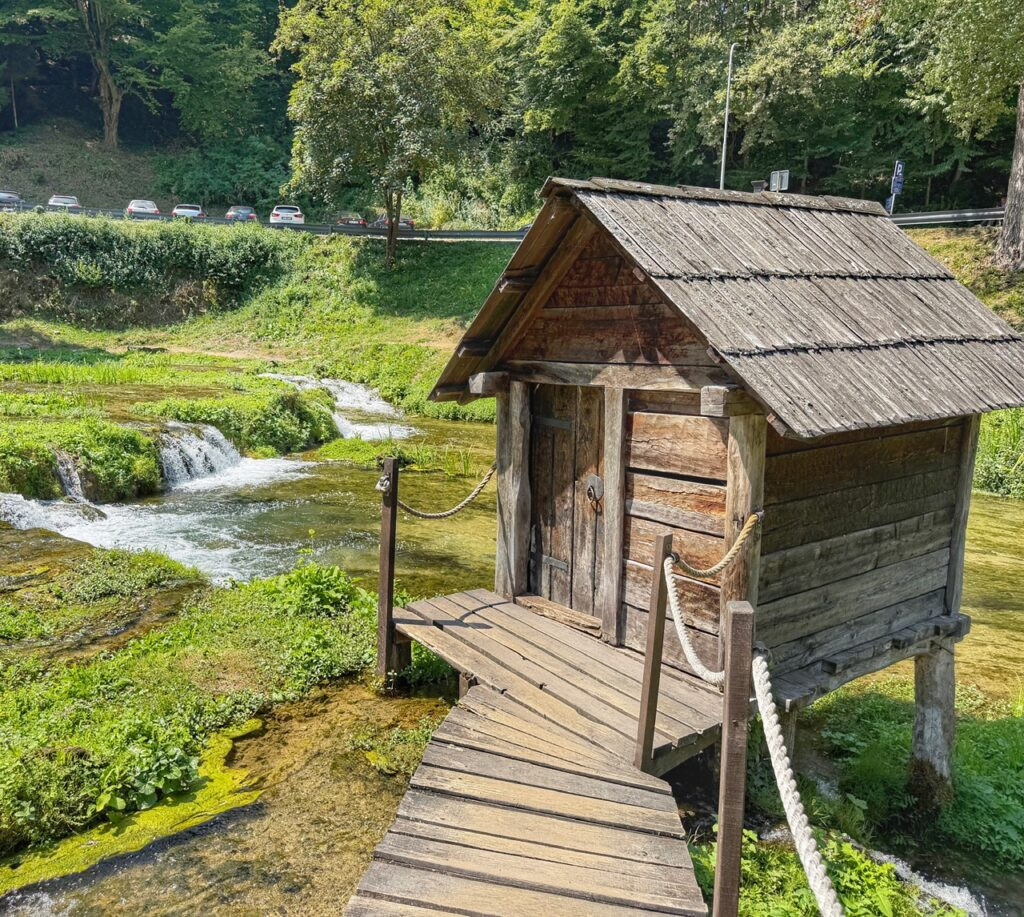
What’s especially magical about them? They’re quite tiny, looking more like little wooden ski cabins or playhouses than water mills. And with the emerald green and babbling waters as backdrops, they could even be fit for a leprechaun.
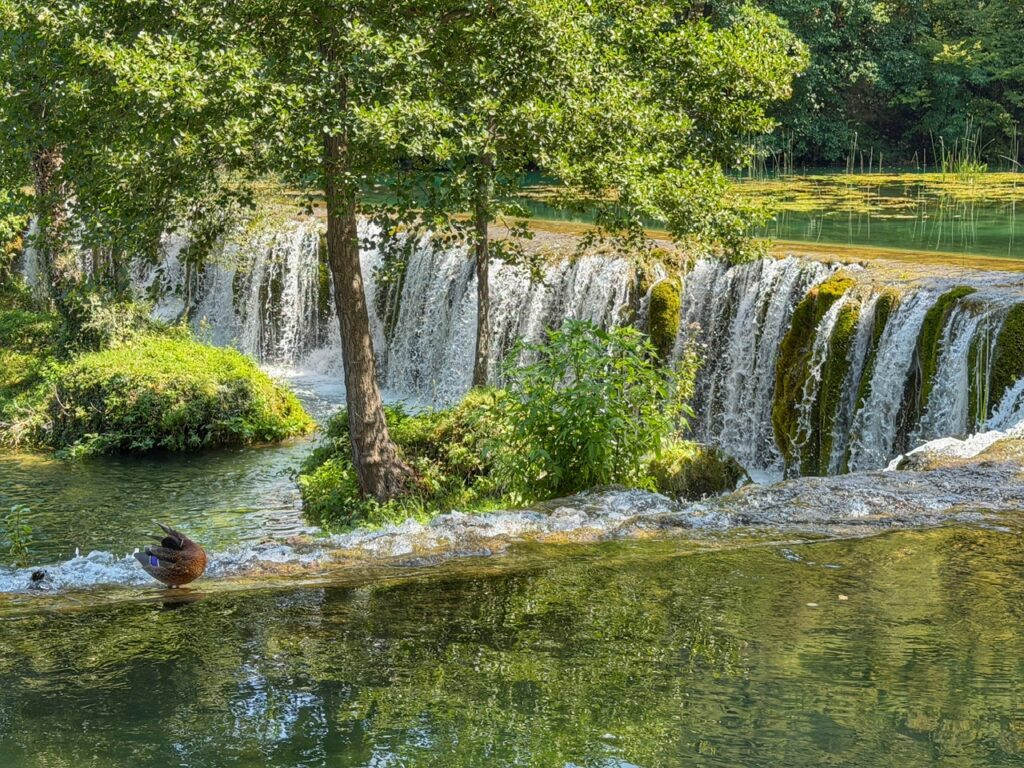
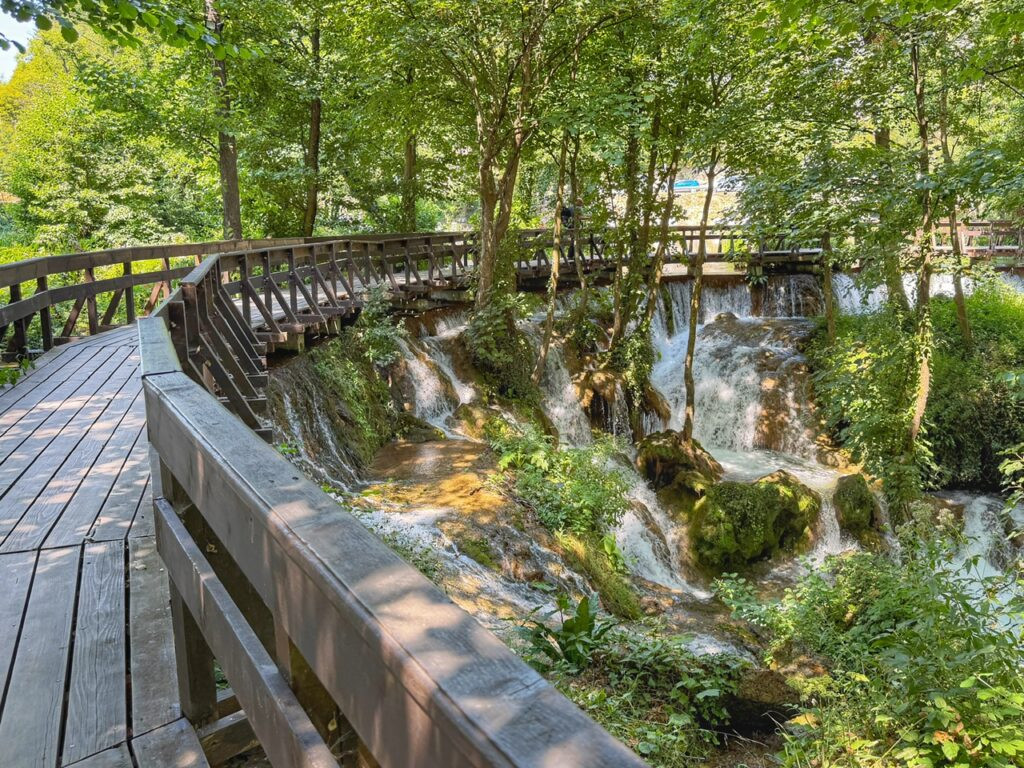
Water, water, everywhere, even plunging down a cliff directly underneath a beautiful pedestrian bridge, which meanders through a river forest.
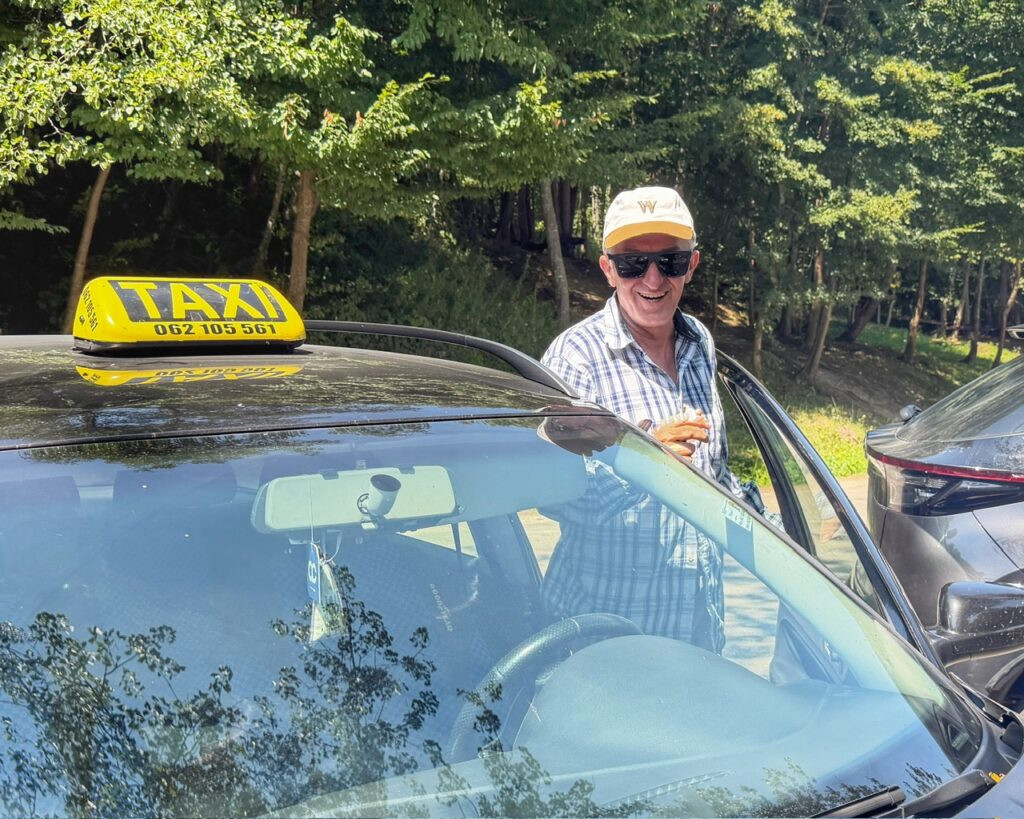
To get there from Jajce, you can walk an hour and 15 minutes, or do what we chose…take a taxi from the bus station and then walk one way back to see all the sites. Fortunately we had an honest and friendly taxi driver who charged us what the tourist center said was the correct amount (10 BAM/$6).
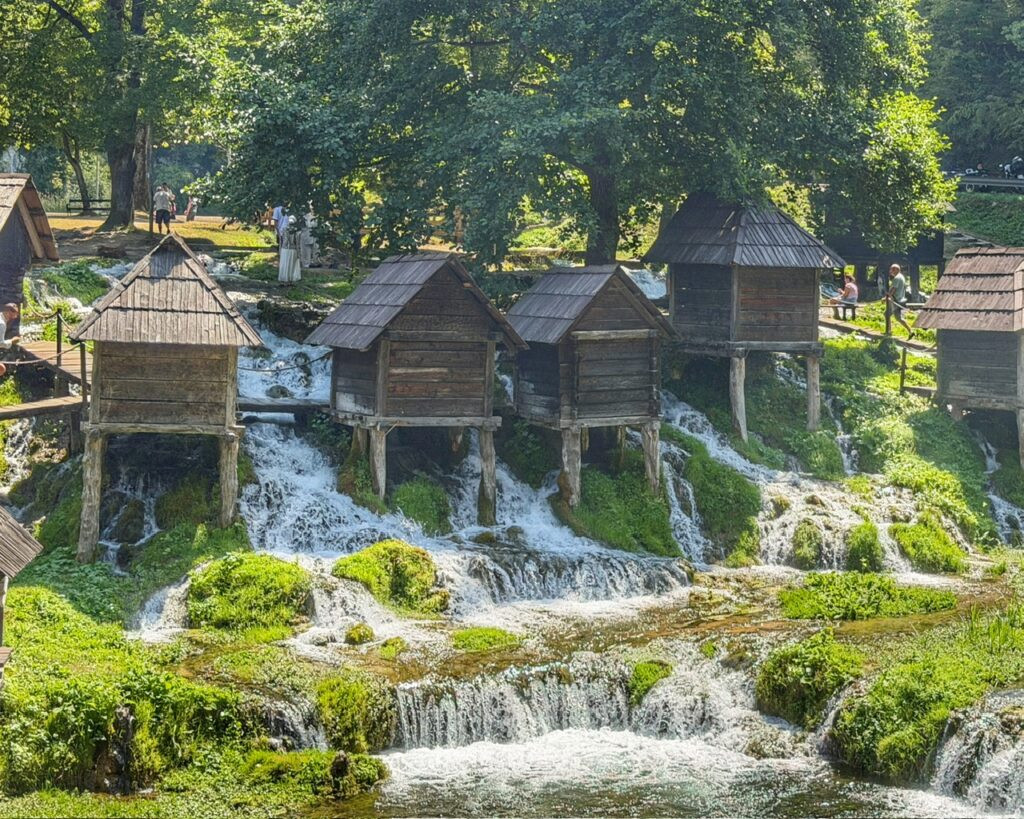
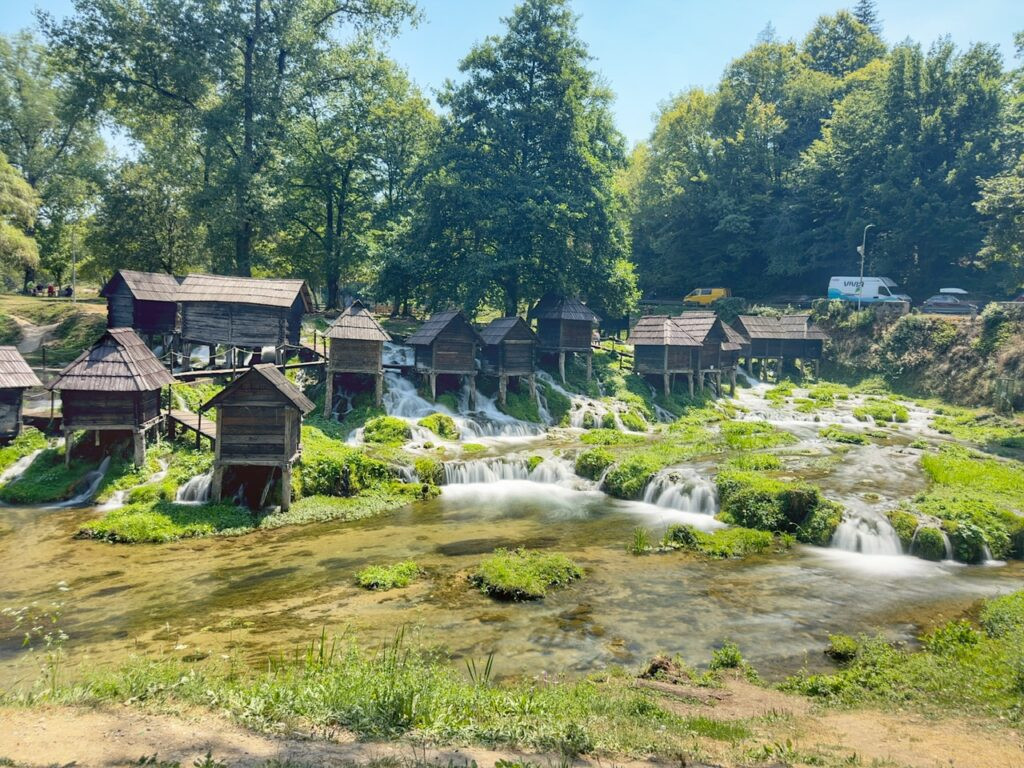
Arriving to Mlinčići, we were immediately mesmerized at just how adorable it was. Adorable…AND….functional! For generations, people from surrounding villages would arrive with sacks of wheat or corn, often on horseback, have the grain ground, and depart with flour.

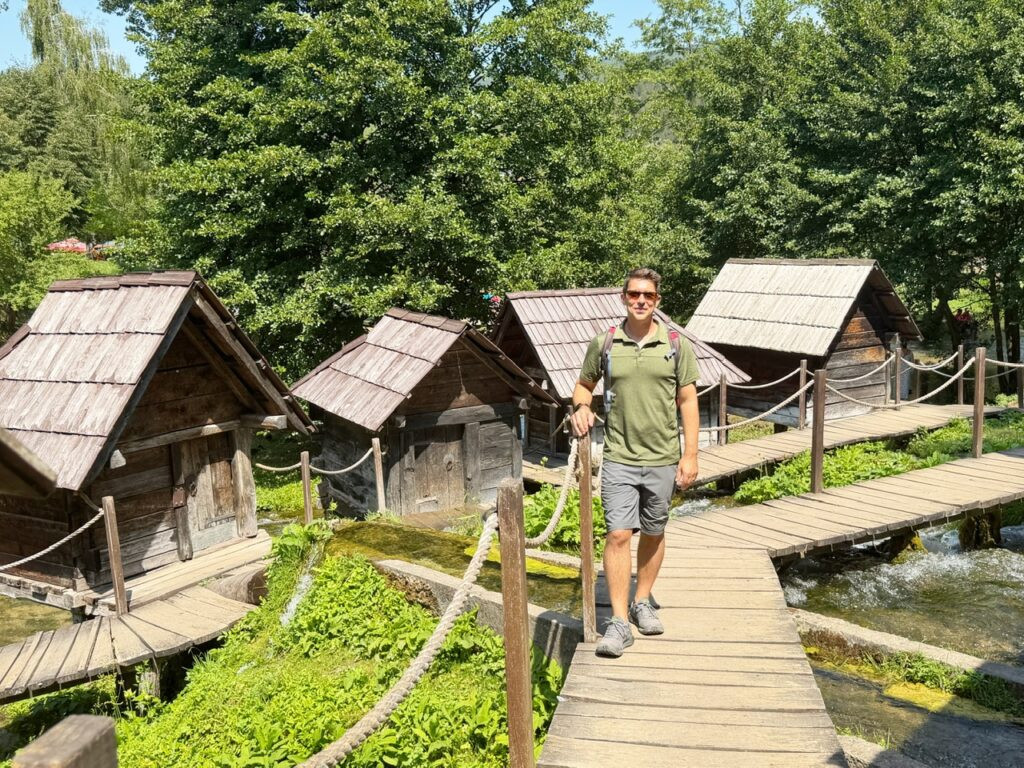
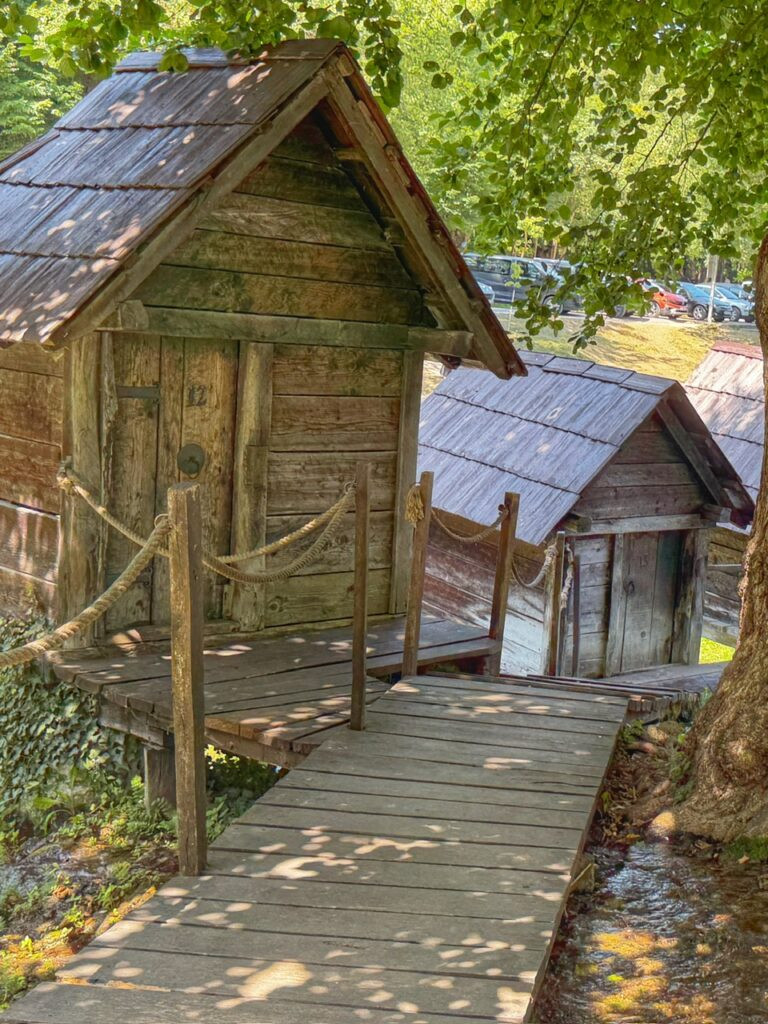
The mills were generally owned by wealthier landowners and made available to local people. Rather than paying cash, users could pay a portion of the flour as a kind of milling tax. But today, we didn’t even have to give any flour! (Or cash!!) A few have been restored, but the majority are not working today. Industrial milling eventually made them obsolete, and they ceased to be part of everyday agricultural life. We’re really glad we went out of the way to see them.
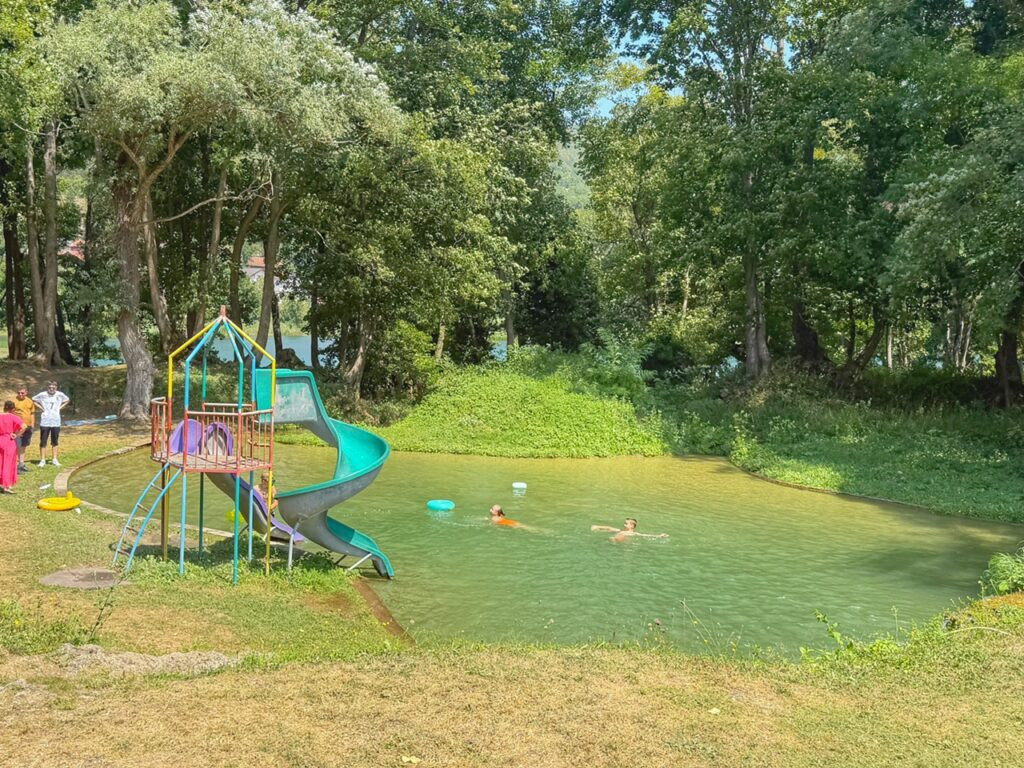
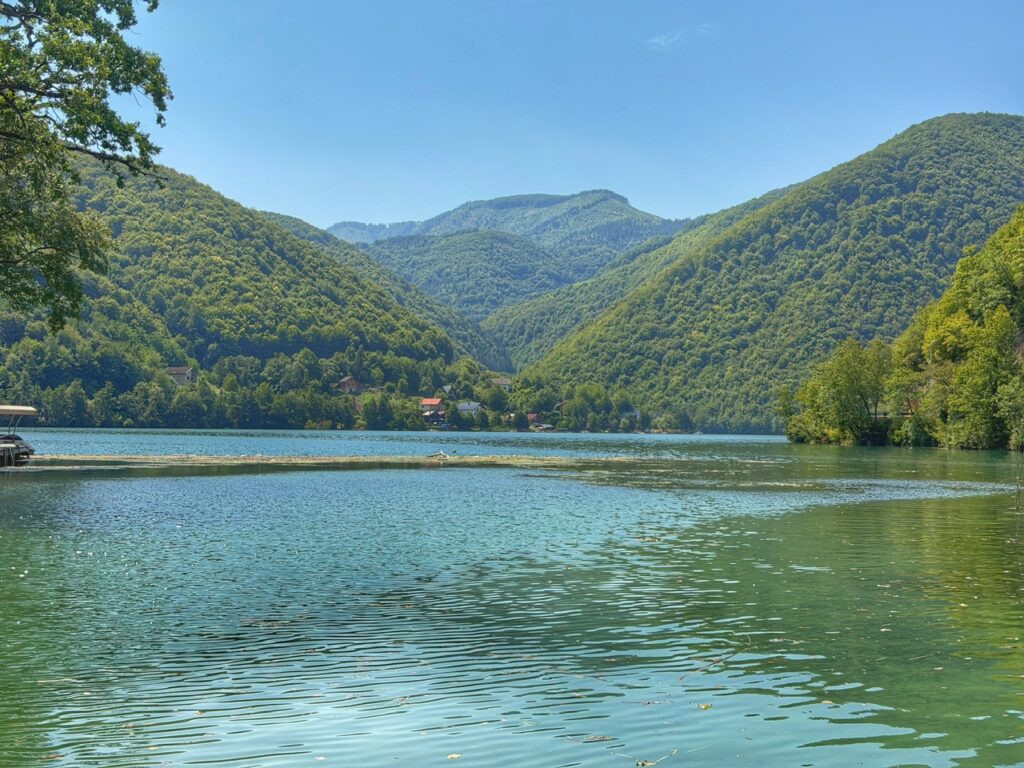
Beginning our walk 5k+ walk back to Jajce, we saw multiple inviting swimming holes, alongside Pliva Lakes.
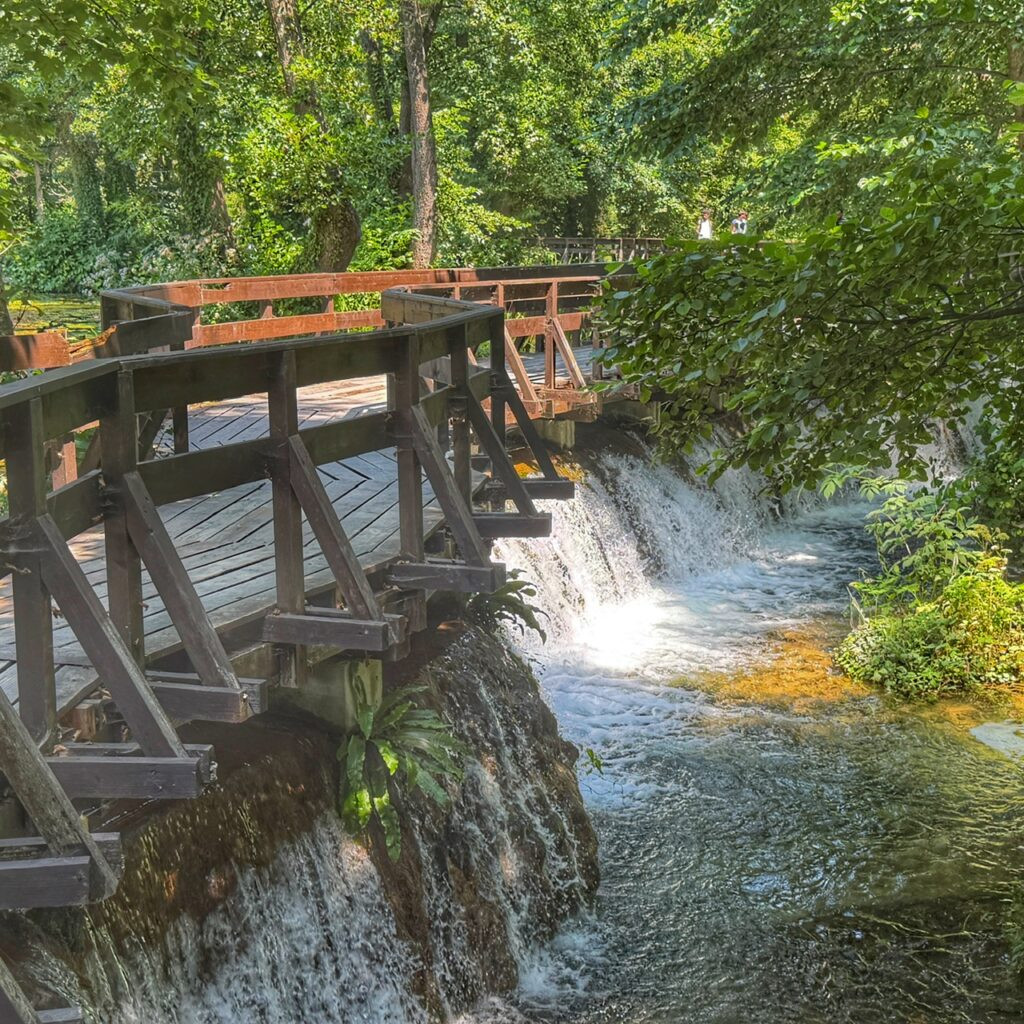
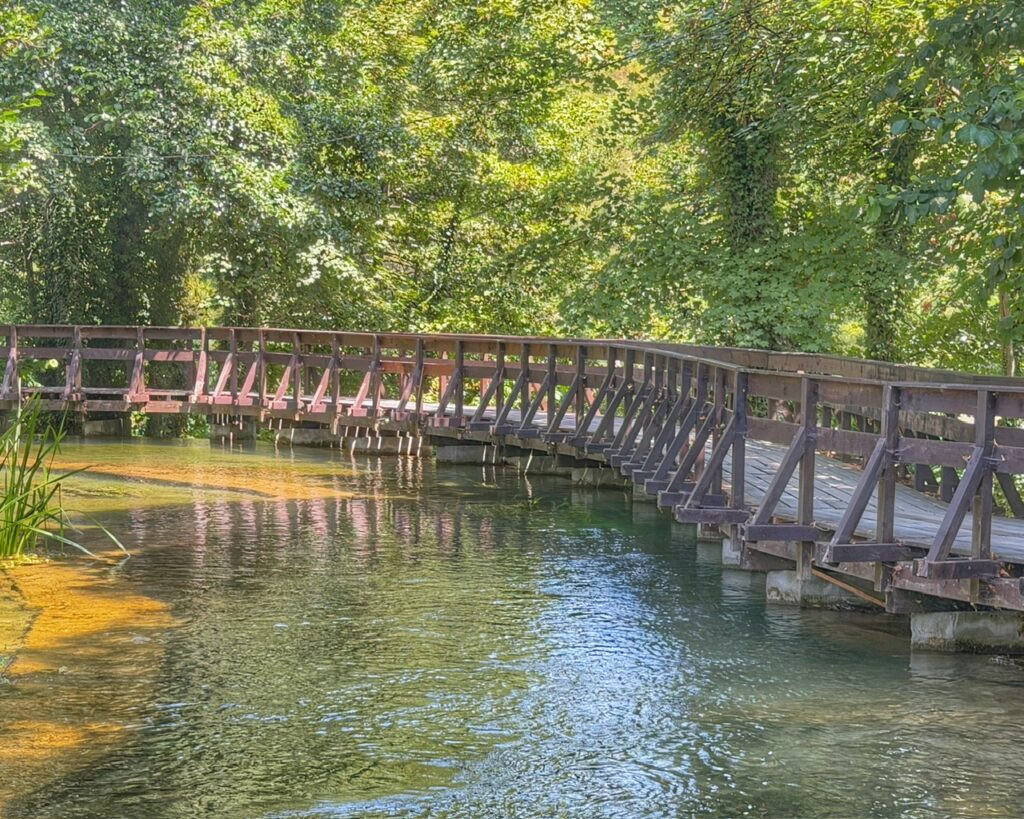
We eventually reached “The Bridge of Love”, a rather hokey name for one of the most captivating pedestrian bridges we’ve ever encountered. It gracefully spanned the river perched atop a series of cascading falls.
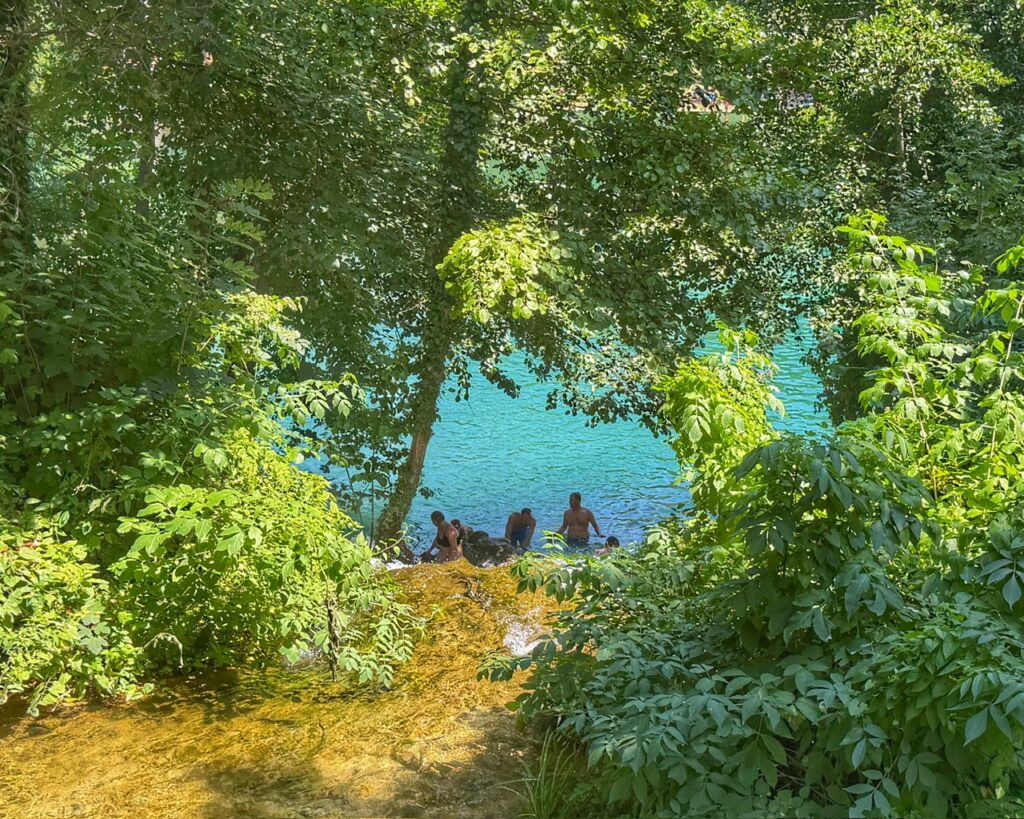
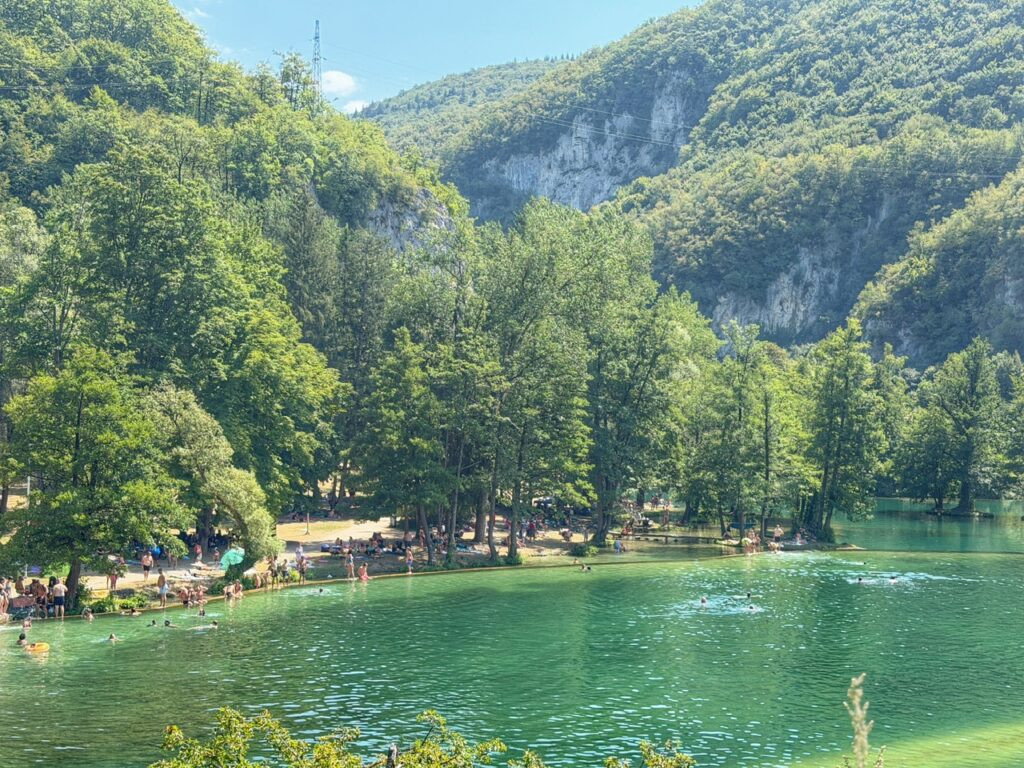
Eye spy more swimming holes! And a very large beach where the majority of the crowds seemed to be congregating on this sizzling, August day.
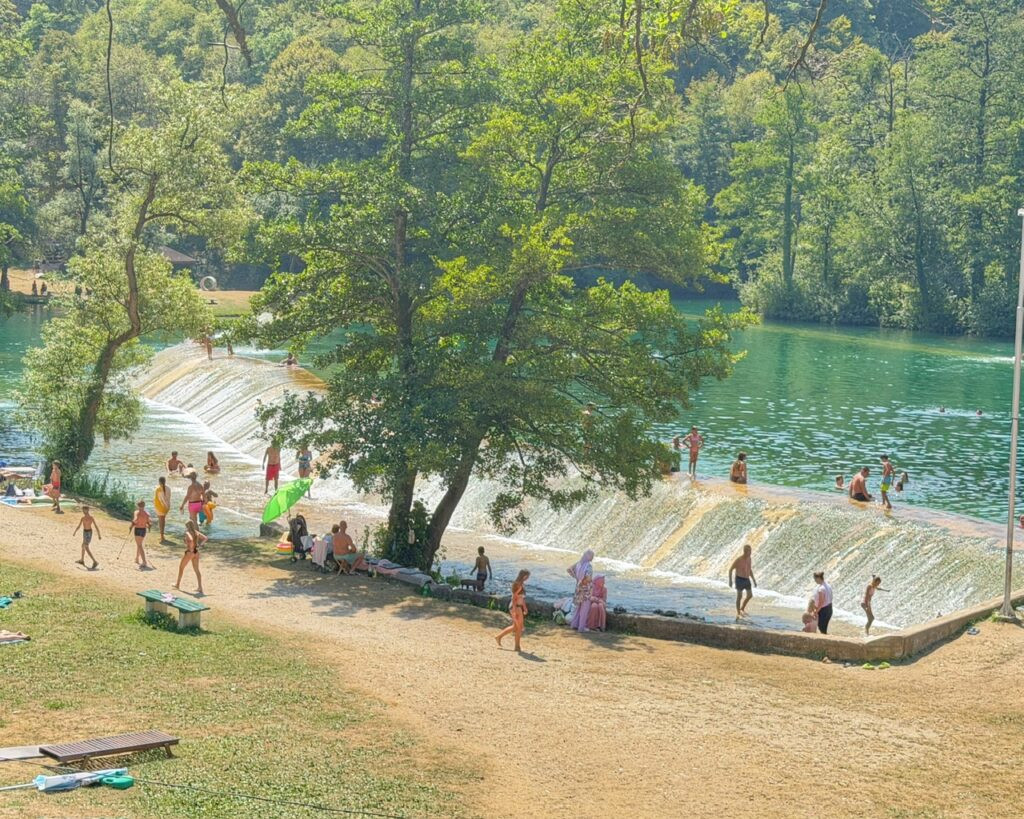
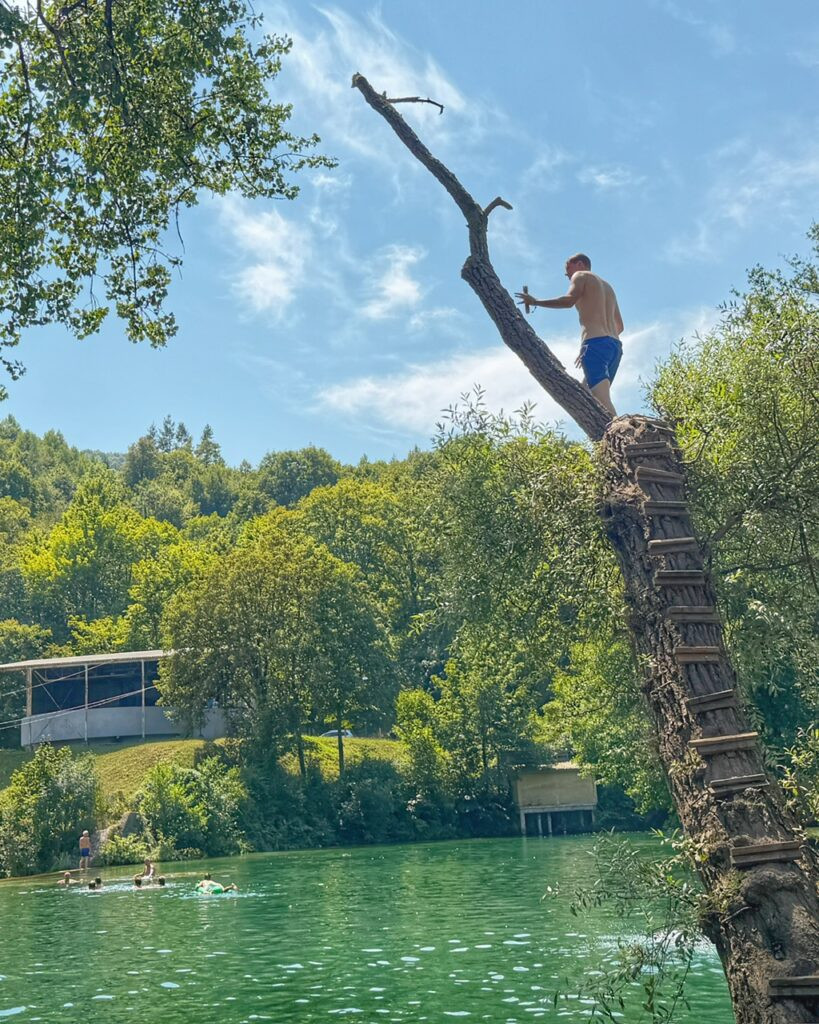
So we found a place to plop down as well, and seriously contemplated venturing in the water ourselves. But, with the long travel day, and process of changing, sun screening, not toweling, and not showering, we instead decided to just watch these guys jumping off a tree stump, energetically rattling off Jedna, Dva, Tri!!! (1,2,3) Again, this all is something we could have appreciated more had we stayed in Jajce for a couple of nights.
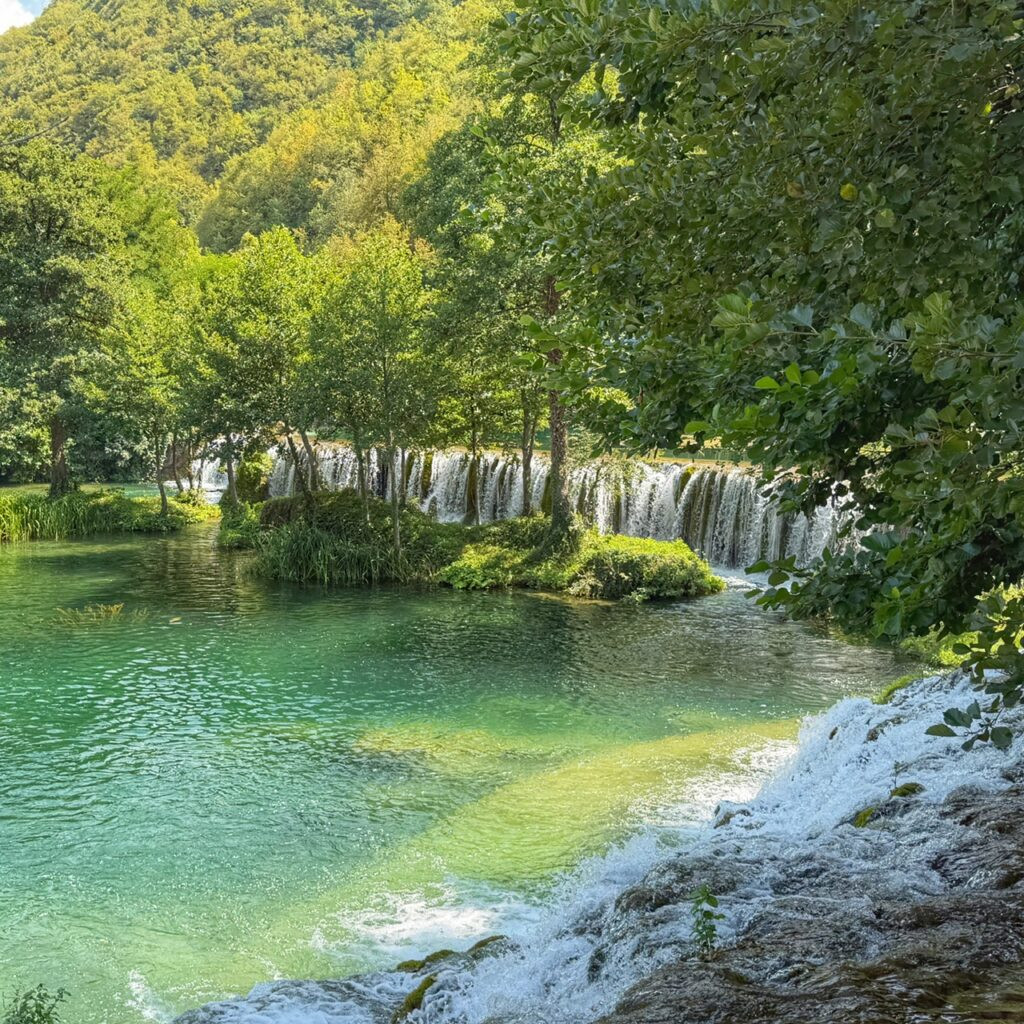
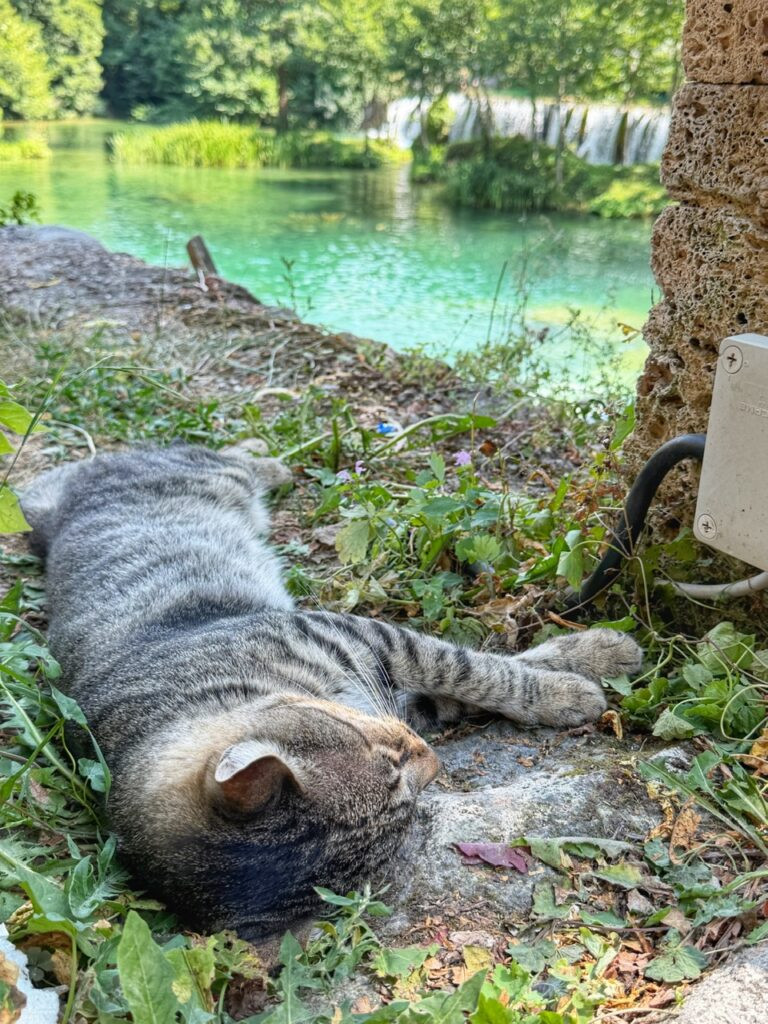
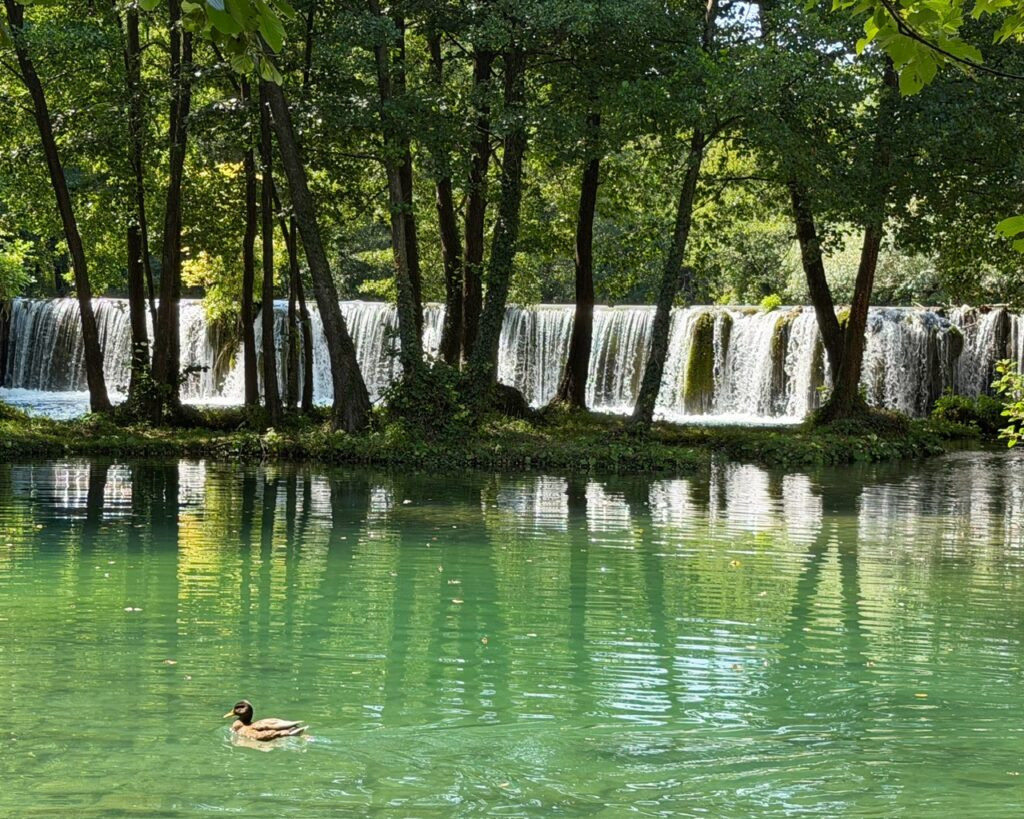
Thus we continued on, and paused again for a late lunch at Konoba Slapovi, which was a restaurant sitting on the edge of…you guessed it…more scenic falls. This is where we met perhaps the luckiest cat in the world…chubbily lounging next to a fish restaurant at the edge of permanent white noise. Yes, please.

Also….yes, please….a two-hander birthday cold beer as big as my head.


Lunch consisted of fresh-caught river trout, veggies, and a shopska salad since we’re not gonna be having these much longer! ($25 for trout, salad and two beers.)
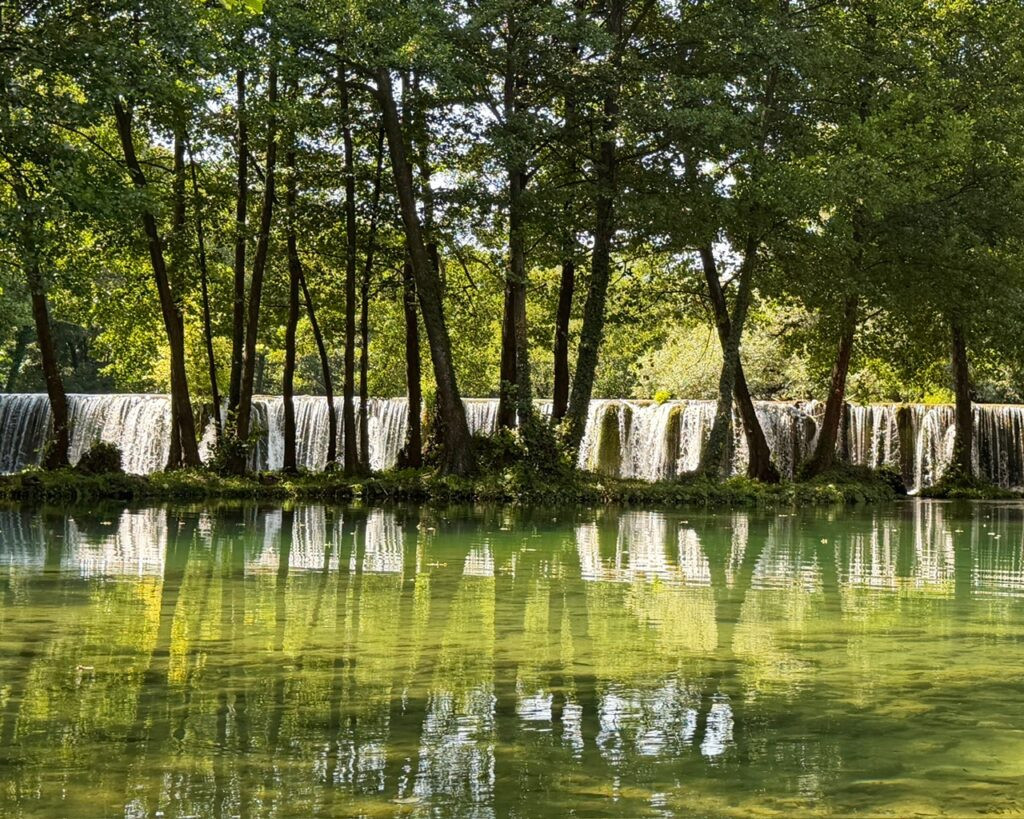
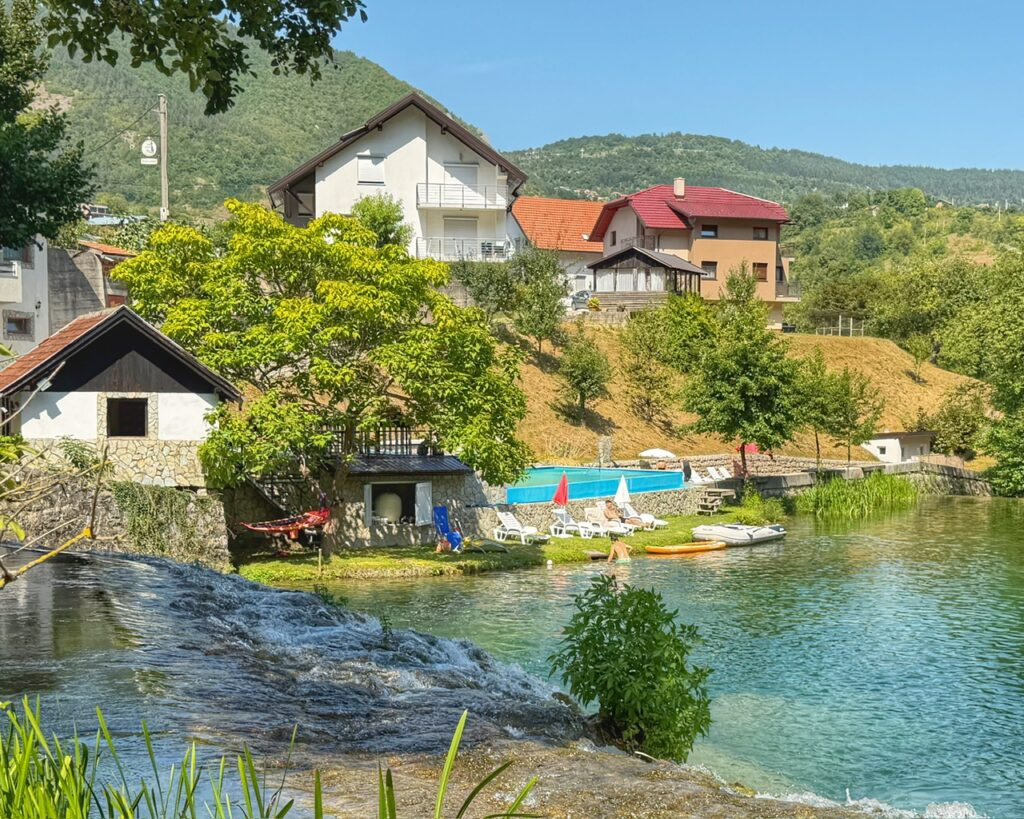
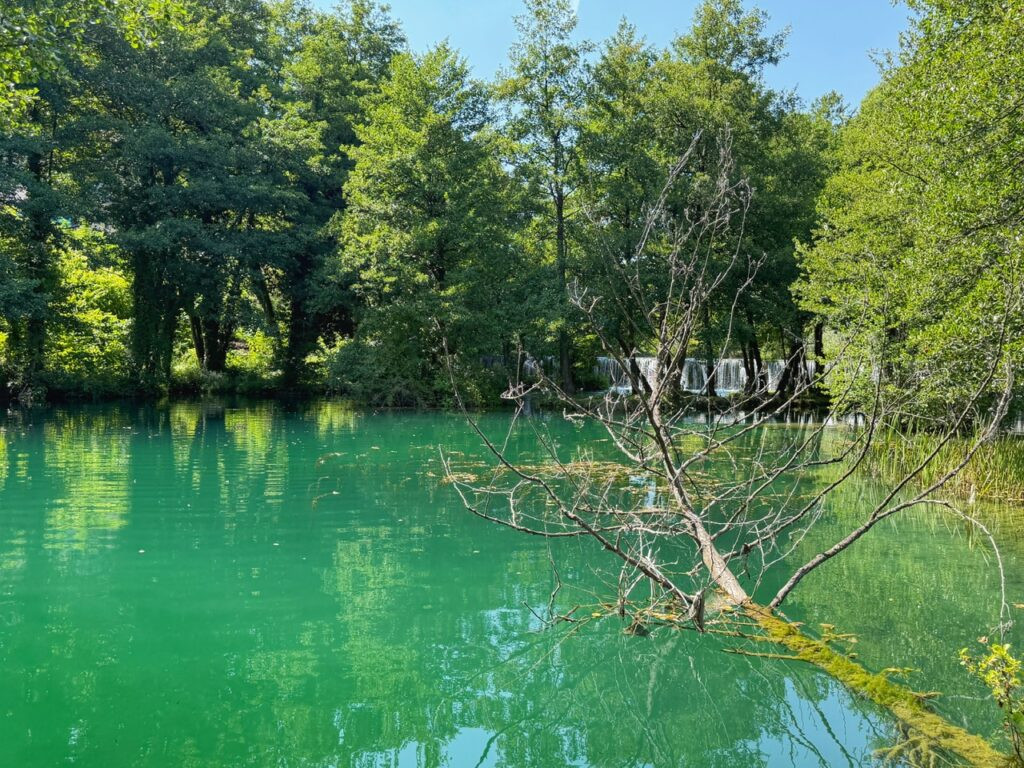
Other shots of the ravishing property, which based on the pool, may also have been a hotel?! Regardless, it all definitely won the award for most stunning place in Bosnia & Herzegovina….at least for us…in 2026.