After eight years on the road, traveling full-time on ~$55 a day, we still get asked the same thing:
“How do you afford it?”
This page is our answer… a deep dive into our real numbers, frugal choices, and battle honed tactics that help keep us nomadic; not just where we go, but how we don’t go broke and can afford to keep our lifestyle long-term.
Whether you’re a current traveler, an aspiring nomad, or simply someone looking to save and budget your money better we share some practical tips, personal insights, and the hard-earned strategies that help us stay on budget without sacrificing the adventure or lifestyle.
What We’ll Cover Here
Points & Miles Our favorite credit card spotlights, offers, and hacks we use to stretch our travel budget
Budgeting Tactics The strategies we use to stay on or under $55/day — without missing out
Creative Ways We Save From DIY hacks to location-based tricks we’ve picked up along the way
We update this page every month with new info, resources, and tips — especially as our travel and finance tools evolve. So, don’t miss out, subscribe to our newsletter to ensure you get all the updates and new ideas as we post them.
Food: Our Go to Meals
When we set off on our nomadic journey in 2018 we bought an e-book titled F#ck Pasta with Ketchup. Anyone who has ever cooked for themselves in a hostel kitchen can relate to the title. Pasta and ketchup works, but is really not good, sustainable, nor healthy long-term. But what that title suggested to us was the kind of mind and lifestyle shift we would have to make with our relationship with cooking while traveling as nomads. Learning to cook for ourselves not only helps save money, but gives us a sense of normalcy in our constantly changing lives, connects us to our local community, and having control over what goes into your food makes it significantly healthier.
The first hard lesson to learn was the majority of the recipes we had learned to cook did not easily translate to a kitchen outside of our home country. Sure, you can try to find that can of cream of mushroom soup, or some panko style breadcrumbs for your mom’s noodle casserole recipe, and maybe you will manage, but mostly you won’t. Adapt your cooking to fit your geography instead of a recipe. There are certain staples which we have easily found in every country: eggs, oats, beans, olive oil, milk, potatoes, … focus on picking those up on your first grocery run. Take a slow meandering, exploratory trip down the aisles of your nearest supermarket (this is part of why you travel too!) before you put your recipes together, and just make mental notes and get some staples.
The key is a to adapt to a diet full of healthy, real, interchangeable ingredients that you can find anywhere, as well as simplicity. This will save a lot of money, a lot of hassle and can typically be cooked in kitchens with minimal equipment (like Airbnbs!) And, pro-tip, it’s always also good practice to throughly check that kitchen before you head to the market, including making sure the appliances work.
Breakfast is typically our routine meal of the day, but these can be dinner too, and we rotate between oatmeal,eggs (both of which we have literally found everywhere) and plain (no sugar added!) yogurt. For yogurt, we try to bulk it up with a grain like quinoa, muesli, or barley to make it last longer and to save money or our bodies from lugging heavy bags from the supermarket. When we have breakfast provided at hotels, we will switch to oats or yogurt for dinner as these are super easy to make in a room with only a kettle and refrigerator. Of course, we also like to load them with additional nutrients like cinnamon, cocoa powder, honey, nuts, seeds and fruit.
Our lunchor dinner meals fall under six groups and center around one core (but universally available) ingredient:
Eggs: We have not had a problem making the Middle Eastern dish of Shakshuka anywhere in the world, so long as you have a skillet with a lid. (This is often the catch.)
Shakshuka is made with tomatoes, peppers and onions as a base. Then garlic, paprika, cumin, salt and pepper, and chili/paprika powder are added, until eggs are layered and cooked sunny side up on top. Lovely additions are parsley and parmesan cheese, but not required.
Other fav accessible egg dishes include – what we call the Mandy Special – a sautéed dish of chickpeas (or any available bean) and any greens (we prefer baby bok choy if available), topped with fried eggs and feta cheese (Parmesan is a good substitute) and lots of healthy extra virgin olive oil.
Also, eggs are the stars of wraps, frittatas, omelets, scrambles, or an open face sandwich using hard boiled eggs.
Curries/Stir fry: Because there are generally vegetables, meats/protein, grains available anywhere in the world, these are also easy to make anywhere. While in Asia, or anywhere tropical, however, we tend to go for coconut curries because coconut milk is readily available and cheap and the curry powders/pastes are amazing. This Coconut Curry Tofu can be adapted with any vegetables or proteins you wish. Spices can include curry powder, salt and pepper and cumin and it’s served over rice.
Stir frys are infinitely adaptable by swapping out the sauce. You don’t have to stick with curry powder or paste. Create a sauce with a different star ingredient such as peanut butter, soy sauce, tahini, balsamic vinegar, yogurt, or balkan ajvar sauce.
We make Mediterranean stir fry fusions, which can include eggplants, tomatoes, peppers, onions topped over quinoa or couscous and topped with feta cheese, red pepper flakes and olive oil, but this dish can be more expensive outside of Europe.
(Buddha) Bowls: these are similar to stir fry dishes because they are incredibly versatile and adaptable. The key is to layer or partition the ingredients into the bowl.
Start with a layer of grain at the bottom and then add 5-6 different veggies and/or proteins around the perimeter. These can be cooked or raw. We usually try and pick a theme like Mediterranean, Mexican, Asian and then make a sauce to go with it, often based on where we are and what’s cheap to make or buy. Example sauces can be based with tahini, hummus, salsas, peanut butter, or mayo/yogurts.
Salads: Extra Virgin Olive Oil is a staple in our spice kit, which can obviously be used for so many things but is also the healthiest all purpose oil you can get almost everywhere. A Greek, or Šhopska Salad is one of our favorite salads and we’ll make it anywhere we can find or feta (or feta-like) cheese (only truly rare to find in SE Asia). Ingredients included peppers, tomatoes, cucumbers, red onions, lemon juice,(or lime), olive oil and salt/pepper. Just chop them up and toss it all together! The best ones are also topped with Kalamata olives, if you can find them, they are worth the splurge!
Other salads have included: shaved zucchini + tomato, mixed greens-based, watermelon + mint + feta fruit salad, Waldorf style salad, heart-of-palm or artichoke, bean salads, taboulleh, pomegranate + walnut salad, and caprese.
Salads, can potentially be the trickiest meal to put together depending on where in the world we are… but they can also allow us to get into the local food culture by trying a new kind of local cheese, or whatever is in season at the produce market.
In some countries with questionable water sources we will no longer buy lettuce at the markets simply because it’s too easy to get sick from it, if you can’t cook it, even if you clean it yourself (looking at you…India and Bolivia!)
The key is to expand your range for what you might consider a salad beyond greens. And for the protein, think beyond just chicken and toss in some sardines, nuts, eggs, cooked grains, or chickpeas instead. We also always make our own dressings from scratch. Don’t store buy your dressing, making your own can be surprisingly simple!
Soups/Stews: If we have a soup pot available (always a big IF), then soup is usually on the menu, which we save our low sodium bouillon cubes in our spice bag for (something we pick up in the States when we visit). Coconut Curry soup is a staple for us in Southeast Asia and includes onions/garlic/ginger at its base, followed by carrots, potatoes, and green peppers, water and coconut milk as its cream component. Almost any veggie works and it’s incredibly adaptable.
Other favorites include: Hungarian letcho, West African peanut soup (base of peanut butter and tomatoes), and Tom Kha.
Patties: You can take the girl outta Indiana, but you can’t take the Indiana out of the girl. At least in regard to this standard US Midwestern meal. Yes, one of Mandy’s travel go-tos is patties, which only requires your meat/protein, an egg, an onion, oats, garlic, and salt/pepper. Cumin is also a nice touch. It’s a fabulous way to get our fish when we can’t buy it fresh. Mandy’s also made them with sardines, salmon, lentils, black beans, shredded carrots and shredded zucchini, which are technically fritters, but you get the idea!
Life on a Budget: Avoiding the Dreaded “No Service”
It’s 11:00 PM, and we just landed at Narita airport near Tokyo, deplaned, and made our way to the airport train station. Exhausted from a day of travel we’d cleverly prepared for this moment, by buying the SUICA transit card online and putting it in our Apple wallet, before we’d departed… all we had to do was load it with Yen using our virtual wallet then tap our phones at the turnstile. Easy. Tokyo here we come!
Unless… you have no phone service (and no wifi). Noooooooo!!! Now you’re in the hurt locker with a forced digital detox and thrust into the pre-smart phone travel days…running around at the airport, finding cash, finding wifi, finding where (and how) to buy a physical SUICA card, hoping there is a mobile phone provider still open to sell you a local SIM card, staring at a transit map to familiarize yourself with the line. Not the scenario you wanted to be in right outta the gate.
So, how do we escape the dreaded “no service” on our mobile phones and avoid this scenario in 170+ countries… on the cheap, or even for FREE!?
GigSky states that they, “are a leading provider of global mobile data solutions, delivering reliable and secure connectivity through an advanced eSIM technology” and, are one of a handful of providers now occupying the rapidly growing international travel mobile phone market. Other providers in this space which we have paid to use, or continue to use as needed and recommend, include Airalo which tends to have the most reasonable prices overall and is a popular eSIM provider, and Flexiroam which does have regular sales offering significant discounts on coverage and have a unique “data sharing” feature enabling multiple account holders to share their data packages across devices (probably most useful for families). But we have been VERY happy with GigSky over the years and free is hard to beat. Gigsky is also the only eSIM provider we know of that offers data packages for cruise ships.
These eSIM providers and the global data options they offer are a total game changer for the frequent traveller. While often not as cheap as buying a physical SIM card locally, (a technology which is being phased out anyway), the convenience of using a travel eSIM like GigSky far, far outweighs the on-the-ground savings you might get by doing it the old-fashioned way once you get it installed and working. Especially if you can get it for free! Certainly, it’s cheaper than adding an international roaming to your AT&T or “home” based mobile phone provider too. So, if you haven’t looked into getting an eSIM for travel you should definitely start.
GigSky makes it very easy to try their eSIM to anyone who has access to literally, ANY Visa card, including non-US credit or debit cards, by making it completely free to try.
To explore your options go to the GigSky website, and tap “Visa Benefits.” Select your country and depending on the type of Visa card, or issuing bank you can get anywhere from 1 gigabyte to 3 gigabytes to use for free for 15 days; currently, in select cities like Paris, they are giving away unlimited data for 7 days.
You can stack the free data benefit for each Visa card you have to load more free data onto GigSky eSIM and redeem it again in a year.
Make sure to download the GigSky app to make the process a bit more streamlined and to get your account set up.
Note, the complimentary mobile data plans are only available outside of the United States (or your home country) so you’ll need to wait until you are abroad or beginning your trip to activate them.
Unfortunately you only get one redemption per card for the introductory free gigabytes on most Visa’s per year once you activate it, but there is a lucrative work-around with one particular credit card that’ll give 5 gigabytes of global data every 15 days (worth $50+) and the renewals are uncapped…
That said, if you are nomadic or on an extended trip and can manage to continually re-up every 15 days, you will essentially get uninterrupted free global data until the benefit (maybe) expires in November 2027. The $0 annual fee U.S. Bank Altitude Connect Visa card is truly an unsung hero in the credit card travel rewards space. We have been giddily using this card for its GigSky benefit for well over a year and it has saved us a significant sum we would have otherwise spent on eSIMs.
The U.S. Bank Altitude Connect card is a major score if you want truly free global mobile data and some lounge access! It also has decent points earning rates on travel and gas at 4x, but unfortunately redemptions can be less than lucrative unless you either have a U.S. Bank checking account to redeem them for $.01 each, or on their travel portal for bookings at the same value.
However, it isn’t only the GigSky benefit that makes the Altitude Connect a permanent keeper card for us… it also offers four free visits to Priority Pass lounges (including the restaurant credits), a TSA Precheck reimbursement of $100, and is there is no annual fee!!
Life on a Budget: Phoning with Tello
Managing our mobile phone plan outside the U.S. has been a real thorn in our nomadic sides! We’ve explored Google Fi and T-Mobile in the past, but they failed as long-term options for living outside the U.S. So, we were thrilled to find Tello as a solution for having (and keeping) our “real” U.S. phone numbers locked down. Having a phone number tied to a physical address is an irritating, but necessary evil in our modern times, whether you’re nomadic or not.
In short, we pay Tello $5.41 each month to keep our permanent U.S. phone number, this budget plan includes unlimited texting (using Wi-Fi) and the ability to make Wi-Fi calls, but no data. Tello lets nomads like us continue to have a permanent, non-VOIP phone number on the cheap with unlimited texting and the ability to make Wi-Fi calls, but no international data… and no risk of our number being dropped by a carrier (looking at you Google-Fi and T-Mobile!) because we’re outside the U.S.
Our Tip: Make sure to auto pay your mobile phone plan monthly bill using a credit card which offers you “mobile phone protection.” Then, if your phone becomes damaged, or stolen you are entitled to a reimbursement. In our case, we use our Wells Fargo Autograph which reimburses up to $1000.
For instance, Google Voice will cancel your account if you can’t verify it with a non-VOIP number at least once a year. While VOIP numbers are a great convenience for many situations, they still have a few challenges when it comes to verification. Just try finding a two-factor or text verification that works consistently with every bank. Frustratingly, several bank systems won’t send verification codes to VOIP numbers, especially when you are dealing with their customer support staff. So, you’ll need to use a non-VOIP or real phone number like Tello to get those codes.
Tello offers a budget-friendly way to get a permanent phone number without being tied to a pricey plan. Instead of paying at least $25 extra each month, to maintain a number, Tello provides the most affordable real phone number for long-term use. Plus, when you’re back in the US and want to add data, Tello makes it super easy to upgrade your plan online, month by month. If you need unlimited data, it’s just $30/month! And when you don’t need it anymore, you can easily downgrade to no data for $5. Simple!
If you’re thinking about using Tello to hold your U.S. phone number, or if you’re just looking for a flexible pay-as-you-go data plan while in the United States, please use our link to save $10 on Tello and get us a little kickback too!
Life on a Budget: Libby a Library in Your Pocket
Like most avid readers, we do miss the days of having an actual book in our hands. But sadly, lugging books around with us is unfortunately not very nomad friendly. A few years ago, we stumbled upon Libby, an app which syncs to your membership at your “local” public library allowing you to download digital books, magazines, and audio books to your tablet or Kindle. And, it’s completely FREE!
Fast forward to today, and we would classify Libby, as one of our critical apps in our day-to-day lifestyle upkeep. We’ve been surprised many times when searching Libby for newer books, including guidebooks, and finding them available for download. There is also an exhaustive list of current magazines to peruse.
Not content with just books… many libraries also offer the Kanopy app allowing you to stream movies and documentaries.
A few insider tips we’ve found helpful:
You can register with more than one library in Libby using multiple library cards in multiple library districts. Adding more than one library to your Libby account significantly expands your availability and selection for nabbing a book or improving your waitlist placement. Some library districts in the U.S. are tragically underutilized by their patrons, but may offer better availability and surprising digital resources to you.
Some, not all, books are downloadable to a kindle format, so if you run out of time, check to see if you can load your kindle with a book and then turn off the WiFi. It still gets returned to the library on time, but not removed from your reader.
If you expect to be offline, and you can’t move your book to a kindle, make sure to (down)load your books or magazines when you have WiFi, opening them to the first page to ensure they are there before going offline. If you’re offline for more than 2 days, however, we’ve found the books unavailable until you can get WiFi again.
If you’re learning another language, your library may have readers or audio books in your target language worth checking out to help supplement your language learning.
Create wishlists using tags so you always have books in mind when you’re ready for new ones.
You can highlight your books, then export your highlights to a document to organize later.
Get familiar with the search function using multiple memberships at different libraries to help expand your reach for a particular resource.
Apps We Love: Food
A handful of apps make eating cheaper, easier, and a little more ethical while we’re traveling. These apps help us find healthy food, rescue perfectly good meals from being wasted, stretch our food budget, and help us to make more informed choices when labels are confusing or unreadable. We’re showcasing our favorite FOOD apps below. Please note, the food apps are not strictly related to travel, but can offer healthy options and be money saving tools for anytime or anywhere you can use them.
By the way, if you are thinking about signing up for any of them, we REALLY appreciate you using our referral links!
HAPPY COW: This app is helps you find vegetarian, vegan or healthy food options around the world and lists restaurants, cafes, market and grocery stores. Also, easy to filter by dietary needs.
TOO GOOD TO GO: TGTG is a fantastic way to cut down on food waste and save money at the same time! The app is in dozens of countries (we’ve TGTG’d in the U.S., France, Spain, Portugal, Belgium, Italy, and the U.K.) and easily connects food-based businesses like restaurants, convenience stores, grocery stores, farmers markets, bakeries, pastry shops, and specialty foodstuffs with people who can consume their extra food at a steep discount—usually about one-third to one-half the original price, or $3 to $6 per “surprise bag.” This is a win-win for everyone! The businesses still make money on food they would have thrown away; you get delicious food at budget friendly prices and the environment benefits because the food doesn’t end up in the landfill. We tend to get our surprise bags at grocery/convenience stores if we are somewhere for at least a week, we get better value, variety, and healthier food. Use our referral link to download the app and get $2 towards your first order.
FLASH FOOD: similar to TGTG but more focused on grocery shopping, that helps you save moneyand cut down on food waste. Also, Flash Food doesn’t do surprise bags, you get to choose your items which can make it feel less like a lottery than TGTG. You browse deals in the app for discounted groceries. Often up to around 50% off food nearing its sell-by date, or is surplus stock. You pay in the app and then go pick up your order at the store. Only in the U.S. and Canada, we have used it at Meijer and Kroger Supermarkets to snag a week’s worth of produce for $5. If you use our referral link, you’ll get $2 on your next purchase.
YUKA: Yuka lets you scan barcodes on food, cosmetics and household products to instantly receive a health impact score ranging from 1-100, which is super helpful when you can’t understand what you’re reading. The app scores is based on nutrition quality, additives, and organic certification and it’s a great guide for the health-minded consumer. That said, it can definitely oversimplify complex nutrients, so you do have to take some things it says with a grain of salt. It operates independently and there is no advertising or sponsorship.
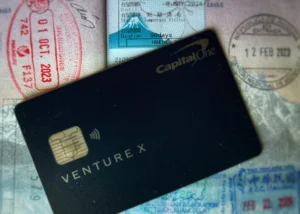
Capital One Venture X Credit Card
The Capital One Venture X has become our go-to premium travel card and permanently lives in our wallet. It’s our card for almost everything. For frequent U.S. travelers, it’s close to a must-have. We didn’t expect to enjoy it as much as we do, especially with its chunky $395 annual fee, which honestly kept us from getting it sooner. But it’s turned out to be one of the best upgrades to our travel life in years. The reality is that the Venture X’s fee is surprisingly easy to justify even for occasional travelers, so don’t let the annual fee stop you from looking at the value and perks it gives back.
Let’s start with airport lounges. The Venture X gives the primary cardholder unlimited access to Priority Pass and Capital One lounges. Are they worth it? We had no idea how much lounges have evolved in recent years, but now that we’ve experienced them, there’s no going back. Free food and drinks, comfortable seating, often with a view of the runway, Wi-Fi, and sometimes showers or even massage chairs (or in one case a free Thai message). Lounges truly take us back to the glory days of travel, when it was the thrill of the journey, and not simply a day of dread to go to the airport. Note that, unlimited guest access for lounges is disappearing in February 2026, but the primary card holder will keep their access.
Let’s look at the annual fee and a few key perks that negate it. The Venture X lists a $395 fee, but the math makes it surprisingly easy to offset:
A $300 annual travel credit through the Capital One Travel portal
10,000 anniversary miles ($100 equivalent)
Adding those perks up gives us $400 in yearly value. Which actually puts you $5 ahead! The card doesn’t just cover its own cost, it effectively pays you to keep it! And that’s before counting the unlimited Priority Pass lounge access for the primary cardholder.
Current Offer: 75,000 Bonus mile sign-up after $4k spend within 3 months. Use our referral link to learn more.
For everyday spending, the Venture X stays at the top of our stack and the card we reach for most because it earns 2x points on every purchase. Some cards offer higher multipliers in niche categories, but the Venture X is widely accepted while making it super simple to accumulate rewards on any type of spend. The ease of earning, combined with its overall perks, makes the Capital One Venture X really tough to beat.
✓ 2x Miles on every purchase
✓ 5x Miles on flights and 10x miles on hotels and rental cars booked on Capital One Travel
✓ The Capital One Offers Shopping Portal
Check out Capital One’s Offers & Shopping Portal as an easy way to stack your cash back savings to earn extra miles whenever you shop online and get outsized value on your purchases. The brand list is huge, and instead of cash back you earn bonus miles multipliers directly in your account, on top of your usual 2x. The promos can be very lucrative, like the time we earned 1,300 miles from a $2.99 Paramount+ signup, which worked out to a ridiculous 21,567% return in miles per dollar. We regularly use it for Booking.com, VRBO, or Agoda as well, which stacks with our membership tiered discounts.
When it comes time to actually use your rewards, the Venture X gives you lots of redemption options that offer real flexibility and value.
✓ The Capital One Travel Portal, no blackout dates, and different from other credit card travel portals, Capital One lets you redeem for travel on budget airlines (making your miles go further.)
✓ Transfer your miles. Capital One allows cardholders to transfer their miles to various airline and hotel loyalty programs, typically at a 1:1 ratio including United, Air France/KLM Flying Blue, Japan Airlines, Qatar Airways (Avios), and I Prefer, Marriott, and Hilton Hotels.
Capital One frequently offers transfer bonuses of 20% or more to its airline partners, which can deliver excellent points value. Waiting for one of these transfer promos can stretch your miles significantly, or even score you a seat upgrade without paying extra.
✓ Cash them out. Capital One Miles are worth $.01 a piece when cashing them out for a statement credit. There have been many times where the flight we wanted to take was not displayed on the travel portal. Or, we found a better price somewhere else. So we booked. Then cashed out the points equivalent to pay it with points.
Remember to maximize your stacking opportunities… since you get 2x on every purchase with the card (5x if you purchase through the C1 Travel Portal)… why not book with the card, get the purchase points, then cash out your points for a statement credit later, effectively getting an additional discount in points price once you subtract the stacked points you gained by paying cash. Isn’t math fun!
What else…
✓ Use a virtual card for your digital wallet to make online shopping more convenient and secure.
✓ No foreign transaction fees.
If it sounds like you might also get great value from this card, we truly appreciate you using our referral link. We sincerely get so much out of this card, and couldn’t recommend it more.
Keep in mind, you won’t receive the bonus if it’s been within 48 months of your last one.
Apps We Love: Transportation
GENERAL:
Google Maps: An indispensable tried and true savior for orientation, cataloguing where you’d like to visit, and for getting around. Unfortunately there is no real alternative, but despite its faults here and there, including suddenly limiting our pins to only 3,000 in 2024(!), we can’t do without it. There are far too many tactics for using Google Maps with your travels to get into here but to name a couple, if you are in doubt about your internet connectivity when arriving somewhere new be sure to download an “offline” map of your destination ahead of time. Also, many cities now have now fully integrated public transportation options with Google Maps making sorting out public transit a breeze… simply enter or tap where you want to go, tap directions, then the transport icon and you get detailed public transportation instructions, along with route info, and sometimes even the cost. Some cities are so detailed they will even tell you which exits to take within metro stations, which is a super helpful when you’re in massive cities with multiple exits shooting in all directions.
Rome 2 Rio: Great for route planning in completely unfamiliar or more obscure places around the world. Rome2Rio does a fantastic job displaying all transport options to get from Point A to Point B…AND can be used in urban or rural settings worldwide. If you click through its recommended options often it will also name particular transport companies and with a little sleuthing on your part you’ll discover links to that bus, train and ferry line website which Google may have failed to find. Overall, though we’ve found it’s better as a planning tool than for definitive information on departure times or prices.
FLIGHTS & AIRPORTS:
Flighty: Flighty is a great organizing tool for air travel and stat nerds to keep track of flights (past and future) in one place. The free version also creates great maps, provides helpful flight updates like gate information, changes/delays, baggage claim info and even industry-first features like finding out WHY your flight is delayed. We’ve been very impressed with its functionality.
Flight Connections: This app and website provide a unique overview of all flight routes worldwide, as well as flight schedules and timetables for every airline in the world. We have used this to get an idea of which airports are likely to offer better flexibility in flights and airlines or when tracking down that elusive budget airline that doesn’t show up in flight searches in more obscure places. Thus, it’s a terrific tool for travel hacking and planning.
Kiwi: This app is ideal for finding unique, multi-airline travel routes and has a terrific to “ANYWHERE” search tool which pulls up inexpensive flight connections from any city you wish to depart from. Yes, Google Flights has this too, but Kiwi does much better at including budget airlines in its search results. It also has some rather clever budget features included in its search called “travel hacks” which let you select options such as self-transfer, throwaway ticketing, and hidden cities.
PointsYeah:Not an app… yet, but we have to include it as a resource here. Points Yeah is a travel points and miles search tool that helps find award flight (and hotel) availability using your airline miles or bank rewards. It supports most credit card loyalty programs and a growing list of airline and hotel programs. Set alerts and filter to find the best “value for points.” It can be especially helpful in displaying particular any points transfer bonuses, you might have otherwise missed, or in making the clear connections between the various alliances and rewards programs. Sign up for the free version to unlock searching. Offering similar functionality but additional rewards programs,
Award Tool, should be used in concert with Points Yeah to uncover a wider swath of program redemptions and routes.
Priority Pass: Priority Pass is a worldwide membership-based airport lounge network which is included through our Capital One Venture X credit card (referral link). The Priority Pass app lets you search for lounges by airport, check amenities (Wi-Fi, showers, working space, food & drink), view hours, location, and even use a digital membership card for quick and easy access.
Skiplagged: This app and website will show you flights that other search engines won’t include hidden city flights, and arbitrary round trips. A hidden city flight is a flight where you get off at the layover rather than the final destination.
Timeshifter: This app is terrific for trans-oceanic time jumps to prepare and adjust your body to jet lag. After plugging in your flight, it tells you when to drink caffeine, when to take melatonin, when to sit in a darker room and when to expose yourself to light. It helped significantly when we flew from the US to Japan last year.
TRAINS AND BUSSES:
Moovit: A all-in-one must for urban transportation including subways, buses, trains, bikes, and ferries. And everything is in REAL time, which seems to make it much more reliable than Google. Moovit has worked well for us in some surprising destinations.
12GoAsia: A terrific app for booking buses, trains and ferries. Works best in Southeast Asia, in our experience.
FlixBus: Inexpensive buses across Europe, and a few other places including certain regions of the US
TAXIS:
Global: There are a whole slew of taxi apps around the world and it really depends on the city which ones are available and most effective. Taxi apps tend to come and go, and occasionally you’ll come across some random and obscure taxi app in a country; only use it that one time and never again… looking at you Brunei. They’re all relatively the same, although some are cash only. The most available worldwide is Uber. Here are a few others we’ve used when Uber is unavailable.
Bolt: strong presence in Europe and LATAM, also in Africa and the Middle East. Almost always cheaper than Uber.
In-Drive: a “name your price” ride app which we’ve used in Latin America. We’ve heard it’s also great in countries that do a lot of bartering.
Others we’ve used that seem to be country specific and are sticking around have included: Cabify, Didi, 99, Lyft, and TaxiMe.
CARS/RIDESHARE:
BlaBla Car:BlaBla Car is terrific for picking up rides with drivers who are already driving from place to place and are looking to share the cost of fuel, and make connections with travelers. It is based on a review system which ensures transparency and gives you peace-of-mind. We’ve used it multiple times in Western Europe and have loved it every time! You get to meet great people and it’s often much cheaper than the train or bus. Our Tip: If you are an English speaker, when first registering for BlaBla Car put your home country as UK if you want the app to display itself in English. This also indirectly lets any prospective drivers/rides know that you are an English speaker.
Incidentally, BlaBla Bus is also a great option for getting around Europe by bus when you can’t find any rideshares.
Imoova: Imoova is not an app, yet. It’s a vehicle relocation service that moves cars, or camper vans from one city to another, typically at the cost of $1/day. It lists relocation options in the US, Canada, Europe, Australia, New Zealand, Japan, and South Africa. You typically pay for the fuel although they may give you a stipend. We used imoova in Australia and New Zealand and were extremely happy with it and are excited to use them again when we get the chance.
ON FOOT:
Mapy.com: Our tried and true hiking and trail map has forever been Mapy. It offers several features superior to Google Maps such as contour lines, more accurate displays of attractions or notable features, public toilets, water fountains, alleyways and footpaths. Further, entire countries can be downloaded at once for offline use. In short whenever we need more detail we go to Mapy. We’ve tried Maps .me and others, but have not found one we love as much as Mapy.
Apps We Love: Accommodation
Seriously…how did we manage in the world before smartphones? Thanks to them, and all the great apps available today, traveling is easier than ever before. Here are some of our favs organized by theme.
If signing up, we really appreciate you using our referral links below.
AGODA:loosely affiliated with Booking.com for booking hotels and guesthouses. We don’t love the functionality of the app, but occasionally their prices and targeted discounts are better than others by a few dollars, especially once you get to “Platinum” status. They also have more of the market share in Asia and some other parts of the world.
AIRBNB:apartments/guesthouses around the world. We have a kind of love/hate relationship here. We are using it less than ever before because of the price gouging and short-term housing market manipulation happening in many countries, on top of their less competitive pricing. Recently, however we have discovered a few hacks which has made Airbnb more appealing to book with… getting two British Airways Avios points, or one Delta SkyMile per dollar spent coupled getting 5x Citi bank Custom Cash credit card cash back (points) on up to $500 monthly. Further, anytime you are booking for more than a week it never hurts to politely ask for a small 5-10% discount from the host.
BOOKING:Our favorite for all types of accommodation, including apartments, all around the world. Pricing is always very competitive, and once you attain “Genius Level 3” there’s lots of incentives like free upgrades and breakfasts. To sweeten the pie, pair your booking with Capital One Offers which consistently has 2x-4x (or more!) points cash back.
COUCHSURFING:For arranging (free) stays and cultural exchanges with locals. Don’t read too much into the name… no, we’re not sleeping on couches. Just like any other platform there is a range of options available to you, we usually seek out listings with a private bedroom and look at couchsurfing as a unique opportunity to connect with a local somewhere and build a bond over just finding a place to sleep for a night. The Couchsurfing community also has regular in-person travel meet-ups all around the world too, which can be great for meeting others when you’re in a fixed place for longer.
HELPX: For booking volunteer-based stays exchanging culture, know-how, or time for (free) accommodation and, often food. At this point, it’s still only a .net website but it has been a uniquely valuable resource for us.
HOPPER: For booking hotels, guesthouses, and vacation homes. We’ve also used it for flights via the Capital One travel portal, which also offers 10x on accommodation bookings. They sometimes offer very steep discounts and slightly better functionality in their app, making it worth comparing with the others or against your results in the CapOne travel portal, particularly with accommodations. Get 10% off your first hotel booking by using our link… maybe more than one; it’s unclear 😉
IHG: These hotels are all part of the International Hotel Group, and include chain hotels like Holiday Inn, Intercontinental, and Candlewood. We got 80,000 points when signing up for the IHG One Rewards credit card, and are slowly chipping away at it four nights at a time. IHG offers the unique perk of giving the 4th night free after booking three nights with points. As nightly stays can be as little as 5k points, this perk can be an exceptional bargain for multi-night stays, particularly in otherwise expensive cities for accommodation. Further, IHG routinely has lucrative points earning offers and sales where you can buy more points with a 100% bonus, or spend you way to points multipliers by stacking offers on paid stays, etc..
iOVERLANDER 2: When we have wheels, iOverlander is invaluable for finding (free and paid) campsites or peaceful places to park around the world. We’ve used it in Oman, Australia, New Zealand and the US to score some epic parking spots.
TRUSTED HOUSESITTERS: We’ve already written about it but, THS is a fantastic option for exchanging pet and housesitting, for accommodation. It’s still our most comfortable and favorite way to travel, which continues to pay dividends and an absolute game changer for allowing us to explore more expensive countries. If youuse our linkto join, you get 25% off your annual membership.
WORLD OF HYATT: This is quickly becoming a fan favorite way we’re amplifying our boug-ometer. We “afford” to stay at the Hyatt by transferring points from our Chase Sapphire Preferred credit card, booking multiple nights in swanky five star hotel suites, for just 5,000 points a night (the equivalent of $50.) An amazing value which occasionally also included breakfast, netting at least .03 cents per point compared to the room rate. Resort fees are also waived on points bookings, making our out of pocket cost…$0.
Food: Our Spice Cabinet
Most people assume one of the easiest ways to save money on the road is by avoiding eating out all the time, and this holds true almost anywhere in the world. For long-term travelers or anyone with food allergies, eating out regularly can wreak havoc on your gut and overall health. You lose control over ingredients and end up consuming unhealthy oils, fats, salt, and sugars that local cooks often use but you’d likely never add when cooking at home.
That said, no matter where we go, we try and make cooking meals for ourselves a priority not just for our health, but also to stretch our budget. Having access to a kitchen as often as possible is an essential element which we prioritize in choosing to our accommodations. But another, is our invaluable spice bag, which has been with us since 2018, although we have continued to refine it from the spices we keep in rotation to the packaging, now we keep our spices in flat smell-proof mylar envelope sleeveswhich allow for easy labeling and keep them fresh.
Of course, everyone’s preferences will be different, but here some general tips for assembling your own spice kit:
Have something like the mylar sleeves or sealable containers for the spices themselves and bring extra. Smell-proof is critical, and you need to make sure they can seal well. Plastic baggies can work for awhile, but they can get worn pretty quickly and are not good as a long-term solution… you will need to have a stockpile of zip-top baggies in your luggage to replace regularly because they are surprisingly not something that are available globally.
You also need an outer bag with a zipper that is collapsible and packable. Find a bag that is wipeable on the inside and not cloth. Lunch bags can work well. You will have spills. This happens, so be prepared. The last thing you want is a bunch of turmeric spilled in your luggage. Also, don’t get a translucent bag, as the UV can degrade the spices faster.
Liquids! Find two small ridged travel-sized bottles, preferably with large openings, to be liquids bottles and with tight screw—not flip-tops.
If you’re heading to a spice-rich destination, consider stocking your spice cabinet at the local markets. The quality and price will be worth your while. Plus, it’s exciting to buy spices out of massive tub instead of an overpriced plastic bottle! Just know that 100 grams is probably more than you need. We’ve found the best spices can be found in: Turkiye, Sri Lanka, India, Georgia, Mexico, Indonesia and Malaysia.
A toothbrush. This is to get the finer spices out of the zipper seal if it clogs. It’s also helpful for cleaning in general.
Here are the items we’ve found are the most versatile to carry:
(Quality) Sea/Rock Salt
Black Pepper
Cinnamon
Cocoa Powder
Paprika
Curry Powder
Cumin
Red Pepper Flakes
Rotating, based on the region and opportunity to grab something special like Georgian or Za’atar spice mixes
With liquids, we prefer to keep olive oil in one, and the other is rotating typically between honey, a vinegar, coconut oil, mustard, soy, or a hot sauce (usually depending on where we are in the world or what we need to use up after buying a bigger bottle.)
The last item is bouillon cubes. If you’re interested in a low sodium version, we highly recommend getting them in advance because they’re quite difficult to find. Unless anybody is heading to Brazil… the only country we have ever seen sodium-free bouillon on the shelves! This is one thing we always buy in the States when we visit.
Note: you might notice that garlic/ginger is not on the list. These are available most places, so we buy it fresh and just have a clump of it in the bag. We also buy herbs as we go, depending on what is local, so we can have them fresh. This can include parsley, basil, cilantro or mint.
CHASE SAPPHIRE PREFERRED
The Chase Sapphire Preferred (CSP) has long been one of our top travel rewards credit cards to keep in our wallet and use long-term. While our enthusiasm for it has dipped a bit over the years, it still offers multiple sweet spots that make it well worth holding—despite the $95 annual fee.
Current Offer Bonus: 100,000 Points!
You can earn a 100,000-point sign-up bonus (previously 75,000) after spending $5,000 in 3 months.
Thinking of going bigger? The Chase Sapphire Reserve (CSR) currently also offers a massive 100,000-point bonus, but beware: it comes with an equally massive $795 annual fee.
***As always we do appreciate your support if you apply through our referral link.***
What Makes CSP Valuable?
1:1 Point Transfers
One of the most powerful perks of CSP is point transferability.
Chase partners with over a dozen airline and hotel loyalty programs, letting you transfer points 1:1.
Note: this excludesHyatt which is 4:3, yet still possibly the sweetest spot to transfer your points
For Example:
You’re 10,000 points short to book a flight in your United account? Just transfer from your CSP into your United account.
Our Tips: Several times a year, Chase runs bonus transfer offers (typically 20–30% extra points). That’s essentially a 20–30% discount on flights and hotels! Keep in mind many airline points programs are partnered with others, greatly expanding your options to book a great deal.
Hyatt offers rooms for as low as 3,500 points a night (~$35) at their category 1 hotels, sometimes for multiple nights in a row. A tremendous bargain, with the 1:1 points transfer from Chase! Use Hyatt’s new calendar view to find these low-priced nights and plan your visit around them.
The $95 Annual Fee? Actually, a net gain of $5.
The CSP comes with a $100 annual hotel credit (booked through Chase), effectively paying for itself, as long as you can stay in at least one $100 a night hotel per year.
Here’s what else you get:
Best in class travel insurance
Chase shopping portal cashback offers
Lucrative referral bonuses
Access to transfer bonuses and partner transfers
Increased point multipliers:
3x on Restaurants
3x on AirBnb and Vrbo
3x on Gas and EV Charging
2x on Travel
5x on Travel When Booked through Chase
How We’ve Used Our CSP:
$50 Hotel Credit (x2)
Tokyo in February
Singapore in June (pre-booked)And kept our hotel spend under $25/night
30% Transfer Bonus to Virgin Red
Transferred 42,200 UR to Virgin for a Seattle-to-Tokyo flight to get 54,860 miles
Paid just $11.20 in fees for TWO tickets
Virgin also partners with Delta, which is helpful for booking U.S. domestic flights
45,000 Points → United Airline Miles
Combined our points with unused United balance
Booked two tickets from New Zealand to the US
Scored lowest redemption rate—zero miles left unused
Two Tickets: Paris to Montreal to Evansville Indiana, Using Points
Only 20,500 points total, no fees
Rental Car Bookings
CSP provides primary rental car insurance in the U.S. (a unique perk)
CSP vs. Airline Cards: Superior Transfer Flexibility
Chase Ultimate Rewards can be transferred to:
Airlines: United, Southwest, JetBlue, Virgin, British Airways, Flying Blue
Hotels: Hyatt, Marriott, IHG, etc.
Our Tip: We’ve often taken advantage of Avios transfer bonuses (used by British Airways, Iberia, Aer Lingus, Qatar, and Finnair) offered by Chase. You can transfer Avios freely between these airline programs if the points originate with British Airways, and further, you can use British Airways Avios to book American Airlines partner flights—just watch for those fees.
Want to Avoid the Annual Fee Later?
Downgrade your Sapphire… keep your Ultimate Rewards alive by switching to another card in the Chase portfolio.
In Summary
This isn’t our absolute favorite travel card—but it continues to be one of the most valuable for:
Its transfer perks to a Sapphire Card
Its ease of use
Its ongoing offers and category bonuses
Its broad point utility
The $100 hotel credit pays the annual fee!
*Note: Card only available for those with a U.S. residence, or U.S. based LLC.
Apply through our referral link below… we appreciate your support!
This Behind the Budget luckily applies to anyone worldwide and is our favorite way to save money on accommodation while also staying in incredible locations, meeting and making new friends, and gaining a uniquely intimate experience into a life in some tiny corner of our world… ah yes, no surprise, this is house sitting. Quite literally a game changer for making our nomadic lifestyle sustainable.
We’ve officially been housesitting for seven years on the Trusted Housesitters platform. It’s taken us across the globe from the Americas to Europe to Asia, and provided us with so much more than free accommodation.
It is travel on a whole other level. It fills our hearts with a feeling of home and love, provides us with opportunities to make local friends, can give us a sense of stability and all the creature comforts (literally) of a home, and of course, the chance for cuddles with new companions is a major perk.
The best part? It’s a win-win-win for all sides:
The pet owner gets (free) pet sitting by someone they’ve vetted.
Their pet stays safely at home with their routine intact, avoiding the stress of boarding.
Their home is cared for while they’re away, giving them peace-of-mind to truly enjoy their vacation.
If you’re thinking about joining Trusted House Sitters as a sitter… here’s the things we recommend considering:
$$ Membership Cost & Value
Two annual plans: $169 (standard) and $259 (premium)
We’ve only ever used the standard plan — and it’s been more than enough
Don’t be put off by the fee… it pays for itself fast
Example: One night in a windowless hotel room in Singapore cost us $75. But we scored a one-week housesit in a beautiful 2-bedroom flat — just two nights of that sit paid for the entire year’s fee.
P.S. our code below saves you 25% off your first year too!
Applications & References
Your application will either be accepted or rejected — first impressions count
Be professional, stand out with a thoughtful profile
Start with 3–5 personal or professional references to increase your credibility
You are likely competing with other (possibly more experienced) sitters
Getting Started Locally
Apply for sits near your current home and offer to meet in person
This helps you get your foot in the door and build reviews
We did this with 6 local sits around Portland before going international
If local options are scarce, take a long weekend trip to a more active market
The US, UK, France, and Australia are great for starting out
Location & Transport
Pay attention to location and nearby services
Make sure you know how you’ll get around before you arrive
Sometimes a car is included with the sit — or can be arranged if you ask
Sits with a car or good public transport usually rise to the top of our list
Pet Care Expectations
Know the pet and the level of responsibility required
Daily dog walks? That’s a bigger commitment than feeding a cat once a day
Your schedule will depend on the pets’ needs — plan accordingly
Example: In Bangkok, we chose to explore only our local neighborhood between pet care instead of running across the city — and it was so much more intimate and rewarding
Do a Video Interview
Request a video call before confirming a sit
It’s a chance for both sides to ask questions, clarify expectations, and build trust
Remember: you’re interviewing them too!
Everyone wants a great experience — clear communication sets the tone
If you have additional questions about the process or anything related to housesitting, please let us know!
And if you decide to join, we greatly appreciate you using our link. We’ll get two free months, and you’ll get 25% off your annual subscription.
Again, win-win!!
error: Content is protected !!
Manage Cookie Consent
To provide the best experiences, we use technologies like cookies to store and/or access device information. Consenting to these technologies will allow us to process data such as browsing behavior or unique IDs on this site. Not consenting or withdrawing consent, may adversely affect certain features and functions.
Functional
Always active
The technical storage or access is strictly necessary for the legitimate purpose of enabling the use of a specific service explicitly requested by the subscriber or user, or for the sole purpose of carrying out the transmission of a communication over an electronic communications network.
Preferences
The technical storage or access is necessary for the legitimate purpose of storing preferences that are not requested by the subscriber or user.
Statistics
The technical storage or access that is used exclusively for statistical purposes.The technical storage or access that is used exclusively for anonymous statistical purposes. Without a subpoena, voluntary compliance on the part of your Internet Service Provider, or additional records from a third party, information stored or retrieved for this purpose alone cannot usually be used to identify you.
Marketing
The technical storage or access is required to create user profiles to send advertising, or to track the user on a website or across several websites for similar marketing purposes.