

From Samarkand to Bukhara by Train
From Samarkand, we trundled two hours west by train to the second most visited place on the Uzbek tourist circuit…Bukhara. And in case you skimmed over that little detail…YES, we said TRAIN, which is undoubtedly one of the things that makes travel in this country both uncomplicated and pleasant, unlike some slower, more tedious marshrutka rambles we’ve had in other ‘Stans.
We would soon learn the Uzbek train system is vast and reliable overall, with a blend between high-speed modern to chug-a-lug Soviet and stubborn. Also, Uzbekistan seems to have severe signage struggles, which can apply anywhere from “don’t enter,” to “don’t flush toilet paper,” to basic and obvious platform information at the otherwise nice and contemporary train stations.
Another important thing to note, you must book train tickets early, as they do sell out. This especially applies for overnight journeys, and everything can blessedly be done online, with a foreign credit card.
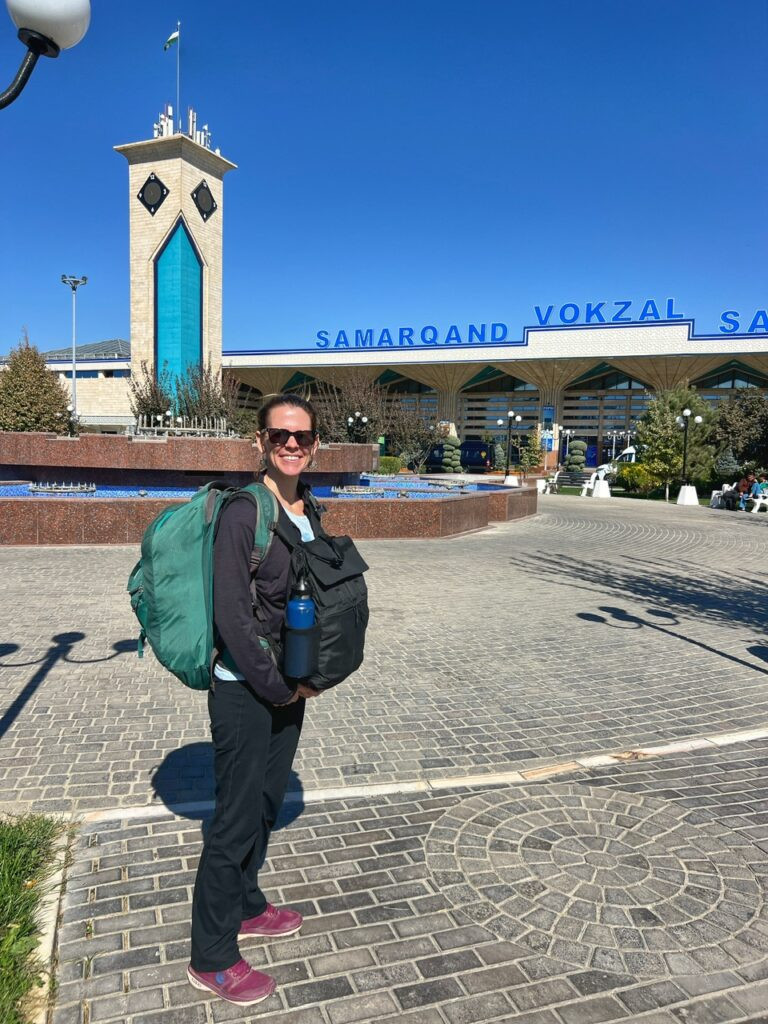

Of course this first train journey was just a wee warm-up for the ones that would come next. This included arriving to the train station at the agreeable hour of 11 a.m., after a 25-minute Yandex ride for $1.82. Yep, we both still have, and adore, the same Osprey backpacks five years later.
About 90% of the people on the platform appeared to be tourists chattering in a blend of Euro-tongues, Russian and Chinese, many puffing tiny cigs no beefier than a chopstick.
Of course none of us knew if we were on the right platform because there was no signage, but it seemed like an adequate place to stand….smoke…and wait…and wait….and wait.
Ah yes, because the train was 45 minutes late.
Yet there was no signage for this either.
To be fair, there was an announcement…in Uzbek…so probably 10% of the people had a clue what was going on.


At last! All aboard, making sure to find the right wagon, and then seat assignments so as not to cause a complete kerfuffle for those that can’t read numbers. Speaking of numbers, this two-hour journey cost us $12/each, which we booked about 6 weeks ago. It also included free tea! Like on airplanes, we choose not to think about the state of the carafes they make it in. All in all, other than the minor delay, it was a quite pleasant experience.


At the arrival station, like everywhere else, expect to get mobbed by the taxi militia who comically wanted to charge us 10k PER KILOMETER to the center, making it an absurd 150k…aka $12.50 for the 15-kilometer drive. We literally laughed and rolled eyes at them, and walked straight out the doors toward the right to find bus 378, which took us to the center for $.50…total.

From the drop-off point, we had about a 25-minute walk to our hostel, which involved being whisked into the winding, and tranquil back alleyways that is Bukhara.
We then arrived to our next guesthouse, for the next five nights, called Ravshan Guesthouse, which had an exceptional score on Booking and cost $30/night, including a substantial tourist tax. We’re gonna talk a whole lot more about this place in the Tashkent post. Ravshan caused us a lot of hell.
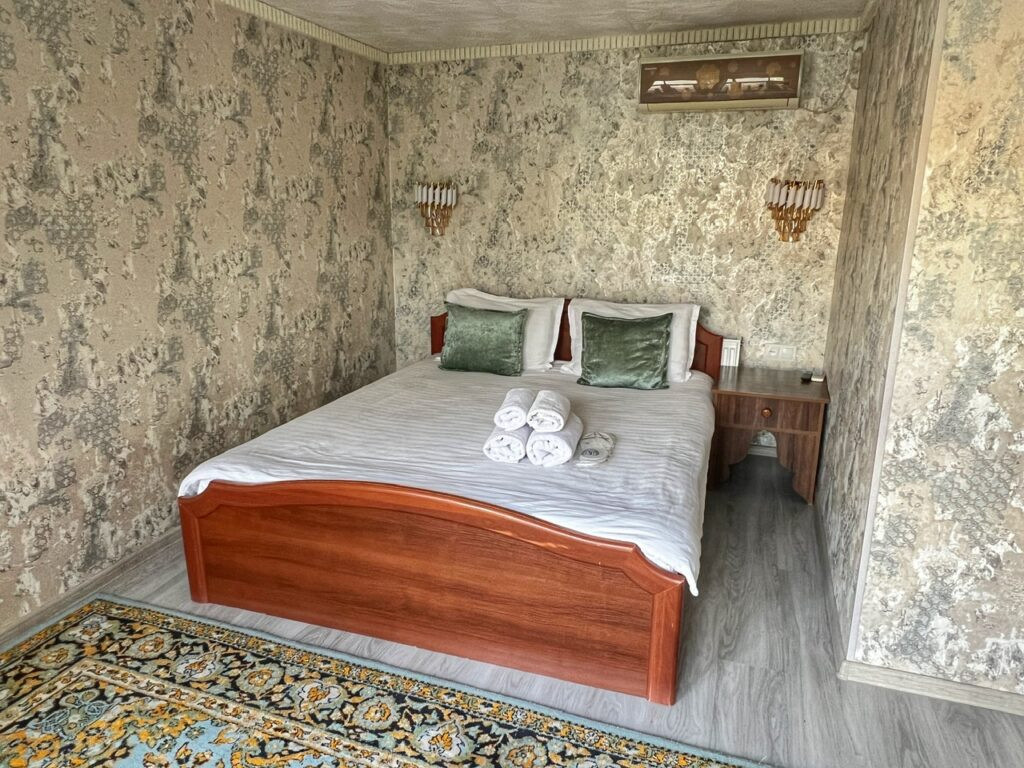
Our room, swathed in shimmery wallpaper that looked like a ruined/partially renovated mosque treatment. It also had an ensuite bathroom, with hot pink chemical-laden shampoo, making it a step up from the last place.

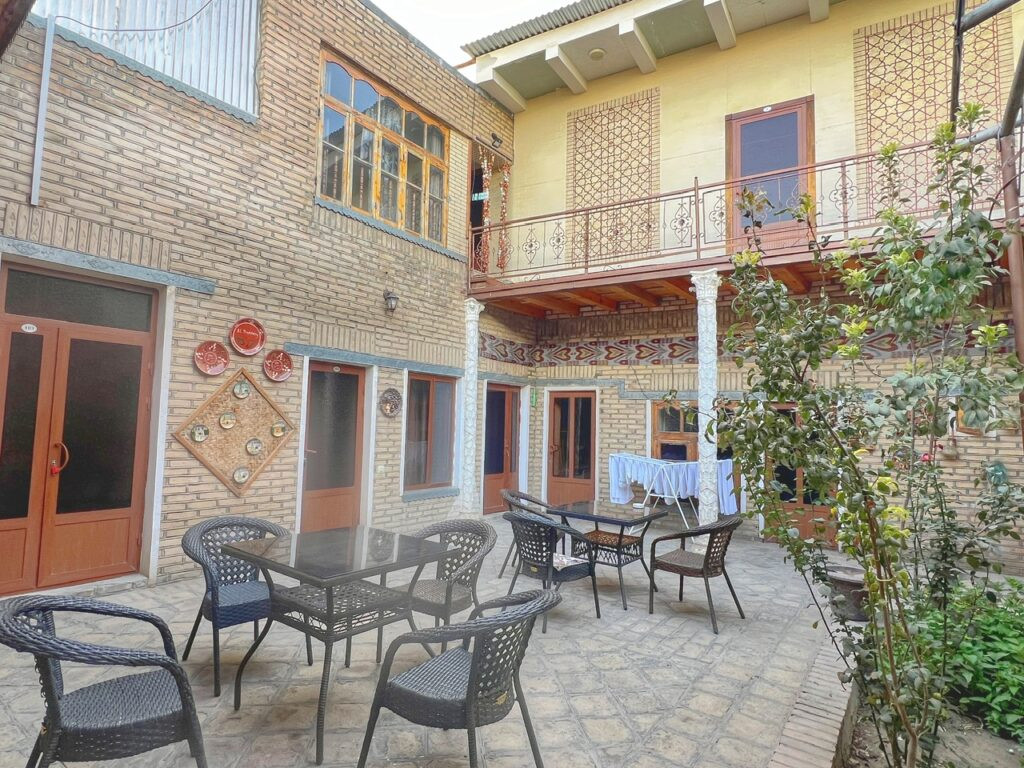
We also had two stubby little stools that looked…and kinda felt…like pencil erasers. Comfy! The courtyard of our guesthouse, which was all-too-often filled with chattering and intoxicated Slavs until the early hours of the morning. Yes…we were really ready for apartment living again.
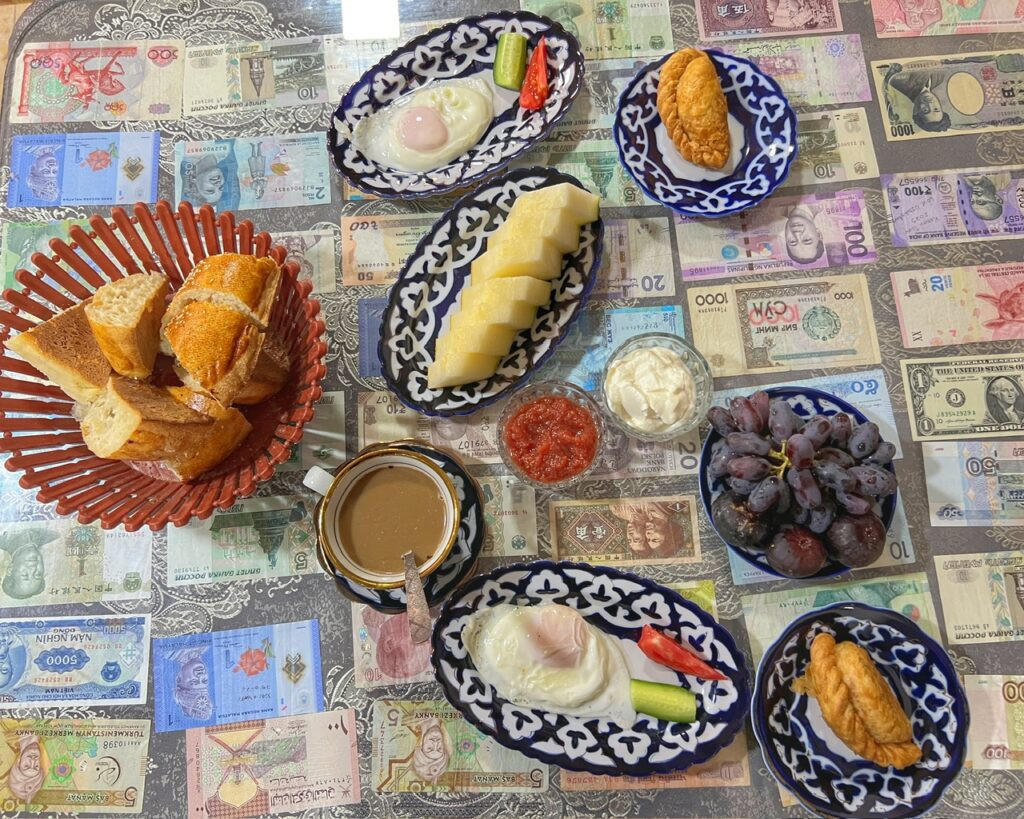
But again, it had a hearty breakfast, complete with fresh figs, served over a bed of world currency, which happens to be our favorite tablecloth.
Exploring Bukhara
Plopped on a significant artery of the Silk Road and (unintentionally) lived in three years by Marco Polo, the UNESCO World Heritage site of Bukhara is over 2500 years old, supposedly making it “one of the oldest continuously inhabited cities” in Central Asia, alongside recently visited Osh and Samarkand.
Compared to Samarkand, it is much more sandy and subdued in terms of its bejeweled spectacles, but its labertine historic alleys, soaring brick minarets, and authentic caravanserais and trading posts make it equally, if not more, as captivating.


One thing that always popped the beige Pantone palette was cheerful red balloons, which locals sold to children of locals and tourists alike. We also saw many East Asian gals carrying them around. 😂🎈
The most legendary site is the baked-brick Kalon Minaret, which was built in 1127 for the call to prayer. It was apparently so impressive for its time that Genghis Khan refused to destroy it during his Mongol Invasion.

One of the many marketplaces before set-up early in the morning.
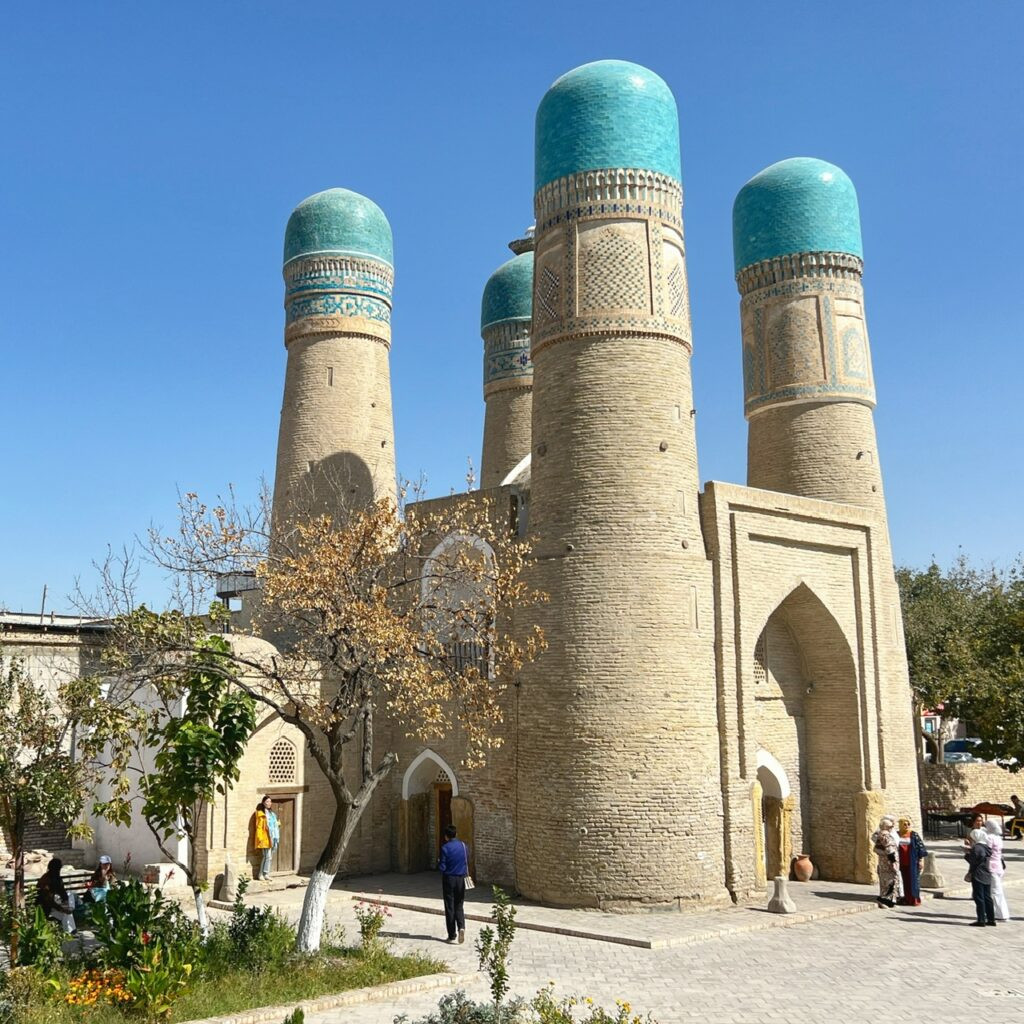
Looking like it’s cornered with four stubby pencils, it’s appropriate the little Chor Minor Madrasa was a former Islamic school. Now it’s filled with what else? Souvenirs.

Bukhara, in fact, had over 250 madrasas during the 9th-10th centuries, making it the “Oxford of the Islamic world,” rivaling Baghdad. Here’s yet another madrasa…turned Uzbek carpet shop.

Although Bukhara was just a bustling with tourists as Samarkand, we loved being close enough to be able to appreciate the solitude in the early golden hour.

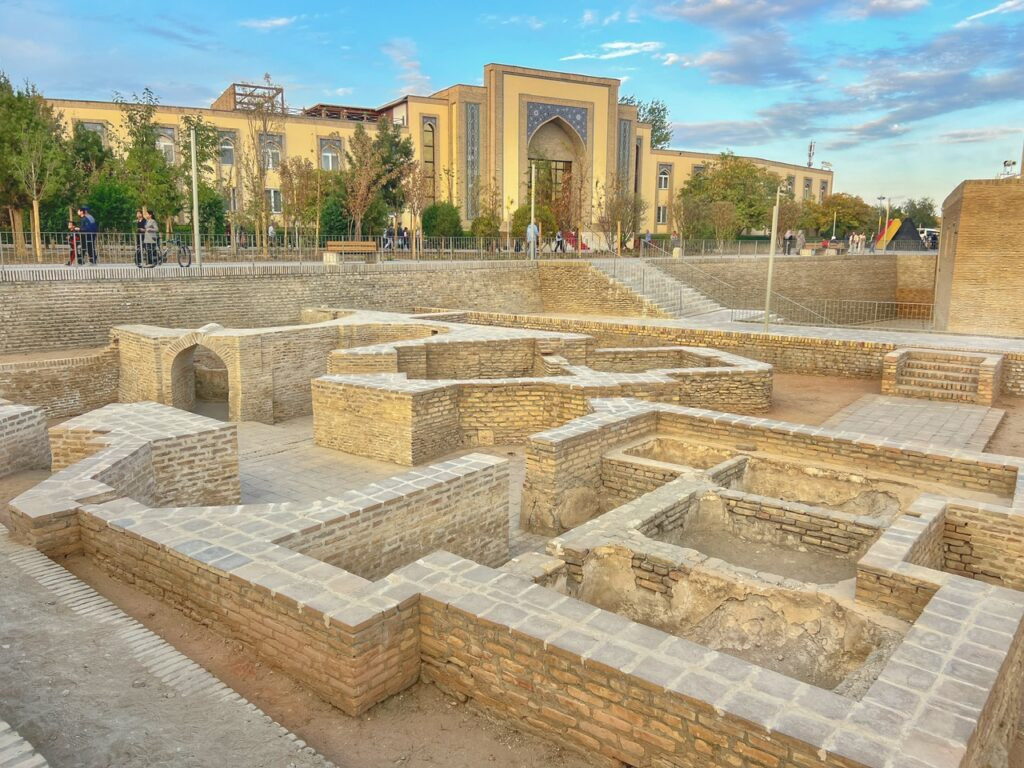
With nearly completely vacant streets, it was even more magical to see the ancient marketplaces and the ruins of an early hammam (bath house.)
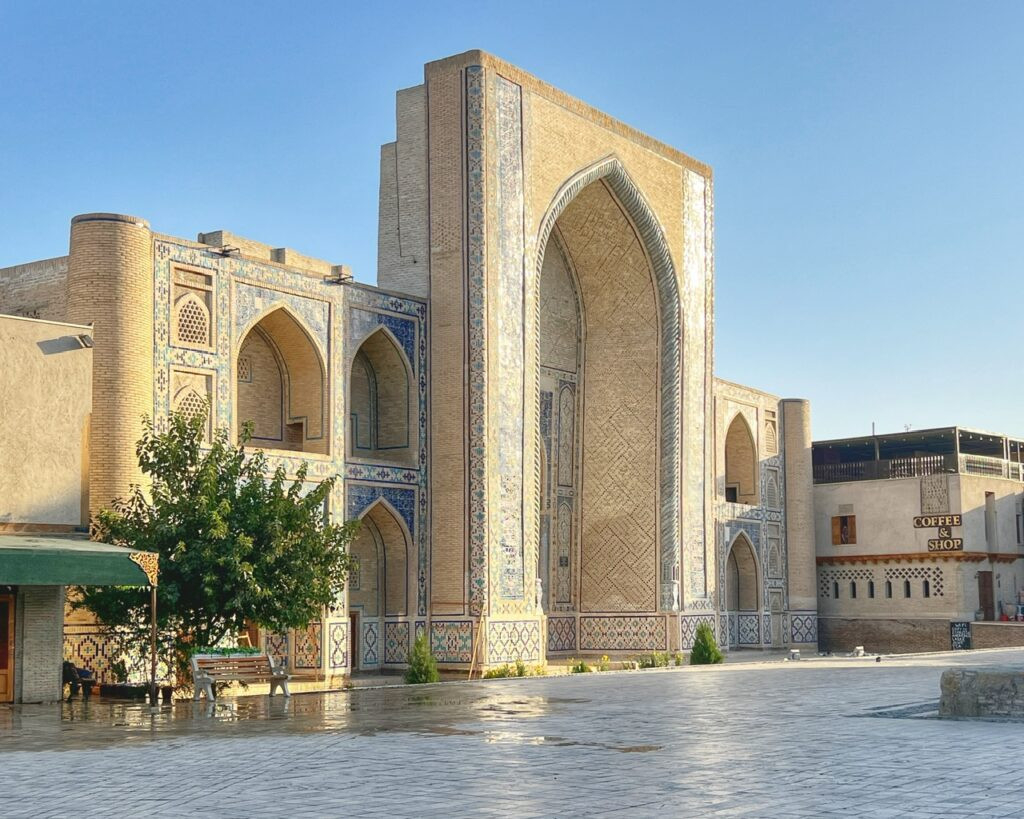

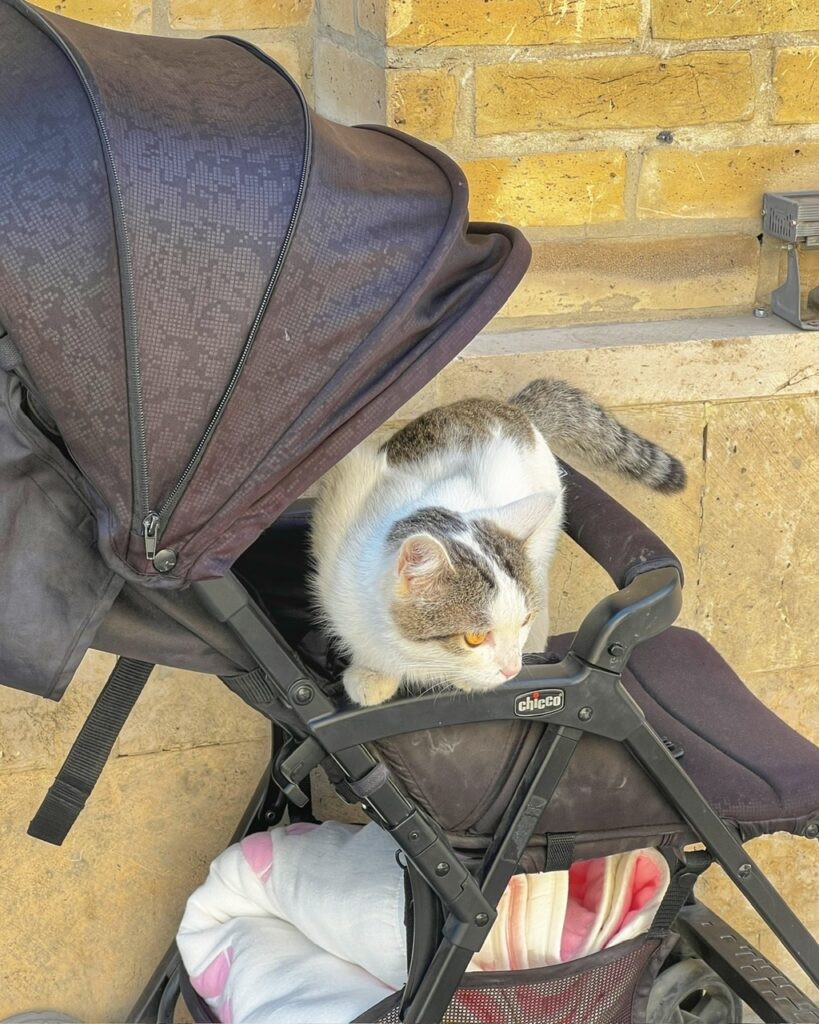
More scenes from our morning runs.

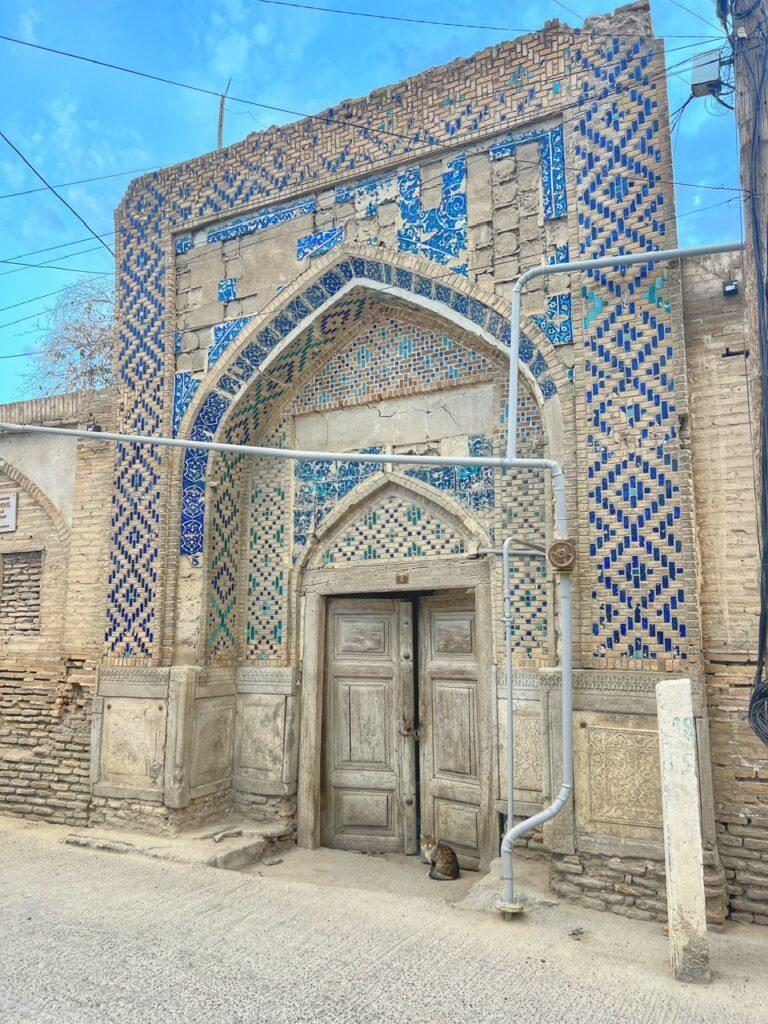
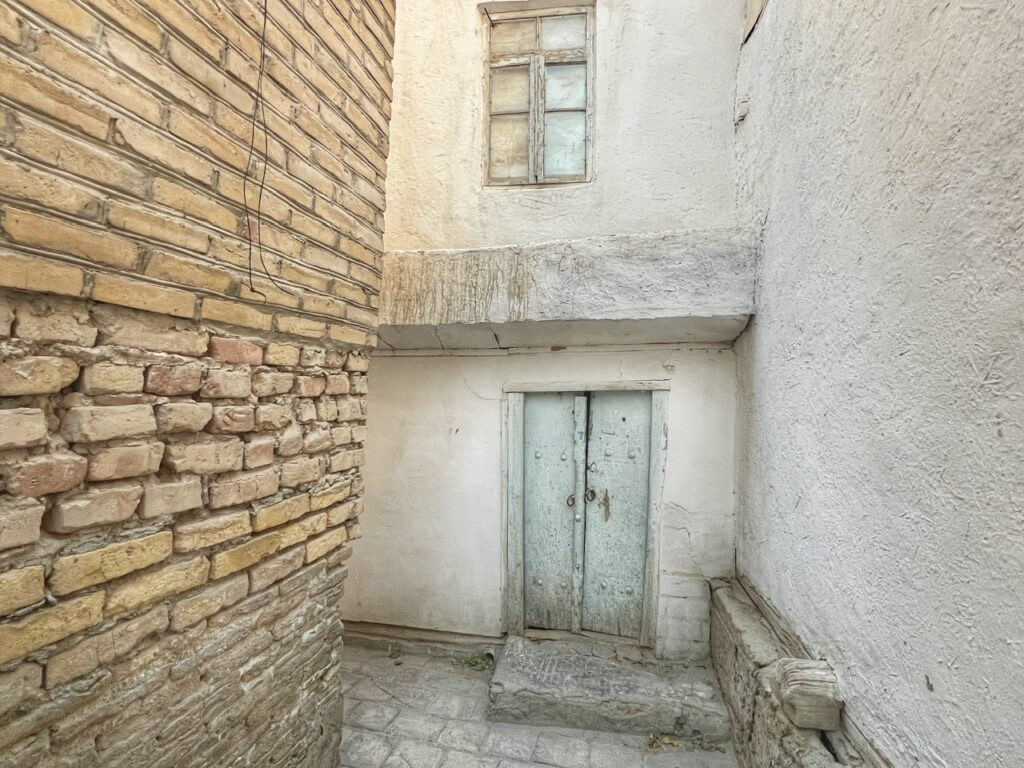


These streets are made for wandering. On them, you’ll find many more dilapidated signs of days gone by, which perfectly complement the feline population. At last! A Central Asia city with plentiful paw prints! Most of them seemed plump and happy as well….though it’s no Istanbul in terms of catmenities. Unless you count an unsophisticated neighborhood playground. Sadly, this also seemed to be where the neighborhood’s trash was heaped (which made it a prime spot for grazing cats.)
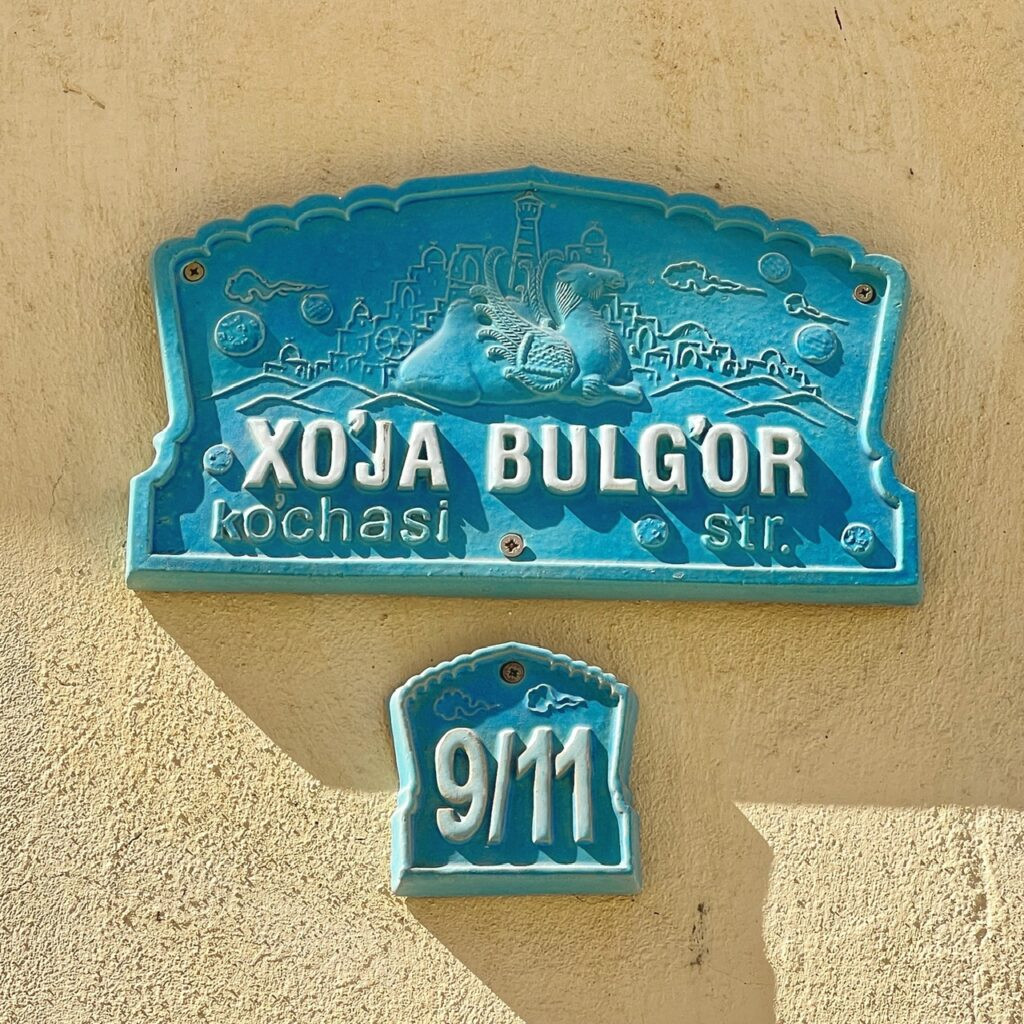

Ornamental streets signs which would be imperative in these maze-like streets in the days before smart phones. Naturally in a historic hot spot like Bukhara, it’s also possible to stay in a former caravanserai. A charming one we peeked in was the Hotel Caravansaray Rashid. Rooms start around 73€.
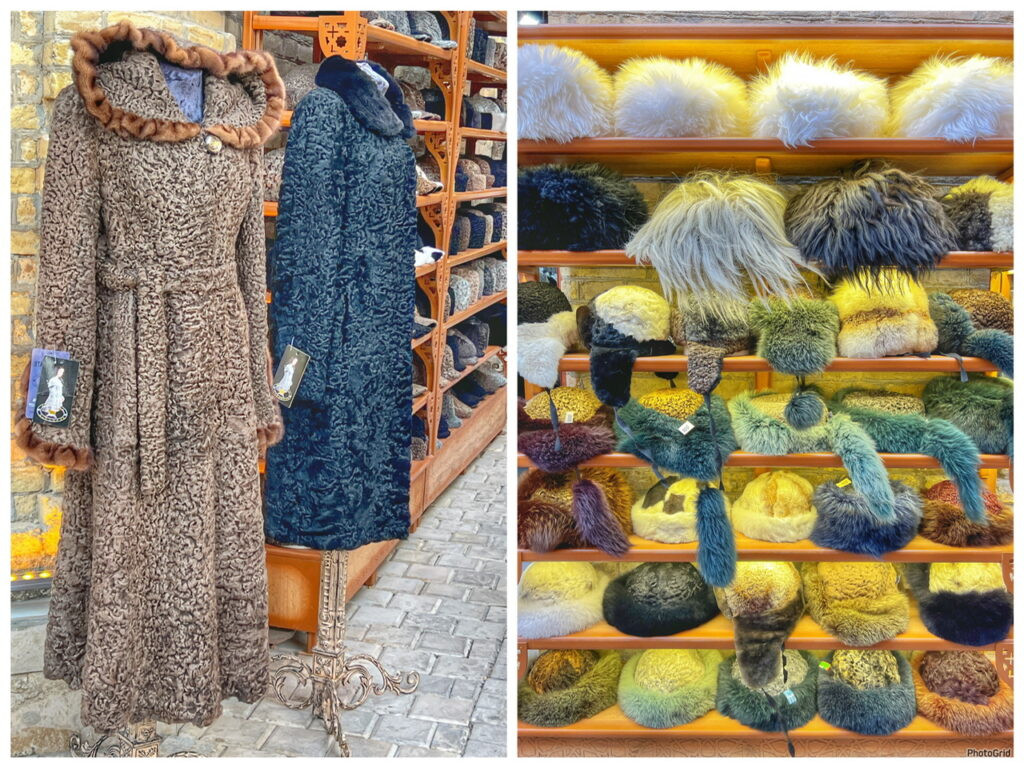
If you’re in the market for winter wear, Uzbekistan is the place for cozy attire. We’ve never seen such beautiful and fun winter coats and accessories. Unfortunately (fortunately) for us…we don’t do winter anymore. 😂 Also, it didn’t really occur to us until after the fact the brutal killing that goes into some of these beautiful accessories.
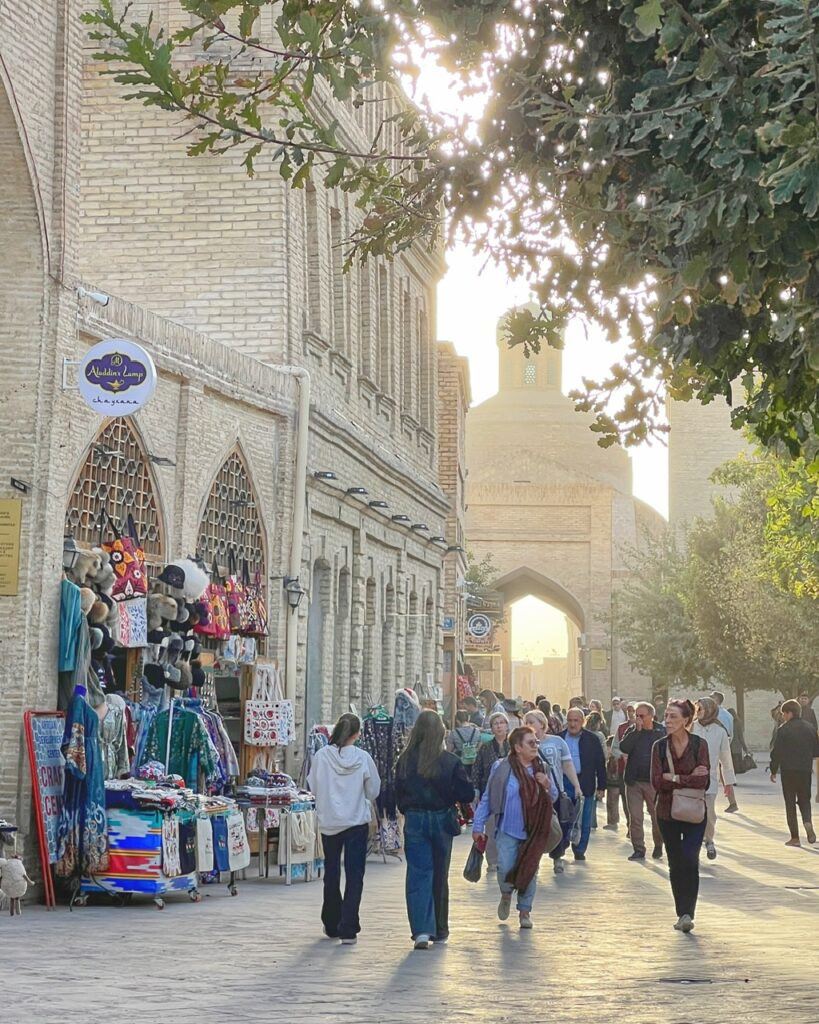
The difference between back alleys and tourist zones was striking.
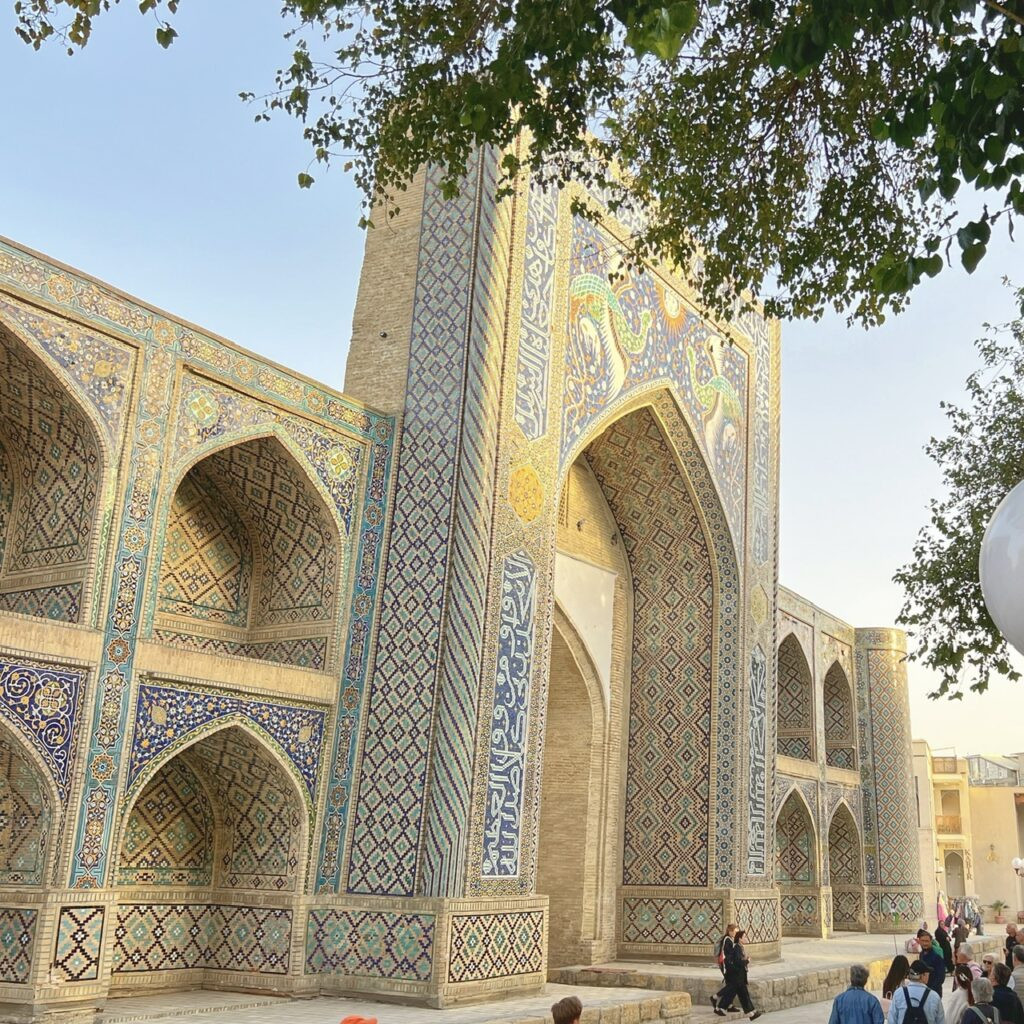
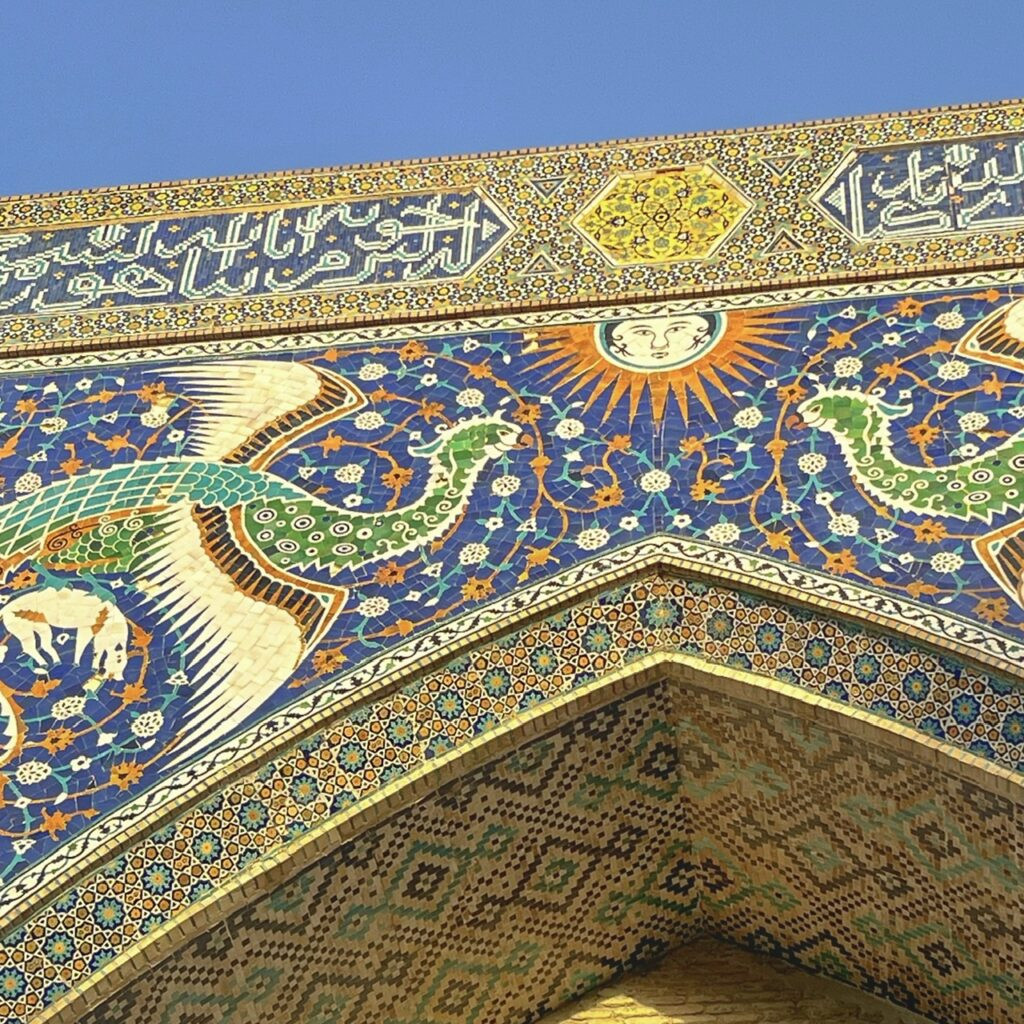
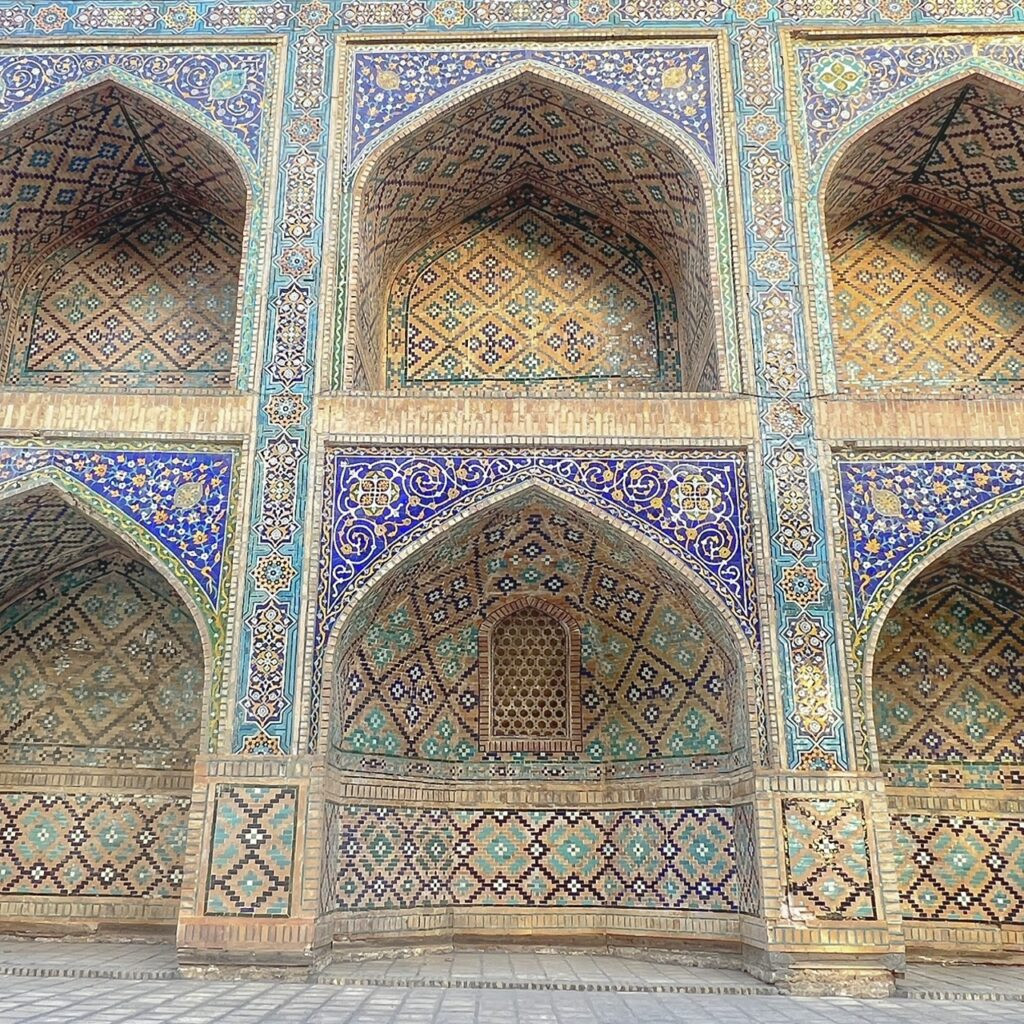
According to Chat GPT, despite its name, Nodir Devonbegi Madrasa was not originally built as a madrasa in the 17th Century. It was supposed to be a caravanserai. However, during its inauguration, the ruler basically declared, “What a wonderful madrasa!” — which was not the original plan — so Nodir Devonbegi had to quickly convert it into a madrasa so he could save face. Sounds like a flub familiar to a certain “ruler” we know….😂
Atop the “madrasa,” peacock mosaics adorned the entrance. Like the tigers in Samarkand, they are unusual because Islamic art usually avoids depicting living creatures. Other than this, it’s one of the most mosaic-ed edifices in Bukhara…
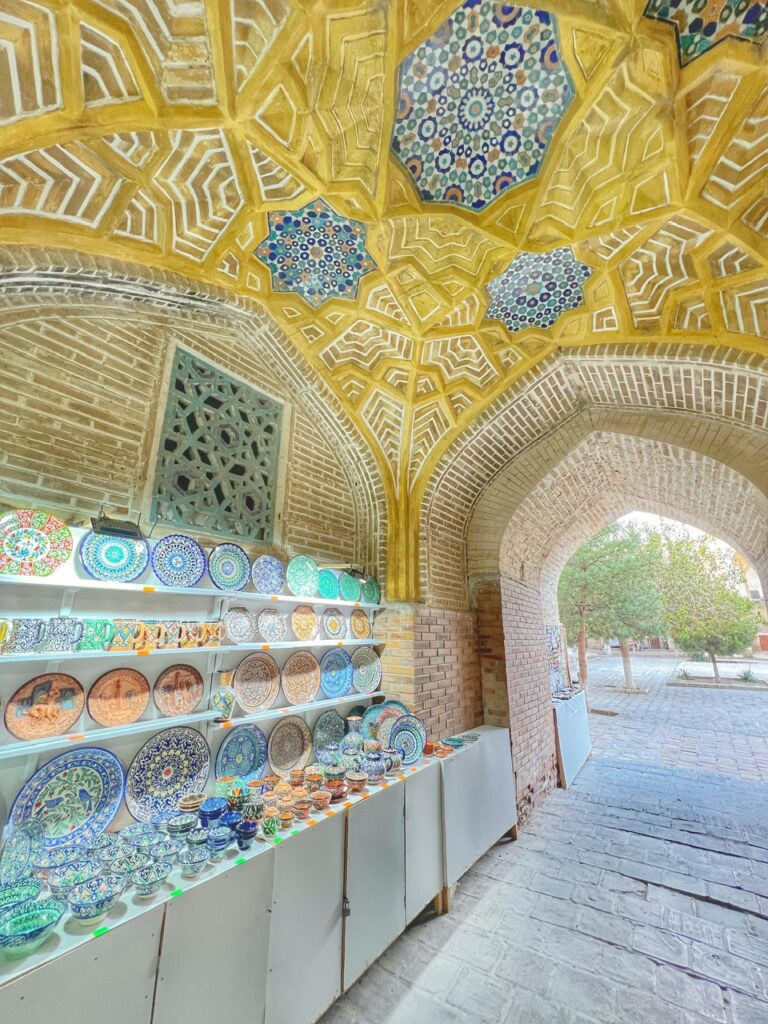
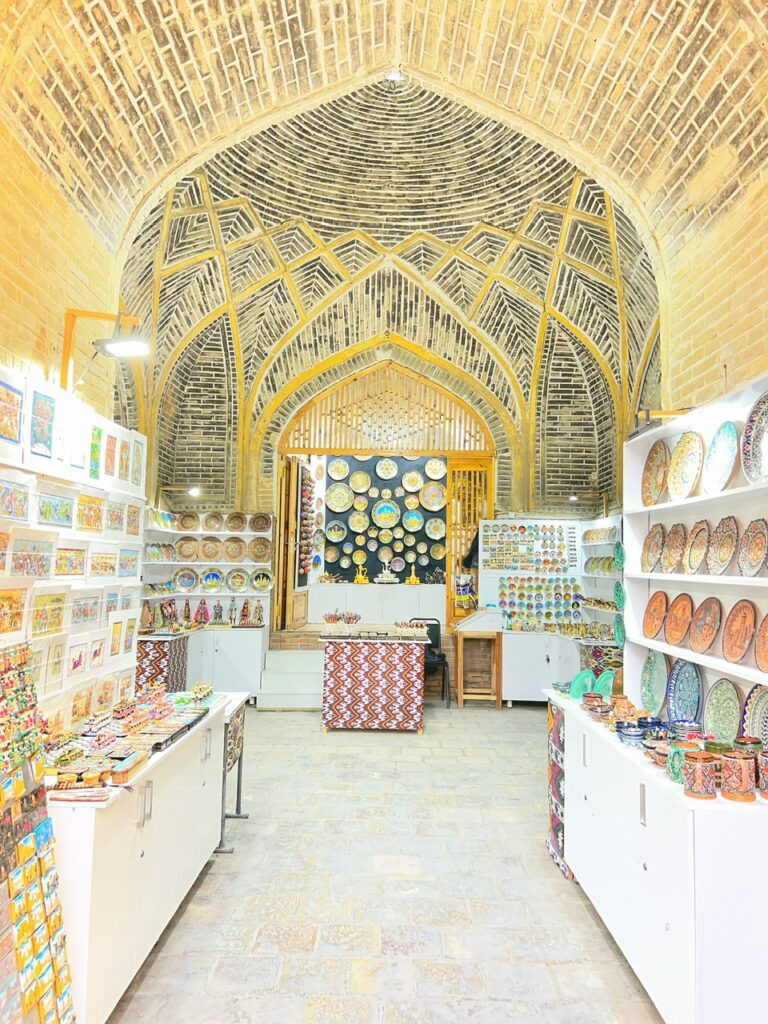
…although the tableware in the historic markets offers stiff competition.
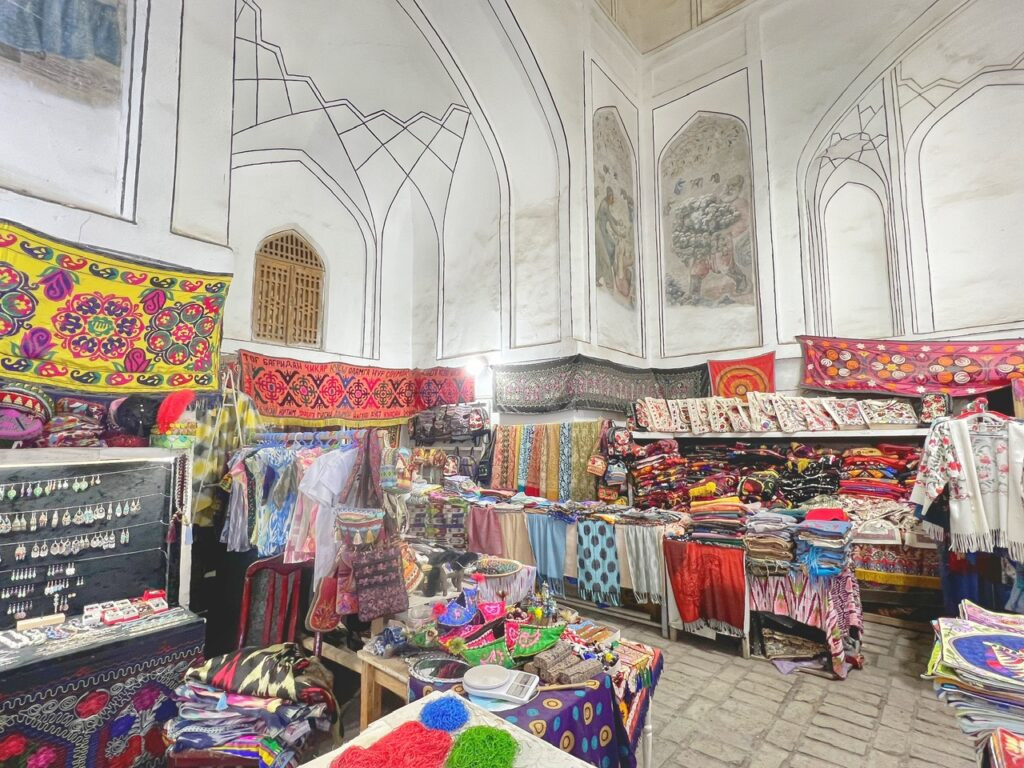

….there is simply an obsessive amount of shopping in Uzbekistan. It really speaks to their long trading history. And yes you can negotiate!
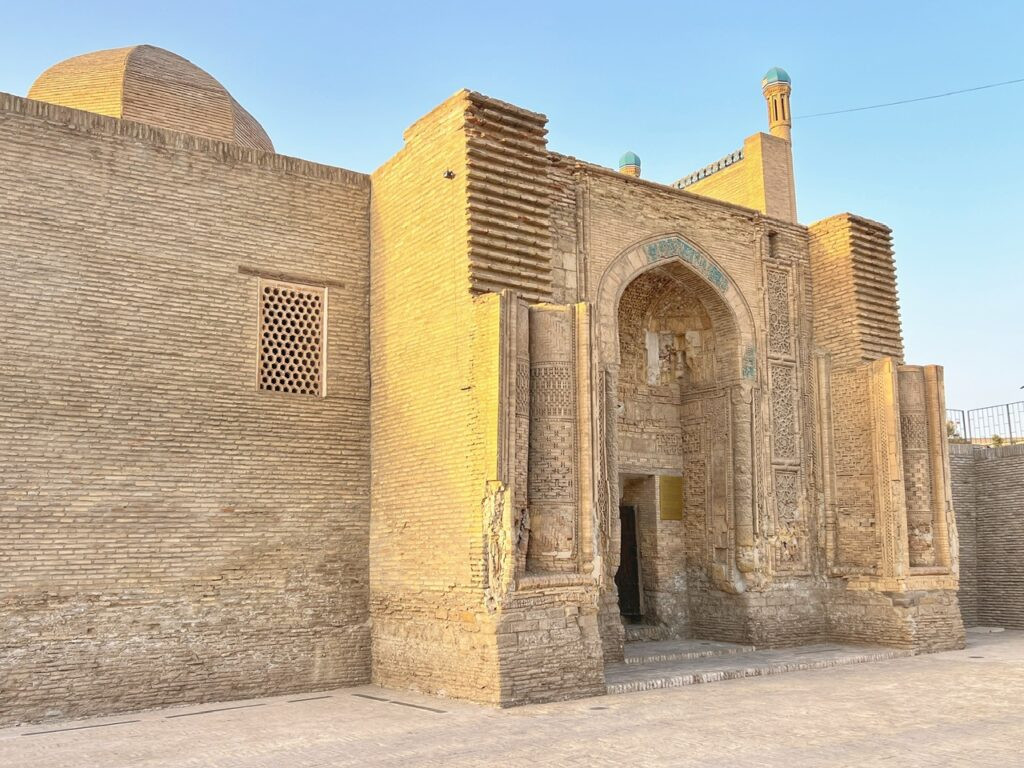
Guess what? Yep….another madrasa. Unlike pencil stubs, this one has what looks like a book on its facade.
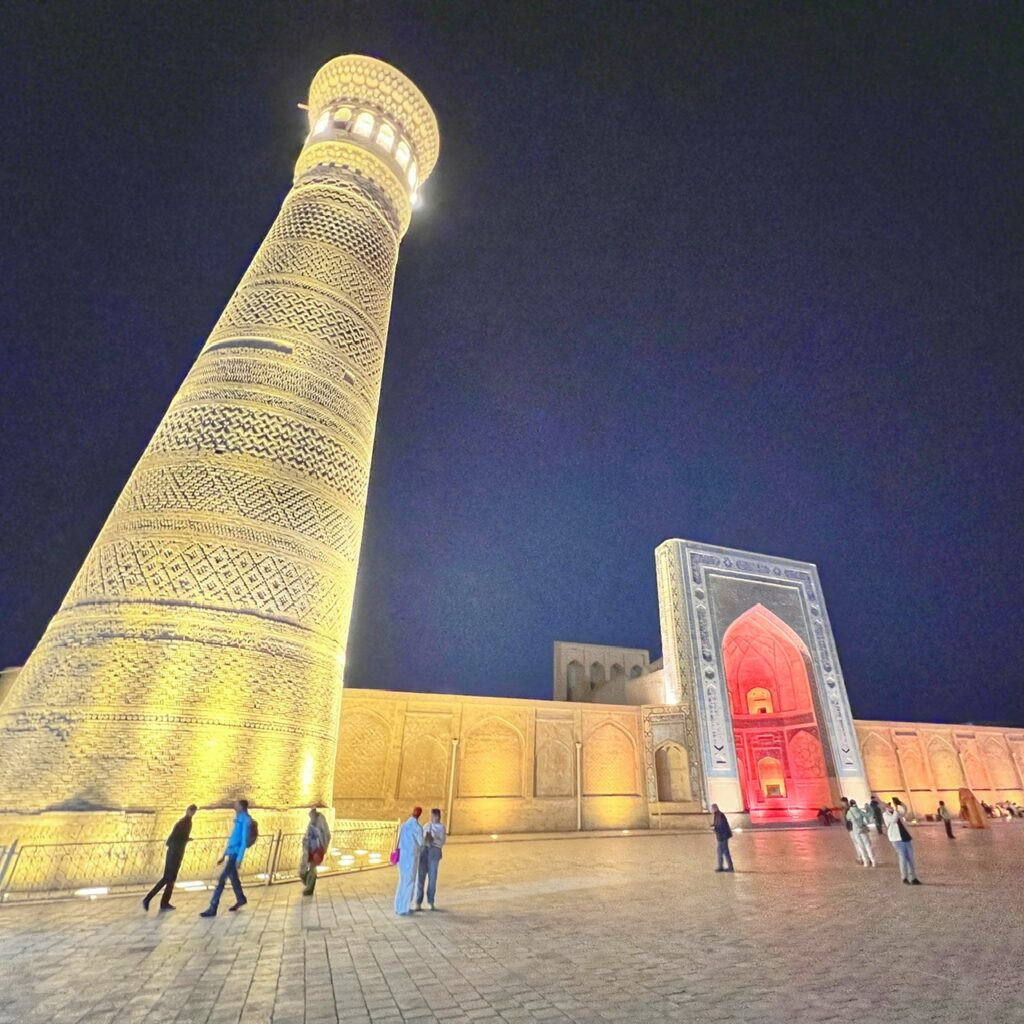
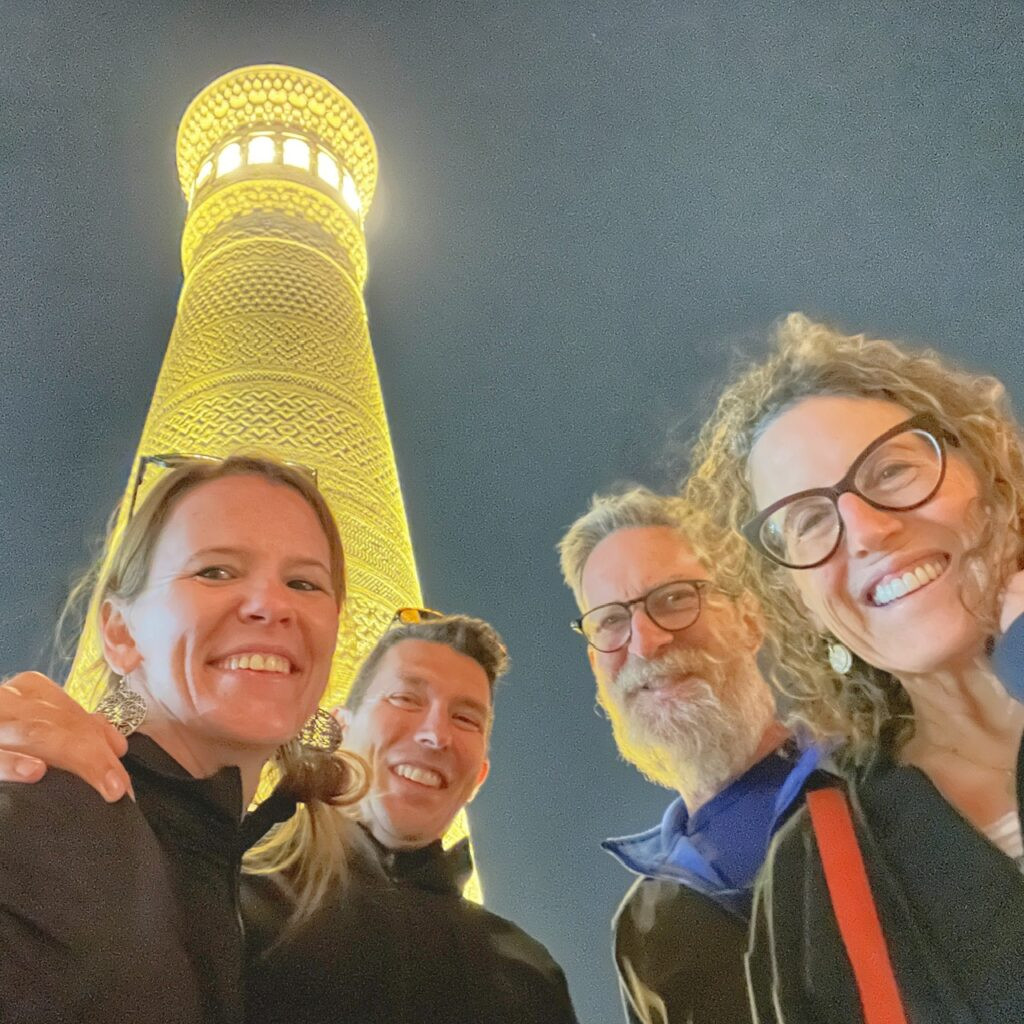
The mystical Kalon Minaret by night. Unfortunately, this beauty was overshadowed by some pretty sick deeds in all-too-recent past nicknaming it, “The Tower of Death.” Until 1920, prisoners condemned to die in public execution were tossed from the rotunda at the top to the stone courtyard below. And naturally it was done on Saturday…market day…so that maximum onlookers could cheerily gaze at the gore.
Fortunately there were no bodies being chucked over the side when we posed under the same tower with travel friends from Seattle, Tracy and Steve. We met them the first time in Kas, Türkiye in 2022.

Other night visions of Bukhara.

Is this seriously a paramedic vehicle? 😂 I’m not sure it fits a stethoscope!

The Bolo Haouz Mosque, is a 1712 stunner adorned with wooden columns. It’s also on the UNESCO World Heritage list.

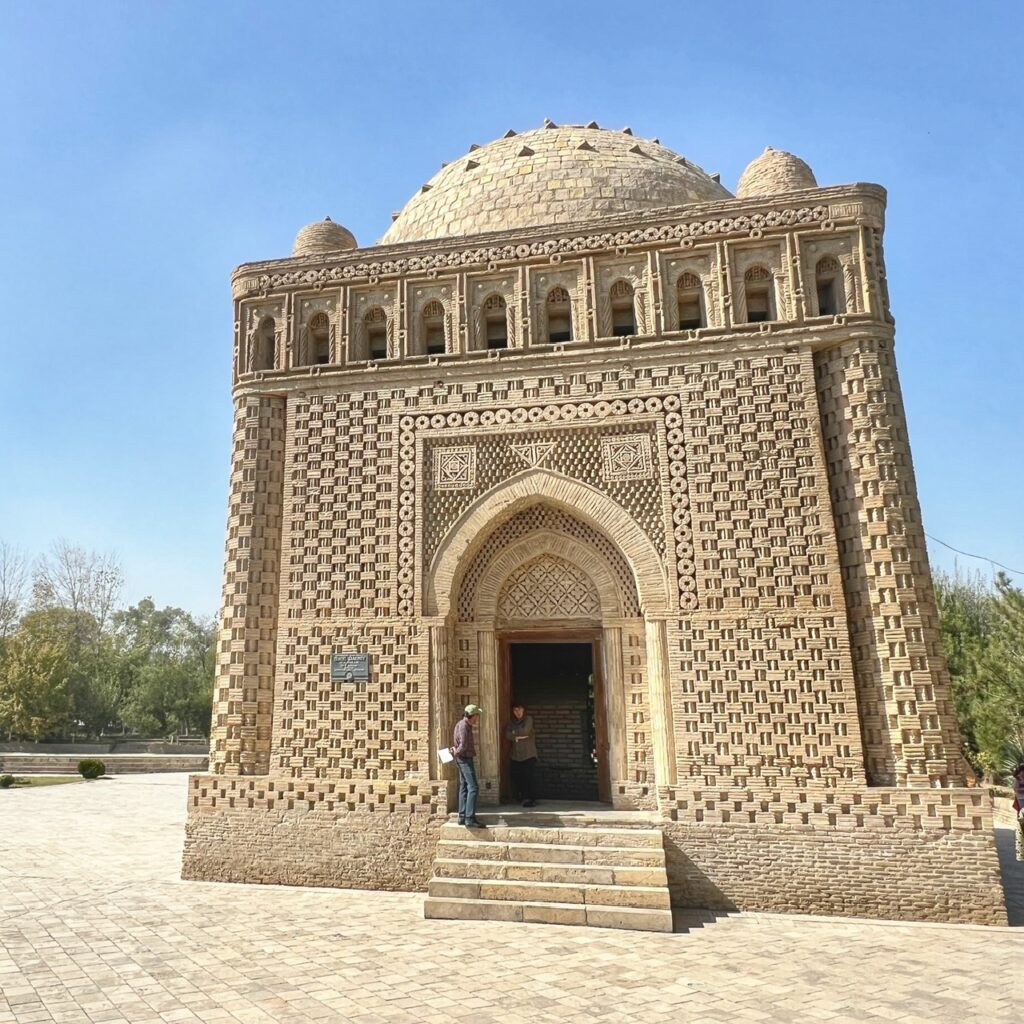
One of the city gates, now being restored. Also, Ismail Samani Mausoleum in Samani park dating from 905. This is one of the oldest standing sites of early Islamic architecture.
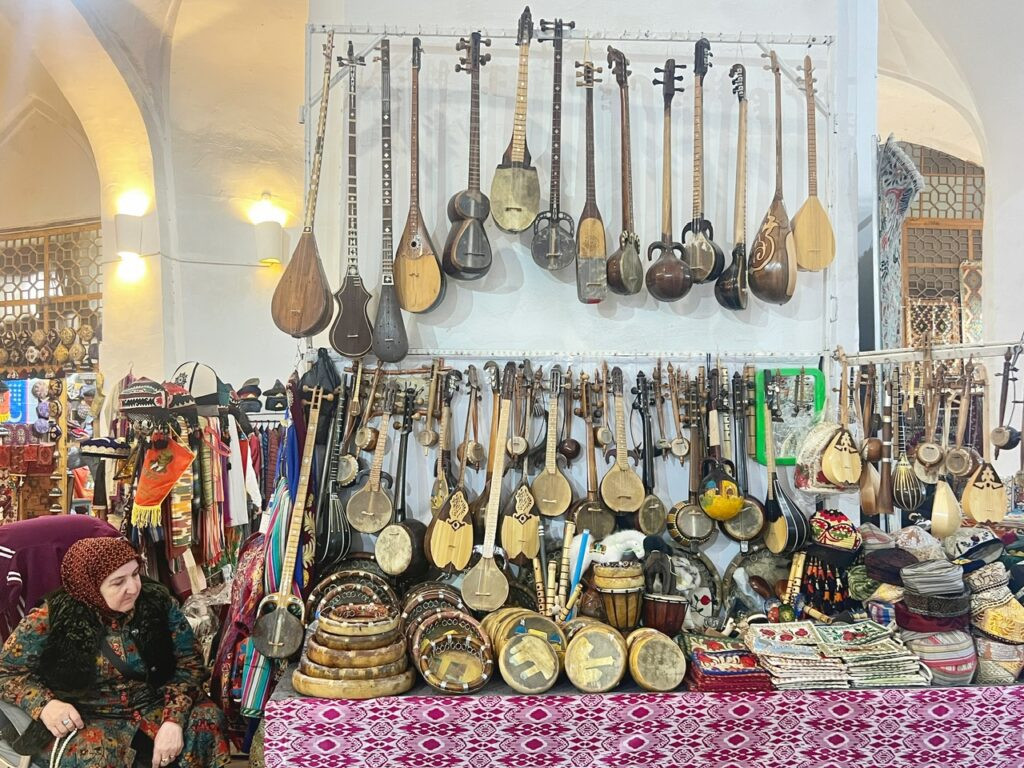

Elements in an Uzbek band, and a local family in the bazaar
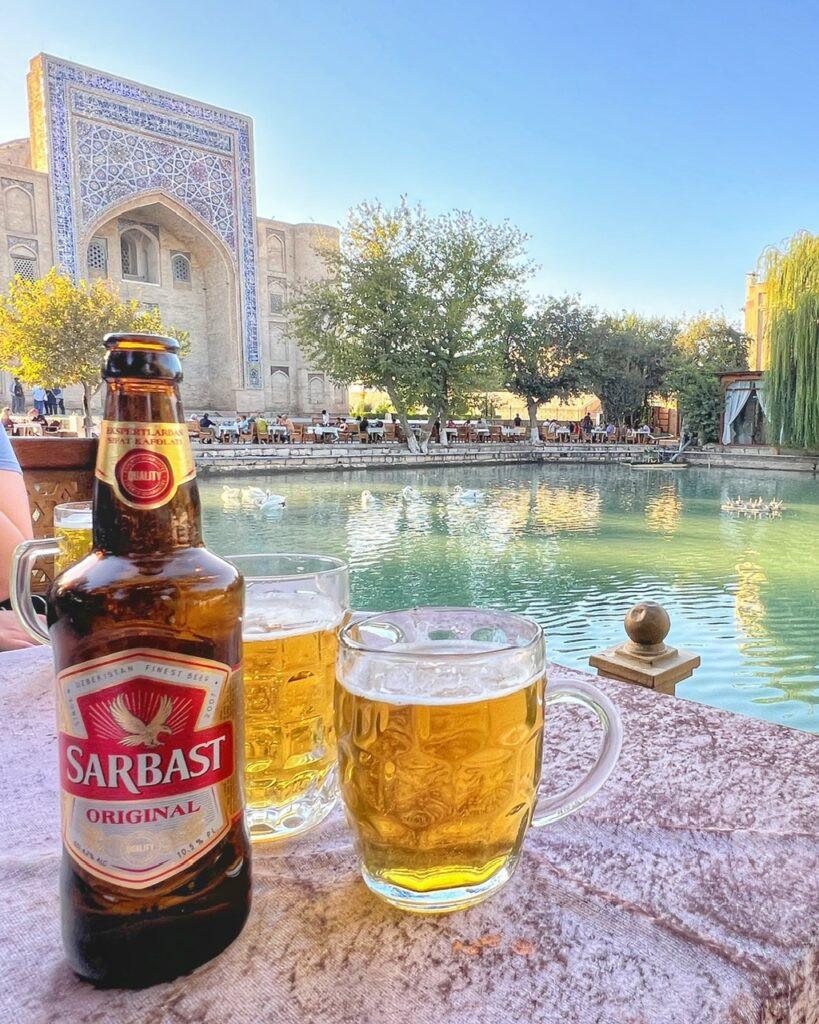
Brews with a view. $2 each.

Visiting Zindon, aka the Bukhara prison where the aforementioned prisoners awaited their minaret plunge. The most infamous cell in the prison was known as “Kanakhona” or “Bug Pit,” which could only be accessed only by 6-meter rope. Oh can you imagine the torturous conditions involving scorpions, bugs and mice devised to earn that name for the most “prized” prisoners?! 😬

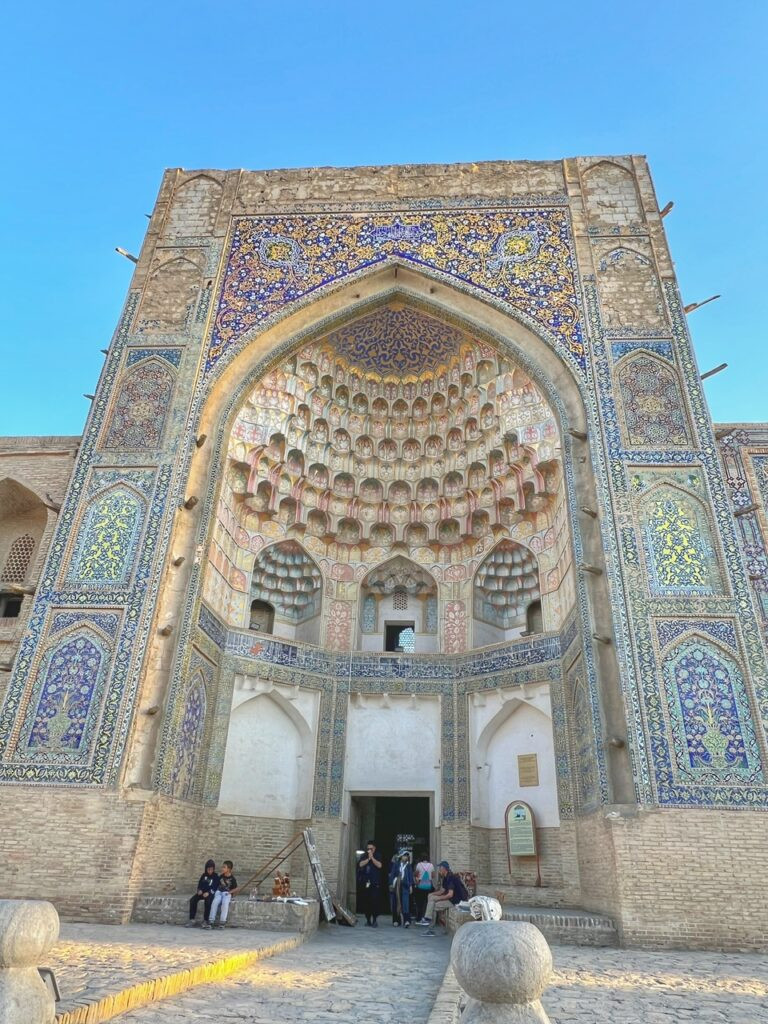
We loved wandering the alleys of Bukhara the most, especially when a dazzling dome popped its top up in the distance. Yep another madrasa….Madrasa Abdul Aziz Khan. It’s practically a baby built in 1652.


Inviting little entrances during the golden hour. This section was a long post, which I had just finished after traveling on a 15-hour overnight train. We finally checked into our apartment in Tashkent at 3:00 p.m. In short, we were exhausted. It’s really time for us to slow down….
The Food of Bukhara
This next section focuses less on the allure, and more on the day-to-day reality of…the food. And, what we’ve definitely learned about Uzbekistan, and Central Asia overall, is that it’s not a place we want to linger ever again for its health-conscious and diverse cuisine. Sure, it’s adequate for a 10-day bop along the famed Silk Road cities, but after 2.5 months there’s only so much Manti, Plov, Lagman, and Shashlik (kebab) a person can eat. And if you’re really not a fan of being a regular carnivore or carb hound, the options shrink up even more….
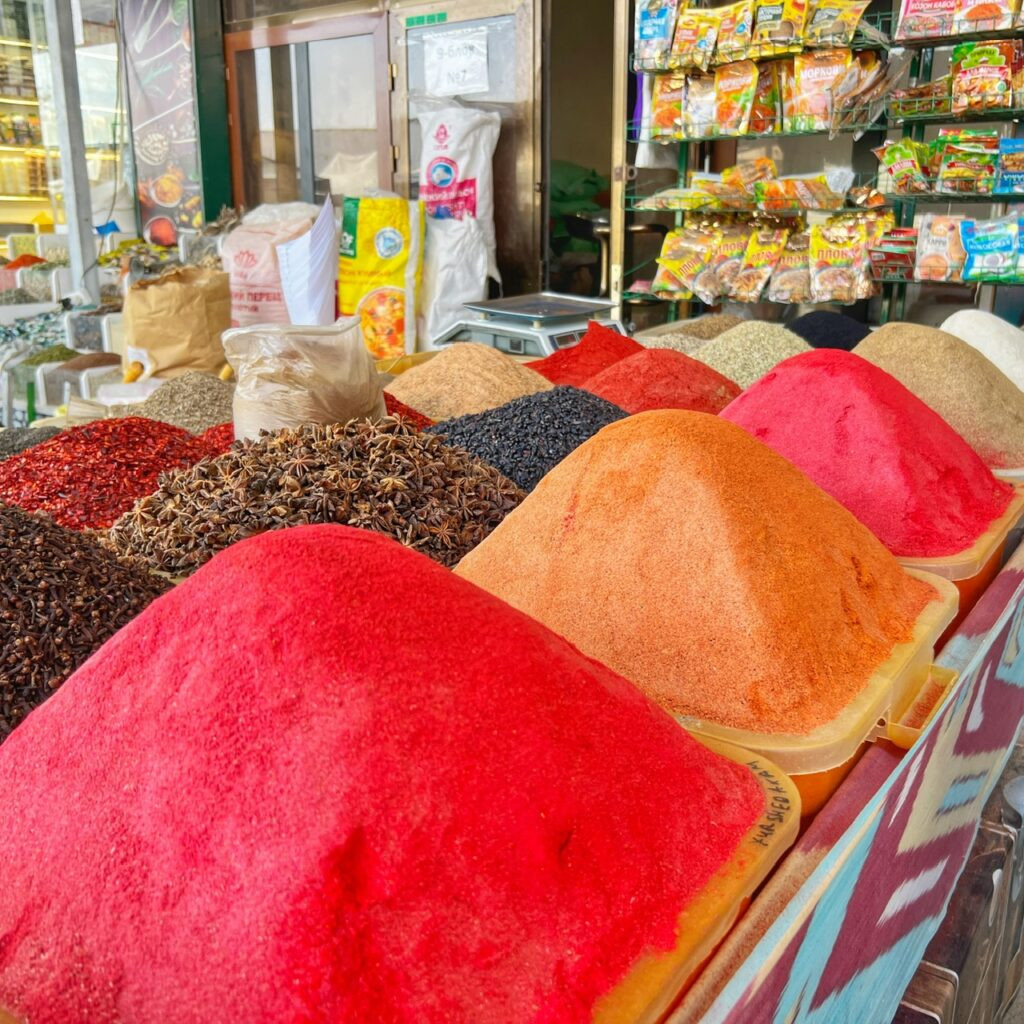
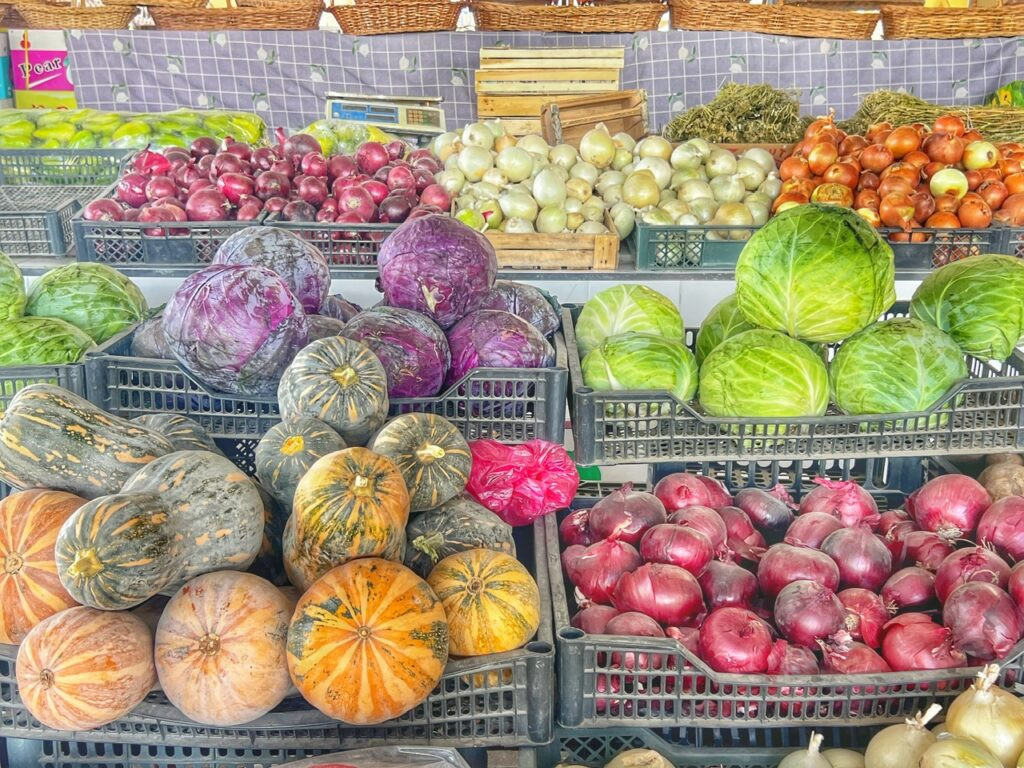
The pity is, they have magnificent mounds of spices….and vegetables…so there is some serious potential for diversity!
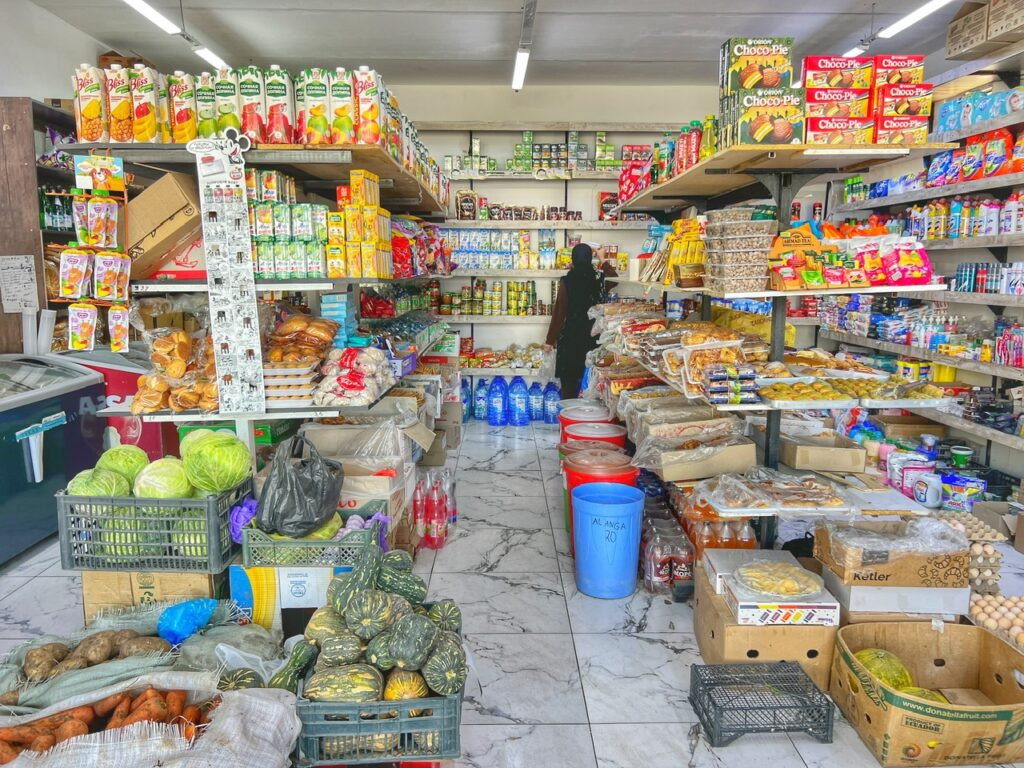
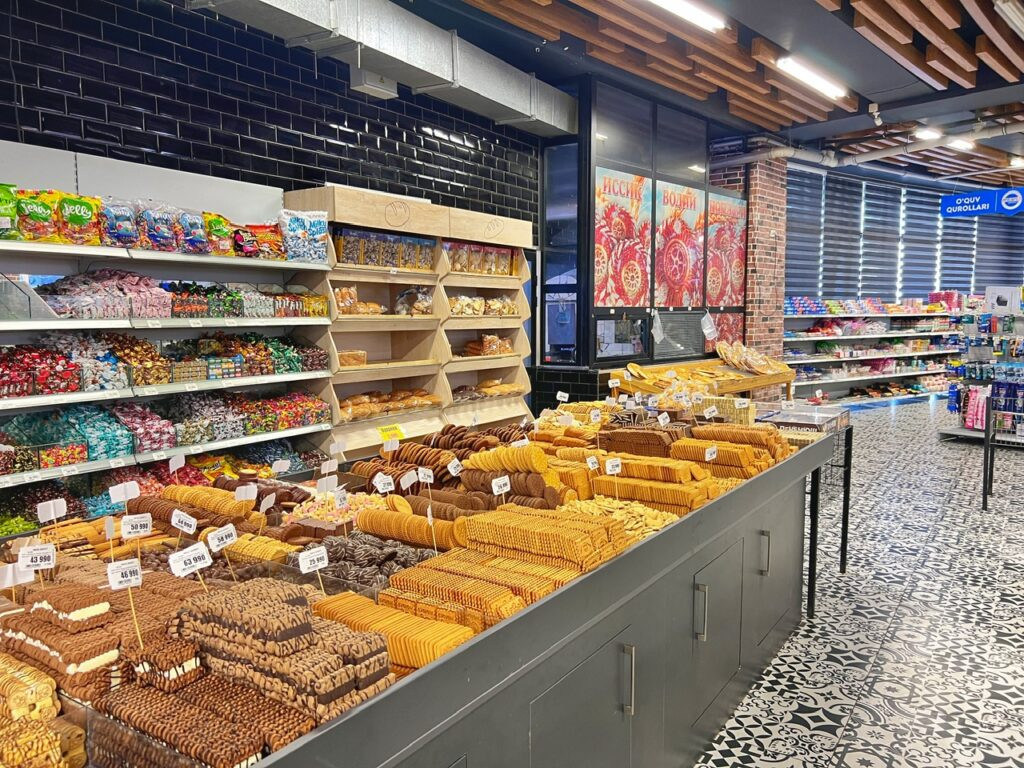
A small grocery store in Bukhara literally called “Cheap Grocery…” and it was!
On the flip side, a “Mega Market” was the only supermarket we could find within about 35 minutes walking distance from the historic center. It was big enough to have the essentials we needed, which did not include handfuls of biscuits from their open displays. This has also been a common set-up we’ve seen in Central Asia…exposed cookies. Doesn’t anyone have concern for staleness?
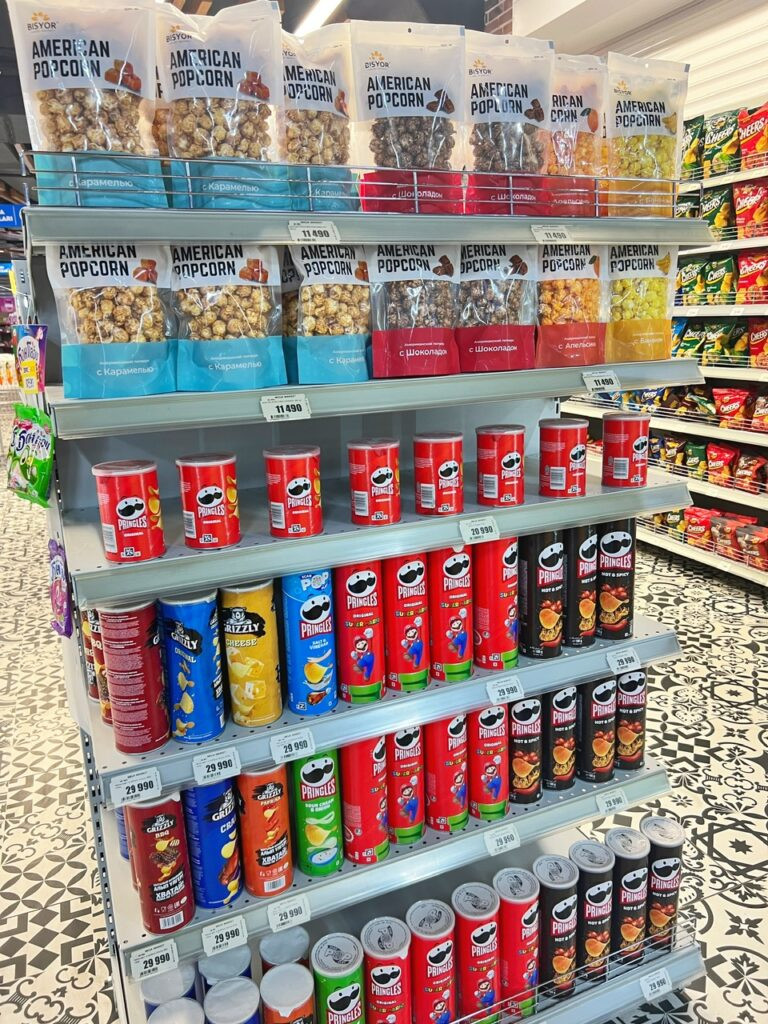
The “American” section. Our contribution to the “culinary” world is seriously sad.


So, when we did go out for meals, usually once a day, we ordered many salads. Sometimes, when we stayed out of tourist restaurants, we would simply point to food options because our Google Translate continually failed us. While at the restaurant “Aladdin,” they were on the right track with the amazingly fresh ingredients of dill, cilantro, tomatoes, peppers and cucumbers. However, there was only a sliver of lemon to dress it with. No salt, no pepper, no oil. But, desperate for a healthy fix, we crunched the veggies down.
One interesting meal we also discovered in Bukhara was called “Chicken Jizz,” which we must admit, tasted much better than it sounds. In fact, it resembled another food we know well…Chicken Fajitas. Thus, it was quite tasty, and we took our leftovers back to the guesthouse, tossed some yogurt on them to substitute sour cream, and threw them in a lavash wrap and you could barely tell the difference. This meal, with the above salad and juices, was $13.

At Xon Atlas, a tourist restaurant, we had “Kayish Shilpildok”, which was hand-cut boiled dough pieces flopped blanket-style on a plate, topped with vegetables and beans for $4. While it looks kind of interesting, it was quite flavorless.


On another day, we checked out one of the beautiful daily bazaars, which was packed with locals…
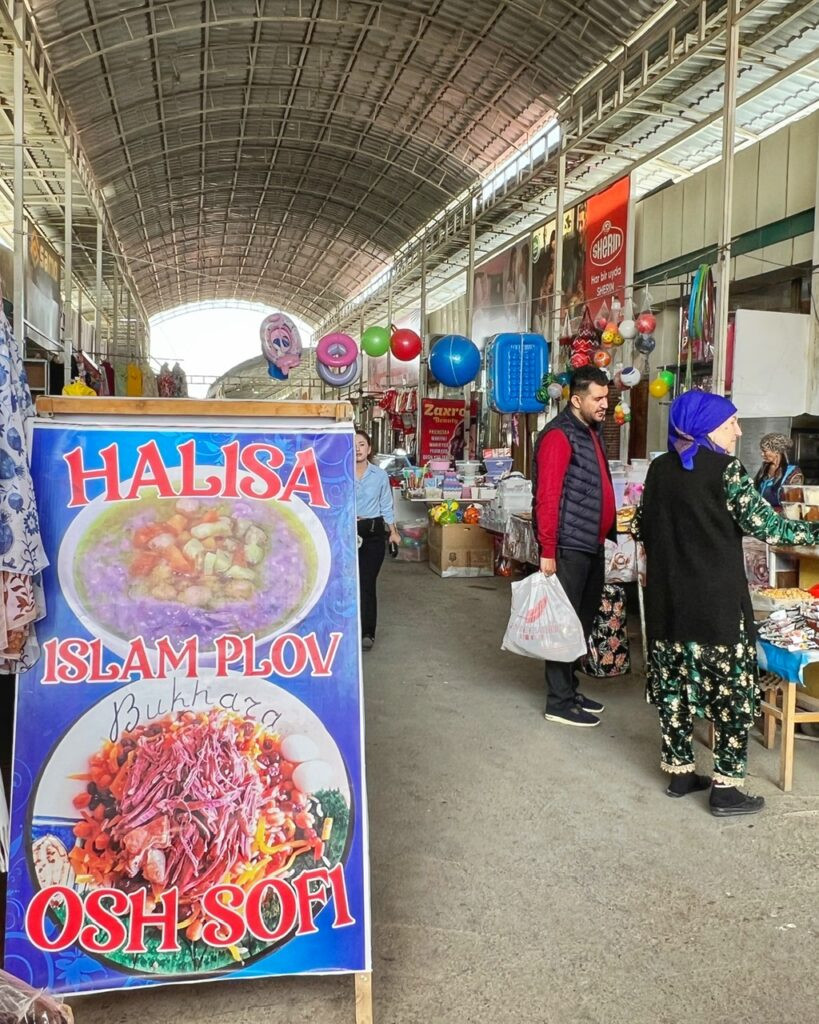
….and where we wanted to try some market food, but as soon as we saw the limited options, we changed our mind.
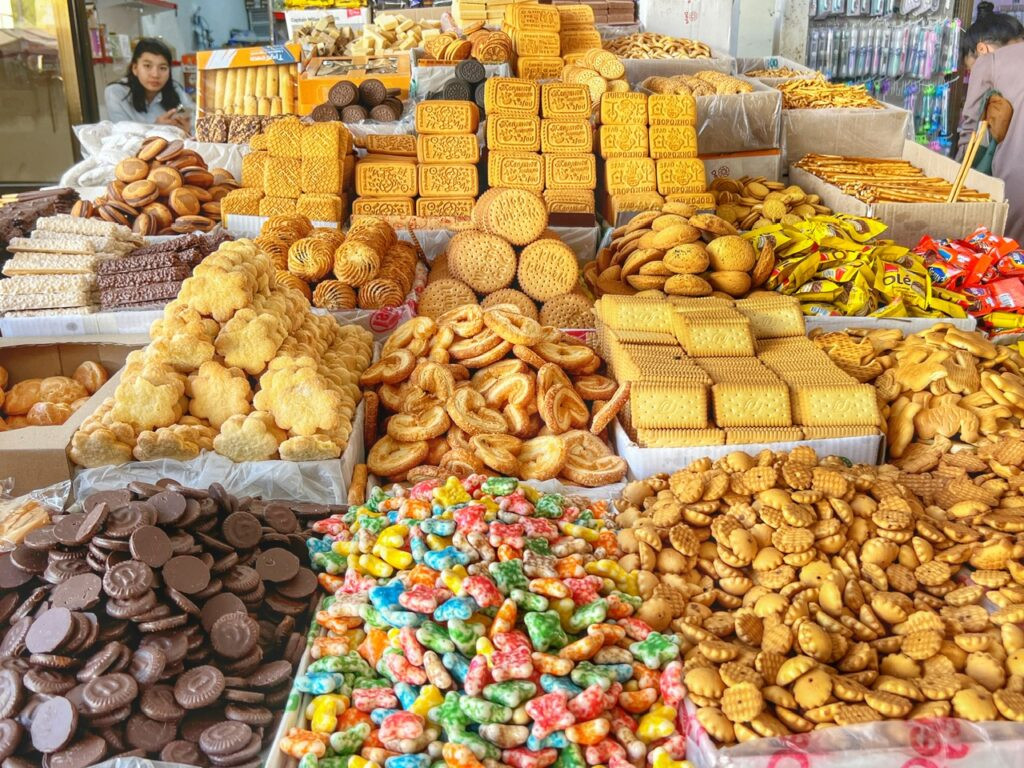


Stale cookies anyone? (For the record, they’re actually not stale….somehow.) Or, some pasta and rock sugar? Or…if you’re a snowman, the perfect place to have rhinoplasty.

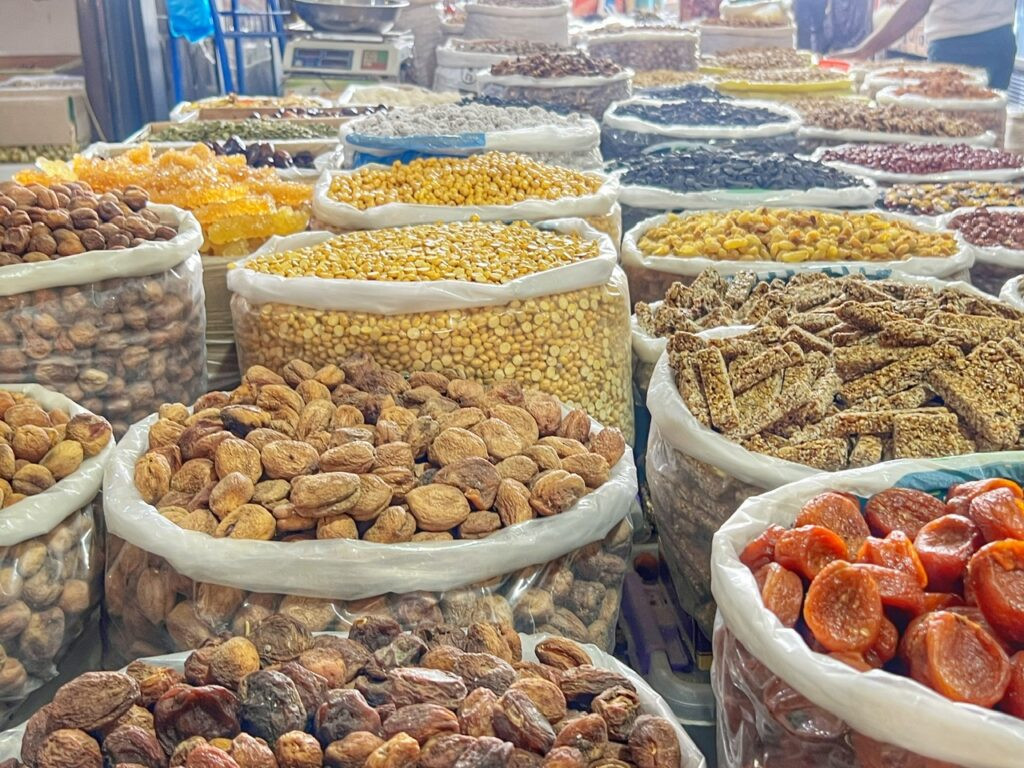
More spices? Dried goods?


Photo 1: One last meal of vegetable lagman. The hand-pulled noodles were certainly amazing (the first dozen times we had this dish…)
Photo 2: another salad with lemon juice
Photo 3: Pumpkin manti…which fortunately became easier to find the further west we got in the country.
The Artsy Side of Bukhara
All three cities we visited along the Silk Road in Uzbekistan were quite different, but within moments of stepping into its historic quarter, it was immediately clear what makes Bukhara unique….its centuries-old traditions steeped in culture and art. Everywhere you amble, creative energy is sweeping the streets as displayed through permanent art installations, ancient caravanserais evolved into art galleries, ravishing mosaics, and shopkeepers peddling some of the most stunning embroidery and textiles you could possibly get yours hands on while abroad.


The most expansive and engrossing installation was in Caravansarai Mirzo Ulughbek Tamkifurush, which roughly means “tobacco seller.”
In case you’re not familiar, a caravanserai was a roadside inn built along trade routes along the Silk Road. They offered not only lodging for merchants and their caravans, but shelter for animals, which is what this beautiful mosaic floor once served as under an unchanged full moon. Today, the inn has evolved into a large-scale art gallery for the Bukhara Biennial 2025 which was conceived as a “transformative cultural intervention.”
It positions Central Asia, and Uzbekistan particularly, as a serious player in the global contemporary art world.
One such example is these bizarre pod-like growths, which represent something in the human body, not plant world. According to the plaque, “This interdisciplinary project explores Sina’s contributions to psychology and psychiatry, particularly his studies on melancholy and healing methods. It examines historical theories of black bile in relation to modern medical findings and contrasts traditional human-centred healing with contemporary Al-driven therapy.”
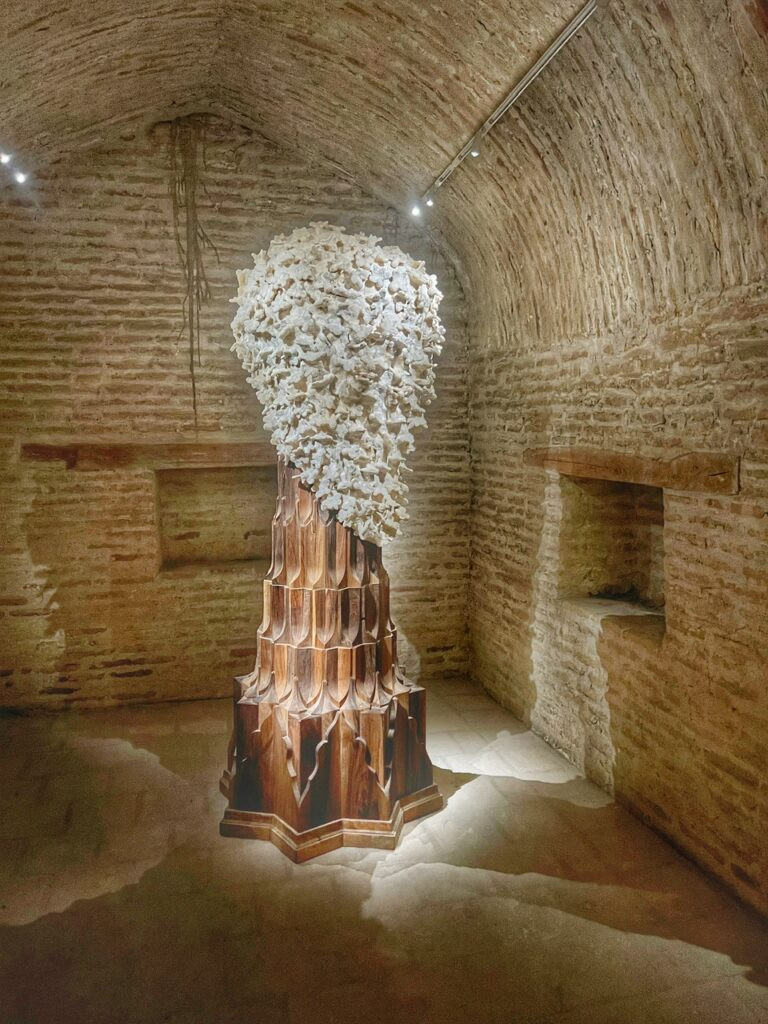


The carved wood in this installation represents traditional muqarnas/minaret geometry entangled with nature in a honeycomb, topped by a swarm of honeybees. Together, the two elements suggest that history isn’t preserved by monuments, but by persistence and repetition.
A swarm of children test out another interactive exhibit. They seem to like it!!
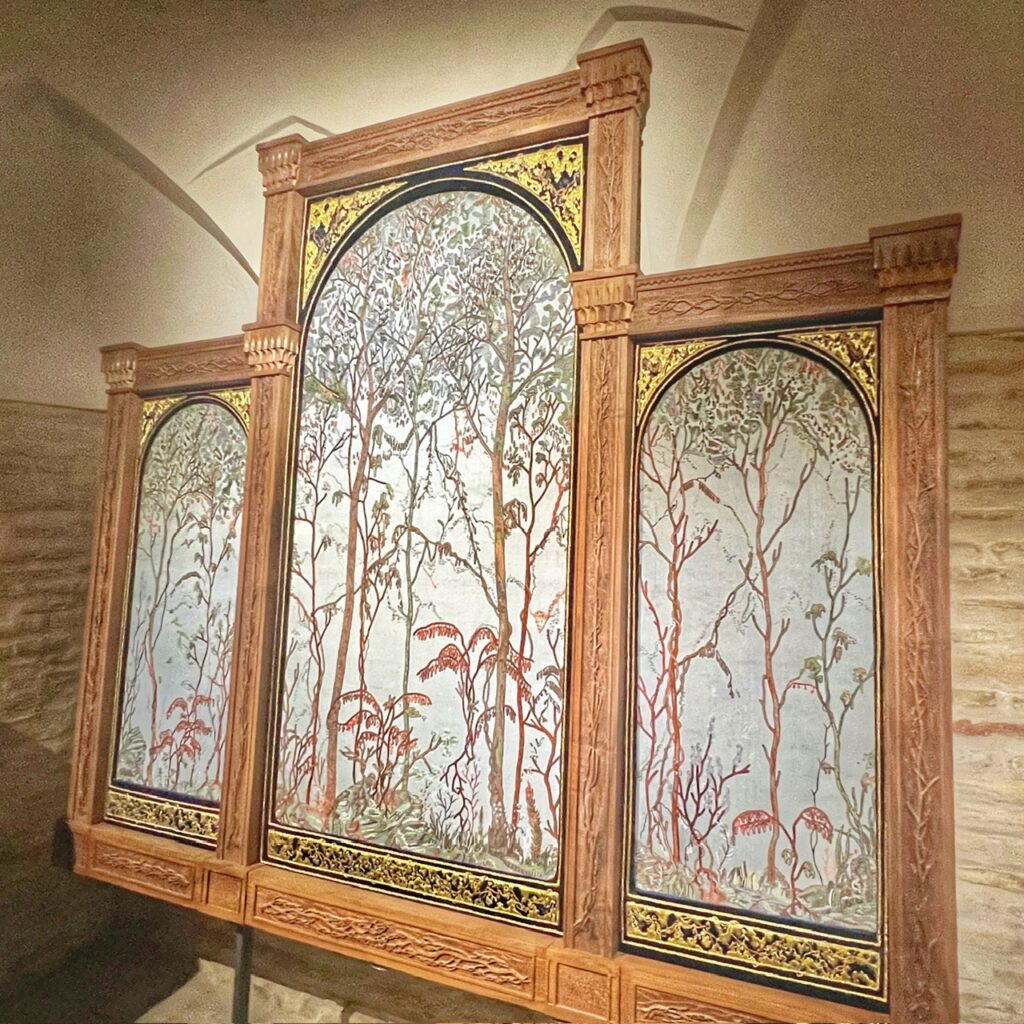
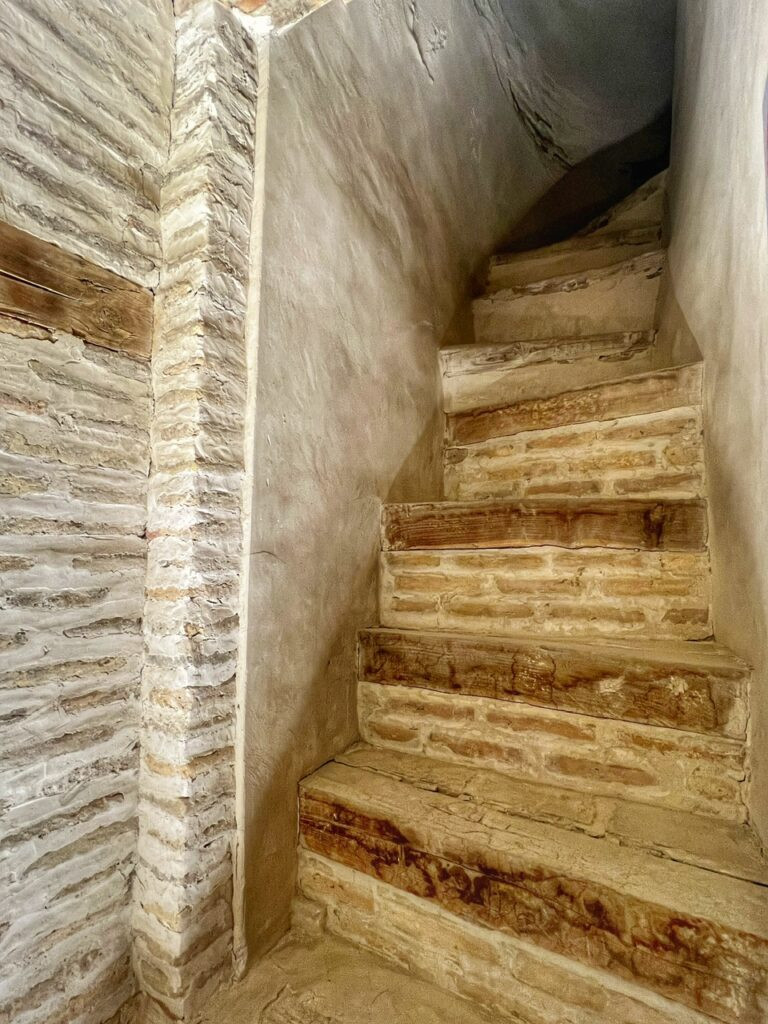
An embroidered masterpiece. It filled an entire room of the former inn. This was near an intriguing spiral staircase to….?
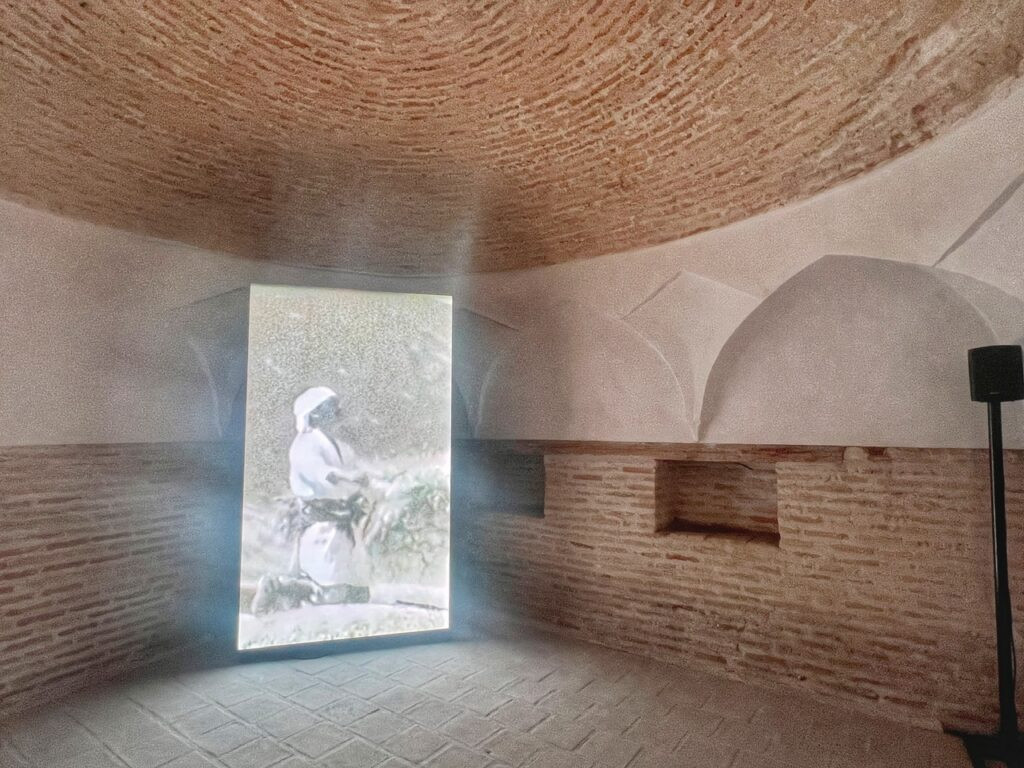
In this photo, you can better see the full size of a dark and windowless caravanserai chamber.
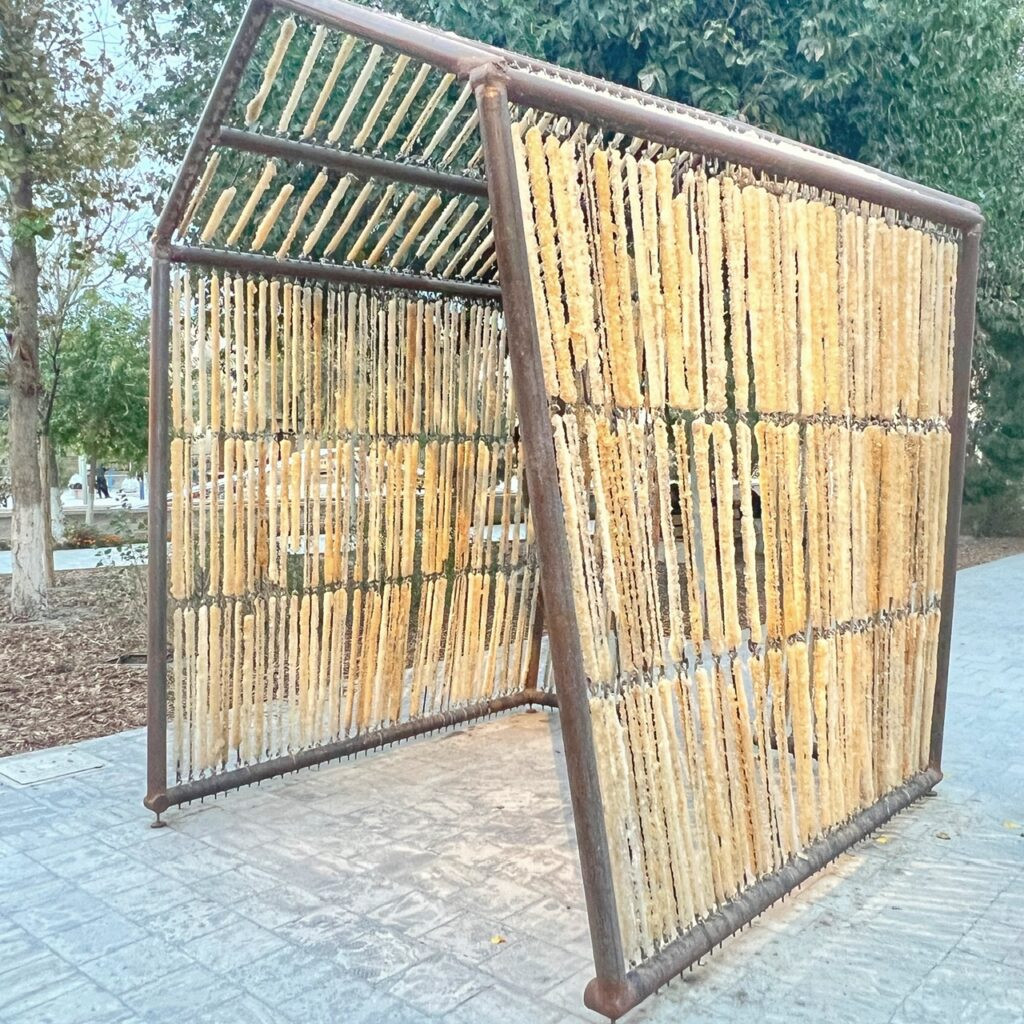
Moving on from there, we encountered an archway completely fabricated from rock candy, or navat, as this culturally significant sweet is known in Uzbekistan. (Side note…I cannot believe these goodies hadn’t been picked over by sugar-fancying fingers…)
But it isn’t “candy’ in the Western sense…Rock sugar has an extensive Silk Road legacy and was carried throughout Persia and China. Merchants used it because it was lightweight, didn’t spoil, and dissolved easily in tea. It was used in traditional medicine for stomach discomfort, low energy, anxiety, and blood circulation when mixed with black tea or hot milk. Also, in Uzbek etiquette, you don’t sweeten tea directly. Instead, you hold the rock sugar in your mouth, and sip the hot tea through it, letting it melt slowly.
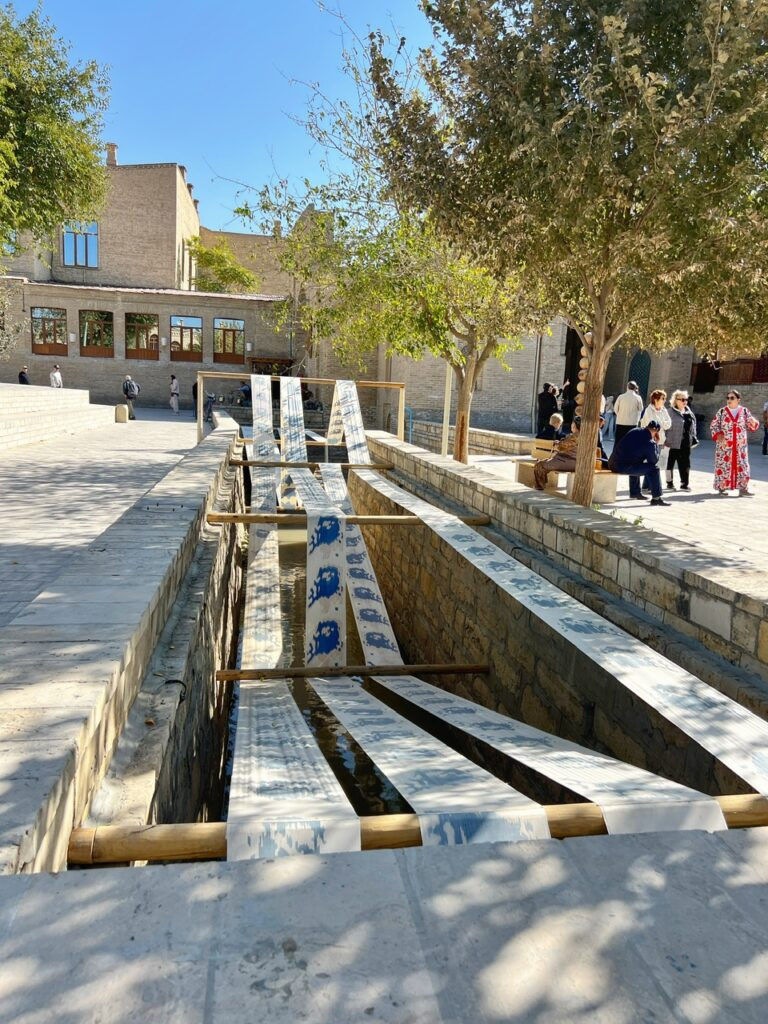

A traditional loom curiously bedecks the ancient waterways. As a major silk weaving center, this represents how historically canals powered wooden spinning wheels in Bukhara. Today, this poetic inversion of placing a loom OVER a canal represents the craft now controlling the water, not the other way around.
Also, heaps of “spices” now converted into little spice shops.
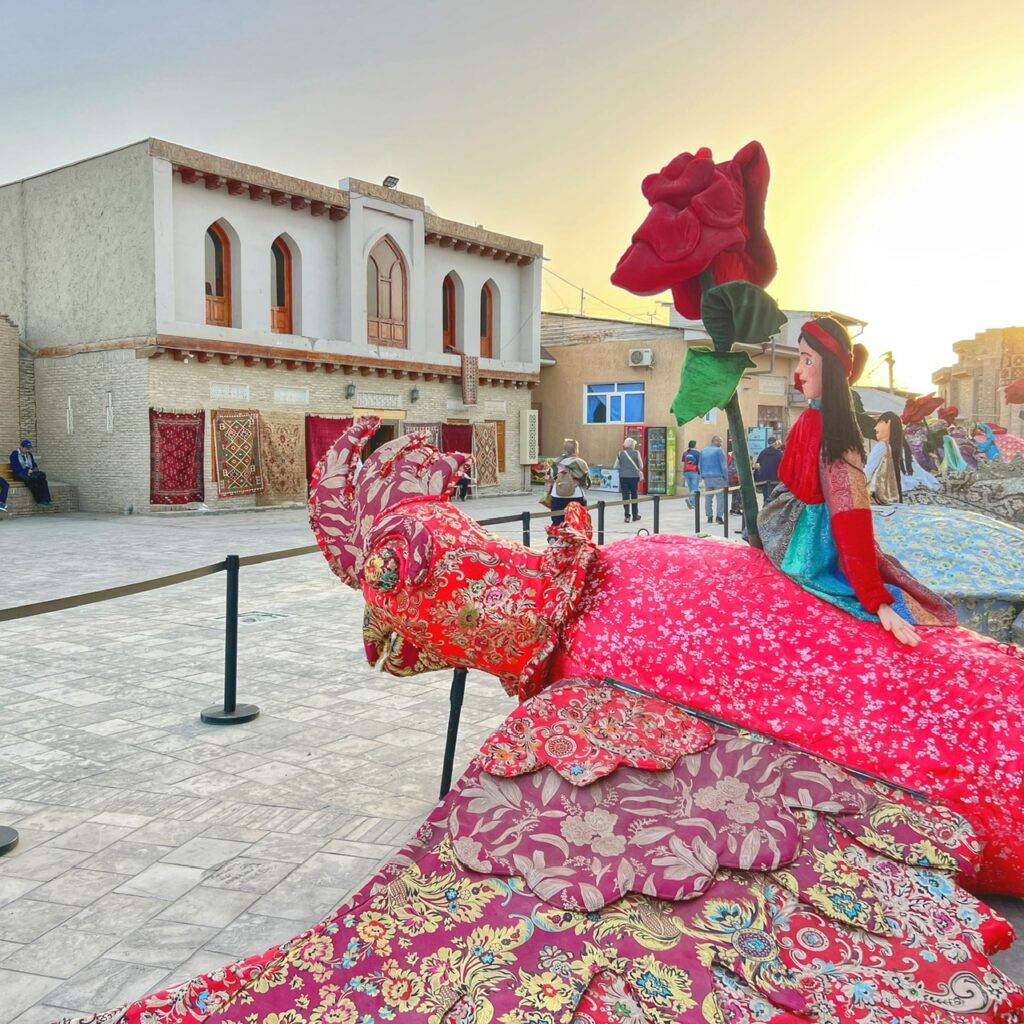

The Bukhara Puppet Procession installation is a collaborative project that merges folk puppetry, textile heritage and mythic storytelling.
An entire structure blanketed in enamelware plates, bowls, cups and cooking pans, references communal dining across Central Asia. These very types of dishes have donned many tables we’ve eaten at throughout our journey in the last few months.
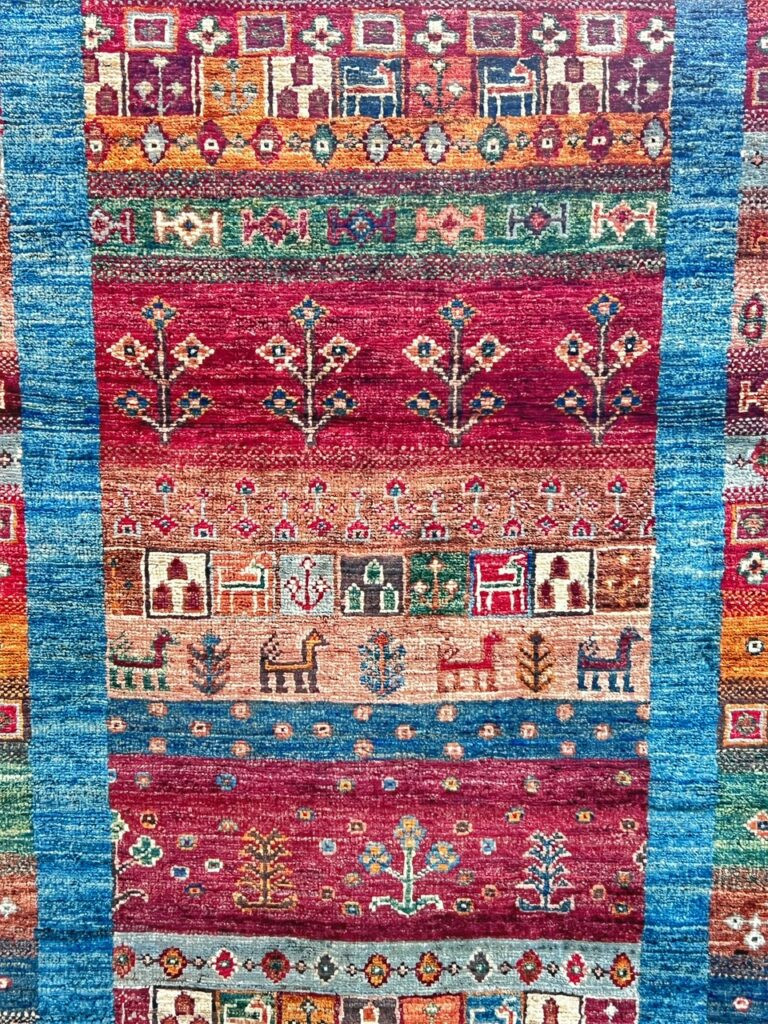
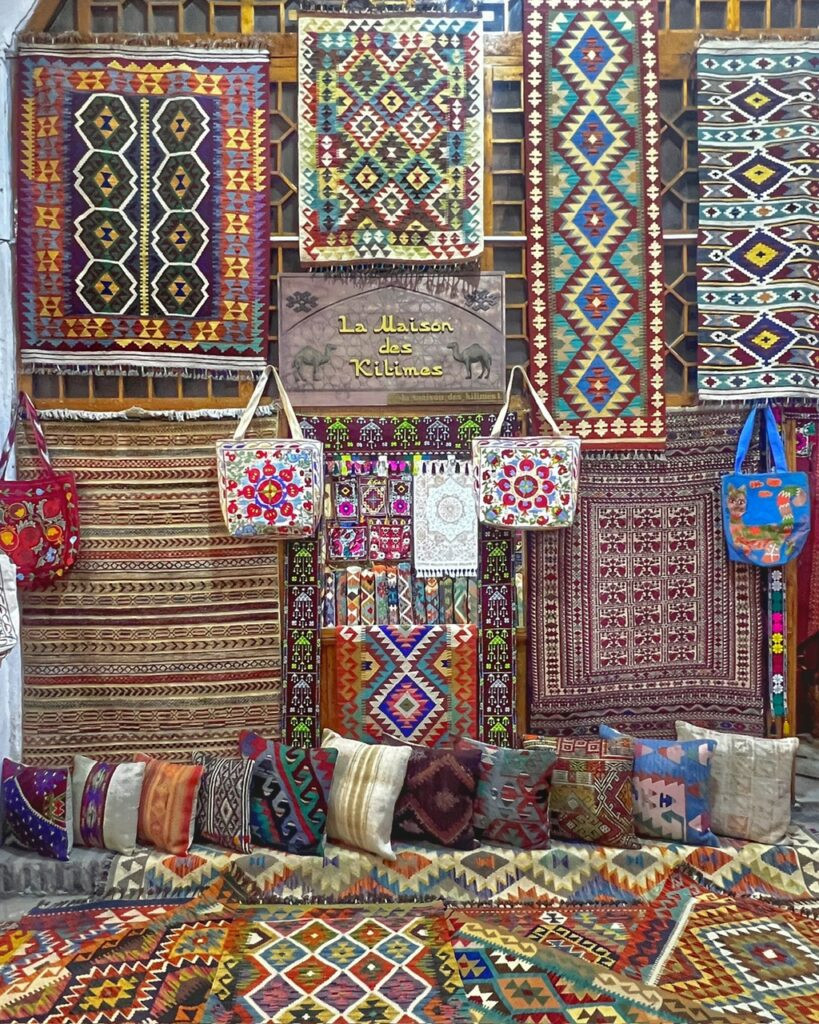
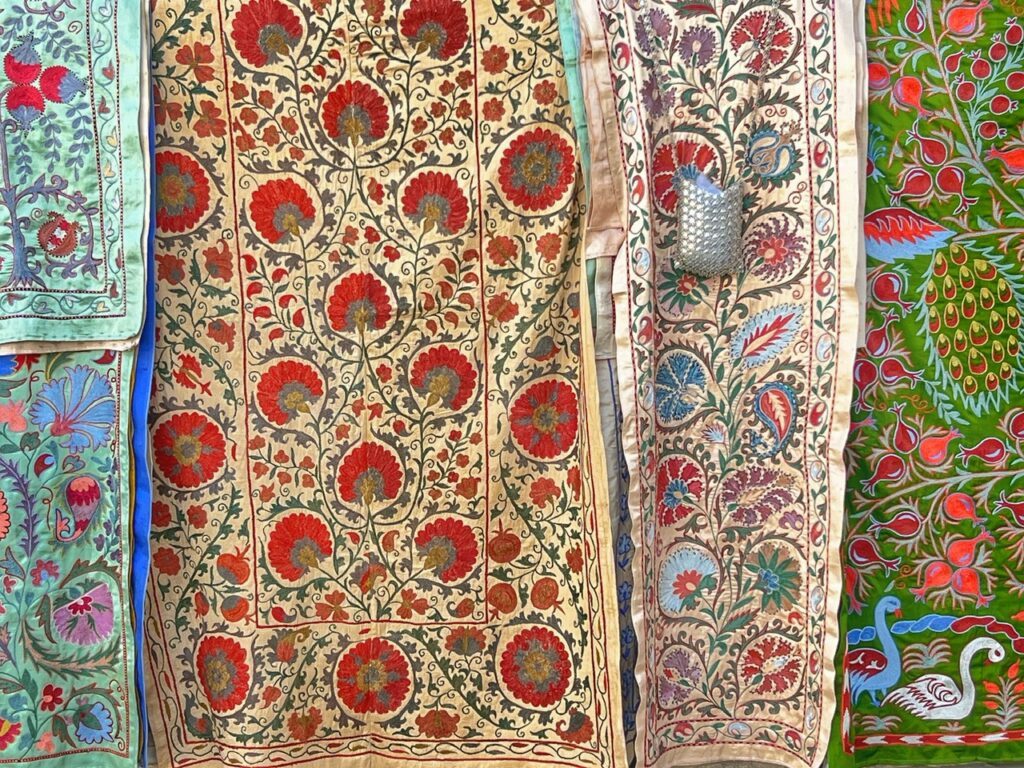
Some of the exquisite handmade products you can find in Uzbekistan including: hand-woven area rugs, which are undoubtedly more affordable in Uzbekistan than in Turkiye. And embroidered table cloths and runners. Thank goodness we don’t have a house…we’d be in trouble here! It’s truly home decor paradise!
Raiders of the Lost Ark of Bukhara
Resembling a behemoth sand castle from its perimeter, the Ark is a semi-restored fortress and royal citadel in the heart of Bukhara. Back in the day, it wasn’t just a fort — it functioned as an entire mini-city, serving as the residence of Bukhara’s rulers for nearly 1,500 years. Archaeological evidence suggests it was originally built between the 4th and 5th centuries, and when Genghis Khan and his buddies destroyed much of Bukhara in 1220, the Ark survived long enough for the Mongols to use it as a command post before tearing most of it down. Today, much of it remains a mystery as it’s only partially excavated and restored.
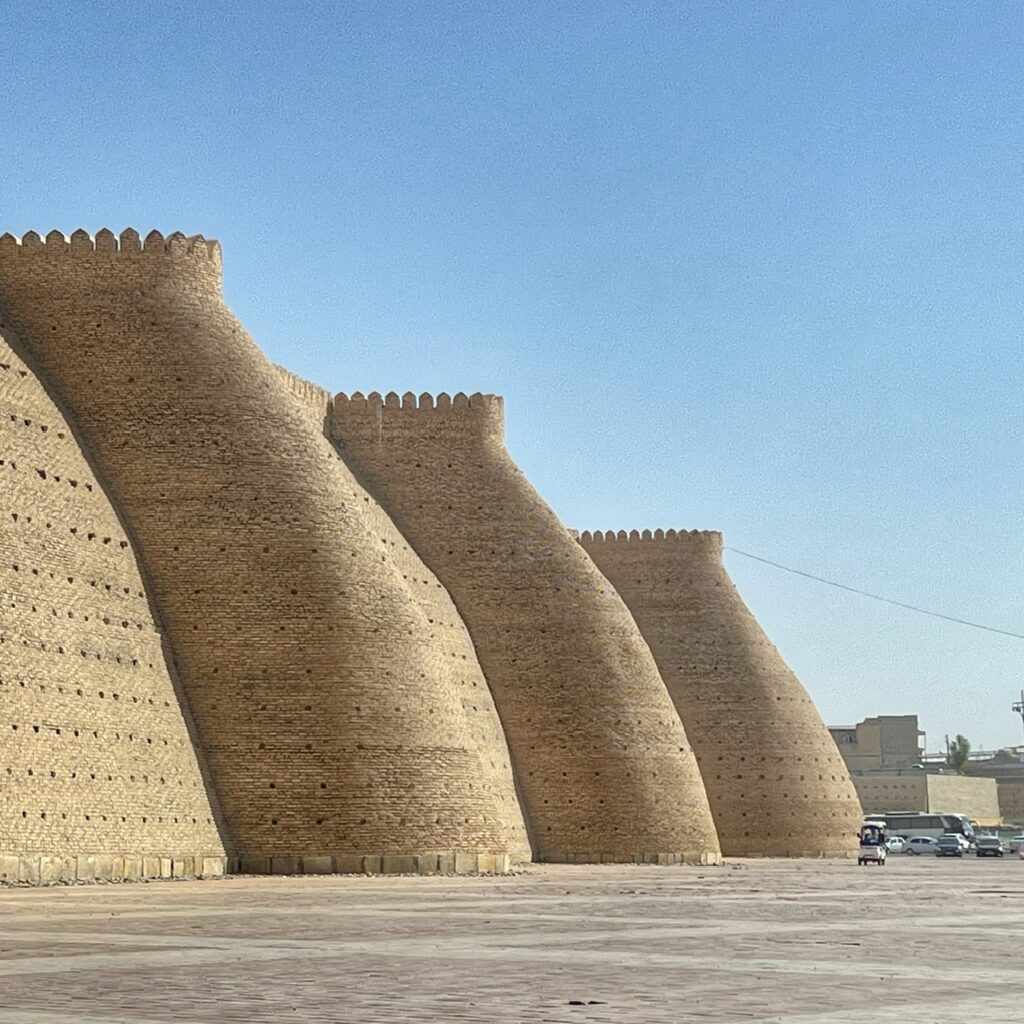

Its soaring exterior walls are unique in the world of fortresses we’ve seen and made of adobe and clay. Choosing to go inside for about $2.50/each, we realized it was packed with tour groups. Fortunately, we were able to slip away from the crowds pretty easily.
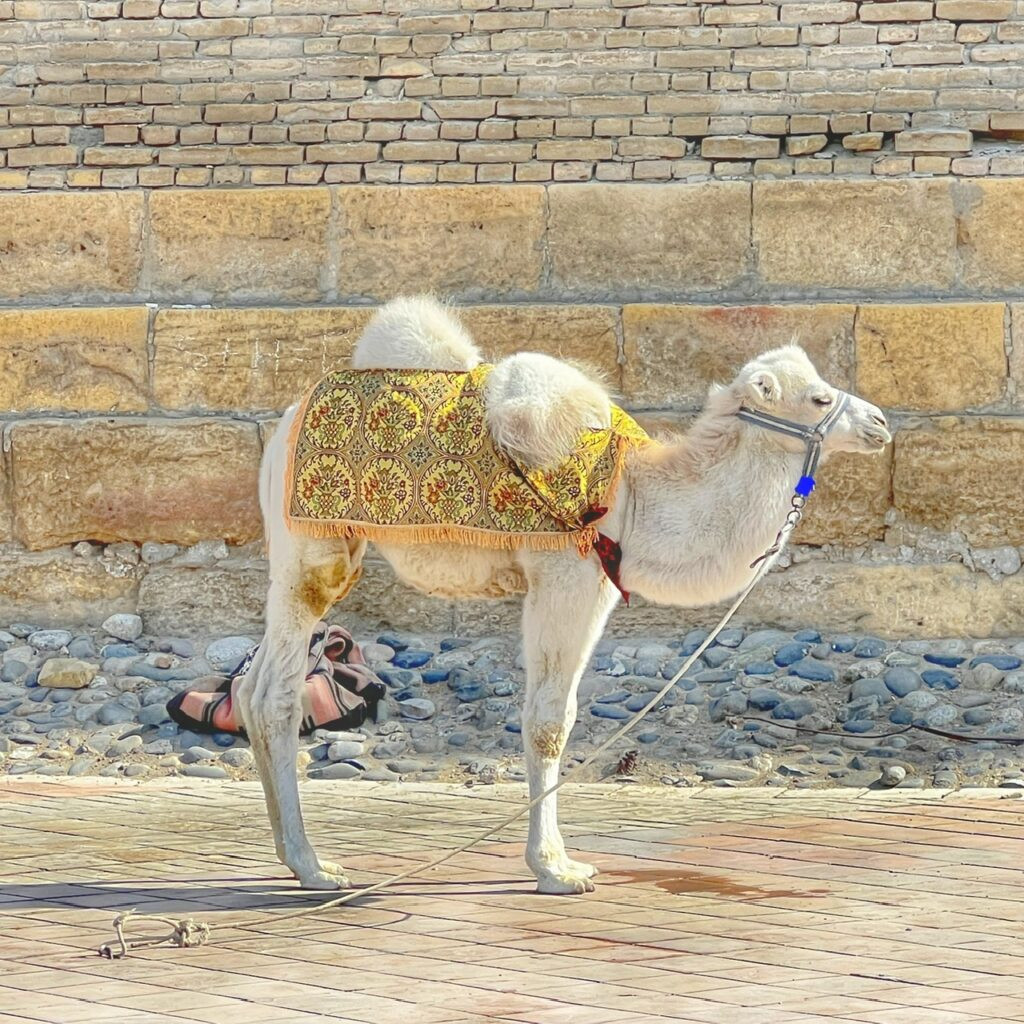

We were also glad to see not many people were taking advantage of the camel photo opps. This is the first white two-hump camel we’ve ever seen. Technically, she had one hump though because one seemed deflated. Unlike this other proud ride!
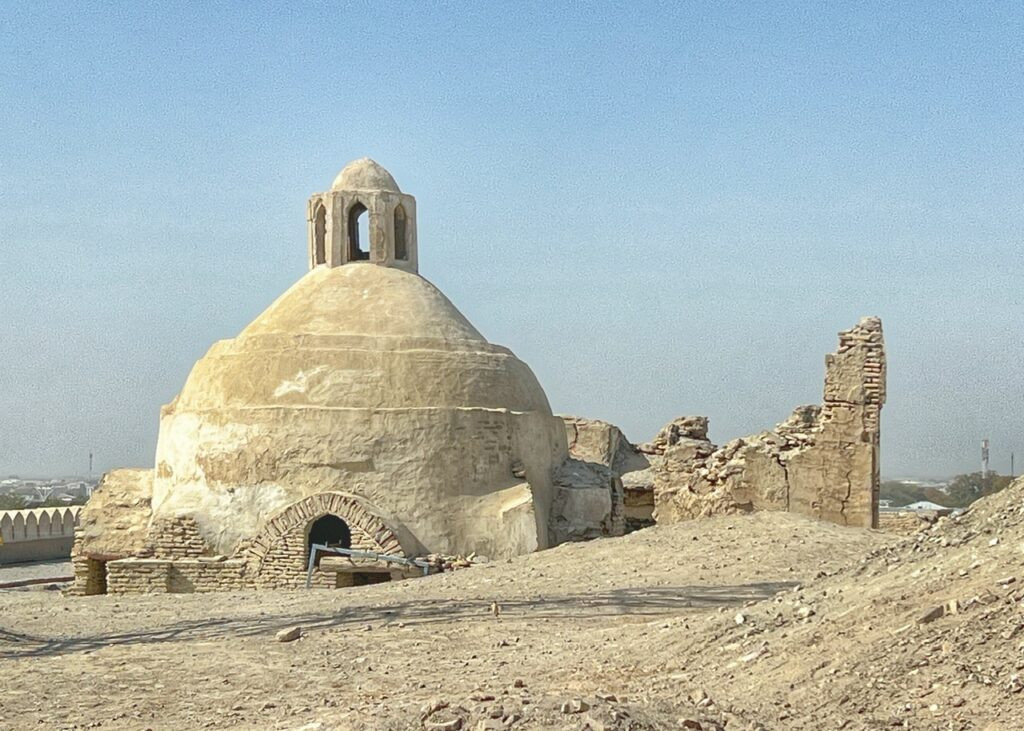
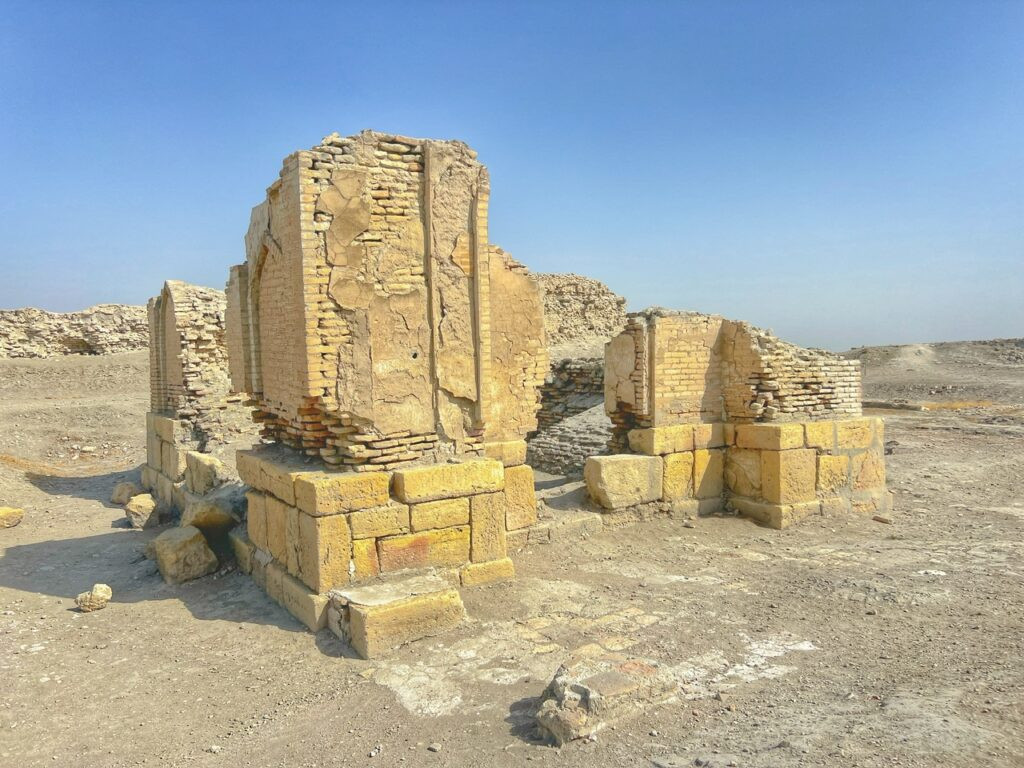
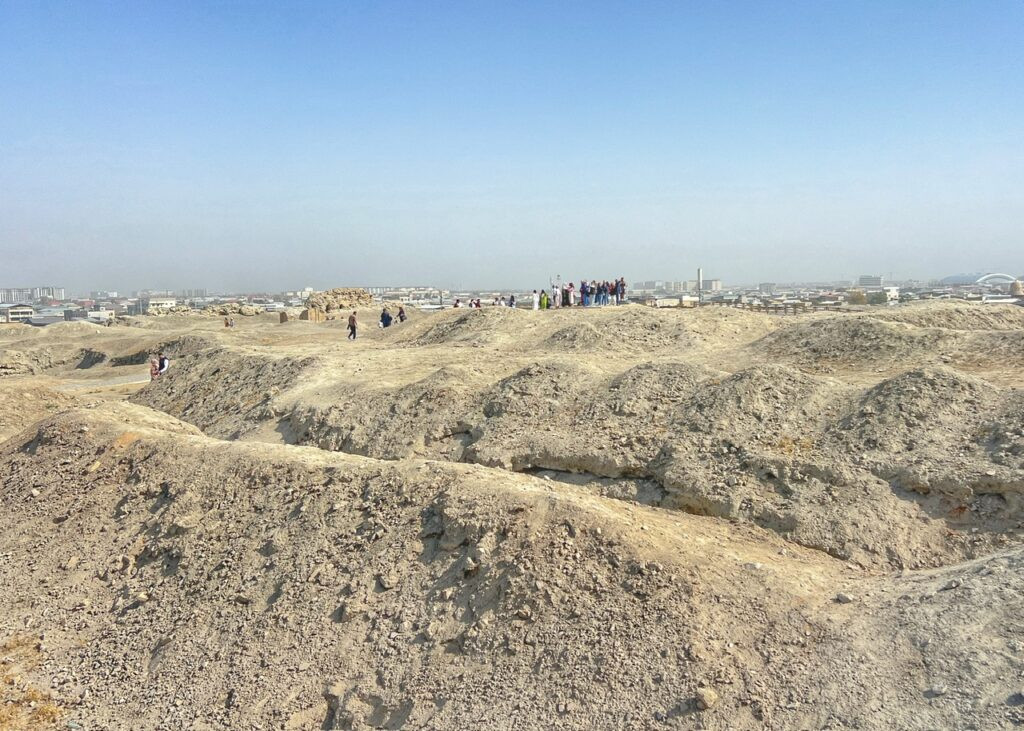
There were several ascertainable ruins at the top, though the majority of the complex was still uncovered mounds of earth.
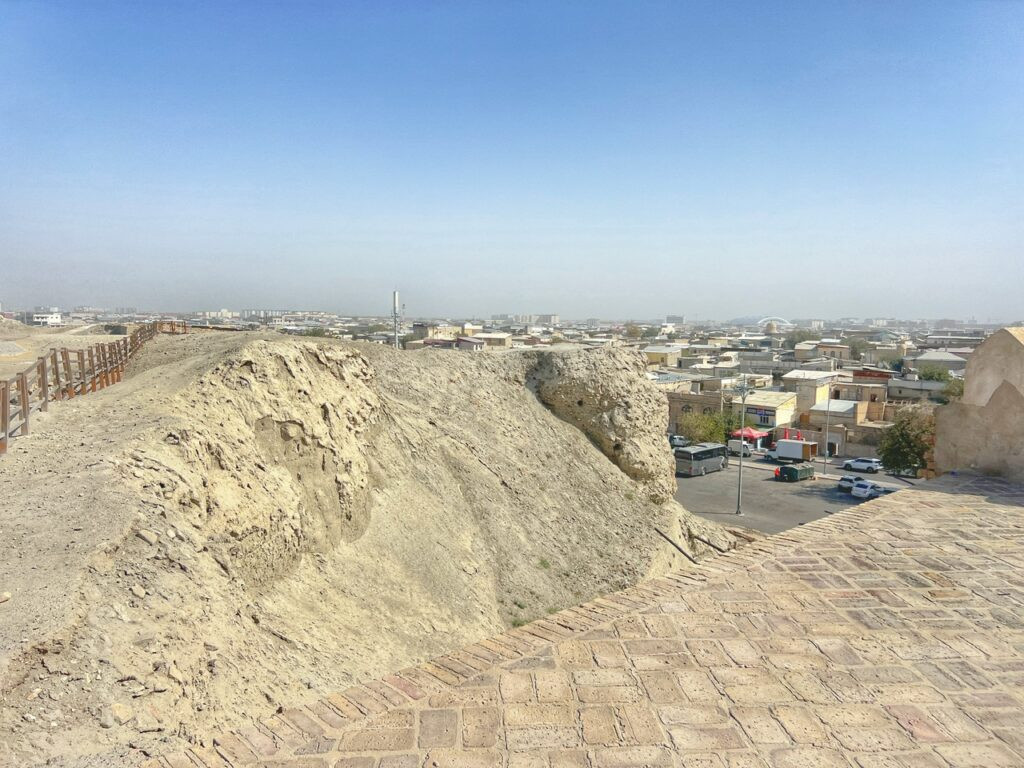
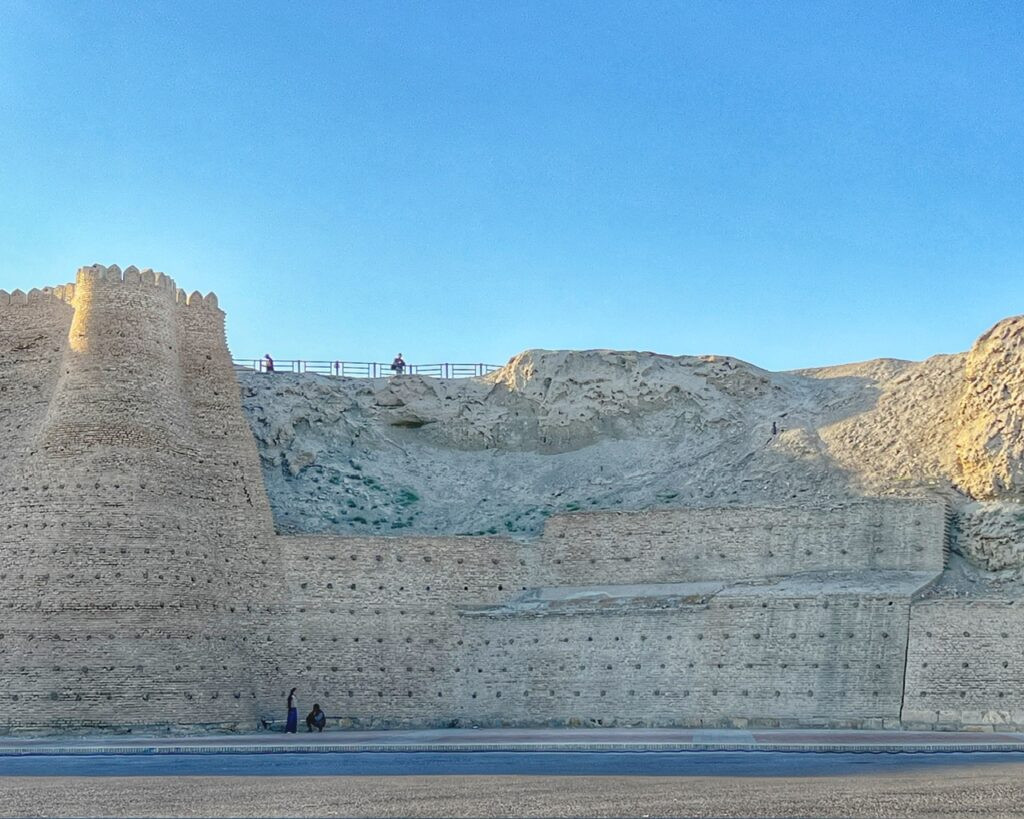
The walls around the perimeter were in the same state with some of it impeccably restored à la sandcastle, and other part, massive crumbling chunks of the past, which you could see even better from down below.
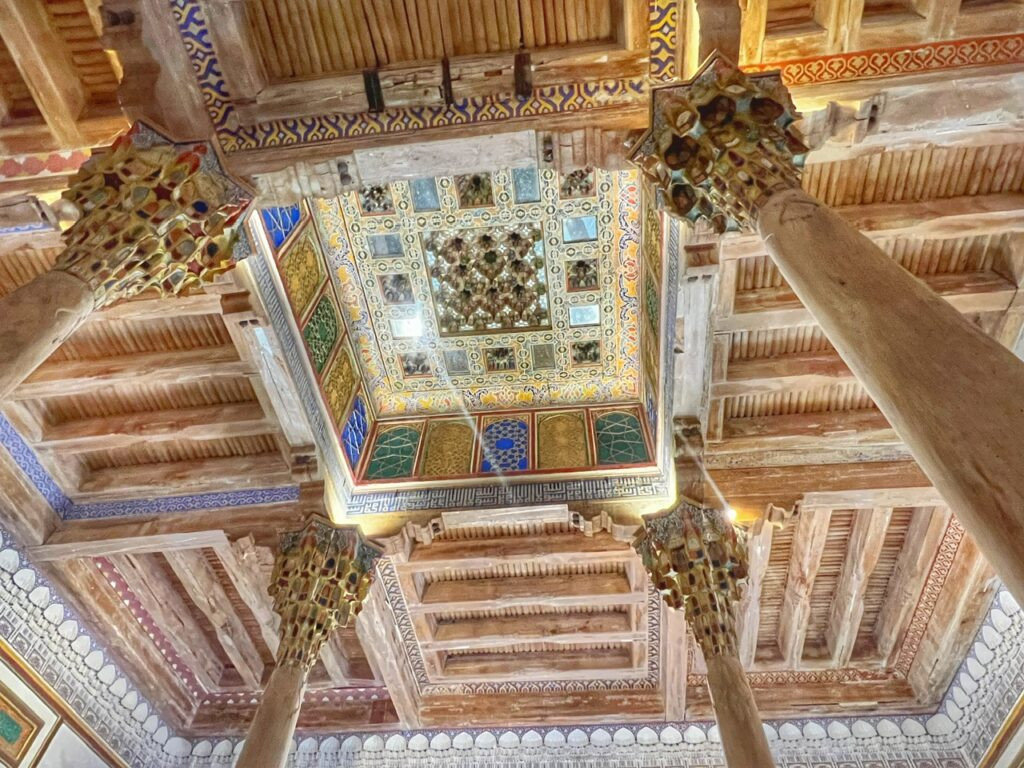

The price of admission also included several museums inside. They felt like a zoo of people, so a quick snap of the ceiling felt like enough for us. We were more excited to check out the pristine view of old town Bukhara from the fortress.

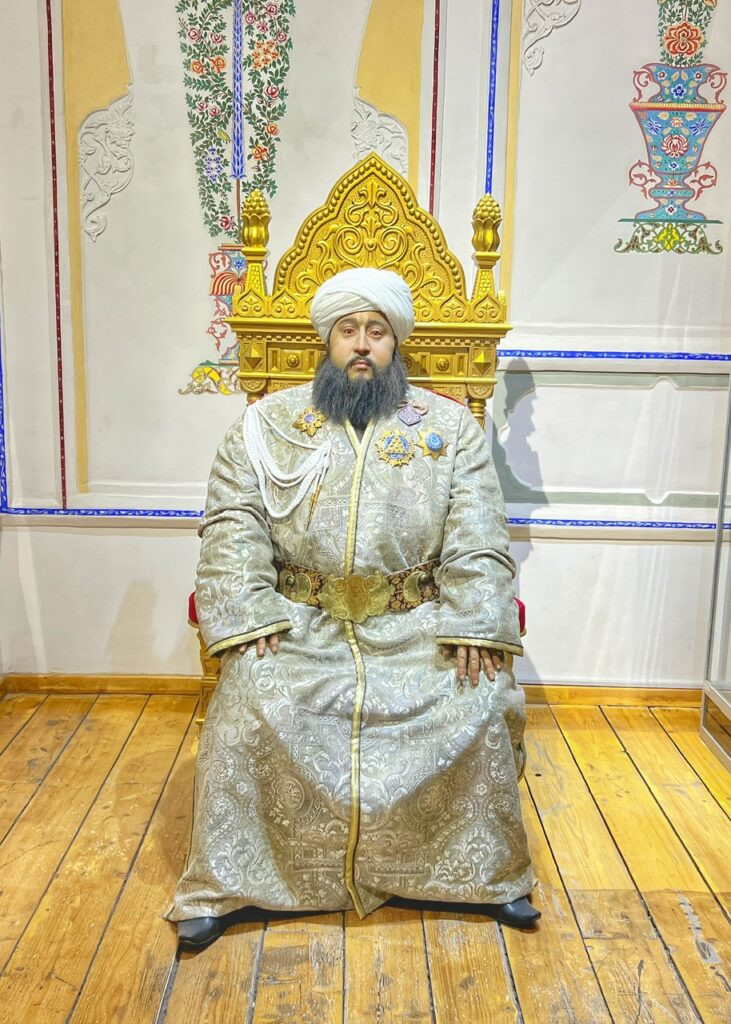

Photo 1: this section of the complex was once the coronation room, where new royalty was established. Naturally you could sit in the king’s chair if you wanted to donate to the royal chamber.
Photo 2: Speaking of royalty, this creeper represents Emir Alim Khan — the last ruling Emir of the Emirate of Bukhara in 1920, before the Soviets took over.
Photo 3: This area of the complex was formerly the stables. It’s not everyday you get to save a kitten from the perilous bite of a claw machine, but this was exactly the scenario we experienced while in Bukhara while coming out of the supermarket one day.
Greg and Mandy: Saving the World one Kitten at a Time
It’s not everyday you get to save a kitten from the perilous bite of a claw machine, but this was exactly the scenario we experienced while in Bukhara while coming out of the supermarket one day. Indeed…the little ball of mischief obviously found his own way in through the cat-door-looking flap, got hopelessly stuck and clambered his way toward the light above…the light of course being in an enclosed plastic box, with several plushy buddies to tumble on.

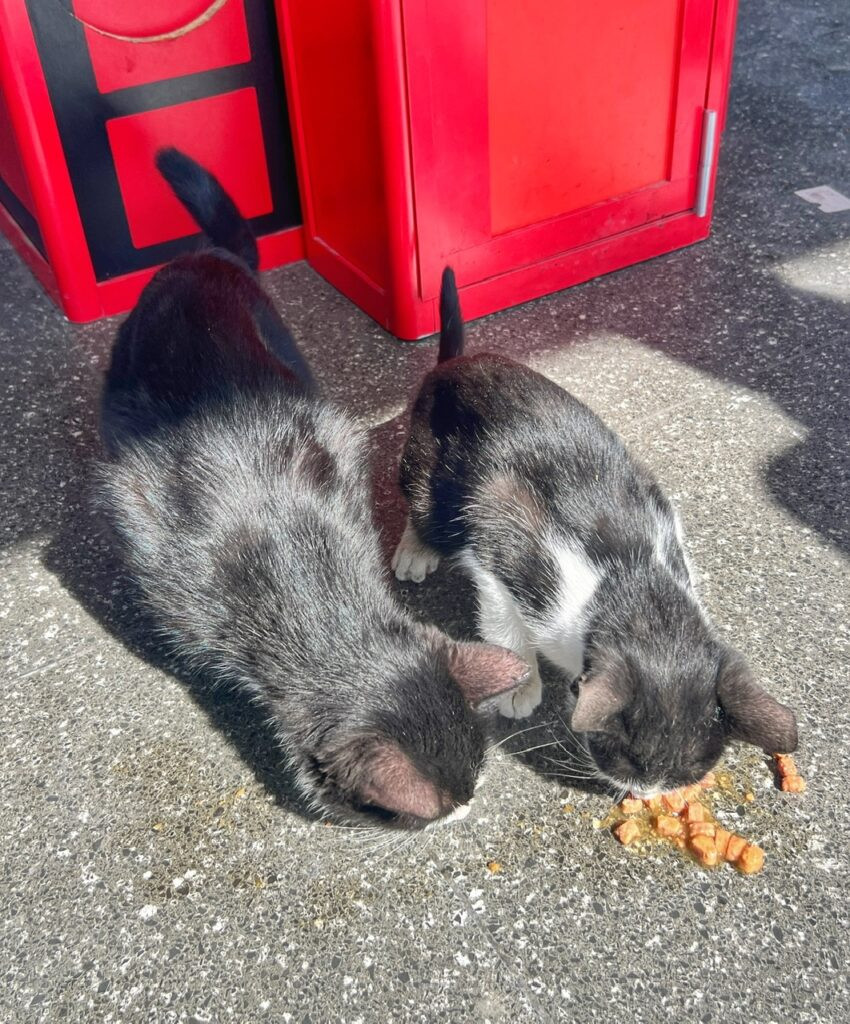
When we first saw him lying there, of course, we did a double-take before we realized it was a real cat and not a stuffed animal. Fortunately, a few swift taps on the glass confirmed he was still alive and even frisky, but in a quite perplexing situation because he didn’t seem to understand he had to go back down the hole to get back out.
We alerted the store worker, who shrugged and really didn’t seem to know what to do, and then Greg went to buy some cat food. While he was gone, I was joined by a local lady, and perfectly quiet three-year-old, who already had a bag of cat food in her hand. The trapped kitten was clearly elated to spot this treasure, but still utterly confused on how to reach it. It was wet food, so we couldn’t just toss a handful in the hole without making quite a mess, so I tried to blow the smell into the hole so the cat would get the connection.
We also (naturally) had a new cat, possibly a sibling, who appeared almost as soon as I cracked the package so we couldn’t risk another captive wandering into the hole.
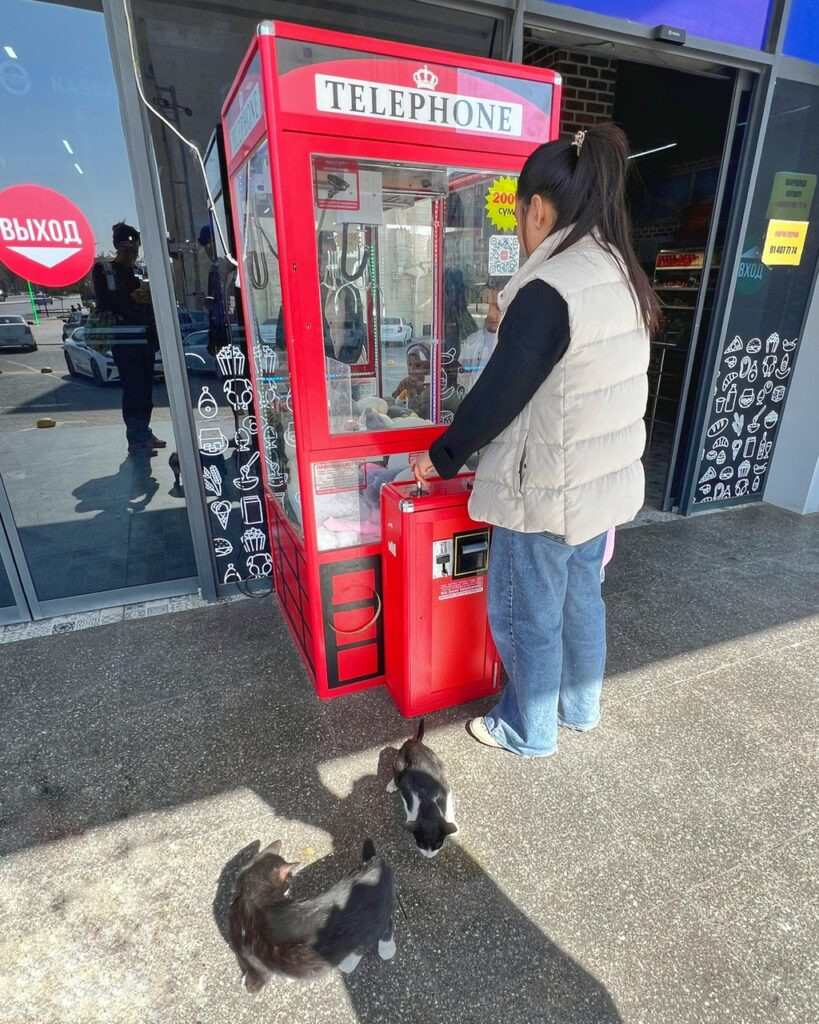

The kind local, who didn’t speak any English, and I, tried to problem solve by dangling the food near the plastic box area of the escape hole. Eventually, when I held the bag up high toward the back corner, something clicked as the cat sprang towards it and frighteningly plunged himself back the escape shoot. Greg arrived just in time to experience the break away…and we rewarded (both) cats for a job well done.
I high-fived the local, who smiled, but just seemed happy to be able to play the claw game with her toddler and not have a cat in the way….


