

Day One: Osh, Kyrgyzstan to Murghab, Tajikistan (September 8, 2025)
The Pamir Highway, often called “The Roof of the World” or the second highest international highway in the world, is one of the most legendary roads on the planet, traversing the four countries of Kyrgyzstan, Tajikistan, Afghanistan and Uzbekistan. The 1200-kilometer (750 mile) section we would journey over 6 nights/7 nights would take us from Osh, Kyrgyzstan to Dushanbe, Tajikistan and provide some of the most unique and remarkable experiences we’ve ever had. This included voyaging along the border of Afghanistan, encountering our first two-hump camels, hiking to an epic viewpoint, playing with children of the Pamir, observing sites of the Silk Road, basking in hot springs, dancing and feasting with locals and the positive list goes on and on…
All this said, although the mountain scenery is undeniably the most consistently swoon-worthy we’ve ever witnessed, this is not a leisurely drive in the Alps, and the term “highway” is a wee bit of an understatement. In fact, after days and days of travel on persistently bone-rearranging roads, parts of it can be simply maddening. This, combined with altitude sickness, diarrhea, inadequate calories, holes in the ground, dog bites, heartbreaking poverty, and general fatigue from challenging nights of sleep creates an environment best suited for the traveler ready for some adventure…certainly one ready for some arduous ups and downs, both of the highly literal and figurative variety.
We booked our expedition through Bartang & Sarez Tours, which included a (basic) English-speaking driver, a 4×4 Toyota Land Rover, our GBAO permits, accommodations and food for $610/person (in cash). And, yes, it was ultimately well worth draining our entire annual splurge bucket for this experience, and doing it alongside friends Jonathan from Colombia, and Yi and Annabelle from Montreal, which made it extra rewarding.
Day one ascended us expeditiously from the sizable city of Osh at 963 meters (3,159 feet), through the Tajik border, to the surreal high-mountain aqua-colored jewel called Karakul, and over two mountain passes up to 4655 meters (15,272 feet) to the remote high altitude village of Murghab.
But…unfortunately for me (Mandy) it ended far less desirably than it began…


We left the hostel in Osh at around 7:30 a.m. for the long 7-hour first day of driving, which would introduce us to the rattling surfaces, barreling Chinese semis, ample construction, and the fortunately safe driving speed and temperament of our driver, Aziz.
Greg tracked our whopping 12,000 foot elevation gain with his Apple Watch. Not sure if we’ve ever experienced anything this rapid in a day’s drive, and it didn’t take long for several of us to start feeling light-headed.


It was about 2.5 hours later that we encountered a distant wall of snow-capped wonder, as well as an introduction to small village life of Kyrgyzstan. We were also sharing a road that meandered directly into Chinese territory. Wonder what kind of plastic crap is inside that beast? 🤣
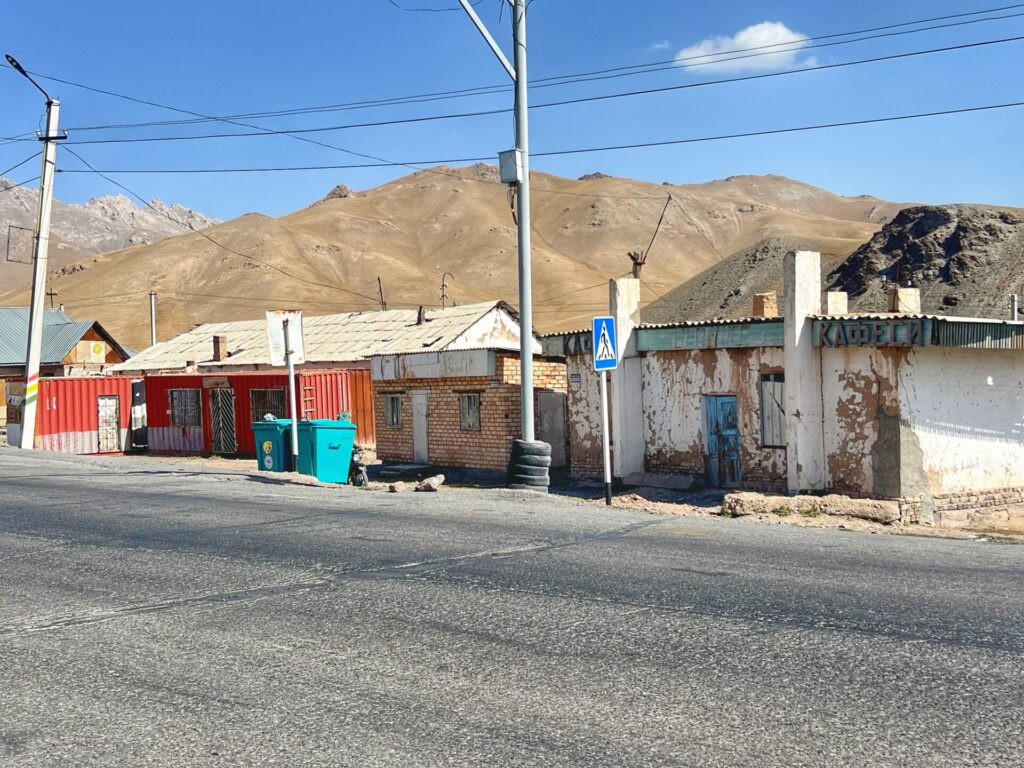

Pausing on the side of the road to fill up many gas canisters with back-up fuel, Aziz gifted us with a Snickers to eat when hunger struck….
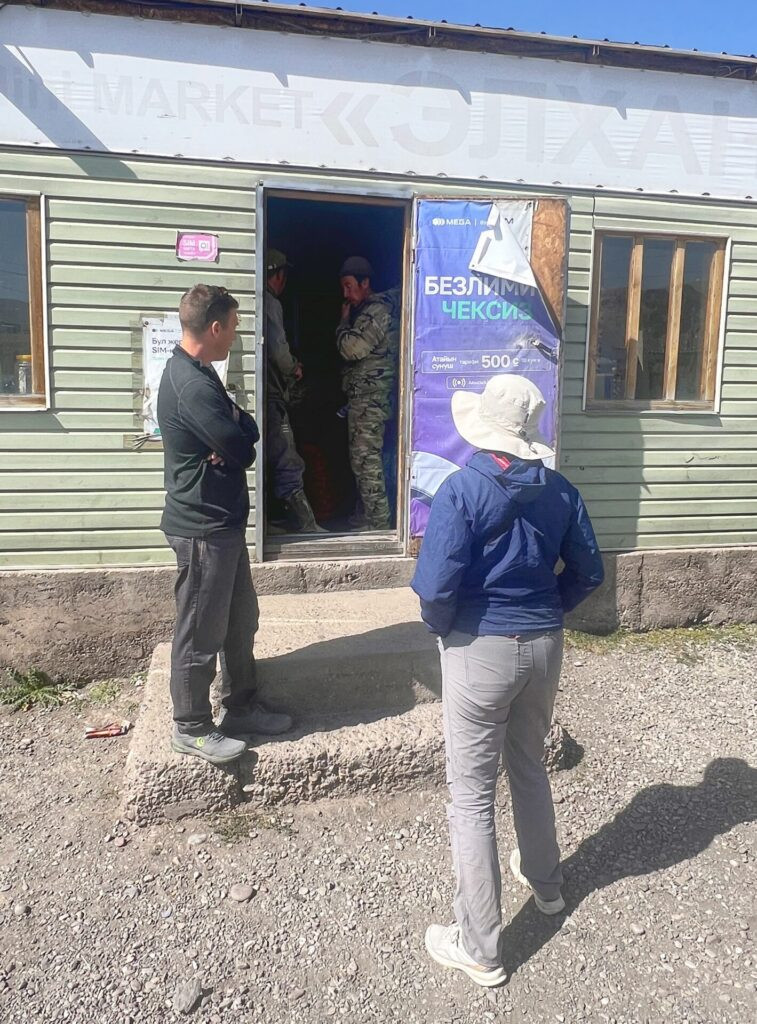

….and gave us the chance to use the last real toilet for awhile. By real toilet, we still mean a hole in the ground, but at least it had a window so you could say hi to your friends after you did your business.

Four hours after departing, utterly in the middle of nowhere, we reached the Kyrgyz border where time rolled back another hour just to make our day even longer…

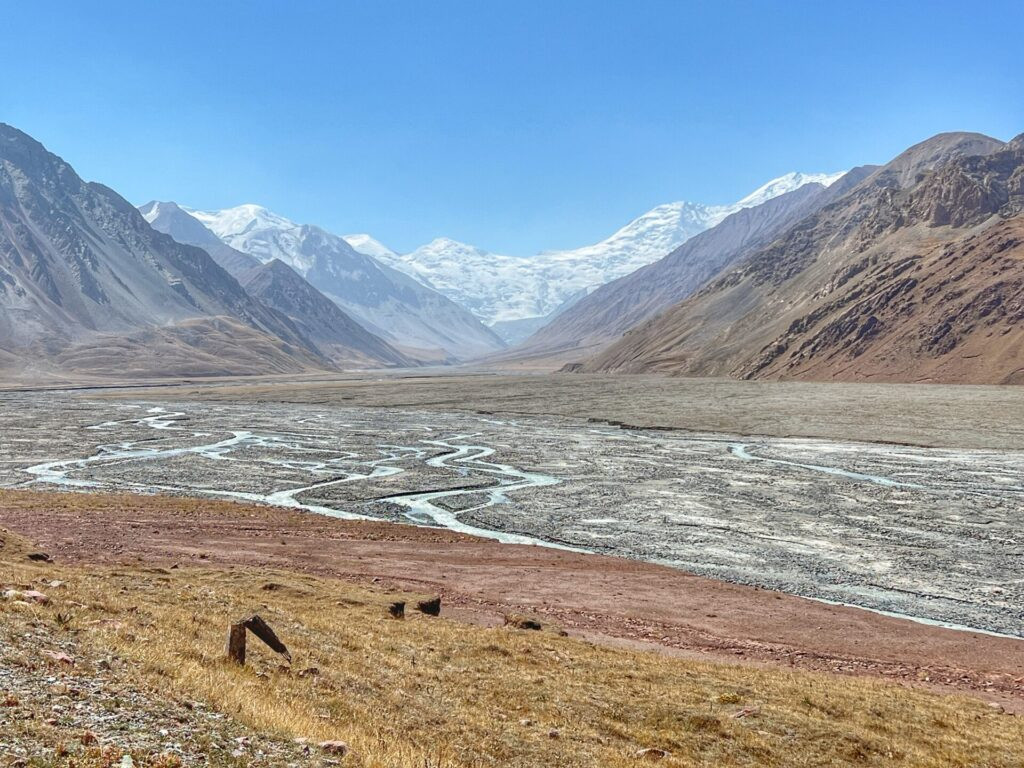
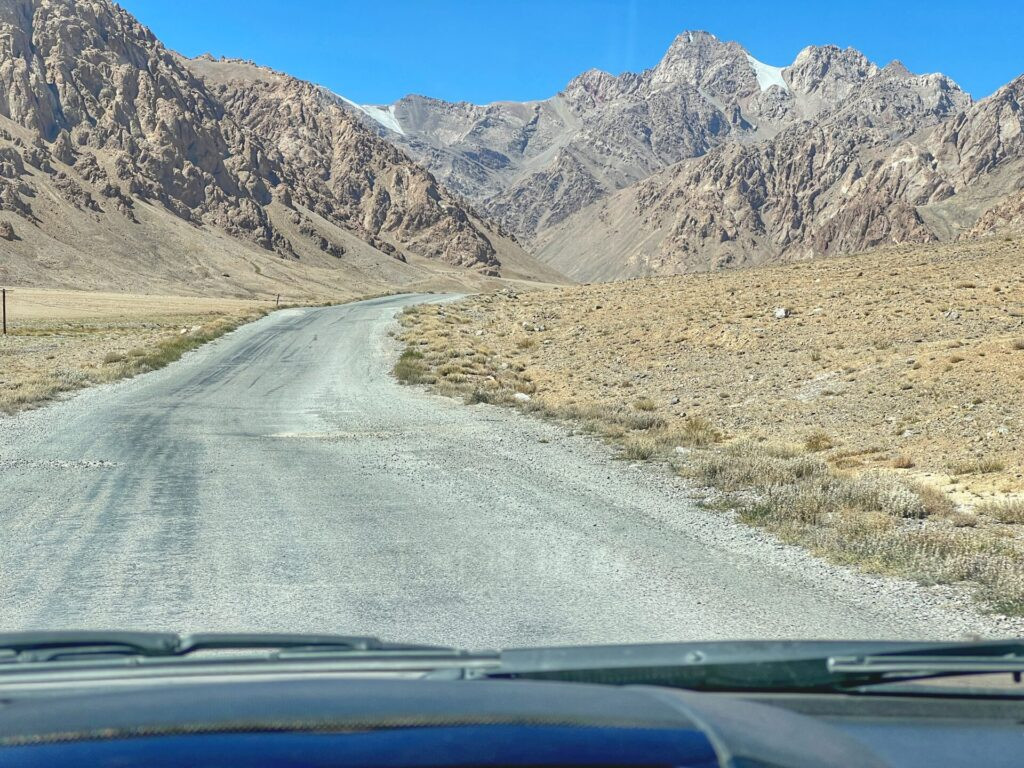
….and after getting stamped out, we ambled onto a rough and tumbled no-man’s wash board between borders which lasted nearly 25 kilometers. It didn’t take long to begin seeing views like this one. Tajikistan is 90% covered by mountains and is the third highest country in the world after Bhutan and Nepal where the average elevation is at 3200 meters (or 10,800 feet).
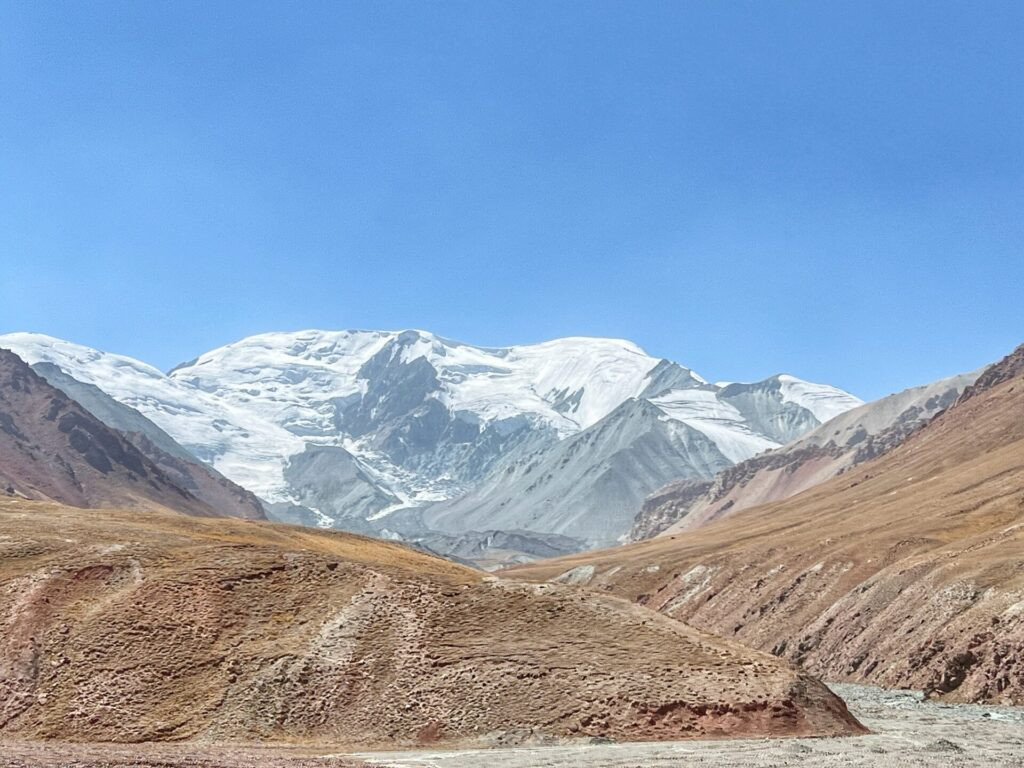
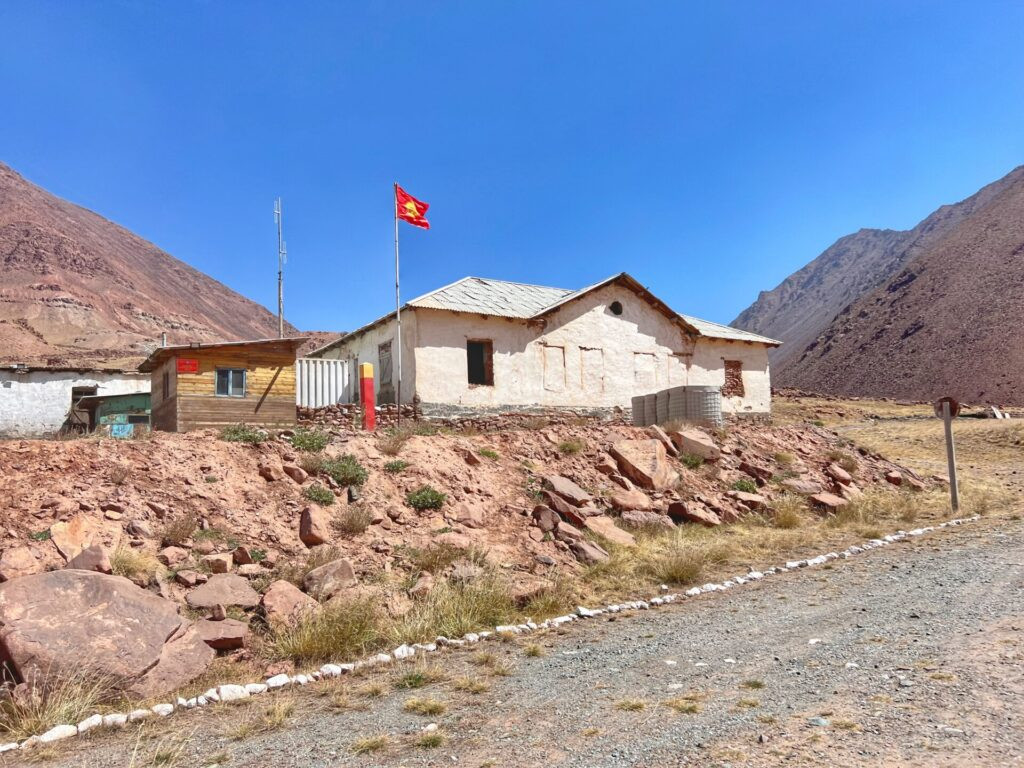
Undoubtedly the highest border we’ve met so far, which included several unguarded border stations.

….but was irrefutably the most gorgeous no-man’s land we’ve ever entered.
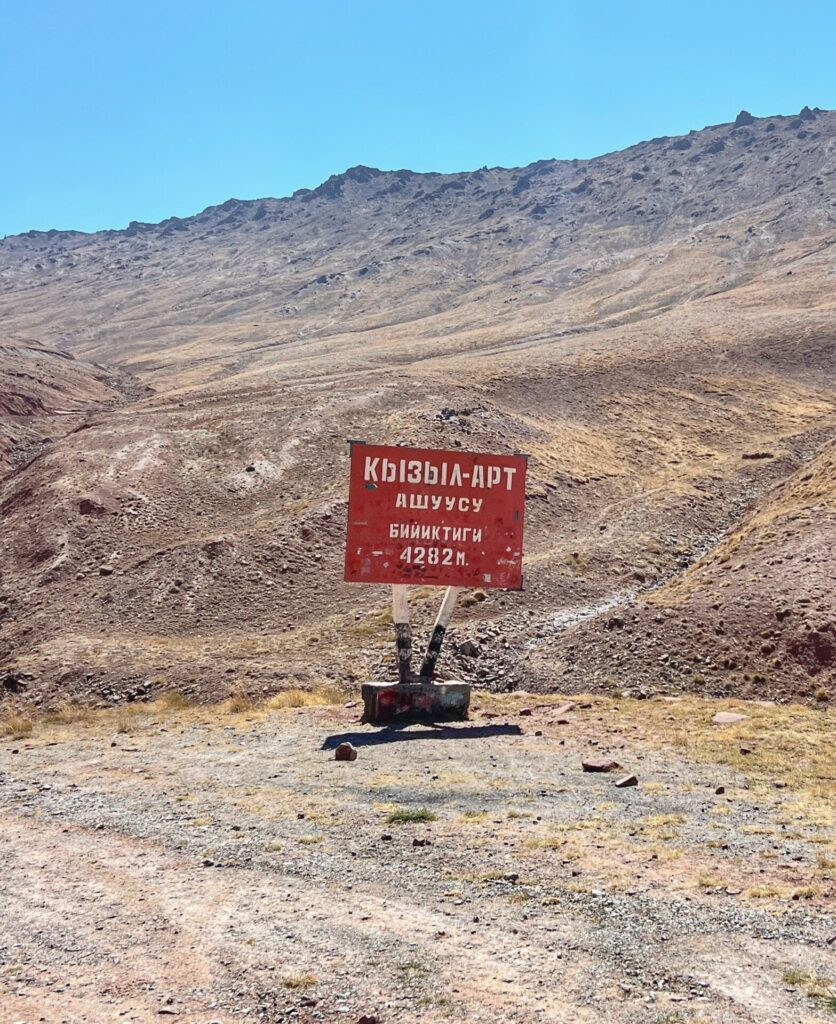
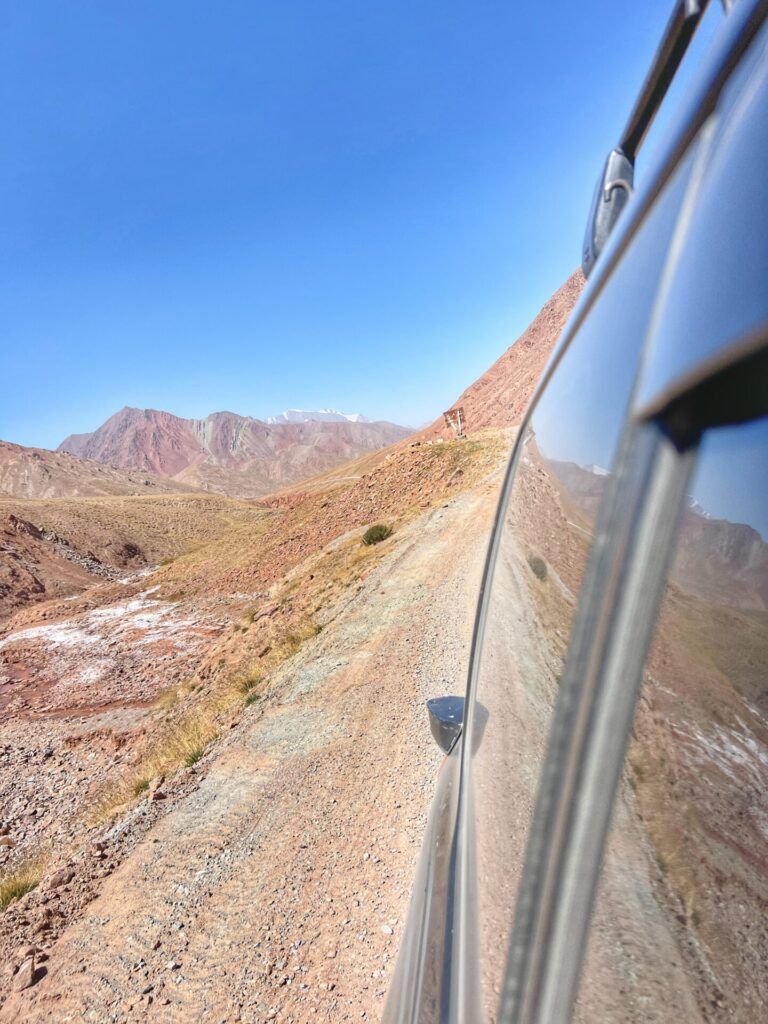
The first of two passes we would summit on day one. This one is “only” at 4282 meters (14,048’)
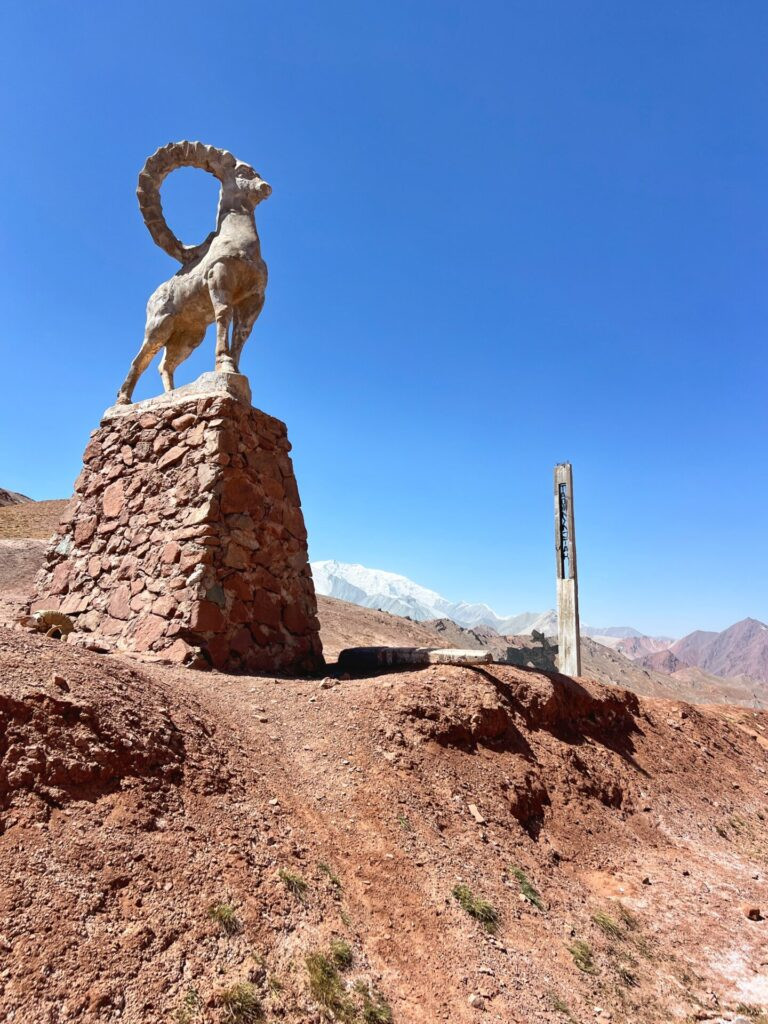

We then officially hit the border which was conveniently marked by some tourist tat in the form of giant pole for us to document my 80th country with. The pole was being nosed by the outline of Tajikistan which resembled a quite awkward and knobby dog made out of play dough, (or whatever else your imagination can construct).


Interestingly, the cut-out at the official border where two great political leaders met to shake hands, looked more like a cross between a camel and a sheep. At least we now had some rough (very rough) ideas what the country looked like, which is more than Google maps could offer.
The Tajik flag is the only country in the world with a crown as the central element of its national flag. This crown represents sovereignty, the Tajik people and independence. The seven stars stand for the historic regions of the country.

Entering Tajikistan…known to be the poorest of the ‘Stans where some people in isolated rural mountain communities can subsist on $1/day. And just on the other side of this endless barbed wire fence and mountains?! China.

An hour later we would confront our first of these mountain villages….villages with million dollar views heartbreakingly surviving on next to nothing.

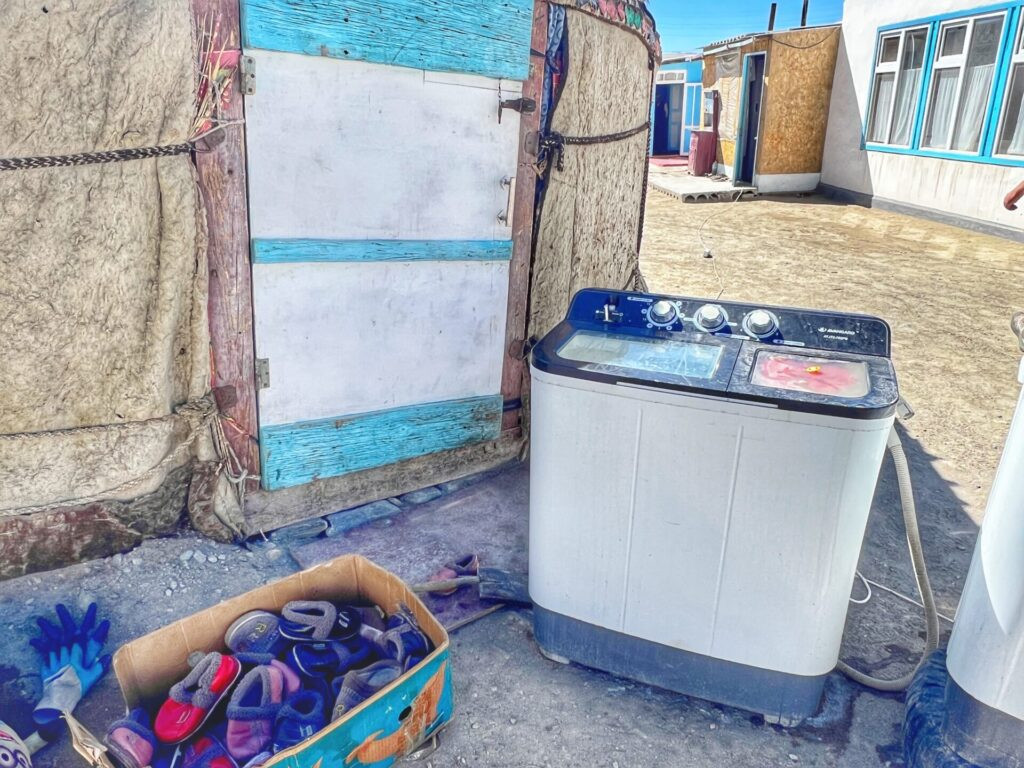
The community’s outhouse, and how they wash their clothing, surprisingly with a vintage washing machine, strung out by an extension cord. When I peered inside it, it appeared to be toy washing day because a filthy pink teddy bear was being agitated face up with a look of relief on his face.


Home Stay Erkin was the only place for miles where we could stop for lunch, which consisted of a warming vegetable soup with potatoes, cabbage and peppers and bread.
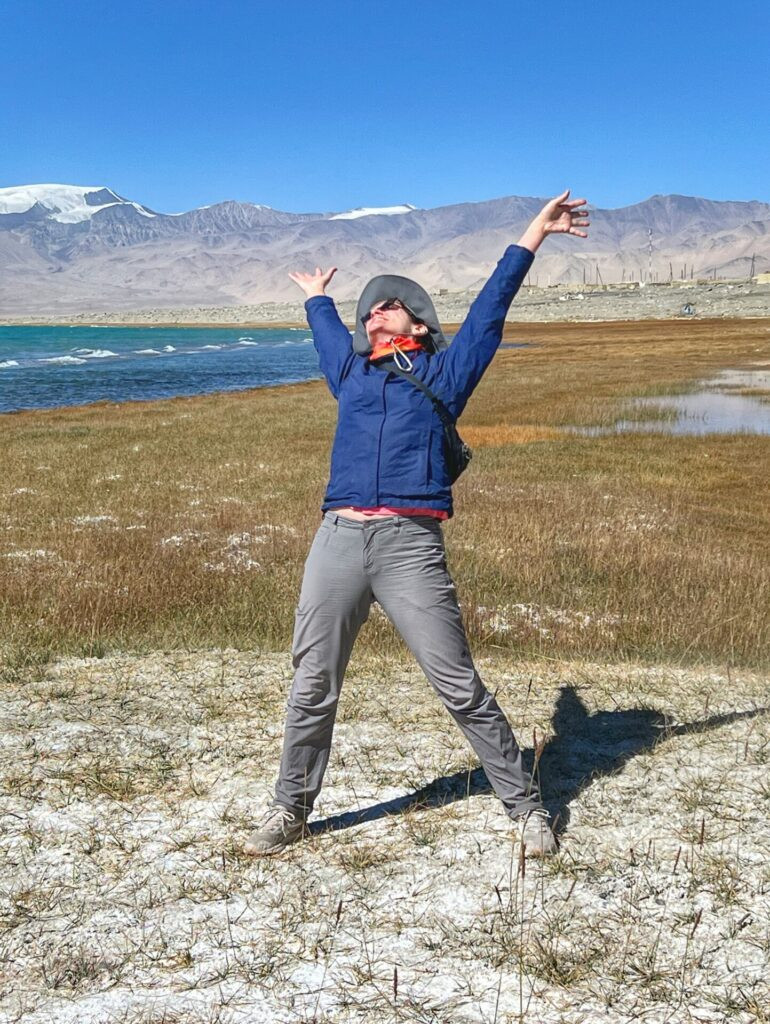
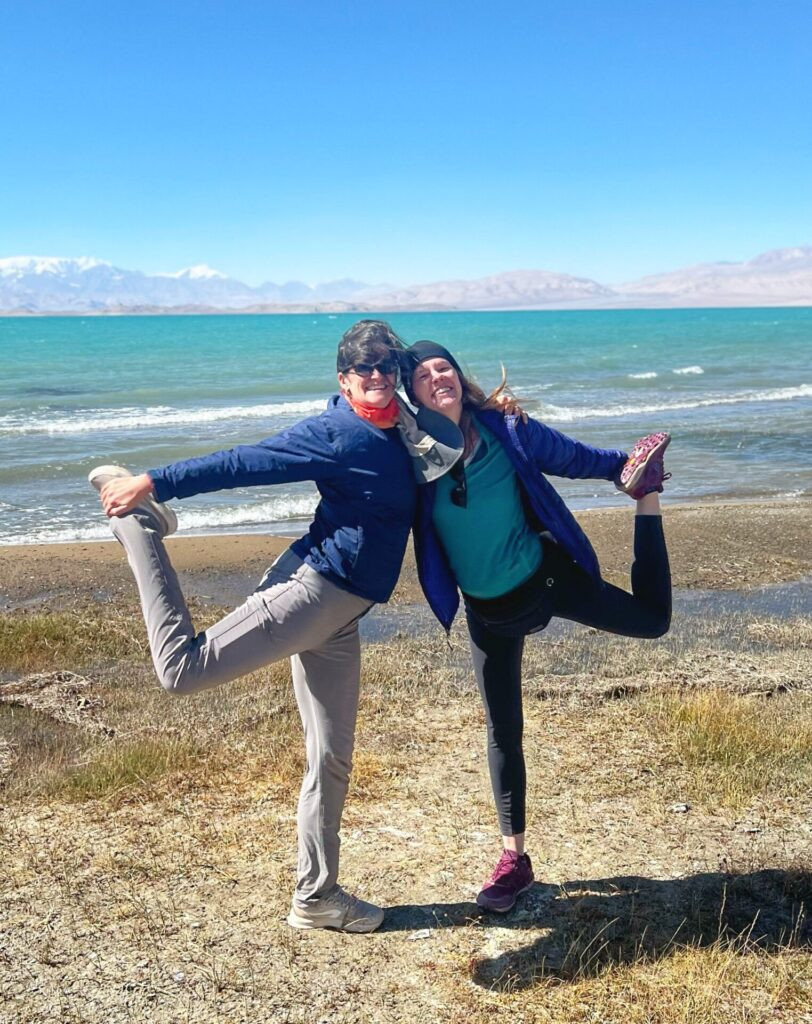
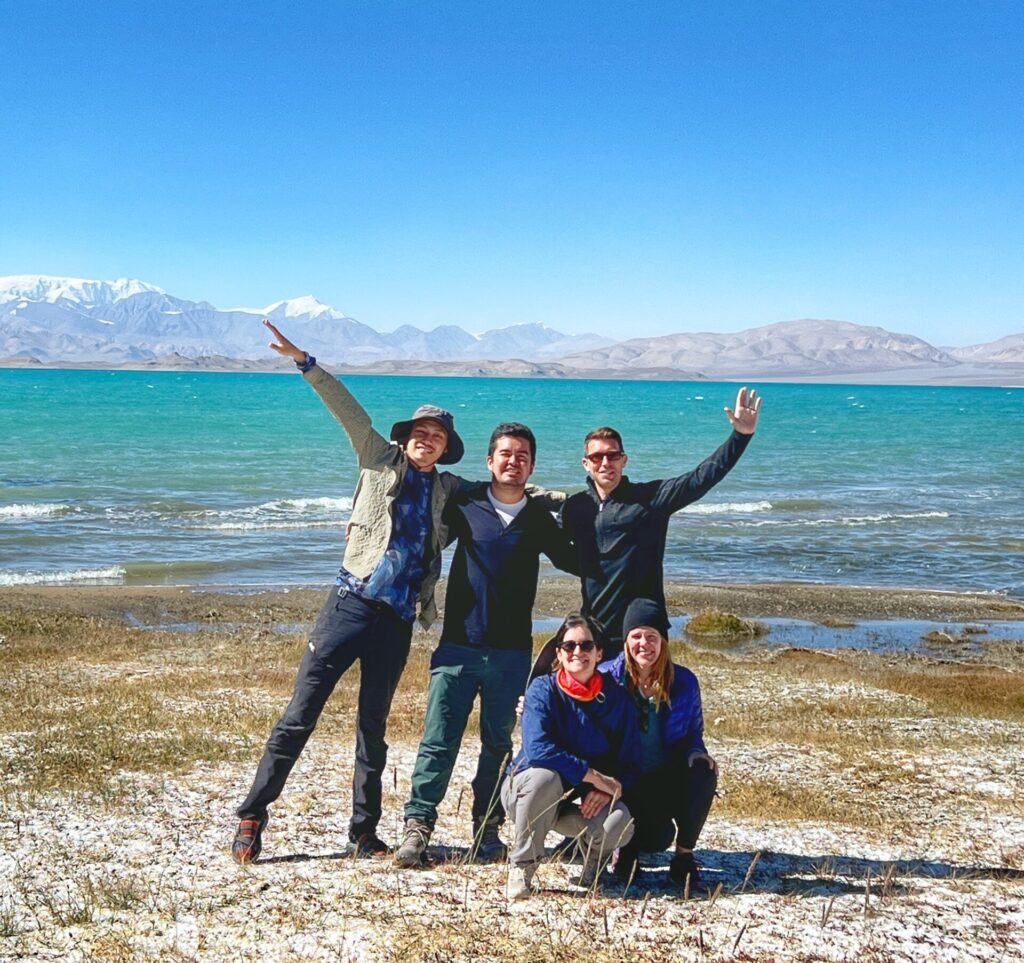
After lunch, we headed down to the edge of Lake Karakul, …not to be confused with Kyrgyzstan’s KarakOL. It was here we decided to take some obnoxious pictures, and battle the growing wind.

“Kul” actually refers to lake, so it actually means Kara Lake. One would think the village would have the opportunity to export and harvest fish from it, but sadly there are none living here due to its salinity and harsh winter conditions.

Down the road we bounded for several more hours. It was around here, I started to get considerably ill…with headache and dizziness, which upon arriving to Murghab, gave way to fever, body aches, chills, and diarrhea, not necessarily signs of altitude sickness. We’re still not really sure if it was the altitude, something I ate, or a combination that affected me so acutely, but I felt I was grazing death’s doorstep for more than 15 hours. Fortunately, I made an astounding comeback and was totally fine within a few days. But it was a very rough ride, both literally and figuratively for awhile.


The five bed room Greg and I were originally placed in with our friends, but thankfully, we got relocated to a private room. (Good thing…I really don’t think they wanted to hear me in agony all night.)
Annabelle and Yi wishing me a speedy recovery as they went through their own trials…trying to be vegans on the Pamir Highway. You can have my portion of bread and tomato/cucumber slices, guys!
Day Two: Murghab to Bulunkul, Tajikistan
Day two fortunately began at 11:00 which allowed me additional time to sleep off the sickness that had ravaged my system the evening before. I was by no means completely well, but the fever/body aches/chills had subsided completely and I was miraculously able to toddle myself to the Land Rover, while my friends checked out the local market in Murghab, and eventually walk and eat something over the course of the day. The worst was thankfully behind me, with a little help from our dear love/hate medication of necessity…Immodium.
The second day was also fortunately only four hours of car riding, but would continue at high altitude (around 3700 meters/12k+ feet) passing through more far-flung villages, many kept alive by Pamir Highway tourism, and landing for the night in extremely isolated Bulunkul, which is known to be the coldest permanently inhabited place in Central Asia, where winter lows regularly dip below -60 degrees Celsius/-76 F.
It was quite unfathomable to meet a group of locals here who live in these difficult conditions, and play with their happy children, already bundled in grubby sweaters during early September.
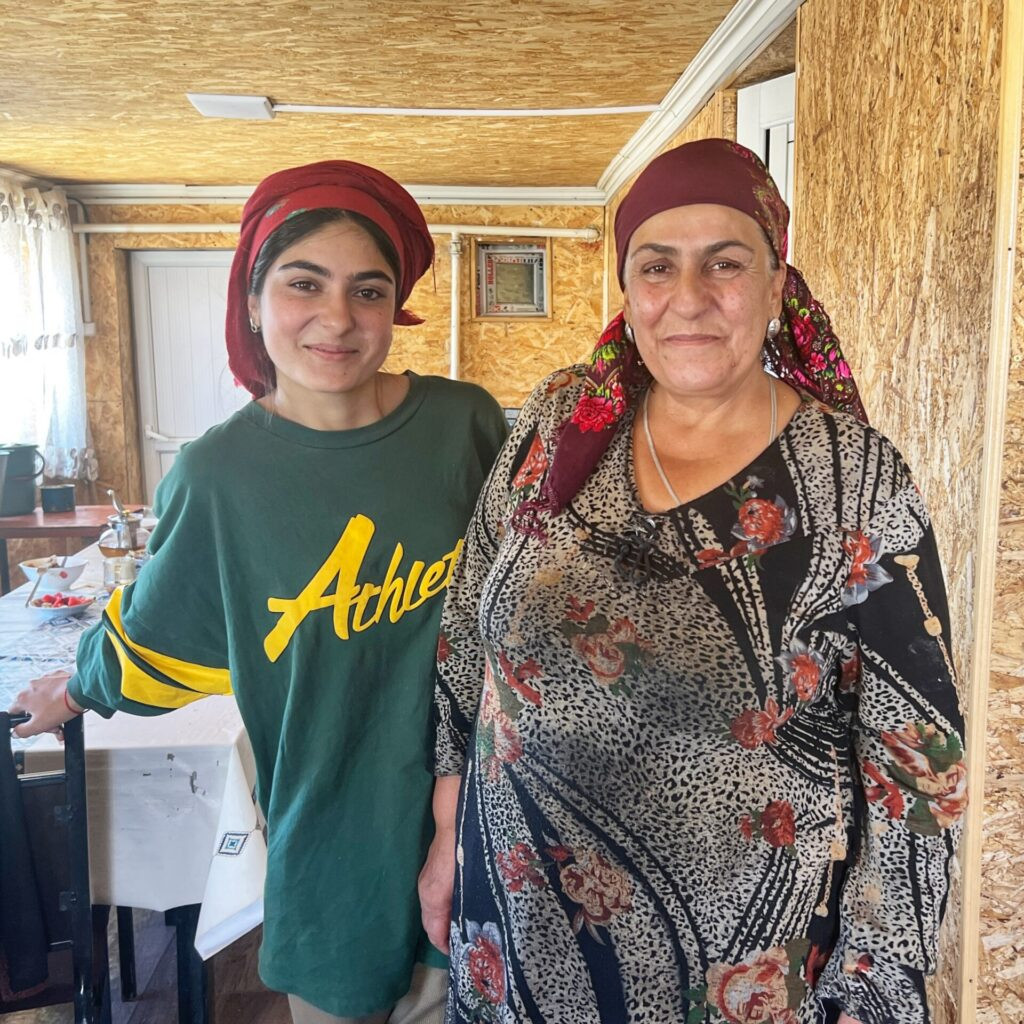
Our mother/daughter lunch host team in the village of Alichur (population 2000) who spoke adequate English, thanks to the mother’s many years as the village’s school teacher.
If you’ve been following our journey in the Stans so far, you’ll also notice how distinctly different the people look from their Kyrgyz neighbors. Once you cross the Tajik border, the Asian faces evolve to a much more Persian look. They also became notably smilier.
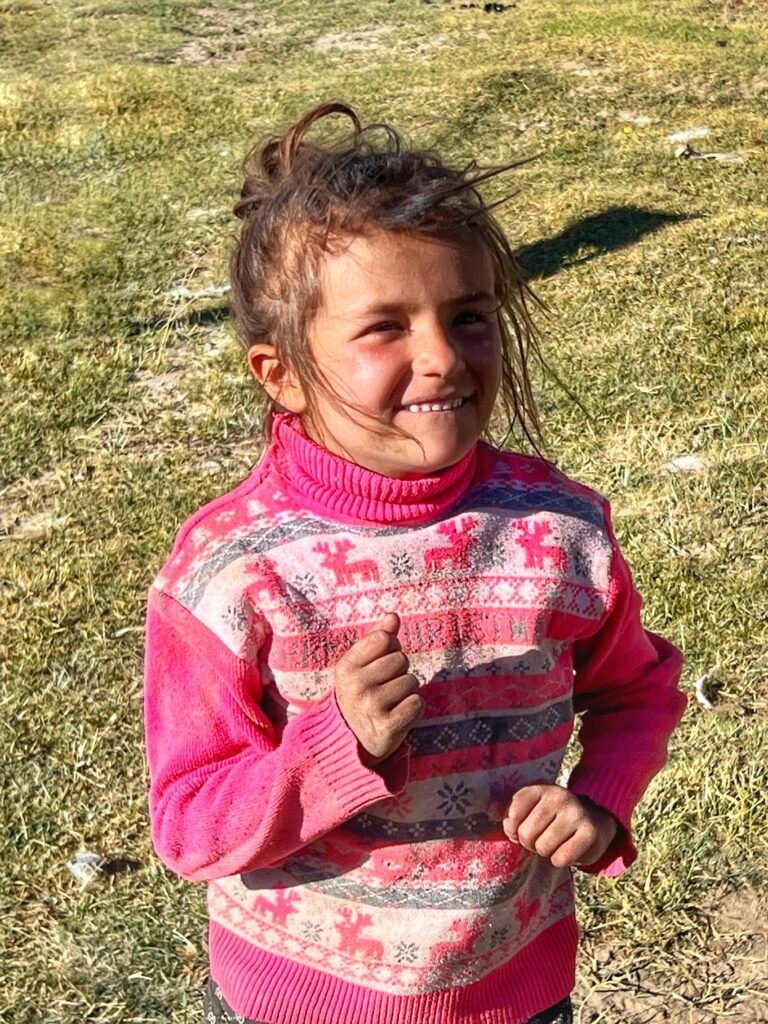
One of the little girls we played with in the village of Bulunkul. With not a ton of visitors, they seemed so excited to see us!
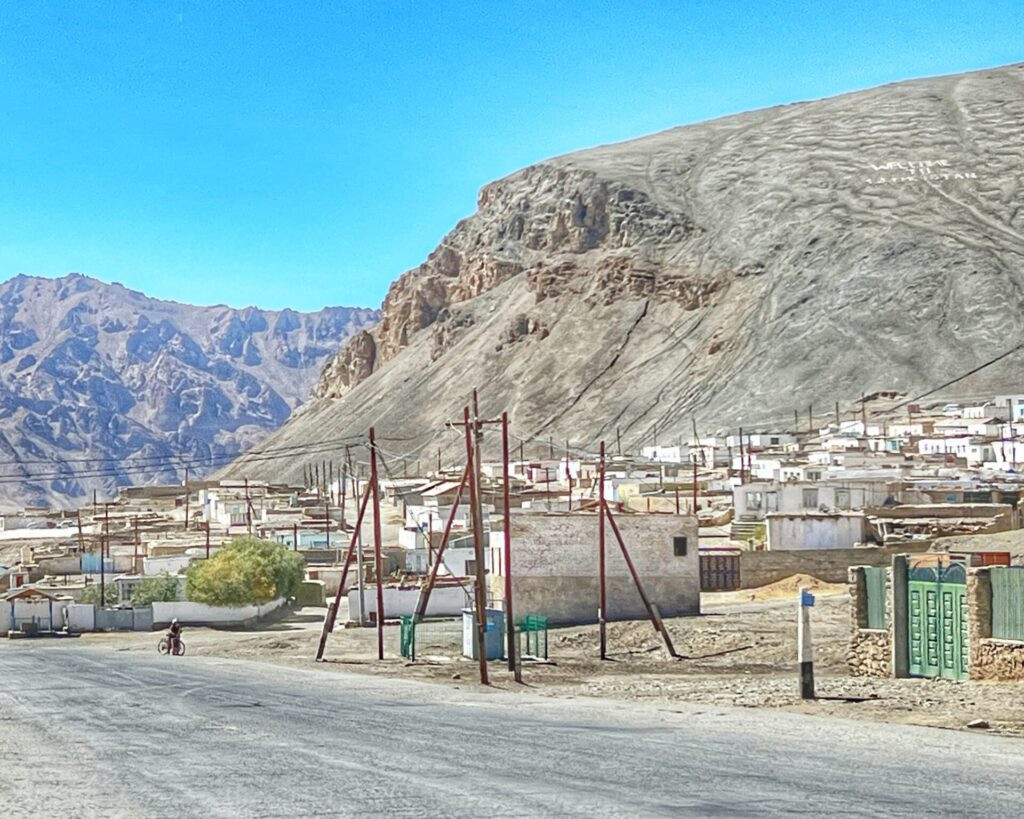

Backing up to 11:00 in the morning, the high remote town of Murghab where the oxygen is thin and with a population of around 5000. It is a place where electricity exists, often due to a hydroelectric station, but there’s not consistent running water or gas in many parts. Water often comes from wells or charity projects. Obviously, don’t expect internet. It has a bazaar, a bank, a couple guesthouses, a few cafes, and remarkably, a hospital, which gratefully, I didn’t have to visit.

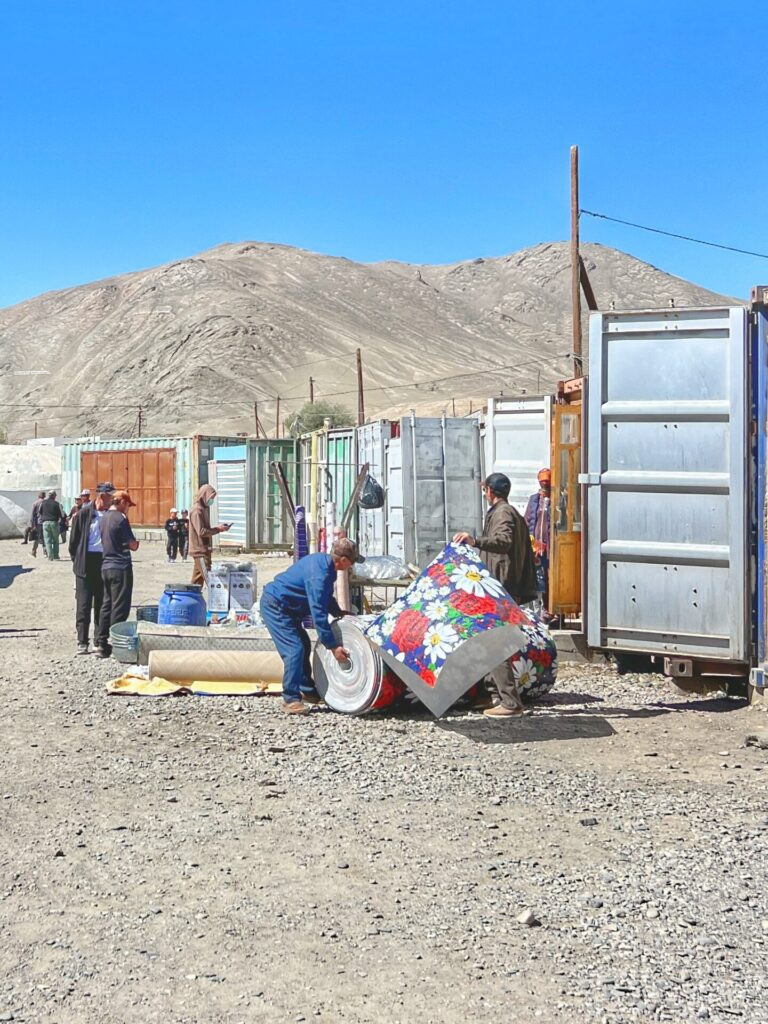
Visiting the morning market, which takes place out of shipping containers, and was more like a yard sale, with very slim pickings including household and children’s items, and a solitary produce stand selling only tomatoes, cucumbers and some very sad potatoes. It also included another thing Greg got on board with…ice cream, which is always piled like the bottom a frilly wedding dress in Tajikistan.


Continuing down the road two hours, we continued to brush fingers with mountain views, until arriving to the Szukrona Guesthouse in Alichur. It was here we noticed the EU signage that indicated the guesthouse had gone “green” through the installation of renewable energy technologies with the financial support of the EU. We noticed several of these signs along the way, as well as from USAid which had given one guest house owner the skills she needed to open her business. Sadly, these types of programs have now ended under the current administration.
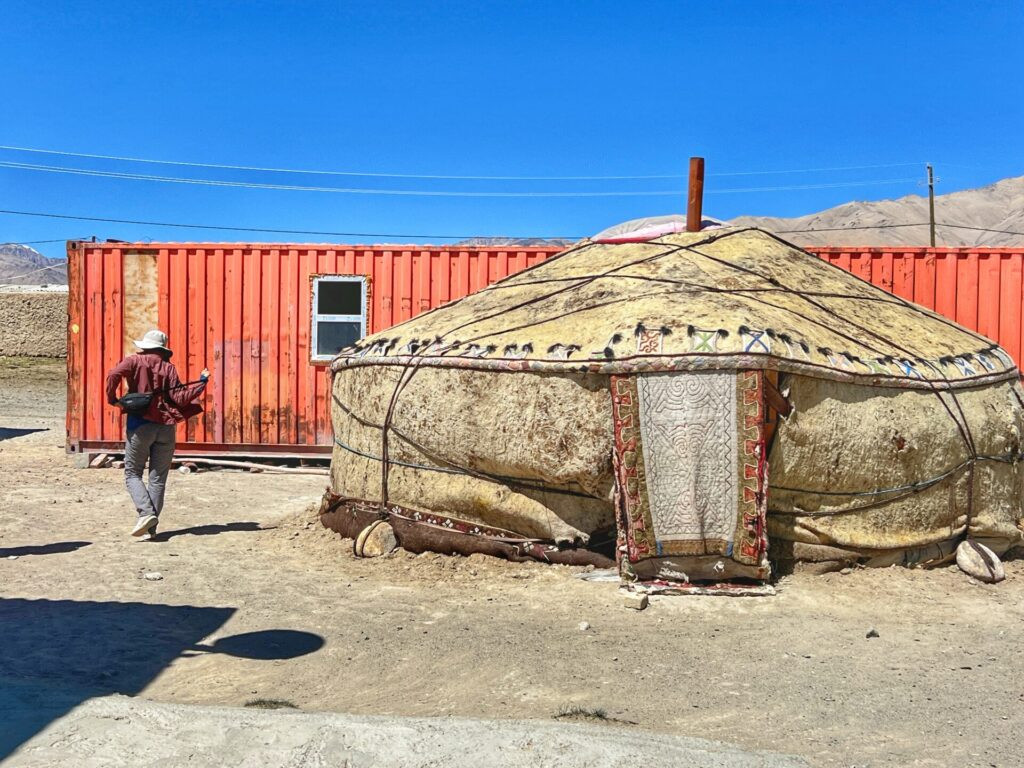

Even with assistance, its dilapidating and soiled yurts, ammonia-reeking outhouses, and plywood walls spoke to the poverty in these high mountain villages, though this didn’t stop the owners from delivering rich and loving hospitality.


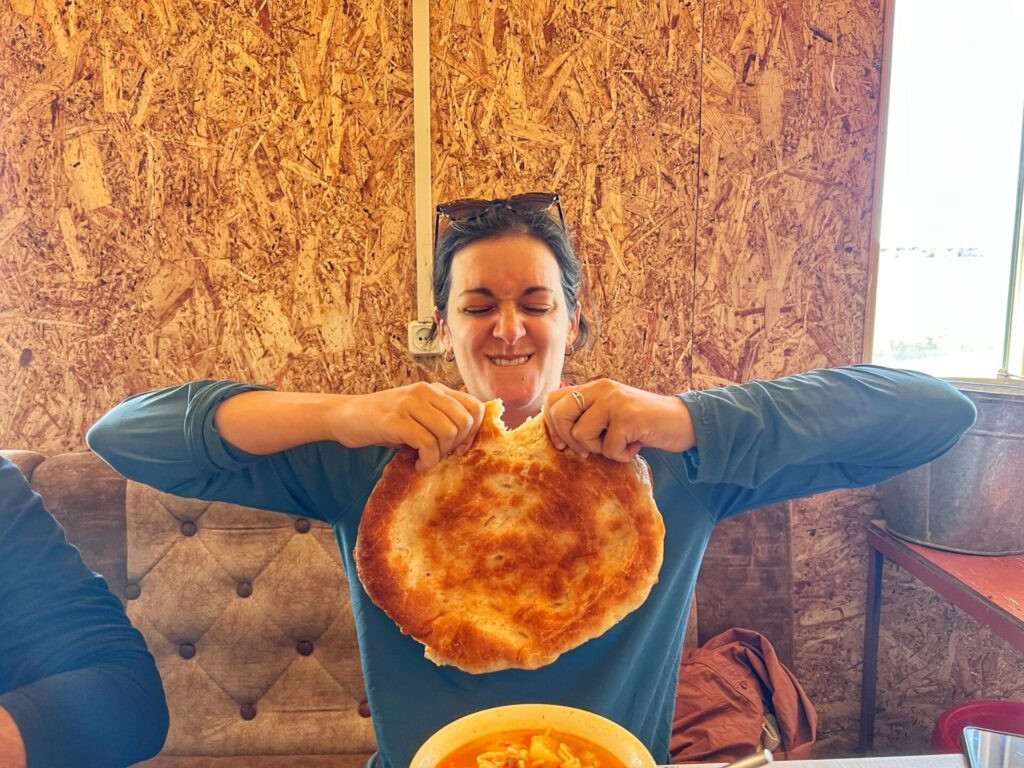
For lunch, it was quite a feast including the ever present pile of apples, cucumber/tomato salad, which everyone cautiously ate, a vegetable/meat soup, bread and a plate of yak meat for those who wanted to try it.
There was also yak…yogurt. But, having just exited death’s doorstep, sipping some soup was enough for this looker. Fortunately, Annabelle was feeling strong enough to work out…yes, this is how muscles are bulked on the Pamir.

Fortunately the soup was quite nourishing and I undoubtedly felt a bit more pep in my step after it. Unfortunately, it would be Jonathan’s turn for turmoil…
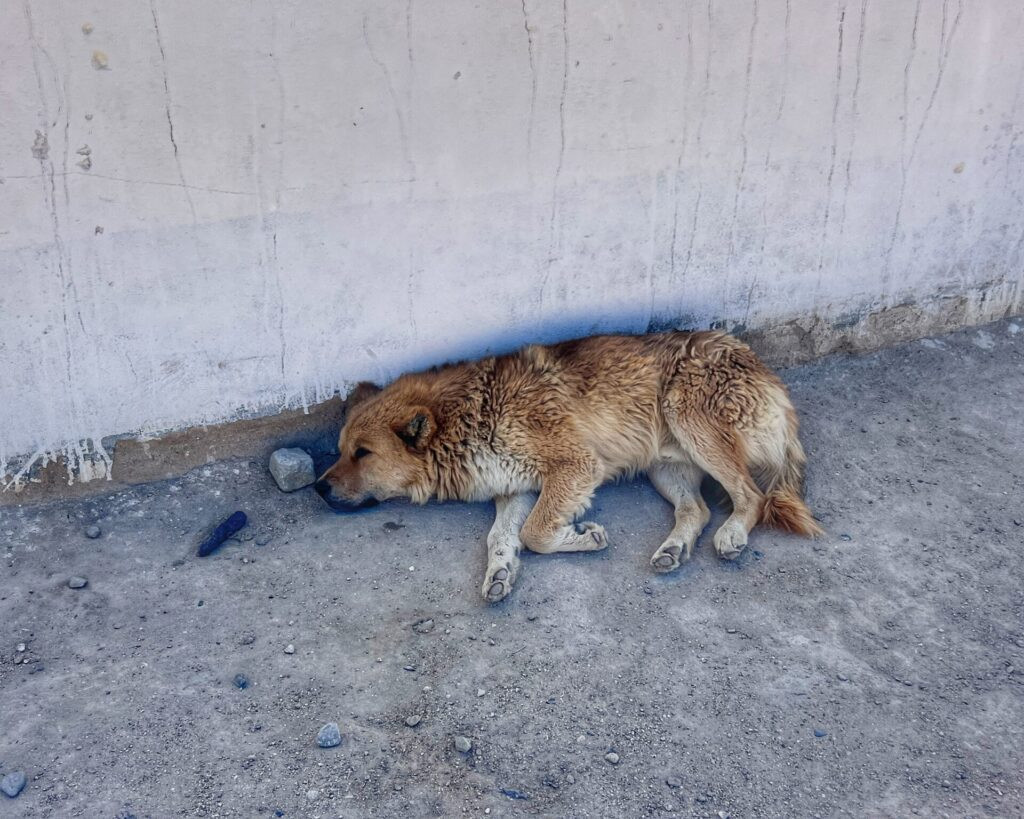
…when he was nipped by a street dog while trying to feed it. Fortunately, we seasoned travelers were ready with some First Aid necessities.
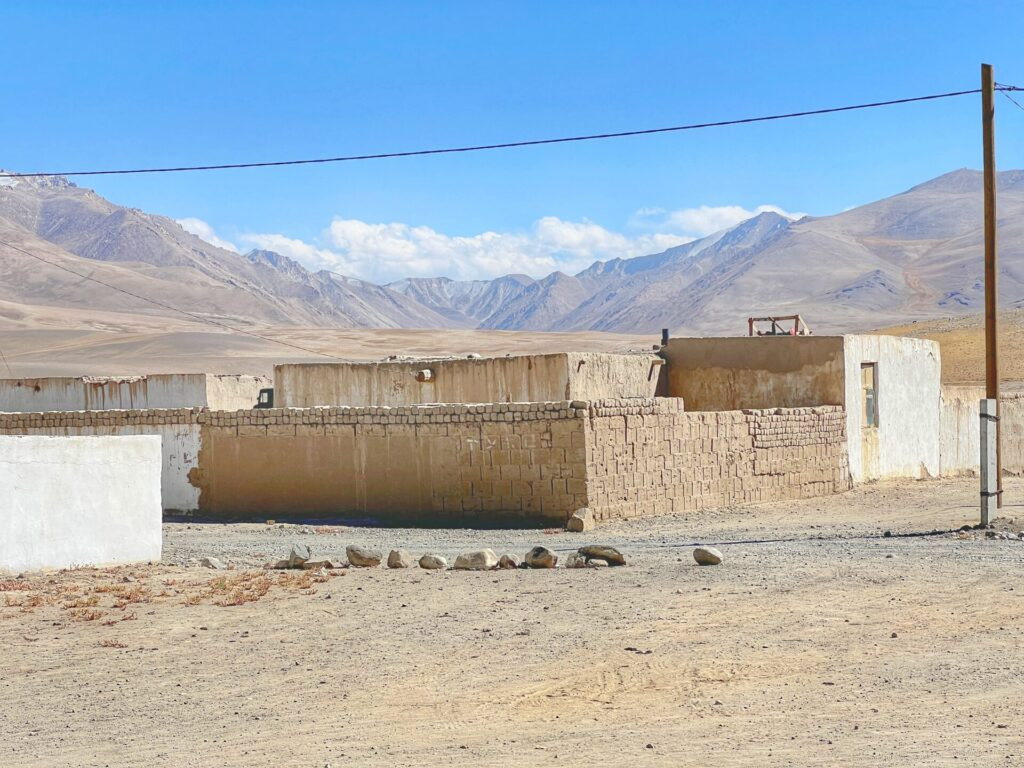
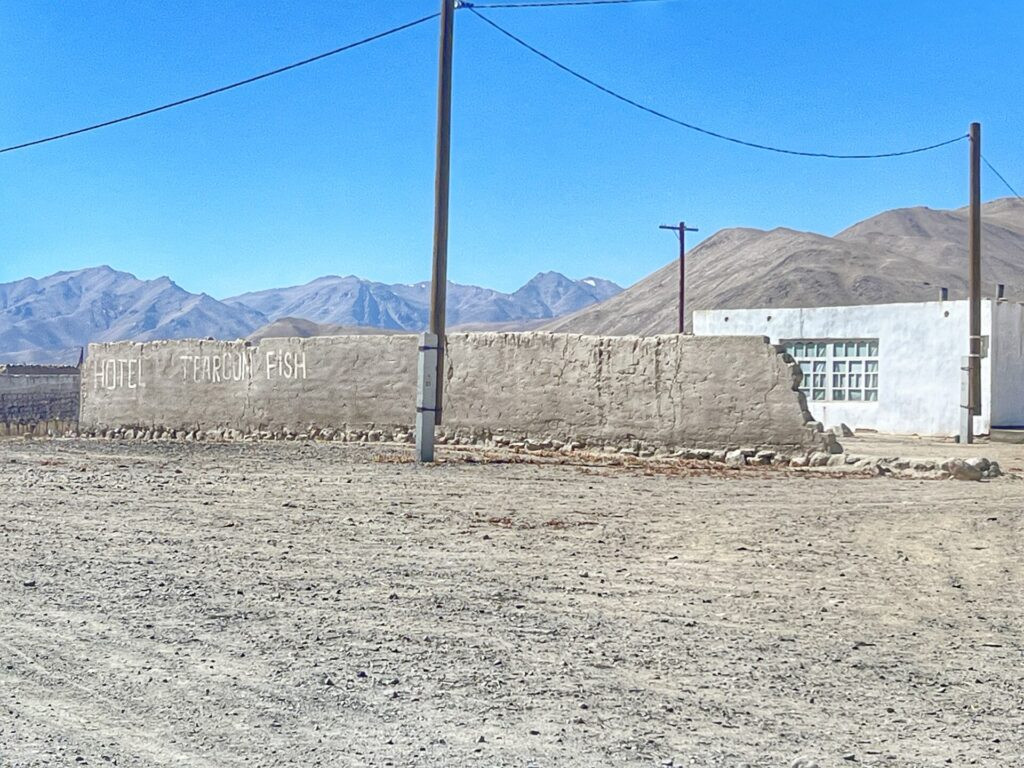
After this episode, we ambled the stark streets of Alichur observing the simple houses, and a hotel/restaurant which claimed to have fish, according to some graffiti on the wall. Fortunately, I think we were awarded the best food in town with the school teacher.
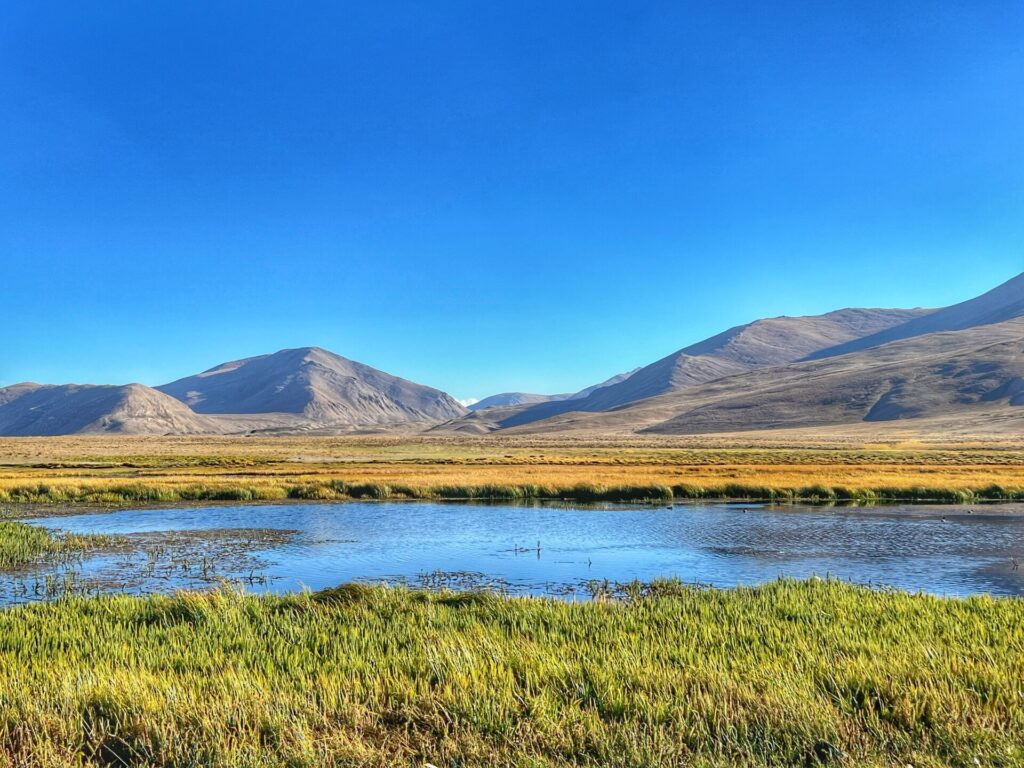
After two more hours of 12,000 foot driving, we arrived to Yashikul Lake, which is near Bulunkul where we’d be staying in a homestay for the evening.


Here Greg and I graciously accepted a private room to recover in once again, despite the fact the sheets were quite obviously soiled. It must be next to impossible to maintain clean anything in this dusty environment not even connected to a power grid. The only electricity comes from small solar panels that households use for lighting and to charge small devices.
Fortunately, the temperatures plummeted to nearly freezing that night so it made it essential to keep all our clothes on anyhow.
We personally were filled with gratitude that I was feeling better, and for heavy blankets, the chance to have a decent night sleep, a private area….
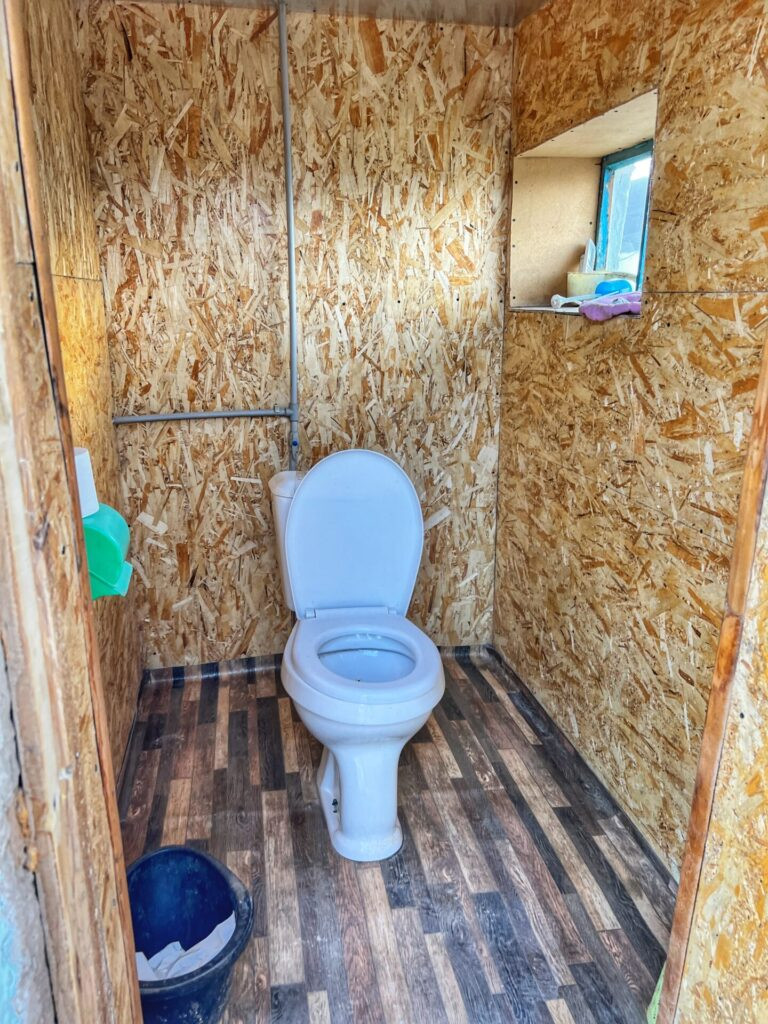
…and not one, but TWO western style outhouse toilets. Bigger bonus…real toilet paper and not the kind Annabelle and I had designated as “streamers” due to their crepe paper texture. Even TP is a luxury and difficult to obtain in these remote areas.

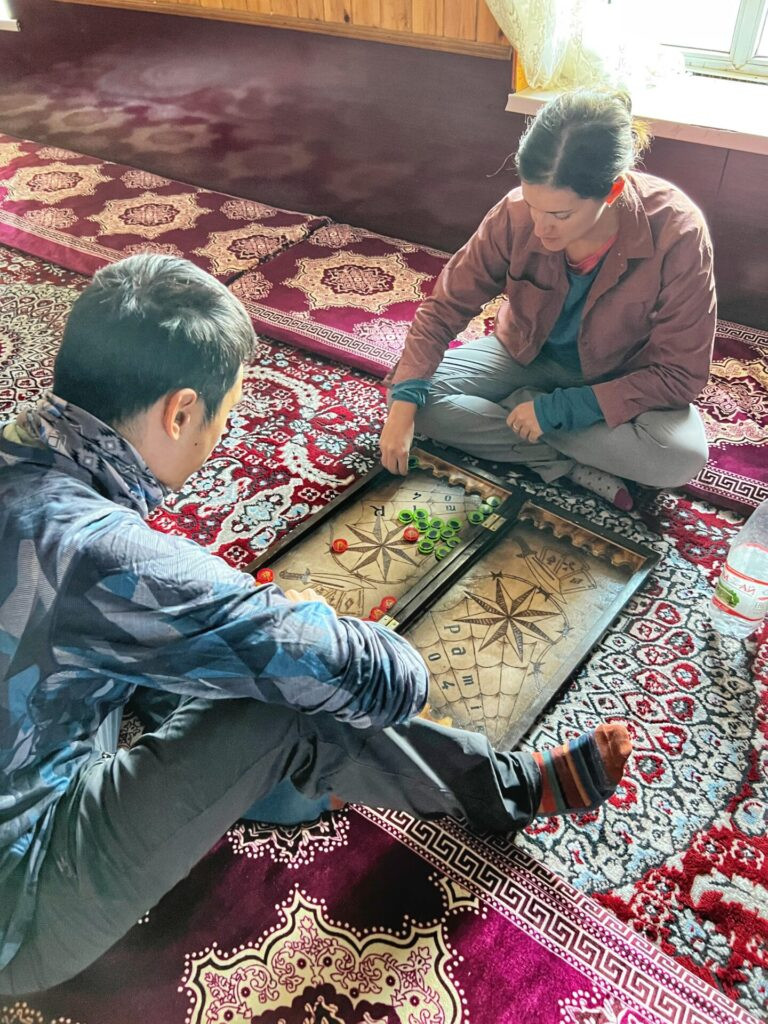
One of the central areas of the guesthouse where we could chill, and play the Pamir version of Backgammon.
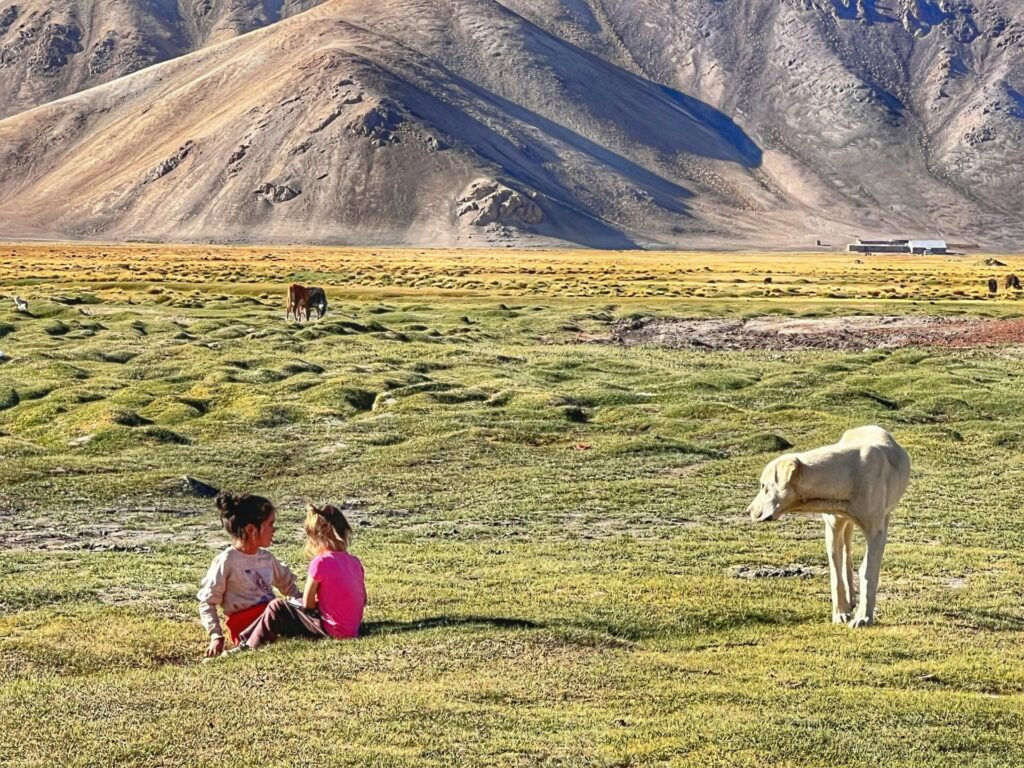
Outside, we were allowed ample opportunities to play with a cluster of kids. Giant, but friendly, Kangal shepherd dogs wander the areas around. These dogs are working animals bred for toughness, not companionship. Their job is to guard flocks (sheep, goats, yaks) from wolves, snow leopards and strangers. And they were barking ALL night.

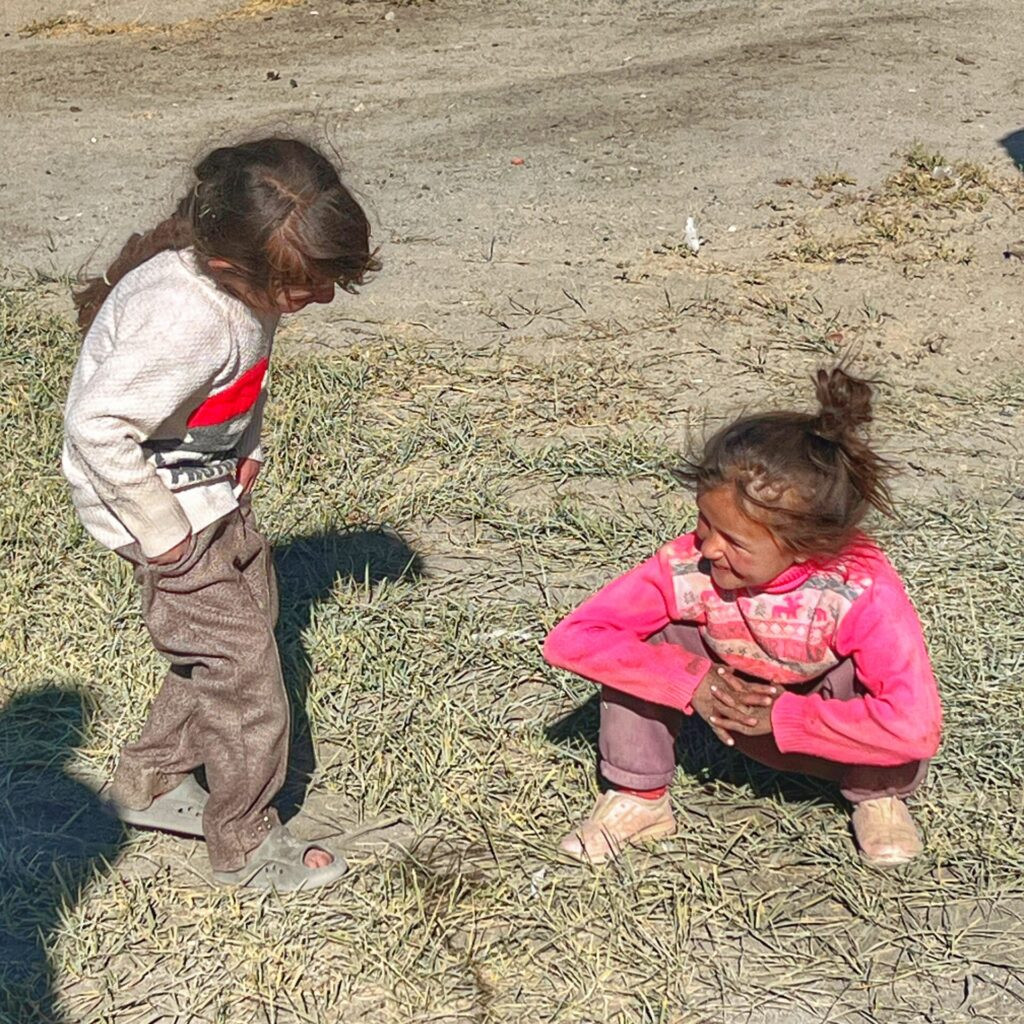
The only boy in the group even had a bike! Still, he was easily amused by Yi’s malasana squat, which was quickly imitated by several of the girls. I’m pretty sure they were so amused because this is a position that’s typically reserved for the toilet.

Other than being covered from head to toe in grime, they naturally behaved as normal children, copycatting our movements, shouting in their language all while smiling and playing with wild fervor.

They were also eager to play patty cake games including a catchy rhythm we’re still echoing today, which sounded like “Hey, hey Dushanbe! Blah blah blah blah…Dushanbe!”
Dushanbe is the capital of Tajikistan and, as we would soon experience, it’s quite disconcerting how much development and extravagance it displays when places like this village in Bulunkul are barely scraping by.

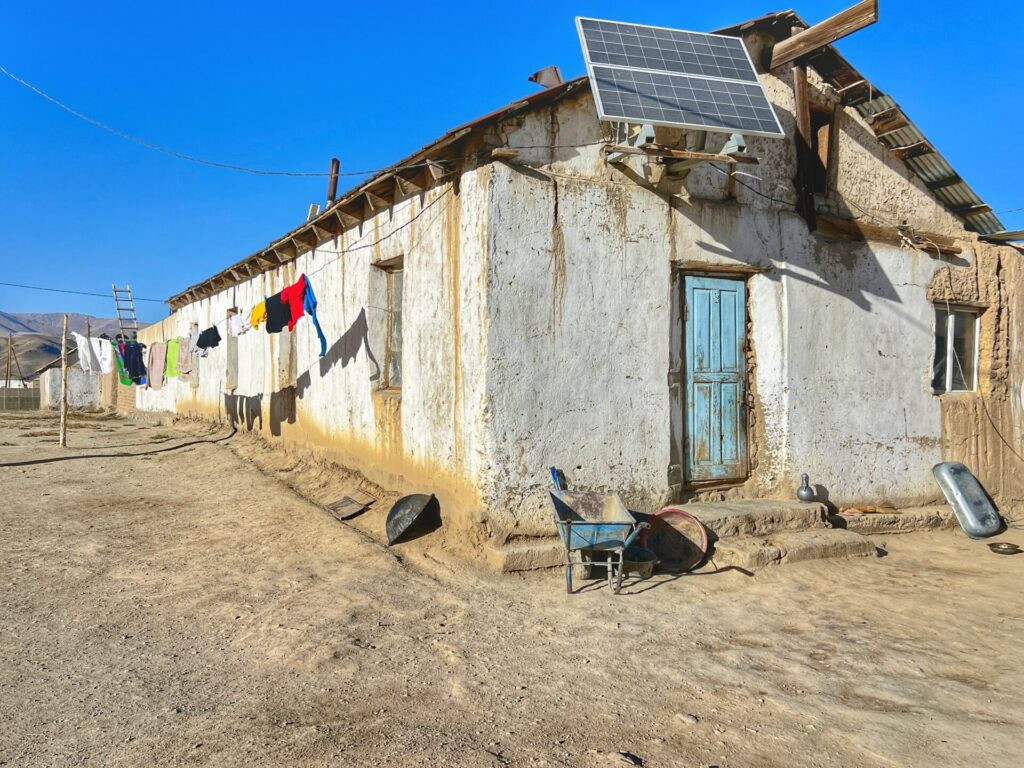

From here, we did our own wandering…through the village, where we found a closed “shop.” Can only imagine the selection, as well as some other signs of daily life.

Our homestay as the evening took over and a cold gust entered the air.


The dining area, which doubled as an area for additional beds. I stuck with gentle soup again for dinner, but amusedly watched Jonathan, the Colombian carnivore in group, attempt to cut his meat with a spoon and a fork. Eventually, he asked the hostess in Russian, which he remarkably speaks, for a knife.

The hostess said came back with all she had. This…from which Jonathan turned into a cold-blooded meat murderer. We still can’t get over how bizarre it is that there are no knives in countries so inundated with meat…🤣

Other things on the table included bread, (alway), super oily fried fish from the nearby lake, and boiled potatoes for our resident vegans.

After dinner, we were gifted with a moon rise, and later, during the wee hours, I also got to experience some stunning starry skies. There has to be some advantages to making deposits in the middle of the night to an outhouse, right?! 🤣💩
Day Three: Bulunkul to Zong, Tajikistan
Although all the days of the Pamir were exquisitely beautiful, the four-hour overland journey, combined with three-hour hike to Panorama Point we did on day three was arguably the most breath-taking day of them all…maybe in our lives?! But by breath-taking…we mean that quite literally. Ascending to this elevation (4781 meters/15,685 feet) is no joke, especially after my previous two days of illness, but we all took each step tediously, and I was gratefully able to summit to the spectacular vista with mandatory breaks every 100 steps, which Annabelle and Yi also adjusted to.
Befittingly, this is also the day we would see our first (and only!) two-humped camels and collide with the route running alongside Afghanistan for the next several days, which also surprisingly provided multiple peeks into a place we didn’t know we’d see…the snow-crowned peaks of Pakistan!!

Leaving Bulunkul on the morning of day three in our Land Rover chariot. After miles and miles of rotation, we would soon learn the pros and cons of every seat station and all have our preferred options.
- The front seat had the best views, but you had to deal with this dreadful wooden beaded seat cover…and also had the worst time fighting off the ever-present road dust.
- The two side seats were equally ok, though you had to deal with window management (e.g. opening/closing due to dust, pictures, and farting).
- The middle seat was in Greg and I’s opinion the absolute worst due to an awkward lean which made our 40-something hips ache (but 36-year-old Annabelle fortunately hadn’t joined our club yet).
- And the back seat was impossible to sit up in without repeatedly punching a hole in the roof with your head. Thus, it was the only place anyone could lay down, though the prospect of a nap on this infinitely quaking road was absolutely comical for anyone.

Shortly after leaving Bulunkul, our driver Aziz relocated us off to the middle of nowhere. He ushered us out of the car and then gestured with a smile to a very intimidating hill towards Panorama Point, before decidedly taking off with everything we own (and our only hope of continuing life.) Because there would certainly would be no cell signal anytime soon.
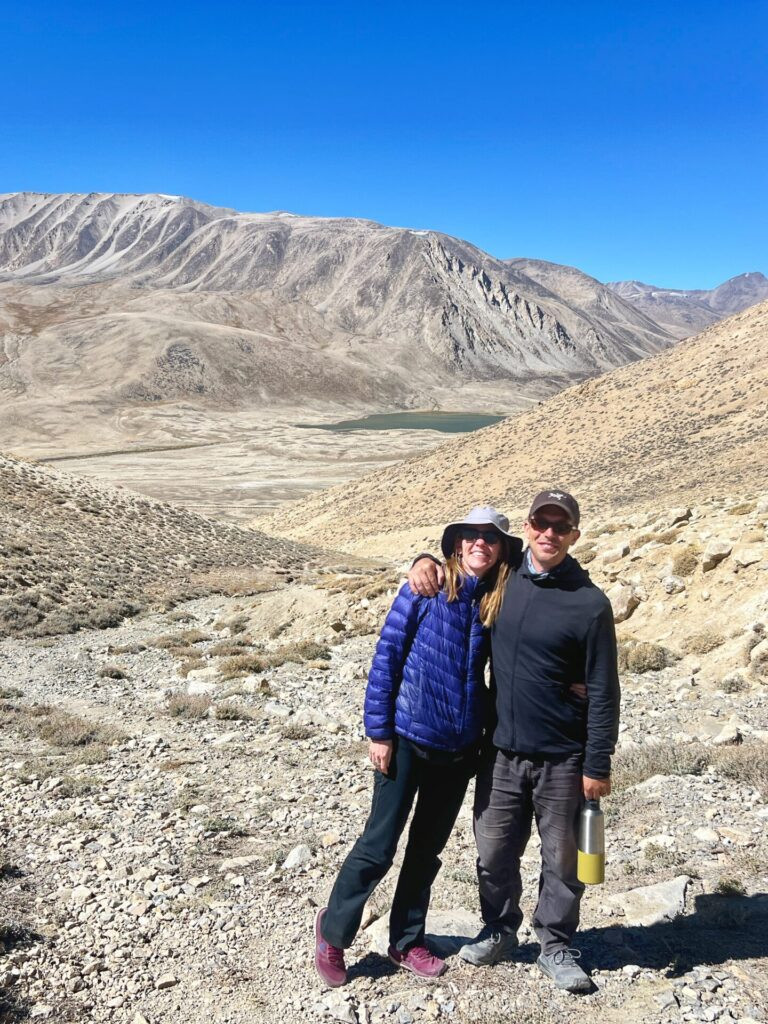
Deciding to trust his return, we began to slog.
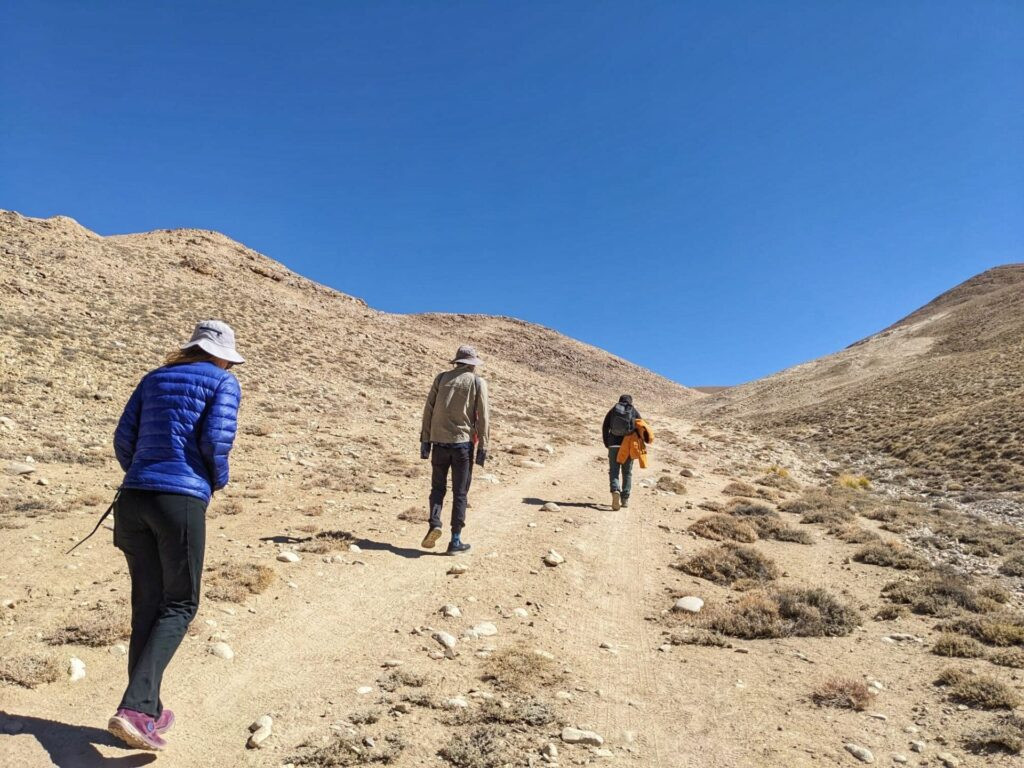
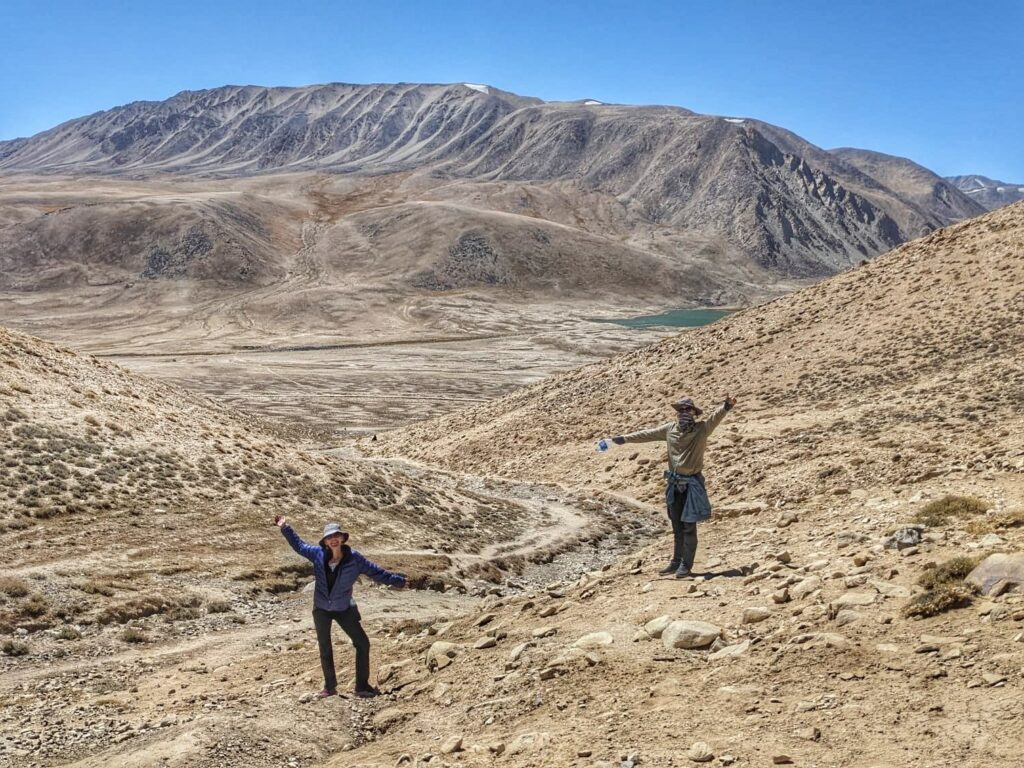

A slog that would rise up 430 meters, or 1400 feet, to the highest point we’ve ever hiked (by a nose from Peru’s Salkantay Pass). But unlike that snowy and defeating day when my foot was throbbing, this day was absolutely splendid! And, even in my weakened state, I was gonna make it!!
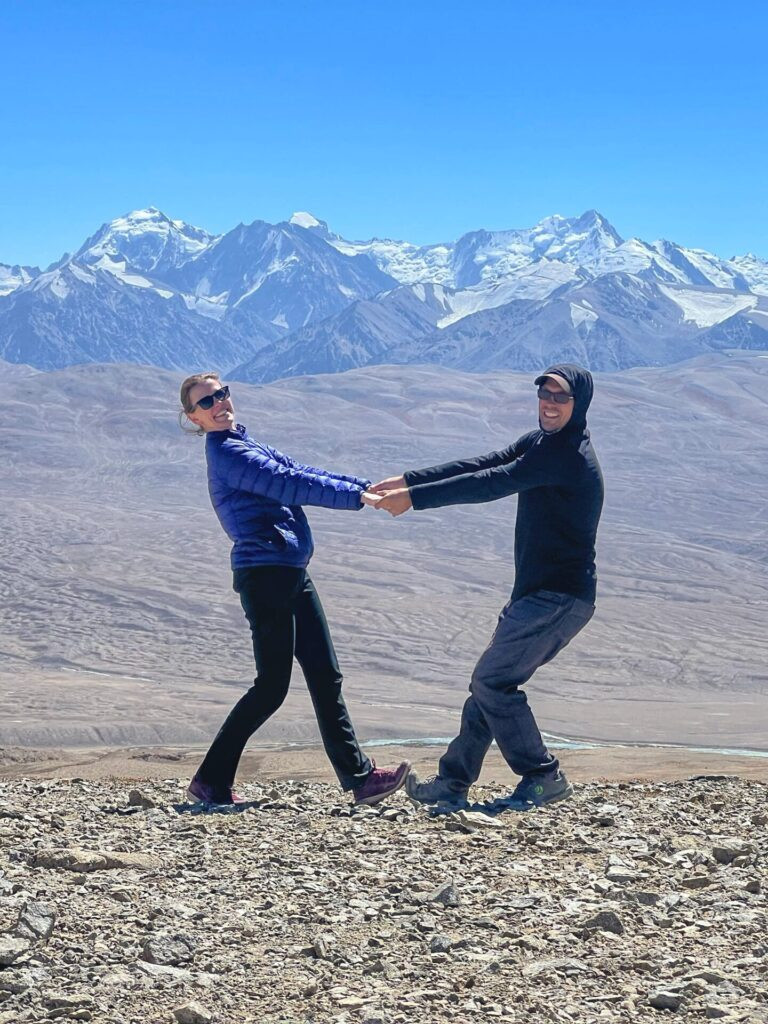

We made it!! At the top of Panorama Point where we could soak in the summits of the Hindukush Mountains between Afghanistan and Northern Pakistan. This range is not quite as lofty as the Karakoram or Himalayas, but packs some serious punchers including 38 peaks over 7000 meters (23,000 feet). (That’s ~1000 meters/3,000 feet higher than Denali).

The proof in the pudding…or Apple Watch.
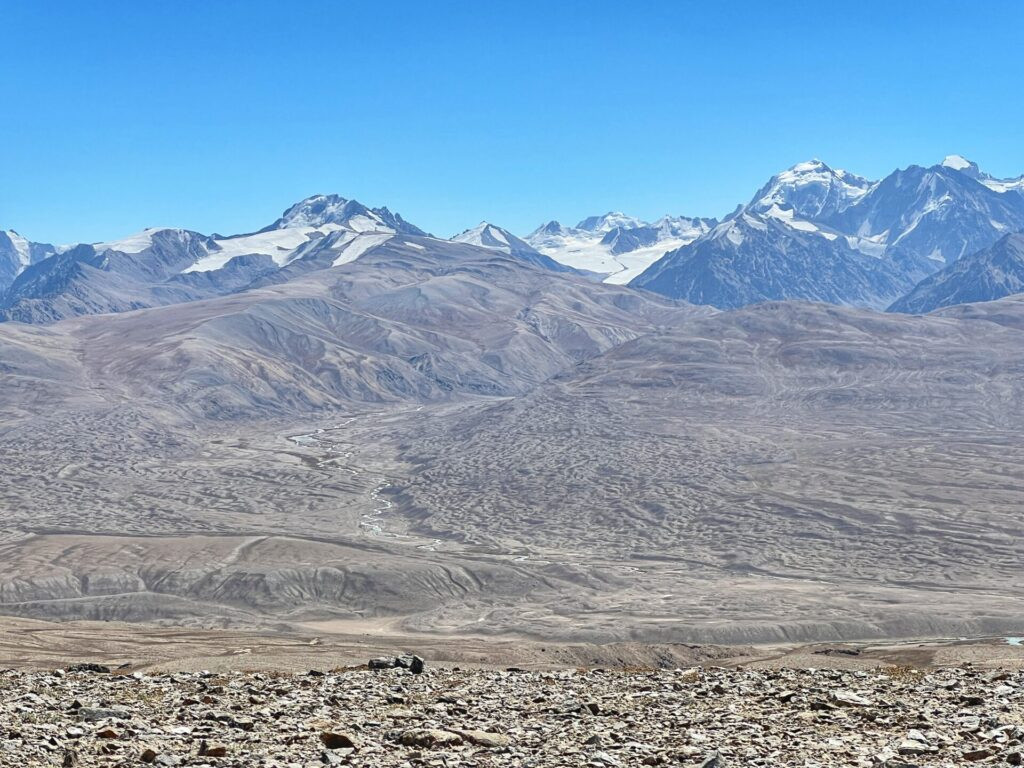


As we looked into our first peeks of Afghanistan, we realized, it was SOOOO worth it, although the look on my face might say differently. For most of the time at the top, we remained sheltered behind this small pile of rocks because the wind was whipping so fiercely.
We’d be hugging the border for the next 500 km (310 miles).
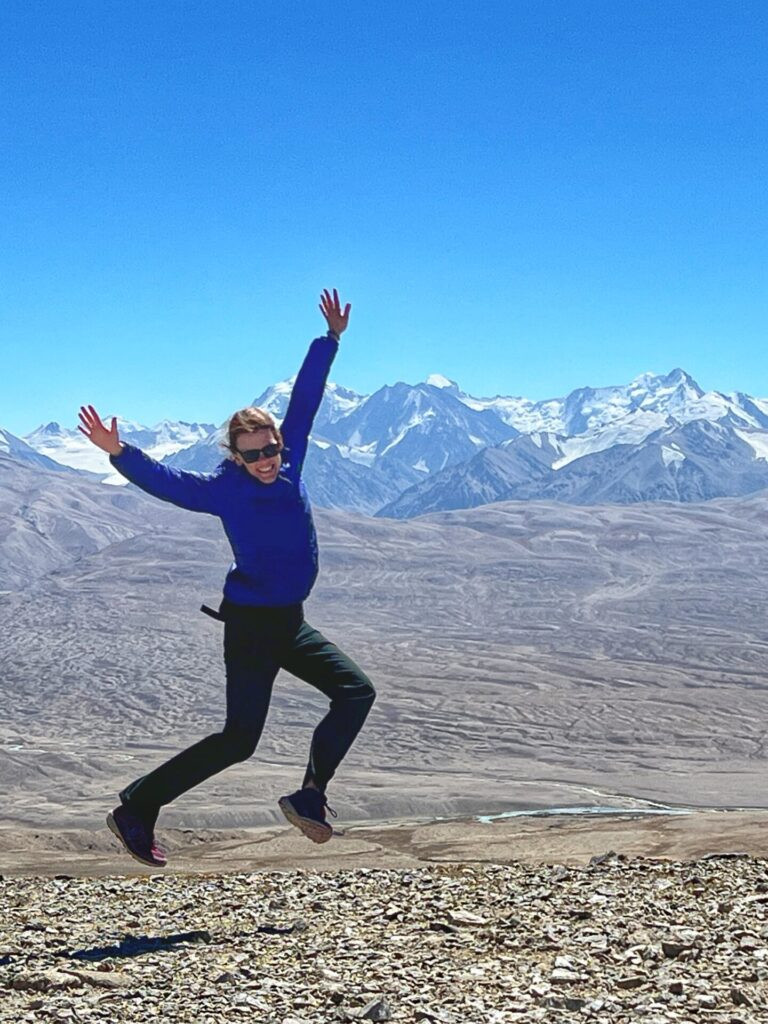
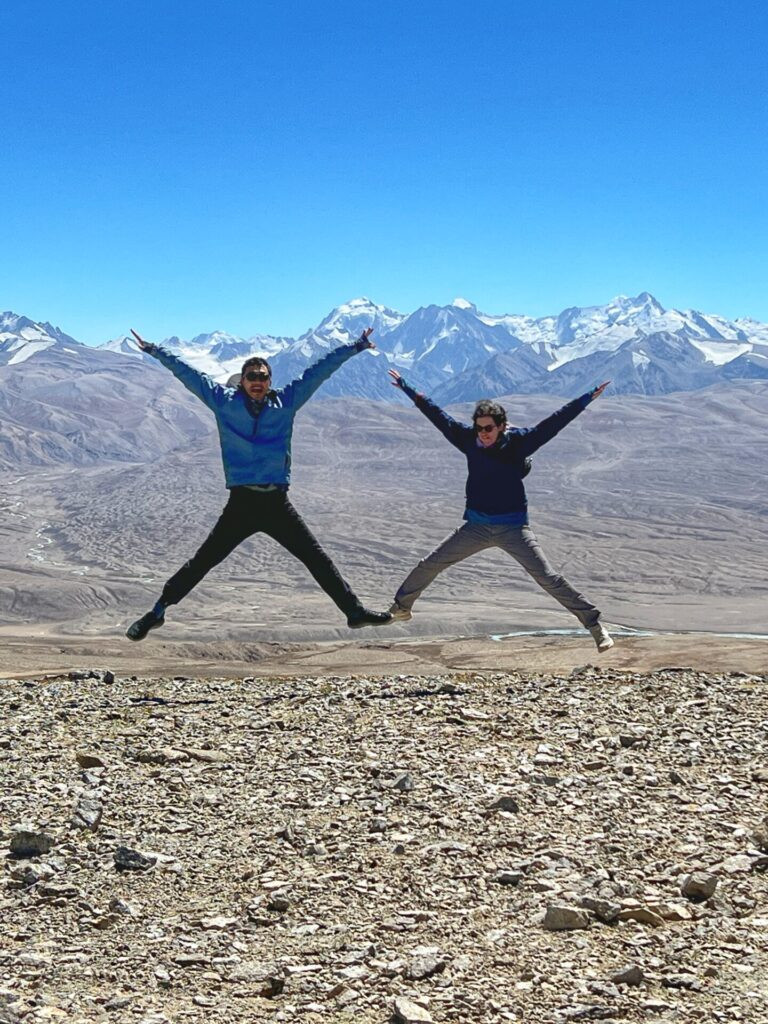

And the obligatory “Look at ME!!” shots…


Upon rolling back down the mountain, we found Aziz (bless his heart) preparing our picnic lunch, which consisted of several items we really didn’t want to eat after it was baking in the warm car for hours like oily fried fish from the night before, some sausage chunks, a couple slices of plastic wrapped American-style “cheese” (though we all know the staying power of Kraft singles) bread, buckwheat, tomatoes and RC Cola all the way from Columbus, Georgia. “Lucky” me, I had just concluded the hike with the most beautiful* shit of my life and was (still) not the least bit hungry. (*The view, not the by-product.)
It was around here we also began seeing a considerable number of chubby marmots which usually waddled across the road far too swiftly to photograph. This is why we were elated to finally see one up close. However, none of us were more ecstatic than the normally chill Yi, who squealed like a school boy when the marmot started to bound toward us. We’d never seen him so excited and it was absolutely hilarious.
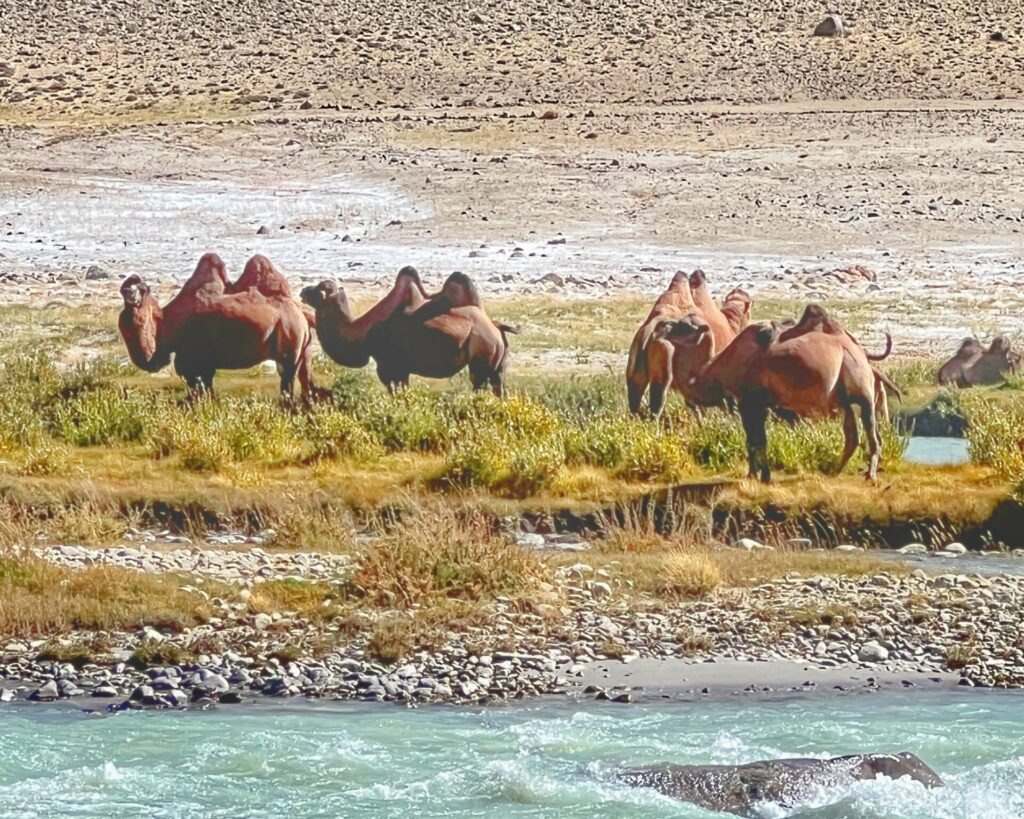
From here, we would veer due south until we plowed into Afghanistan…where we’d meet our other friends…like a two-hump wonder welcoming committee. Most people are disappointed not to see these types of camels when visiting Arabia…or the city zoo…for the first time. They are native to the steppes of Central Asia and are cold adapted unlike dromedaries (one-humpers) of the Middle East. They would be the first, and only, Bactrian Camels alongside the river almost as soon as the road began chugging alongside along the Afghani border.

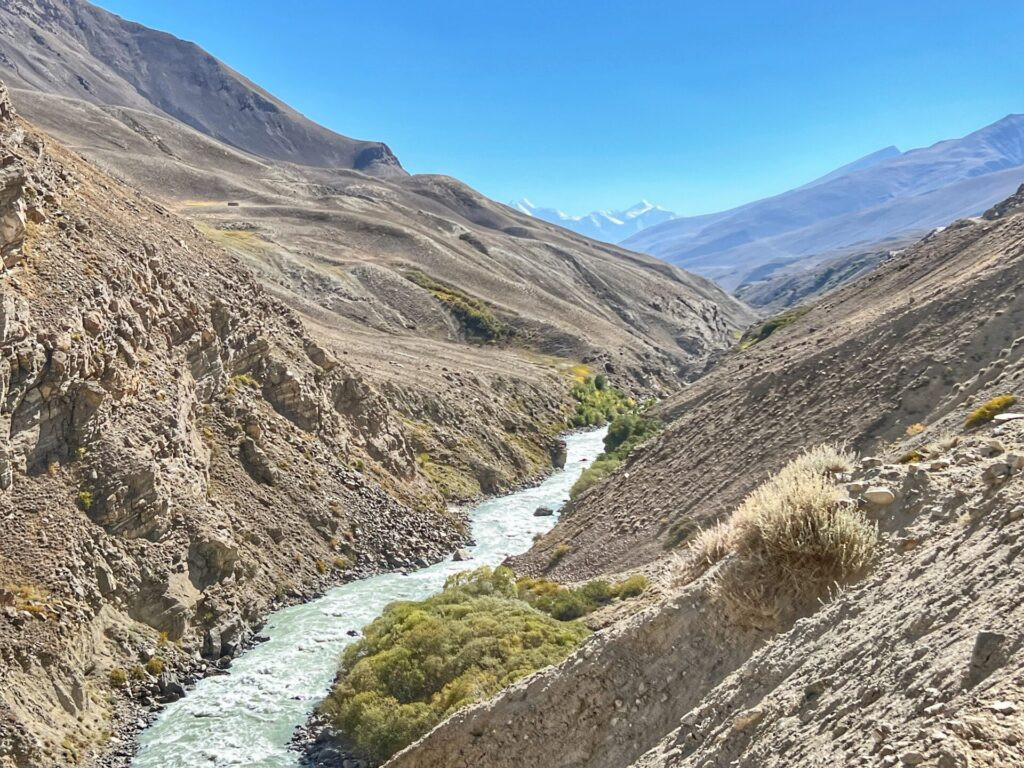
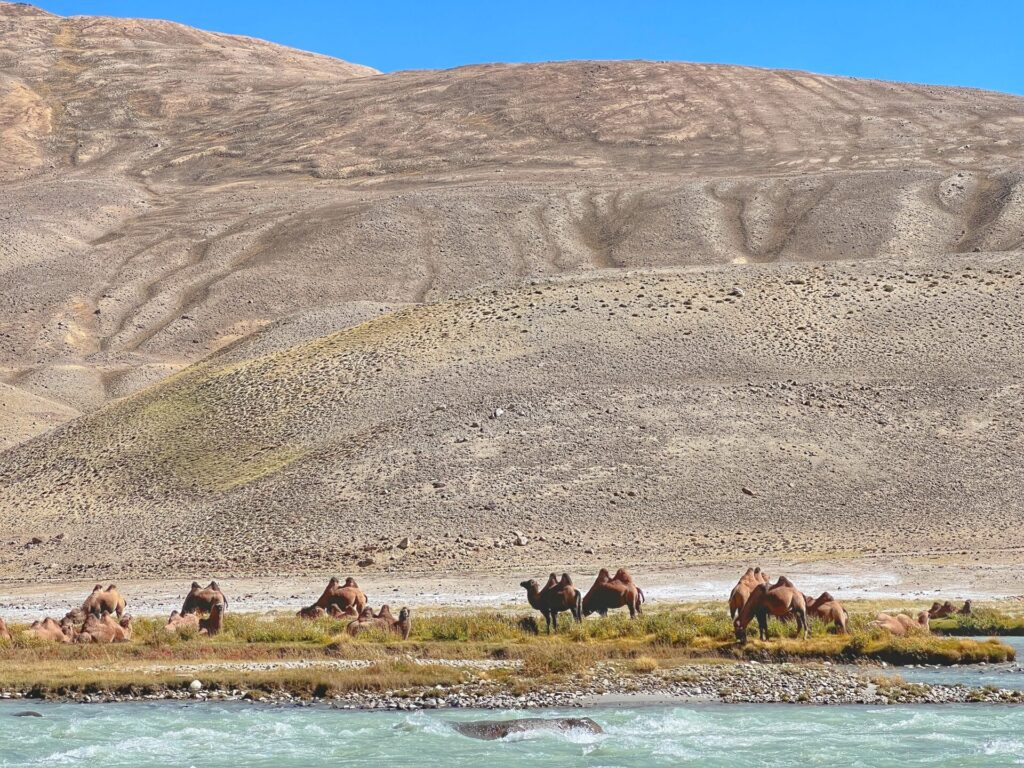
It was so unbelievably wild to see them perched on the river island between two magnificently exotic lands. And from this point until day seven, we’d be also snuggling with the Afghan border. Gulp.
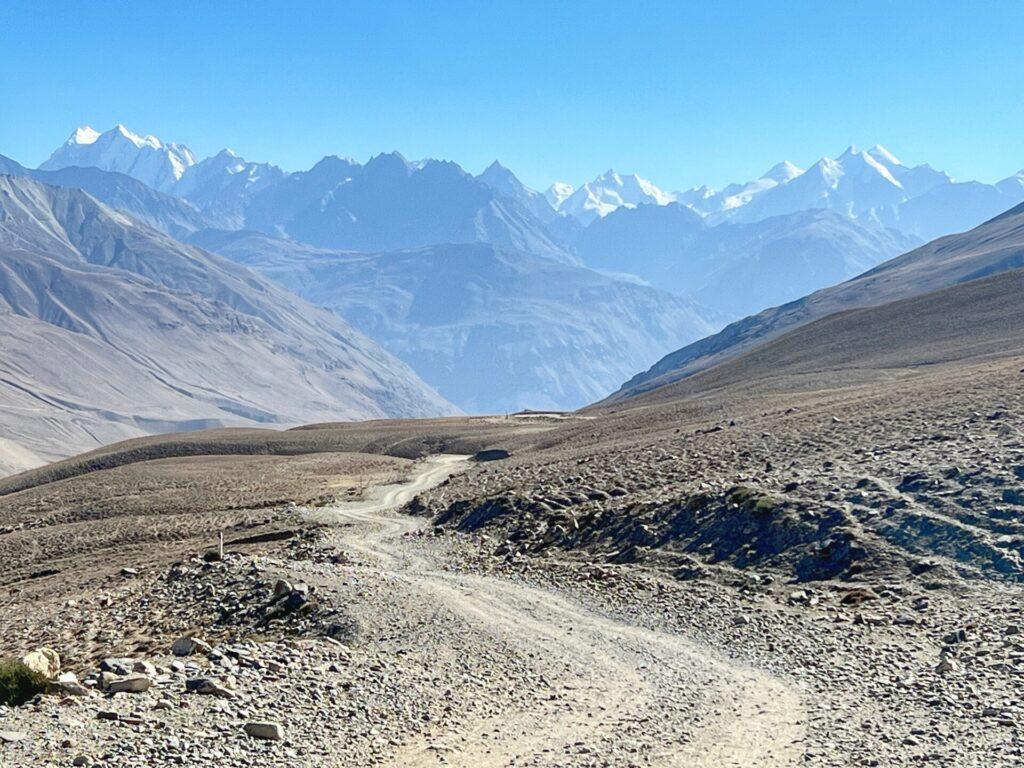

And this would be our pathway.
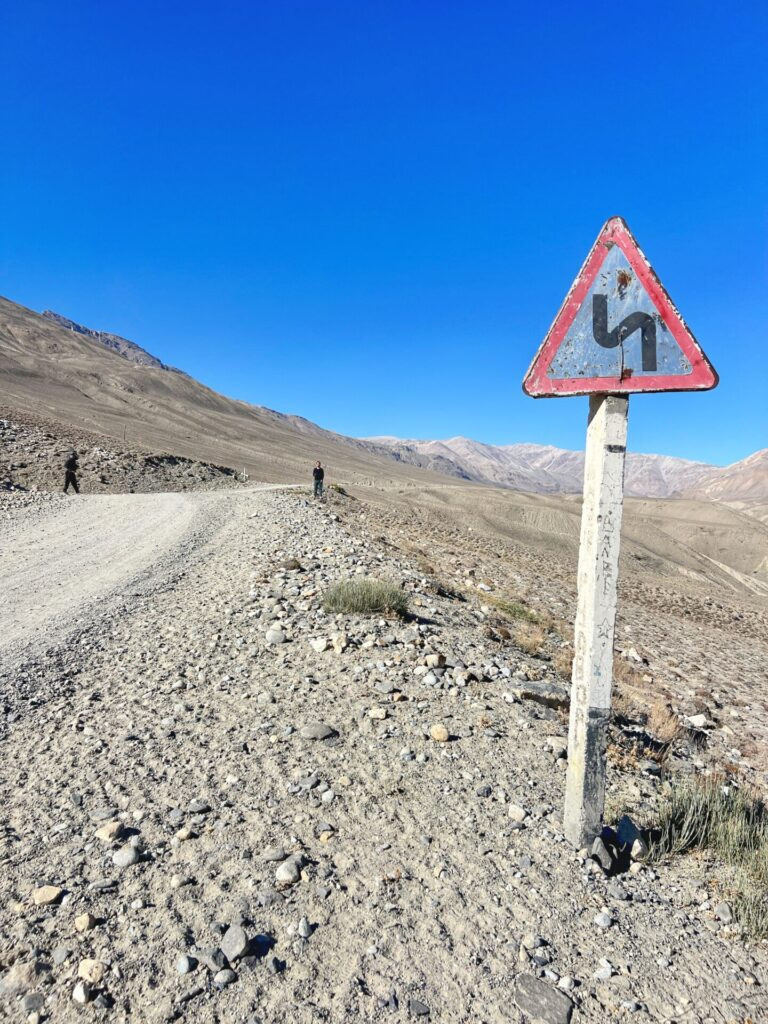
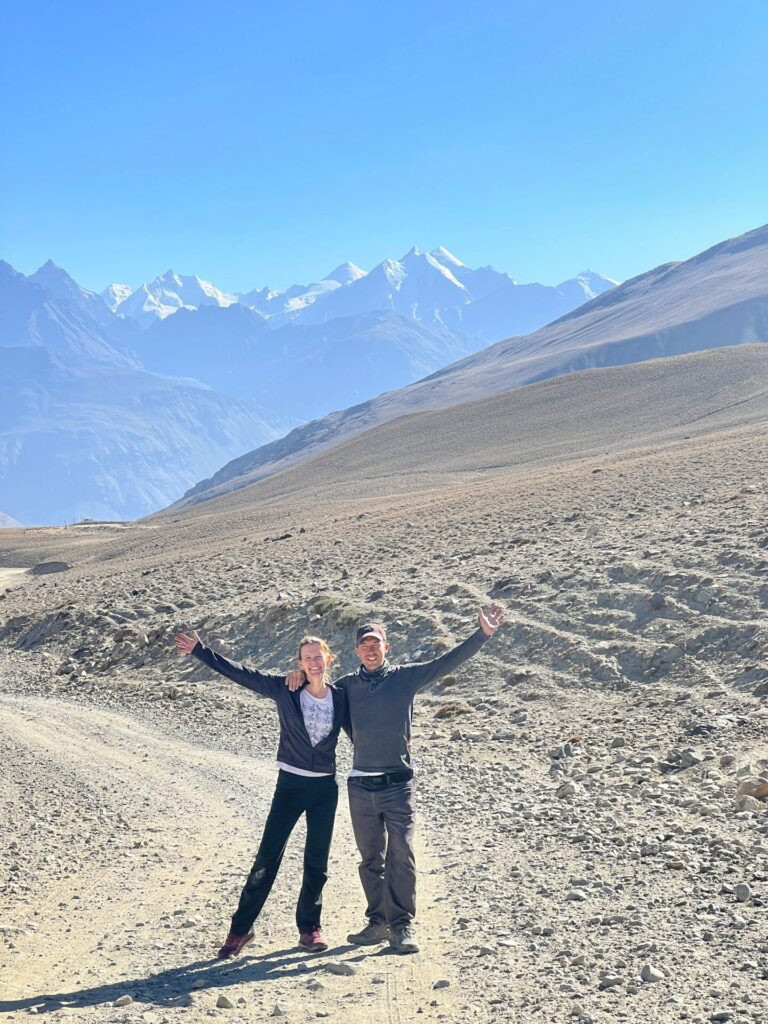
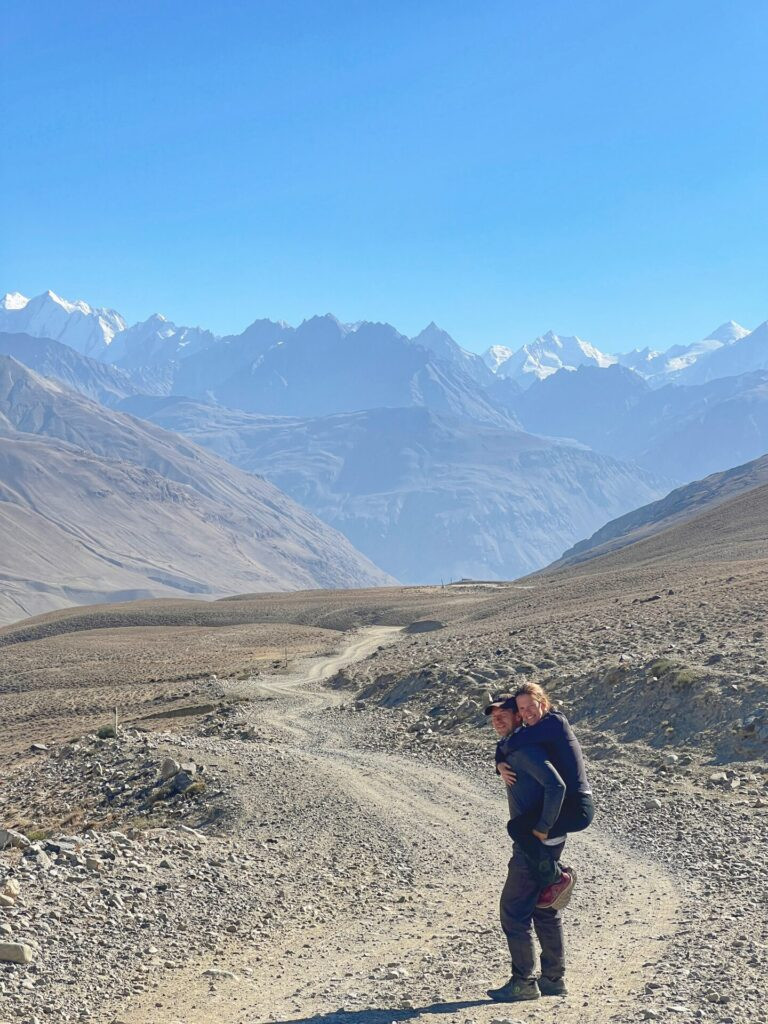
Not another car for miles….no cell reception…and Pakistan’s peaks popping in the distance. And yes, the Mandy Backpack 7.0 is here. Fully adaptable. Always travel ready.


Absolutely the most epic road trip of our lives…and yes, we’re linked poetically like the stars of a ‘90s teen drama series…in the middle of the “highway.” Ready for our REI advertisement.

This pile of rocks is a typical Tajik border guard station. Pretty much all the stations on this part of the highway were empty, though Aziz always acknowledged them with a friendly honk. It wasn’t until the following days when these stations became a lot more cumbersome and wallet draining.

Thanks to the little finger that sticks up, here you can see on the map how we could gaze into Afghanistan and Pakistan at the same time. By the way, make sure to download offline maps for both Afghanistan & Pakistan before you leave if you want to follow the journey. We made the mistake of not doing so, but fortunately we were able to check out the bizarre borders on Yi’s phone.


At last, we arrived to the border village of Zong, where we’d gratefully spend the third night dropped significantly in elevation. And, as Aziz promised, from this point forward, both the comfort of the accommodations, as well as the food…improved substantially each night we got closer to Dushanbe.
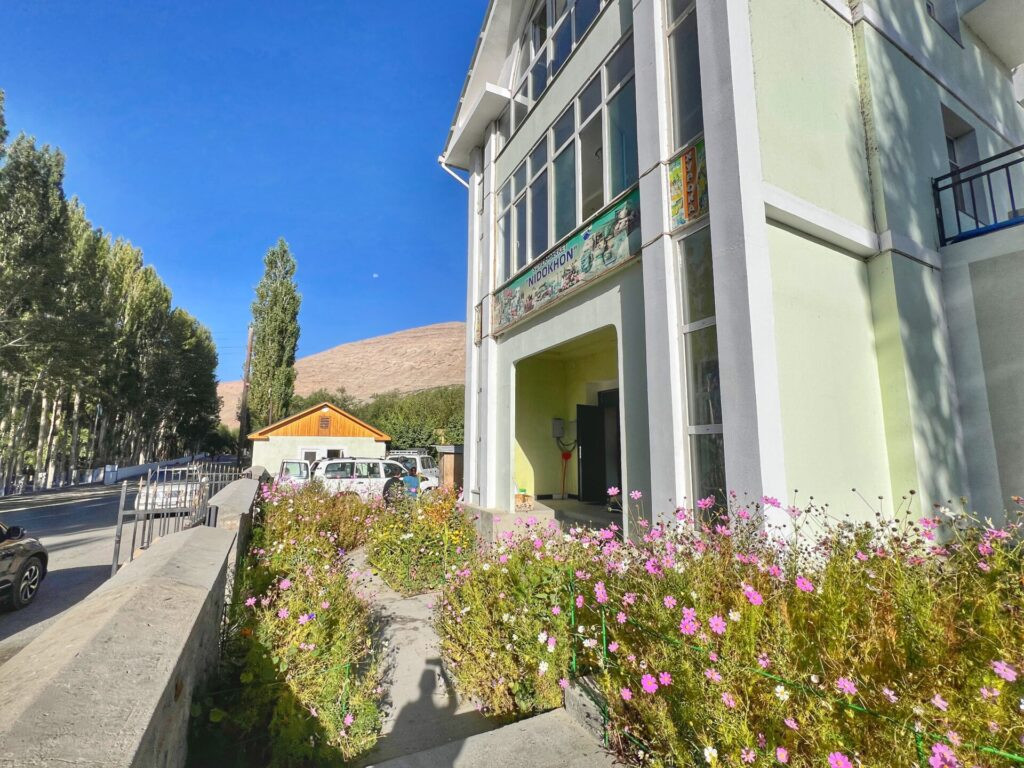
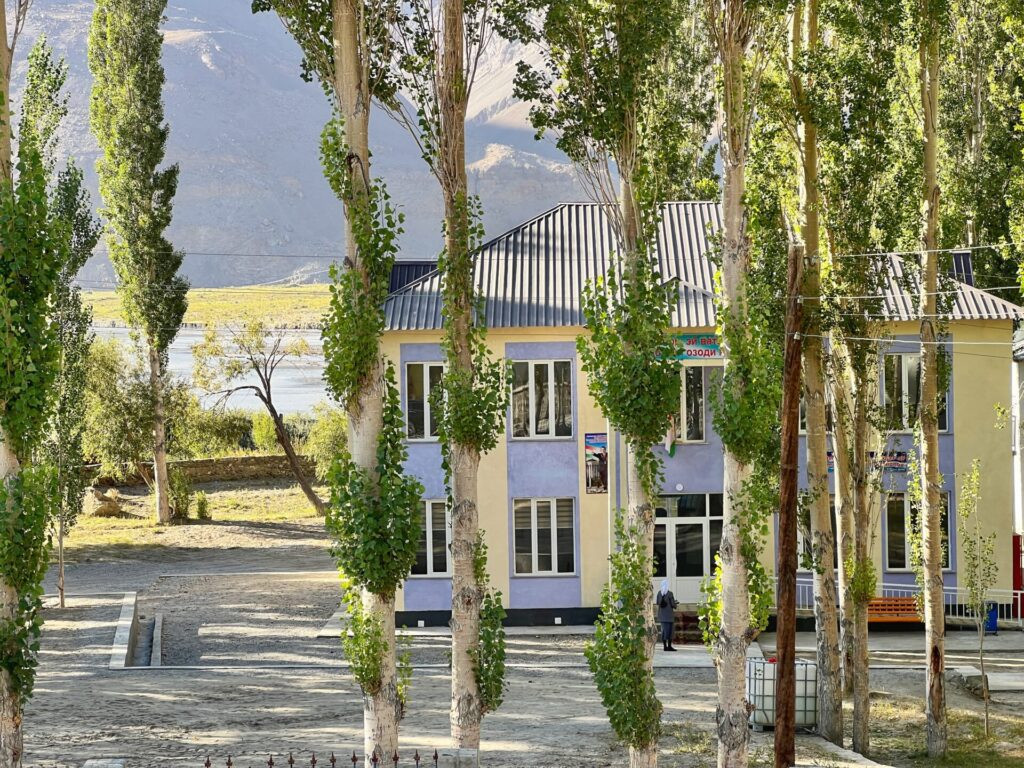
The front our guesthouse in a seemingly normal village. And the school across the street….mere meters from a tragically different world across the river.
Day Four: Zong to Khorog, Tajikistan
As we continued to cling to the Afghani border, the 6-hour driving day four of the Pamir quickly evolved into our favorite day. We had indulged in our first invigorating shower of the trip the night before, I finally was starting to eat again, trees were back on the radar, and we got to do the most varied types of activities, which included some Silk Road sites like an ancient Buddhist Stupa, a healing hot springs and a 3rd Century BC protective fortress. And, the evening ended with some dancing and feasting with locals…but that is for Part 2.
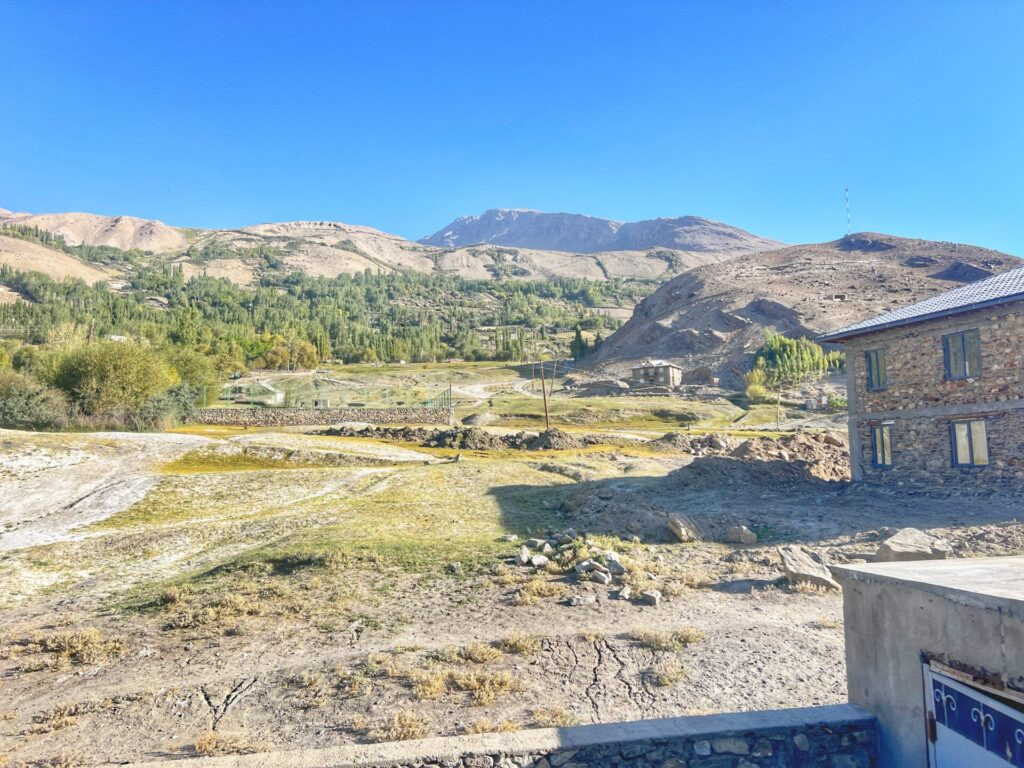

The day began at our guesthouse in Zong after our third challenging night of sleep on the road. This time because it was toasty roasty in our room. However, it was nice to go out in the cool morning air and see trees again, as well as the eager and smiling school children, fully uniformed with giant pom poms in their hair walking down the mountain to the nearby school. We also had a silver of internet, so it was wild to see where the weather app had our current location.
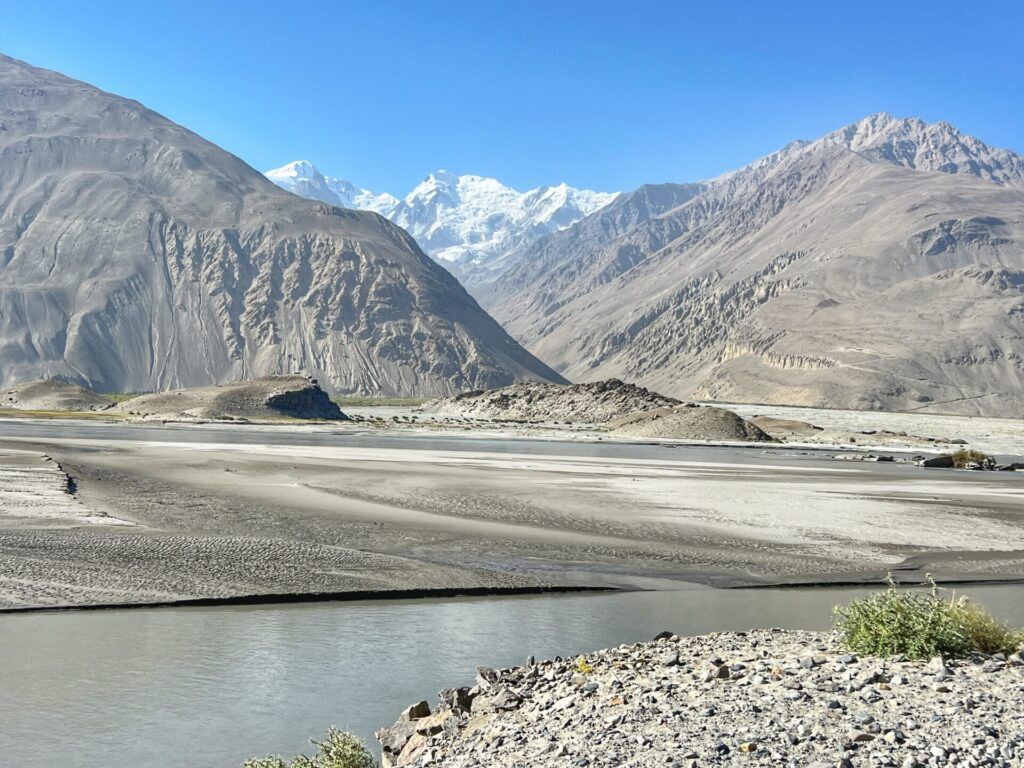
But it was literally a stone’s throw away across this small river. Also, by day four, we had come down considerably in altitude so it was nice to see more civilization again.
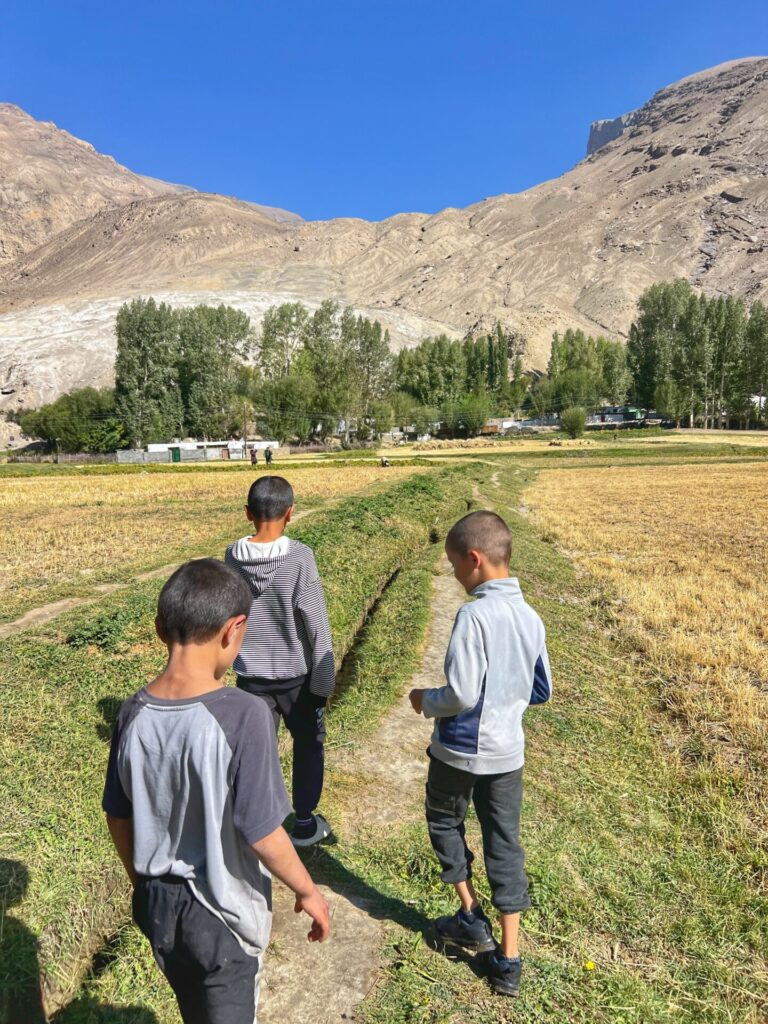
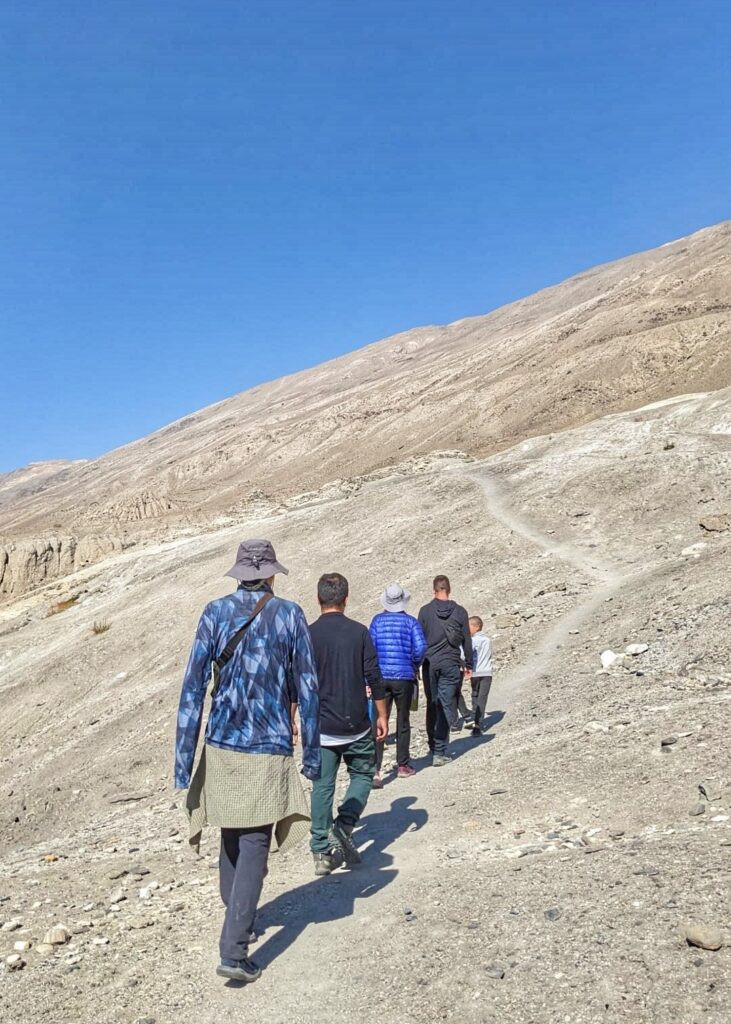
This included a trio of local tour guides when we stepped out of the car to visit to the stupa, who remarkably spoke some English. Although we asked the kids to take their photo, they all refused and then bantered each other to be the “crazy” one to have his picture taken.
There could be several reasons for this, according to a later Chat GPT search. In traditional Tajik communities there’s the idea that photographs “take something away” like modesty or dignity. Also, since the country is majority Muslim, in villages like these, it’s common for parents to teach children not to pose for strangers, particularly foreigners. Finally, in Soviet times, people were often suspicious of cameras because they could linked with propaganda or surveillance. That mistrust hasn’t fully disappeared in rural areas.

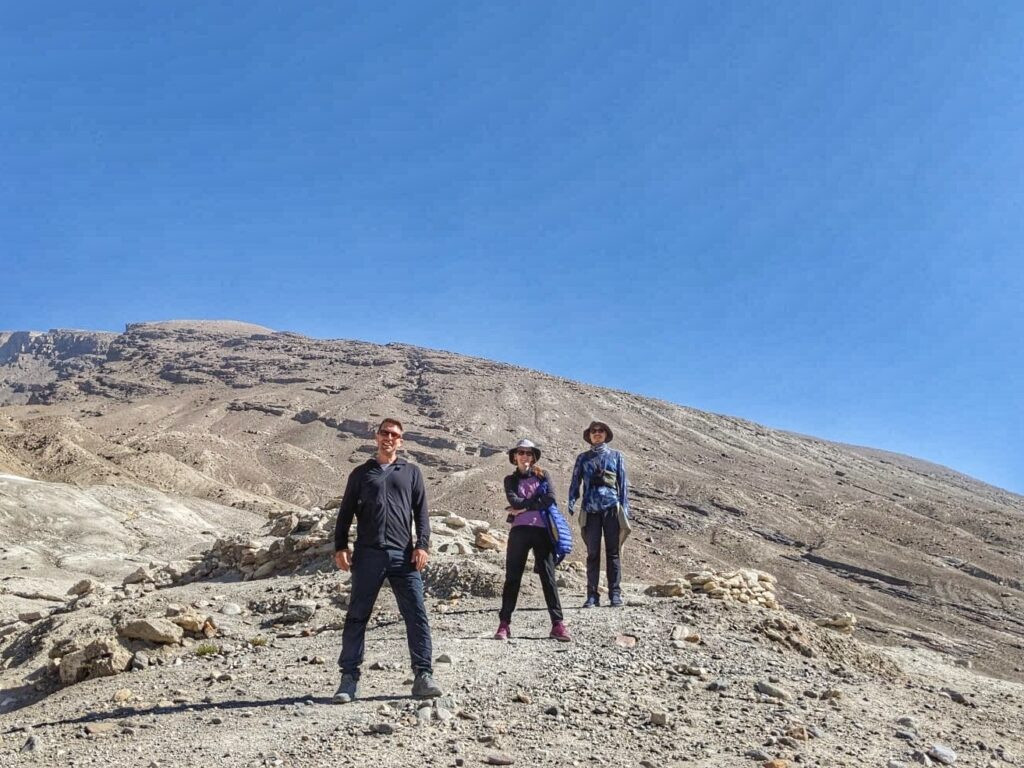
Regardless, they were fantastic and eager little tour guides taking us up the mountain toward the stupa. We only wish we’d had some candy or toys to “pay” them with.
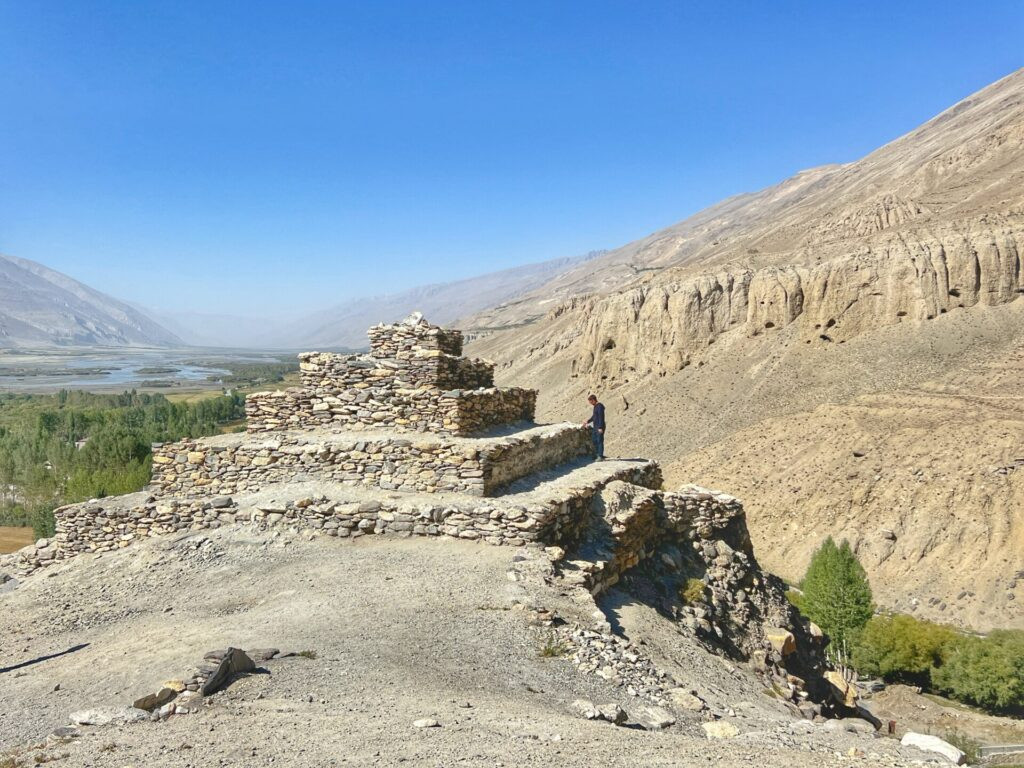
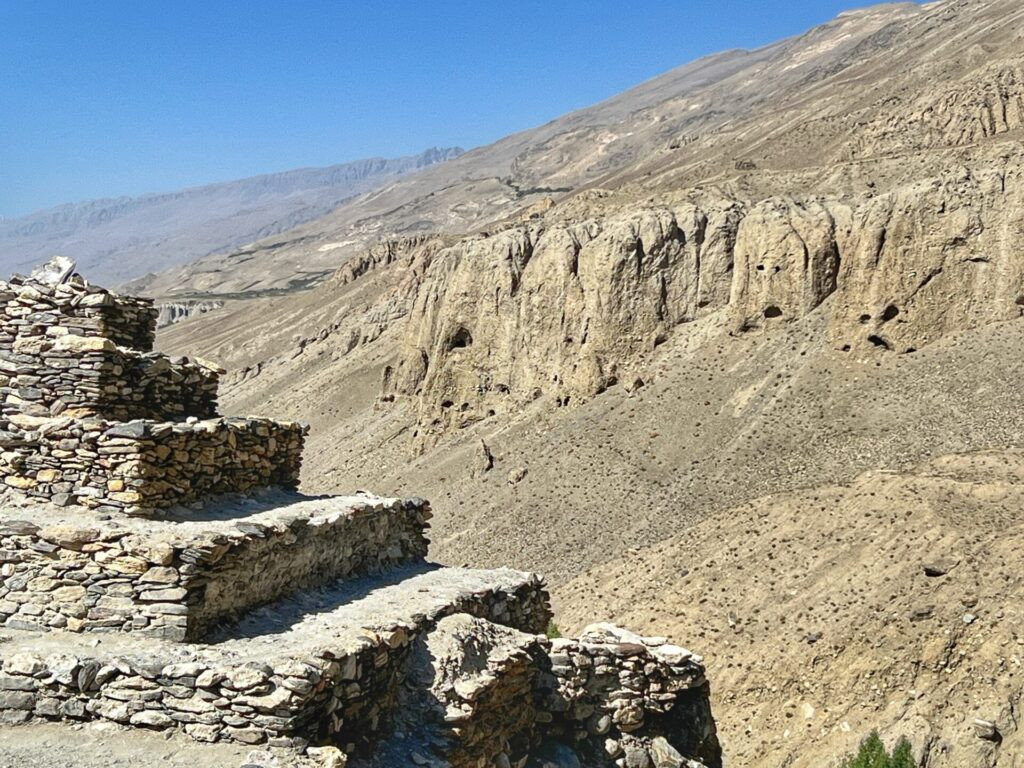
The walk up to the Vrang Stupa was about 20 minutes long in each direction. The stupa dates somewhere between 4th-7th Century and is part of large monastic complex that included residential structures, a fence with watchtower and a temple.
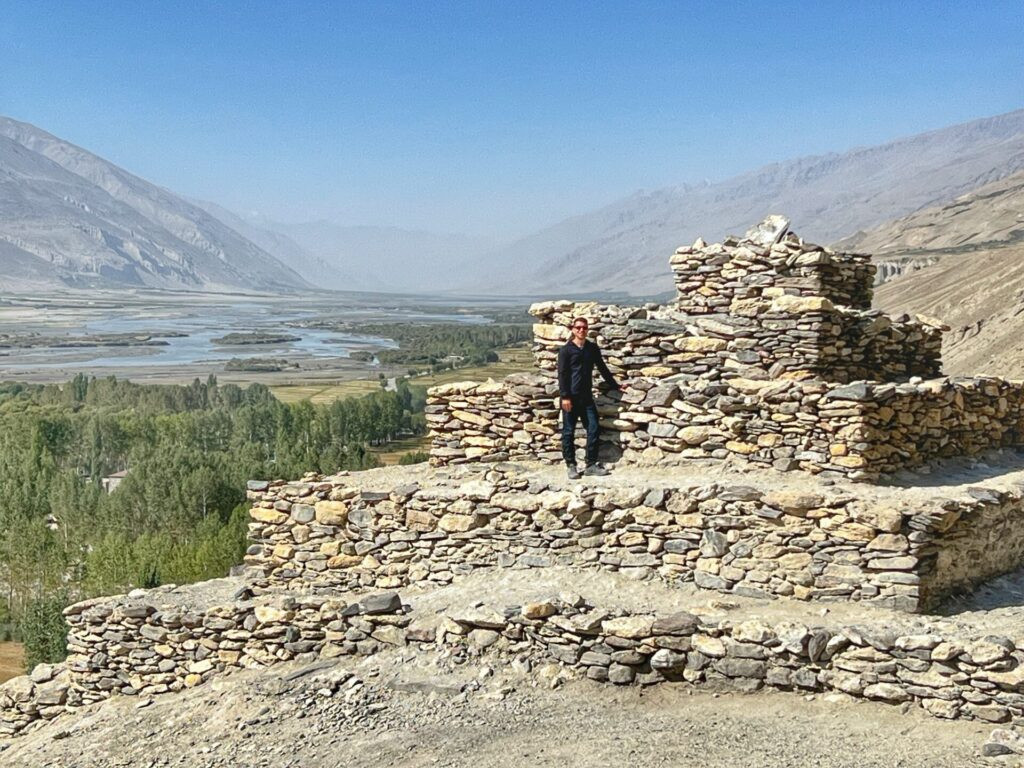
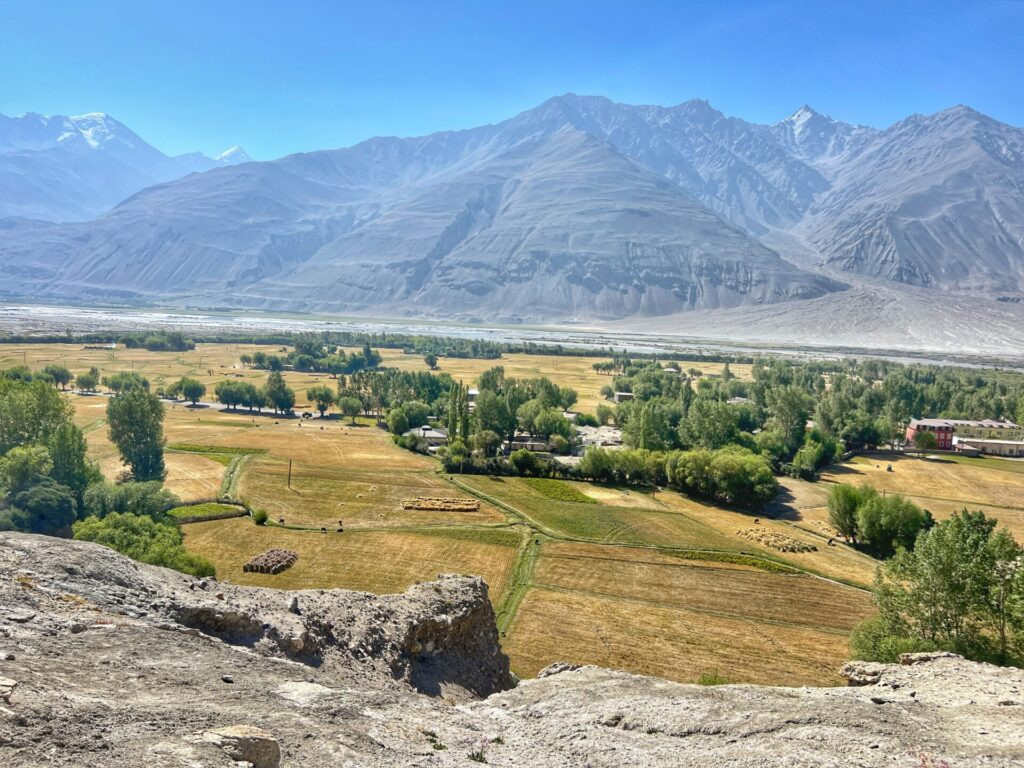
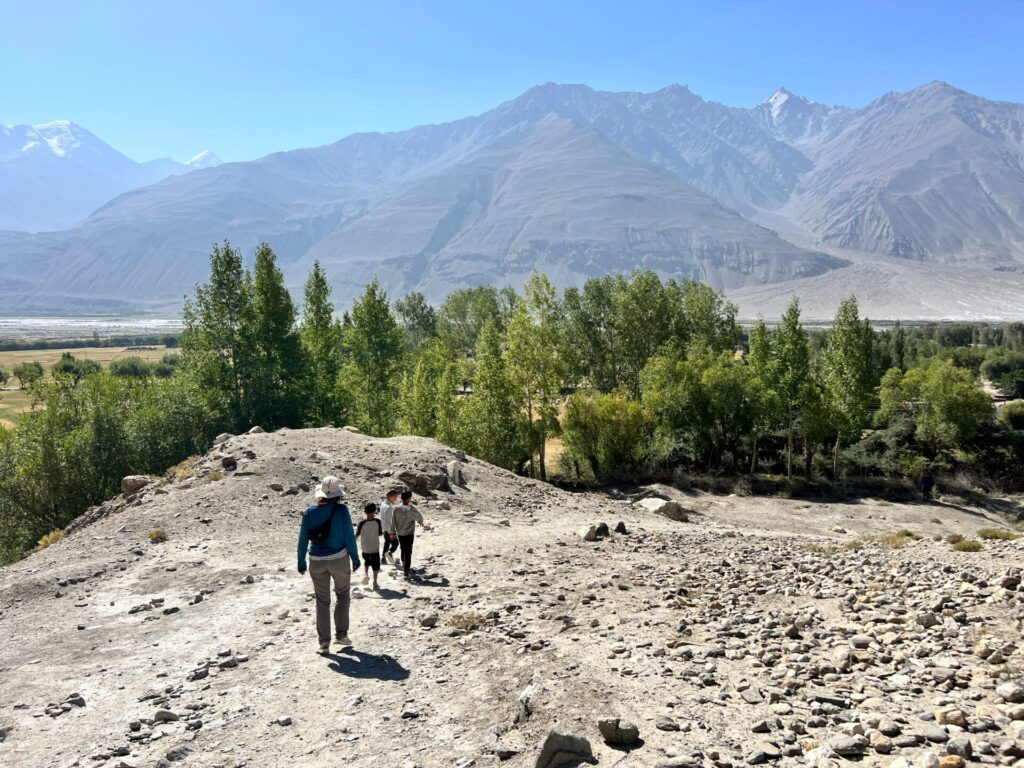
The monastery complex included about 11 caves, which were used as monk’s cells cut into the slope of the terrace nearby. The stupa itself is a rare surviving example of Buddhist religious architecture in this remote part of Central Asia, showing the spread of Buddhism along Silk Road routes.
It is perched atop the Wakhan corridor, which was a key branch of this ancient network of roads, used for more than 1500 years from the 2nd Century BC to the 15th Century AD. Here, caravans, monks and pilgrims traveled this valley between India, China and Central Asia. It peaked between the Tang and Mongol eras from the 7th-14th Centuries. So it was absolutely mind-blowing to amble down of these ancient roads, even for a moment.
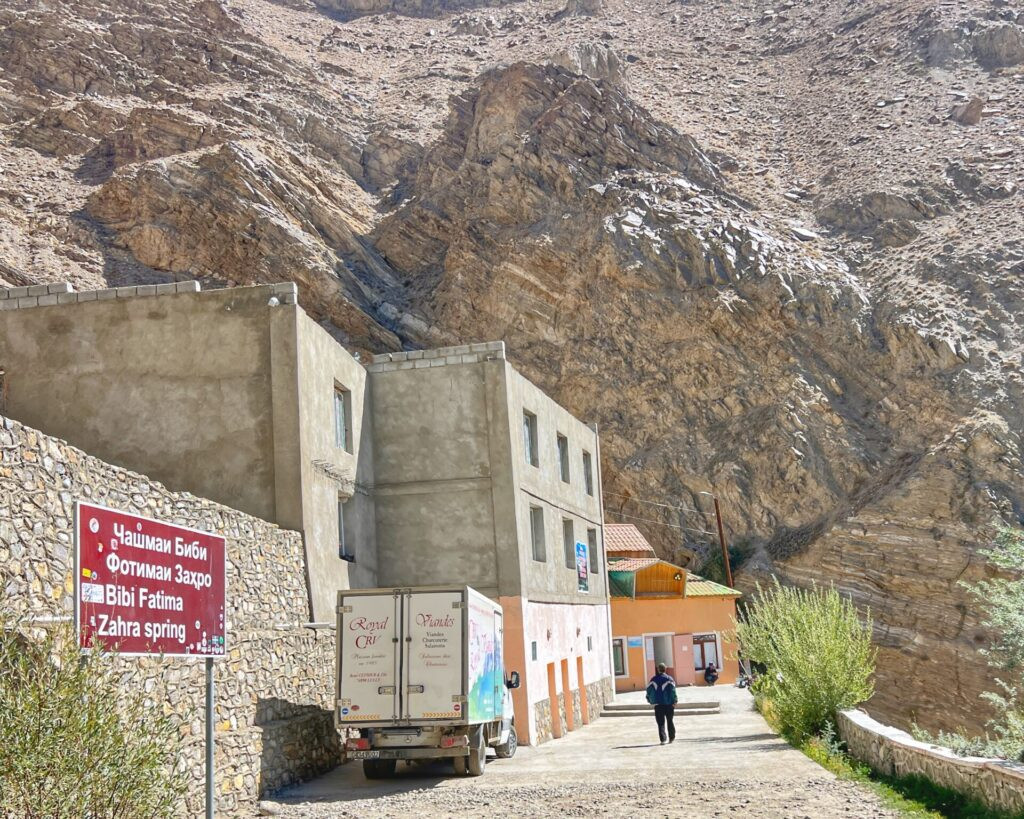
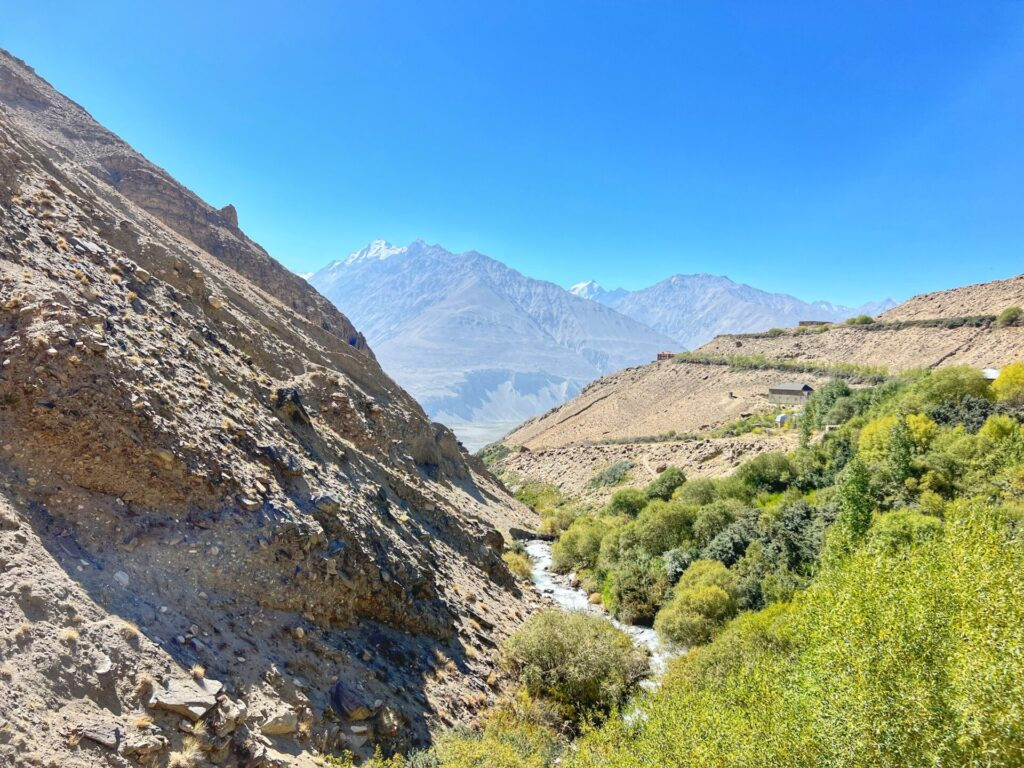
On this day, we had at least three options of places we could stop for a soak but landed at Bibi Fatima Hot Springs, which is the idyllic temperature at around 40-41 Celsius year-round. This hot springs is considered sacred by local Muslims and named after the daughter of the Prophet Muhammad. It offers beautiful scenery with glacial meltwaters, mountain views, and patches of forest.
In addition, the crystal clear mineral composition of the water includes things like sodium, potassium, calcium, magnesium, iron, silica, and chlorides.
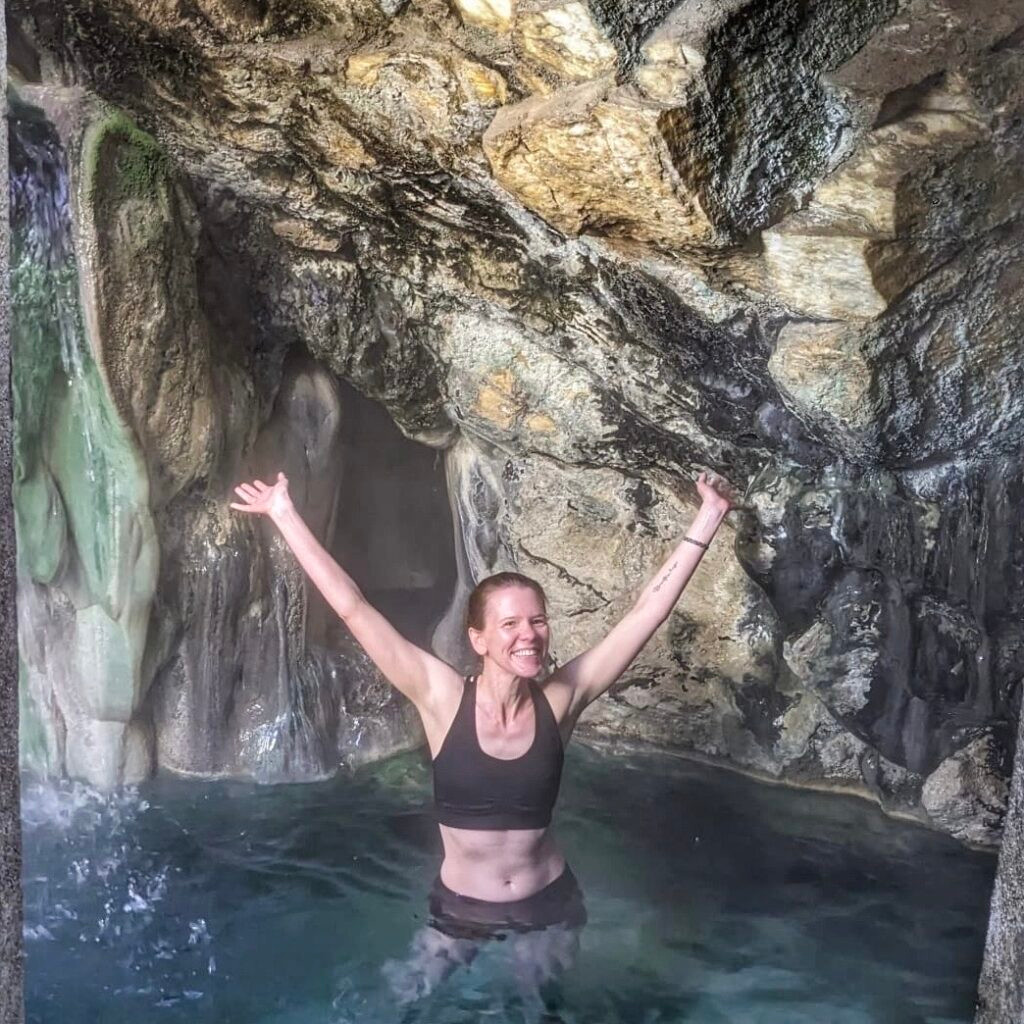

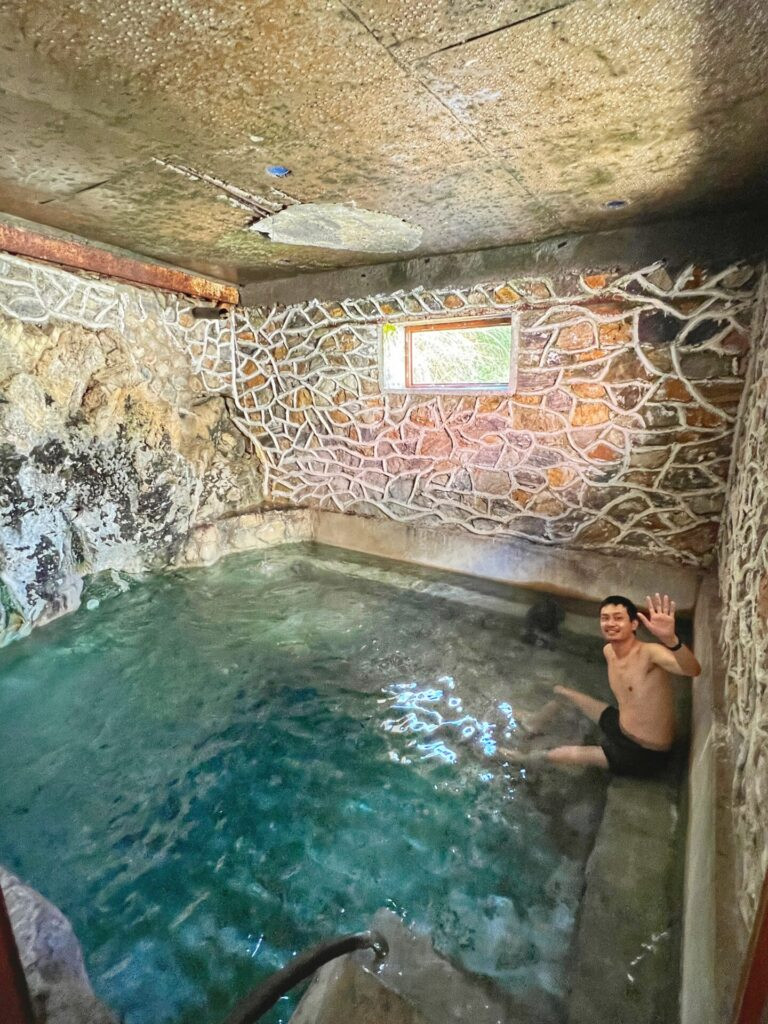

There are two springs, one for women and one for men, and for once, the women’s, with it’s flowing natural waterfall cave, was superior. Probably because locals believe that the spring can increase fertility in women, but since neither Annabelle nor I were interested in that service, we signed up for it treating other ailments…aka my recent digestive problems. And, after this girl time and healing soak, I was hungry for the first time in days!
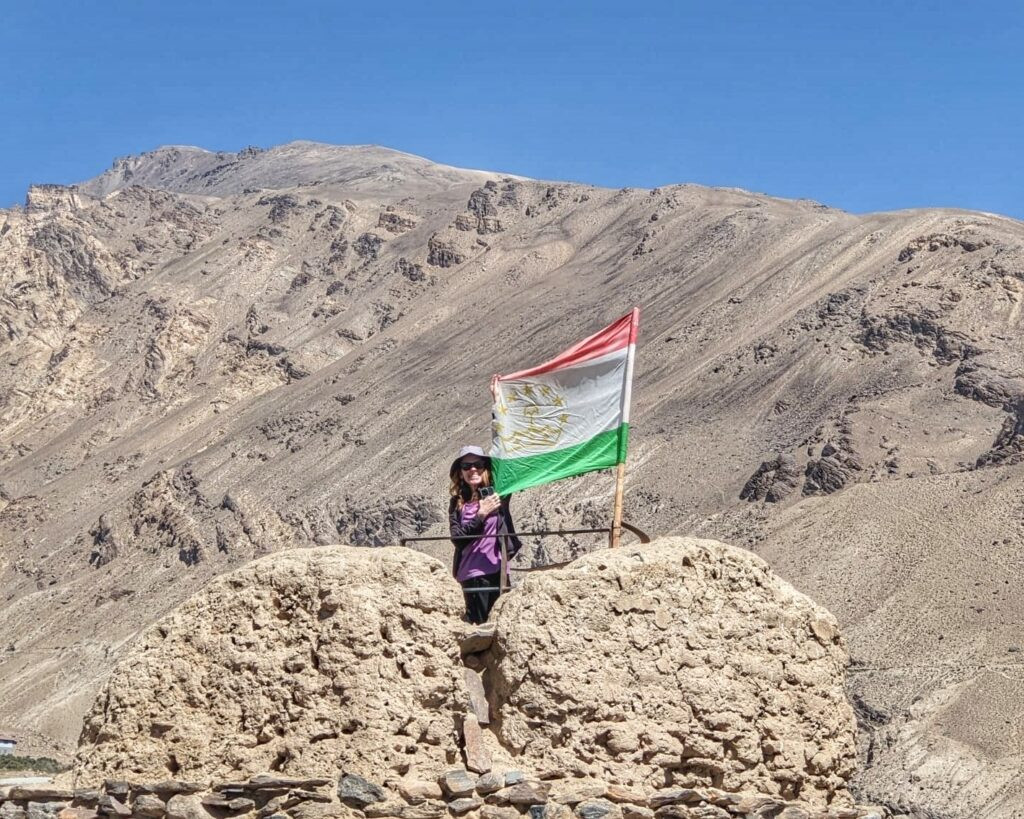
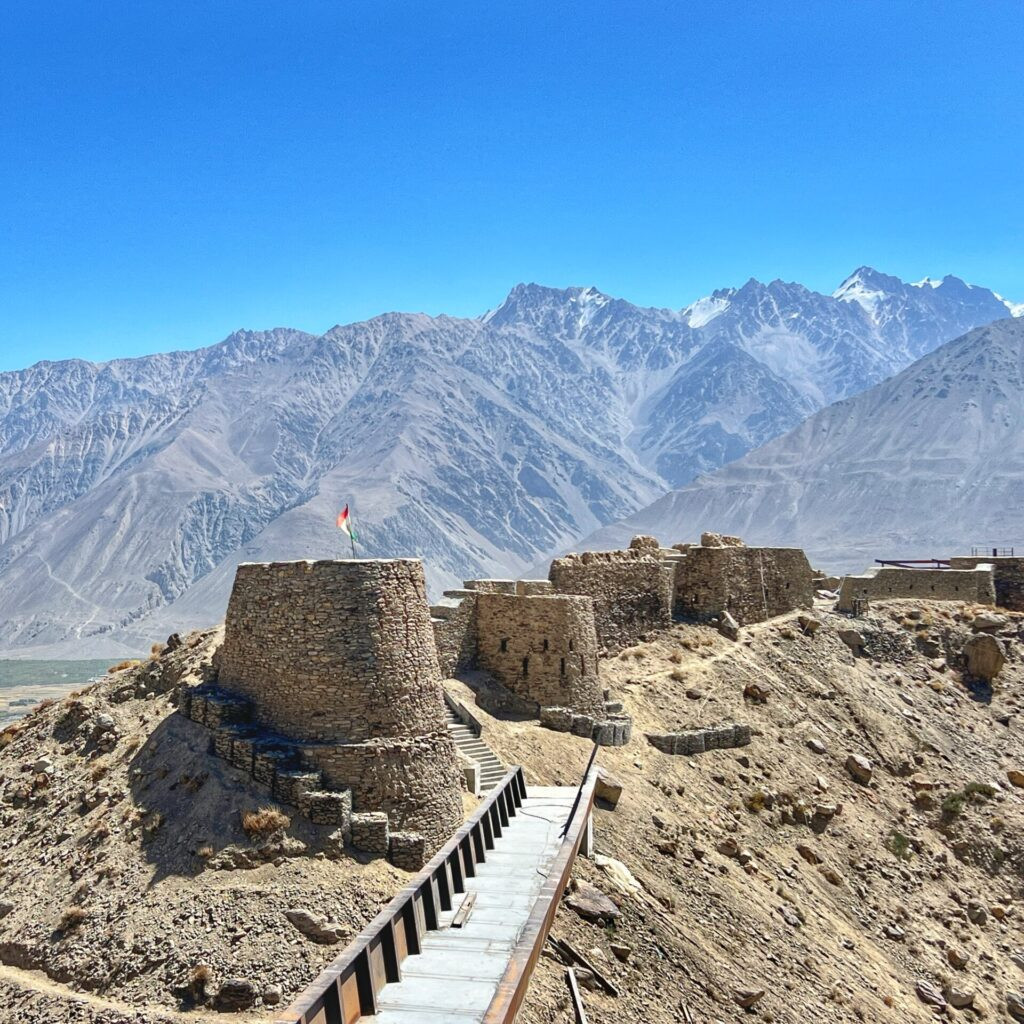
After this, we headed over to the nearby fortress so I could begin feeling like the queen that I am, posing with half a Tajik flag. Yamchun Fortress is perched on a cliff about the Panj River Valley and according to most sources, was built in the 3rd Century BC. It’s also known as Zamr-i-Atash-Parast, which means”Fort of the Fireworshippers,” which hints at religious or cultural aspects tied to Zoroastrian/pre-Islamic beliefs.
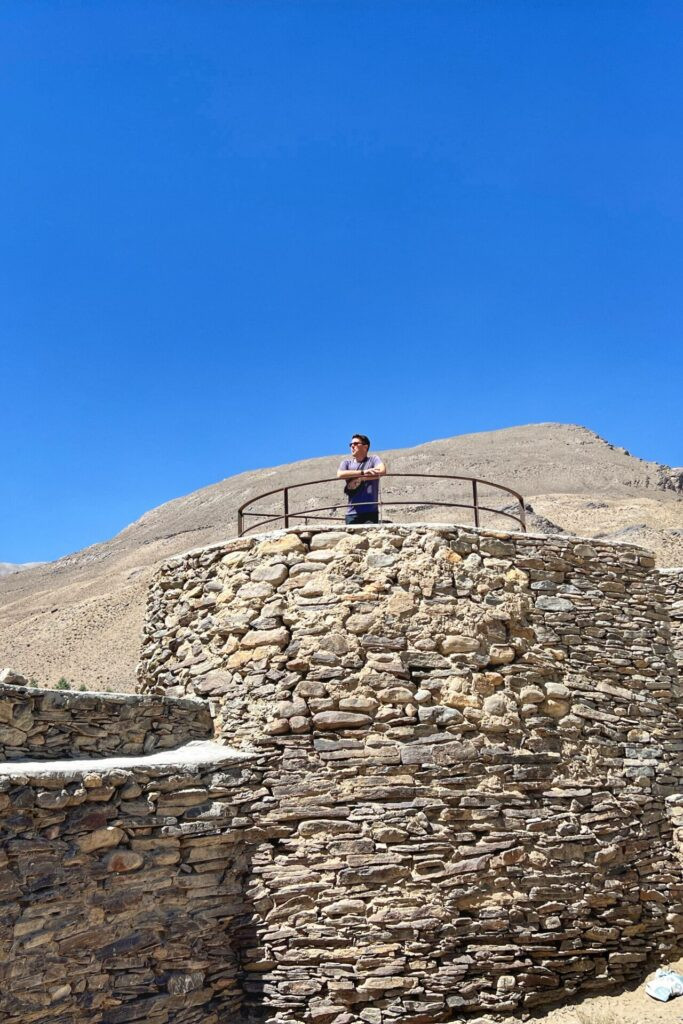

My king. Seriously…who ate the flag?!


A unique thing about the fortress is that it had a bridge to nowhere hanging off the cliff, which was not the best for the vertigo-challenged, but provided a great outlet for these three great explorers to survey the land. I was SO happy to be feeling great again! And of course, the mountain views continued to astonish us as we gazed into Afghanistan, accentuated by pops of Pakistan.
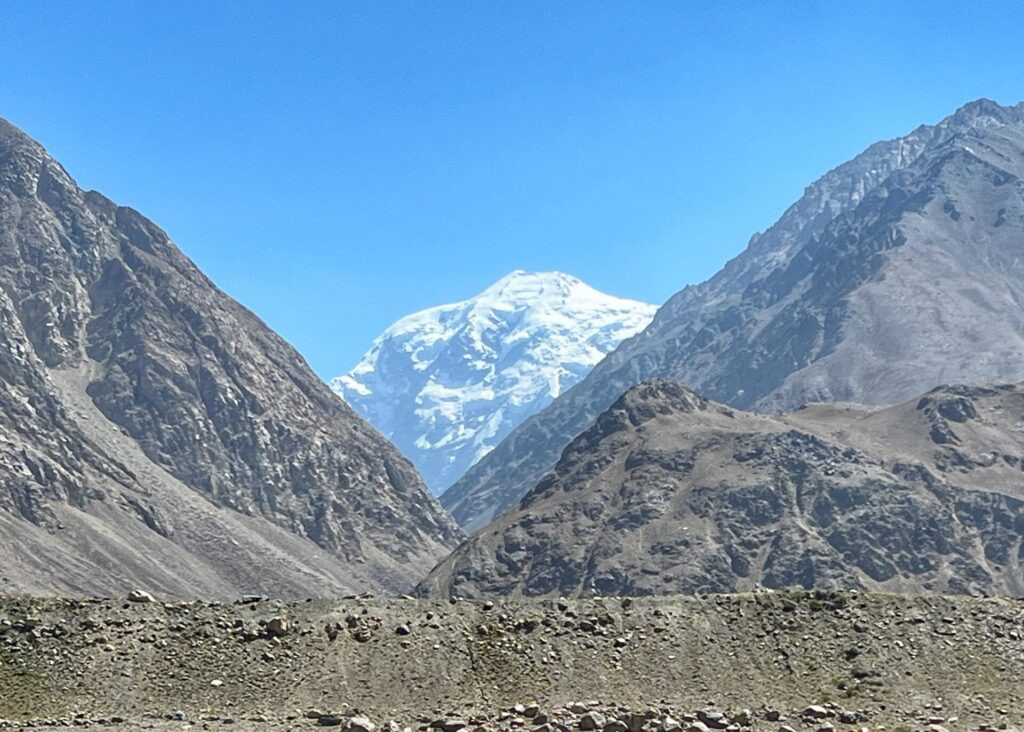
As we continued down the road, it was quite obvious when Pakistan was trying to beckon our attention! “Psst…hey guys!! It’s time!! Come visit ME!” she would say. Based on the photo ID, we’re pretty sure this eye candy was Saraghrar, a 7349 meter (24,110 foot) behemoth.
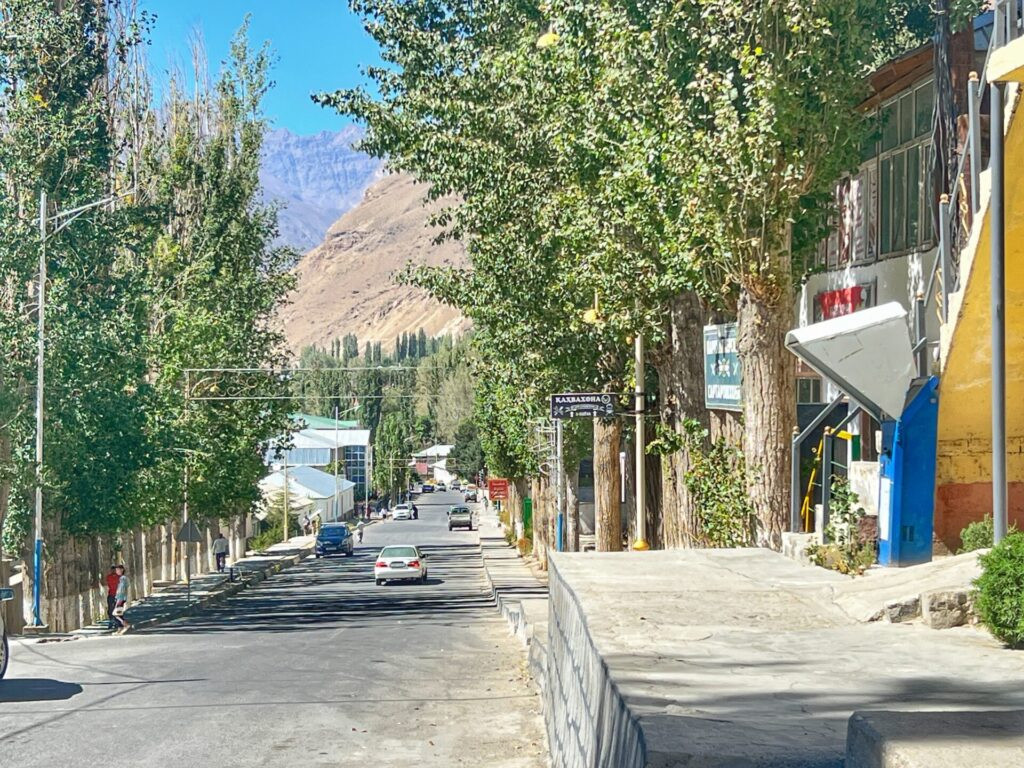
Stopped in the “bustling” town of Eshkashem for lunch.

It was here we got to play mafia bosses while sitting in walled off room with a plastic tablecloths and chairs.


This boss was finally starving and unfortunately…this was the meal that got thrown in front of me. 😳 Our vegans and their soup. Fortunately the restaurant owner brought me one too.

After that delicious meal, it was my turn for the backseat. I was finally fed and ready for my nap. Bwhahaha! Fat chance of that one….😆
A Warm Welcome in Khorog
After a fabulous morning, followed by an exhausting and maddening afternoon of rumbling down the Pamir, we arrived to a warm welcome at Tat Mirzo Hostel in Khorog, where we would excitedly get to spend the next TWO nights. Naturally, Greg and I immediately feared this party was a wedding…which would persist three days non-stop (because this has happened to us more than once and tortured us endlessly 🤣😳)
Luckily, it was simply a delayed Tajikistan Independence Day celebration, which turned out to be a ton of fun as we were invited to join the locals for the festivities and food.


To celebrate Tajikistan’s 1991 independence from the Soviet Union, the women are very active in organizing food and local cultural events for their villages and neighborhoods. At the same time, men and boys often join outdoor sports competitions or gather at teahouses. The diversity in all their smiling faces is truly one of the things we love the most about Tajikistan. The country is a melting pot point of Asian, Persian, Turkic and Russian people.
A grandmother and her granddaughter, Fatima, sat across from us at the table. Although grandma could only communicate with smiles, Fatima was 7-years-old, and had remarkably good English for her age. The education level between the Khorog children and the Pamiri children from a few nights ago was astounding.

All the ladies guarding the food….before we got invited over.


The kids in traditional costumes participated in Tajik dances, which were lively and boisterous. And after the traditional stuff was complete, they immediately switched to Rihanna and at least three little girls started belting out ALL the lyrics of “Shine bright like a diamond.” It immediately occurred to us that a mere 100 meters across the river there sits a whole country where public music has been largely banned under Taliban rule. It’s disgustingly mind-blowing.
It was then photo time with a cluster of the kids. Annabelle and I, trying to fit in, clearly didn’t realize that the peace sign must be not be a Central Asian thing…yet.

The girls were absolutely beautiful!

And so much fun!

Getting invited to the feast! Blanketing the table were piles of candies, desserts, Plov, breads, tomatoes, apples…and our new favorite Tajik dish…
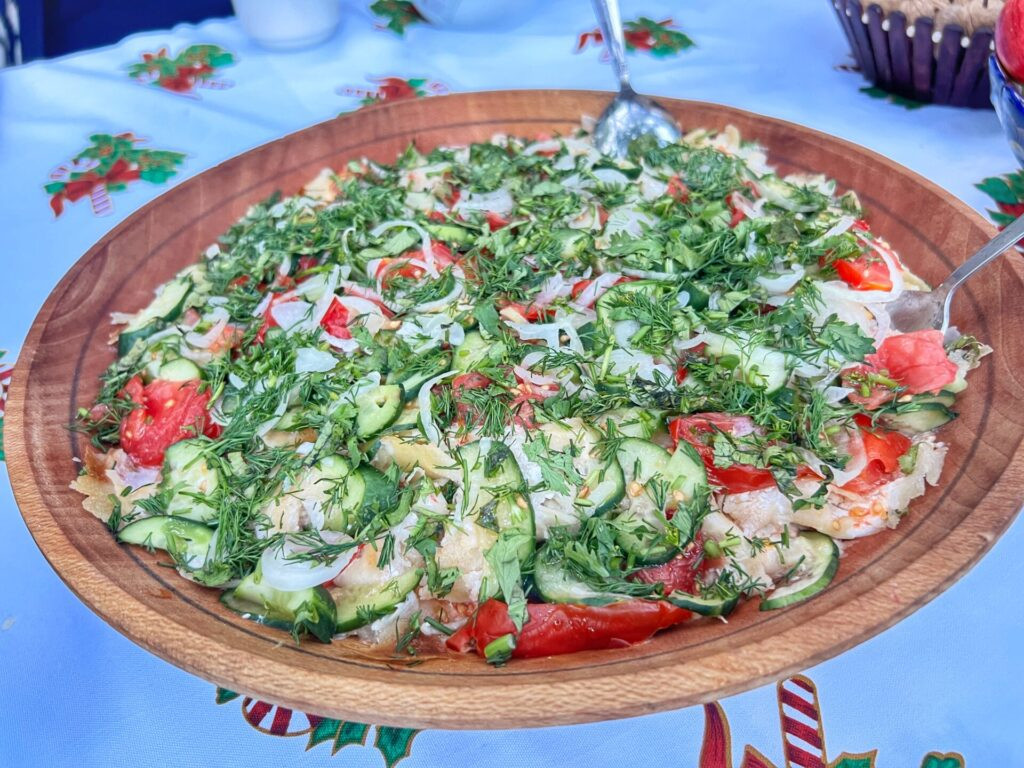
..Shakrarob, which is a traditional salad made of tomatoes, onions, herbs, and oil mixed with slices of bread and creamy yogurt. OMG. It’s SO delicious. Also, we were a bit relieved to be invited to taste first….especially when we realized the spoons were just for us westerners and they typically dive in fingers first.
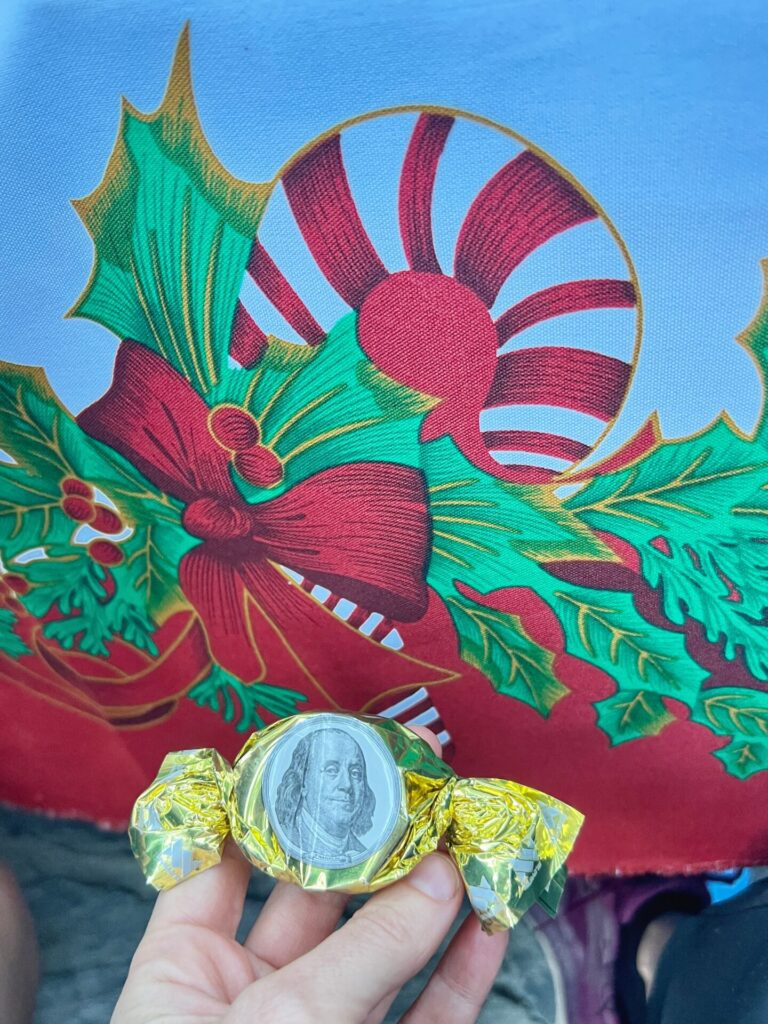
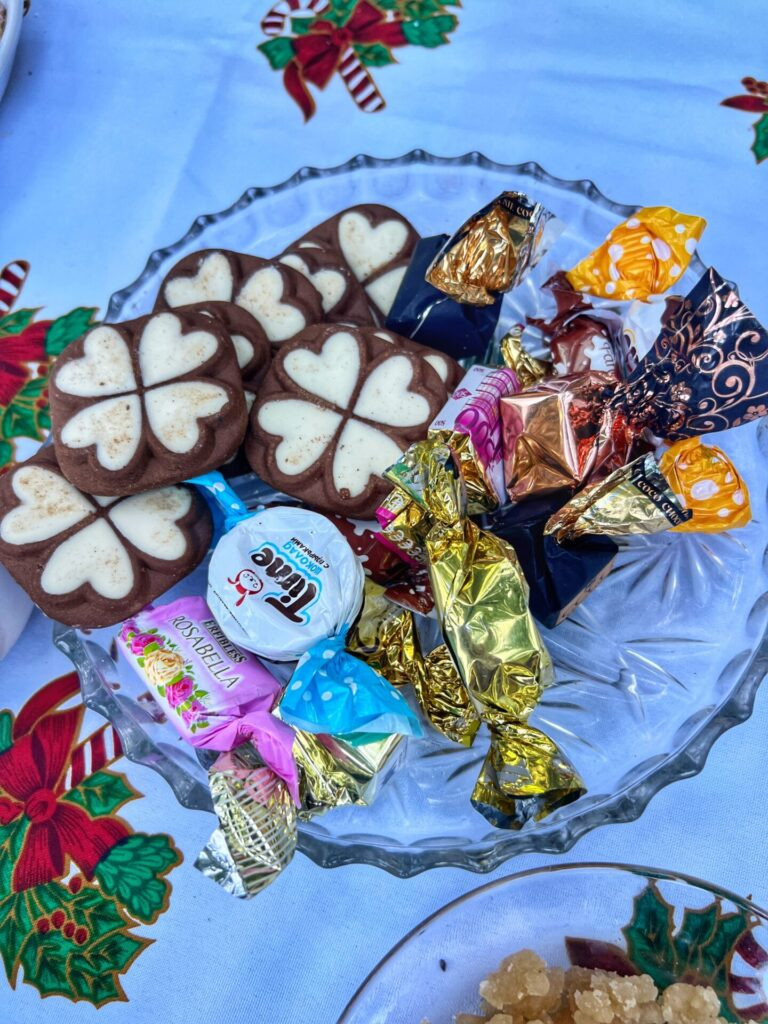
Other western finds…a candy cane table cloth and a Benjamin candy. They sure love their sweet bowls in this part of the world!
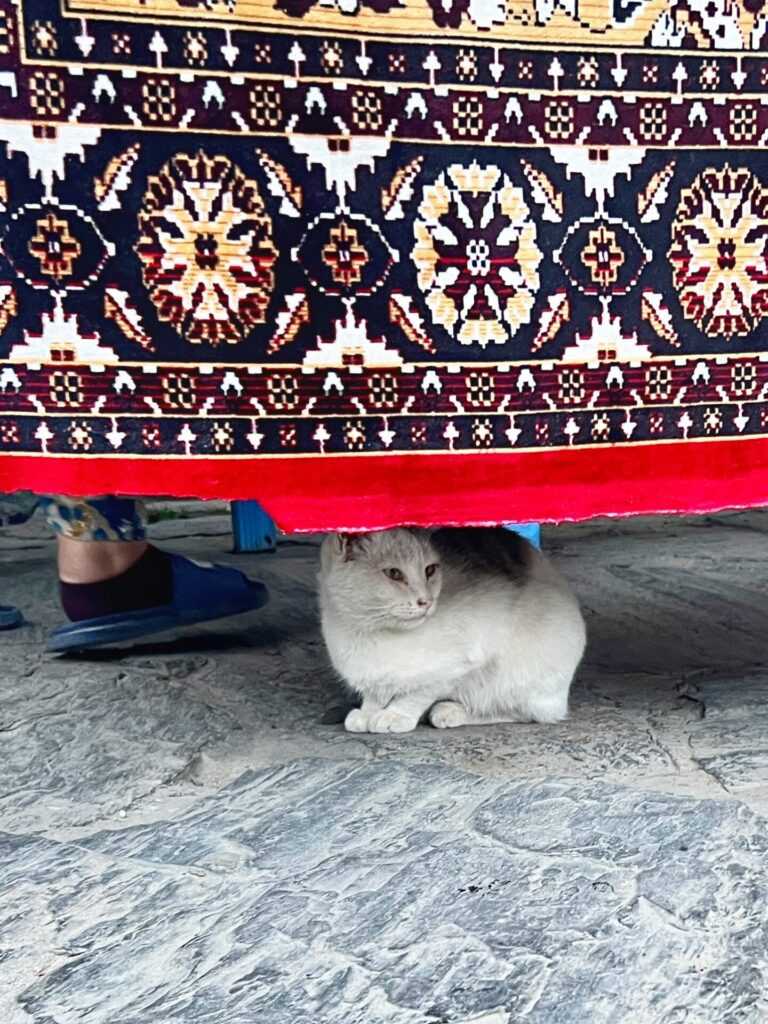
And like in many Muslim communities, the felines were always underfoot waiting for the good stuff to drop.

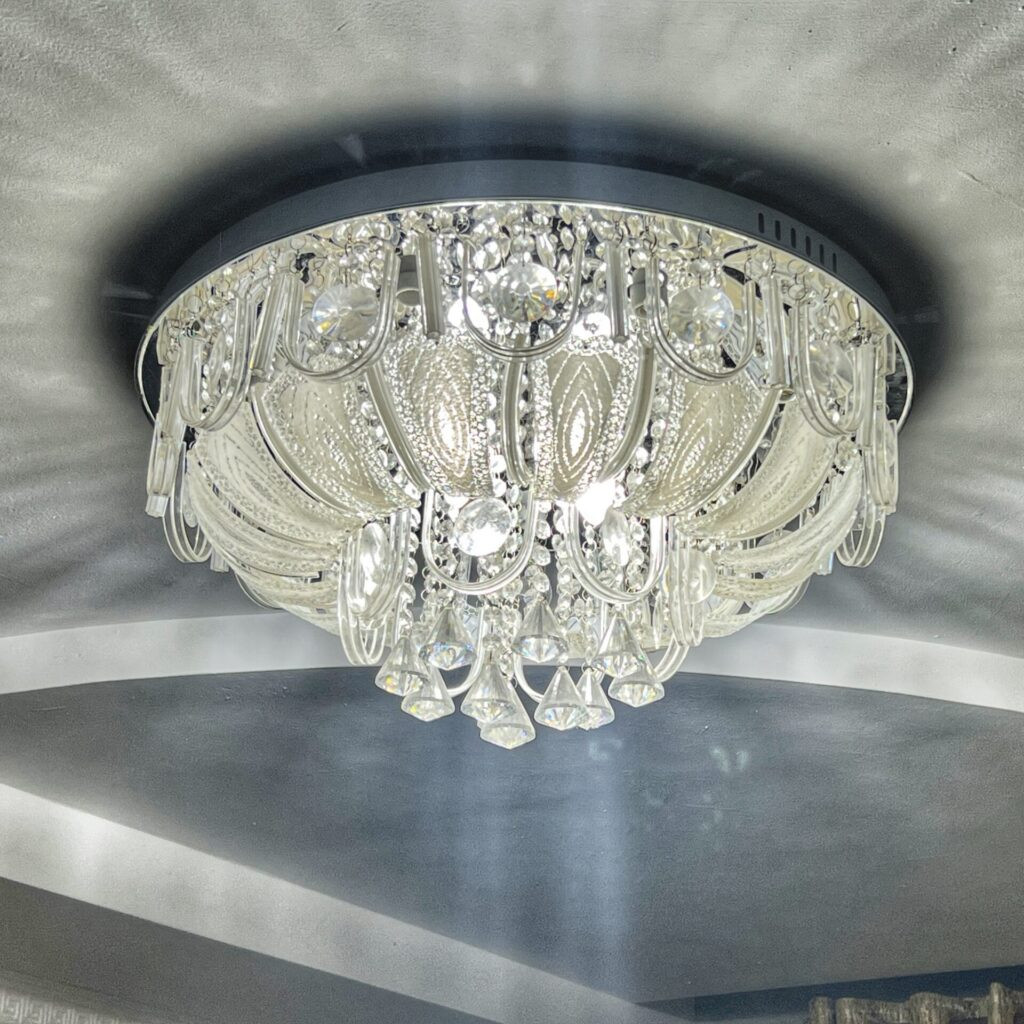
And, following the event, after four days on the Pamir, we finally got some much needed sleep in our quiet, comfortable, and dark room. Except when this quite gaudy chandelier was on. Yay!
Day Five: Khorog, Tajikistan
Thanks to staying two nights in the Tajik border town of Khorog, which was also the hometown of our driver Aziz, we all really appreciated day five to get a much-needed break from being in the car. This resulted in a quite different kind of day of local exploration, which included being welcomed into Aziz’s house for tea, a stroll through the beautiful Botanical Garden overlooking the city, the best meal of the trip, and for Greg and I, the chance to experience the riveting world of Tajik bureaucracy….
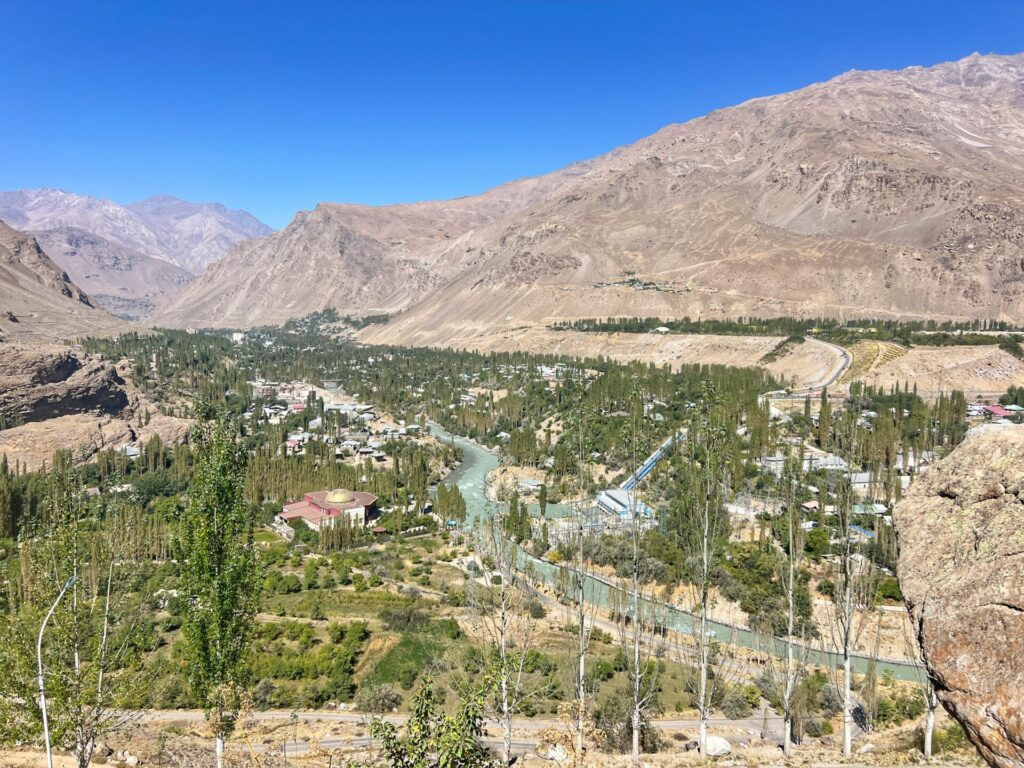
The town of Khorog (population 30,000) is the capital of the Gorno-Badakhshan Autonomous (GBAO) Region in Eastern Tajikistan through which the Pamir Highway navigates. Although US/Canadian citizens don’t have to have buy “official” Tajik visas anymore, in order to visit this part of the country, we all had to have GBAO permits, which is normally about $20, but was included in our tour price and conveniently handled by our tour agency (Bartang & Sarez).
Aziz considerately also helped Greg and I handle our OVIR registrations while in Khorog, which is a special registration you have to do at the “OFFICE OF VISAS AND REGISTRATION” if you choose to spend more than 10 (BUSINESS) days in the country. Since we planned to hang out in Dushanbe for 12 nights after the Pamir, we got the privilege of paying an additional $17/each and of visiting the not-too-friendly people in this office who almost made me cry because I used a red pen when starting to fill out the application, rather than the blue one which was lying right next to it. Shame on me!! It doesn’t matter where you go in the world, dealing with government officials never feels like a fun experience….
Anyhow, this process took at least an hour, and required multiple trips by Aziz. We really appreciated his help and translation.

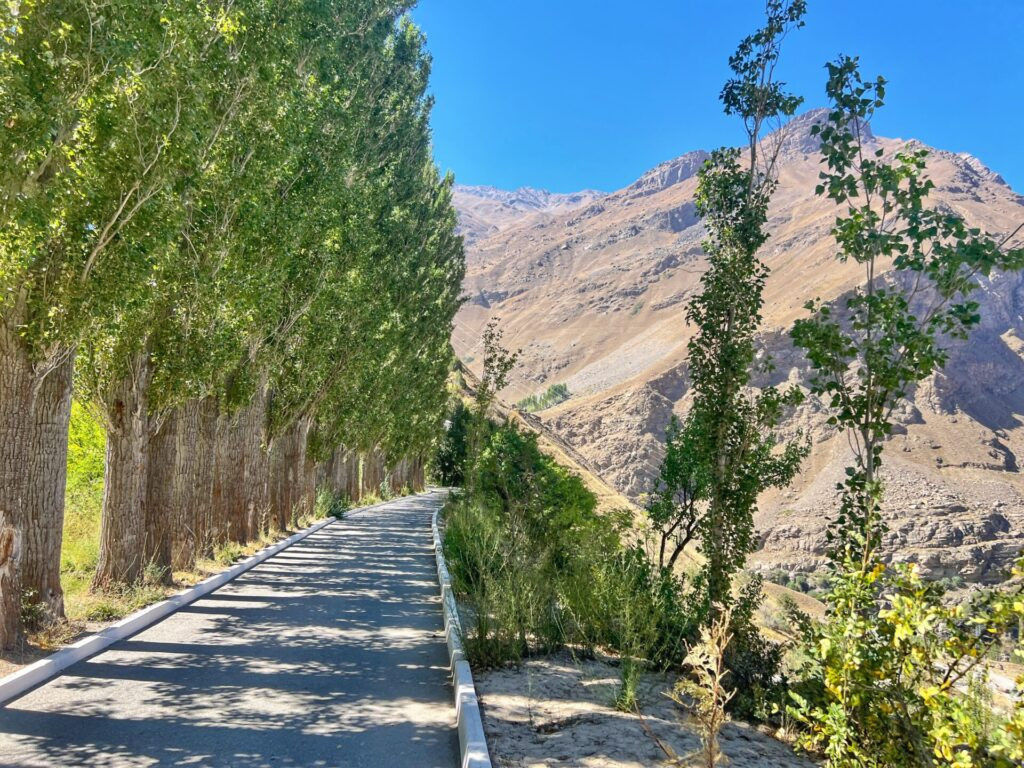
The town of Khorog itself was quite pleasant and walkable. We especially loved the Botanical Gardens perched up high on a hill, where we were able to appreciate the views of the town and river, into Afghanistan, the clusters of cottonwood trees…


….and fragrant bursts of flowers, near a stunning central gazebo.

Some of the amusing park rules.
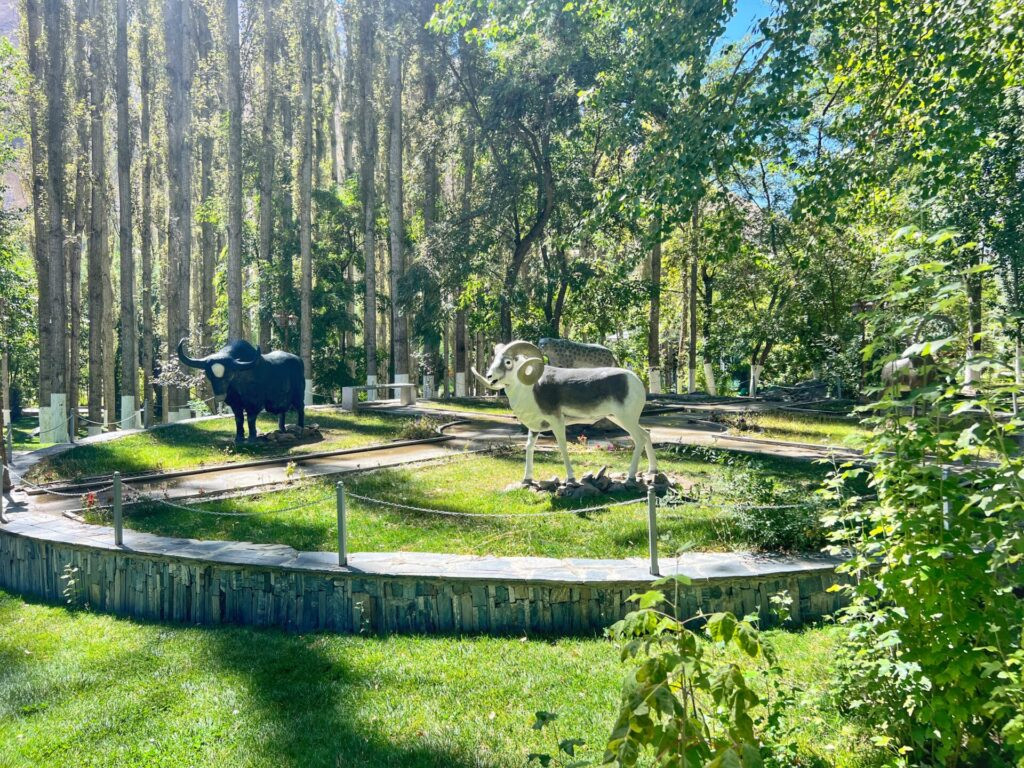

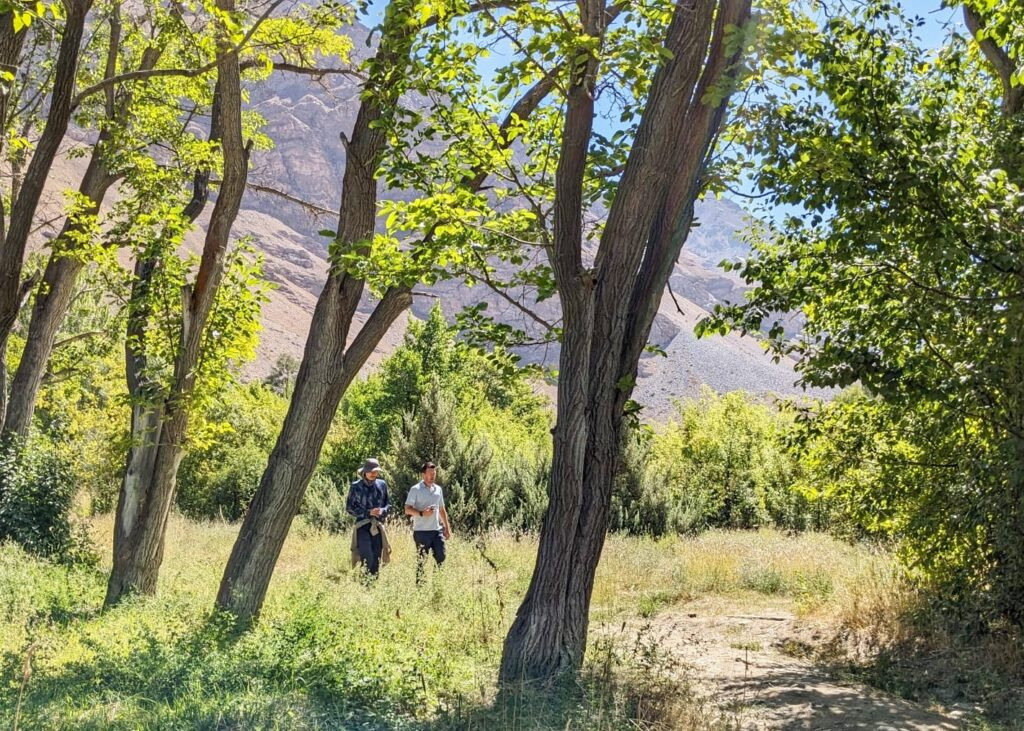
Weird animals hanging out in the forest. Including us…foraging has after all, always been one of our favorite activities! And there were LOTS of apples in the botanical garden.

It was here we also got to pose for our Pamir album cover. We’re calling ourselves “Plokhiye Yabloki” (The Bad Apples).

After the botanical gardens, we wandered through the Khorog park and ended up in our first official Tajik grocery store. In order to leave our bag at the entrance, Greg had to use facial recognition technology to hire his (free) locker.


Discs of traditional Tajik bread just sitting on a shelf. Also, observing the mini soda cans. Definitely not Cyrillic. Arabic, it seems?! Which is interesting. Because there is no Arabic spoken anywhere near Tajikistan.

Jonathan and Yi waiting for us with a new friend, who looked far more put together.

It was also around here we also started noticing how Tajik “city” people are dressed. It is not uncommon to see men, especially the millennial variety, in suits. This became much more obvious when we got to Dushanbe.
Also, the women often wear long flowing dresses with jammy-style pants underneath, often with sequins or glittery accents splashed all over them, and traditional Tajik head scarves.
However, it should be noted that in mid-2024 Tajikistan passed a law that bans wearing hijabs and other “foreign” Islamic clothing in public. Also, it’s unlikely to find any hipsters in Tajikistan, because beards, and especially “long or unkept” beards are also strongly discouraged.
This is part of a wider package of 35 religion-related measures to affirm secularism and to combat extremism in the country. Seems like a good move to separate themselves from their neighbor…
As for those typically European rugged men hiking or biking the Pamir highway for weeks at a time, they may get a pass…?!
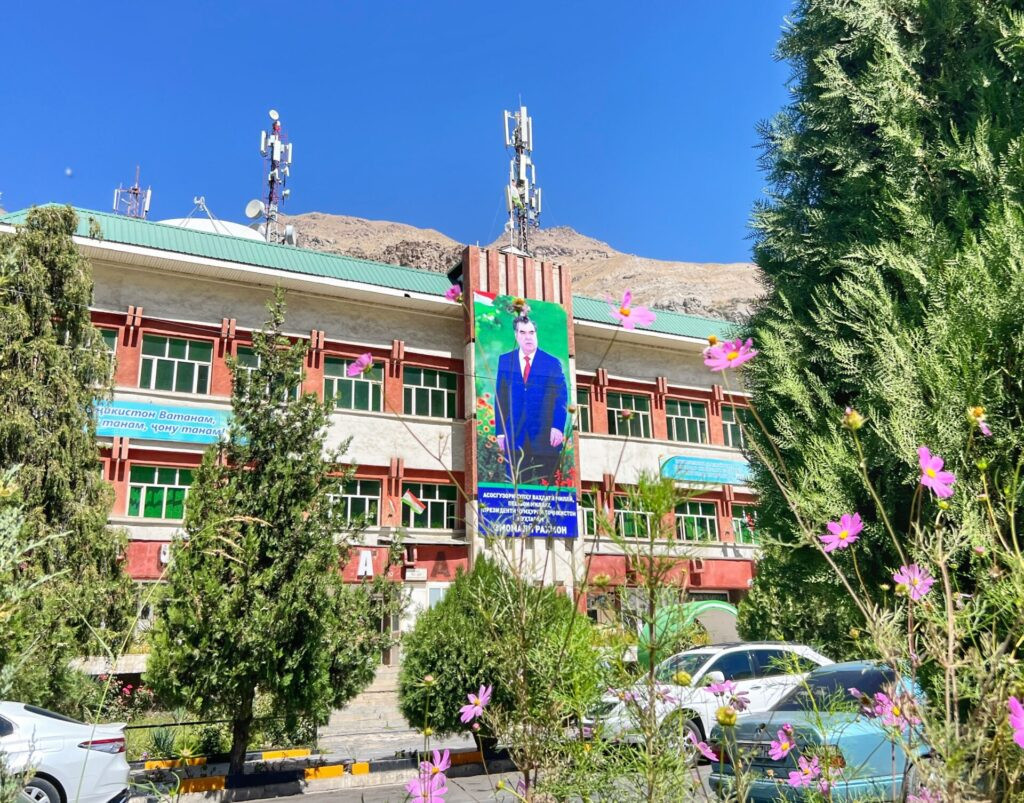
Another thing you’ll see a lot of in Tajikistan is photos plastered of Emomali Rahmon, who has been the president since 1992, making him the longest-ruling leader in the former Soviet Union.
According to the Taj Embassy page, Tajikistan is a “presidential republic.” However, given the removal of reelection limits and lifelong privileges, many analysts describe Tajikistan under his rule as authoritarian, or semi-authoritarian rather than a full democracy.
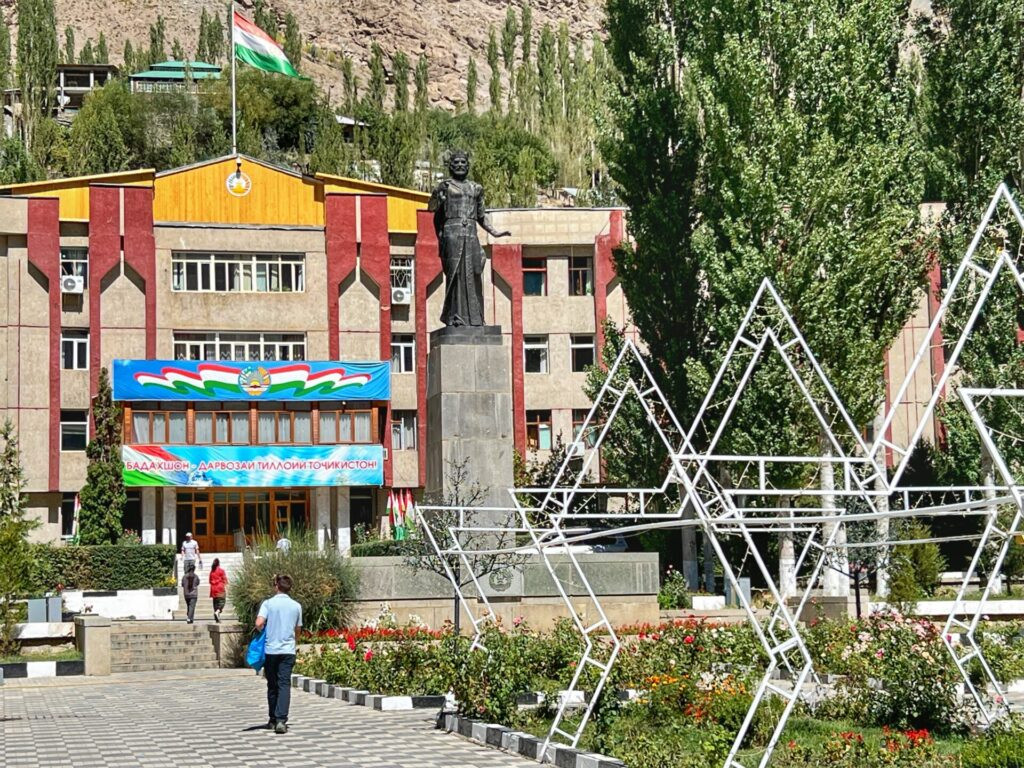
Walking through the star-studded Somoni Square, which houses a bronze statue of Ismoil Somoni, the founder of the Samanid Dynasty, revered as a national hero in Tajikistan.
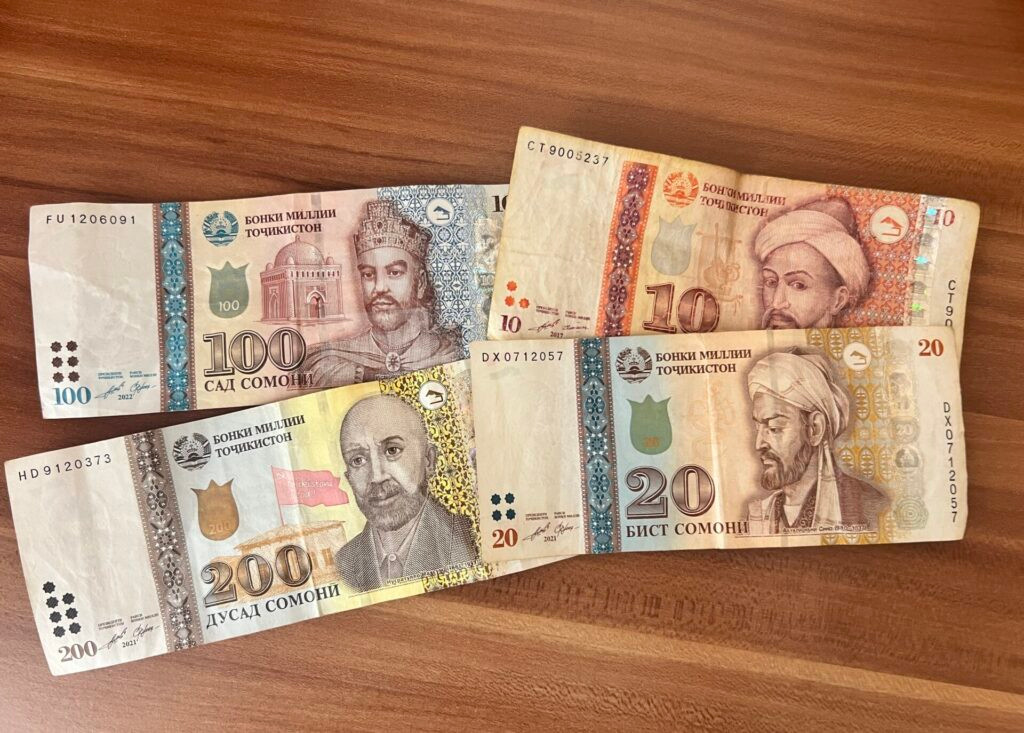
When Tajikistan introduced its own currency in 2000, they named it the Somoni to honor the historical heritage. (FYI: $1 USD=~9 Tajik Somoni

Who are the rugrats playing in the token Khorog sign?!


Visiting Aziz at his home, we got to chat with his daughter, Nicole, after she arrived home from her school day at 12:30 p.m. She was not only beautiful, but poised and educated in English. Dad must be very proud! She is currently dreaming of studying in China or Korea. Aziz also has a second daughter who is studying psychology in Bishkek. Having tea and meeting Aziz’s family at his house was a wonderful experience. He even shared his wedding albums with us!

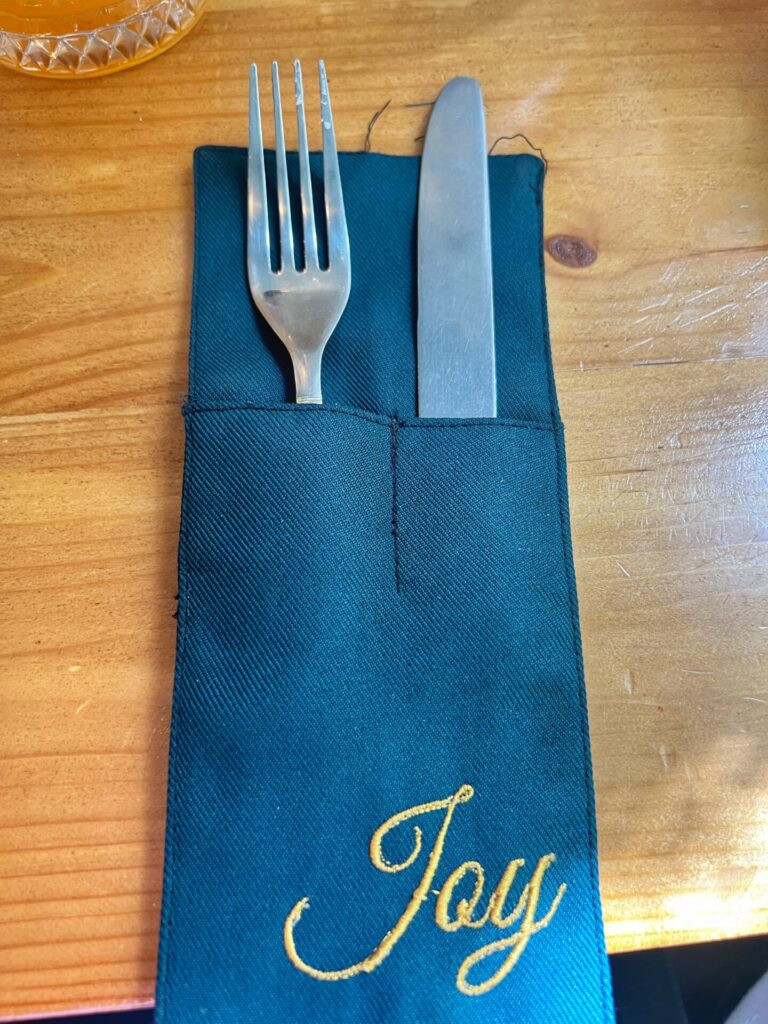
After this, we visited Cafe Joy, which was quite western-style and after several questionable meals, offered some of the most comforting and delicious food of the trip for many of us. We started by ordering a large pitcher of Seabuckthorn Berry Juice (the super food you never knew you were missing). A miraculous table knife also appeared for Jonathan to cut his meat with…


…and a giant vegan pizza for Annabelle & Yi. We were also quite happy with a Greek salad, grilled veggies and a crispy chicken sandwich.
Day Six: Khorog to Qalai Khumb, Tajikistan
As the Pamir Highway ventured closer to Dushanbe, our Land Rover changed terrains repeatedly from a bone-rattling thump wagon to a stop-and-go-for-construction mobile. Neither was great fun….In fact, the six hours of day six was probably the toughest, and many of us were simply ready to arrive to the country’s capital. Much of the exquisite mountain scenery was behind us, and the reality of where we were began to reveal itself, as we continued to encounter more military blocks and bribes (which thankfully Aziz handled).
We also hugged the river near a much more populated Afghanistan, while witnessing menacing white Taliban flags and camps, and even visited a cross-border market. We arrived to Qalai Khumb feeling gratitude, relief, and very ready for some beers and relaxation! Special thanks to Jonathan and Annabelle for sharing photos for this post!

We began our day at 6:30 a.m. because Aziz said it was necessary to avoid some “big” construction. Two days from Dushanbe, and the roads were actually starting to show signs of “improvements,” which was certainly a positive thing for the locals. Still, we heard from other travelers this delay caused them to be stuck for 10 hours, so we were quite grateful that the agency, and Aziz, were on top of this challenge.
Like we’d been doing for the past three days, the road from Khorog to Qalai Khum continued to meander along the Panj River, which separates the two countries. However, we had turned north, so pops of Pakistan were no longer available, which certainly removed some of the distant mountain pizazz.
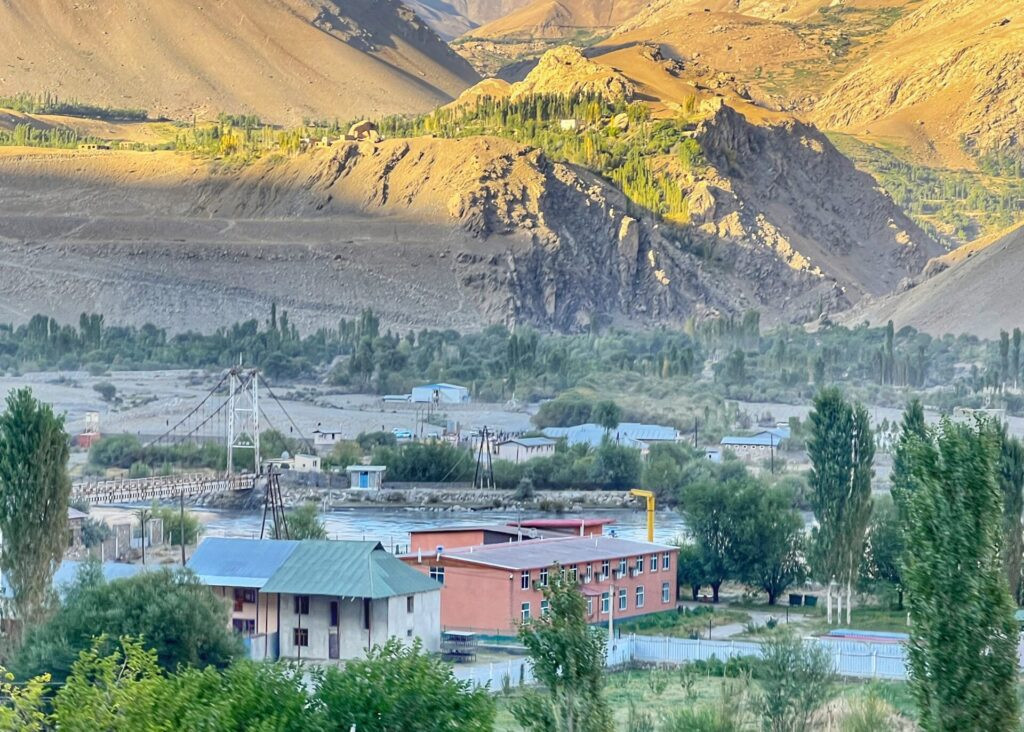
It didn’t take long after leaving Khorog to began noticing the number of bridges that linked Tajikistan and Afghanistan had significantly increased. Aziz was also jumping in and out of the car at regular intervals, often with our mini stack of passports, to meet with military officers and give them “tea money,” he called it. This alone was well worth the price of the tour because other than the annoyances for Aziz, we completely avoided any interaction.

Stopping in the town of Rushen for a bathroom. We gals never know what we’re gonna get….it definitely wins the Geney for worst smelling squat of the year.

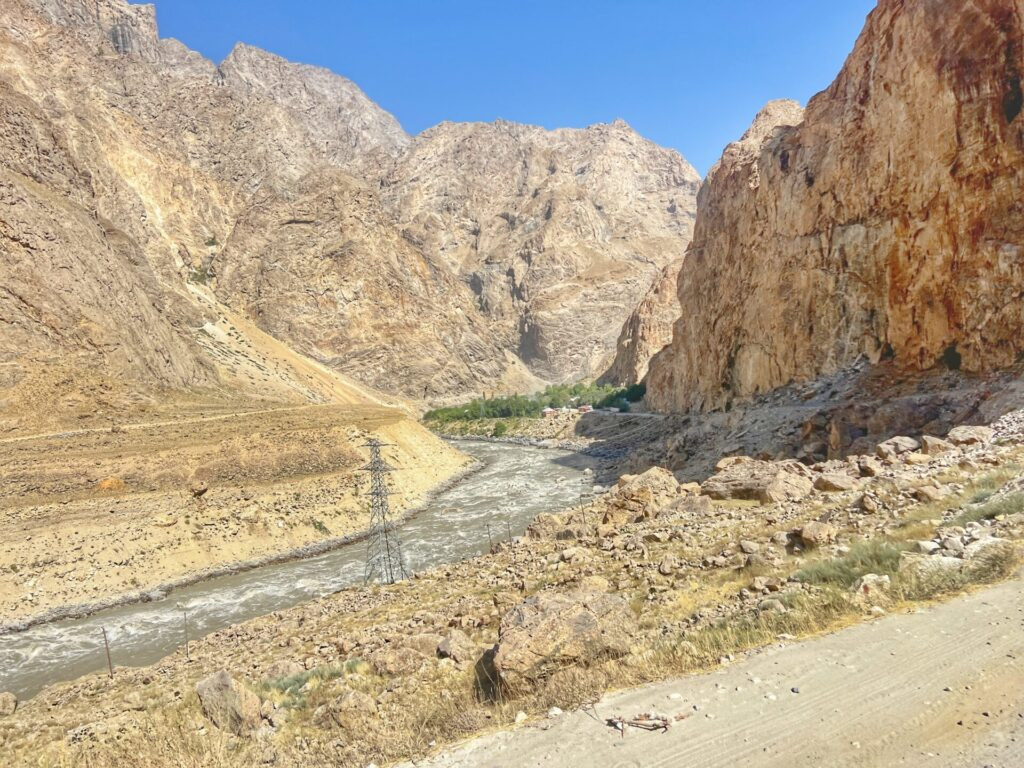
After this, we proceeded to run into a semi truck that was completely submerged in the middle of the sandy road, creating a giant clusterf#@k of traffic trying to pass around him in both directions. Also, because the elevation had begun to drop significantly, the temperatures had begun to rise, making frequent stops hot, sweaty and even dustier than before.
Fortunately, this delay only took around 30 minutes, but we did run into some fellow tourists who had also managed to get their 4×4 very stuck and were being pulled out by another.

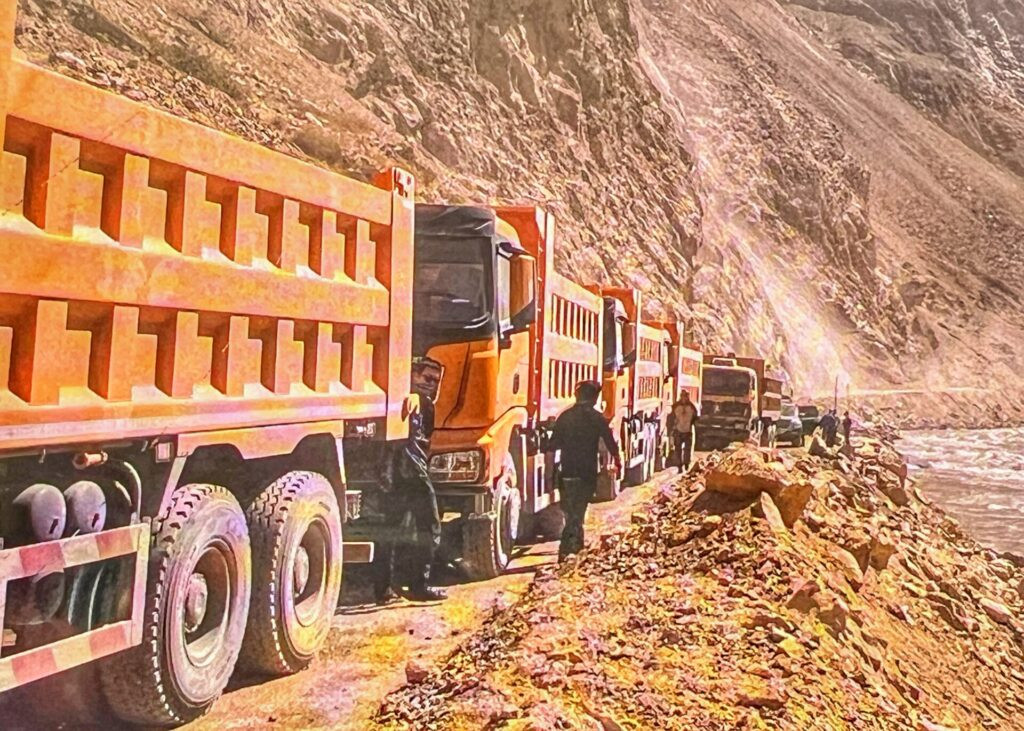
Then came longer delays…much longer…and stickier…delays. Still, it was only about 45-60 minutes, which would happily take compared to the other tourists’ misfortunes.
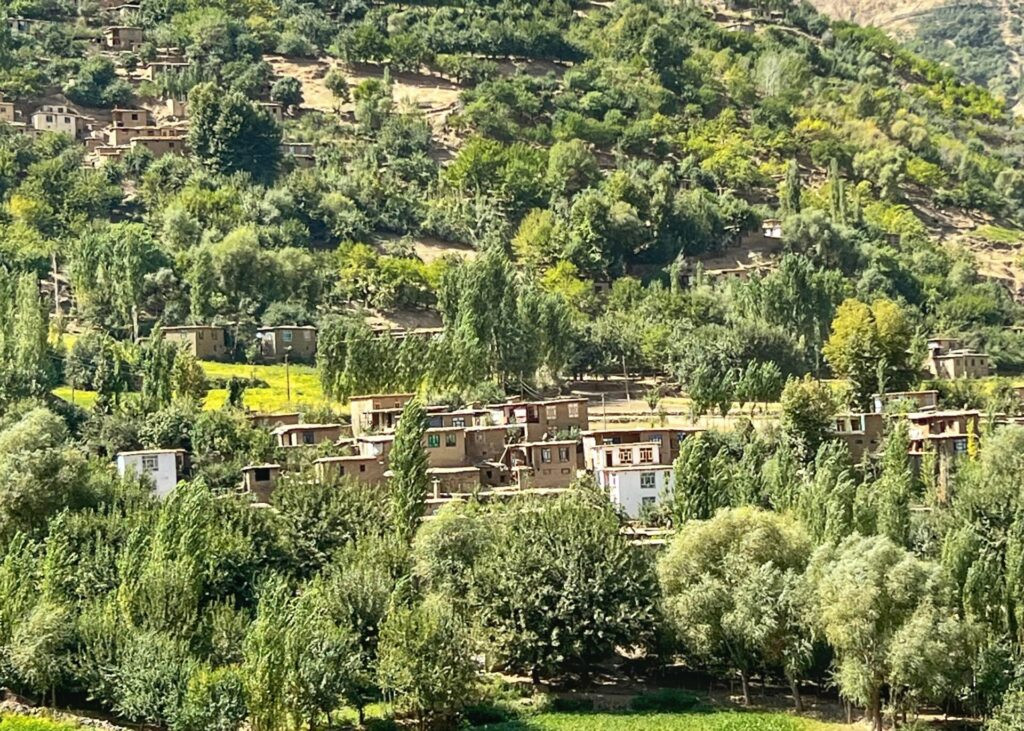
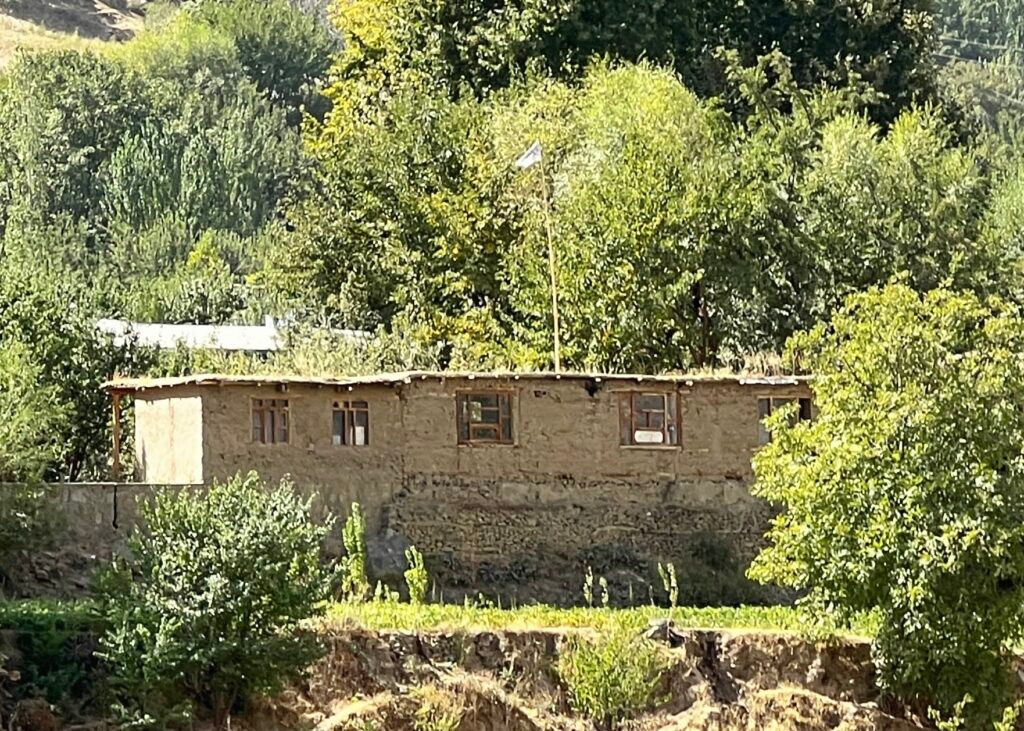
What seems to be an average Afghani village…at least from our perspective on the other side. It was around here Aziz began pointing out the little white Taliban flags on top of several houses.
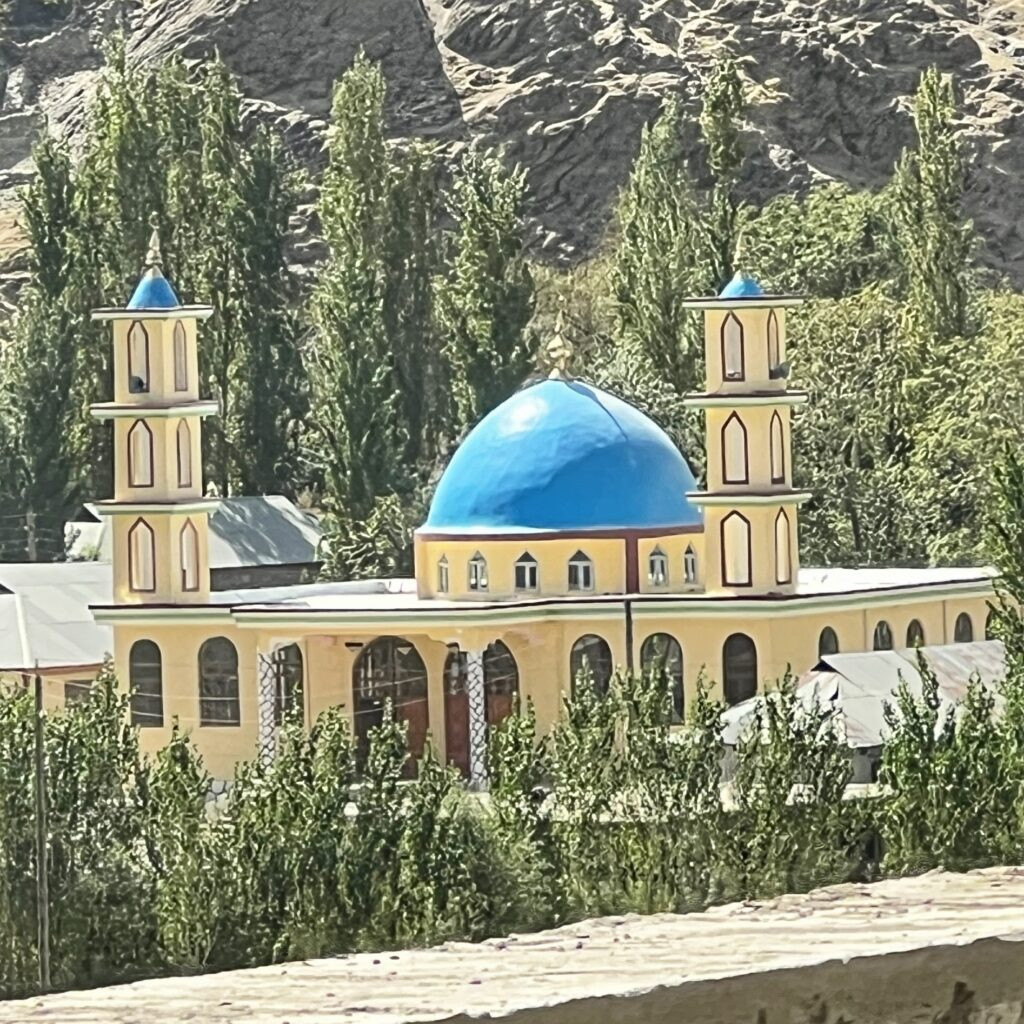
A madrasa across the river, which in the Islamic world is traditionally where young students go to study the Qur’an, Islamic law, theology and related subjects. The word comes from the Arabic word “darasa” which means “to study”.
In Afghanistan, they are now frequently tied to political and ideological influences, aka…the Taliban. They are heavily attended by boys, while girls’ access to them is severely limited. Also since the Taliban’s return in 2021, girls are banned from attending secondary school and universities.
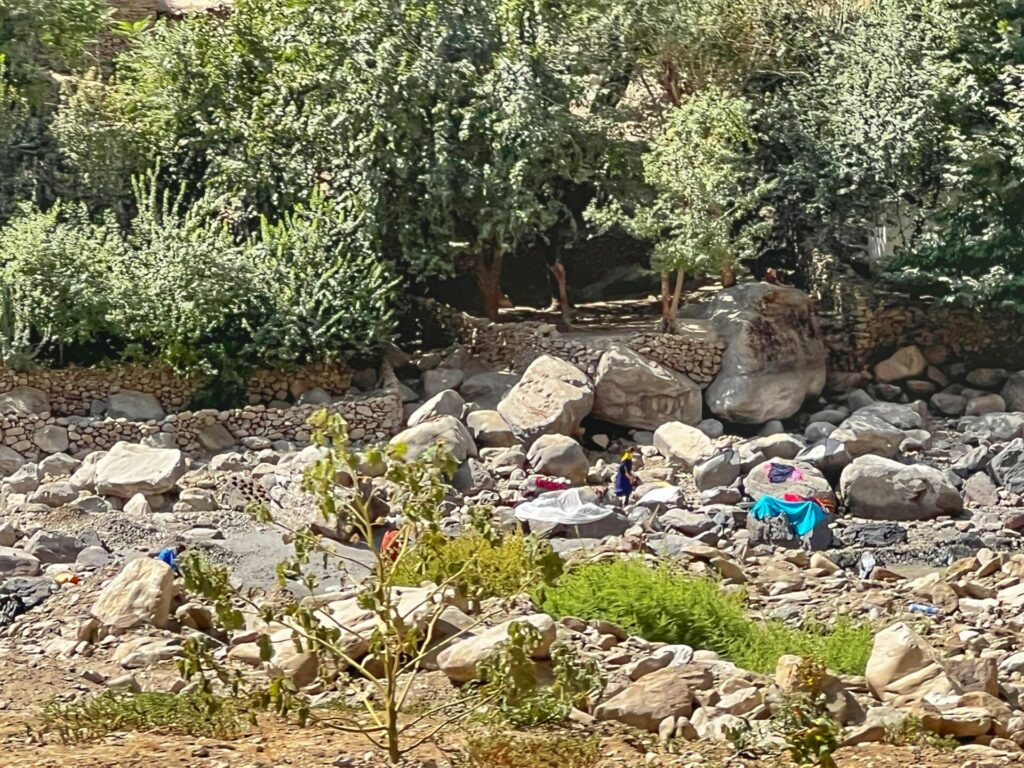
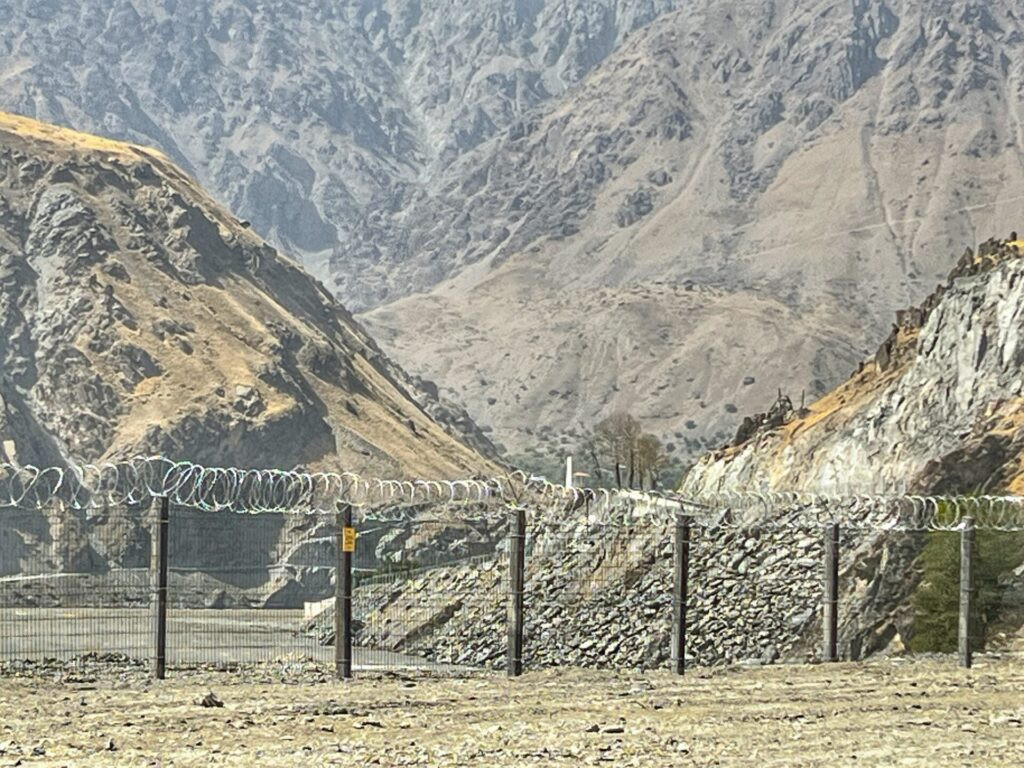
Afghani villagers doing laundry on the side of the river. If they wanted, they could get to Tajikistan in a matter of moments. But these types of measures, as well as the Tajik military, would likely slow them down.


We then arrived to an astounding short-cut which Aziz seemed to have power to whisk us through…an unopened (gulp?!) tunnel. He peeked his head in, rattled a few swift words in Tajik to someone, and then magically these heavy construction zone barricades released, divulging an incomplete, dirt, but hopefully structurally sound tunnel, with a beat-up yellow Lada parked inside. And at the other end, the gates splendidly opened again!
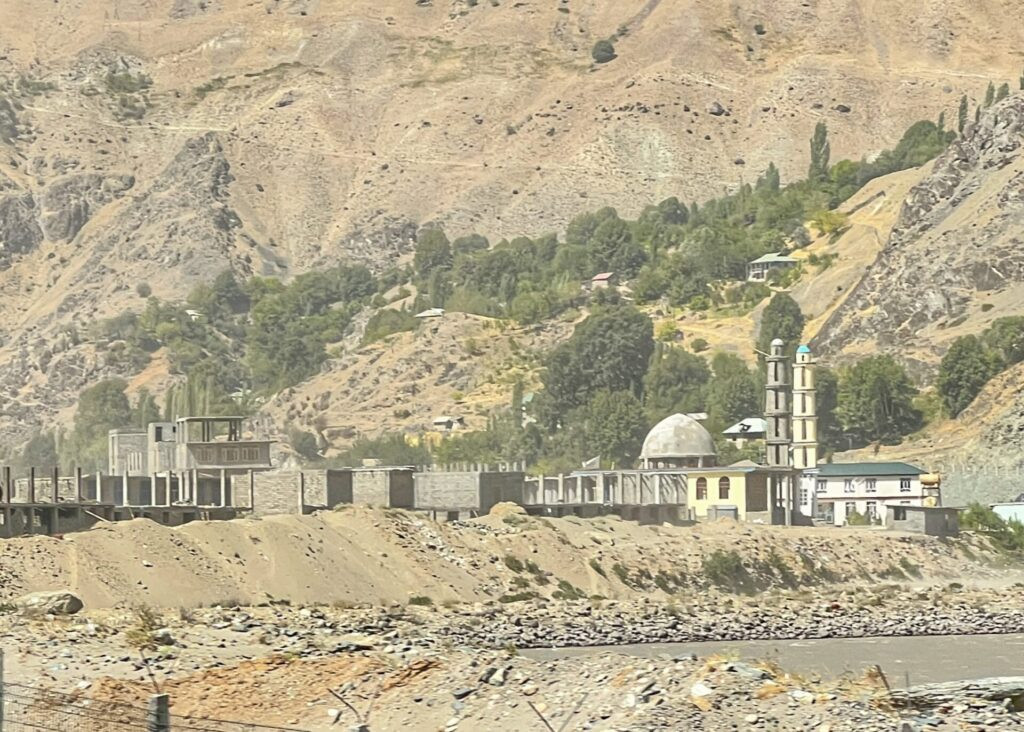

Continuing on, we drove by a massive Taliban camp, which could be designated by a much larger assortment of white and black flags.

Tajik soldiers patrolling the highway.
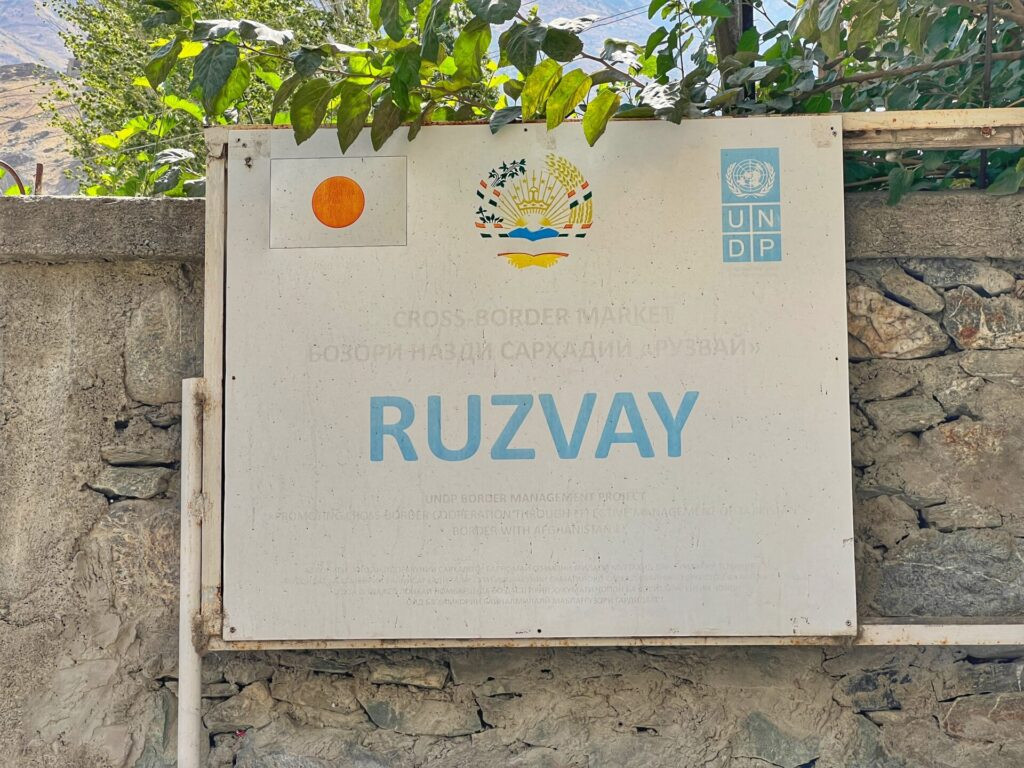
We then arrived late in the morning to the Ruzvay Cross-Border Market, which we were able to visit because we scheduled our trip to coincide with a Saturday on this sixth day. This is one of the few lifelines for commerce in this region and is funded by Japan, as well as the United Nations.

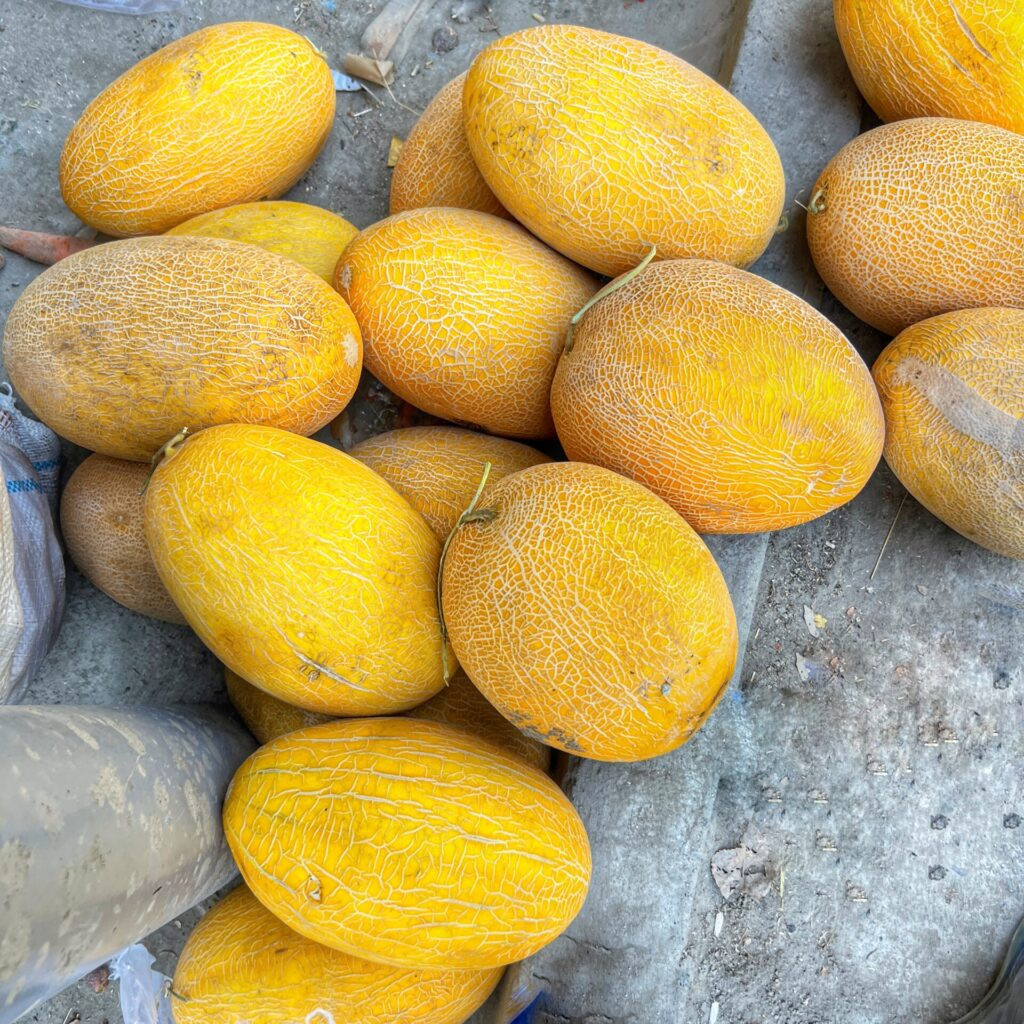
Border markets like this allow residents from both sides of the border to come together, trade goods, buy food, clothing and household basics…including those delightfully sweet torpedo melons! Seems like a better weapon of choice to me…
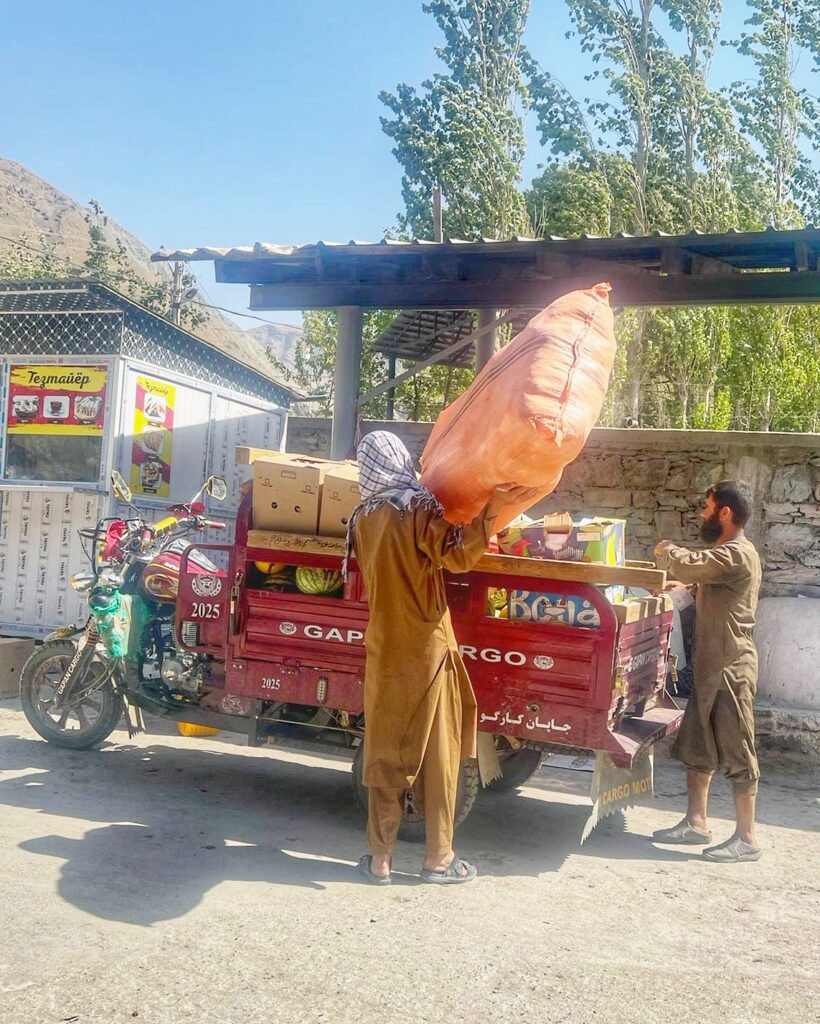
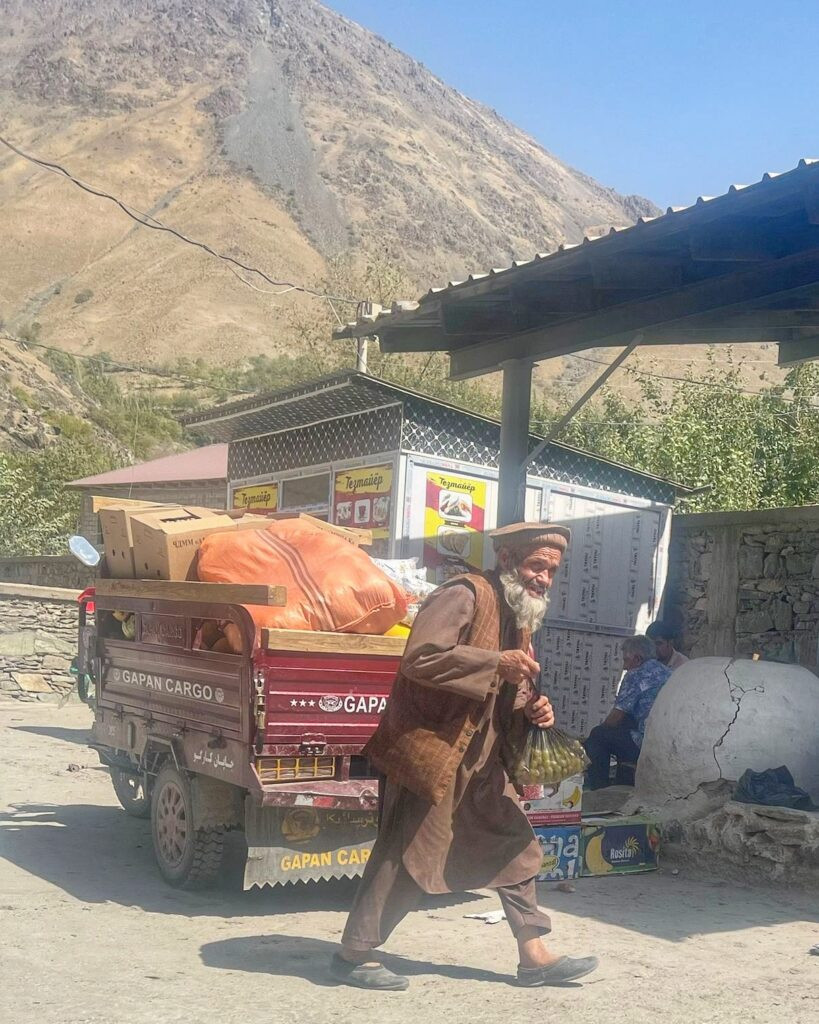
Due to their dress and beards, it was very evident which people were Tajiks and which Afghans, and to be honest, it was heartbreaking the forceful way the military was treating some of them…particularly this little old man, who didn’t seem to be causing any trouble, but was just trying to buy some grapes….


Our brief encounters at the Afghan/Tajik border market were deeply disturbing, shocking, and tragic, to witness the difference between the two sides. Especially when you see men that literally looked like an image of Jesus.

We’re just glad to see there is a way for the Afghans to make trades and get some of the essentials they need…
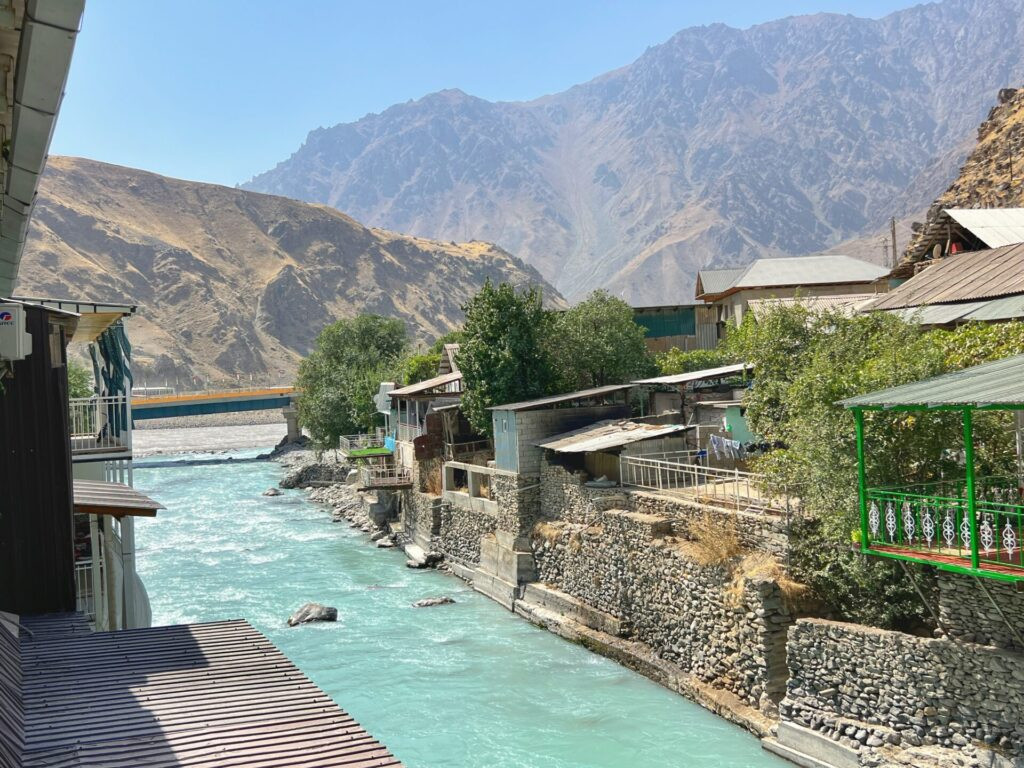

All this said, that day was a lot! So we were very happy to arrive to Qalai Khumb, where we would spend our last night on the Pamir Highway at Roma Guesthouse before heading to Dushanbe. We had a lovely guesthouse on a waterway leading to the main river, which even included a romantic private room (because it had hearts on the bed).

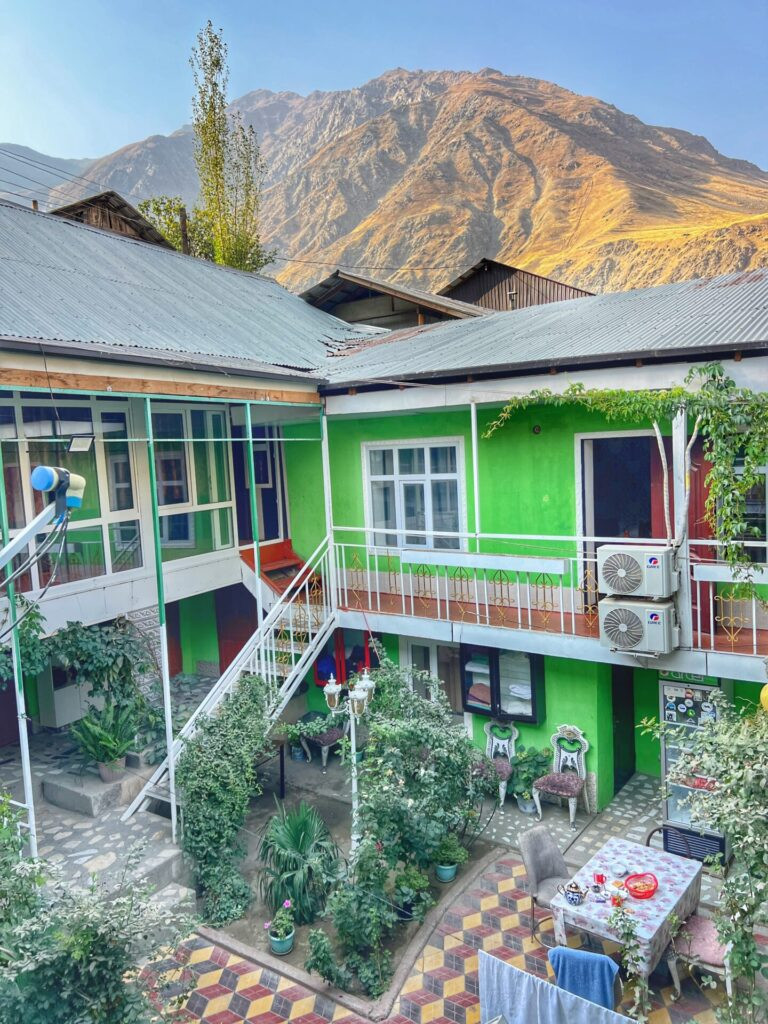
But the real icing on the cake was the private bath and shower! Wow!! Yes, as Aziz promised, each accommodation was continually better than the night before.
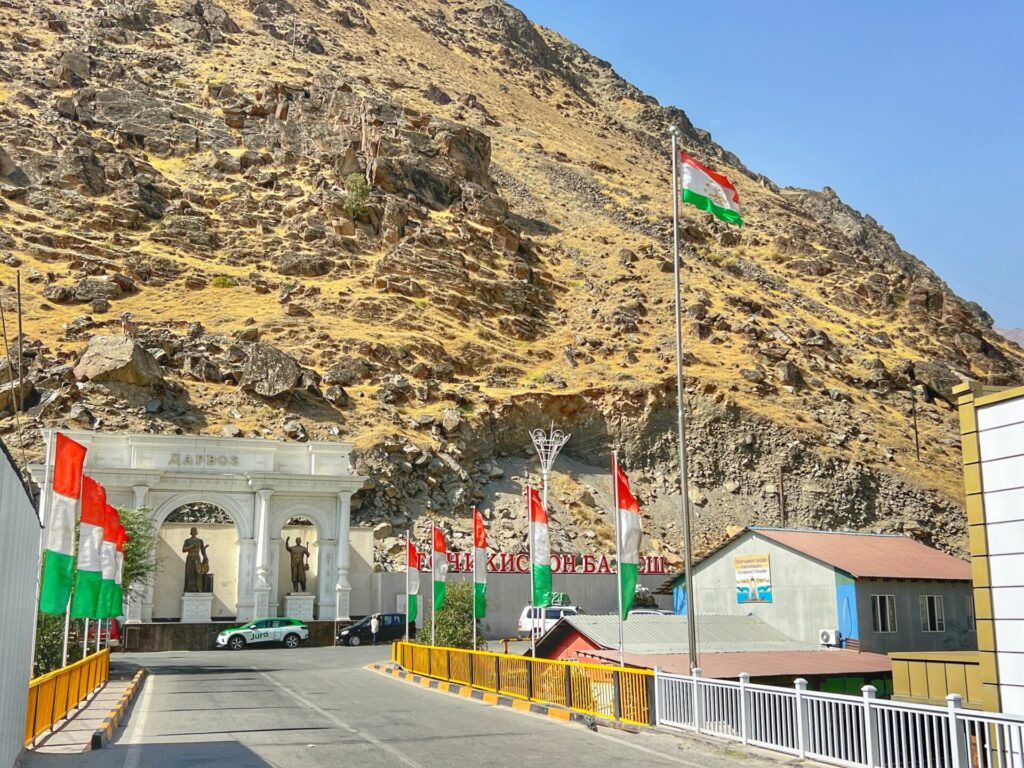

After settling into the guesthouse, we peeked around town, and found lunch at what was obviously the nicest restaurant in town overlooking the fast-flowing waterway.


This didn’t stop us from eating this deliciousness again (not)…chicken kebab, and Tajikistan’s version of “vegan food.”


Fortunately, after a nap, we were able to make up for it with a much needed Tajik happy hour. The beer we found at a local shop translates to “Obim Sella” which means “my water.” We later discovered, thanks to Chat GPT, that our prize was most likely non-alcoholic beer, which explains why no one got “much of” a buzz. Still, it was enough that Annabelle and I started speaking Spanish to Jonathan….
Dinner that night opened with a smorgasbord or fruits and vegetables! Now this was a nice surprise!

Exhausted and tired, we cheered to quite a ride!
Day Seven: Qalai Khumb to Dushanbe, Tajikistan
Our final day of the Pamir would take us six hours down the first magnificently paved road of the journey where all us rejoiced in the fact we could read, edit photos, nap, or take part in other “normal” car activities to kill the time. It also took us past the final Afghanistan turn-off, to Hulbuk Castle, and to our final meal before getting dropped off at our hostel in Dushanbe.
Despite the ups and downs on both a very literal and figurative level, this trip was undoubtedly a journey of a lifetime…perhaps the most beautiful, and meaningful, road trip of our lives.
But, above all, sincerest gratitude to our friends Annabelle, Yi and Jonathan for coming along. Because, it’s not always just the destination, but the companions that matter most. Thanks also to our wonderful driver Aziz for making life easier along the way, and to Nuzrulo at Bartang & Sarez Tours for making this such a rewarding experience.
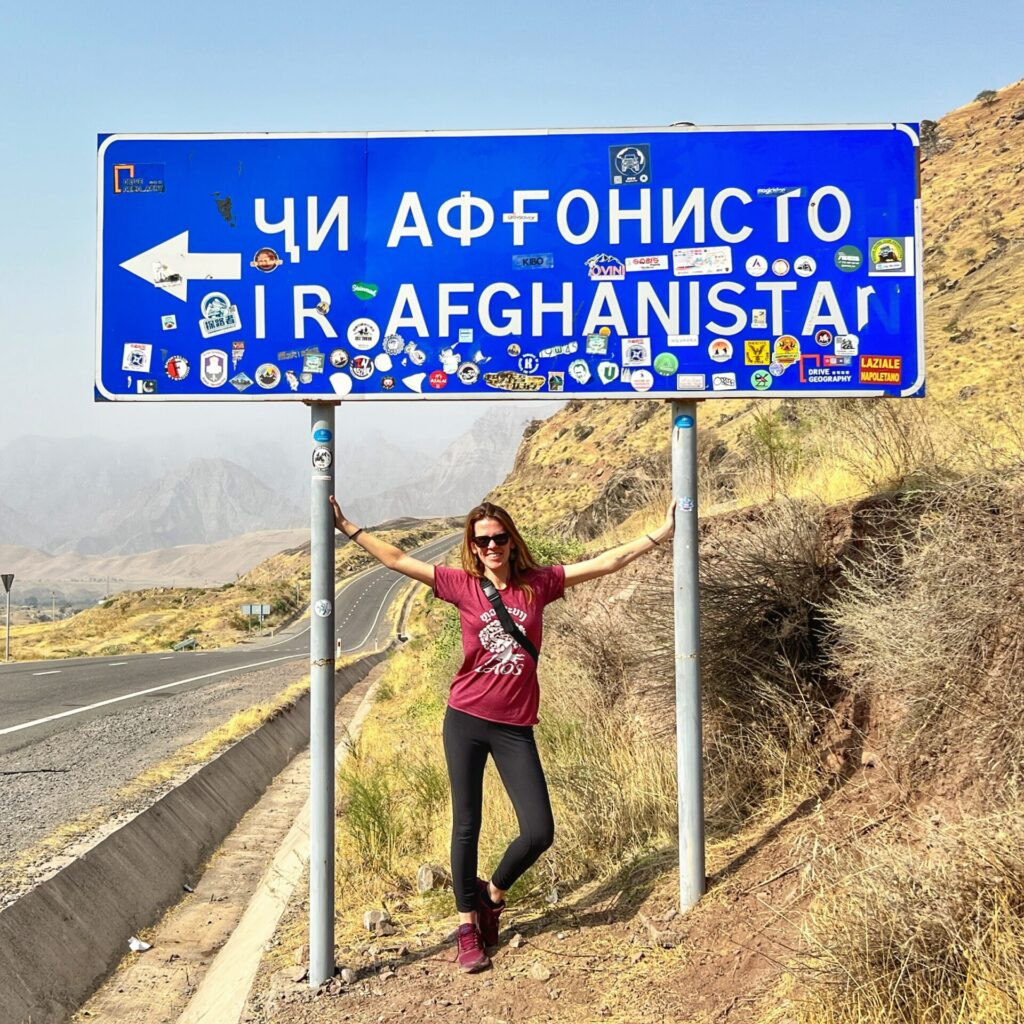
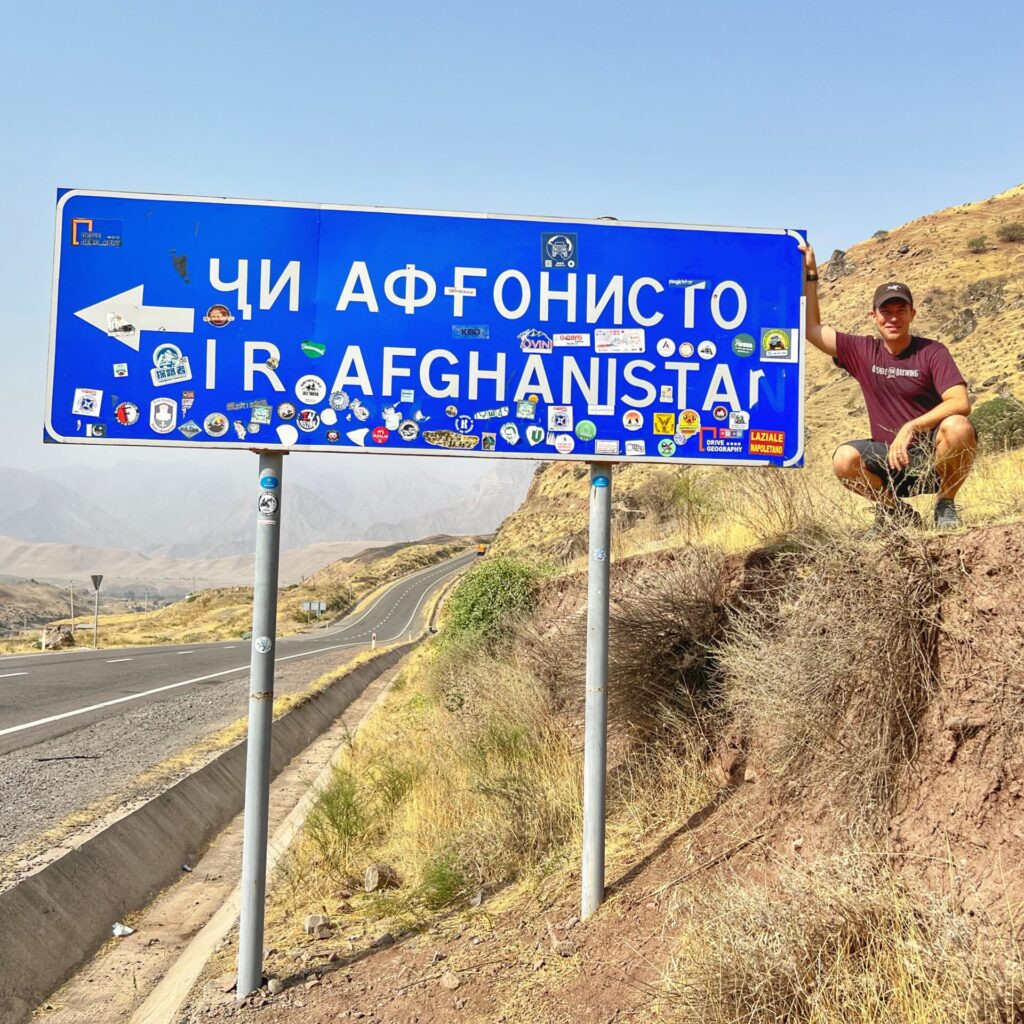
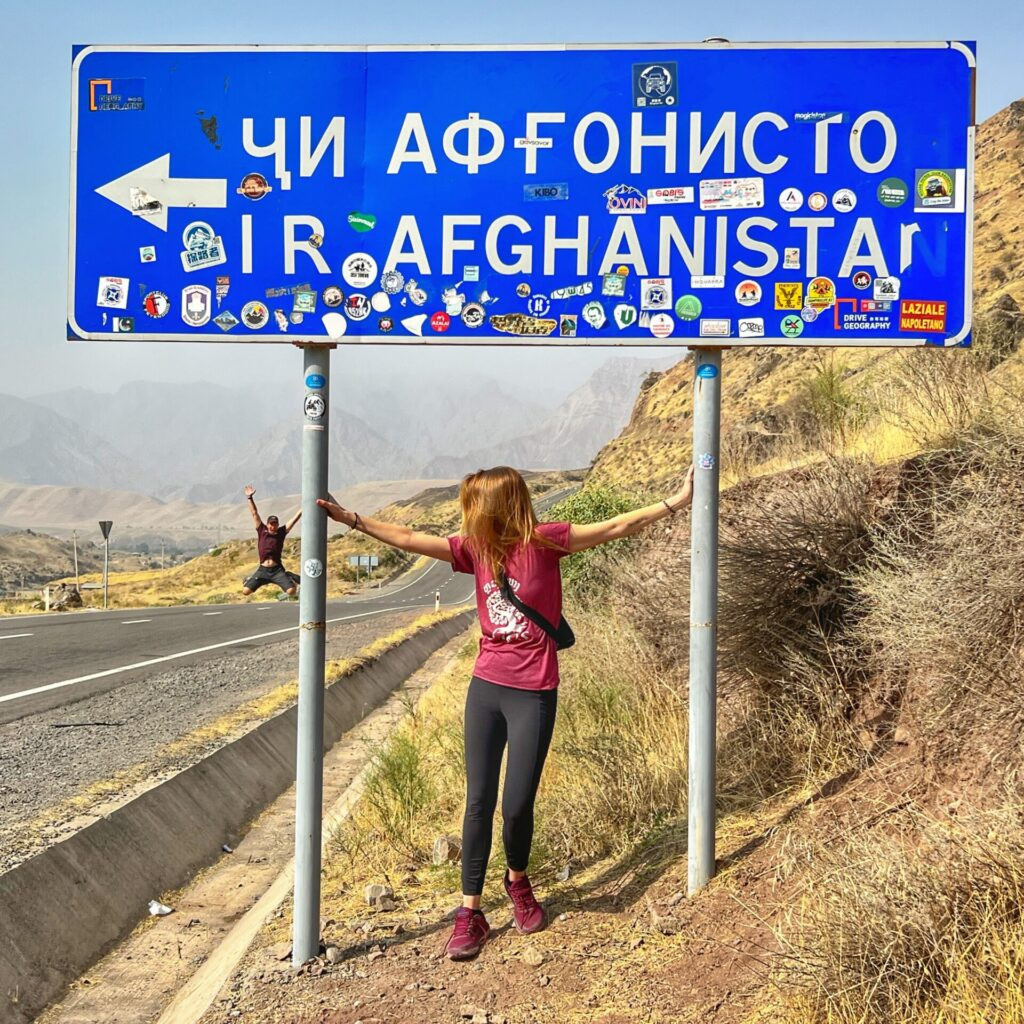
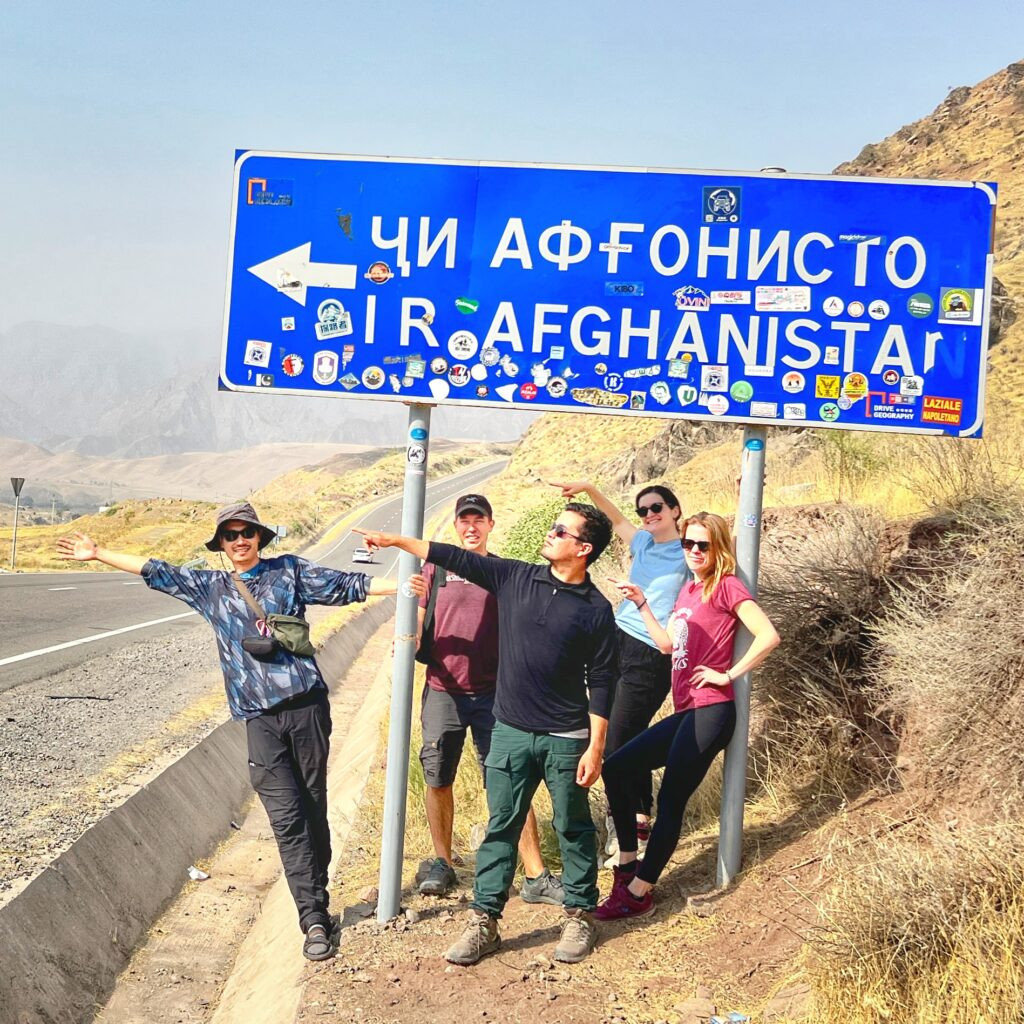
Should we stay or should we go?! Don’t worry, moms and dads, Captain Greg said no, even for a country grab. This must be why he’s not even pointing…


These images kind of horrified us at first glance along the highway, until we realized how much fun these little girls were having behind a tractor pull as they laughed and squealed.
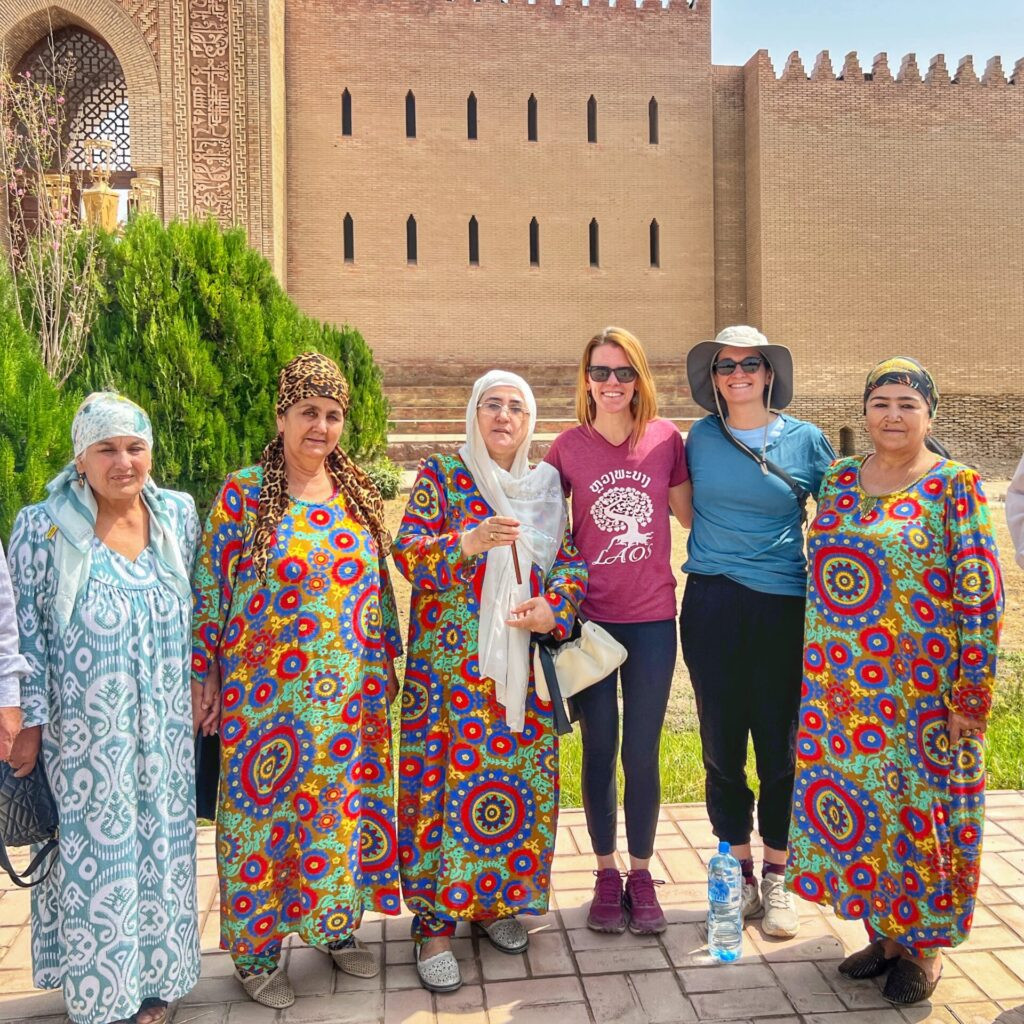
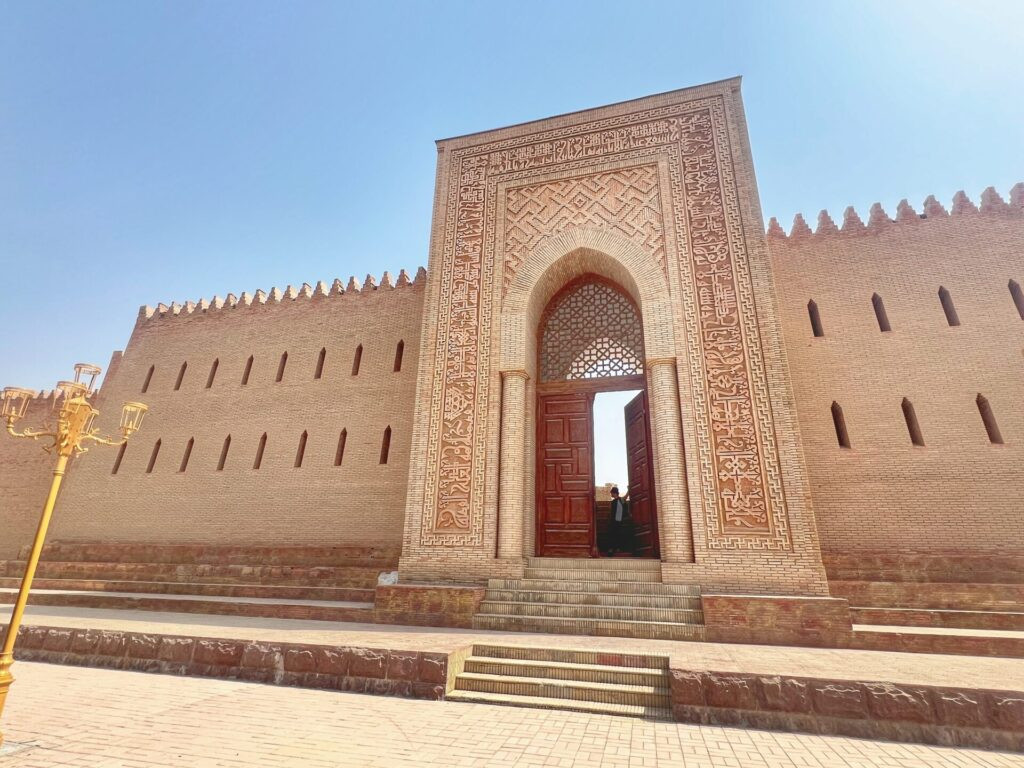
At Hulbuk Fortress, a group of local women wanted to take their photos with Annabelle and I. Their matching ensembles are way cuter than our travel kit.
The Hulbuk Fortress, one of Tajikistan’s most significant archeological sites, dates from the 9th-12 Centuries and served as the palace/fortress of local rulers, acting as both a defensive stronghold, and an administrative hub. The complex was impressive for its time with thick mudbrick walls with towers, decorated interiors, richly glazed tiles, carved stucco, and residential quarters.
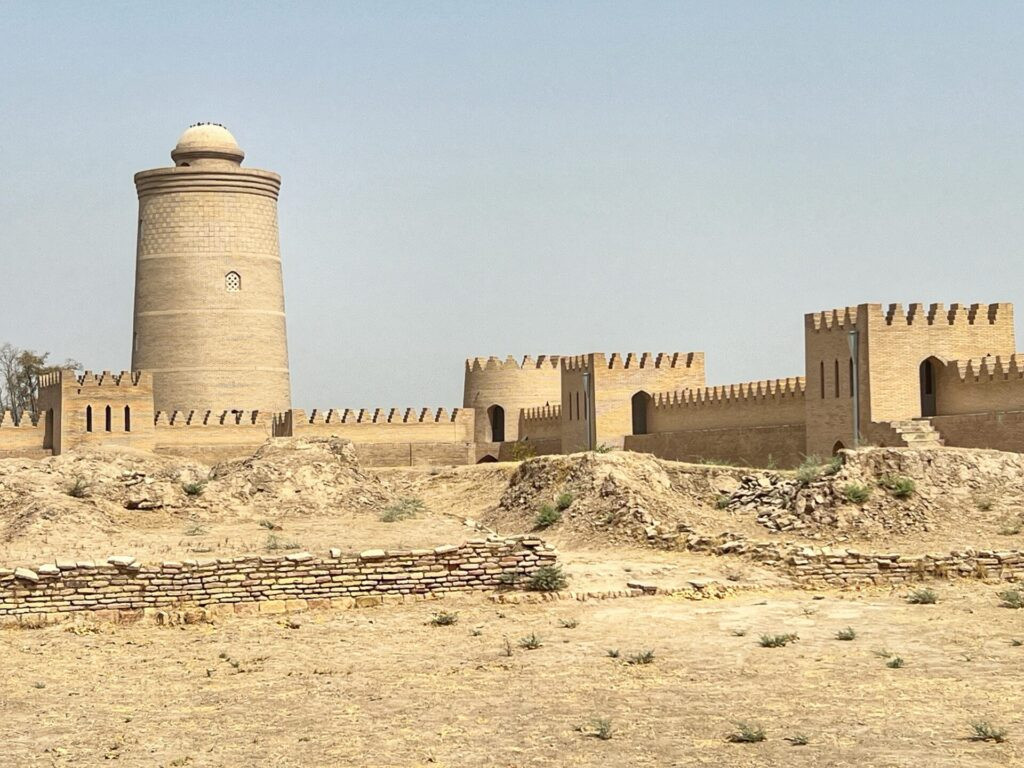
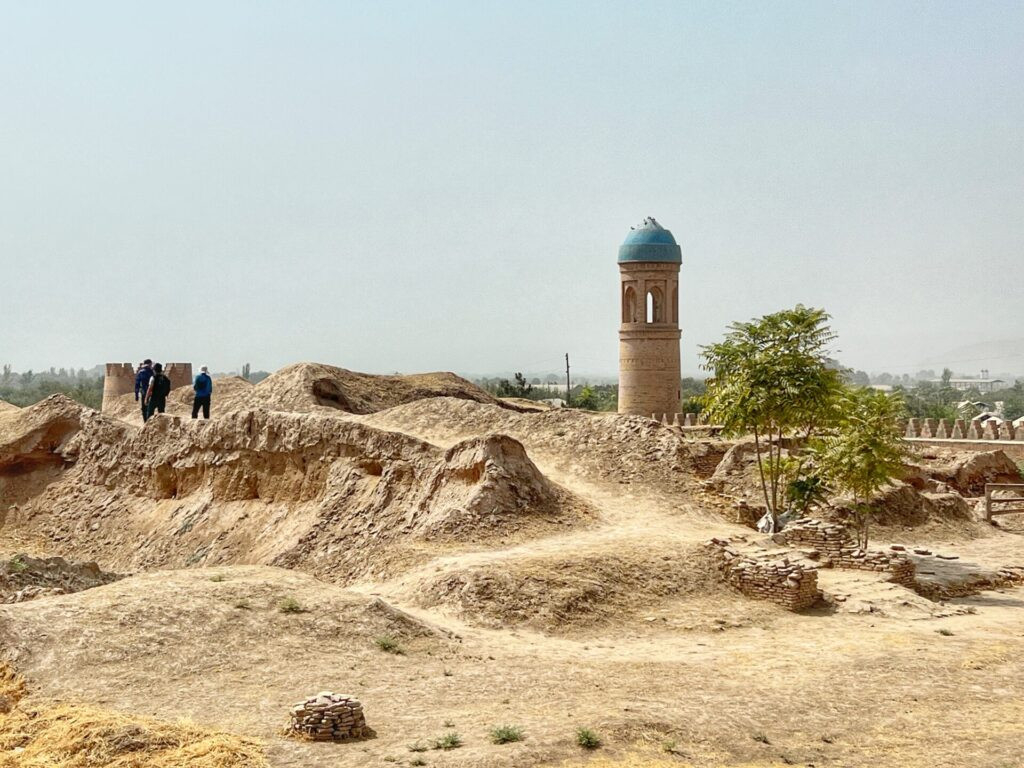
Today, its outer facade has been refurbished to the point where it almost looks OVER-restored, while its inside remains completely un-excavated.

This still made it really fun to explore, despite the bizarre contrast.

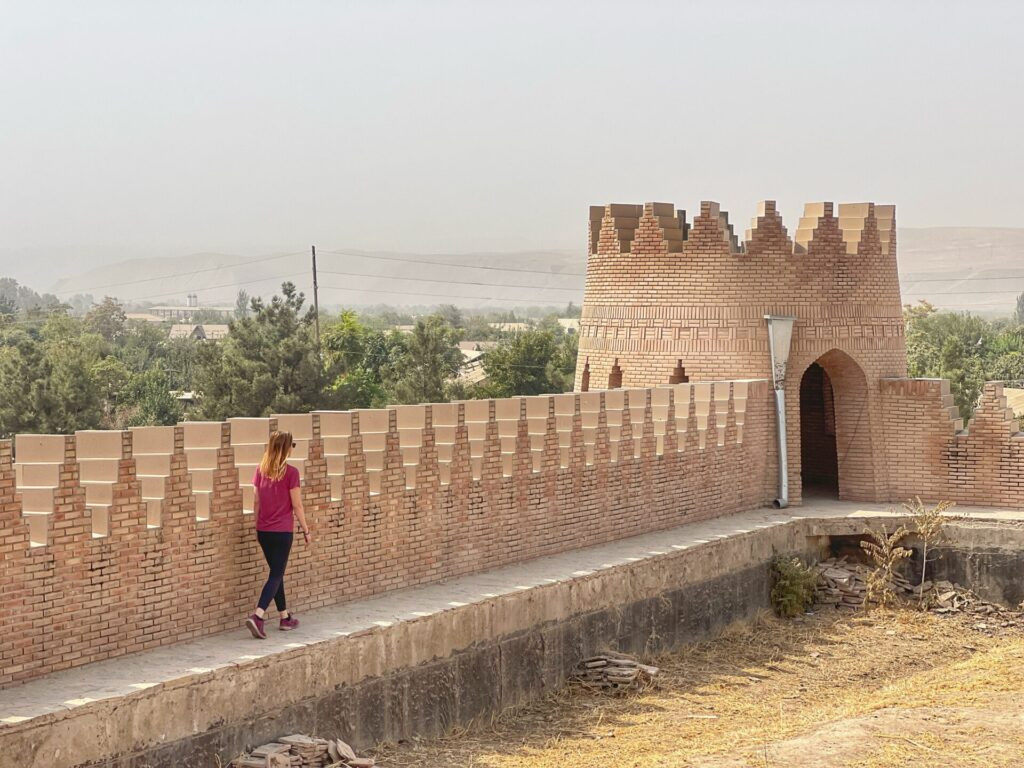
It certainly gave us a glimpse into the prosperity of Central Asia along the Silk Road before the Mongol invasions…

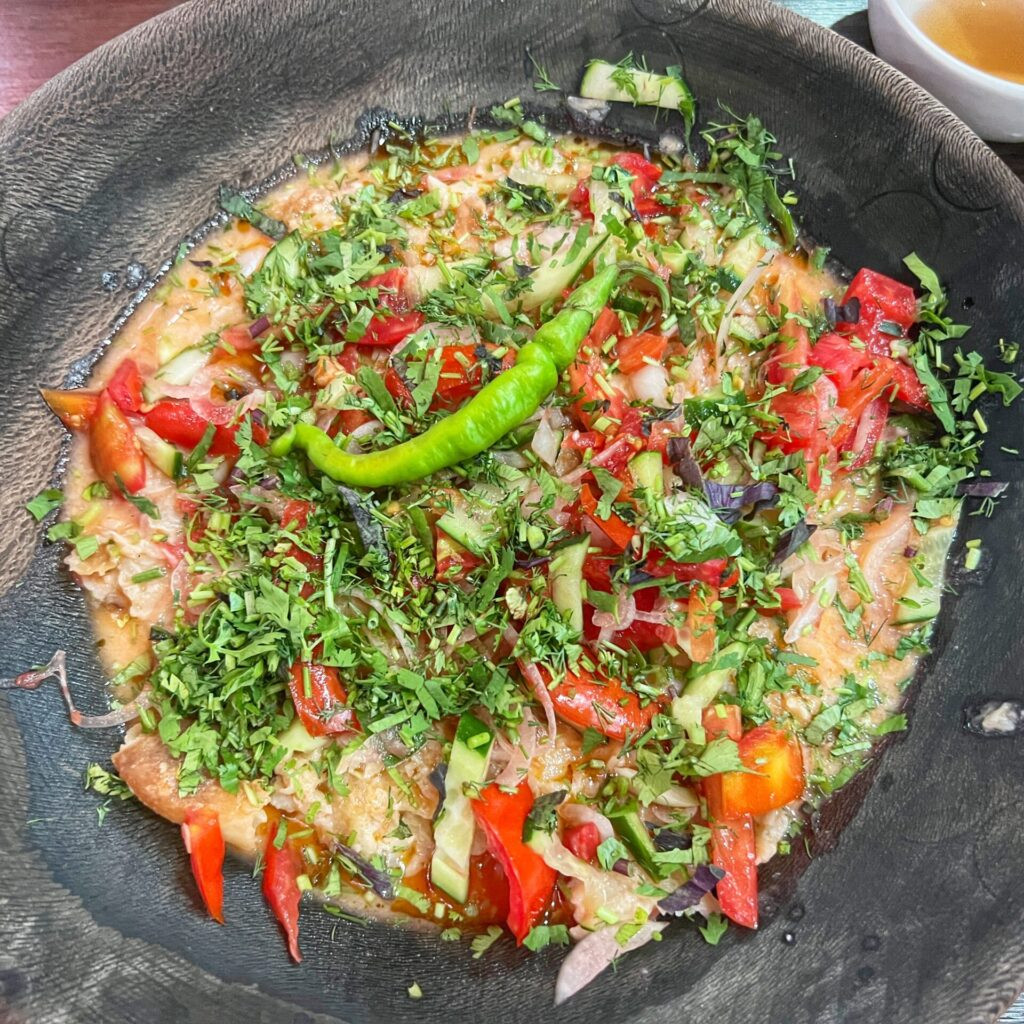
We finally arrived to Dushanbe and grabbed some seating in a traditional Tajik restaurant. MMM…..we got Shakrarob again, (traditional salad made of tomatoes, peppers, onions, herbs, and oil mixed with slices of bread and creamy yogurt.) OMG. It was SO delicious.

Awww…gonna miss these guys so much! What an adventure.


