
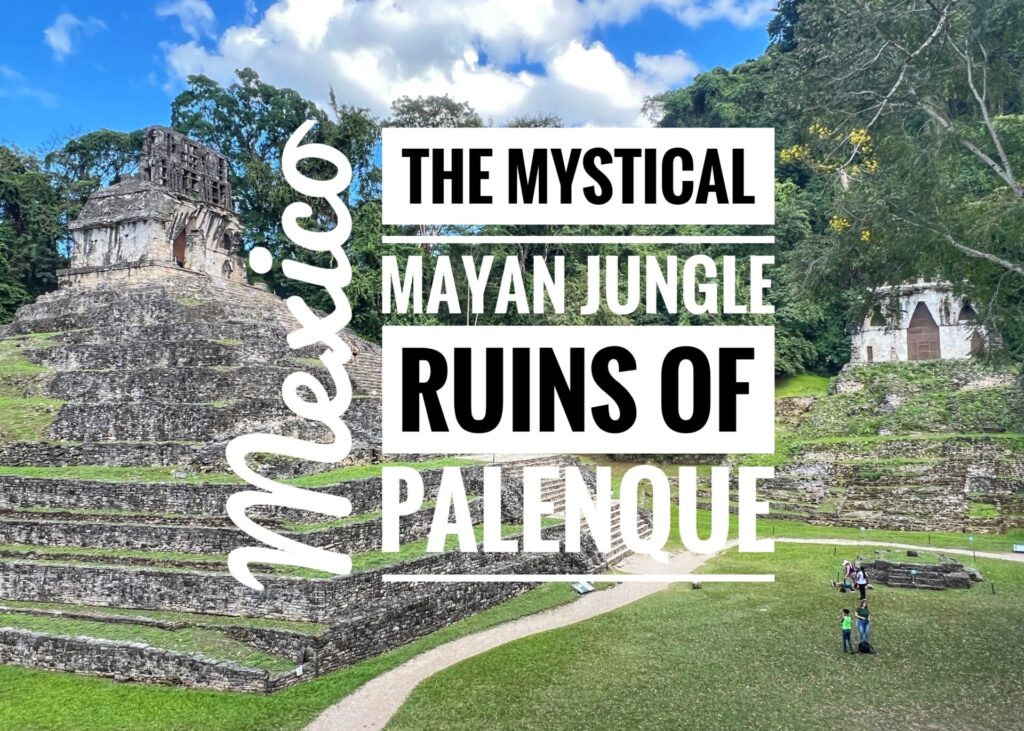
Our pick for Most Magical Ruins in the Americas
Greg has been marketing the UNESCO World Heritage Mayan jungle ruins of Palenque to me for years, and they unquestionably delivered…even for him…on his third visit. Of the ancient ruins I’ve seen, it definitely soars to the top of the list for the Americas for both of us, though with striking similarities, Guatemala’s Tikal, which I haven’t been to yet, comes in a close second for him. What makes Palenque so special?!
The mysterious setting. It’s folded into the lush and craggy landscape of a steamy jungle, which feels like entering the prologue of an Indiana Jones movie. The accompanying soundtrack features hooting howler monkeys, dazzling crimson-colored parrots chortling across the sky, and the laughably chilling and realistic roar of a jaguar which is creating by vendors touting toys, which emit these sound effects.
What else?
The excavation and restorations of the ruins themselves are immaculate and widespread forming a virtual metropolis of the past and not just a pyramid or two like in other locations, and you can still scale the walls of almost everything, which means you can truly embed yourself into a extraordinary piece of history.
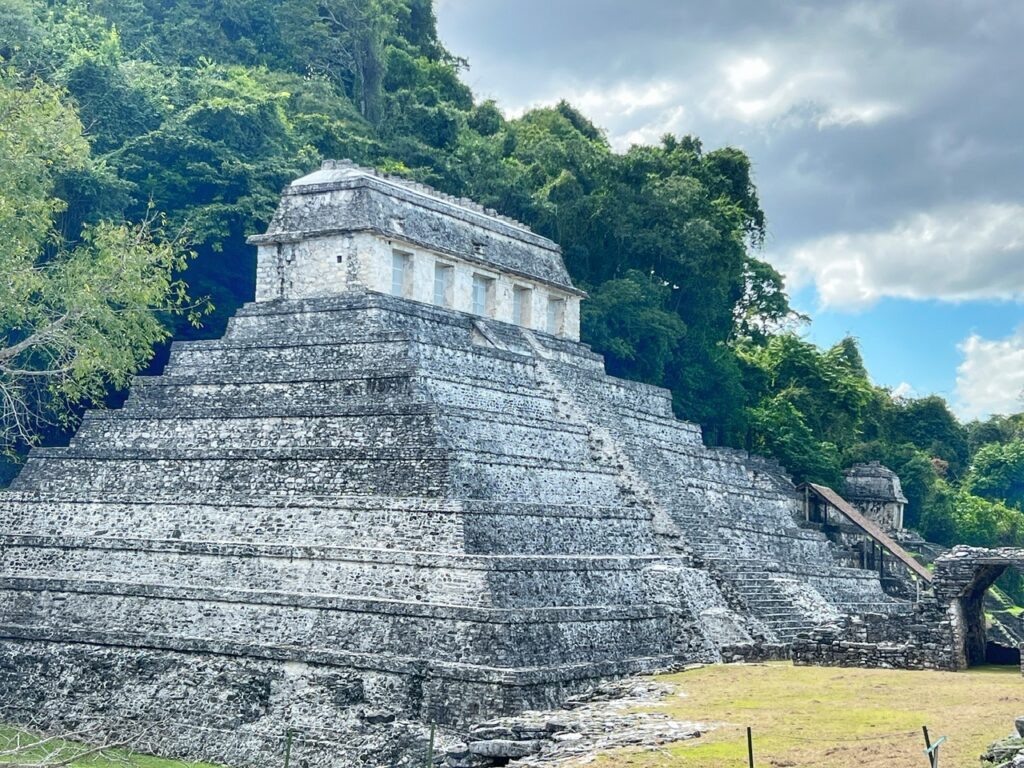
Palenque is one of the most elegant and magical cities of the Mayan civilization, hidden in the jungle of Southern Mexico’s Chiapas State. Although it wasn’t the largest Mayan city (that was Tikal), it became one of the most artistically and architecturally sophisticated.
According to Chat GPT, small settlements began forming around Palenque more than 2000 years ago. During this early period, the area gradually developed into a ceremonial and political center. It then reached its Golden Age in 600-700 CE under the famous ruler K’inich Janaab’ Pakal, often called “Pakal the Great” who came to power at the tender age of 12 when most boys today are absorbed in video games and fart jokes.
Pakal ruled for 70 years, which is when most of the iconic structures on the site were erected. By the 800s, the city was abandoned and reclaimed by its rightful owner….the jungle.
It was then rediscovered by Spanish explorers in the 1700s when they were bulldozing the indigenous peoples elsewhere, but wasn’t studied seriously until the 19th Century.
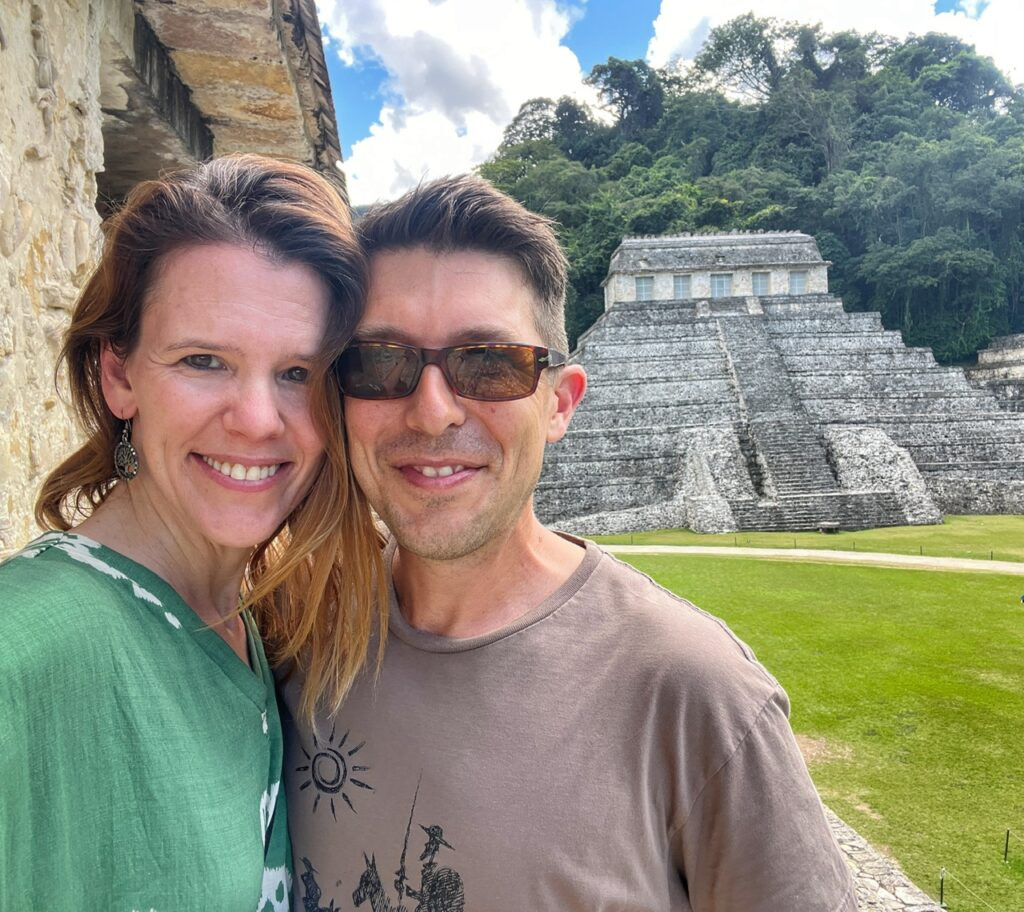
Where’s Mandy?! He finally got me here! And, although tiring, it was well worth the two-day journey from San Cristobal de las Casas.
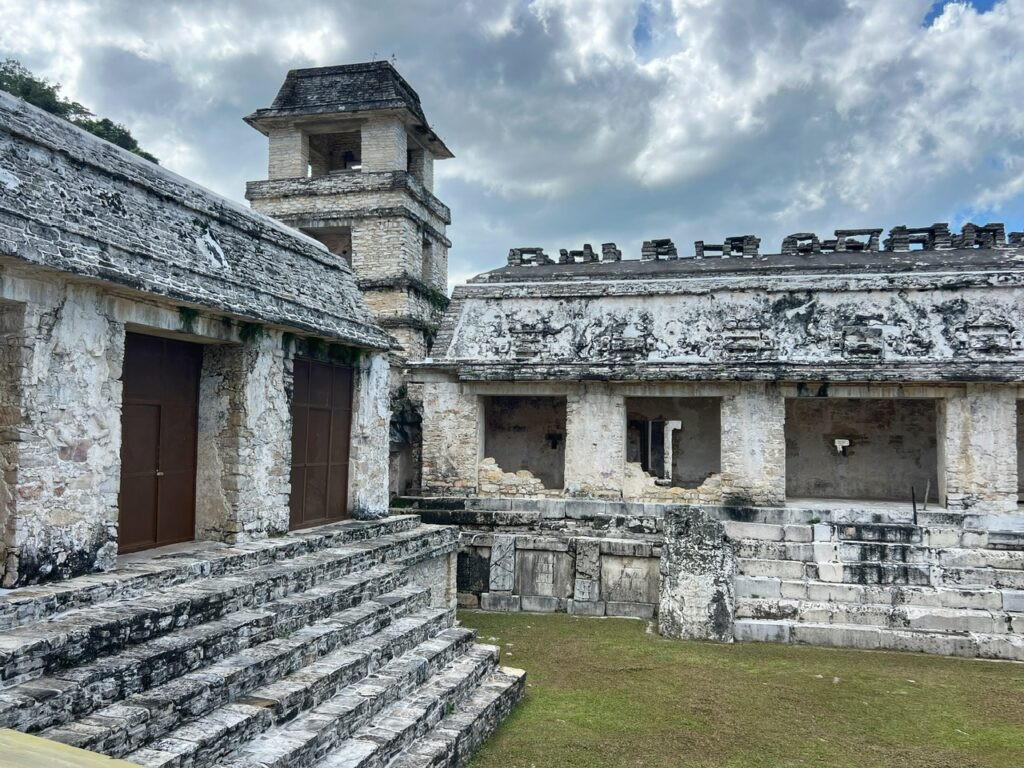
A feature that I’d never seen in American ruins was a European resembling tower. It is unique in its type in all the Maya areas. It can be assumed that Palenque’s tower was used by members of the ruler’s court. Even if its specific function is unknown, it’s thought that maybe it was a point of watch or an astronomic observatory. The first two floors and a large part of the third were still preserved in their place when the scientific research started in Palenque. The roof was rebuilt during the archaeological works in the fifties, by which the tower reached a total height of 15 meters.
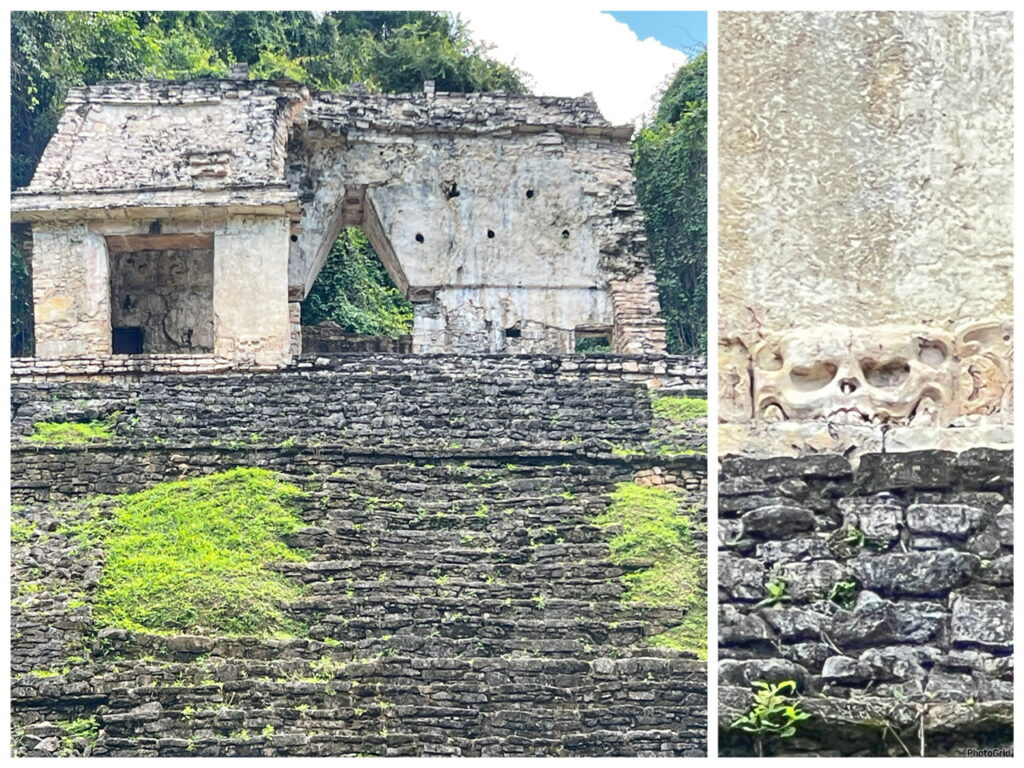
When you first enter the ancient city, you are greeted by the Temple of the Skull. It was so named this due to a creepy relief fragment located at the base of a pillar at the access point. The relief represents a skull, which claims to be a rabbit according to the signage. A rabbit?! Seriously? What’s so scary about that? It was originally painted in red and blue. A grave with a rich offering…lemme guess…a lucky rabbit’s foot?, was found under this temple.

The next temple belonged to that of the supreme Red Queen, and was the only one you could fully enter. It was called Red Queen, since it possessed all the attributes contained in a royal grave and because of the red color of the mineral that covered her remains.
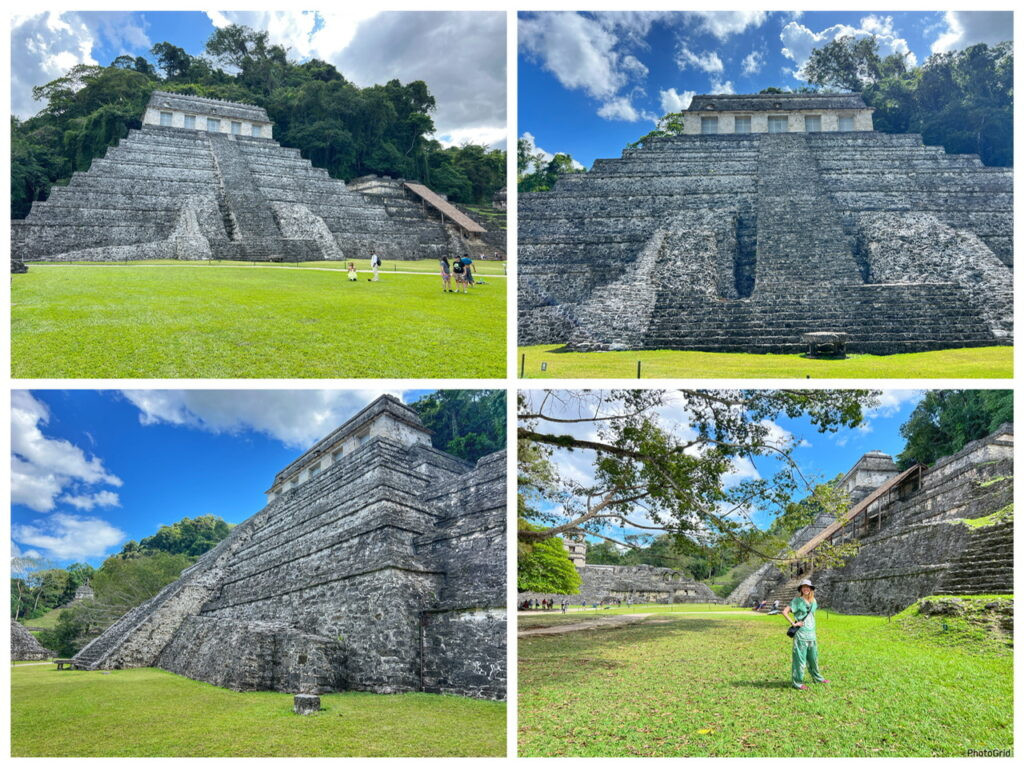
Later studies allowed archaeologists to postulate that the buried character in the sarcophagus corresponded to the lady Ix Tz’aka’ab Ajaw, (Oompf…that’s a mouthful…) whose epigraphic evidence point at her as the wife of Pakal the Great. Either way, that is one seriously beefy block of stone! Tucked into a jungle-enveloped hillside, this structure, probably the most recognizable at Palenque, is the Temple of the Inscriptions.
27 years ago, Greg was able to mountain goat up it, but today it’s unfortunately no longer allowed probably because apparently Pakal the Great’s tomb is too exceptional for Instagram.
His tomb was discovered in 1953 via a hidden staircase inside the temple that led deep into the pyramid to Pakal’s burial chamber. Inside they found: a massive carved stone sarcophagus, Pakal’s famous jade death mask, and jade jewelry and offerings.
It was the first royal Maya tomb ever found inside a pyramid, which completely changed how archaeologists understood Maya kings and burial practices.
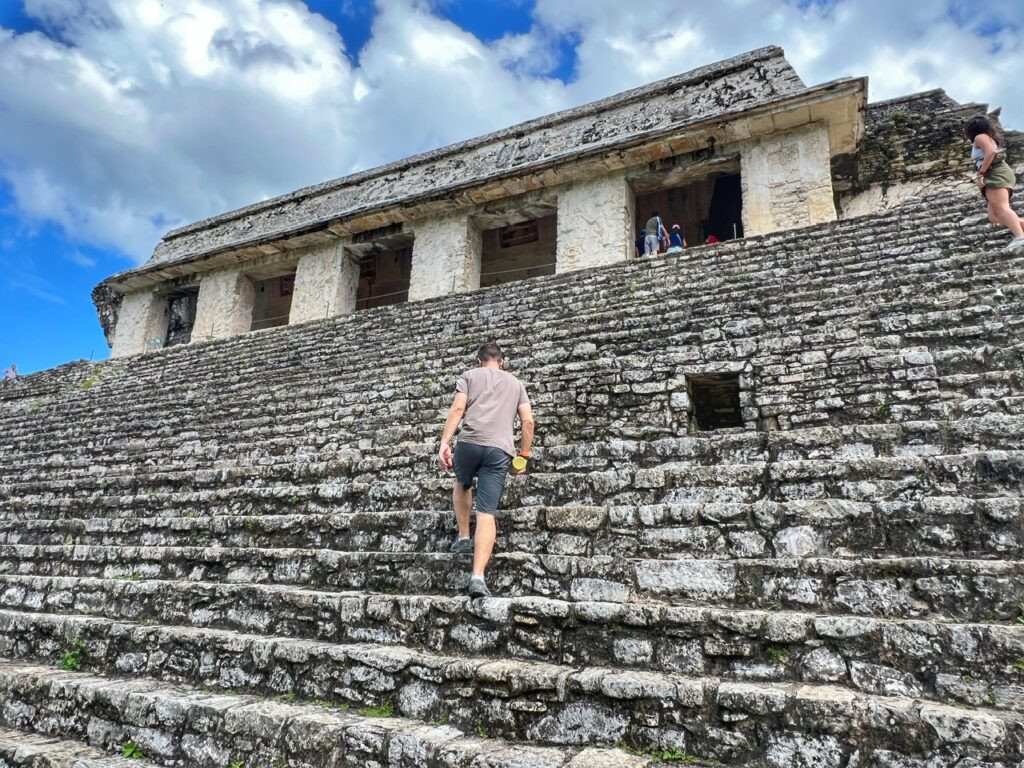
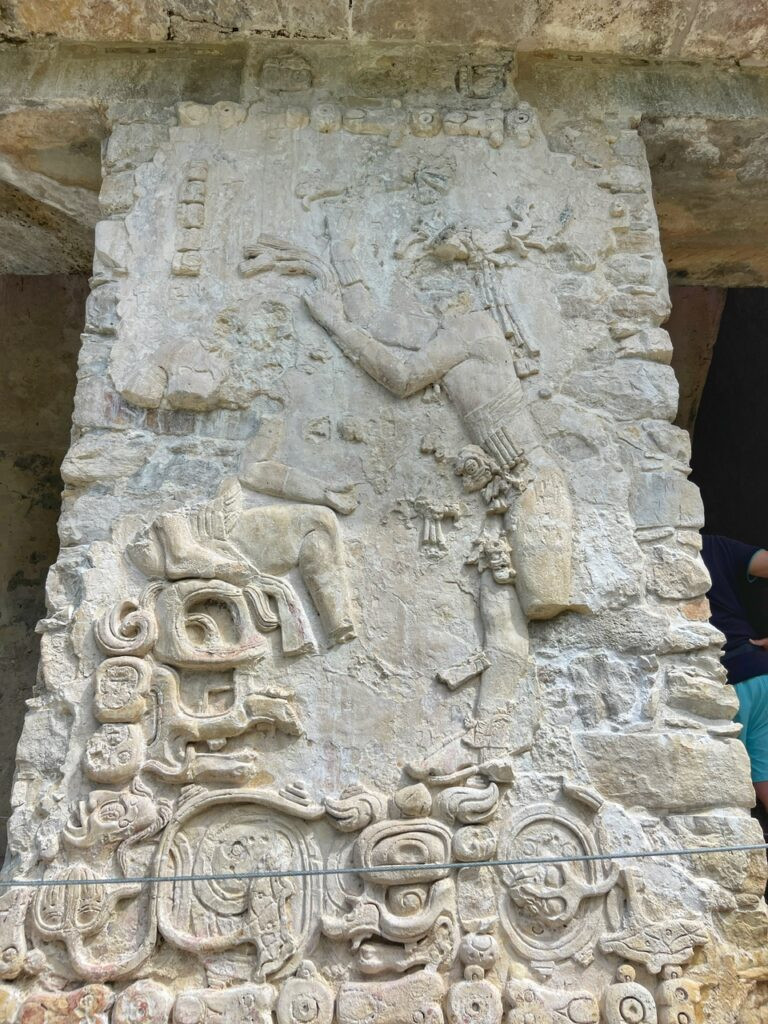
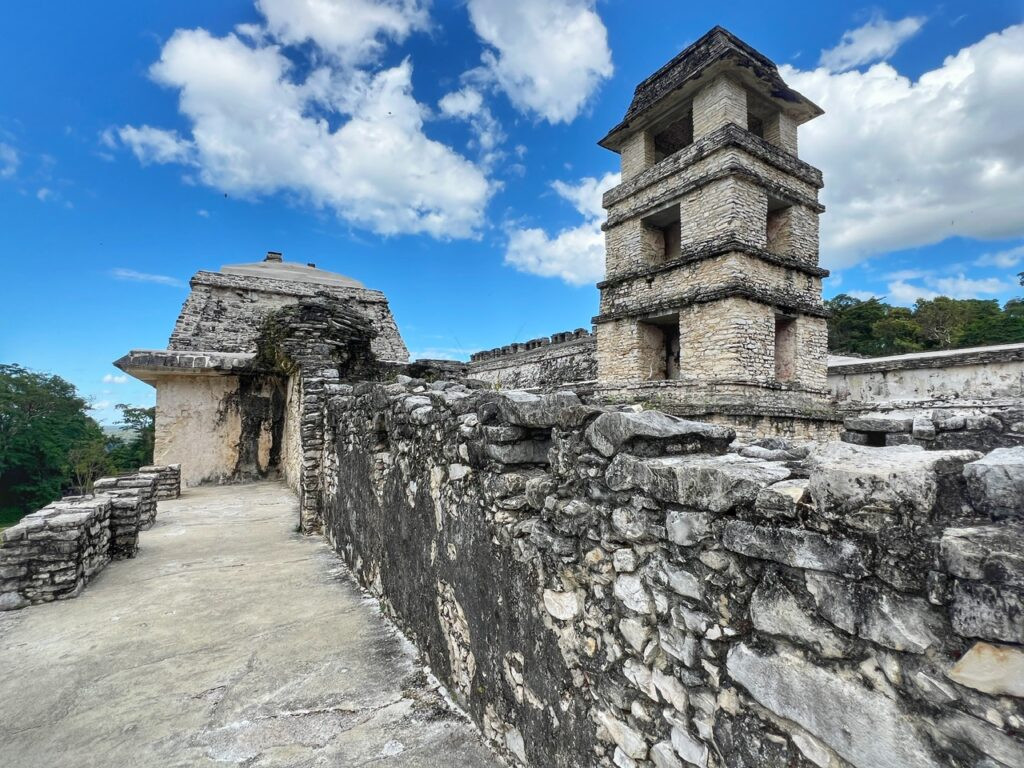
Most structures you can climb, which includes the grand staircase to the central Palace, considered the seat of political and economic power of the city. Throughout the palace, there are a number of remarkably preserved reliefs. The spaces throughout the palace hosted diverse activities, such as the rulers’ enthronement, rituals, and periodic ceremonies. Some areas should have been destined to store tributes, as well as reception places for visitors from other political entities.
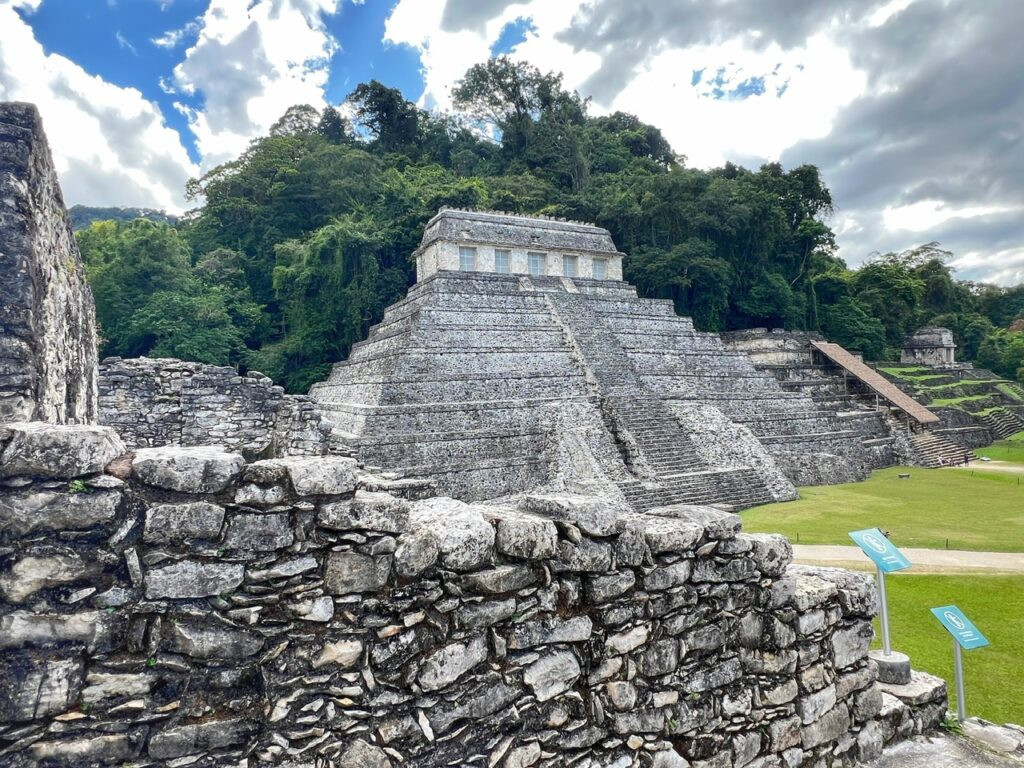
A view of Pakal’s tomb shelter from the top of the Palace.
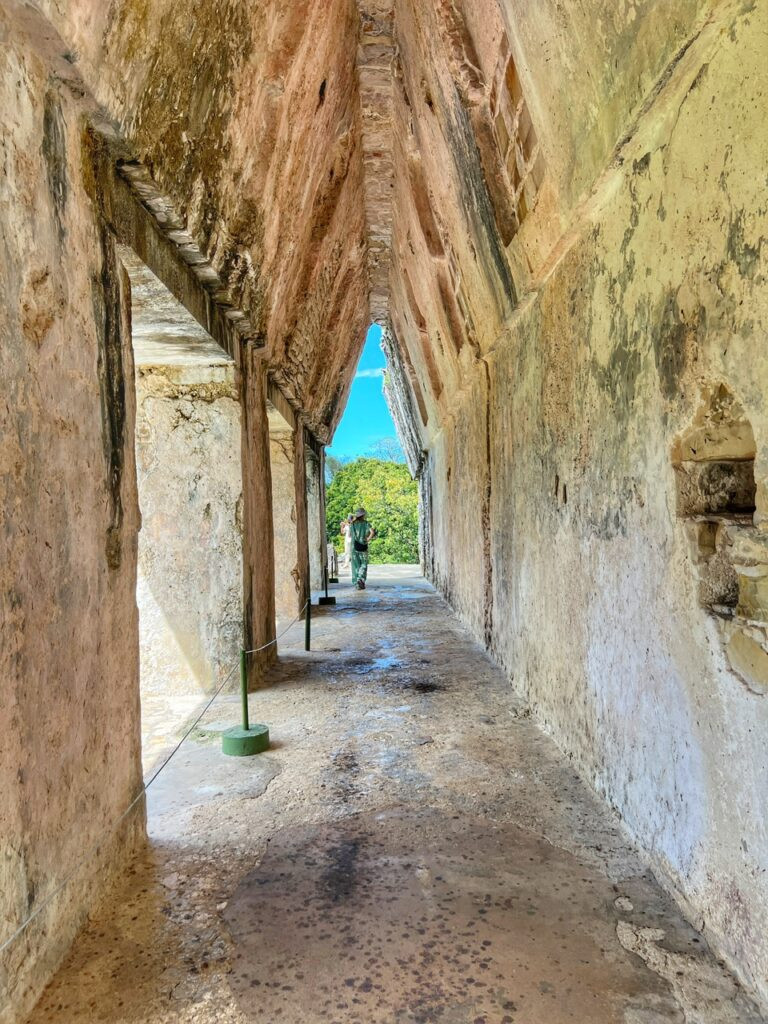
Now those would be some tough angles to clear out spiderwebs!
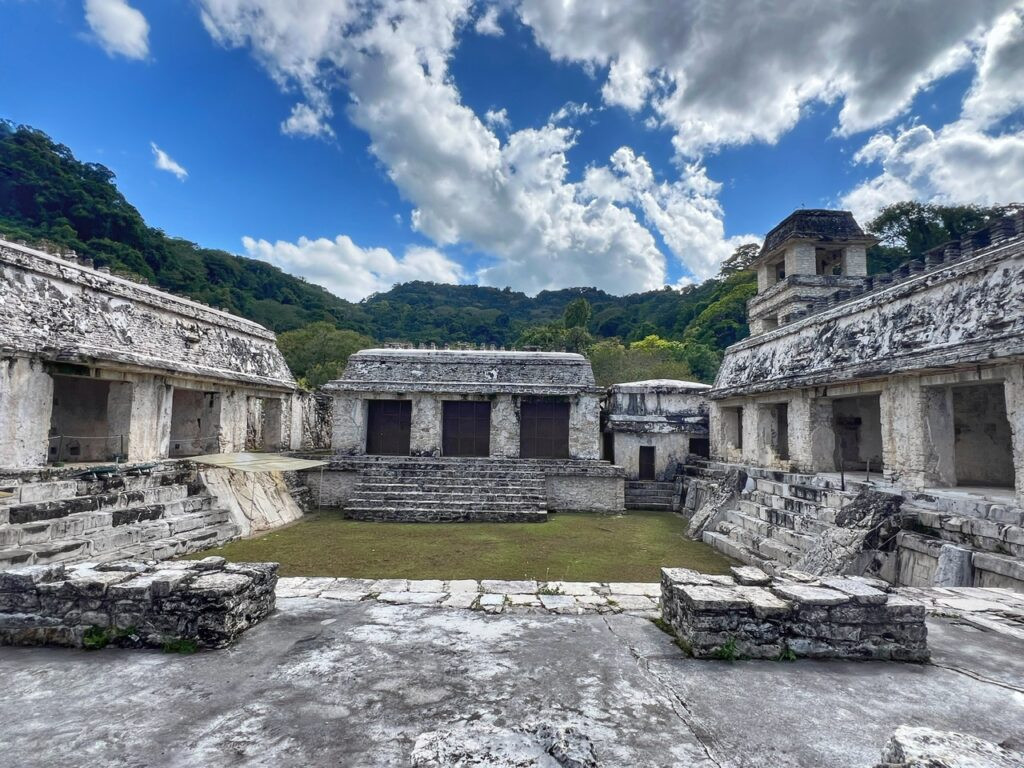

The serene courtyard inside the royal compound was once a bustling place of government and servant activity where “Pakal the Great” consulted with his delegates on important questions like, “should we go to war with that tribe?” (back when that was a thing.) This space also showcased walls in bright red stucco, murals and carvings painted in blue, yellow, and black and nobles in elaborate feathered headdresses and jade jewelry.
These curious t-bar holes were likely used to support wooden beams that didn’t stand the test of time in the tropics.
Other views of the nooks and crannies of the palace. At one time, it is believed 8000-12000 people lived in the city.
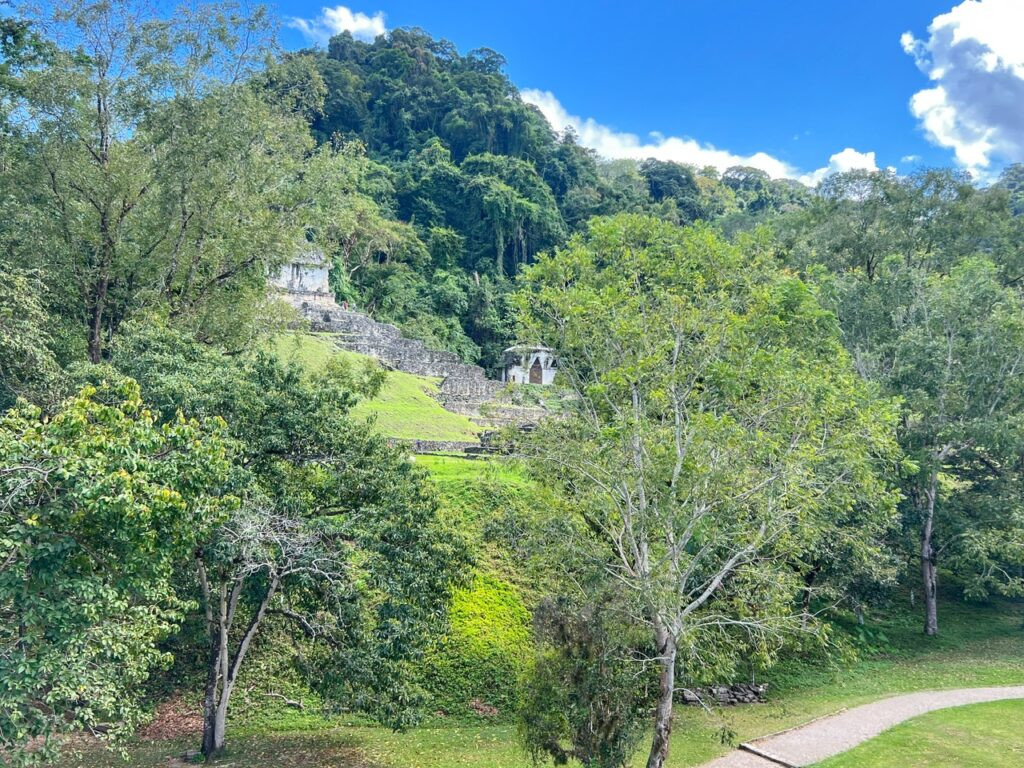
And just when Greg thought we were about done, he was thrilled to see peeps of an entire expansive area further embedded in the jungle has now been unearthed. A lot of development has happened in 25 years though apparently the site is still only 10% excavated!
The jungle-covered hills surrounding the ruins likely still hide thousands of house platforms where most of those residents lived. If you’re walking around the site now, you’re actually seeing mostly the royal and ceremonial center—the ancient equivalent of the government district, not the whole city.
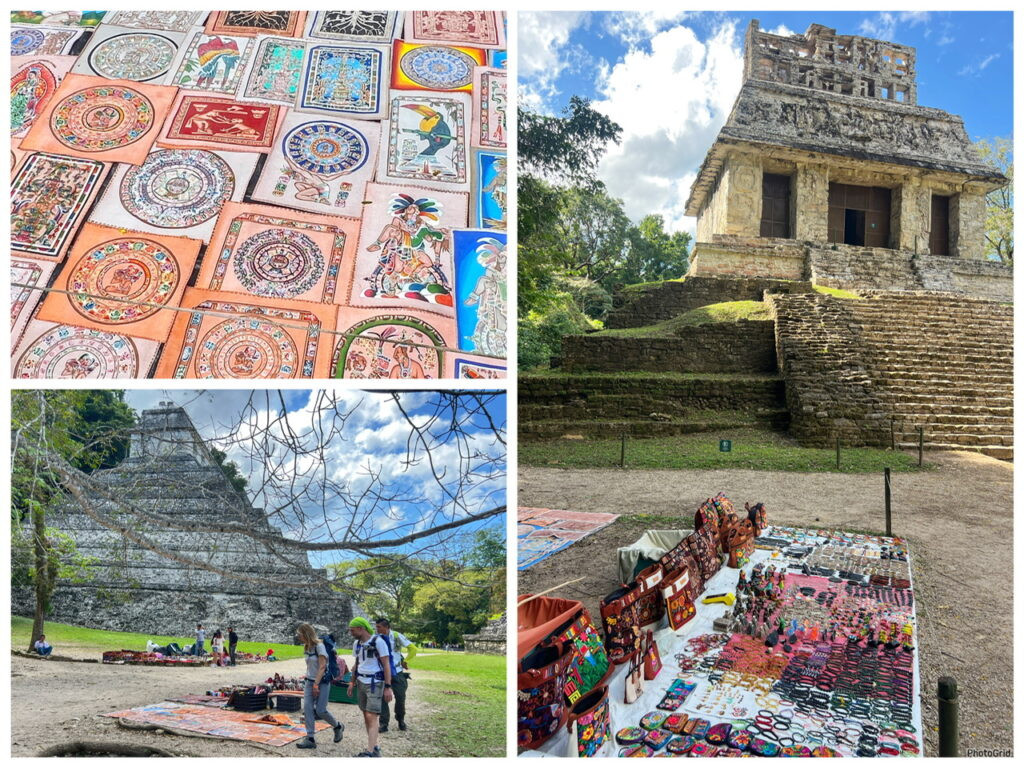
Today, one thing Palenque has plenty of is souvenirs, including naturally, Mayan calendars. Remember when this calendar ended in 2012 and all the conspiracy theorists said the world would also end?! That was amusing.
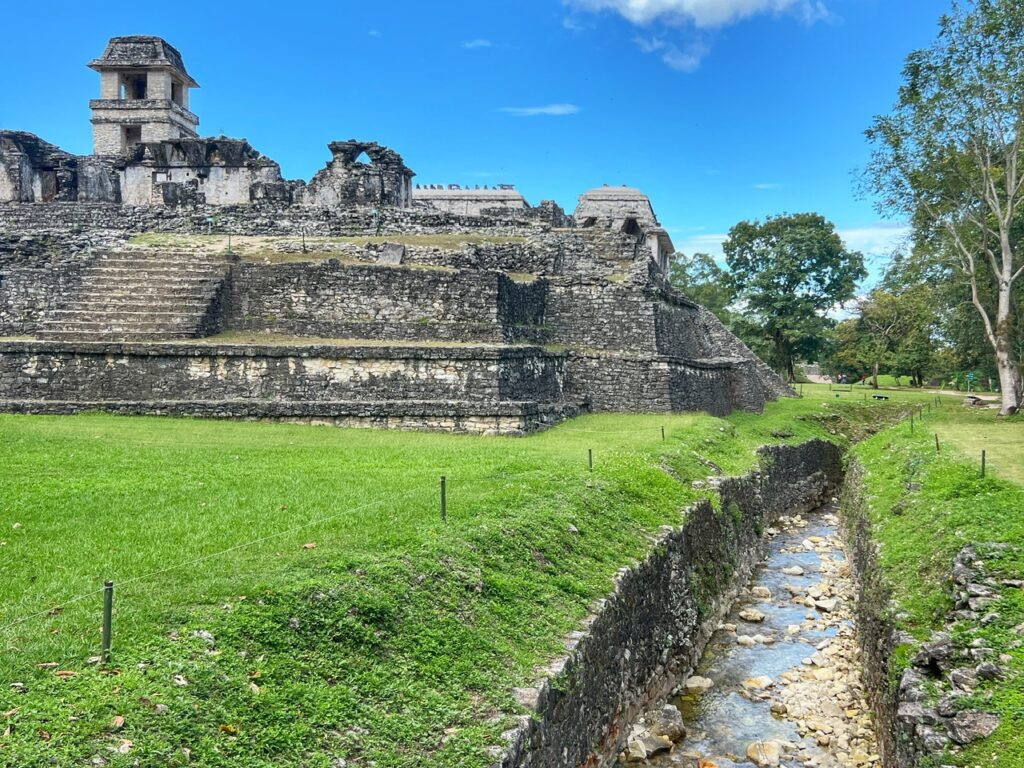
Moving on from the palace, we were able to get good views of the crystal clear water still flowing in the city’s aqueducts. At least 56 water springs were used and modified by the Palenque people, some of which were underground for creating larger architectural spaces on top of them and to prevent floods in the urban areas.

By then I was feeling delightfully swampy and glad I wore my loose fitting ensemble for the occasion, (not minding I looked like a dorky 40-something version of “Blossom” meets Uzbekistan.)
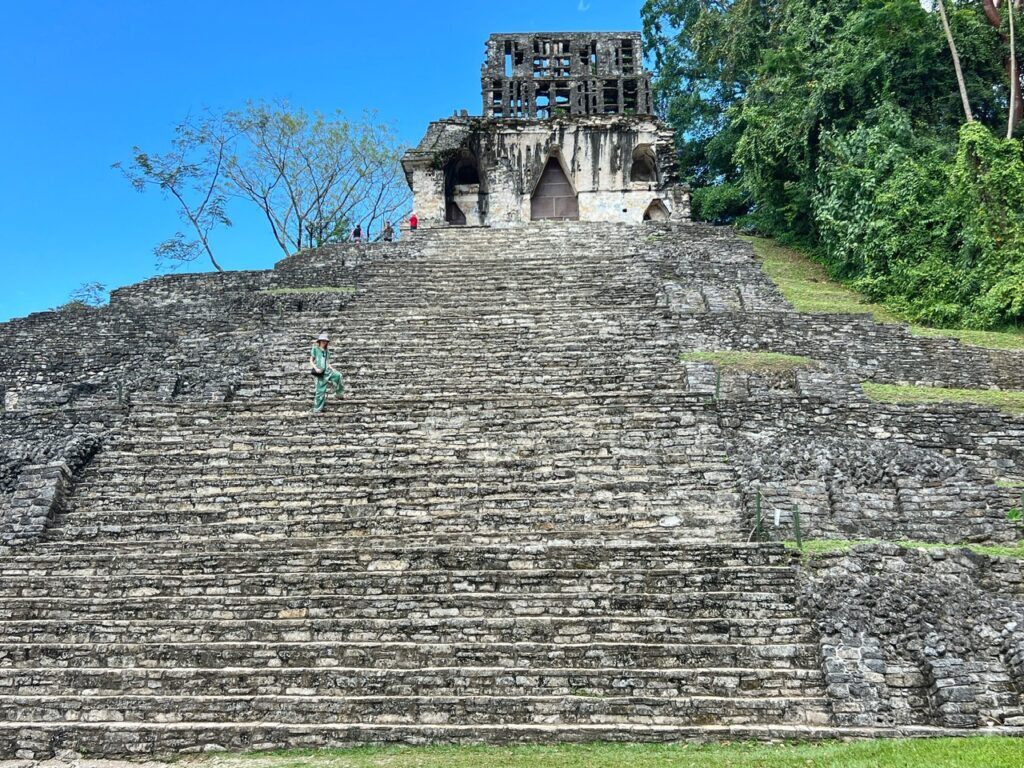
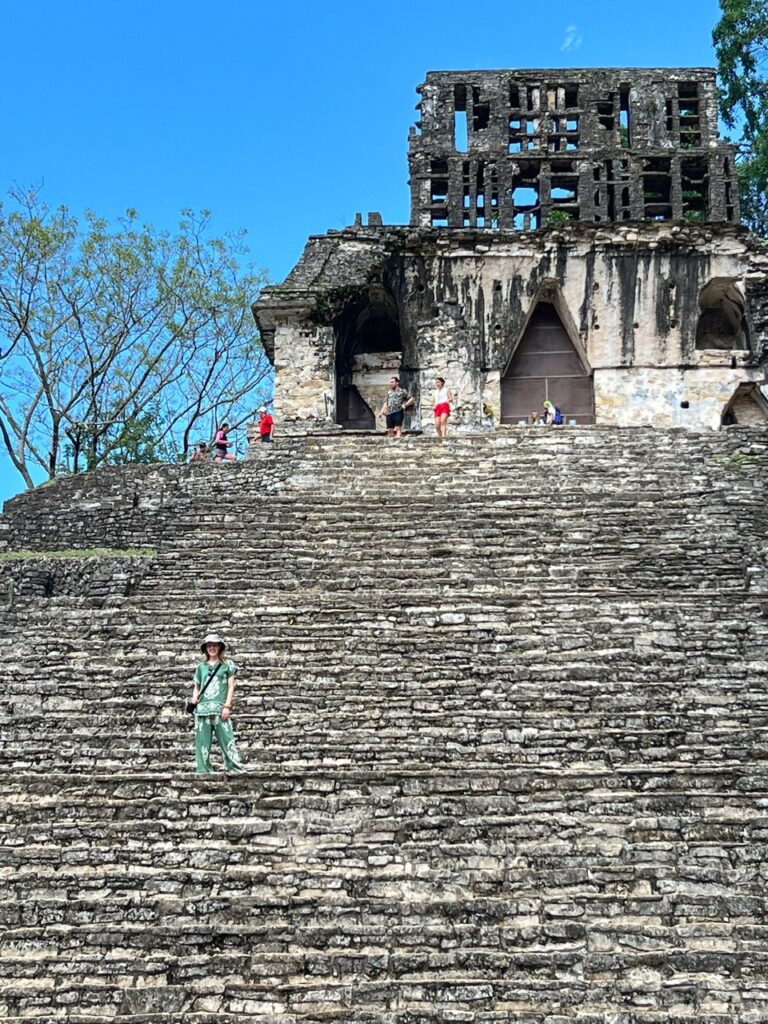
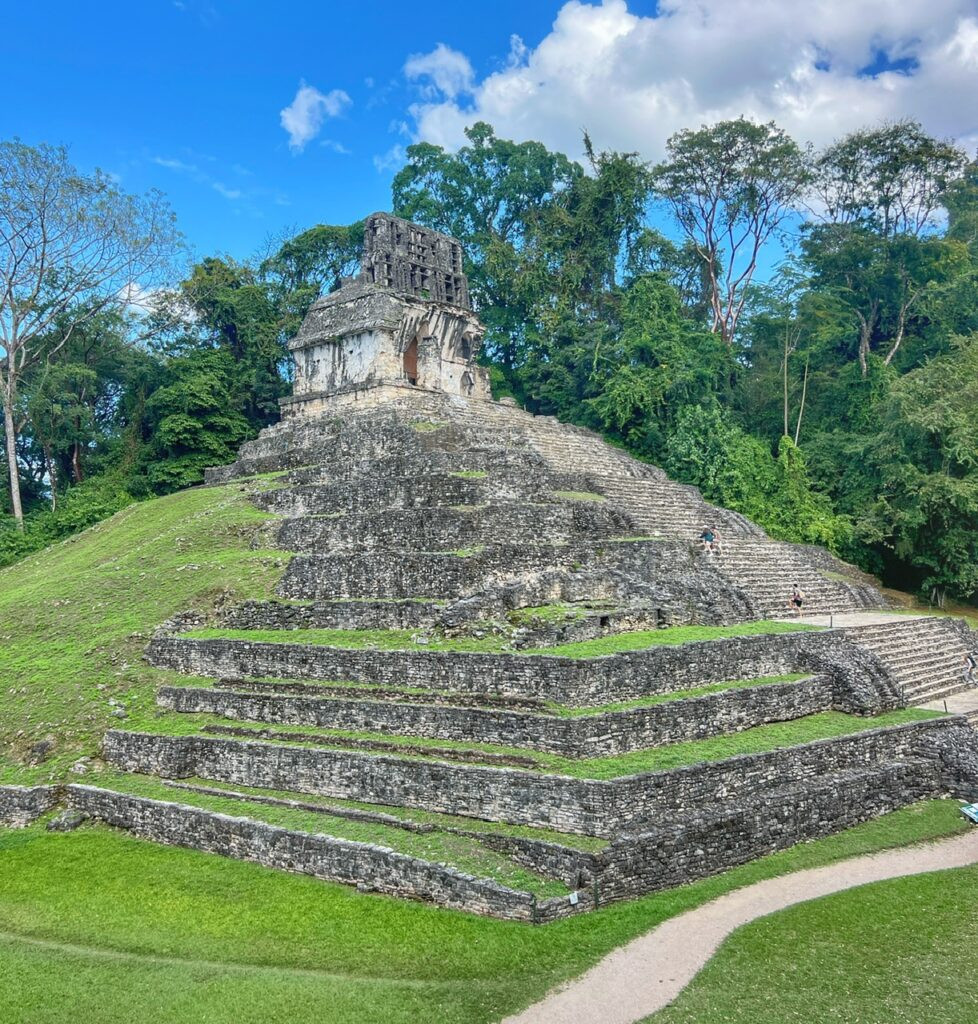
The Temple of the Cross is one of the newer temples that has been excavated since Greg’s last visit. Still, you can see only one side of it has been completed. Its purpose was largely religious and political. Pakal’s son built it to honor his father and to connect the royal family with the Maya gods and the creation story. It’s the tallest structure at the site you can currently scale. Uzbek Blossom is taking a break about halfway up.
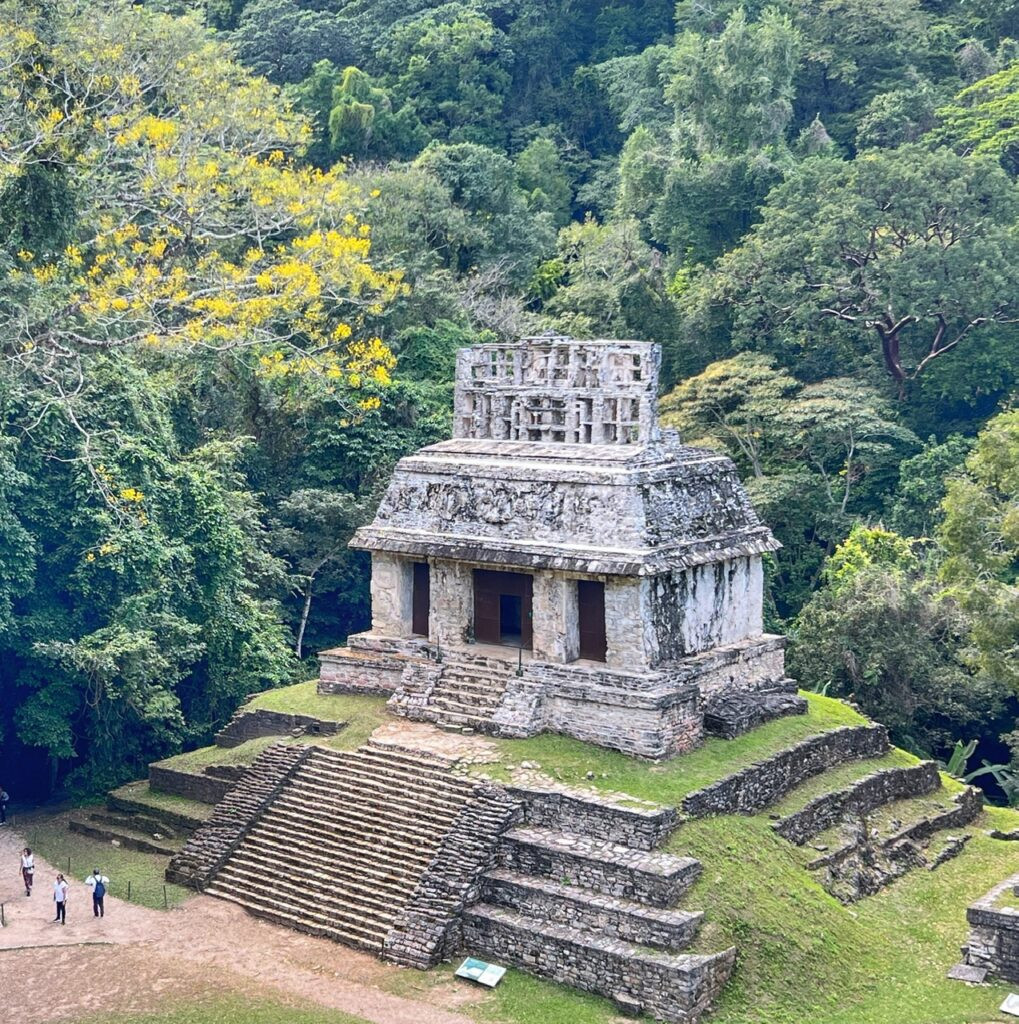

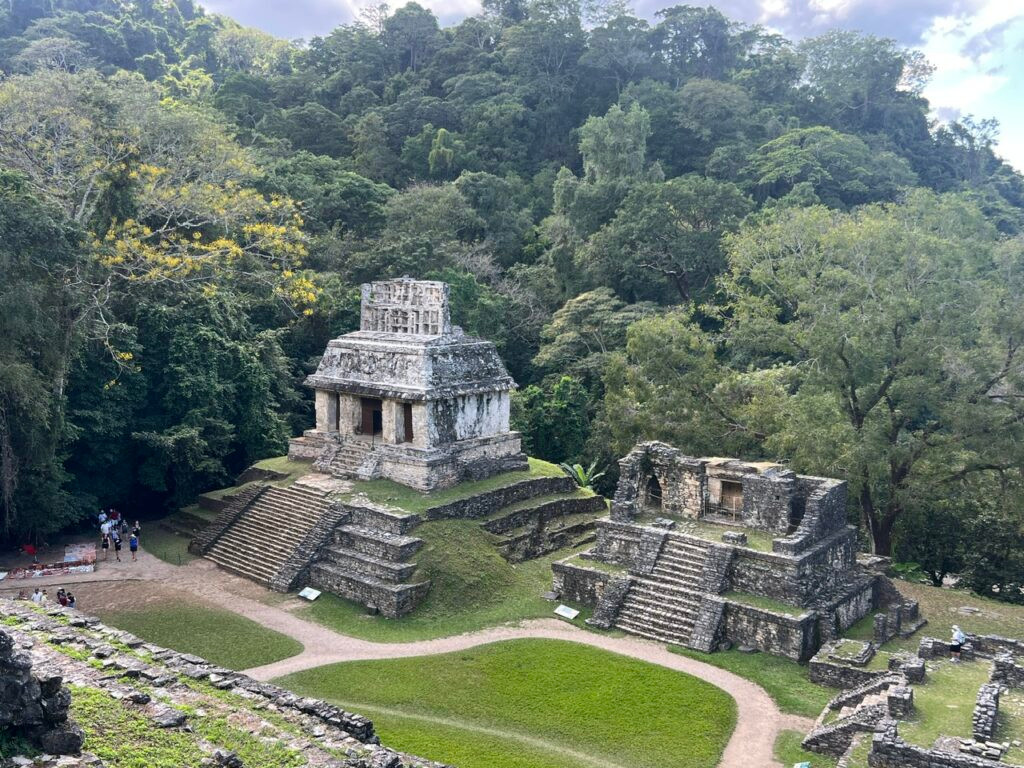
Stage right of the Temple of the Cross is Temple of the Sun, which, with a third temple represents the three major gods of Palenque and symbolize the Maya creation myth.
The nooks at the top of the Temple of the Sun in Palenque were likely used to hold statues or offerings related to the sun god, enhancing the temple’s ceremonial function. These architectural features contributed to the temple’s role in religious rituals and worship. (Maya Decipherment.com)
At the top of the Temple of the Cross, at the right-hand side of this shrine, “God L” (which seriously sounds like a religious rapper name), is represented smoking a tobacco pipe.
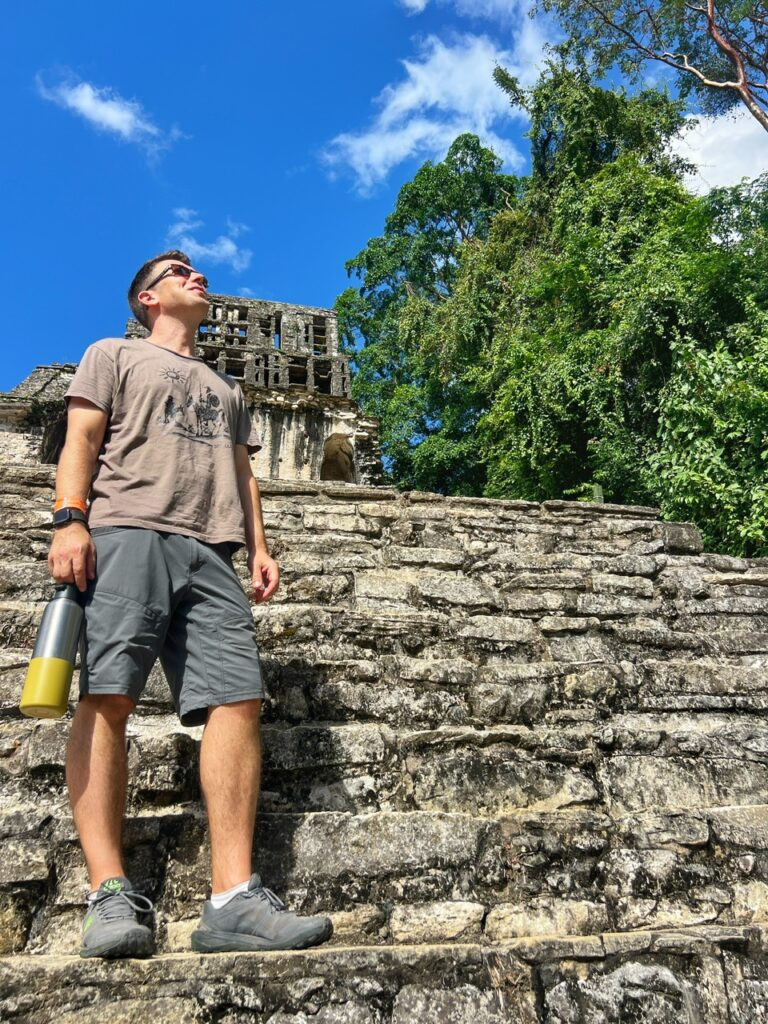
Greg taking a break on the way down. It’s hard to convey how much concentration you have to put into every precipitous and potentially skeleton shattering step. The Mayans were NOT ADA friendly!
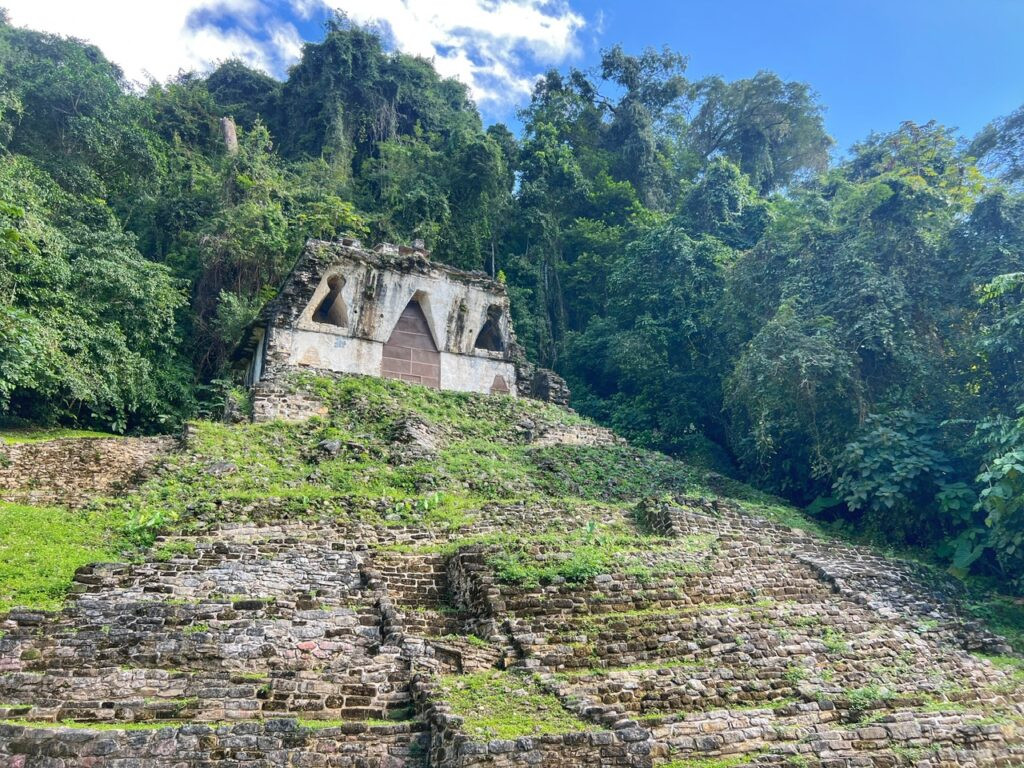
The final temple in the Mayan religious series is the “Temple of the Leafy Cross.” I personally would have coined it “Temple of the Key Hole” thanks to those nifty windows, but I don’t think key, or their holes, existed in those days.
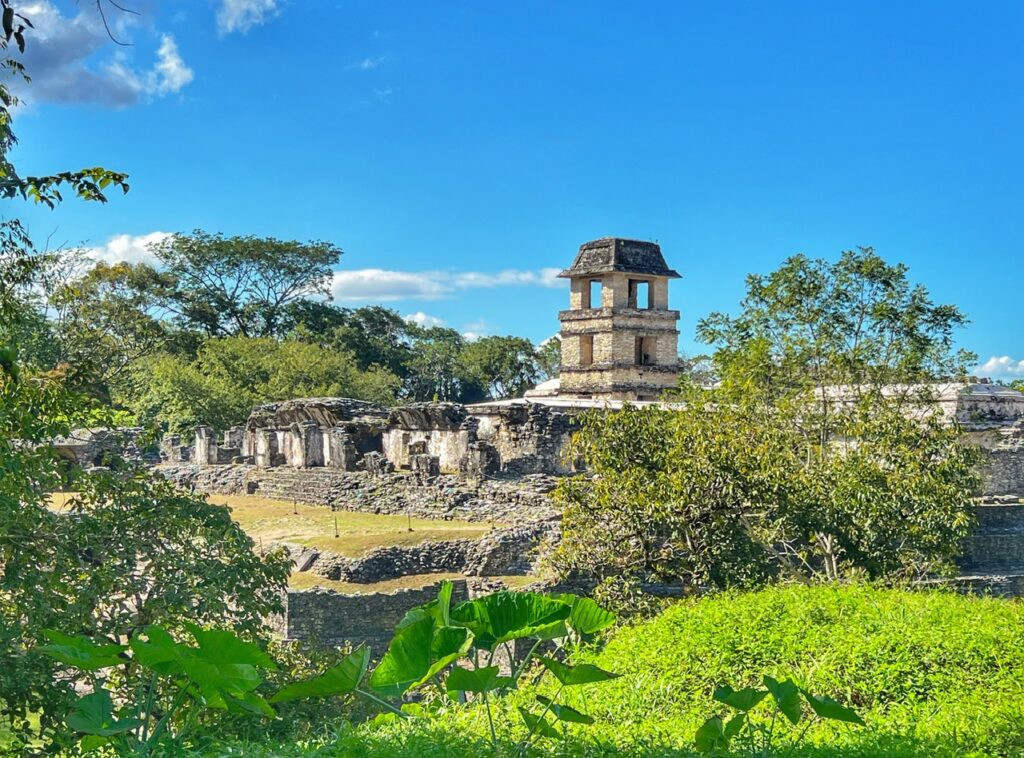
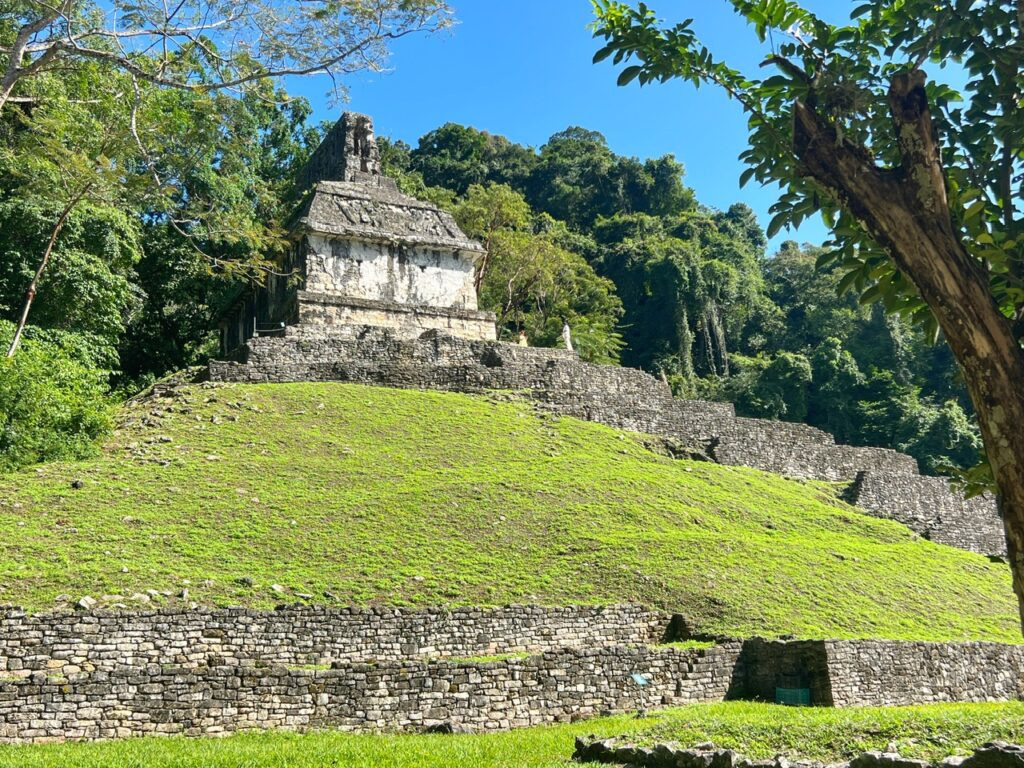
Another perspective of the palace and watch tower thing-a-ma-jiggy. Also, one of the uncovered slopes of Temple of the Cross. It’s easy how one would think it’s just a grassy knoll if they don’t know any better!
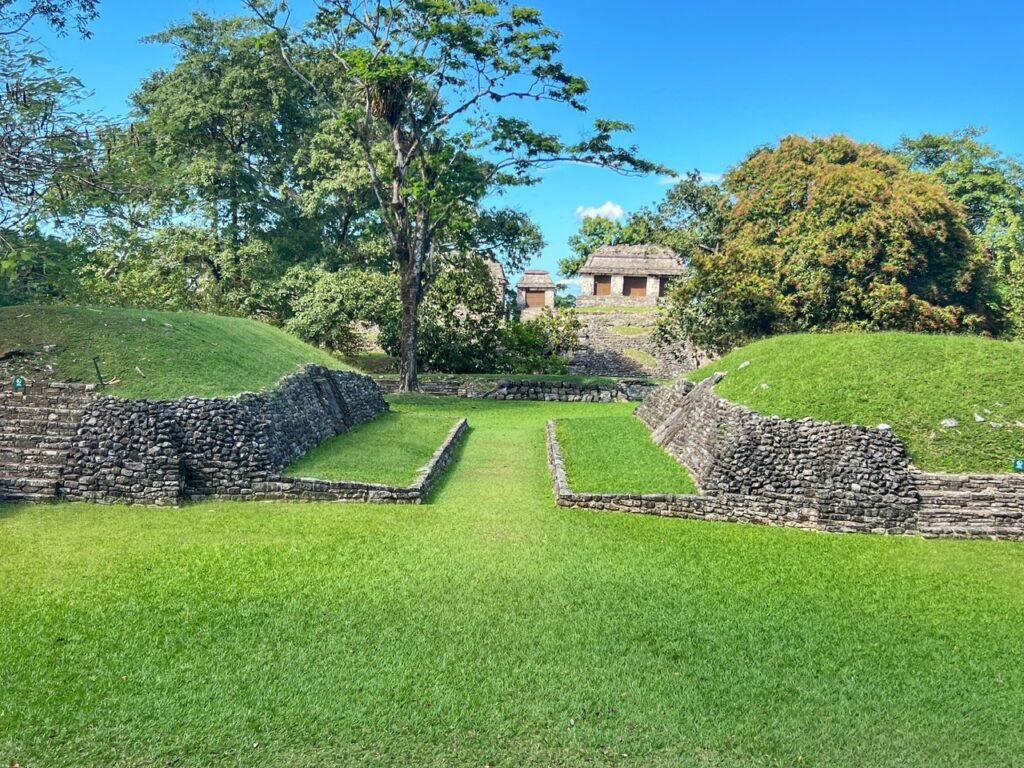
The “Ball Game” had a privileged place because it had a profound religious and symbolic meaning. Not much has changed in the world of sports today! The plaque said, “It was a representation of the everyday struggle between contrary forces, antagonist concepts and opposed natural events.”
Mmmm….k. The platform slope has large slabs that were probably sculpted with glyphs. The typical stone rings were not found, and therefore it is supposed that the rings used were made of wood, and the ball made of rubber.
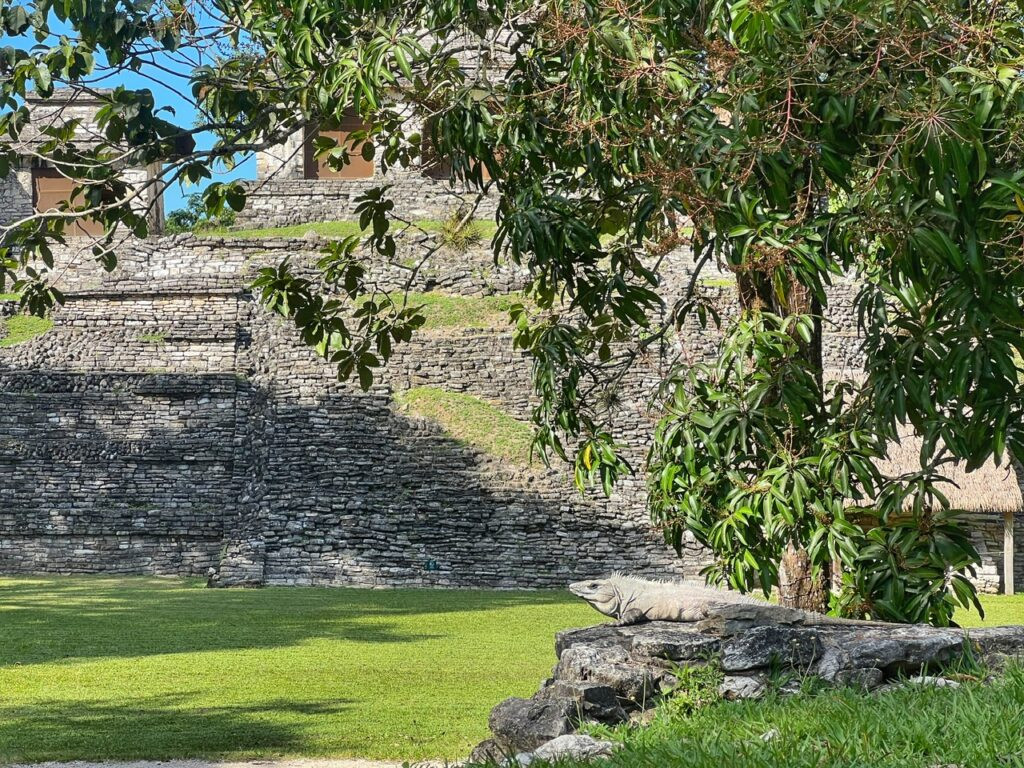
One of today’s inhabitants, Igor the Iguana, blends right in.
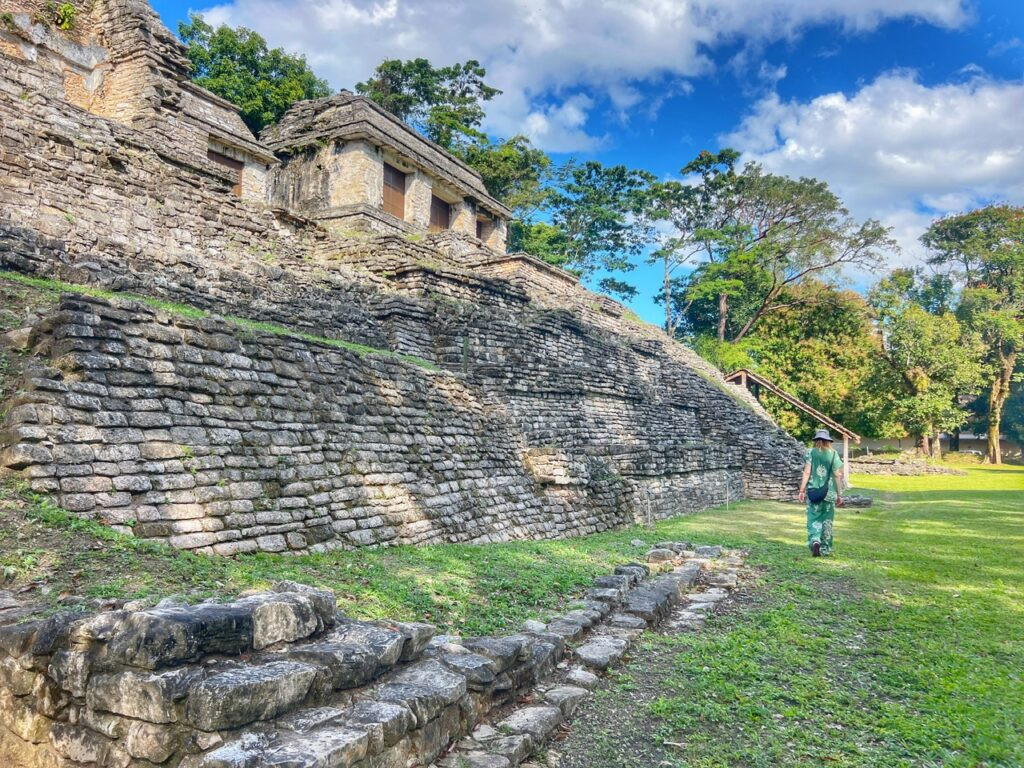
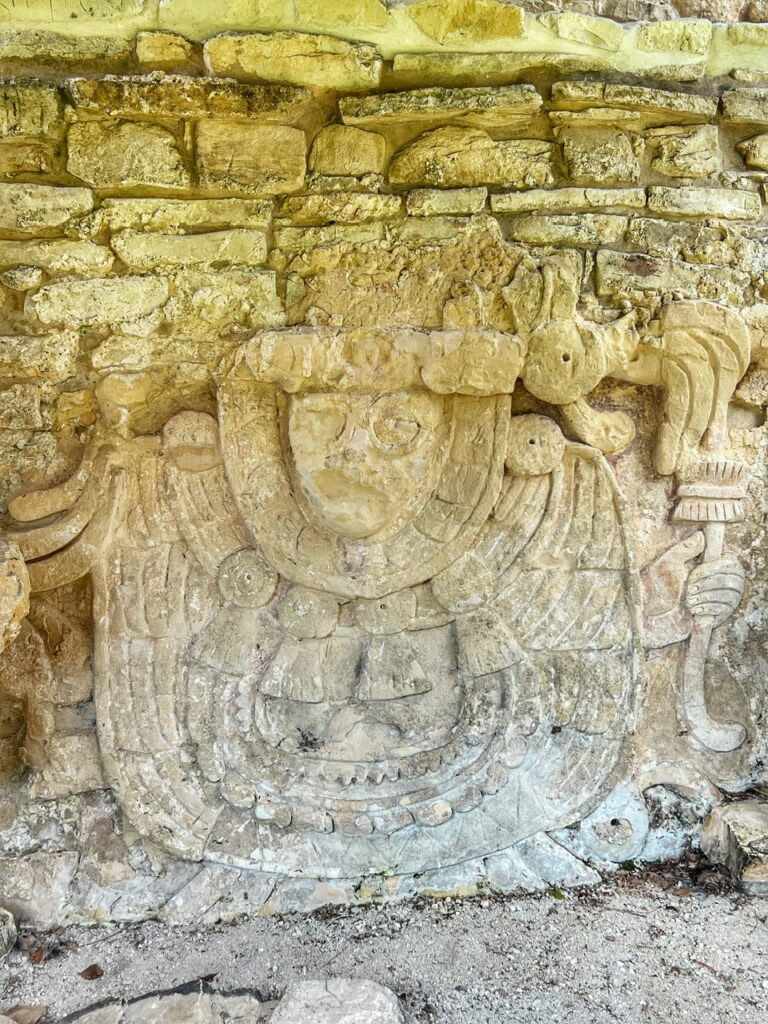
The “North Group”’of ruins doesn’t have a very original name. It consists of a large platform with five temples. These are found in slopes that denote that they were built in different moments. It is likely that these temples had been decorated with stucco reliefs in the pillars and friezes.
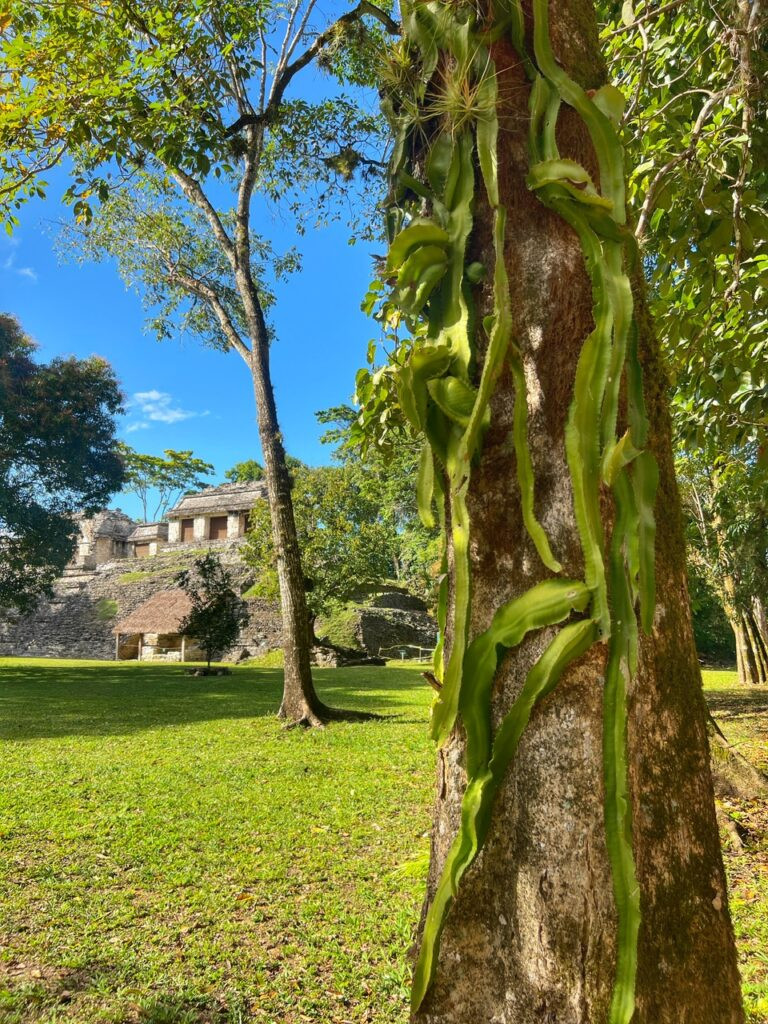
Check out this cacti vine worming its way up this tree!
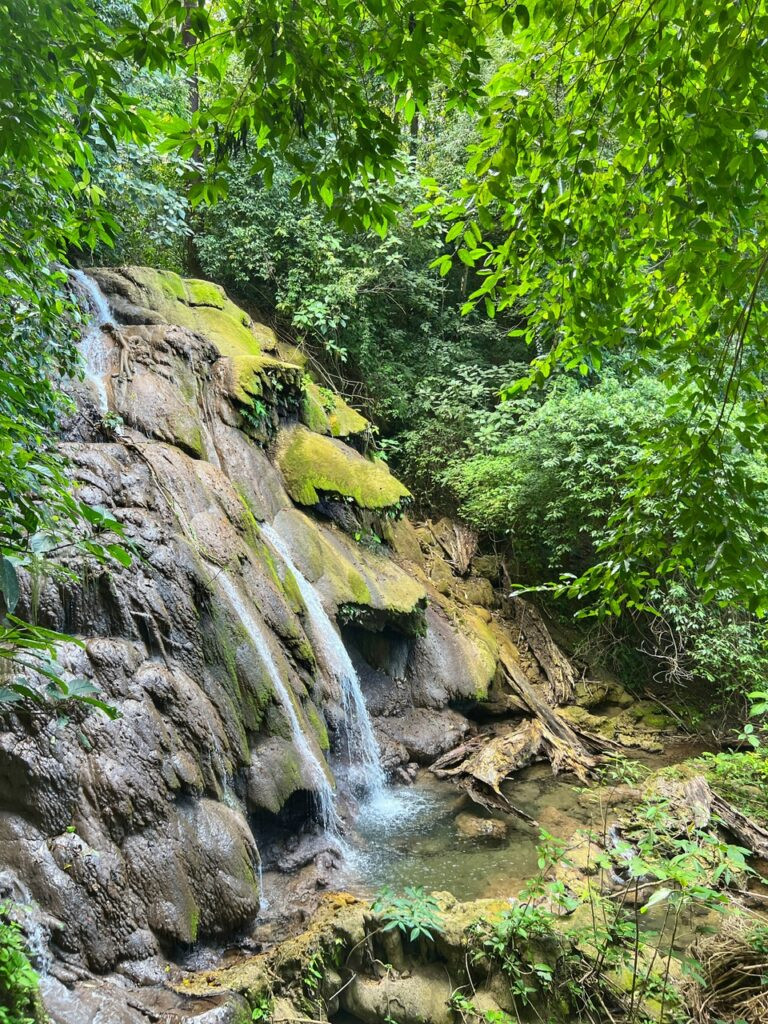
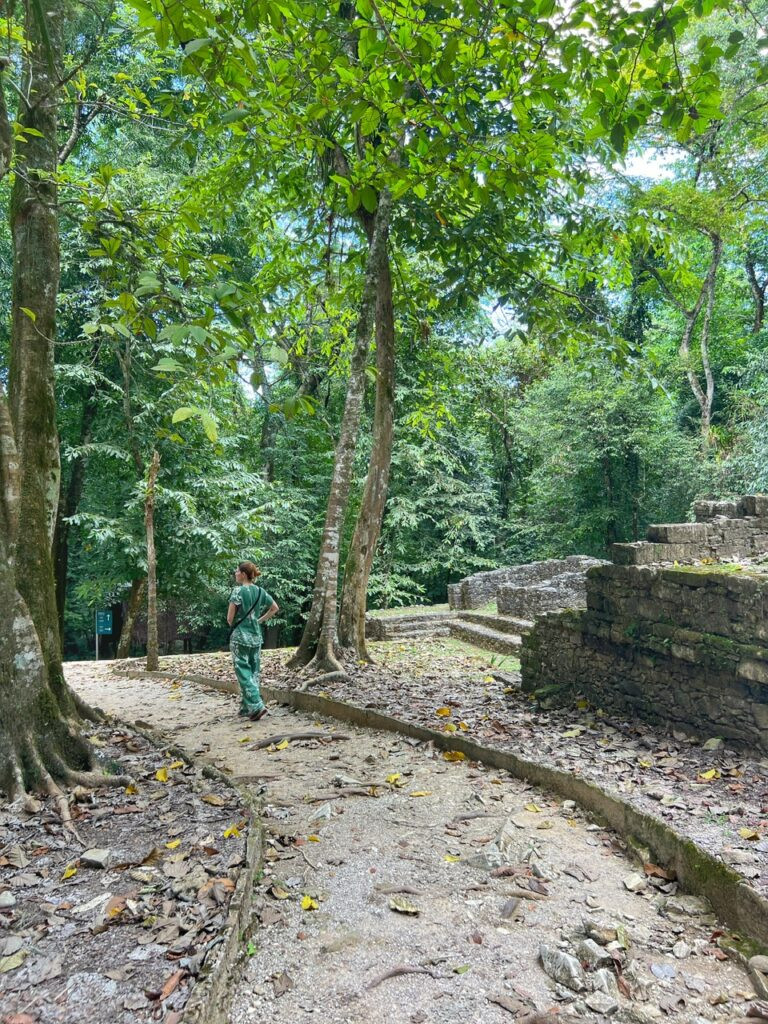
The last thing to do at Palenque is definitely not to be missed…taking the 20-minute trail OUT of the complex….completely immersed in the jungle, which includes waterfalls, and many more ruins…
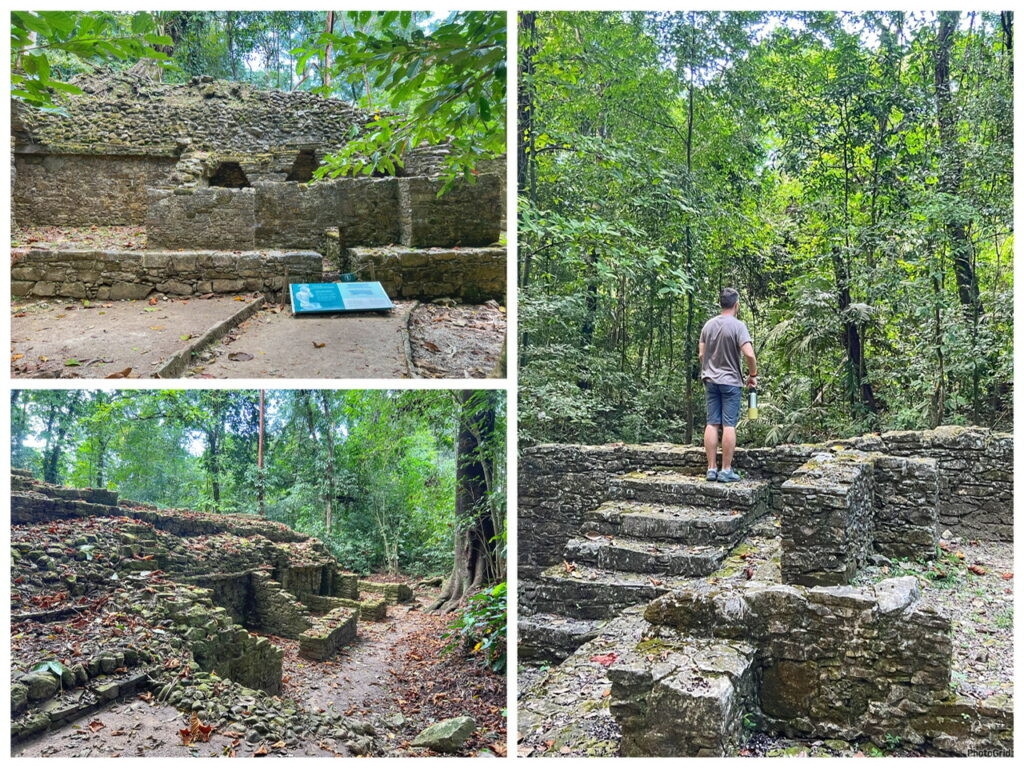
….including the “Steam Bath,” which seems a tad smothering in this already heated atmosphere. However, it was not used not for bathing, but for “purification rituals.”
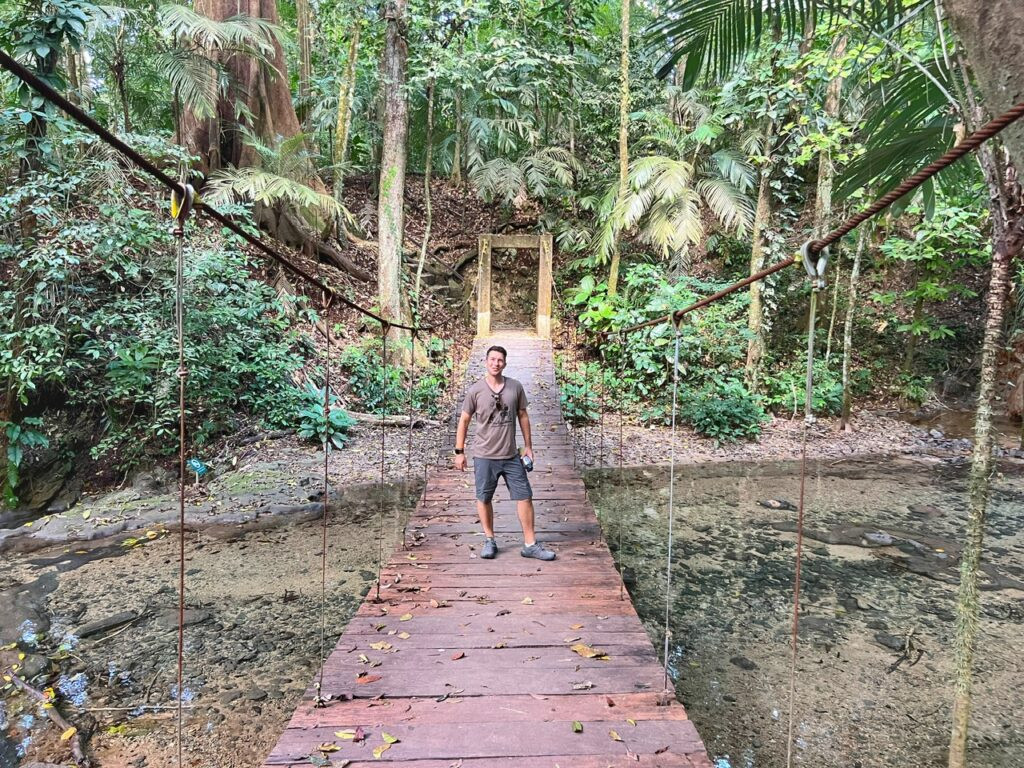
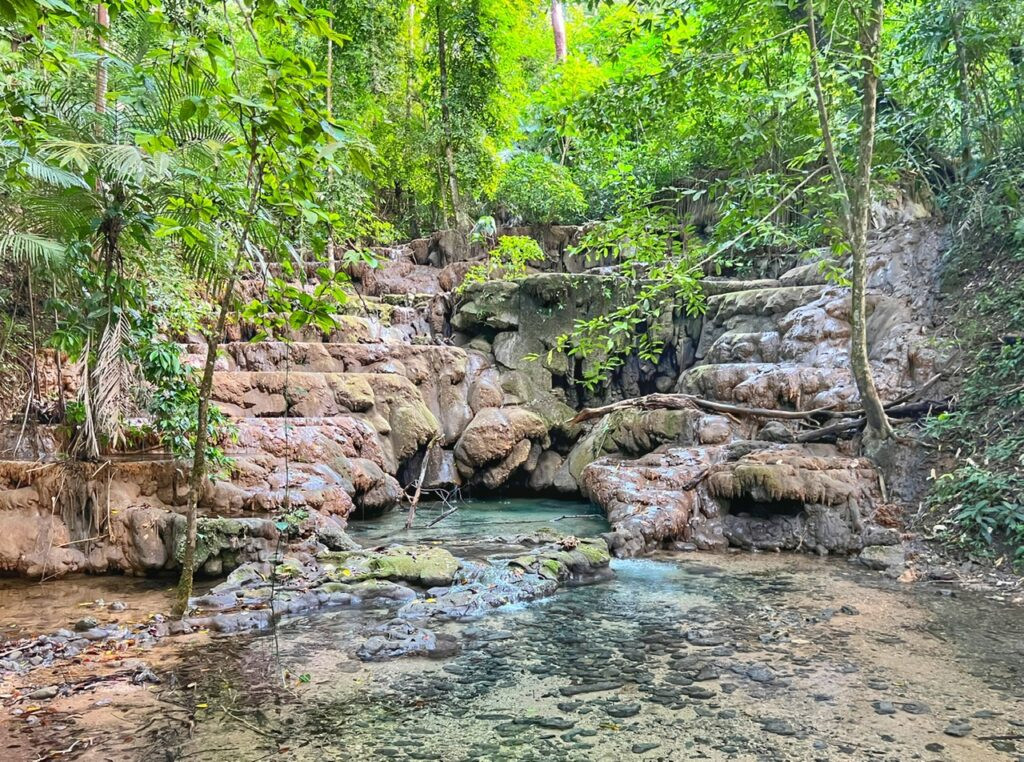
Travertine pools that looked so inviting in the heat, as well as a bouncy bridge that lacked man-eating crocodiles beneath, or a mean bald man coming to rip your heart out.
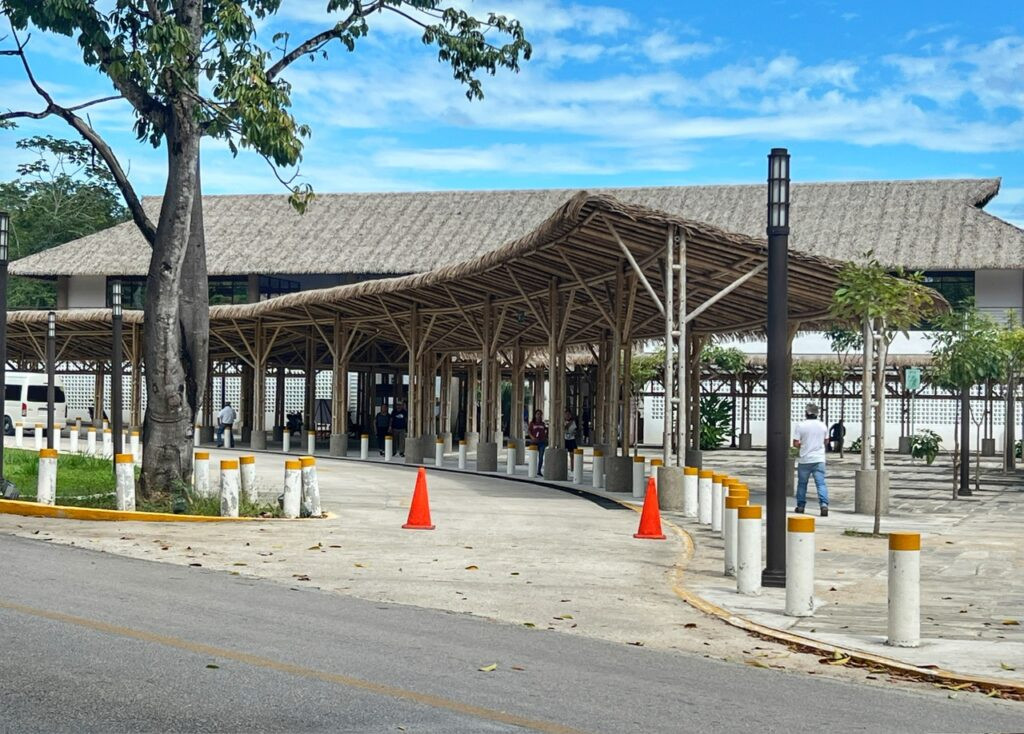
Logistics:
So, from a wallet-grubbing POV, Palenque has definitely enhanced their scheming tactics since Greg’s last visit.
Firstly, this is the welcome center where you’re required to get out of the little shuttle van that takes you to ruins that you already paid $25 pesos ($1.40/each) to get to.
You are then told you have to pay not one, but TWO entrance fees totaling about $25/person. One fee is supposedly for the national park, and the other for the ruins itself.
You are then asked if you want a very overpriced guide. No.
You are then told it’s a further 45-minute walk to the site so you better take their private transport of $60 pesos ($3.40/person).
It wouldn’t have been a 45-minute walk, for the record, but we were short on time, so we walked back out to the road to flag down another RUINAS van and pay $1.40/each…again.
The arrival was convoluted and really left a sour taste in our mouths. Fortunately, the ruins more than made up for it.
Immersing into the Jungle
Part of the Palenque experience (according to my resident expert husband) is to immerse yourself completely in the jungle of Southern Mexico. He only knows this because the first time he came at age 19, the only ATM in town was barren of pesos and he was forced to stay at an insanely overpriced luxury jungle resort for $70 where he could pay by credit card, which he only found thanks to his trusty “Lonely Planet” bible.
Those were the days….
27 years later, we spent almost the same amount of money ($60) for a jungle bungalow in a place that was a quite less posh, but with an equally immersive experience. And there were plenty of ATM’s to be had….a lot has been booming in the Pueblo Magic of Palenque, especially thanks to the opening of the new train which now links it to the Yucatan.
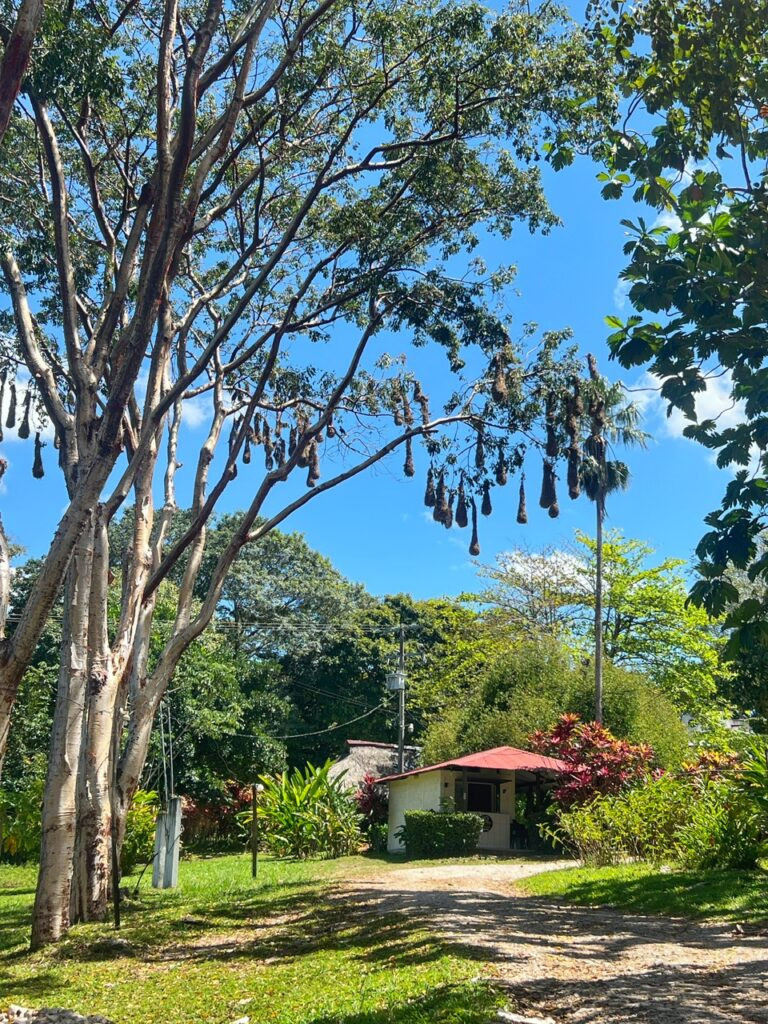
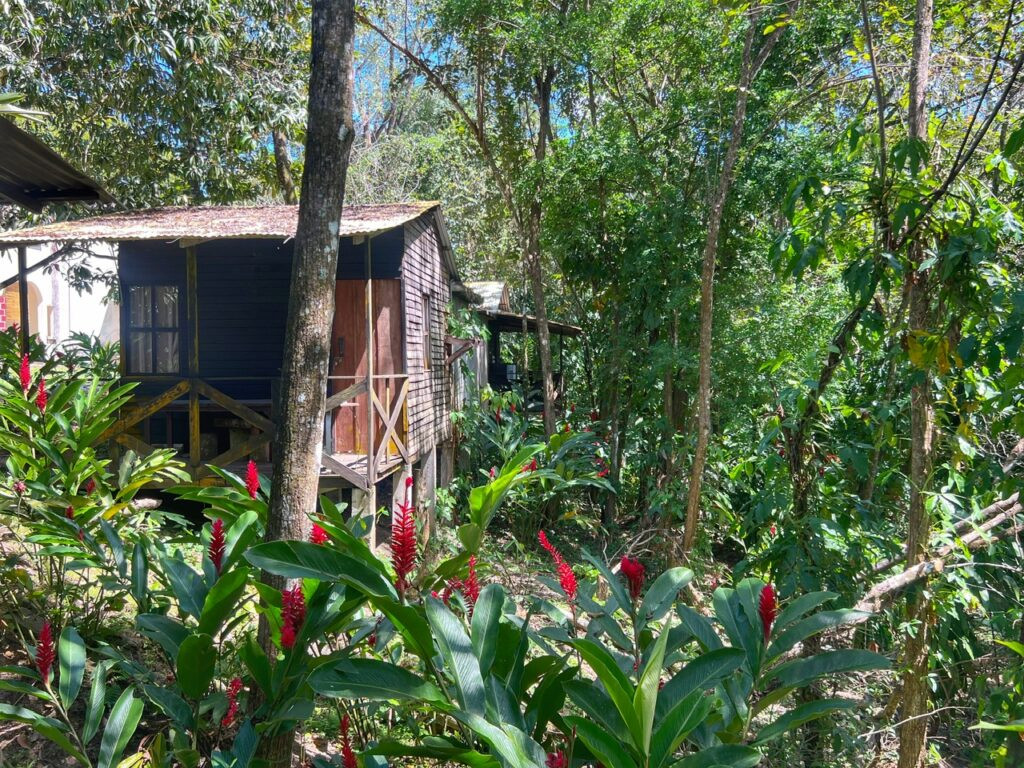
We stayed at Quiloma Eco Hotel, which was about a third of way down the road between Palenque town, and the ruins. On the property, was a colossal tree housing an extensive colony of Montezuma Oropendolas, which ornament their home with distinctive pendulum-shaped nests that hang 2-6 feet (60-180 cm) from the branches.
Apparently these nests take two weeks to construct and are built entirely by the females, woven with fibers, vines, palm strands and other things they picked up at the Jungle Depot.
Meanwhile, the males flit around puffing up their chests, spreading their sexy yellow tails and perfecting robotic bird calls which sounds like a sci-fi sound effect. We confirmed, it’s one of the strangest bird calls we’ve ever heard.
The bungalow we stayed in was $60 and completely encompassed by the jungle.
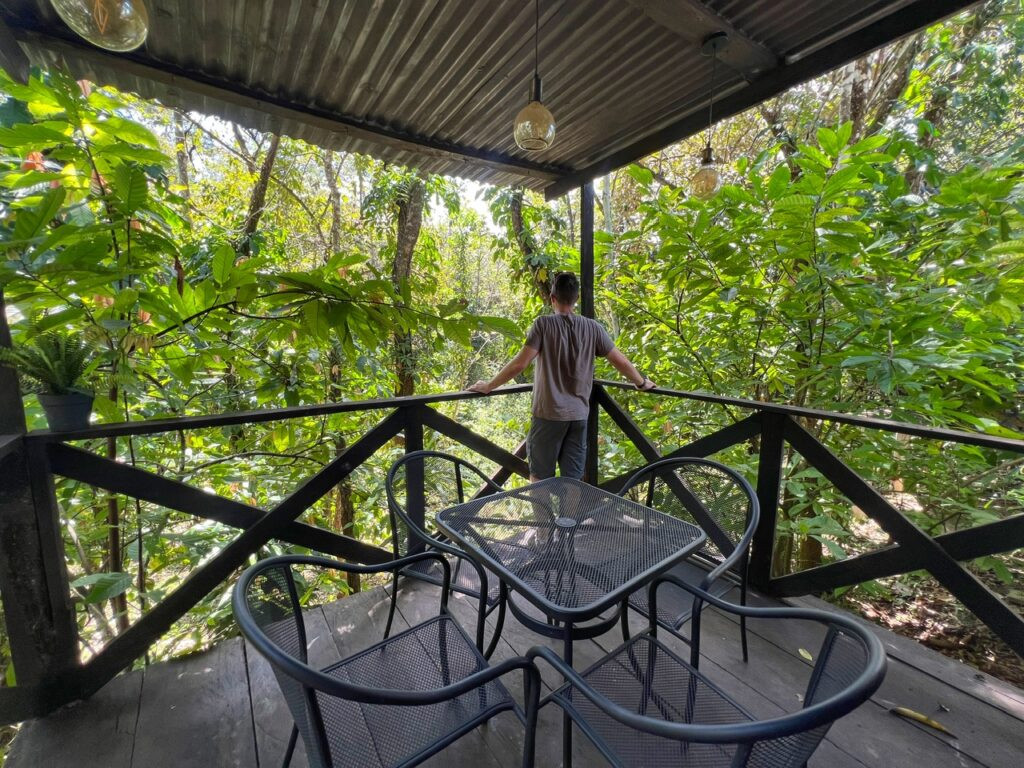
And Greg was right…the sounds emitting from it were an absolute cacophony….we witnessed the chortling of bright red parrots partners, the shuffling of capybara snouts, the chirping of geckos, the humming of crickets and the consistent hoot of the howler monkeys, including an harrowing wake-up call at about 3 am when they got alarmingly close to where we were sleeping.
I made the comment she must be making such a racket at this hour because she’s in perimenopause, until Greg informed me that only the males howl like that. Figures. He must have stubbed his monkey toe on a branch.


The inside of our bungalow was dark wood and even had A/C. We didn’t really need it other than during the middle of the day when we arrived. Other than this, it was pleasantly comfortable with just a tightly tucked sheet, which surprisingly protected us from any mosquito snacking. The private bathroom was adequate featuring a suicide shower and a bar of soap.


One of the Montezuma Oropendola nests up close and personal. This was the best shot of them I could get.
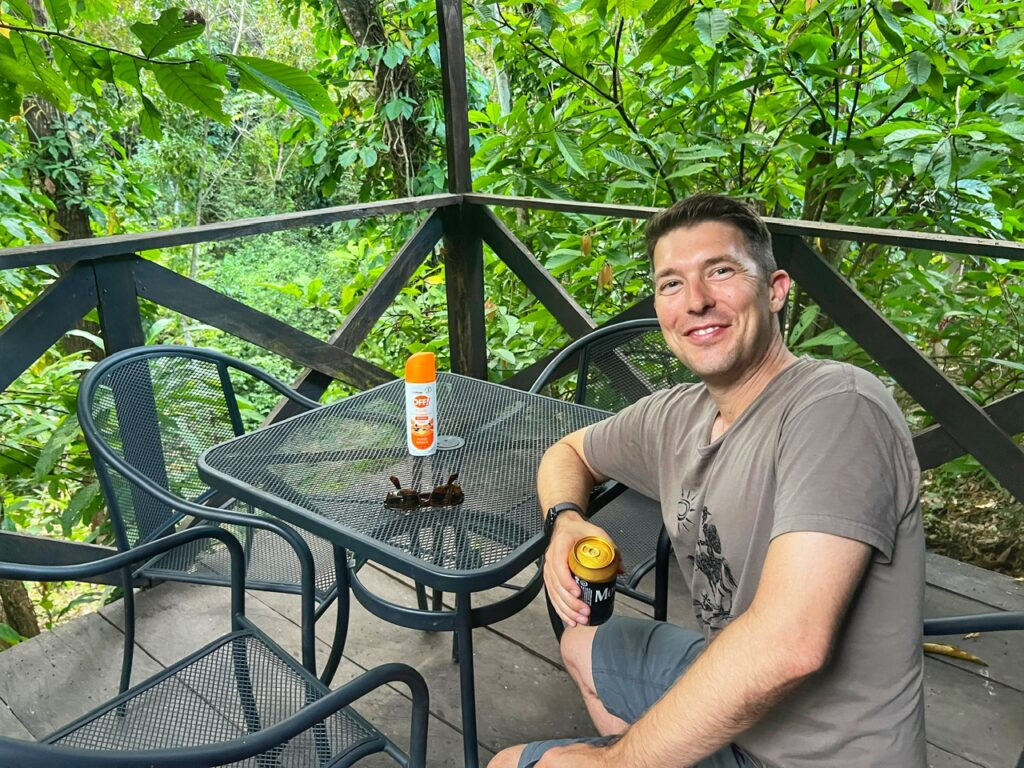
Of course, our favorite part was enjoying a beer on our terrace after a long wander through the ruins.
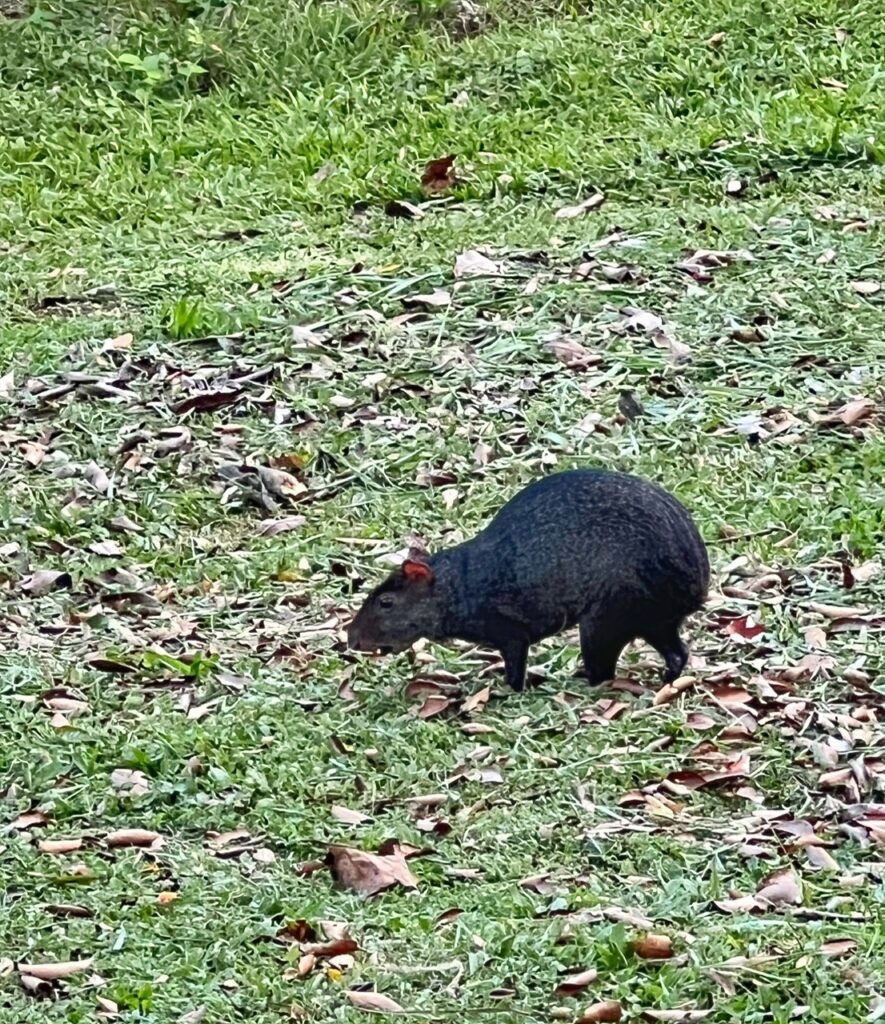
Capybaras…which Japan has now made trendy.
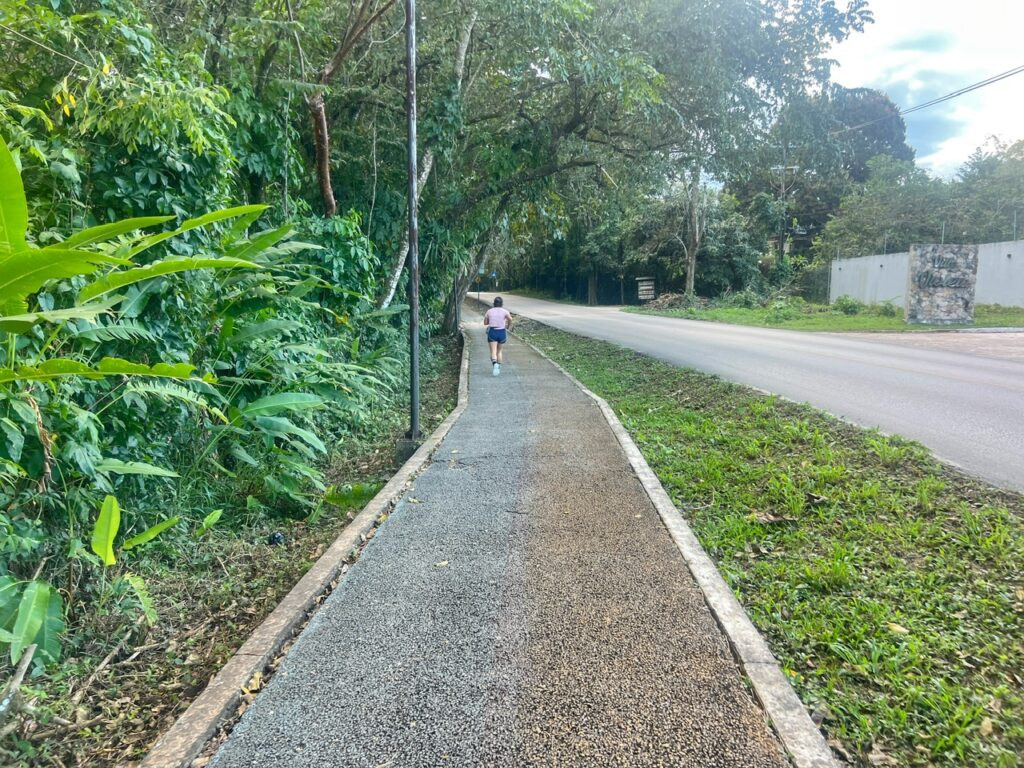
The lengthy and pleasant 9k path that runs between the town and the ruins. Fortunately, there is also a van that says “RUINAS” on the front that chugs up and down the road, but costs foreigners 25 pesos ($1.40) a ride no matter how far you go.


For now, we’ll head the other direction to Palenque…town. This is the Cabeza Maya statue near the ADO bus station, where we disembarked. Apparently cities in Southern Mexico often place large indigenous-themed sculptures at the main entrances to the town which tells visitors they’ve arrived to a historic Mayan region.
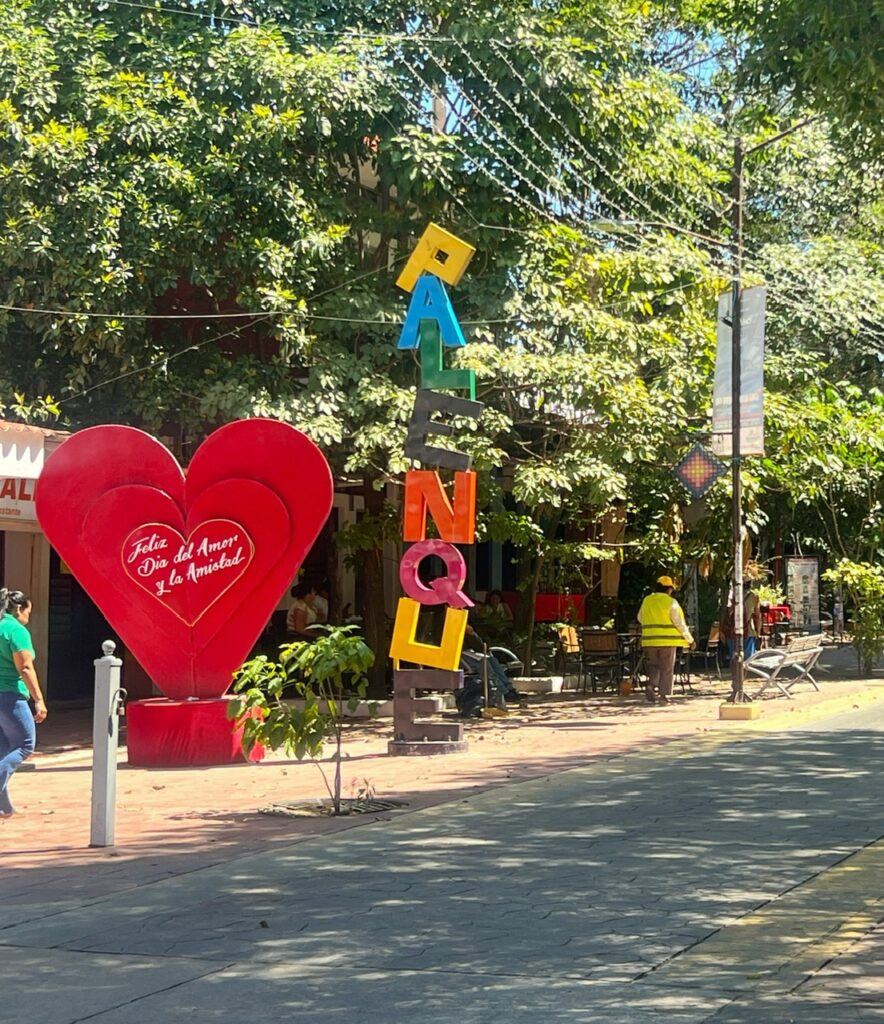
Walking into the town, it’s quite evident this is a tourist town unlike San Cristobal or Villahermosa. Of course, this means it includes colorful namesake signage in the Central Park, and lots of mundane souvenirs.
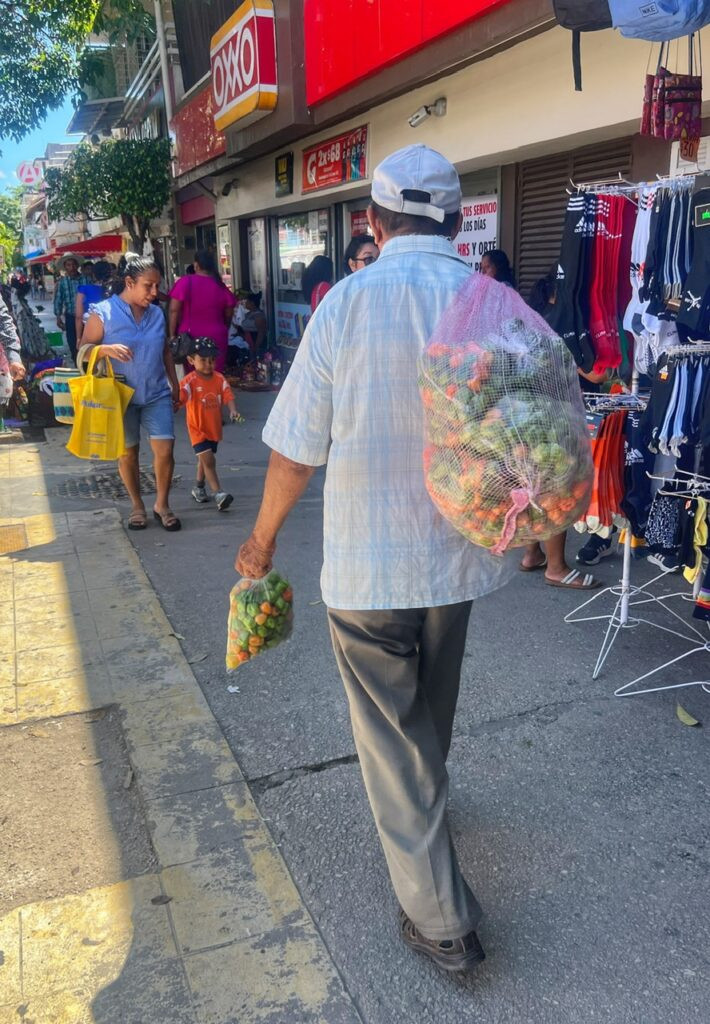
Of course, this guy is selling sacks of habaneros if you want something a little more spicy.
They’ve upended the sign and added hearts. They must be taking lessons from Vietnam’s tourist bureau.


We found our way to Cocina Economica Don Jorge for lunch, where we were pleased to see they were still prepped for COVID with giant bottles of sanitizer on the tables.
While there, I had my first heaping plate of Chicken Mole Enchiladas on this visit to Mexico. OMG. In case you think Mexican food is only hard shell tacos and wet burritos, chicken mole can be one of the most satisfying and delightful dishes of all.
Mole sauce, the star of many Mexican traditional dishes, is made from a whopping 20-30 ingredients including things like dried chiles, tomatoes, garlic, onion, nuts or seeds, spices like cinnamon, clove, cumin and sometimes a small amount of chocolate.
Greg had two types of tamales….Chipilin and Chiapaneco. Chipilin is made with the herb of this name, which is a leafy green native to Central America. The leaves have a slightly earthy, mild flavor and are often mixed into the corn masa.
Chiapanecos are named after the state of Chiapas and wrapped in banana leaves rather than corn husks. They contain a combination of masa, chili sauce, meats, vegetables and raisins, giving them a richer slightly sweet and savory flavor compared to simpler tamales. Our two meals were $11 with no drinks.
For dinner, we found a smoothie shop across the street from our hotel for some licuados, which were about $8 for two.

A central administrative building of Palenque. We thought this is where you catch the Ruinas bus, but it’s actually three blocks west of here, a local informed us with careful precision.

On our way back to San Cristobal it was a 9-hour travel day, so in order to dodge any more greasy tacos and complete garbage found at the “food” shops which seem to be taking notes from the USA circa 1990…


…we we found ourselves gravitating to the Subway sandwich shop in Villahermosa, which was $10 for two 6-inch subs. A creamy paleta ice cream pop was $2.25. We remember these being about $1 in 2021. Yes, again we’re realizing how expensive Mexico has gotten.

This includes the bathrooms which were $.50 inside all the stations. For the record, the stations seem to be more expensive than most places.


