
Exploring Szeged
For our next day trip from Subotica, we hopped aboard a Choo-Choo to take us across the border into Hungary, an incredible country we haven’t set foot in since 2018. Szeged is not only the third largest city in Hungary, but the sunniest, making it one of the world’s most famous paprika producing hubs. In addition to strapping on a bib for a paprika-laden meal, we loved checking out the Hungarian Art Nouveau architecture, as we had been in Vojvodina (Northern Serbia), strolling the riverside park, and soaking in a thermal bath…because it would be a real travesty to visit Hungary without it….


One of the many pedestrian thoroughfares of the city. We didn’t find out the history of the tower in the background but it looks bizarrely out of place.
Inspired by the Venetian Bridge of the same name, The Bridge of Sighs connects City Hall with an adjacent municipal building which allowed Emperor Franz Josef the privilege of moving between them without having to take any selfies with fans. Or were they fans? Unlike its Venetian counterpart, the name here is linked to a local legend…people “sighed” as they went to pay their taxes. (Local guide/Google).

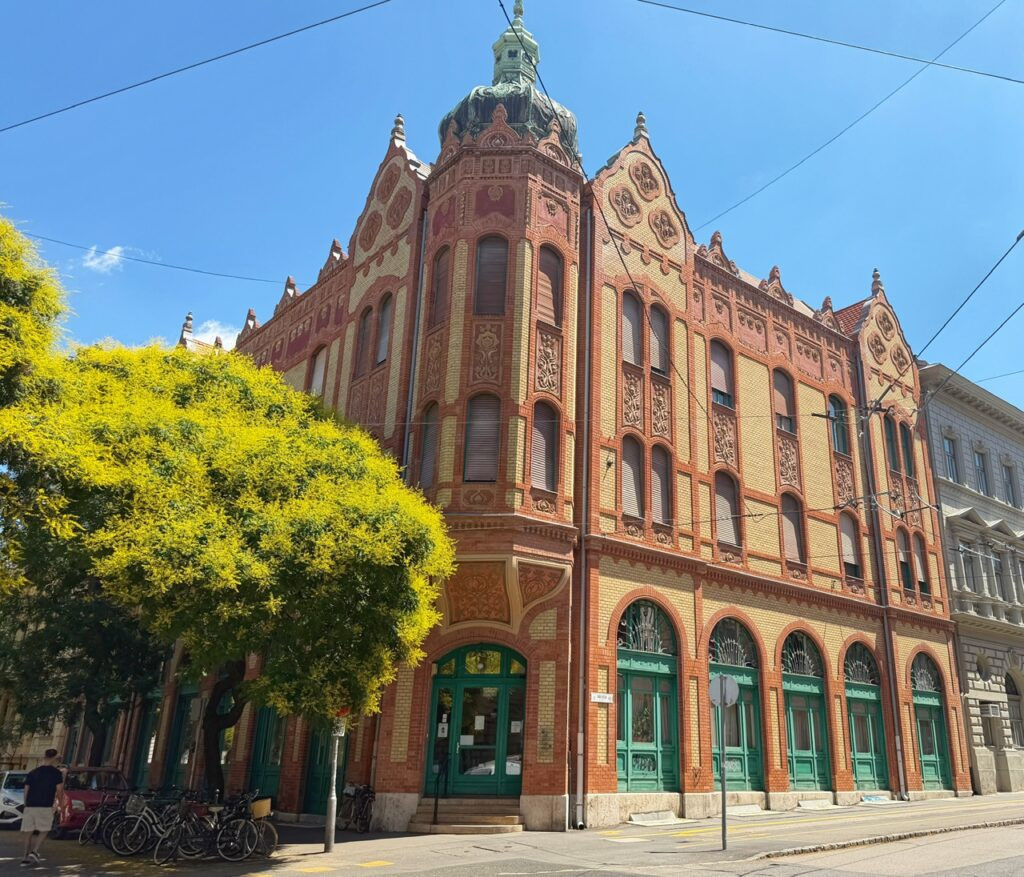
Despite it being called The Deutsch* Palace, the facade is all Hungarian Art Nouveau. Built between 1900 and 1902 with colorful Hungarian folk art accents, this architectural gem was apparently quite avant-garde for its time. (*Deutsch was actually the last name of the creators.) It really didn’t matter where you wandered, we were bound to run into something camera raising.
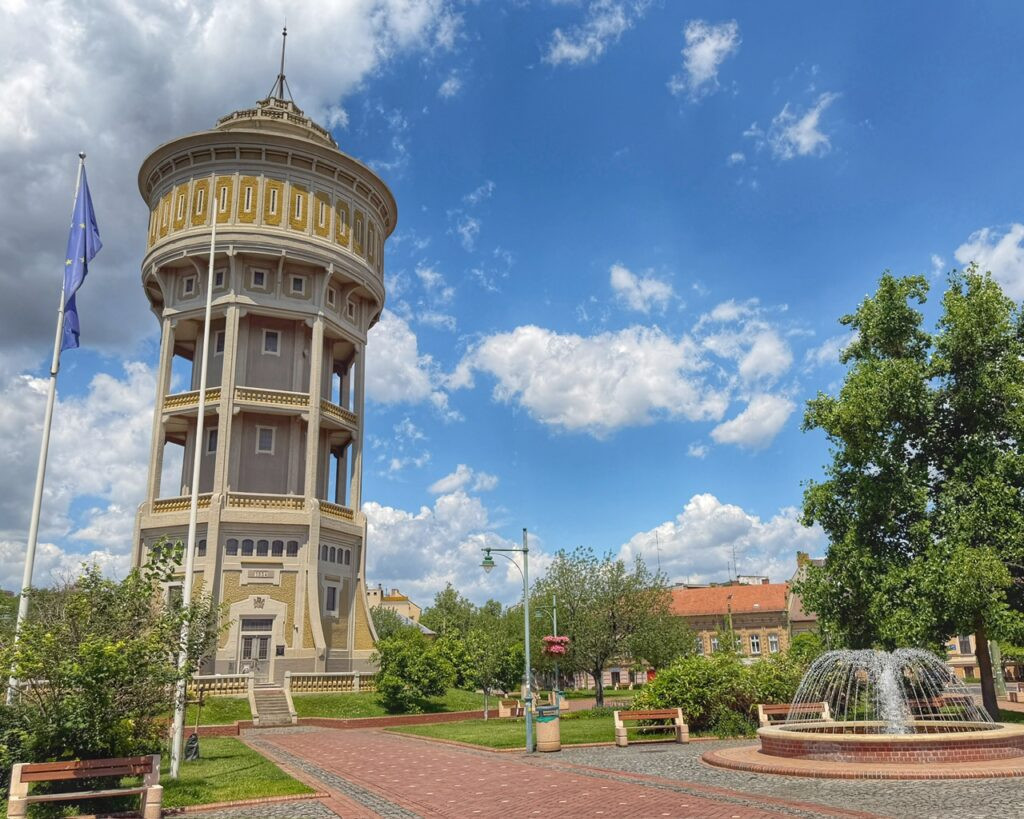
Not everywhere can pull off making a concrete water tower look sexy, but designer Szilard Zielinski made it happen in 1904. Unfortunately it was closed for climbers when we visited.

Backing up a bit, the journey to Szeged from Subotica is worth mentioning. It cost $24 round trip for both of us, or $6/ticket for the 1.5 hour train ride.
Because we were crossing the border from Serbia into Hungary, we reentered Schengen so it was interesting to see the process of how they would track our movement. When we arrived at the border, the train paused about 20 minutes and four officers, two from each country efficiently scooted down the aisles. The Serbian ones simply stamped and scanned us in and out, while the Hungarians one-upped them with passport scans, fingerprinting, facial recognition scans, and smiles. No more stamping in and out of Schengen required!


Welcome to Magyarország! (Aka Hungary) Magyar means Hungarian people and Ország means country. Thus, “Land of the Hungarians.” Looks like a mouthful of dried paprika to us. It could also be called “Land of Spectacular Light Fixtures.”

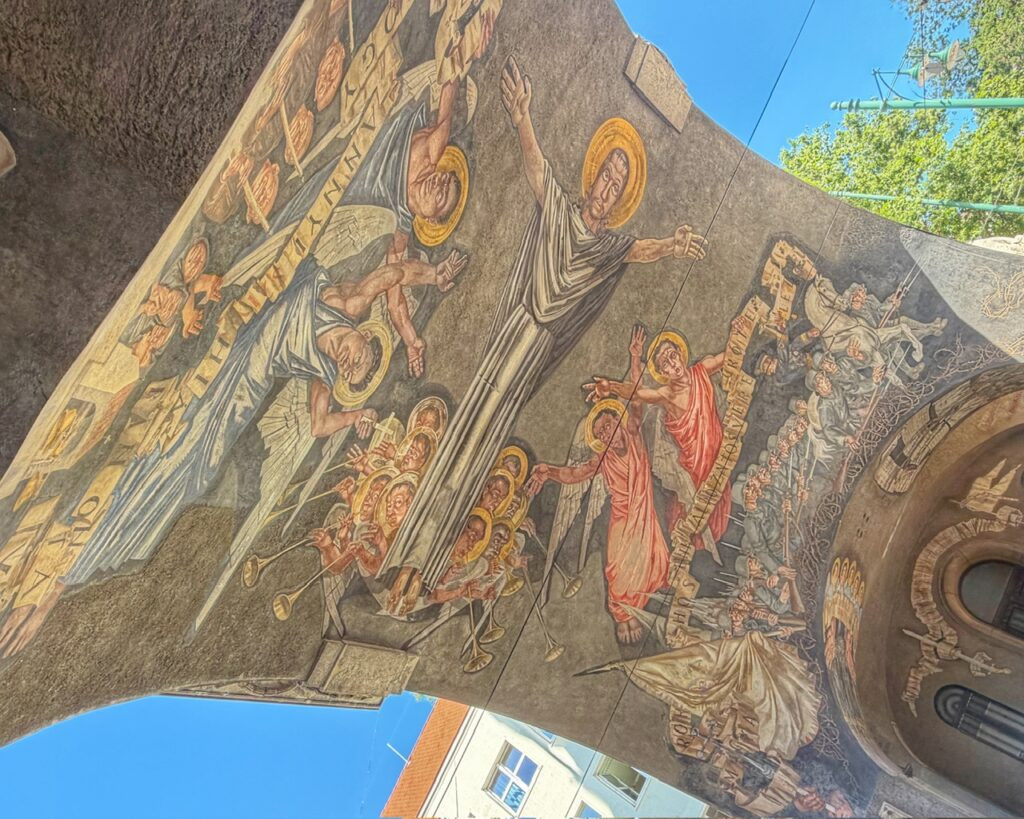
As we made our way from the train station to the center, we passed under the “Heroes Gate,” a neoclassical work of art built in 1936 which honors 12,000 soldiers from Szeged who lost their lives in the First World War. It was tough to get a good picture of, but the frescoes, especially in this unlikely place, were really remarkable.

After this, we wandered into Dom Square to check out the cathedral which we document separately below. Throughout the morning, we ran into lots of school groups who seemed to be on field trips. This one was playing a fun, interactive game to try and win a mini honey.

Next we saw the distinctive Reök Palace, an Art Nouveau masterpiece which felt more Gaudi to us than anything we’d seen previously.


It’s now an arts museum, which holds a cute little cafe at the foot of it…

….which was well worth a pause to gawk at the inside.
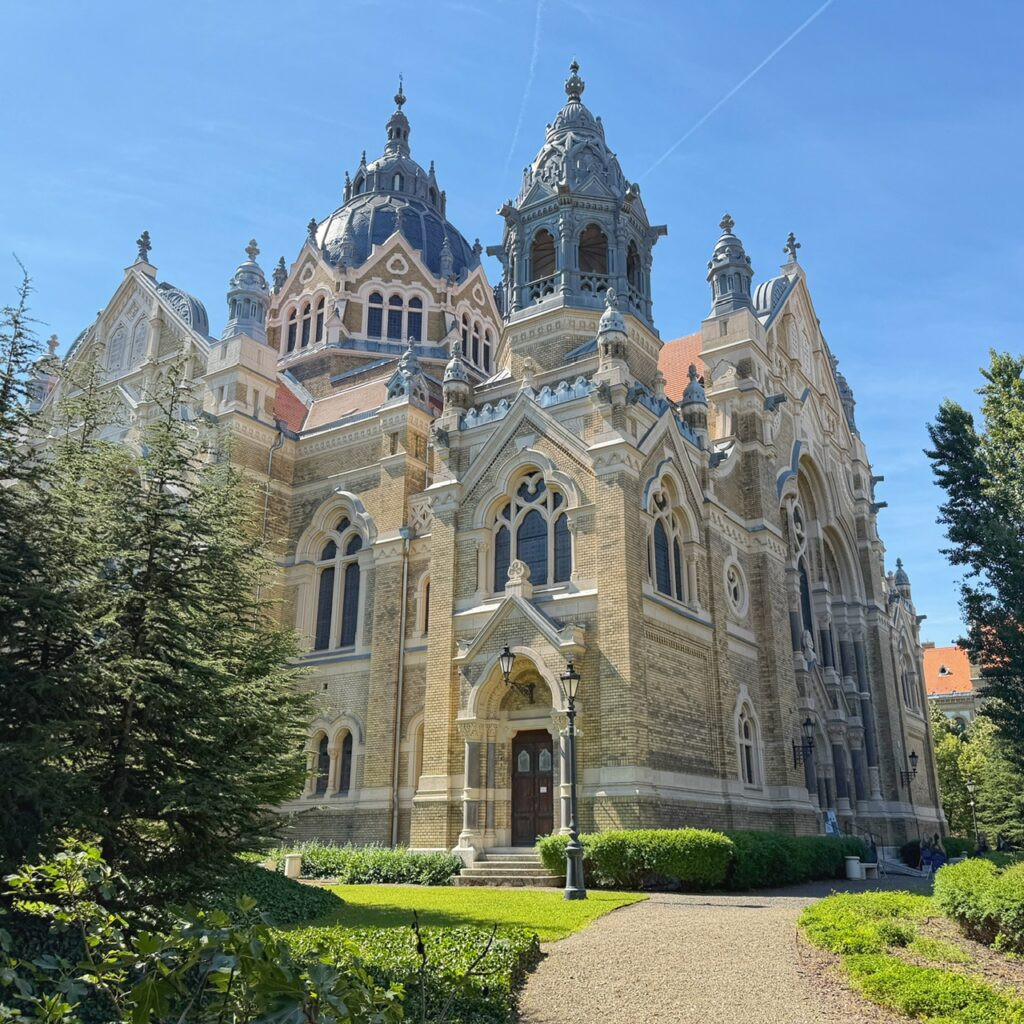
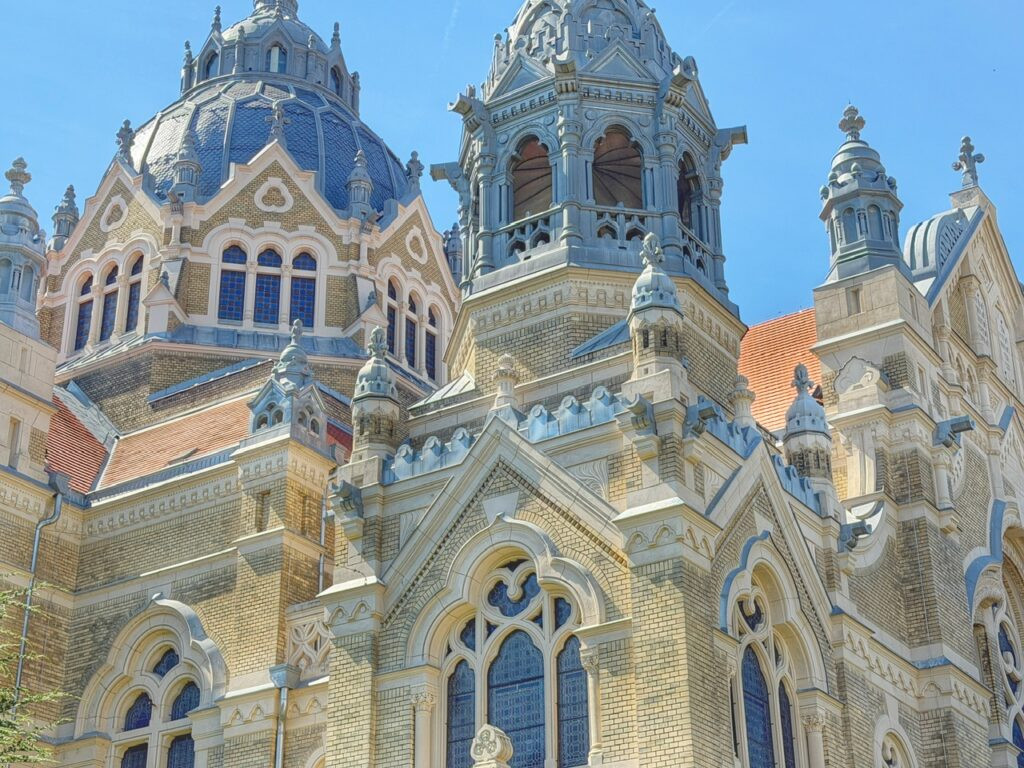
The New Synagogue of Szeged was built between 1900-1903 and from the outside is impressively as striking as the one in Subotica, though it cost $6/ticket more to enter. We opted out for this reason, and more so, due to time. The pictures of the cerulean blue sky dome do look magnificent, however.

We wanted to see other sides of the city including this fun and folksy dress (with dudes dancing on it.)


Thank you angelic lion; we’d love some of your backwash!
Also, on the way to Szeged there were two tween girls babbling in Serbian. All we understood was when they started chanting, “Starbucks! Starbucks! Starbucks!” Well, here it is, though it’s beyond us why anyone would choose to go there over all the cute hometown cafes. (We’ll give the foreign tweens a pass though…🤣.)

We chose a bakery instead for our mid-morning treat where Greg choked down a pile of wafer-style cookies layered in like chocolate lasagna and I had a pillow of apple-cinnamony goodness.

The Hungarian days of the week. Looks like gibberish. Sounds like Martian. What a bizarre language…😅
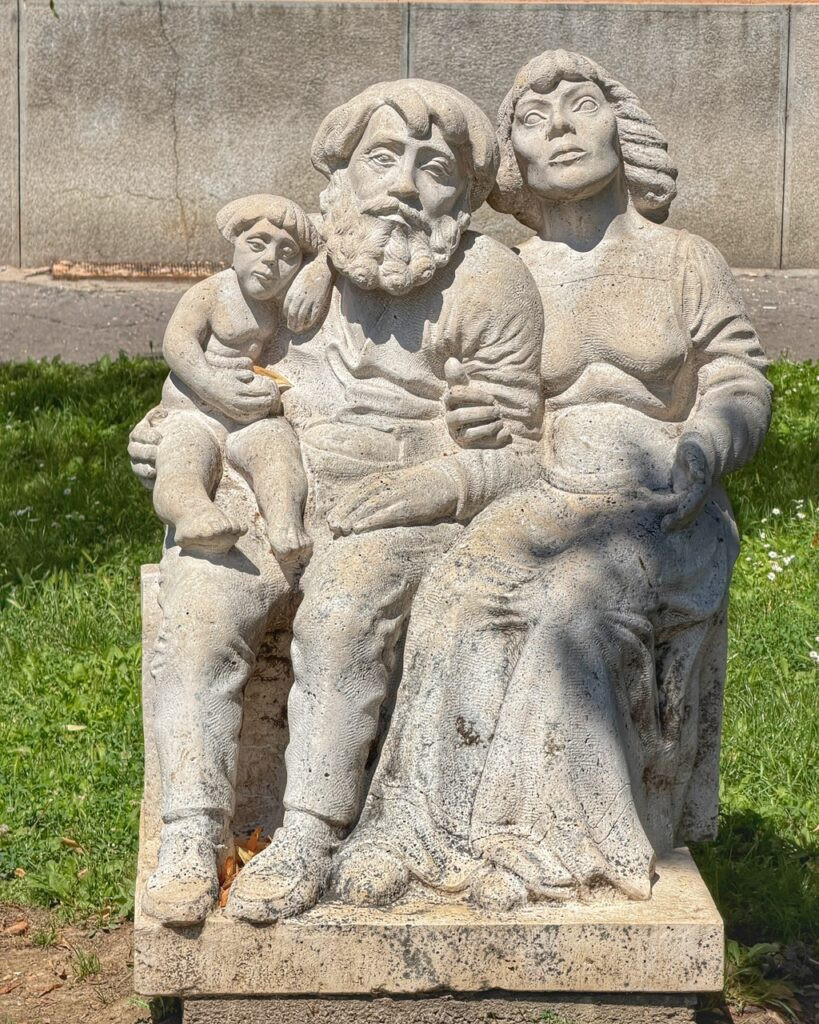
A statue along the riverside promenade. While I’m sure it’s someone notable in Hungarian history, all I could focus on was that it looked like a creepy “Ammityville Horror” version of my own family, circa 1983. (Yes, like most children of that time I had a horrendous bowl cut which my parents still insist was “cute.”) 😂

Alongside the Tisza River one can find the “Flower Monument” which looks like a swarm of insects, belonging in such an aforementioned horror movie.
The piece, called “Tiszaviragzas” actually represents the swarming of mayflies that happens at the beginning of summer when they hatch from their larvae in the mud of the river. It’s a spectacle that only lasts a few days, but is apparently is really something.

Synthetic jungle gyms vs. Nature’s jungle gyms

Speaking of this, this part of the world clearly has some notable playgrounds. It’s difficult to see, but in the picture at left, the kids are riding what looks more like a rickety carnival ride from the 1930s…a cock-eyed and spinning saucer, which looks like a tremendous invitation for boo-boos and broken appendages. The one at right is basically a hamster-wheel for mini humans.
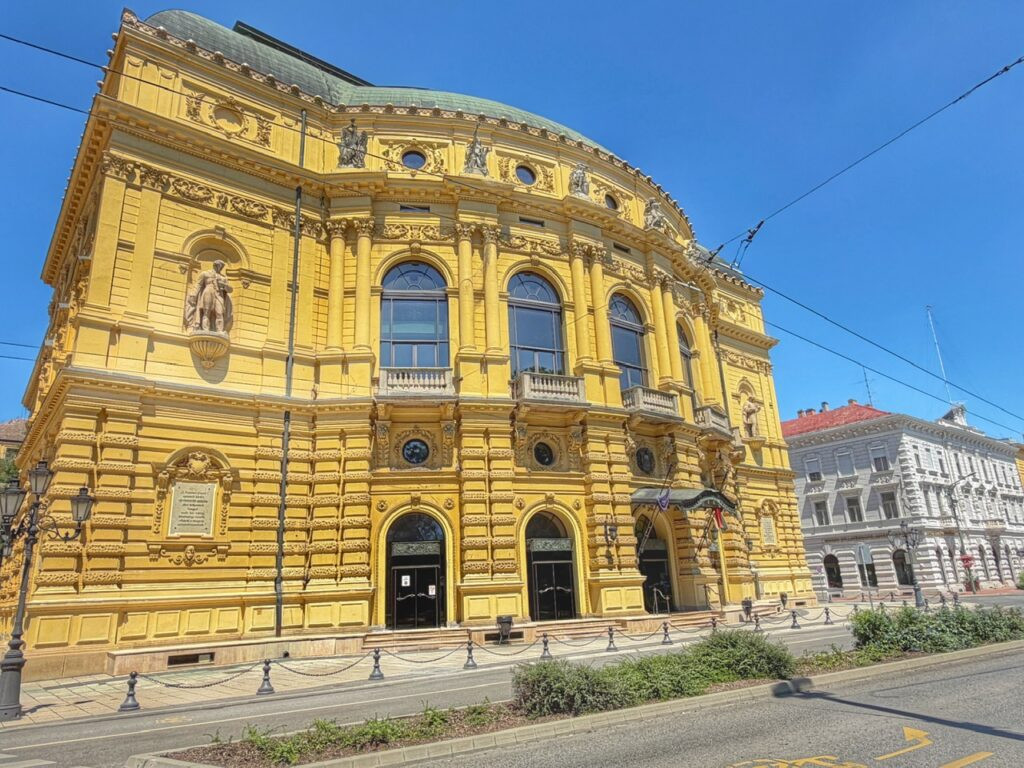
The National Theatre, which was opened in 1883 shortly after a great flood destroyed the city. It is still in use today.
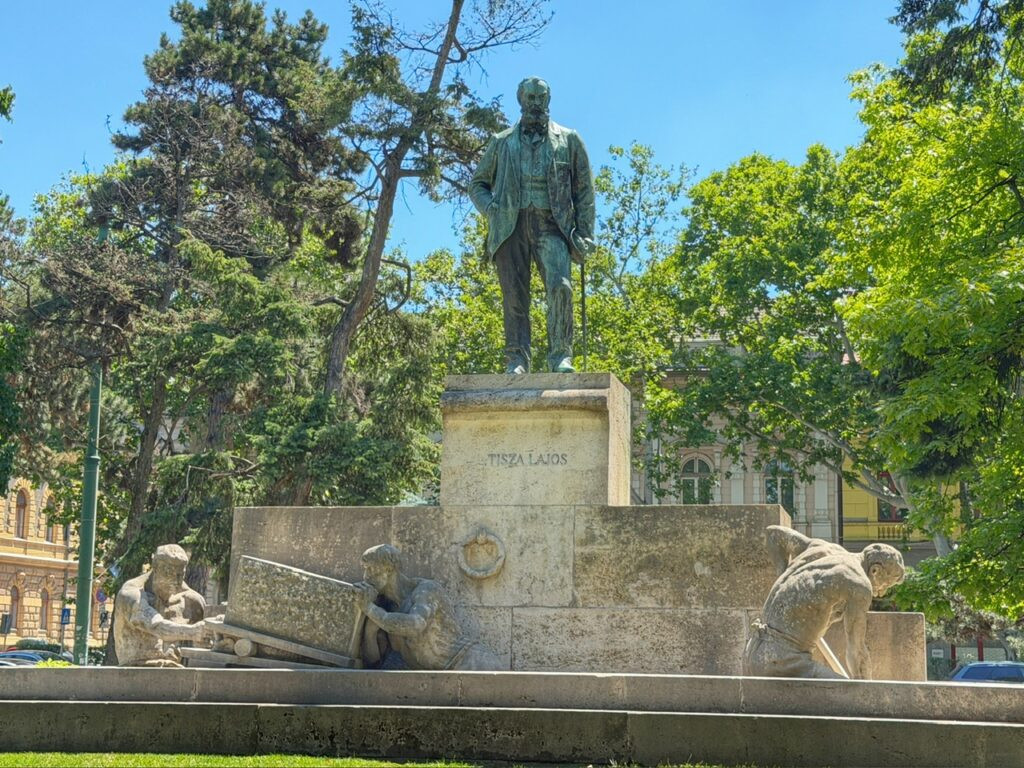
This statue is in Szechenyi Square and honors Tisza Lajos and his efforts to the rebuild the city after this 1879 flood. It may just be our backgrounds, but it felt like it has slavery undertones, though I could not find any research that supports this.


The City Hall, which of course is crowned by Zsolnay ceramics. This city is so elegant!


For lunch, we sought some traditional Hungarian cuisine at local joint, “Roosevelt Teri Halaszcsarda.” Wow, those letters hurt my brain. But first comes wine, for about $2 a glass as Greg prepared for some splash landings!

By splash landings, I mean from our soup which is called Szegedi Halászlé, a famous regional fish dish where fishing has been part of life for centuries. The deep red color comes from colossal amounts of paprika, and ours was made with a delightfully deboned catfish. We also had a pile of grilled vegetables which may have been the best we’ve ever had…stiff competition in the Balkans/Hungary. The entire meal with a very large pot of simmered fish soup, vegetables, bread and two wines was $27. Not super cheap, but certainly great value.
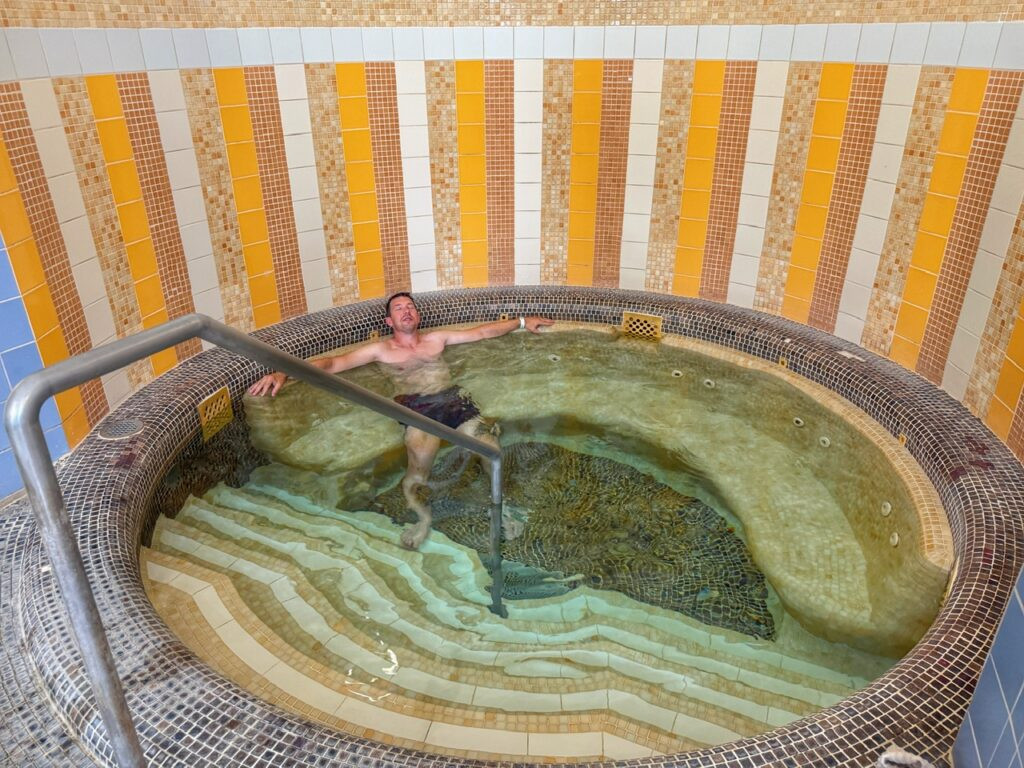

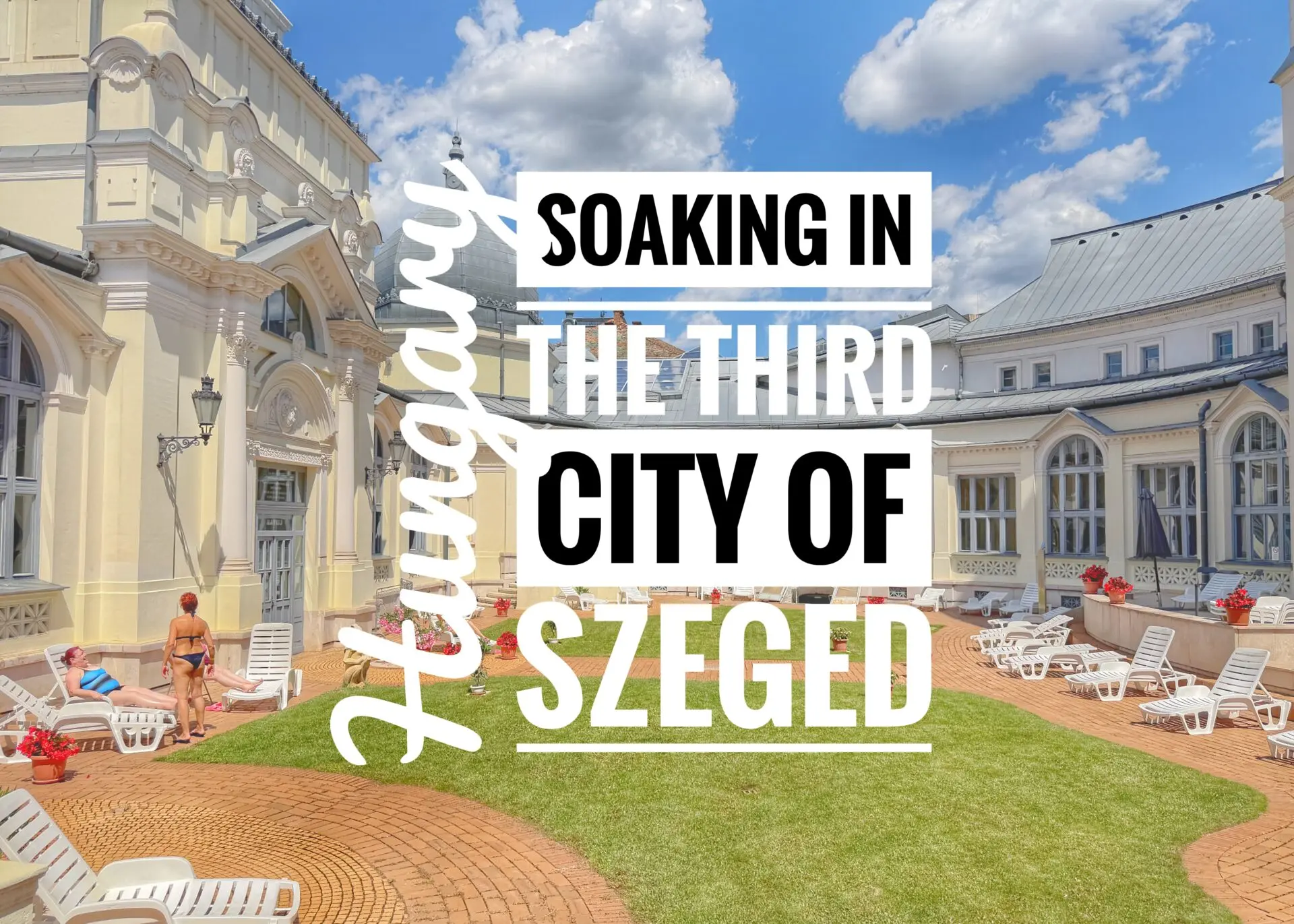
After gorging ourselves, it was time to do some simmering of our own at the Anna Thermal Baths, a beautiful historic bath house for about $8/each. Prices have definitely increased in Hungary since our last visit.


The baths, some complete with Hungary’s obligatory chess boards, ranged in temperatures from cool to 38 degrees celsius and there was also a sunning area if you wished to continue your roasting further. Between the heat outside and the thermals, we were pretty toasty already…..
The Szeged Cathedral or Votive Church
With twin towers soaring 91 meters (299 feet), the stunning Szeged Cathedral, also called the Votive Church, dominates the perimeter of Dom Square which was being set for a massive summer festival on the day we arrived. According to Wikipedia, it was basically built because of a disaster when the 1879 catastrophic flood demolished most of the city. The citizens vowed to build a grand church in gratitude if the city could be rebuilt. Construction was begun on 1913 and finished in 1930 after delays caused by the First World War.
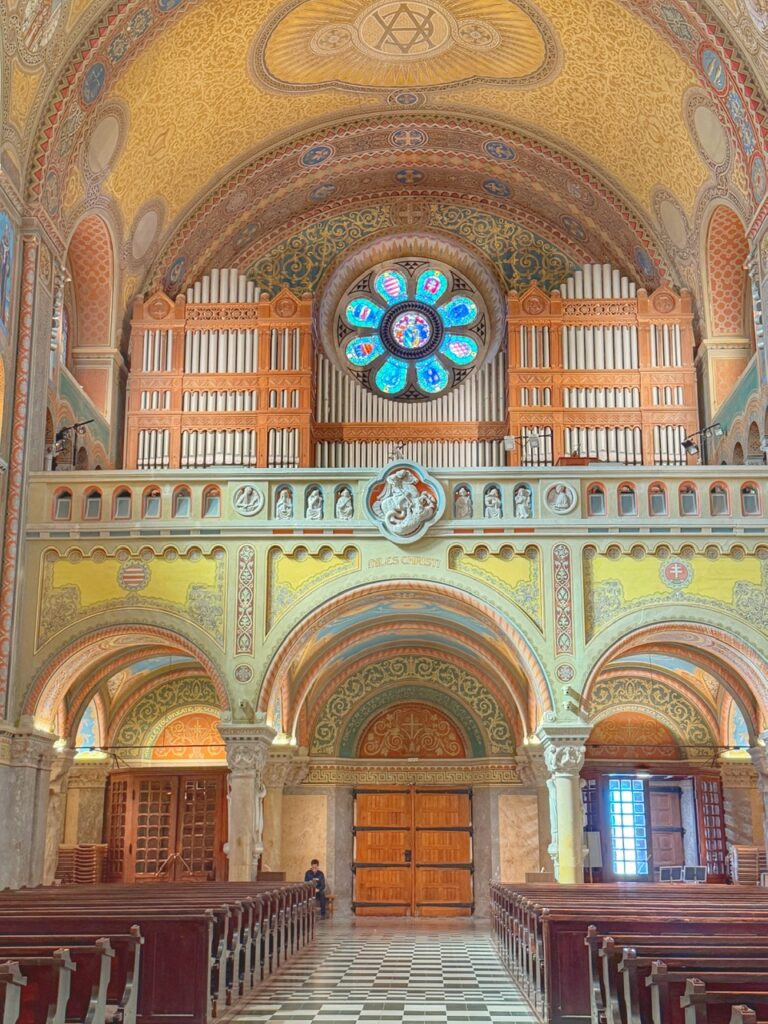
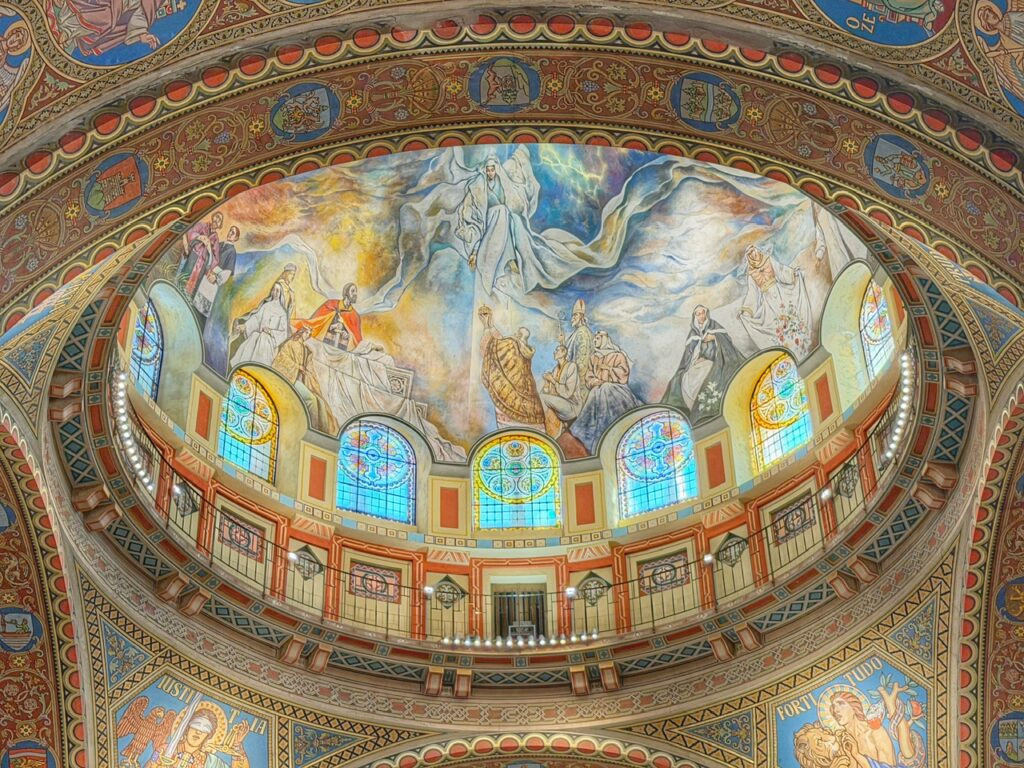
While the facade is lovely, the interior is spectacularly different than other European churches, and well worth a wander inside. It includes one of Europe’s largest organs, with roughly 9000-10,000 pipes (apparently depending on who is doing the counting.) The artwork-splashed dome is also a show stopper.
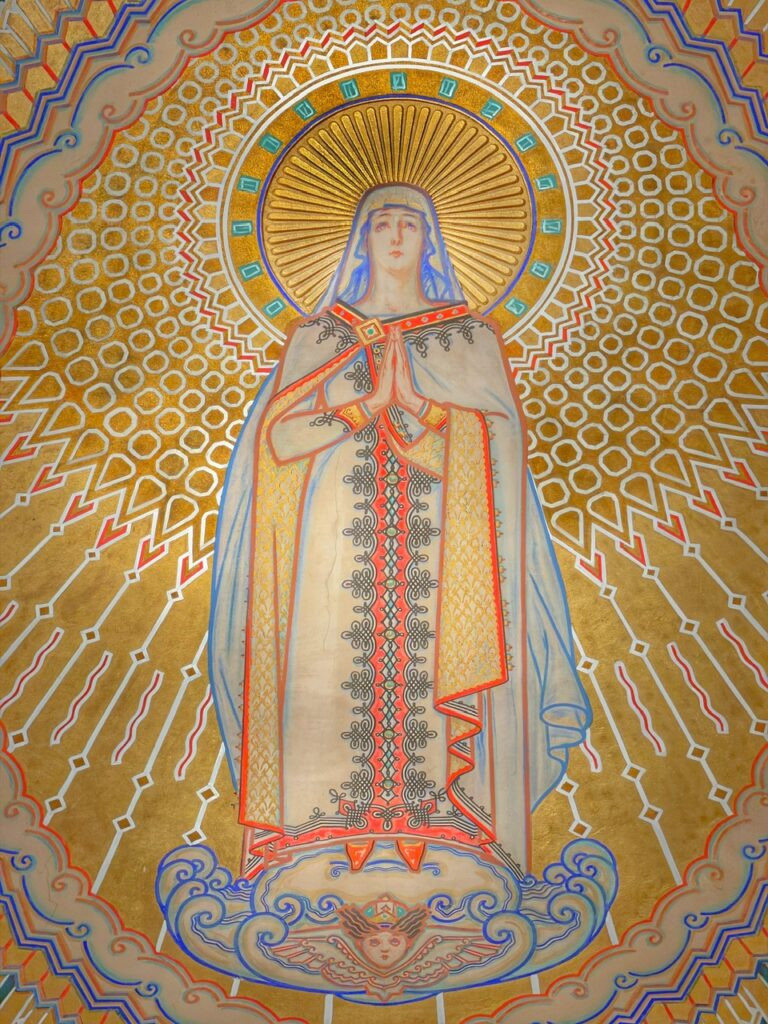
And although the majority of the architecture is Neo-Romanesque and Byzantine Revival, many of the murals and designs have several features that seem to demand an Art Nouveau nod. This includes this famous depiction of Virgin Mary in Hungarian folk dress.
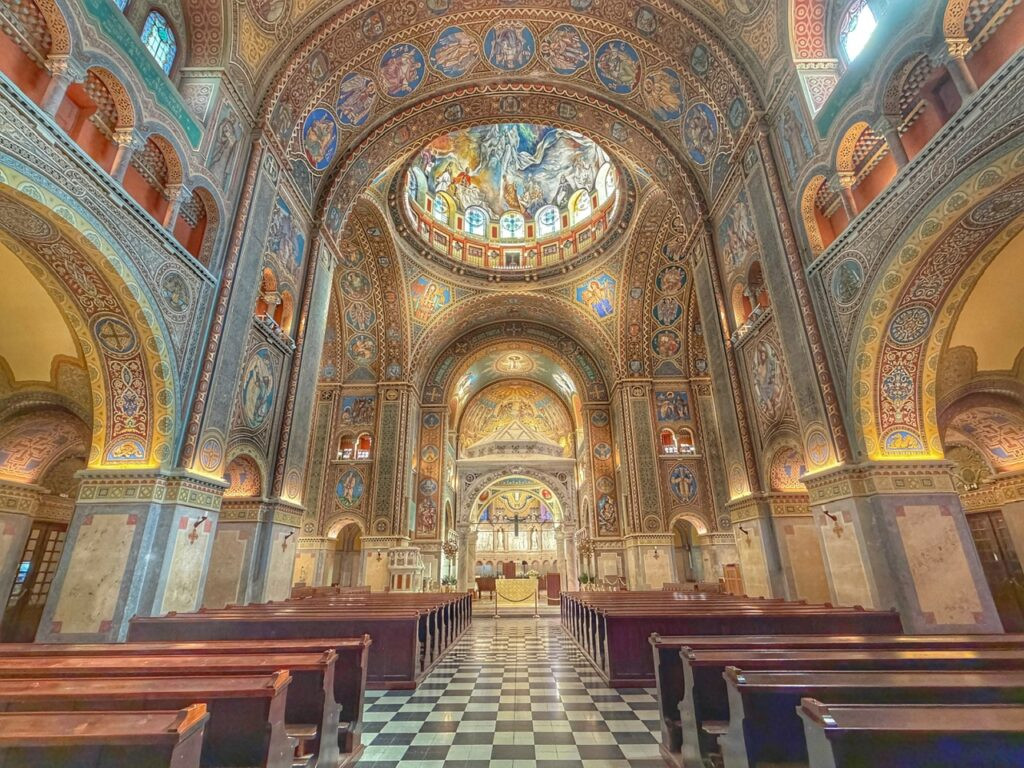
The church is free to enter, yet no one was there. You could hear a pin-drop as we glided slowly down the aisle admiring the views.
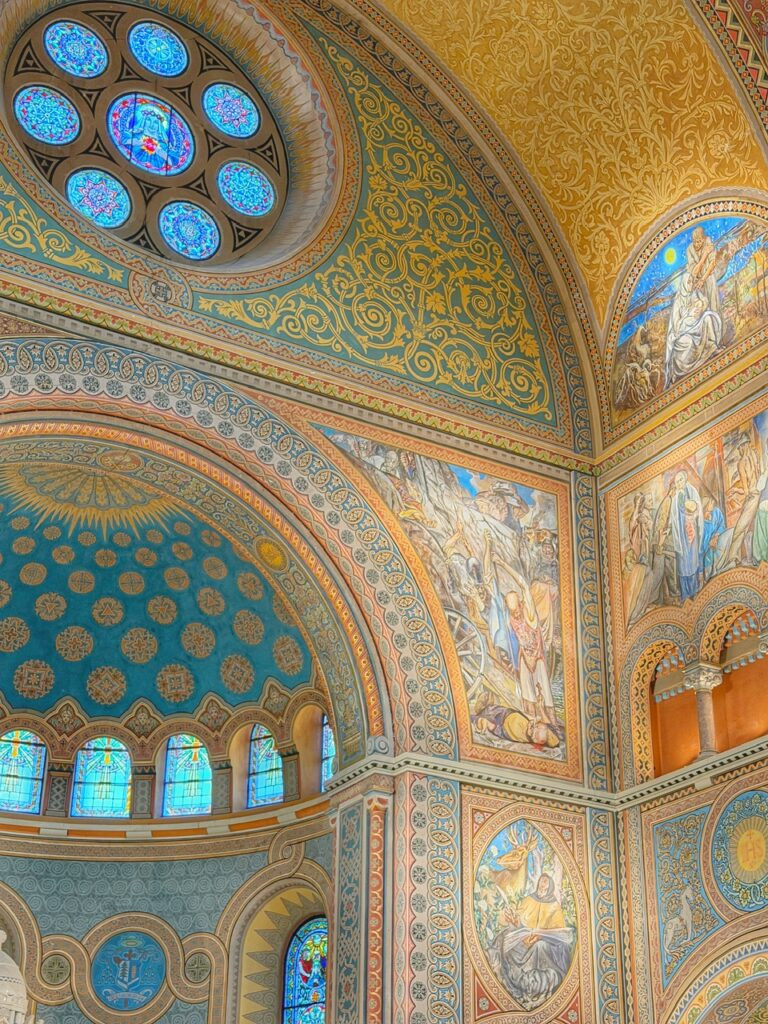
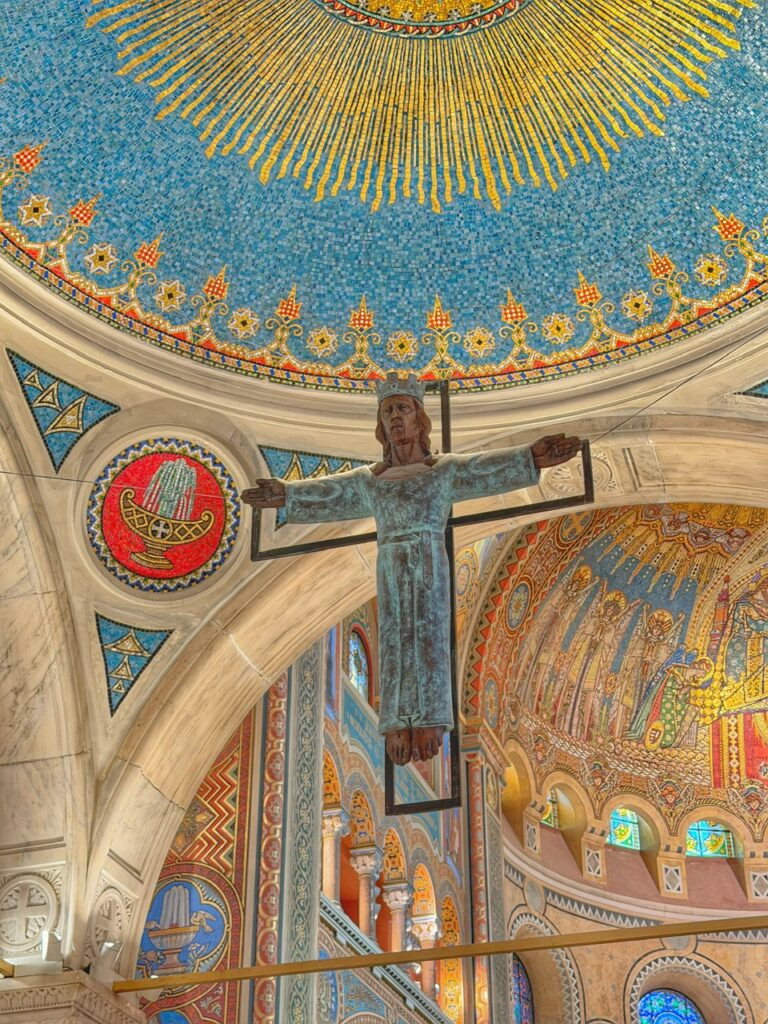
The soft geometric images and scenes were completely absorbing. At the front and center, you’ll find a somewhat mini, but eye-catching and triumphant Jesus donning a proper crown, and not a crown of thorns. This positive vision seems to focus on the resurrection versus the suffering and crucifixion that so many churches seem to highlight. I like it.

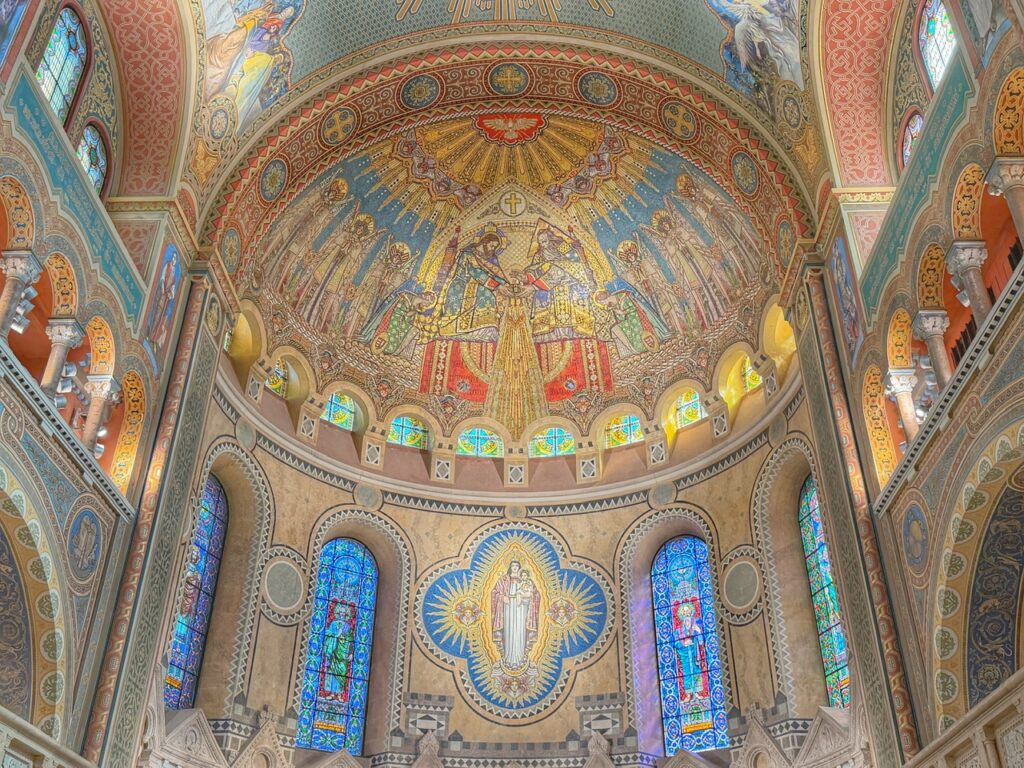
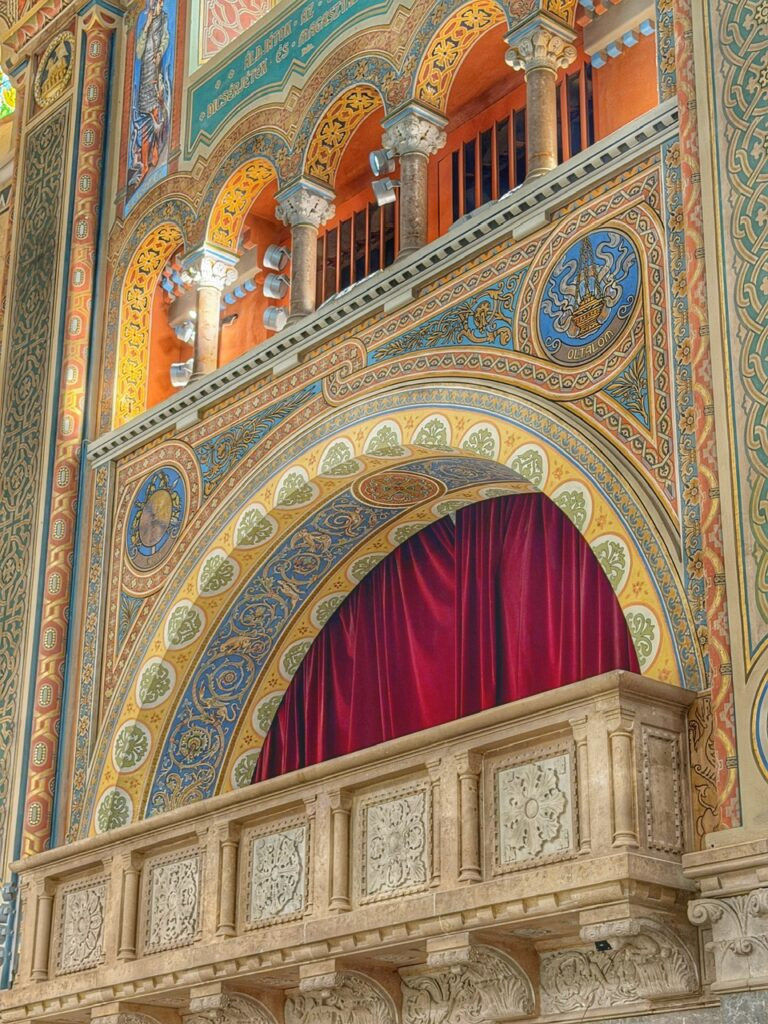
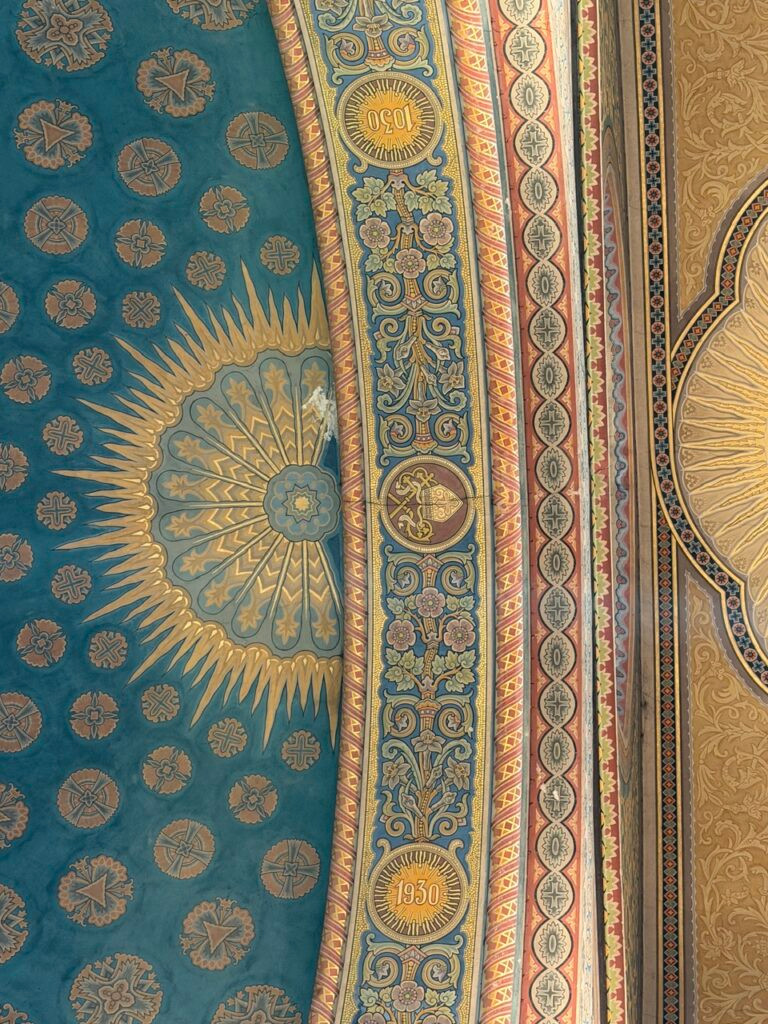
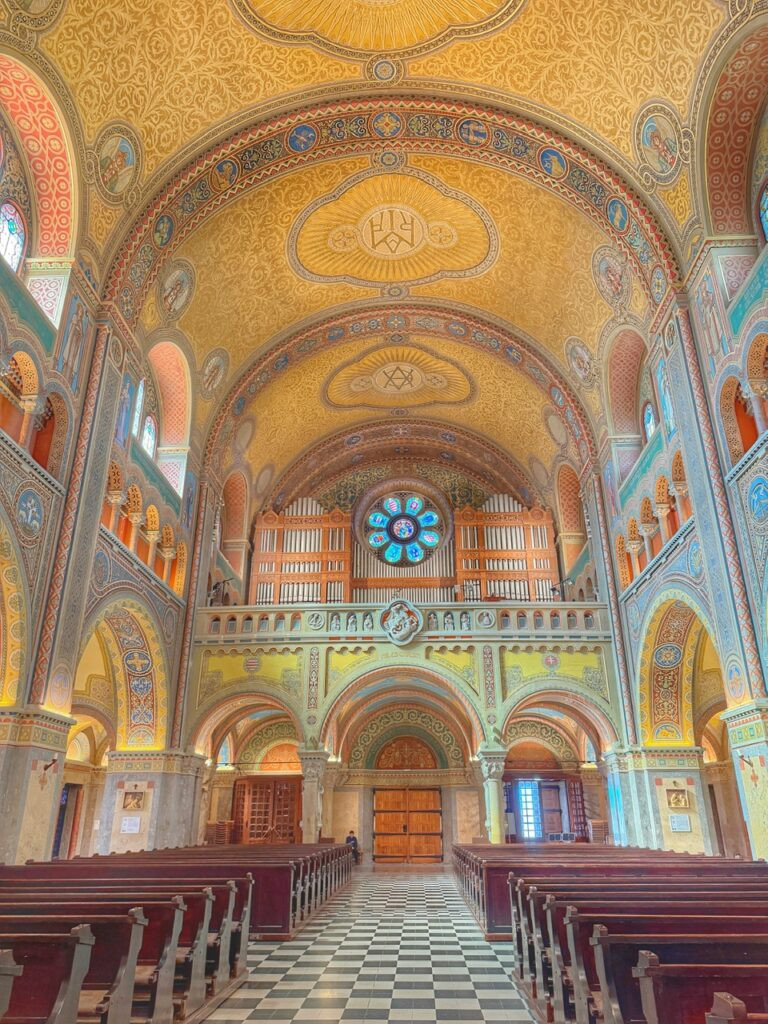
More art nouveau-y blended images?


From the outside, it has a significantly different feel. Especially when you toss a grand and industrial stage in front. This is for the Szeged Open-Air festival which is Hungary’s largest and most prestigious outdoor theatre festival, which has been held here every summer since 1931. Sounds amazing! Wish we could stick around!