
From San Salvador to Concepcion de Ataco
We had just nine days in El Salvador to work with. Por que? The reason is a marvelous “privilege” of US Citizenry….Greg unfortunately has (deferred) jury duty he couldn’t get out of when we return in late March. Also, we wanted to ensure two month-long stays before we headed back, to align with our new sanity saving goal of slowing down, and also because is far cheaper to book for a month than three weeks, for example.
Seven years ago, we likely would have tackled this tiny Central American country with a grand sweep in order to take in all the “must-see” sites in nine days. There are a lot of them. Thankfully, we’ve now wisened up and know we have the option to return and would rather see just one area, and its people, a bit more intimately.
This is how we decided to stay for one week in the teacup village of Concepcion de Ataco, one of the glorious mountain towns on El Salvador’s famous “Ruta de las Flores.”
Fortunately, getting there by buses from San Salvador was quite organized and straightforward, but arriving to our new home for a week wasn’t quite so much. Let’s just say it had some serious eccentricities. These are simply reminding us we’re back in Central America where life requires a bit…more adapation. Luckily, we’re pretty good at that. Haha.


To get to Ataco, which is pronounced like “Yo quiero A-TACO,” you first need to find your way to the “Terminal de Buses de Occidente,” which is quite well organized with several helpful information desks, pointing us to the 205 bus we would need to first arrive to Sonsonate. We immediately assumed with newfound excitement we’d be traveling the first 1.5 hours via “chicken bus,” as still rumbling, ancient US school buses are often referred to in this part of the world. Instead, we got to take the bus adjacent, also 205, which was pretty much a standard, semi-comfortable, albeit dated bus…a terrific value for the $1.30 it would cost.

Arriving to the station in Sonsonate, we were redirected across the street where were first arrived to a food court, which seemed like a fitting place to demolish our second helping of pupusas which were far cheaper at 3 for $1. This seems to be the going rate at “normal” pupuserias.


After this, we easily found the “chicken-yay!” 249 bus which was conveniently labeled overhead and gave the driver our $.75 each for the next 1.5 hours. We then climbed aboard for some sticky vinyl-seat memories of sweating on the school bus! Fortunately, as we rose up to Ataco from Sonsonate, the air temperature got notably less sweat extracting. Welcome to climatic perfection at 75F/24C. Also, why Ataco was a very good choice for this January stay.


From the bus drop-off at the town entrance, we trucked about 11 minutes to the only apartment we could find in our price range when we booked it in mid-October for $27/night. Of course, I use the term “apartment” gently. It is our own full space, with a kitchen, which is critically important for we healthy eaters in the Land of Pupusa. And, when we booked it, we were thrilled to see a full-sized fridge, toaster oven, stove, and REAL oven. What we failed to see, was that there was a major piece of kitchen necessity missing. Can you spot it?!
It also had some vital places to sit inside like unpliable plastic sofas with support in all the right places…


….and an indoor/outdoor table accentuated by a lovely wall of greenery undoubtedly procured at Dollar City. Fortunately, in our “courtyard” area (ha!), we were able to relocate other plastic chairs with better cushionry. The “courtyard” area, also accentuated with plastic greenery, opens to the sky and to the wailing baby, woofing canine, and Spanish chattery immediately beyond that little mouse hole in the brick wall.
This photo was before we moved the chairs here. Also, you might notice in this area the item that was bizarrely missing in the kitchen….yes, a large concrete sink, as well as an accompanying bathroom-style pedestal.
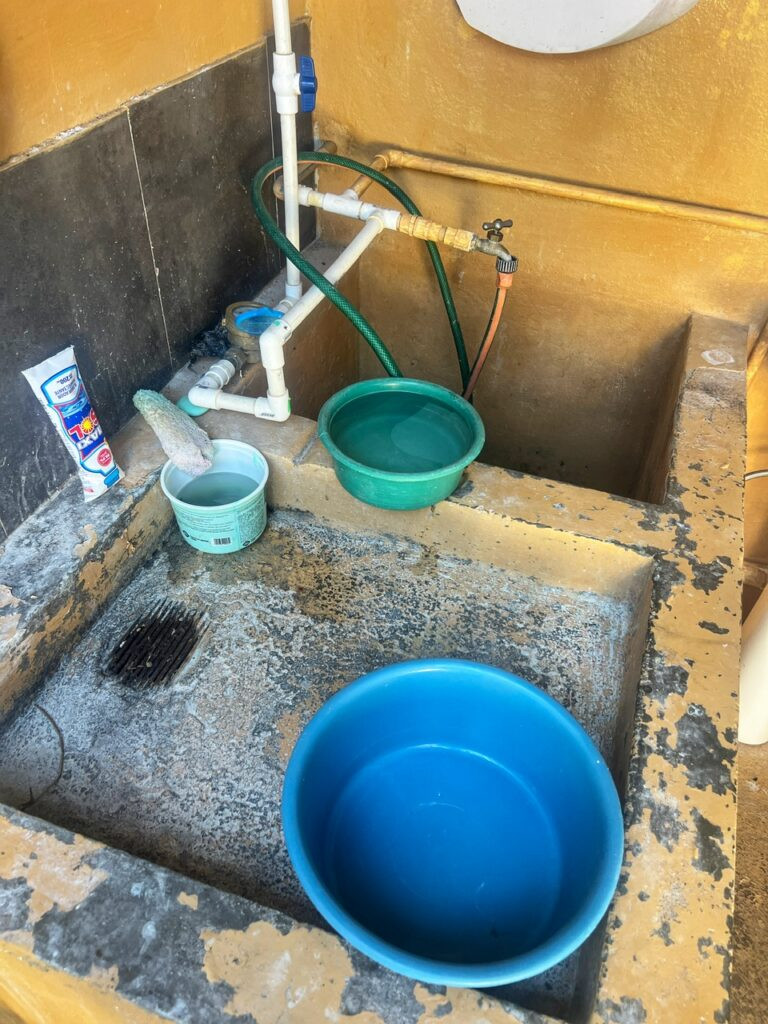
Apparently this unconventional set-up is quite common in El Salvador and requires plodding back and forth to the kitchen, as if you were tired and tipless restaurant staff. You’re supposed to fill up the big basin on the right and leave water in it, which fortunately is not visited by a festering of mosquitos. By the sounds of our neighbors, it seems like once a week (on Sundays) is the routine for fresh water. You then use the small buckets to wash and rinse in the accompanying sink at the left. No drying rack was provided so we also imported that in from the kitchen.


In the unit, there are also two bedrooms/three beds, none of which included blankets, which is actually a bit necessary in the evening. So, after testing the comfort level of all the beds, we scavenged all the pillows and sheets to the yellow room to make it work. We also relocated the bed to the middle of the room and shipped in a bedside table. In short, moving in here for a week was a full-scale operation. Ha.The other bedroom was a bit hospital-like in comparison.


The outdoor bathroom was small, but functional, including hot water, which naturally tumbled from the head of a suicide shower. Welcome back to Latin America!


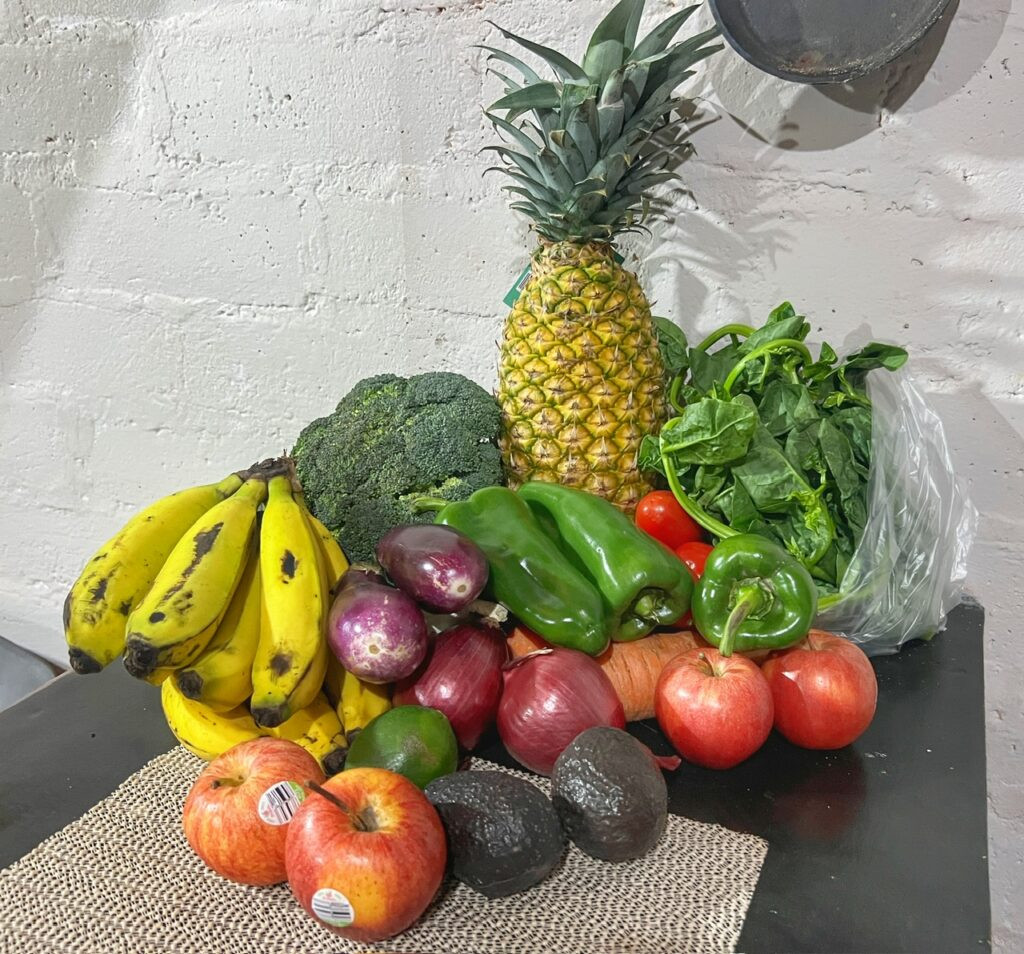
Once we redecorated our apartment, we headed out to stock up on groceries for the week from the two “super” market choices. As is typical in small village LA, the market had every kind of ultra-processed junk you could desire, including plastic bags full of condiments. After scurrying to grab the last three “natural” yogurt cups and oatmeal, we walked out with this supply which is the best we could do with what we had to work with. The bill came to $37.95 and also included a 15-tray of fresh eggs (for $1.50.) Credit cards were fortunately accepted.
Thank goodness Ataco had amazing produce to make up for it. This produce bundle cost $14.50 from two different vendors, one who clearly gave us fair rates and one lady that clearly took advantage of our white kid look. We won’t be returning to her.
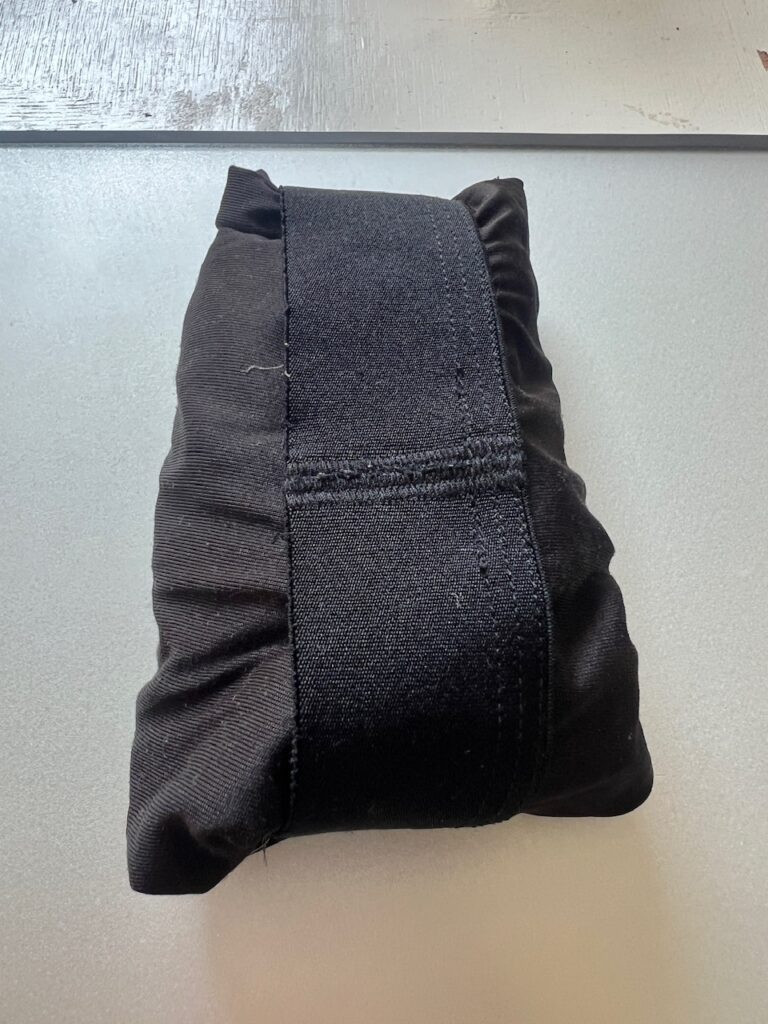
You will also probably notice we didn’t have a washing machine which is also normal in this part of the world. This, we took our laundry to the only mat in town which charged a whopping $9 gringo-special for 4.5 kilos of laundry. But the fact she folded Greg’s underwear in these darling little packages kind of made up for that too….
Our Home for a Week in Ataco
There are several pueblos we could have landed in for a week on the Ruta de las Flores, but upon researching, Ataco, again pronounced A-taco, like “yo quiero a taco,” easily became the magnet to which we were drawn. It exudes a similar laidback and colorful vibe and charm we’ve previously discovered in some of our favorite villages of Colombia, is mostly tranquillo, other than the occasional roar of a tourist 4×4 or barking dog, smiles decorate all the faces, there are enough resources for culinary survival, and it still has few overnight tourists. It seems most are day tripping from Juayua. In short, it’s a place we normally long to linger and were quite happy we had the opportunity to do just that.
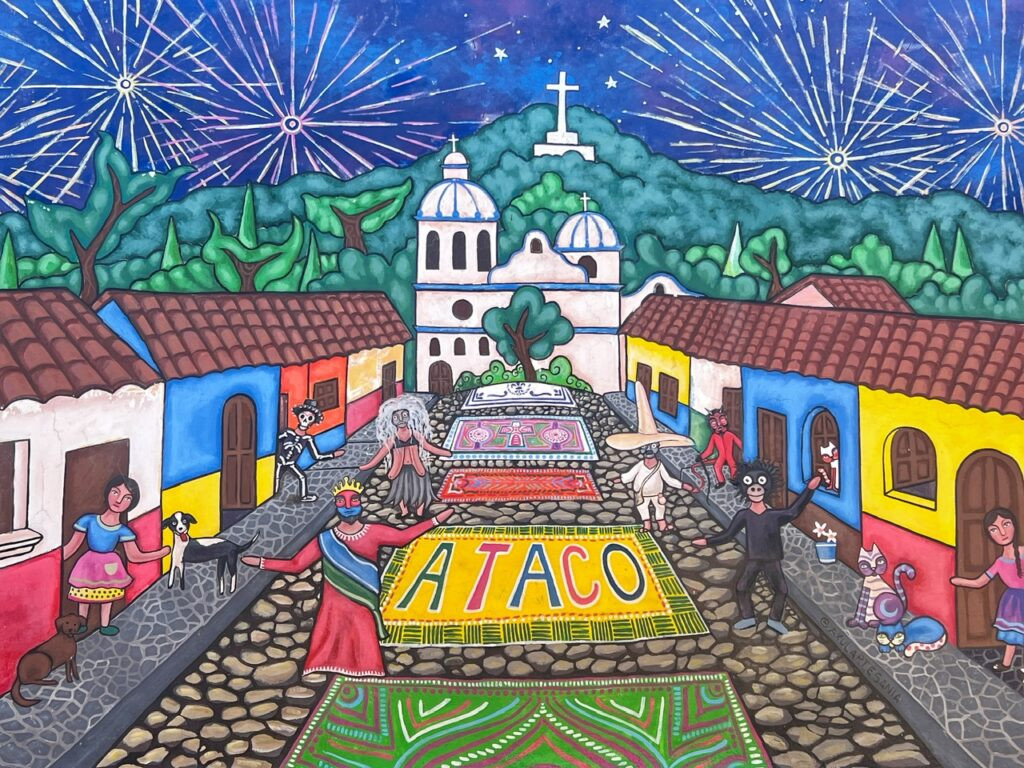
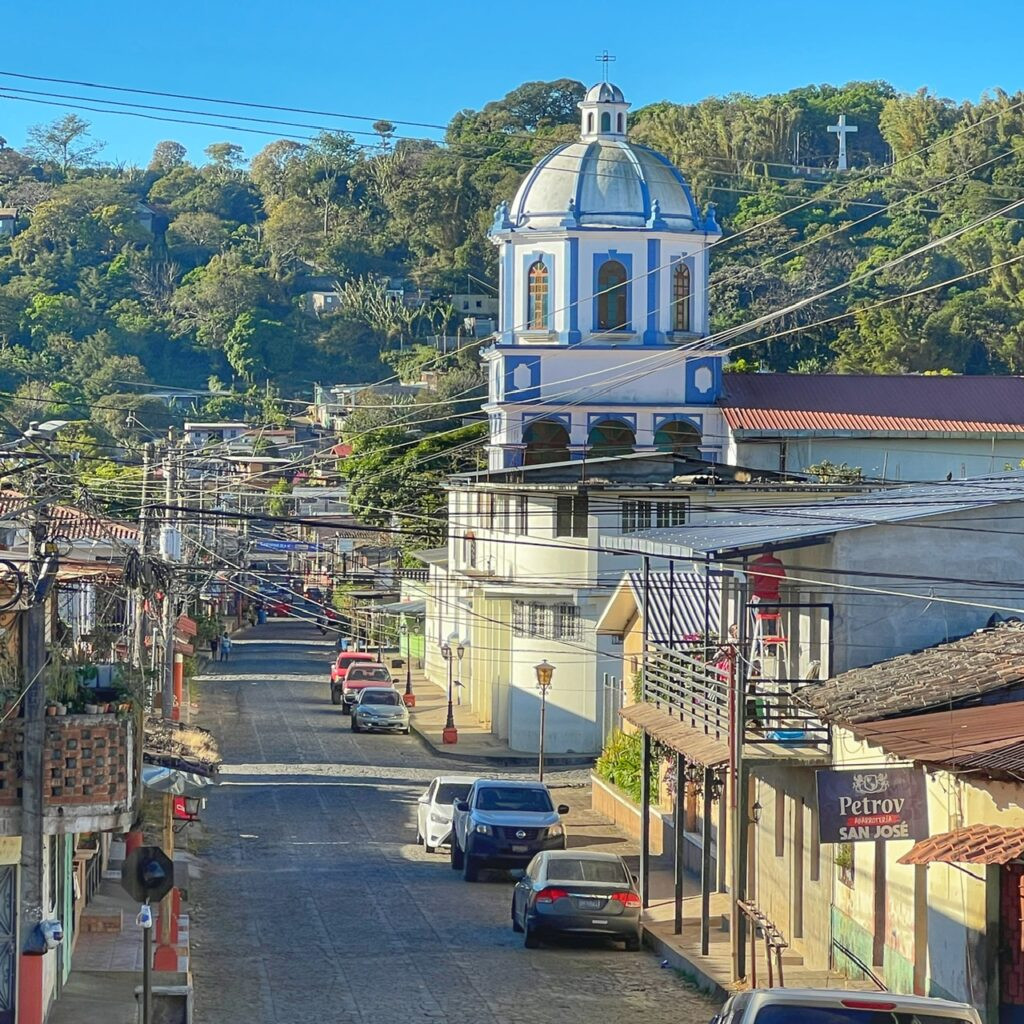
We love how every town we visited in the area features a town mural which is like a visual love letter to itself. It’s so much more original than the namesake signs that seem to serve as purely “look at me!” hashtag opportunities in much of the world. This mural was especially intriguing because it displayed so many similarities to Mexican cultural that we’ve come to adore, including its floral alfombras (carpets), skeletons celebrating the afterlife and humor about mortality, and the ghostly gray haired woman call “La Siguanaba,” who is a legendary spirit from Central American myth who appears more beautiful than terrifying. And of course, the mural also has an iconic cross on the hill and elevated church dome, which are both dominate images as you gaze at the reality on one of Ataco’s most transfixing streets.

The full landscape of the Ataco mural.

Speaking of being transfixed…the sunshine was on overload in this region and the temperatures boasting a perfect 24C/75. Most of the street dogs were friendly, although one asshole did go after Greg when he was running one morning. Fortunately, our years of travel have taught him to be well trained in running backwards, making eye contact and fake rock throwing, which fortunately was the thing that caused the dog to back down.
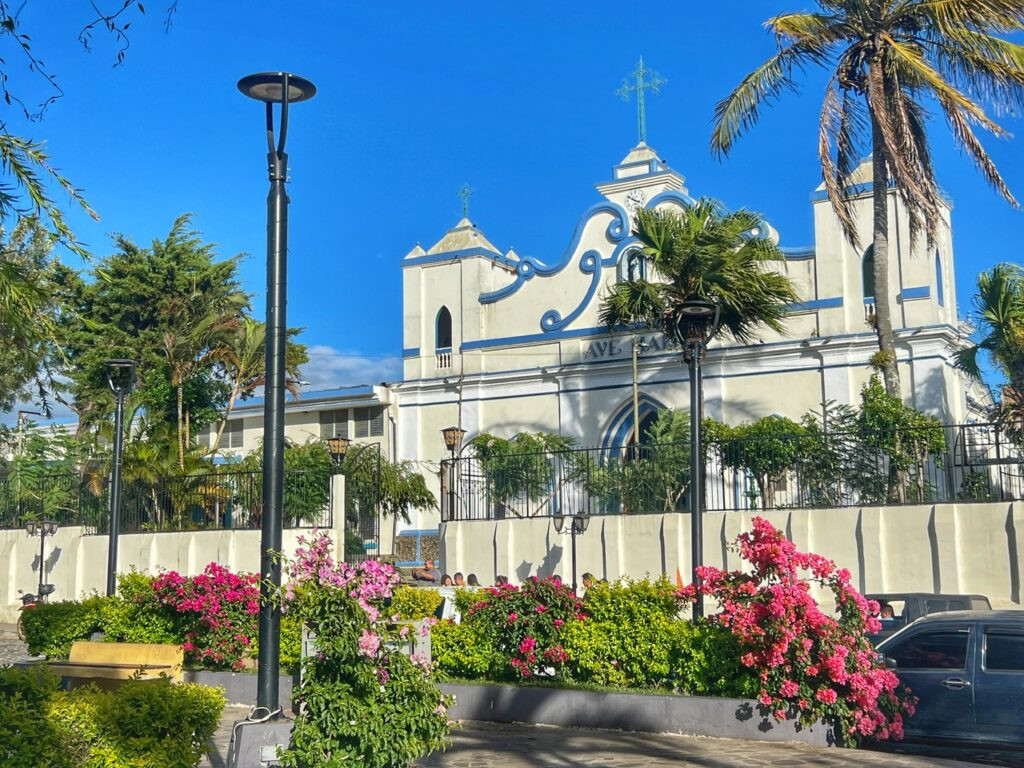
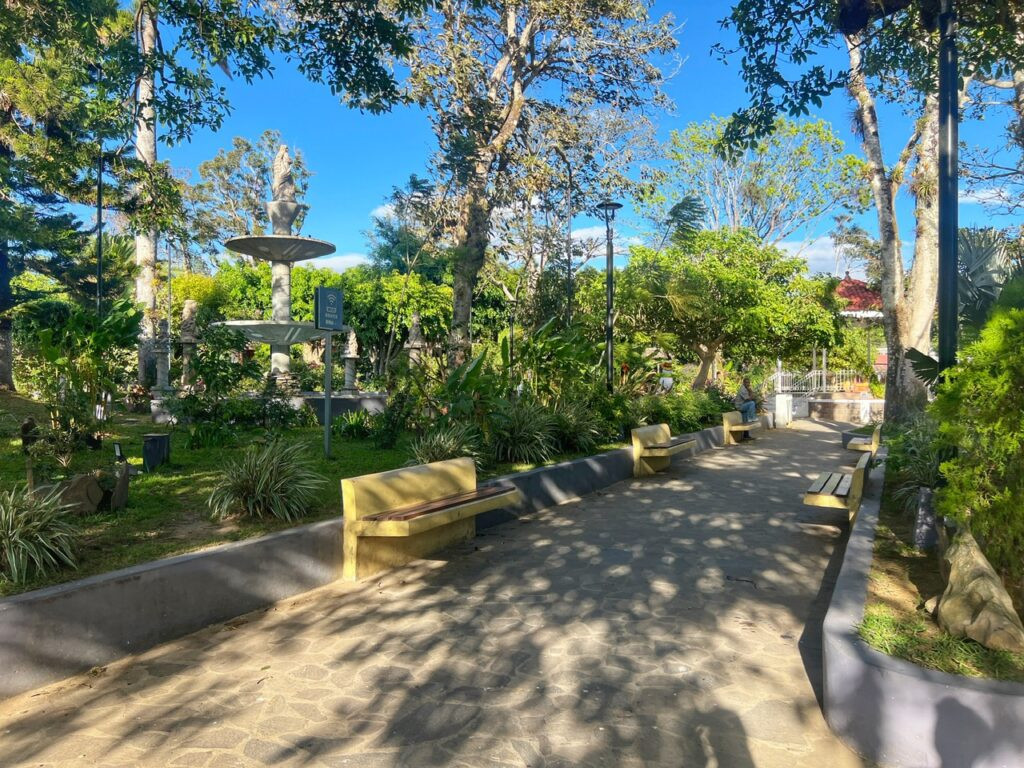
One of two blue and white churches in Ataco, as seen from the lush and central Fray Rafael Fernandez Park, which was a couple minutes walk from our place.
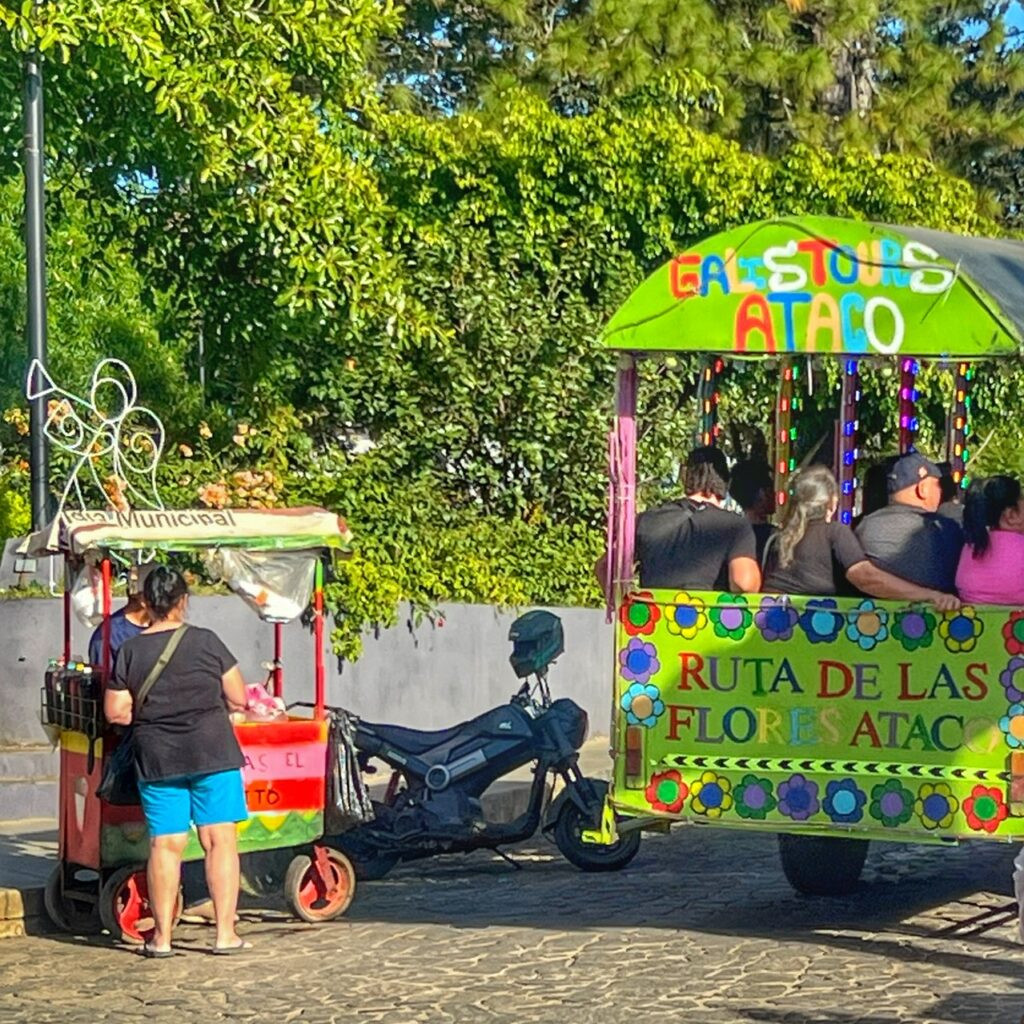
Nothing like getting in a tourist train to rumble you around an incredibly walkable place. Fortunately this was only running on weekends. In fact, weekends were the only time when it ever felt a little busy, mostly due to domestic travelers.

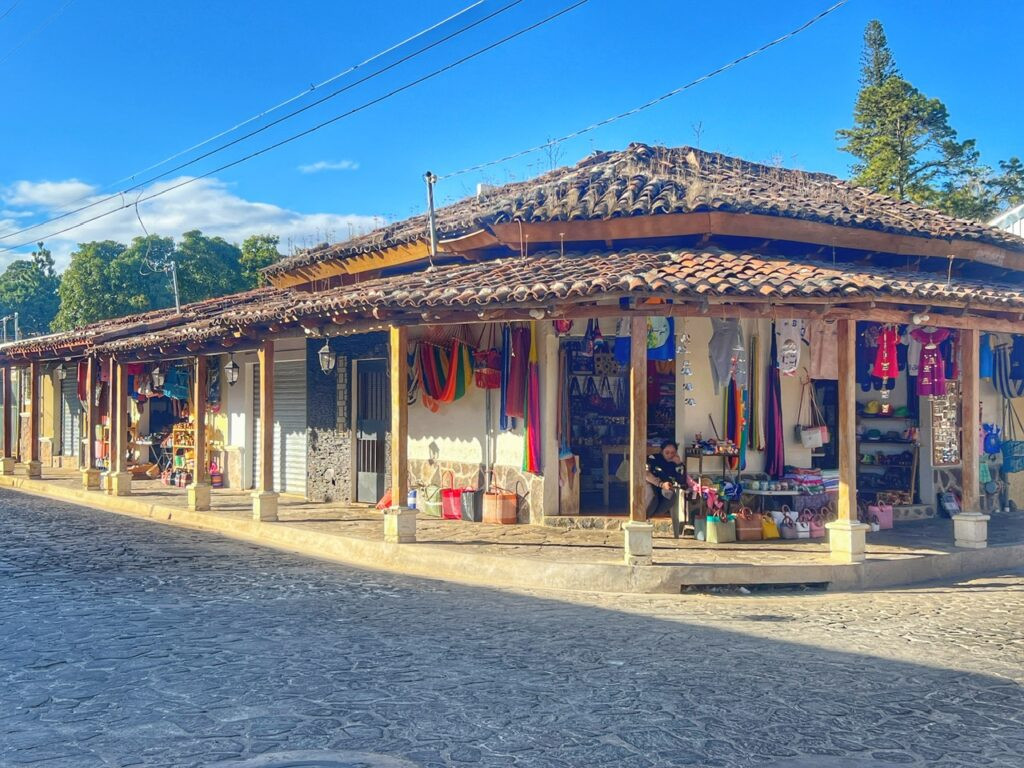
One thing that definitely emitted some gentle tourist vibes in Ataco was the number of shops and souvenirs options. Gentle because no one was ever pushy, only warm and welcoming. They had the usual hammocks, clothing, accessories, dishes, and of course loads of coffee, all grown in the region which typically went for $5-9 for a bag.
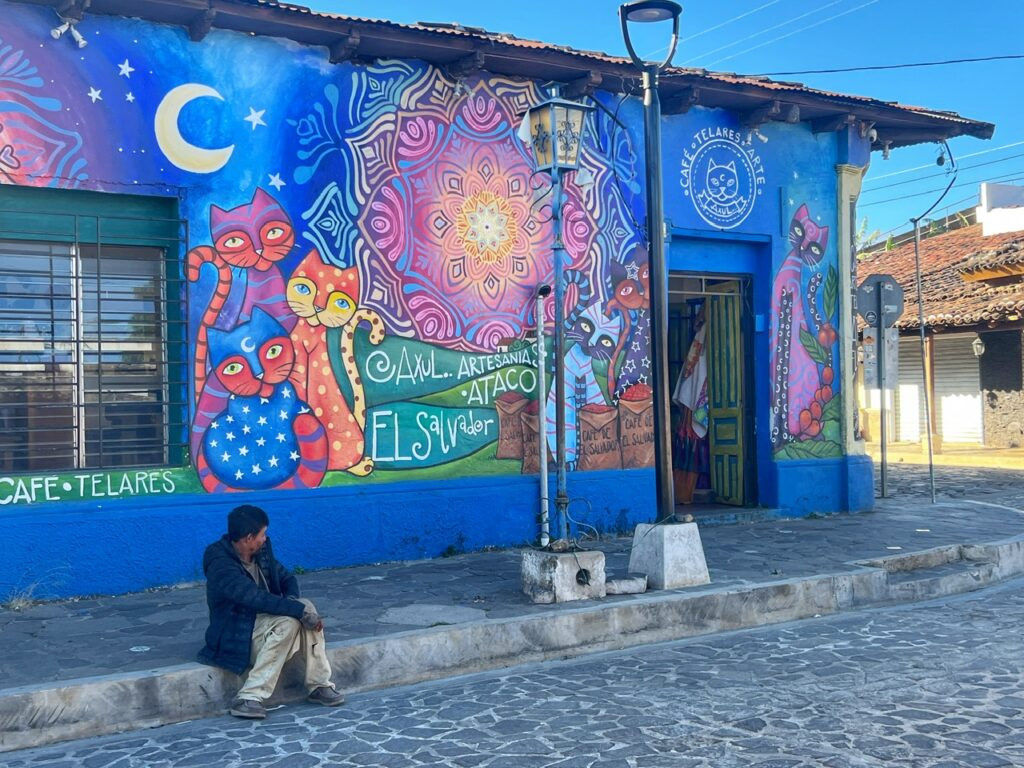


And an explosion of art and street murals were everywhere, including an interesting social statement of four women, clearly in medicine and likely painted post-COVID highlighting the importance of their role.
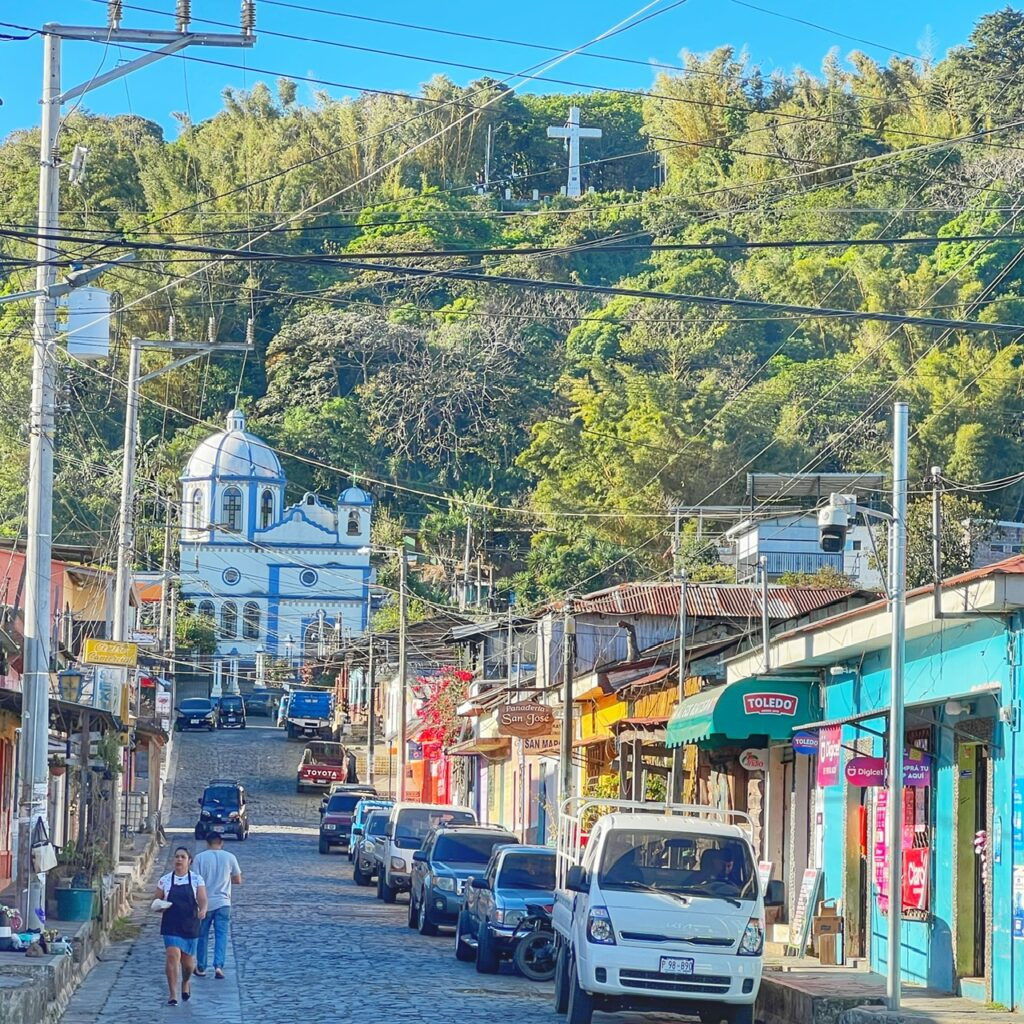
Another charming street scene.

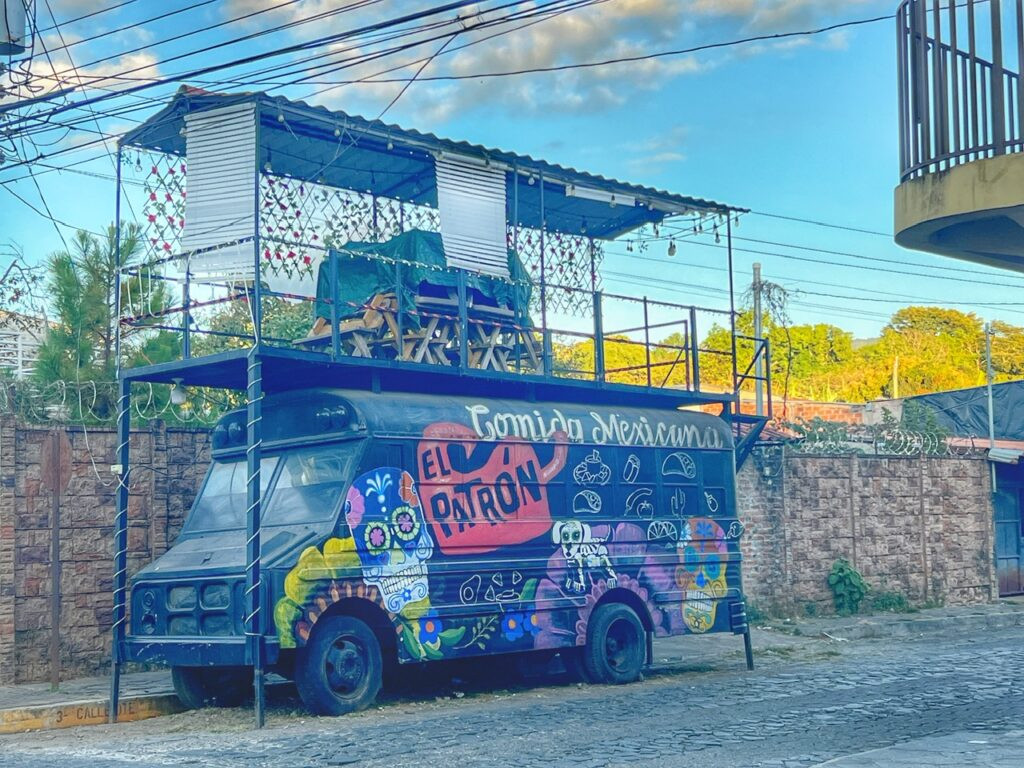
Another mural showcasing Frida and other famous celebrities, attached to Mexican restaurant. Greg has been pleased to find the number of Mexican options has exploded since he traveled to Central America in the early 2000s when it was all rice, beans and chicken. It seems they’ve finally started to recognize the culinary power of their neighbor. They even offered trendy options like this street cart van crowned by a picnic table.

Of course, in addition to pupusas, the Salvadorans try and do their own thing as well. For example, this is the first time we’d ever seen a yuqueria! And…I believe know a vegetarian, ironically, named Wendy who’d be very happy to try it out!?
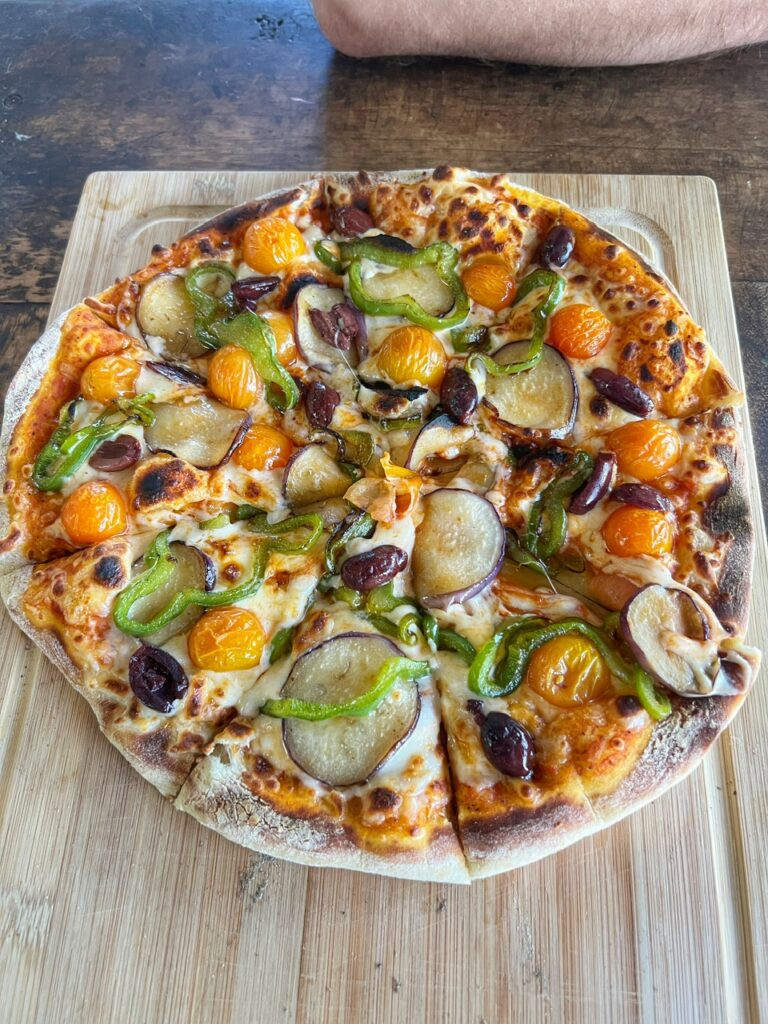

The only time we ate in a formal restaurant was toward the end of our stay when we’d run out of groceries. This was at the trendy Axul Cafe. We got a pizza, a salad (muy pequeño) and garlic bread all for the hefty price of $19. No drinks.

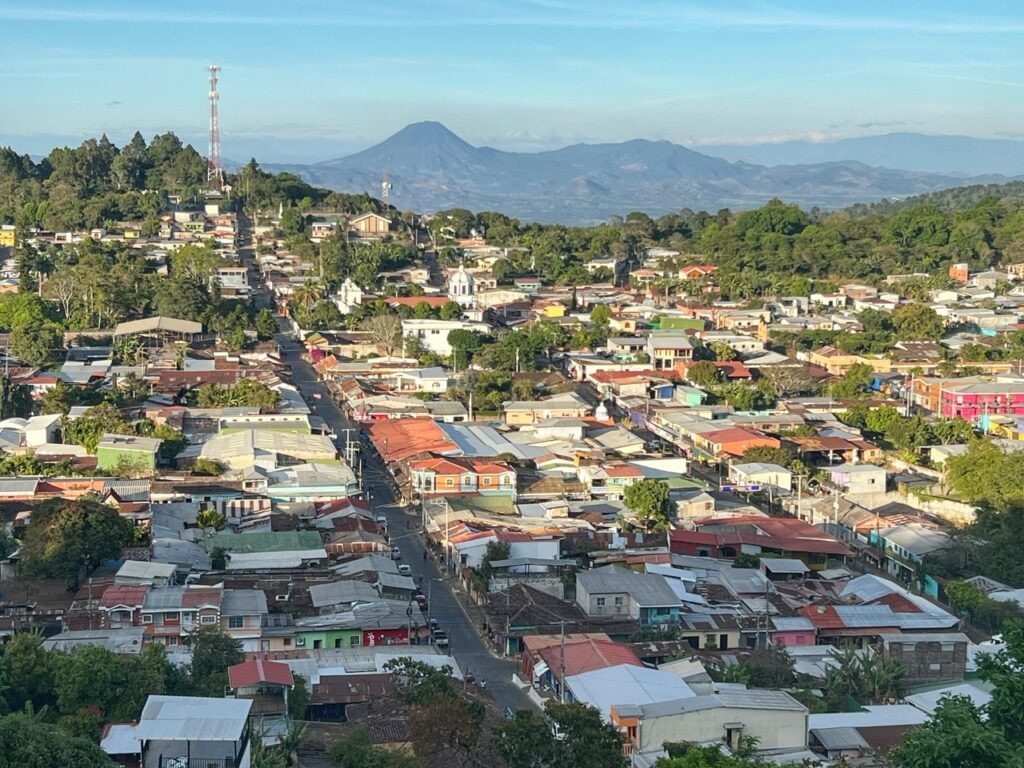
Hiking up to the cross over the hill offers a commanding view of Ataco.
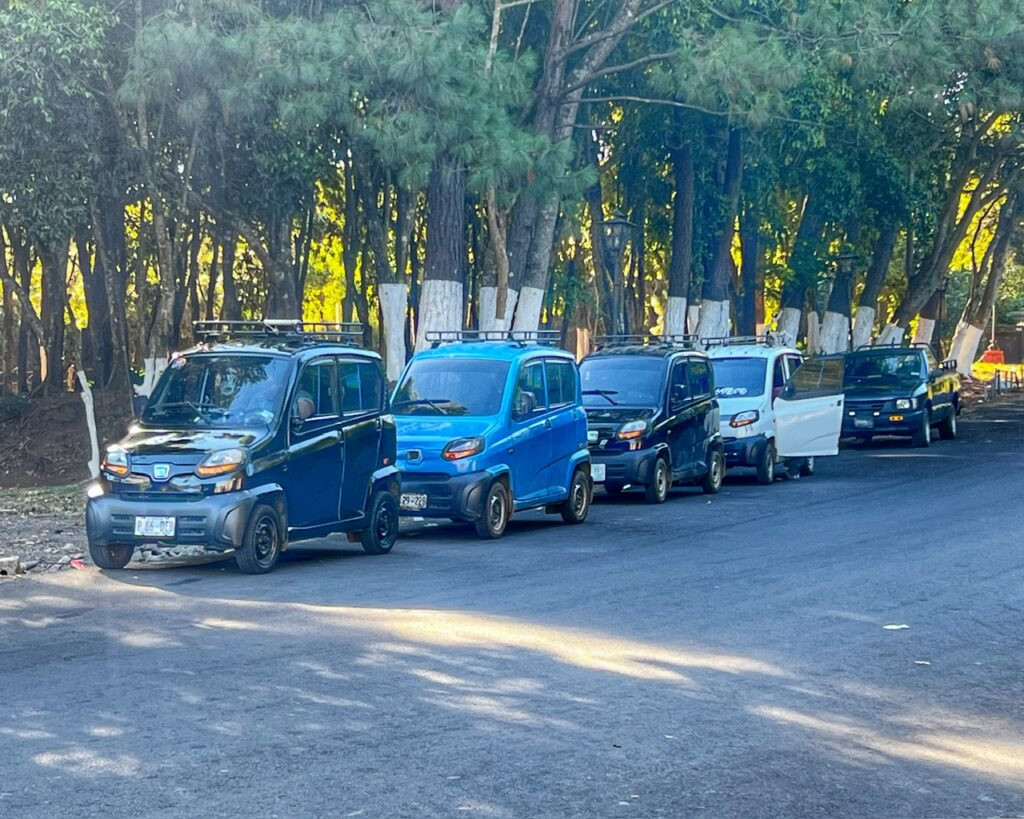
The line of “taxis” always waiting at the bus stop.
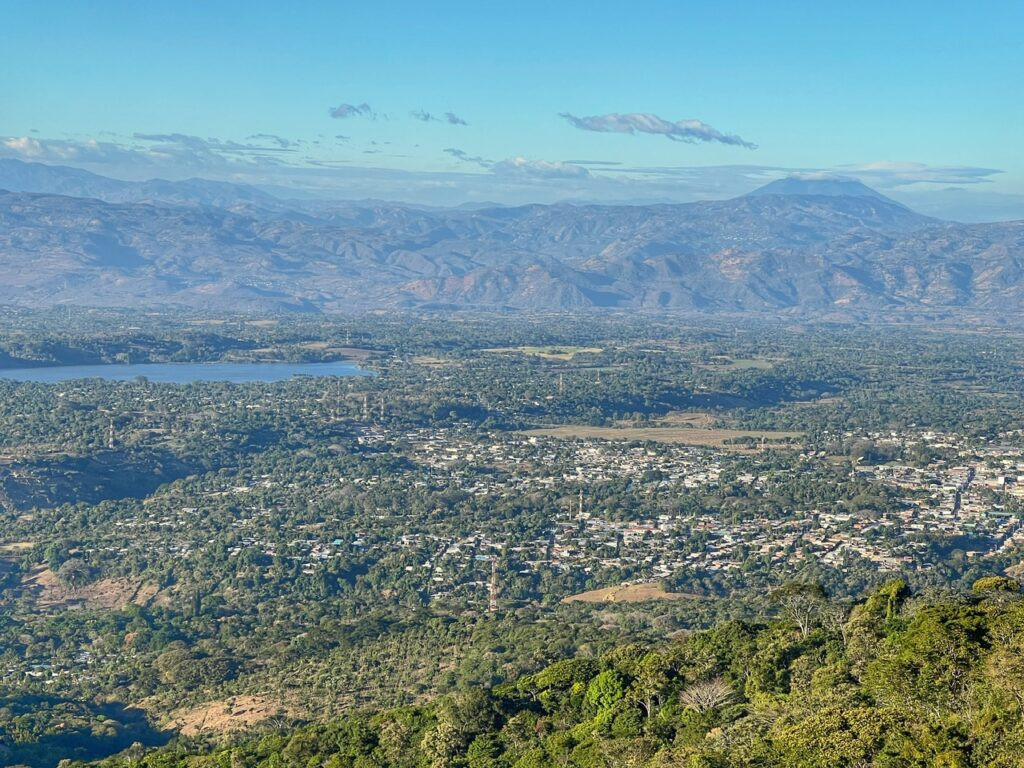

A view of one of the volcanoes from Mirador La Providencia, which was about a 30-minute walk from the village. This site, which was also a finca, had a cafe, but unfortunately it was closed when we visited. Would have been a stellar place for a drink!
Exploring the Pueblo of Apaneca
From Ataco, we had plenty of options for exploration, thankfully in part to the local chicken bus (249) which links together all the towns of the Ruta de las Flores for $.50 a ride. Our first outing took us to the pueblo just 10 minutes south called Apeneca. From here, we were able to hike to a Laguna Verde, which looks un poco más verde on Google Maps than in reality.
Still, it was a peaceful and moderate 9k hike in idyllic weather where we got to soak in some vistas of the surrounding mountains. Certainly can’t complain about that. Afterwards, we passed a bit of time in the town of Apaneca, which was certainly less lively and more authentic than Ataco, with a rural and traditional vibe ringed by coffee fincas and pine forests.
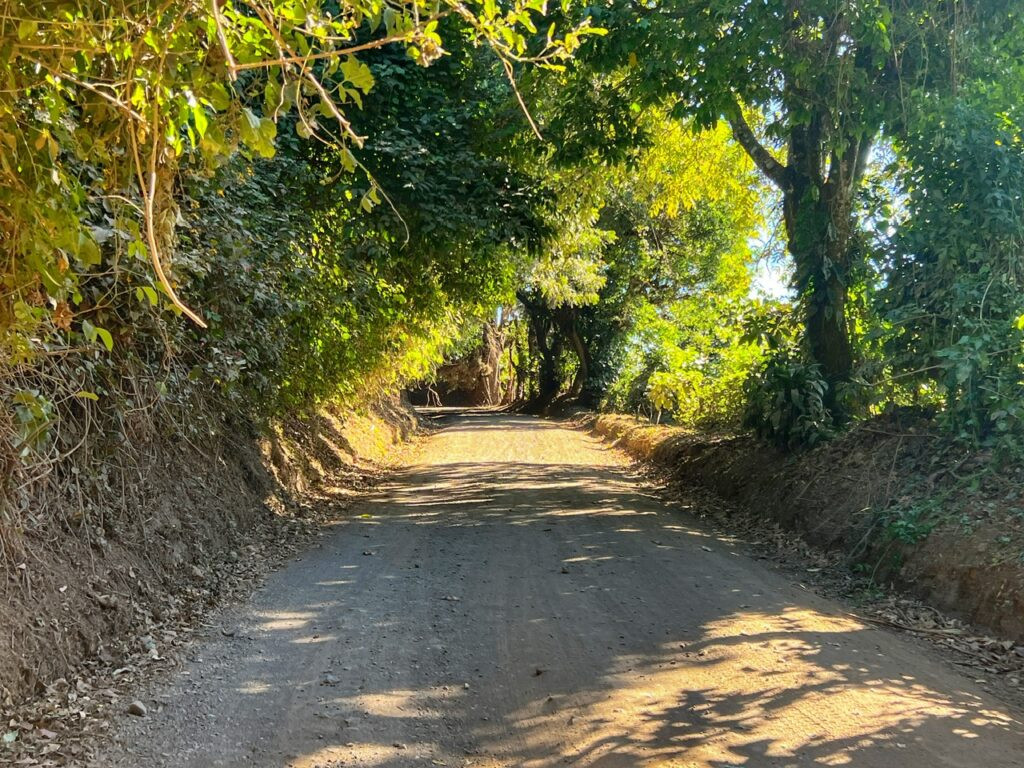
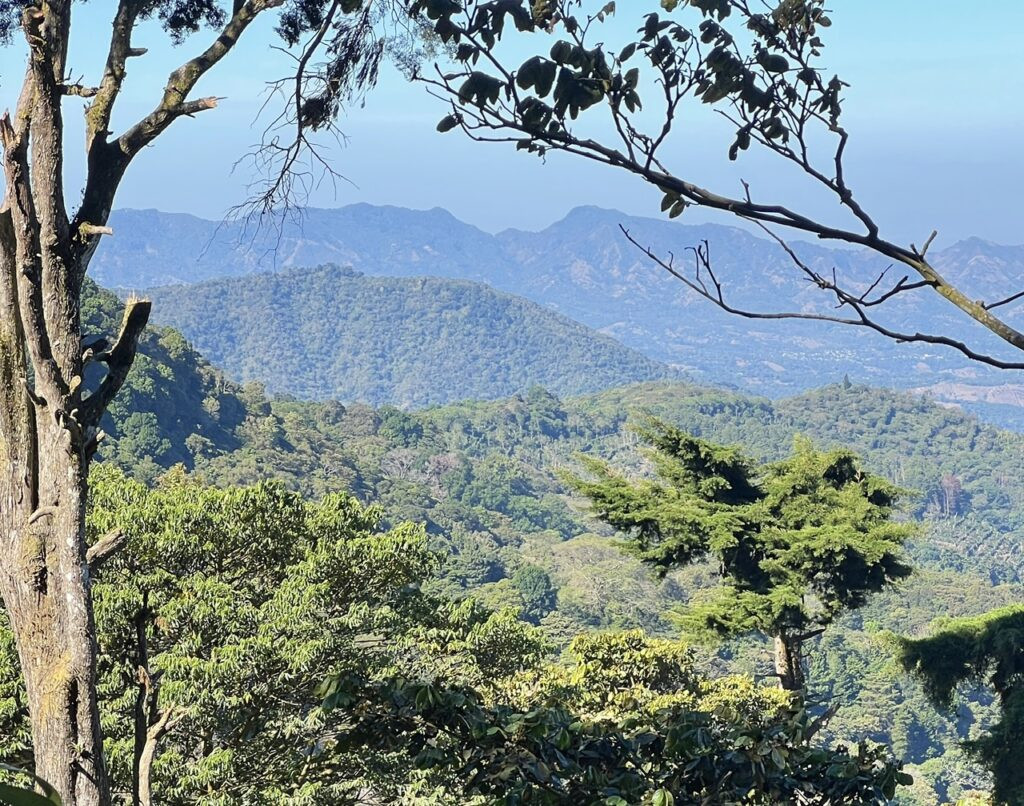
From Ataco, we jumped off at the fourth bus stop in Apaneca, as was indicated by our Mapy app and headed north towards Laguna Verde. The “trail” was predominantly a dirt road the whole way with several tuk tuks barreling up and down for the people who apparently didn’t enjoy a beautiful walk, mostly under the cover of a pine and oak cloud forest. And I’m pretty sure they didn’t get to appreciate these views either. So in this case, the journey was definitely better than the destination.
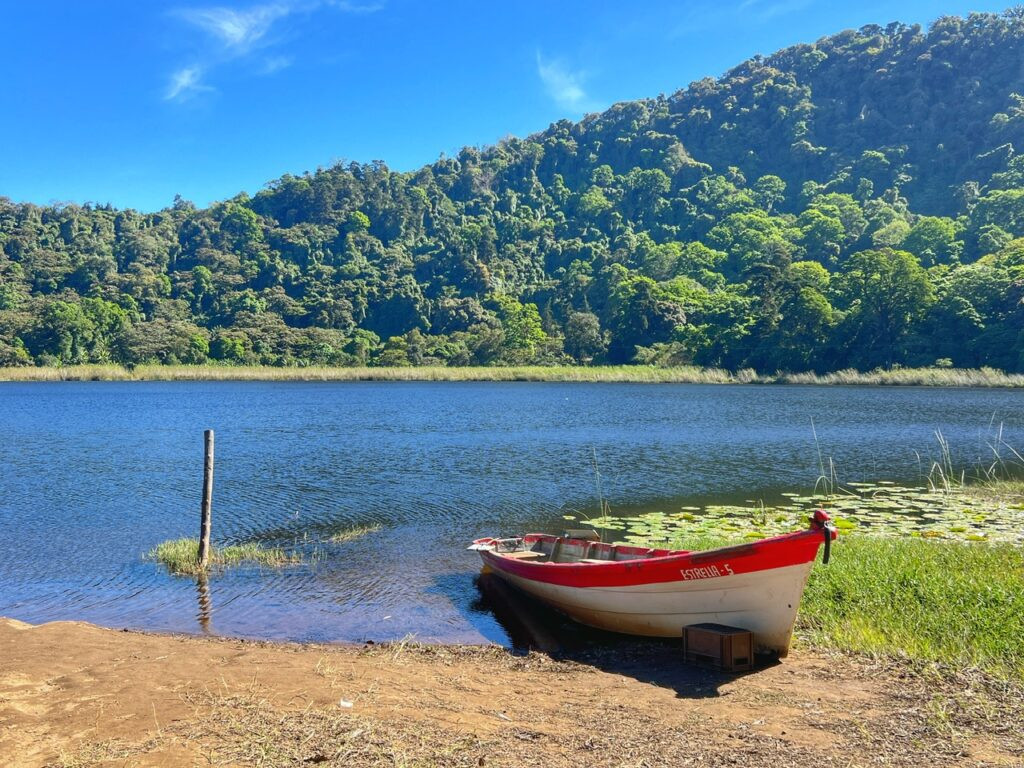

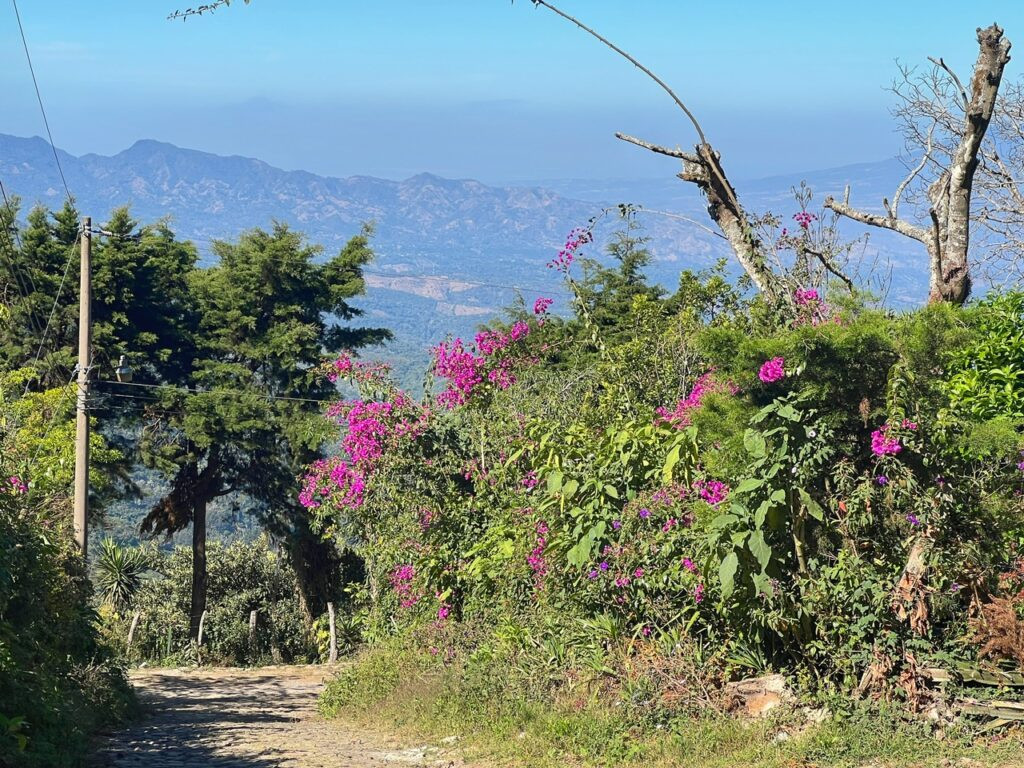
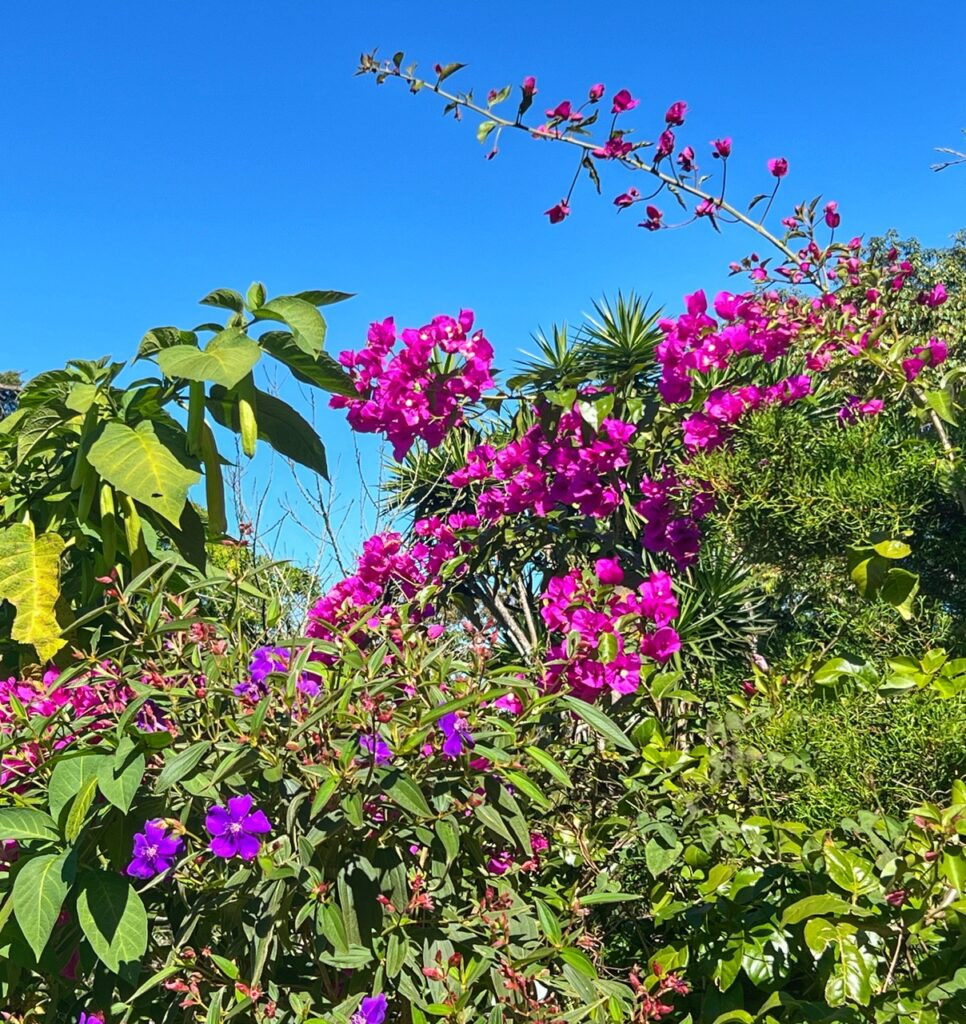
Arriving to Laguna Verde, an ancient crater lake formed in an extinct volcanic cadera. It was eerily quiet other than a few locals setting up some junk food stands. As we moved along, we were struck by more views across the valley. Immediately below us were fields and fields of coffee beans. Speaking of which, we were so happy to be back in the land of delicious coffee. Central Asia nearly killed us. 🤣 Oh, and did we mention the Ruta de las Flores boasts a lot of flowers this time of year?! Imagine that!
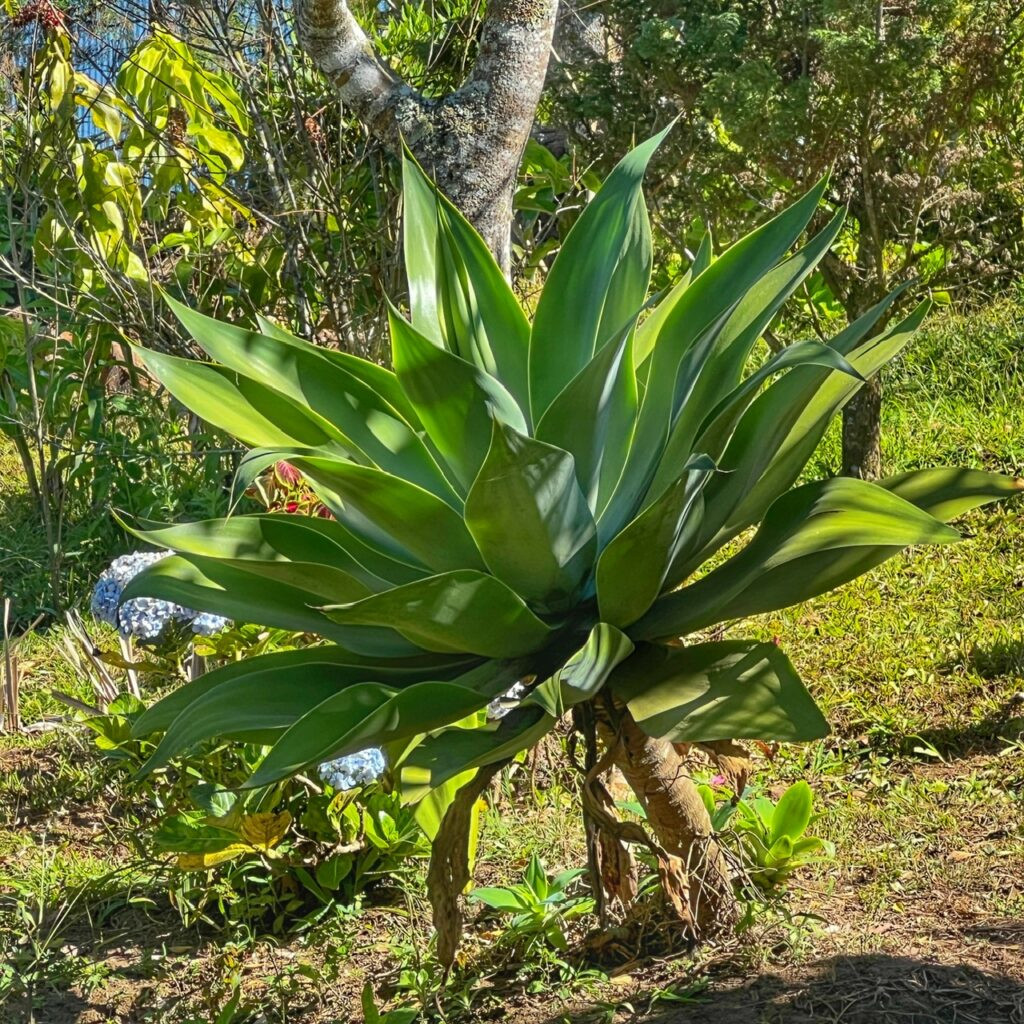
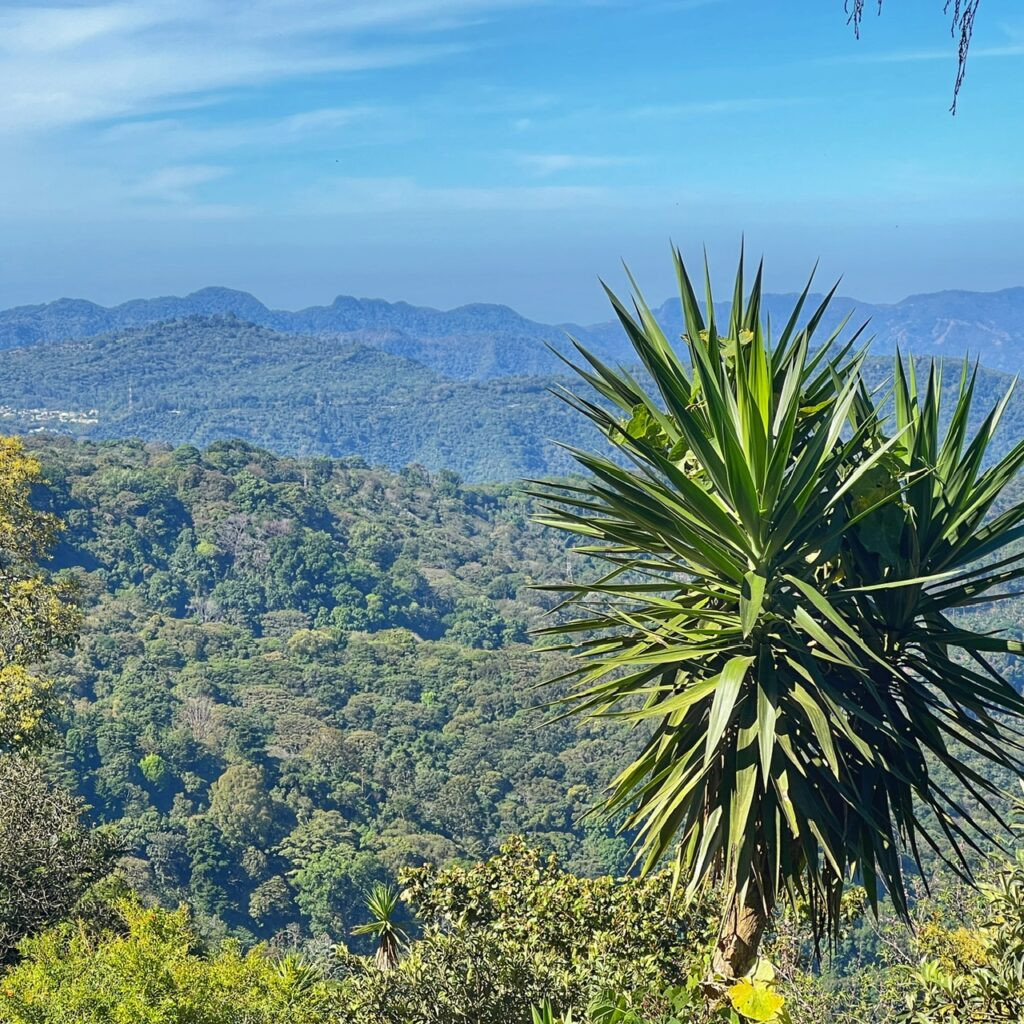
Along the trail we also found plenty of “Swan Neck Agave” plants which are also called “Lion’s Tail Agave.” Swan for the curved neck, which is unusual for agave, and lion for the puff ball tail. The plant is native to Jalisco Mexico, but is quite abundant here as well. Also, a fortunate Spineless Yucca that gets to check out this view all day. He didn’t seem too cowardly to us?!

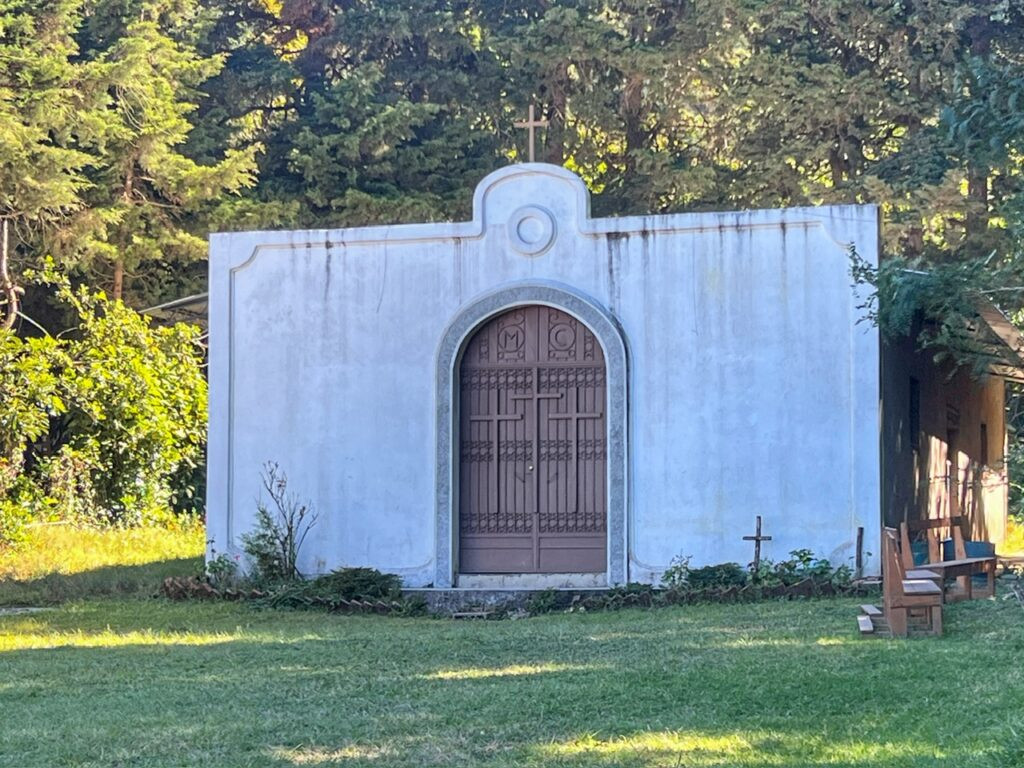
A village we walked through on the way had two churches and one unopened shop. Many churches seemed to be tagged as “evangelical.” And some were not tagged at all.
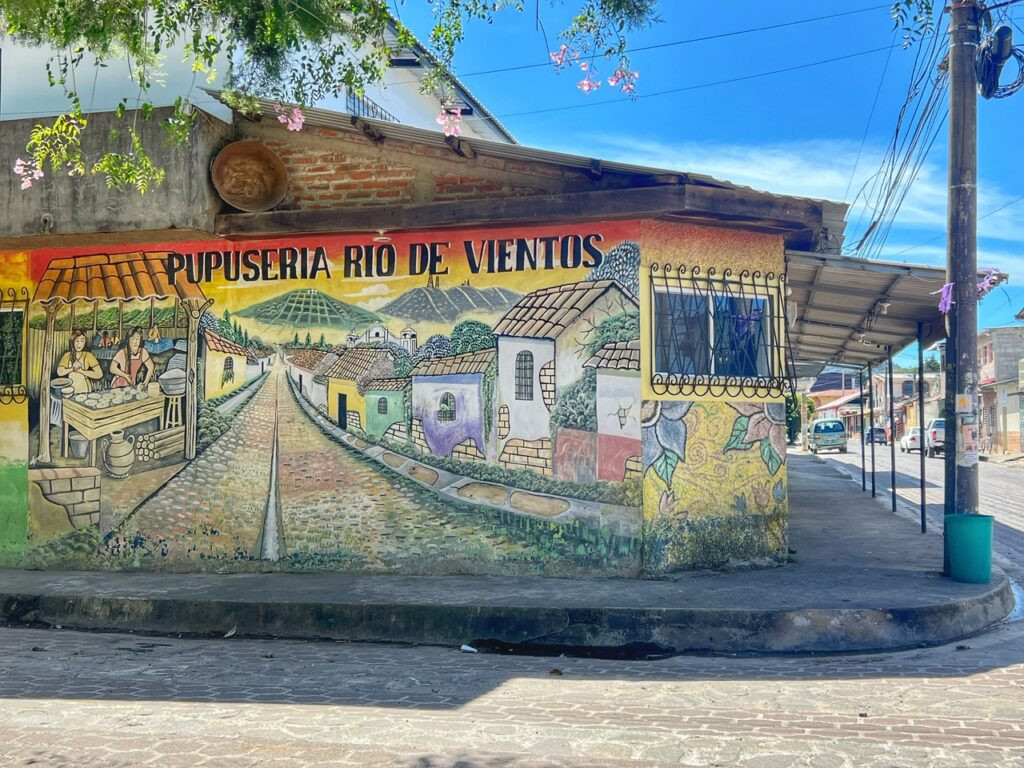
Leaving from here made Apaneca feel practically cosmopolitan with its beautiful cobblestone streets and vibrant murals.
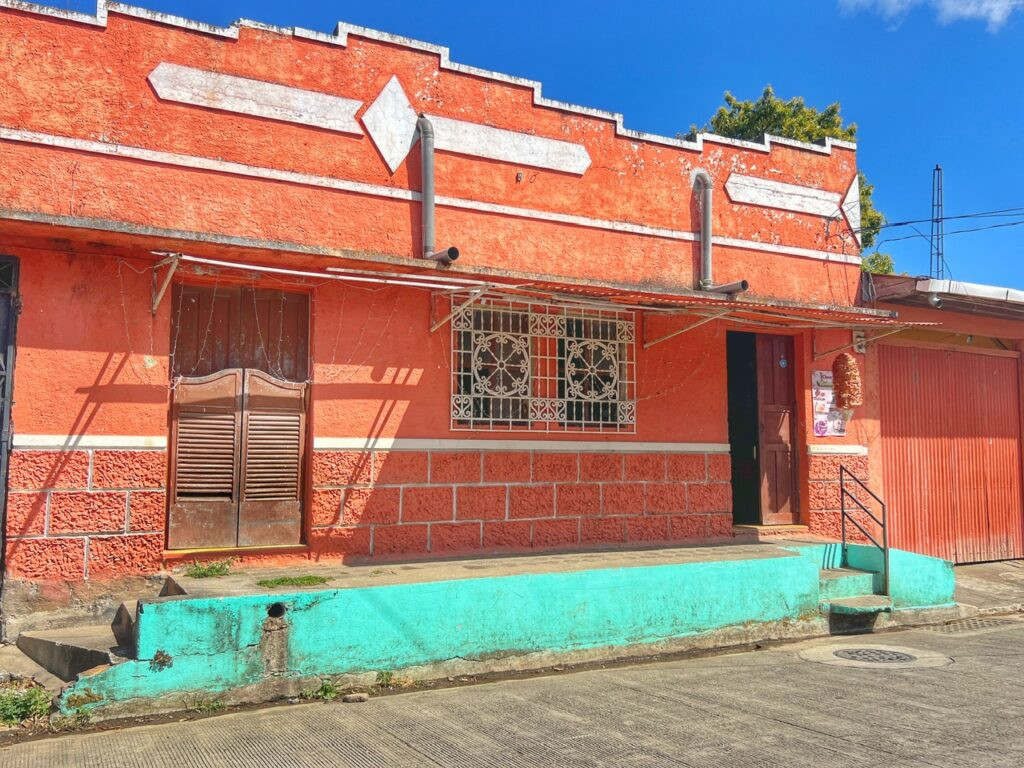
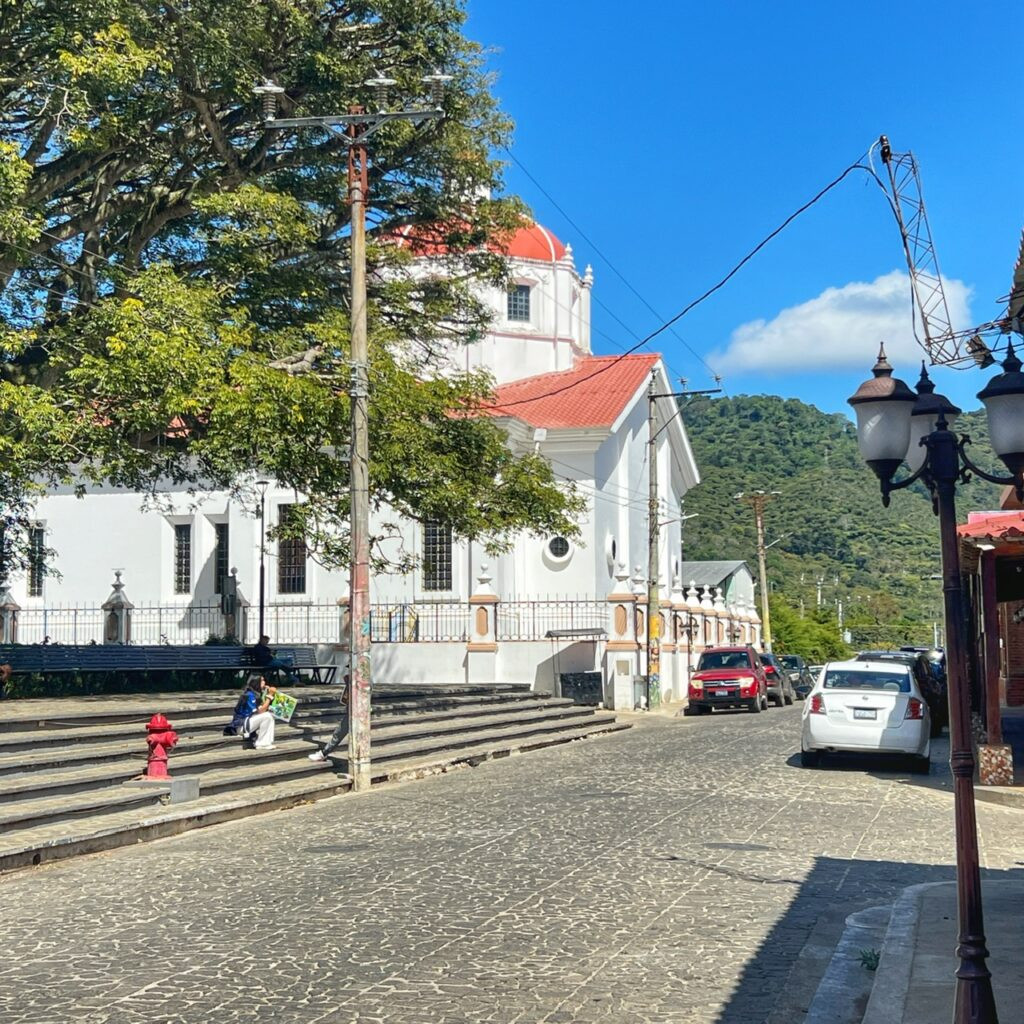
A typical house in Apaneca was salmon-hued, as was the church.

There were several restaurants, one interestingly with a French name, and an ice cream shop which we instead chose to sample. Other than these, the only signs of tourism were a few bouncing 4×4 buggies and the accompanying eager vendors, which they seem to have in all the Ruta de las Flores pueblos. Ahhh, nothing says tranquillo like the obnoxious roar of an engine!!!
There is also a bit of a tourist trap just outside of Apenca bizarrely called “Cafe Albania” with a giant laberinth, rainbow slide, zip lines and that kind of thing, which we chose to skip too. However, if you have kids, or just wanna drop some cash and act like one, it might be a good option. We have friends who enjoyed it.
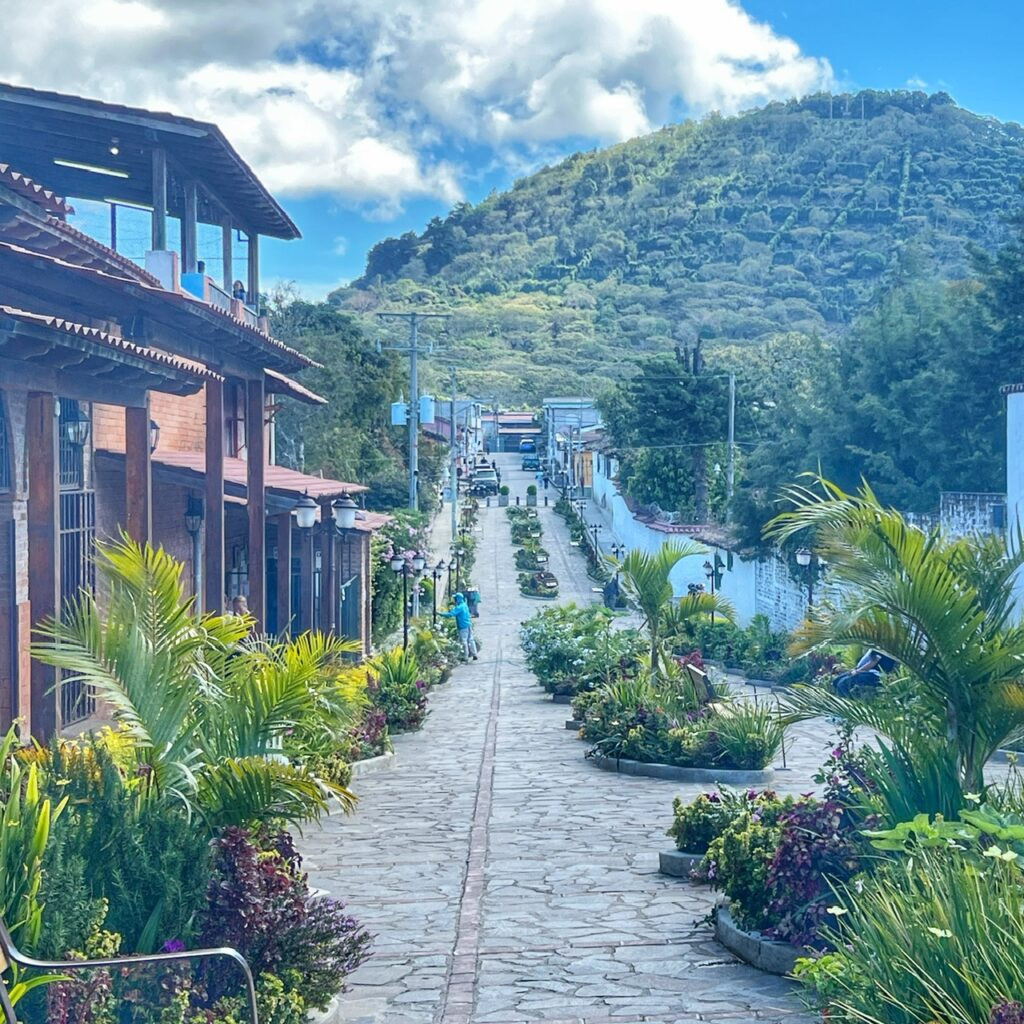

A tranquil pedestrian path leading toward a notably plopped grid of coffee plants on the side of the mountain. This modern form of planting reduces erosion, and makes harvesting and pruning more efficient.
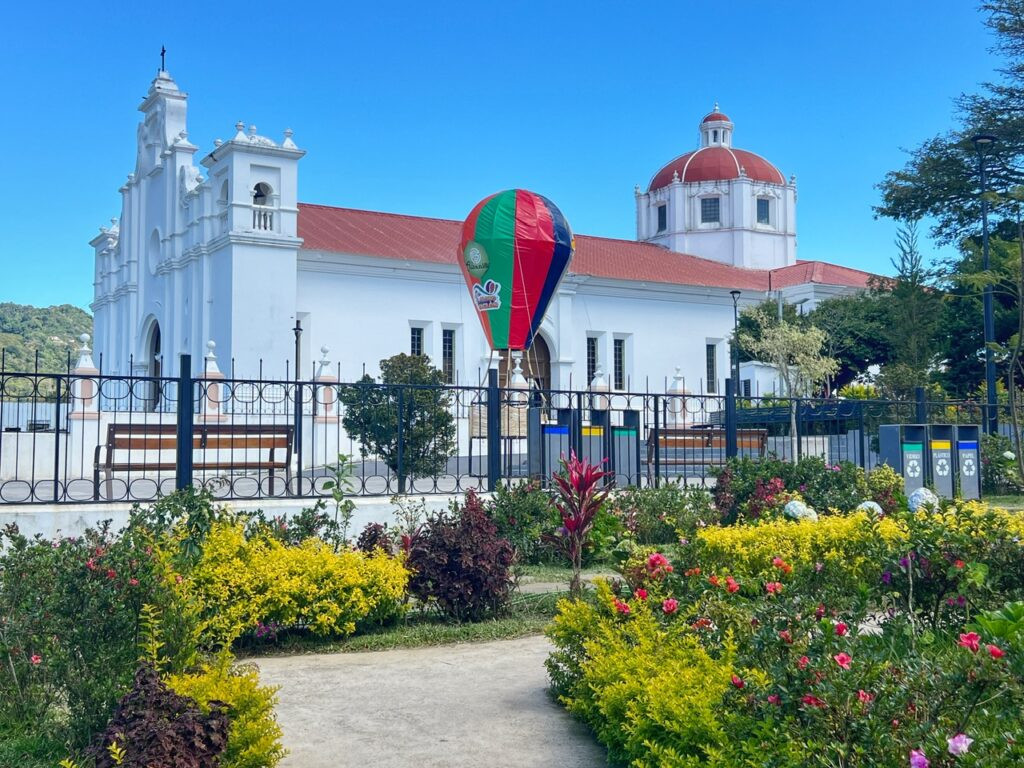
The center church and square of Apaneca is surrounded by gardens. All of it felt distinctly like Mexico to us, minus the redundant Instagram place name signage.
The Salvadoran people are also very friendly. And talented balancers as well. At least the women. No matter where we go in the world we rarely seen dudes doing this…
A Motorbike Adventure
Although a lot of the area near Ataco on the Ruta de las Flores is accessible by bus, we chose to rent a motorbike from the backpacker town of Juayua so we could get off the beaten path and gain a little more independence for a day. Our day consisted of visiting ancient Mayan ruins in the town of Chalchupa, exploring bubbling fields of geothermal activity, soaking in volcanic vistas and basking in piping hot springs.
While doing this road trip, we learned very quickly that the main roads in this area are absolutely phenomenal. The back roads? Eh…not so much. In fact, we had to turn around on a couple roads, and wish we had turned around on a couple others. But it wouldn’t be an adventure without it, right?!

Now that you’ve seen a summary of the main stops, let’s back up a bit, shall we?

Here’s mi cabeza, which is at least double the size of Renato’s with the helmet on. Ha. Definitely one of the beefiest helmets we’ve received renting a bike. Not necessarily a bad thing….except for the neck cramping and general feeling of being a bobble head. Anyhow, we rented from Renato at “Motorcycle Rentals” in Juayua for $15 for 24 hours. He was extremely helpful and trusting, not even taking a copy of our passport or checking to make ensure we’d filled up the gas!
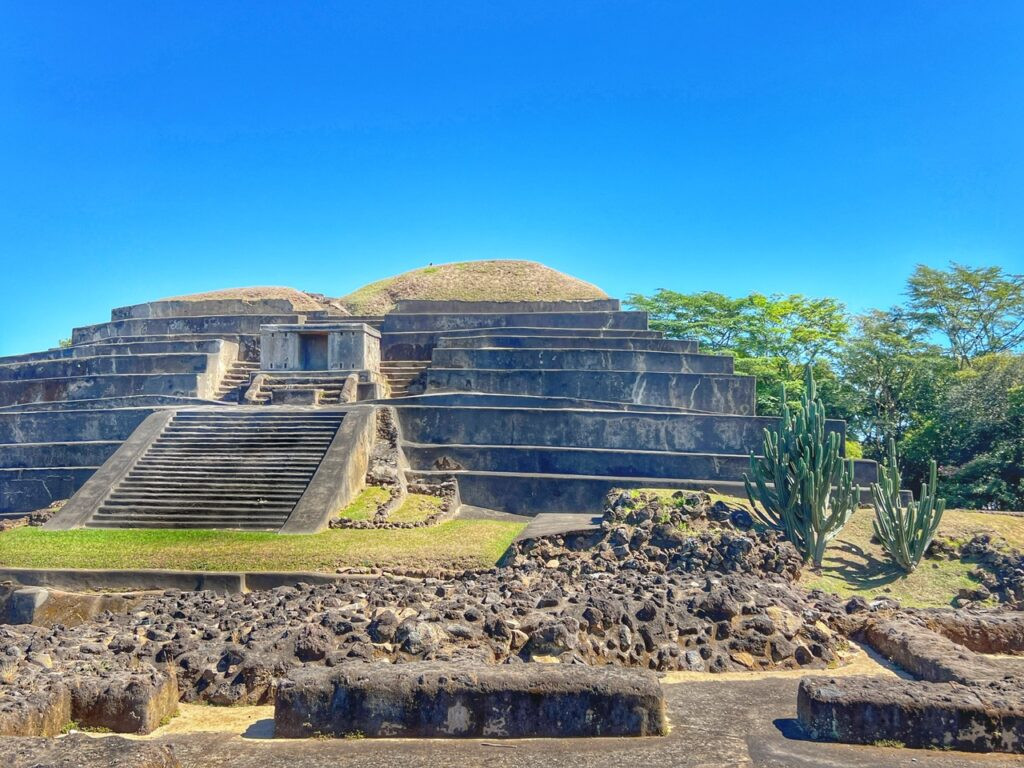
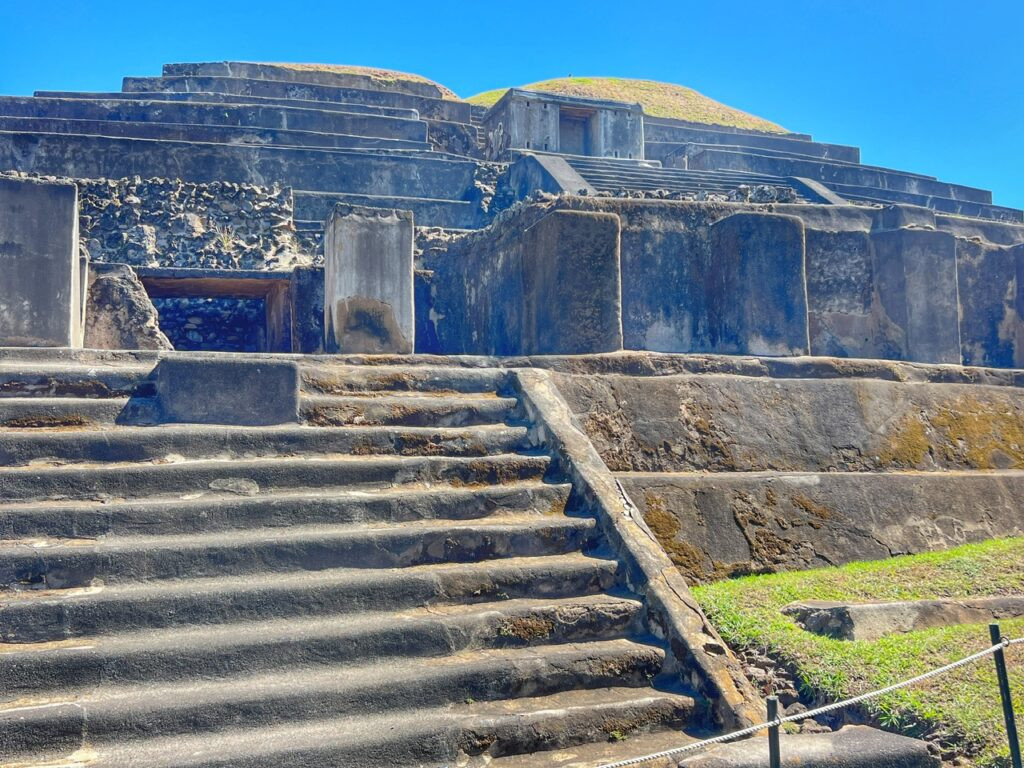
We had hoped our first stop would be “Murphslife Botanical Farm,” which was listed as a health resort, garden and cafe with a phenomenal view. Unfortunately, it wasn’t actually open yet, but we’d recommend checking it out for future explorers. Instead, we headed on to Tazumal Archeological Park, which we had to do via Santa Ana because the shortcut Google listed was simply stupid to try.
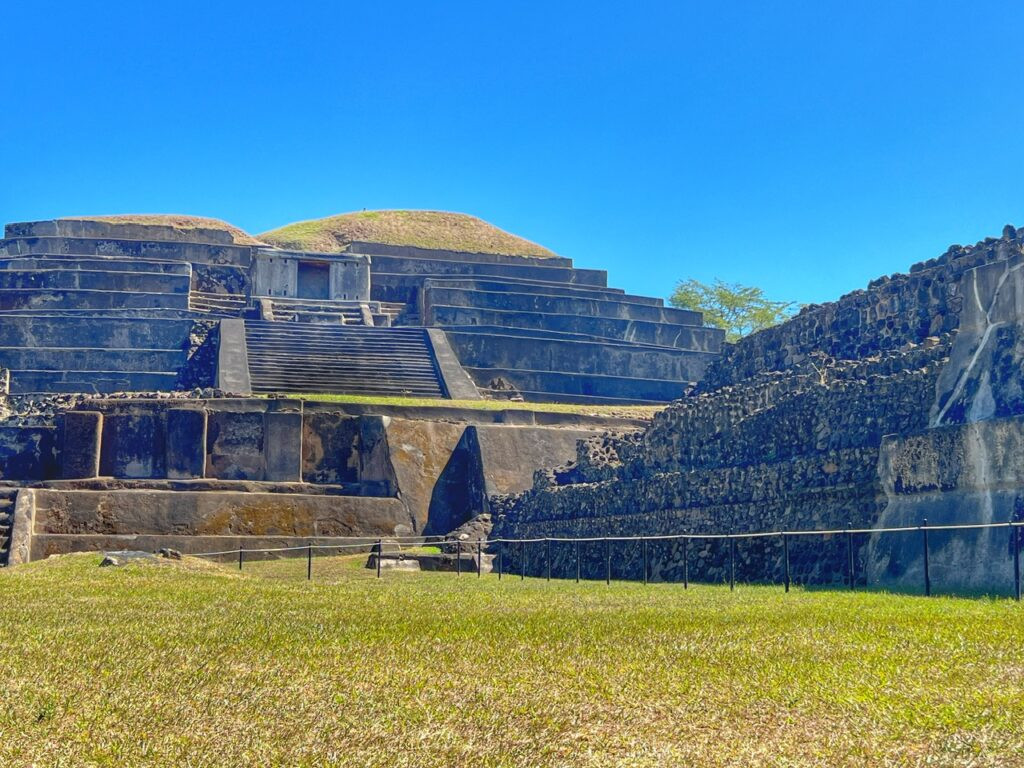
So, about Tazumel…initial construction began around 1200 BC, but the main ceremonial structures and pyramid were built and expanded during its height from 200-900 AD when Tazumal was a significant Mayan ceremonial and residential center with extensive structures, drainage systems, tombs and plazas.
Between 900 and 1400 AD, it was then occupied by an unknown group coming from Mexico, then the Toltecs, who settled in these lands and were descendants are the Pipil tribe. It was here we had our picnic lunch while sitting in a giant piece of history. Pretty sure those guys had to work a bit harder for their meals than cracking open a can of tuna and slapping it on a Bimbo wrap.
The main pyramid and the building of the pillars represent the remaining part of Tazumal. From about 350 to 600 AD, the main pyramid was modified about seven times and it is very likely that it was a place to worship the most important Mayan deities.
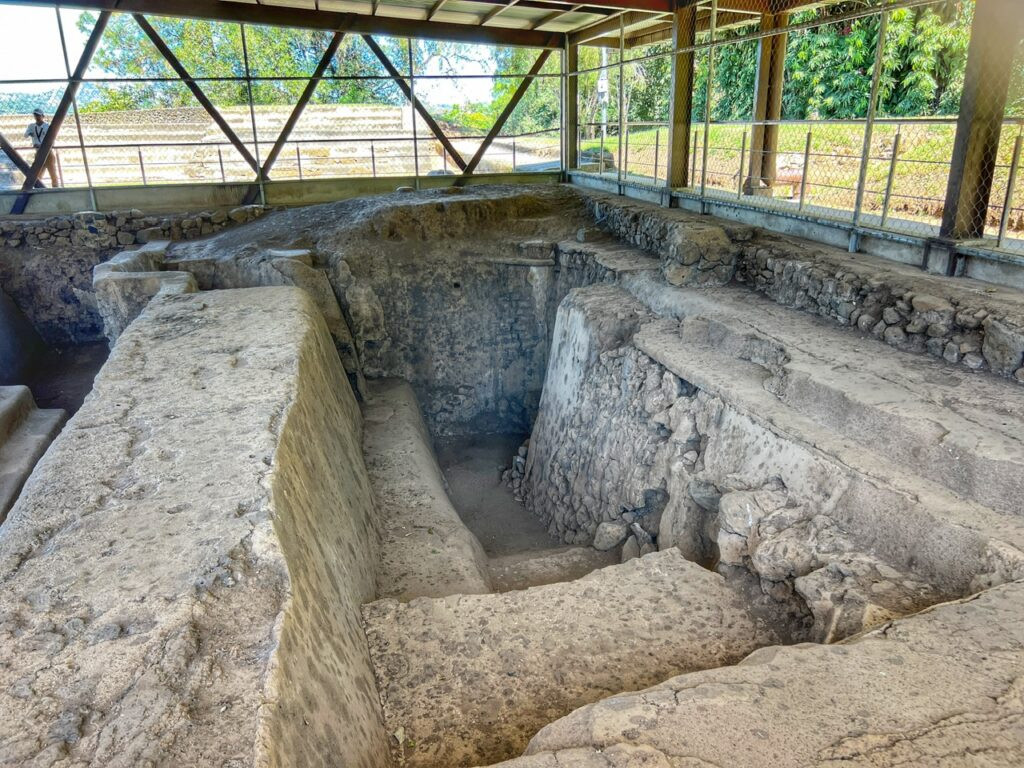
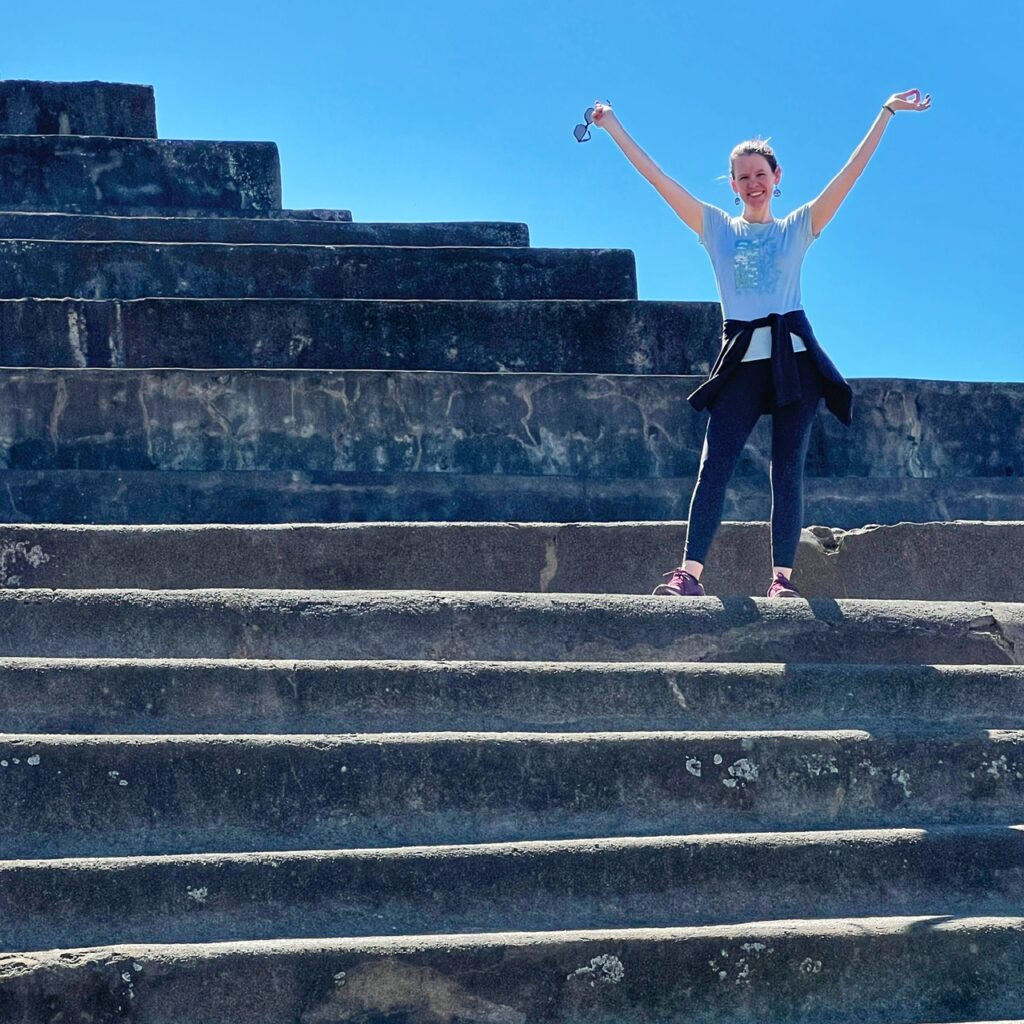
Other parts of to the side of the main pyramid were a bit less clear. Although you can’t climb the main pyramid, there is a section you can climb if you want to activate your glutes a bit.
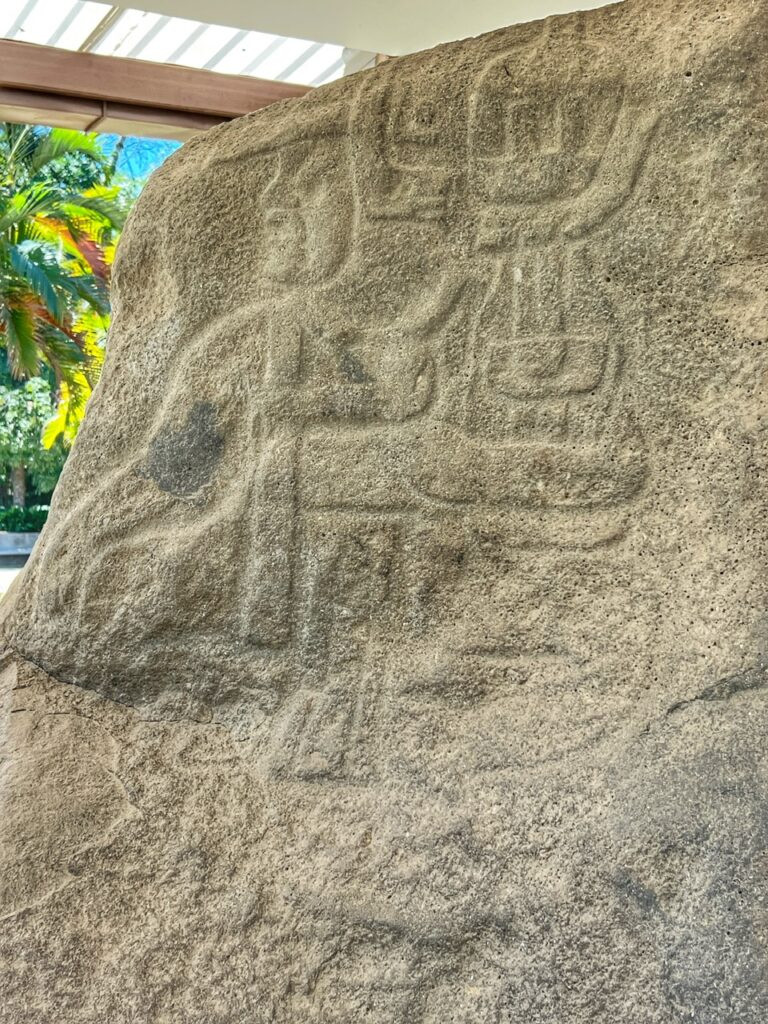

This carving signifies that there was an Olmec presence in Chalchuapa, which were a cultural group that was present in coastal areas of the Gulf of Mexico, State of Guerrero, southern coast of Guatemala and Chiapas, among others. They were considered the first great Mesoamerican civilization, from around 900-800 BC.
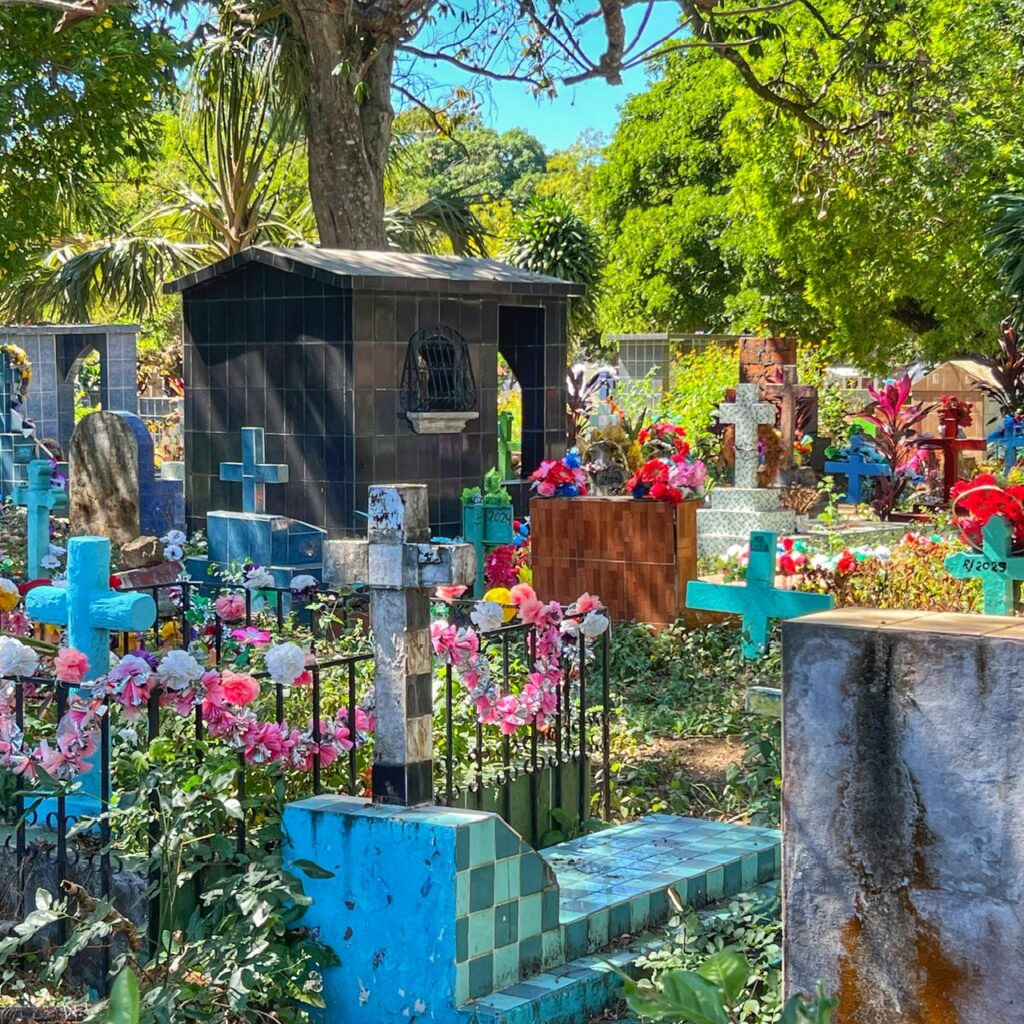
Next door to the ruins, you can also find another set of more colorful tombs worth visiting.
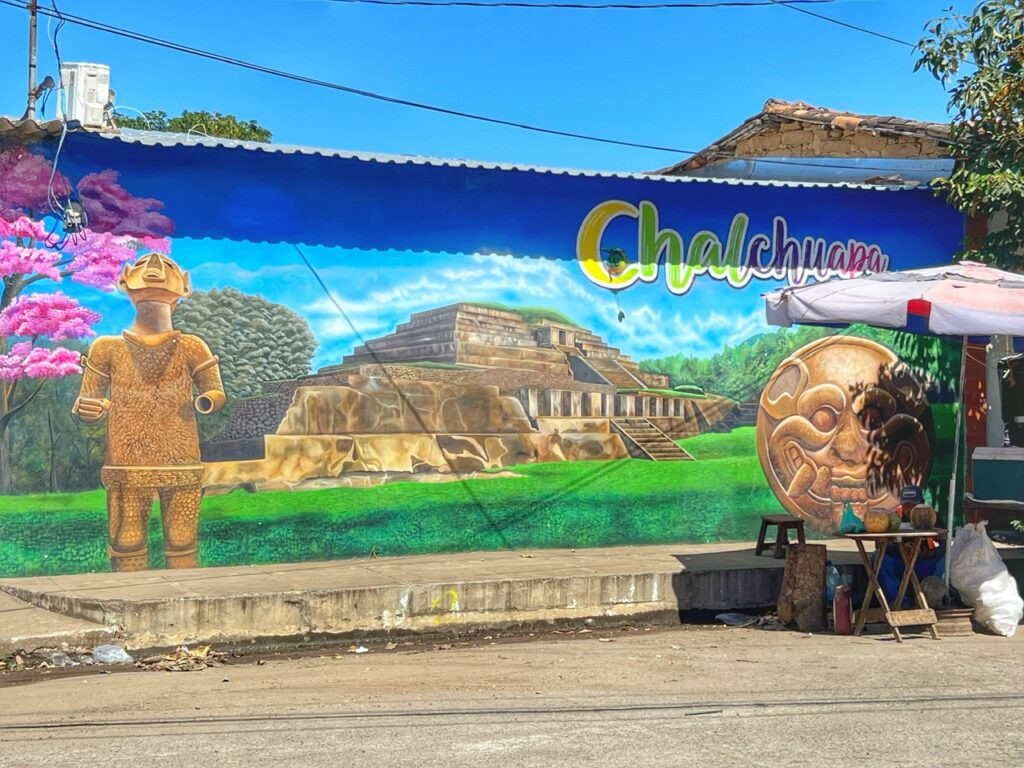
The town mural of Chalchupa. We love how every village we’ve entered seems to have one of these! It was here we wandered over to a man selling coconut water for $1.50…


…which tasted oh-so-refreshing, although the temperatures weren’t overly hot. Our bad ass bike. Can’t believe those colossal helmets didn’t tip it over!
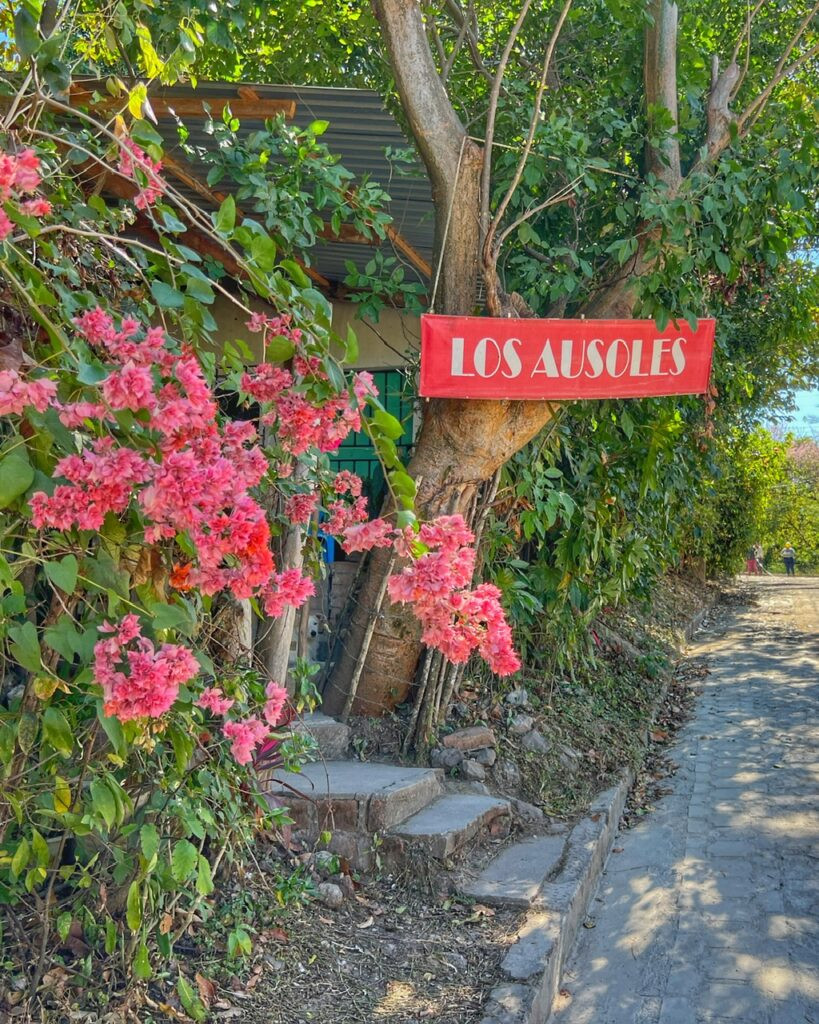
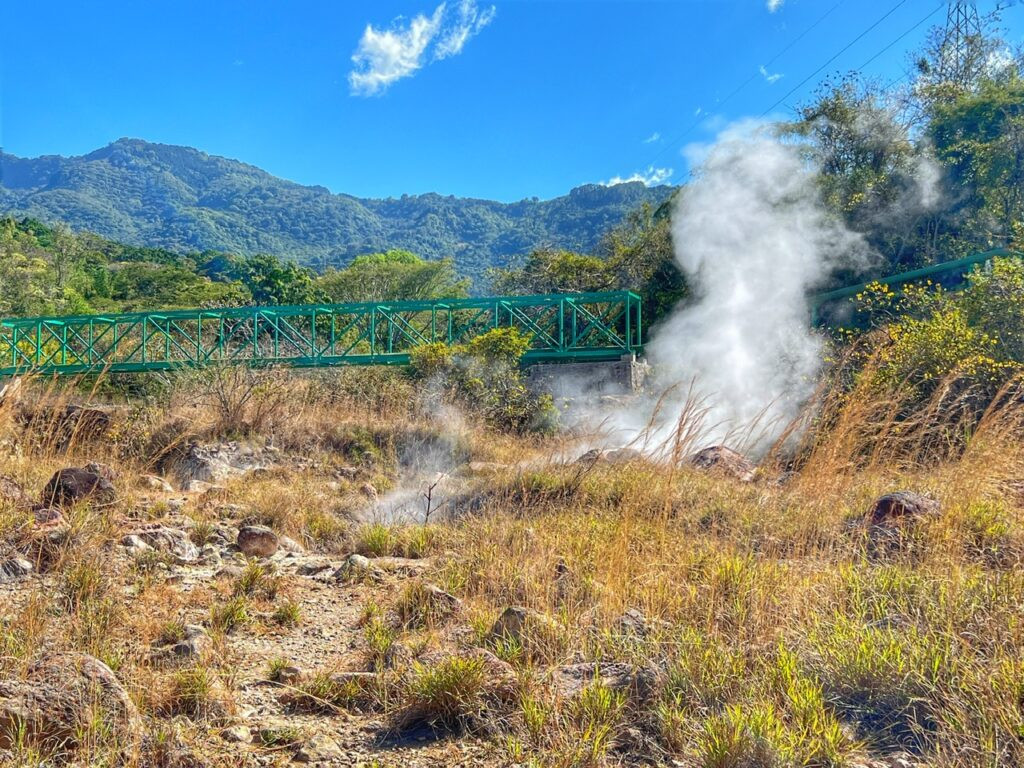
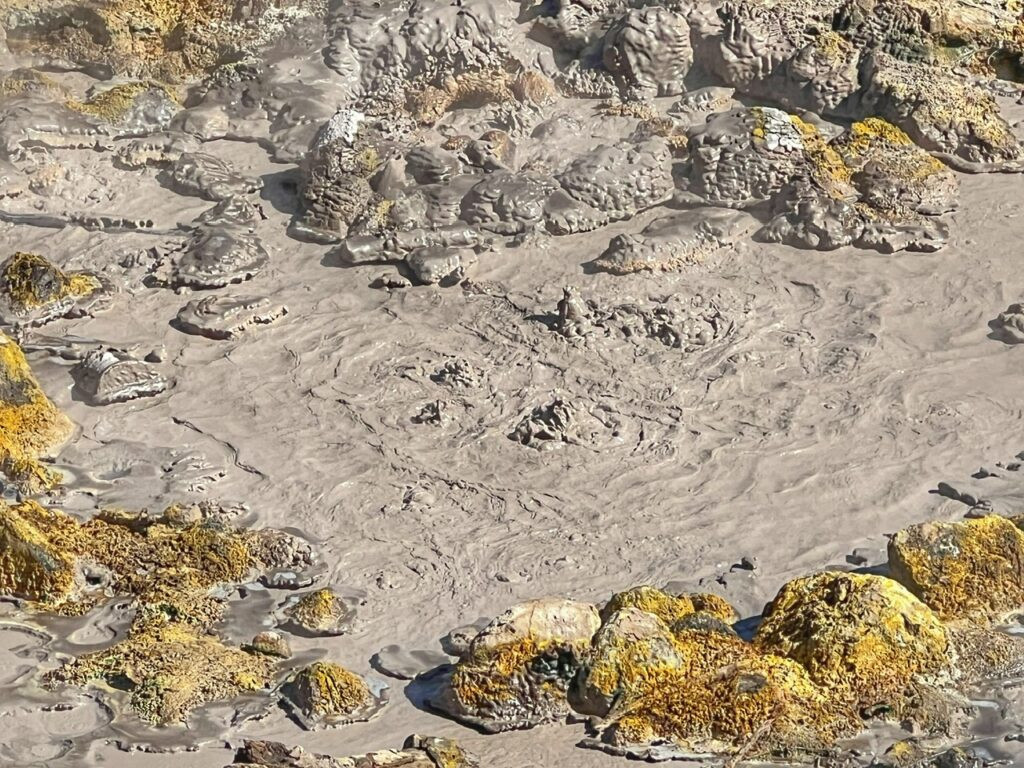
From Chalchupa, we took the back roads to Los Ausoles, which seemed like an easy “short cut” on the map down some gnarly and undulating back roads…aka the complete opposite of a short cut. It is called Los Ausoles, which loosely means “the boiling place” in the indigenous language of Nahuat, although it looks muy Español. It explains why the Tazumal people existed where they did in this land of fertile land, water and volcanic energy.
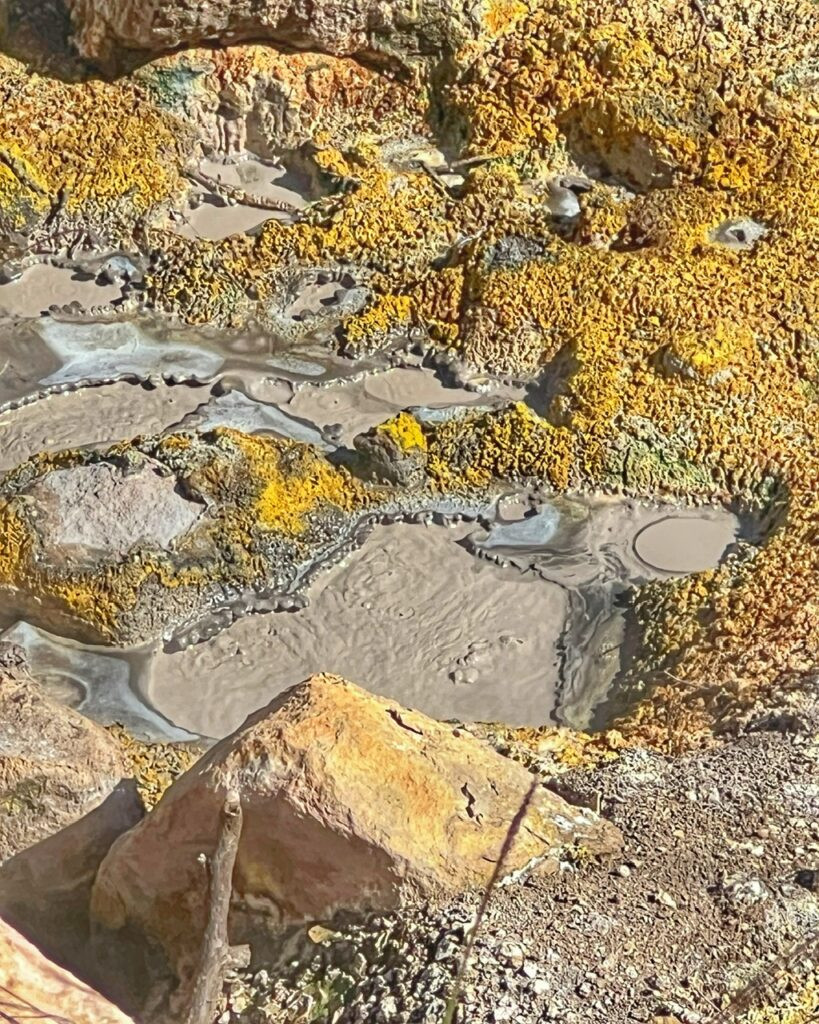
In short, Los Ausoles is raw and exposed volcanic heat at the surface. Here you’ll witness hissing natural steam vents, boiling mud pools, and rolling fumaroles all on a quite unsteady slice of earth with zero signage or ropes indicating where to walk. Fortunately the nice old lady that took our $1 told us generally which areas to avoid, but if anything got lost in translation, which was likely, we were a bit susceptible to being simmered.
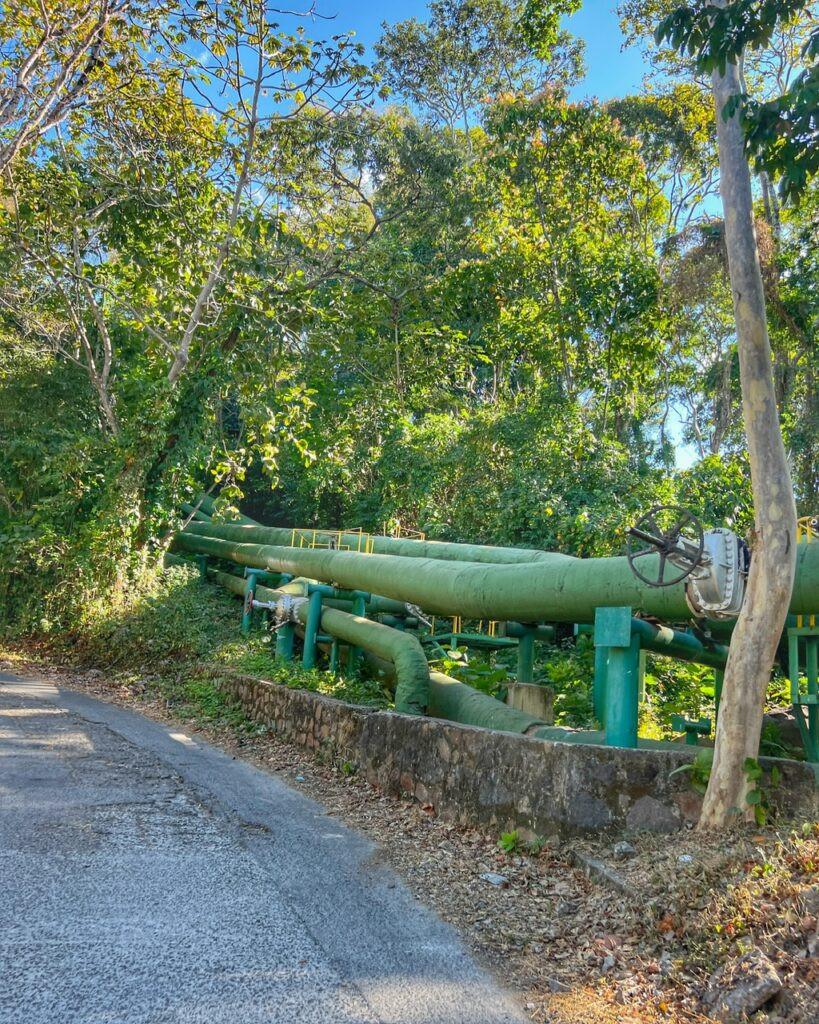
Today, this geothermal activity has helped lead El Salvador’s geothermal energy projects, although the area surrounding Los Ausoles looks a bit like a water park to us. Regardless it was an interesting side trip, though not sure we’d recommend because it was difficult to get to and not exactly the safest thing we’ve ever done!
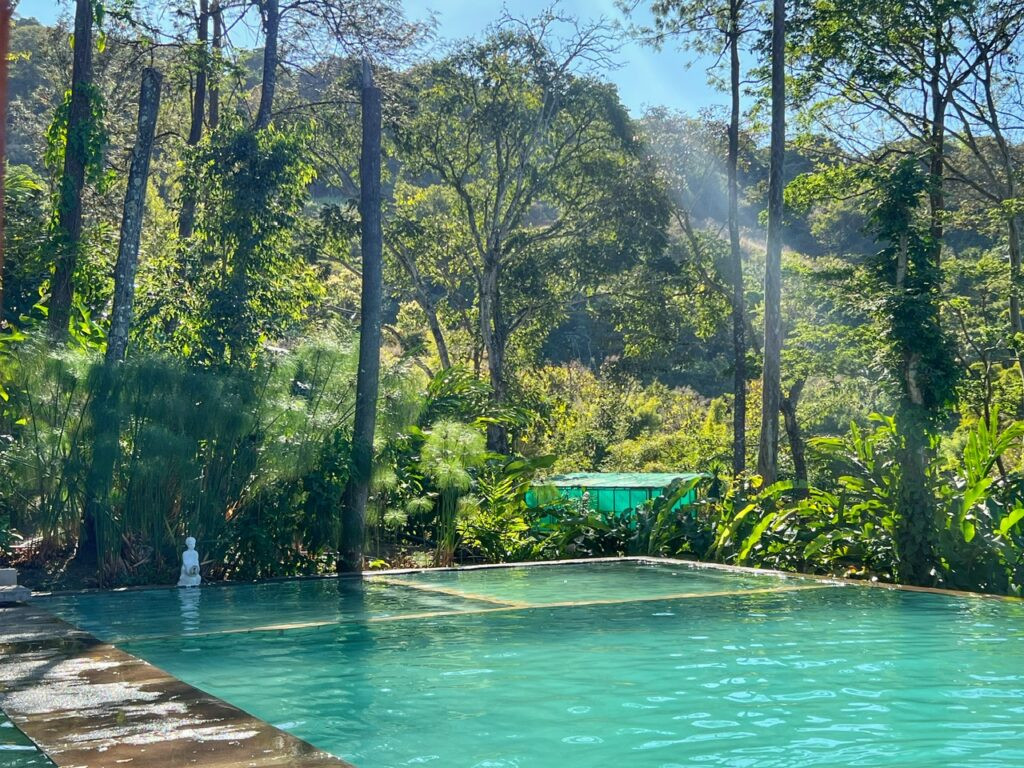
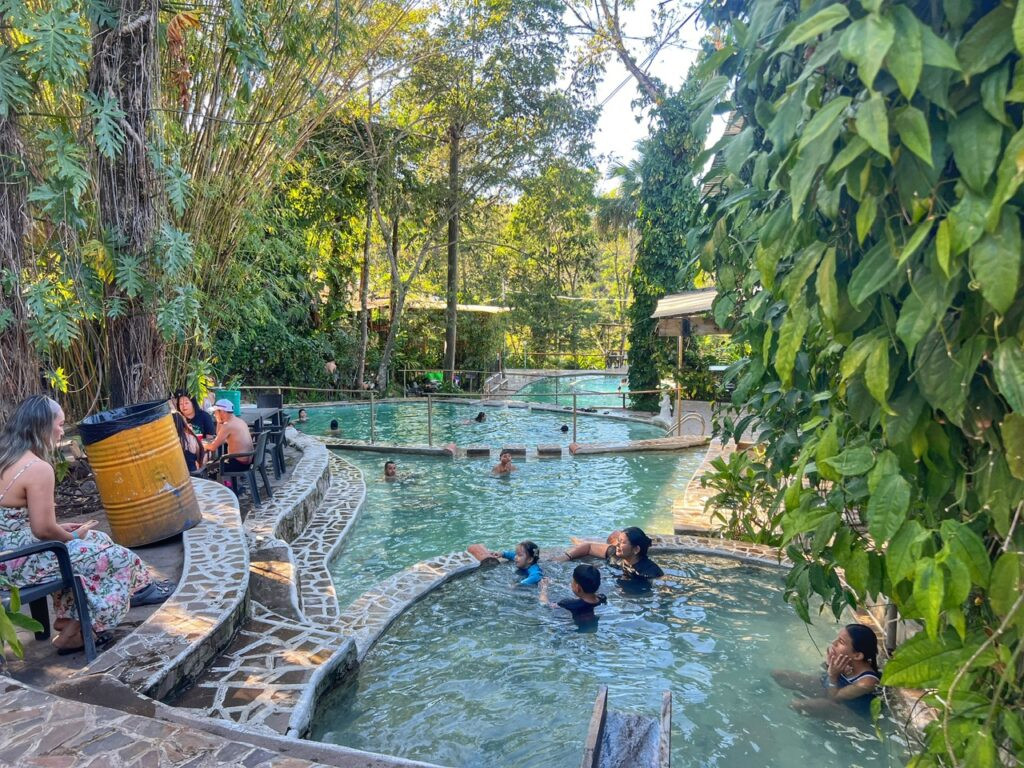
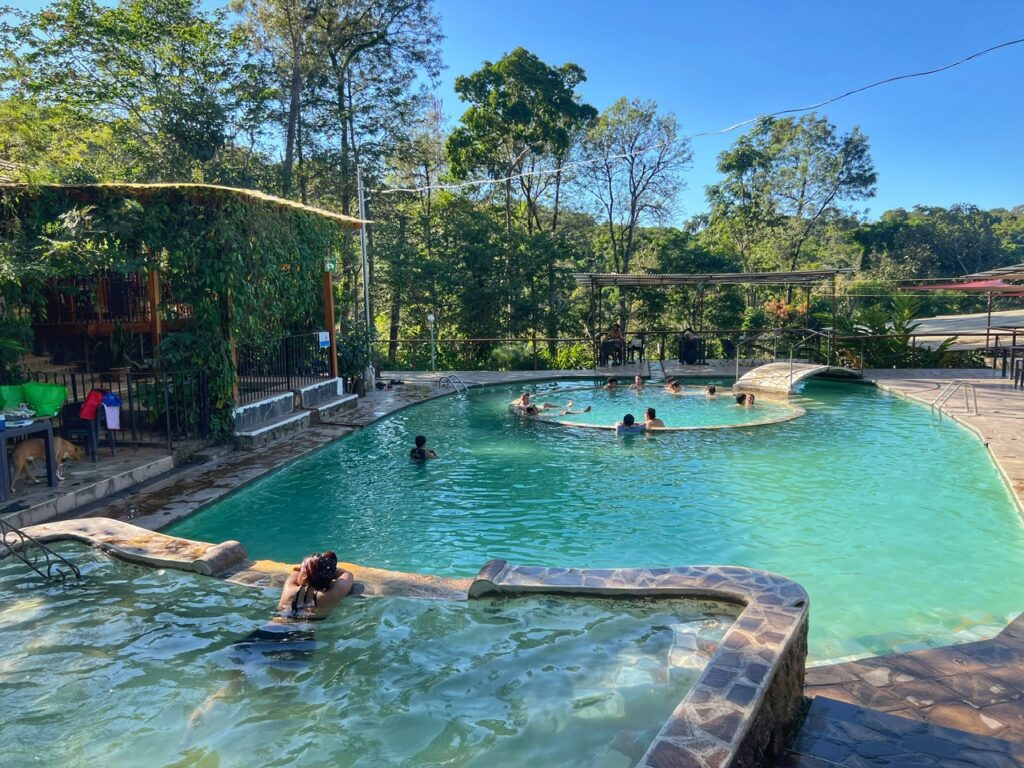
From Los Ausoles, there was also no accessible way to get to Termales de Santa Theresa, contrary to what both Mapy and Google Maps will tell you. Thus, we had to go the very long way around to get to this natural hot springs park complex with dozens of warm to cool pools and therapeutic activities, which was a delicious wind-down after bike-bumping for hours.
It was a bit crowded, and a bit overpriced compared to others we’ve been to for a couple hours, but if you chose to spend the day, you’d undoubtedly get your $10 worth. The pools start at a sweltering 46 degrees celsius (115F).


If you wish to do add ons, they also have things like mud masks and relaxing massages, as well as mud baths, saunas and other mineral treatments.
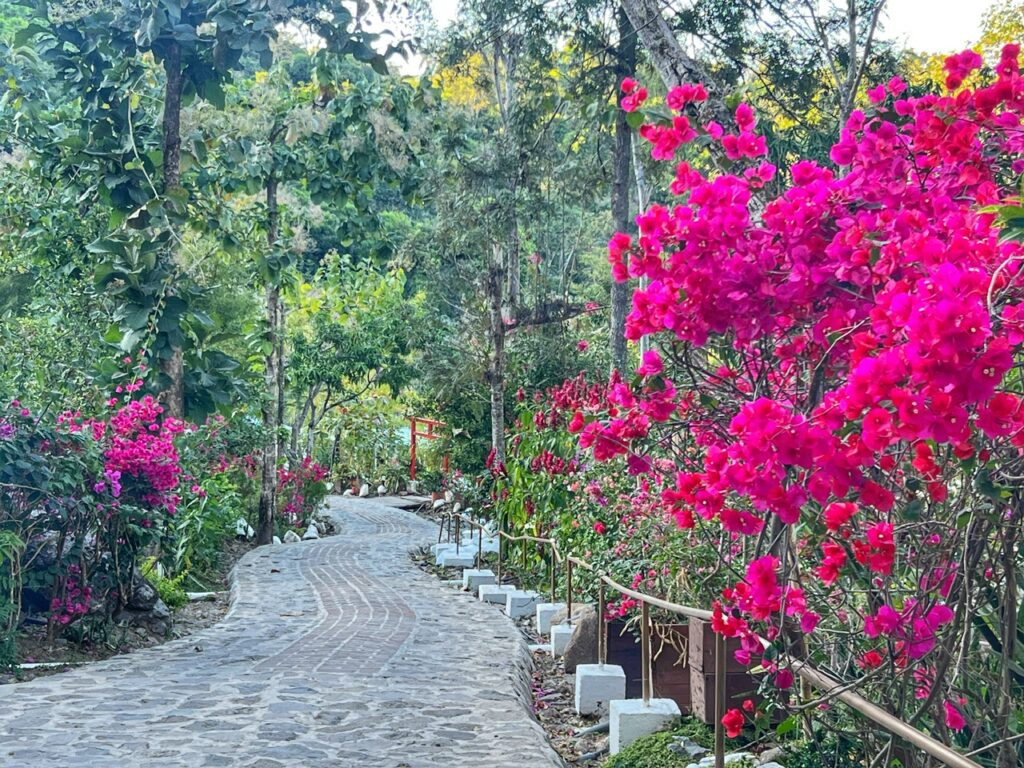
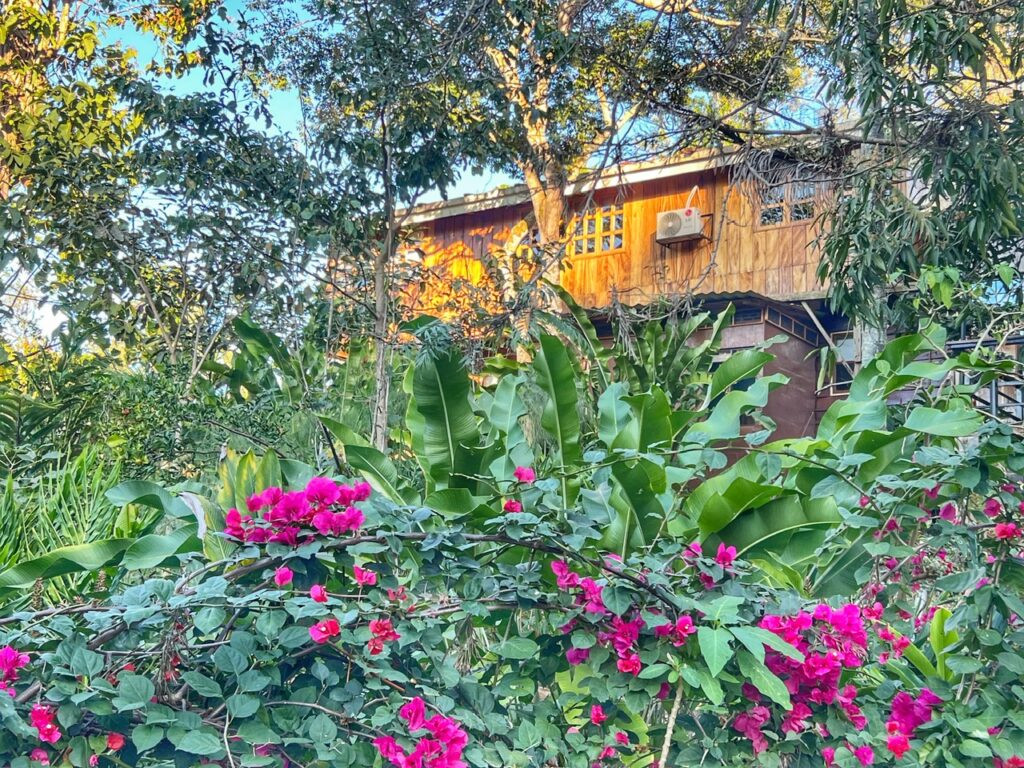
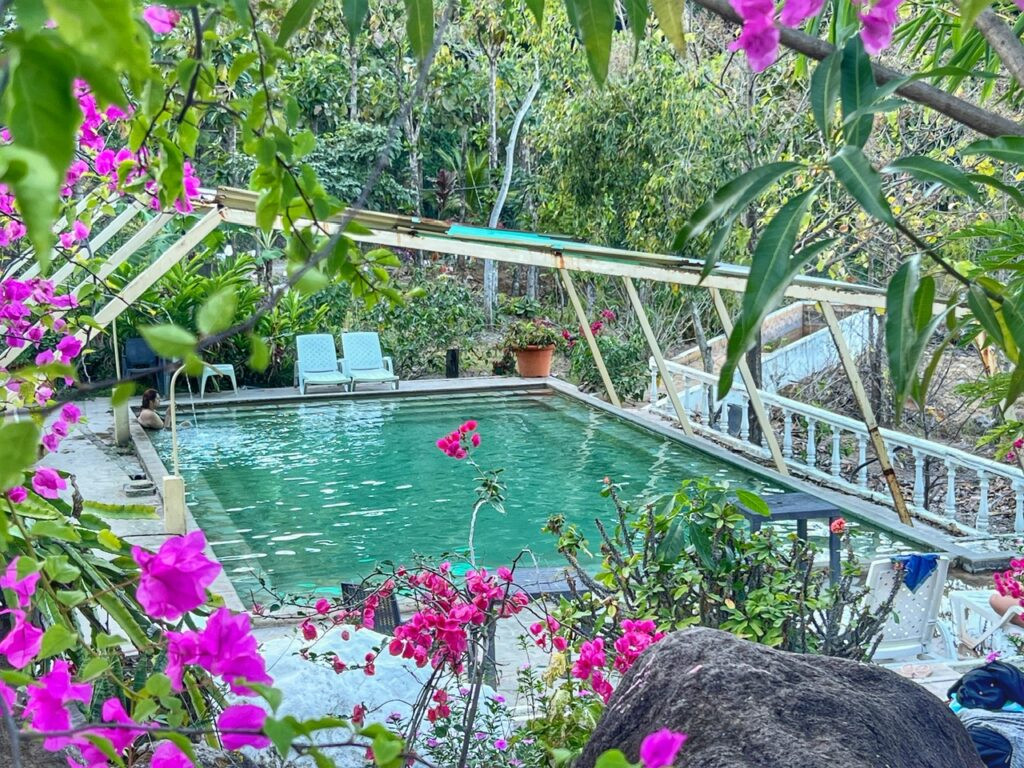
We also enjoyed just ambling through the reposeful grounds, where you can also rent cabanas for the night. And the more we wandered, the more inviting pools we found. We were a little disappointed we’d already changed back into our grubby bike clothes because many of them were virtually empty.
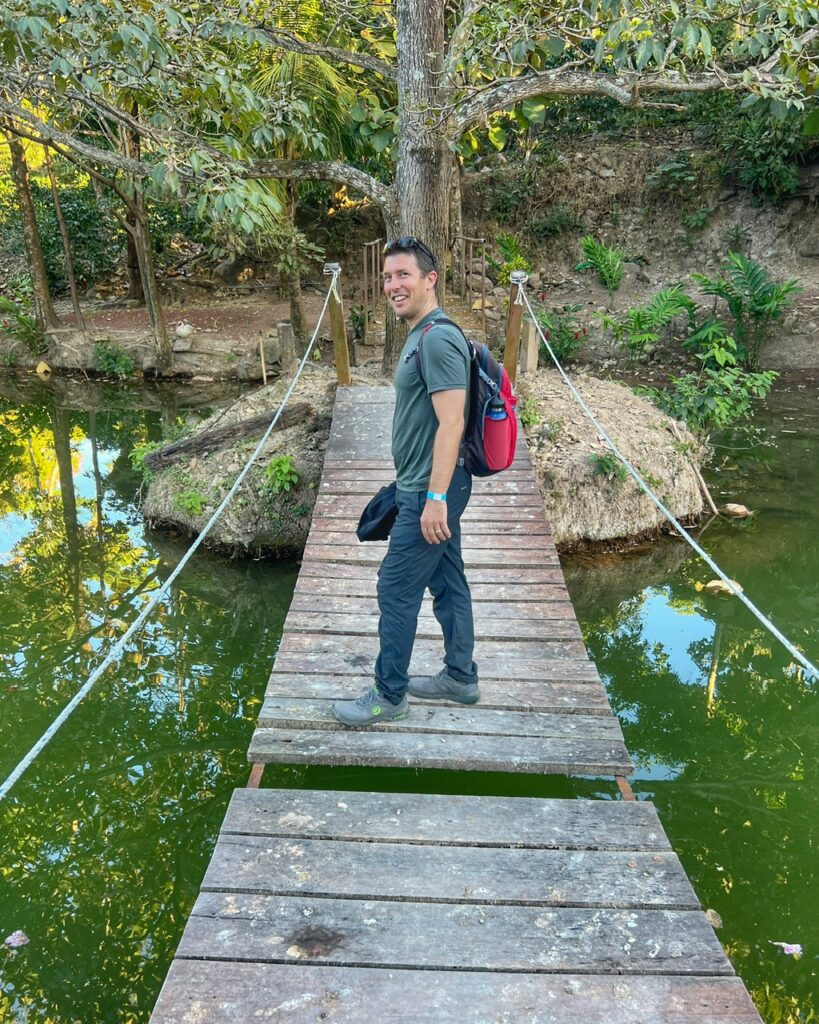
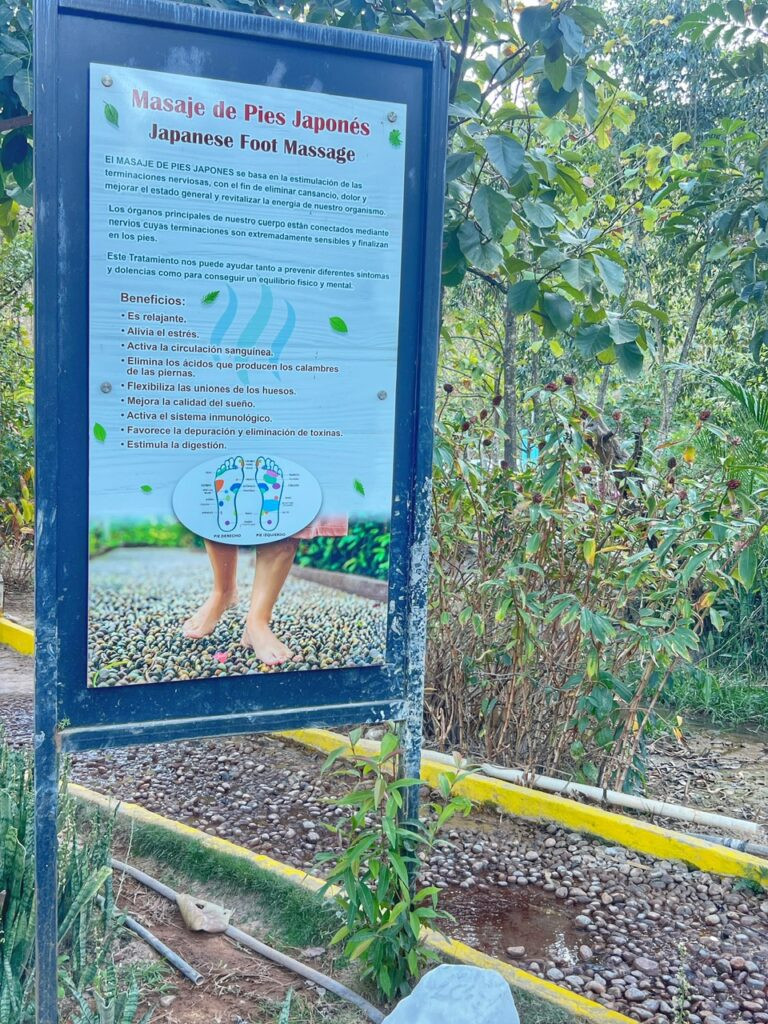
Dr. Jones!! Look! A bouncy bridge! Fortunately no crocodiles were heaving hungrily below though. We only dodged a few menacing ducks as we made our way toward the Japanese Foot Massage trail.
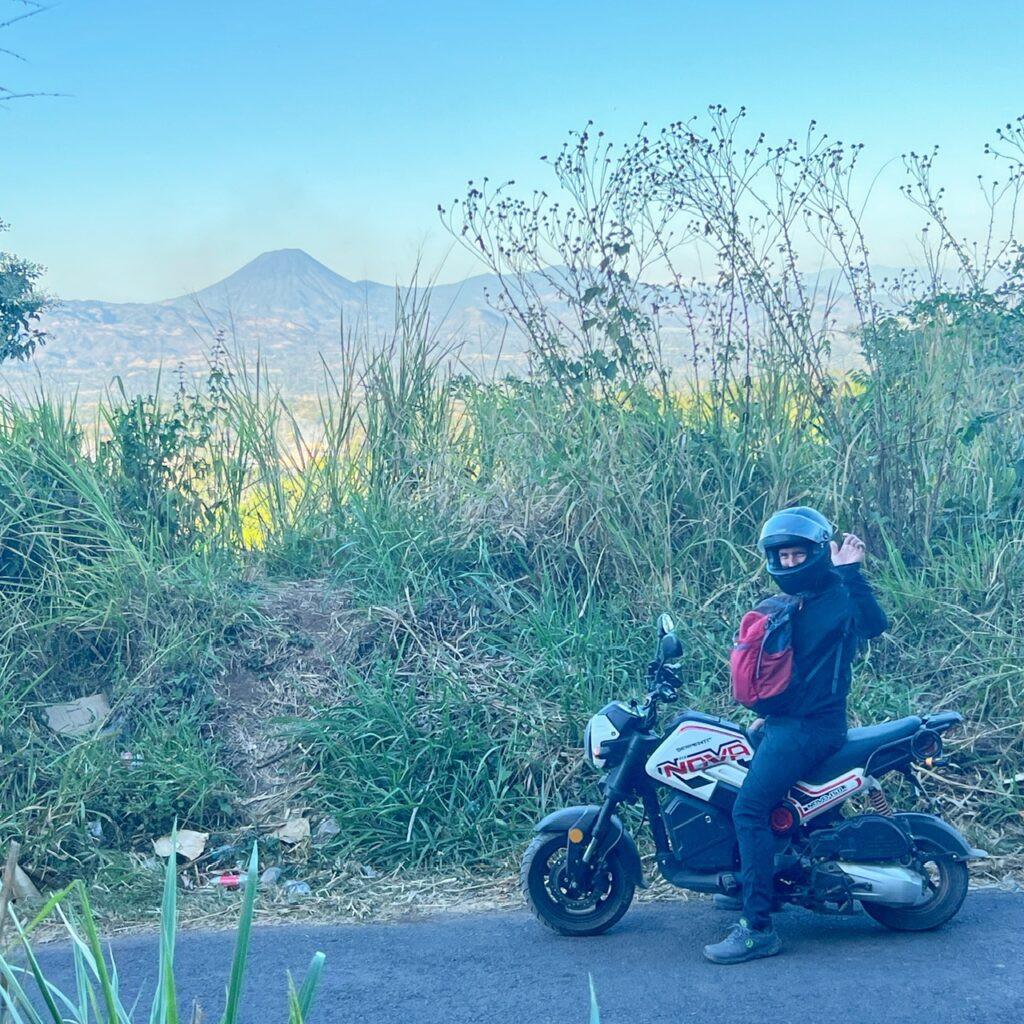

All in all, it was quite a day. We wanted to do a bit more, including a waterfall, but unfortunately were losing our daylight. Time to gas up for $4.30 and get back home! It’s not too often we’re in a country we can immediately understand the price and the volume. Yes, El Salvador uses USD AND gallons!!
Exploring Juayua (The “Big” City on La Ruta de las Flores)
After our day on the motorbike, we returned the bike to Juayua, pronounce Why-you-ah, and our plan was to hike to the stunning Siete Cascadas, or Seven Waterfalls outside of the town about 46 minutes in the Chorros de la Calera Park. Unfortunately, when we finally got close enough to hear the roaring of the falls, there was a massive locked gate preventing us from going the final few steps. Disappointing to say the least. A local told us shortly after, that you can only access them with a guide and a group (we think), despite what some blogs and Chat GPT will tell you. That said, if you’d like to see them, plan to check into this further. They do seem quite worthwhile and beautiful.
We were bummed we missed them, but our tummies had other priorities than to try and figure out an alternative way. Fortunately we had planned accordingly…to arrive to the lively hub on the Ruta de las Flores on the day of the Féria Gastronómica, or weekend food fair.

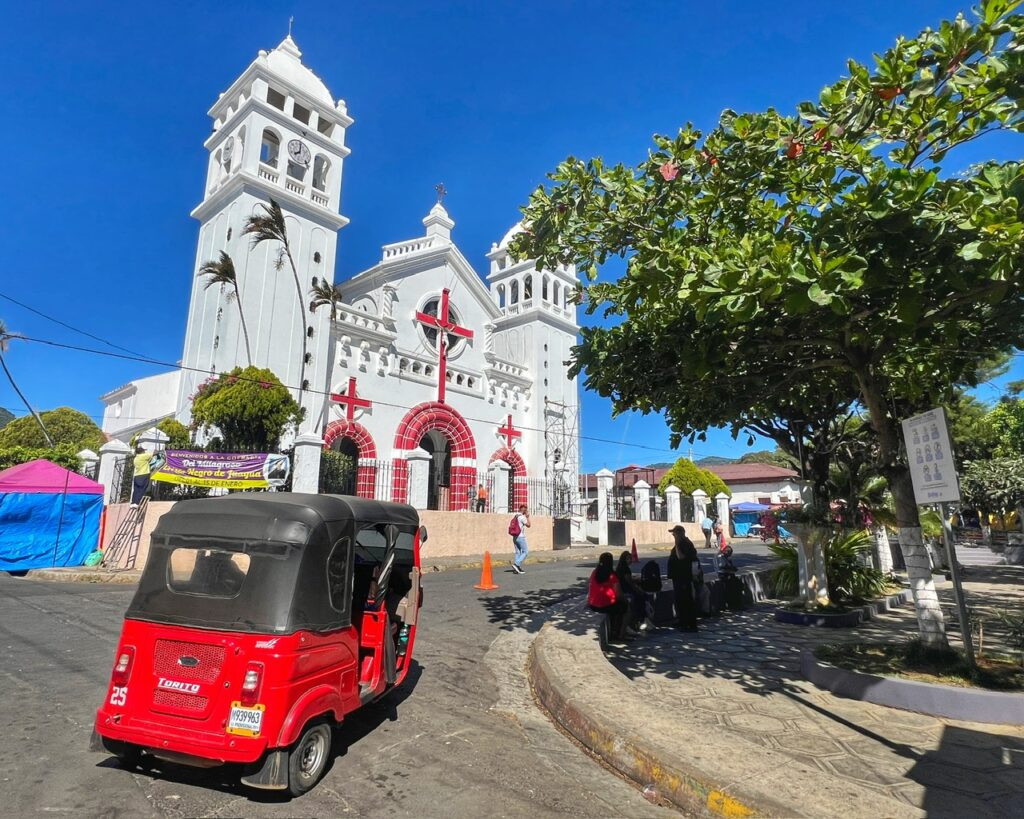
When compared with Ataco where we stayed, Juayua is substantially more energetic and bustling, especially on the weekends. It’s also the epicenter for most backpackers giving it a tourist vibe, but still laid-back and friendly. It’s buzzing with tuk tuks, and like many places in Latin America, is anchored by a center church which boasts a touch of candy cane.
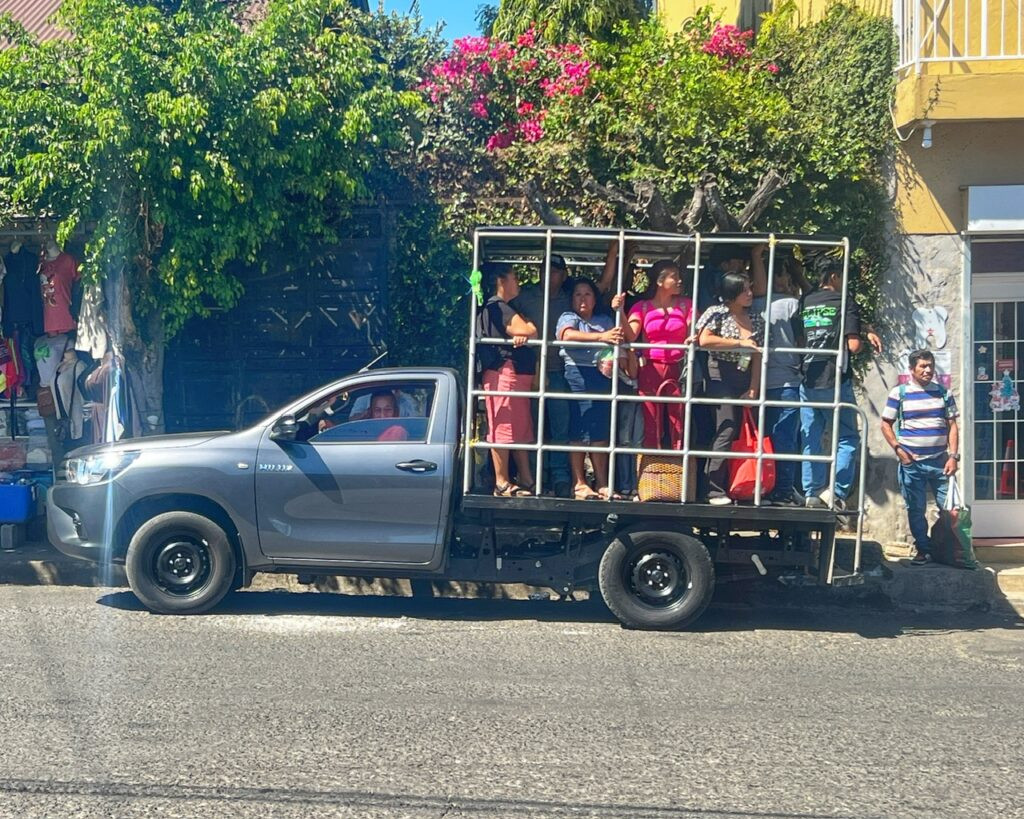
For public transport, there’s chicken buses (aka school buses) in El Salvador, which sadly rarely feature actual chickens anymore.
And then there’s rancheras…which are a very different story. In fact, in a ranchera, YOU become the caged animal in the back of a pick up truck. These rides offer a stand up experience, which is less bad for those on the sides with the wind in your hair, absolutely zero sense of personal space, and when you wanna stop you just yell “PARE” and hope the driver hears you. We’ve experimented with lots of considerably uncomfortable transportation in our travels, but this may be a no go even for us!
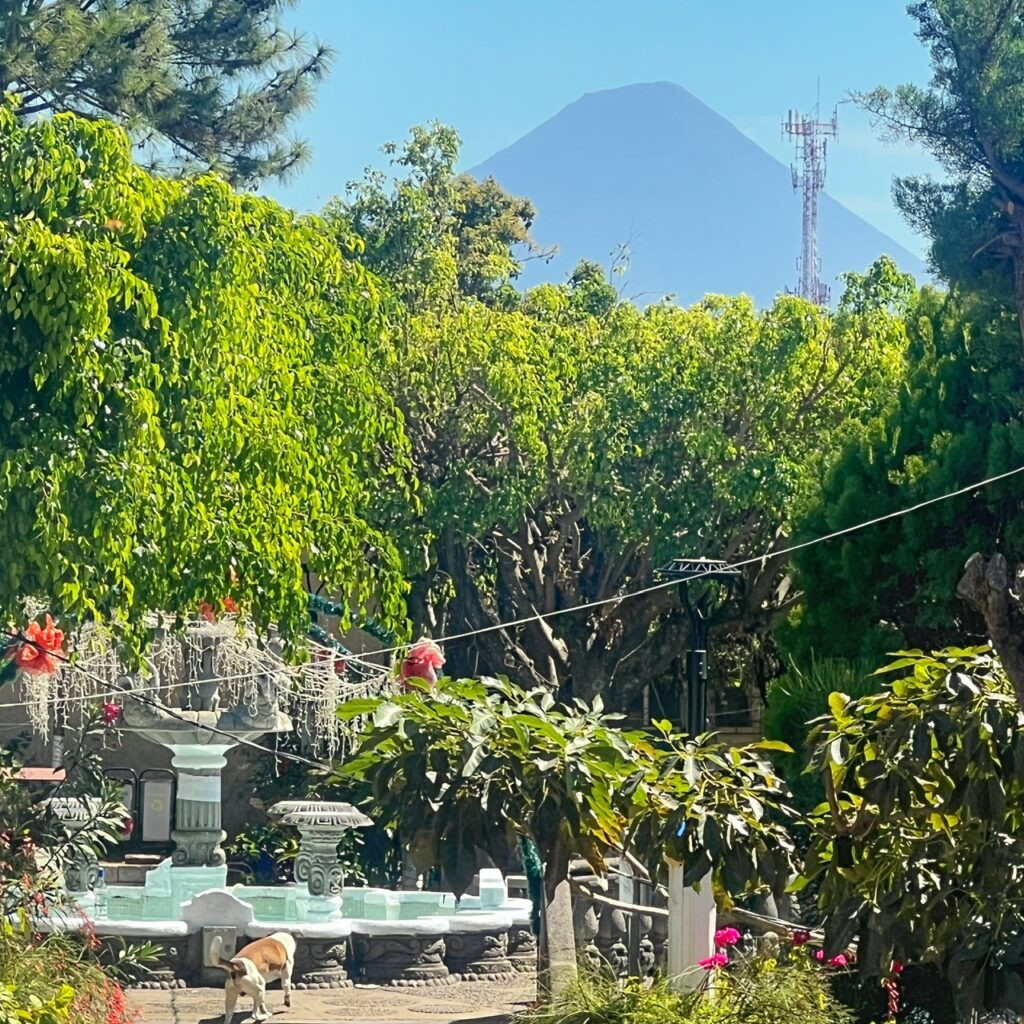
The country’s highest and most active and attractive volcano, Santa Ana, looks over Juayua’s Central Park.


Entering the weekly Féria Gastronómica, the event that wakes up the town every Saturday and Sunday. Dishes ranged from $6-$11 and offers local dishes like Carne Asada, Boco Colorada Frito and Camarones al Ajillo, which is what we settled for. The crowd at the fair was a definite blend of locals and foreigners.


For $9 a pop, there’s no way we weren’t sharing our camarones! Quite tasty! Another option we considered was the Cóctel de Frutas, dressed the Central American way, which means a little bit of sweet, a little bit of salt and a little bit of spice.
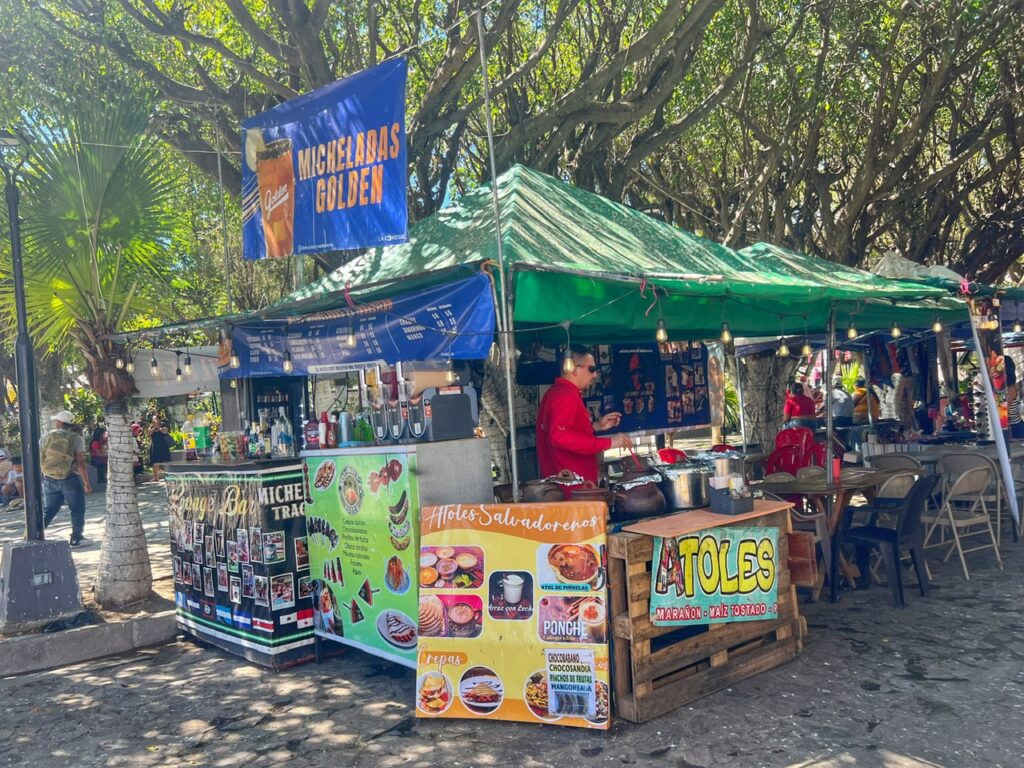

Other offerings included Micheladas, or beer cocktails, and atoles. That said, we also tried our first Atole de Piñuela, a typical countryside drink in El Salvador. Atole means a thick, warm porridge thickened with corn starch and pinuela, which is a cousin of the pineapple. It was interesting, but probably not something we’d have again.

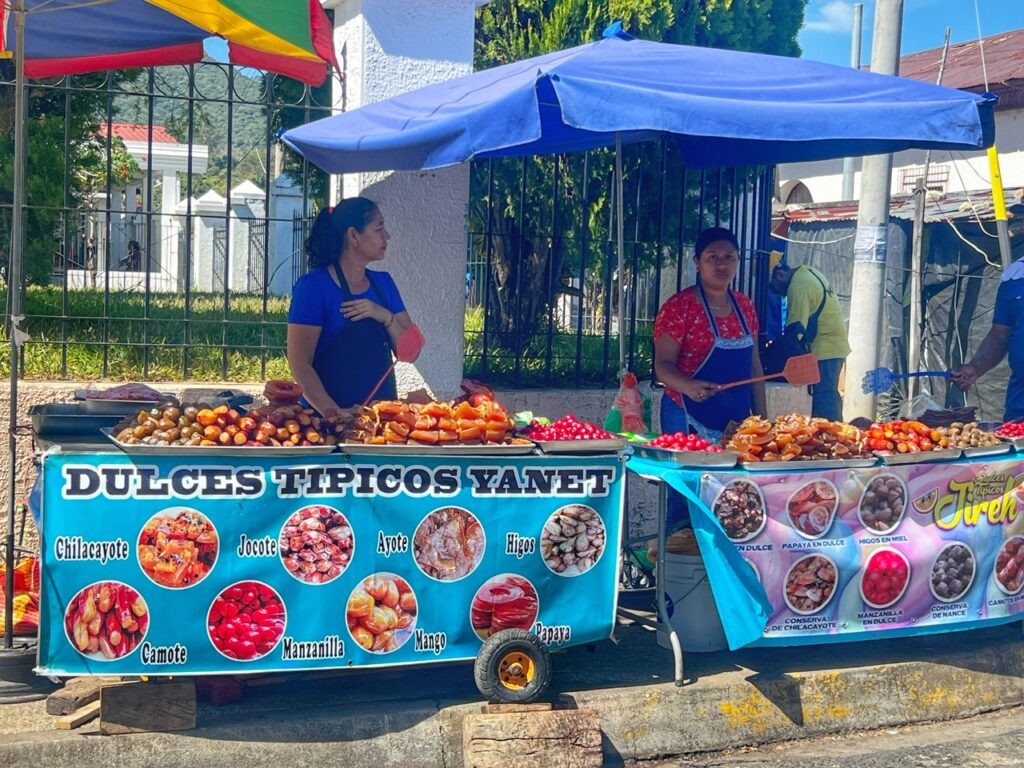
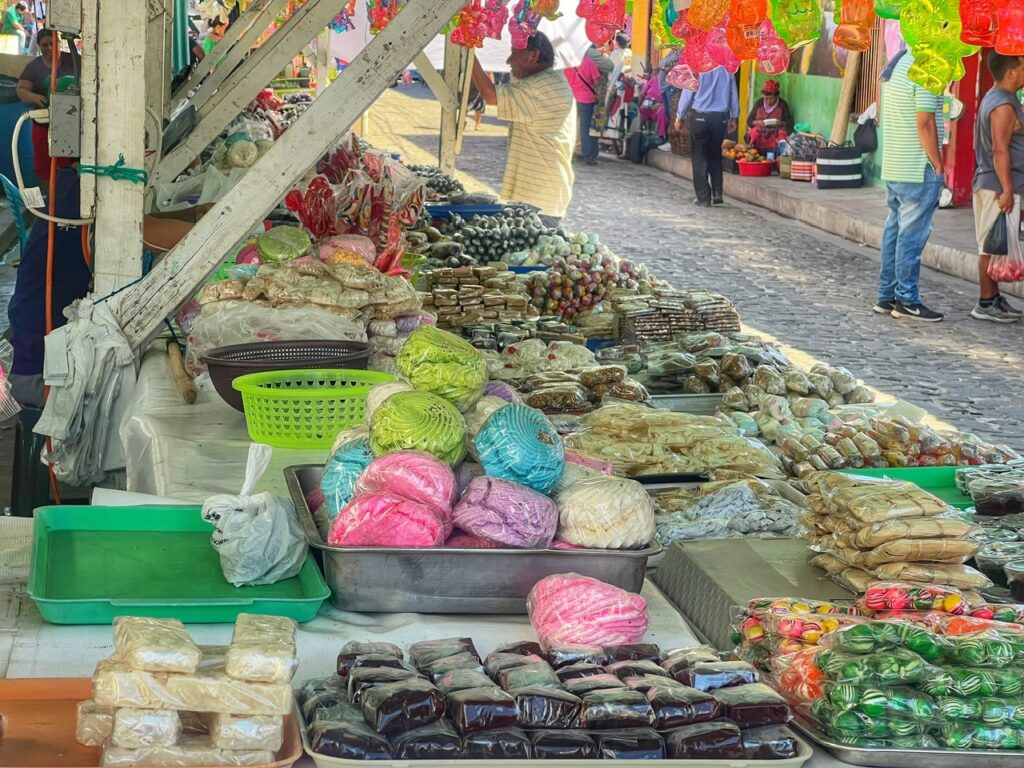
Also on offer were a unique fusion of Tawainese style buns stuffed with Central American ingredients like loroco, beans, chilies and corn. And loads and loads of dulces. Look at all those cavity creating opportunities!!

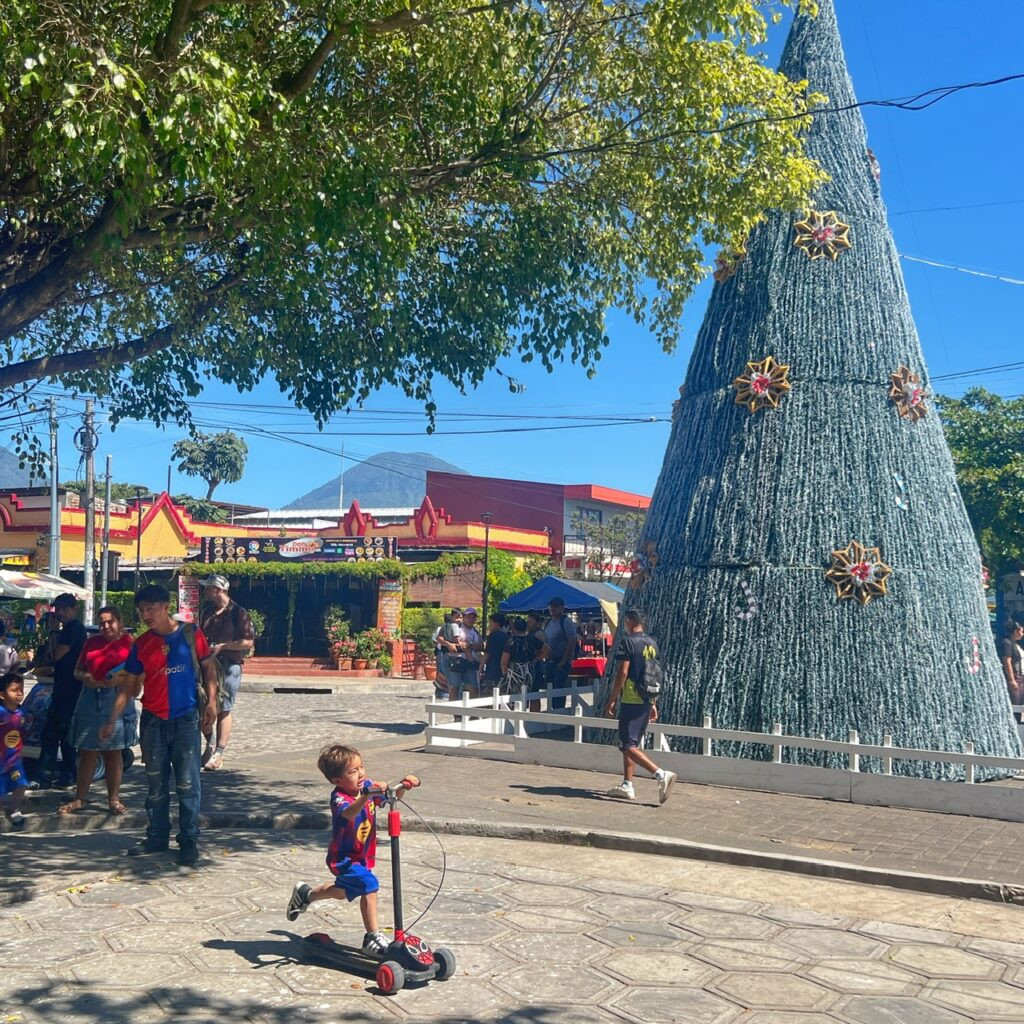
Bizarrely, the Church of Candy Cane didn’t seem to have any. Speaking of which, these Latinos seem a bit delayed on taking down their Christmas tree! This is shocking!!

This was one of many giant hostels in the town. Despite our unusual apartment in Ataco, we were really glad we chose not to stay in Juayua….