

Annecy: the “Venice of the Alps”
The area surrounding Thonon-les-Bains, where we stayed for our May housesit is simply loaded with day trip opportunities. Annecy, pronounced Ahn-see, is a petit alpine city located near the border of Switzerland, and commonly tagged as the “Venice of the Alps.” However, it seems significantly calmer, tidier and quieter without that overrated Italian label. The said, it’s still undeniably a place that tourists flock. With good reason.
It’s nuzzled adjacent to a crystalline, turquoise alpine lake and ornamented like the pages of a storybook, unsurprisingly a place I’ve wanted to experience since high school French when I studied the geography of France and first saw a picture. This of course, was the days before social media, so you know that had to be a bit of a fluke.
Needless to say, since we were staying only an hour a way, we had to make a visit happen. So, rather than dropping over $100 USD on a round trip train ticket, we hopped in a Bla Bla car with Murielle on the way down, where I got to dust off my French from the recesses of my brain, and Yass on the return, spending a much more comfortable $35 total. (What’s Bla Bla Car? A rideshare app that allows locals to take travelers from point A to B in a direction they’re already driving for a small fee per seat. It’s a win-win for all of us, especially with sky-rocketing fuel prices!)

Lac d’Annecy is the starlet of the city, and considered one of the cleanest lakes in Europes thanks to strict environmental protections, which started decades ago. Unfortunately it was a bit cloudy the day we went so we didn’t get the full turquoise effect, but it didn’t stop its shores from brimming with sailboats, cyclists and runners, many of whom are plastered in Iron Man, marathon or some other Hee-man ensemble.
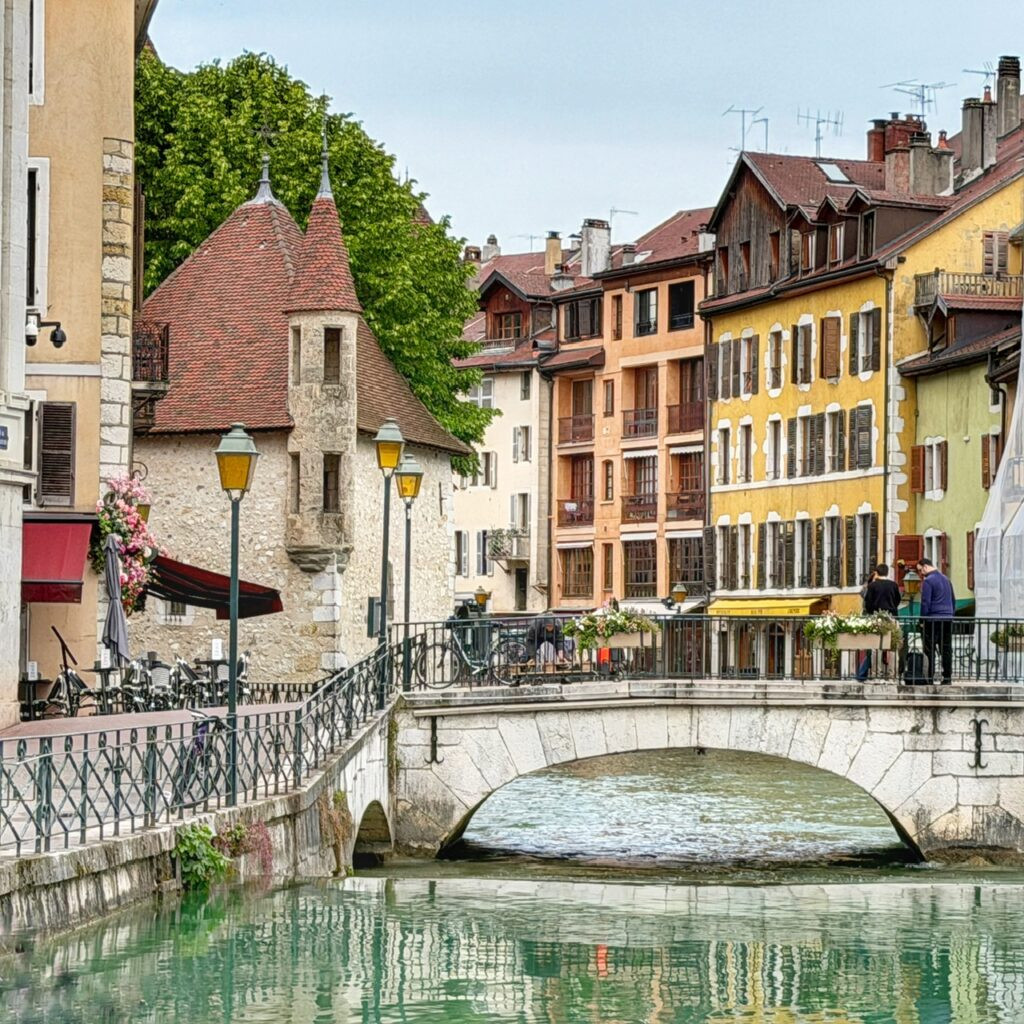
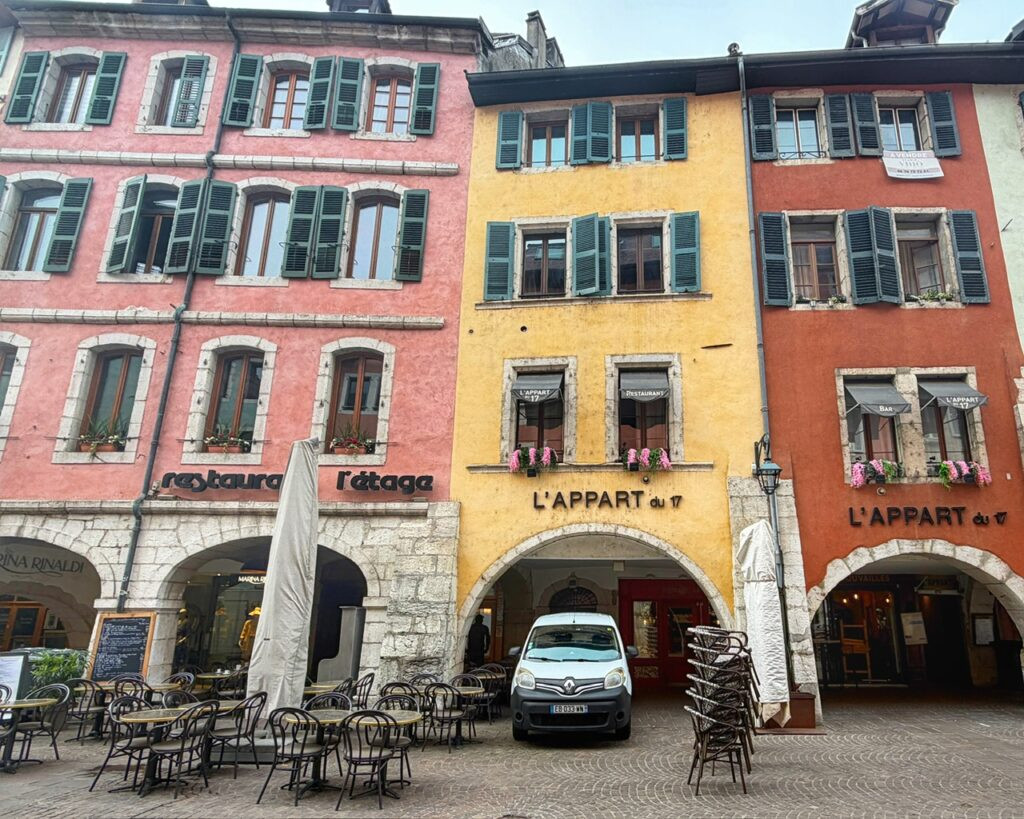
The Old Town is painfully charming with floral-lined stone bridges, pops of pastel, and quintessentially European al fresco cafes. It historically belonged to the Duchy of Savoy, which had deep ties to both modern France and Italy and only became officially French in 1860.


The Chateau d’Annecy in the background, is perched on a hill overlooking Old Town. The earliest parts date back to 12th Century as a defensive stronghold for the Counts of Geneva. Later on, the House of Savoy claimed it as their residence before becoming the royal family of unified Italy.
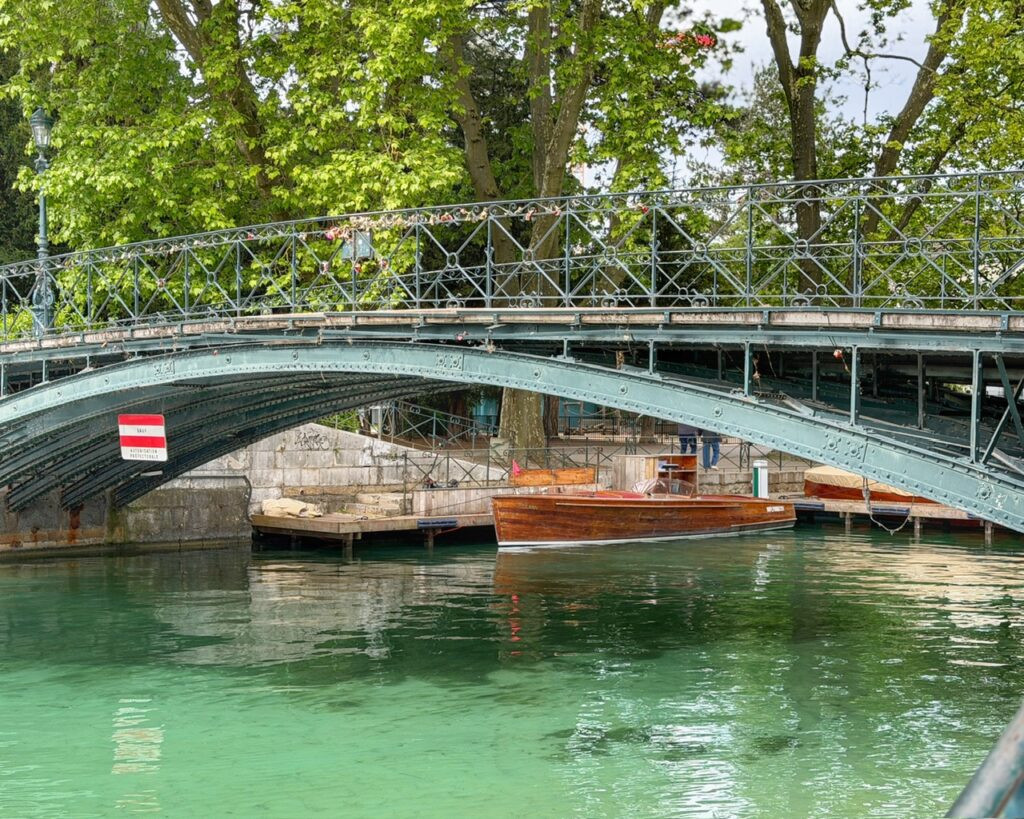
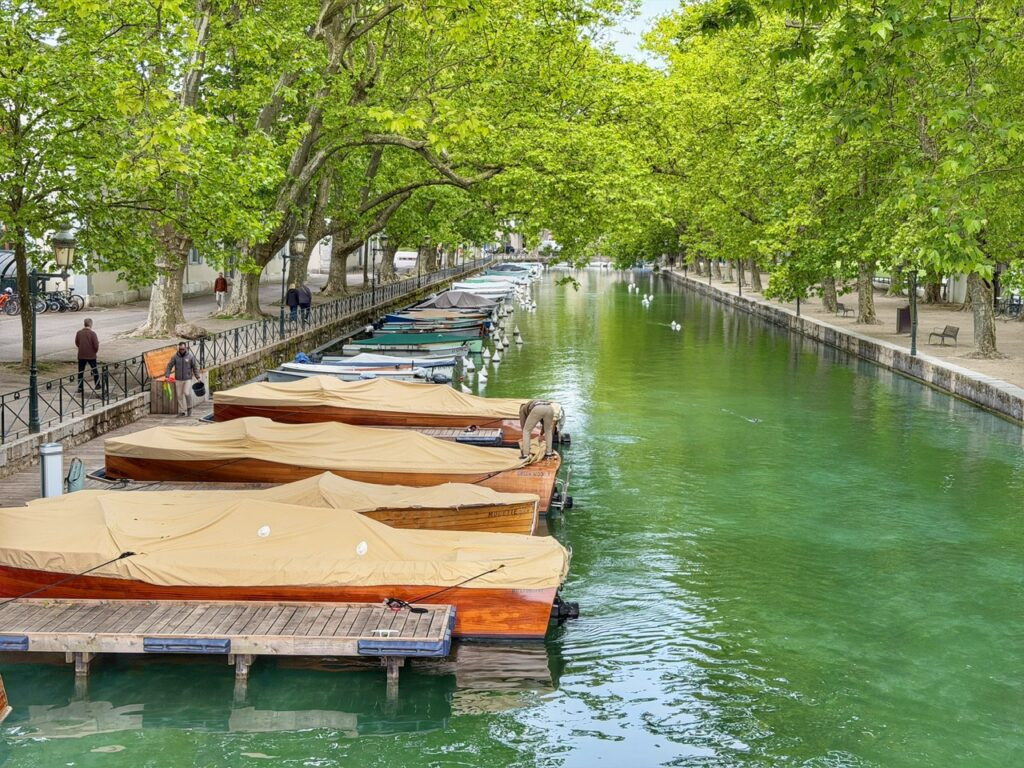
The Pont des Amours, or Bridge of Love, traverses the point where the main canal meets the lake, alongside lush gardens, and is complemented by a plethora of love-locked statements. Of course, this practice is not encouraged, because the weight damages bridges, but people still feel the need to proclaim their love “for eternity.” (Or, at least until the city shatters their love with bolt cutters.) From the bridge, the canal looks like you’re stepping into an oil painting.
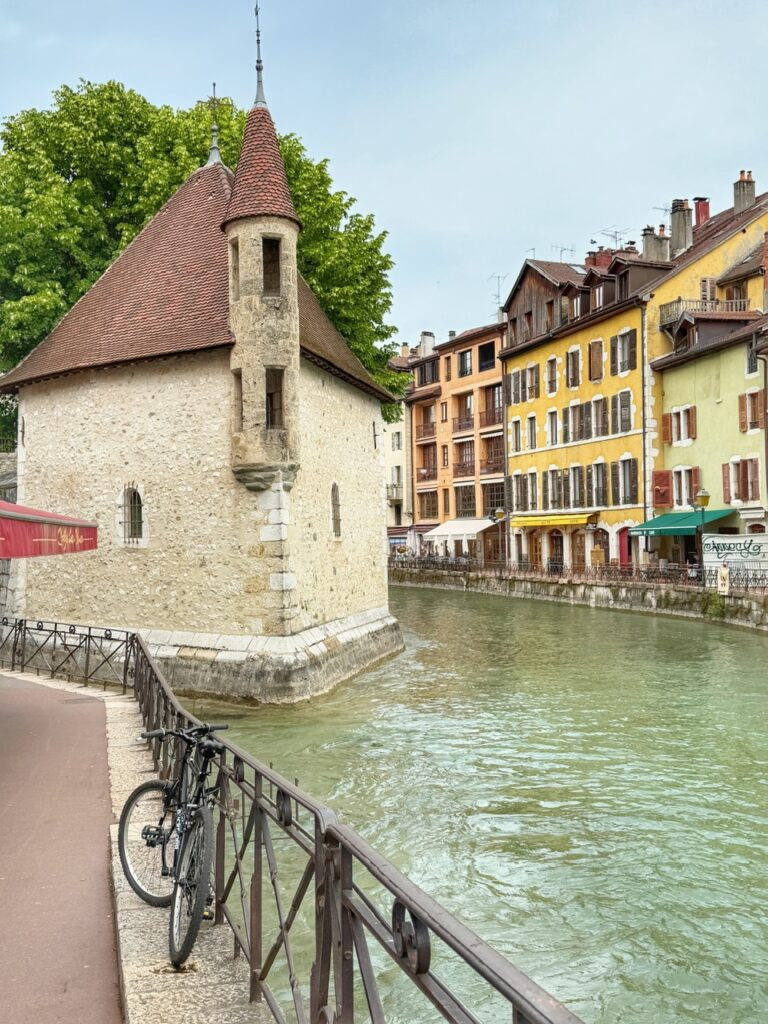
Of course, arguably everywhere in Annecy looks like this. One of the most iconic buildings in the city called Le Palais de l’lle, or the Island Palace, separates the Thiou River into two canals, and resembles the bow of a ship, even though it has nothing to do with shipping.

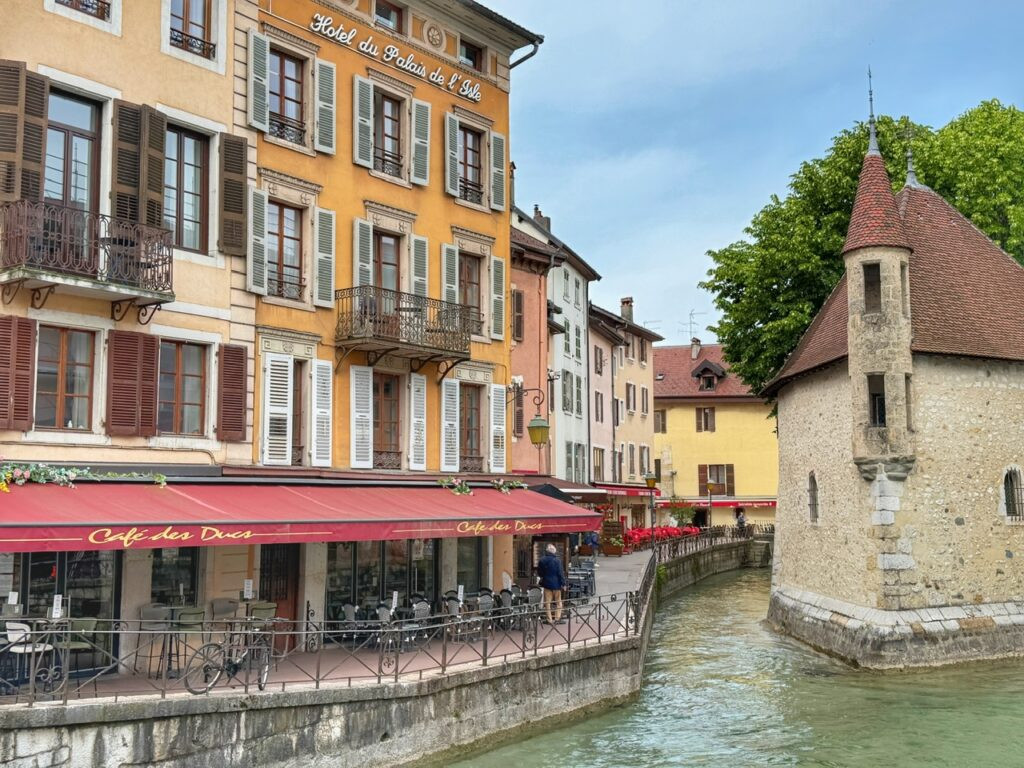
It dates back to the 1100s and for hundreds of years it was a residence handed down by the noble families of the County of Geneva. This multi-purpose deposit in the canal later became a prison, a minting workshop, administrative functions, a home for the elderly, a school for stone carvers, a gymnasium (really?) and accommodation. By 1900 it was listed as a historic monument. Today it contains exhibitions about Annecy’s architecture and heritage, and you can take a look around the old courtroom, dungeon, and chapel. We chose to drop into the cafe just to the left…


for our first official Cafe au Lait in France, which were $3.25/each for the standard chintzy size Euro cup, and invigorated us for the rest of the morning after a 5:30 wake-up and mandatory French lesson.


Other views of the canal, which are home to a number of birds including Red-Crested Pochards, diving ducks with little golden mohawks, commonly found on clean lakes and waterways. They dive underwater for aquatic plants rather than dabbling around at the surface like mallards.
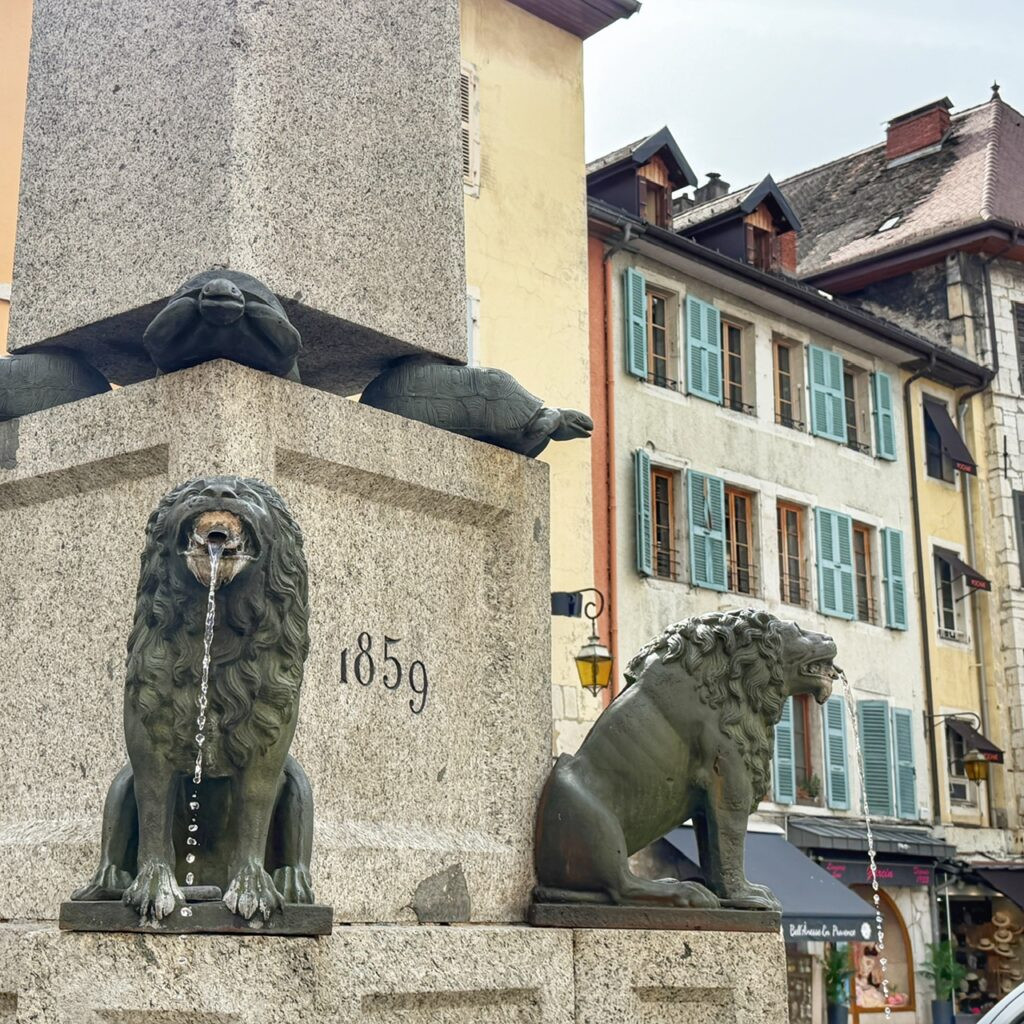

Wandering away from the canal, mostly because we needed a break from the incessant swarming insects, we stumbled upon this famous pillar, in which we found four turtles sandwiched like lunch meat. The turtles actually represent stability, endurance and the support of great weight, while the lions represent not predators, but civic power and protection. Nearby is a yellow building dated from 1308 that formerly housed the Town Hall, as well as a hospital and oratory. These Annecians (?) were really good at repurposing!!
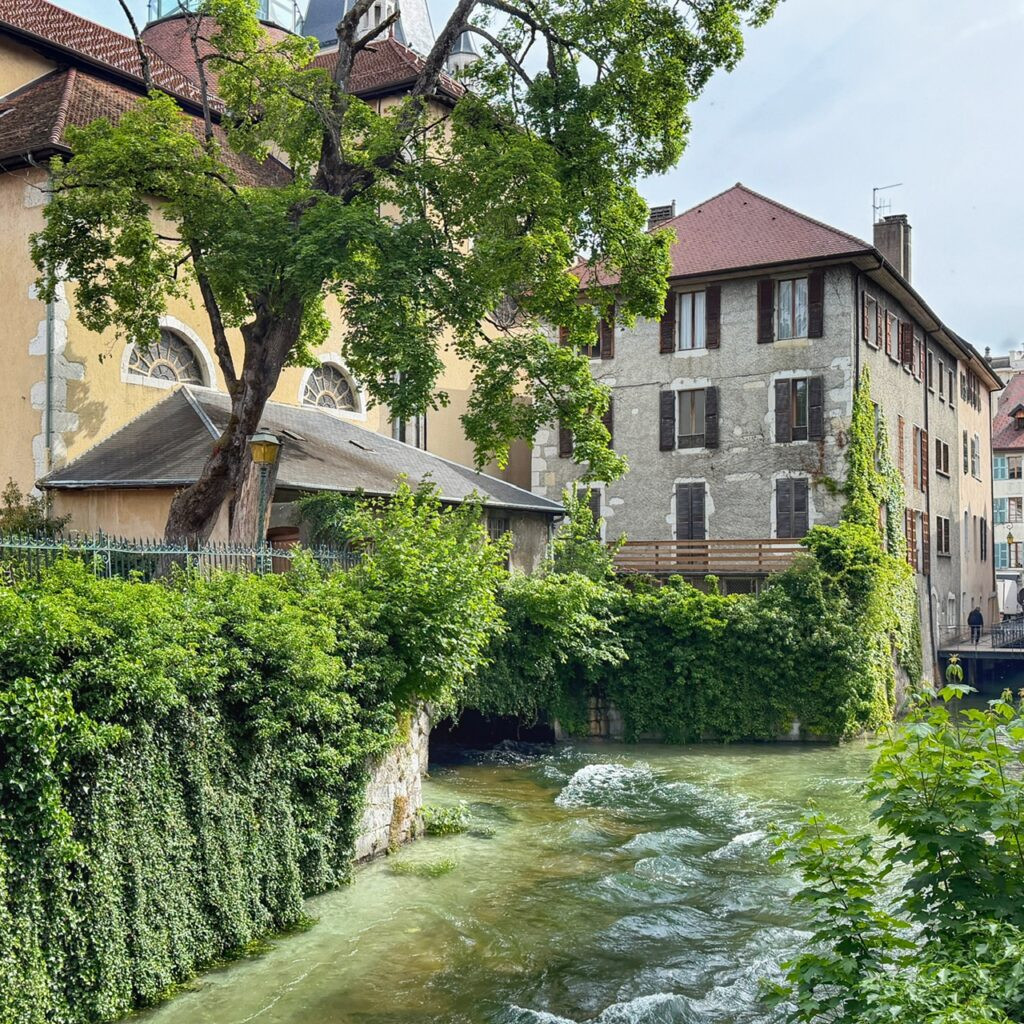
One of the many canal arteries cascading through the Old Town.

And lots of tucked away alleyways to explore.
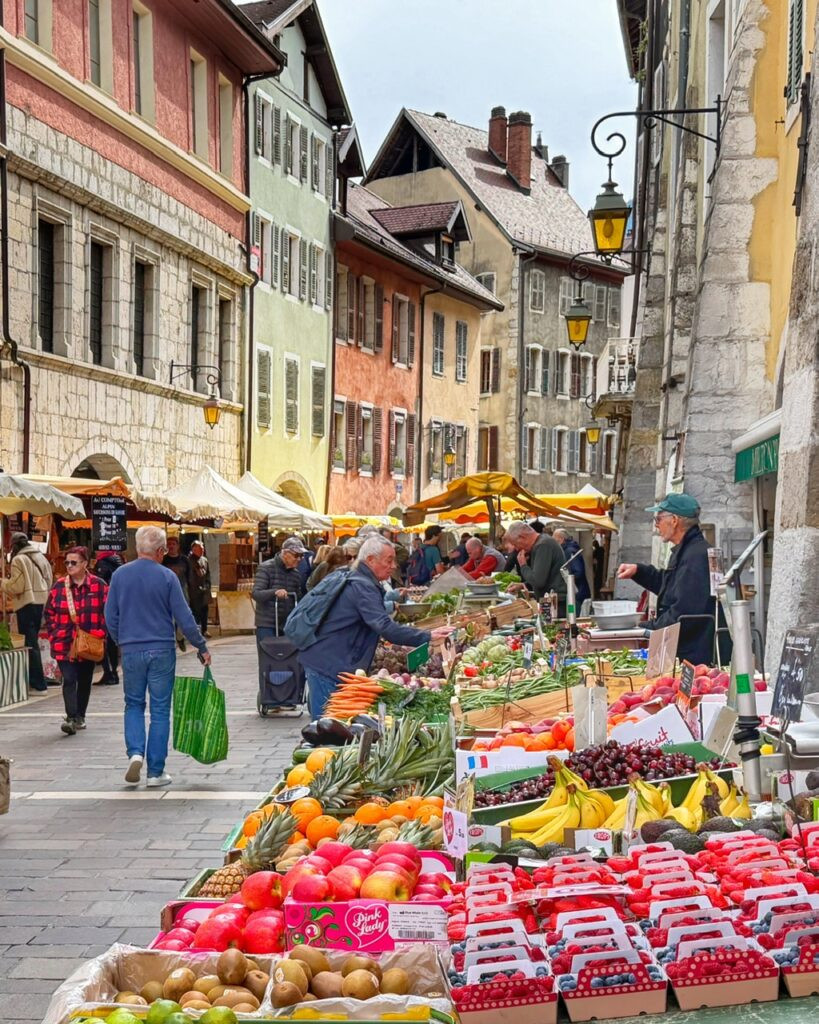
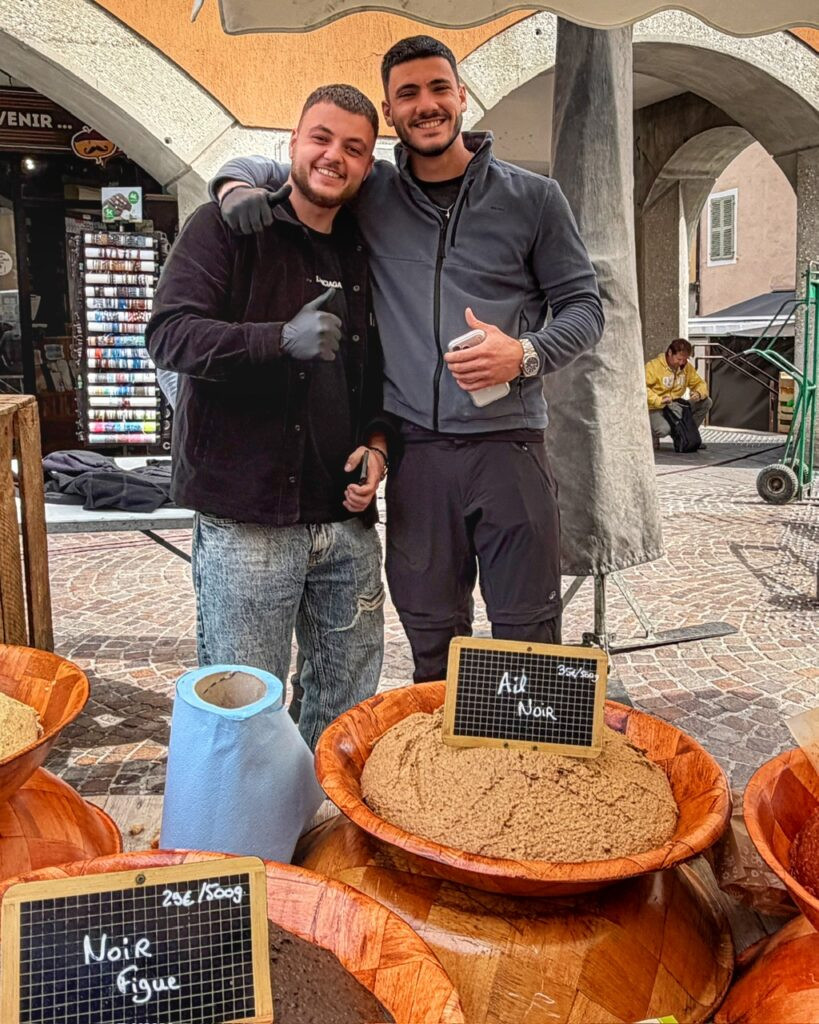
Emerging from these alleyways, we landed upon another reason we’d arrived to Annecy on a Tuesday…Market Day, which mostly focused on local food producers with cheese, produce, bread, fish, charcuterie and honey. Although the market also runs on Fridays and Sundays, apparently those days are significantly more crowded with additional types of products. (Aka must have souvenirs, which by the way means “to remember” in French)
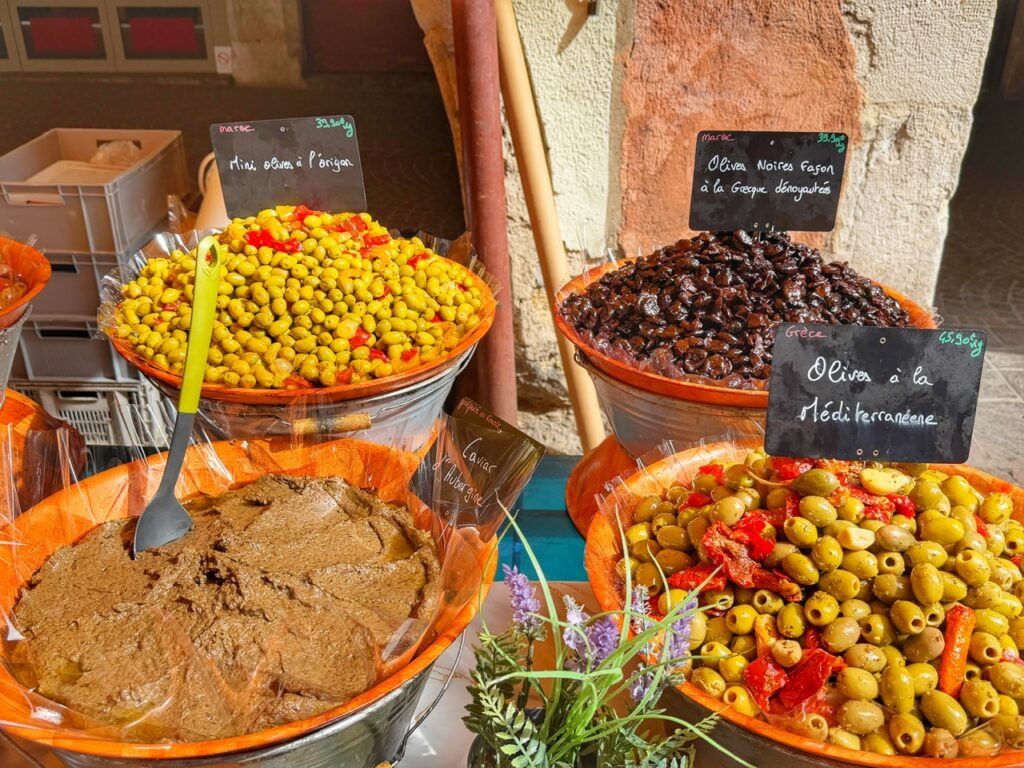
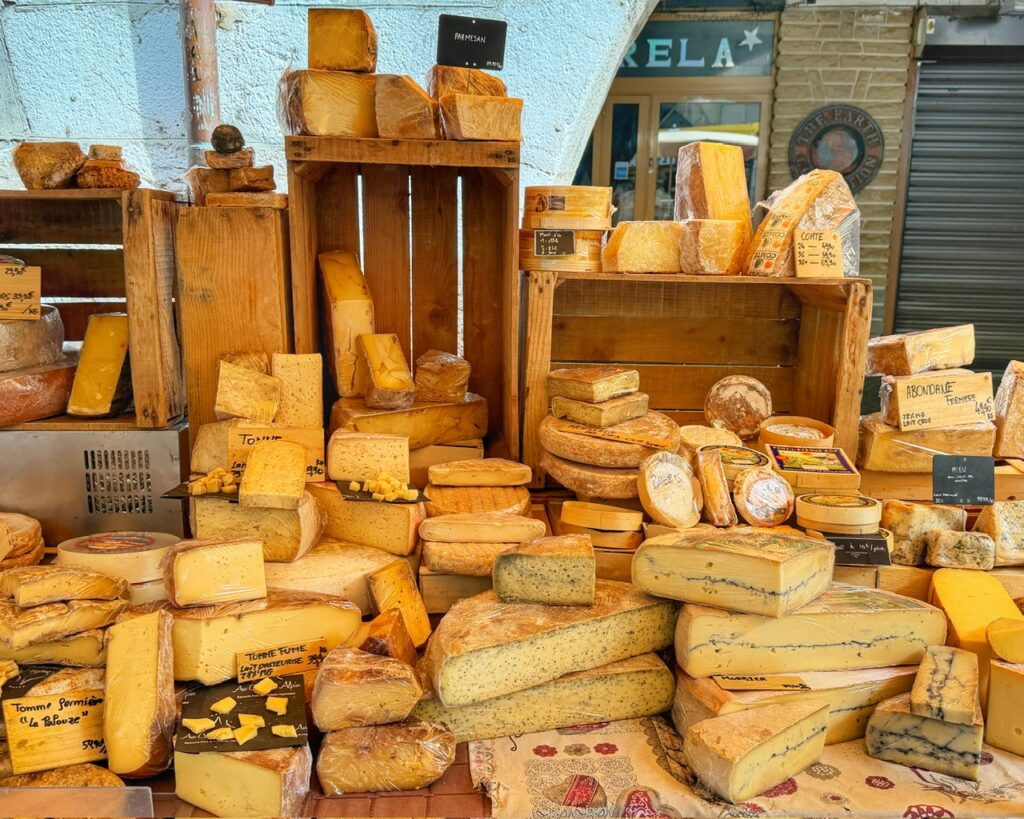
One of the MANY reasons we love this country….it’s packed with artisanal goodness. And almost everyone was offering samples!! And these guys were so incredibly generous with them, that we couldn’t resist buying some Kalamata olives, though the $9 price tag for about 200 grams was a bit cuckoo. A little piece of us died when we went to Central America, but it’s returned now that we’re back in Cheese-vana. And, you could buy a massive wheel of many types for just 10-15 euros.

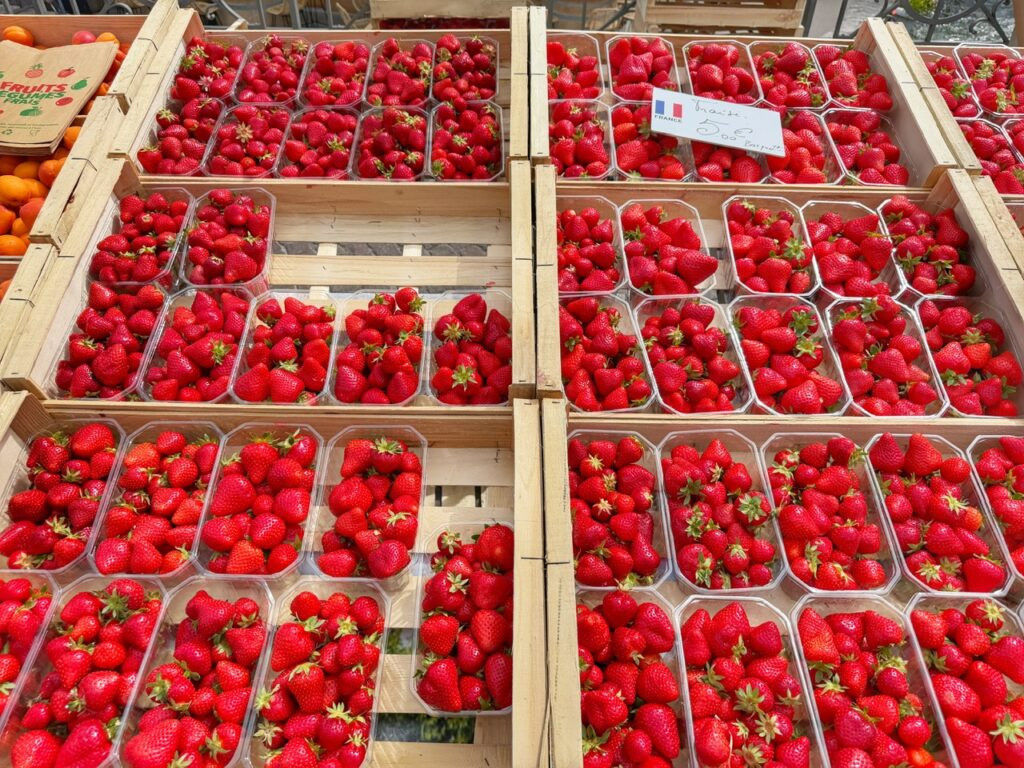
And the produce….wow…everything always tastes sweeter in Europe.

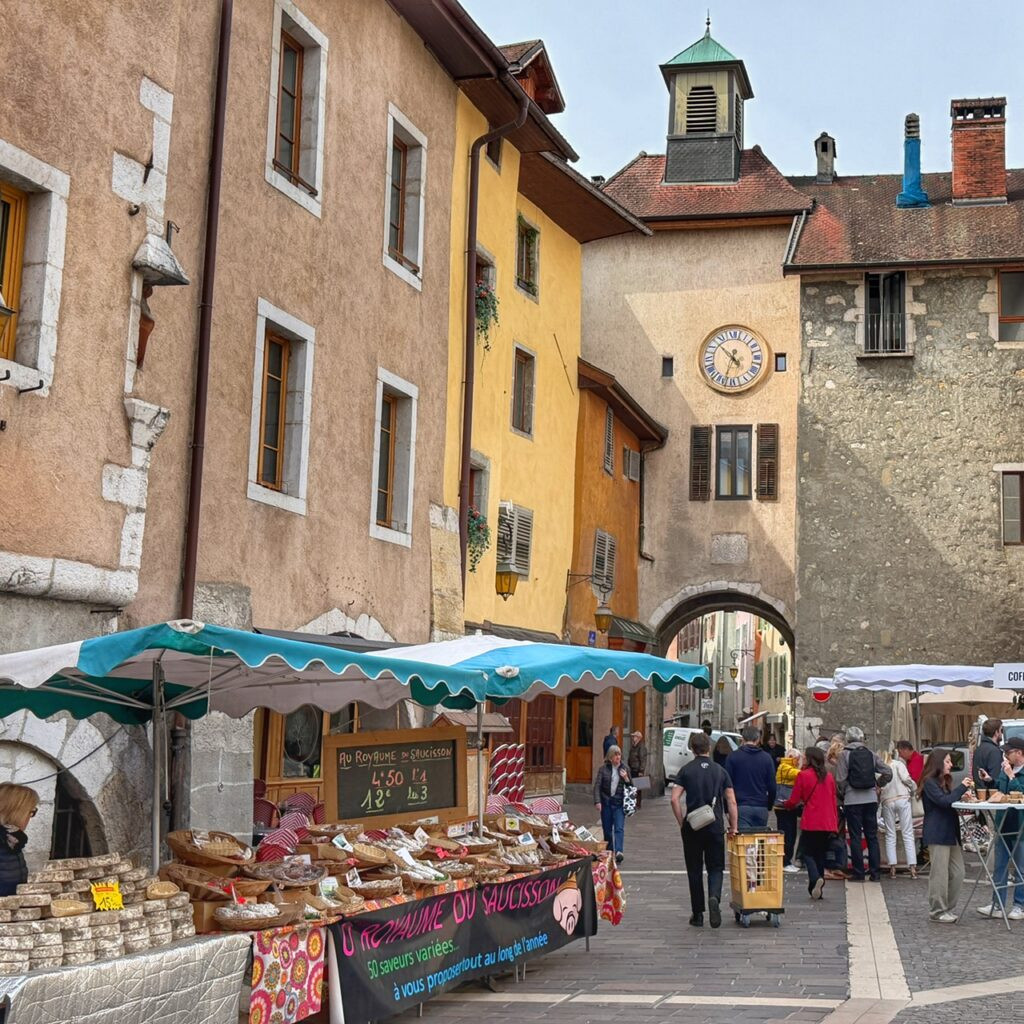
The market went on for blocks and blocks, which heavily competed with the piping bread fragrances flooding out from numerous bakeries.

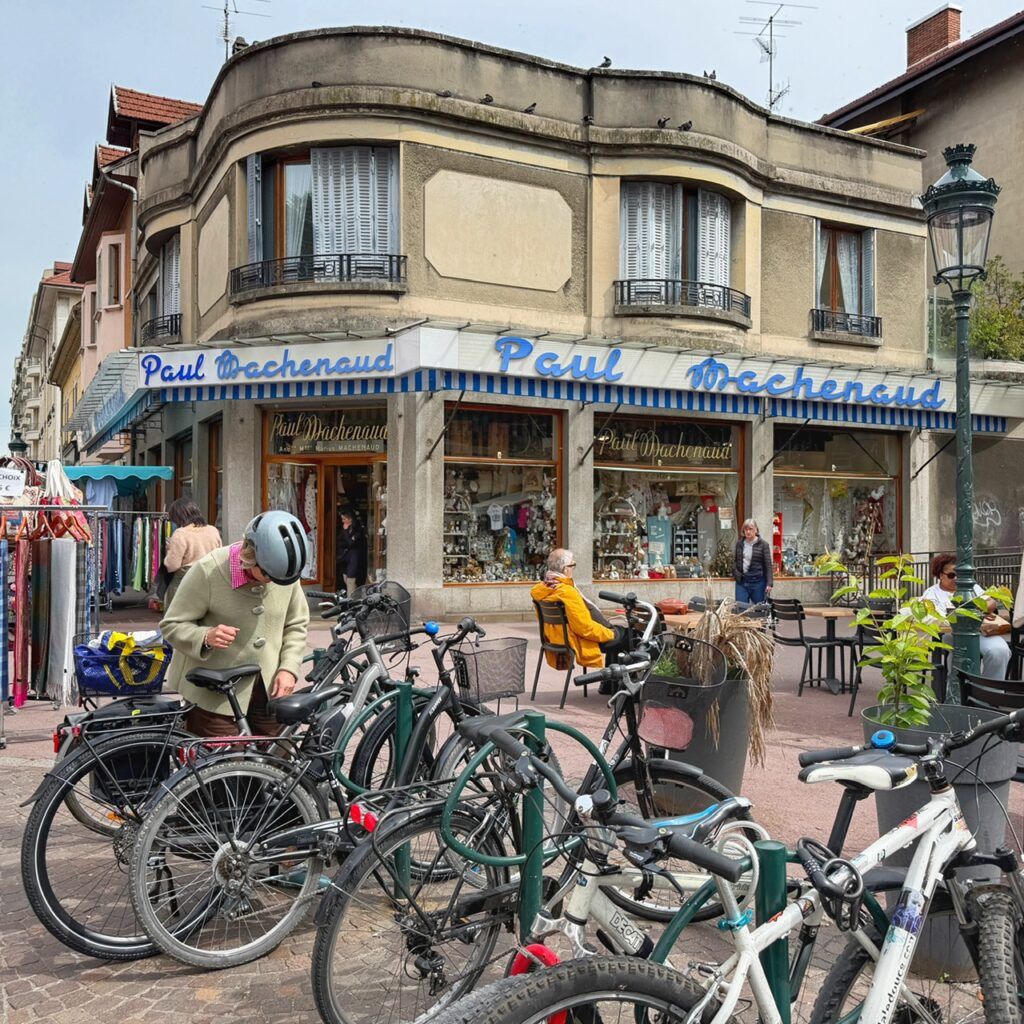

More roaming…

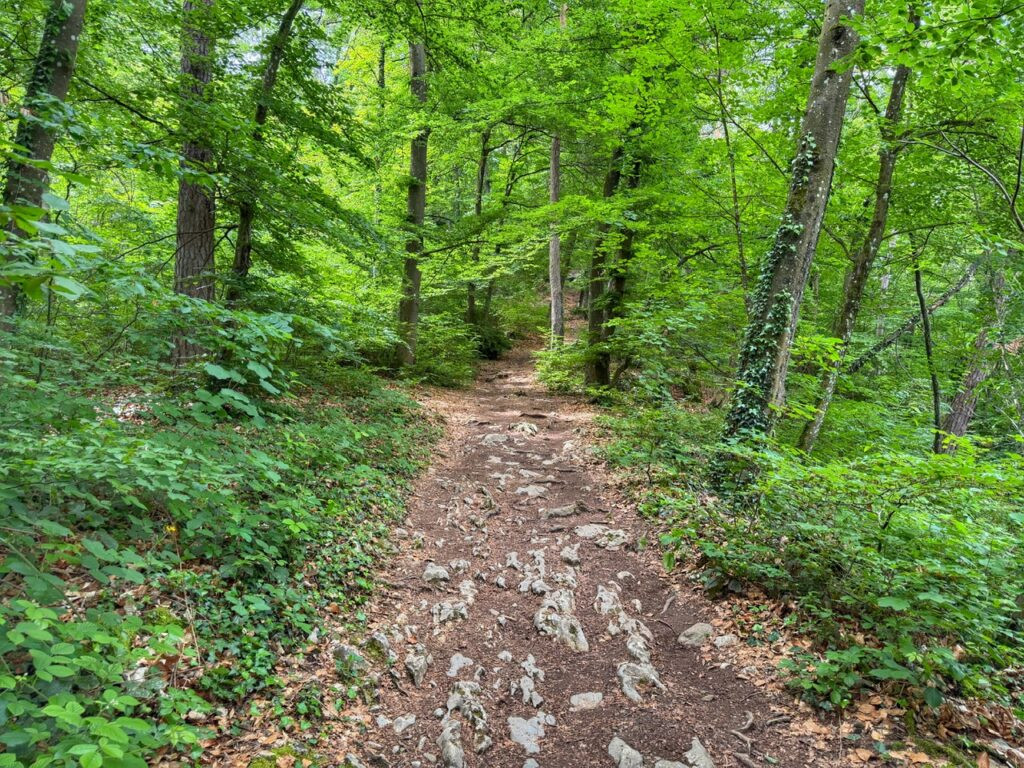
By 11:00, it was starting to get a bit busier, so we used the opportunity to escape the crowds by walking up to Basilique de la Vistitation, and wandering up a trail into the forest…
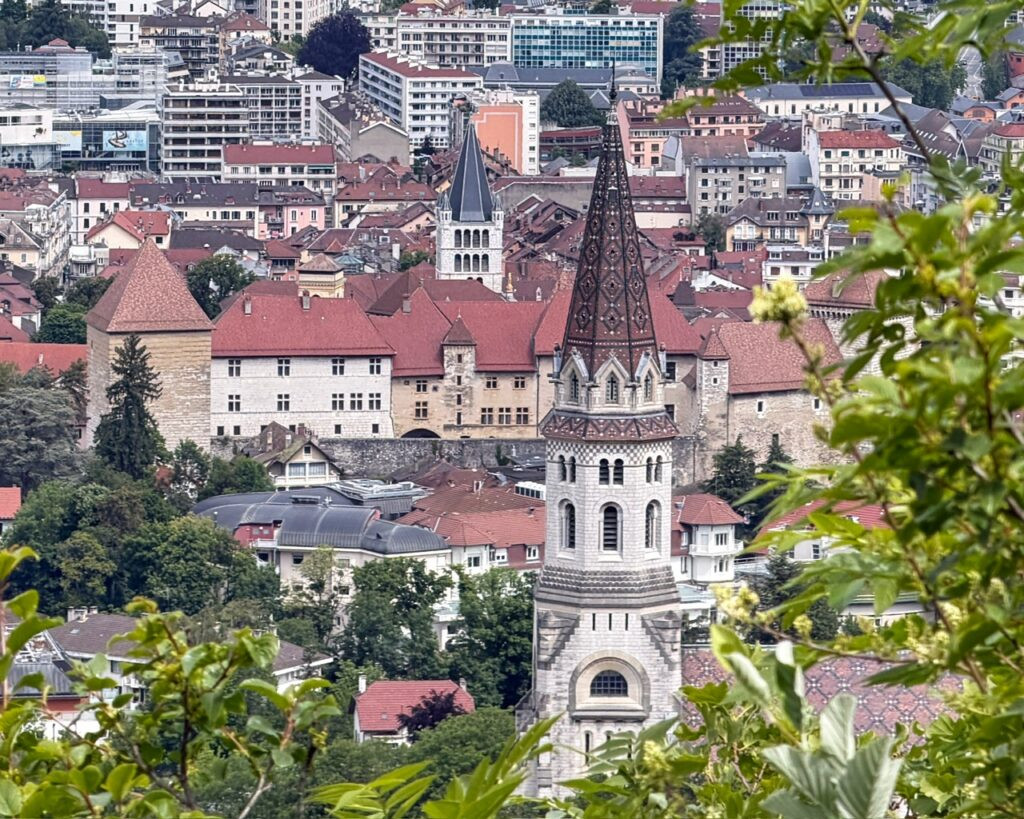
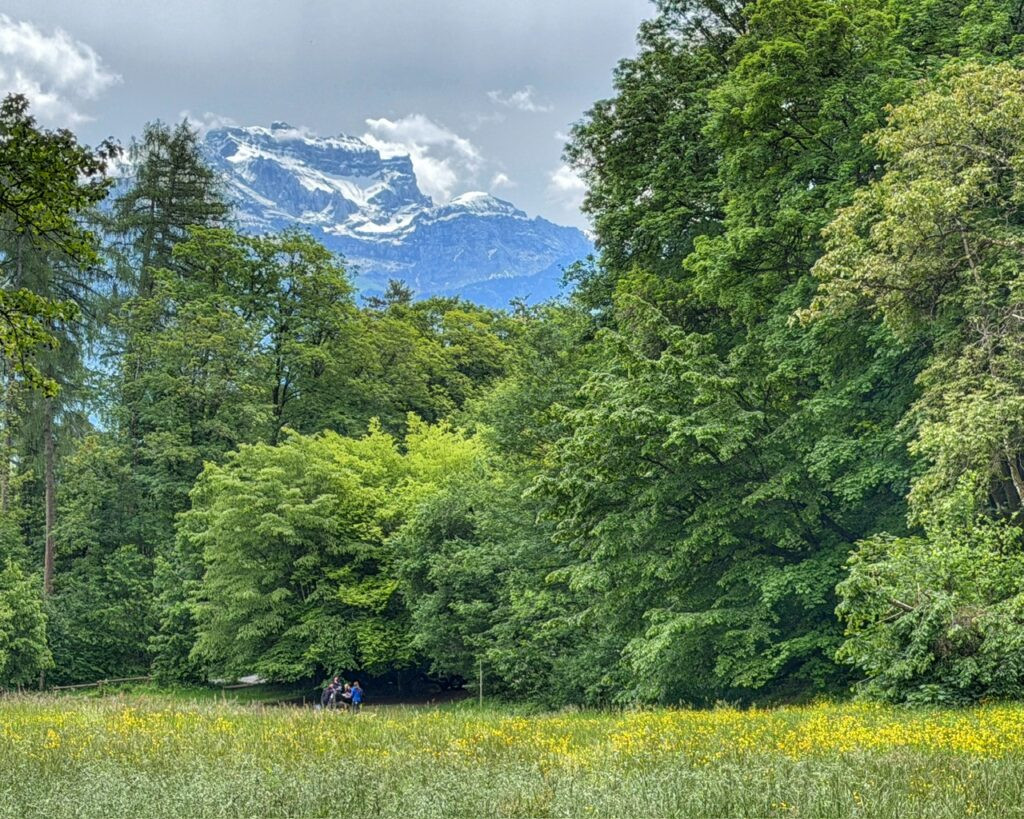
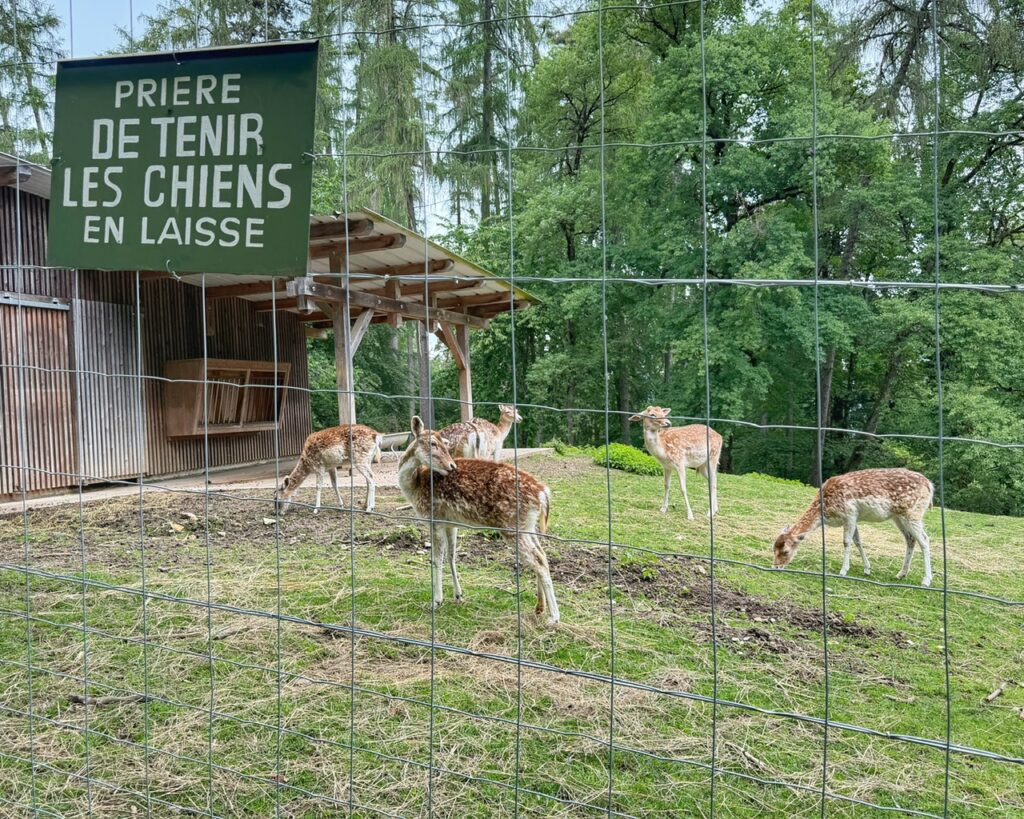
….where we discovered the Grande Jeanne Panorama, and some benches where we snagged a helluva view while eating our packed lunches I’d brought from home. It happened to be on a path with a small animal park which included numerous types of local Bambis.


On the way to Annecy, we got to witness our first snow-capped pop of Mount Blanc (left side rear), which is the highest mountain in Western Europe at 4805 meters (or 15,766 feet). Murielle, our incredibly sweet (and patient) Bla Bla car driver, heads to Annecy twice a week to cut hair for nursing home residents. She didn’t speak a lick of English so I got tossed into the fire trying to remember any French I could drudge up from more than 25 years ago. With the help of Google, I have to admit, I remembered a lot more than I thought I would.
The Medieval Village of Yvoire
Exuding an idyllic aura of romance on the shores of Lac Leman (Lake Geneva), the tiny flower-shrouded village of Yvoire couldn’t look more stereotypically medieval if it tried. But what makes it unique is that it’s not a reconstructed village. It showcases extensive medieval fabric that actually survived…stone ramparts, fortified gates, a moat surrounding a legendary castle, and cobbled streets all complemented by crystal clear water, and a ridiculous view of the Alps resting over the lake.
But naturally, romance, nor tourism, were its primary purpose, despite the numbers that pepper its streets carrying ice cream cones today.
It was actually founded in the early 1300s by the Counts of Savoy who needed a defensive stronghold to monitor trade routes and lake traffic between Geneva, the Rhône Valley and Northern Italy.
And it was a perfect half day trip from Thonon-les-Bains.


The village church, dedicated to Saint Pancras, dates to the 11th Century so it’s even older than the fortified town itself. Its distinctive onion-shaped dome originally made of tin was a bit of a surprise to us because it looks much more Central European than French. It reflects Savoy architecture of the Alpine regions and today that bell tower is interestingly made from stainless steel.
Of course, the church is not the showpiece of Yvoire. That belongs to the striking chateau, which yes, means castle in French. But even if you’re willing to drop the euros, don’t expect to get inside. It’s privately owned and has been by the same family since the 1600s!
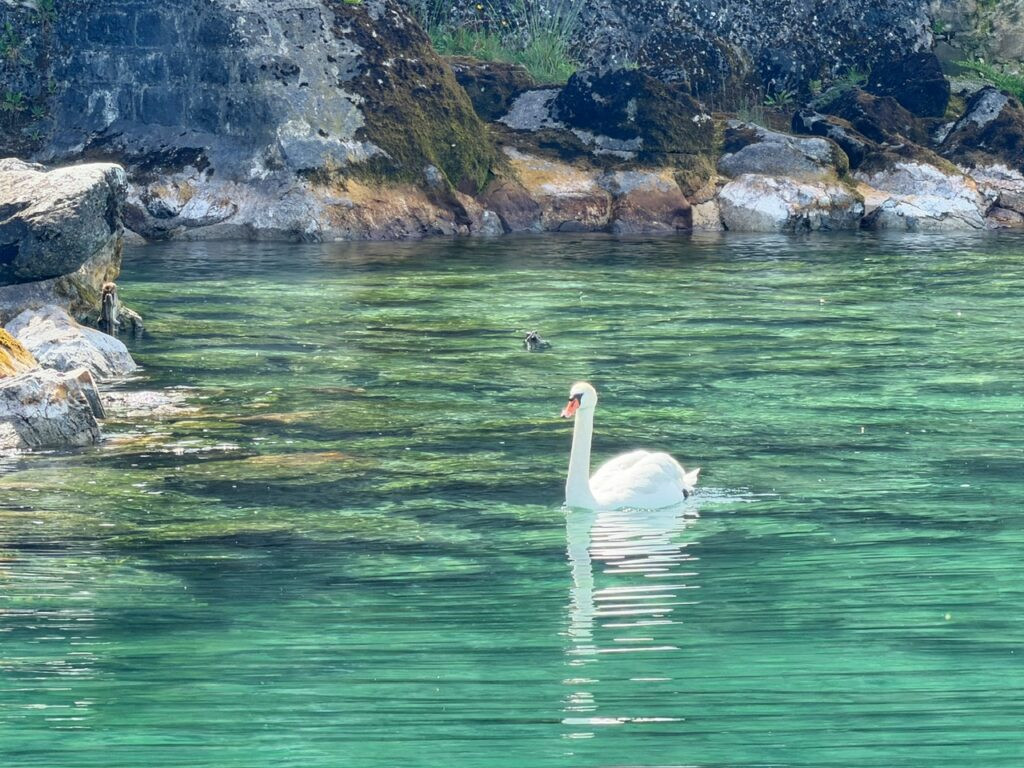
This swan also came from a long line of royals.
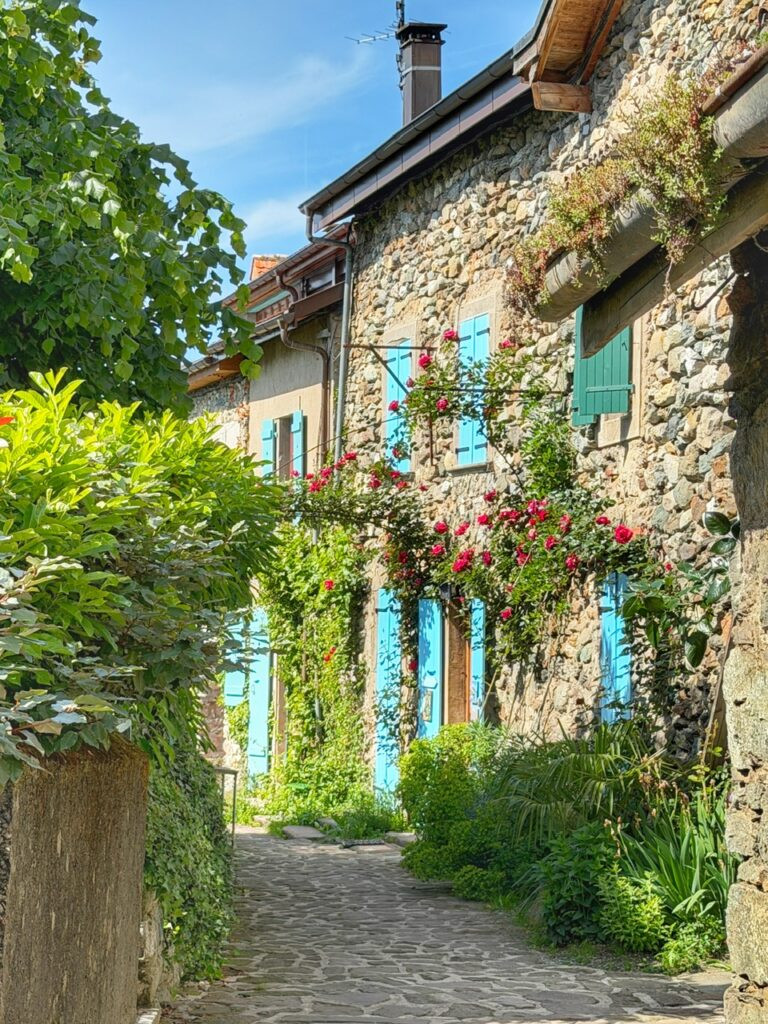


Because Yvoire is quite small, even one or two tour groups bused in from Geneva can make it feel congested. Fortunately, there are many ways to shuffle away from the crowds and appreciate the authenticity of the place. What is now the tourism office looks a bit like a former train station. It didn’t matter where you looked, people were eating ice cream. We instead found some cherries under a tree to nosh on.
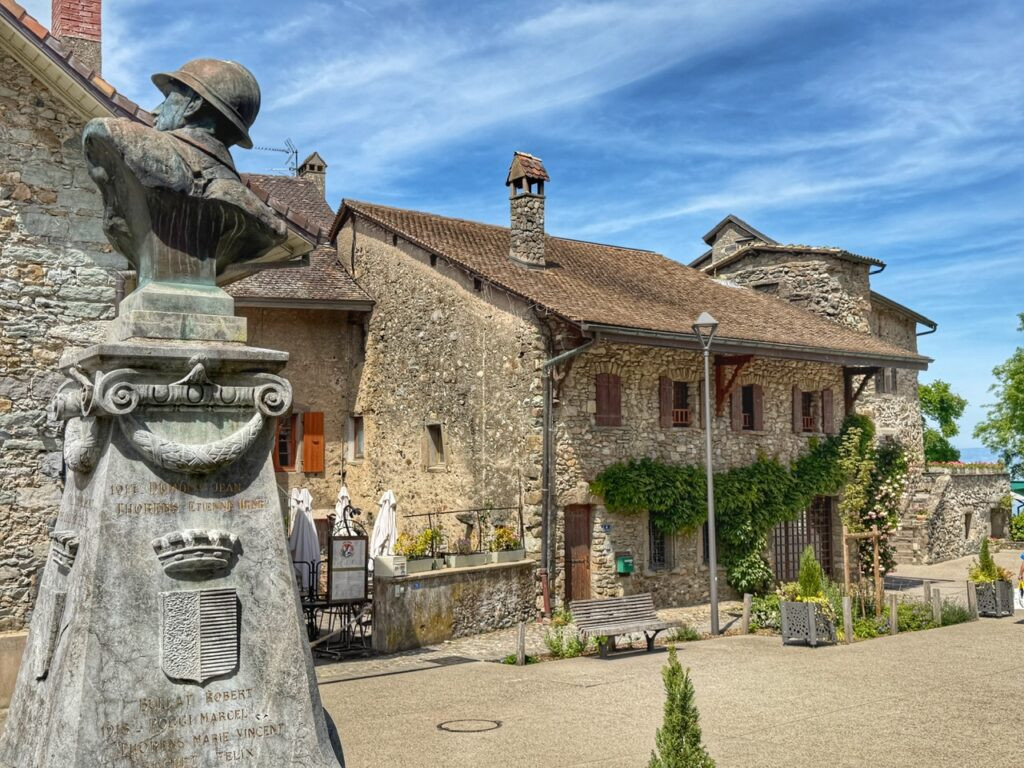
The entrance to the village…
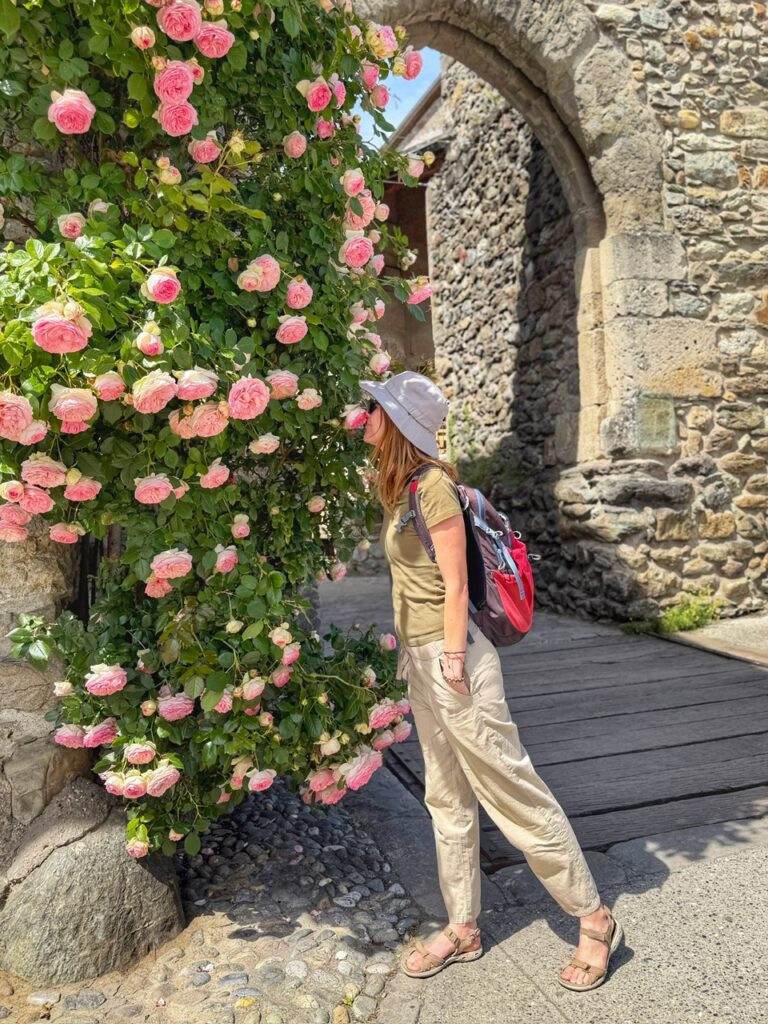

…where I couldn’t help but take the time to live a cliché. In fact, the flowers everywhere here were simply exquisite both to look at, and to sniff, as their scents drifted through the streets.

And believe it or not, this grapefruit-sized purple poof ball called the Giant Allium doubles as…an onion! And it grows up to 1.5 meters, or 4.9 feet.
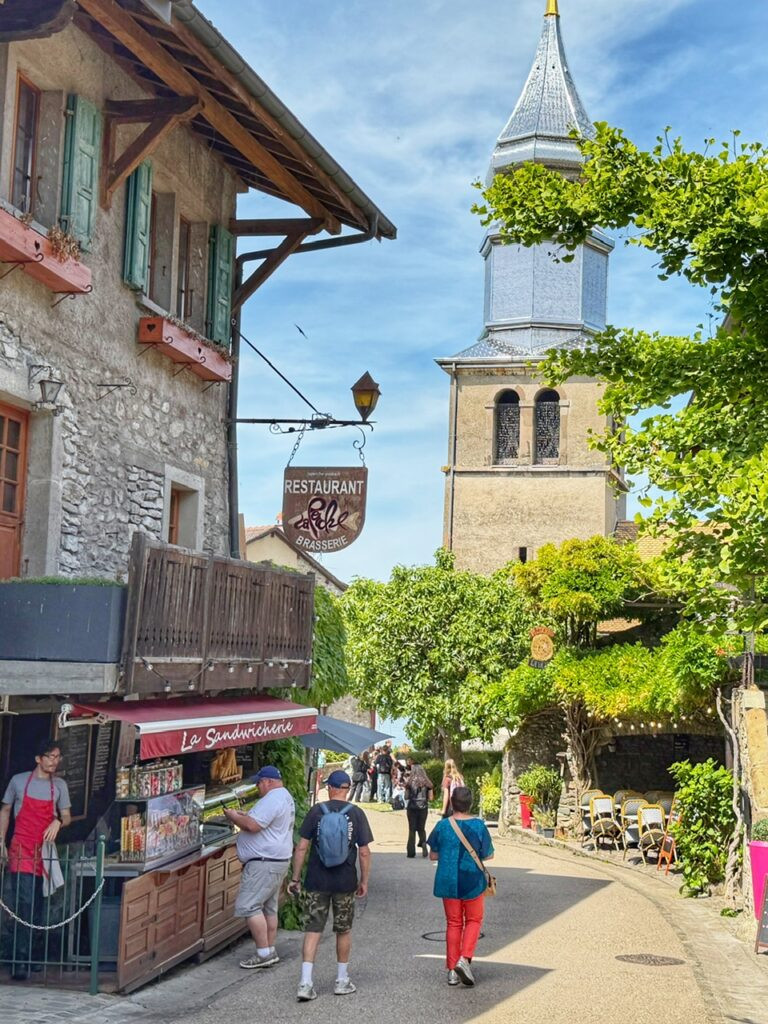
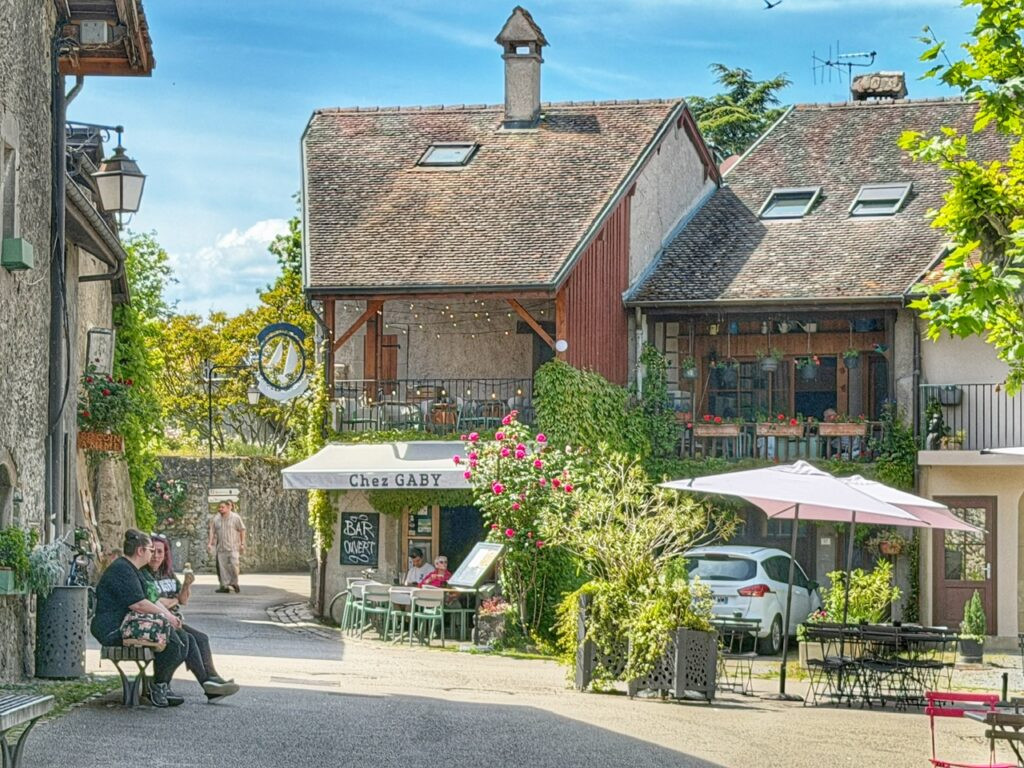
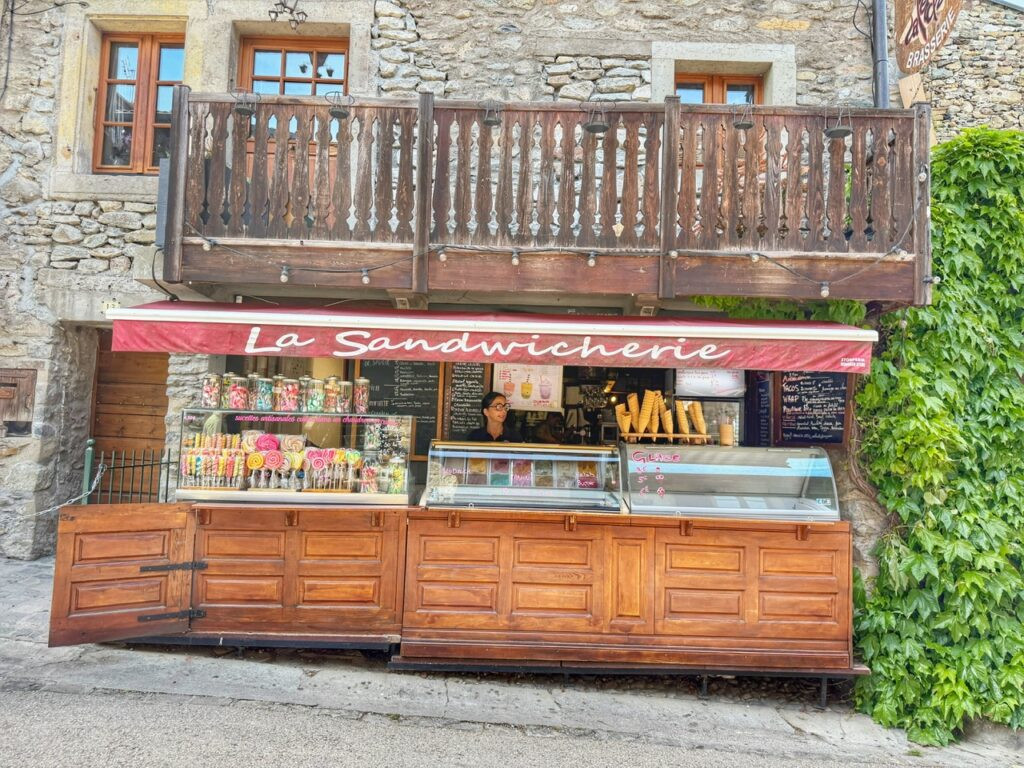
But the best part? They’ve kept it pedestrian only, including the first ice cream temptation at “Le Sandwicherie.”
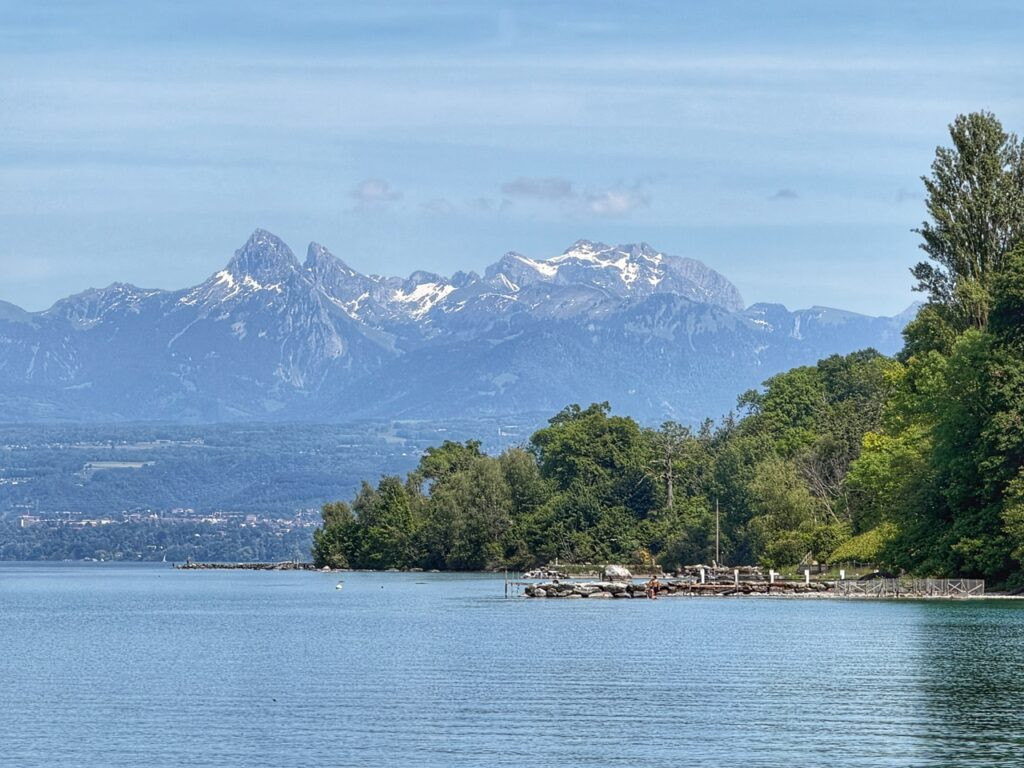

A little chunk of snow-covered Alps soaring over the lake.


Another view of the castle from the marina. So grateful to be born in this day and age.
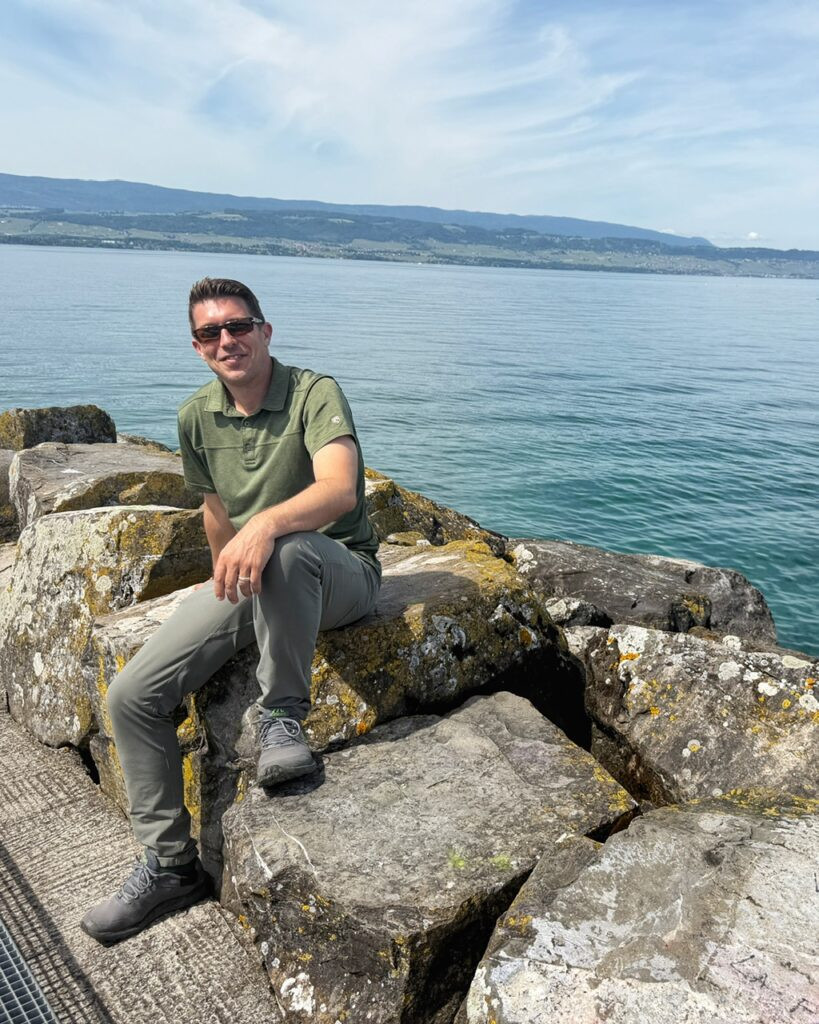

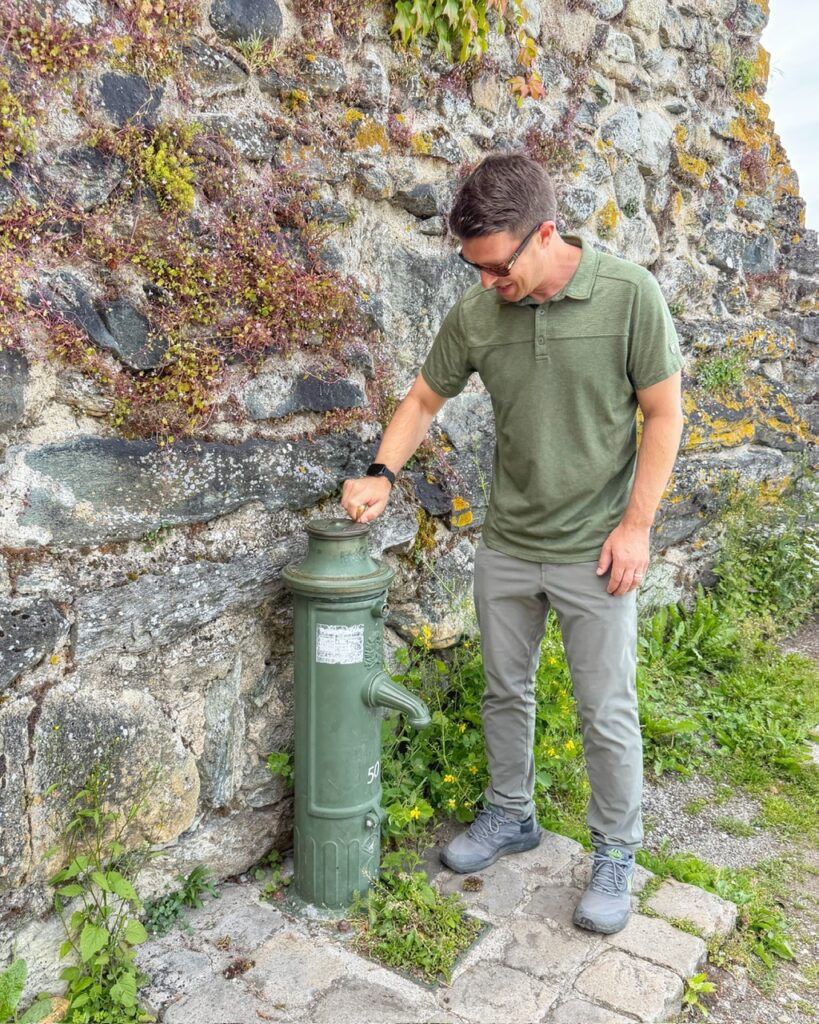
Although my man would have made a cute knight, or, a fisherman, especially with these colossal carp darting under our noses, but more likely, l’eau management, as he tries to figure out how the water system works.
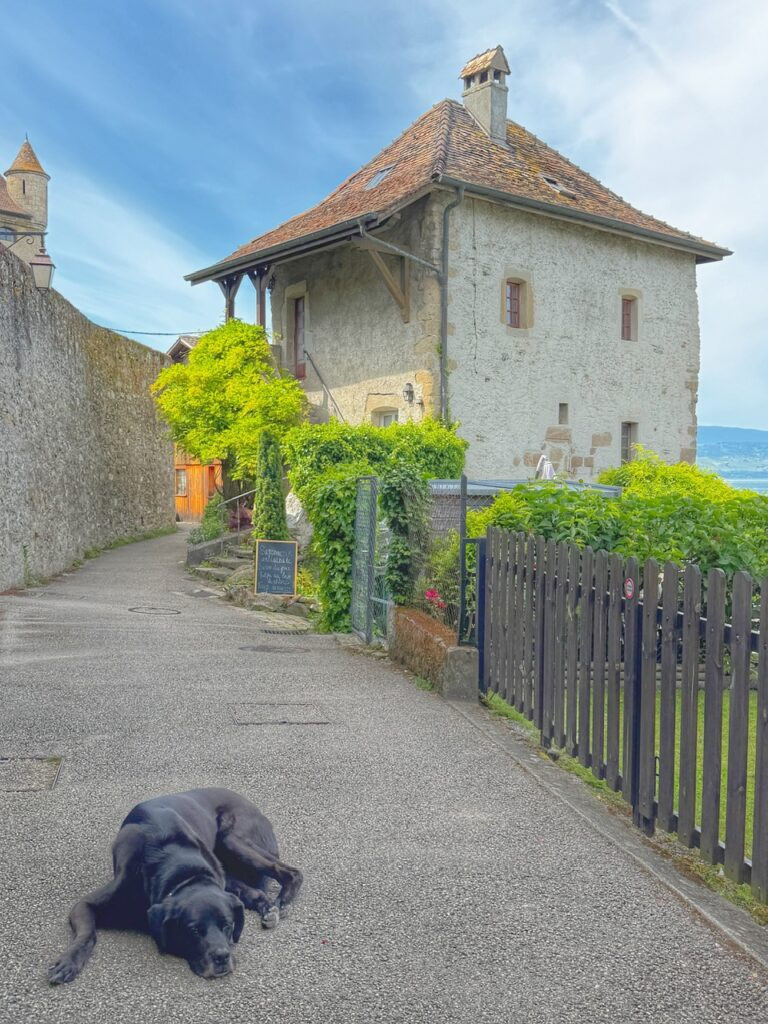
This belongs on a lazy dogs of France calendar
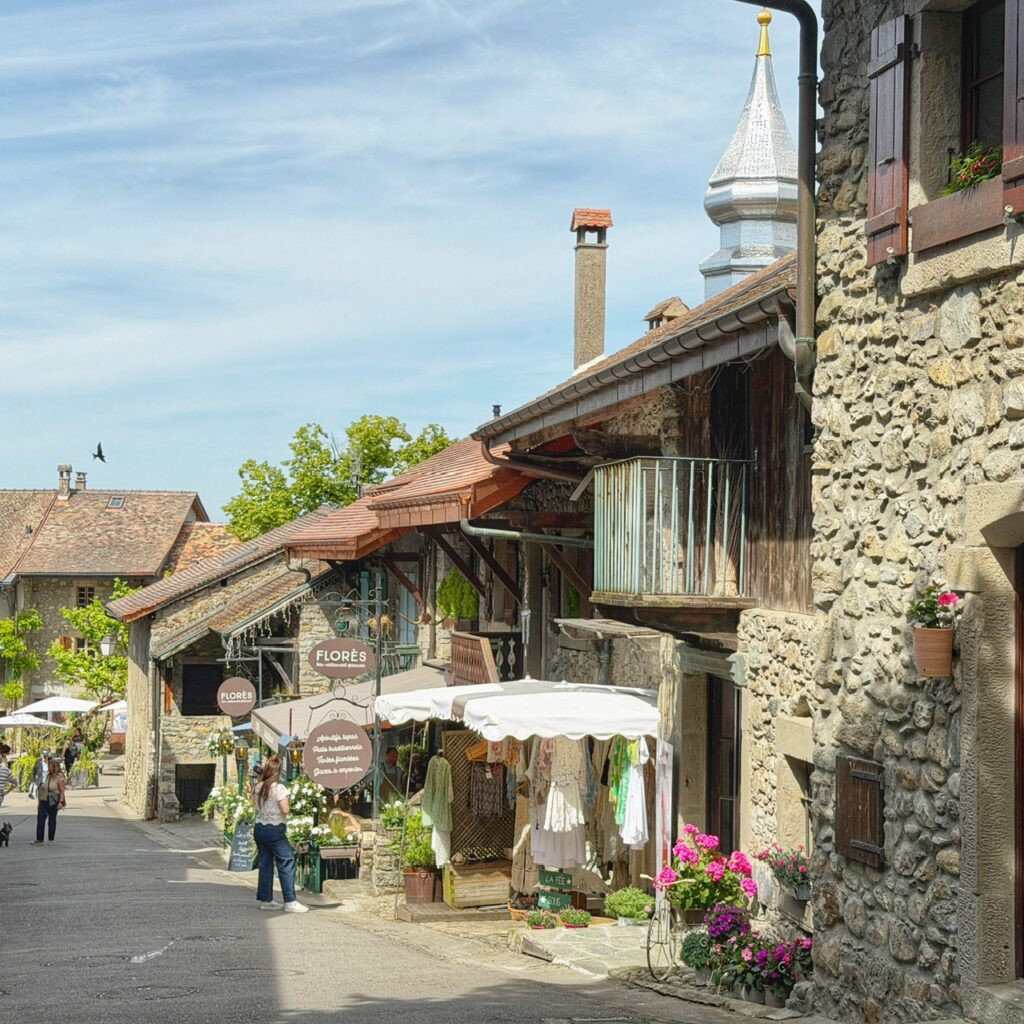
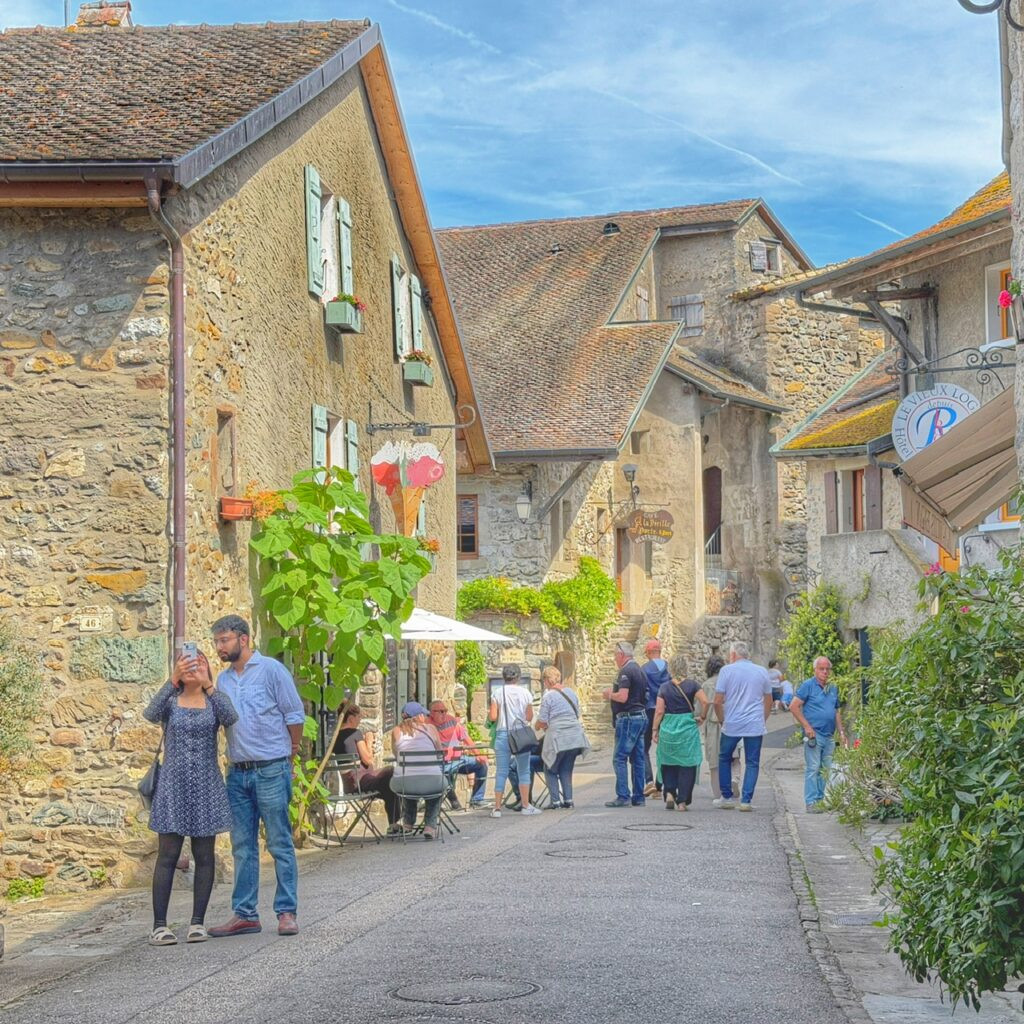
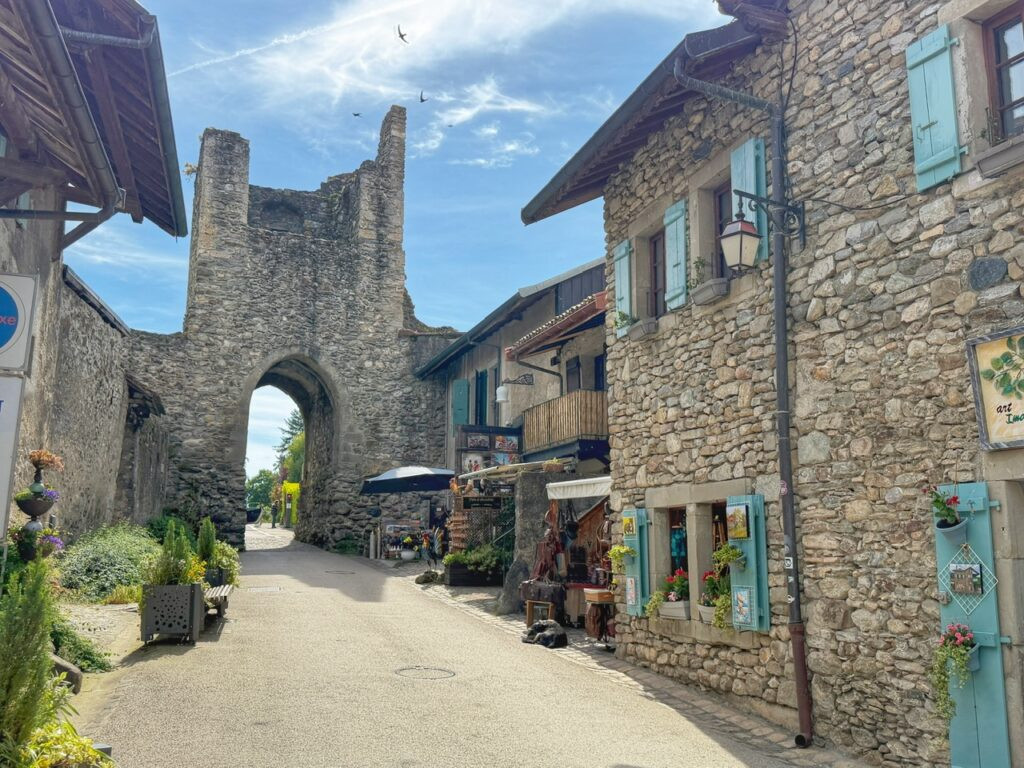
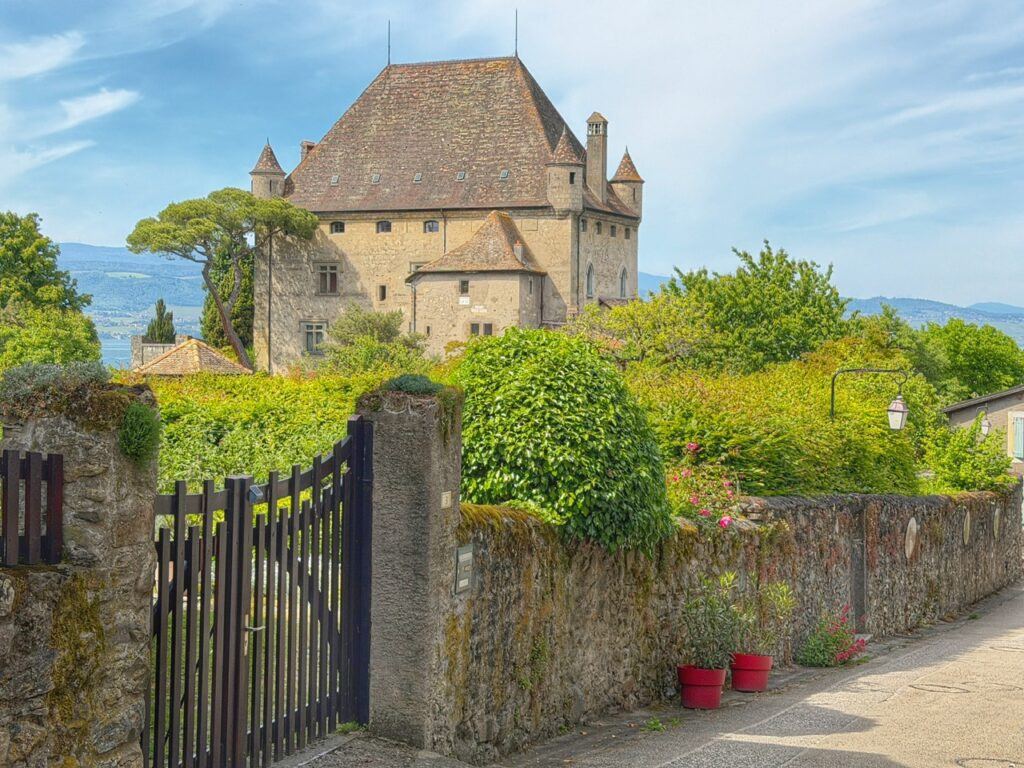
Streets of Yvoire…they’re parfait. Absolutely parfait.
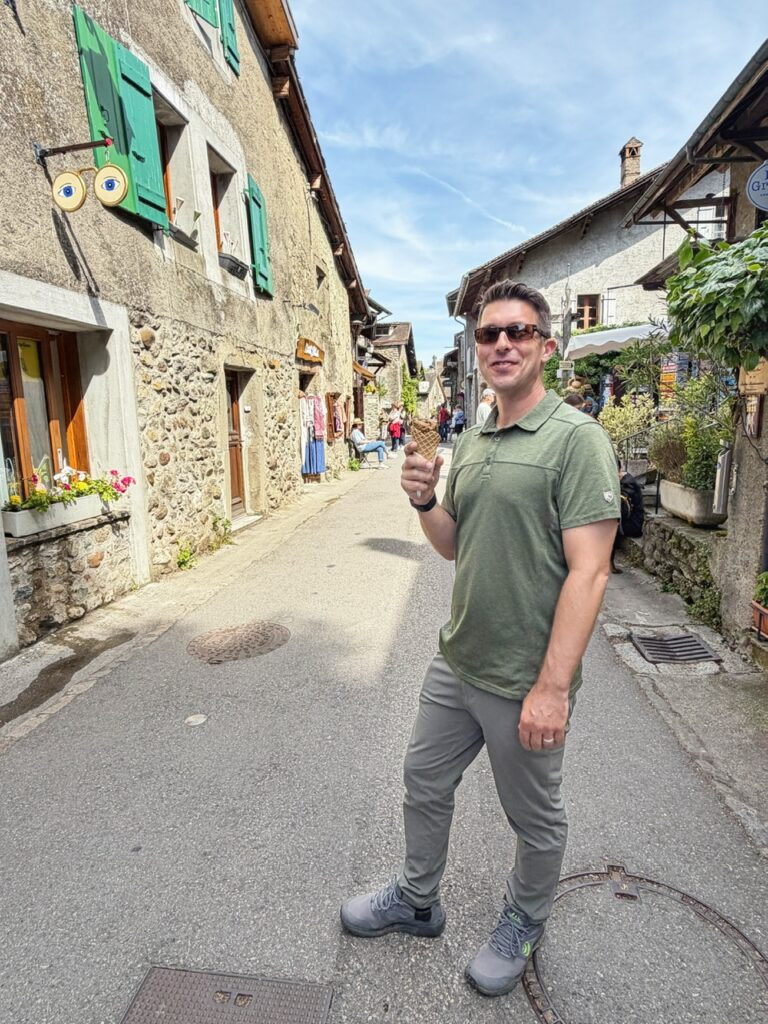
Mmm…speaking of parfait…and finally, we cave and join the “masses” to get some ice cream. Two scoops were 6 euro/$7.

To get there, we took the “J” bus from Thonon-les-Bains for 2.20 euros each. Everything around here is integrated into Google making it super simple to navigate. The driver’s machine wasn’t working so we had to pay with cash, which fortunately we had because the buses only come once an hour.
Seeing Mont Blanc for the First Time at Mont Forchat
Upon Andy and Libbi’s return, they took us on our second hike…this time to Mont Forchat, where thanks to the clear skies, we had our first superb view of the highest mountain in Western Europe, Mont Blanc. C’est Magnifique! Mont Blanc is often said to be the highest mountain in Europe at 4805 meters (or 15,766 feet). The tallest mountain in actual geographic Europe is Mount Elbrus, which we saw hiking in Georgia. Other tallest include Mount Everest in Asia (8,848 m), Aconcagua in South America (6,961 m), Denali in North America (6,190 m), Mount Kilimanjaro in Africa (5,895 m), Vinson Massif in Antarctica (4,892 m), and Mount Kosciusko in Australia (2,228 m). We have yet to see the last two.

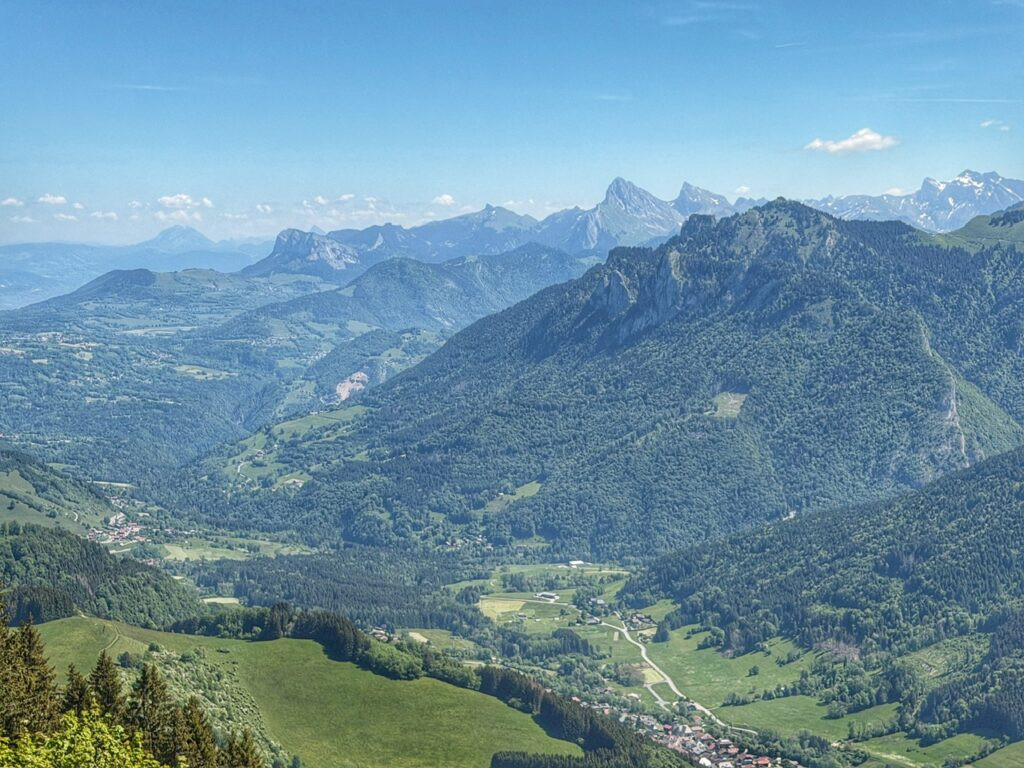
Of course the views of Mont Blanc were not the only eye candy from this 360 view perch stop Mont Forchat. In fact, we were encompassed.
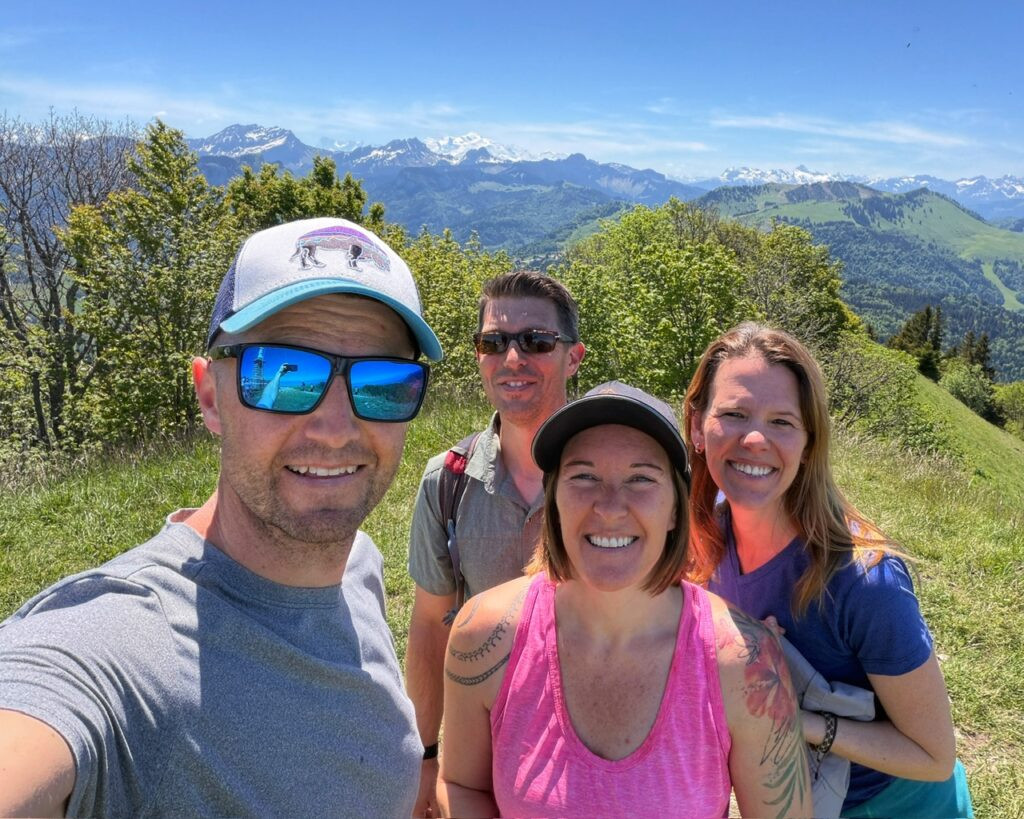
Making new friends with Andy and Libbi with Americans, who have temporarily settled on Lake Geneva.

The hike was 50 minutes to the top, which is typically how they mark trails in Europe…by minutes not distance. This is obviously just an average not made for iron men or grannies.
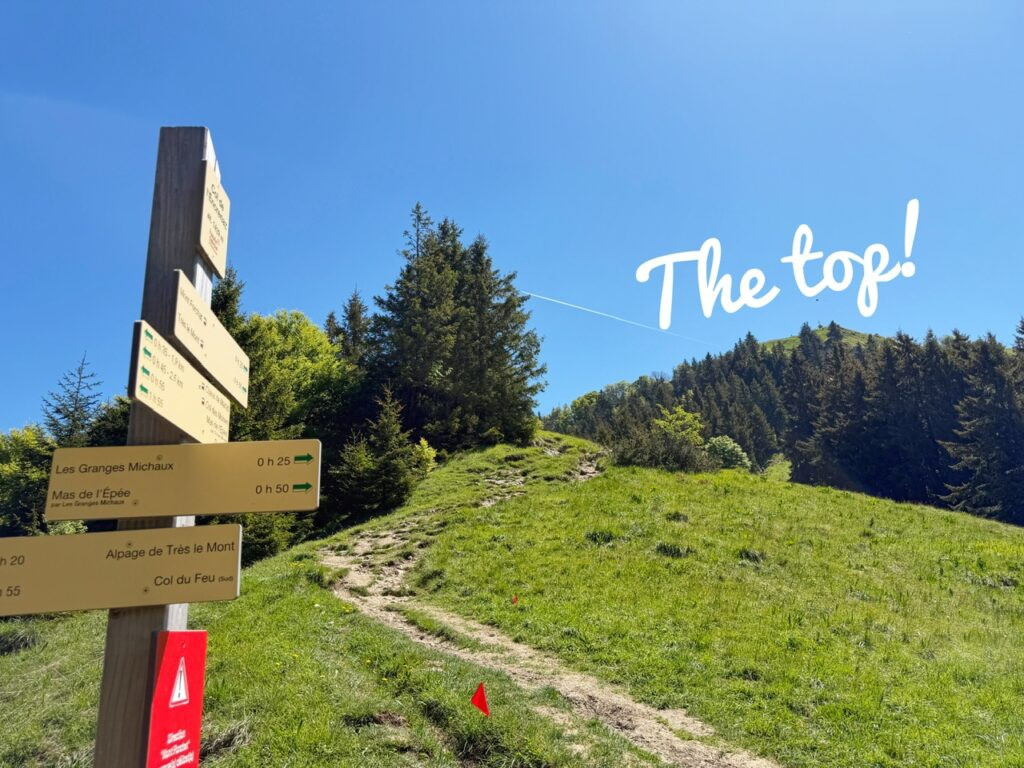
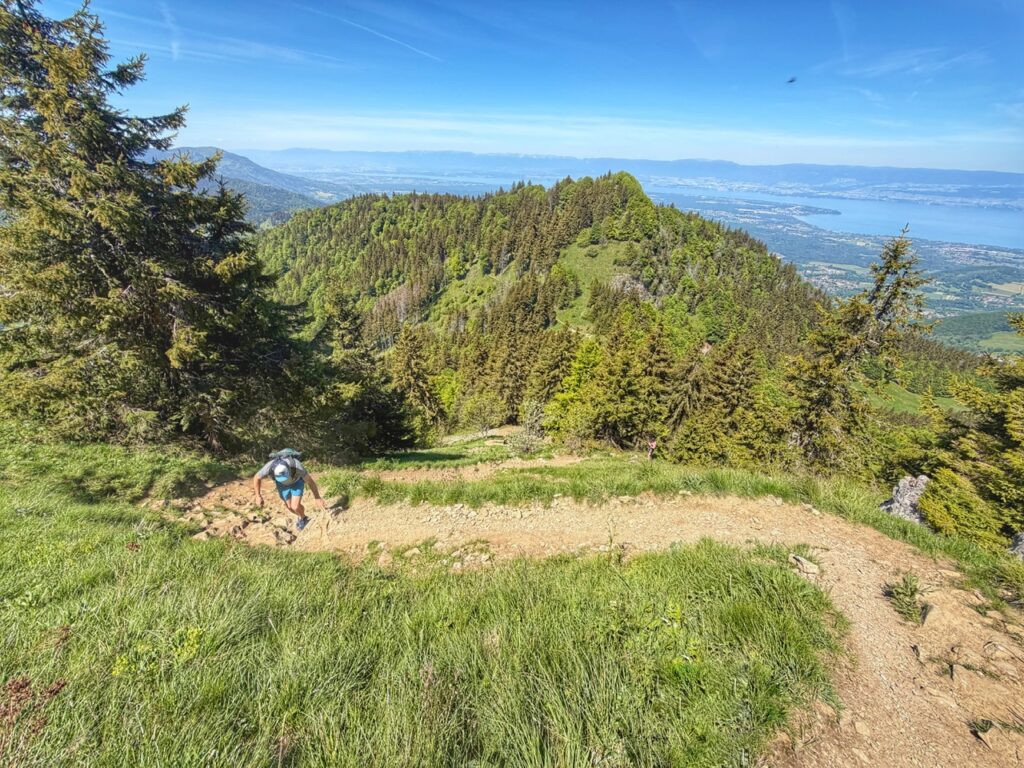
The trail was flat, followed by a steady climb, until we got to this section where it maneuvered steadily to the top, via switchbacks.
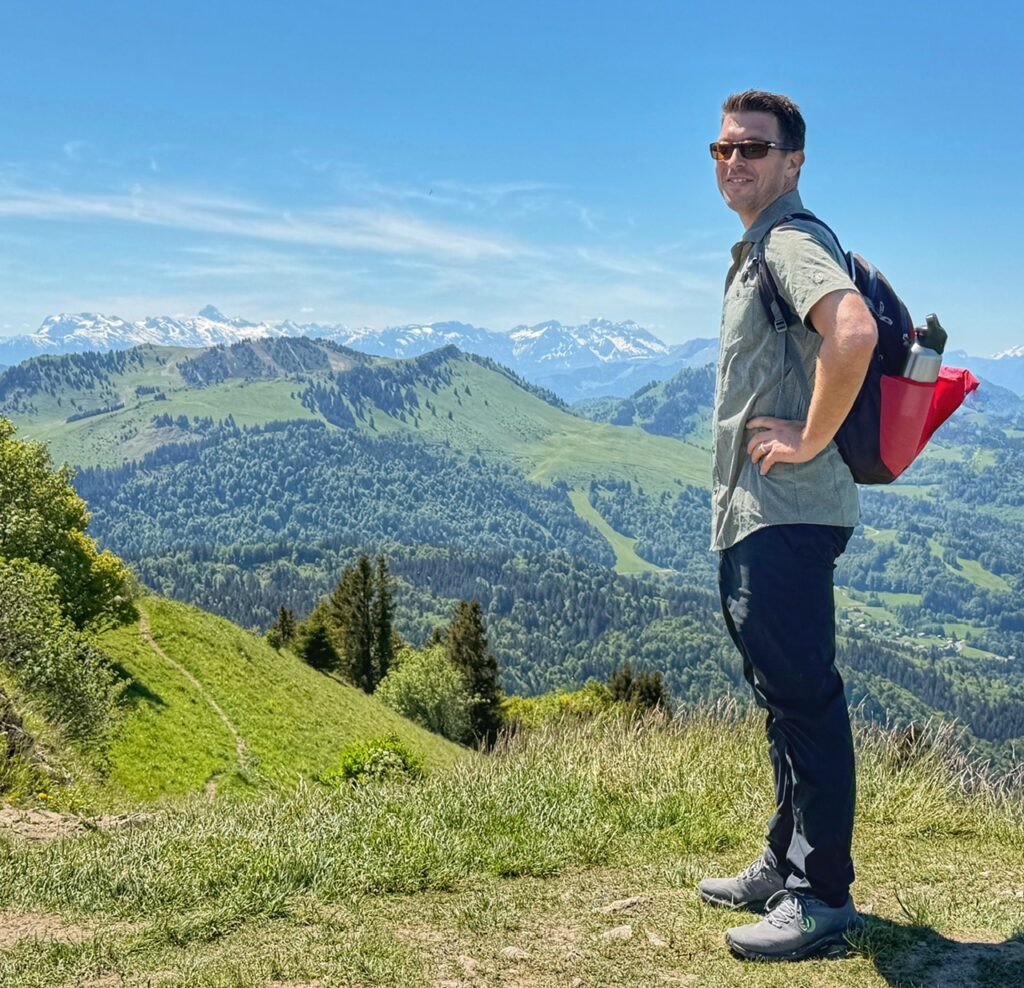
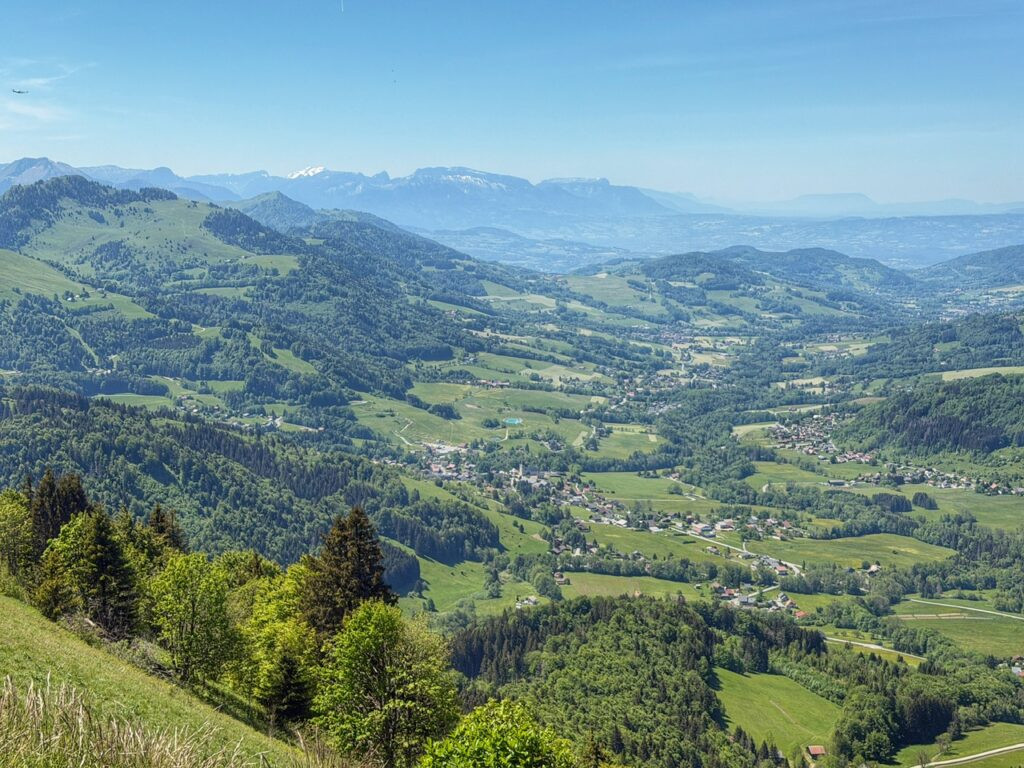
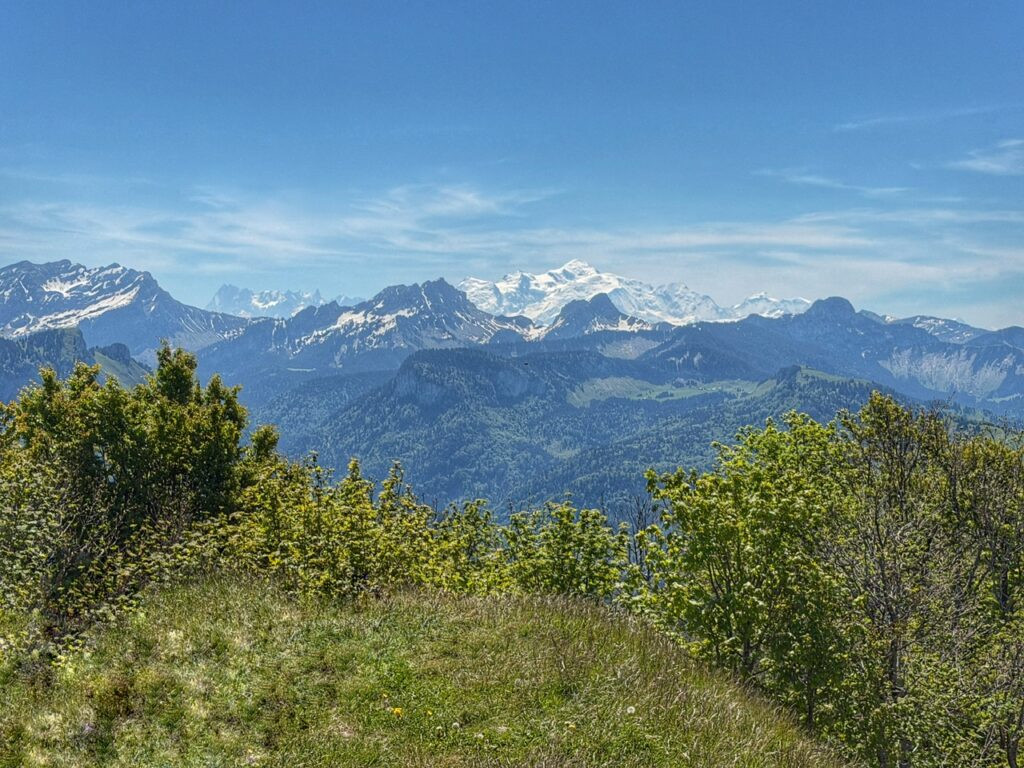
Greg soaking in the view at the top toward Switzerland. What a view!!

Geneva in the distance, which can easily be identified by the gigantic geyser that spews from the lake.
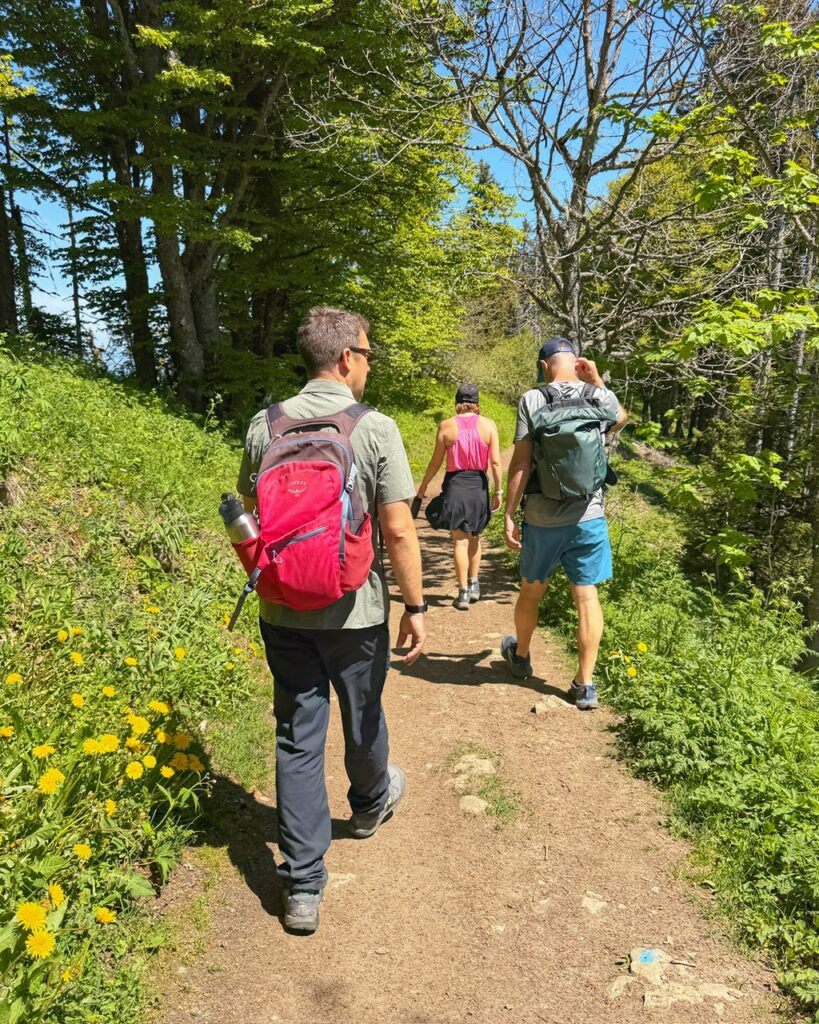
After a picnic lunch, we lingered for a bit and then wandered back to the car. It felt so good to be on the trail again!!
Evian-Les-Bains: What does Evian spell backwards?!
In 1999, Greg plodded off the beach in Cancun desperate for a drink of water. Unable to just walk in a bathroom and drink some tap water (obviously, it’s Mexico), the young budgeteer had to cave. Yes, the only establishments as far as the eye could see were resorts, and the only thing they were serving were $6 tiny glass bottles of Evian…arguably the world’s most pompous H20. Appalled, but absolutely parched, he dropped the $6. Until this day, he had never had it again, and nor had I.

For 200 years, rich people…and nouveau riche wanna-bes, have been slurping down this water worldwide made from a mineral spring in this very town on the shores of Lac Léman (Lake Geneva). Where of course here, it is free….
This mineral spring is why Evian is known all over the world. It is named after Gabriel Cachat, the owner of the garden where it ran at the end of the 18th century.


The therapeutic qualities of the water were discovered by Count Jean-Charles de Laizer, an aristocrat from Auvergne. Fleeing the French Revolution, he stayed in Evian from June 1790 to September 1792 at Gabriel Cachat’s home and drank the water every day. His kidney stones, that had made him suffer for years, disappeared rapidly. So let me get this straight….the guy suddenly drank a lot of water and his kidney stones went away? Yeah, sounds like a miracle. 🤣
Anyhow, the water was officially analyzed in 1807, and soon after recommended for kidney and bladder ailments. Its popularity as simple drinking water increased in 1860.
But of course, it did taste pure, cold and quite refreshing! So much so that these locals were filling up dozens of (plastic) bottles on this Sunday morning. They were all older though so that certainly says something! Or maybe it’s all the bottle lifting they’ve been doing?!
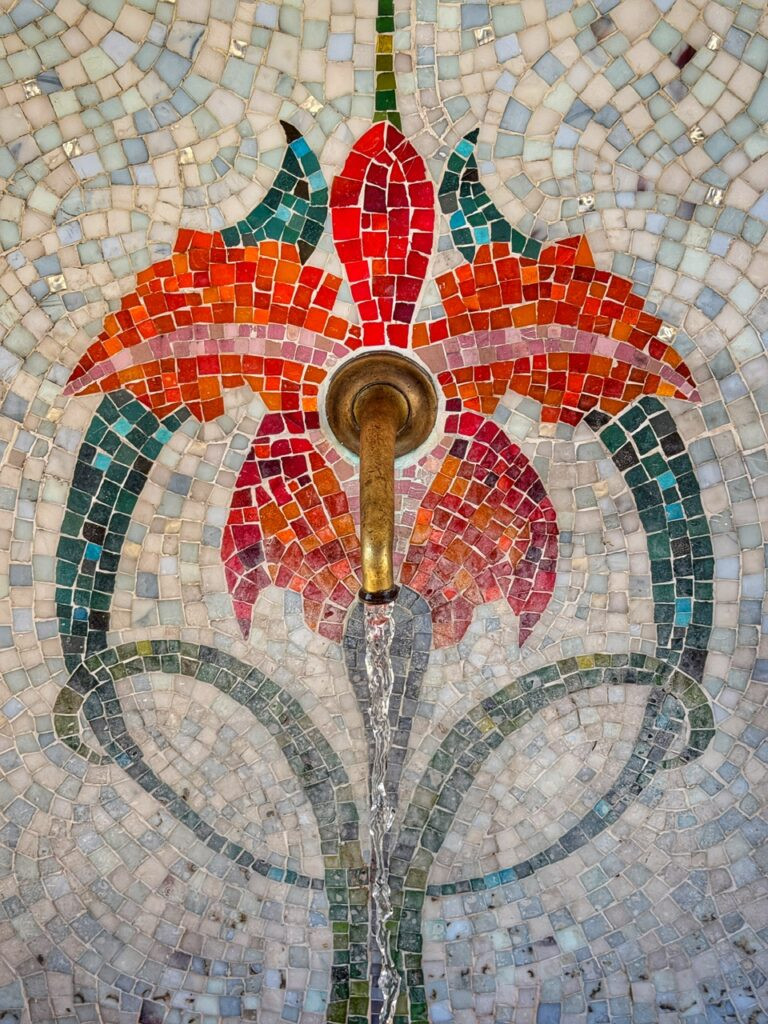
Another one of the nearby sources, Source de Cordeliers.

This all said, it’s no surprise that the Buvette Cachat, where the Evian story began, is the architectural gem of the city.


This historic drinking pavilion, parked over the famous Cachat spring, is where visitors came to drink the spring water as part of spa treatments during the town’s heyday as a fashionable health resort. This 1905 building is being renovated, which replaced an earlier bath house from 1826.
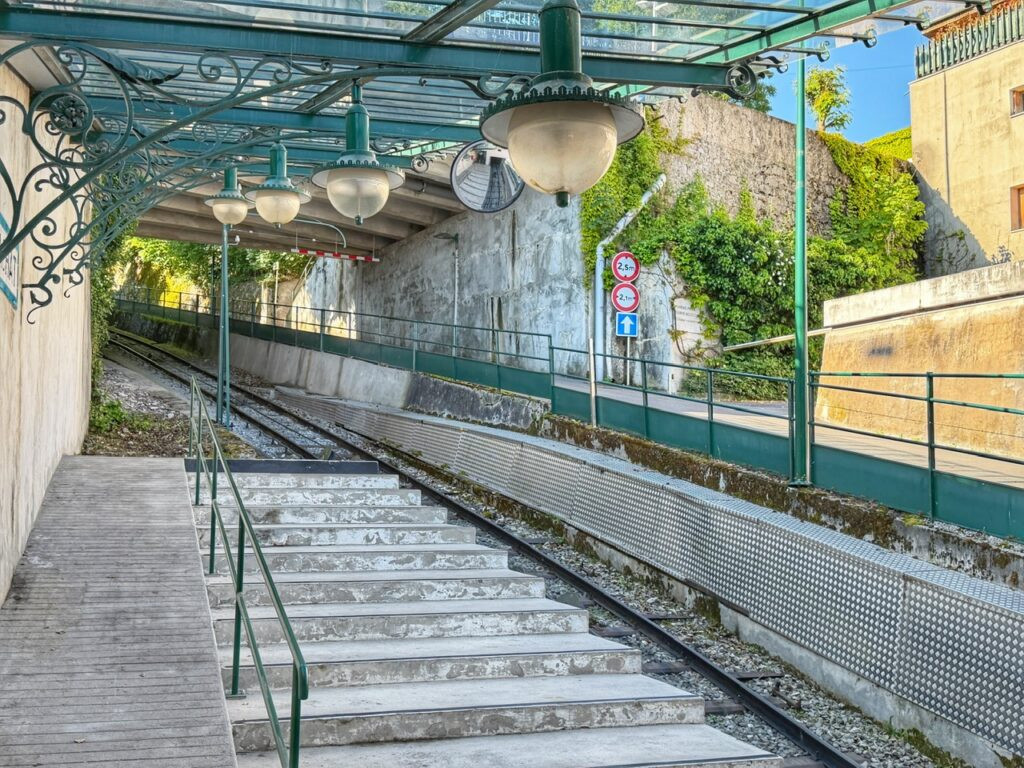
The elegant free funicular that carries visitors up the hill. Unfortunately it didn’t open until 10 on the morning we arrived so we didn’t get to enjoy it.

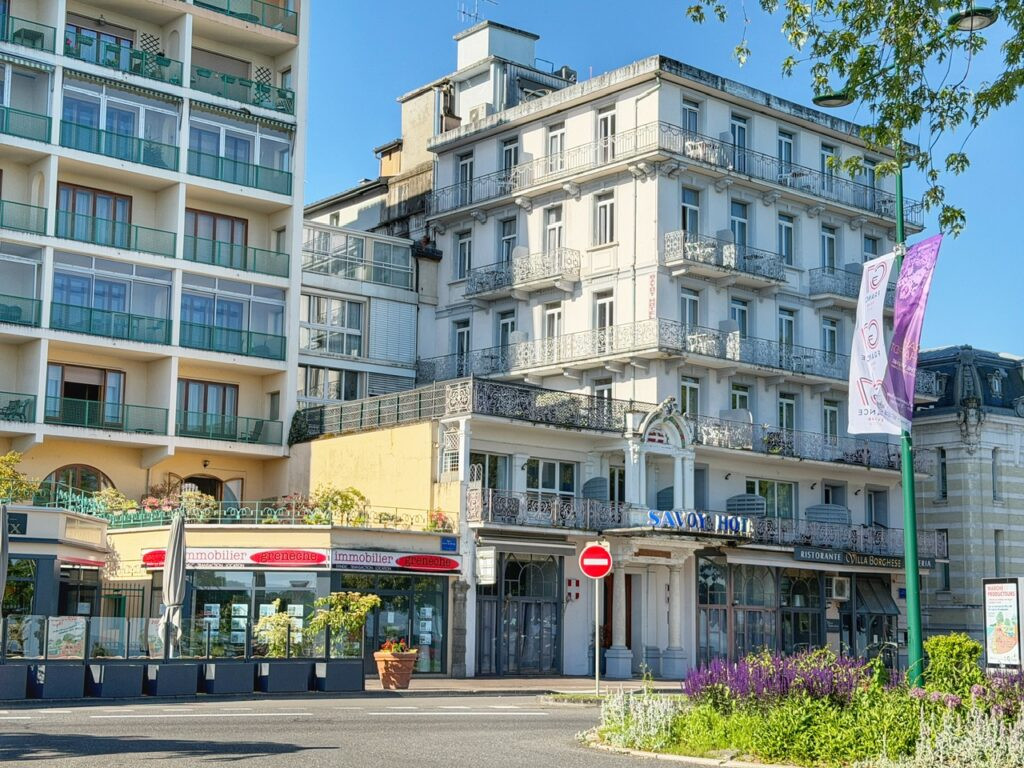
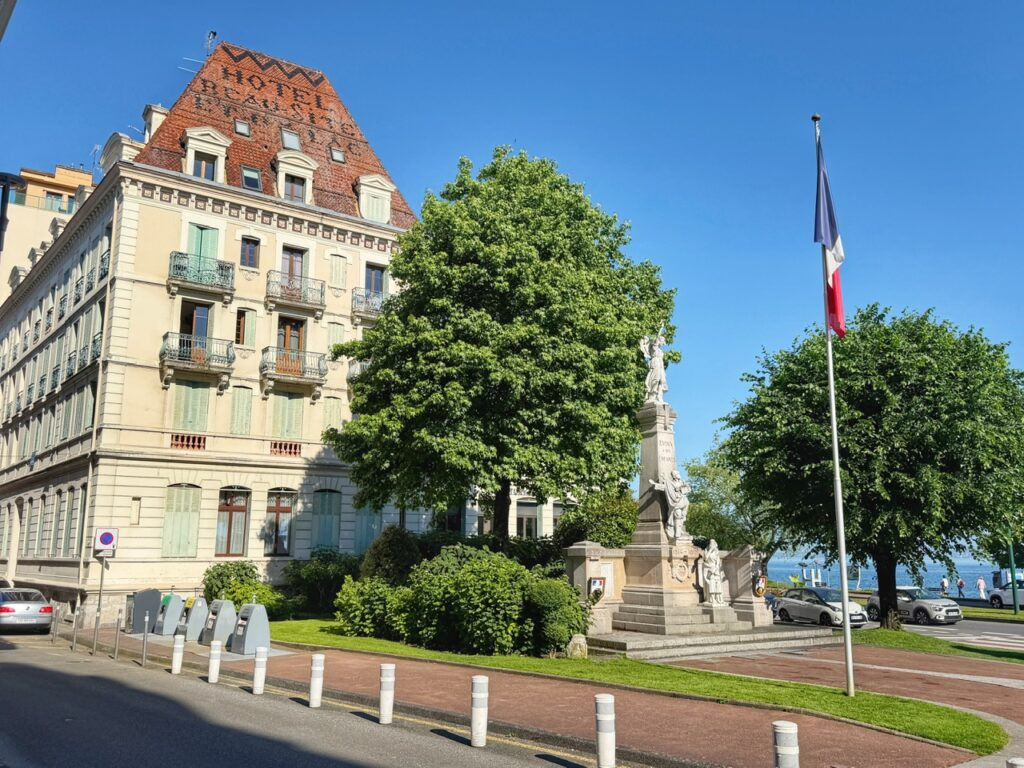

As we passed “Tesla destination chargers,” and other glimpses of the polished town of Evian-les-Bains, we headed down to the waterfront where we would catch our ride, and we discovered pretty much everything in this town feels this way, including the Palais Lumiere (Light Palace), which is now a museum. We better skip outta here before they catch us smuggling kidney potion across the border….


