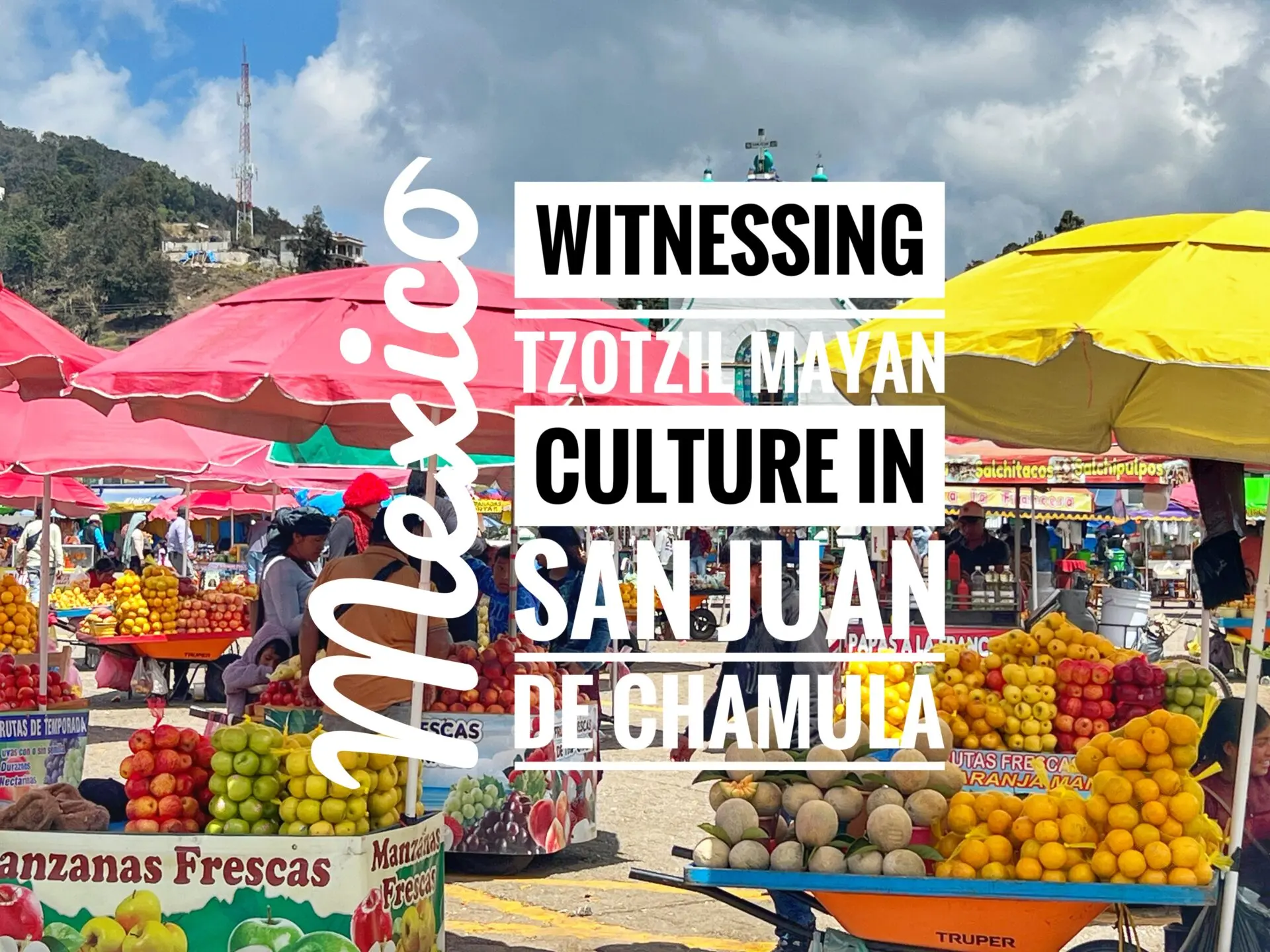
Yesterday, from San Cristobal de las Casas we went to nearby San Juan de Chamula, which is a Tzotzil Mayan indigenous town known as one of the most significant cultural places in Mexico’s most southern State of Chiapas. In addition to unique customs and traditional clothing, it has a weekly Sunday market centered around a one-of-a-kind church practicing both Catholic and tribal rituals, in a quite syncretic manner.
Stepping into this church where people were audibly mumbling chants in an indecipherable language, was stepping into another world…and another time…undoubtedly unlike anything we’ve ever seen, and well worth the journey.
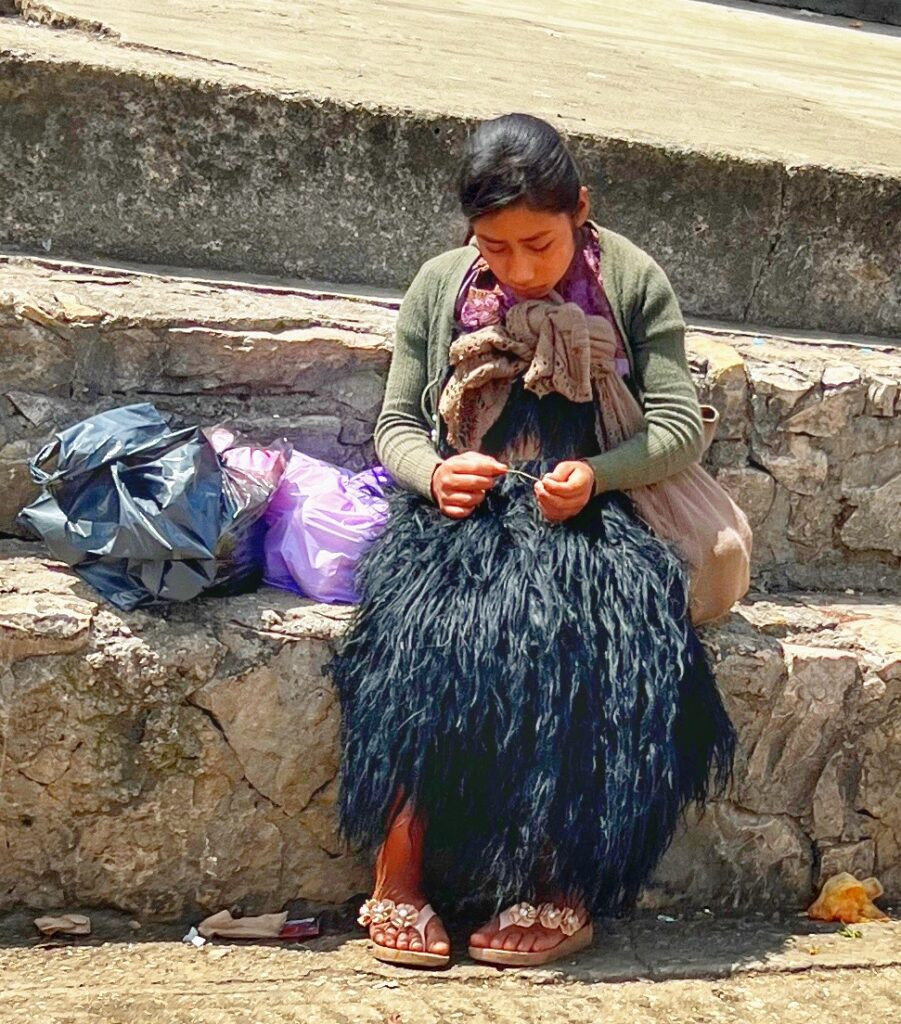

In Chiapas, we learned that women’s clothing are basically passports which identify her hometown. In Chomula, they have a unique look…many of the women’s lower extremities are blanketed by a shaggy fluff-monster, or nagua, which are made from raw and bushy sheep wool.
For the Tzotzil Maya, sheep are significant spiritual animals and they possess souls similar to humans. Wearing its wool symbolizes protection and warmth, almost like wearing the fleece of an animal as a shield. In Mayan cosmology, the black color signifies the west, the night, and the cycles or life and death. (Chat GPT).


The weekly market showcases bursts of color in its displays of fruit, as well as its umbrellas. This brilliancy is also featured in its clothing, featured in the main market, which is the yellow building in the background.

This place was wonderfully authentic with locals bustling about buying their weekly produce and enjoying their Sunday.


The aforementioned church, San Juan Bautista, is one of the most unusual churches we’ve seen…perhaps in the world. Photos are not allowed inside for good reason. They are believed to take a part of a person’s soul and disrupt the ritual space.
What happens inside is nothing like a normal Catholic mass, but a conglomeration of pre-hispanic Mayan cosmology, meets folk Catholicism, meets local Tzotzil spiritual hierarchy.
After paying your 40 pesos ($2.30), when you walk inside the dim and smoky cathedral, you are met with an ethereal forest…including a sea of candlelight over a blanket of scattered pine needles. Many of these candles illuminate directly from the pew-less floor, piles of wax rolling in puddles on the tiled surface beneath.
There are no formal sermons…only huddles of families sprinkled throughout kneeling and murmuring prayers in Tzotzil, on the pine-covered floor. One faulty kick of these pine needles onto a blazing candle could spell disaster, so it’s a good thing these people are consumed by chanting, prayer, and ritual.
Local shamans join some families to perform cleansing rituals inside the church. These may include passing eggs over someone’s body, burning candles in specific patterns, or offering Coca-cola or Pox, a sugarcane liquor. Yes, Coca-Cola. Carbonated drinks are believe to help expel evil spirits through burping.
Wow…if this is the case, I know some people who shouldn’t have an evil bone in their body!
The facade of the church is also interesting. This colonial shell has a base that speaks Catholic, but hides the fascinating rituals that happen inside. Even so, the turquoise and green isn’t random decoration. In the highlands Mayan symbolism, these colors represent the sky, a sacred space and regeneration. The floral and radiating motifs over the door represent life force, solar energy and cycles in MesoAmerica.
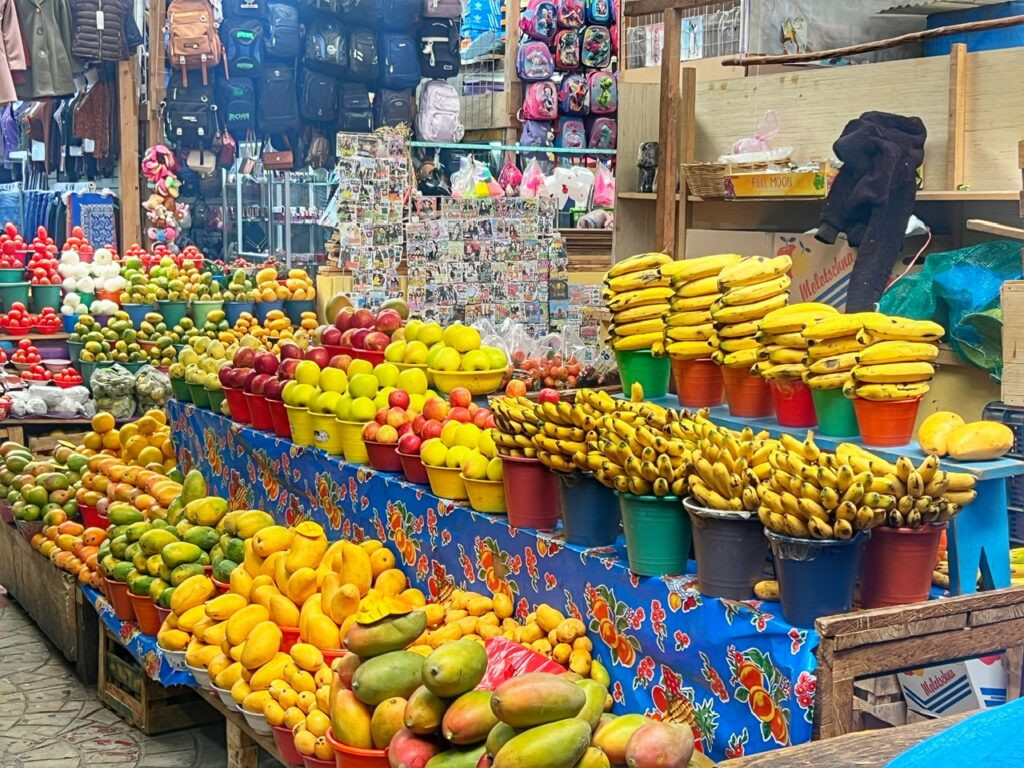
Moving on, we wandered into the local mercado hoping to score some lunch. However, everyone seemed to be outside leaving a cluster of empty taquerias without a steady business shuffle or sizzling meat…neither of which we wanted to experiment with after having serious tummy troubles a couple weeks ago.


So, we moseyed on and continued our people watching, including a throng of muchachas shopping for their premier fluff-monster arrangement. Well, that’s one way to stay warm at 7200 feet.

We went up a couple more feet to get a lovely lay of the land behind the Monument to the Chamula Man, which represents the archetypal Tzotzil man wearing a wool tunic, straw hat, and sandals (huaraches). Interestingly, we didn’t seen many men wearing this ensemble; the women were far more embracing their roots.


The pine is said to be a purifying element in Mayan belief, although the vendors selling it make it look more like a Christmas tree lot? Which begs the question, did Christians adopt trees and garland for similar reasons?!

Another local vendor with his bananas, which we’ve noticed are far sweeter than we found in Guatemala.

For lunch, since the market was a bit of a bust, we headed to a restaurant called “The Mirador” to grab a break and a view of the town.


As any good Mexican meal does, it started with a couple beers, a basket of Totopitos (Tortilla chips), and some bean dip and salsas. This was Mandy’s first Corona in Mexico. It’s been awhile! ($1.72) Lunch included three cheese/chicken quesadillas, plantains/fries and a heaping load of guacamole. Total was $16 including tip.


While we waited for our van to fill to head 30 minutes back to San Cris, we observed more activity before us..

Apparently “Kentucky” is an actual type of chicken?


To get to San Juan de Chamula, head to Calle de Honduras near the Mercado Central in San Cris. From here, you’ll see a sign advertising colectivos to Chamula. It costs 25 pesos each way, or about $1.40. Note, they are white with a blue stripe which look different than the local colectivos.