

At 45 and 47-year-old nomads, it’s sometimes hard to find our place…not only in the world, but amongst the ages. We live sandwiched in between two travel varieties…the more traditionally or early retired 50/60-somethings, who seemingly have unlimited funds… and the digi nomads, and/or ambitious, experience-driven and childless millennials, and Gen Z’s.
We can relate a bit to both, but neither entirely, and this became even more evident after spending the last 20 hours climbing a volcano with five other “kids,” who barreled up the trail (sin trekking poles), and slept like sweet little babies while we writhed in pain, sleeping on basically a yoga mat on the bitterly freezing ground.
I guess what I’m saying is we’re evolving as travelers. And we’re beginning to realize that we’ve aged out of certain things.
Sleeping on the ground is one of them. Climbing volcanoes is another.
In fact, after observing molten magma bubbling in a caldera in Nicaragua (2017), witnessing a sunrise over Indonesia’s Mount Bromo (24), summiting the USA’s most explosive recent peak…St. Helens (14), getting engaged on another peak in Oregon (12), seeing flowing lava in Hawaii (14), and skidding down ashes on a “volcano board” plank in Nicaragua (17), we think our volcano chapter is verging on becoming dormant.
But are we glad we climbed Guatemala’s Pacaya?! Absolutely. We’d always wonder about it if we hadn’t.
And, are we glad we bypassed the much harder five-hour slog up Acantenango, which we were originally signed up for? Yep.


From the slopes of the active volcano, Pacaya, one can see the regular belches of lava, which becomes even more alive by twilight.
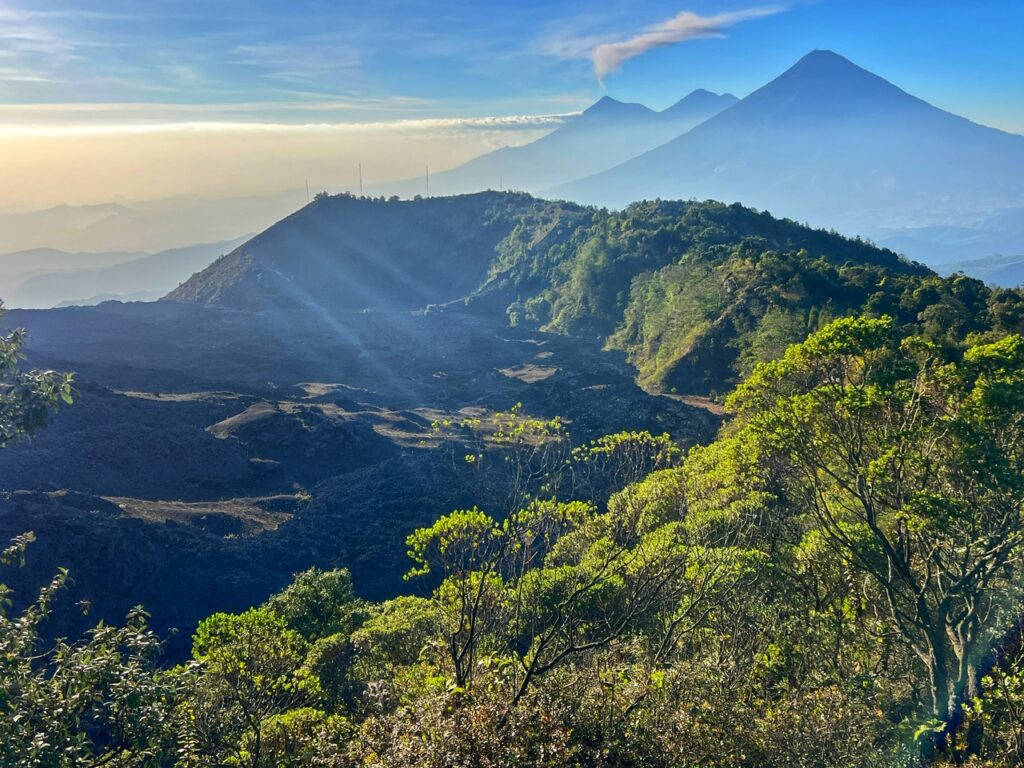
The three sister volcanoes of Agua, Acantenango and Fuego all dance along the horizon of Antigua, and also sit on different timelines of geologic liveliness. Agua is now extinct, Acantenango is dormant, and Fuego is utterly alive, apparently enjoying the local legume-heavy cuisine as she farts gurgling puffs of gas every 10-20 minutes.
Agua, in the foreground is the third tallest in Guatemala and rises to 3766 meters (12.5k feet). She was so called “volcano of water” after a devastating flood/mudflow that tumbled down her slopes in 1541 after days of heavy rain that destroyed Guatemala’s then-capital (Ciudad Vieja). Because that event was dominated by water and mud rather than fire or lava, the Spanish began calling it Volcán de Agua in contrast to the nearby Volcán de Fuego (Fire) on the left.
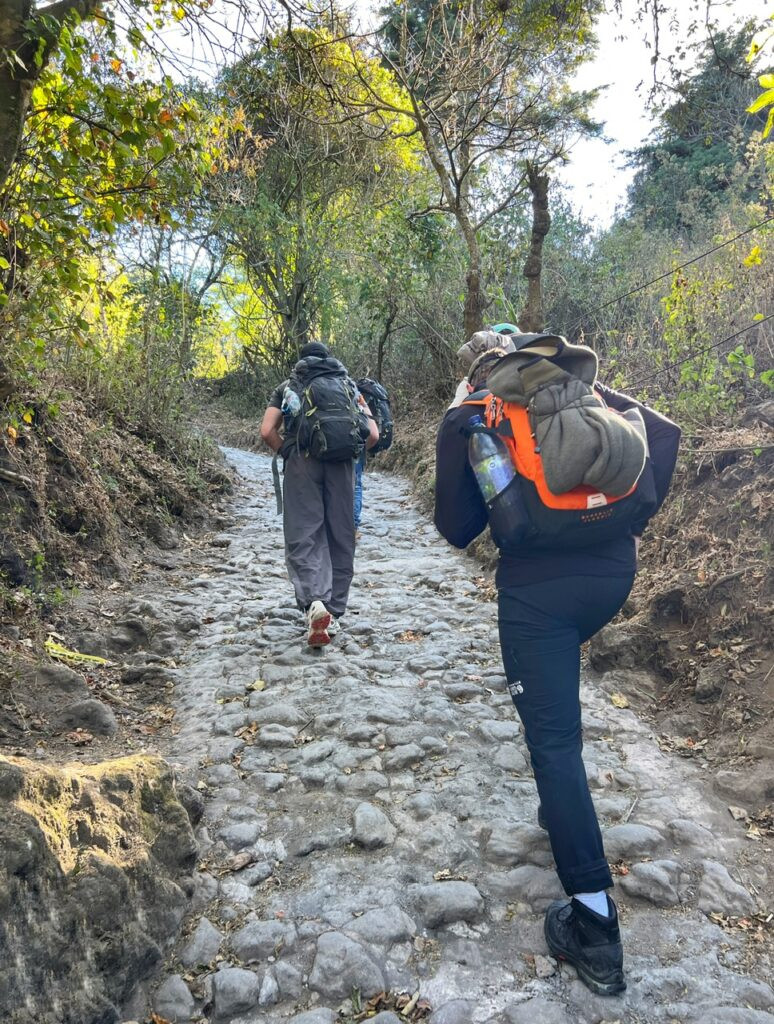
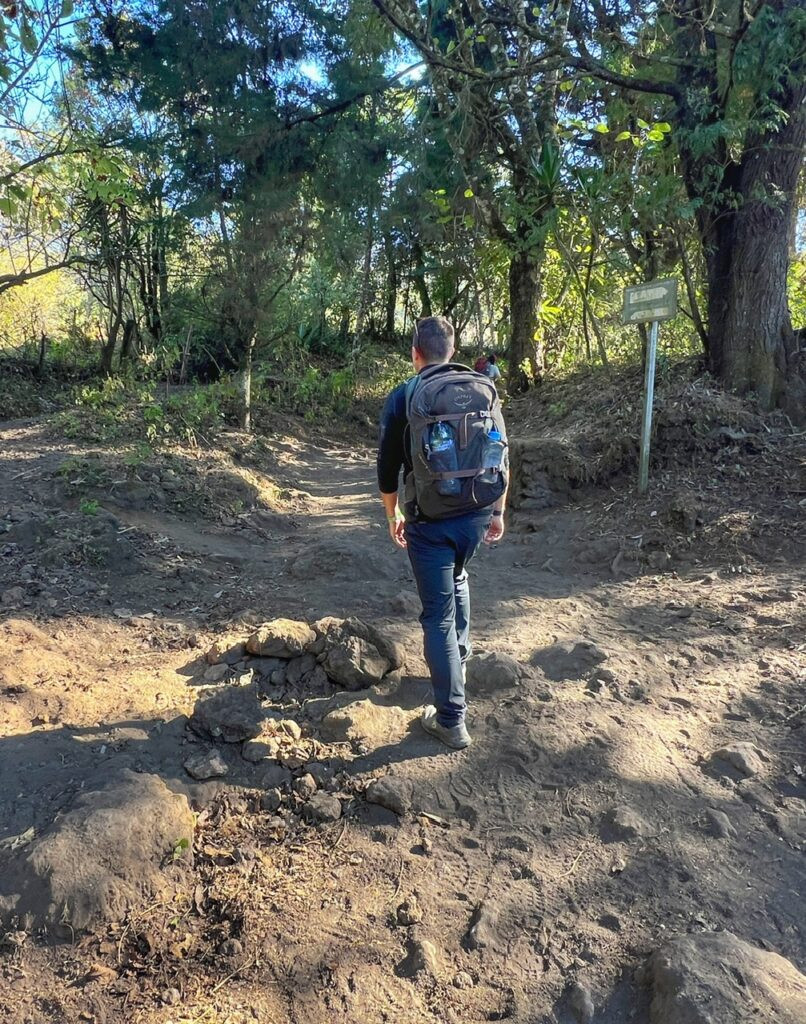
Our overnight adventure on Pacaya, yet another active volcano, began at the office of Ox Expeditions in Antigua and cost $99/each, plus $13 for the park entrance. Here we repacked our bags to include some cold weather essentials we borrowed (for free!) from the adventure outfitter, as well as ample food and water which we’d be toting up. The beginning part of the trail was rated as “Medium Difficult,” which we soon realized was more like “Moderate,” by other countries’ rating systems. In other words, the intensity was perfect for us and thankfully, no Mt. St. Helens. The cobbled trail weaved through some farmland and forest, before turning into loose dirt and ash.
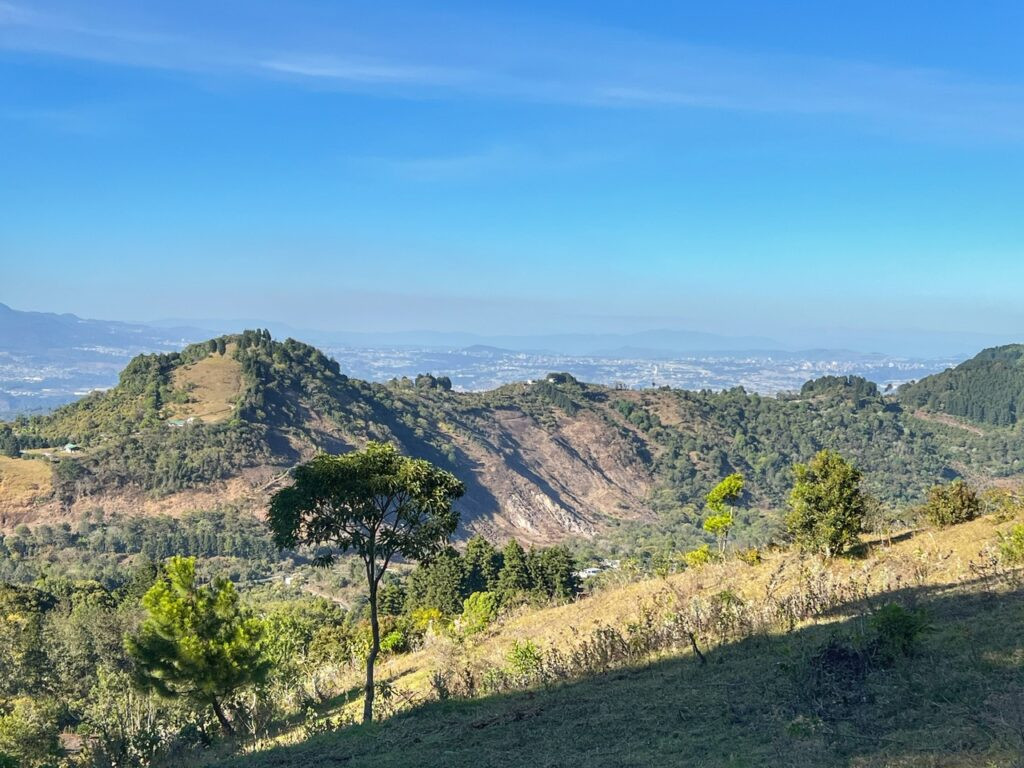

As we began to rise, we were able to see the country’s capital of Guatemala City below us. Getting even higher is when the three famous volcanoes emerged.
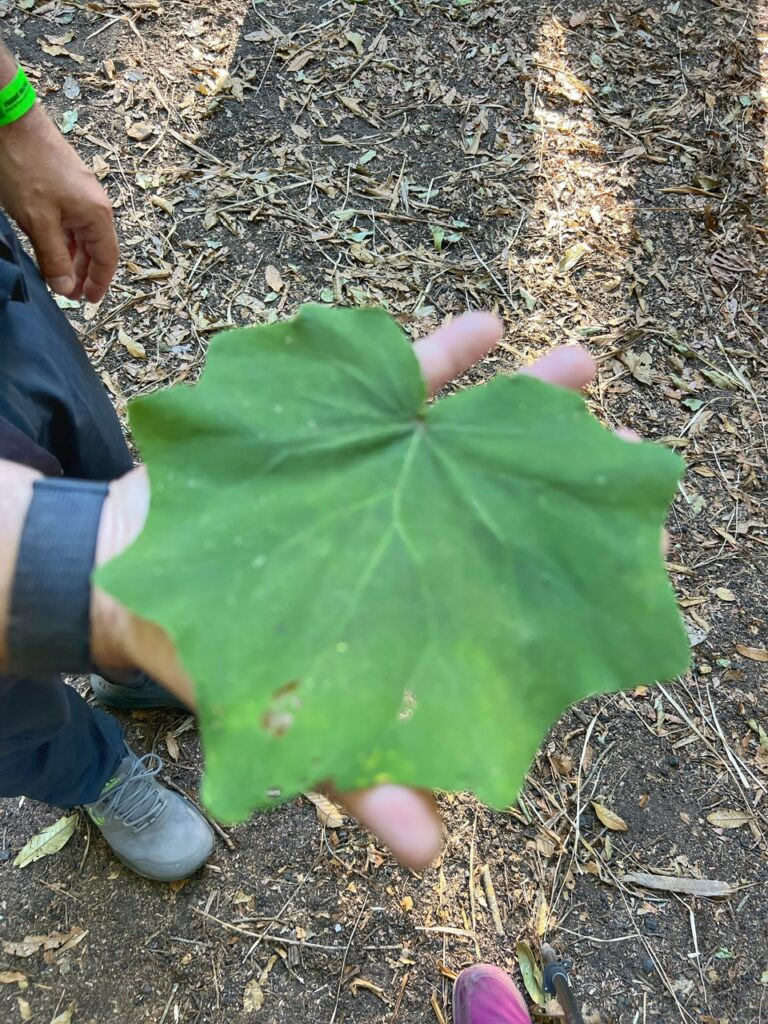
Along the trail, the guide pointed out a velvety Wigandia leaf, which is basically nature’s Charmin. Fortunately we’d brought our own TP….
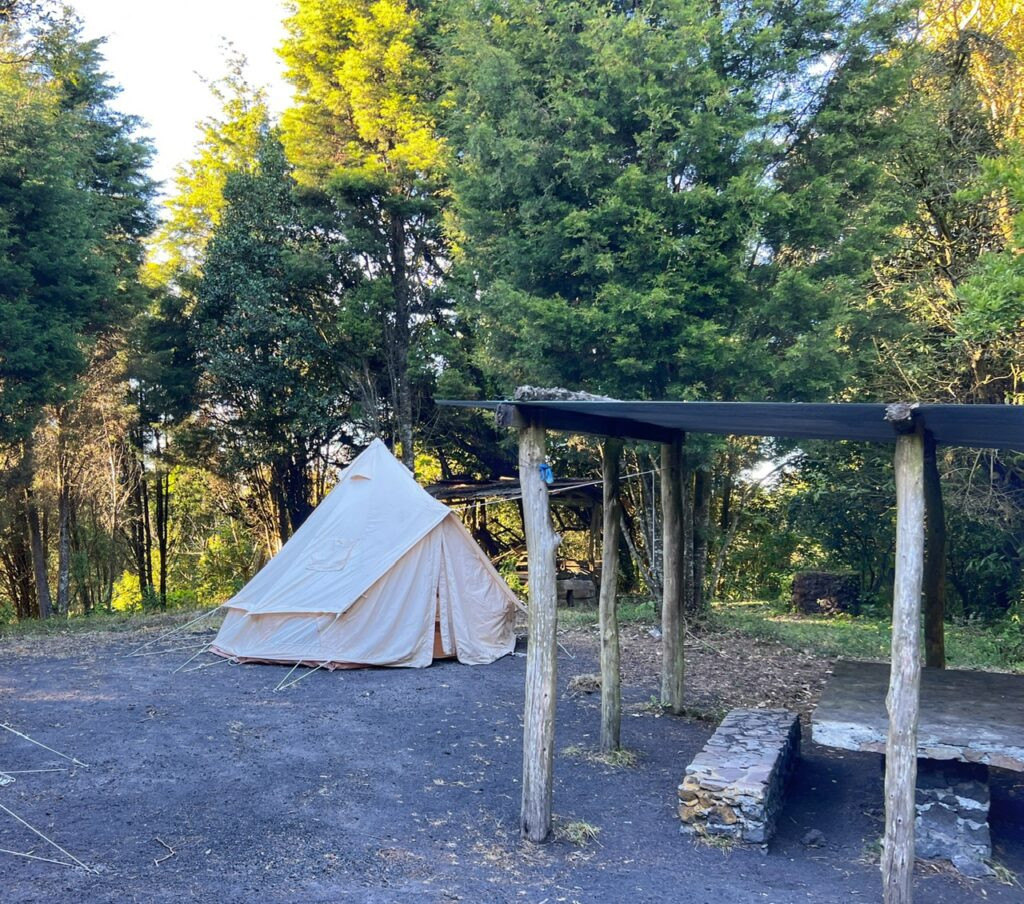
We arrived to our camp after about an hour and 20 minutes of upward motion. It was here we’d shack up with Rebecca and Ian, a newly married couple, while trying to keep our moaning, groaning and general feelings of cocooned suffocation to a dull roar.


At camp, we ditched our bags before climbing up Pacaya’s slopes even further…
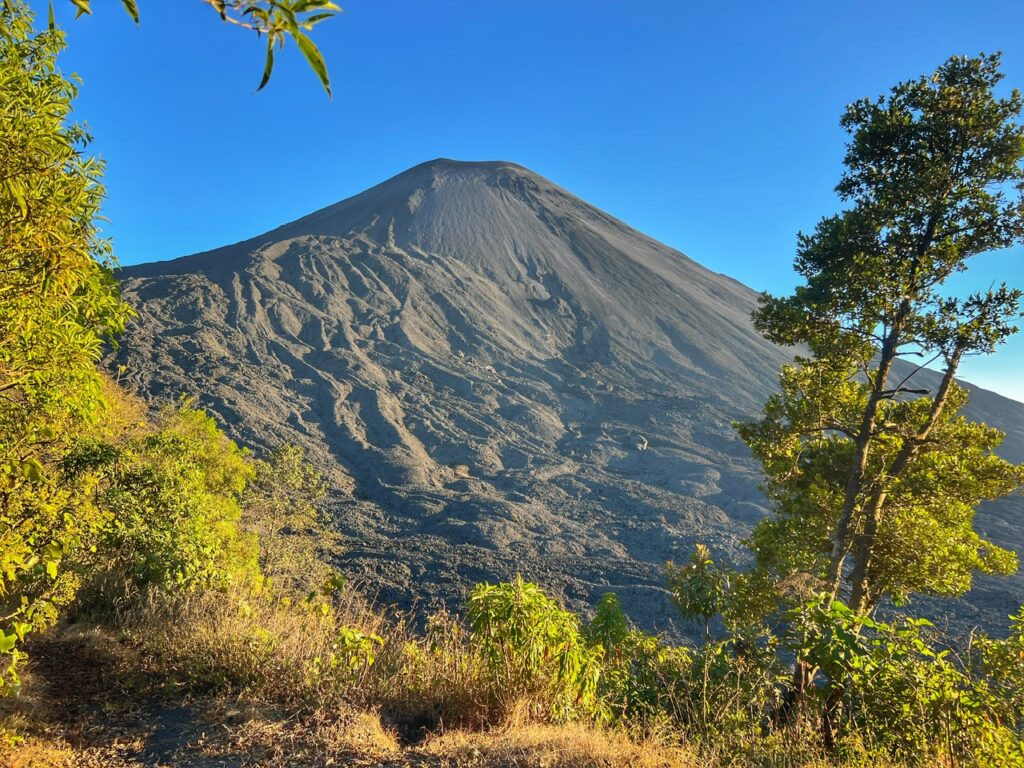
…the active volcano immediately behind us which has been erupting frequently since it became active again in the 1960s. It’s not nearly as explosive as Fuego, but regularly emits puffs of smoke in a much more smoldering, French sort-of-manner. Unfortunately/fortunately there was no active lava flows at this time.
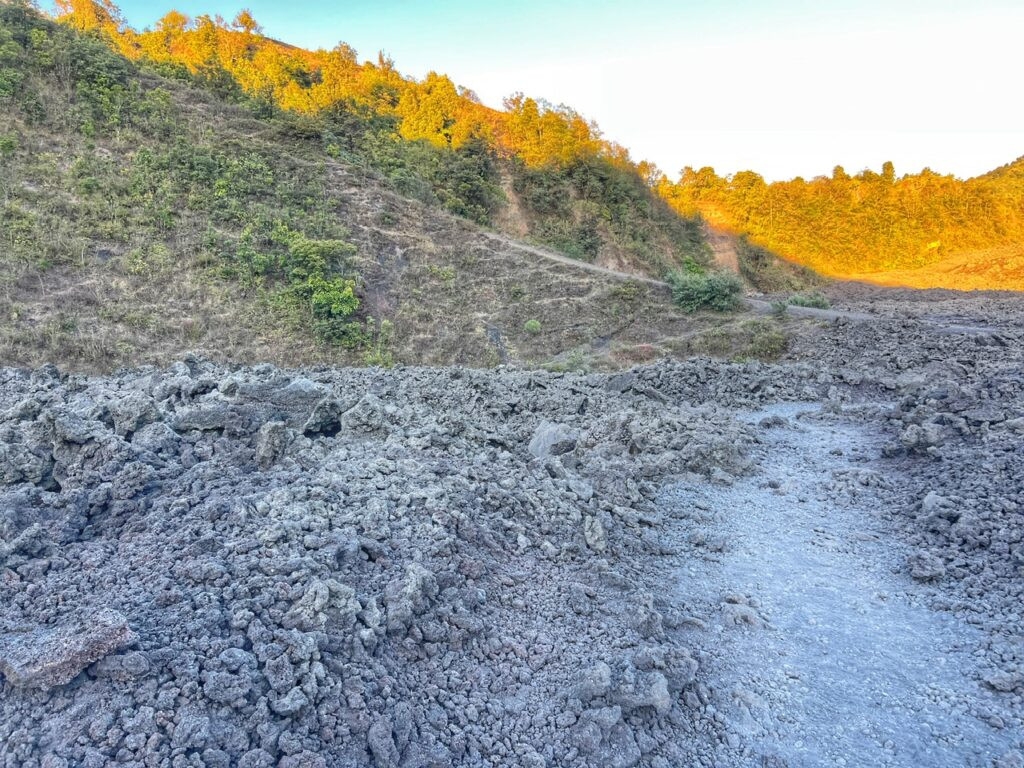
It was here we could observe a still heaving lava field under our noses called “El Patio,” which is the area where lava flow has been congregating from the main vent since 1965. It’s now solid and cool enough to walk on, but still warm underneath…

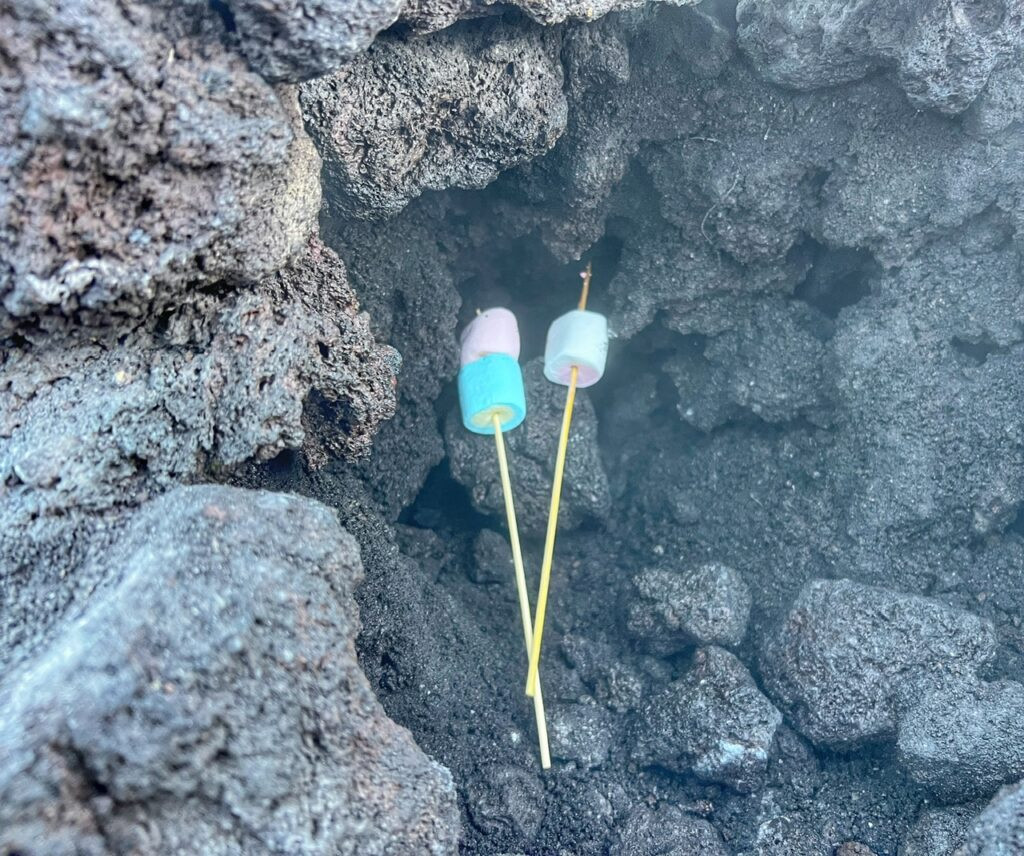
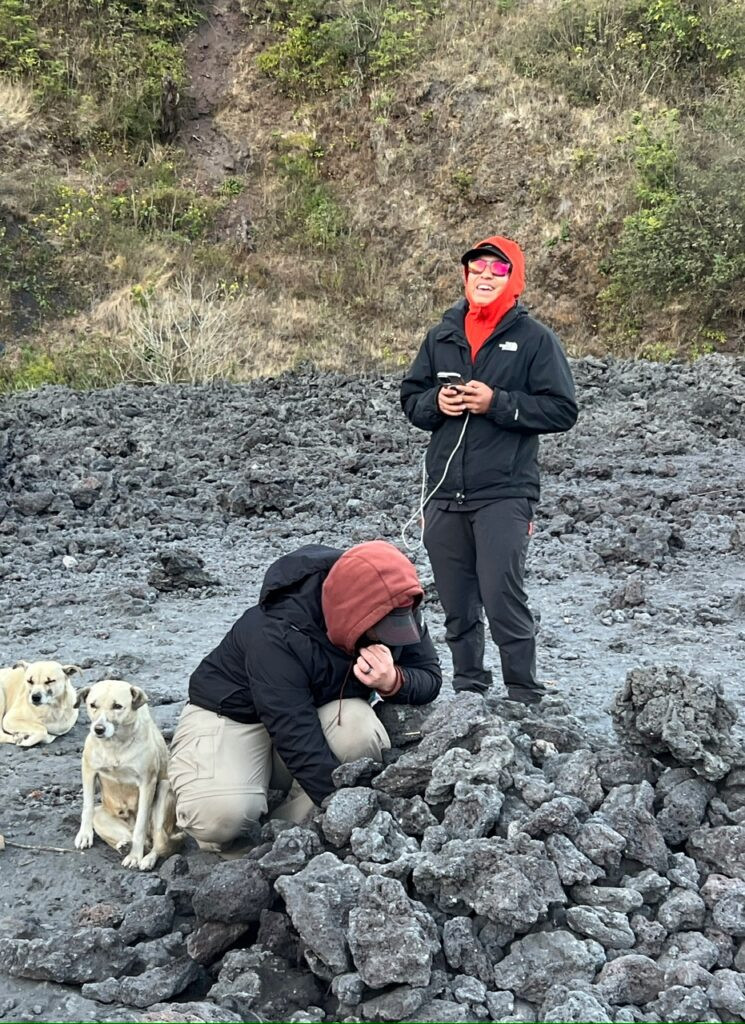
…which is exactly why a regular tourist activity is toasting marshmallows in its steamy holes. Ok…now our volcanic checklist is officially complete. At the same time, our colons are grateful to officially retire marshmallows, which I guess are now dyed making them even healthier than before?
Our guide, Gonzalo, standing near two melancholic little dogs, appropriately named Marshmallow and Fluff. They evidently double-team the tourist circuit daily hoping for free handouts of marshmallows, before following us all the way back to camp for whatever awards they can procure. 😢


After the (not-so-toasted) marshmallow fluff, we ascended from the lava field just in time to see the sun dipping below the horizon. And, almost immediately, we were enveloped by a gnawing bone-chill that we wouldn’t shake for the next 14 hours…


….which was made far more fierce by the relentless and whipping winds. After a prolonged slog back up the unsteady terrain…


….we were happy to take a breather and embrace the spectacular and cloudless view before us, which we would admire, and curse with frigidity at, for the next hour…as the sky evolved into night.

After tramping back down by the light of our headlamps, we were rewarded with a pot of hot chocolate next to a campfire, and dinner which was rice and vegetables, made far more interesting thanks to the solitary bottle of hot sauce on the table, as well as a thoughtful bottle of wine. We would need it. It was going to be a brutally long night…


