
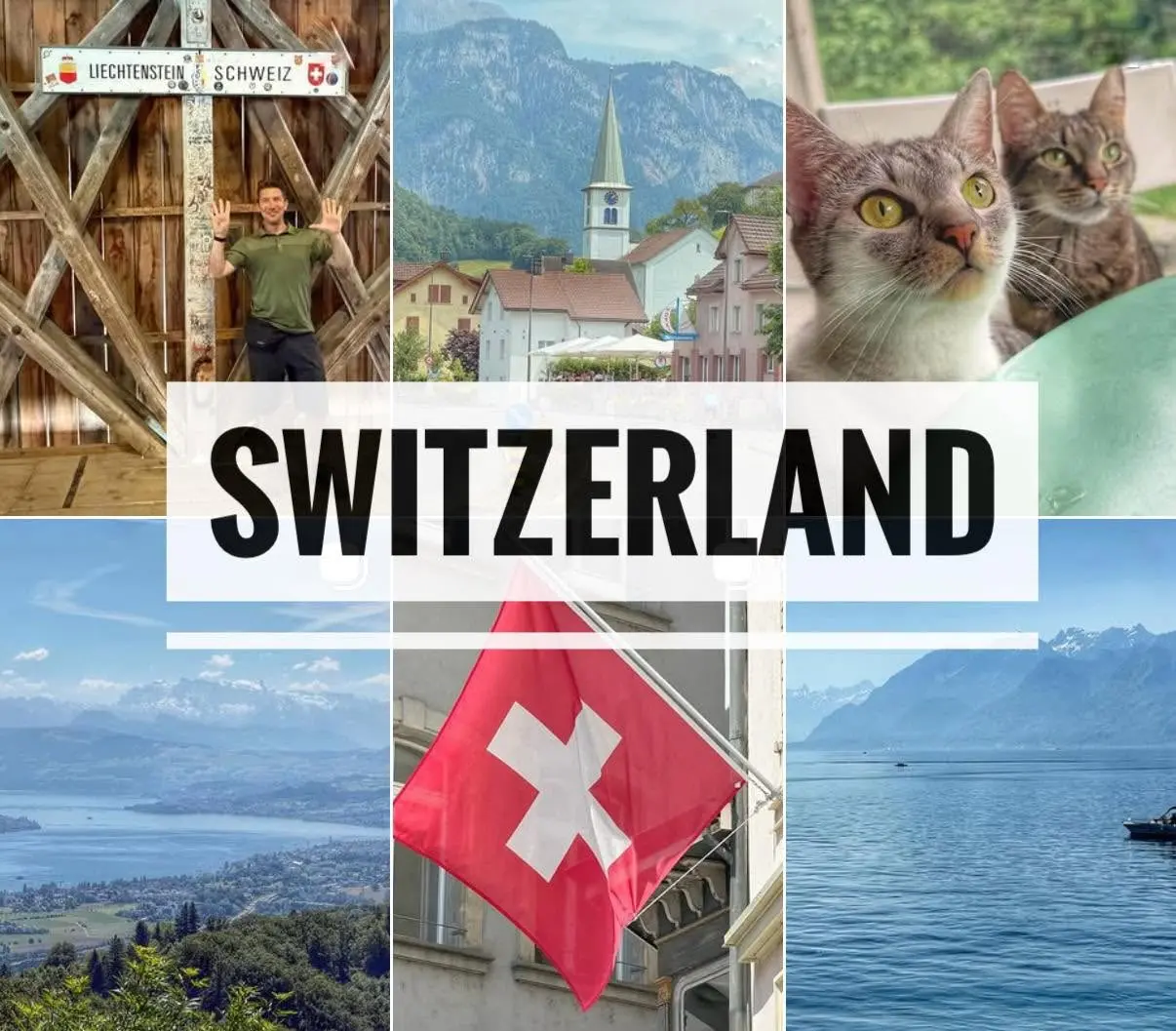
In Summary…
We didn’t really plan on going to Switzerland after our time in Thonon-Les-Bains. But when we scored a one-week housesit in Zurich, which made little neighboring Liechtenstein feasible, we figured we’d take it for a ride again. This was our first time in the country together, though we had both visited on separate trips in our twenties. It’s a wonderful and exquisitely beautiful country, but not one we’ll likely return to soon and certainly not without a housesit in a more desirable mountain setting (with a car included.)
For us, the Switzerland we’ve seen is just a little too polished, a little too perfect, and a lot too expensive so it just doesn’t really speak our love language.
Below is our personal list of stats, money saving tips, and personal upsides and downsides. Please note, we are lumping our one day in Liechtenstein in with it as well.
Time Spent: 8 nights
Money Spent: $624.47 or $78.05/day* in USD/two people, which breaks down to:
- $271 (Transportation)
- $190 (Groceries)/$24/day avg.
- $78 (Restaurants)
- $67 (Accommodation)
- $19 (General)
Our itinerary: (7) nights, Zurich, (1) night, Feldkirch, Austria (on 24-hour Liechtenstein road trip)
Would we return? Only with a housesit with direct access to hiking in the Alps.
Best Budget Saving Tips
- If you’re going to use it, book (second class) train travel as far in advance as possible to get saver fares. This is still crazy expensive, but you don’t wanna know what it is if you book same day. Of course, if you stay longer, there are better local options.
- Take all back roads instead of toll roads when renting a car
- When you rent a car, make sure to get a super fuel efficient one. You’ll probably get it by default.
- Do not eat out. The food is not only incredibly expensive, but mostly mediocre from our early experiences, and according to locals. We were “forced” to eat out due to an unexpected holiday and it was $26 for a mediocre pizza.
- Housesit for free accommodation! Switzerland has quite a few opportunities through THS* (Use our link to save 25%)
- Use the Too Good to Go food waste app to purchase discounted groceries. (Use link for discount on your first purchase).
- Shop at Lidl or Aldi supermarkets, both fantastic and cheaper European options
- Grocery shop close to closing times for even better discounts
- For a treat, visit Äss Bar in Zurich for delicious day discounted pastries.
Our Upsides
- Traveling in Switzerland is super easy, organized and punctual (no surprise)
- Stunning alpine and lakes throughout the country. Lots of eye candy.
- It’s an incredibly quiet country. So quiet you can get in big trouble for making noise on a Sunday. Haha.
- There is abundant and easy access to nature and trails, at least from where we stayed in Zurich
- Bike lanes and pedestrian access everywhere, as well as lovely parks.
- We never had to take out Francs because contactless cards are accepted everywhere
- Public fountains are abundant and free. We did not find toilets as accessible as they were in France.
- They have amazing dairy products…in every capacity!
- The swimming areas along the lake are refreshing and fun
Our Downsides
- The costs, of course, are the biggest. Some of the most expensive we’ve seen in terms of train travel, public transportation ($6/ride, one way, a couple stops, in the city), groceries and eating out. We felt very restricted as to what we could do because of this. Although we never ate a meal out, we had four beers on two different occasions, three small which totaled $36 and one iced coffee which was a whopping $10.50. (Liechtenstein).
- While it’s pedestrian friendly, the crosswalk lights are insanely short. And we’re fast walkers!
- All grocery stores are closed on Sunday, and apparently Whit Monday, we discovered.
- Although the bikes throughout the country are a wonderful asset for the locals, it’s sometimes challenging to drive on rural roads because you can’t get by them, for very long periods of time.
- They don’t recycle plastic.
- Because they’re not in the European Union, they don’t seem to be on as strict of regulations for what they allow in cosmetics and foods.


