From Zurich, Switzerland to Subotica, Serbia
Let’s face it. Switzerland and Liechtenstein were a little too…uh…refined for Greg and Mandy, so it was time to head somewhere we’re a little more comfortable…back to the Balkans, making this our third Balkan summer in eight years of #hashtag, nomad life. This time we’ve returned to Serbia…a country we visited only about 12 days in 2019, but honestly didn’t fall in love with. If you’d like to check out those travels, you can do so on our website archives. That said, there was definitely one place that did catch our eye on that visit and exactly why we’re returning for a one month stay and to give it another shot. But first we had to get there….


After driving back from Austria, filling our robotic wonder wheels with $32 of gas after driving 6-7 hours, and returning it to the Zurich Airport, we made our way into the terminal delighted to have four lounge choices for the morning. Unfortunately the best ones were on the international, not Schengen side, of the airport which we couldn’t access until an hour before the flight when our gate was announced. This back asswards protocol does not seem very Swiss of them!
So we found ourselves in Marhaba Lounge because the Turkish options are always a welcoming choice. They offered snug little solo pods, as well as napping areas behind the curtain, neither which muffled the wails of an Argentinian toddler. A child who was only pacified after his father ceremoniously whipped open a briefcase packed with “obligatory” supplies and stuck a maté in his mouth.🧉😅 Since a nap would not be gracing our eyelids, we instead enjoyed the decent selection of food, including Greg’s two heaping helpings of butter chicken.


Two hours later the Zurich airport people posted the gate so we could head to the international flight lounge called Prime Class, which had won “best lounge” awards and offered an outdoor “runway” seating “experience.” A first of its kind for us. Naturally, that “experience” was just a marketing tool and not actually available to use. At least that day. In fact, the whole lounge was nearly empty! Probably because no one could get there in time due to the delayed gate posting. (Obvi.)


Ah, time to slam down a glass of wine, and scrutinize (or mostly squirrel away) some of the more portable food options.

After bidding the Alps auf wiedersehen for awhile…

…we landed in the completely modernized Belgrade Nikola Tesla Airport, named after one of the most influential inventors and electrical engineers in history, born in the region, who every likes to claim. Other than being the namesake of today’s now somewhat controversial car, he is best known for developing the modern alternating current (AC) electrical system, which became the standard way electricity is generated and distributed around the world.
Elon’s baby was named after this guy in 2003, although I just learned it was actually not technically his baby. He just became the principal investor in 2004. Go figure. Regardless, it’s remarkable that the company was founded 60 years after Nikola Tesla’s death in 1943, yet his name has become more widely recognized today than at any point during his lifetime.
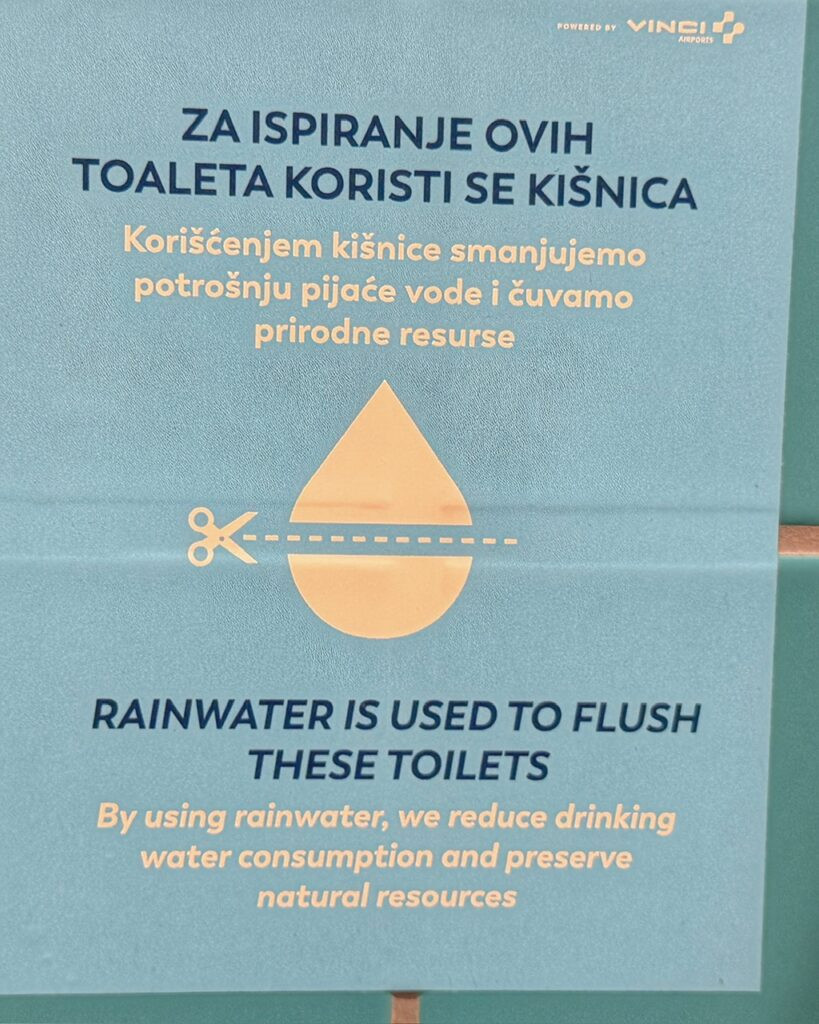

Before we even got out of the airport, we noted some shifts in Serbia which impressed us. For example, the toilets were flushed with rainwater and the lady at the entrance to my bathroom was allowed to wear a slimming pantsuit, rather than a frumpy dress.

We then exited the airport and hopped on a FREE bus (number 72). Yes, we were elated that public transportation in Belgrade has been free since 2025. It is also ALL integrated into Google Maps. Fantastic.


It was a long ride, but dropped us off a few blocks from our FREE hotel, a Category 2 Hyatt Regency that we’d gotten thanks to transferring Chase Sapphire Preferred points. Regulars may have heard that these points have devalued. For some hotels this makes it a worse value, hence the naming concept. But, for this one, we rebooked it when we found out it was actually a BETTER value at 7500 (=$75 for a ~$200 room) instead of 8000 points. If you have future Hyatts booked, check to make this isn’t the case for you!
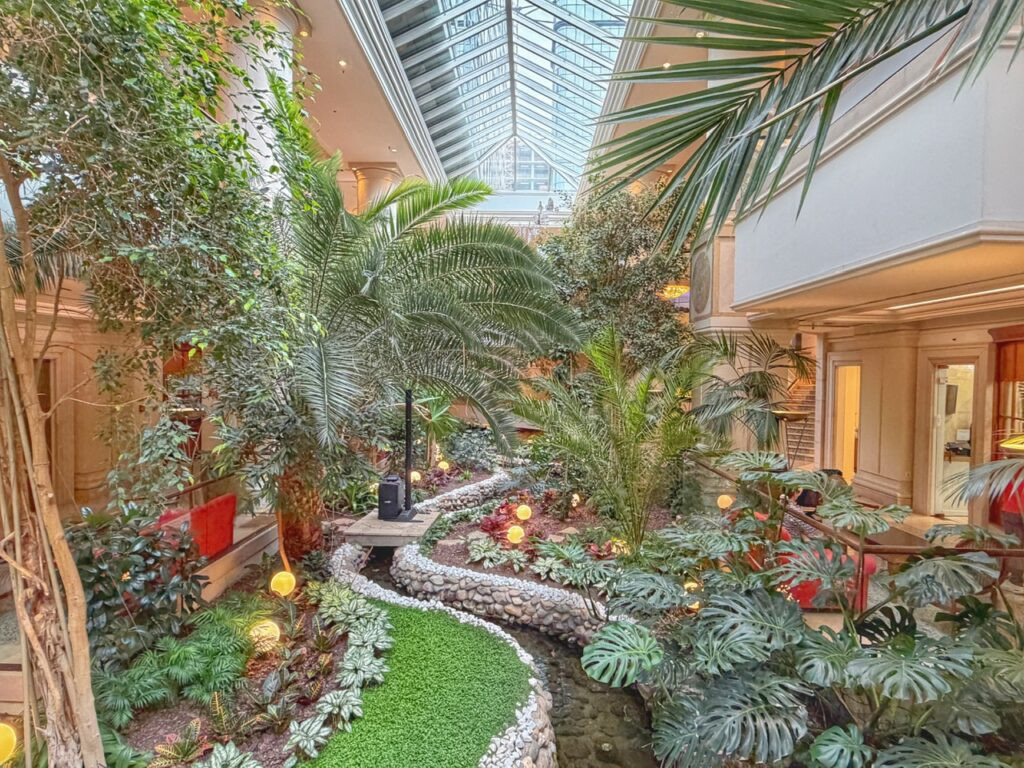
We didn’t really know what a “Category 2” hotel entailed but apparently it means a really fancy lobby, which had a bit of a Vegas Venetian vibe…


…and stores where I could purchase some evening wear to go dine at the gyro stand on the street corner. (In reality I had a can of tuna, some bread and hummus from the Shop & Go. Greg was still full from his 6 plates of butter chicken in the lounge.)
Meet our we’ve-made-it-to-the-Balkans bathroom, which was big enough to do cartwheels in. They also had some significant upgrades from the normal “Category 1” booty including loofahs. Considering exfoliation isn’t exactly part of a full time nomads’ vanity kit, this was a REALLY big deal. 😆
We also got to check out the wellness center the next morning for a full-on spa experience including a fitness center, pool, sauna, steam room, cold plunge and some of those ice towels to drape over your eyes and feel pampered. It was a rough night!!!


While the other Hyatt guests lined up for their taxis, we figured we’d already absorbed our monthly quota of luxury. So, with bougie batteries fully charged, we hauled our bags down to catch the decidedly less glamorous, but again, FREE tram to the train station, which, like the airport was quite modern and nice.


We settled in for our first Serbian meal at the station which thankfully wasn’t Chevapi. Our two restaurant meals came to $15. We then boarded our high speed train, which would gracefully shoot us the 1 hour, 40 minutes up to Subotica, near the Hungarian border for $9/each. Tickets were purchased easily using the Srbija Voz Railways app. Time for a slow down! Dobrodošli to Northern Serbia!! 🇷🇸
Falling More in Love with Subotica
For our first one-month stay in Europe this year, we returned to a “known known”—a city we first visited on a day trip from Novi Sad in 2019. Subotica, Serbia’s northernmost city of about 120,000 people, sits just a few kilometers from the Hungarian border. Despite its size, it feels much more like a small town, and it captivated us from the moment we arrived. And, a month long stay confirmed it; we’re still just as mesmerized.
There are countless reasons we love this multicultural city. Its flavors feel far more Central European than Balkan, which makes perfect sense given its rich history of shifting empires and cultures. Today, it’s common to hear chatter in Serbian, Hungarian, English, and several other languages as you wander the streets.
We’re also addicted to its whimsical, storybook Art Nouveau architecture…
…the warmth of the people (especially when you attempt a little pigeon Serbian)…
…its peaceful pace, while still offering just enough to keep life interesting…
…and the tree-lined streets that radiate from the center, wrapping you in a welcoming embrace around nearly every corner.

It didn’t matter how many times I walked (or ran!) through the center, this city transported me to the wonder and gratitude I felt during my first few months of living in Prague when everything was novel and enchanting. Pictured here is the National Theatre, which was originally built in 1854, making it the first public building in the city. Its Neoclassical facade was innovative at the time because it combined a theater and a hotel (Cultural Heritage Protection Agency).
The theater has always reflected Subotica’s multicultural character and today offers two permanent drama companies…one which performs in Serbian and one which performs in Hungarian.
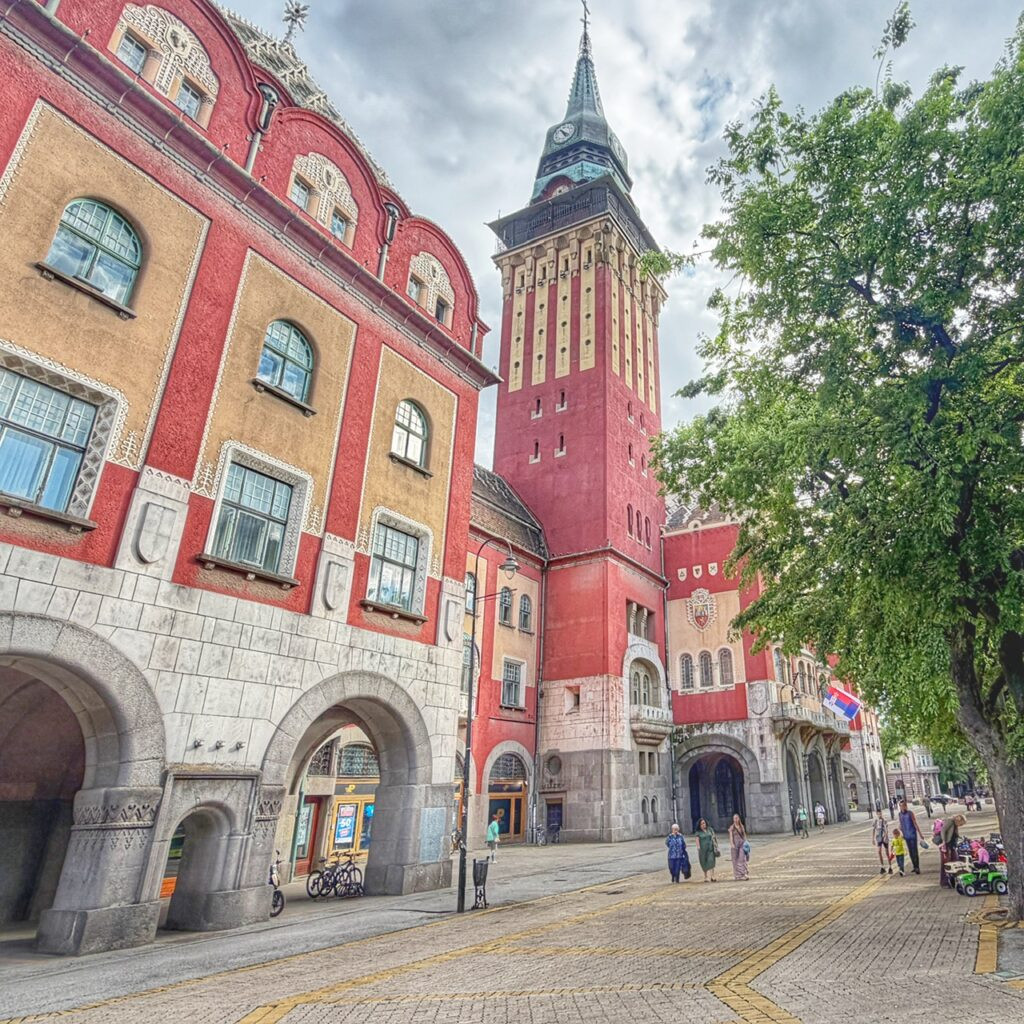

The iconic City Hall, which we detail below. And here she is by night. (Yes, we finally got out after sunset 🤣.)
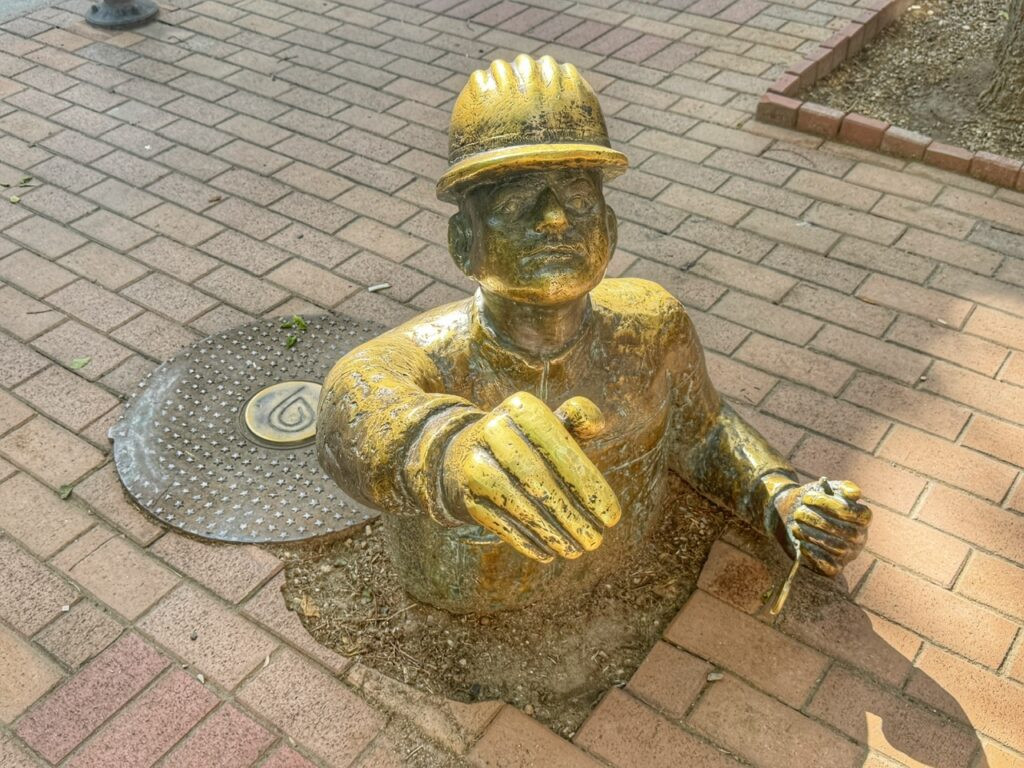
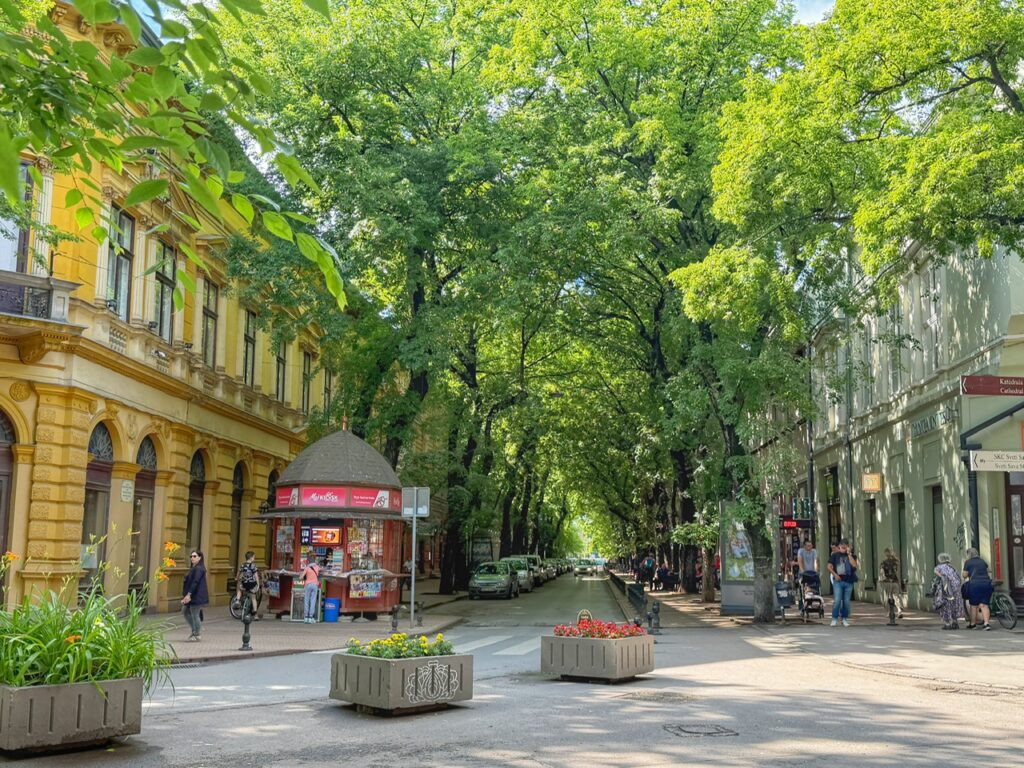
Adding to the whimsy of the city’s personality are the statues. This one is known as the “Monument of the Unknown Plumber,” which obviously depicts a plumber or maintenance worker emerging from a manhole to greet passersby on the street (or perhaps grab a hand for some help out of the hole!) It was installed in 2012 by the public water utility company to honor the generations of workers who have built and maintained the city’s water and sewer system. What a creative way to honor the “little” people, who are actually of HUGE importance. In case you want to say Dobar Dan to hi, he’s located on the tree covered street that connects the city hall to the synagogue.

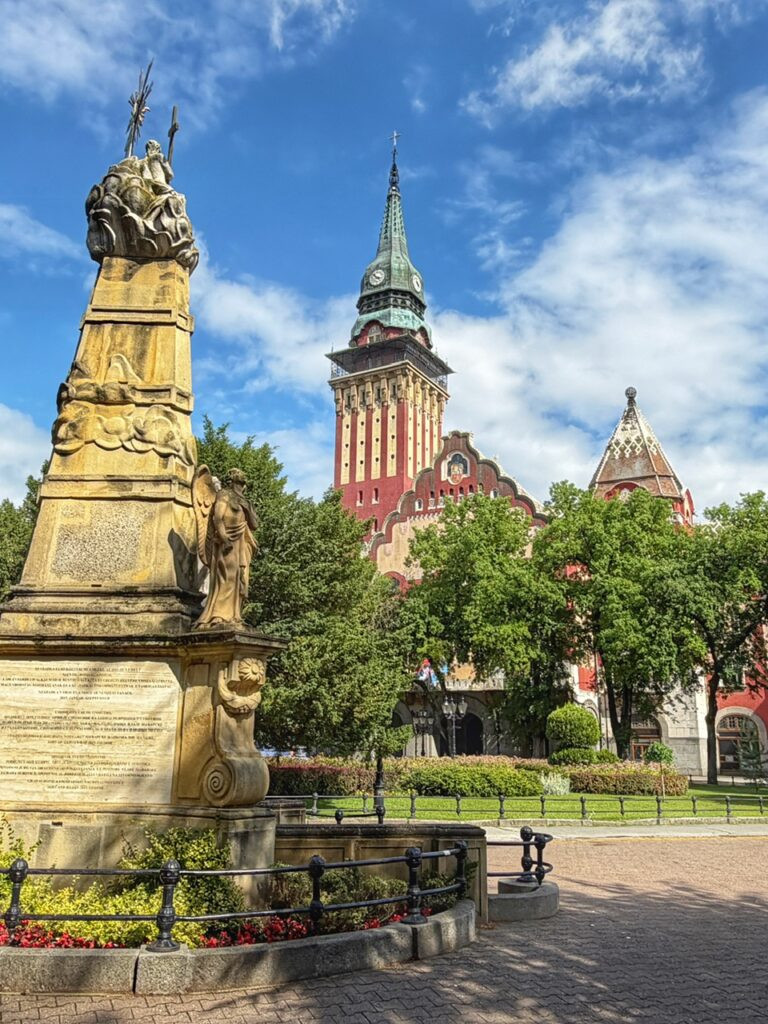
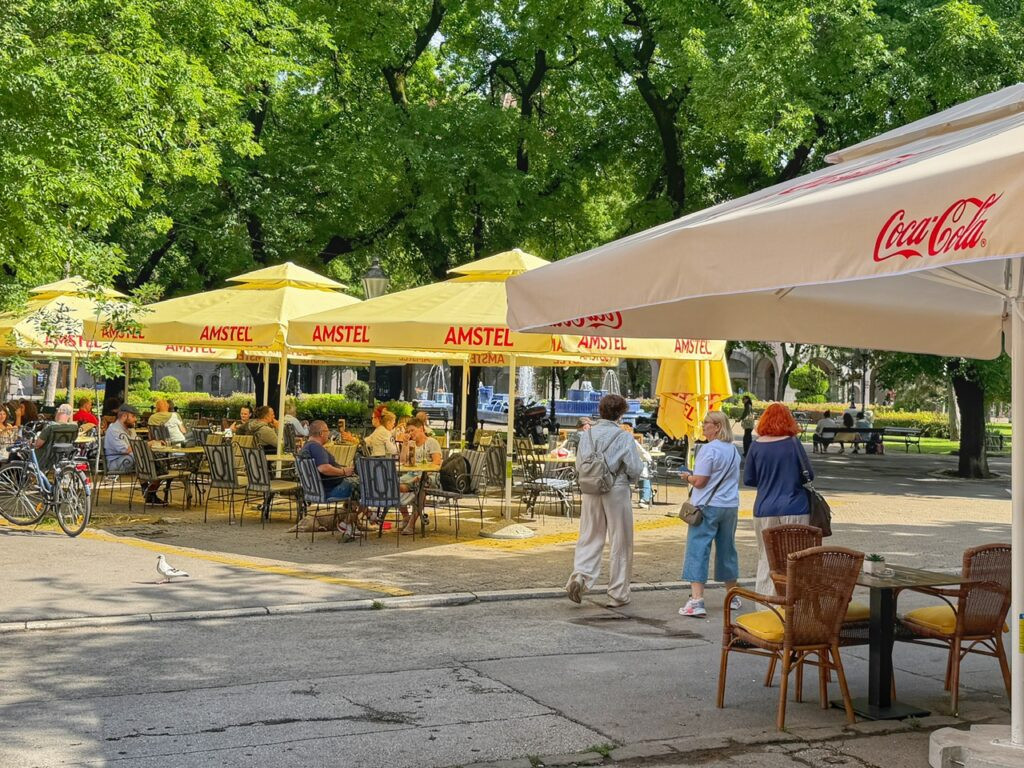
Locals relaxing on a bench, perhaps after a bike ride. Everyone, of every age, seems to ride bikes in Subotica. Also, more scenes from the central square, which is surrounded by cafes, most of which only seem to serve cigarettes, coffee, alcohol and the bridge of the day that connects the two vital drinks.

There are plenty of traditional restaurants elsewhere, and even a few pops of international cuisine. We were intrigued to see they had Mexican, but never got around to trying it out.
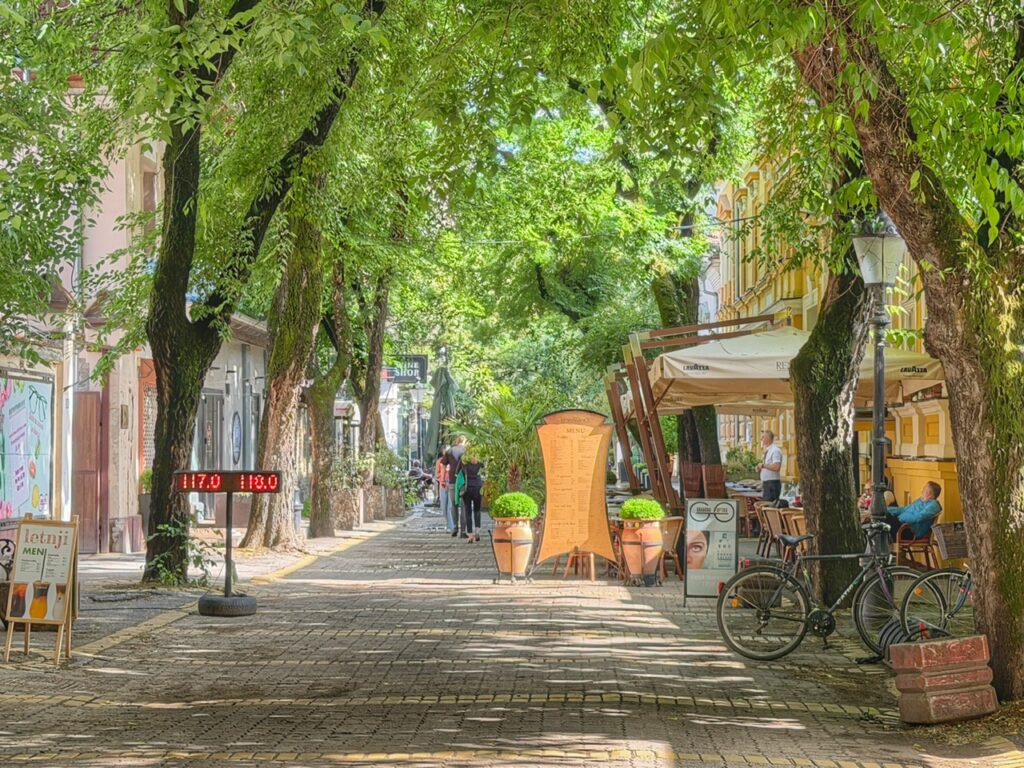
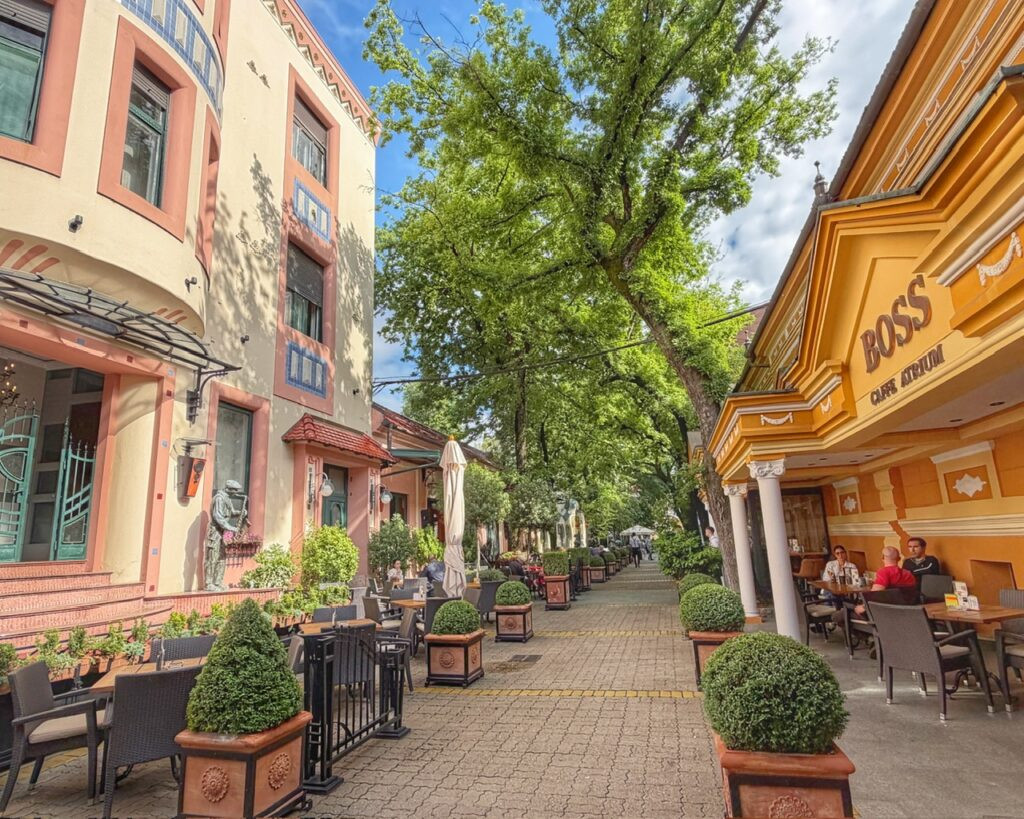
One of the many pleasant pedestrian only streets, which criss-cross through the town’s center. The restaurant and cafe scene is also quite good with ample al fresco seating.


Another approachable local sits on the pedestrian street near the Zvonko Bodgan wineshop. He didn’t want to share his cigars with Greg though. This alleyway is filled with fantastic museum-style displays of yesteryear from antique cameras to radios to TVs to phones. Basically, so Gen Z’s know how horrendous life was before 4 in 1’s.


You’ll see Art Nouveau influences everywhere…if you take the time to gaze up and admire. Turns out, there are many faces looking at you too.

One of the most handsome buildings on Korzo street, the main pedestrian drag, is the Textile House. When Subotica was booming in the late 19th and early 20th Centuries, it was a commercial palace that defined Korzo as the premier shopping destination. (Visit Subotica)

This rugged, tough guy seems more like a softened tradesman who swapped his tools for bubbles and never looked back. He was entertaining kids and adults alike on most afternoons.

And just behind him, the Subotica City Library, which, judging by the faces of the doormen, must be loaded with some seriously heavy books.

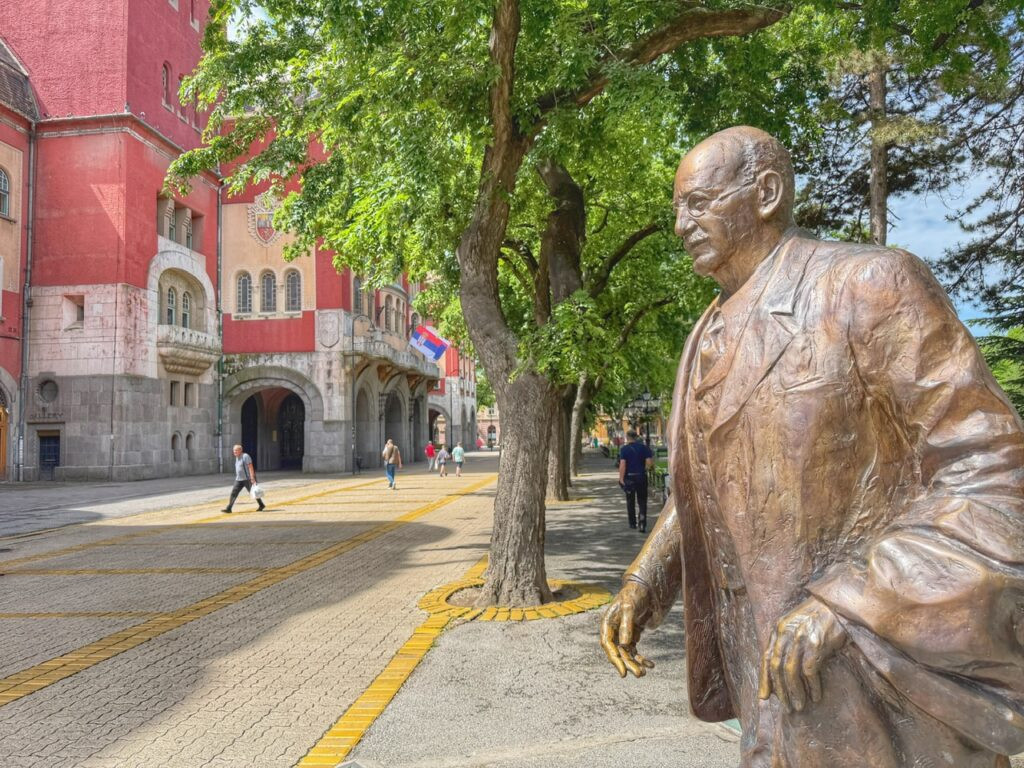
Also in the center, an image of contradictions is being observed by Károly Biró, who was the mayor of Subotica from 1902-1918. Under his leadership, Subotica’s symbolic town hall was built, as well as a plethora of Art Nouveau buildings.


Little did he know that many years later in 1998, one of the world’s biggest corporations would insert themselves into this masterpiece. Fortunately, most of the character has remained in the world’s only Art Nouveau McDonald’s. If you head in, make sure to check out the upstairs seating area for an even better view of the stained glass, carved woodwork and decorative details. It’s definitely worth a look. In fact, I’m lovin’ it….

The Ivan Sarić Monument, which honors a local athlete and aviator who achieved his first flight in 1910.
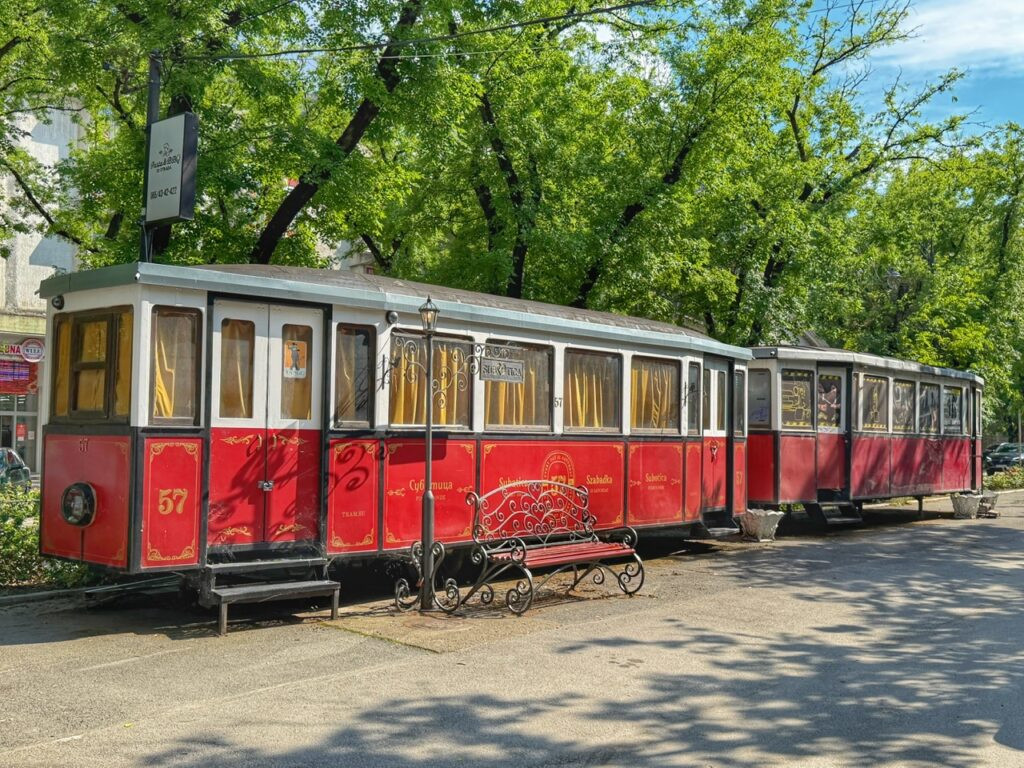
A historic tram car, which advertises as a barbecue joint, although we never saw it open. Sadly, the tram is no longer running in Subotica.
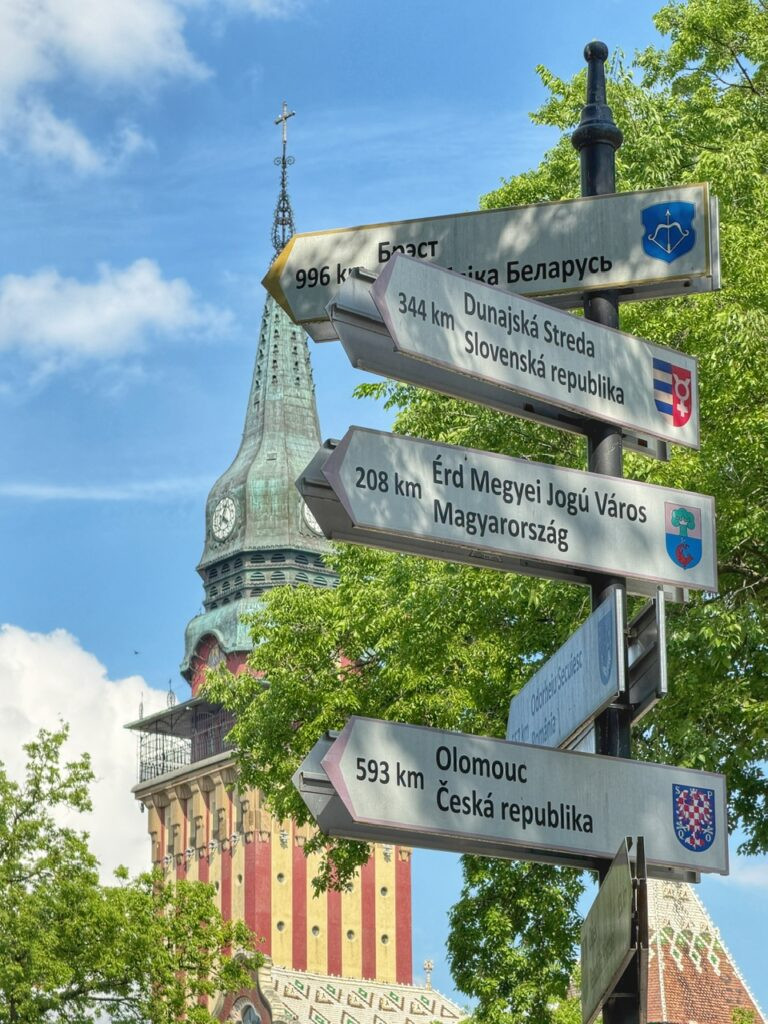
Being in Subotica made us realize how centrally located it is to so many other places we love in Europe.
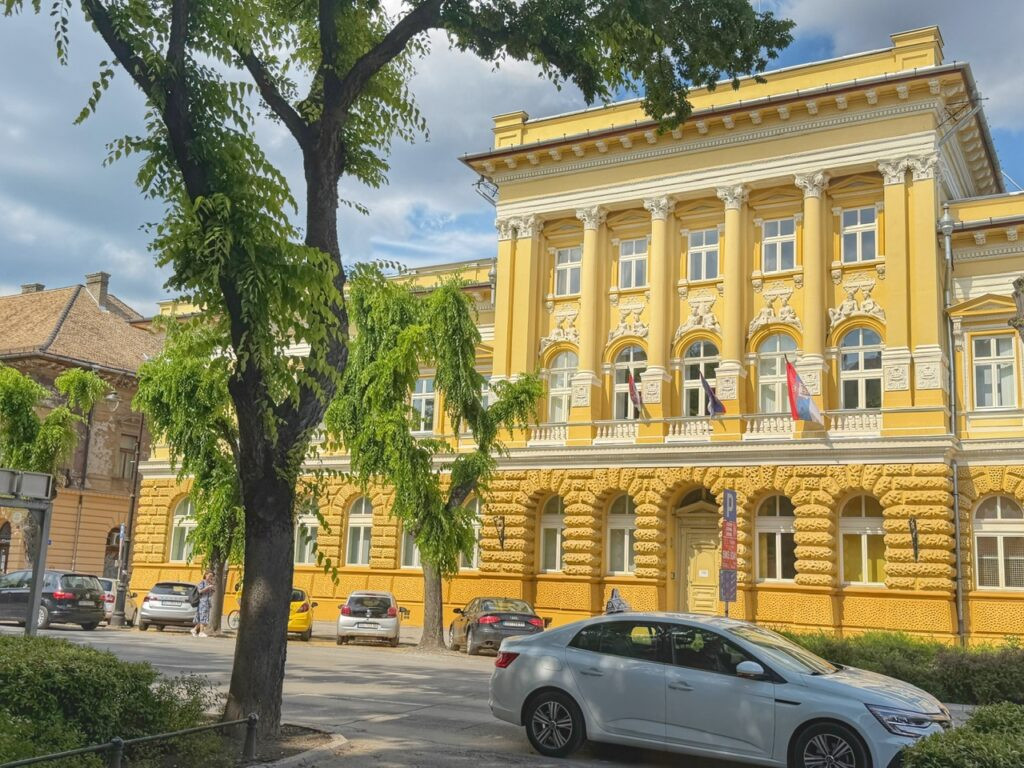
This elegant building, famously and befittingly known as the Yellow House, today serves as the Faculty of Teacher Education in the Hungarian language. But, according to Magločistač(.com), it has a dark history, and during the Second World War, it was used as a torture site and headquarters for the secret police. Hundreds of civilians, including women and children, were imprisoned and brutalized within its walls. 😔
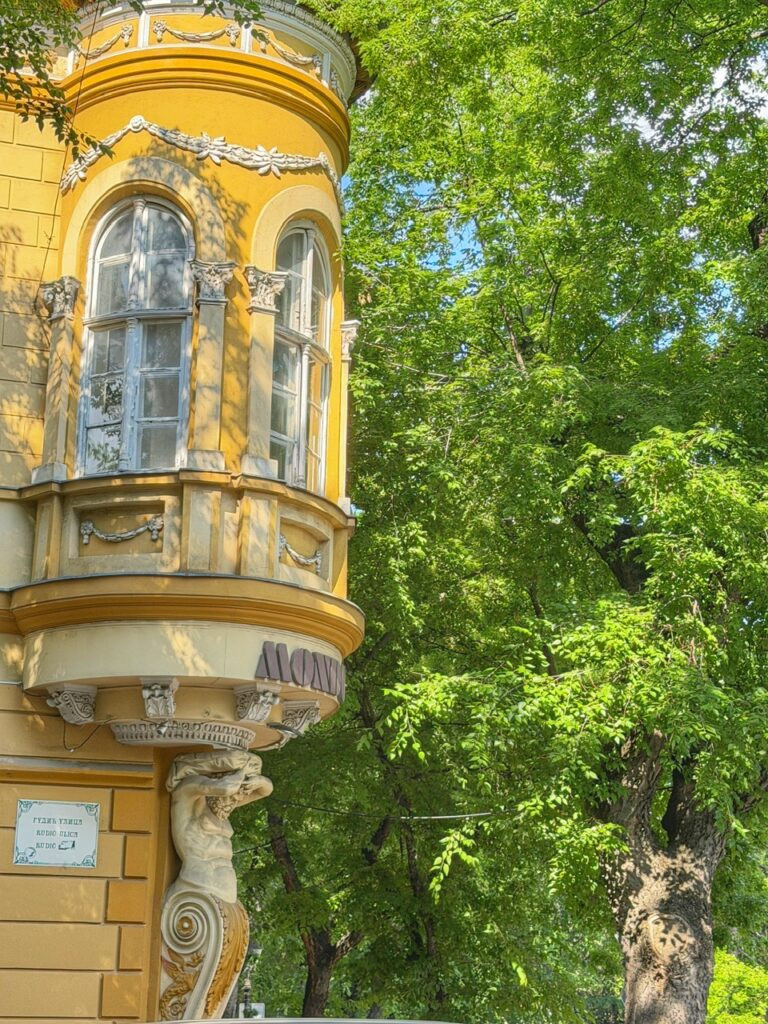
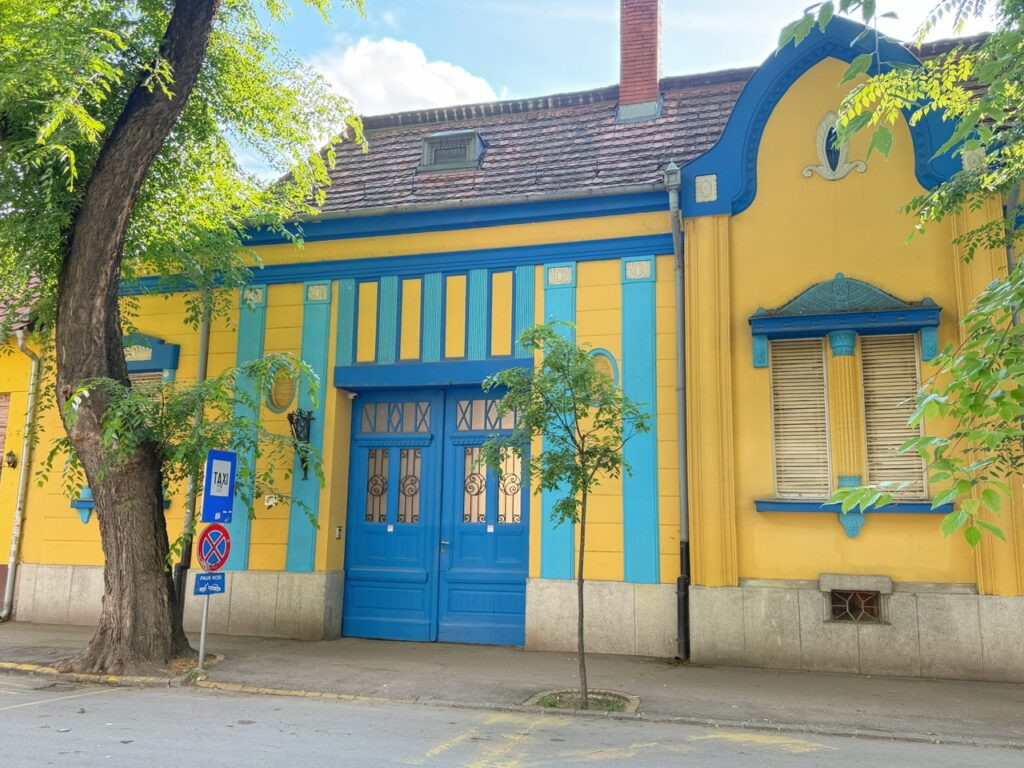

It doesn’t matter where we fanned out from the center, we were met with more beauty…colors…and pops of peculiarity. Yes, that appears to be BatPig!
The Subotica Synagogue
In our travels, we have witnessed…
- …a lot of churches
- …a lot of mosques
- …a lot of shrines
- …and a lot of temples.
But of the five major world religions, we have seen few synagogues, and only a small handful we’ve been able to enter, which in itself makes this synagogue so unique. That, the solitude we enjoyed it in, and the simple fact that it is an utterly mesmerizing architectural treasure.…

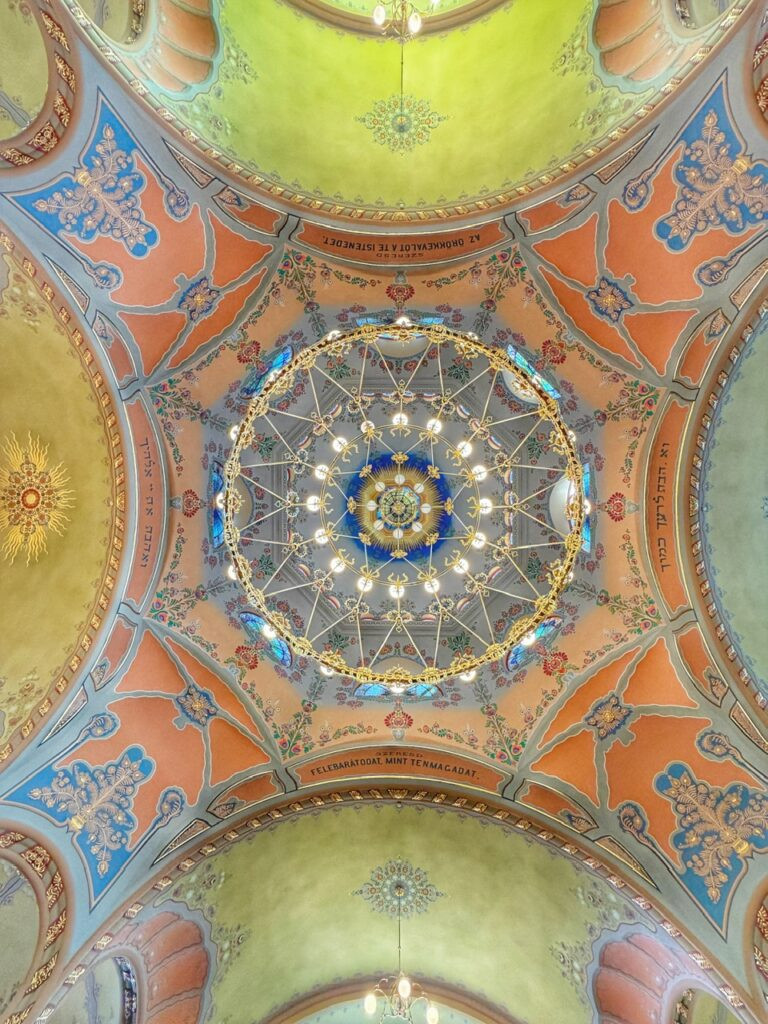
The town of Subotica is laden with many such Hungarian Art Nouveau wonders and is one element that lured us for a much longer, return visit. The synagogue was commissioned by Subotica’s thriving Jewish community at the height of the city’s prosperity within the Austro-Hungarian Empire (1901-1903). After paying our entry fee of about $2, we were set free as the only visitors to walk into what feels like a glorious kaleidoscope.

The building is famous for its popping pastel floral motifs, soaring stained glass windows, ceramic roof tiles, and colossal central dome. It had reminiscent elements of some Islamic and Christian places of worship we’ve seen, but a whimsical design that was absolutely its own.

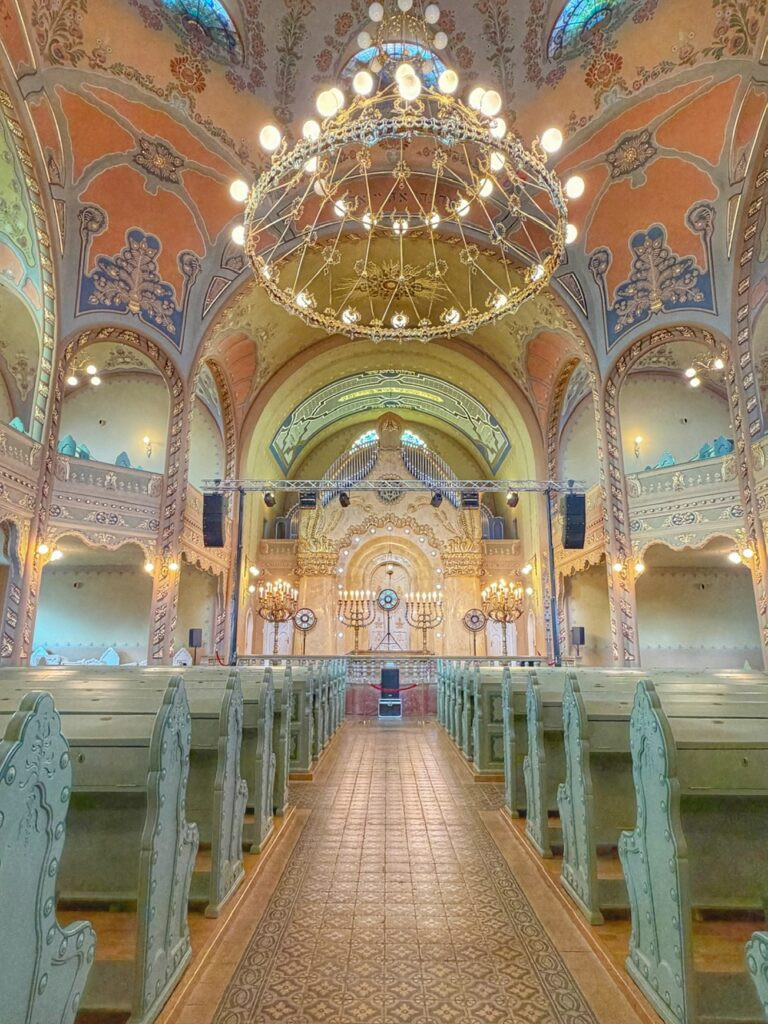
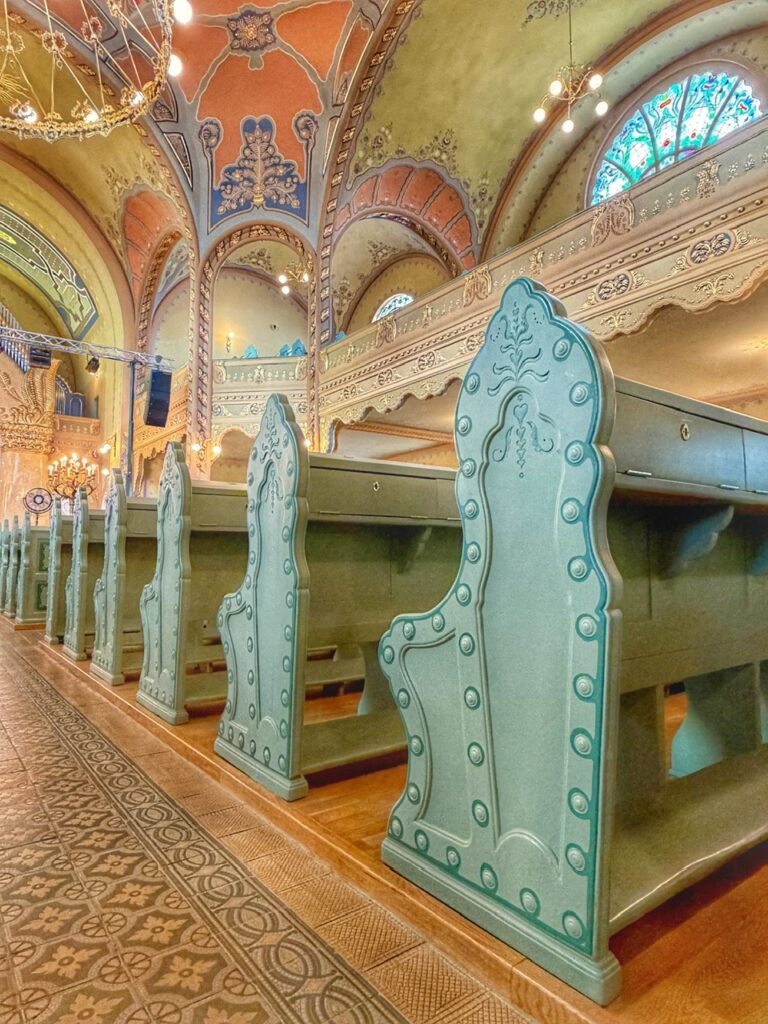
Every single surface was worth absorbing and appreciating from the rows of wooden benches arranged in perfect Tetris formation around the angles, to the ceramic tile aisle leading to the front, to a closer look at the blue green benches that seem to meld organically like leaves with the surrounding palette.

And many of the benches even hold permanent home for worshippers who attend.

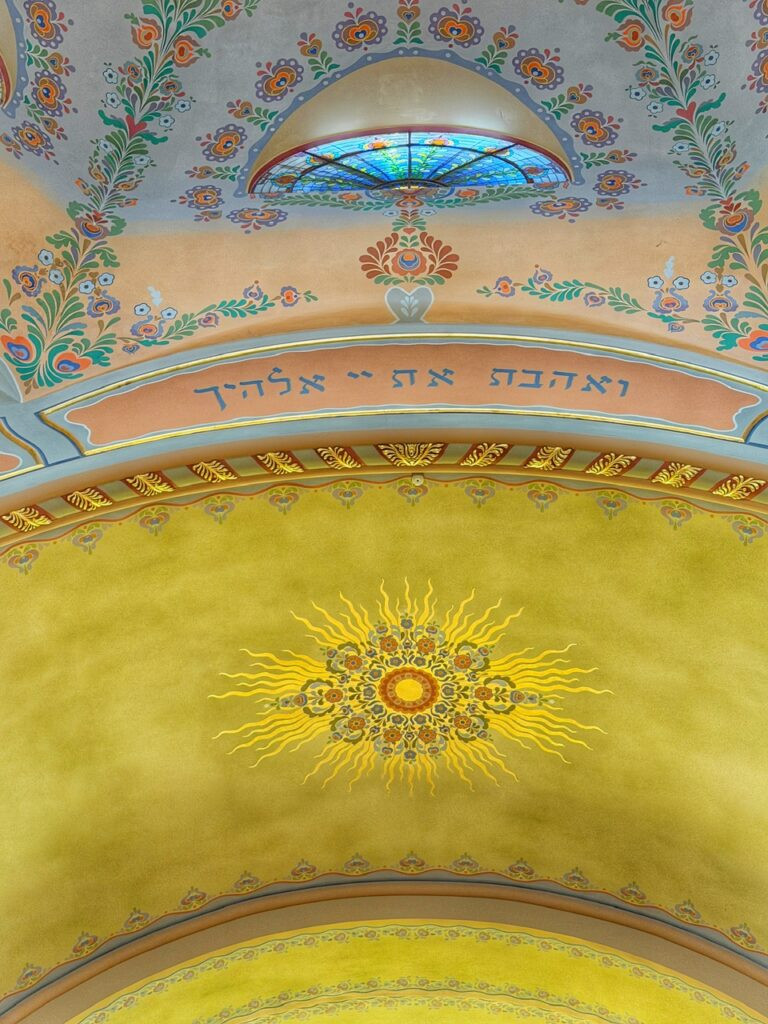
The entrance to the synagogue. The details are astounding…
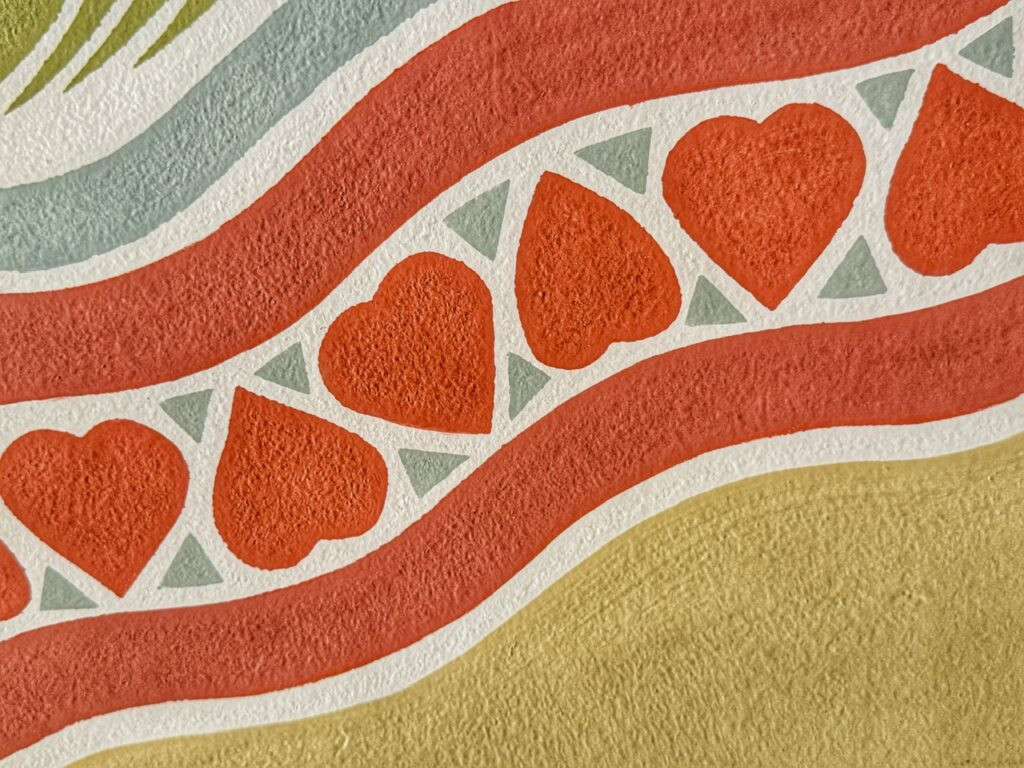

…and interestingly even include the use of hearts. Of course it didn’t always look like this. Like most, the Jewish community of Subotica was devastated during the Holocaust. After World War II, too few members remained to maintain such a large building. The synagogue gradually fell into disrepair and was eventually transferred to city ownership in 1976.
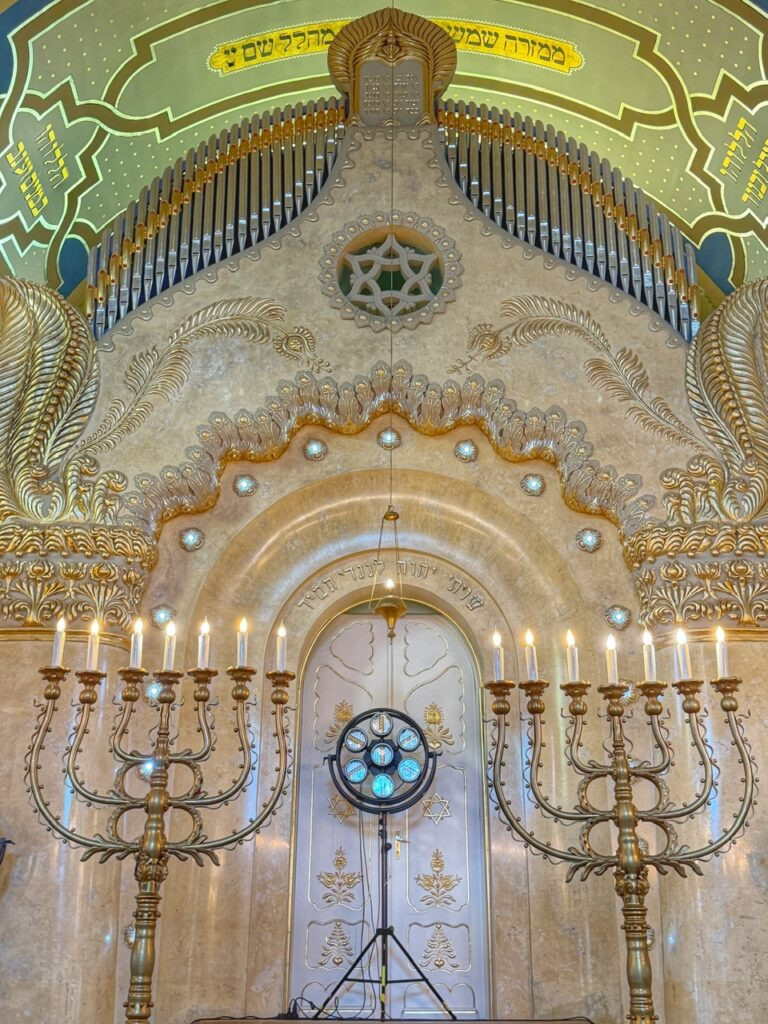

Efforts to restore it began at this time, and after a major restoration supported by Serbian and Hungarian institutions, the synagogue reopened in 2018.
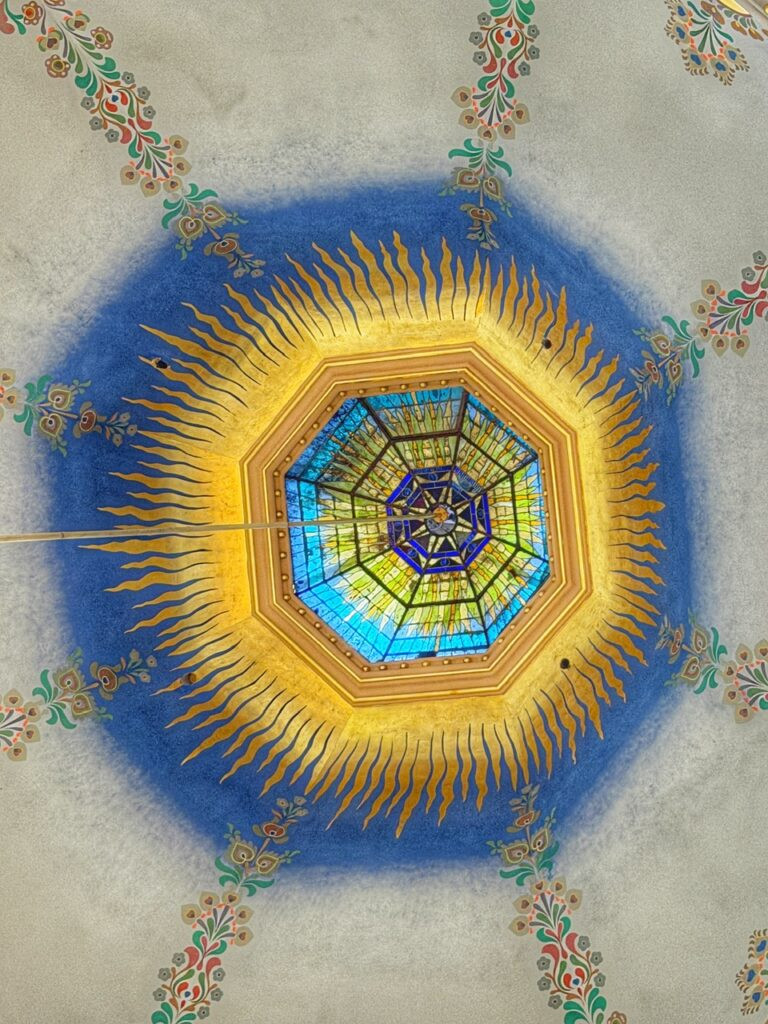


These ceilings look like irises into another world. They have definitely seen it all…And the stained glass is simply breathtaking.

Me…peacocking…unbeknownst to me


It was very moving to know that the building’s survival stands as a reminder of the once-vibrant Jewish community that helped shape Subotica’s history before World War II. Thank you for this beautiful masterpiece.
The Centerpiece of Subotica: City Hall
At the heart of Subotica sits a flamboyant masterpiece that dazzles the sky. No, it’s not a resplendent cathedral or fairy tale castle like in other European cities. It’s the City Hall. While many government offices are bleak or a bit boring, this building is arguably one of Europe’s finest examples of Hungarian Art Nouveau and undoubtedly a facet of the city of 120k that adds to its whimsy and spellbinding appeal….an element that certainly captivated us enough to return. Yes, this may be our favorite architectural style….anywhere.
We didn’t get to visit the inside in 2019, so doing so on this visit was a priority…
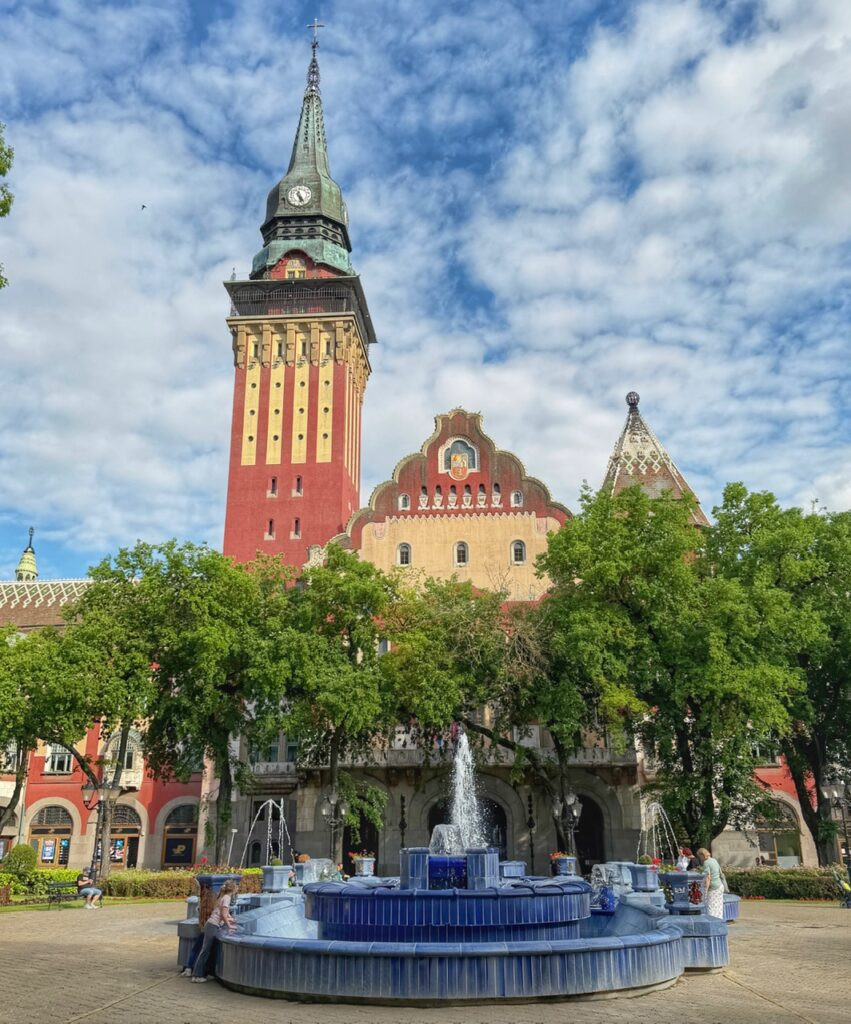

It was built during the Austro-Hungarian Empire when Serbia was part of Hungary in 1908 and has a tower that soars 76 meters (249) feet high. Normally visitors can climb the tower, but unfortunately it’s currently under construction. Maybe third time will be the charm for this one?
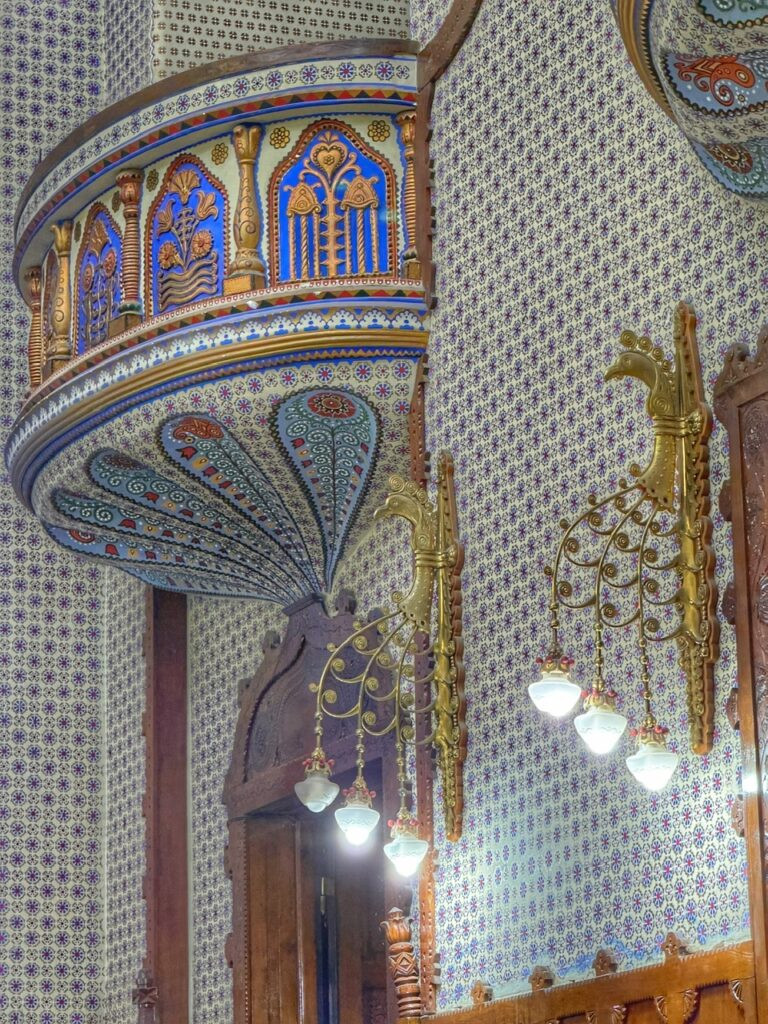
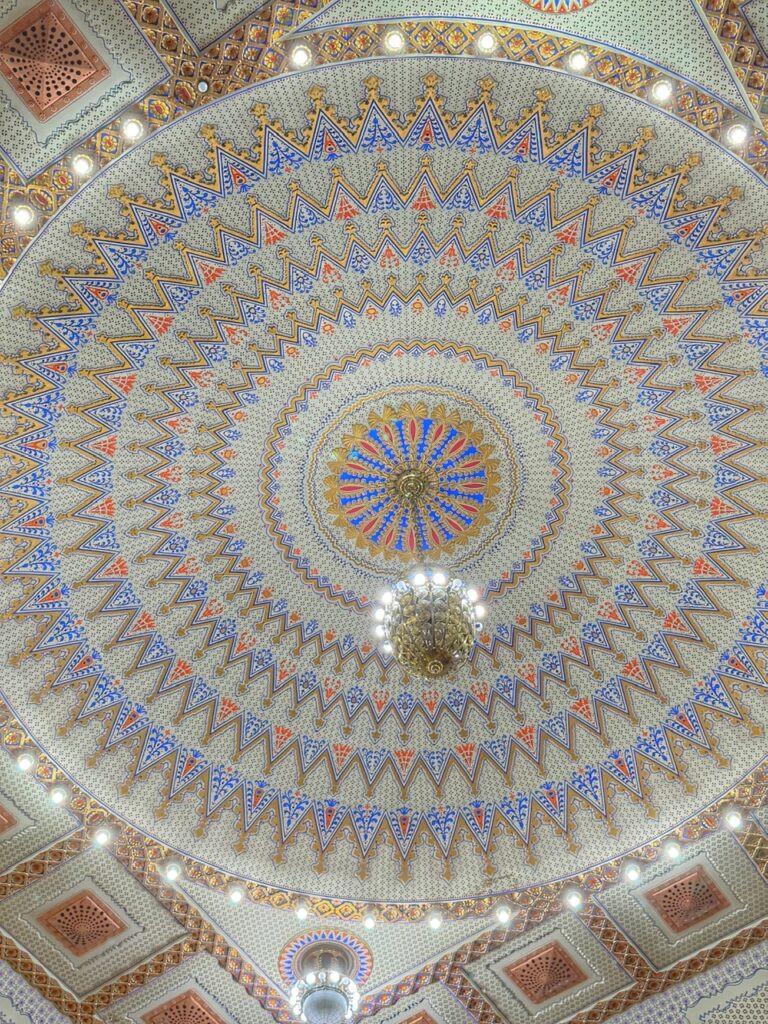

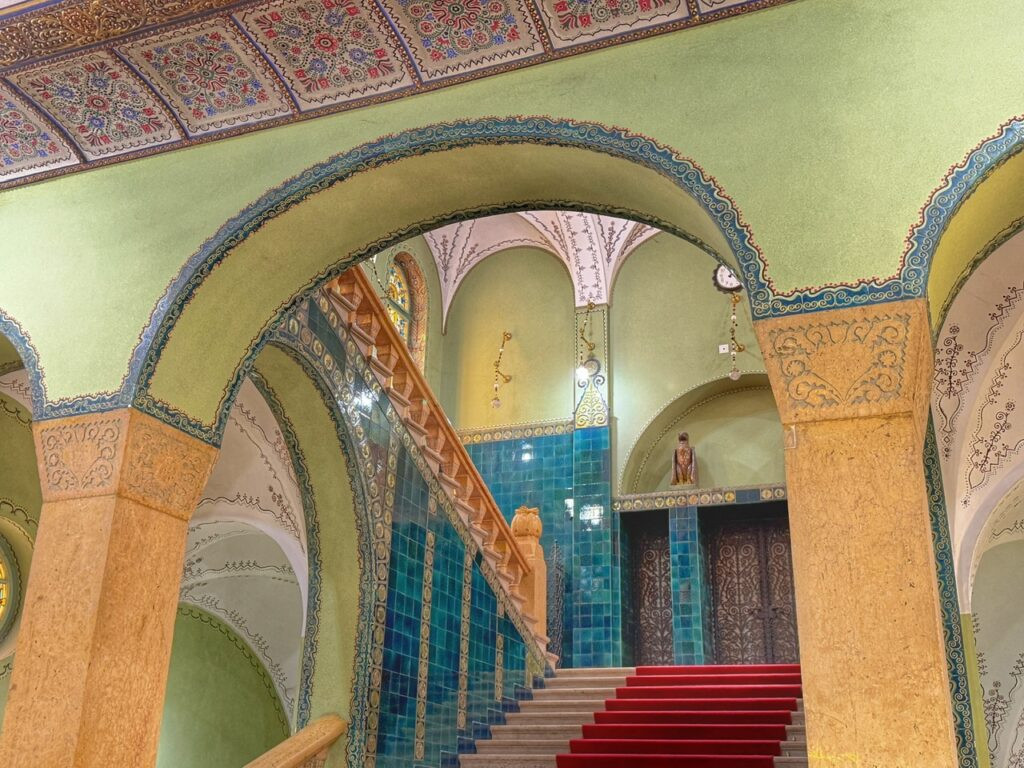
The building, developed by Marcel Komor and Dezso Jakab, is loaded with intricate details which will floor any architectural junkie, or simply humans that appreciate beautiful things. According to our guide, the style is called Hungarian Secession which is a branch of Art Nouveau that combines flowing organic shapes with traditional Hungarian folk motifs. And it’s absolutely dazzling! Everywhere you turn…
To visit the inside, you have to go on a tour, of which there are only five per week at noon and offered in English, Serbian and Hungarian. (Tuesday-Saturday). Tickets are about $2/each. When we arrived on a Saturday, at least 30 people piled in for the tour, which was the only moment we’ve noticed that there are other tourists in Subotica, some from as far as Japan and Canada.
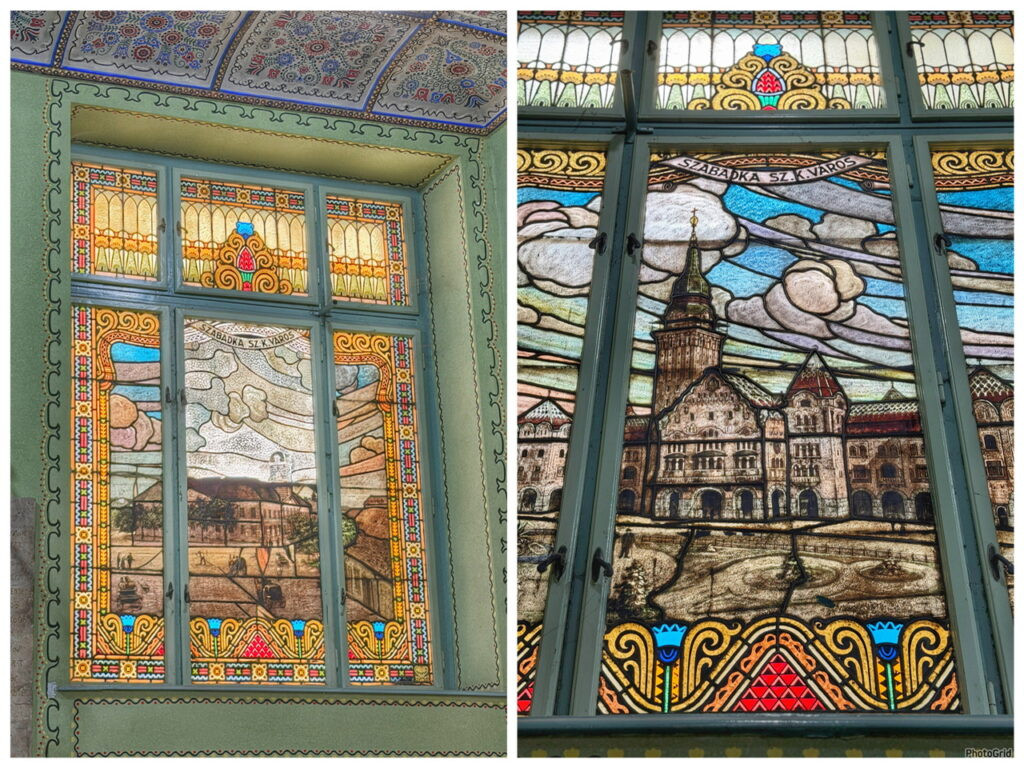
Upon entering, you are immediately confronted with two stained glass windows. One is of the original, which spotlights a much more functionally looking city hall that sat on this site, and the other is the current showpiece which proclaims, “YES!! Government can be fun too!!” Ugh…I guess that depends on who is in office?
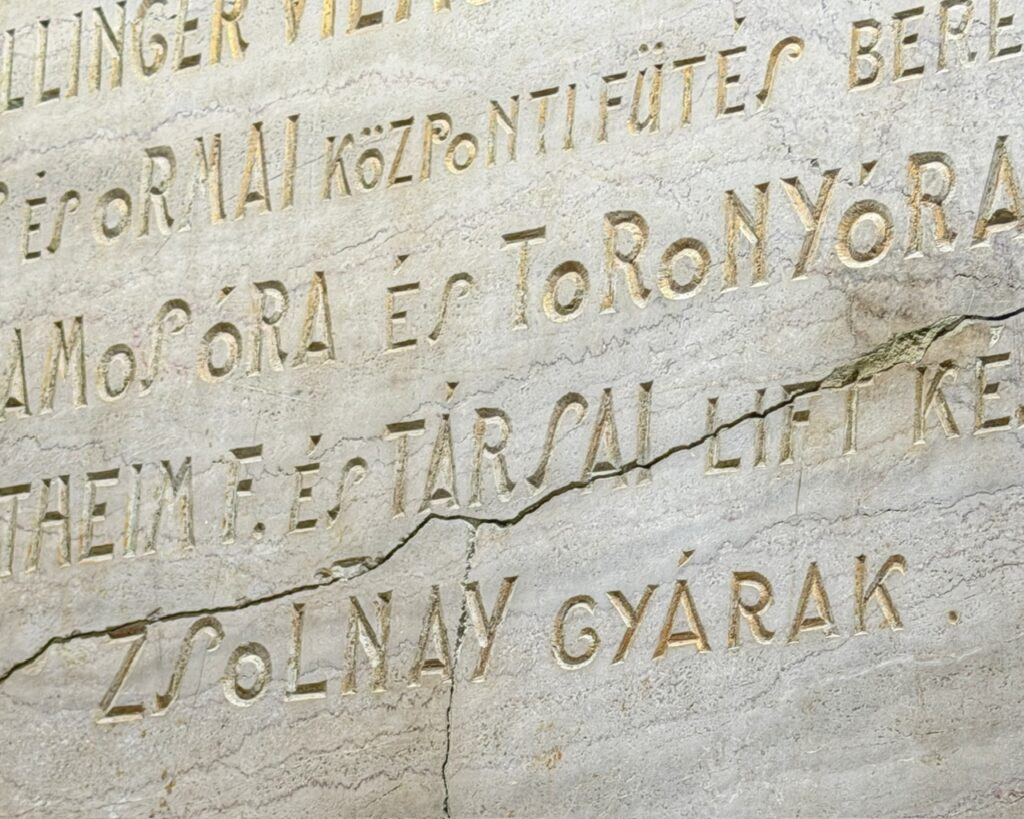
Throughout the building, one can find stunning stained-glass windows, decorative murals, carved woodwork, and perhaps the most iconic…Zsolnay ceramics, which is a hallmark of Hungarian Art Nouveau made in Pecs, Hungary.
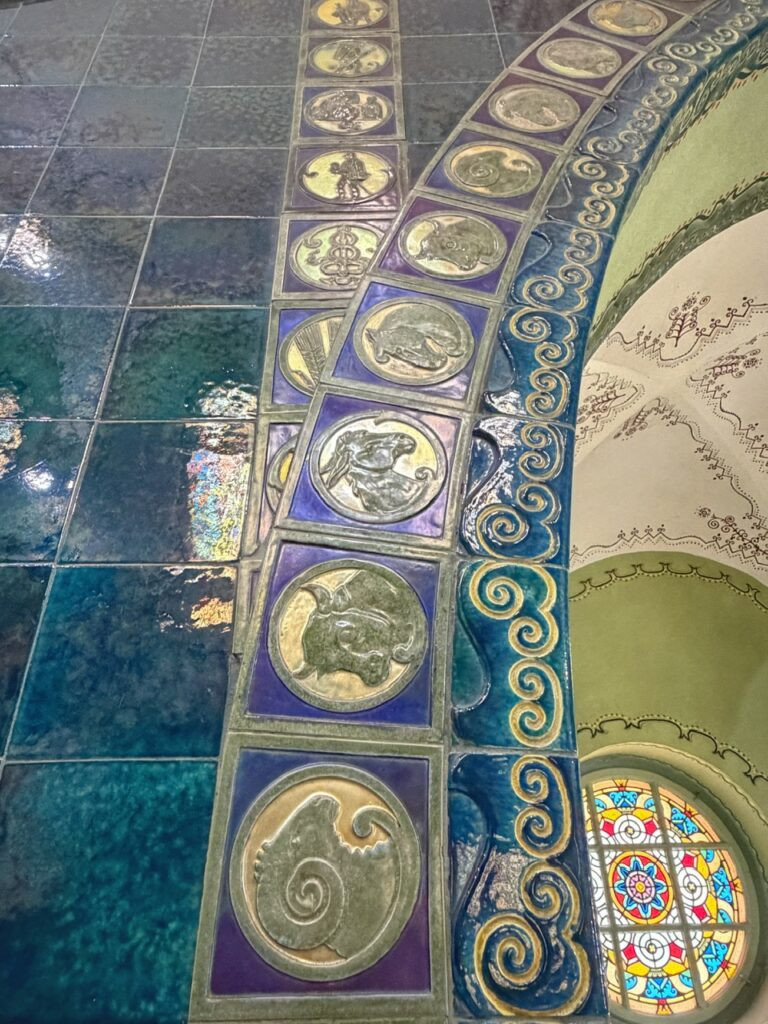
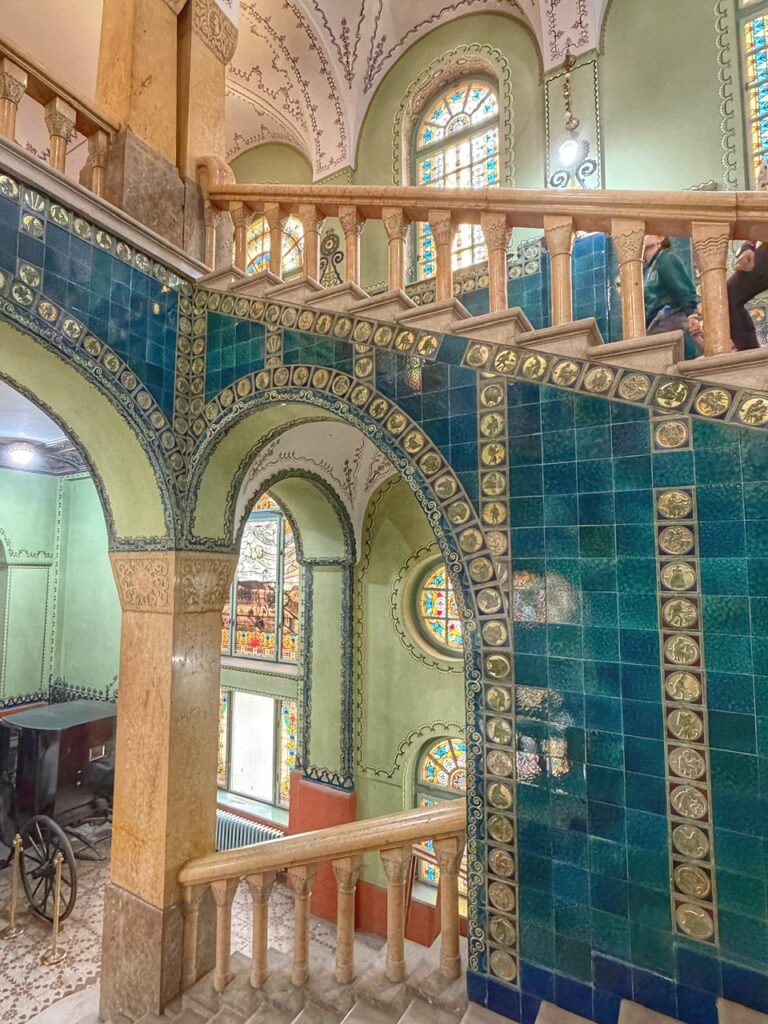
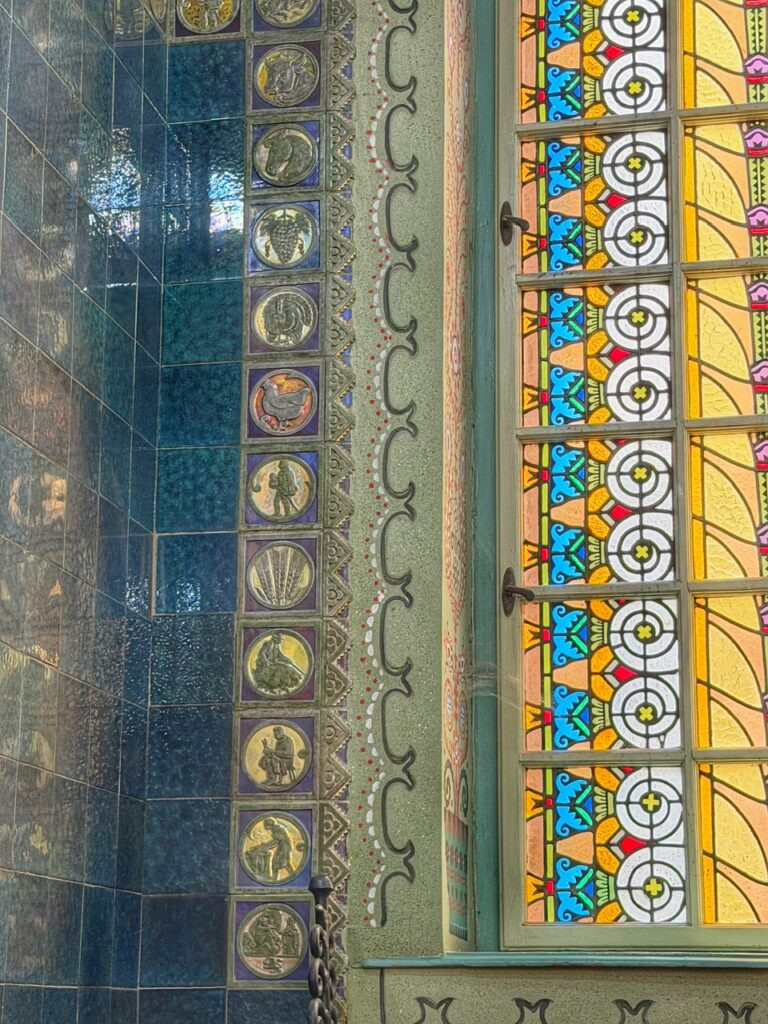
They are draped everywhere…from glistening roof tiles…to the interior walls. These interestingly showcase signs of the zodiac, which represent more of the passage of time in seasons and months rather than astrology itself. Art nouveau creators loved symbols that suggest unity between earth, nature and heavens.
If you zoom in, you’ll also noticed occupational tiles relating directly to human society, work and prosperity, like farmers and agricultural workers, craftsmen and merchants which make sense in a traditional city hall environment. And, it makes particular sense in Subotica’s Vojvodina province because it’s considered some of the most fertile agricultural lands in Europe.
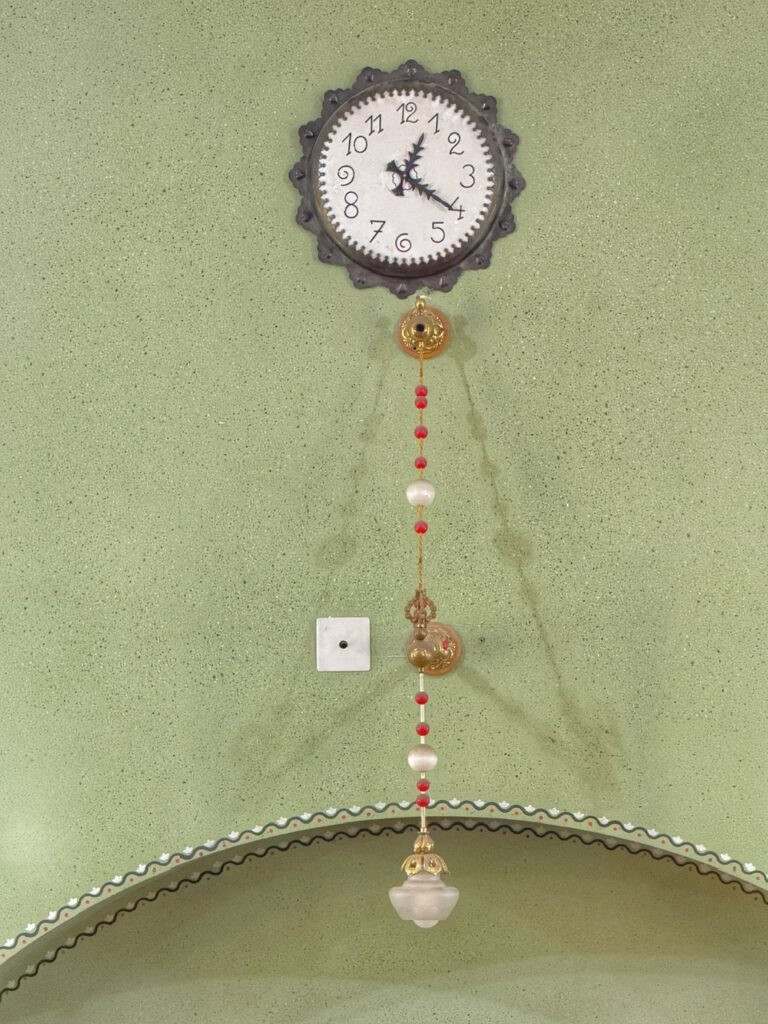
The numbers “6” and “9” are especially fanciful in art nouveau.

More details that bedeck the enormous building of nearly 6000 square meters.


The second floor over the grand staircase, as well as the hallways with parquet floors and stenciled ceilings, which are positively drool-worthy
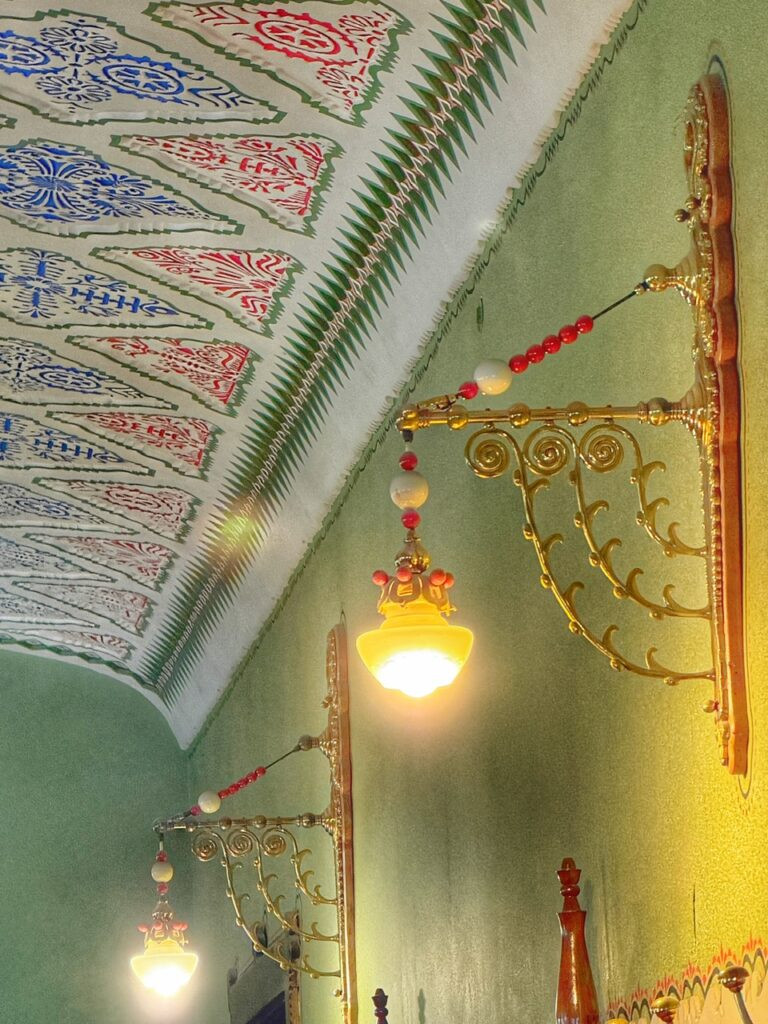
Even the light fixtures are fit for a story book, seemingly growing out of the walls.
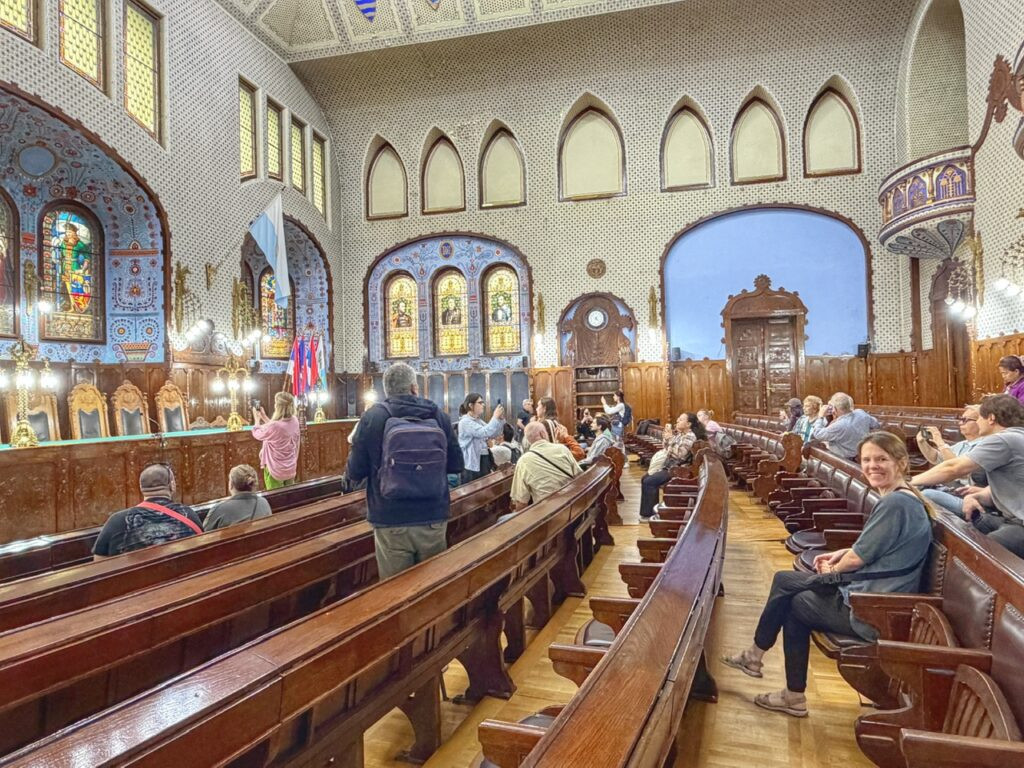
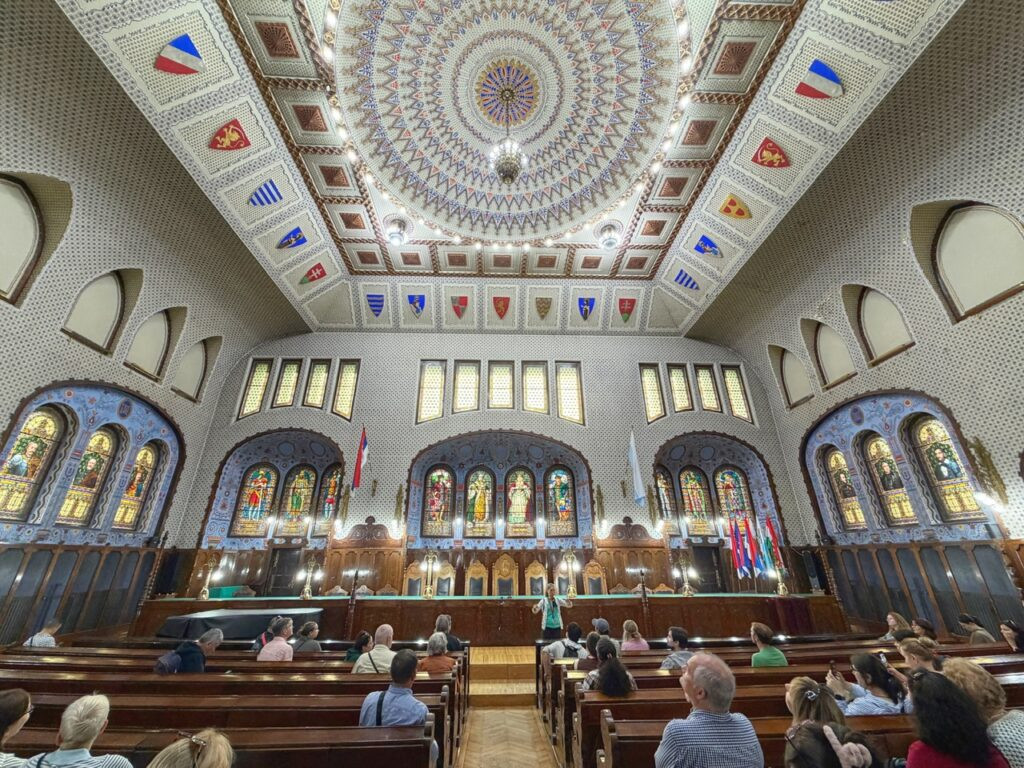
From here, our guide led us into the Grand Hall which is the ceremonial center of the city, making sure we slowly lowered our wooden seats rather than slamming them down like hooligans. When the building was designed it was intended to be the living room of the city where civic life, culture and important ceremonies take place, which are still some of its functions today. That, and Instagram bait…obviously.
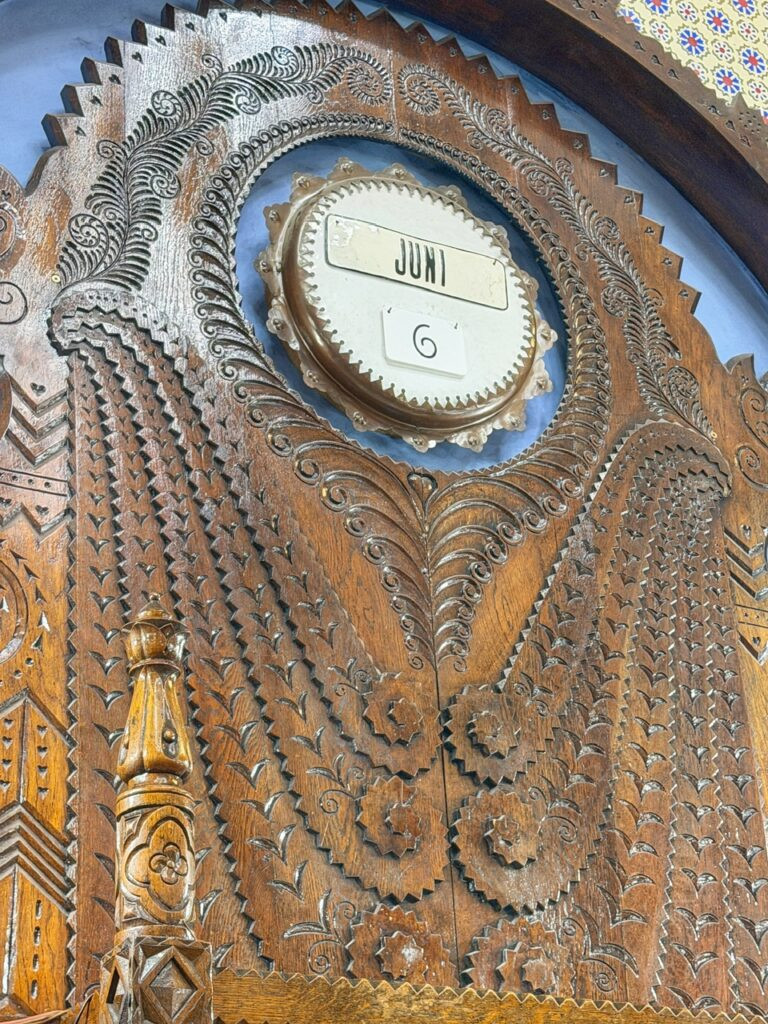
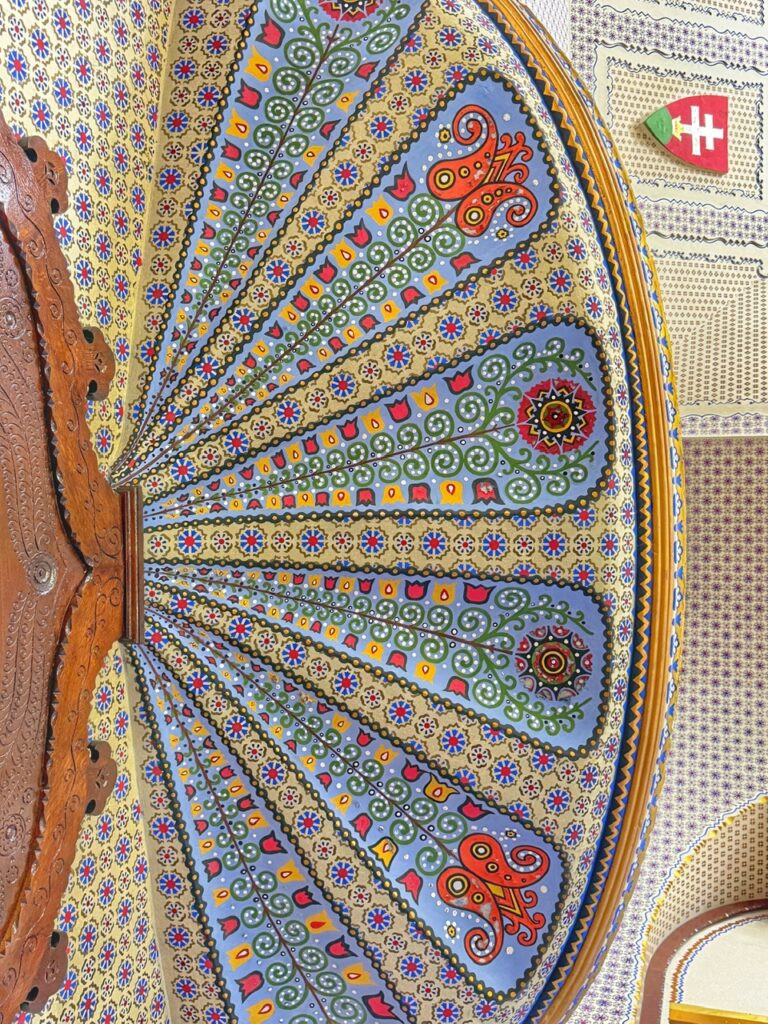
There’s that twirly little 6 again. In addition to the stylized tulips, leaves, hearts, feathers and floral patterns, the guide pointed out the multiple examples of peacocking, which for a booming and wealthy city like Subotica in 1912, symbolized civic pride and prosperity.
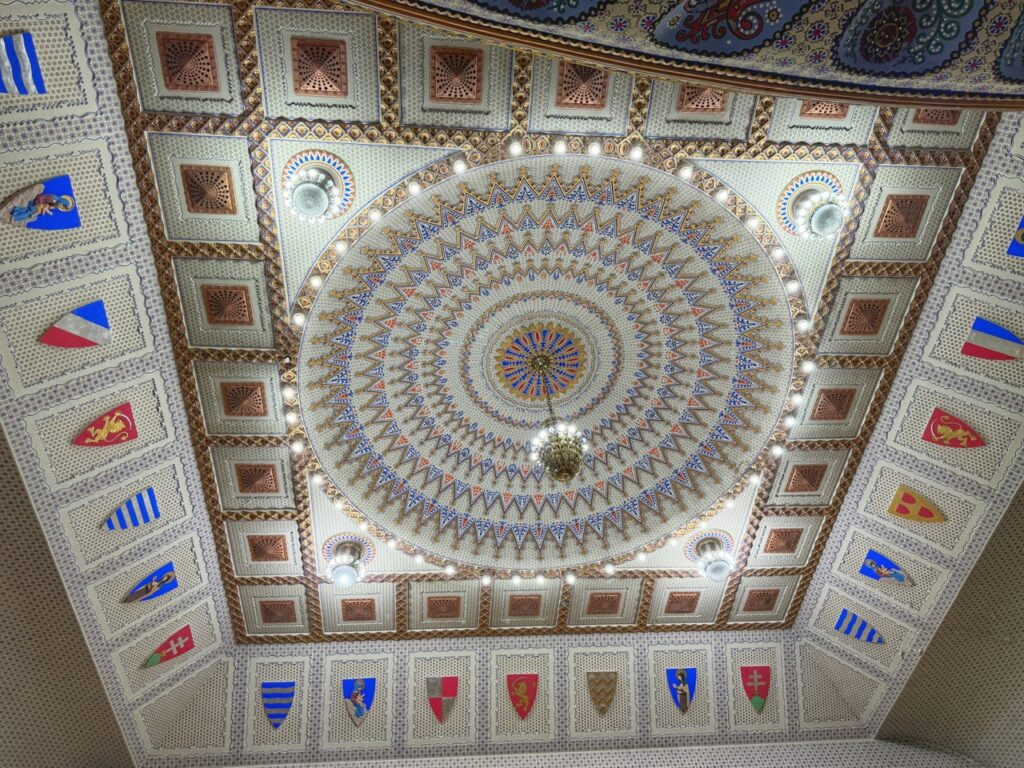

The central ceiling has both soft and hard images tossed together, but somehow even the coat of arms work. They represent the historic territories of the Kingdom of Hungary under the Austro-Hungarian Empire. Looks like a chubby and beautiful pine cone!
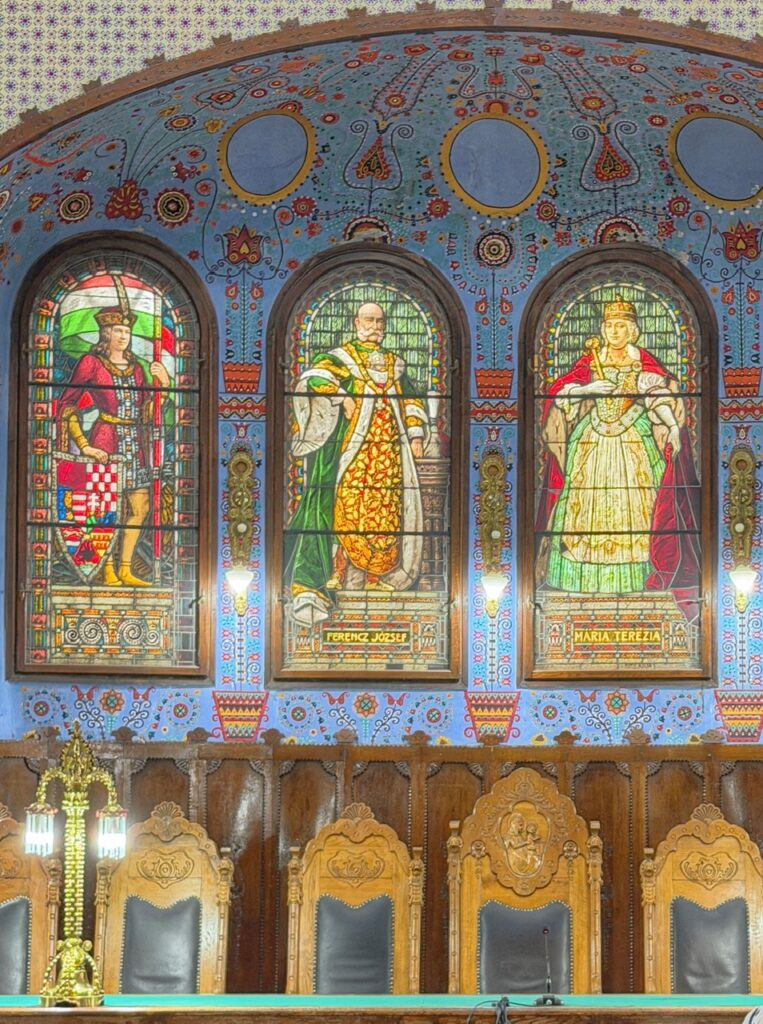
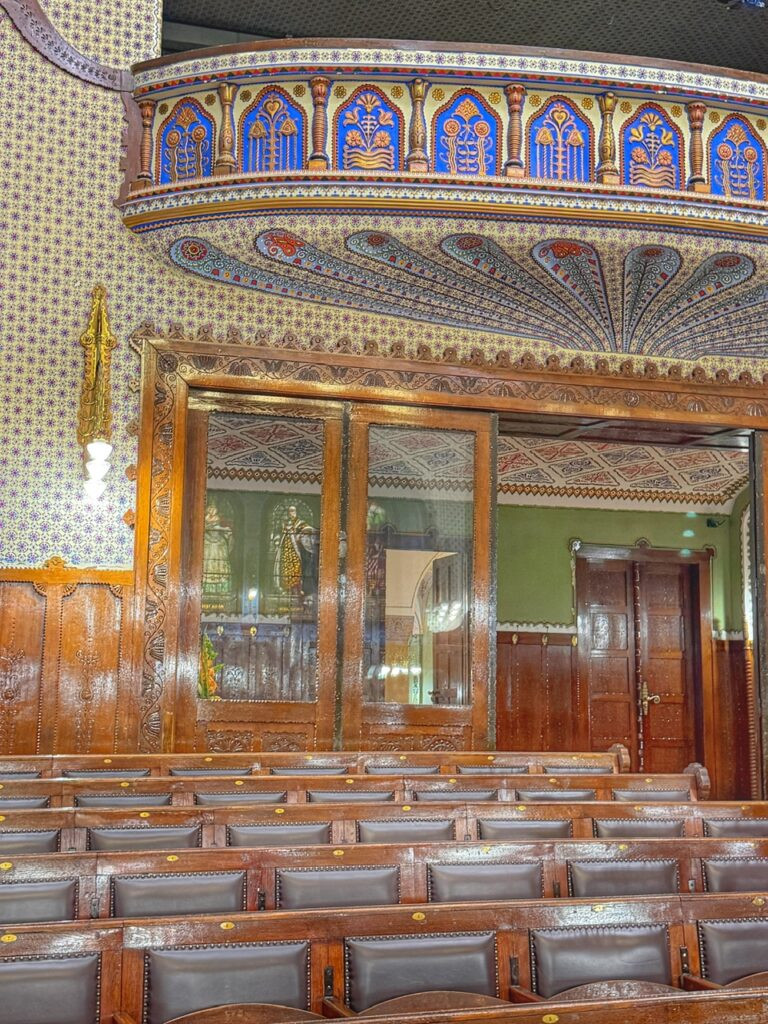
The hall also contains 16 magnificent stained-glass stunners, all honoring VIPs of the time. Wow!! It’s truly amazing! Especially when you scoot all those pesky people out of the photo!
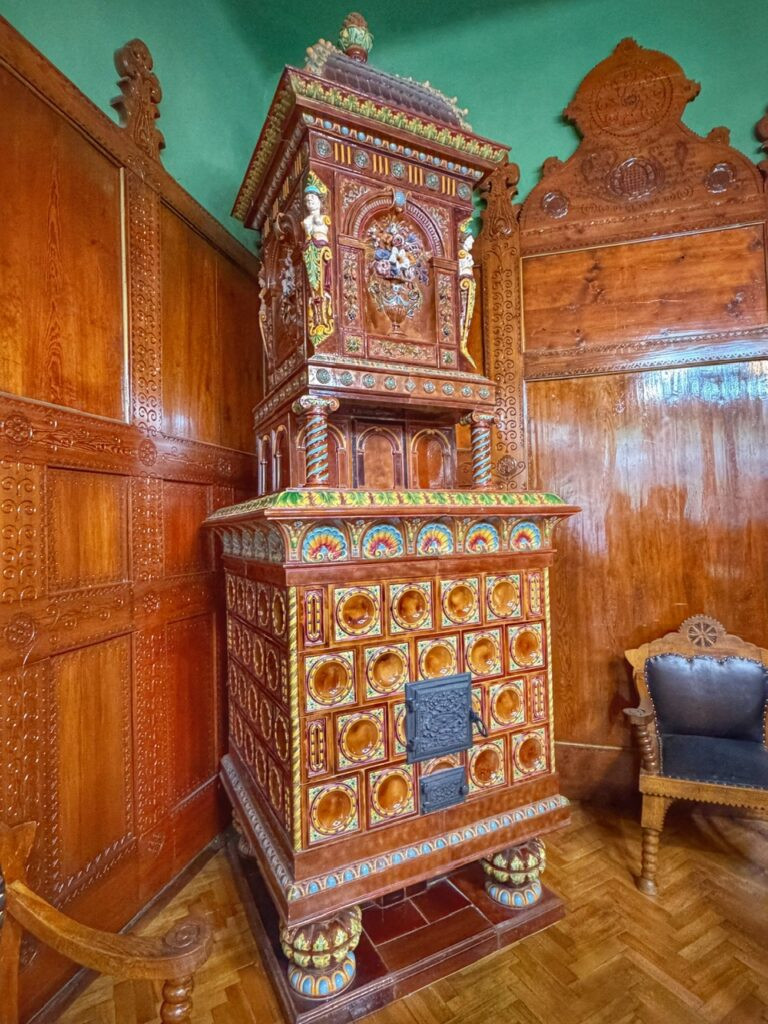
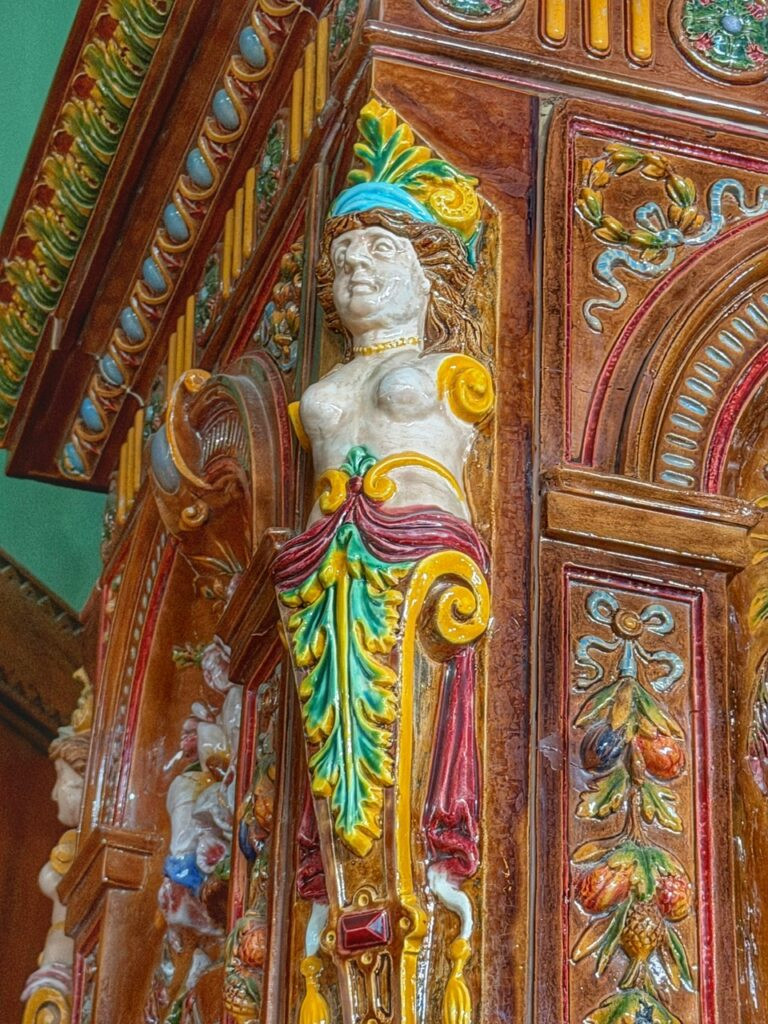
In the next room, we encountered the most extravagant fireplaces we may have ever seen, also coated in Zsolnay ceramics. It served as a focal point, and was not actually used, although it must have got a bit chilly for this striking lady, man(?), they(?) at the top.

I wonder if we could paint the bottom of that table to make it look greener?

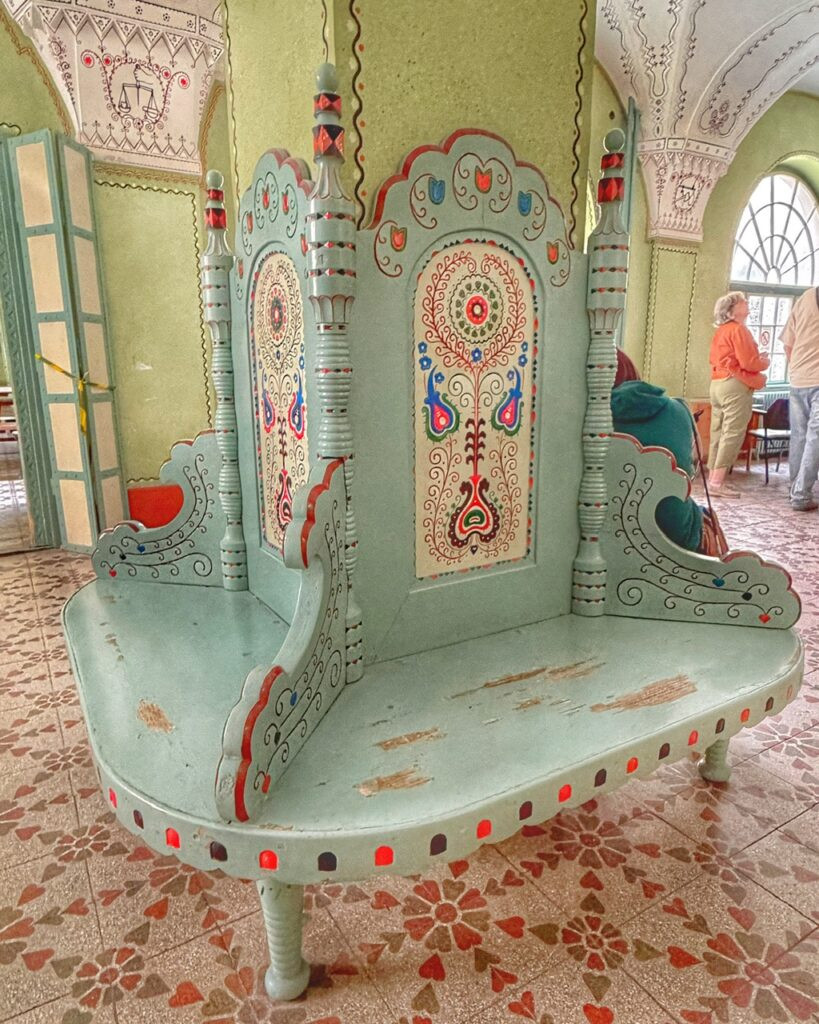
Moving on, we came to the most delicate and airy section of the tour, which had some imagery that was straight out of wonderland, or perhaps a deck of cards.

Definitely worth soaking in every single detail.
Gordana, Klara & Rosa
While in Subotica, I was excited to have the opportunity to meet Gordana for coffee, a gal I met through the Host a Sister Facebook Group. Little did I know I was meeting not only a local friend, but a powerful force of change within the community. In addition to sharing a little bit about her life in Subotica and some of the current challenges and realities of the region, she introduced me to the organization she co-founded called Klara and Rosa.
This community arts and cultural association is a program-packed venue that promotes inclusion, creativity, and social change by creating spaces where diverse voices, dialogue, and community engagement can thrive through drama, concerts, fine arts, discussion, workshops, and even an experimental women’s retreat coming up in August.
It’s a space that belongs to everyone, and defies the alienation, fear and polarization often all too prevalent in today’s society. Not to mention, many of the programs are free or donation based and offered in English!
What an ideal activity to check out while visiting this beautiful city!


Gordana invited Greg and I to attend any and all of the programs they offer and though it was slinking close to our laughably early bedtime, we used this as an excuse to see some live music and actually see what Subotica looks like after the sun goes down. 😂 And, as a former event coordinator, I can undoubtedly appreciate the efforts they did creating an intimate and cozy concert setting in their garden.


The band was fittingly called “Ana and the Changes,” belting out croony and addictive lyrics (in Serbian & English,) which had an Indie/Folk flair, reminding me of Melissa Etheridge meets the Cranberries. A touch of whimsy was also tossed in thanks to a supremely talented flautist. All in all, a fantastic sound! That said, I’m sure the center’s other programs are just as great! Check them out if you’re in town!
Our Daily Life in Subotica
Our one month chapter in Subotica, Serbia sadly had to come to a close. It’s been a terrific base, repeatedly reminding us how much we enjoy living in this part of the world. Here’s a glimpse into our daily life while in this livable city…
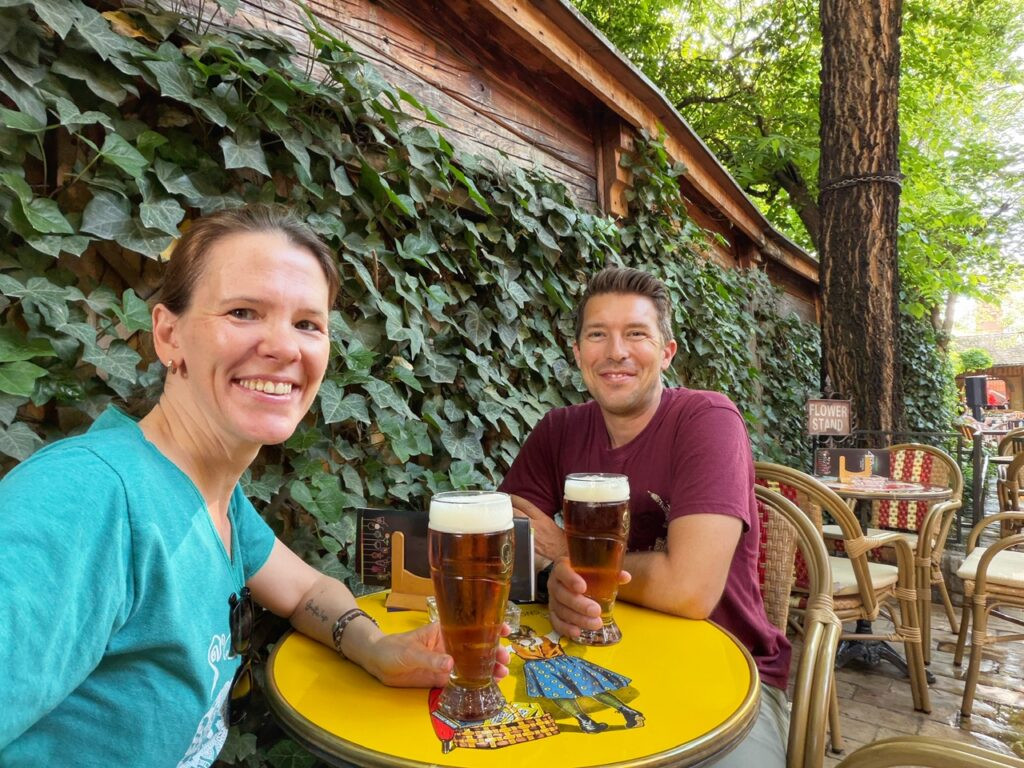
It feels like eons since our days living in Prague when we had regular access to Staropramen on draft. What a treat on Stara Picerija’s inviting patio, and for $3 (half liter!)


No inflammation issues here! Cherries were a regular part of our diets all month for about $1.40/kilo (2.2 lbs.) In addition to cherries, we had loads of apricots. They were some of the juiciest and sweetest we’ve had, tasting a bit like Peachy O’s candies. A weekly stock-up trip from the local market, which also included 1/2 kilo of walnuts, a large jar of local honey, a massive red pepper, cinnamon, 3 tomatoes (1 heirloom), and 10 eggs for $15.

Getting my hair cut from Tibor at “Big Hair by Tibor” for $24. Though my hair didn’t turn out particularly “big,” it certainly looked better than it had in a long time. He was a quite talented and friendly stylist, who spoke great English. Definitely recommend!


Our Airbnb apartment for $24/night was centrally located about a 10-minute walk from City Hall, 15 minutes to the local market and 20 minutes to the Lidl. It had all the features we love for a longer stay including a balcony, washing machine, A/C, equipped kitchen, (though of course we had to sharpen the knives)…


….and a TV with 600 channels, half in English. No, that is definitely not on our wish list though it’s charming to see that TLC’s “My 600 Pound Life,” is importing its way into Serbian markets to aid them in their American English vocabulary. TLC, after all, does stand for “The Learning Channel.” More importantly, the TV was available to watch many a World Cup match.
The front of our modern apartment building. The only downside was we were on the first floor.
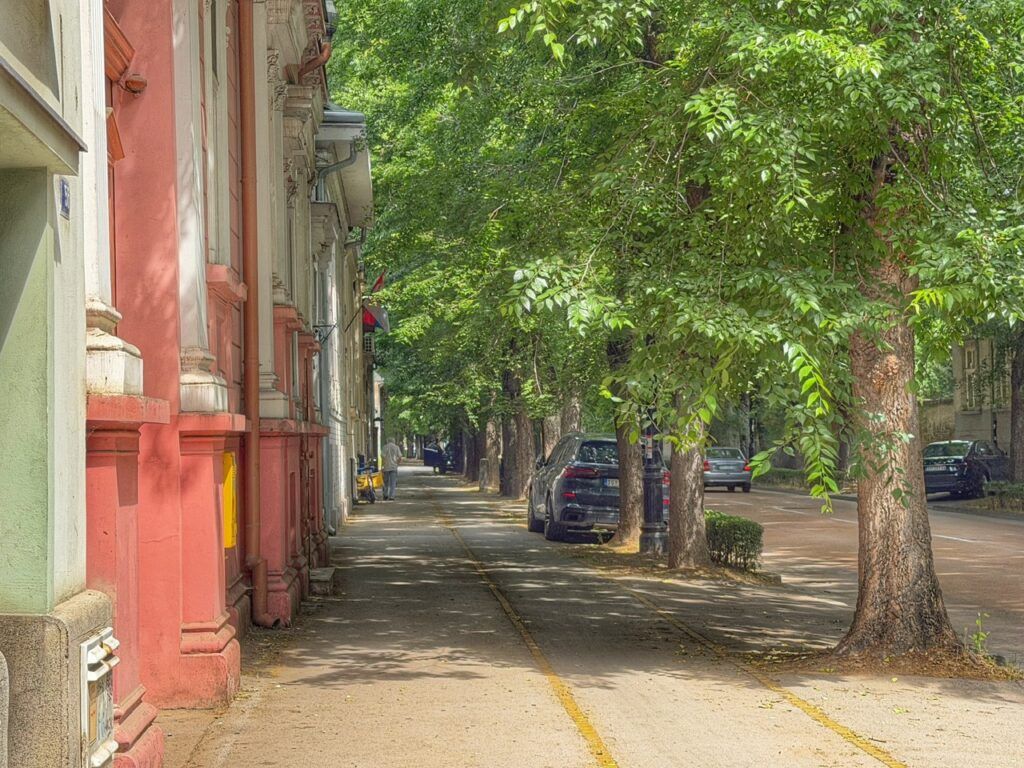
One of the reasons we loved this city was the tree-lined streets and designated bike lanes. Unfortunately, the bike lanes were a bit of a disappointment, because we couldn’t use them, despite it being an utterly bike-friendly, and pancake flat region. We had been hoping to rent bikes for the month to take some longer rides, and for errand/commuting purposes. However, there were no options to do this. We looked into the Su-Bike bikeshare program, which is available for $1/day, but only to residents, despite what we read in a tourist brochure. And, the only bike rental office we could find in town was for e-bikes, which were simply cost prohibitive at $30/day, though they might be just fine for the average tourist.


One of our receipts from Lidl, where we spent about $54. One convenient thing about Serbia is the easy conversion to the USD, which means you basically need to move over the decimal point two spaces to get the price, give or take a few cents. So, a few examples…
- Bottle of Wine: $4.49
- Olive Oil (500ml): $8.99
- Milk (1 liter): $1.03
- Hummus: $1.99
- Eggs: $1.99/10 ct. or $.19/egg
- Blueberries (1/2 kilo or 1 lb.) $3.99
Another small grocery trip to Maxi for comparison:
- Bottle of red wine: $5.54
- Large Greek yogurt: $2.09
- Oatmeal: $.83
- Mediterranean style cheese: $1.59
- Chicken (3 breasts/organic): $5.19

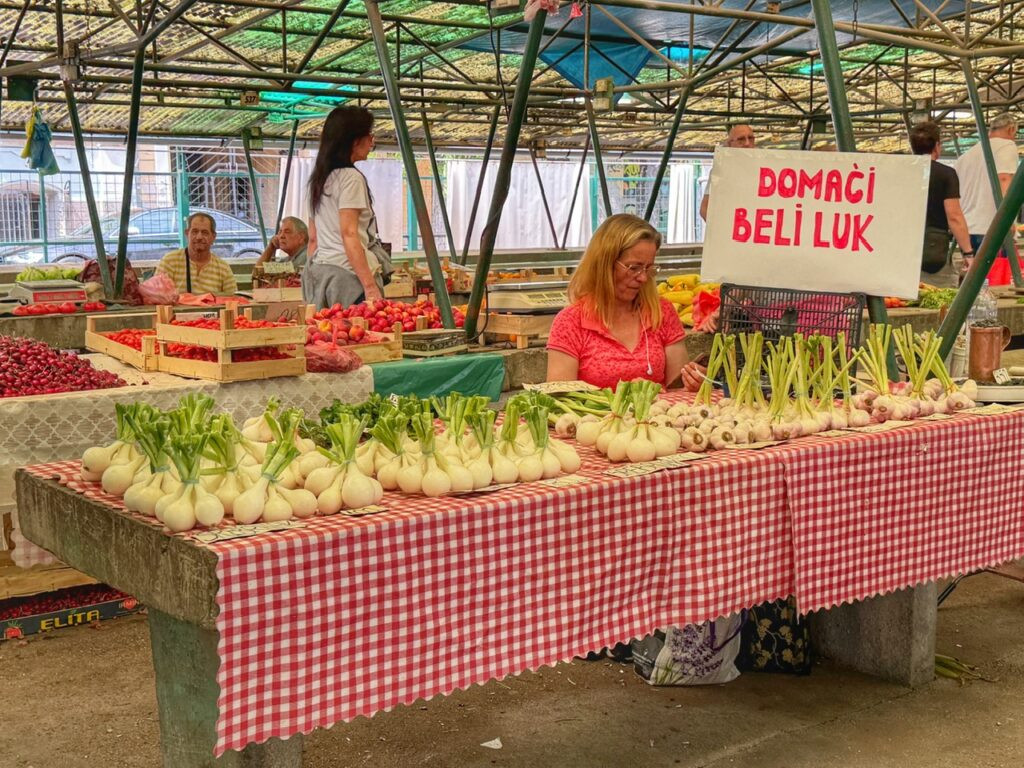
Of course, the local market, which we typically went to weekly, had even better pricing. Jars of honey started at $2. In addition, we were also confronted with friendly locals, most of whom seemed happy to chat with us, often in English, or offered welcoming smiles. We never once we got ripped off, which is unusual in the market environment.
It’s not too often I get excited about onions, but I did in Subotica! Chubby and glossy like light bulbs!


Eggs at the market ranged from $.14-$.23, depending on the size of the egg. Definitely farm fresh no matter what your selection! And of course, it was also a paprika paradise!

Fresh flowers at the market were also abundant and gorgeous.

Some of the concoctions we made over the month:
Tahini bowls with paprika roasted chickpeas/broccoli, sweet potatoes and basil, Stuffed grape leaves and Greek salad, Charcuterie plate, our Saturday night treat, and yogurt bowls, with special spheres including Gooseberries and currants

We also had Pasulj several times, which is a traditional bean stew popular throughout the Balkans, as well as lots of dishes accentuated with Ajvar sauce. I truly love cooking in this part of the world and our guts are always the happiest as well!


A local supermarket around the corner from our apartment, where we always had a nice chat with the the super-friendly owners. Bread from a supermarket for about $.80. One thing we did miss here, however, was access to sourdough bread, although we did look around for it in several bakeries.

Moving on from food, we love that Subotica had several locations of DM, our favorite German health and beauty store, where we were able to acquire high quality sunscreen and products without additives. Look at all these cute little travel sizes! They even had my fancy toothbrushes/paste called Curaprox in mini. Not that we need them when we’re slow traveling.

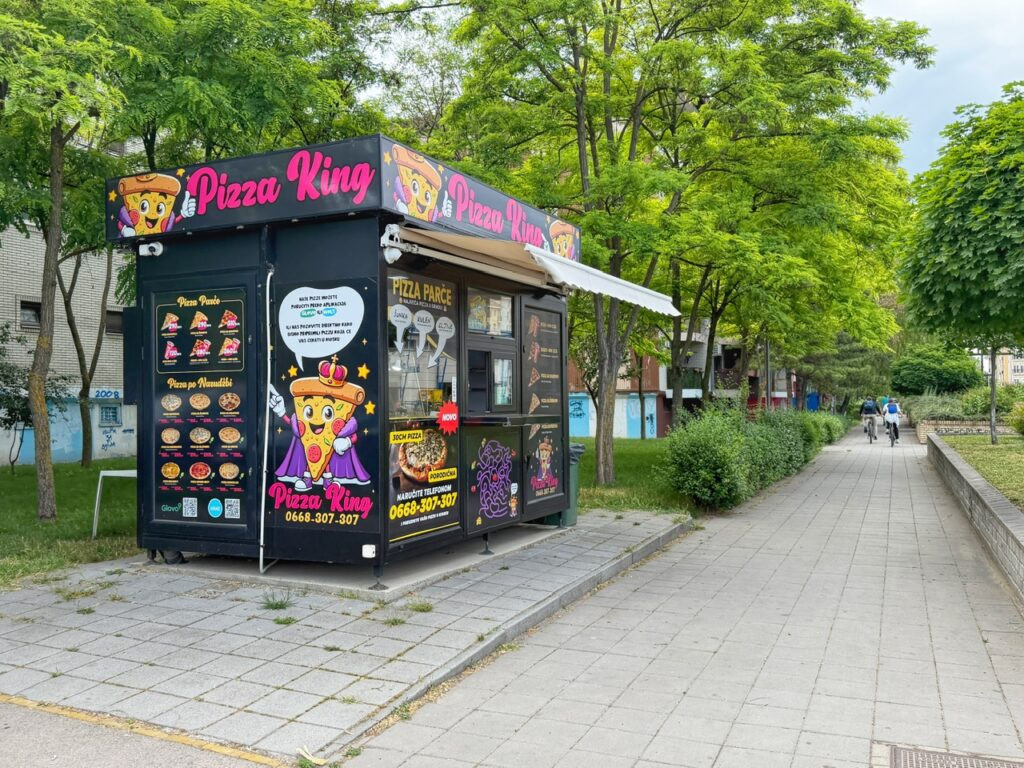
Other sides of Subotica…the park near our apartment where we’d often run through. Simple, yet functional, and with a pizza stop en route if you just wanna F the exercise. 😉

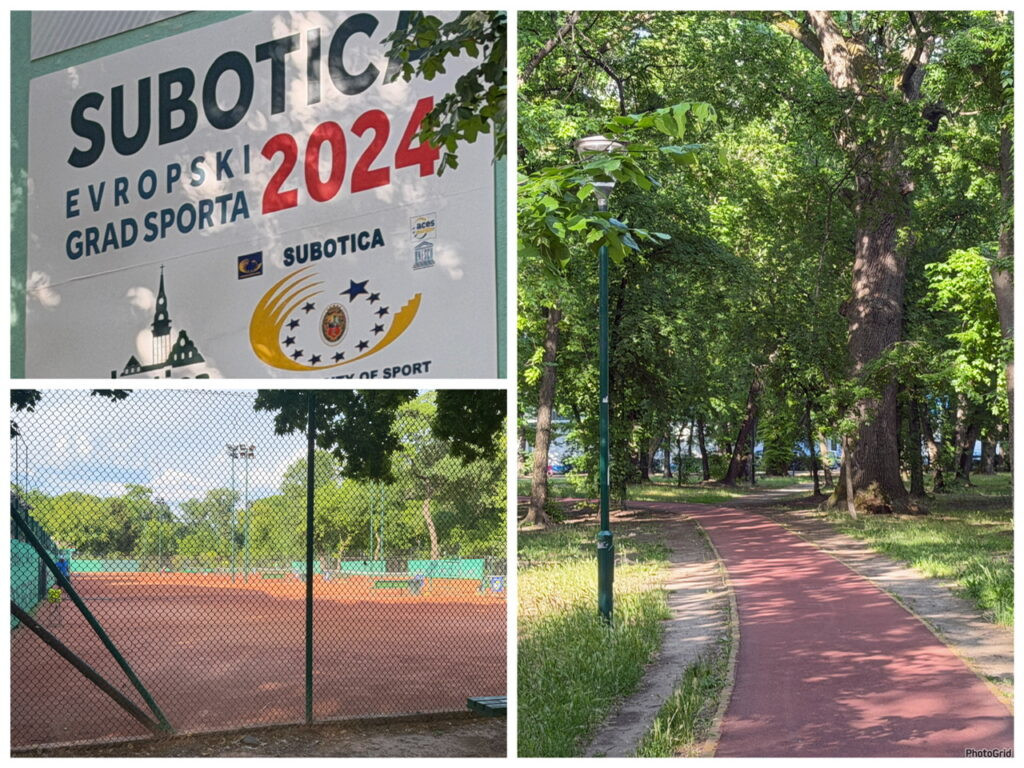
But, one of my favorite parts of the city was simply having access to a public (indoor) pool only 10 minutes from our apartment so I could swim laps for $3/visit. In the meantime, Greg would often jog up to the more northern park, which was much more pleasant and wooded with a running track, sports courts, strength training facilities, playgrounds, and another public pool.
The sports and exercise facilities are top-notch in Subotica, and even earned them the title of “European Sports City in 2024.” We loved that the city is committed to promoting physical activity and healthy lifestyles, even for the four-legged variety with dog parks.

That said, you might need to wake up early to avoid the summer heat. We had about a week of brutal heat with the “heat dome” passing through, but the rest was quite expected for a European June.

Fortunately, they had gelato for $1/scoop to ease the suffering. 😂 And if you haven’t had Dubai Chocolate ice cream yet, you might not want to start.

Greg had other things in mind for $3/slice.
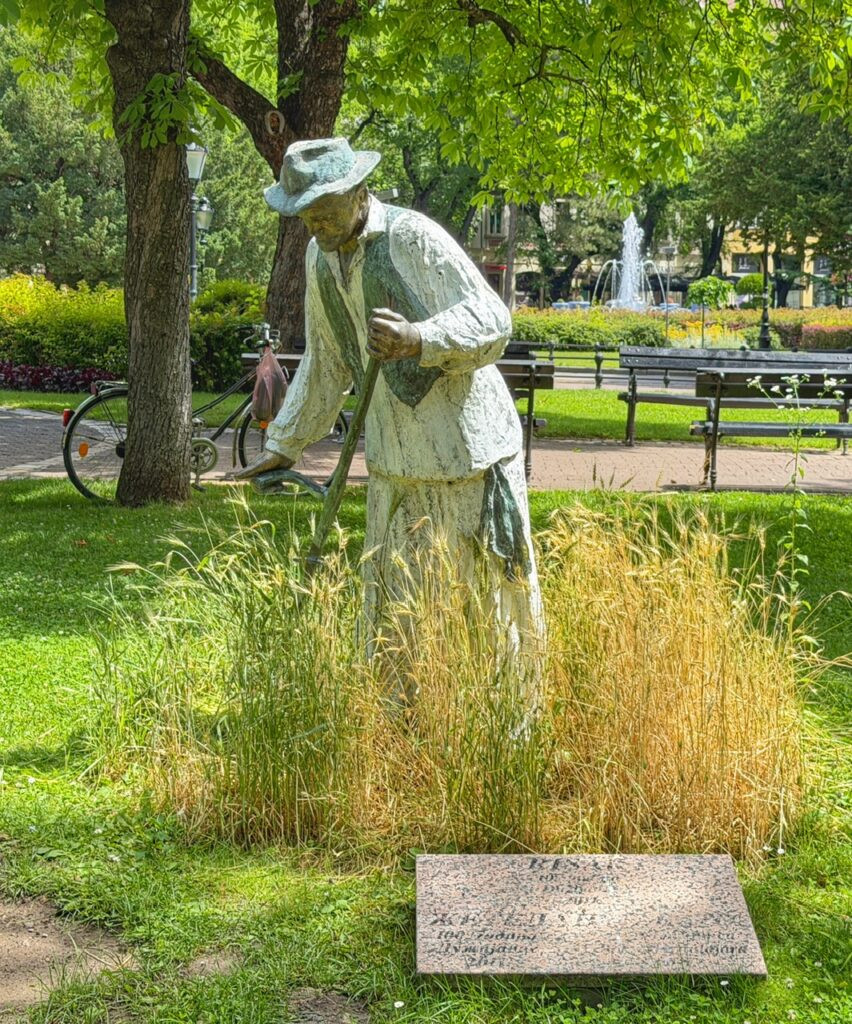
Just happy not to be doing the hard manual labor of this guy!! What a fun statue representing the region’s agricultural roots.

One of the few meals we had in Subotica was breakfast after our bloodwork…omelettes loaded with oyster mushrooms, spinach and cheese and lattes for about $15.

Speaking of bloodwork, we had a great experience at NovaLab, where we got complete annual draws for $174 (both of us), and $70 for two ultrasound screenings. We also had dental cleanings at Primus Dental Center for $40/each.
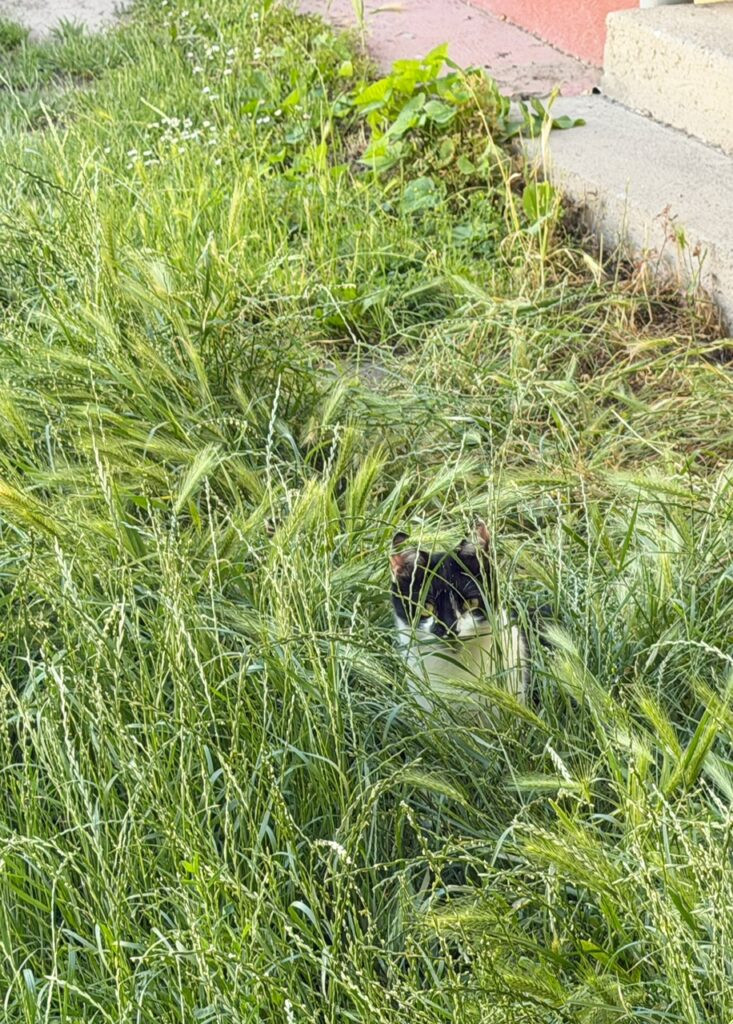
Unlike other parts of the Balkans, cats are a bit more elusive in these parts.
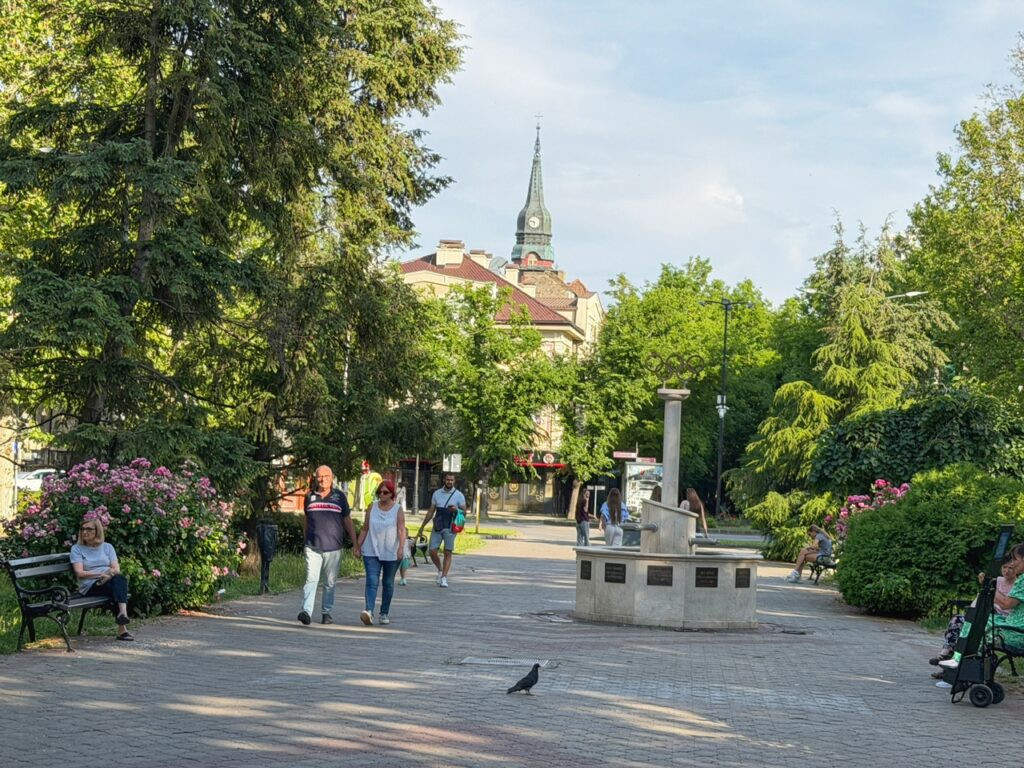
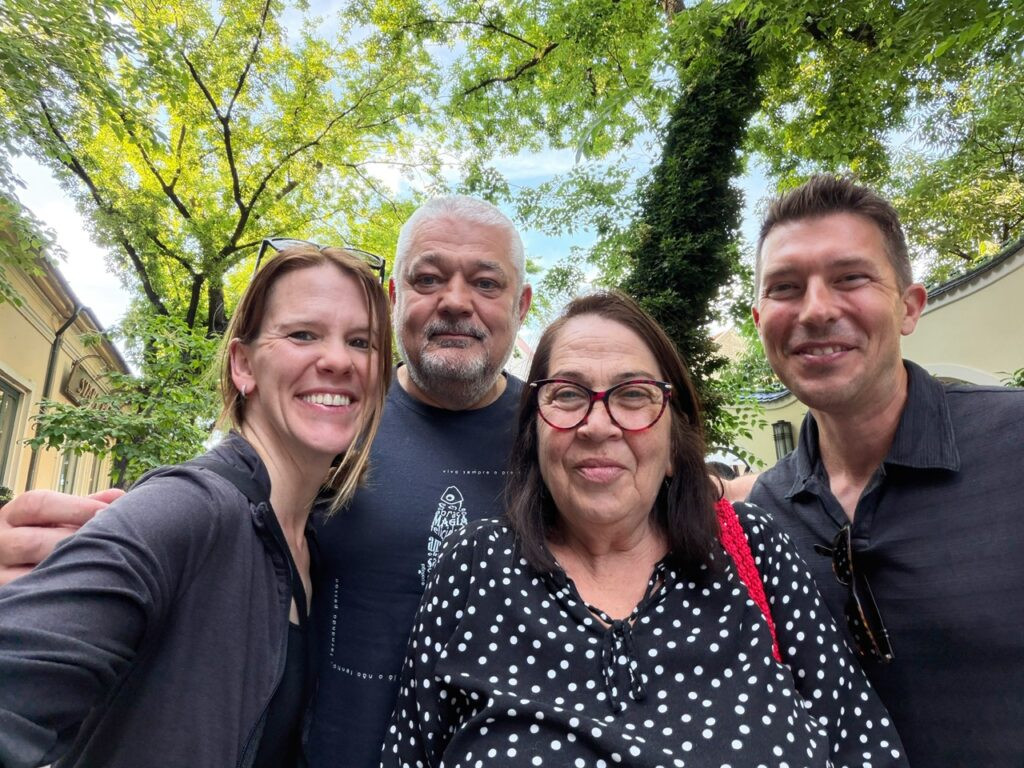
More pleasant pedestrian thoroughfares. We met Leah, from the UK and Dobrinko from Serbia, through the “Expats in Serbia” page and they invited us for pizza and beers one night. So sweet of them. It was great to talk with them to learn more about life in Subotica.

A bit bummed to leave it behind, we enjoyed our last drink at the Klein House wine bar. It was so hot I even switched to white! Živjeli AND/OR Egészségére to Subotica! Hvala for the wonderful experience! 🙂