

From Ataco, El Salvador to Antigua
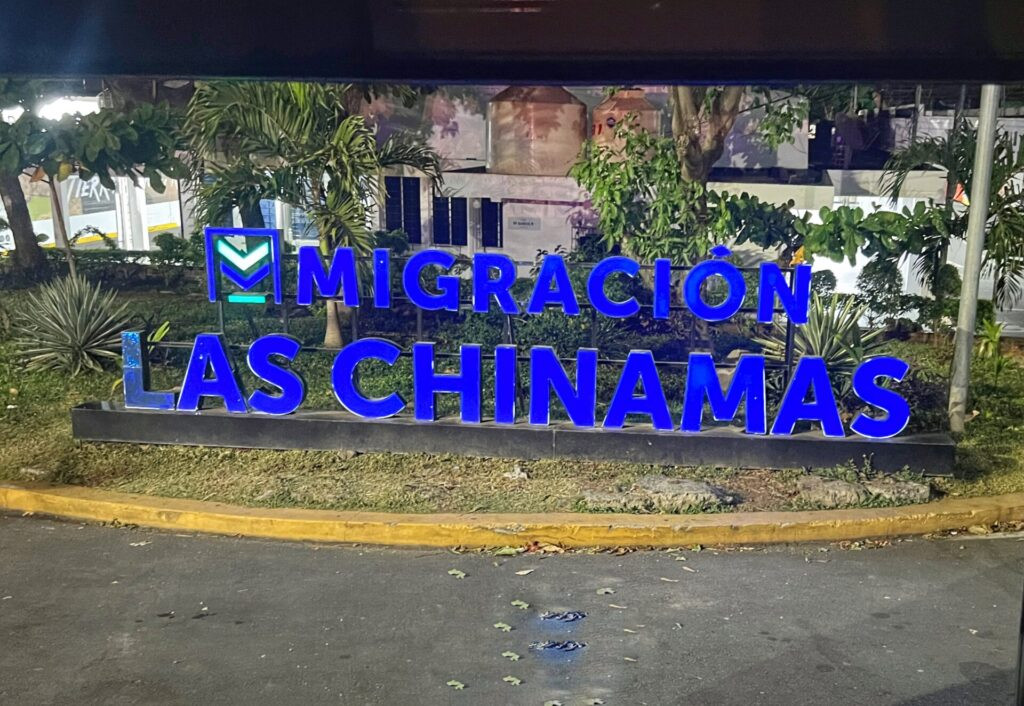


Nearly a week and a half ago, we made the journey from Concepcion de Ataco, El Salvador to Antigua, Guatemala where we’ll be based for a month. Although the prospect of spending the day bouncing ~8-10 hours between multiple chicken buses sounded scintillating, we opted to hop on the van wagon with some other tourists for a far lesser adventure, where we spent about $45/each instead of approximately $30 and got carried door to door. We booked through “El Salvador Tours Tratamundo” in Juayua.
Other than beginning with a half hour late shuttle pickup at 4:30 am, and not having a headrest after forcing our eyelids open at 3:15, it was pretty tame and makes for a not-so-exciting story.
The nice thing is…it’s that easy of a border. No questions. No waiting. No haggling for Quetzals. No looking through our bags. No walking. Only an overtly friendly border guard and a cacophony of jungle birds outside the sliding van door.
This is not the Central American border crossings we remember….Bienvenidos a Guatemala! 🇬🇹 It was a first for me, and one Greg is mucho feliz to return to!
Exploring the Wonders of Antigua
For many travelers, the utterly mesmerizing and picturesque treasure of Antigua needs no introduction. It’s been a tourist hotspot for decades, and was very much a gem that captivated my young husband at the age of 22 when he first rolled through on a chicken bus, backpacking his way through Central America. And he’s been eager to return ever since….this time with su esposa, less physical baggage, and some wrinkles in tow.
And despite the 25 years of changes, both for himself and the destination, he still finds it absorbing. And, after three weeks so far, my sentiments are equally fulfilled…despite the number of grande Starbucks coffee cups we see bopping around.
Yes, there are tourists. But what makes it different is that Antigua still feels authentic. Its bougie and artisanal establishments, and there are many, blend effortlessly into the scene and overall, the town is far from a perfectly polished showpiece. Instead it’s draped in crooked cobbles, pops of palms and patina, and a characteristic cacophony of bustle and ruins to relish your eyes upon.
We wish we had two months. And we will. Next time.


Antigua was once the capital of all of Central America from the 1500s until 1773 which governed territory that included modern-day Guatemala, El Salvador, Honduras, Nicaragua, Costa Rica, and Chiapas (Mexico). This was a BFD back then.
It is fringed by three acclaimed volcanoes, the most stereotypical looking one being Volcan de Agua. And if I haven’t mentioned it already, the charm seems infinite.
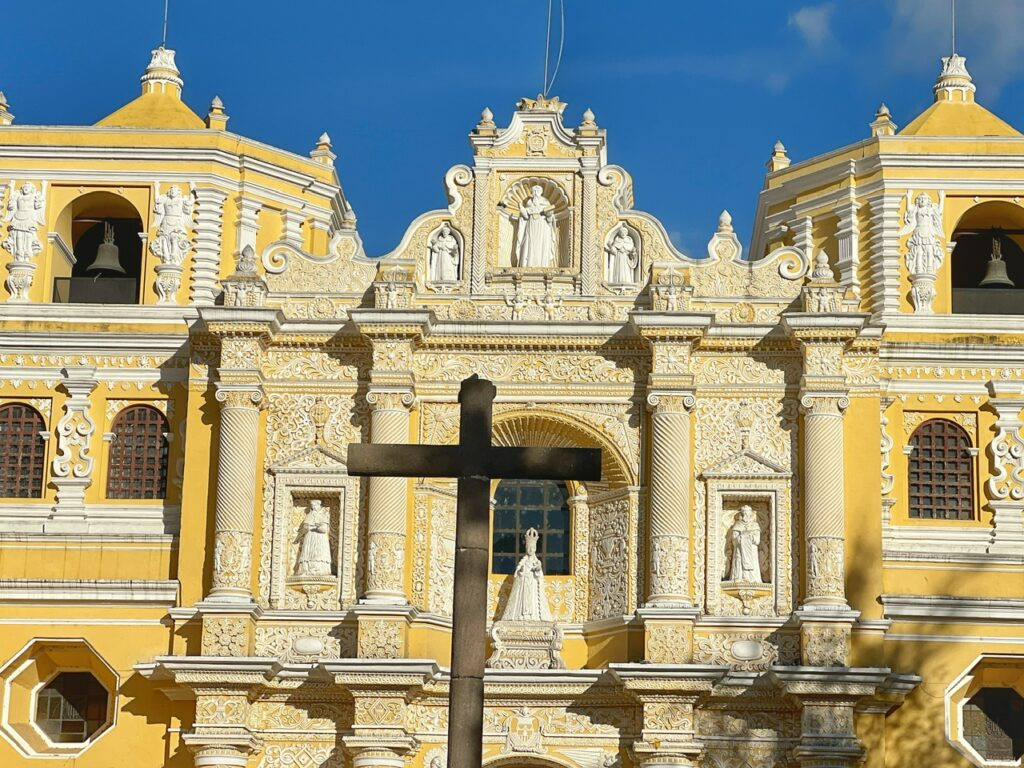
The façade is of the prominent Iglesia y Convento de Nuestra Señora de la Merced from 1779 is doused in Guatemalan Baroque and a coat of Antiguan Amarillo. It’s heavily ornamented with stucco reliefs, spiraled columns, niches, saints, and floral motifs. Many tourists go to the top to watch sunset, which would be a royal waste of money for us, as we have the same view from our rooftop.
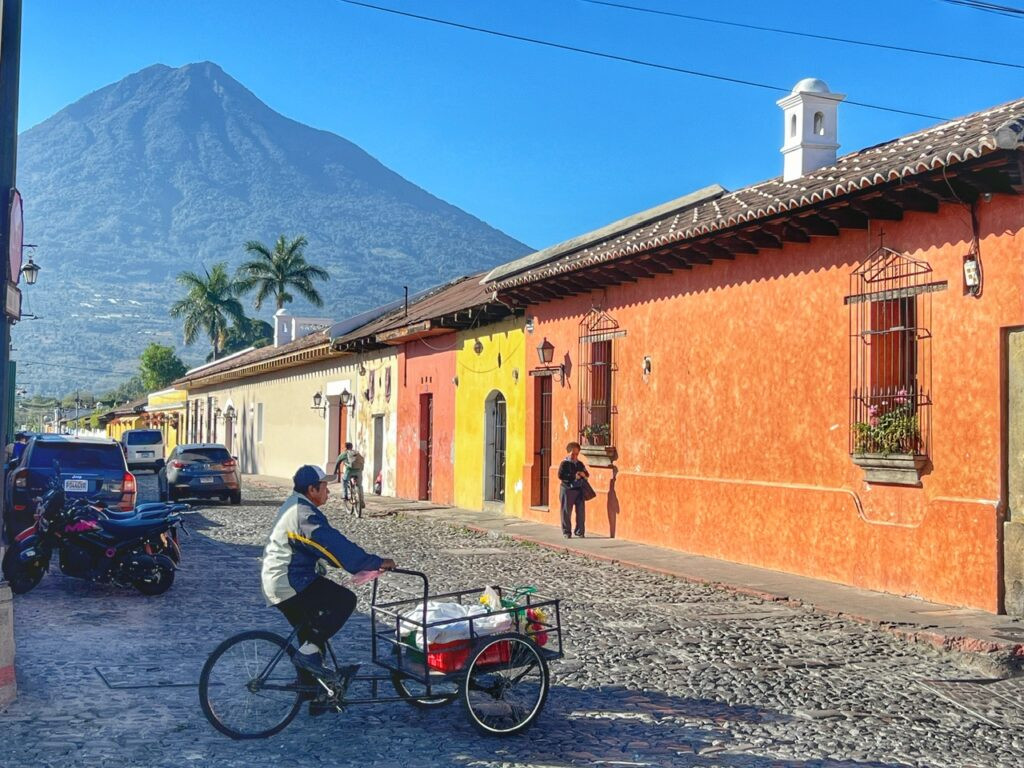

Apparently, the streets were designed as ankle/axle breakers to slow down horse-drawn carts and control traffic. Today they’re part of the allure…and must be heinous for those who choose to flip-flop down them.

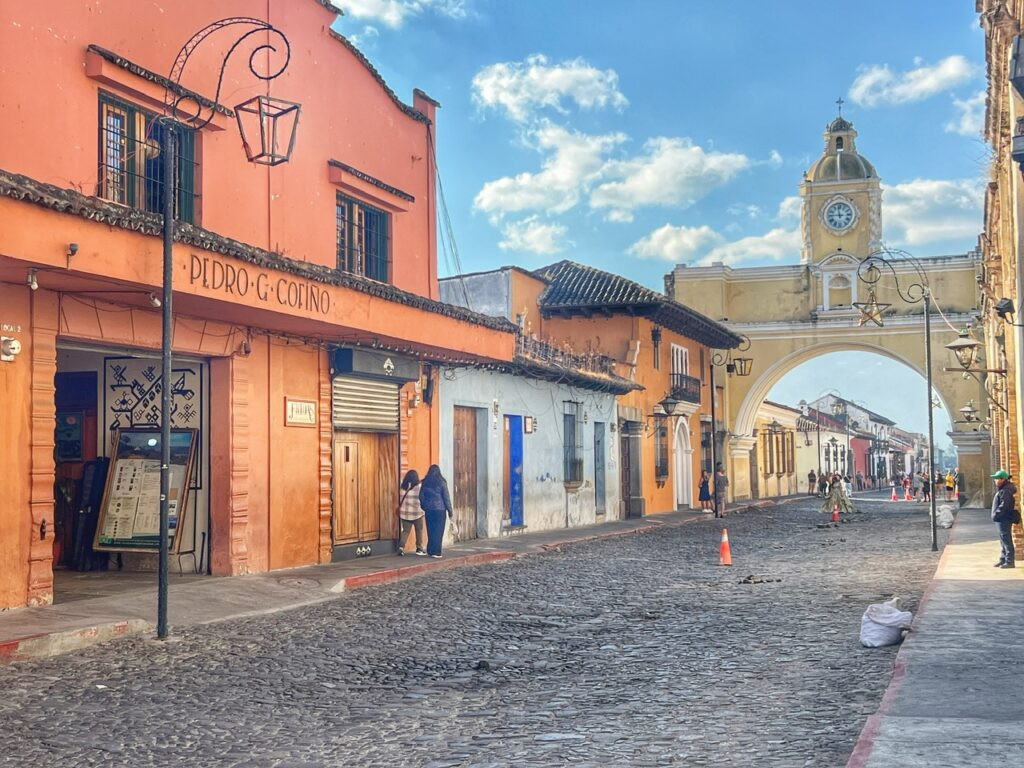
Although today this perfectly framed arch, the Arco de Santa Catalina, is the hashtag hotspot of the town, unbelievably it had a more significant history than this. According to Chat GPT, it was built in 1694, and connected the Convent of Santa Catalina (on the right) with a school and living quarters on the other side of the street. The nuns were cloistered, meaning they were not allowed to be seen in public. The arch let them cross the street without ever stepping outside or being visible.
Naturally, we love being here first thing in the morning before all the chaos commences and coffee cups arrive.
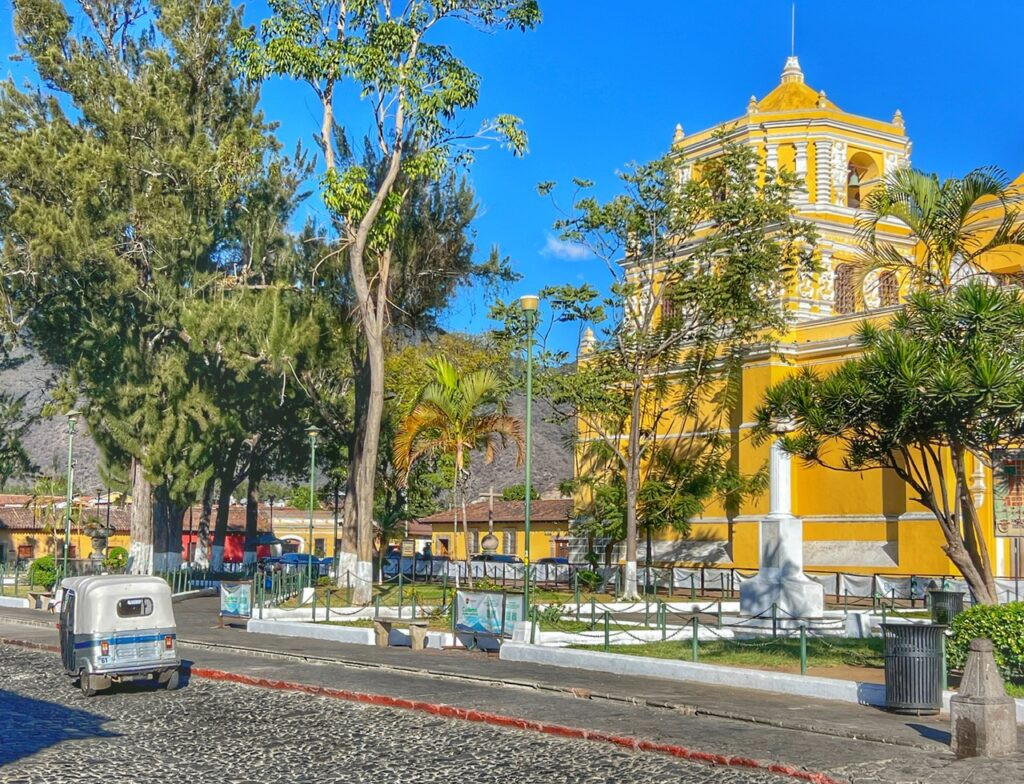
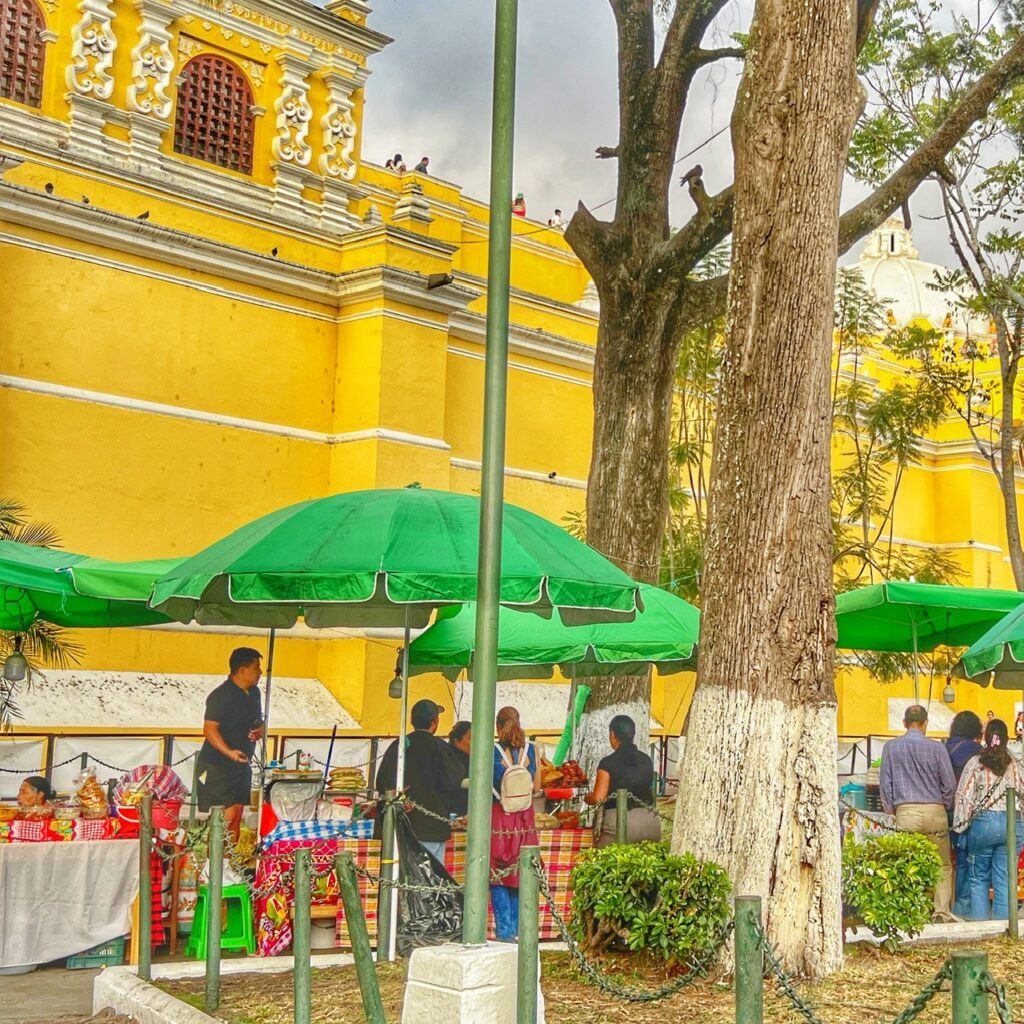
The streets are knitted together by tuk tuks. This one skirts the edge of Iglesia de la Merced and is a popular place for street food and other local activities, particularly during Semana Santa, the week leading up to Easter. One such cluster of street food stalls.


It’s really hard to escape views of Volcan de Agua, or to stop taking pictures of her in all her glory. In fact, I finally made Greg tell me to stop every time I raised my camera to her…again. Agua is the now extinct volcano that exploded into a torrential land and mudslide that decimated the first capital, which is just outside of Antigua appropriately called Ciudad Vieja (Old City.)

See? Not THAT much has changed since the 1979 UNESCO World Heritage status was deemed.


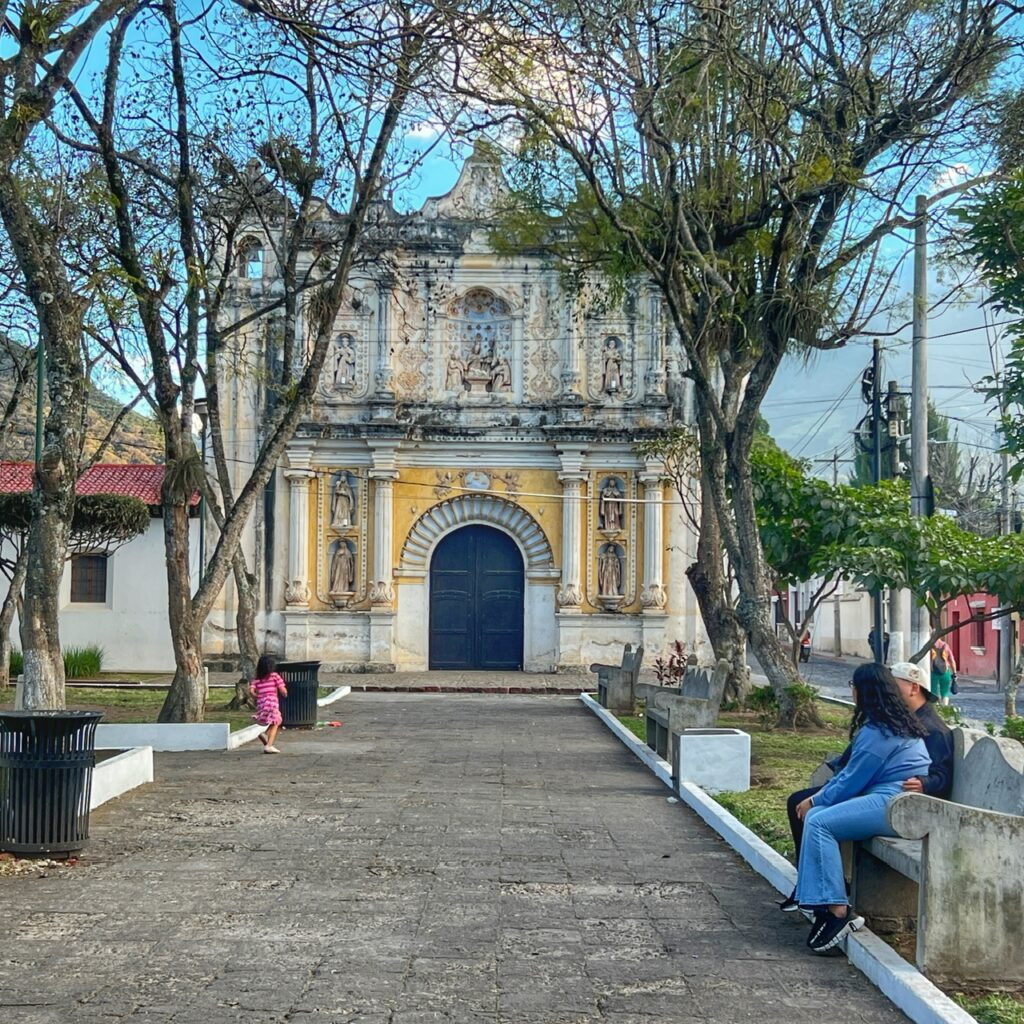
Antigua has an astounding 37 churches/convents folded within its historic core, which is widespread and entirely walkable. With the extended time we had, we found it’s much more fun to stumble upon them in quiet and tucked away neighborhoods during our evening or morning walks than to seek them out.


Historic wash bins, which were attached to a picture perfect photo opp. Naturally we had to stand in line to get this symmetrical snap.

Greg admiring (or maybe looking at in disgust…I can’t see his face😅), the Church of San Pedro. They sure like their sun-splashed shades of yellow here!

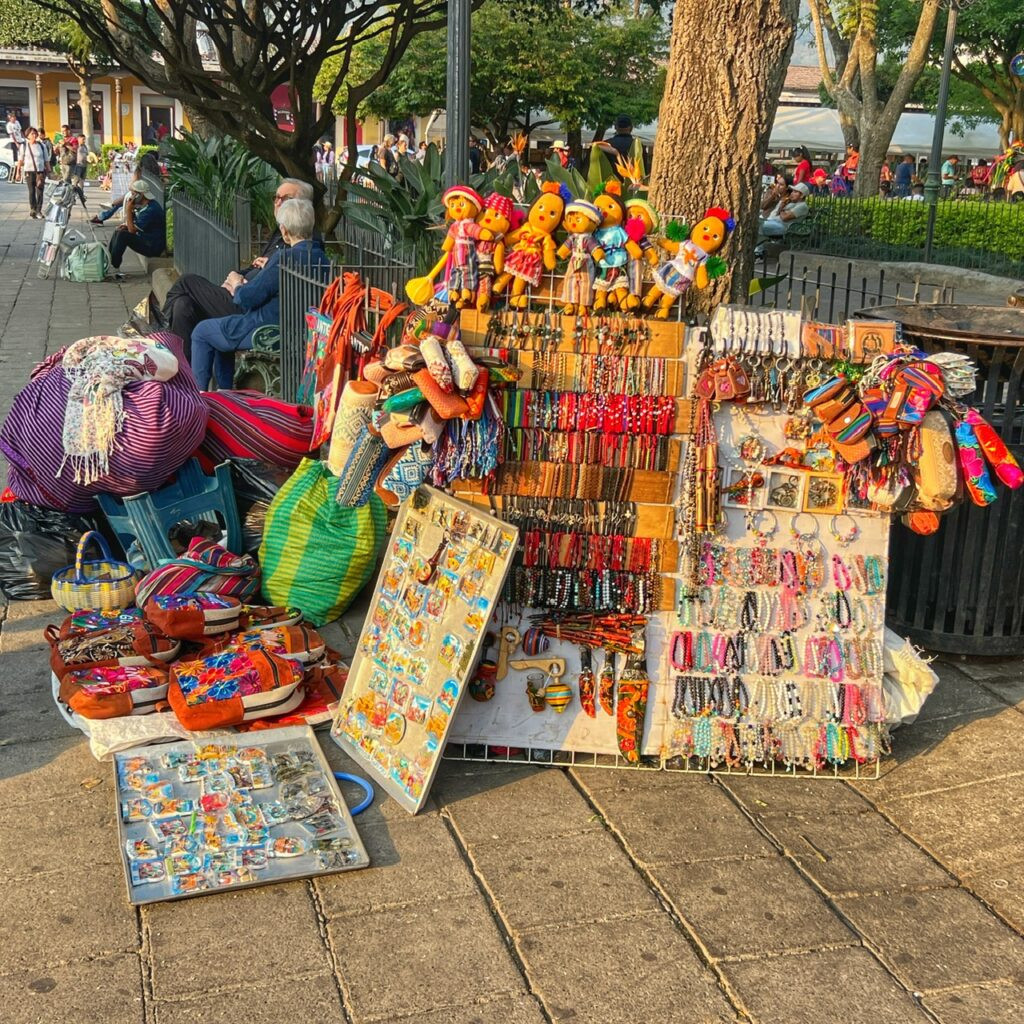
An example of how modern chains blend into their surroundings, instead of becoming capitalistic eye sores. Speaking of…it was easy to find tourist Bait in the main square

The best time to walk…the golden hour, when the town puts on an immaculate glow.


The main municipal building of Antigua. Also in the town square is the quiet anchor of San Jose Cathedral, which was once the religious headquarters of an early empire in the mid-1500s. Repeated earthquakes damaged it, but the 1773 earthshaker was the final blow that turned the majority of it into a crumbles. When the capital moved to Guatemala City, the cathedral was abandoned and partially dismantled.
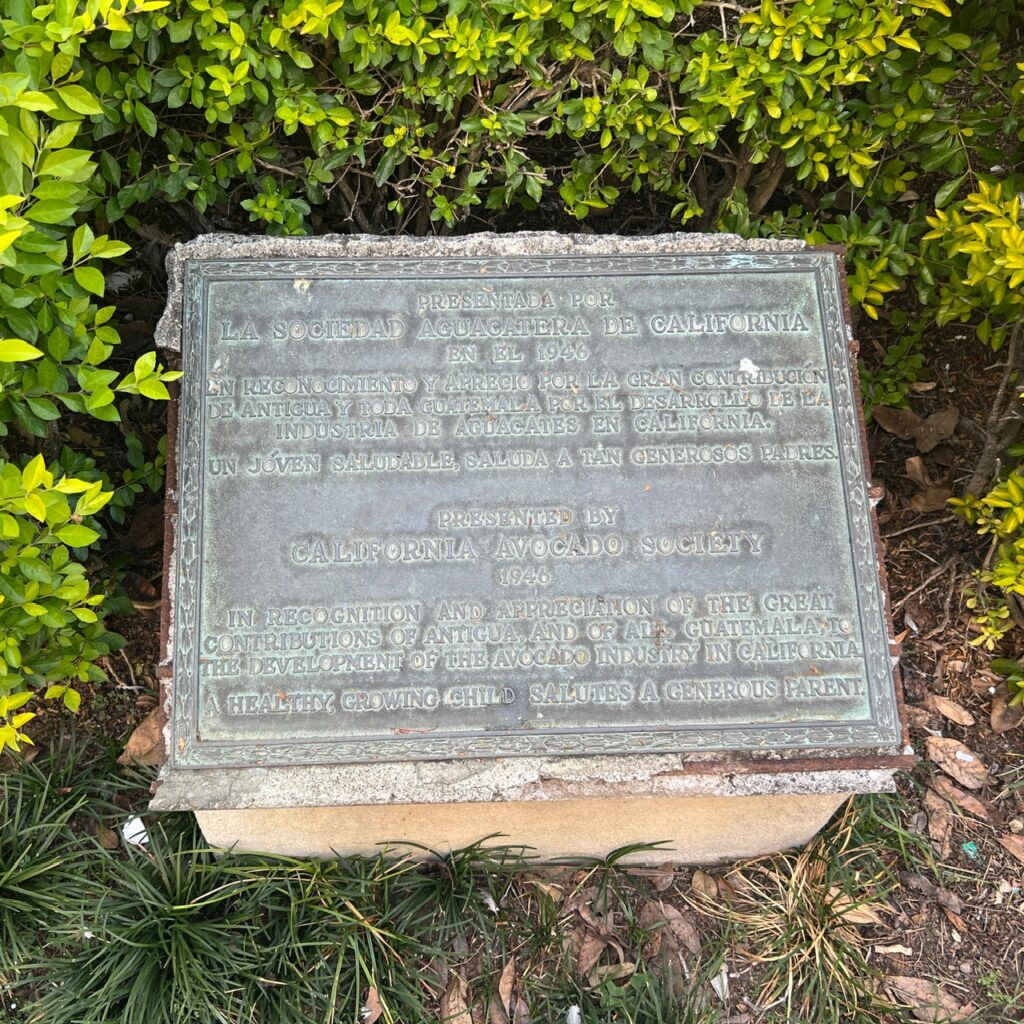
For those obsessed with avocado toast, you won’t be dumping out your wallet to get it here. (Well, that is, if you make it yourself.) In this land of aguacates, they generally sell for $.25-35. In fact, Guatemala is so important to the avocado trade, the California Avocado Society awarded them with this nifty plaque in 1946.
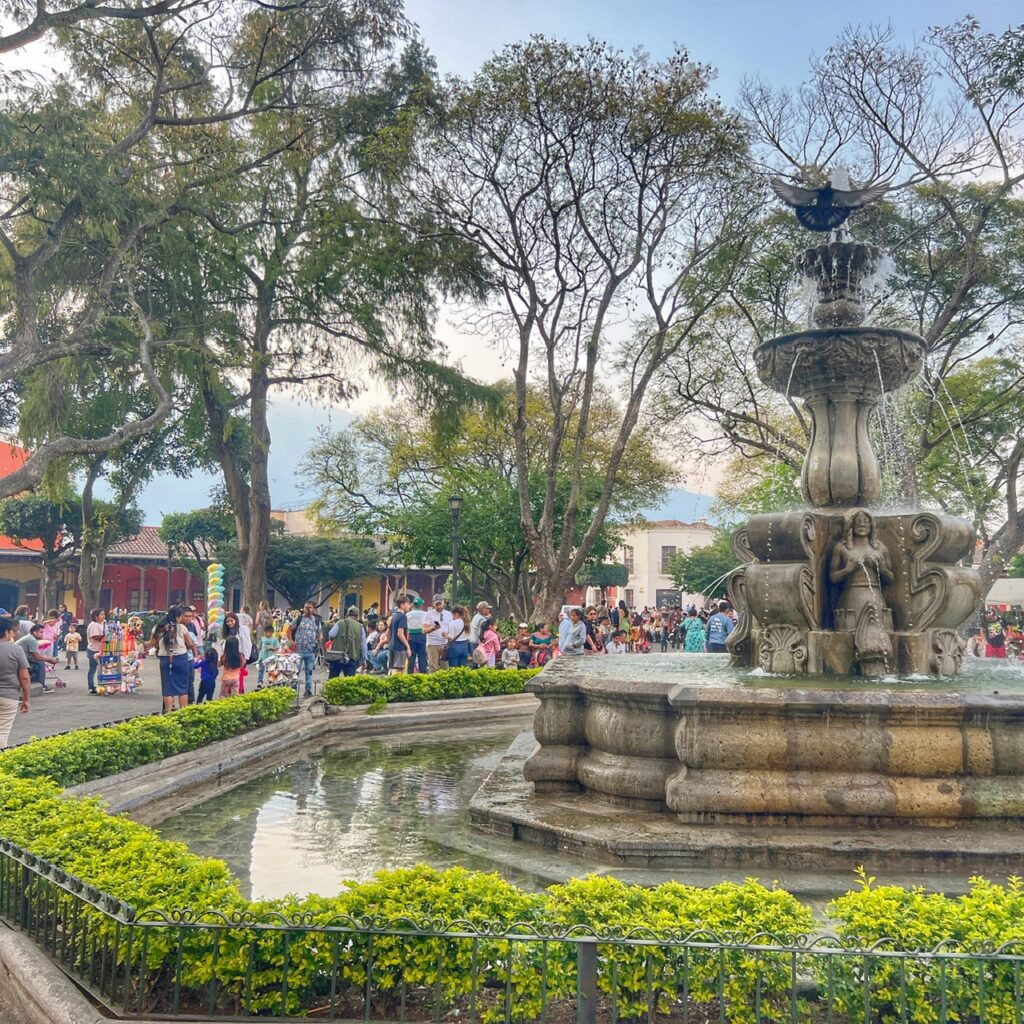
The central foundation in the main square has some interesting features, including a series of lactating ladies. It’s a hub of activity most evenings, but especially on the weekends.
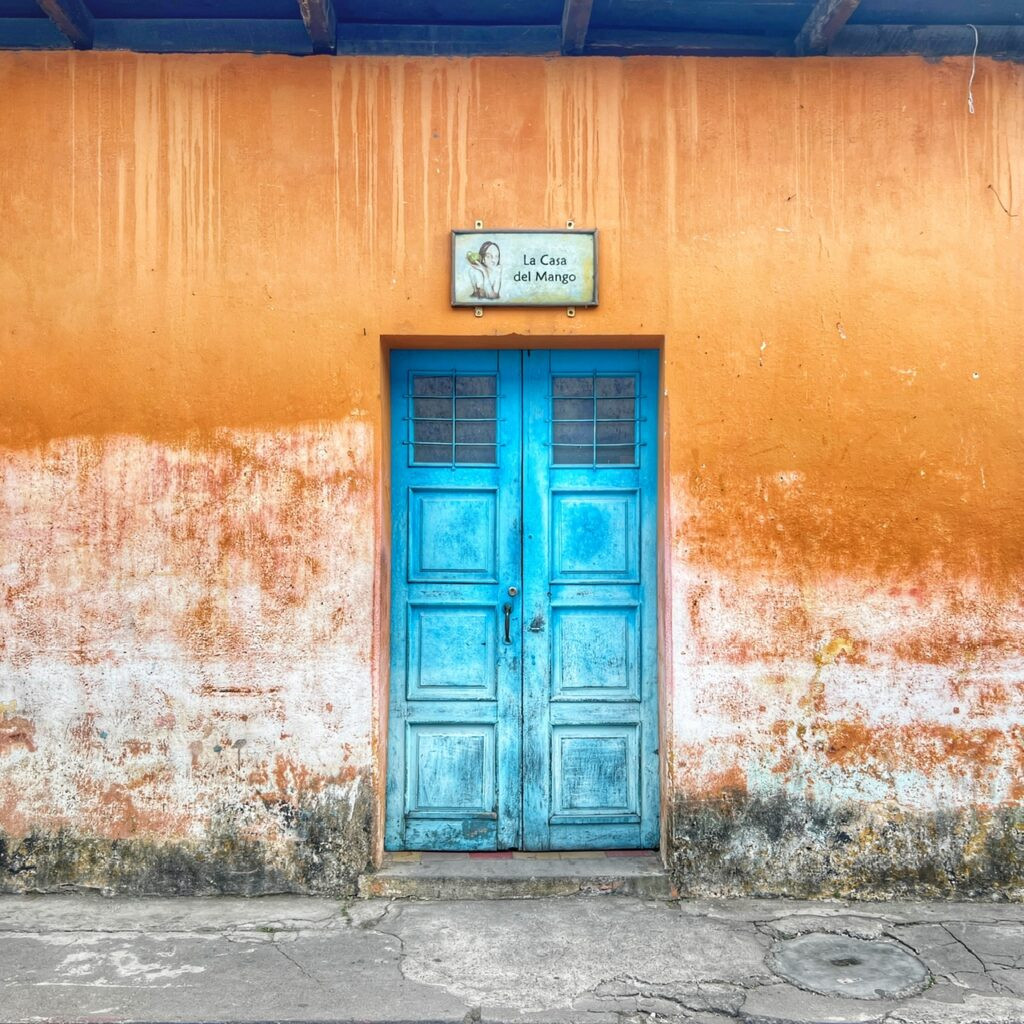


Simple street scenes
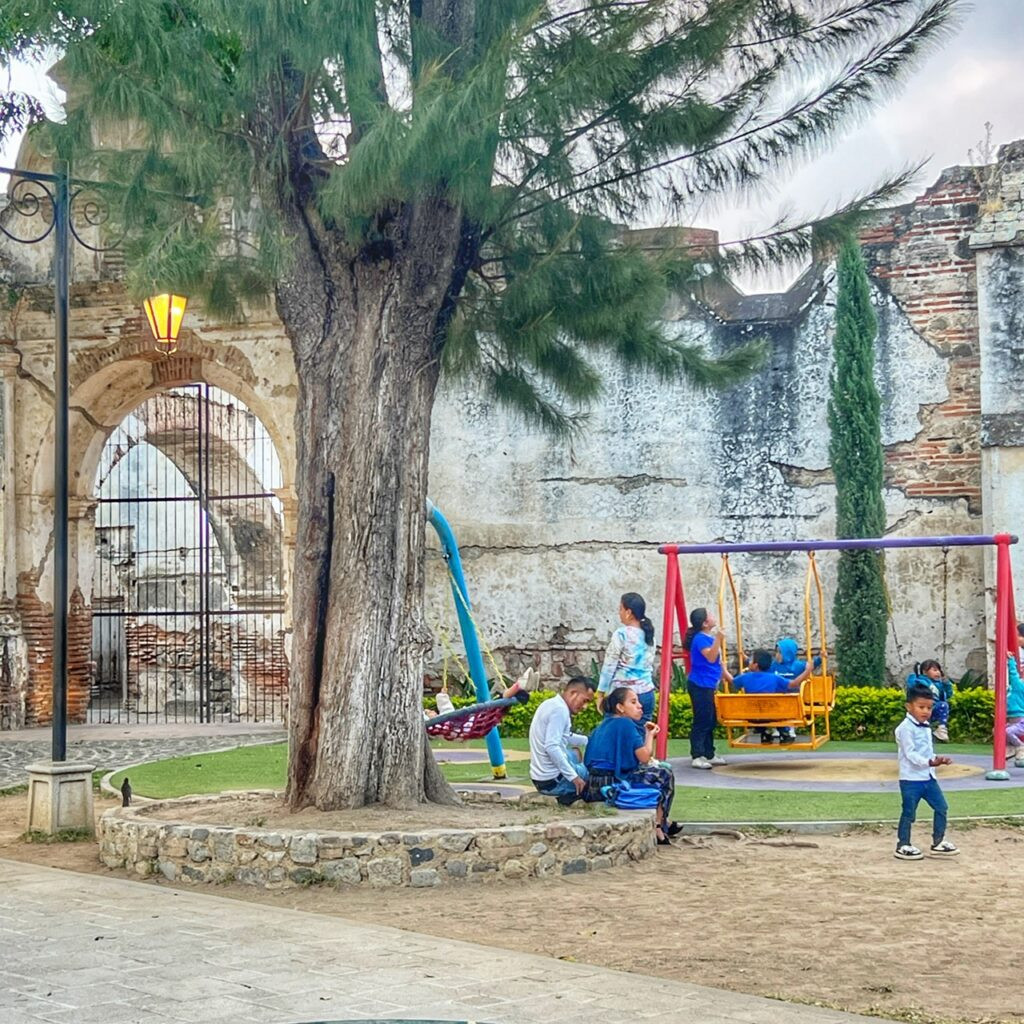
New humans and old ruins come together on this playground

The Guatemalan flag looks simple at first, but as flags are, it’s loaded with meaning. The two blue stripes represent the two oceans that frame Central America, while the white strip symbolizes peace, or the space Guatemala aspires to hold between those two bodies of water and between political extremes. In the middle is the Quetzal, which is the national bird symbolizing freedom, and also the name of their currency.

Another must-do view….from the top of Cerro de la Cruz. This easy walk is about 30 minutes from the center.
Antigua: A Beautiful Disaster Zone
Thanks to its iconic crumbling churches and convents, walking through Antigua can feel like strolling through a beautiful disaster zone. On evident display are unfinished repairs from earthquake damage, left standing for centuries which certainly enhance its charm. Here’s a small sampling…
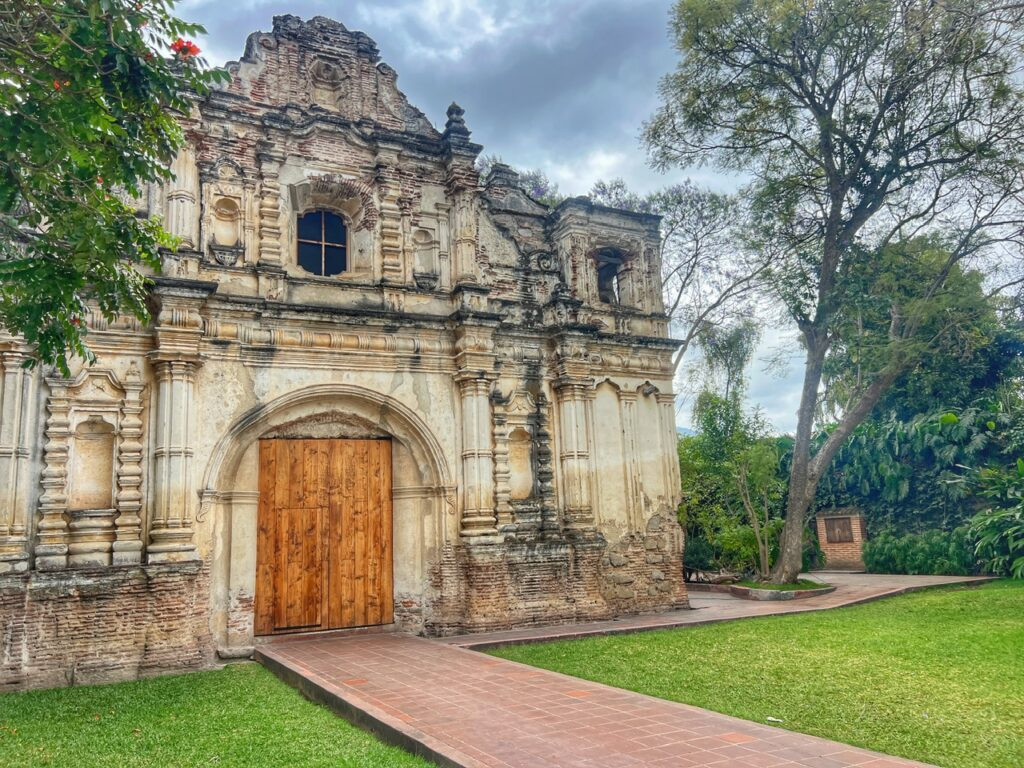
The Iglesia San Jose El Viejo was the closest ruin to our apartment and also the one we found most inviting. Originally built in the 18th century as part of the convent of the Hermanas de Belén, (Brothers of Bethlehem), it was heavily damaged by the 1773 Santa Marta earthquakes. Today its romantic stone facades make it the perfect place to hold weddings. We saw several while staying in Antigua.
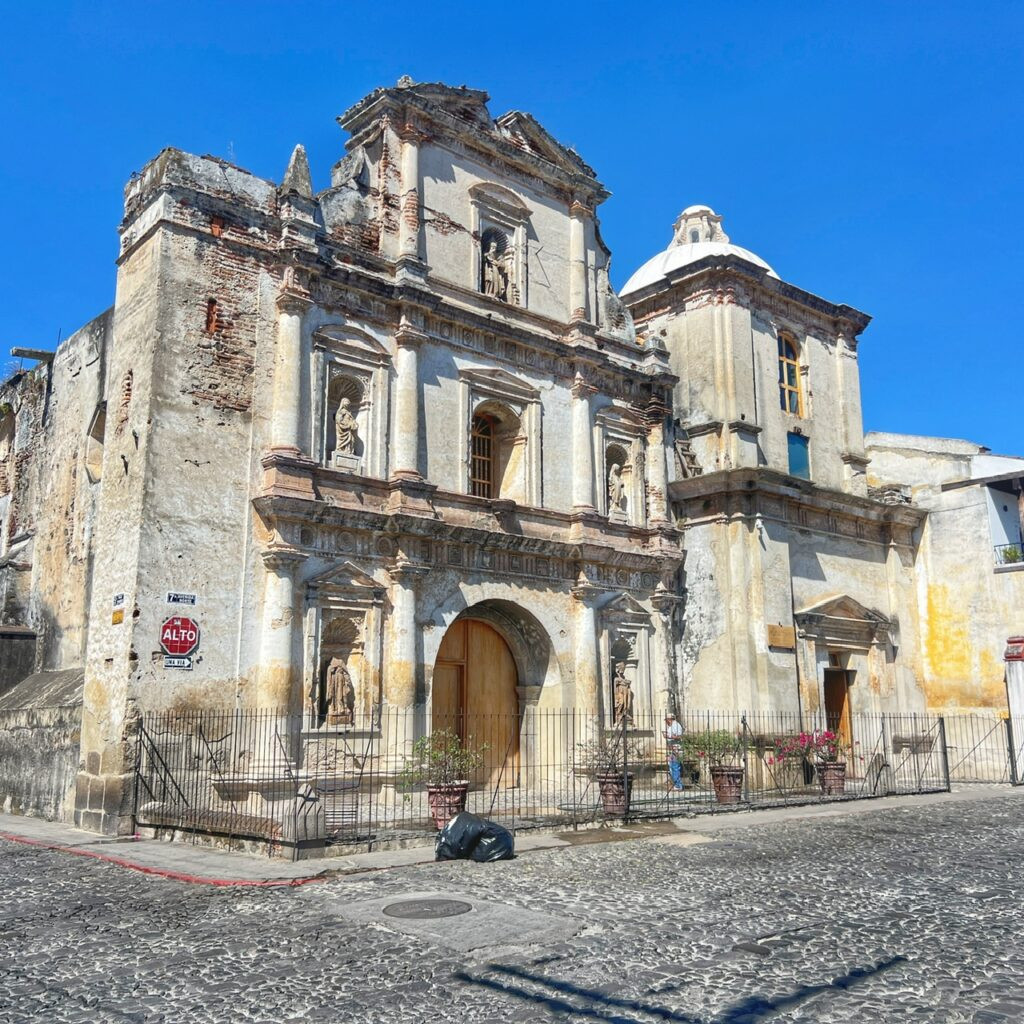
Iglesia y Convento de San Agustín was founded by the Augustinian order in the 17th century and this was once a large religious complex. It doesn’t get a ton of tourist attention but looks like a nice place to roam.
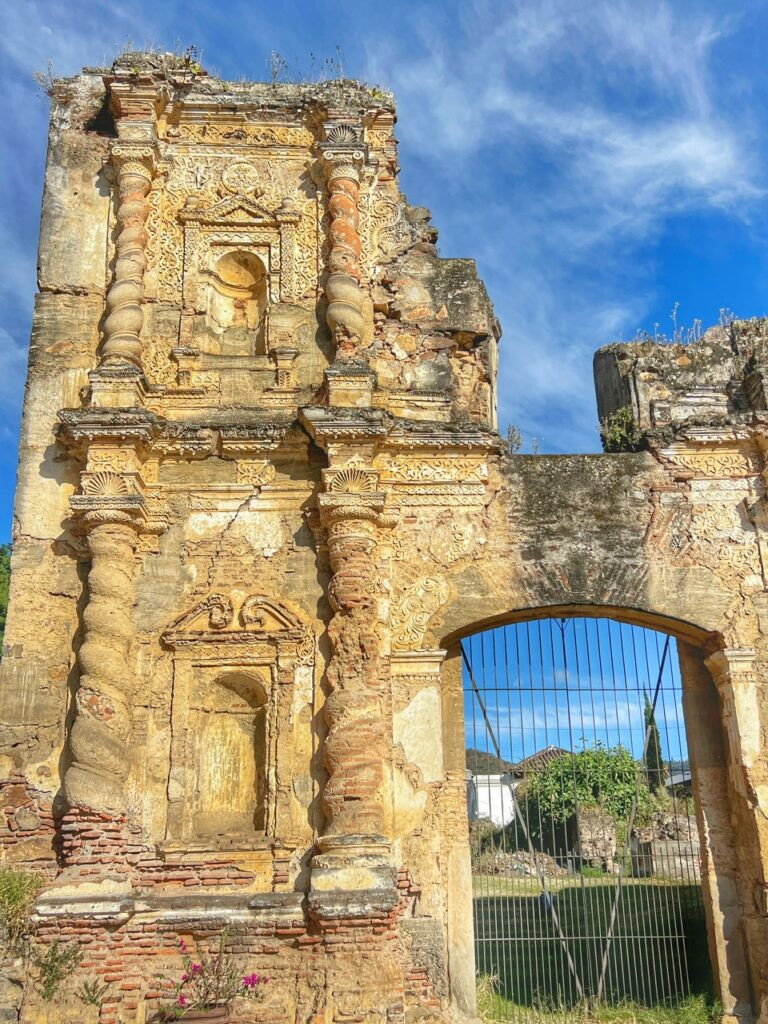
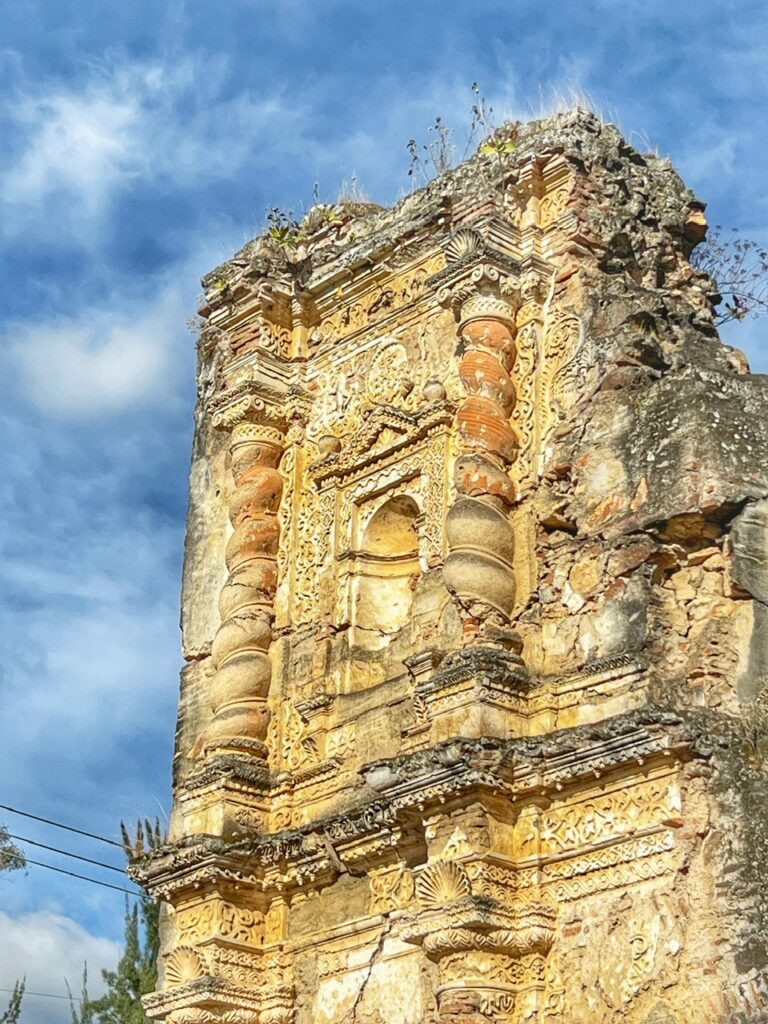
The Ruinas de la Iglesia de la Candelaria, in the northeast part of the historic center, was once one of Antigua’s more important parish churches. The façade still stands, showing classic late-Baroque colonial ornamentation, while the interior is mostly open-air ruins. Its positioning is bizarre sitting right adjacent to a basketball court.
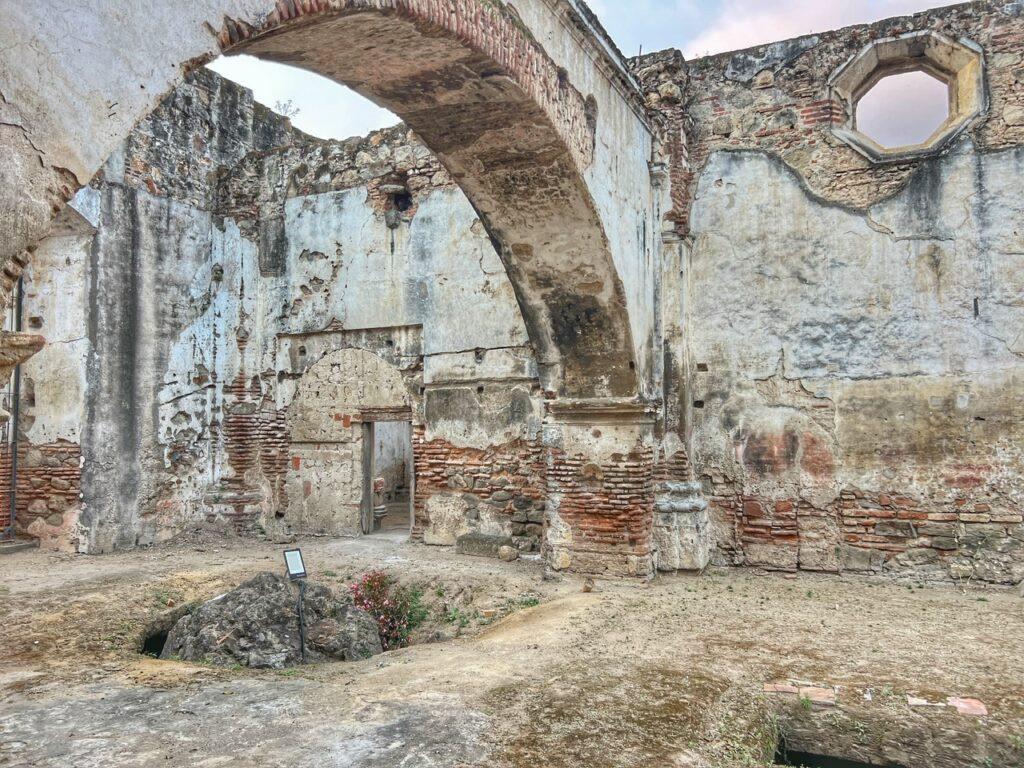
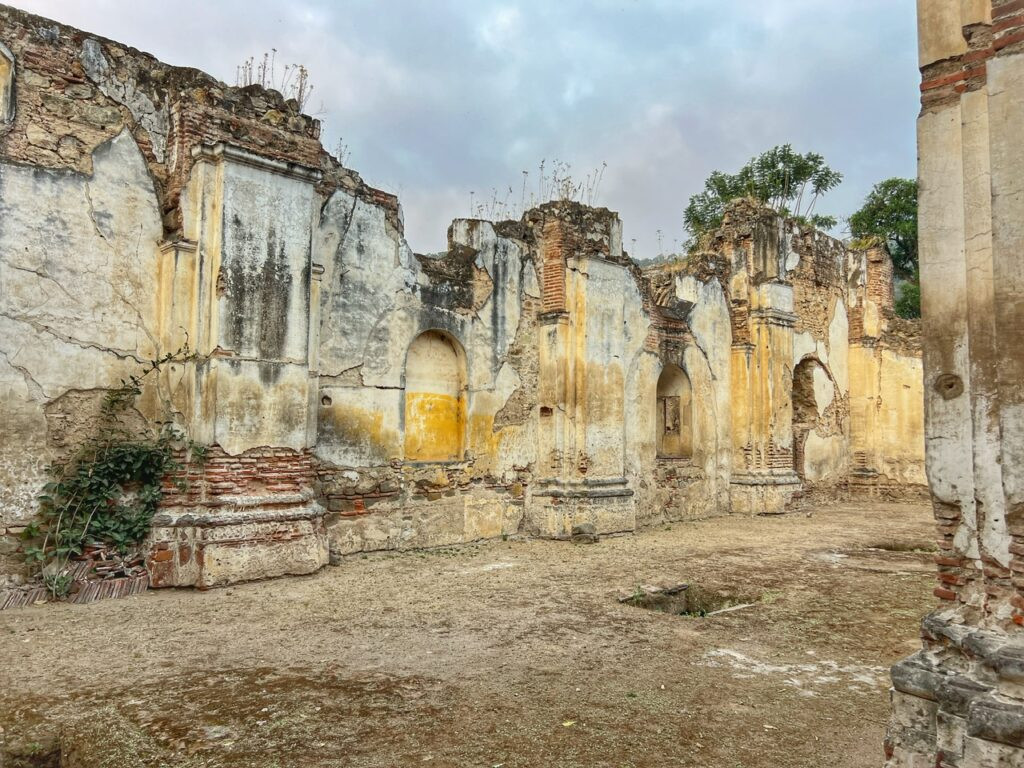
Also near where kids play, the Antigua Parroquia San Sebastián was tucked next to a kid’s playground and is a lovely representation of ruins. This former parish church dates back to the 16th century, making it one of the older sites in Antigua.

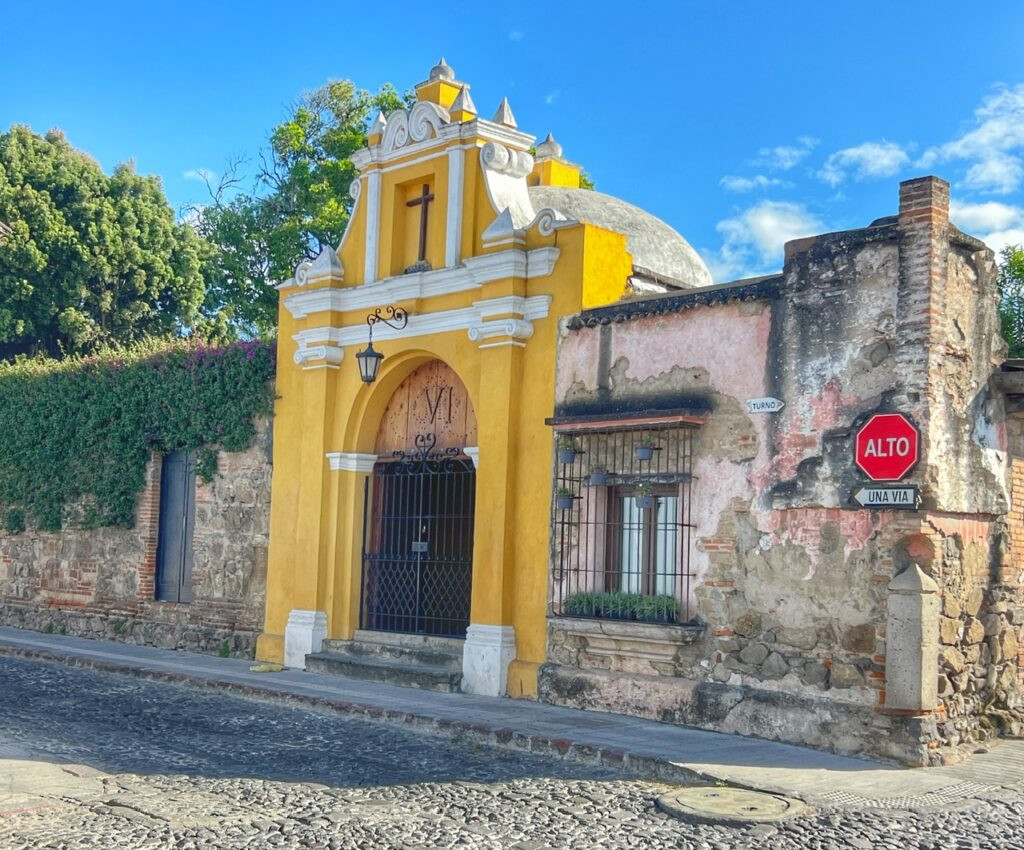
The 1618 Calvario Church seems a little stark and uninteresting compared to some of the others. Regardless, I loved the contrast between this brilliantly painted chapel and the ruined walls. Also, note the way the stop and one way signs try to meld effortlessly into the scene. It’s actually one of the things we love about Antigua…the way necessary signage blends in rather than causes obstructions.
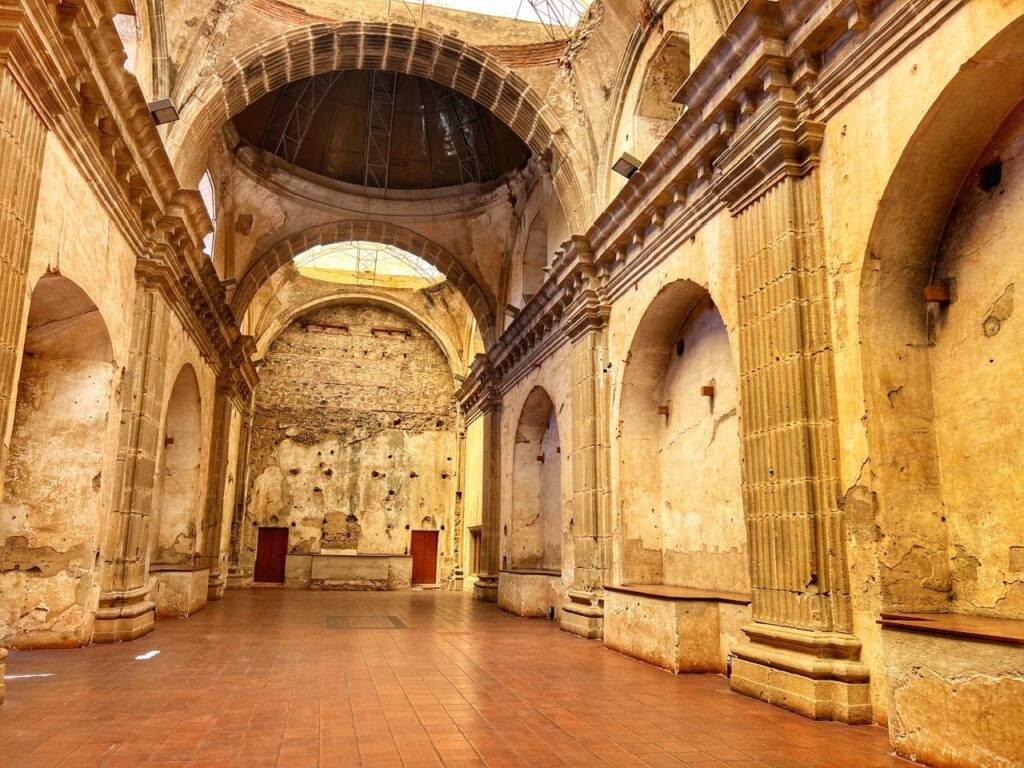
The Convento de las Capuchinas was the only structure we chose to pay to enter. It was different from most others because it didn’t require a large dowry to enter unlike most others in the Americas. Because women without wealth could enter it shifted the social makeup of the convent and emphasized spiritual equality over status.
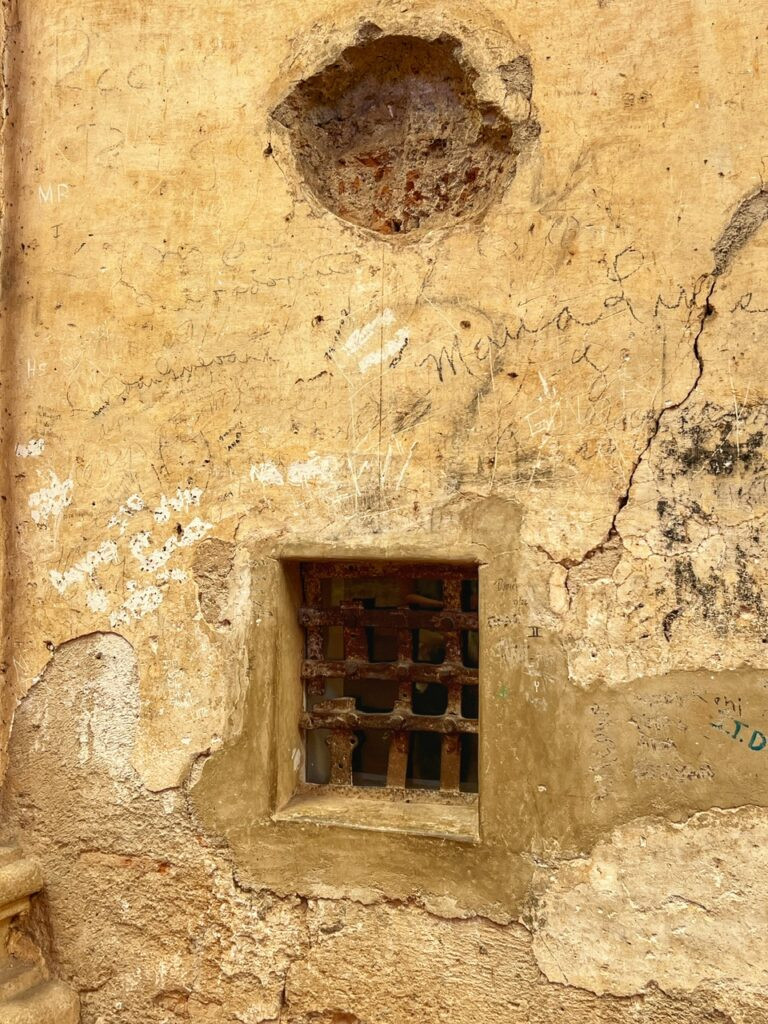

The little jail boxes were the only way these women would see or chat with their families for the remainder of their lives. The large revolving turnstile was the only way for objects to be passed from the outside world to the inside.

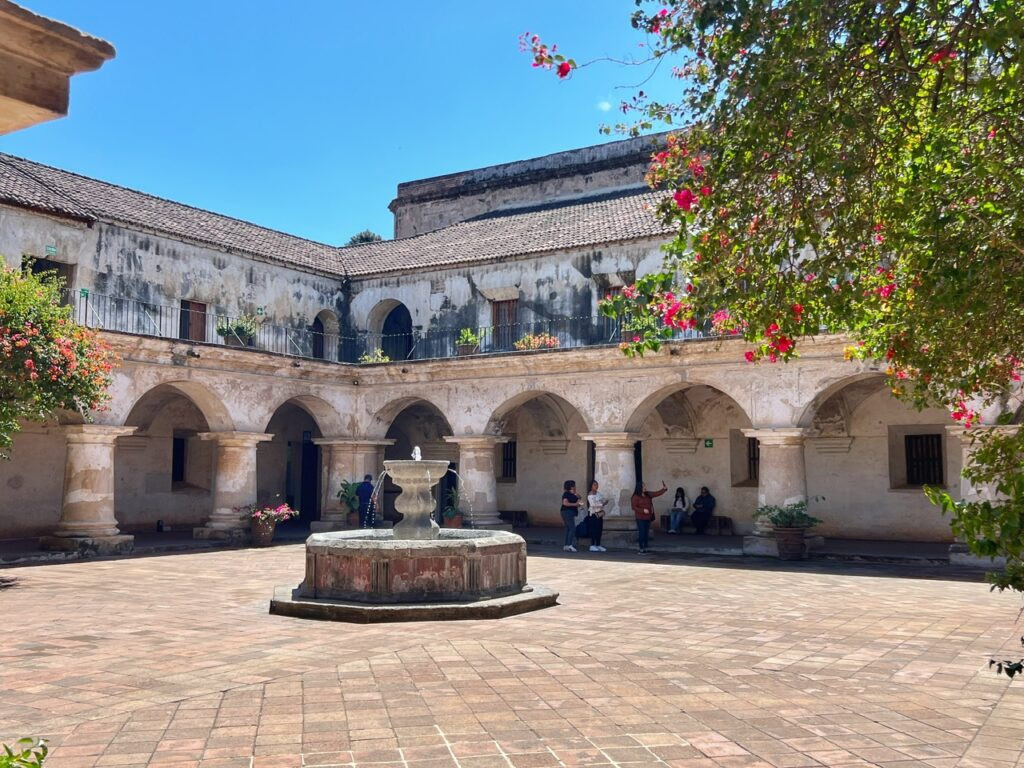
The crypt were the Capuchinas were buried. In stark contrast, the main courtyard was the most pleasant are of the facility.
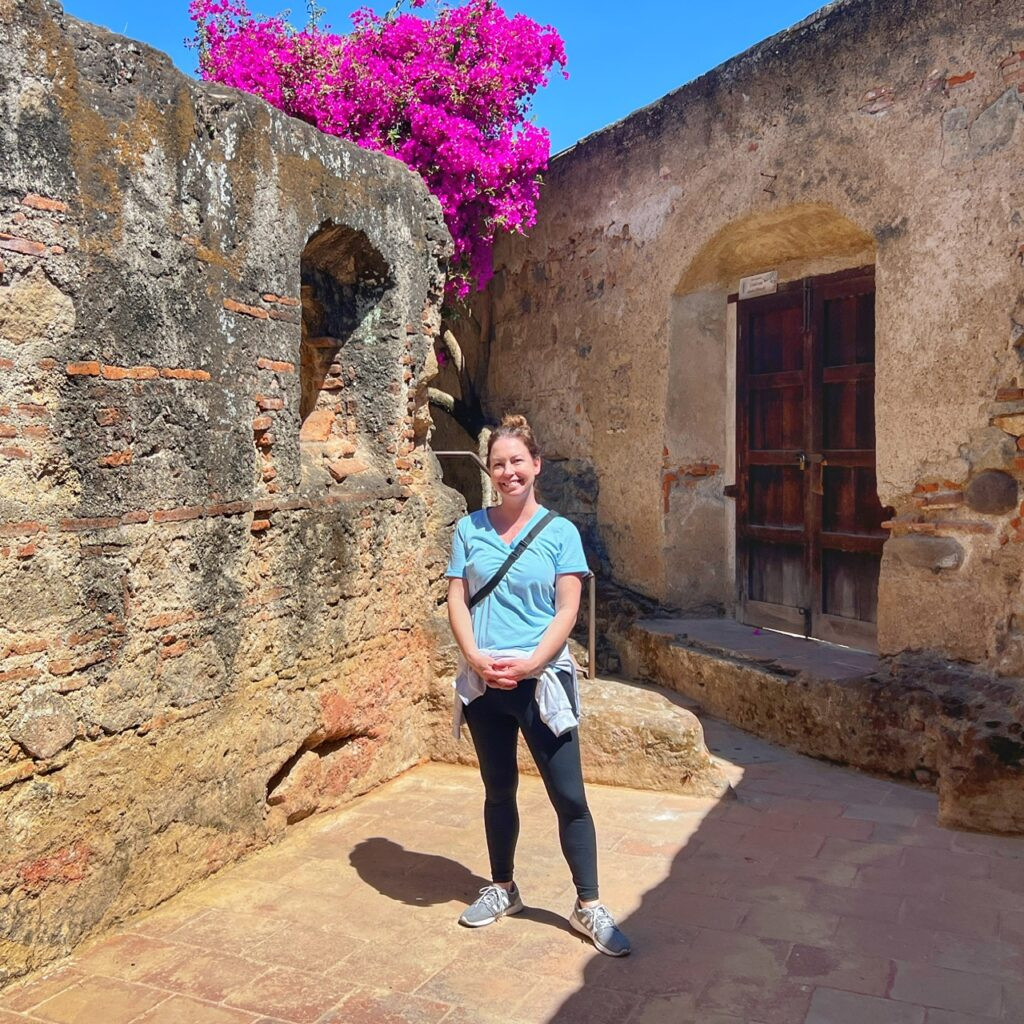
Another wonderful thing about Antigua was we had a visitor! My friend Sarah, from North Carolina joined us for a week.

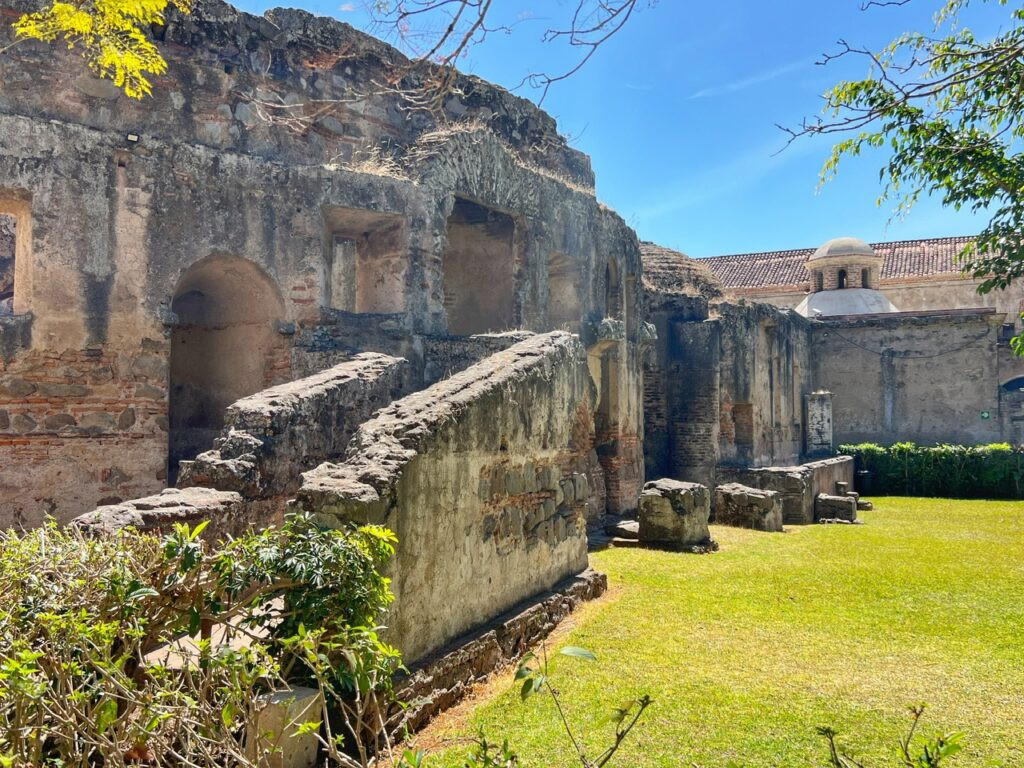
The shape of the circular dormitory was symbolic in the fact that all nuns were treated as equals. Each of the arched niches around the circle was a private sleeping cell for a nun.
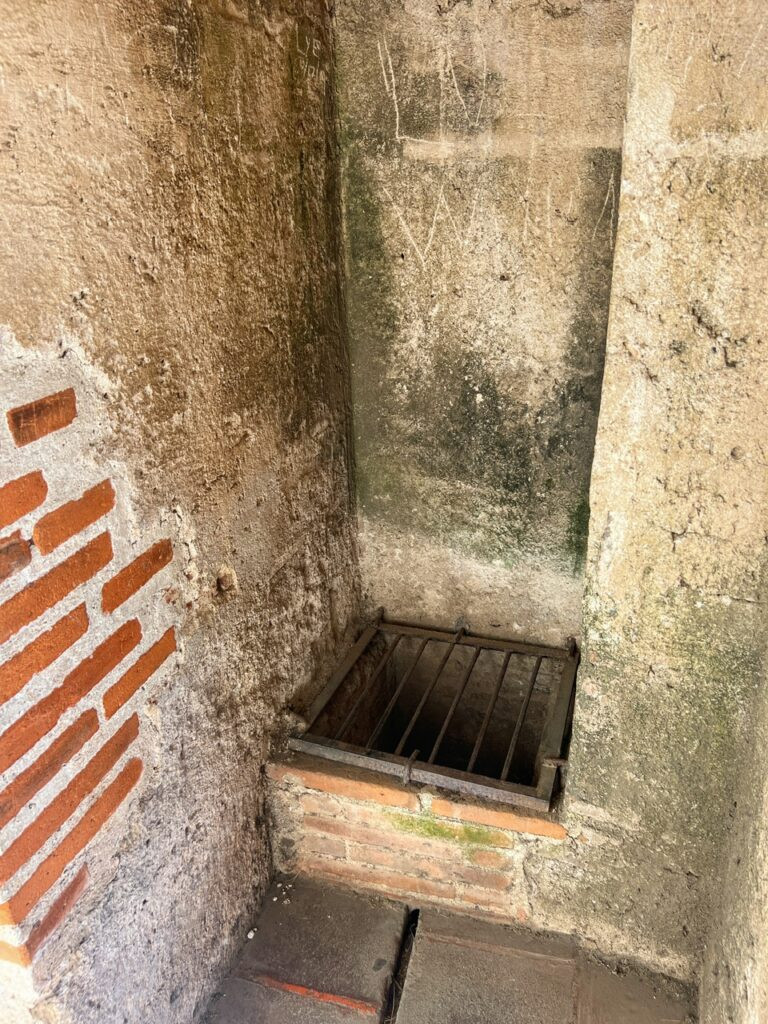
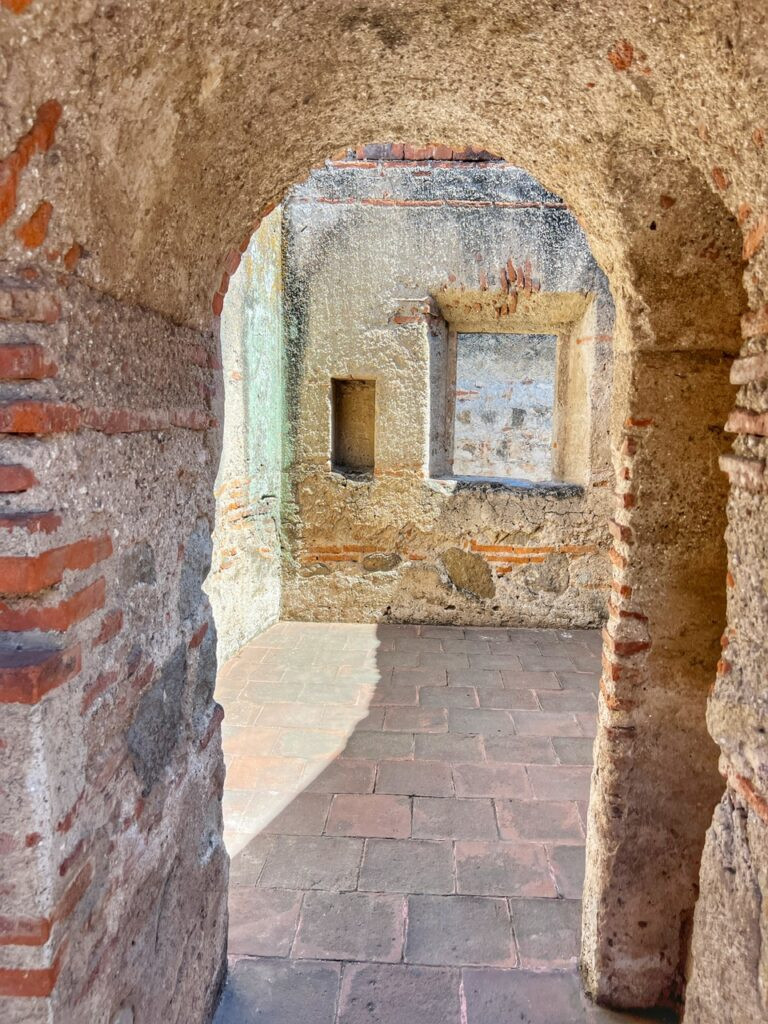
Inside was a toilet…if you want to call it that, and a bare minimum space which held a small bed, maybe a stool, and a candle. These private rooms were another way this convent was different…here they recognized private cells were necessary for prayer and reflection.
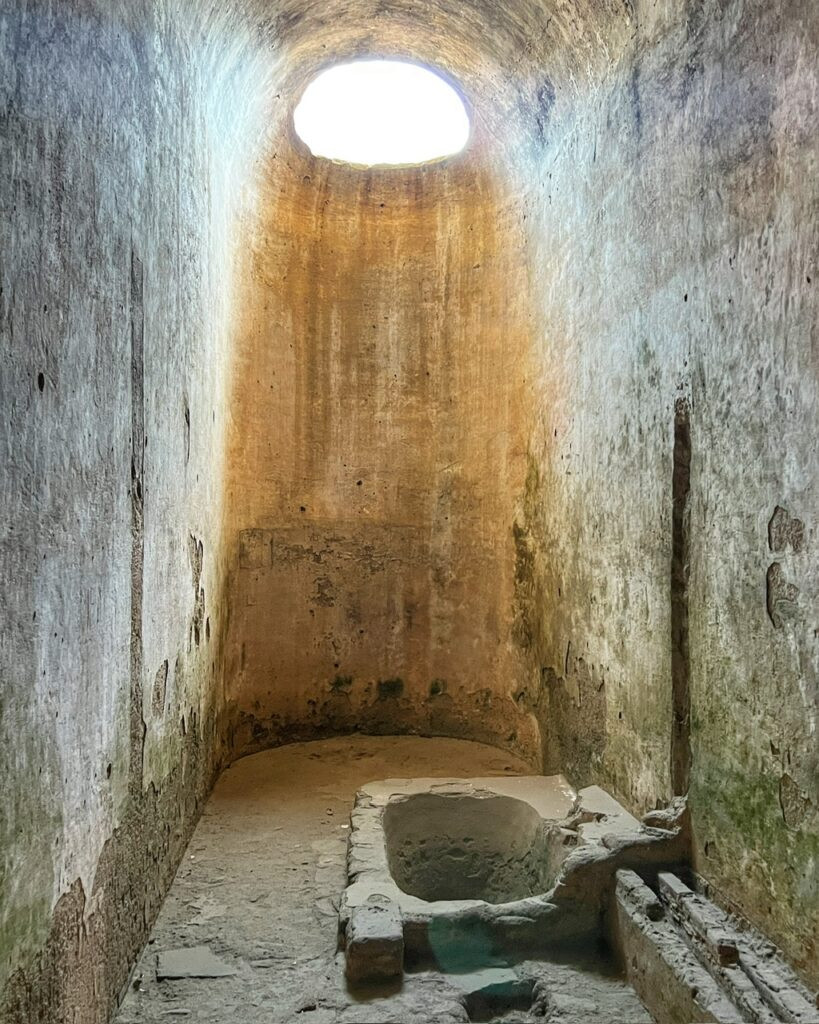
This was the convent bath, which were used about once per month per nun, and bathing was done clothed or partially clothed. 😬 Also, silence was expected. (Wasn’t it always?!)
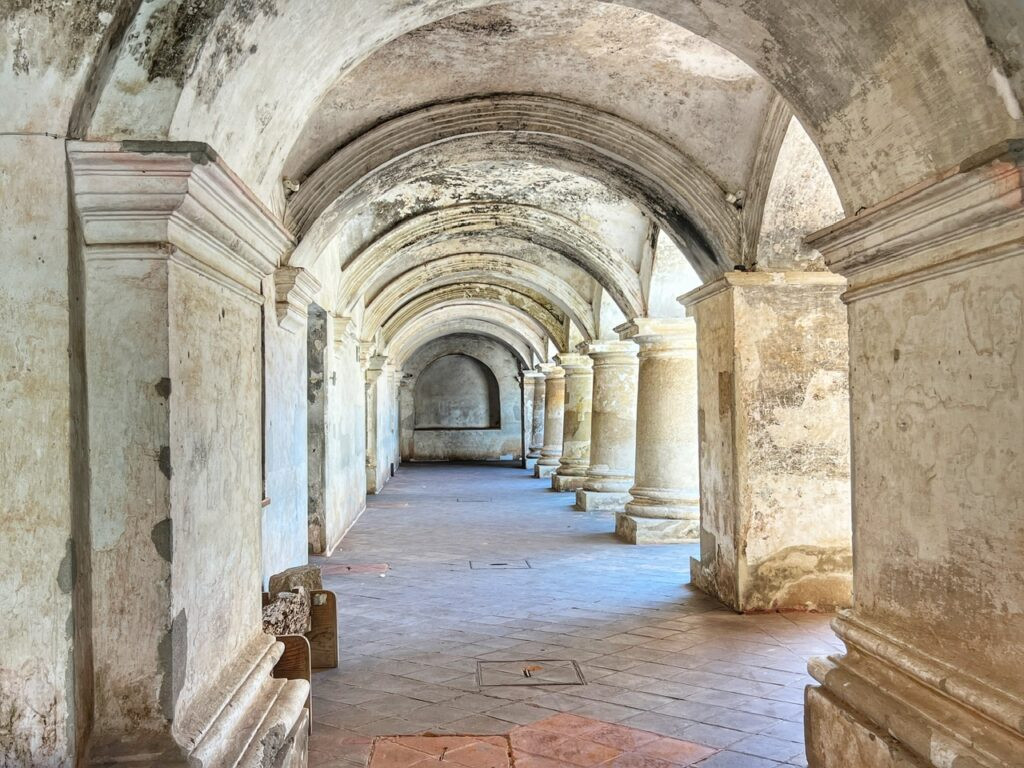
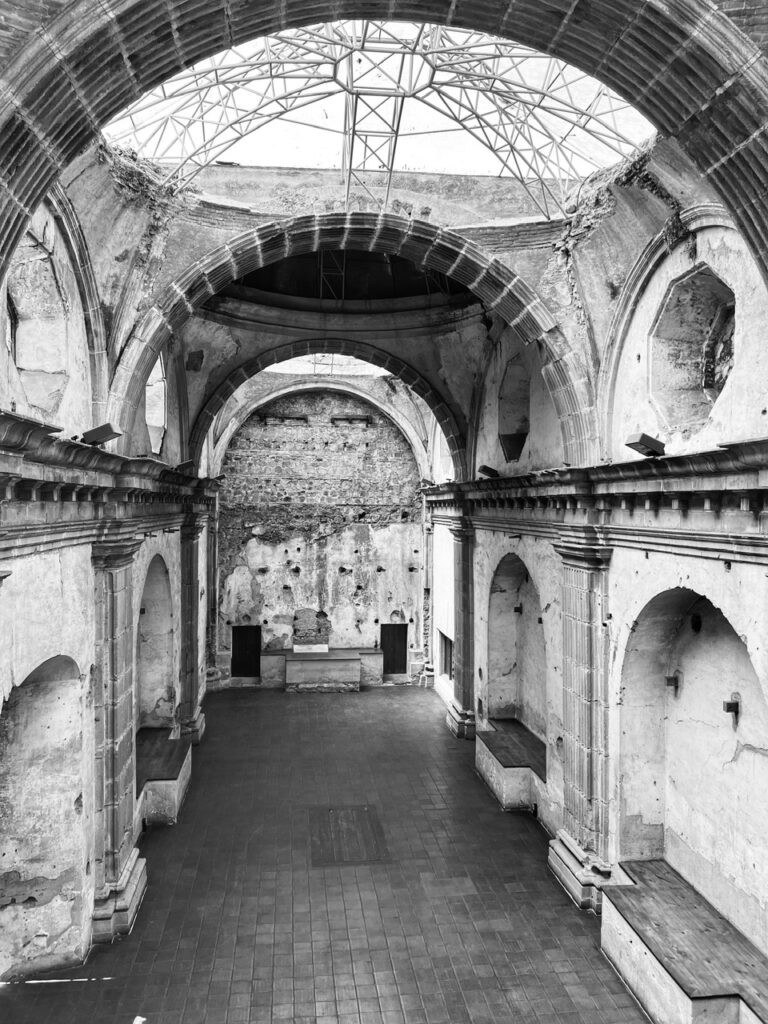
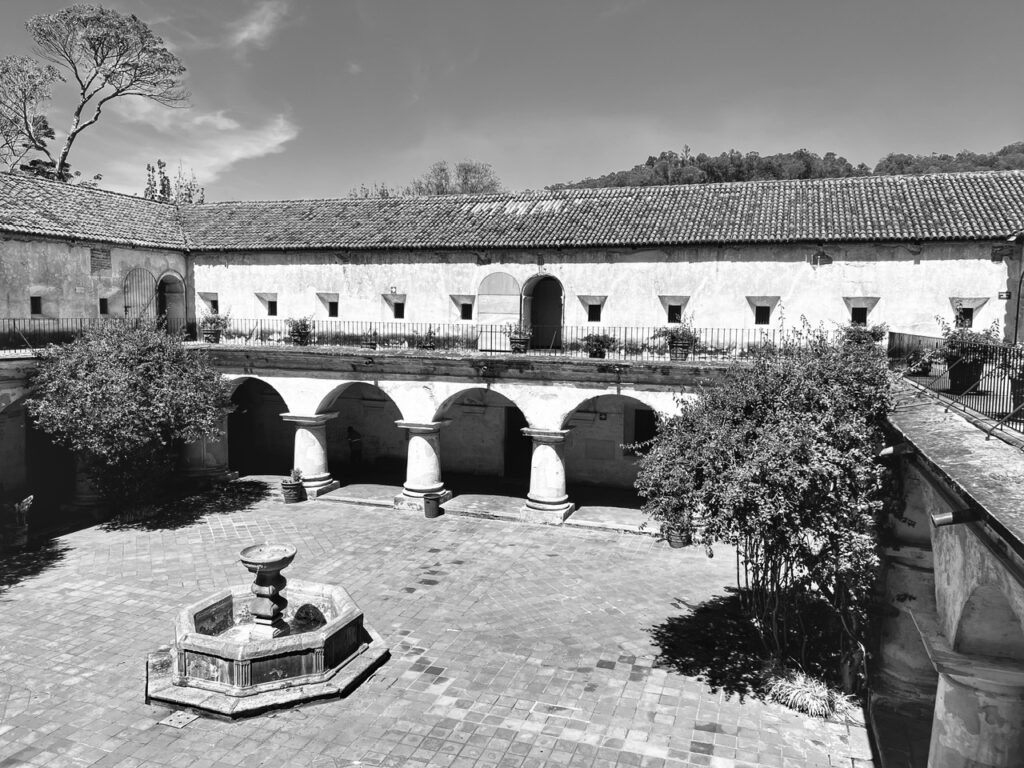
Some other images of the convent…
The People of Antigua
There are so many things we have treasured about our time in Antigua, but perhaps most notable is the people. Despite the obvious tourism and expat development in their town, and reasons they could understandably be less inviting, they are warm and welcoming…always greeting us on the streets, appreciating our efforts to speak Spanish, and giving us fair prices.

This little boy was quite upset with mama when she handed him a bag of plantain chips rather than the whirly toy he really wanted
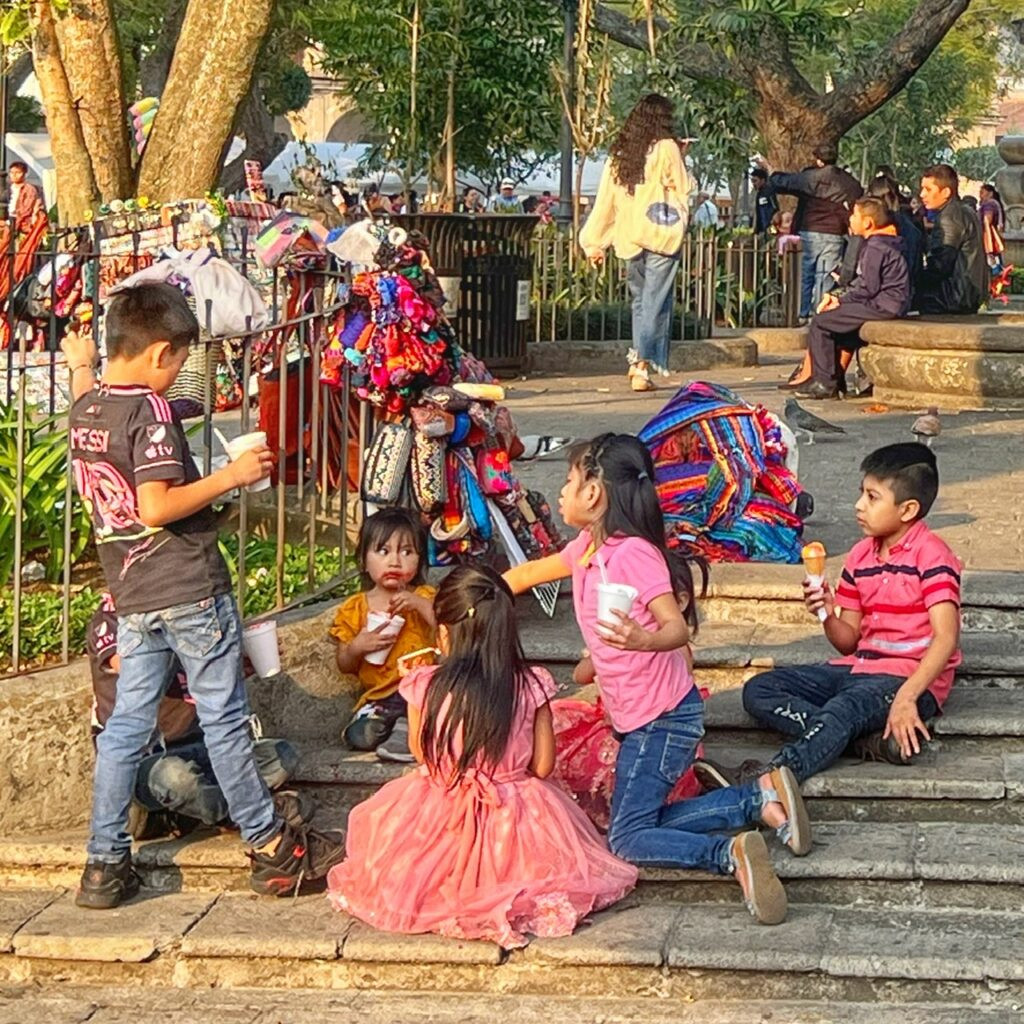
Also, a group of kids enjoying their ice cream on the steps of the square. Love the look captured on the face of the little girl in orange, suspiciously aimed at her sister. She’s either saying, “please don’t take my ice cream” or “I don’t care if I’m wearing more of it than eating it.”

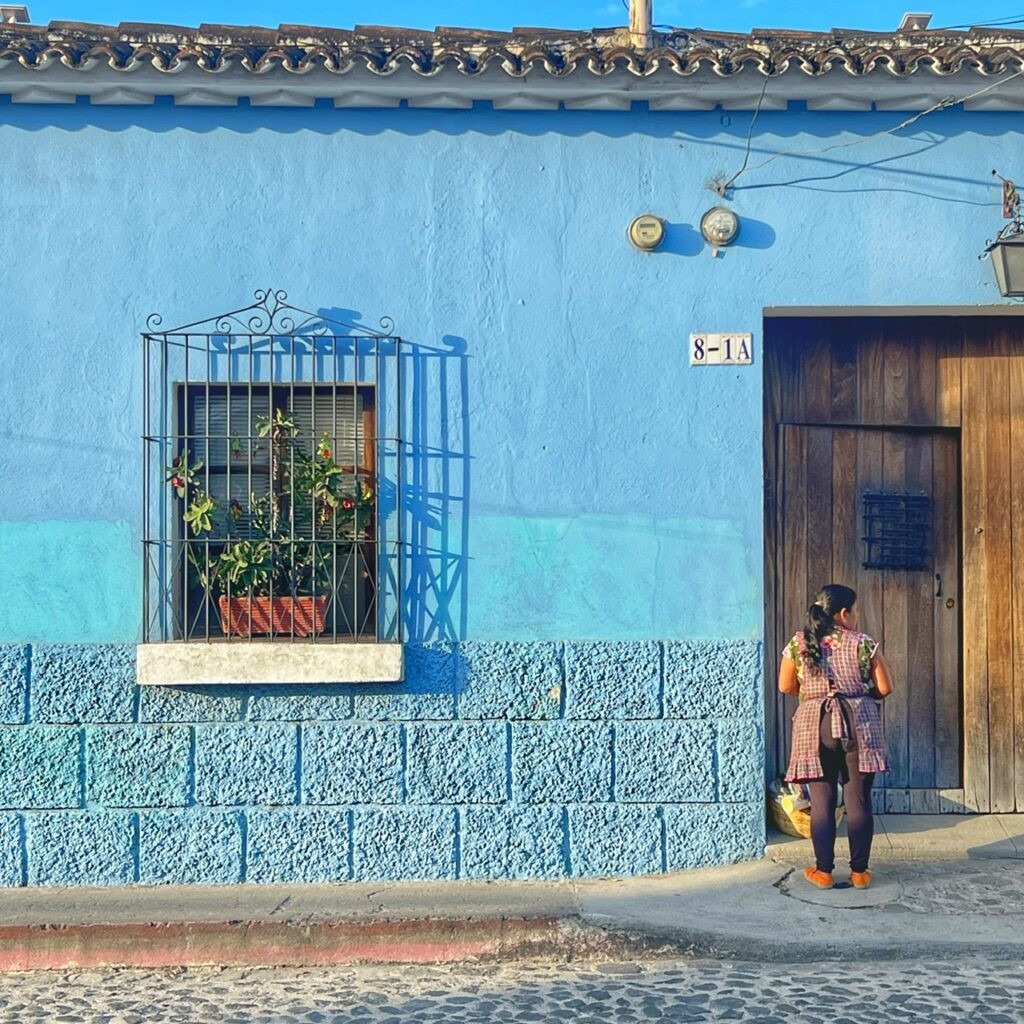
The cute lady we bought our delicious loroco and queso pupusas from for about $1.50/each, as well as one of the many vendors near the heavily touristed Arco de Santa Catalina.

A group of muchachos taking a work break.
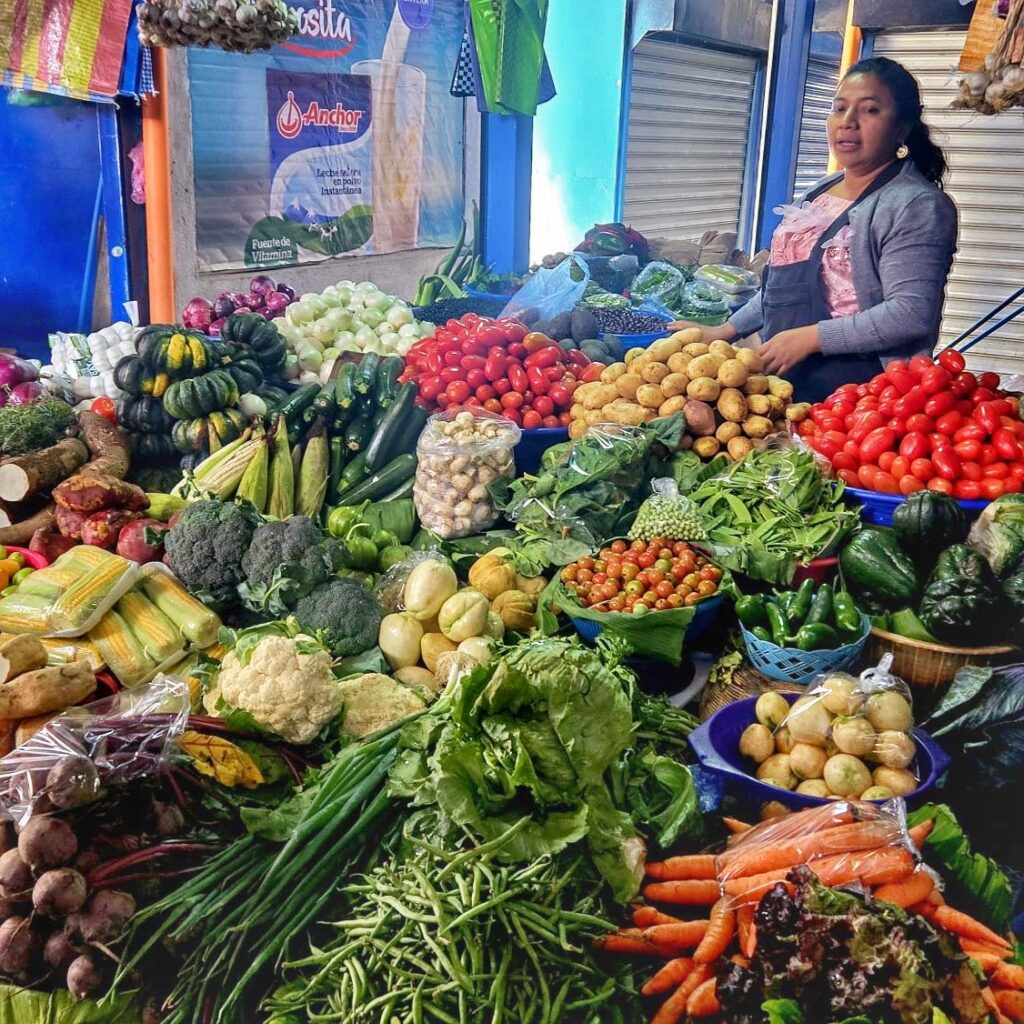
Our regular veggie vendor, Paola, at the local market who always gave me good prices! I usually walked away spending about $5 for a very large bag.


Everyone wants to be on this short bus…the many ice cream vendors near the central square. Muchismas gracias por todo, la gente de Guatemala!
Embracing Downtime in Antigua: Must Visit Breweries and Gardens
When we weren’t climbing volcanoes, checking out ruins, or strolling the charming nooks and crannies of the town, there were plenty of places to visit and enjoy a good beer or some downtime in Antigua. Here are a few of our favorites….


One of the most prominent breweries in Antigua, and also our favorite that we tried, was Cerveceria 14. But not the taproom in town…the spacious and laidback outdoor venue about 25 minutes outside of town. To get there, the brewery conveniently has a FREE shuttle on an adorable historic trolley bus which leaves in front Panaderia Santa Clara everyday at 11, 1, 3, 5 and 7 p.m. Surprisingly, it was only us and the cute driver the Saturday afternoon we decided to go.
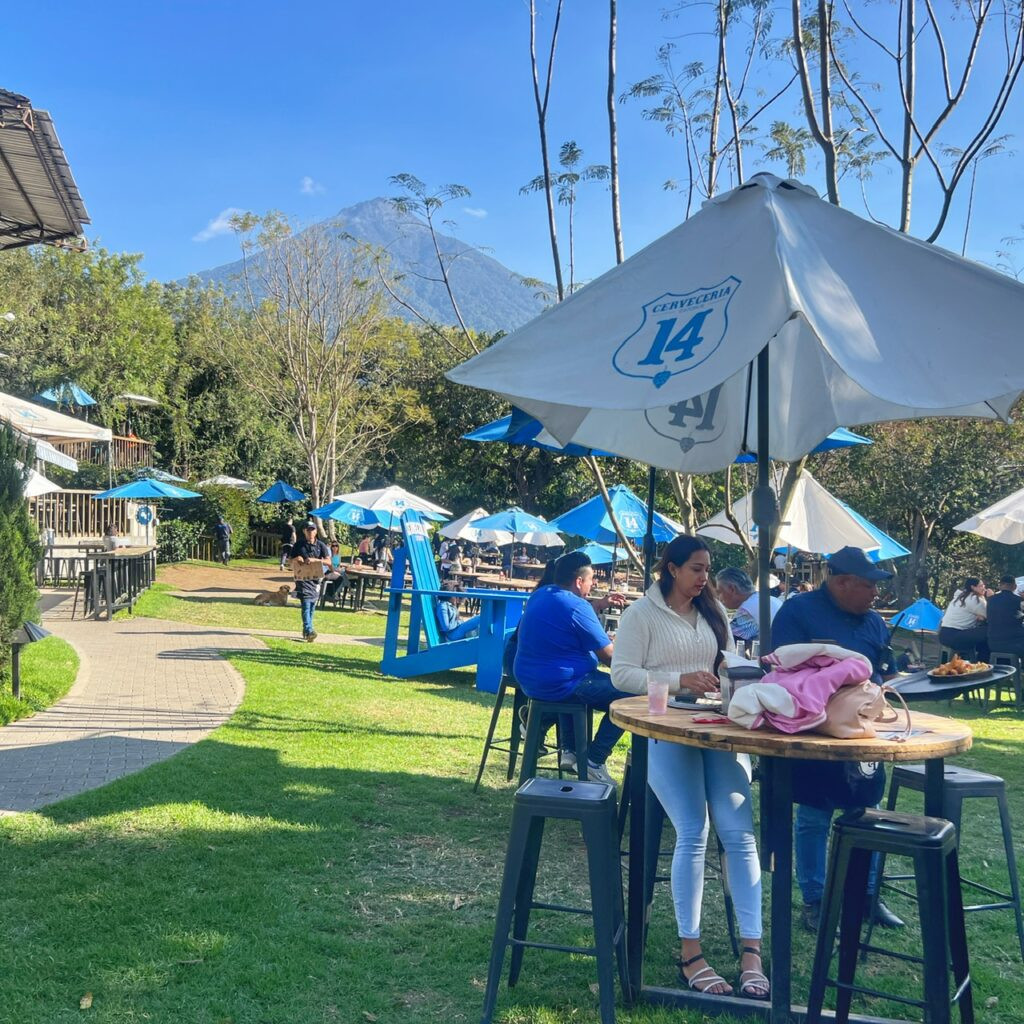

The brewery is a popular venue to see live music, offering a sweeping lawn with picturesque views of the volcano, as well Adirondack chairs and Jenga games fit for giants…

…and an extensive tap list of regular and seasonal highly quaffable delights. 16-oz pours of craft beer sold for $4.50, and we were surprised to see a hometown favorite (Rogue, from Oregon) also available in their can case.

Another brewery, El Bosque, which means forest, was appropriately found at the western edge of Antigua’s historic center tucked into an enticing forest, which felt like quite an anomaly in this mostly cobbled and lushless town. Thus, for the green appeal, we liked it a lot.
However, the prices definitely seemed overpriced with a 12-oz pour starting at $5.22. They were also advertising an upcoming beer festival which had early-bird entrance fees at $45. Ouch.
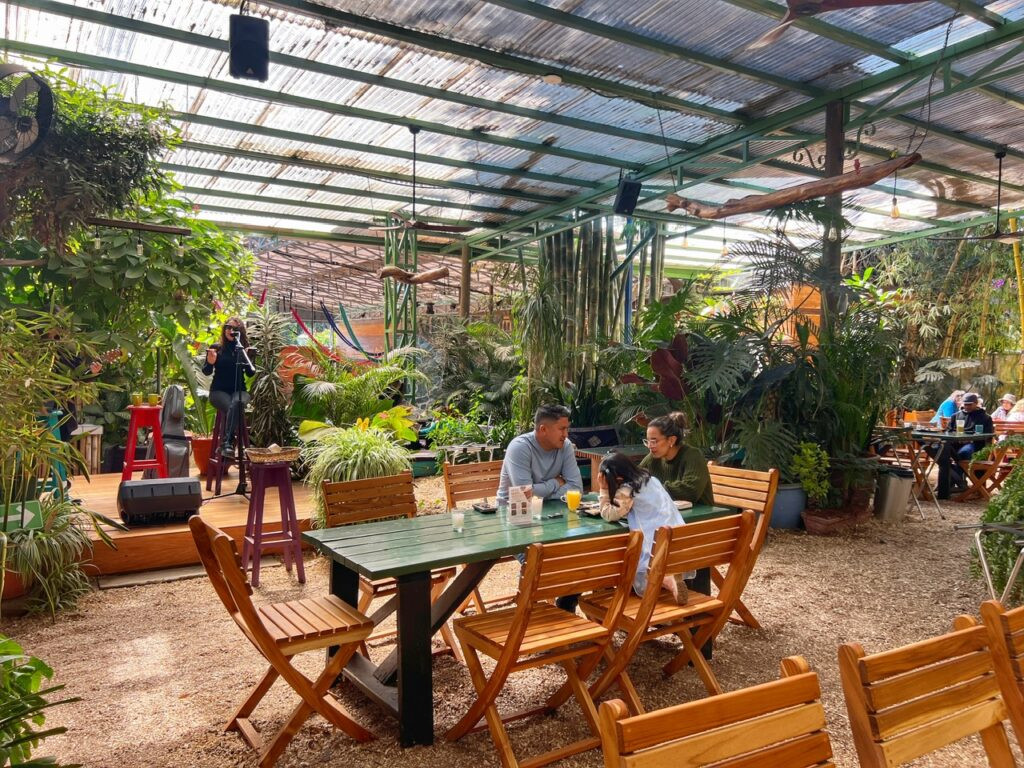
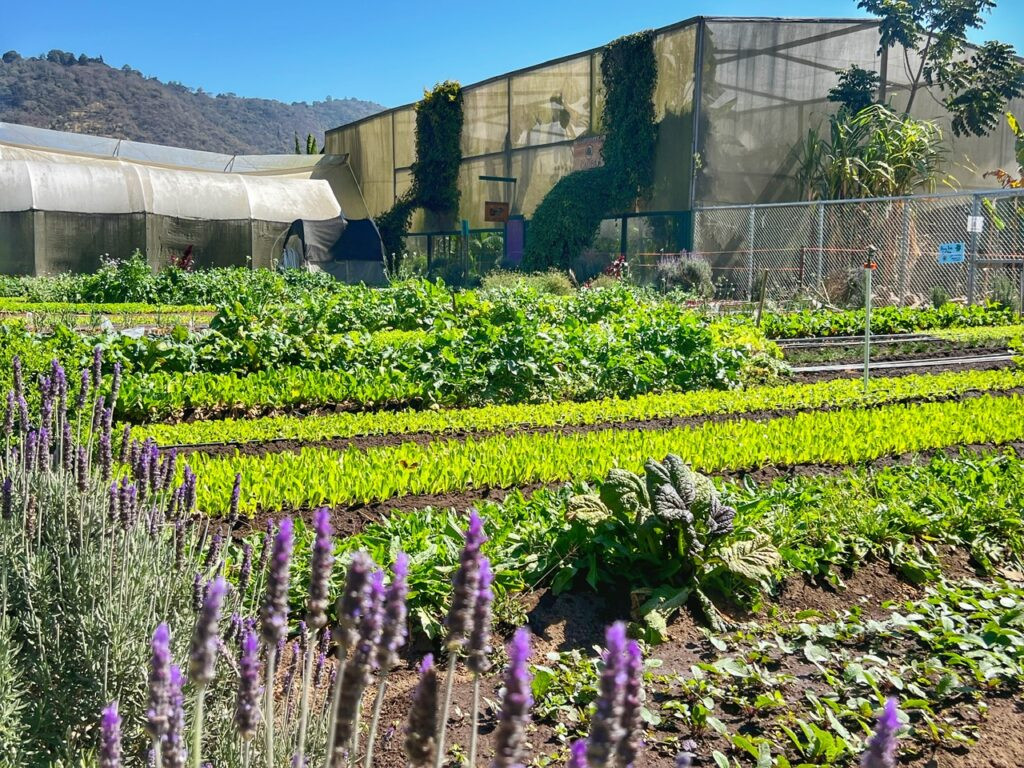
Another favorite was Caoba Farms, which is a bougie and expat-y farm to table establishment, which offers live music, and widespread, inviting gardens to roam about.
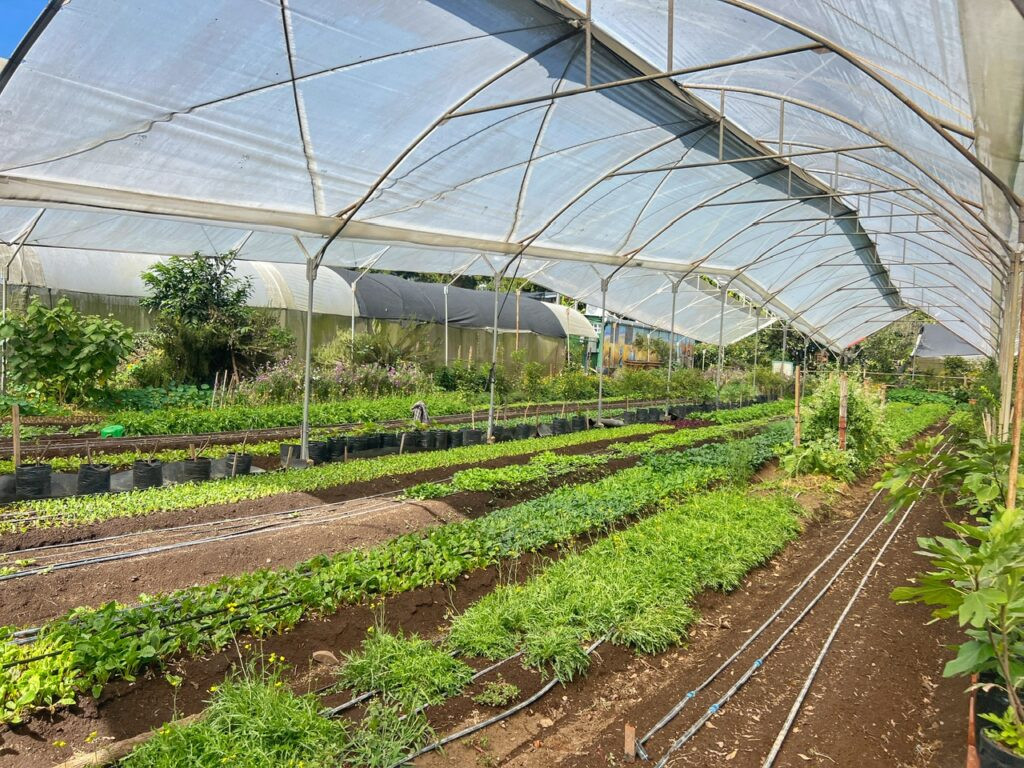
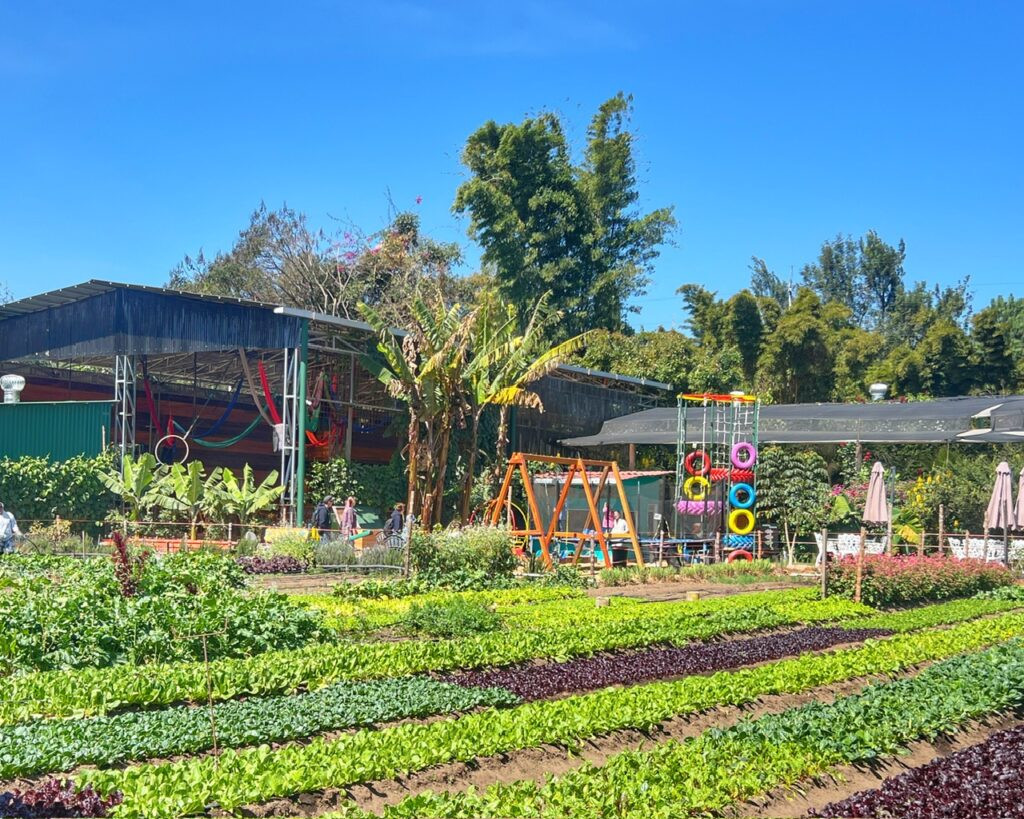
Also, a butterfly garden, and an interactive playground.
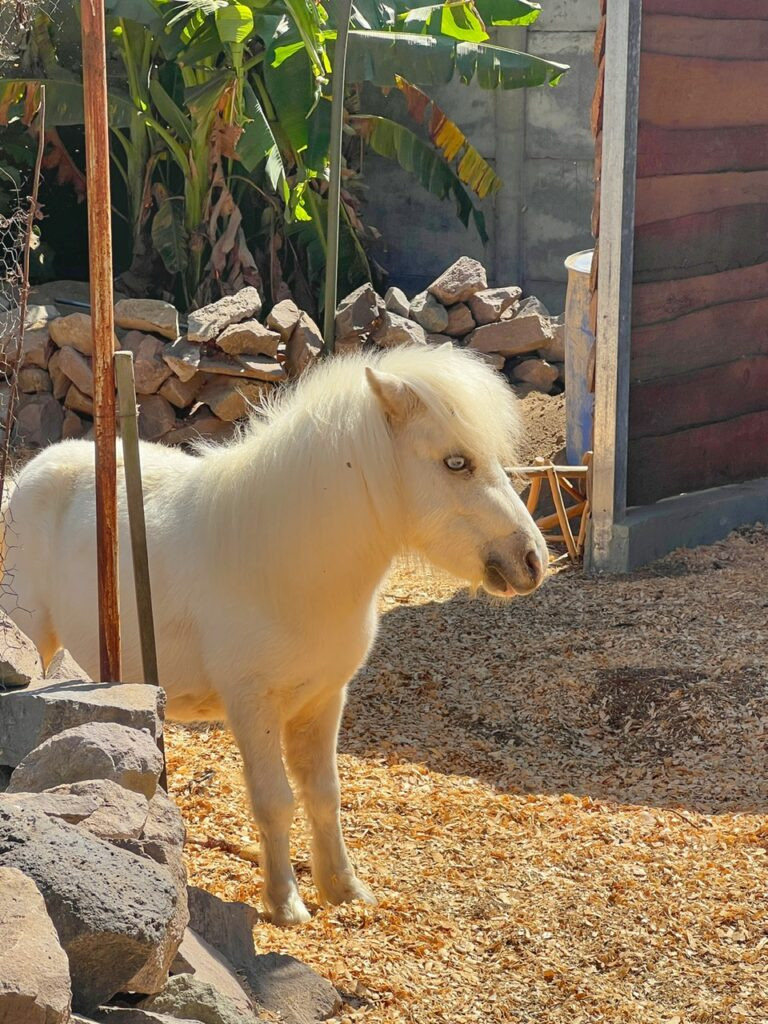
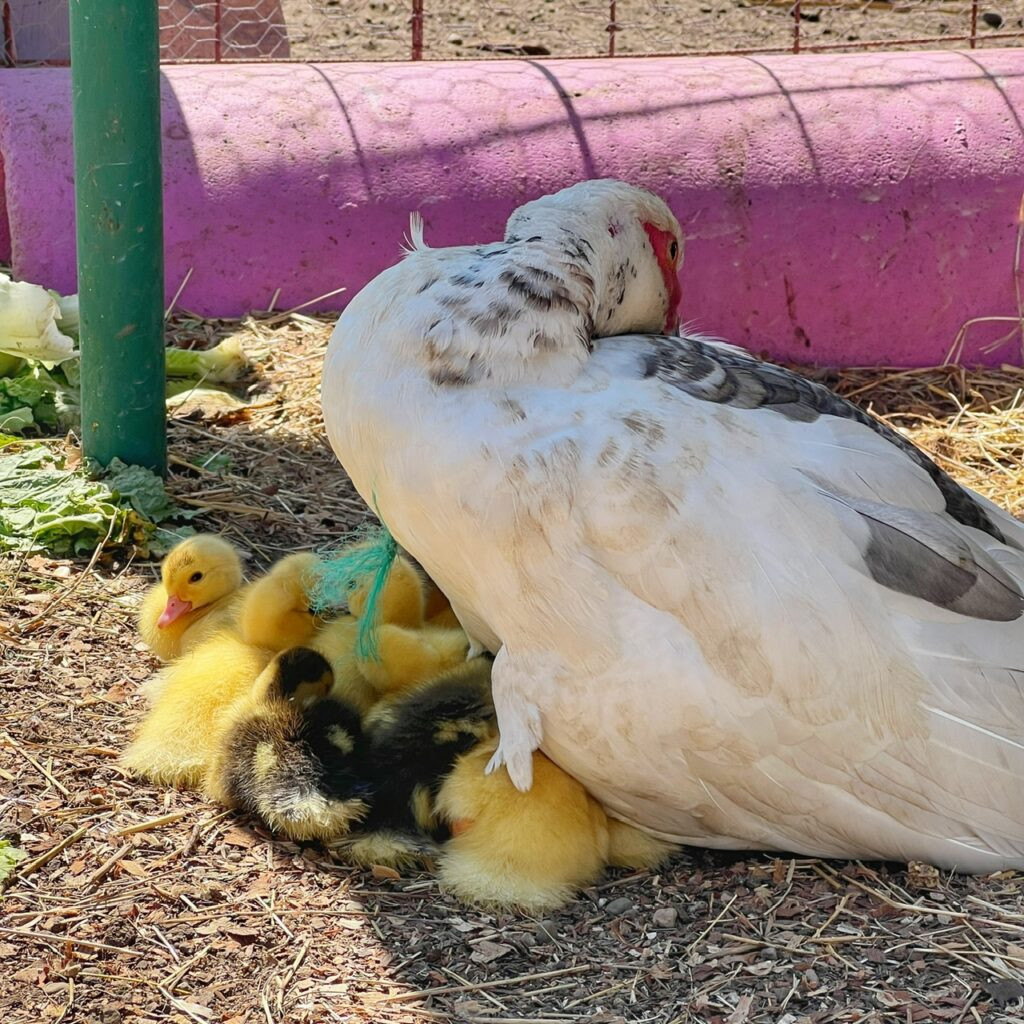

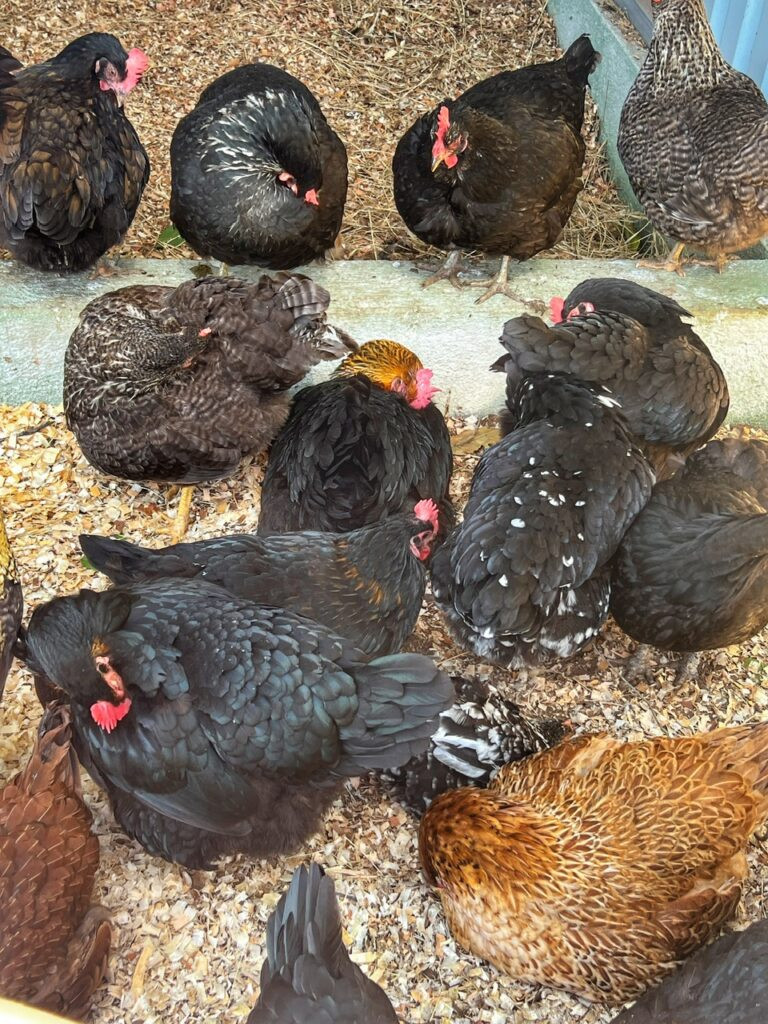
When that gets boring, they have Nene the beautiful albino pony, which totes wide-eyed young children about on his back before they start screaming, “I. WANT. A. PONY!!!”,…and lots of other creatures to admire, which all seem to be living a quite fulfilling life. Although they had a spacious yard to roam about, the not-too-bright chickens still clustered together, gossiping near the hen house


We also observed the Quito Orange, which we know as the Colombian “Lulo” fruit. We’d never seen it growing before, and its spiky little green shell was quite peculiar, considering the bright orange and smooth sphere it will transform into. We also had to stop to admire the prettiest flower of fruit world…the passion fruit flower.
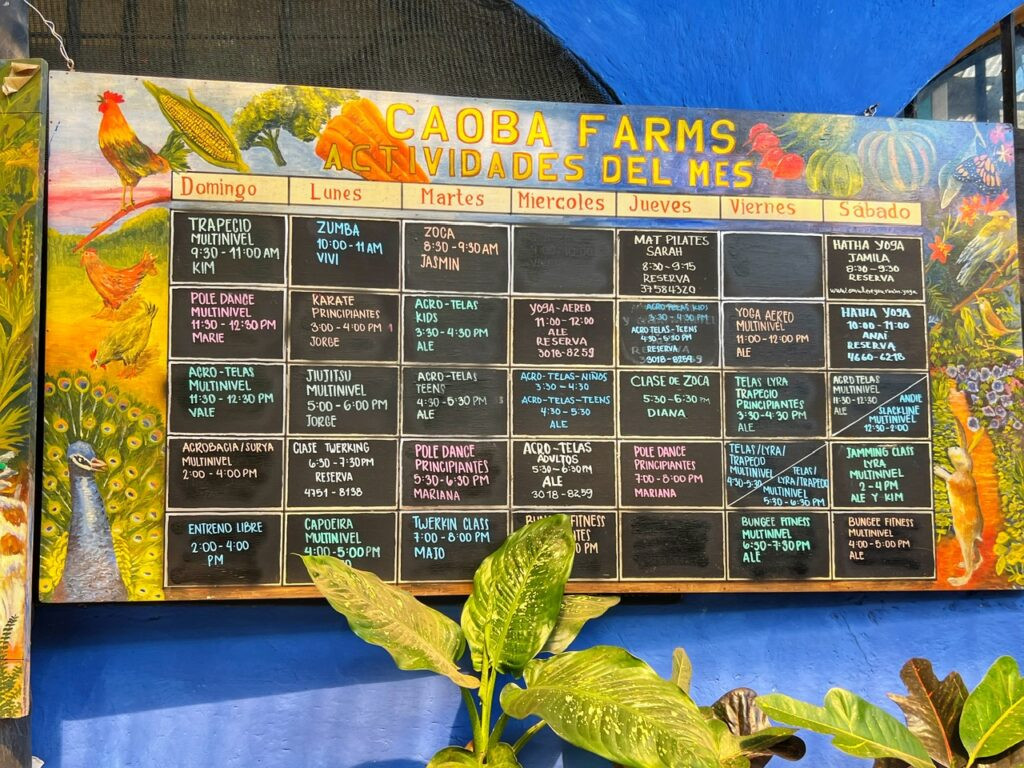
As a former event coordinator, I couldn’t help but admire the breadth of activities at Caoba Farms. It’s a full-scale operation complete with a packed workshop and events calendar, local artisan vendors, a local store…

…and loads of fitness classes for anyone who gets a bit bored with mundane movement like Zumba or Hatha Yoga. Here you can dabble in acroyoga, aerial yoga, bungee fitness, salsa, pole dancing and…yes, you can even learn to Twerk!!
A Day Trip to San Juan del Obispo
We appreciated life in Antigua so much that we didn’t really have a desire to leave. But we did finally step outside our bountiful bubble of perfection to find…no surprise…another nearby bubble of perfection in San Juan del Obispó. This historic village, about an hour’s walk (4.5 km) from where we stayed, is nestled on the bottom slopes of Volcan de Agua.
It offers a much lazier and tranquillo vibe to it and with few other gringos, felt a lot more like a traditional Guatemalan experience than bustling Antigua.
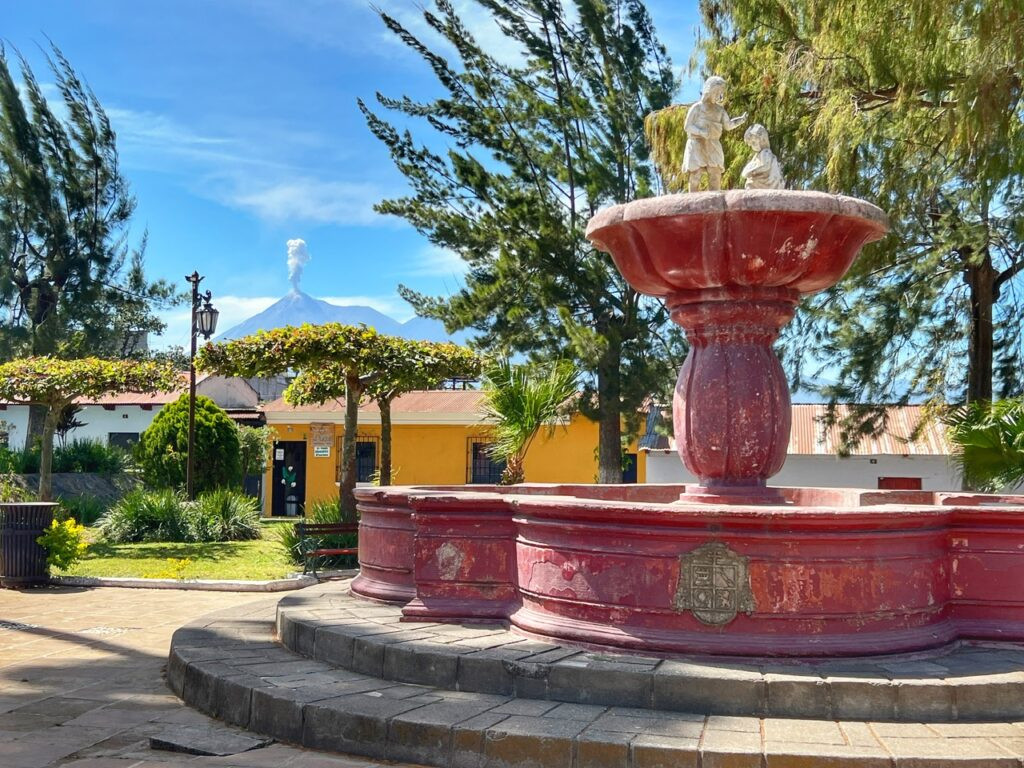
The center fountain, perfectly accentuated by a persistently puffing Fuego in the background.

Igelesia de San Juan del Obispo dates back to 1547, making it one of the oldest surviving colonial churches in what became Guatemala. Since Volcan de Agua had just popped her lid in 1541, and the area is riddled with earthquakes in general, the Spanish learned quite quickly that European style bell towers were no bueno. Therefore, they developed low, thick horizontal walls integrated into the facade itself. They don’t quite have the same sexiness, or income generation potential, as Europe’s, but they do serve their bell-chiming purpose.


We ate out rarely in Antigua because we had an amazing kitchen and the prices were quite high. But for this lunch in San Juan del Obispo, we settled on Doña Chusita where I got the Menu del Dia ($4.50) which were Chile Rellenos, served in a way I’ve never had them, plopped on a tortilla, while Greg had a traditional and savory Guatemalan stew called Pepian ($5.90). This is one of Guatemala’s oldest dishes with Mayan roots that pre-dates the Spanish and is made with a sauce built from toasted pumpkin and sesame seeds, as well as chicken, tomatoes, tomatillos, chilies and garlic. If you’ve ever had Molé in Mexico, it’s in the same flavor family, but was less sweet and more savory.
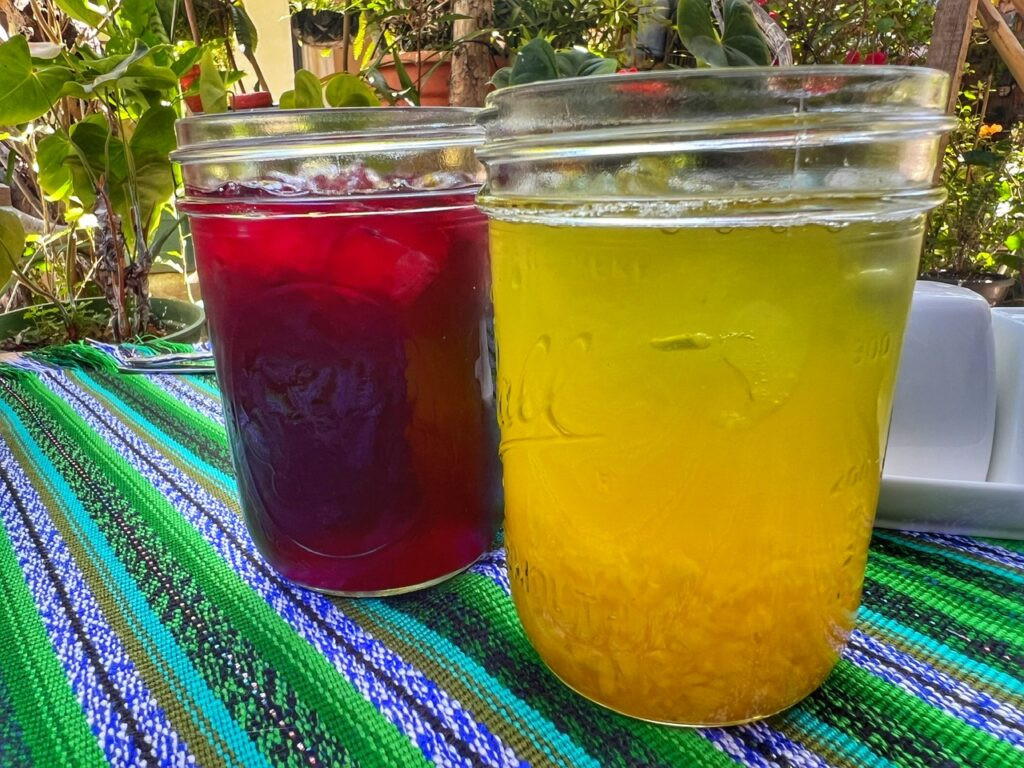

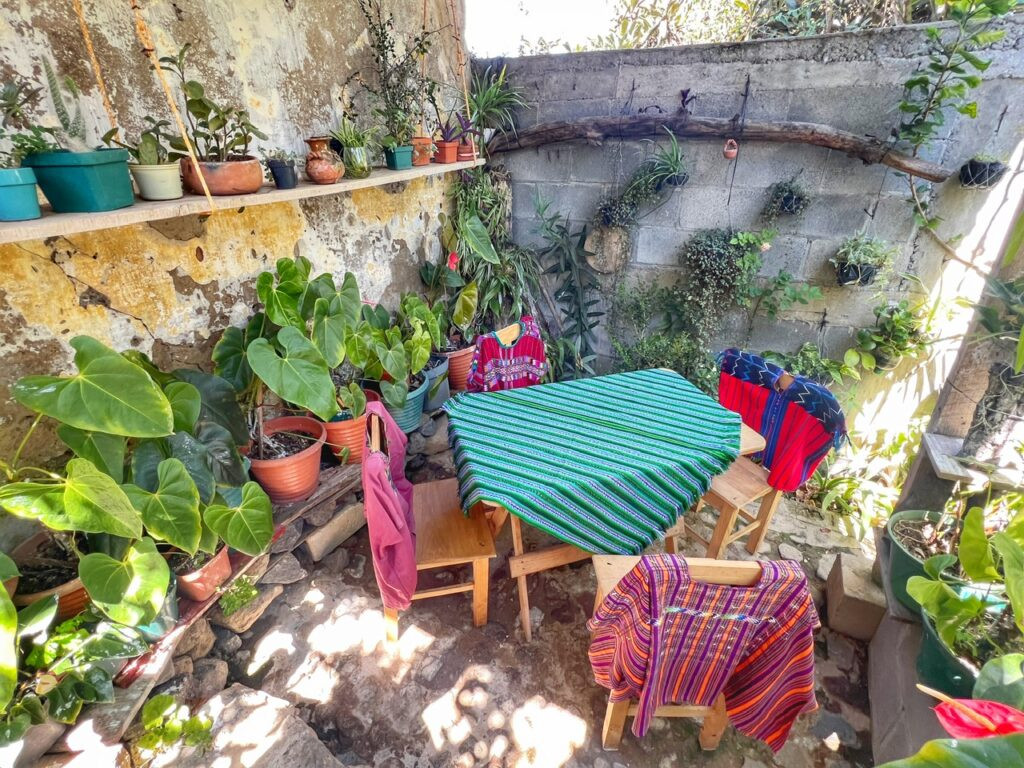
As we soaked in our adorable table surrounded by greenery, we enjoyed our cheers with jamaica and piña juices. And of course no Guatemalan meal is complete without tamales. Both meals were muy rico, but as is typical of anything south of Mexico, it lacked the spicy heat we love.
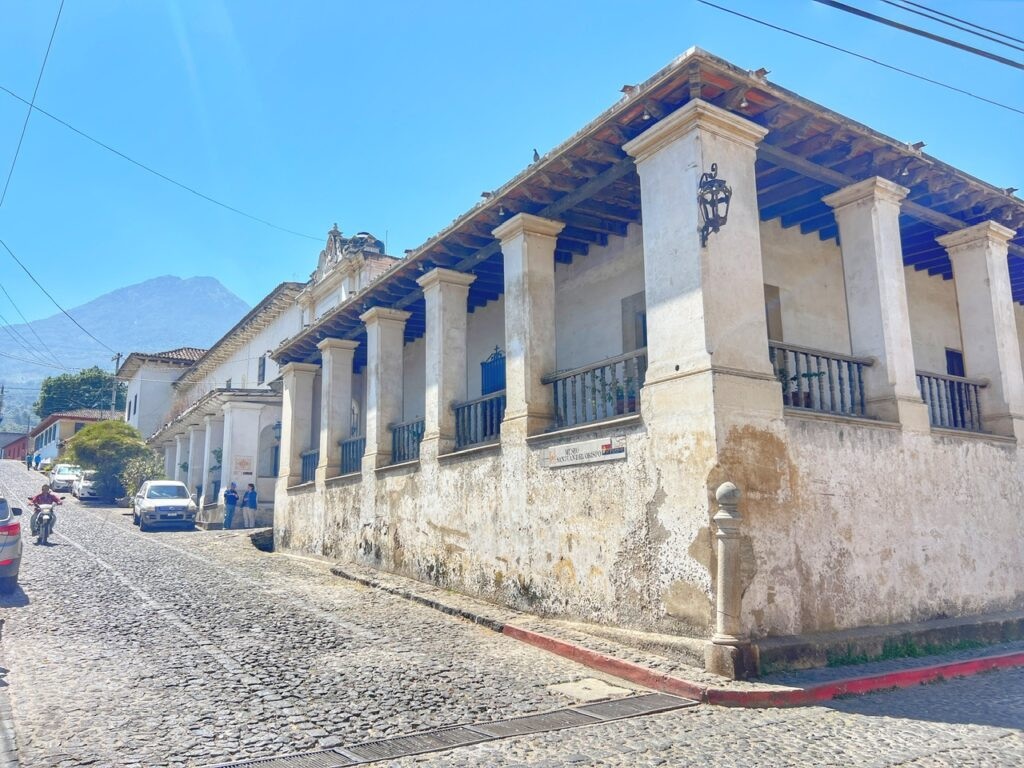
The Museo San Juan del Obispo, which is a former convent.


Stopping for some Dulces Tipicos, which were predominately based on tamarind, coconut, orange, or other fruits and all offered lots of sugar. A bit too sweet for my taste, but the plentiful options are definitely a selling point. Plus we got 4 things for less than $2!
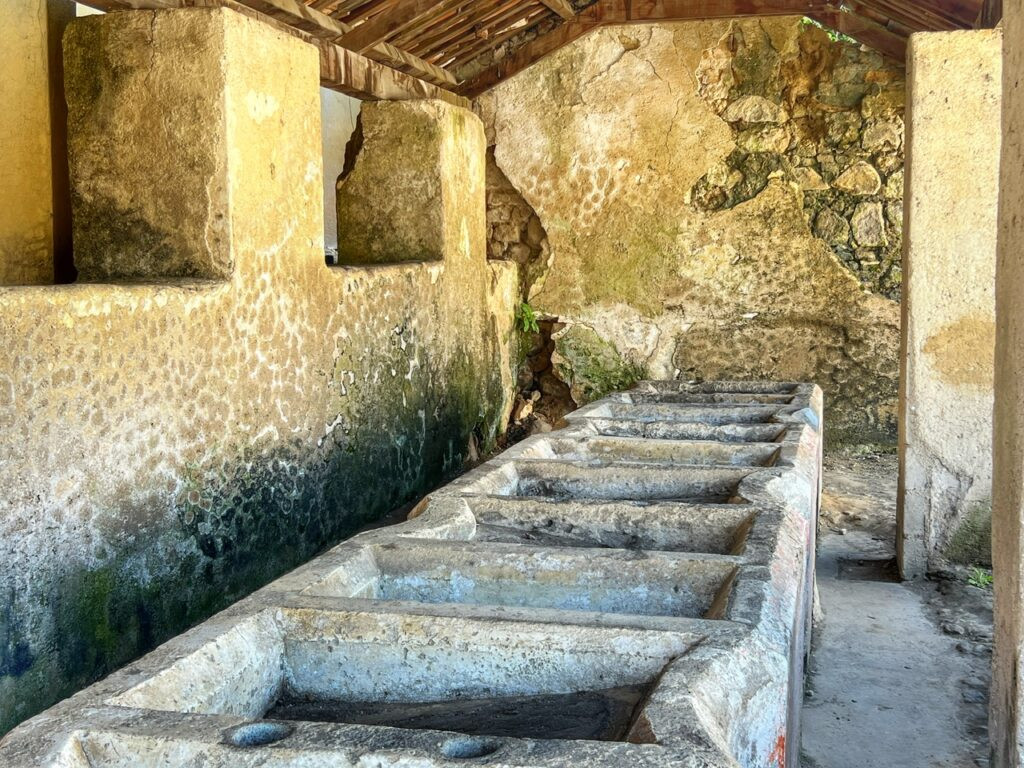
The historic water bins are part of a broader colonial tradition in the Antigua region from which people got water and did laundry before everyone had access to water at home (around the 1960s-70s.) Naturally, because of this, they were also gathering places for women. We can just hear them now…”Dios Mio, chicas. Can you believe what Luisa was wearing the other day?!”

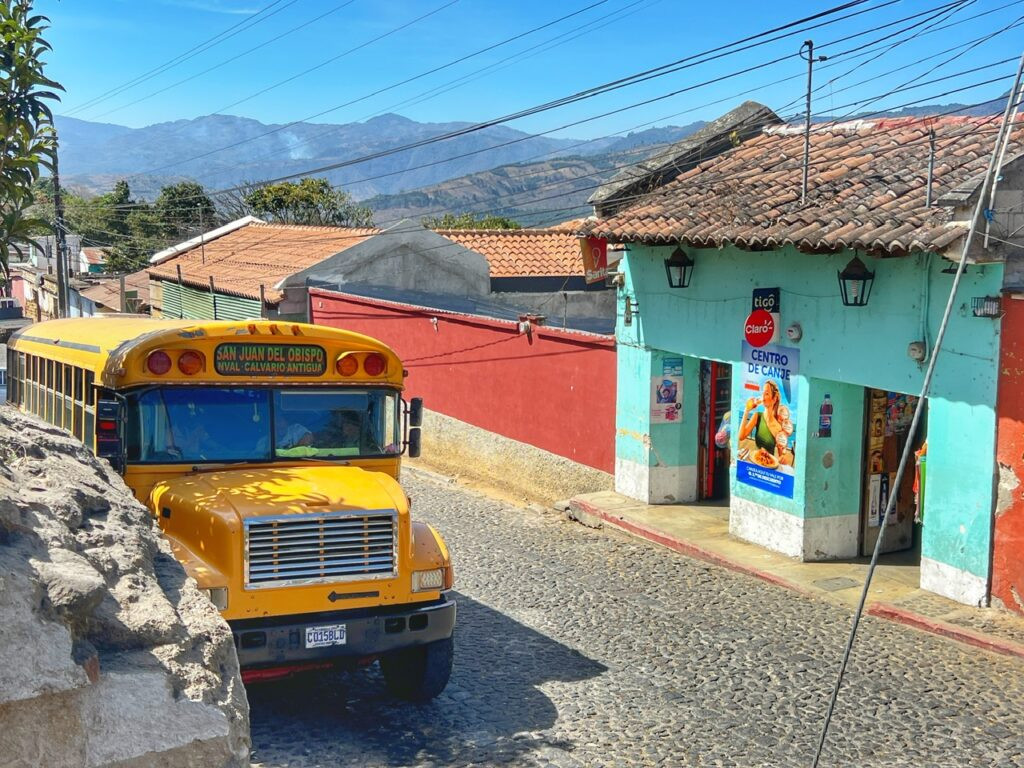
The sloped terrain of San Juan del Obispo speaks quite evidently to the fact that it’s perched on a (now extinct) volcano. Because of this, it feels very different than Antigua’s superbly flat and gridded historic center. Also, the chicken bus that chugged us back to Antigua cost $.40 each and sadly had no bewitching bling.
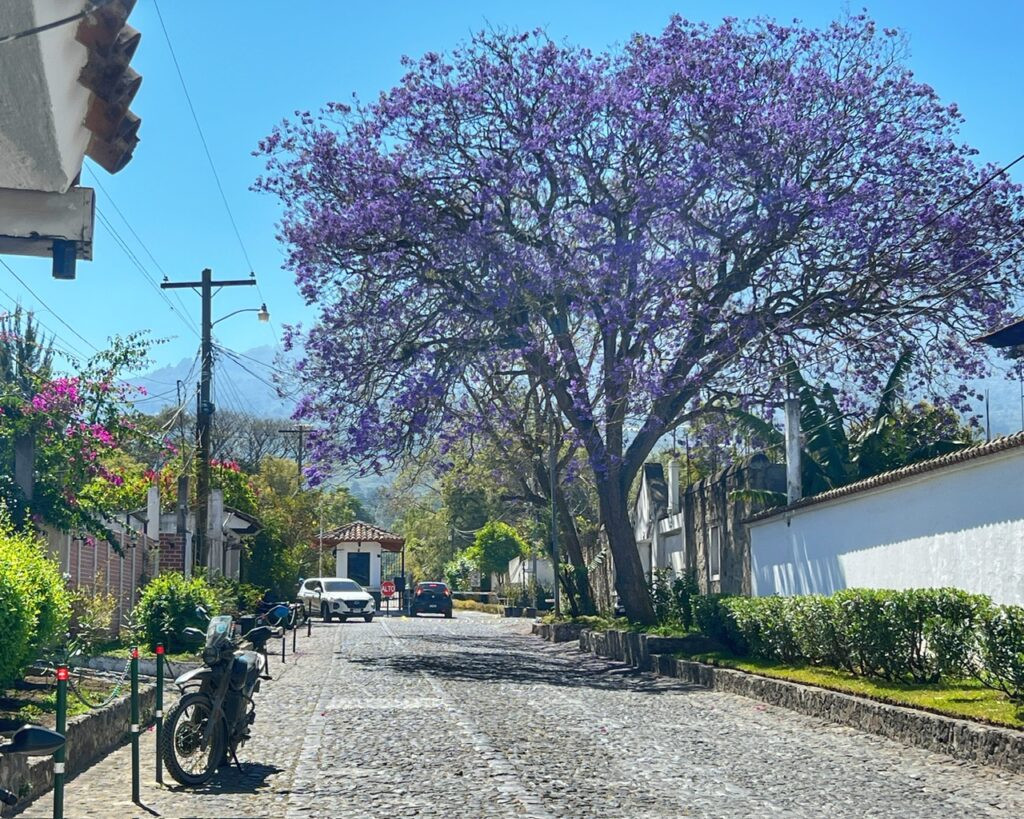
Other sites we stumbled upon on our walk down included multiple gated communities, including one with an impressively blooming jacaranda.
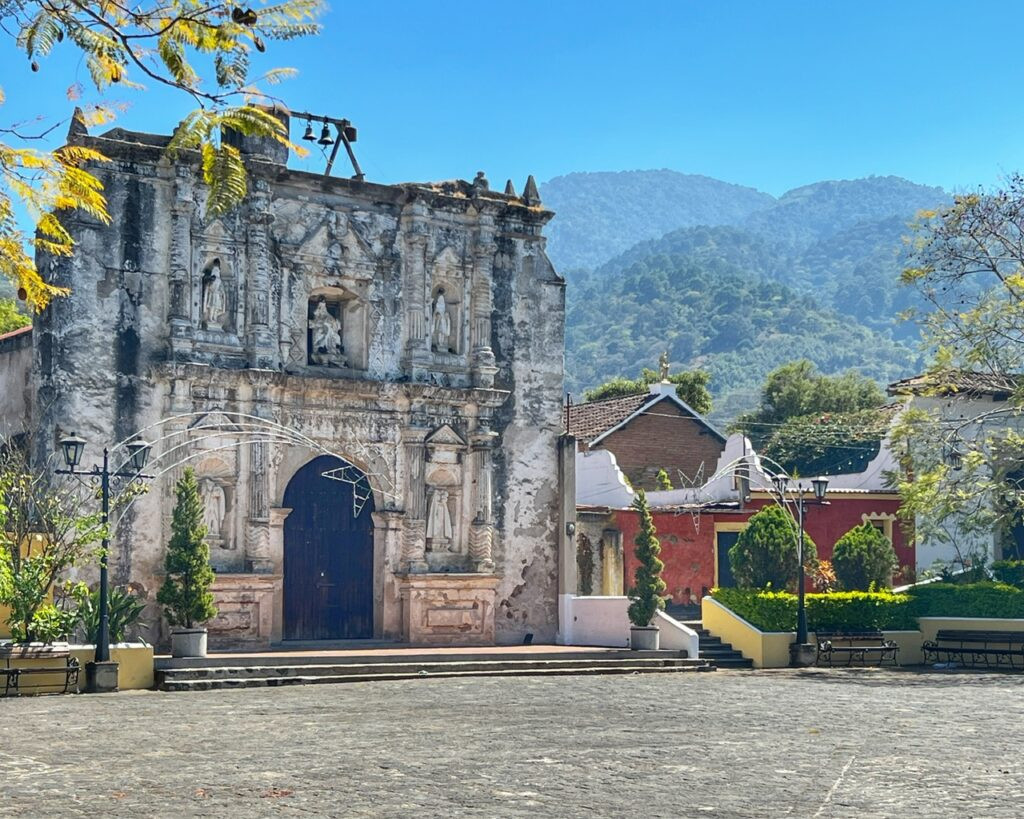
There was also the church in San Gaspar, which apparently decided to wear their bells like a bow.


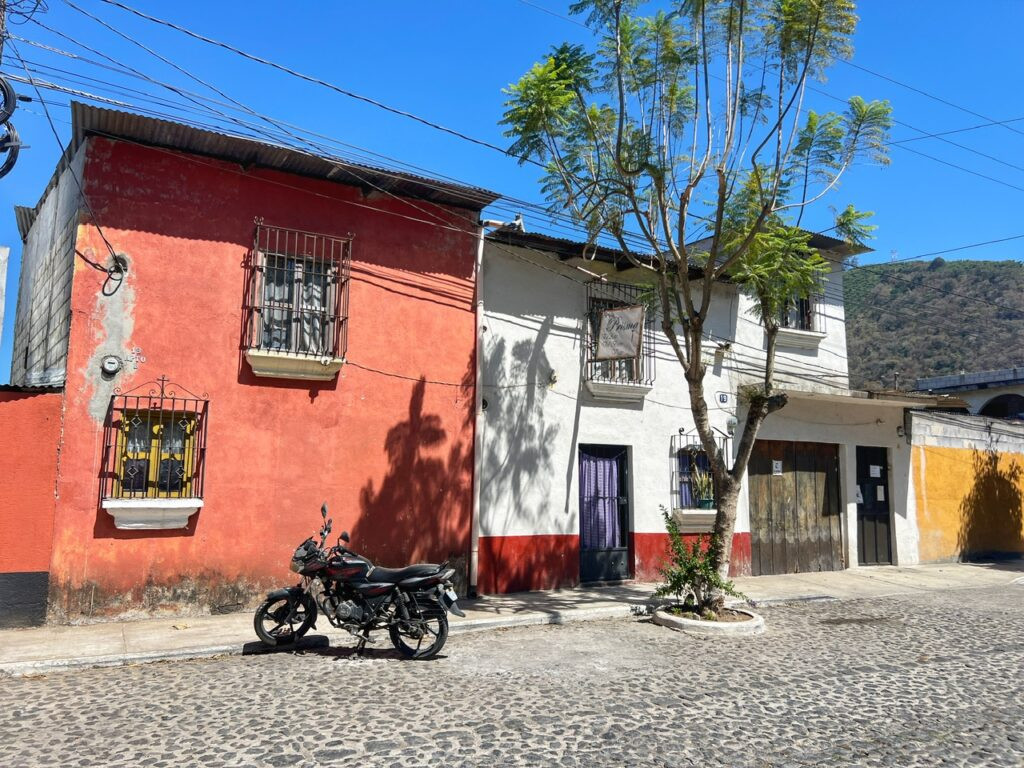
Another charming village of Santa Catarina de Bobadilla had a whole lot more street dogs than Antigua (like everywhere), as well as pops of primary colors, and inviting cobbled streets.

Walking everywhere was very pleasant except when we got stuck on a dirt road where cars were rushing by and tossing up a cougher’s nightmare. Fortunately, a nice couple, ironically from Oregon stopped and offered us a lift which we gladly accepted.
One Month/One Place: Daily Life in Antigua
We realize we are fortunate to travel full time and will be always be grateful to the life circumstances we were given and choices we made to get us to this point. But, like with any ongoing life situation, there comes a time in the existence of a nomad when you start feeling burnt out. Tired of changing pillows. Tired of changing languages. Tired of learning new markets. Tired of not having community. Tired of changing currencies. Tired of pain. Just tired. And this is the wall we hit last year.
So, here we are. Edging towards year eight and experimenting with a new, slower-paced lifestyle in which we’re committing to ~8 month-long stays in 2026. Antigua was the first. And we could have stayed longer.
It took us about two weeks to really start feeling settled…to find our ideal exercise routes, to establish a relationship at the market, to learn some things the community offered, to start making friends, and to even think about doing anything outside of the city. And, by the time we feel settled, it was time to leave again. So perhaps even a month is not enough? Time will tell.
Was it Antigua we desired? Or was it simply the feeling of stability? We think the latter because Antigua lacks some things that are very important to us.
That said, we truly did savor our time there. Here’s some doses of daily life…


One of the things we loved most was our third-story rooftop terrace with a hell of a view. Here we would have breakfasts or happy hours regularly, and it was also an inviting nook for writing. From here, we could see all three volcanoes that sit on the edge of Antigua, including incessant eruptions belching from Volcan de Fuego.


Our apartment was in a gated neighborhood called Belen about 15 minutes south of the historic center, but thankfully it didn’t feel ticky-tacky in any way. All the buildings had personality and the cobbled streets blended perfectly with the charming character of the town. More importantly, by Latin American standards, it was mostly quiet, other than the occasional firecrackers that Latinos are fond of firing off to celebrate all holidays involving Jesus. (among others.)


The front of our building, which housed four separate studio apartments. Despite the fact it was studio, it felt like a castle to us with more room than we’d had in quite some time. It included a real kitchen table, a full-sized fridge, an oven, and a nifty water station that filtered water using a clay strainer.


We also had ample places to sit, including a semi-comfortable sofa which we could sit on and stare at the unused fireplace. The TV faced the two beds, which came in handy when my friend Sarah came to visit.

Our sweet hostess, Doña Cris, allowed me to practice my Spanish regularly, and took good care of us during our visit, including keeping the building tidy, doing our laundry and cleaning our apartment weekly, which was part of the monthly rental fee of $800.

We were surrounded by a lively bird community thanks to the vivero, or nursery, next door, which began to tune up quite a symphony every morning around 6:15. It was a vast improvement from the dogs or roosters we’ve grown accustomed to in this part of the world.
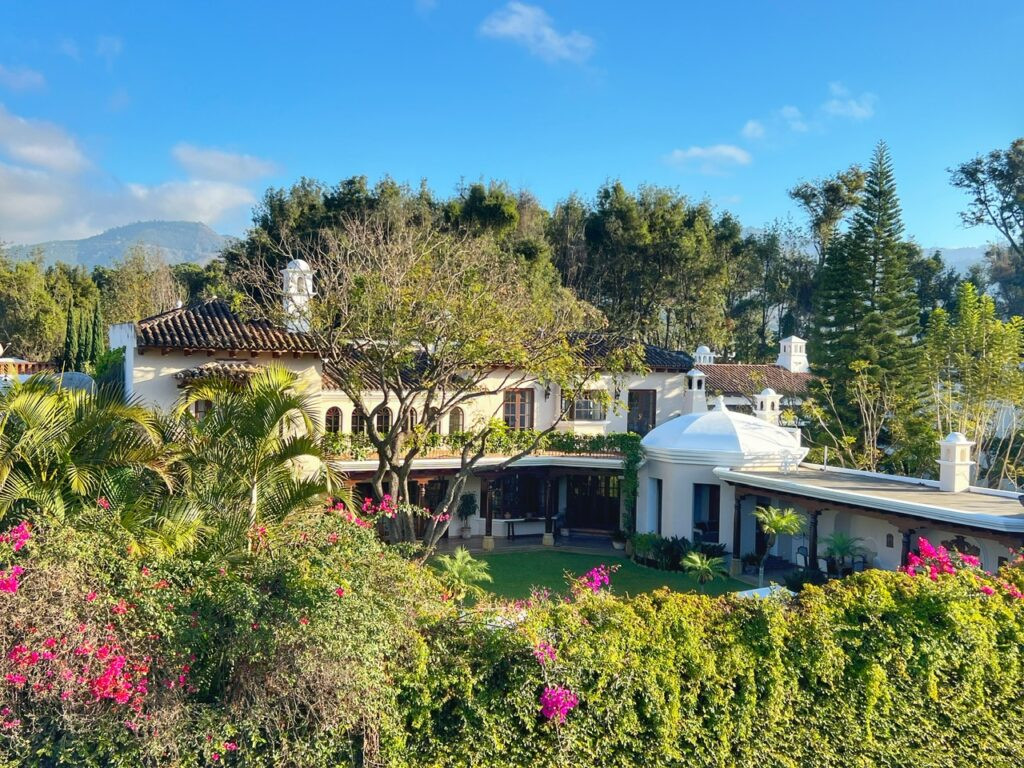

A really fancy pad we spied into next door. It seemed like a number of American retirees lived in the community so we wouldn’t be surprised if it belonged to one of them. More views from the rooftop, including our purely decorative chimney.

More reasons we loved Antigua….idyllic copy/paste weather day after day. At least this time of year…

At night, we got to see Fuego by a whole different light. It was also fascinating to see the steady string of headlamps from the hikers that were ascending near the peak. We were a bit bummed it wasn’t us, as we’d been booked to do this adventure, but watching under a warm blanket with a glass of wine definitely wasn’t terrible.


Our first meal out in Antigua was at La Casa de las Mixtas, a local joint we went to twice for an authentic Guatemalan meal. Mine was the vegetarian plate with potatoes, guacamole, broccoli, plantains and refried beans, which was $3.90, and Greg’s (obviously Mexican) burrito was $4.55. Although Antigua is on the more expensive side overall, especially to eat out, we still managed to have a couple meals out for under $10 total.
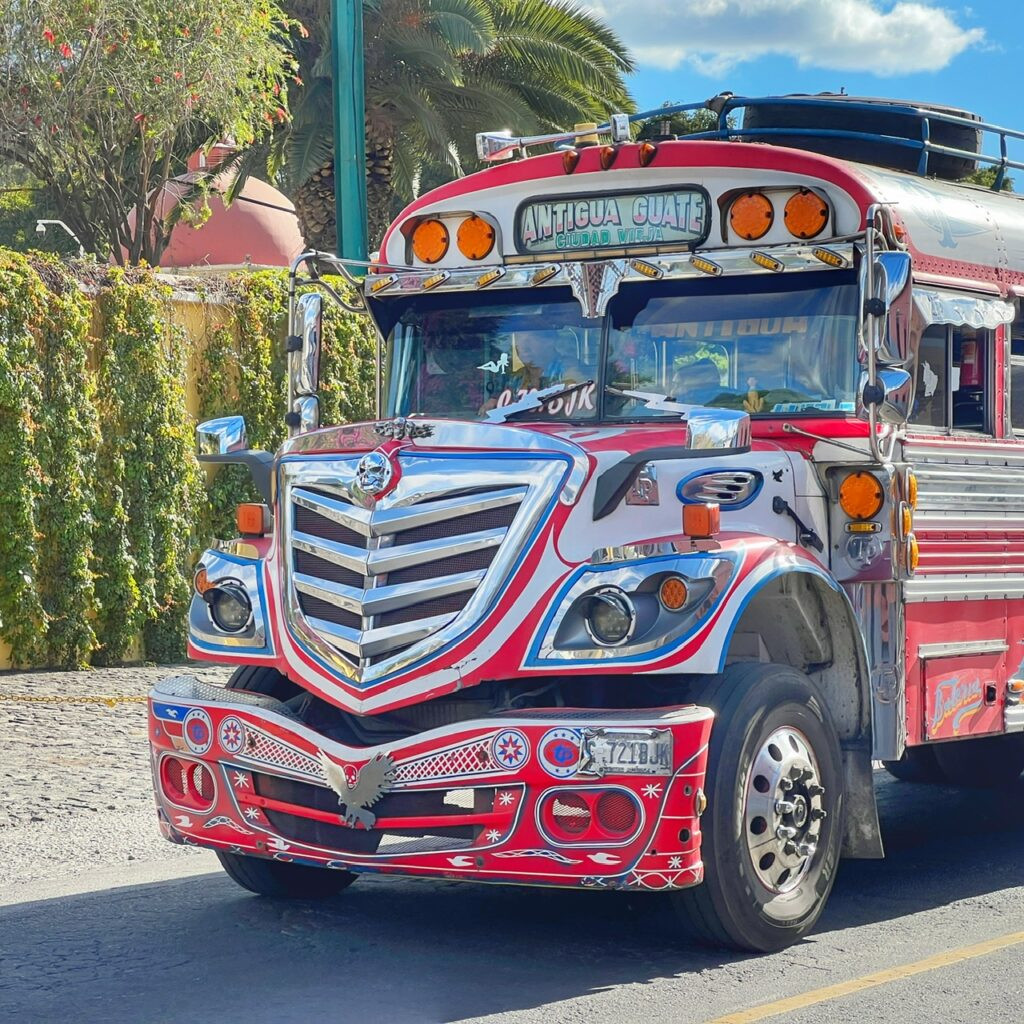
A chicken bus with lots of bling barreling through town. These buses are the common way locals move throughout the region. It sure beats a marshrutka!
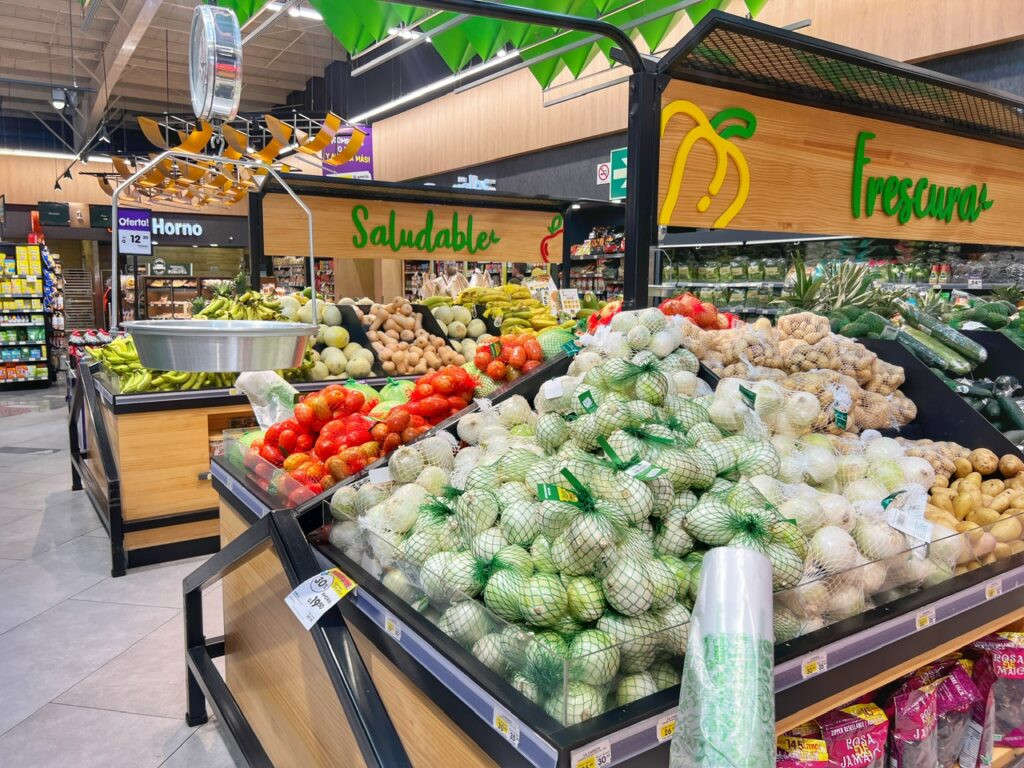
Moving on to shopping in Antigua…we settled into three different food shopping destinations. The first was the Supermercado La Torre tucked into a shopping mall, about a 25-minute walk from our apartment. As you can see, this supermarket looks like it fell out of the States, and constantly assaulted us with the paradox of choice with its fancy displays and overpriced commodities. In fact, groceries generally were somewhat expensive in Antigua, no matter where you shopped, although produce was much more affordable in the market. We spent $511 during our month. This is compared to $614 in Spain for the same time period, and $606 in Bulgaria.
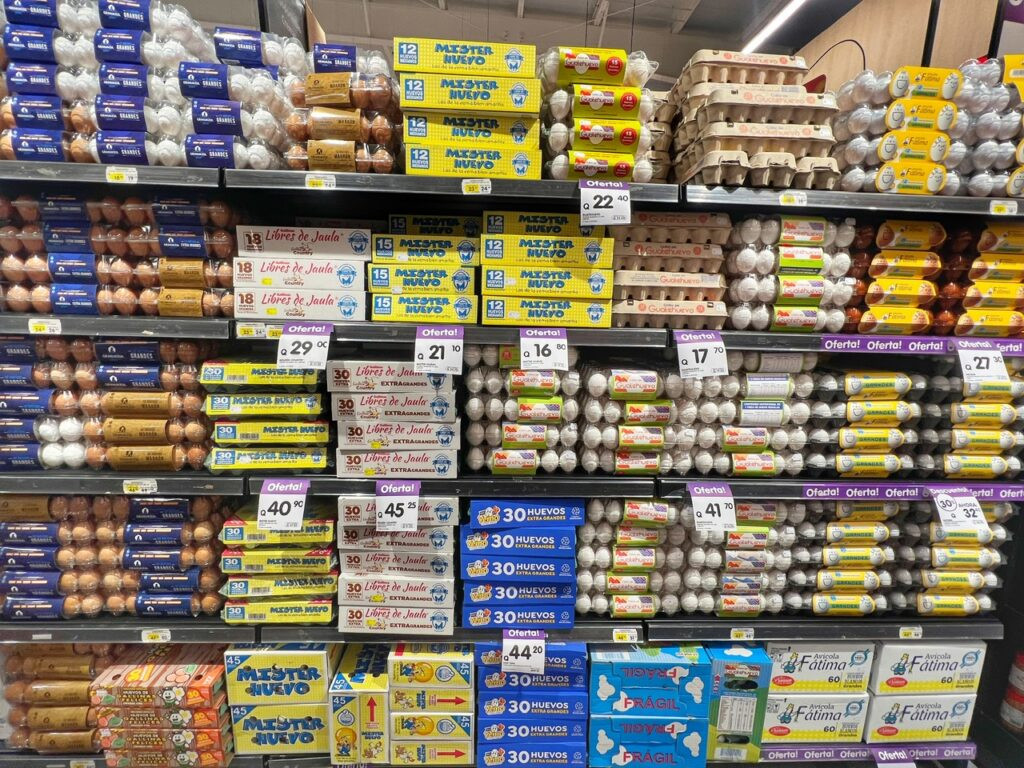
The egg aisle. A box of 30 Mister Huevos went for $5.10, or about $.17/egg, a metric we’ve started tracking. Wait…what country are we in again?!

Oh, but this Central American town definitely brings the cheese to its foreigner population. That doesn’t mean it’s cheap of course.

The second store we shopped at was a 20-minute walk from our place, and was properly called La Bodegona. We, however, called it “Circus Circus” due to the jaunty and persistent xylophone music that hammered your ear drums when you walked in and the general feeling of chaos amongst its “aisles.”

A weekly load from the central mercado, which ranged from about $13-20. This was the first load, the most expensive, before we established the regular vendors we chose to return to based on their smiles, and whether or not they agreed to give us good prices after nicely asking for them. This is where knowing some Spanish definitely seems to help!


And…because Antigua can be a bougie kind of place, we were regularly able to get sourdough bread as well from our local bakery (La Familia) for $4.55. You can see the despite our budget, we don’t skimp on quality groceries.
Speaking of bougie…here’s the local Starbucks. Ugh. That’s a place we definitely avoided, though we did appreciate the fact we didn’t even SEE the Starbucks until we walked by it at least three times due to the way it blends in.
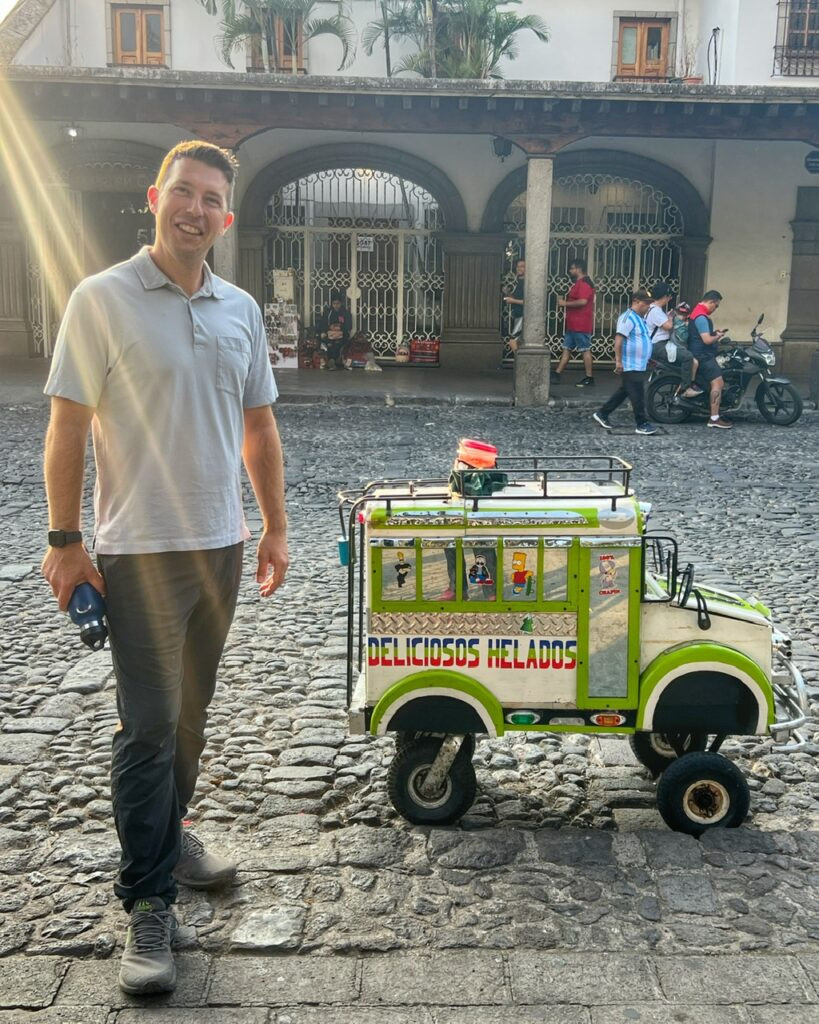
But Greg did still want his ice cream. This is so much better than the ice cream trucks we grew up with.

Two locals walking down our street carrying flowers.

One day, I also went up to Jocotenango to meet up with a loyal “follower,” now friend, Shayla, who has been slow traveling through the world for many years, as well, with her son.

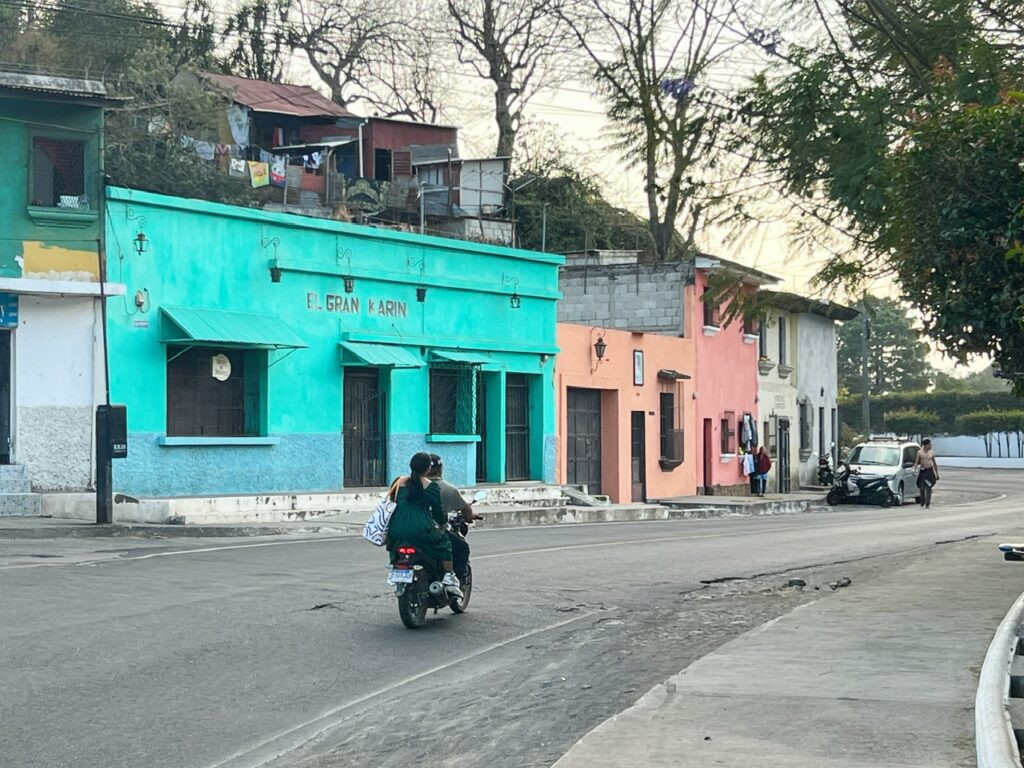
It was fun to see a different part of Antigua; one that actually felt a lot more local to us.


Speaking of friends, Sarah joined us for our last week in Antigua. It was her first time meeting up with us abroad, so it was nice to expose her to some new things….including a volcano outside your door. Fortunately for us, it was surprisingly affordable to get a bottle of Chilean wine (around $4-5). It’s not Portugal prices or quality, but we’ll take it!


Our last meet up was with nomad friends, Brian and CC, who we crossed paths with for just one day. We first met them on the Amazon river boat in 2023 when Brian astonished us with the fact that he’d visited every country in the world, all before his 36th birthday. Needless to stay, we got along great and we have been keeping up with each other’s adventures ever since. That day we ate at Rinoconcito Antigueno, another joint packed to the brim with mostly locals. Our pepian and Chile rellenos ($10) weren’t nearly as good as what we got in San Juan del Obispo, which cost $1 more.
We’ll miss you Antigua!!


