
The 1984 Olympics Bob Sled Track
On July 4th, we arrived to another “Known Known” of Sarajevo with the plan of camping out five weeks. We first visited in 2019 for about five days, and really appreciated the East meets West vibe tucked into a spectacular setting encompassed by rolling mountains…an ideal escape from a baking Europe thanks to its slightly higher altitude. There are also a plethora of things to do and learn about, day trip options, and healthcare options to finish up our annual “medical month.”
On our last visit, we spent much of the time learning about and absorbing the recent tumultuous and heartbreaking history of this resilient capital during the Bosnian War. For this visit, we were most eager to check out one thing we had to skip…the graffiti blanketed ruined bobsled/luge track from the 1984 Sarajevo Olympics.
Being awarded the Winter Olympics bid was arguably a bigger deal than in typical nominations for the “underdog” of Sarajevo….then part of Yugoslavia. It was a huge achievement, beating out a much wealthier nominee of Sapporo, Japan and served as the first Winter Olympics in a socialist state. Unlike the Soviet Union, however, Yugoslavia was non-aligned—not part of NATO of the Soviet Blocs. During this Cold War period, the city became a place where East and West competed peacefully, which gave the Games symbolic importance and created a rare sense of unity across the country’s different republics. (Source: audio tour on the track.)
Today, the Olympics are often remembered as the last great celebration before the break-up of Yugoslavia. Thus, it was seriously unreal to immerse ourselves completely on a walk-down the iconic track.


To do this, there are three ways…jump in a taxi (and hope they use their meter), hike (about 2 hours, 620 meters/2000 ft of elevation gain), or use the cable car. We opted for the latter option, a costly $12 a ticket one way, or $18 for round trip. For us, we were looking forward to the flexibility and more economical option with a steep hike down.


We greeted the top the mountain, at Trebević. It’s a truly ravishing setting…the red roofs of Sarajevo are dropped like cakes accentuated by dozens of minaret candles.


An original gondola car from the Olympic Games is how thousands of spectators accessed the track and enjoyed panoramic views over the city.
The second car, modeled by my husband, is from an earlier generation opened in 1959. Unfortunately the cable car’s story also reflects Sarajevo’s recent history. During the four year Siege of Sarajevo (1992-1995), it was heavily damaged and completely stopped operating. The current system reopened in 2018 after complete reconstruction.

Before heading to the bobsled track, we wanted to check out some other sites on the mountain top, so we found the archaeological site of the fortress of Draguljac, which was a Austro-Hungarian fortification, built as part of Sarajeov’s defensive ring. Today, only the low foundations of the retaining walls remain.


And…to the main event, the bobsled/luge track, which tells the story of the city’s greatest celebration and darkest years all in one place. And yes, it’s free. The track cost the equivalent of $8.5 million USD at the time and was considered one of the most advanced sliding tracks in the world at 1300 meters, or 4265 feet. Thanks to its ridgeline location, just a few years later, it became an artillery position used by Bosian Serb forces to rain objects of destruction upon the city below.


Greg tests out the curves, which are not quite as easy to glide up as those little bobsleds make them seem. In fact, viewing the angle of the walls up close gives you a much better appreciation of the speed and precision required than watching it on TV ever has.

It’s incredible to see Mother Nature doing her thing on the structures…

….which fortunately the city has embraced as a historic and educational site, adding signage and an audio walking tour which you can follow-along on your cruise down the 1.3k track.


Today, the abandoned structure has become one of Europe’s largest graffiti canvases, for some seriously talented artists….

….slicing through the lush forest like a poetic ribbon.


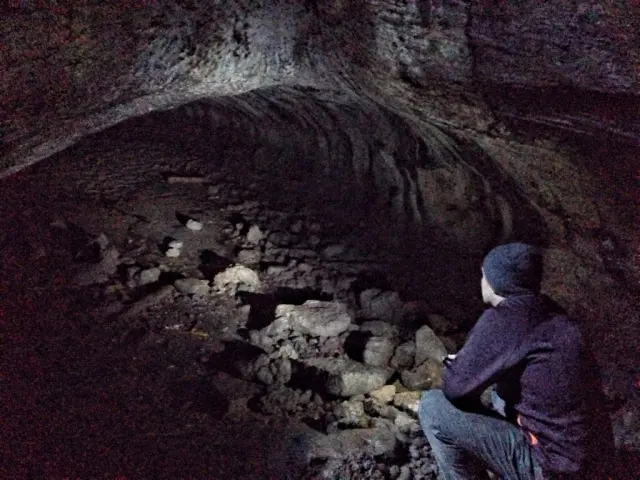
Many sections are returning to the earth, as you can also see from its underbelly.

The finish line. If you close your eyes in this tranquil moment, you can almost hear the sounds of the fans roaring on the overhead bridge.
Other Discoveries in Ruins: The Bistrik Kula Observatory and Čolina Kapa
From the bottom of the ruined Olympics bobsled track, you can continue on one of many precipitous downhill trail options to return to the city. But before we did that, we decided to make a couple stops on one of the most strategically important ridge lines of the Sarajevo Siege. The first was at one of Sarajevo’s most fascinating and forgotten landmarks…the Bistrik Kula Observatory, which is only about 10 minutes from the track. The site began as an Austro-Hungarian military observation between 1890 and 1910 due to its commanding views over Sarajevo, and in 1967 it was handed over to the University Astronomical Society of Sarajevo which transformed it into the only observatory ever built in Bosnia & Herzegovina.
I like the latter option better…
The second, Čolina Kapa, offered more magnificent views of the city and because of this, was naturally also used in the war.
Had we brought a lunch with us, we would have also added on the Abandoned Hotel Osmica and Tvrdana Palez, an abandoned fortress nearby-ish. Maybe we’ll make it there before we leave, but with the cost of the chair lift or the super steep grade to get up there, it’s unlikely.


The observatory, like the bobsled track, is an eerie relic of a horrendous time in Sarajevo’s recent history. During the beginning of the Siege of Sarajevo (1992-1995), the majority of the observatory tumbled like a fallen soldier with heavy shelling and looting due to its strategic military position.

Today, you are free to enter, at your own risk, to feel the now peaceful essence of this place with its bullet-scarred concrete shells and graffiti-plastered walls. The underbelly of the watch tower, which you can climb to the third level…

…to be greeted with this. Cheery. Another atrocity to add to the history books.


But on a silent and beautiful day like this one, all we could do is reflect in gratitude, the heartbreaking and senseless things we’ve never had to endure in our lives, and take a moment of recognition for those that have.


Further down, we stopped at another ruined building near Čolina Kapa. It’s hard to say what this was used for. Čolina Kapa was another key defensive position during the siege, a notable peak that can be seen all over central Sarajevo. Today, it can be recognized by the flag perched on top and reached after about 10 minutes of climbing from the trail. There is also a nice picnic table with a dazzling view at the top. (Again, too bad we weren’t prepared for this!)
If you know your flags, you’ll observe this isn’t the flag of Bosnia & Herzegovina, as one might assume. It actually has three meanings. Historically, it was the flag that represented the medieval Bosnian Kingdom. During the war, it was the flag under which Bosnia declared independence and defended itself. And today, it is widely used by many Bosniaks (Bosnian Muslims) as a symbol of Bosniak identity and remembrance of the war, though it’s no longer the official state flag.

Further down the trail as we reentered the residential zone, it continued not to disappoint with more spectacular views of the city.
The Yellow & White Fortresses
Other than the bobsled track area, accessible by the chair lift, we didn’t find an abundance of “hiking” opportunities in Sarajevo, though there are plenty of opportunities for urban exploration. Besides…with the intense grade of this city, it can certainly feel like hiking. Enough so that we often see a particular nationality (guess who?) regularly trekking the streets with their walking poles. 🤣 In one such exploration, we decided to walk up to the Yellow and White Fortresses which are plopped on cliffy outcrops above the city. They are both fantastic places to check out views of Sarajevo and for sunset, if you feel so inclined.


Walking the hills of Sarajevo’s Old City, which often included charming and winding stair masters of yesterday.

One of the official entrances to the walled city.


After 45 minutes, we reached the further and more intriguing White Fortress (Bijela Tabija). We were slightly surprised by the overpriced 8 BAM ($4.65) entrance fee but, having travelled so far, we couldn’t resist checking it out.
According to the single educational plaque blended in with a wall of local advertising (à la baseball stadium), “This fortification has transcended its original military function, evolving into a symbol of encounters, perspectives, and memory. The term “tabija” originates from the Ottoman period and denotes a military fortification-a bastion of defense and surveillance.
“The oldest part of the fortress dates back to the Middle Ages, specifically to the late 14th or early 15th century, and was later expanded during Ottoman and Austro-Hungarian rule.”
“It is believe it earned its named from a specific white stone used in construction.”
Uh…sounds logical?


“The view from the White Fortress is not just a view of Sarajevo; it is a view that encompasses time, carrying traces of different eras and experiences. In moments of crisis, this space once again became a place of tension and witness. During the Siege of Sarajevo (1992-1995), the White Fortress was part of a reality where a gaze upward signified both danger and hope.”
Standing here, like other places that soar above the city, you can undoubtedly feel the presence of recent tragedy as you observe the expanse of the city in all directions, which includes several notable, massive green patches of white tombstones, mostly dating from 1992-1995. The Siege was the longest of a capital in modern history and took around 11,500 lives, including approximately 1600 children. More than 50,000 others were severely wounded, many permanently, which we suspect we’ve seen firsthand based on the number of seniors with wheelchairs, canes and missing limbs.
The scars of war are inescapable here. In fact, when you start understanding it, you see it everywhere.

Pictured here is the ruins of the Austro-Hungarian military barracks known as the Jajce Barracks, one of Sarajevo’s most striking abandoned historic buildings. During the Siege, it suffered heavy damage and shelling and has been abandoned ever since, though many locals hope it will eventually be restored. Nature is clearly taking back over in this evocative reminder of the imperial past and destruction of war. In stark contrast, the twisting and sleek Avaz Tower dazzles the background, which apparently holds a coworking space at the top and a cafe. The city has certainly entered an exciting new chapter.

A lovely green minaret peaking up.


Arriving to the less ornate (and no cost) Yellow Fortress, we climbed the wall up a narrow cobbled staircase, where we found a cafe and observation area, which is a particularly popular area at sunset.
Together with other structures, like the White Fortress, the Yellow formed a ring that guarded the city while defining its relationship with the surrounding landscape.
During the Siege, it was held by the Army of Bosnia & Herzegovina and today holds the cherished tradition of firing a cannon at sunset during Ramadan signifying to all the Bosniaks something quite important…TIME TO EAT!! 🙂


Speaking of eating, it was mid-day for us, so we grabbed a bench and enjoyed the view with our own picnic, a view that was quite different than the White Fortress. And the sea of lost lives below became much more impossible to ignore.

The flag of Bosnia & Herzegovina today was adopted in 1998 and deliberately designed to represent all citizens of the country…
- The blue background represents the blue in the EU and aspirations to be part of a peaceful, European future.
- The yellow triangle represents, roughly, the shape of the country as well as its three constituent peoples…Bosniaks, Serbs and Croats.
- The white stars extend off the flag, suggesting they continue infinitely. They represent Europe and the idea of continuity and hope.
Kozija Cuprija (Goat’s Bridge)
Seeking new adventures in Sarajevo, we were captivated by Kozija Cuprija (Goat’s Bridge), an easy and flat walk down a mostly wooded canyon. Built in the second half of the 16th century, the bridge spans the Miljacka River on the old Ottoman road connecting Sarajevo and Istanbul. It’s the only fully preserved Ottoman bridge still standing in Sarajevo. It’s definitely a lovely nature escape!


To get there, continue to walk down the river from Baščaršija about 4k. (about 45 minutes.) There is a trail just after the bridge leading down to the water.

The bridge was made a National Monument of BiH in 2004. No one knows why it’s called Goat’s Bridge. The most likely explanation is that shepherds regularly drove goats across the bridge on their way to nearby grazing land.


Based on the signage, the 500-year old legendary bridge is clearly off-limits to unauthorized cars, but this schmuck decided to cruise on over anyways. More reasons tourists are getting bad reputations worldwide. 🙄


Other views from the walk included the tail end of the Old Town, the inviting reservoir…


…a tunnel that’s been chiseled into the canyon…a lady renting hardnesses and other equipment used for rock climbing, if this is your jam….


…and a large section deemed “Ambassador’s Alley,” which is devoted to honoring B&H ambassadors to Bosnia & Herzegovina from around the world who planted a linden tree during their posting. Thanks, Mr Nelson. It’s always nice for us to see our country building bridges, with all the negativity, renaming, and destruction lately.


The snakes and lizards of Bosnia & Herzegovina are plentiful. Only one, the Poskok or nose-horned viper, is venomous. Also, the White Fortress, which we posted above, as seen from far below.
Vrelo Bosne (Bosna Springs)
Although it’s surrounded by mountains, as indicated it was more challenging than we’d originally hoped to find easy access to nature and hiking during our stay in Sarajevo. This is why we were so happy to visit Vrelo Bosne (Bosna Springs) in the southwestern outskirts of this city. Here one can find dozens of chilly karst springs bubbling up from beneath the foothills of Mount Igman, which merge to form a river in a lush and forested area. In addition to a plethora of nature trails, there are cycling paths, and the opportunity to ride in a traditional Bosnian carriage. It’s also generally several degrees cooler than the city, making it a popular spot on warm summer days.


One should note, however, this is far from a “hidden gem” as some blogs like to tout. On the late Thursday afternoon that we visited, there were hundreds of people, mostly families, seemingly all driving in, craving the same kind of natural escape we were.
And this wasn’t just locals. The license plates were as varied as a US national park with tourists arriving from all over Europe…Sweden, Spain, Germany, Netherlands, Slovenia, Albania, and even a couple unidentifiable Arabic ones…each willing to pay the 6 BAM ($3.50) entrance fee. (Locals are appropriately cheaper).


That said, the area is massive, so it’s quite simple to lose the crowds and wander into the blanket of shady trees, which often dangle over crystal clear waters. And, naturally, the birds love it too.
The network of walking paths and wooden bridges crisscross in many directions, some leading to the “Great Alley,” which is a 3.5k tree-lined avenue connecting the springs to Ilidža & Stojčevac Park. Unfortunately, we didn’t have time to do the full shebang, but we loved what we saw and would definitely recommend it as a full loop if time permits.


Greg checking out the source of the springs, as usual. While the reality of the crowds congregate nearby…generally attached to the Instagrammy bridges.


The emerald water was so irresistible. Wonder who lives there?!


The complex also has a couple of restaurants and an ice cream stop, though most visitors seemed to have the same plans as us….picnics…including full tea set-ups for some of the Muslim families.

We instead parked ourselves on a bench and enjoyed wine in what was once a honey jar (which by the way leaked in our day pack permeating it with the stench of fermented grapes.) We also had some of our favorite Balkans treats…ajvar sauce (a puree made primarily from red peppers) mixed with cream cheese over bread and a tin of filleted mackerel. These filleted mackerel are an exciting new discovery for us. No bones, no skins, ready to eat…just like tuna! They’ve become regular food medicine for me after discovering my iron was on the low side last month.

To get there, we took tram 3 to Ilidža and then transferred to bus 46. You can also take bus 33 or 43. Another option is to walk the “Great Alley” path or take a horse-drawn carriage for about $12 one-way to create a loop. No matter how you do it, it’s certain to be a lovely nature escape from bustling Sarajevo.
Cafe Tito: A Throwback to the Former Dictator
If you’re interested in the history of the former Yugoslavia and its infamous dictator, Cafe Tito is one of Sarajevo’s more unique places to stop. It’s much more than a coffee shop and bar…it’s also part nostalgia museum. Josip Broz Tito was the leader from 1945-1980 who ruled Yugoslavia (the present day countries of Bosnia and Herzegovina, Croatia, Serbia, Slovenia, Montenegro and North Macedonia.) One of his biggest achievements was refusing to become a satellite of the Soviet Union.


Inside you’ll find portraits, old newspapers, radios, televisions, posters, military memorabilia, Yugoslav flags, and everyday objects from the era. Whether you admire Tito or not, it’s an interesting glimpse into a period that still evokes strong emotions across the Balkans. We got three beers for $8.20. Definitely still a great value in Bosnia. They also have a nice garden space.


They also have, of course, lots of “toys” for little children to climb on

The official Sarajevsko World Cup label. 🤣 I am from Bosnia…take me to America.
Skakavac Falls Half Day Hike
In the final hours of our time in Sarajevo, we finally managed to sneak into some genuine nature at one of Bosnia and Herzegovina’s many spectacular waterfalls….Skakavac. This half-day hike north of the city is an easy stroll through the woods for someone with a car, as evidenced by the multiple European license plates at the trailhead. For us, however, it was a more challenging endeavor clocking in at 16k, a bus ride, and a shadeless and kinda miserable jaunt to and from the trailhead. We’re still so glad we did it.
The grounding effect of Mother Earth was undeniably necessary after our time in the bustling city, which we couldn’t wait to get out of. And, it served as an excellent 16k training ground for what would come in the next couple of weeks (or so we thought).


The name “Skakavac” means grasshopper, which makes a lot of sense considering the way it seems to “jump” down the 98 meter (322 ft) cliff, rather than forming one broad curtain of water. It’s one of the tallest permanent waterfalls in Bosnia & Herzegovina and in the Balkans. One of the most interesting geological features is the tufa travertine surrounding the limestone cliffs and at its base.


Of course, you are only rewarded these views after a 1.5 hour meander through a tranquil and inviting beech forest, which is also fringed by towering walls of complementary limestone

These trees don’t talk, but they can certainly listen through these massive wood ears.


Most of this lovely forested section of the hike is shady, undulating and pleasant, though I appreciated the trekking poles our friends Brian and CC had donated us in a couple of sections.

Arriving at Skakavac Falls, where only one other family had congregated to have a picnic and take photos.


The rest of the hikers likely continued up the trail another 40 minutes round trip to witness the other view points. Although we would have liked to do this, we knew it wasn’t the best decision with the two hour extension we had to add on. (More on this below)


It really didn’t matter to us though.


The falls themselves were an absolute oasis. And a blissful spot to plop ourselves for a picnic…boiled eggs, mackerel (yes, again), apples and nuts.

Perspective photo! Yes, it was VERY tall.

The opposite view….gazing into the valley from the falls


On the return, we had already chugged most of our water. So, after a little inspection, we refilled at this spring flowing directly from a rock into what looked like a pig trough. Still, just to be safe, we used our LifeStraw to slurp up. Ah! Icy cold and delicious! Of course, it didn’t even compare with the set of highly quaffable Karlovaċkos we rewarded ourselves upon finishing. ($2.50 each).

This was at a conveniently located cafe right at the edge of the trailhead where all our fellow hikers had parked their wheels getting to avoid the most brutal section of the “expedition.”

Our wheels, naturally, were a bit more burly. To get there, we took mini-bus 69 from the Sutjetska Station to Nahorevo. According to Google, this bus should have departed at 8:49. In reality, it left at 9:00…on the money to when Chat GPT said it would depart. Speaking of money, these buses cost 2.20 BAM or about $.70/ticket/one way and come approximately every 45-60 minutes on the weekdays. (P.S. we’ve heard not to do this hike on a weekend…it’s a madhouse!)


From the Sutjetska stop, it was about a 20-minute ride north and we were suddenly and blissfully in rural Bosnia & Herzegovina. The town of Nahorevo didn’t offer much else besides a mosque to again top up our water and a boarded up market, complete with decorative graffiti. It also included a sign that assured us we were in the right place. But, we quickly figured out that 4K was not to the waterfall itself, but to the trailhead.


Thus, from Nahorevo, we began the 4K, one hour steadily climbing and punishing ascent to join the lucky people with the parked cars. Had there been some trees, the 33 degree temperature (91F) and beating sun may have been discounted a bit more…
But….at least the views back to Sarajevo were somewhat appreciated along the way. Wow! We were really up there! What a great day out. Maybe our favorite day in Sarajevo!
Exploring Sarajevo Round 2 (See Round 1 from 2019)
With scars of the 1990s’ war still literally draping many walls, Sarajevo is a city that exudes resilience at every turn mixed with the evolution of new life on every corner. Alongside ample war museums, “Sarajevo Roses,” and bullet-pocked buildings, it’s bursting with trendy cafes and bars, crowds of tourists, culture and events, and an unusual blend of easts meet west. Rather than the entire city feeling blended, like Istanbul, however, it’s a quite striking distinction between the main city and the seductive maze of narrow cobblestone streets found in its Baščaršija (pronounced BASH-char-SHEE-ya). This historic Ottoman marketplace dating from 1462 was the pulsing heartbeat of the city back then, which still holds true today. Here’s some captures from both sides of this city…


The Sarajevo City Hall is one of the city’s most notable landmarks and a perfect showcase of this east/west blended architecture. Despite the fact it was completed in 1896 during the Austro-Hungarian Empire, it wasn’t designed in that typical style.
Instead, it was built in a psedo-Moorish style, inspired by Islamic architecture in North Africa and Spain. Apparently, it was a deliberate attempt to create a grand civic building that reflected Bosnia’s Ottoman heritage while introducing European civic architecture.
During the Siege in 1992, it served as the national library and suffered tremendous losses when struck by shelling and fire. Around 2 million books, manuscripts, newspapers and documents were destroyed in the blaze, making it one of the greatest losses of cultural heritage in modern European history. (Vijećnica History Website)
Wandering the streets of the Stari Grad, Old Town, you also get plenty of pops of Austro-Hungarian vibes.


Entering the colorful and bustling Baščaršija, which I most loved visiting most in the early morning….


…when they were significantly more pigeons than people. This wooden fountain called Sebilj is plopped in the center of everything and is commonly seen as a symbol of Sarajevo. Later in the day, the tea shops and cafes come alive…

…as well as the other signs of life including this midsection which clearly is transforming into a monstrous mountain of Turkish Delight.


As you wander through the web of alleys, you will encounter an abundance of traditional copper workshops where artisans still hammer coffee sets and trays by hand, combined with another thing you will undoubtedly not find in a similar Turkish market…mounds of keychains made from…bullets.

The Baščaršija is also home to several boutique hotels, which go for over $100/night, while our two bedroom apartment a 15-minute walk away was $29.


More scenes from early in the morning appear made for an Arabian princess, or for her free-spirited or more flamboyant stepsisters.


It was so idyllic during this time of day

Later in the day, it metamorphosed into madness. Sarajevo, like many places in Europe, have definitely been discovered in the summer, complete with tons of tourist tat, some of it eye-catching and very worthy of a look.


The remains of Tašlihan, which comes from the Turkish word for “stone inn.” Built in the 16th Century, it was a caravanserai, essentially a combination of inn, warehouse and stable where merchants traveling trade routes could spend the night with their good and horses. Today, it instead provides plushy platforms for dozens of dozing felines.
In Sarajevo, there is even an official “east meets west” indicator where the Baščaršija meets the rest of the city. It’s called the Meeting of Cultures which marks the spot where the two identities that shaped Sarajevo merge. Sure beats a wall….


Skirting underneath the front entrance of the city hall. Nearby, a picturesque pedestrian bridge, Šeher-ćehaja over the Miljacka River.


A very Instagrammy side street up from the Baščaršija. I made the mistake of meeting some girls here for a drink and getting charged $4 for a watered-down lemonade. Basically anywhere in the Baščaršija you will get overcharged it seems. At least the girls were nice!

Moving out of Baščaršija, where we spent most of our time, we found many remnants of “Sarajevo Roses” underfoot. These shell craters were left by mortar explosions during the Siege of Sarajevo (1992–1996) where at least three people were killed. The pentagons surrounding them don’t have a significant meaning, but are merely there to preserve these memorials.

A common sight in this part of the world…cute little old men playing chess, this time with large and grippy pawns…and palms.

In Hastahana Park, one can find the obscure Sternenweg Sculpture, created by German sculptor Helmut Lutz. This enormous abstract work of art is part jungle gym and part elaborate noise-making machine. It features trumpets, exotic figures, animal heads, giant ears, books with muscle men climbing out of the pages, tubular spirals, bellows and more. Greg tried to climb aboard to kickstart the symphony of sounds, but unsurprisingly the sound-producing mechanisms were locked up so 40-something exploring children couldn’t cause any ruckus. (Atlas Obscura)


The streets of Sarajevo in front of Mali Park, which is also where you can find a reminder of the city’s famed Olympics past.

Another Atlas Obscura find was the ICAR Canned Beef Monument, which was boarded off, but still with a hole big enough for us to take a photo.
This is an ironic touch thumbing its nose at the campaign of inedible humanitarian aid food products. Between 1993-1996, more than 12,000 flights brought in 160,000 tons of food and medicine to the people of Sarajevo, but it was not always appreciated. The ICAR can became a symbol of this shortcoming, which was sometimes leftovers from the Vietnam War that expired 20 years earlier, and often it was pork, an egregious oversight when over the half the population receiving the aid were Muslims.
Even cats and dogs were said not to eat it.
(Feels a bit reminiscent of the paper towels handed out by a certain president in Puerto Rico after a devastating 2017 hurricane..)
Atlas Obscura goes on to say… “Something other than food and medicine Sarajevo was in dire need of during the fighting was weapons. But because of the international weapon’s embargo put on the belligerents, they had to turn to Colombian drug cartels and smuggle the weapons into the city illegally. Because of this, some people say that they did more to save Sarajevo than the UN and that they should get a monument on their own.”


Near here, across from the modern Sarajevo City Center, you can also find something quite the opposite…piles of Stećci, or monumental medieval tombstones, which are found throughout B&H.
These began appearing in Bosnia & Herzegovina in the mid 12th century and were used by followers of the different Christian churches in the region. Most are written in the now-extinct Bosnian Cyrillic alphabet and all have intricate pictures and designs.
The music pavilion at Mejdan Park.

It was a challenging month of trying to establish running routes and routines, but we both found a route that included a stretch along the Miljacka River. With that…. regular trots across one of the most iconic historical sites in European history….the Latin Bridge.
At first glance, it might not be very interesting, but this in fact the site of where World War I began. On June 28, 1914, Gavrilo Princip, a Bosnian Serb, and several other “freedom fighters” planned to assassinate the heir to the Austro-Hungarian throne, the Archduke Franz Ferdinand of Austria, who was in Sarajevo on business, as a political act.
The story goes: Princip was actually the last in line in this firing squad because “he was the worst shot.” Princip’s co-conspirator (the “best” shot) first tossed a grenade at Ferdinand’s car.
The timing was off and it ended up injuring a group of civilians instead. As planned, he gulped a cyanide pill, which was expired and didn’t work so he jumped in the river-which is comically about 3′ deep.
The would-be assassin was obviously scooped up quickly by the police and everyone thought the show was over as Ferdinand went off to his meeting.
Princip went to the museum on the top right corner, which was then a cafe to have a bite to eat (because even evil assassins need lunch).
While eating, Princip couldn’t believe his luck when right in front of him on the bridge, Ferdinand’s driver had made a wrong turn and ended up stalled in front of the cafe. Princip abandoned his sandwich and grabbed his opportunity to pull out his pistol, and shot Ferdinand point-blank, along with his wife Sofia (an accident).
Our Daily Life in Sarajevo
After five weeks, we were grateful our time in Sarajevo had come to a wrap. While we enjoyed our brief five days in 2019, on this extended visit we realized quickly it wasn’t the best fit for a long-term stay for us. It was a reasonable choice for cooler weather and medical reasons, however. Here’s a look into our daily life while here…


We arrived to the inconveniently located east Sarajevo (in the west) bus station from Zvornik on July 4 after again being scammed an extra Bosnia Mark for our “baggage fees,” an irritating add-on we’ve found to exist nowhere in the world besides the Balkans, despite the already sky high bus fares. From there, we took public transit a little over an hour into the city and had the joy of our first 15-minute climb up to our apartment under the beating (but fortunately not too brutal sun!)
Our Airbnb, naturally, was not located exactly where it was supposed to be, so we got to have a whirlwind tour of our neighborhood enhanced by the growing poundage of our backpacks. But alas, yay! We finally found her!!


Complete with our favorite part…the balcony tucked into trees offering a wonderful sanctuary from the city. From here, we would enjoy many meals, the company of a local feline, beautiful birdsong (to be fair, also the murderous squawk of the occasional crow,) and a distant call to prayer, streaming up from the Baščaršija.
Our kitchen, which other than a cutting board that split halfway through our time (and was promptly replaced), was adequately equipped to do lots of cooking!


The giant living room, which had chairs begging for some cigars and brandy (or rakija). Unlike most Airbnbs we’ve encountered, we had ample places to sit, though the couch was a bit burlap sacky. Still it was liberating to have so much extra space.
On top of this, we also had two bedrooms, which worked out great when Brian and CC came to visit. The apartment was $29/night for the 5 weeks and didn’t have AC, though, thanks to thick walls and solid European construction, plus a fan, we never really felt we needed it.


And the bathroom, with the glorious addition of tub…an atypical indulgence in our lives. We also had a washing machine, which, as usual, resembled an airplane control panel. Though deciphering it required extensive training, ChatGPT thankfully came to our rescue once again. 😂


Speaking of Brian and CC, we were so grateful two good friends actually took us up on our offer to share our giant (for us!) two-bedroom apartment in Sarajevo! 
This is the fourth time meeting up with now fellow nomads after meeting them on our Amazon River cruise in 2023. They are devoted hikers and have a YouTube channel called “The World Hiker” which Brian started years ago on his goal to visit every country in the world. He accomplished this goal in North Korea the same year with CC in tow to cheer him on. Though we don’t aspire to go to every country, they are definitely inspirations for us in so many ways!

The first night before buying groceries, we treated ourselves to our only meal out in Sarajevo at Avlija, where we had two unfiltered beers, which are curiously served in paper bags, a chopped salad and klepe, or Bosnian dumplings. ($20)


As mentioned, one of the big reasons we were in Sarajevo was to take care of some medical stuff…all excitingly mine, including my first joyous colonoscopy and a visit to the ophthalmologist. We used ASA Bolnica, which is wonderfully modern and internationally recognized hospital of Vienna. I made the appointment two weeks in advance and the ophthalmologist same day ($51). Plus, by using a Visa card you save 10%!
The procedure itself went smoothly, except for a nasty bruise and my usual IV-related trauma and pain. And guess what? My forty-something groovy gastro with fun glasses, Nadža Sivac Burina, even offered me a two-fer bonus: a tube down my throat AND another up my bum. Apparently, in Europe, it’s a standing (or lying?) operating procedure to do both orifices simultaneously. Since it cost a bit over $600 for both and Greg paid $900 for one in KL, I figured I’d let Dr. Nažda and her team play rock, paper, scissors over who got which end of me.
Anyway, the prep was hell. Everyone talks about the 💩; no one talks about the cramping, which was violent for me. I’ll save all the gory details of the panic, inflammation, and aftereffects for the book…you’re welcome 🤣


Moving on, thanks to the slightly higher elevation, the weather for the majority of our time was simply fabulous, though it did heat up to the low thirties (85F+) by late July. Still, it was consistently a solid 5 degrees Celsius cooler than a lot of Europe. And every single degree matters substantially when chugging up hills like this on a daily basis.


Our street. Who needs a gym in this city? And even way up in the hills, seeing pock-marked buildings are an every day reminder of the war.

When we weren’t walking, we relied on public transportation, which was quite challenging and less efficient compared to most European cities. The main reasons for this were the overwhelming crowds, which seemed to be a result of insufficient tram services, even during peak hours. Moreover, the tram schedules, available on Google, were often inaccurate.
The trams that were operational were significantly delayed because those of us who needed to pay our 2.20 BAM ($1.3) in cash, like us, had to do so directly to the driver at the front of a lengthy and sardine-packed tram. The driver would often be taking cash while driving..not exactly safe. And, on at least two occasions, security checks for tickets were conducted to ensure we had bought tickets. It’s a big mystery why the city couldn’t instead hire a conductor to sell tickets on board. But, then again, you can guess which tactic is a bigger money maker…

Moving onto something we LOVED about Sarajevo….we were solidly back in Cat Country, most likely thanks to the Bosniak influence.


Thus, feeding them of course became part of our regular evening sweat shuffles….(I mean walks.) And we weren’t the only ones. Although Sarajevo is certainly no Istanbul in their efforts to assist houseless cats, they do try. As one can see by this innovative contraption, when you recycle a plastic bottle, cat food dispenses at the bottom. Save the environment and feed street animals? Uh…yes, more of this please!! One should note that although pups are included on this charming graphic, we didn’t see a single stray dog during our time in Sarajevo.

Moving on to our favorite topic…food shopping!! Note that the cheapest grocery store, Bingo, was not the closest to us, and with the hill we had to schlep up, we basically succumbed to higher prices at Hoše and Mercator.
That said, t’was a bit cost shocking at the end of the month when we realized we had spent $100 more than the previous month in Serbia.
Here are some examples of grocery prices:
- Liter of Milk ($1.48)
- Box of Red Wine ($9.43) (Yes, we keep it cheap…and classy…haha)
- Gouda Cheese Block ($2.21)
- Dark Chocolate Bar ($2.92)
- Bag of Oats ($1.21)
- Jar of Ajvar Sauce ($2.60)
- Greek Yogurt (900 grams) ($3.25)
- Can of Beans ($1.36)
- Pint of Blueberries ($2.92)
- Half kilo of apricots or peaches ($1.48)
- Liter of Olive Oil ($8.83)
- 30 Eggs ($5.29 or $.18/egg)
We were also grateful to be gifted an insane amount of frozen vegetables by the last Airbnb guest, which helped curb our grocery budget significantly. Some of the things we made included lentil/coconut curry soups using some of these items, and a chickpea ajvar stew. I cooked a LOT with ajvar knowing we wouldn’t be getting it again for awhile.

Another challenge we ran into in Sarajevo was at the local markets. Unfortunately, oftentimes the fruits and vegetables weren’t priced and the few times we went, we felt we got ripped off. So, we just started buying our produce at the grocery stores, even though it’s not our preference.

Our most conveniently located market was Hoše, which we naturally often made mature jokes about. It was also frequented by this lovable cat, who was always passed out like a drunkard in front of its doorstep.


Speaking of drunkards, our 3 Liter box of wine called Blatina, which is actually a quite delicious local variety. It was a cross between a Merlot and a Cabernet…a bit jammy, but not too dry.
To go with our wine, we also got into the habit of seeking out sourdough bread, which was not available many places, but we found at Maison Coco, a French bakery, for $2.45 a loaf.

Greg mending a shirt in our apartment. Yes, a needle and thread has always been an essential tool of minimalism and my man knows how to use it! (Though I have to tie the knots for him, still).